


 Скачать презентацию Drug treatment and other services for drug users
a9a3cc7813f5d4478d0590bfc41e0980.ppt
- Количество слайдов: 67
 Drug treatment and other services for drug users in the Czech Republic MUDr. Viktor Mravčík, The Czech National monitoring centre for drugs and drug addiction
 Drug services: multidisciplinary approach • The bio-psycho-socio-(spiritual) model of addiction and its treatment is presently the dominant concept in the Czech Republic • This model assumes a multidisciplinary approach to drug users, integrating various biomedical and psychosocial interventions. • Drug services are interdisciplinary complex of health, social/health, social and educational interventions provided to users of drugs and their close persons. 2
 The Czech drug strategy 3
 Types of drug services: Health legislative framework (Act No. 379/2005 Coll. ) • acute inpatient treatment (sobering-up stations for intoxicated persons) • detoxification (treatment of of a withdrawal syndrome) • outreach programmes • low-threshold and counselling centres; • outpatient treatment • day-care programmes • short- and mid-term institutional (inpatient) treatment (duration from 5 to 14 weeks) • inpatient treatment in therapeutic communities (duration from 6 to 15 months) • after-care programmes (aimed at maintenance of abstinence) • substitution maintenance treatment 4
 Types of drug services: Social legislative framework (Act No. 108/2006 Coll. ) • 31 defined types of social services divided into (1) social welfare services, (2) social prevention services, and (3) social counselling • For drug users, following are the most relevant: – – – – outreach programmes low-threshold/contact centres low-threshold facilities for children and adolescents social counselling and telephone intervention help-lines social rehabilitation therapeutic communities after-care services and sheltered housing homes with a special regime (including, in particular, residential treatment for older clients dependent on alcohol) 5
 Certification of professional eligibility of drug services n Certification of professional eligibility – examination and formal recognition that the services are provided in line with good practice (criteria of quality and complexity) n Process of examination of drug services by external peer evaluators with the use of shared and officially approved standards n Certificate of good practice 6
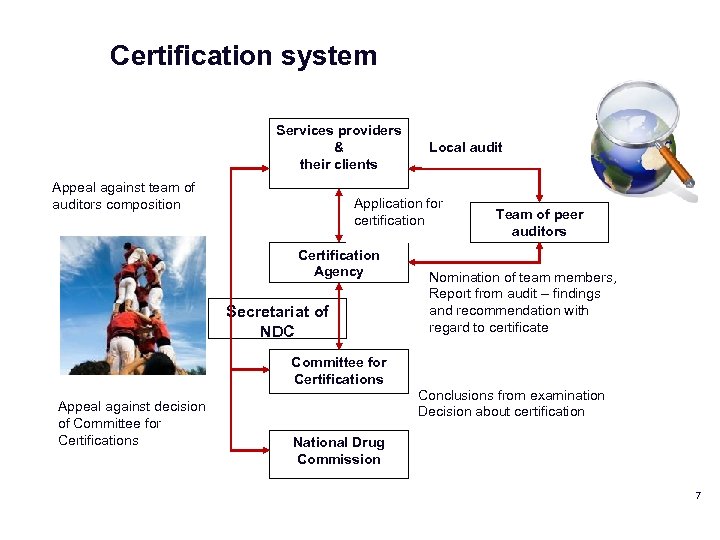 Certification system Services providers & their clients Appeal against team of auditors composition Local audit Application for certification Certification Agency Secretariat of NDC Team of peer auditors Nomination of team members, Report from audit – findings and recommendation with regard to certificate Committee for Certifications Appeal against decision of Committee for Certifications Conclusions from examination Decision about certification National Drug Commission 7
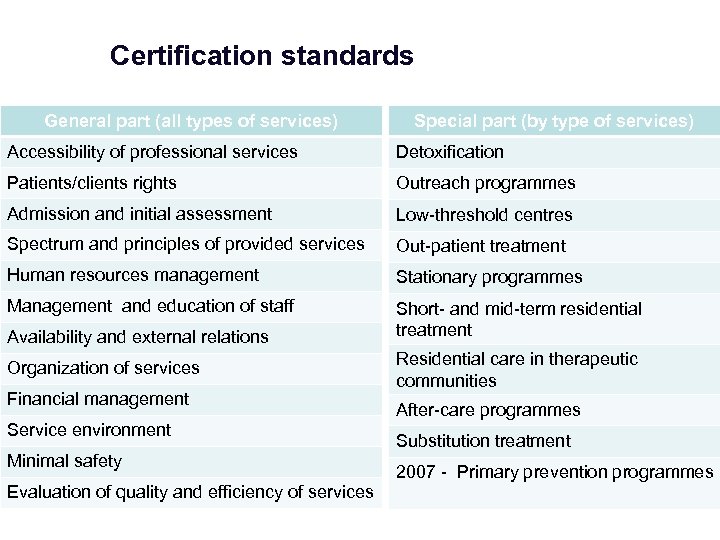 Certification standards General part (all types of services) Special part (by type of services) Accessibility of professional services Detoxification Patients/clients rights Outreach programmes Admission and initial assessment Low-threshold centres Spectrum and principles of provided services Out-patient treatment Human resources management Stationary programmes Management and education of staff Short- and mid-term residential treatment Availability and external relations Organization of services Financial management Service environment Minimal safety Evaluation of quality and efficiency of services Residential care in therapeutic communities After-care programmes Substitution treatment 2007 - Primary prevention programmes 8
 2 Basic Goals of Treatment Sources • Epidemiological: to get an info about the people coming into, being in treatment (TDI) • Performance/intervention: to describe services provided (different types, in different geographical areas …) – Availability – Accessibility – Outomes, efficacy, effectiveness
 2 different set of questions asked • What is the population of drug users? What are the drugs used? What are the patterns? Are there any changes in that population? • What types of treatment do exist in a country? What is the capacity of this or that type of treatment? Is that treatment available across the country or across subpopulations? Does the treatment cover the needs?
 Different type of (treatment) services • Medical x social • Inpatient x outpatient • Harm reduction x drug free x medically assisted treatment • Prison x community • Specialised x general (GPs)
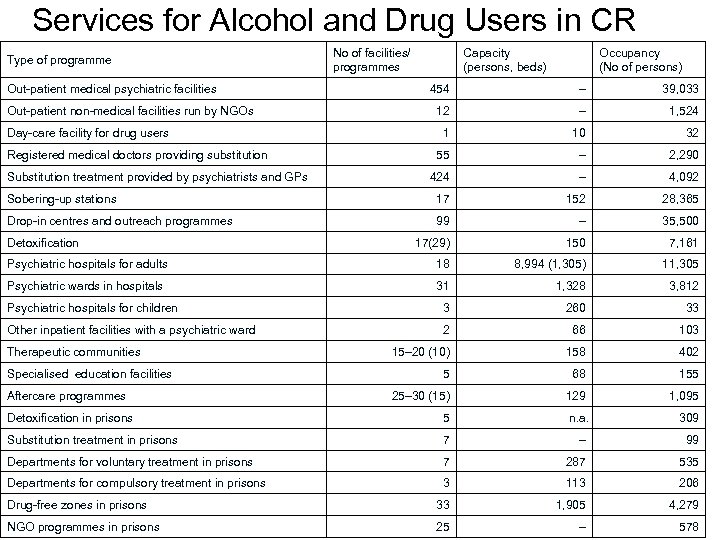 Services for Alcohol and Drug Users in CR Type of programme Out-patient medical psychiatric facilities No of facilities/ programmes Capacity (persons, beds) Occupancy (No of persons) 454 – 39, 033 12 – 1, 524 1 10 32 55 – 2, 290 424 – 4, 092 Sobering-up stations 17 152 28, 365 Drop-in centres and outreach programmes 99 – 35, 500 17(29) 150 7, 161 Psychiatric hospitals for adults 18 8, 994 (1, 305) 11, 305 Psychiatric wards in hospitals 31 1, 328 3, 812 Psychiatric hospitals for children 3 260 33 Other inpatient facilities with a psychiatric ward 2 66 103 15– 20 (10) 158 402 5 68 155 25– 30 (15) 129 1, 095 Detoxification in prisons 5 n. a. 309 Substitution treatment in prisons 7 – 99 Departments for voluntary treatment in prisons 7 287 535 Departments for compulsory treatment in prisons 3 113 206 Drug-free zones in prisons 33 1, 905 4, 279 NGO programmes in prisons 25 – 578 Out-patient non-medical facilities run by NGOs Day-care facility for drug users Registered medical doctors providing substitution Substitution treatment provided by psychiatrists and GPs Detoxification Therapeutic communities Specialised education facilities Aftercare programmes
 But… • Data sources are overlapping (1 centre can report to 3 or 4 registers) • Some based on TDI protocol, some based on ICD-10 • Concerning the number of drug users captured/treated – non of them provides the best result – Trend data and – Structure/characteristics of users are the most relevant
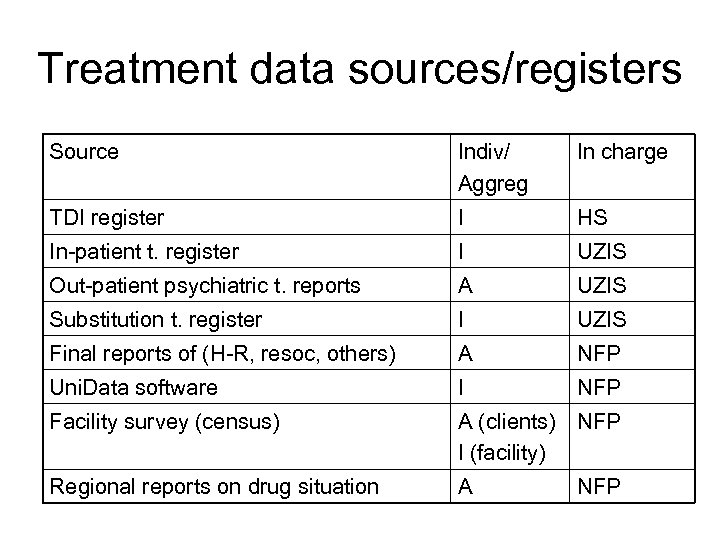 Treatment data sources/registers Source Indiv/ Aggreg In charge TDI register I HS In-patient t. register I UZIS Out-patient psychiatric t. reports A UZIS Substitution t. register I UZIS Final reports of (H-R, resoc, others) A NFP Uni. Data software I NFP Facility survey (census) A (clients) NFP I (facility) Regional reports on drug situation A NFP
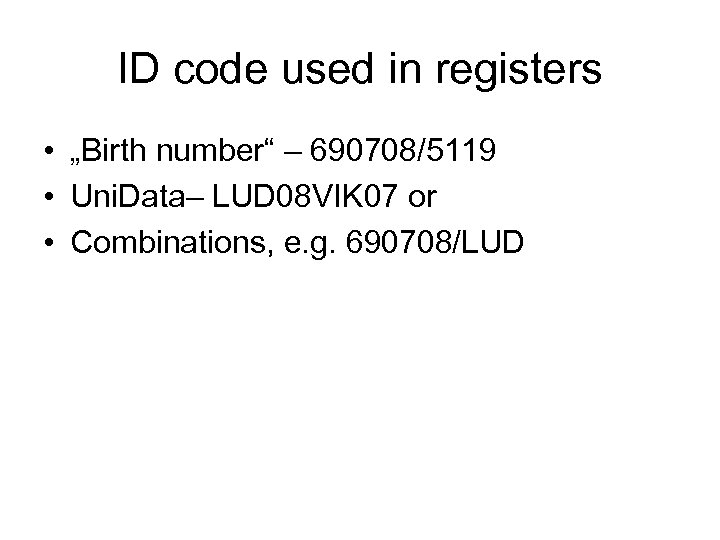 ID code used in registers • „Birth number“ – 690708/5119 • Uni. Data– LUD 08 VIK 07 or • Combinations, e. g. 690708/LUD
 Other use of treatment sources • PDU estimates – Multiplier method – Capture-recapture method • Mortality – Database-linkage study with general mortality register • Comorbidity – In-patient register (all hospitalisations of F. 1 X patients)
 Special addiction care? • Provided by specialist (specialised in addiction medicine or addictologist)? • Declaring provision of care to „our“ target groups? • In reality providing care to „our“ target groups? • Supported by labelled budget for drug policy? • Certified in addiction care? • F 10? , F 11 -F 19, F 63. 0? 17
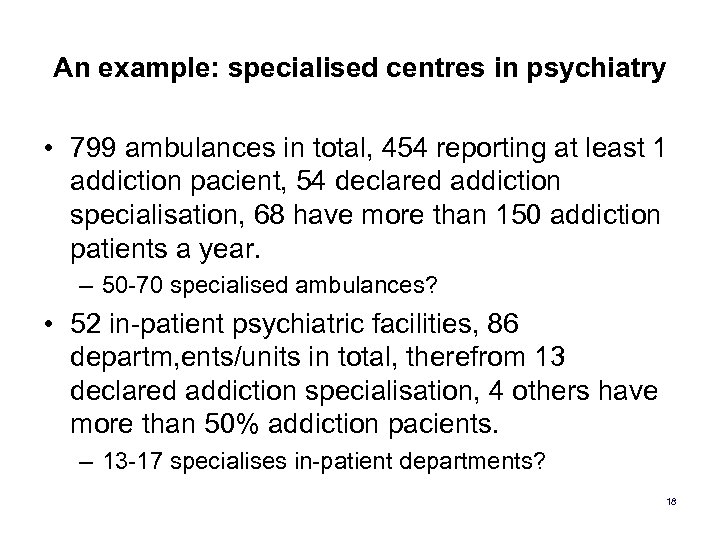 An example: specialised centres in psychiatry • 799 ambulances in total, 454 reporting at least 1 addiction pacient, 54 declared addiction specialisation, 68 have more than 150 addiction patients a year. – 50 -70 specialised ambulances? • 52 in-patient psychiatric facilities, 86 departm, ents/units in total, therefrom 13 declared addiction specialisation, 4 others have more than 50% addiction pacients. – 13 -17 specialises in-patient departments? 18
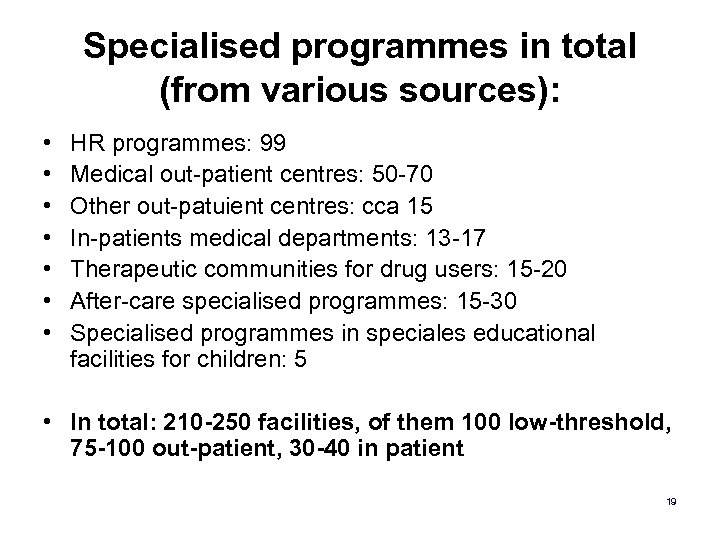 Specialised programmes in total (from various sources): • • HR programmes: 99 Medical out-patient centres: 50 -70 Other out-patuient centres: cca 15 In-patients medical departments: 13 -17 Therapeutic communities for drug users: 15 -20 After-care specialised programmes: 15 -30 Specialised programmes in speciales educational facilities for children: 5 • In total: 210 -250 facilities, of them 100 low-threshold, 75 -100 out-patient, 30 -40 in patient 19
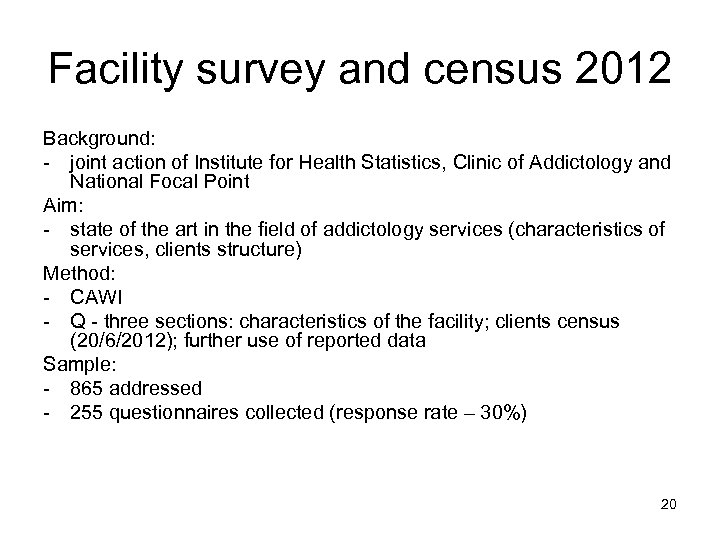 Facility survey and census 2012 Background: - joint action of Institute for Health Statistics, Clinic of Addictology and National Focal Point Aim: - state of the art in the field of addictology services (characteristics of services, clients structure) Method: - CAWI - Q - three sections: characteristics of the facility; clients census (20/6/2012); further use of reported data Sample: - 865 addressed - 255 questionnaires collected (response rate – 30%) 20
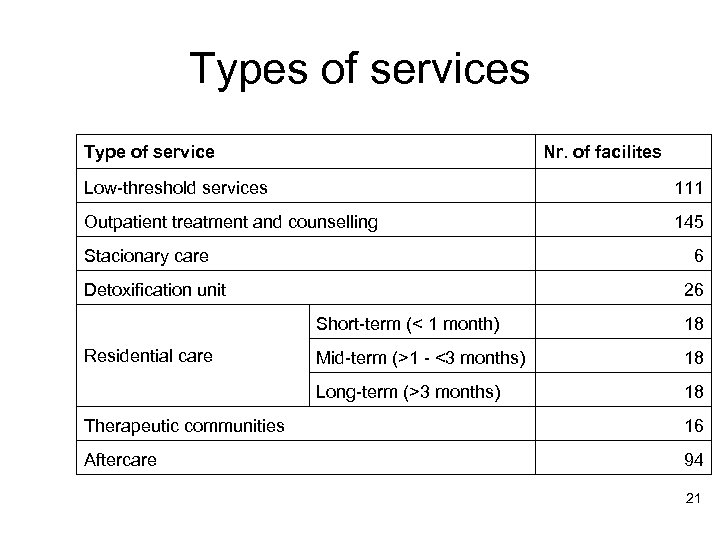 Types of services Type of service Nr. of facilites Low-threshold services 111 Outpatient treatment and counselling 145 Stacionary care 6 Detoxification unit 26 Short-term (< 1 month) Mid-term (>1 - <3 months) 18 Long-term (>3 months) Residential care 18 18 Therapeutic communities 16 Aftercare 94 21
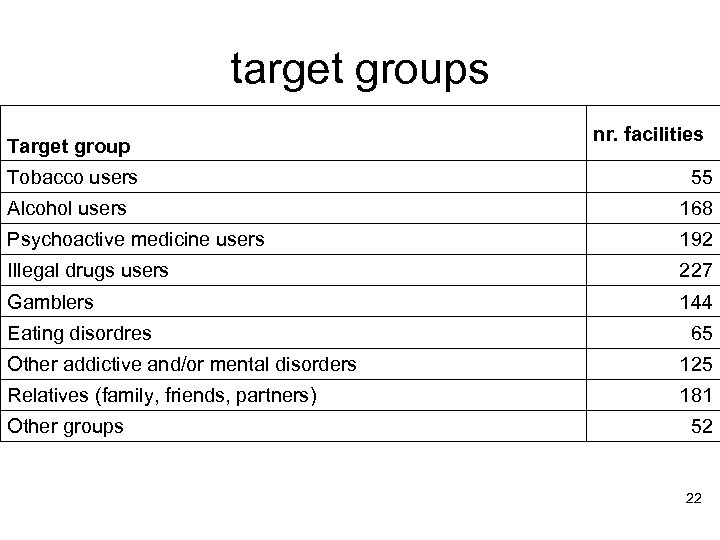 target groups Target group nr. facilities Tobacco users 55 Alcohol users 168 Psychoactive medicine users 192 Illegal drugs users 227 Gamblers 144 Eating disordres 65 Other addictive and/or mental disorders 125 Relatives (family, friends, partners) 181 Other groups 52 22
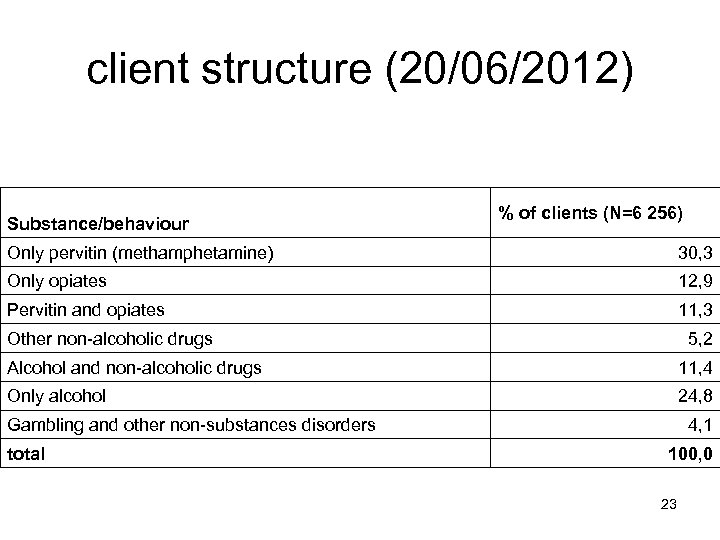 client structure (20/06/2012) Substance/behaviour % of clients (N=6 256) Only pervitin (methamphetamine) 30, 3 Only opiates 12, 9 Pervitin and opiates 11, 3 Other non-alcoholic drugs 5, 2 Alcohol and non-alcoholic drugs 11, 4 Only alcohol 24, 8 Gambling and other non-substances disorders total 4, 1 100, 0 23
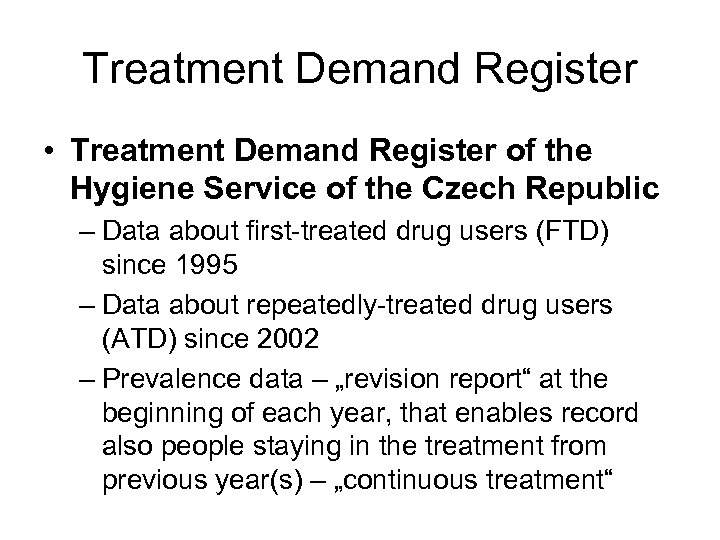 Treatment Demand Register • Treatment Demand Register of the Hygiene Service of the Czech Republic – Data about first-treated drug users (FTD) since 1995 – Data about repeatedly-treated drug users (ATD) since 2002 – Prevalence data – „revision report“ at the beginning of each year, that enables record also people staying in the treatment from previous year(s) – „continuous treatment“
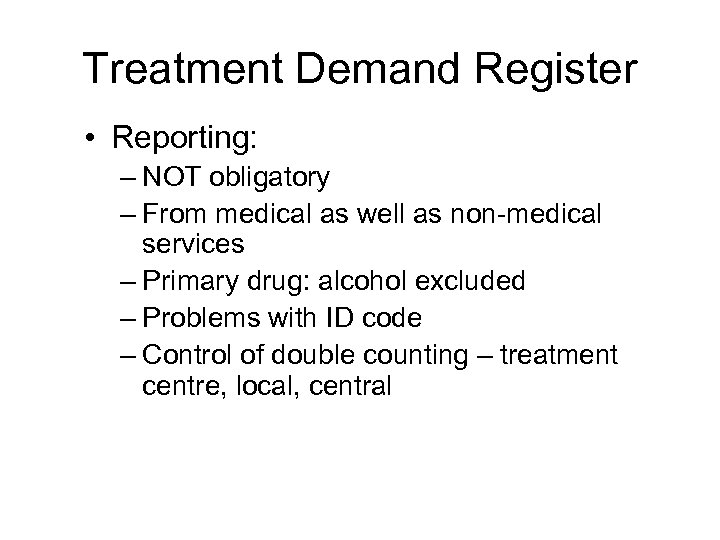 Treatment Demand Register • Reporting: – NOT obligatory – From medical as well as non-medical services – Primary drug: alcohol excluded – Problems with ID code – Control of double counting – treatment centre, local, central
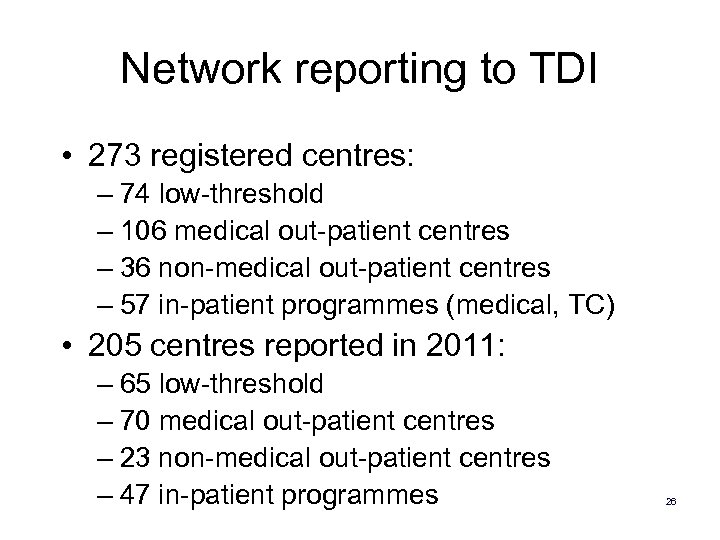 Network reporting to TDI • 273 registered centres: – 74 low-threshold – 106 medical out-patient centres – 36 non-medical out-patient centres – 57 in-patient programmes (medical, TC) • 205 centres reported in 2011: – 65 low-threshold – 70 medical out-patient centres – 23 non-medical out-patient centres – 47 in-patient programmes 26
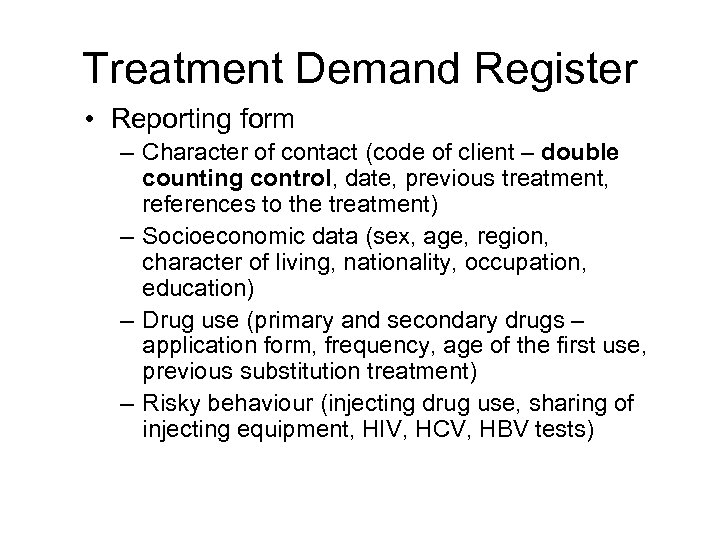 Treatment Demand Register • Reporting form – Character of contact (code of client – double counting control, date, previous treatment, references to the treatment) – Socioeconomic data (sex, age, region, character of living, nationality, occupation, education) – Drug use (primary and secondary drugs – application form, frequency, age of the first use, previous substitution treatment) – Risky behaviour (injecting drug use, sharing of injecting equipment, HIV, HCV, HBV tests)
 Recent development in TDI register • New Act No. 372/2011 Coll. , on health services and the terms and conditions of the provision thereof (the Act on Health Services) • The Annex to the Health Services Act further specifies 10 national health registers • These registers also include the National Drug Treatment Register (NRLUD), which will merge two existing registers: substitution register and TDI register • Ministerial decree No. 116/2011 Coll. , on the submission of data into national health information system specifies collection and reporting
 TDI (NRLUD) Reporting units (who shall report) • Medical treatement providers: – Out-patient – One-day care – In-patient care – Detoxification – Substitution • Social care providers providing specialised services to drug users
 TDI (NRLUD) Reporting (what and when is reported) • Substitution treatment: – Every initiated, changed or finished episode – Verification of non-presence of the client in the register (prevention of double-prescription, doctor shopping) – Reported within 24 hours after the first dose or termination of episode • Other types of treatment: – In initiation of the first treatment episode of the client in the centre in the given year (reported immediately after compilation of all information needed for the report, in in-patient care within 3 days after admission) – Repeated treatment is reported if started after 6 or more months after the termination of previous treatment episode. If the moment of termination of previous treatment is not clear, repeated treatment is reported after 6 months from the last report – The first visit in the given year if the treatment episode continues from the previous year (reports should be sentt by the end of January, in inpatient treatment during the first 7 days of January) – Termination of treatment in case of structured intervention, if the moment of termination is clear (within 3 days from termination)
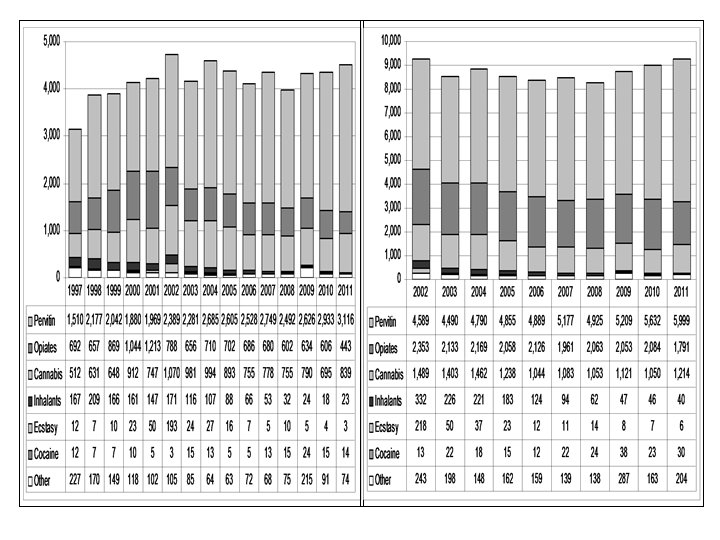
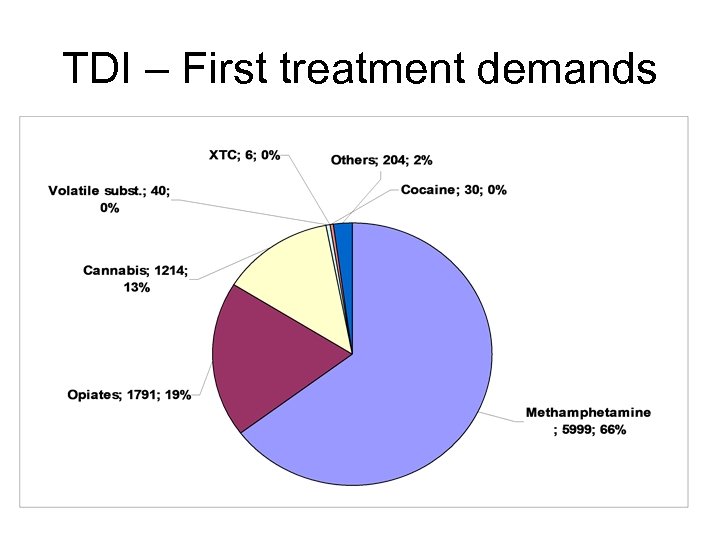 TDI – First treatment demands
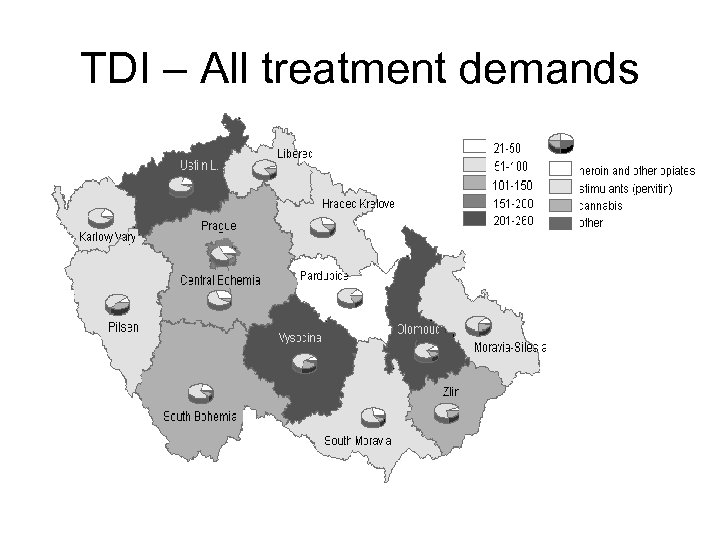 TDI – All treatment demands
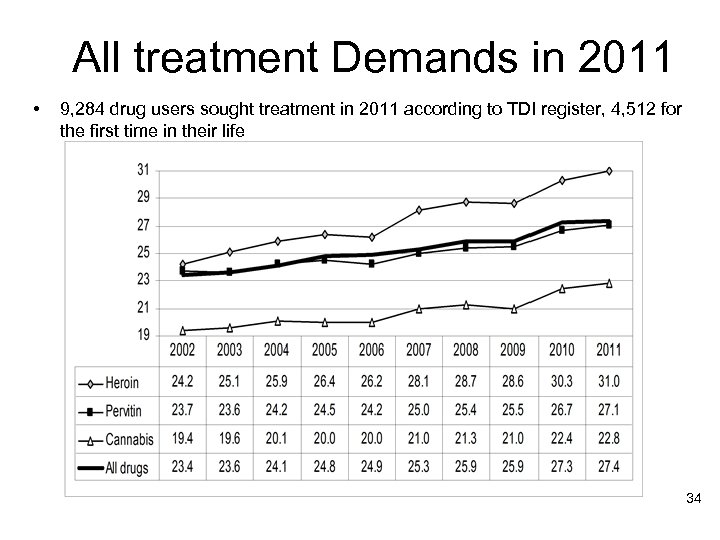 All treatment Demands in 2011 • 9, 284 drug users sought treatment in 2011 according to TDI register, 4, 512 for the first time in their life 34
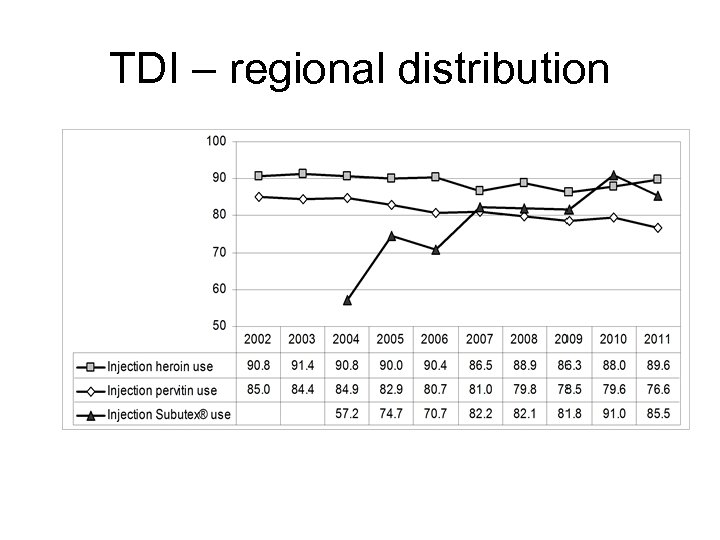 TDI – regional distribution
 TDI – All treatemnt demands • Average of clients demanding treatment 36
 TDI – proportion of IDUs
 Other than TDI data
 Uni. Data software • Application for documentation provided on the level of treatemnt centre • Primarily not the tool for data collection, but is used for aggregated outputs • 2 basic parts of documentation: clients and services • For clients – „in-come: form (TDI-like form) • For services : list and definition of interventions
 List and definitions of interventions in drug services • Intervention = timely limited unit of work with client. Defined by 5 criteria: – Qualification criteria: minimal educational and qualification level of the person provided intervention. – Description of intervention: description of procedure of intervention, principle of intervention. Activity/action of worker described. – External conditions: minimal demands for setting or place of intervention. – Equipment needed: supplies needed for intervention. – Duration: minimal time period needed for intervention. 40
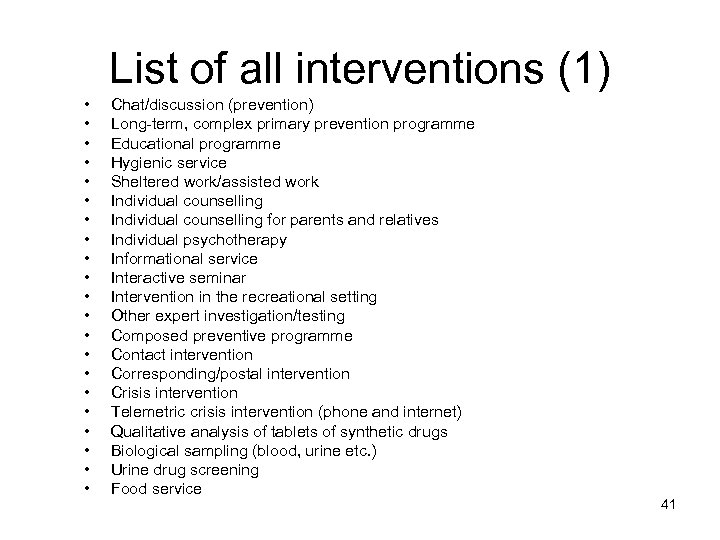 List of all interventions (1) • • • • • • Chat/discussion (prevention) Long-term, complex primary prevention programme Educational programme Hygienic service Sheltered work/assisted work Individual counselling for parents and relatives Individual psychotherapy Informational service Interactive seminar Intervention in the recreational setting Other expert investigation/testing Composed preventive programme Contact intervention Corresponding/postal intervention Crisis intervention Telemetric crisis intervention (phone and internet) Qualitative analysis of tablets of synthetic drugs Biological sampling (blood, urine etc. ) Urine drug screening Food service 41
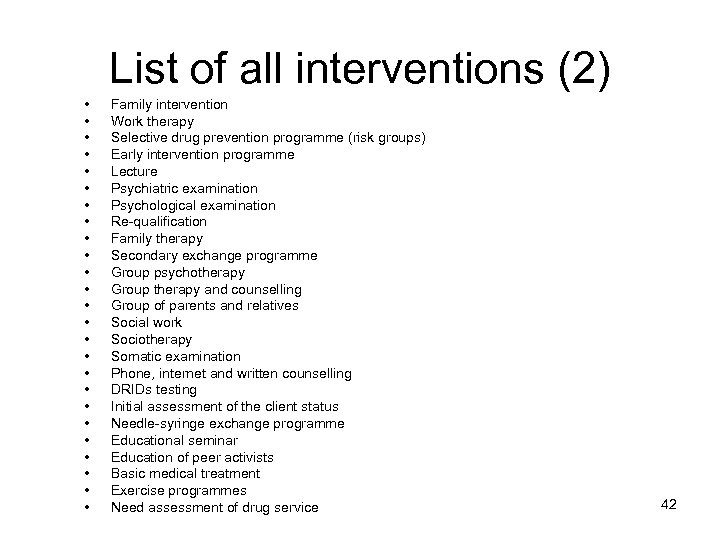 List of all interventions (2) • • • • • • • Family intervention Work therapy Selective drug prevention programme (risk groups) Early intervention programme Lecture Psychiatric examination Psychological examination Re-qualification Family therapy Secondary exchange programme Group psychotherapy Group therapy and counselling Group of parents and relatives Social work Sociotherapy Somatic examination Phone, internet and written counselling DRIDs testing Initial assessment of the client status Needle-syringe exchange programme Educational seminar Education of peer activists Basic medical treatment Exercise programmes Need assessment of drug service 42
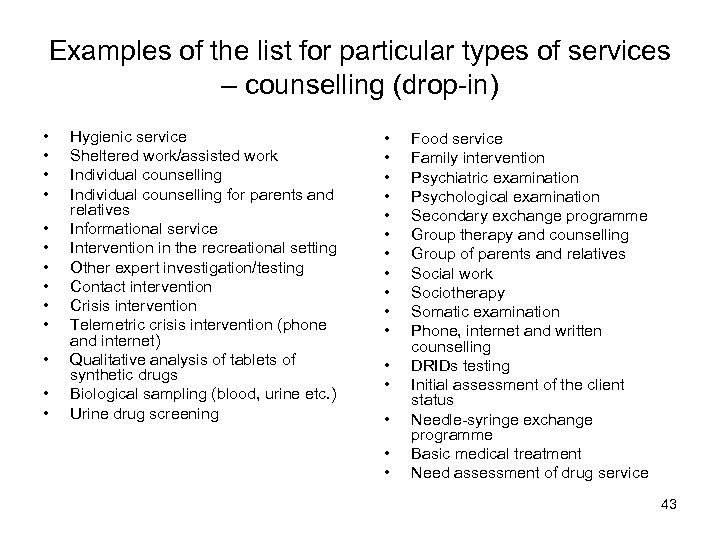 Examples of the list for particular types of services – counselling (drop-in) • • • • Hygienic service Sheltered work/assisted work Individual counselling for parents and relatives Informational service Intervention in the recreational setting Other expert investigation/testing Contact intervention Crisis intervention Telemetric crisis intervention (phone and internet) Qualitative analysis of tablets of synthetic drugs Biological sampling (blood, urine etc. ) Urine drug screening • • • • Food service Family intervention Psychiatric examination Psychological examination Secondary exchange programme Group therapy and counselling Group of parents and relatives Social work Sociotherapy Somatic examination Phone, internet and written counselling DRIDs testing Initial assessment of the client status Needle-syringe exchange programme Basic medical treatment Need assessment of drug service 43
 Example of definition of intervention 44
 Final Report – Model Tables – Table on Clients 1) Each client is counted once in the given year. 2) Just clients contacted for the first time in their life are counted. 45
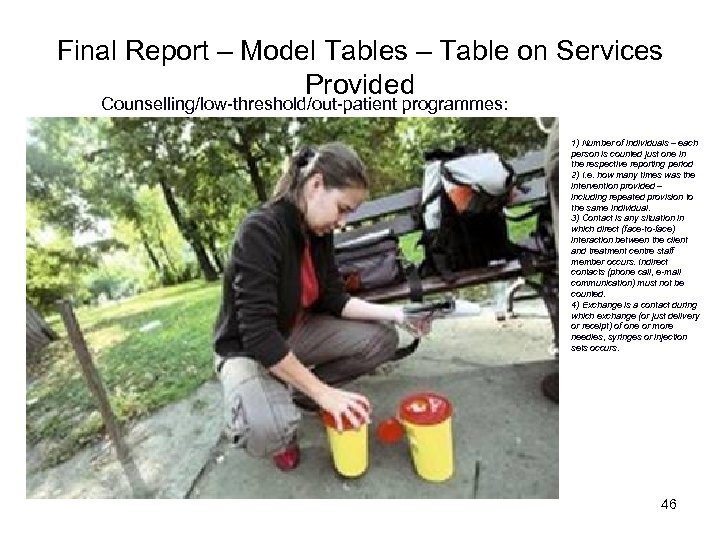 Final Report – Model Tables – Table on Services Provided Counselling/low-threshold/out-patient programmes: 1) Number of individuals – each person is counted just one in the respective reporting period 2) I. e. how many times was the intervention provided – including repeated provision to the same individual. 3) Contact is any situation in which direct (face-to-face) interaction between the client and treatment centre staff member occurs. Indirect contacts (phone call, e-mail communication) must not be counted. 4) Exchange is a contact during which exchange (or just delivery or receipt) of one or more needles, syringes or injection sets occurs. 46
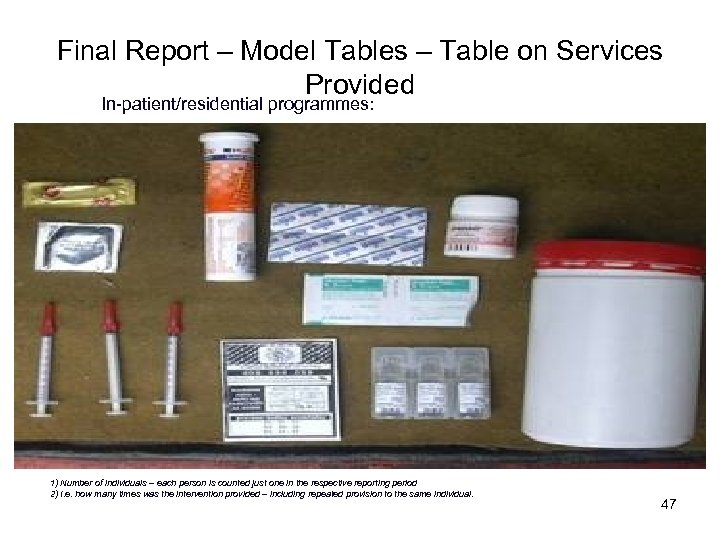 Final Report – Model Tables – Table on Services Provided In-patient/residential programmes: 1) Number of individuals – each person is counted just one in the respective reporting period 2) I. e. how many times was the intervention provided – including repeated provision to the same individual. 47
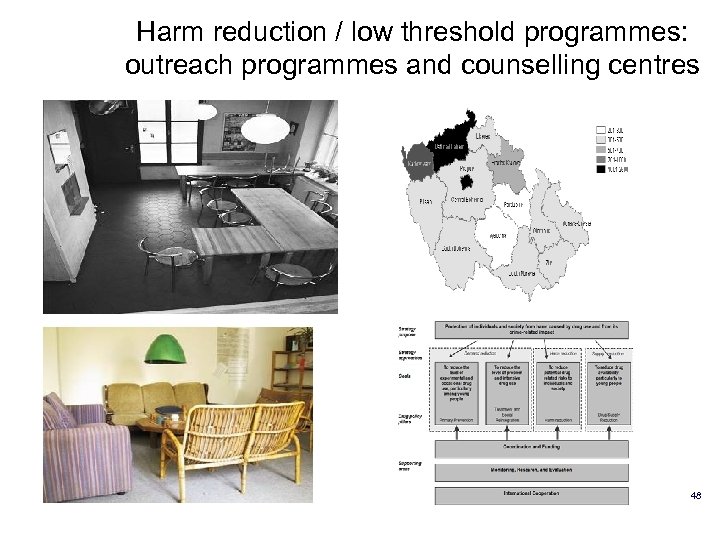 Harm reduction / low threshold programmes: outreach programmes and counselling centres 48
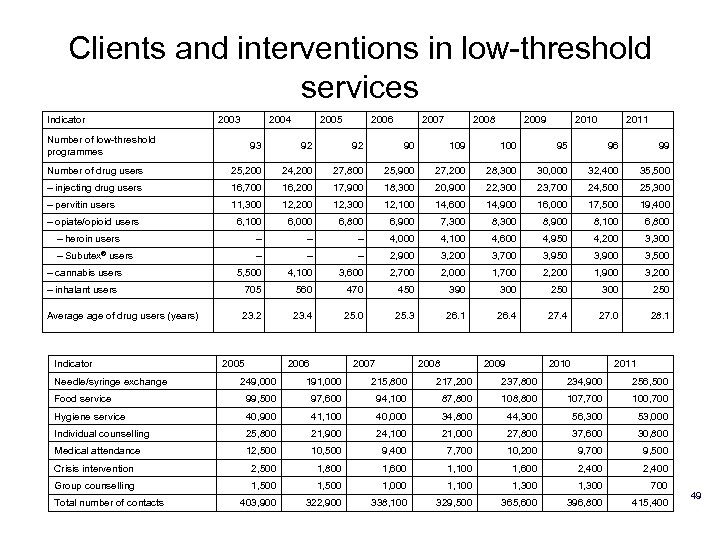 Clients and interventions in low-threshold services Indicator 2003 2004 Number of low-threshold programmes 2005 2006 2007 2008 2009 2010 2011 93 92 92 90 109 100 95 96 99 Number of drug users 25, 200 24, 200 27, 800 25, 900 27, 200 28, 300 30, 000 32, 400 35, 500 – injecting drug users 16, 700 16, 200 17, 900 18, 300 20, 900 22, 300 23, 700 24, 500 25, 300 – pervitin users 11, 300 12, 200 12, 300 12, 100 14, 600 14, 900 16, 000 17, 500 19, 400 6, 100 6, 000 6, 800 6, 900 7, 300 8, 900 8, 100 6, 800 – heroin users – – – 4, 000 4, 100 4, 600 4, 950 4, 200 3, 300 – Subutex® users – – – 2, 900 3, 200 3, 700 3, 950 3, 900 3, 500 – cannabis users 5, 500 4, 100 3, 600 2, 700 2, 000 1, 700 2, 200 1, 900 3, 200 – inhalant users 705 560 470 450 390 300 250 Average of drug users (years) 23. 2 23. 4 25. 0 25. 3 26. 1 26. 4 27. 0 28. 1 – opiate/opioid users Indicator Needle/syringe exchange 2005 2006 2007 2008 2009 2010 2011 249, 000 191, 000 215, 800 217, 200 237, 800 234, 900 256, 500 Food service 99, 500 97, 600 94, 100 87, 800 108, 800 107, 700 100, 700 Hygiene service 40, 900 41, 100 40, 000 34, 800 44, 300 56, 300 53, 000 Individual counselling 25, 800 21, 900 24, 100 21, 000 27, 800 37, 600 30, 800 Medical attendance 12, 500 10, 500 9, 400 7, 700 10, 200 9, 700 9, 500 Crisis intervention 2, 500 1, 800 1, 600 1, 100 1, 600 2, 400 Group counselling 1, 500 1, 000 1, 100 1, 300 700 403, 900 322, 900 338, 100 329, 500 365, 600 396, 800 415, 400 Total number of contacts 49
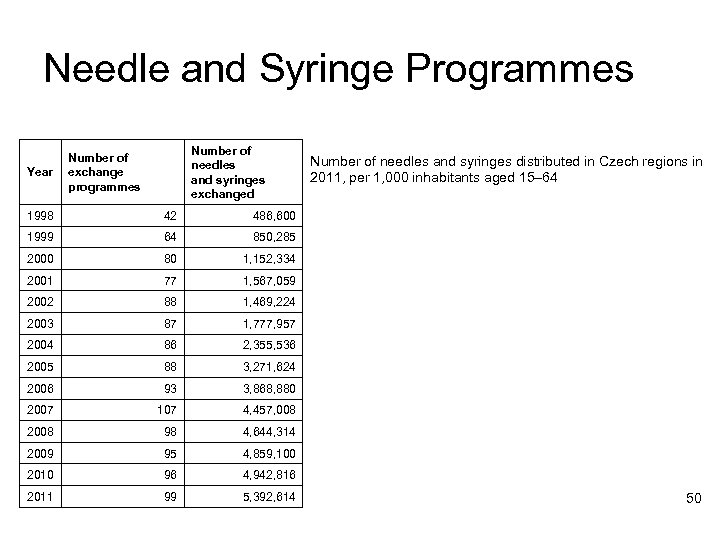 Needle and Syringe Programmes Year Number of needles and syringes exchanged Number of exchange programmes 1998 42 486, 600 1999 64 850, 285 2000 80 1, 152, 334 2001 77 1, 567, 059 2002 88 1, 469, 224 2003 87 1, 777, 957 2004 86 2, 355, 536 2005 88 3, 271, 624 2006 93 3, 868, 880 2007 107 4, 457, 008 2008 98 4, 644, 314 2009 95 4, 859, 100 2010 96 4, 942, 816 2011 99 5, 392, 614 Number of needles and syringes distributed in Czech regions in 2011, per 1, 000 inhabitants aged 15– 64 50
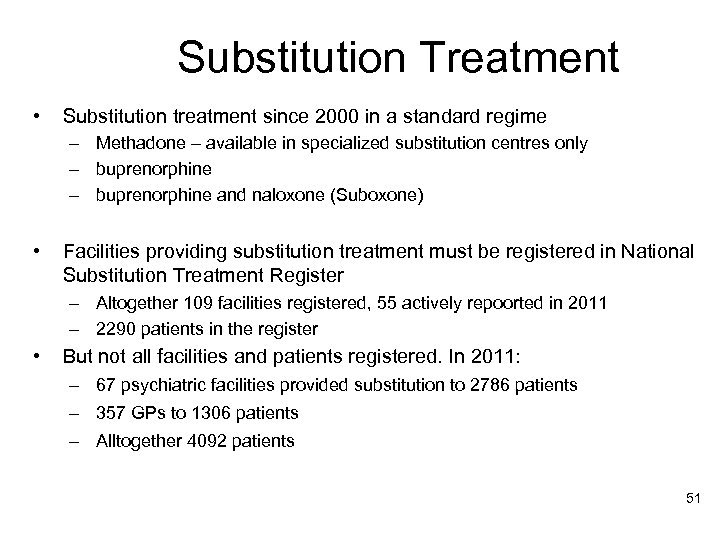 Substitution Treatment • Substitution treatment since 2000 in a standard regime – Methadone – available in specialized substitution centres only – buprenorphine and naloxone (Suboxone) • Facilities providing substitution treatment must be registered in National Substitution Treatment Register – Altogether 109 facilities registered, 55 actively repoorted in 2011 – 2290 patients in the register • But not all facilities and patients registered. In 2011: – 67 psychiatric facilities provided substitution to 2786 patients – 357 GPs to 1306 patients – Alltogether 4092 patients 51
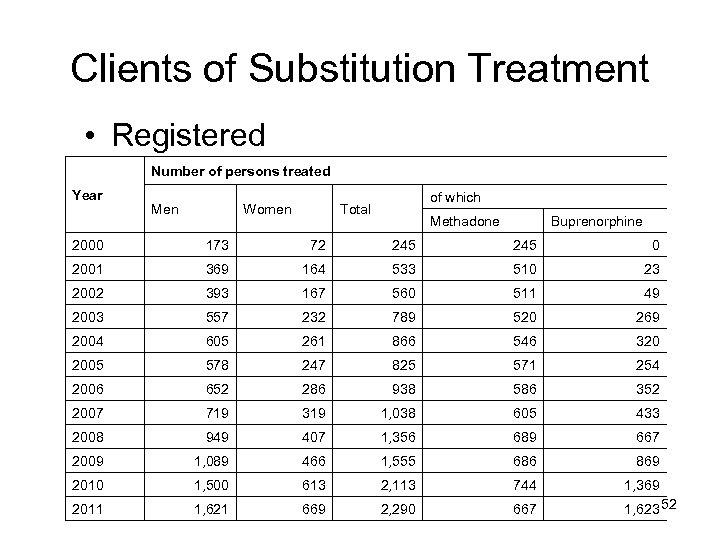 Clients of Substitution Treatment • Registered Number of persons treated Year Men Women of which Total Methadone Buprenorphine 2000 173 72 245 0 2001 369 164 533 510 23 2002 393 167 560 511 49 2003 557 232 789 520 269 2004 605 261 866 546 320 2005 578 247 825 571 254 2006 652 286 938 586 352 2007 719 319 1, 038 605 433 2008 949 407 1, 356 689 667 2009 1, 089 466 1, 555 686 869 2010 1, 500 613 2, 113 744 1, 369 2011 1, 621 669 2, 290 667 1, 623 52
 Substitution on buprenorphine: abuse vs. treatment 53
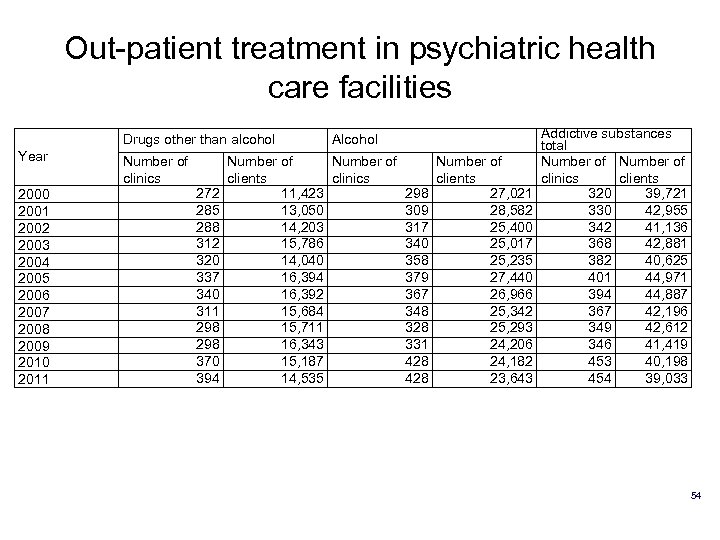 Out-patient treatment in psychiatric health care facilities Addictive substances total Number of Number of clinics clients 272 11, 423 298 27, 021 320 39, 721 285 13, 050 309 28, 582 330 42, 955 288 14, 203 317 25, 400 342 41, 136 312 15, 786 340 25, 017 368 42, 881 320 14, 040 358 25, 235 382 40, 625 337 16, 394 379 27, 440 401 44, 971 340 16, 392 367 26, 966 394 44, 887 311 15, 684 348 25, 342 367 42, 196 298 15, 711 328 25, 293 349 42, 612 298 16, 343 331 24, 206 346 41, 419 370 15, 187 428 24, 182 453 40, 198 394 14, 535 428 23, 643 454 39, 033 Drugs other than alcohol Year 2000 2001 2002 2003 2004 2005 2006 2007 2008 2009 2010 2011 Alcohol 54
 Detoxification and in-patient treatment in psychiatric hospitals 55
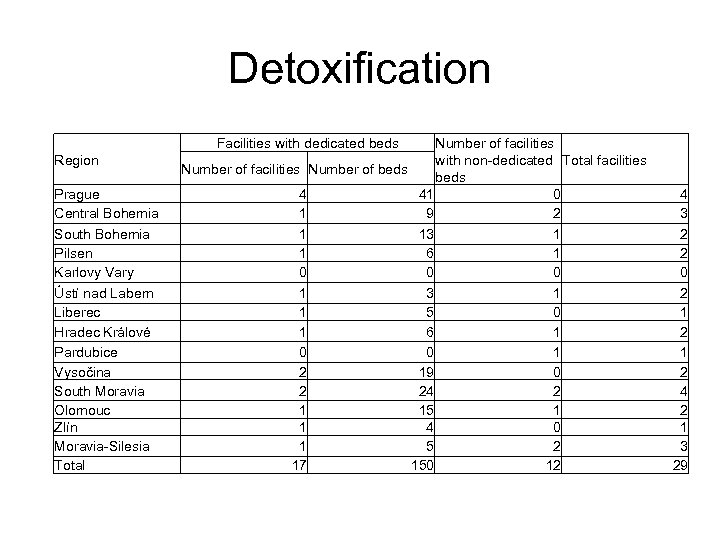 Detoxification Facilities with dedicated beds Region Prague Central Bohemia South Bohemia Pilsen Karlovy Vary Ústí nad Labem Liberec Hradec Králové Pardubice Vysočina South Moravia Olomouc Zlín Moravia-Silesia Total Number of facilities with non-dedicated Total facilities Number of beds 4 41 0 1 9 2 1 13 1 1 6 1 0 0 0 1 3 1 1 5 0 1 6 1 0 0 1 2 19 0 2 24 2 1 15 1 1 4 0 1 5 2 17 150 12 4 3 2 2 0 2 1 2 4 2 1 3 29
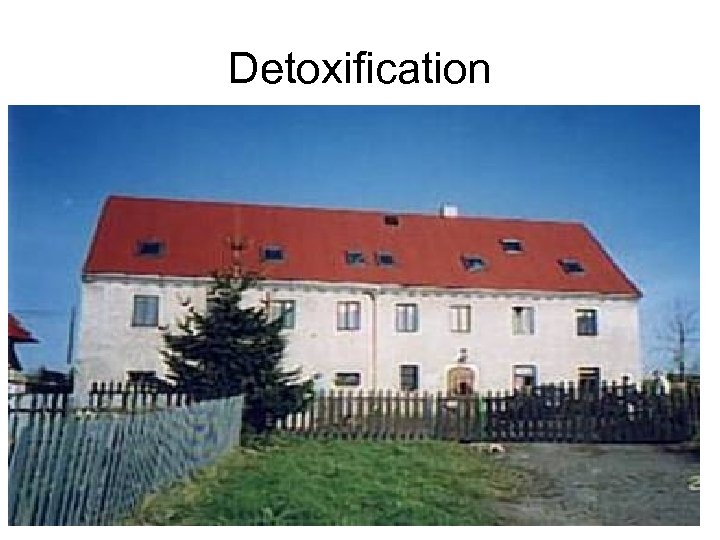 Detoxification
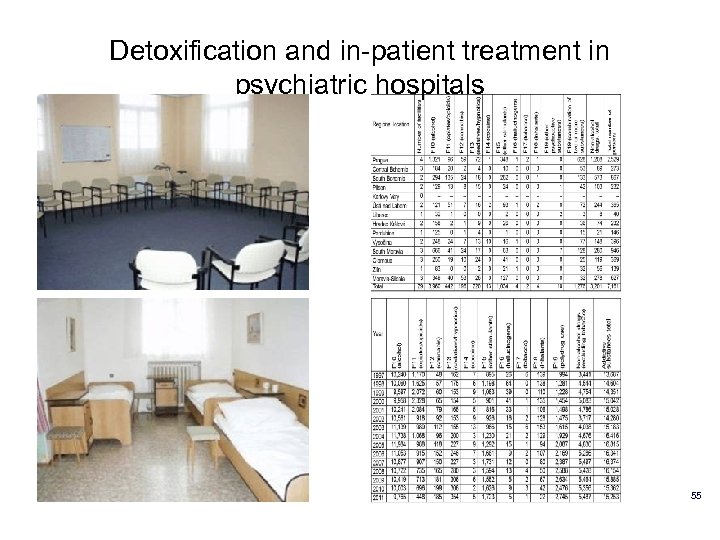
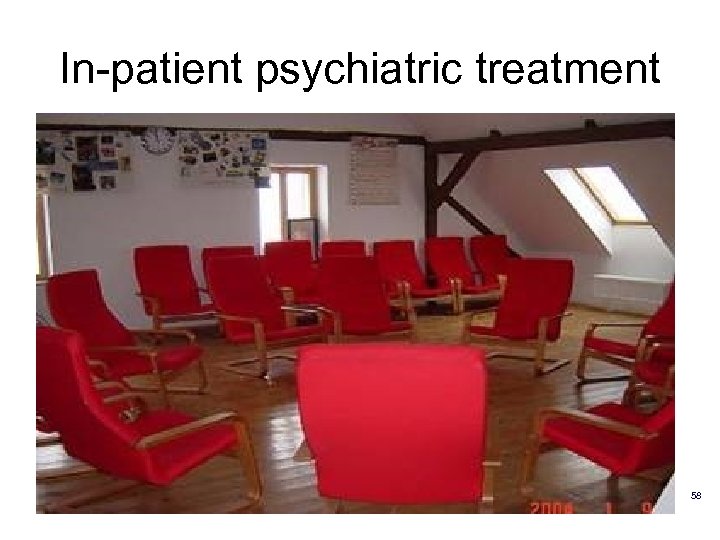 In-patient psychiatric treatment 58
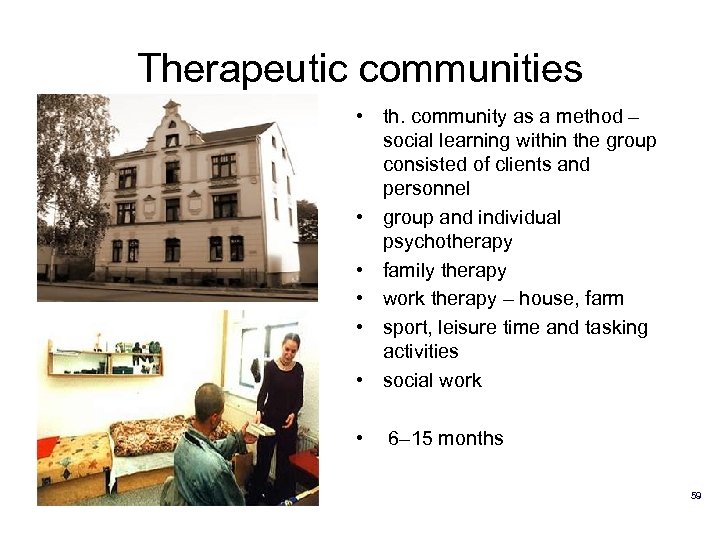 Therapeutic communities • th. community as a method – social learning within the group consisted of clients and personnel • group and individual psychotherapy • family therapy • work therapy – house, farm • sport, leisure time and tasking activities • social work • 6– 15 months 59
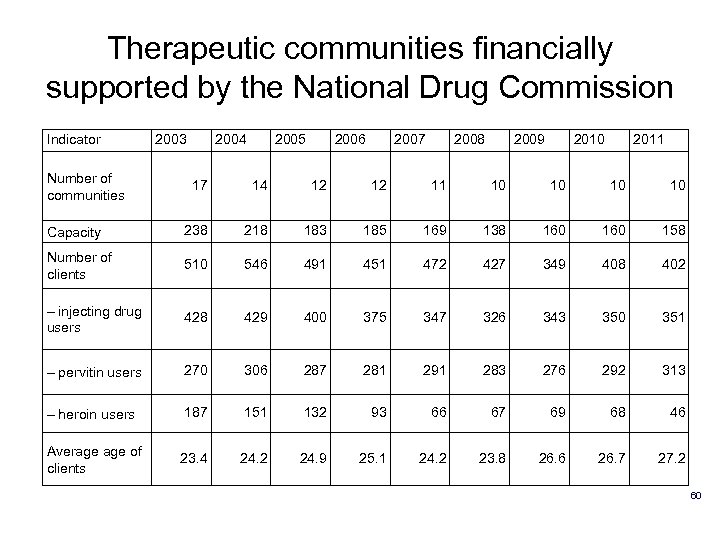 Therapeutic communities financially supported by the National Drug Commission Indicator Number of communities 2003 2004 2005 2006 2007 2008 2009 2010 2011 17 14 12 12 11 10 10 Capacity 238 218 183 185 169 138 160 158 Number of clients 510 546 491 451 472 427 349 408 402 – injecting drug users 428 429 400 375 347 326 343 350 351 – pervitin users 270 306 287 281 291 283 276 292 313 – heroin users 187 151 132 93 66 67 69 68 46 Average of clients 23. 4 24. 2 24. 9 25. 1 24. 2 23. 8 26. 6 26. 7 27. 2 60
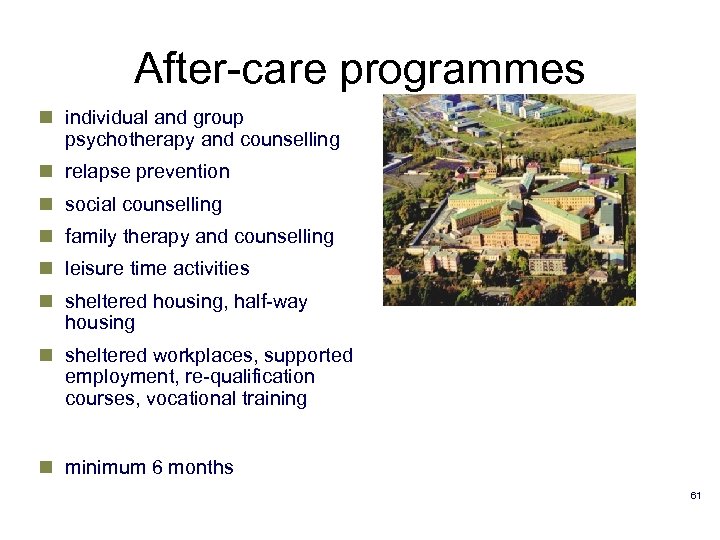 After-care programmes n individual and group psychotherapy and counselling n relapse prevention n social counselling n family therapy and counselling n leisure time activities n sheltered housing, half-way housing n sheltered workplaces, supported employment, re-qualification courses, vocational training n minimum 6 months 61
 Drug services in prisons 62
 Drug services in prisons • 36 prisons in the Czech Republic, approx. 22 th. prisoners, out of them 4 th. due to drug crime • Counselling centres in all prisons • Drug free zones, departments for voluntary and compulsory treatment • Substitution treatment available in 10 (9) prisons • NGOs provide services in 30 prisons: individual and groups counselling and treatment with emphasis to reintegration after release from prison 63
 Conclusions • Several data source on treatment • TDI register - KI – important • Information needed for: – Drug users (epi situation) – Services provided (interventions) • More treatment data sources: – Allow us to triangulate/confirm the picture of situation/trends – Demand more effort in compiling the whole picture and interpretation of data
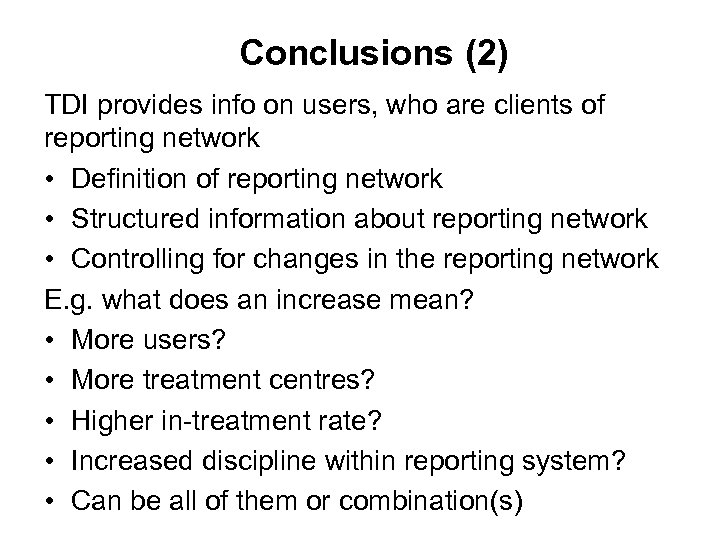 Conclusions (2) TDI provides info on users, who are clients of reporting network • Definition of reporting network • Structured information about reporting network • Controlling for changes in the reporting network E. g. what does an increase mean? • More users? • More treatment centres? • Higher in-treatment rate? • Increased discipline within reporting system? • Can be all of them or combination(s)
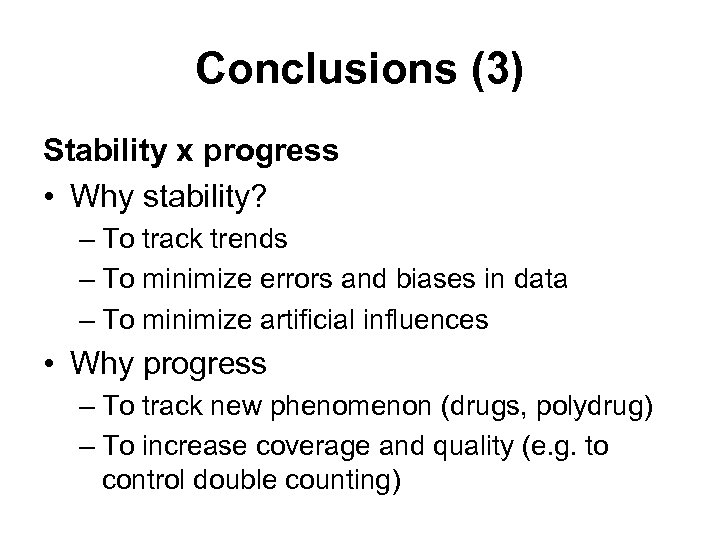 Conclusions (3) Stability x progress • Why stability? – To track trends – To minimize errors and biases in data – To minimize artificial influences • Why progress – To track new phenomenon (drugs, polydrug) – To increase coverage and quality (e. g. to control double counting)
 Thank you MUDr. Viktor Mravčík The Czech National Monitoring Centre for Drugs and Drug Addictions mravik. viktor@vlada. cz www. drogy-info. cz www. focalpoint. cz www. vlada. cz www. emcdda. europa. eu