 Скачать презентацию Dramatic Play Play is often talked about as
85798583c7d28a53803e21330ecc7b3d.ppt
- Количество слайдов: 23



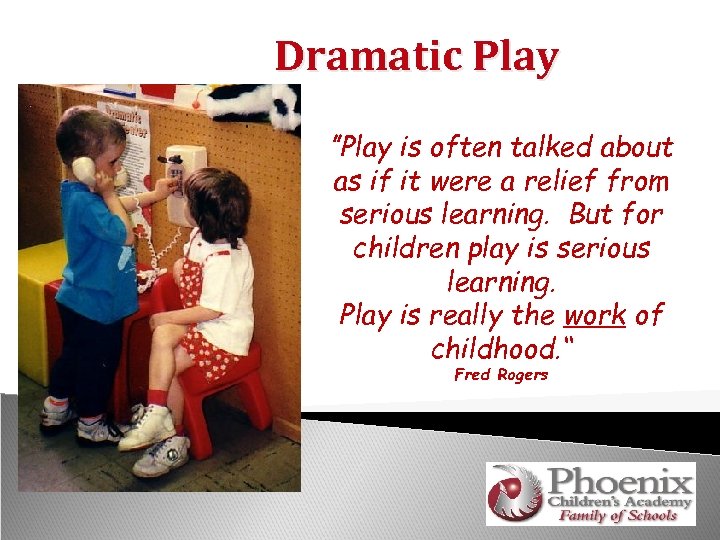
Dramatic Play ”Play is often talked about as if it were a relief from serious learning. But for children play is serious learning. Play is really the work of childhood. “ Fred Rogers
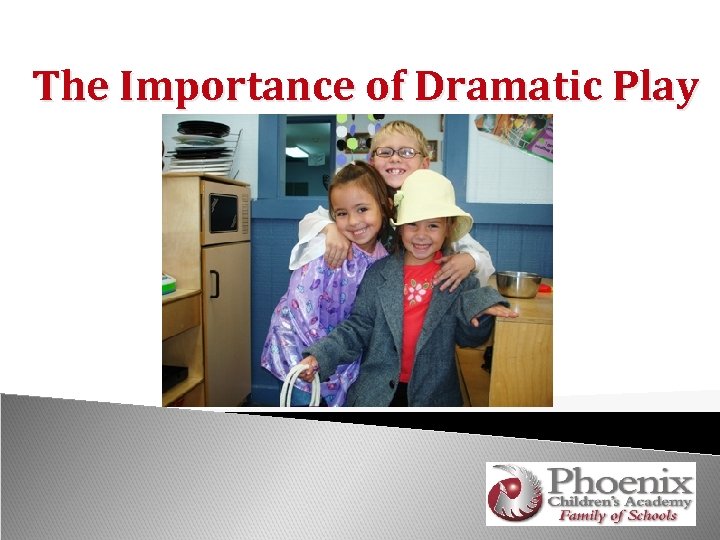
The Importance of Dramatic Play
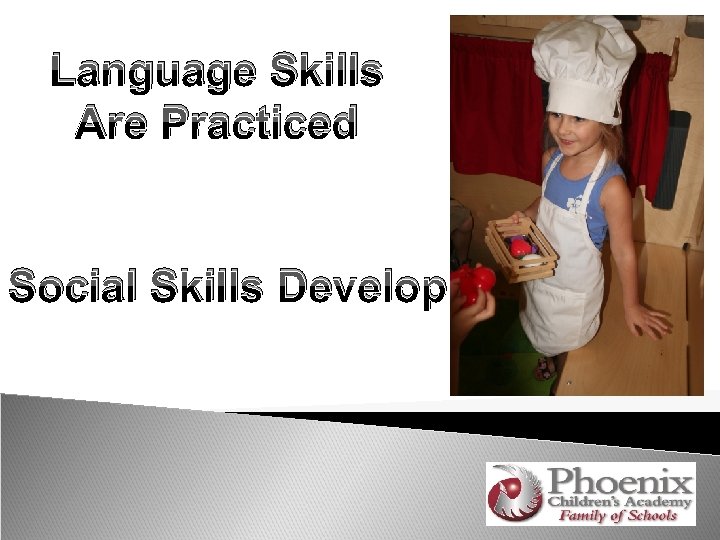
Language Skills Are Practiced Social Skills Develop
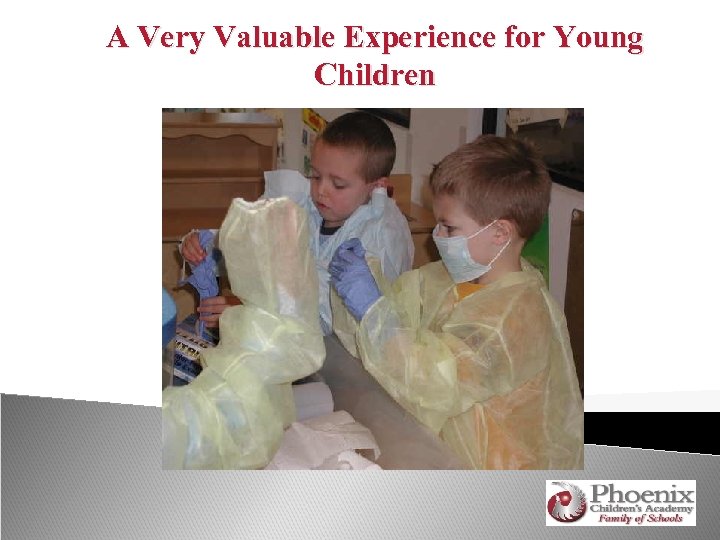
A Very Valuable Experience for Young Children

The Pay-Off is Worth It
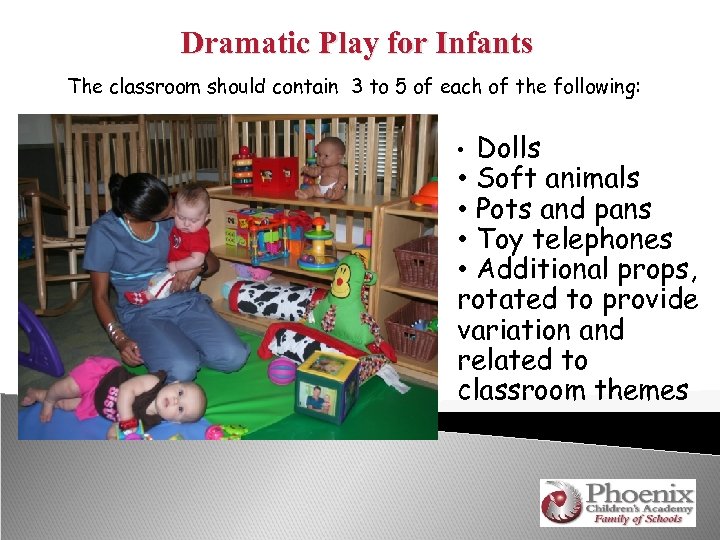
Dramatic Play for Infants The classroom should contain 3 to 5 of each of the following: Dolls • Soft animals • Pots and pans • Toy telephones • Additional props, rotated to provide variation and related to classroom themes •
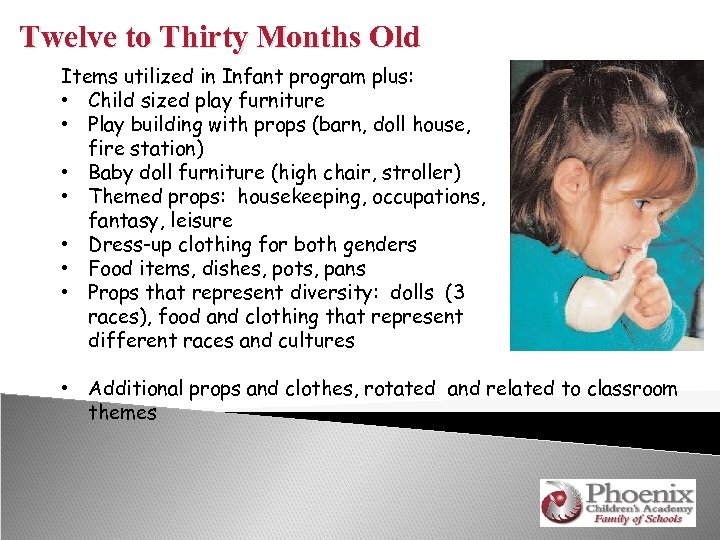
Twelve to Thirty Months Old Items utilized in Infant program plus: • Child sized play furniture • Play building with props (barn, doll house, fire station) • Baby doll furniture (high chair, stroller) • Themed props: housekeeping, occupations, fantasy, leisure • Dress-up clothing for both genders • Food items, dishes, pots, pans • Props that represent diversity: dolls (3 races), food and clothing that represent different races and cultures • Additional props and clothes, rotated and related to classroom themes
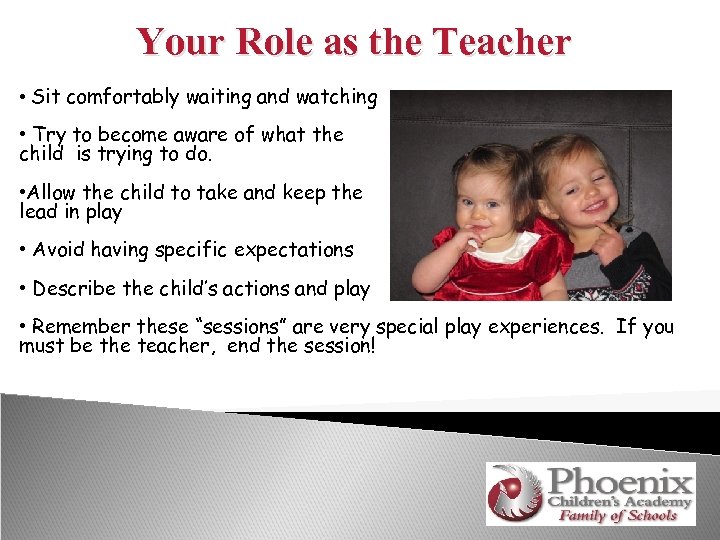
Your Role as the Teacher • Sit comfortably waiting and watching • Try to become aware of what the child is trying to do. • Allow the child to take and keep the lead in play • Avoid having specific expectations • Describe the child’s actions and play • Remember these “sessions” are very special play experiences. If you must be the teacher, end the session!
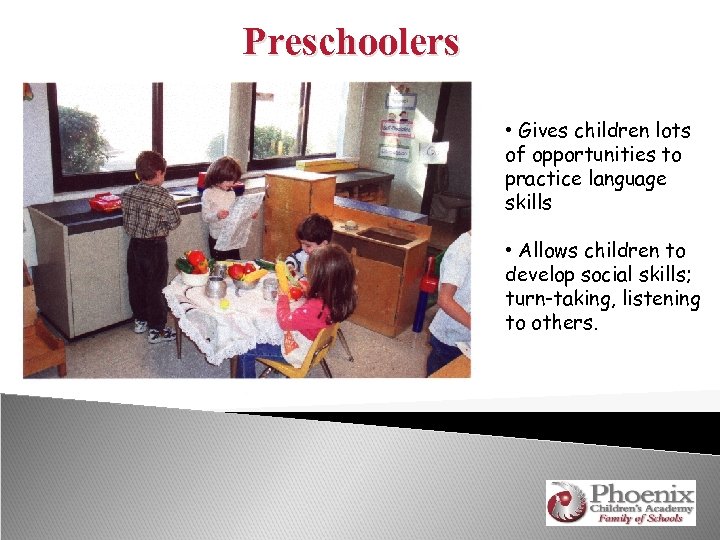
Preschoolers • Gives children lots of opportunities to practice language skills • Allows children to develop social skills; turn-taking, listening to others.
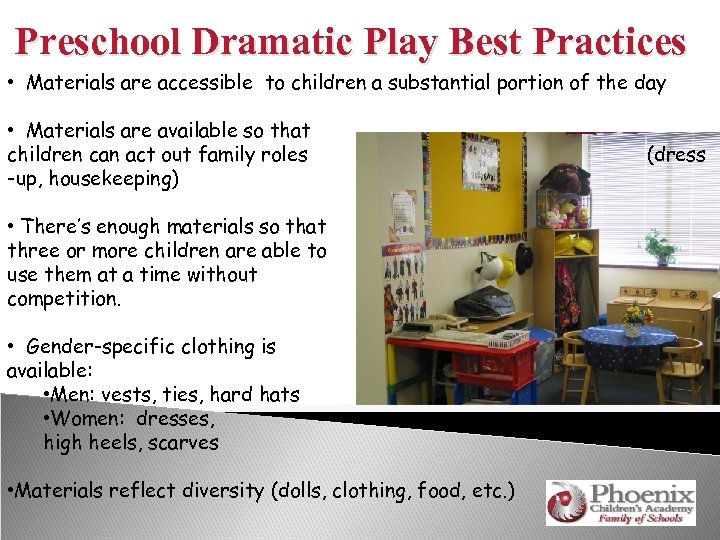
Preschool Dramatic Play Best Practices • Materials are accessible to children a substantial portion of the day • Materials are available so that children can act out family roles -up, housekeeping) • There’s enough materials so that three or more children are able to use them at a time without competition. • Gender-specific clothing is available: • Men: vests, ties, hard hats • Women: dresses, high heels, scarves • Materials reflect diversity (dolls, clothing, food, etc. ) (dress
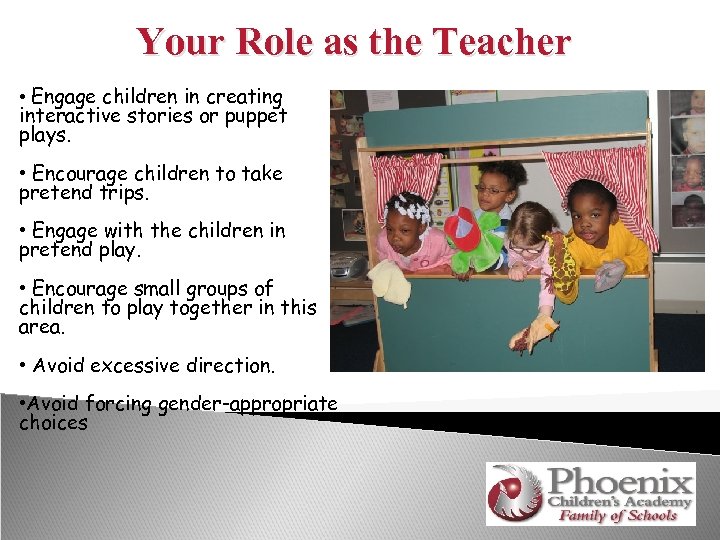
Your Role as the Teacher • Engage children in creating interactive stories or puppet plays. • Encourage children to take pretend trips. • Engage with the children in pretend play. • Encourage small groups of children to play together in this area. • Avoid excessive direction. • Avoid forcing gender-appropriate choices
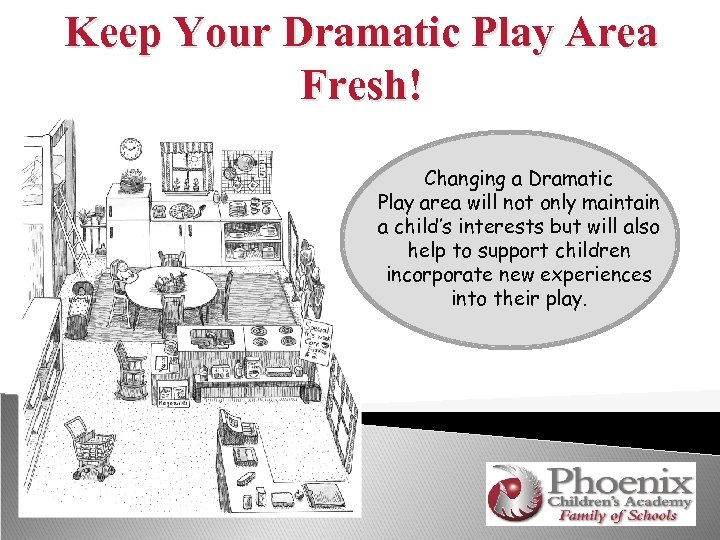
Keep Your Dramatic Play Area Fresh! Changing a Dramatic Play area will not only maintain a child’s interests but will also help to support children incorporate new experiences into their play.
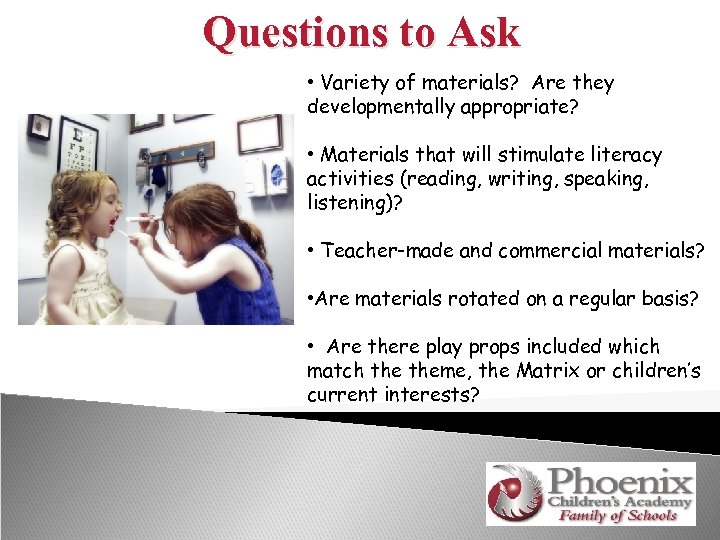
Questions to Ask • Variety of materials? Are they developmentally appropriate? • Materials that will stimulate literacy activities (reading, writing, speaking, listening)? • Teacher-made and commercial materials? • Are materials rotated on a regular basis? • Are there play props included which match theme, the Matrix or children’s current interests?
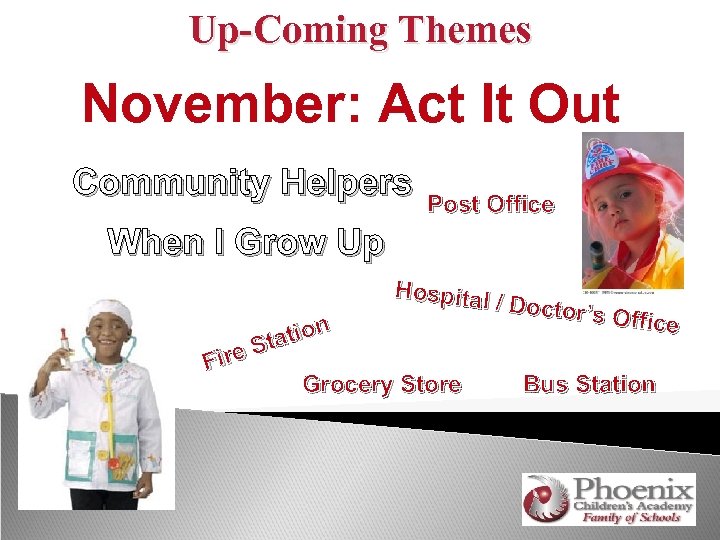
Up-Coming Themes November: Act It Out Community Helpers Post Office When I Grow Up Fire n atio St Hospital / Doctor’ s Office Grocery Store Bus Station
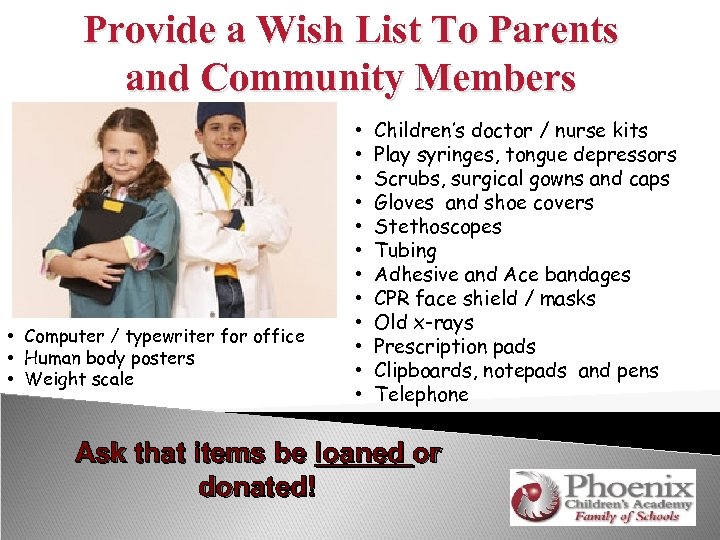
Provide a Wish List To Parents and Community Members • Computer / typewriter for office • Human body posters • Weight scale • • • Children’s doctor / nurse kits Play syringes, tongue depressors Scrubs, surgical gowns and caps Gloves and shoe covers Stethoscopes Tubing Adhesive and Ace bandages CPR face shield / masks Old x-rays Prescription pads Clipboards, notepads and pens Telephone Ask that items be loaned or donated!
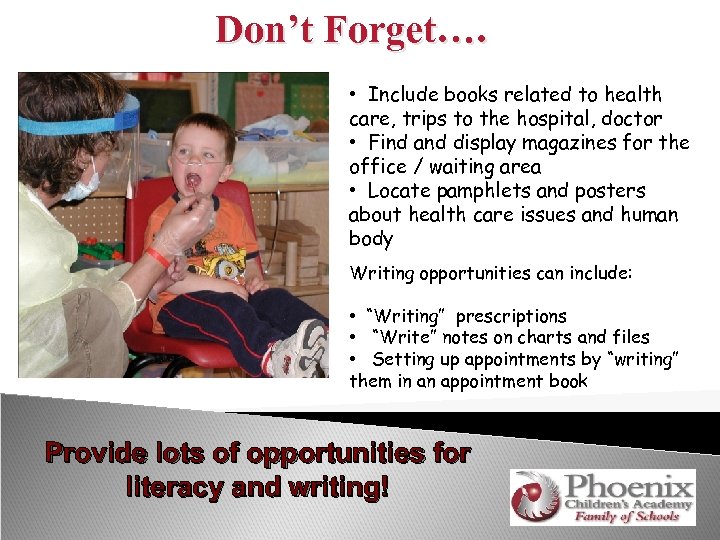
Don’t Forget…. • Include books related to health care, trips to the hospital, doctor • Find and display magazines for the office / waiting area • Locate pamphlets and posters about health care issues and human body Writing opportunities can include: • “Writing” prescriptions • “Write” notes on charts and files • Setting up appointments by “writing” them in an appointment book Provide lots of opportunities for literacy and writing!
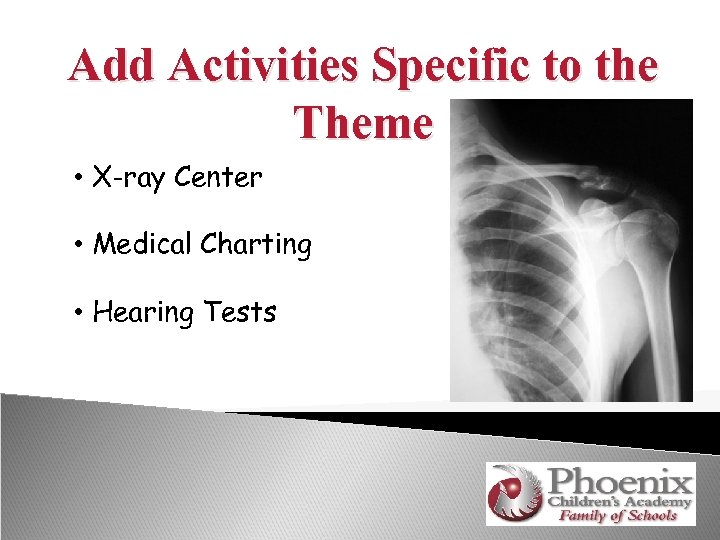
Add Activities Specific to the Theme • X-ray Center • Medical Charting • Hearing Tests
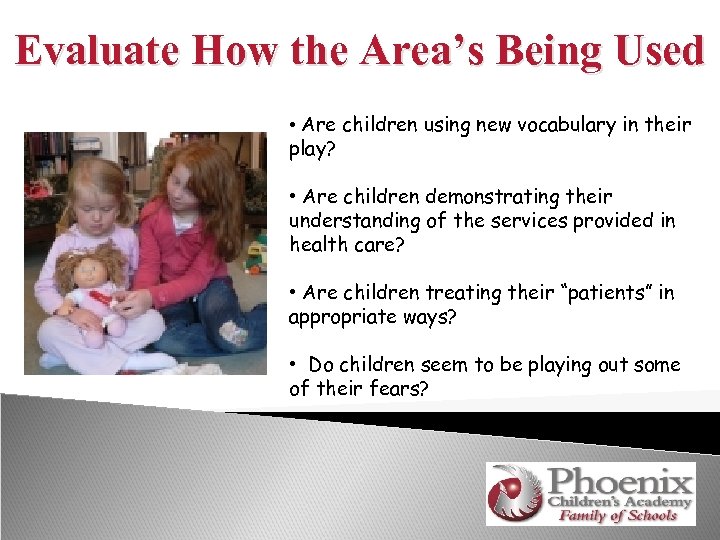
Evaluate How the Area’s Being Used • Are children using new vocabulary in their play? • Are children demonstrating their understanding of the services provided in health care? • Are children treating their “patients” in appropriate ways? • Do children seem to be playing out some of their fears?
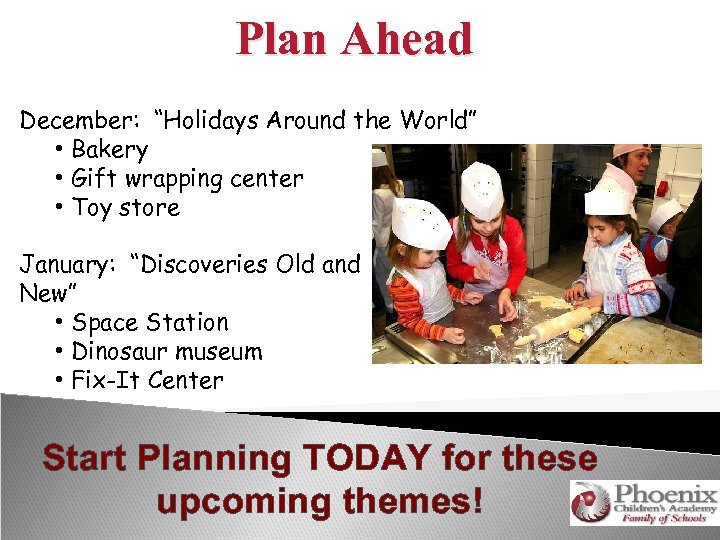
Plan Ahead December: “Holidays Around the World” • Bakery • Gift wrapping center • Toy store January: “Discoveries Old and New” • Space Station • Dinosaur museum • Fix-It Center Start Planning TODAY for these upcoming themes!
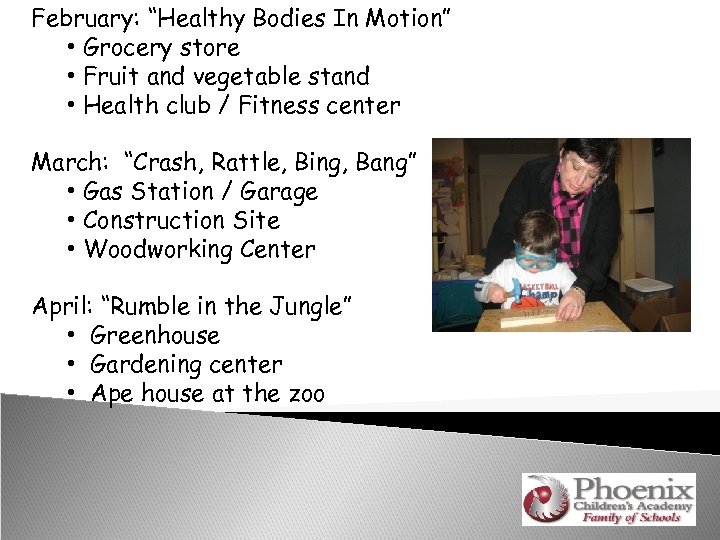
February: “Healthy Bodies In Motion” • Grocery store • Fruit and vegetable stand • Health club / Fitness center March: “Crash, Rattle, Bing, Bang” • Gas Station / Garage • Construction Site • Woodworking Center April: “Rumble in the Jungle” • Greenhouse • Gardening center • Ape house at the zoo
May: “Ocean Commotion” • Beach Center • Beach / Camp-out June, July and August: “My Summer Rocks Jr. ” • Continue to change out Dramatic Play area on monthly basis according to themes chosen by your school.
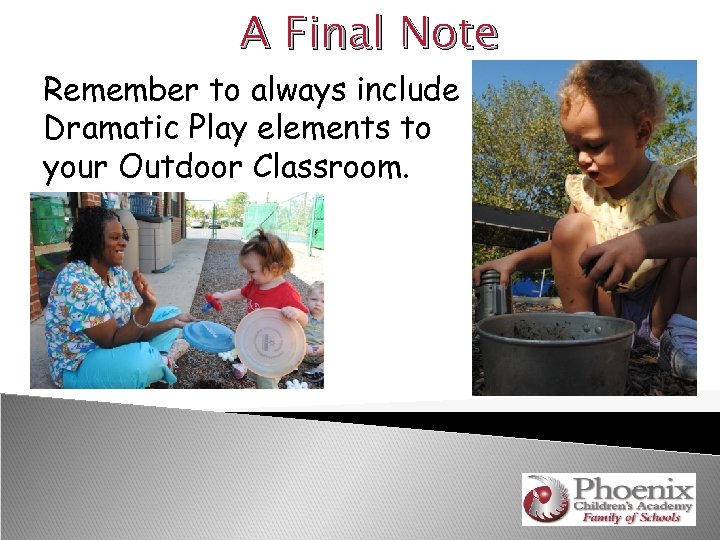
A Final Note Remember to always include Dramatic Play elements to your Outdoor Classroom.
References Bredekamp, S. (1999). Developmentally appropriate practice for children birth through age 8. Washington D. C. : National Association for the Education of Young Children. Cryer, D. , Harms, T. and Riley, C. (2003) All About the ECERS-R. The University of North Carolina at Chapel Hill, FPG Child Development Institute. Elkind, D. (1981) The Hurried Child: Growing up Too Fast Too Soon. Reading, MA: Addison. Wesley Publishing Company. Miller, K. (1999) Caring for Little Ones: Seeds of Dramatic Play-Enhanced by Adults. Young Children, 72 (4) 36 -39 Myhre, S. M. (1993). Enhancing your dramatic-play area through the use of prop boxes. Young Children, 48(5): 6 -11. Smilansky, S. (1968). The Effects of Sociodramatic Play on Disadvantaged Preschool Children. New York: Wiley. (2007). The Importance of Play: A High. Reach Learning Training. www. highreachlearning. com
Скачать презентацию Dramatic Play Play is often talked about as
85798583c7d28a53803e21330ecc7b3d.ppt