


 Скачать презентацию Draft Policy for Assessing Managing Contaminants in
96443ff6823164b771b733d308495c04.ppt
- Количество слайдов: 20
 Draft Policy for Assessing & Managing Contaminants in soil: a progress report WMINZ Conference, 15 October 2009 James Court and Howard Ellis Ministry for the Environment
 New policy initiatives on managing contaminants in soil • NZ risk-based methodology to derive soil guideline values levels protective of human health; • Determine good practice district plan provisions requiring appropriate risk management actions • national environmental standard or guidelines 2
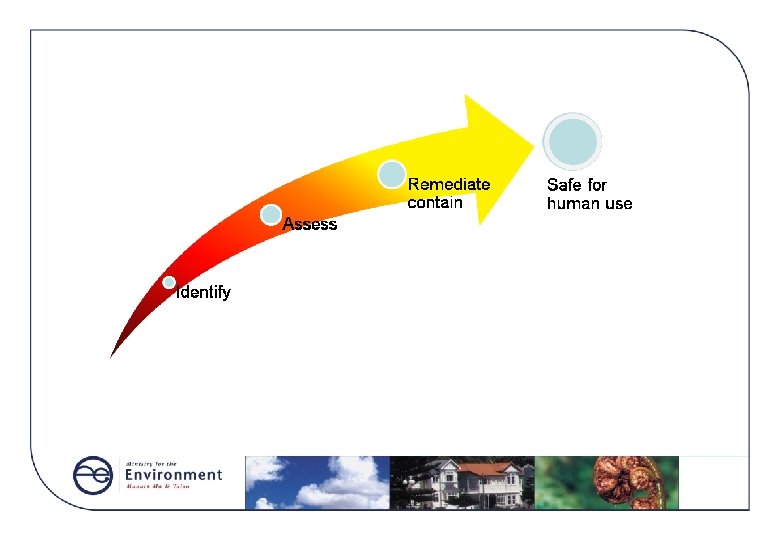
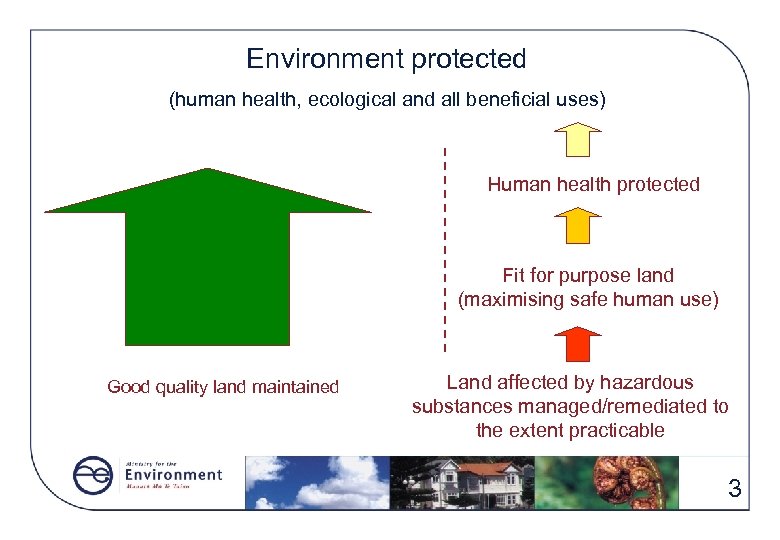 Environment protected (human health, ecological and all beneficial uses) Human health protected Fit for purpose land (maximising safe human use) Good quality land maintained Land affected by hazardous substances managed/remediated to the extent practicable 3
 Good practice district plan policies and rules Why high priority? [Section 31 of the RMA]: “the prevention or mitigation of any adverse effects of the development, subdivision, or use of contaminated land. ” 4
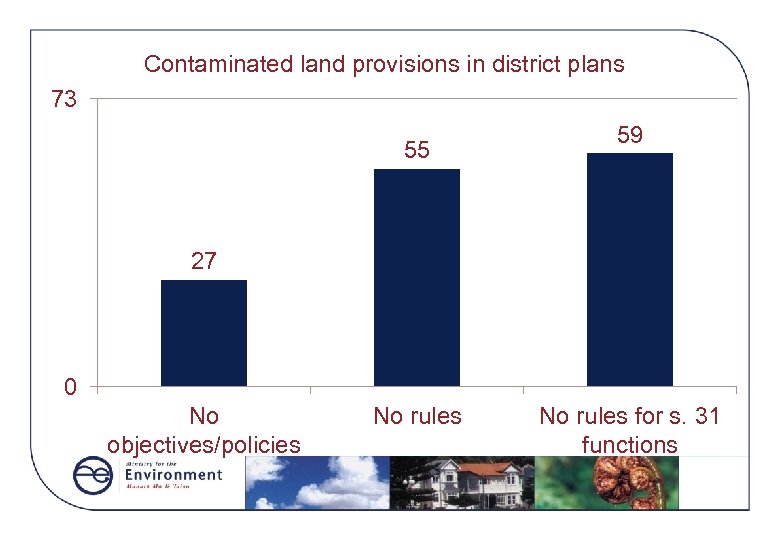 Contaminated land provisions in district plans 73 55 59 27 0 No objectives/policies No rules for s. 31 functions
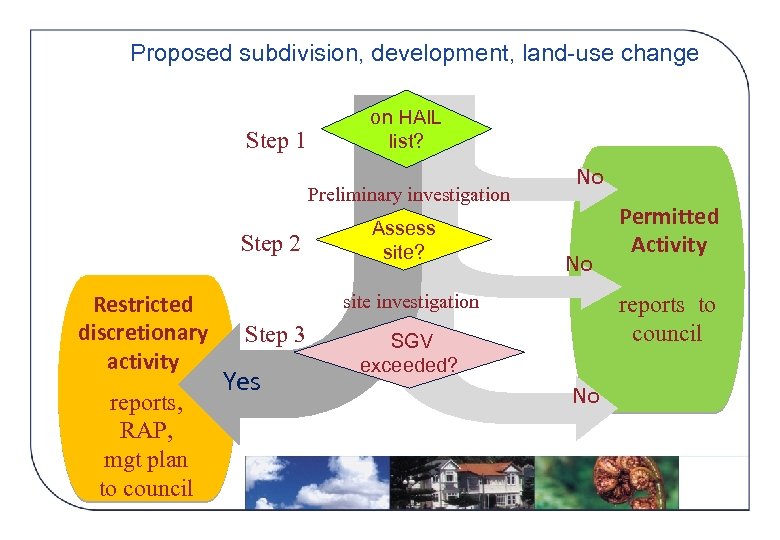 Proposed subdivision, development, land-use change Step 1 on HAIL list? Preliminary investigation Step 2 Restricted discretionary activity reports, RAP, mgt plan to council Assess site? No No site investigation Step 3 Yes Permitted Activity reports to council SGV exceeded? No
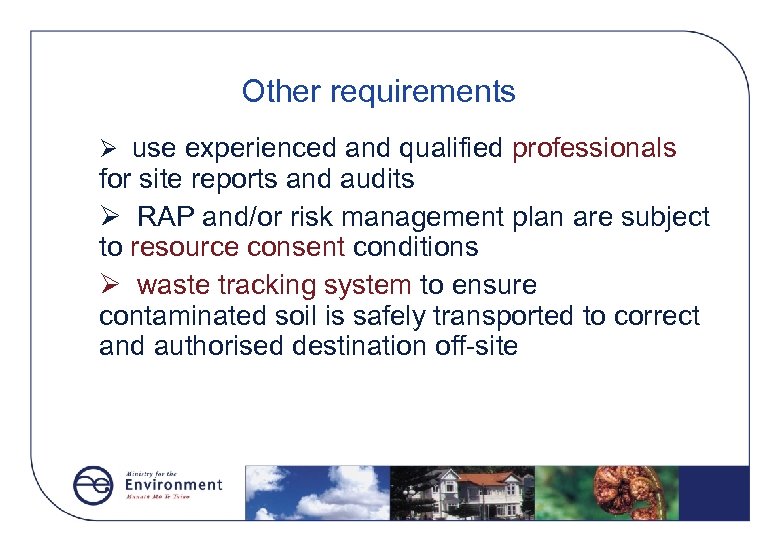 Other requirements Ø use experienced and qualified professionals for site reports and audits Ø RAP and/or risk management plan are subject to resource consent conditions Ø waste tracking system to ensure contaminated soil is safely transported to correct and authorised destination off-site
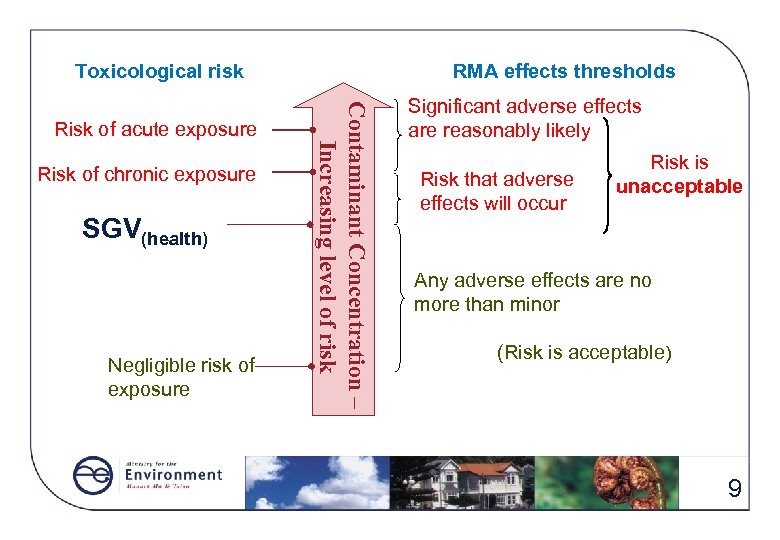 Toxicological risk Risk of chronic exposure SGV(health) Negligible risk of exposure Contaminant Concentration – Increasing level of risk Risk of acute exposure RMA effects thresholds Significant adverse effects are reasonably likely Risk that adverse effects will occur Risk is unacceptable Any adverse effects are no more than minor (Risk is acceptable) 9
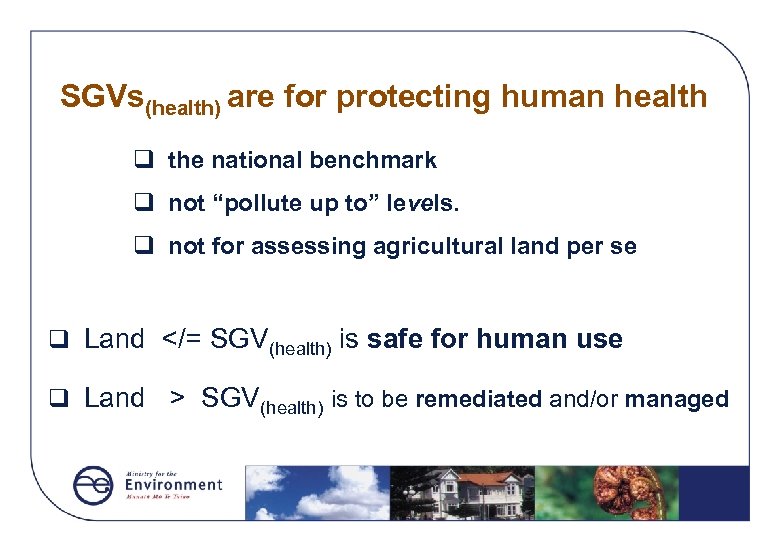 SGVs(health) are for protecting human health q the national benchmark q not “pollute up to” levels. q not for assessing agricultural land per se q Land SGV(health) is to be remediated and/or managed
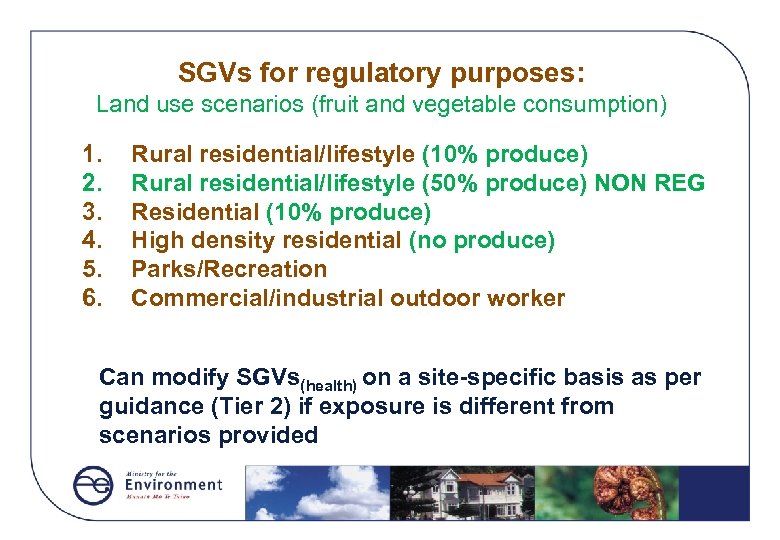 SGVs for regulatory purposes: Land use scenarios (fruit and vegetable consumption) 1. 2. 3. 4. 5. 6. Rural residential/lifestyle (10% produce) Rural residential/lifestyle (50% produce) NON REG Residential (10% produce) High density residential (no produce) Parks/Recreation Commercial/industrial outdoor worker Can modify SGVs(health) on a site-specific basis as per guidance (Tier 2) if exposure is different from scenarios provided
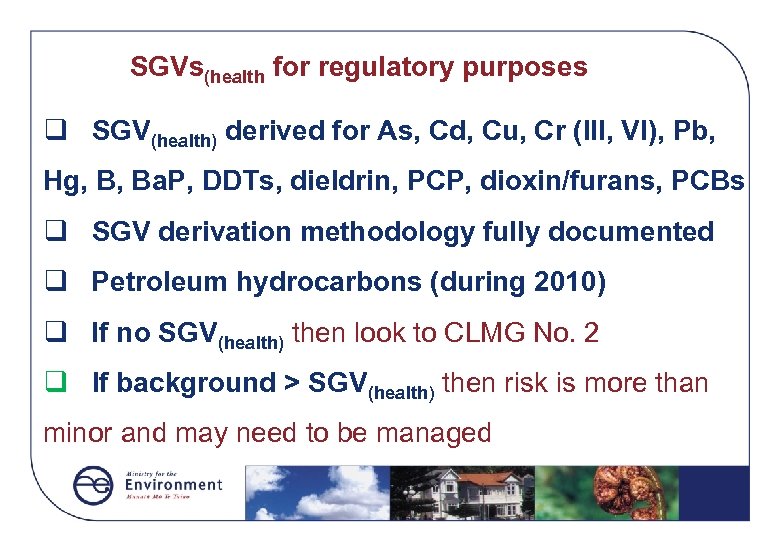 SGVs(health for regulatory purposes q SGV(health) derived for As, Cd, Cu, Cr (III, VI), Pb, Hg, B, Ba. P, DDTs, dieldrin, PCP, dioxin/furans, PCBs q SGV derivation methodology fully documented q Petroleum hydrocarbons (during 2010) q If no SGV(health) then look to CLMG No. 2 q If background > SGV(health) then risk is more than minor and may need to be managed
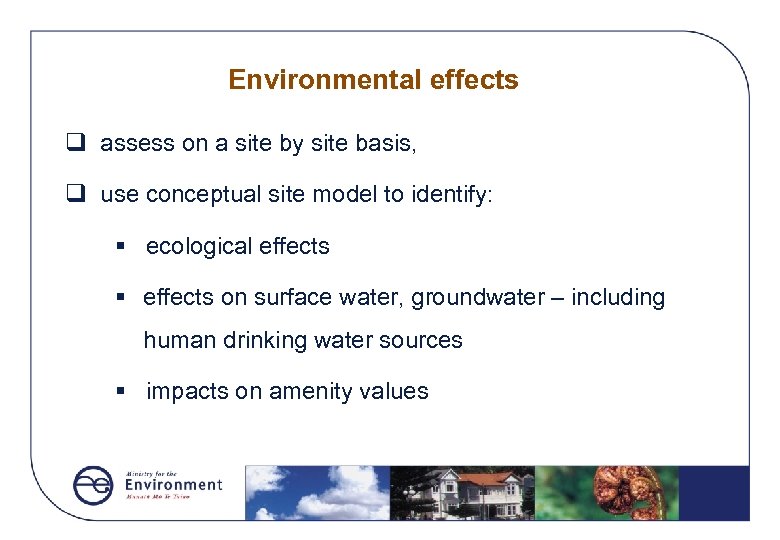 Environmental effects q assess on a site by site basis, q use conceptual site model to identify: § ecological effects § effects on surface water, groundwater – including human drinking water sources § impacts on amenity values
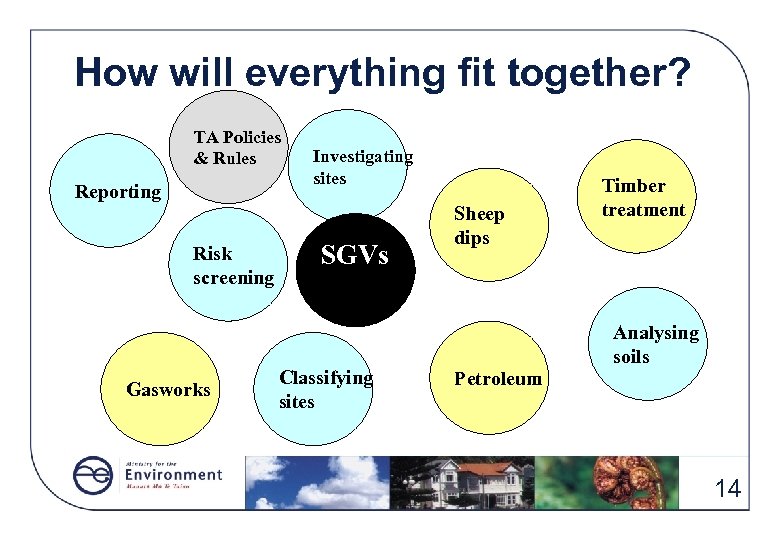 How will everything fit together? TA Policies & Rules Reporting Risk screening Gasworks Investigating sites SGVs Classifying sites Sheep dips Petroleum Timber treatment Analysing soils 14
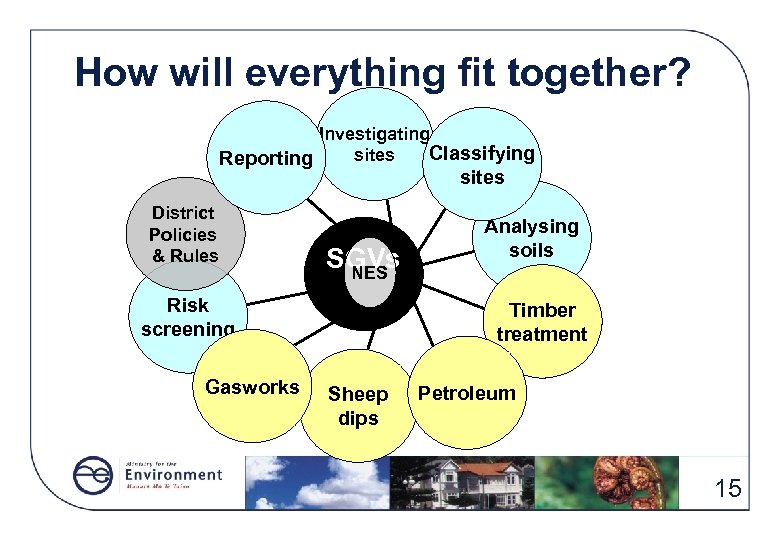 How will everything fit together? Investigating Classifying sites Reporting sites District Policies & Rules SGVs NES Risk screening Gasworks Analysing soils Timber treatment Sheep dips Petroleum 15
 16
16
 17
17
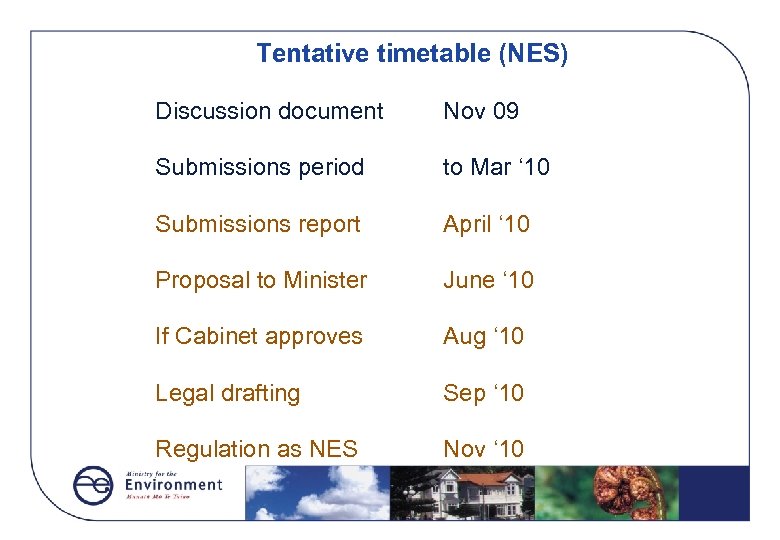 Tentative timetable (NES) Discussion document Nov 09 Submissions period to Mar ‘ 10 Submissions report April ‘ 10 Proposal to Minister June ‘ 10 If Cabinet approves Legal drafting Regulation as NES Aug ‘ 10 Sep ‘ 10 Nov ‘ 10
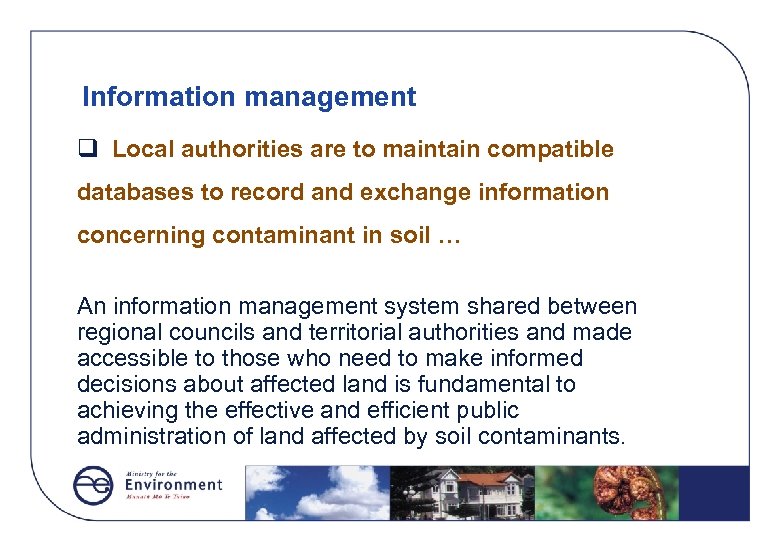 Information management q Local authorities are to maintain compatible databases to record and exchange information concerning contaminant in soil … An information management system shared between regional councils and territorial authorities and made accessible to those who need to make informed decisions about affected land is fundamental to achieving the effective and efficient public administration of land affected by soil contaminants.
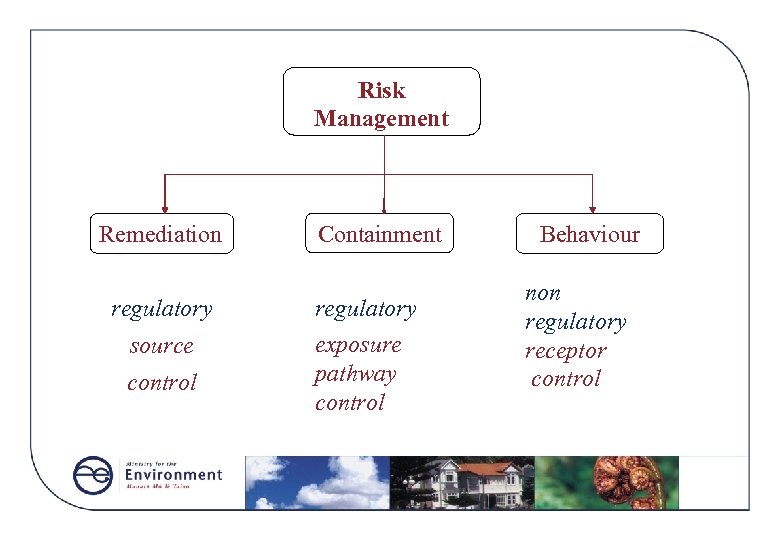 Risk Management Remediation regulatory source control Containment regulatory exposure pathway control Behaviour non regulatory receptor control