 Скачать презентацию Down in the Trenches Automating Label Placement in
cf71c76f9366238e81df95e9978ecf3f.ppt
- Количество слайдов: 42



Down in the Trenches Automating Label Placement in Dense Utility Maps Jill Phelps Kern

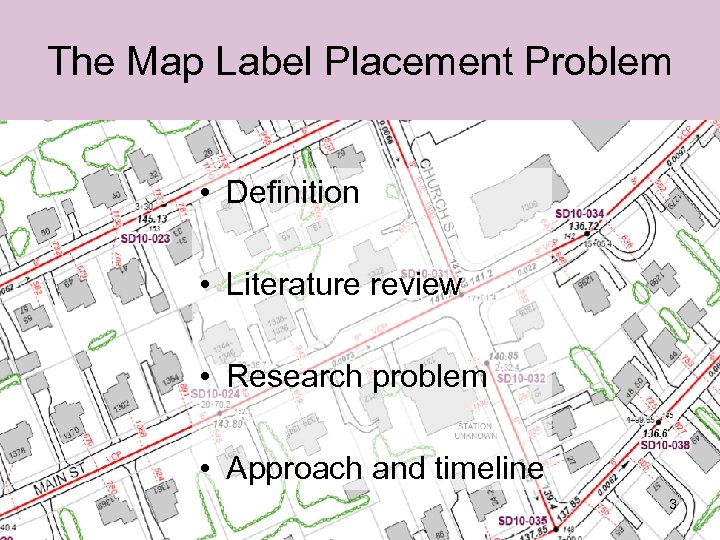
The Map Label Placement Problem • Definition • Literature review • Research problem • Approach and timeline 3
Problem Definition The Map Label Placement Problem Placing map feature labels • legibly • without overlap (features / other labels) • maintaining visual association of labels with their features 4
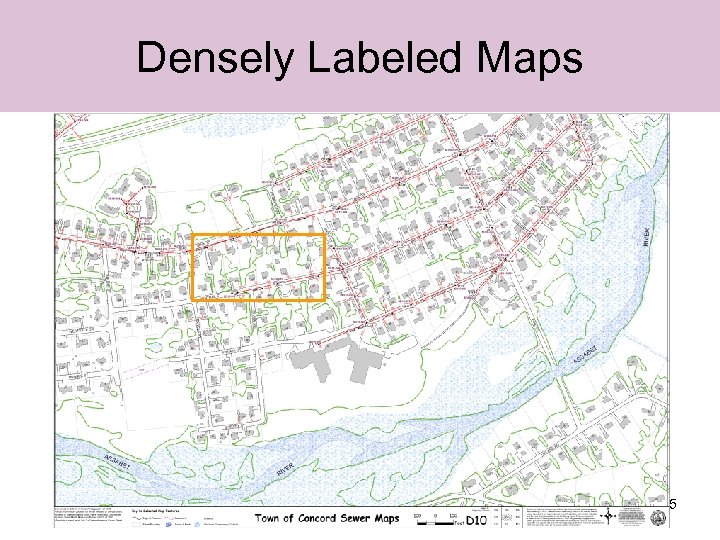
Densely Labeled Maps 5
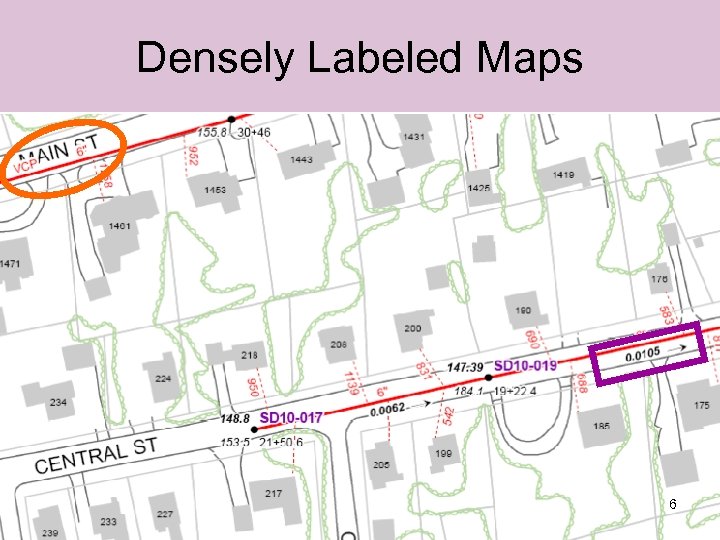
Densely Labeled Maps 6
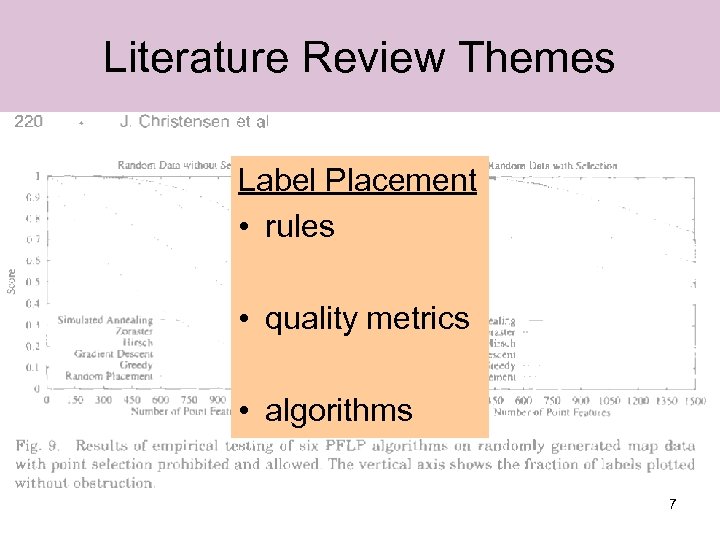
Literature Review Themes Label Placement • rules • quality metrics • algorithms 7
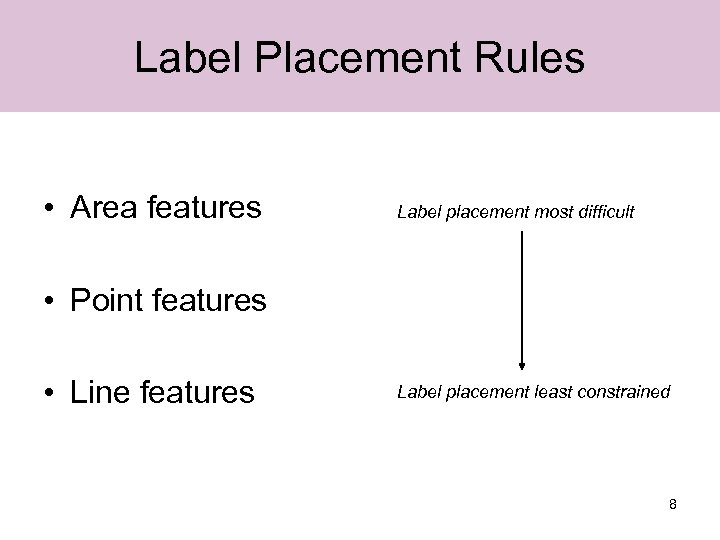
Label Placement Rules • Area features Label placement most difficult • Point features • Line features Label placement least constrained 8
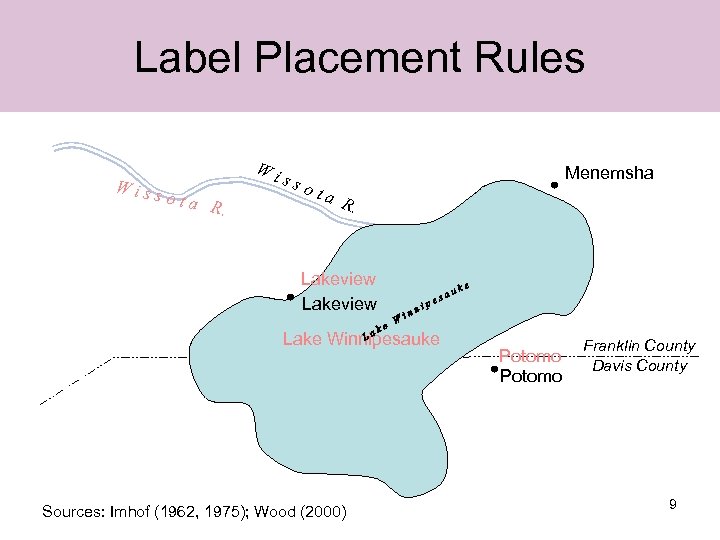
Label Placement Rules Wiss Wi ota R. sso ta Menemsha R. Lakeview Lake Winnipesauke Sources: Imhof (1962, 1975); Wood (2000) Potomo Franklin County Davis County 9
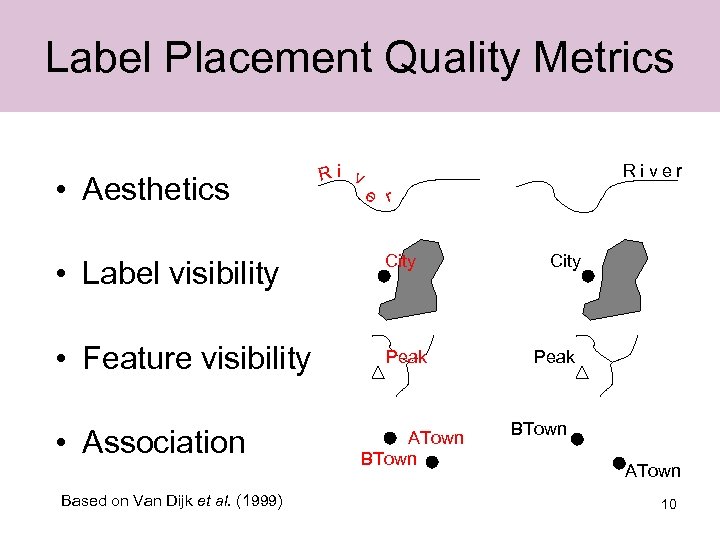
Label Placement Quality Metrics • Aesthetics Ri v River e r • Label visibility City • Feature visibility Peak • Association Based on Van Dijk et al. (1999) ATown BTown City Peak BTown ATown 10
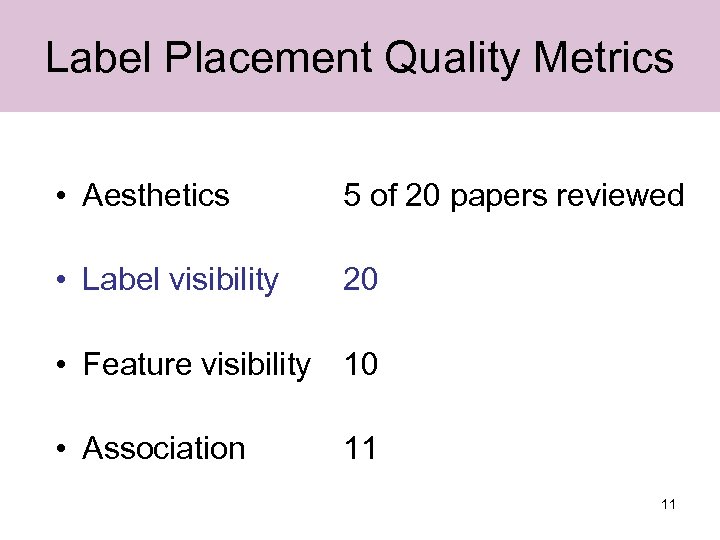
Label Placement Quality Metrics • Aesthetics 5 of 20 papers reviewed • Label visibility 20 • Feature visibility 10 • Association 11 11
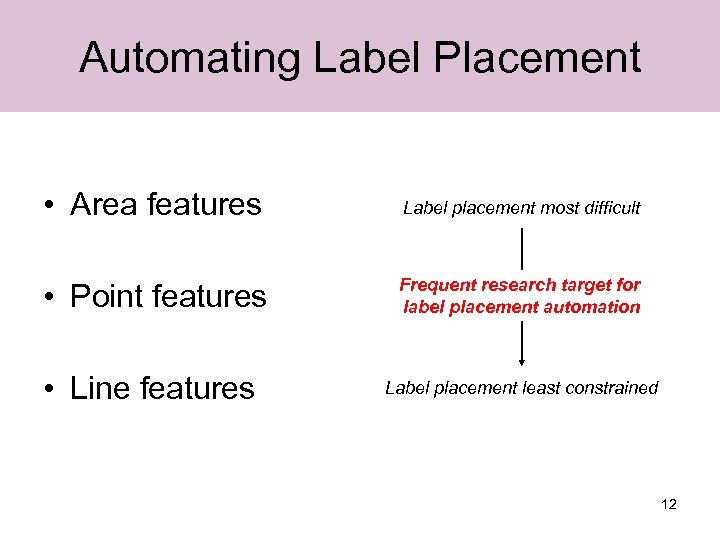
Automating Label Placement • Area features Label placement most difficult • Point features Frequent research target for label placement automation • Line features Label placement least constrained 12
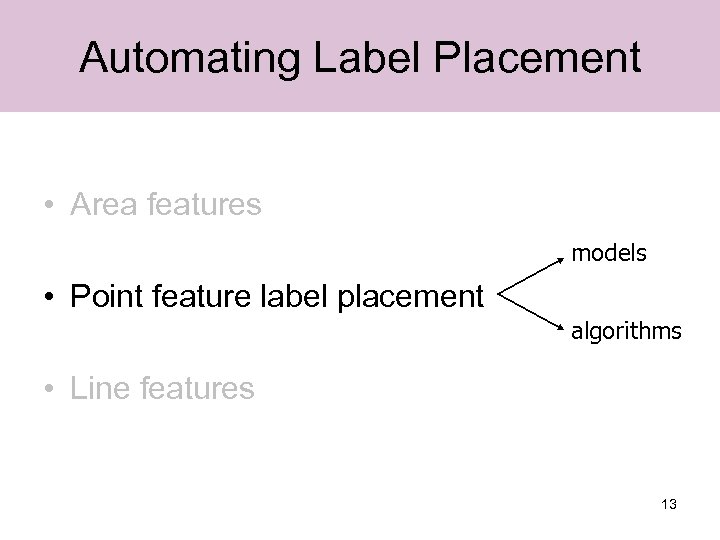
Automating Label Placement • Area features models • Point feature label placement algorithms • Line features 13
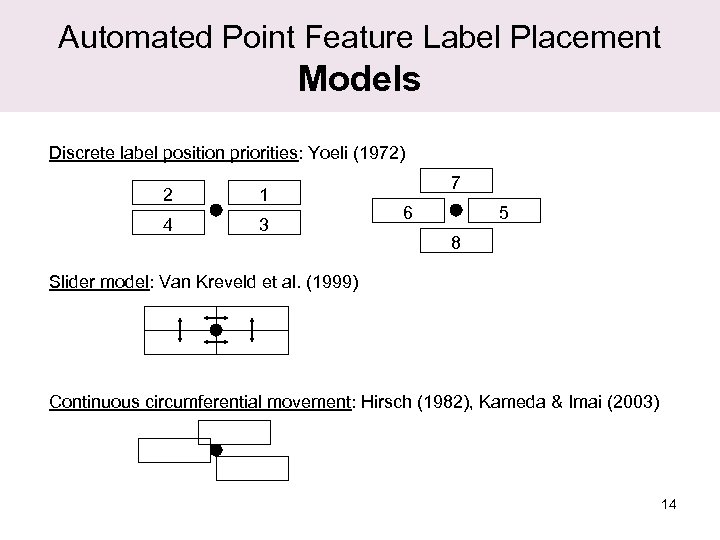
Automated Point Feature Label Placement Models Discrete label position priorities: Yoeli (1972) 2 1 4 3 7 6 5 8 Slider model: Van Kreveld et al. (1999) Continuous circumferential movement: Hirsch (1982), Kameda & Imai (2003) 14
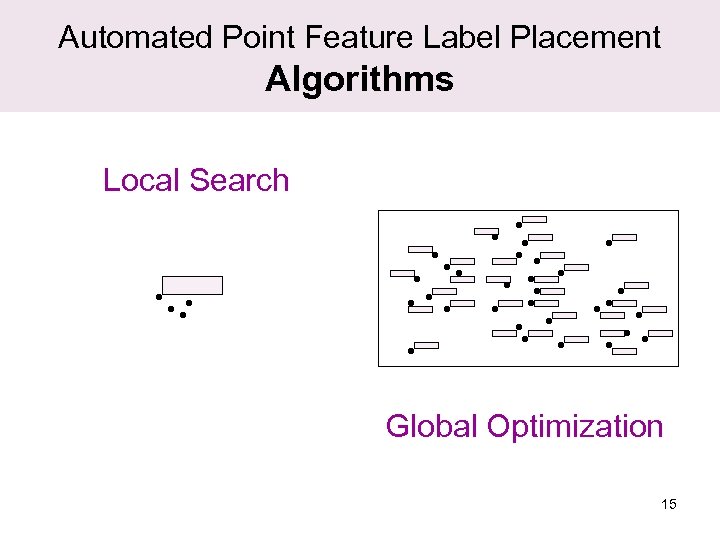
Automated Point Feature Label Placement Algorithms Local Search Global Optimization 15
Automated Point Feature Label Placement Algorithms Local Search • Rule-based exhaustive search • Gradient descent Global Optimization • Force-directed • Simulated annealing 16
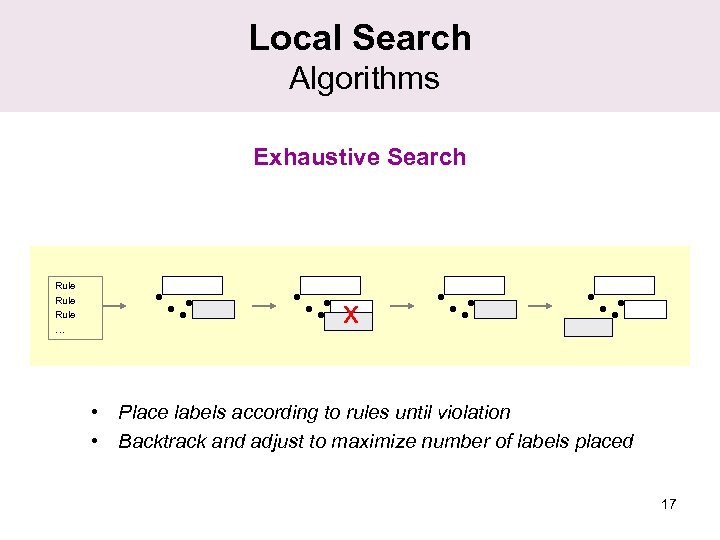
Local Search Algorithms Exhaustive Search Rule … x • Place labels according to rules until violation • Backtrack and adjust to maximize number of labels placed 17
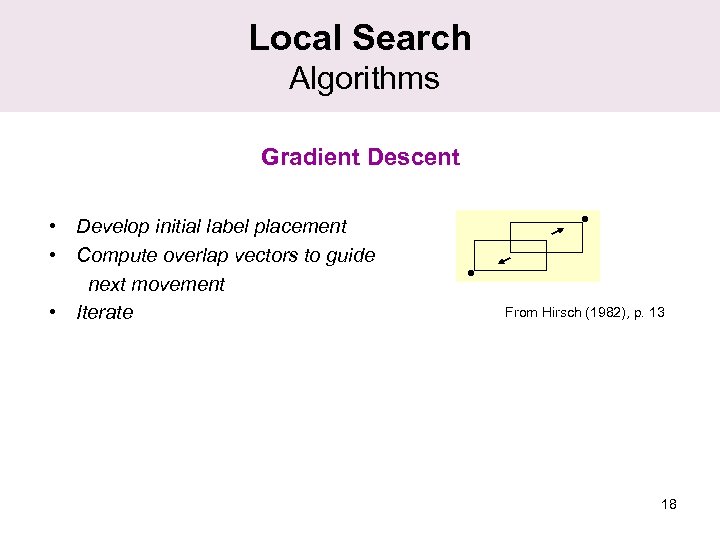
Local Search Algorithms Gradient Descent • Develop initial label placement • Compute overlap vectors to guide next movement • Iterate From Hirsch (1982), p. 13 18
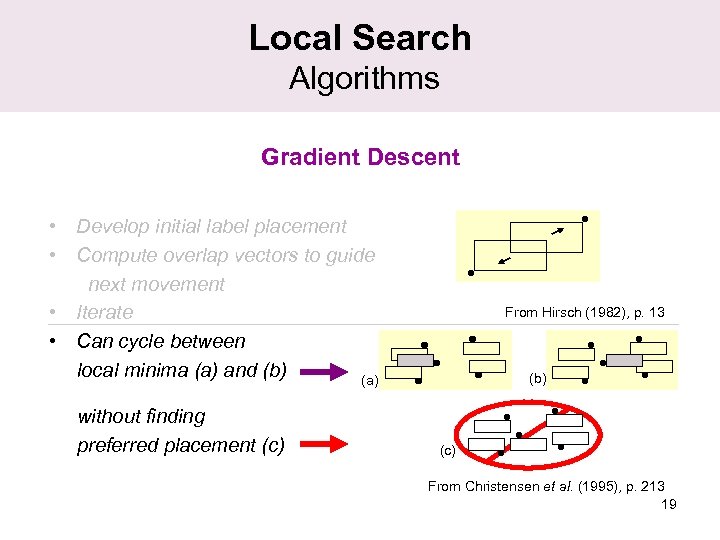
Local Search Algorithms Gradient Descent • Develop initial label placement • Compute overlap vectors to guide next movement • Iterate • Can cycle between local minima (a) and (b) (a) without finding preferred placement (c) From Hirsch (1982), p. 13 (b) (c) From Christensen et al. (1995), p. 213 19
Automated Point Feature Label Placement Algorithms Local Search • Rule-based exhaustive search • Gradient descent Global Optimization • Force-directed • Simulated annealing 20
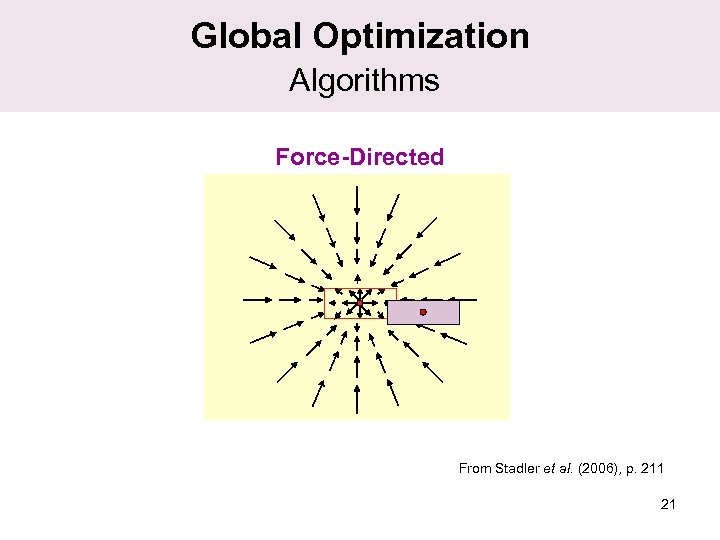
Global Optimization Algorithms Force-Directed From Stadler et al. (2006), p. 211 21
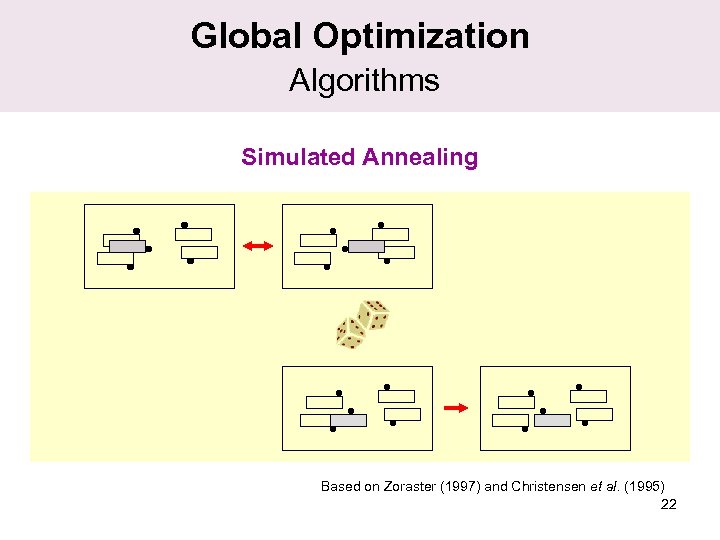
Global Optimization Algorithms Simulated Annealing Based on Zoraster (1997) and Christensen et al. (1995) 22
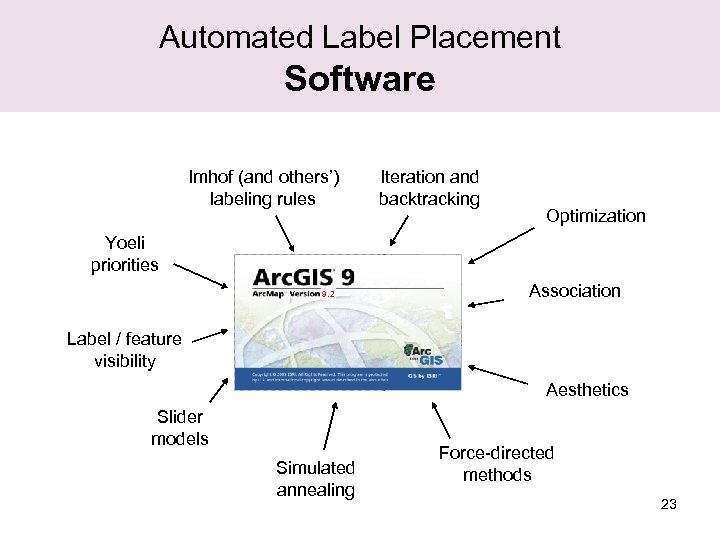
Automated Label Placement Software Imhof (and others’) labeling rules Iteration and backtracking Optimization Yoeli priorities 9. 2 Association Label / feature visibility Aesthetics Slider models Simulated annealing Force-directed methods 23
Project Objectives Evaluate the automated labeling capabilities of current GIS software when applied to dense maps Identify factors which necessitate manual label placement 24
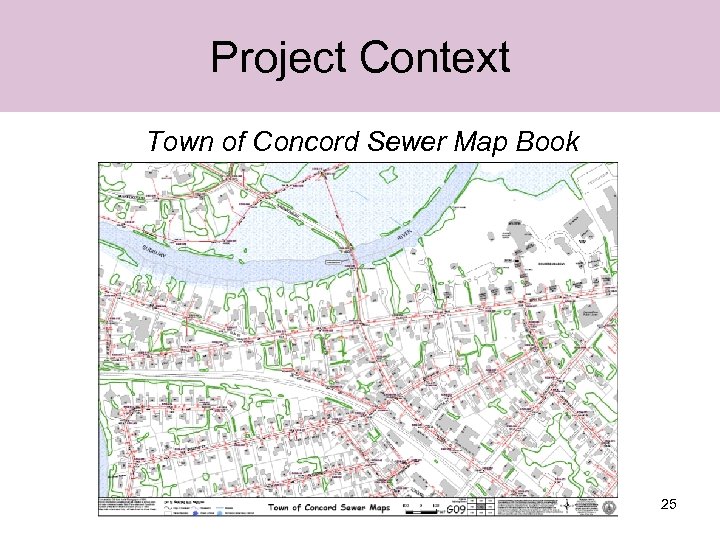
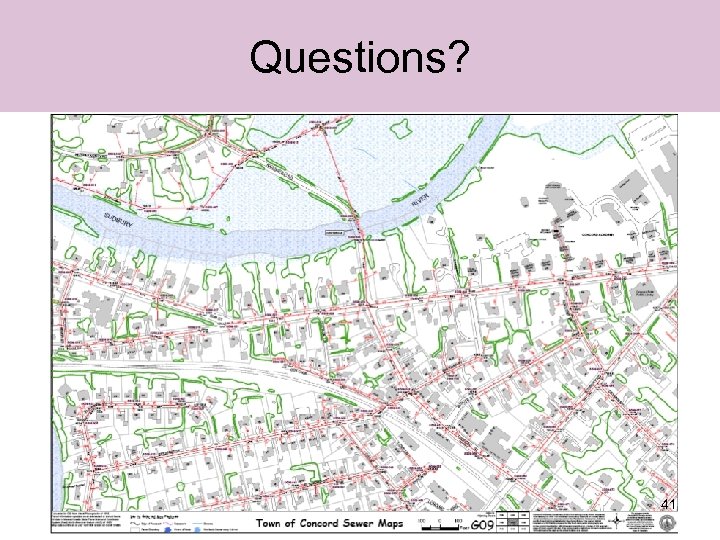
Project Context Town of Concord Sewer Map Book 25
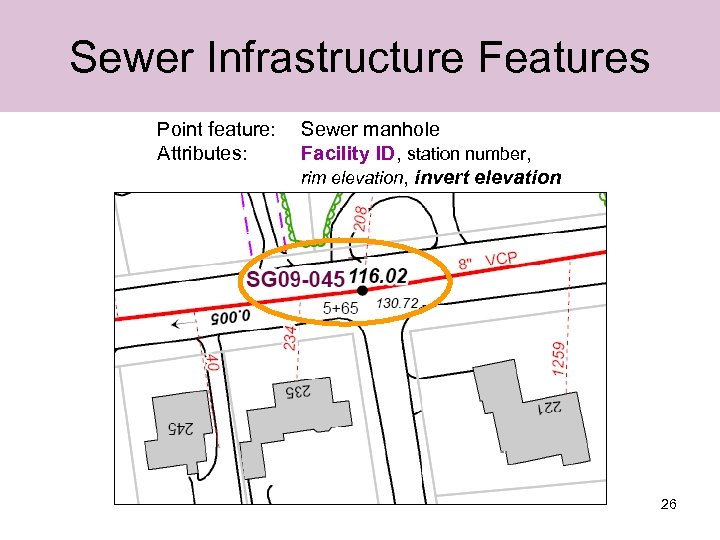
Sewer Infrastructure Features Point feature: Attributes: Sewer manhole Facility ID, station number, rim elevation, invert elevation 26
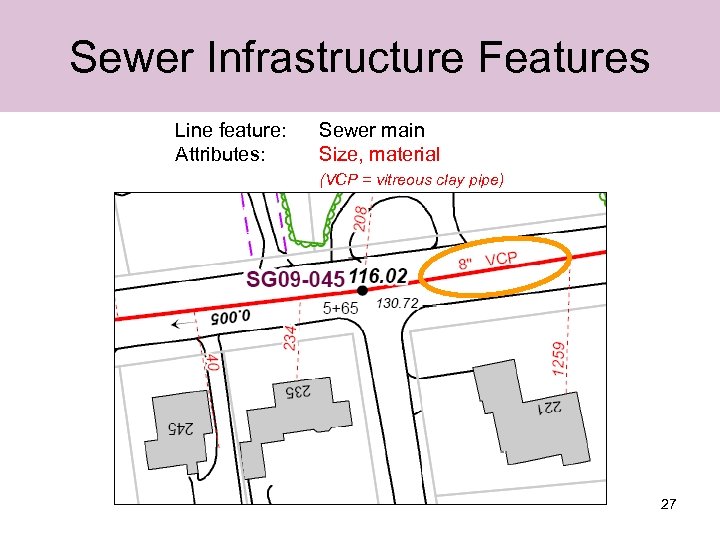
Sewer Infrastructure Features Line feature: Attributes: Sewer main Size, material (VCP = vitreous clay pipe) 27
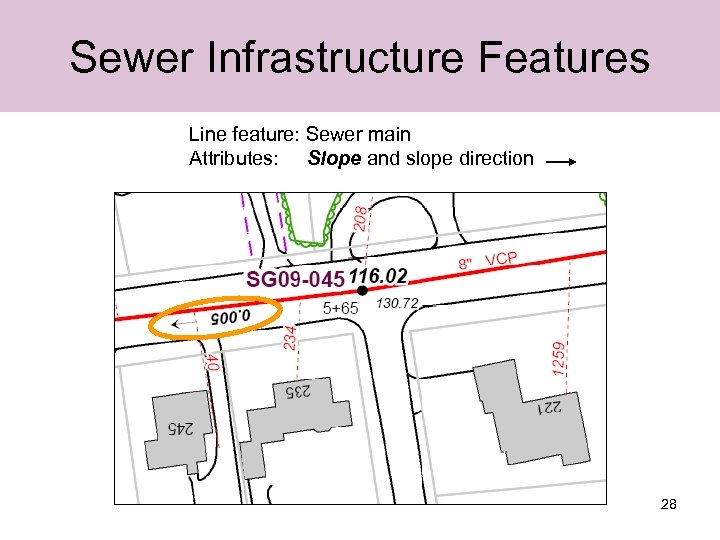
Sewer Infrastructure Features Line feature: Sewer main Attributes: Slope and slope direction 28
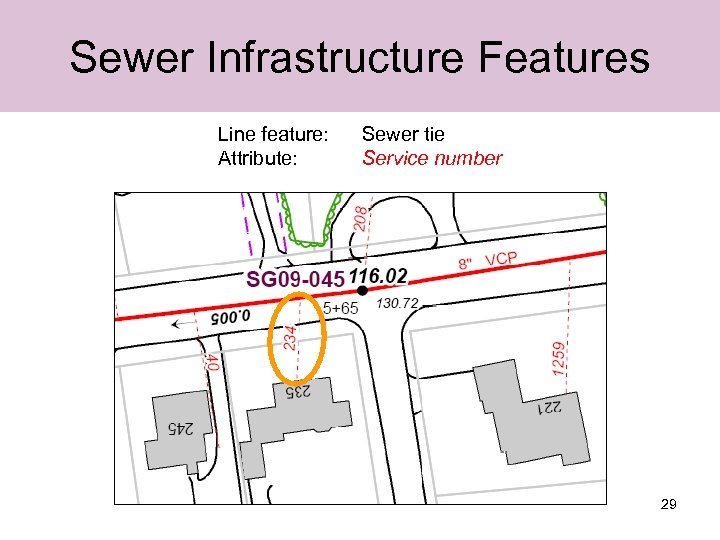
Sewer Infrastructure Features Line feature: Attribute: Sewer tie Service number 29
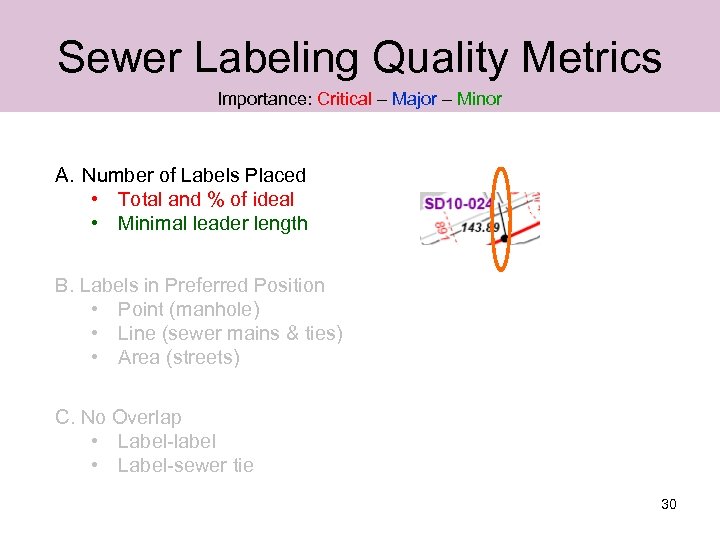
Sewer Labeling Quality Metrics Importance: Critical – Major – Minor A. Number of Labels Placed • Total and % of ideal • Minimal leader length B. Labels in Preferred Position • Point (manhole) • Line (sewer mains & ties) • Area (streets) C. No Overlap • Label-label • Label-sewer tie 30
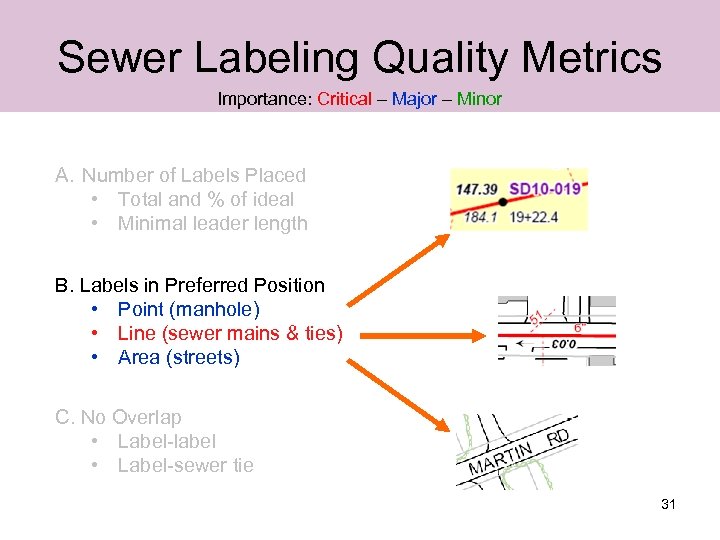
Sewer Labeling Quality Metrics Importance: Critical – Major – Minor A. Number of Labels Placed • Total and % of ideal • Minimal leader length B. Labels in Preferred Position • Point (manhole) • Line (sewer mains & ties) • Area (streets) C. No Overlap • Label-label • Label-sewer tie 31
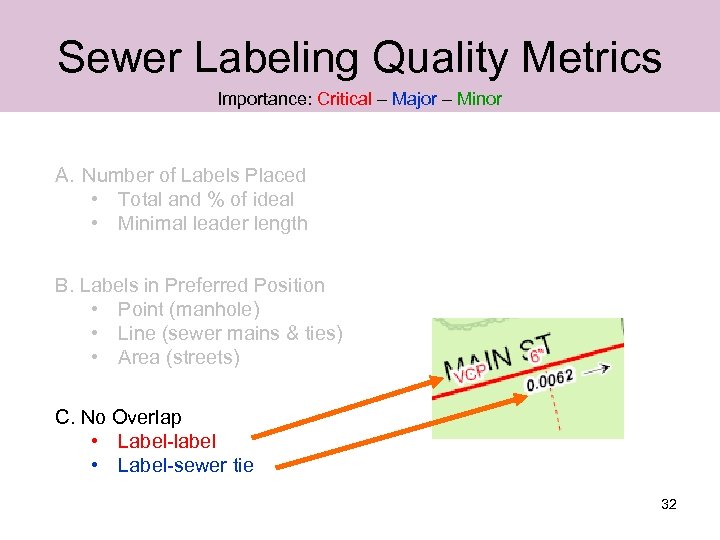
Sewer Labeling Quality Metrics Importance: Critical – Major – Minor A. Number of Labels Placed • Total and % of ideal • Minimal leader length B. Labels in Preferred Position • Point (manhole) • Line (sewer mains & ties) • Area (streets) C. No Overlap • Label-label • Label-sewer tie 32
Approach and Timeline 1. Prepare for research (Dec – Feb) 2. Conduct research (Mar – May) 3. Develop conclusions (Jun – Jul) 4. Present findings (Aug – Oct) 33

1. Prepare for Research • Conduct literature review - COMPLETE • Select case study maps - COMPLETE • Design label classes, styles and hierarchy / weighting - COMPLETE • Develop label placement quality metrics - COMPLETE 34
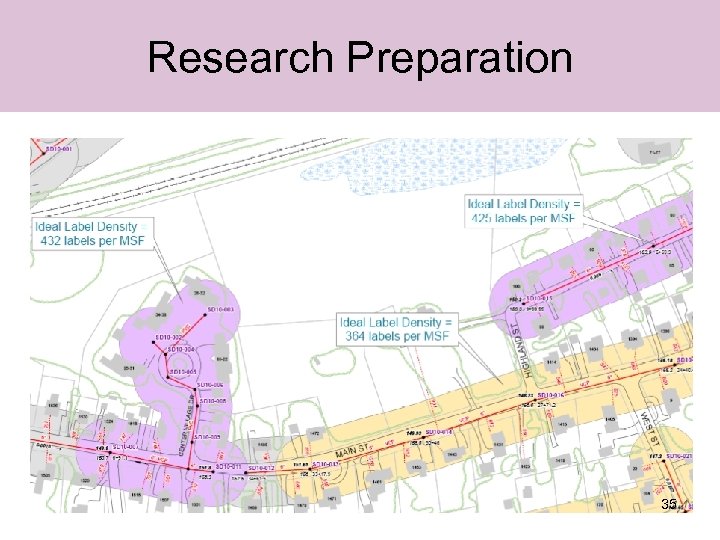
Research Preparation 35
2. Conduct Research A. Automated Labeling • Apply automated ESRI labeling tools to case study maps • • Standard labeling engine Maplex • Measure quality of automated results • Iterate to improve quality using automated tools • Select highest quality result (standard vs. Maplex) for remaining steps 36
2. Conduct Research B. Manual labeling • Complete manual adjustments • Measure quality of manual results • Compare quality of final automated vs manual 37
3. Develop Conclusions • Strengths and limitations of current automated labeling tools • Conditions under which manual placement becomes preferable • Research limitations and potential for future study 38
4. Present Findings • Prepare for conference presentation • Present at NACIS 2007 conference 39
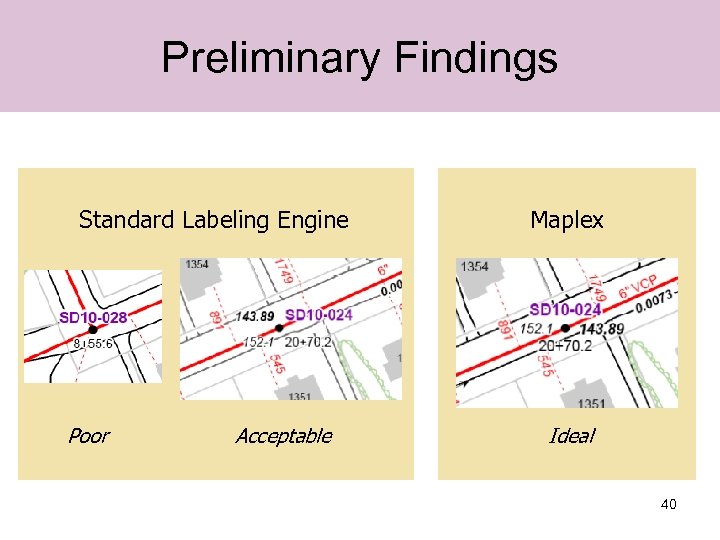
Preliminary Findings Standard Labeling Engine Poor Acceptable Maplex Ideal 40
Questions? 41
References Christensen, Joe Marks, and Stuart Shieber. 1994. Placing text labels on maps and diagrams. Graphics Gems IV, Cambridge MA: Academic Press, 497 -504. Christensen, Joe Marks, and Stuart Shieber. 1995. An empirical study of algorithms for point-feature label placement. ACM Transactions on Graphics (14)3: 203 -232. Cook, Anthony C. and Christopher B. Jones. 1990. A Prolog interface to a cartographic database for name placement. In Proceedings of the International Symposium on Spatial Data Handling, International Geographical Union and International Cartographic Association, pp. 701 -710. Doerschler, Jeffrey S. and Herbert Freeman. 1992. A rule-based system for dense-map name placement. Communications of the ACM (35)1: 6879. Ebner, Dietmar, Gunner W. Klau and Rene Weiskirscher. 2003. Force-based label number maximization. Technical Report TR 186 -1 -03 -02, Vienna: Vienna University of Technology. Edmondson, Shawn, Jon Christensen, Joe Marks, and Stuart M. Shieber. 1996. A general cartographic labeling algorithm. Cartographica (33)4: 13 -23. Freeman, Herbert and John Ahn. 1984. AUTONAP – an expert system for automatic name placement. Proceedings of the International Symposium on Spatial Data Handling, International Geographical Union and International Cartographic Association, pp. 544 -569. Freeman, Herbert and John Ahn. 1987. On the problem of placing names in a geographic map. International Journal of Pattern Recognition and Artificial Intelligence 1(1): 121 -140. Hirsch, Steven A. 1982. An algorithm for automatic name placement around point data. The American Cartographer 9(1): 5 -17. Imhof, Eduard. 1962. Die Anordnung der Namen in der Karte [Positioning names on maps]. Internationales Jahrbuch fur Kartographie, vol. 2, Verlagsgruppe Bertelsmann Gmb. H/Kartographisches Institut Bertelsman, pp. 93 -129. Imhof, Eduard. 1975. Positioning names on maps. The American Cartographer 2(2): 128 -144. Jones, Christopher B. 1989. Cartographic name placement with Prolog. IEEE Computer Graphics and Applications 9(5): 36 -47. Kameda, Takayuki, and Keiko Imai. 2003. Map label placement for points and curves. IEICE Transaction Fundamentals E 86 -A(4): 835 -840. Stadler, Georg, Tibor Steiner and Jurgen Beiglbock. 2006. A practical map labeling algorithm utilizing morphological image processing and forcedirected methods. Cartography and Geographic Information Science 33(3): 207 -215. Van Dijk, S. , M. Van Krefeld, Tycho Strijk, and Alecander Wolff. 1999. Towards an evaluation of quality for label placement methods. Proceedings of the 19 th International Cartographic Conference and 11 th General Assembly, ed. by C. P. Keller, Ottawa, Ontario, pp. 57 -64. Van Kreveld, M. , Tycho Trijk and Alexander Wolff. 1999. Point labeling with sliding labels. Computational Geometry 13: pp. 21 -47. Wood, Clifford H. 2000. Descriptive and illustrated guide for type placement in small scale maps. The Cartographic Journal 37(1): 5 -18. Yoeli, P. 1972. The logic of automated map lettering. The Cartographic Journal 9(2): 99 -108. 42 Zoraster, Steven. 1997. Practical results using simulated annealing for point feature label placement. Cartography and Geographic Information Science 24(4): 228 -238.
Скачать презентацию Down in the Trenches Automating Label Placement in
cf71c76f9366238e81df95e9978ecf3f.ppt