 Скачать презентацию Done by Musalieva Tomiris SHTK- 311 Continuous
Томирис практ,грамма.pptx
- Количество слайдов: 22



Done by: Musalieva Tomiris SHTK- 311
Continuous tense A tense of verbs used in describing action that on -going
We use the past continuous to describe an interrupted activity which continued for a period in the past and to talk about things happening for a continuous period in the past.

to say that somebody was in the middle of doing something He was playing computer games. for two things happening at the same time He was playing computer games while she was watching TV. for things you were in the middle of doing when another thing happened He was watching TV when Tom arrived.
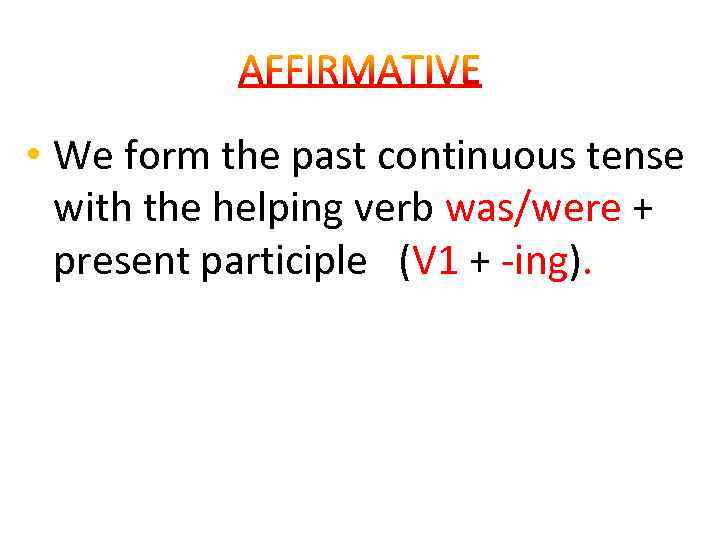
• We form the past continuous tense with the helping verb was/were + present participle (V 1 + -ing).
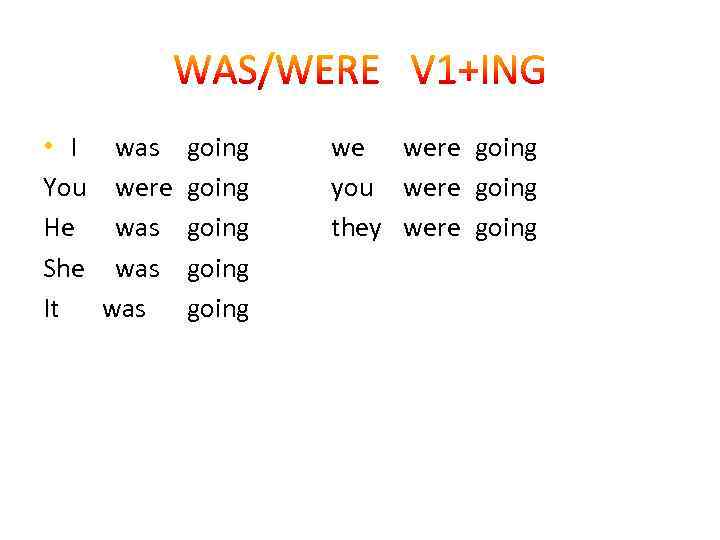
• I was You were He was She was It was going going we were going you were going they were going
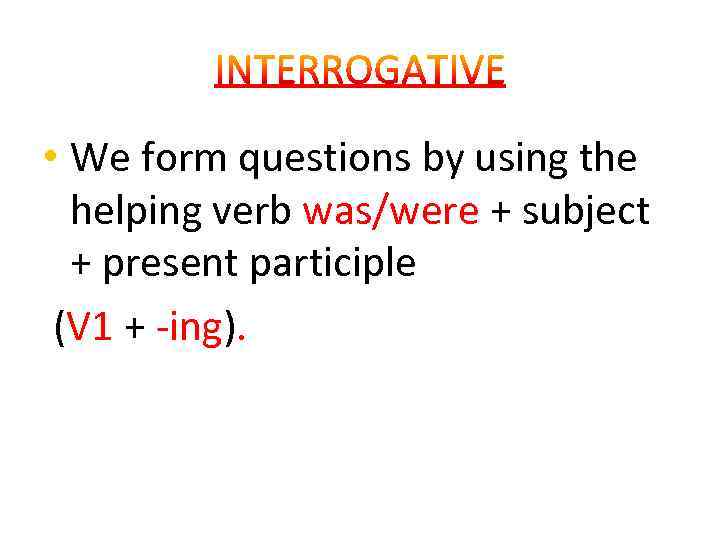
• We form questions by using the helping verb was/were + subject + present participle (V 1 + -ing).
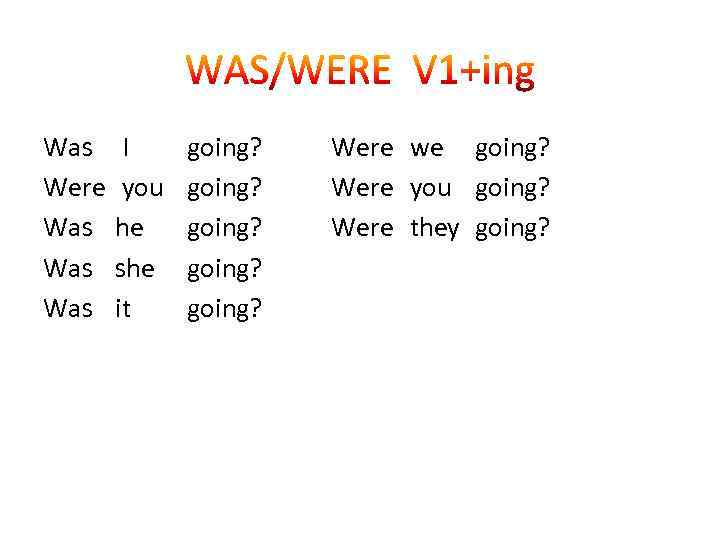
Was Were Was Was I you he she it going? going? Were we going? Were you going? Were they going?
• We form the negative with the helping verb was/were + not + present participle (V 1 + -ing).
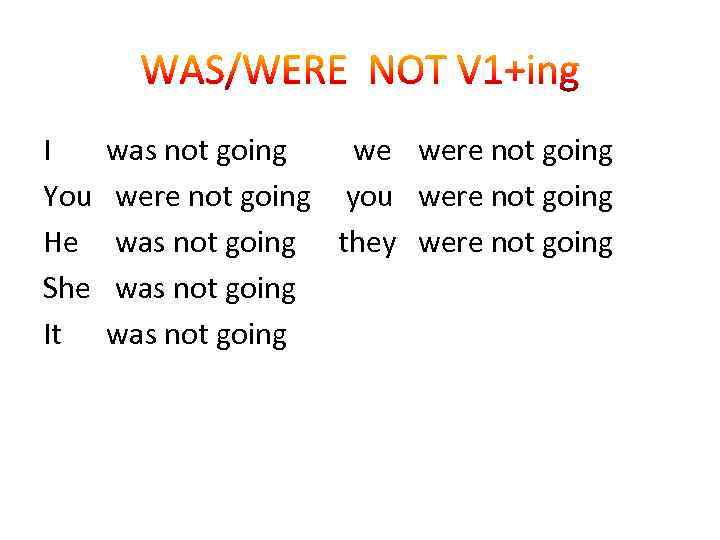
I was not going were not going You were not going you were not going He was not going they were not going She was not going It was not going
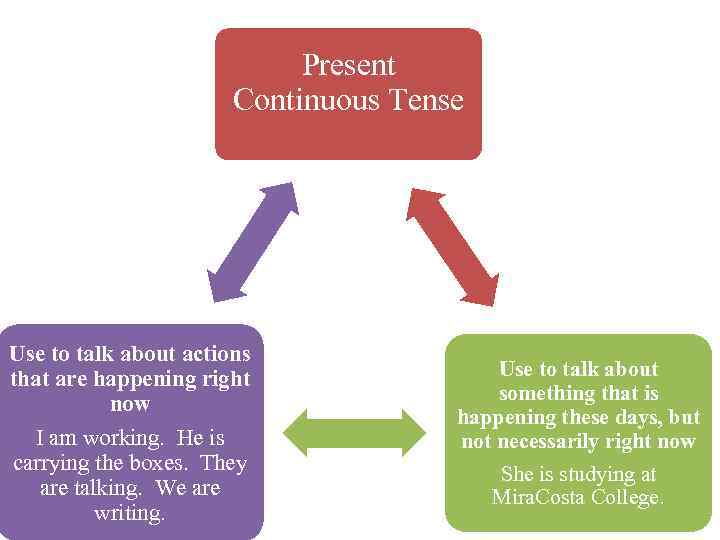
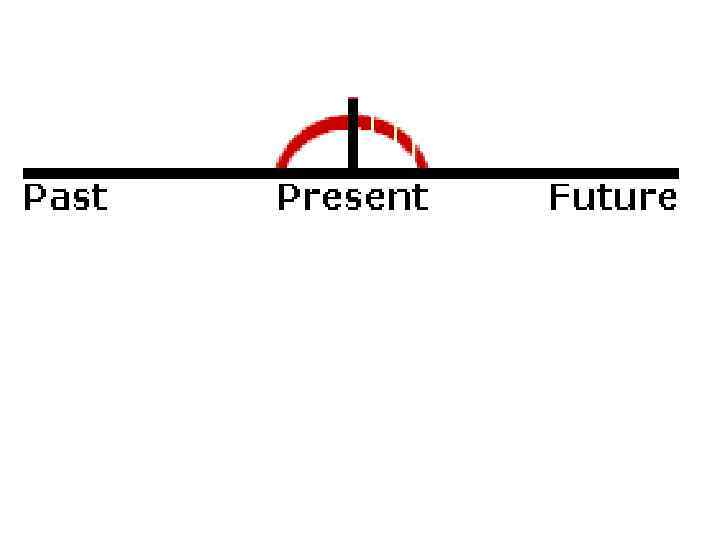
Present Continuous Tense Use to talk about actions that are happening right now I am working. He is carrying the boxes. They are talking. We are writing. Use to talk about something that is happening these days, but not necessarily right now She is studying at Mira. Costa College.
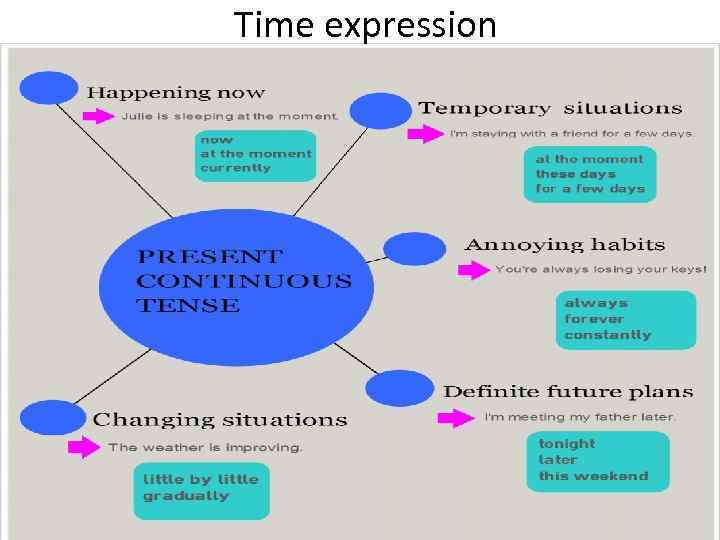
Time expression

To Form Present Continuous Subject + to be + verb+ing Negatives and Questions in the Present Continuous Tense Statement Yes/no question Wh- question Negative I am eating. Am I eating? What am I eating? I am not eating. You are crying. Are you crying? Why are you crying? You are not crying. He is going. Is he going? Where is he going? He is not going. She is arriving. Is she arriving? When is she arriving? She is not arriving. It is sleeping. Is it sleeping? Why is it sleeping? It is not sleeping. We are leaving. Are we leaving? When are we leaving? We are not leaving. They are arguing. Are they arguing? Why are they arguing? They are not arguing.
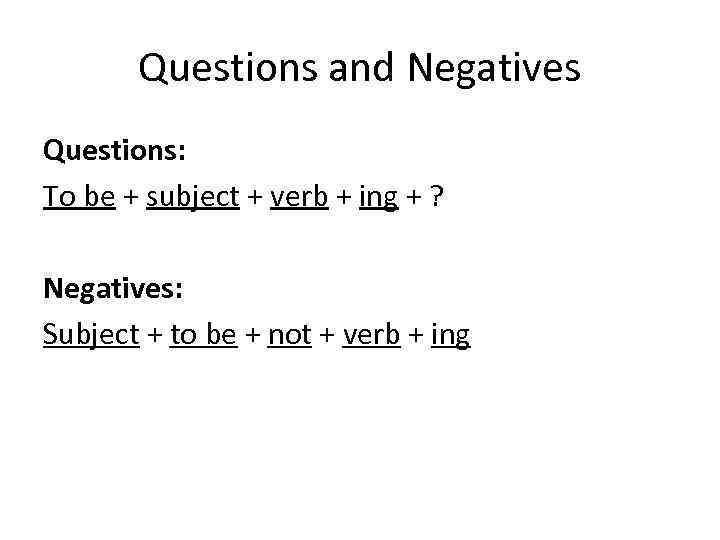
Questions and Negatives Questions: To be + subject + verb + ing + ? Negatives: Subject + to be + not + verb + ing
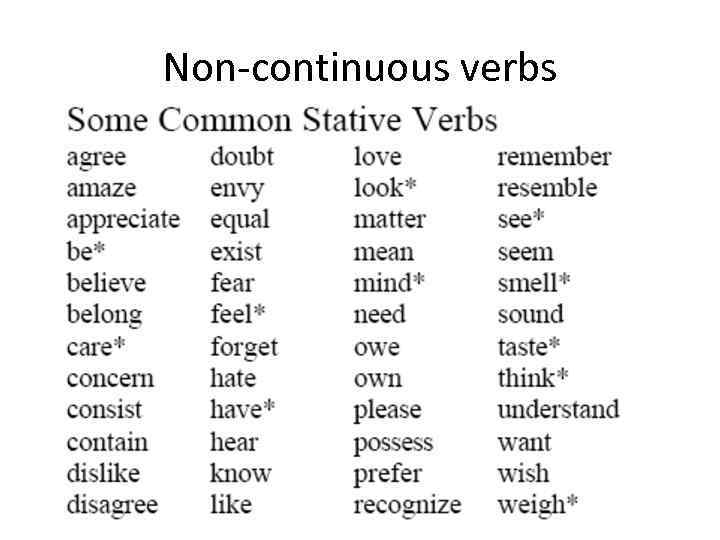
Non-continuous verbs
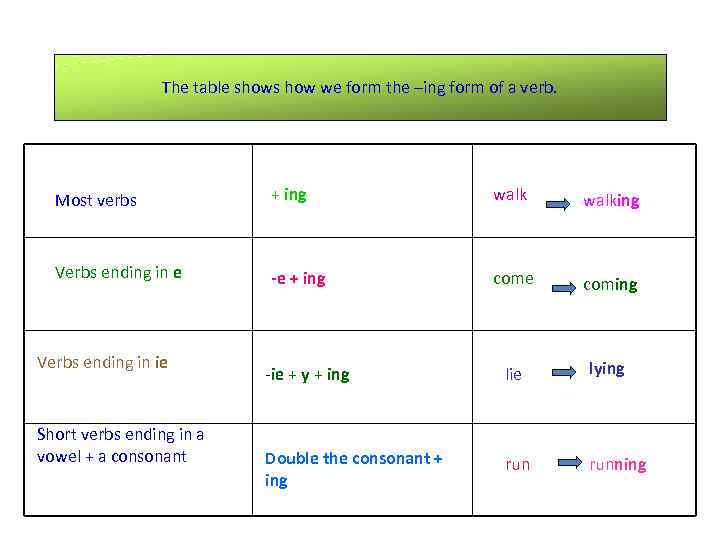
The table shows how we form the –ing form of a verb. Most verbs + ing walking Verbs ending in e -e + ing come coming -ie + y + ing lie lying Double the consonant + ing running Verbs ending in ie Short verbs ending in a vowel + a consonant
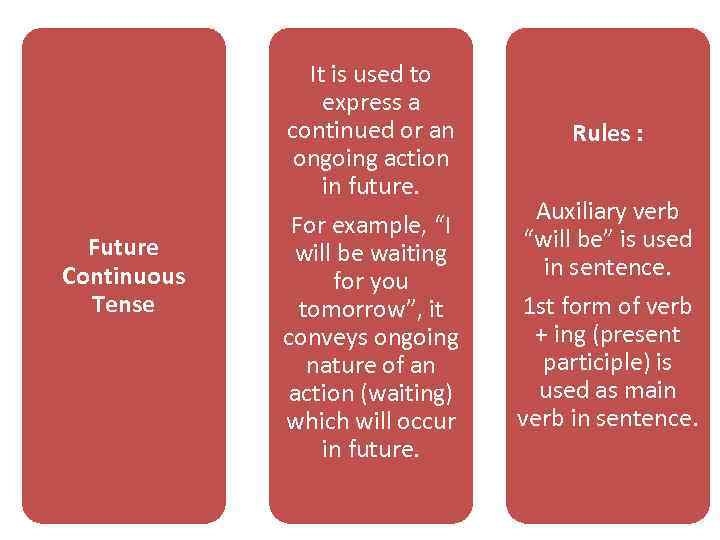
Future Continuous Tense It is used to express a continued or an ongoing action in future. For example, “I will be waiting for you tomorrow”, it conveys ongoing nature of an action (waiting) which will occur in future. Rules : Auxiliary verb “will be” is used in sentence. 1 st form of verb + ing (present participle) is used as main verb in sentence.
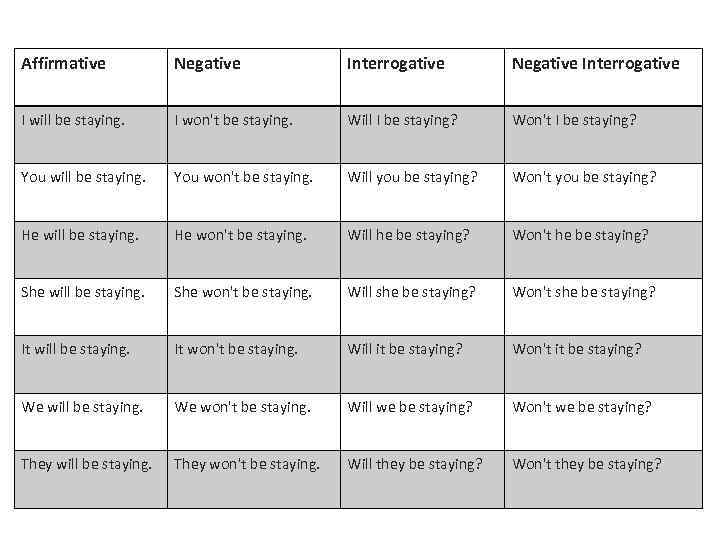
Affirmative Negative Interrogative I will be staying. I won't be staying. Will I be staying? Won't I be staying? You will be staying. You won't be staying. Will you be staying? Won't you be staying? He will be staying. He won't be staying. Will he be staying? Won't he be staying? She will be staying. She won't be staying. Will she be staying? Won't she be staying? It will be staying. It won't be staying. Will it be staying? Won't it be staying? We will be staying. We won't be staying. Will we be staying? Won't we be staying? They will be staying. They won't be staying. Will they be staying? Won't they be staying?
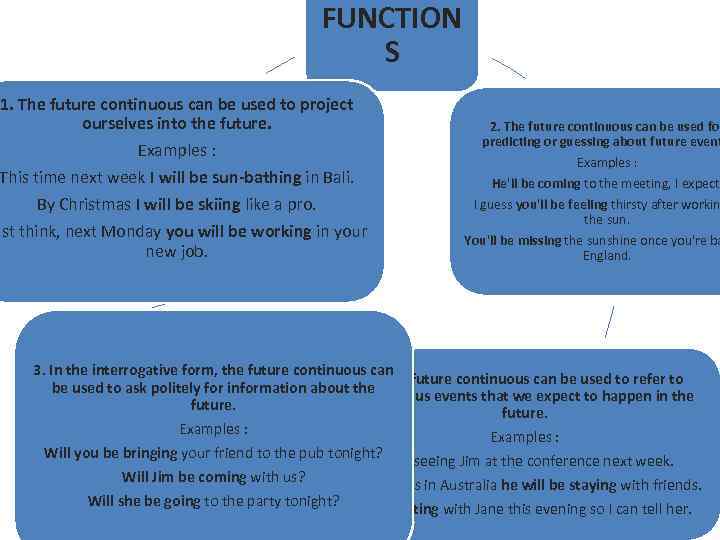
FUNCTION S 1. The future continuous can be used to project ourselves into the future. Examples : This time next week I will be sun-bathing in Bali. By Christmas I will be skiing like a pro. ust think, next Monday you will be working in your new job. 2. The future continuous can be used for predicting or guessing about future event Examples : He'll be coming to the meeting, I expect. I guess you'll be feeling thirsty after workin the sun. You'll be missing the sunshine once you're ba England. 3. In the interrogative form, the future continuous can 4. The future continuous can be used to refer to be used to ask politely for information about the continuous events that we expect to happen in the future. Examples : Will you be bringing your friend to the pub tonight? I'll be seeing Jim at the conference next week. Will Jim be coming with us? When he is in Australia he will be staying with friends. Will she be going to the party tonight? I'll be eating with Jane this evening so I can tell her.
Any Questions?
Скачать презентацию Done by Musalieva Tomiris SHTK- 311 Continuous
Томирис практ,грамма.pptx