

DOING BUSINESS IN JAPAN By


DOING BUSINESS IN JAPAN By Niyazaly Alibek Mukataev Kanat
Introduction General Information Preparation for Business Dealings Business Meetings Communication
General Information
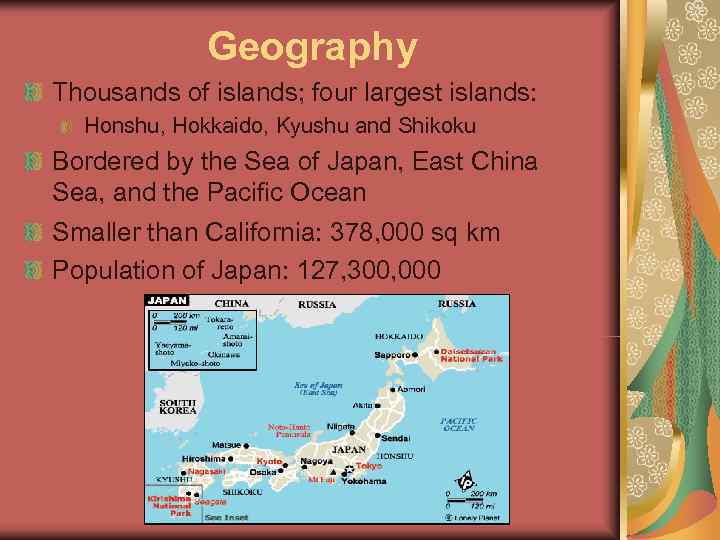
Geography Thousands of islands; four largest islands: Honshu, Hokkaido, Kyushu and Shikoku Bordered by the Sea of Japan, East China Sea, and the Pacific Ocean Smaller than California: 378, 000 sq km Population of Japan: 127, 300, 000
Climate Varying climate: Temperate to sub- tropic Four seasons The summer is hot and humid Winters are mild Spring is Rainy Fall brings Typhoons
Economy World’s 2 nd largest economy Some of the world’s largest industries Motor vehicles and electronic equipment In 2013: GDP = $4, 92 trillion Problems faced: Deflation, record unemployment, bad loans
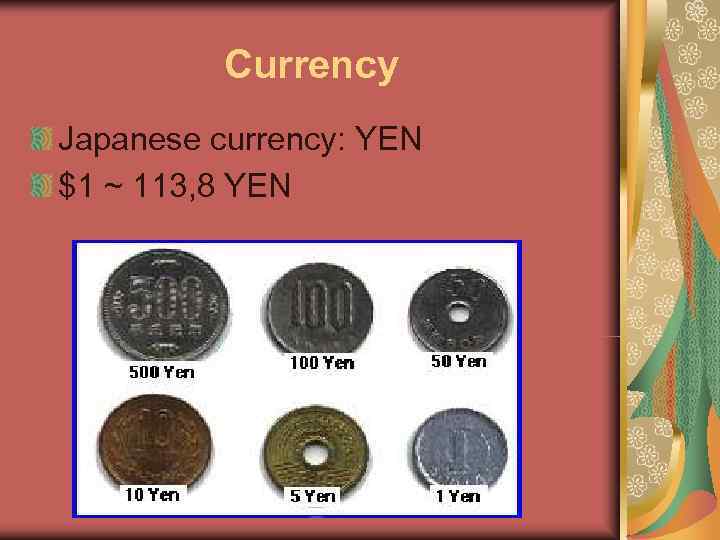
Currency Japanese currency: YEN $1 ~ 113, 8 YEN

Preparation for Business Dealings
General Concepts The group is more important than the individual Avoid confrontations/ direct questions Status Strong sense of hierarchy, rank or position

Business Attire Dress Code: Business Professional Dress Conservatively Women: Wear jewellery, makeup, and perfume sparingly
Business Cards (Meishi) Present and receive meishi with both hands. Print Japanese on one side Study the business card Include important information
Appointments Punctuality Call personally Scheduling appointments: Avoid New Year, Dec. 28 to Jan. 3 Golden Week, April 29 to May 5 O-bon, mid-August Office hours: 9: 00 a. m. to 5: 00 or 5: 30 p. m.
Gift Giving Important Japanese business protocol The ritual of gift-giving is more important than the gift itself Present gifts with both hands privately Different gifts for unequal ranks Before accepting, refuse modestly
Good and Bad Gifts Good Bad Gourmet foodstuffs, fresh fruit White flowers of Electronic toys any kind. Cuff links Giving four or nine Something that reflects of anything. the interests and tastes of the recipient Red Christmas A simple cards. commemorative photograph

Business Meetings
Business Dealings Refrain discussing business for first 15 minutes Start after “Jitsu wa ne” meaning “the fact of the matter is” Address the most senior member first Avoid accusations/ direct refusals Atmosphere of grave seriousness Avoid Western jokes Light humor OK during breaks

Business Dealings “Saving Face” Hide moods, anger etc. Every word said is taken literally For ex: “This is killing me” or “This is the bomb” Remember: Convening among themselves, the Japanese will go over your proposal in painstaking detail.
Decisions and Contracts Group decision-making Do not push for an answer Wait for consensus Oral agreements preferred Re-negotiable
Communication
Conversations hello = “konnichiwa” good evening = “konbanwa” Direct remarks to senior member Frequently say “I’m sorry” (Go Men Na Sa I) Avoid complex jokes/ sarcasm Do not talk about WW 2
Names & Titles Name order: Last name First name Attach an appropriate title to the last name San: the most neutral and famous title Sama: more polite form of san Do not add a title to your own name
Bows and Gestures Most important part of Japanese etiquette Shows respect, humility Bow in addition to shaking hands Bow lower to someone of higher status Also, if uncertain Avoid unusual facial expressions Ex: Winking, shrugging shoulders
What would you do if your business partner: resembles to you with offers separately from the workmates? gives you four souvenirs? gives you electronic toys? has orally agreed with your offers (can you trust him? ) speaks: Go Men Na Sa I (what does it mean? )
