


 Скачать презентацию DOI MAE SALONG NORTHERN THAILAND Applying the Forests-Poverty
a42b4a9aff4c81b637c938ba2aed683e.ppt
- Количество слайдов: 36
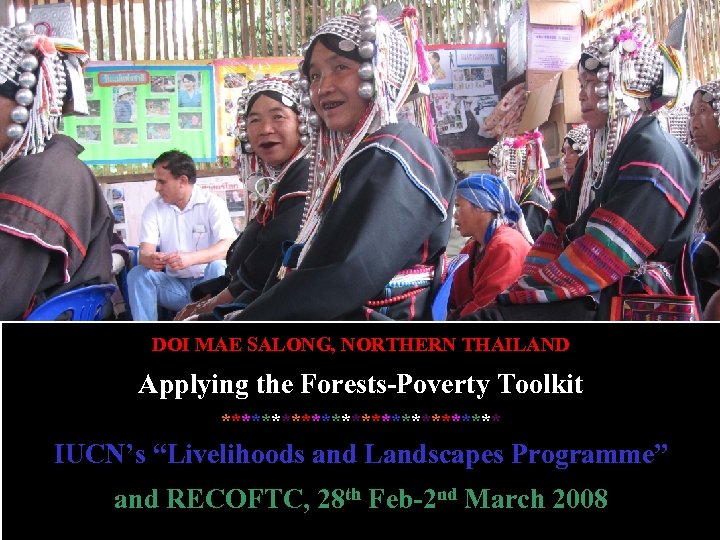 DOI MAE SALONG, NORTHERN THAILAND Applying the Forests-Poverty Toolkit ************** IUCN’s “Livelihoods and Landscapes Programme” and RECOFTC, 28 th Feb-2 nd March 2008
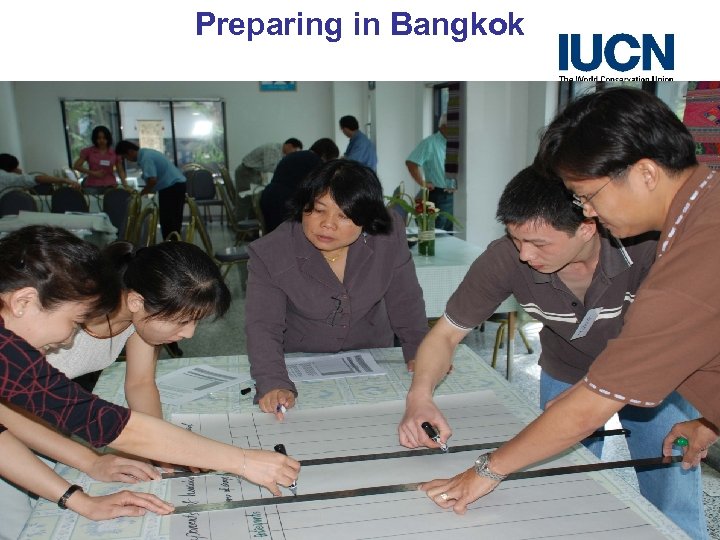 Preparing in Bangkok
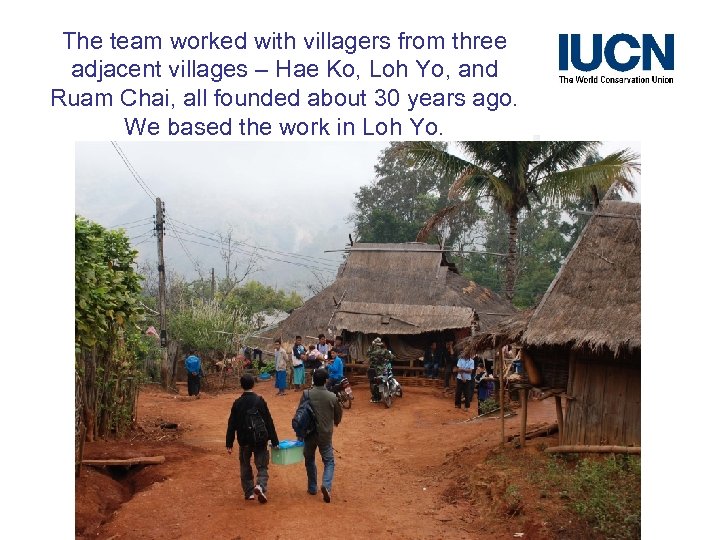 The team worked with villagers from three adjacent villages – Hae Ko, Loh Yo, and Ruam Chai, all founded about 30 years ago. We based the work in Loh Yo.
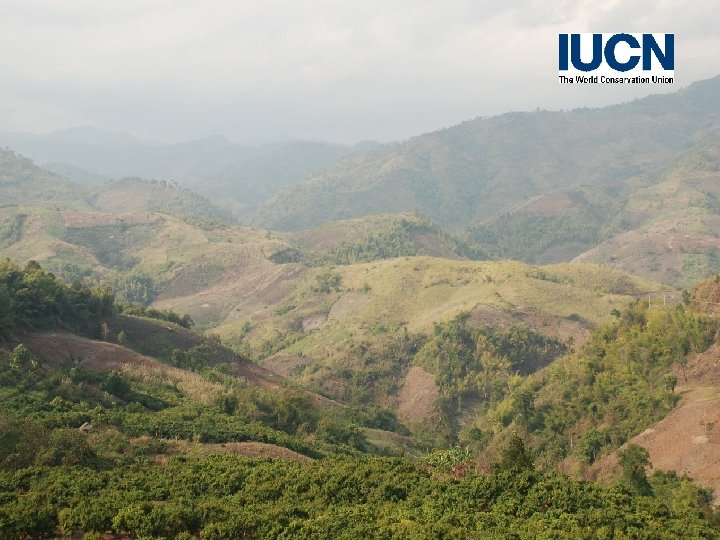
 The problem The area has seen steady unplanned immigration by hill-tribes from other parts of northern Thailand, from China and from Myanmar over an extended period. This migration is still continuing, and the landscape is a highly dynamic and chaotic one, with much potential for positive improvement in the future.
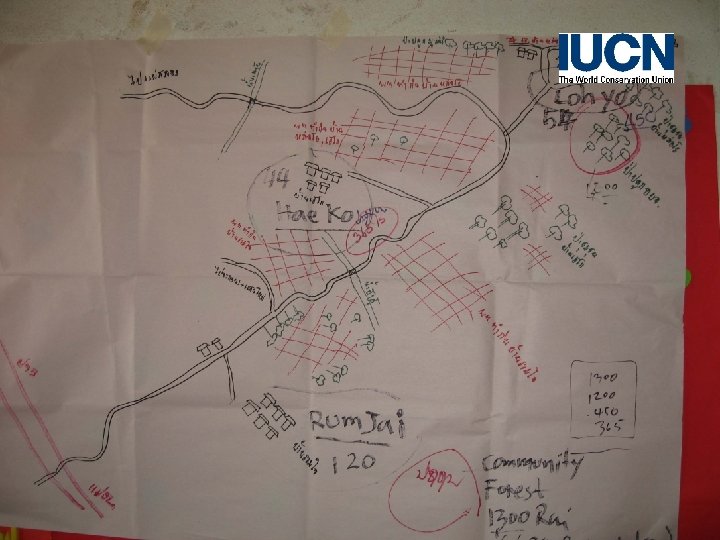
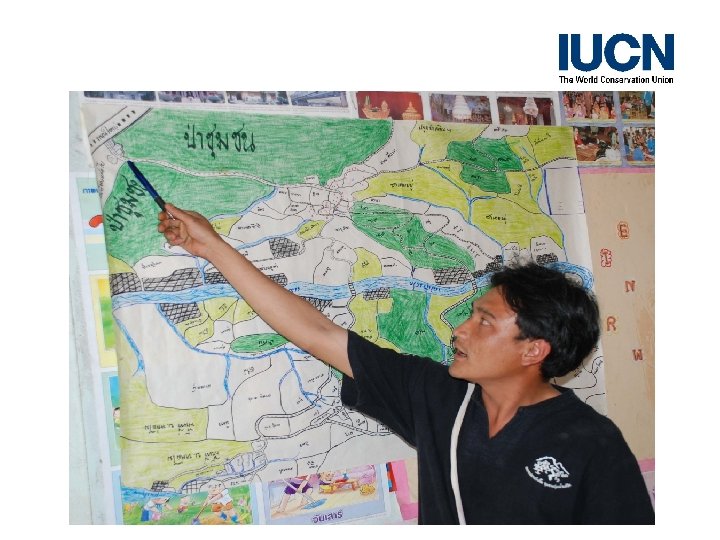
 TOOL 2: Landscape situation analysis • After a preliminary meeting with villagers, in which their leaders showed us some of their own maps of land-use in the area, we set out with them to look at the landscape around the three villages, as a prelude to working with the toolkit. • The Hill Development Foundation (HADF) showed us where villagers were already taking decisions to sort out the landscape – planting or enriching hilltop forest, and clustering agriculture and tree-crops on lower flatter land.
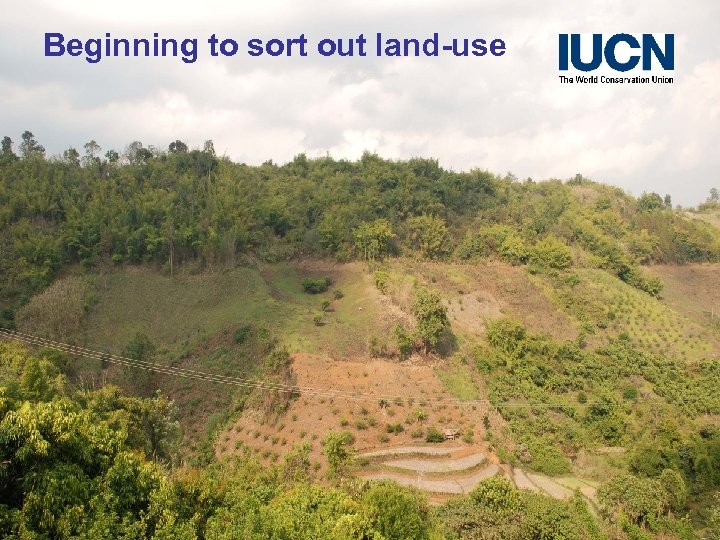 Beginning to sort out land-use
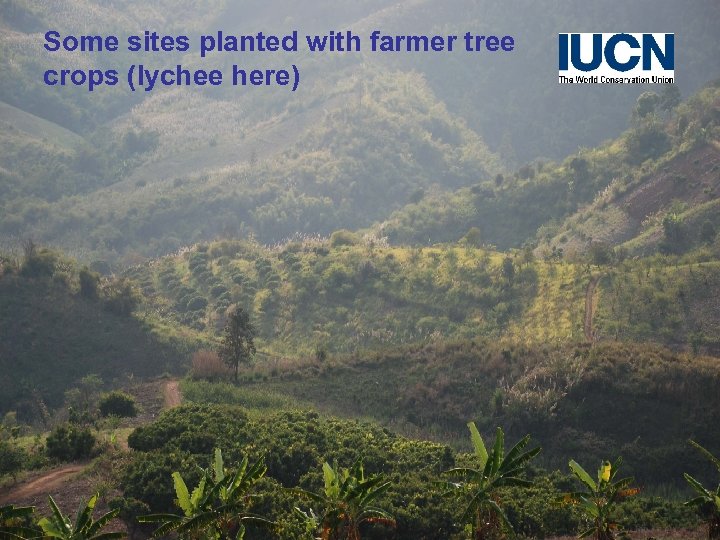 Some sites planted with farmer tree crops (lychee here)
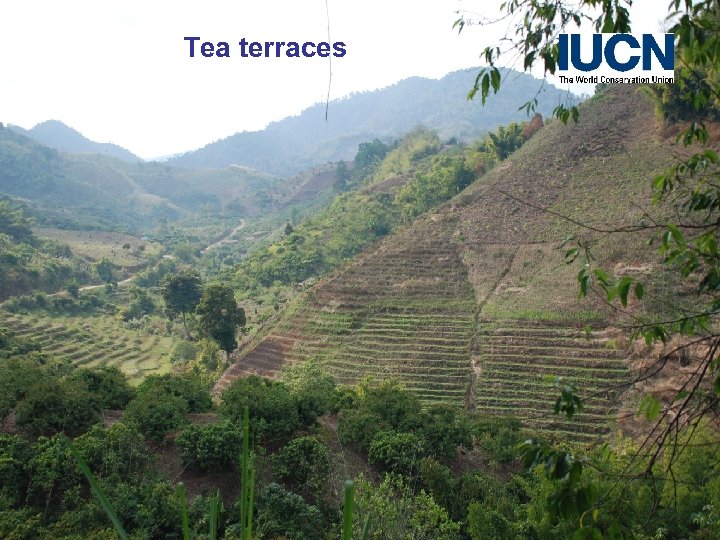 Tea terraces
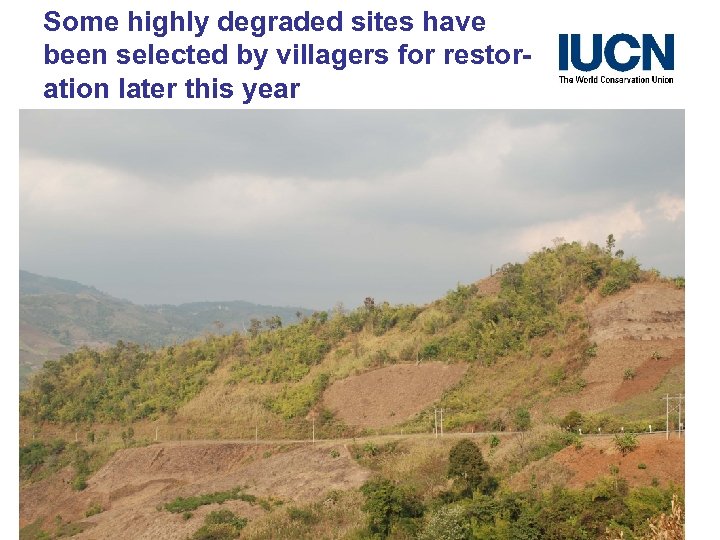 Some highly degraded sites have been selected by villagers for restoration later this year
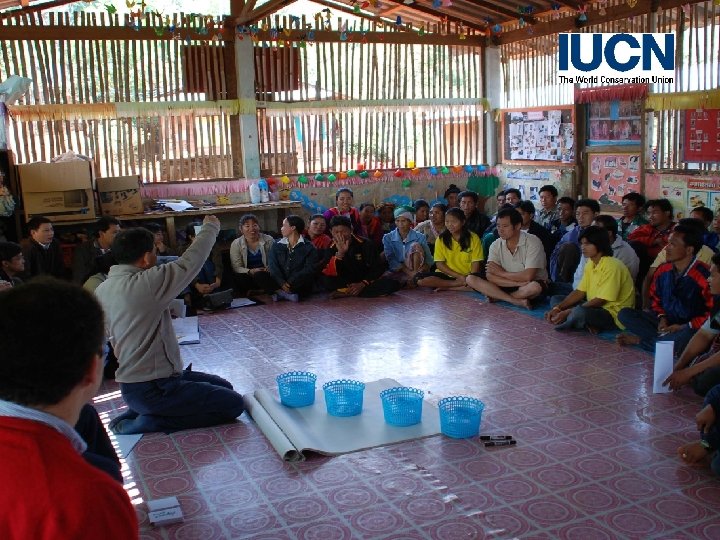
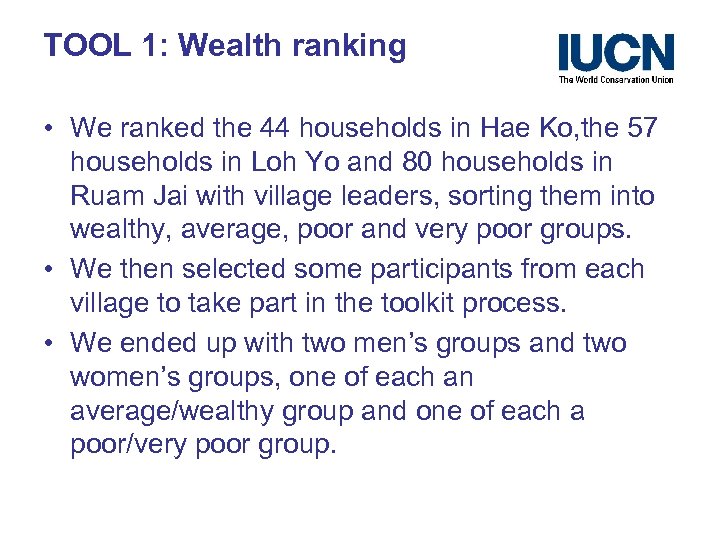 TOOL 1: Wealth ranking • We ranked the 44 households in Hae Ko, the 57 households in Loh Yo and 80 households in Ruam Jai with village leaders, sorting them into wealthy, average, poor and very poor groups. • We then selected some participants from each village to take part in the toolkit process. • We ended up with two men’s groups and two women’s groups, one of each an average/wealthy group and one of each a poor/very poor group.
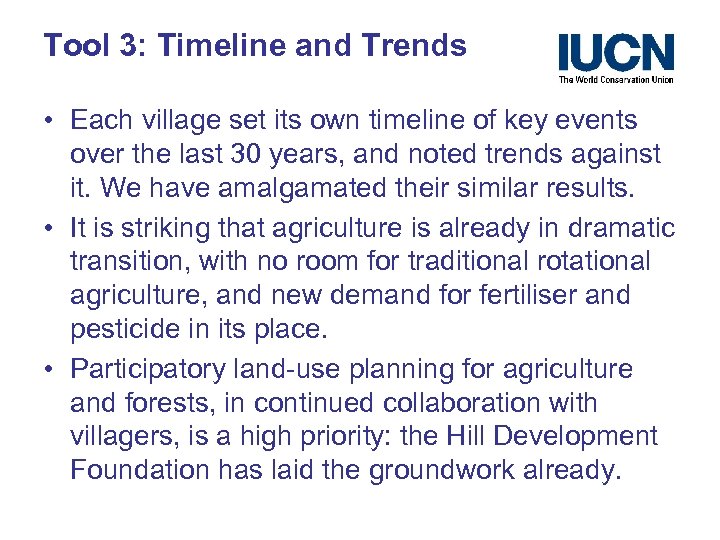 Tool 3: Timeline and Trends • Each village set its own timeline of key events over the last 30 years, and noted trends against it. We have amalgamated their similar results. • It is striking that agriculture is already in dramatic transition, with no room for traditional rotational agriculture, and new demand for fertiliser and pesticide in its place. • Participatory land-use planning for agriculture and forests, in continued collaboration with villagers, is a high priority: the Hill Development Foundation has laid the groundwork already.
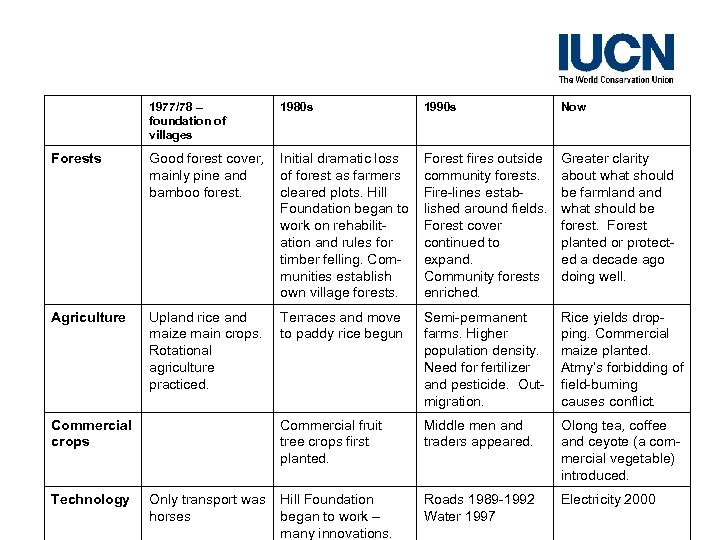 1977/78 – foundation of villages 1980 s 1990 s Now Forests Good forest cover, mainly pine and bamboo forest. Initial dramatic loss of forest as farmers cleared plots. Hill Foundation began to work on rehabilitation and rules for timber felling. Communities establish own village forests. Forest fires outside community forests. Fire-lines established around fields. Forest cover continued to expand. Community forests enriched. Greater clarity about what should be farmland what should be forest. Forest planted or protected a decade ago doing well. Agriculture Upland rice and maize main crops. Rotational agriculture practiced. Terraces and move to paddy rice begun Semi-permanent farms. Higher population density. Need for fertilizer and pesticide. Outmigration. Rice yields dropping. Commercial maize planted. Atmy’s forbidding of field-burning causes conflict. Commercial fruit tree crops first planted. Middle men and traders appeared. Olong tea, coffee and ceyote (a commercial vegetable) introduced. Hill Foundation began to work – many innovations. Roads 1989 -1992 Water 1997 Electricity 2000 Commercial crops Technology Only transport was horses
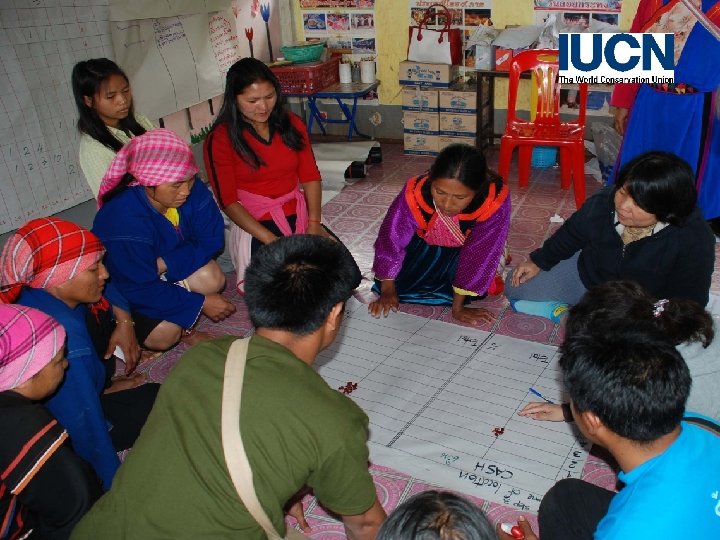
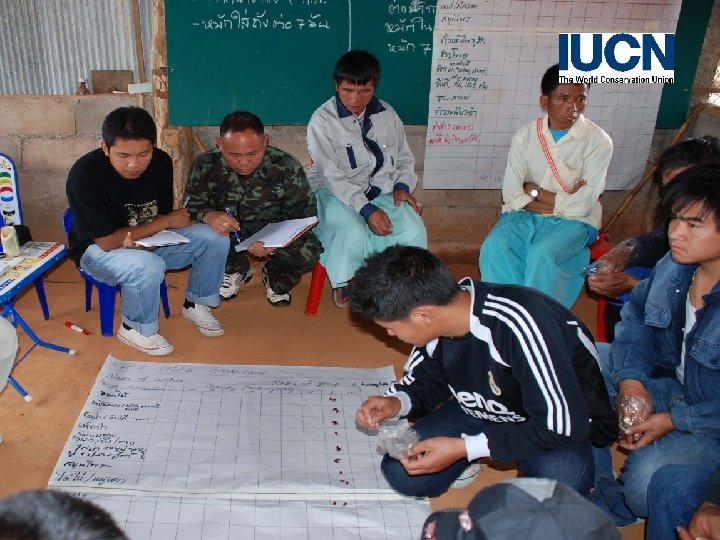
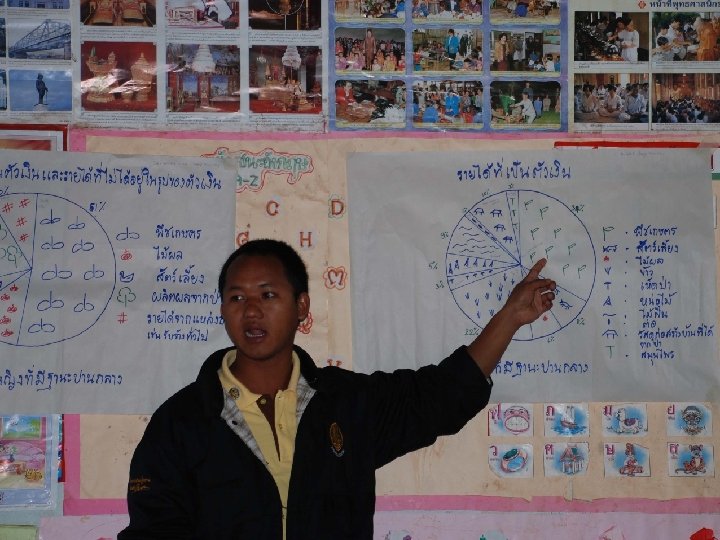
 Tool 4: Livelihoods In Tool 4 we asked each of the participants in the 4 groups to brainstorm, individually and in the group in three steps: (i) To list all the key sources of cash in their income (agricultural crops, forest products and other sources of cash) and to rank them (ii) To list all their key sources of non-cash income (agricultural crops, forest products) and to rank them (iii) To suggest what proportion of their house-hold’s annual incomes from cash, and what from non-cash sources. Using step (iii) as a ratio, we were able to assess the total contribution of forests etc to the household’s annual income. The results from the four groups are as follows:
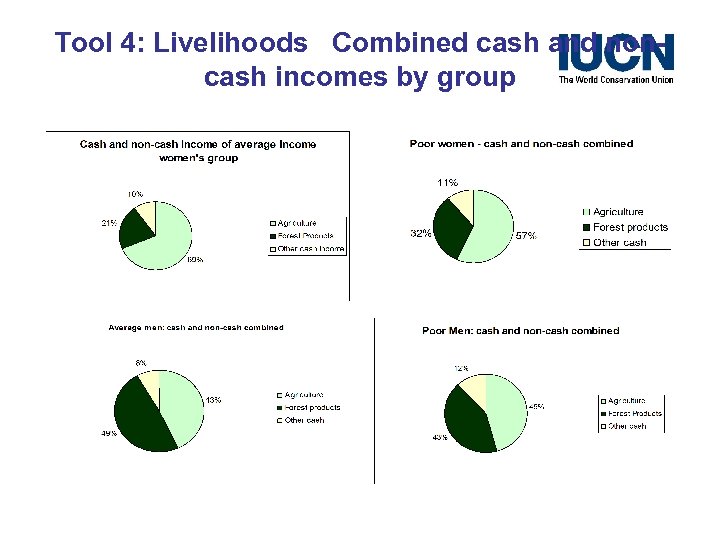 Tool 4: Livelihoods Combined cash and noncash incomes by group
 Tool 5 : key forest products • The results from tool 4 also give us a ranking, by each group of what they reckon to be the most important forest products for cash and non-cash purposes. • The lists vary by gender and by wealth-level, and it is clear that any planning forests futures must take these products and their importance into account.
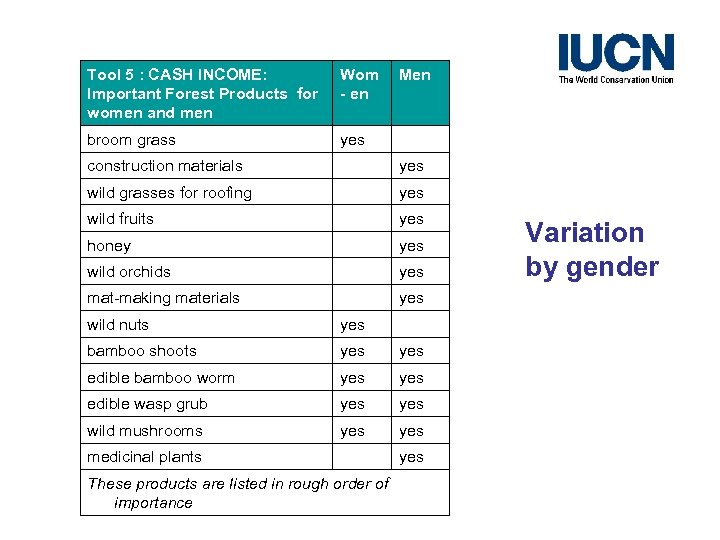 Tool 5 : CASH INCOME: Important Forest Products for women and men Wom - en broom grass Men yes construction materials yes wild grasses for roofing yes wild fruits yes honey yes wild orchids yes mat-making materials yes wild nuts yes bamboo shoots yes edible bamboo worm yes edible wasp grub yes wild mushrooms yes medicinal plants These products are listed in rough order of importance yes Variation by gender
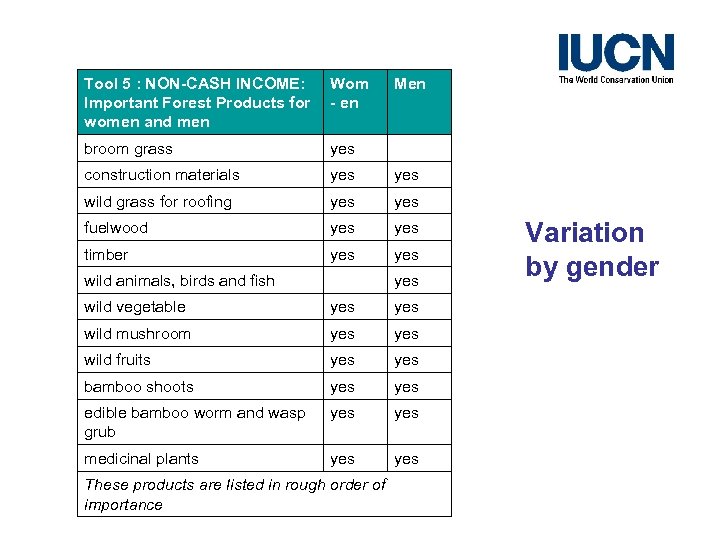 Tool 5 : NON-CASH INCOME: Important Forest Products for women and men Wom - en broom grass yes construction materials yes wild grass for roofing yes fuelwood yes timber yes wild animals, birds and fish Men yes wild vegetable yes wild mushroom yes wild fruits yes bamboo shoots yes edible bamboo worm and wasp grub yes medicinal plants yes These products are listed in rough order of importance Variation by gender
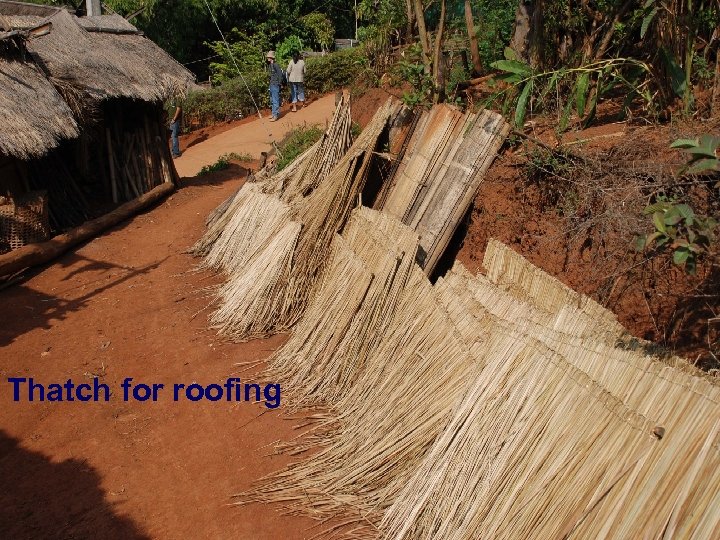 Thatch for roofing
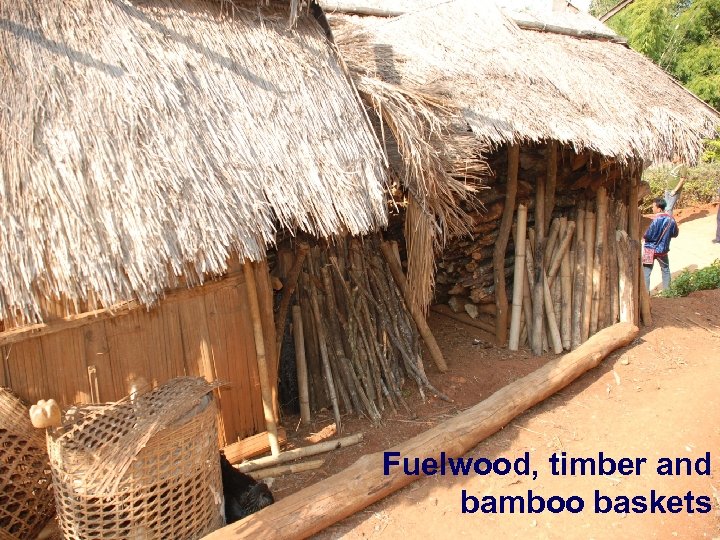 Fuelwood, timber and bamboo baskets
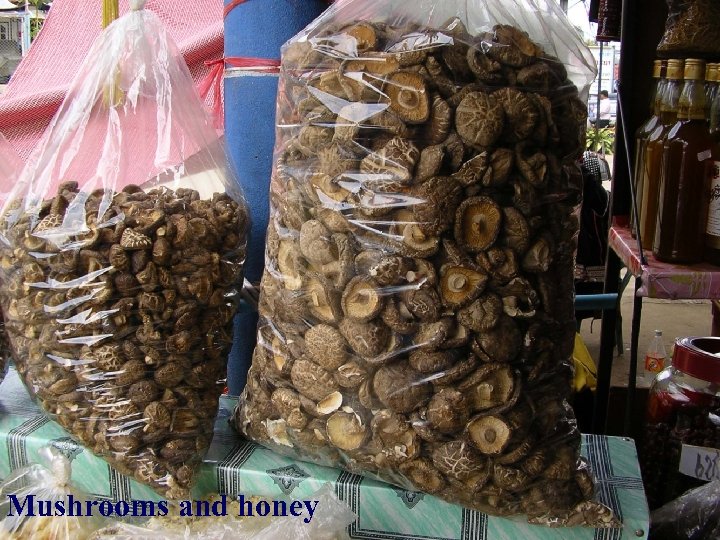 Mushrooms and honey
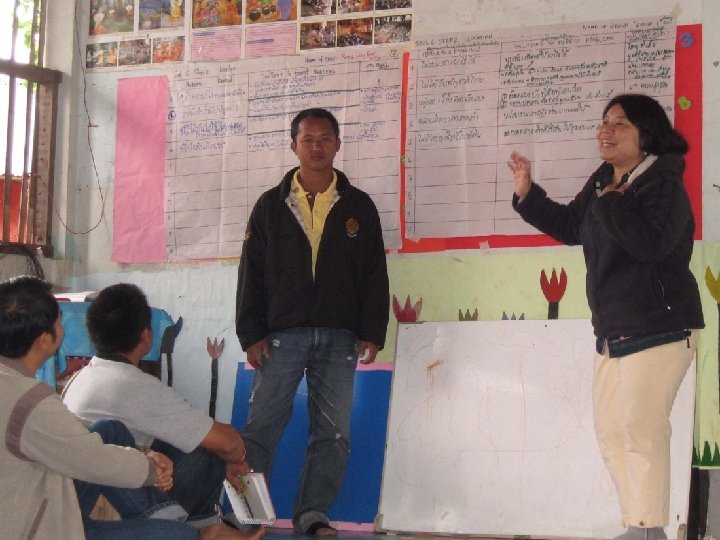
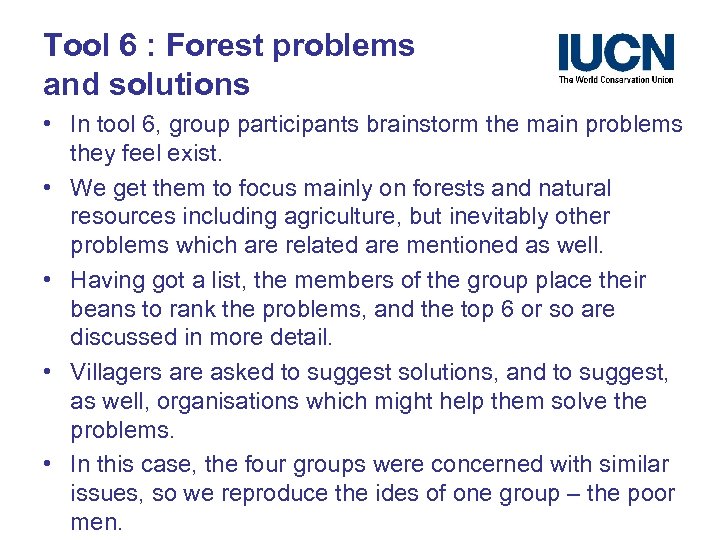 Tool 6 : Forest problems and solutions • In tool 6, group participants brainstorm the main problems they feel exist. • We get them to focus mainly on forests and natural resources including agriculture, but inevitably other problems which are related are mentioned as well. • Having got a list, the members of the group place their beans to rank the problems, and the top 6 or so are discussed in more detail. • Villagers are asked to suggest solutions, and to suggest, as well, organisations which might help them solve the problems. • In this case, the four groups were concerned with similar issues, so we reproduce the ides of one group – the poor men.
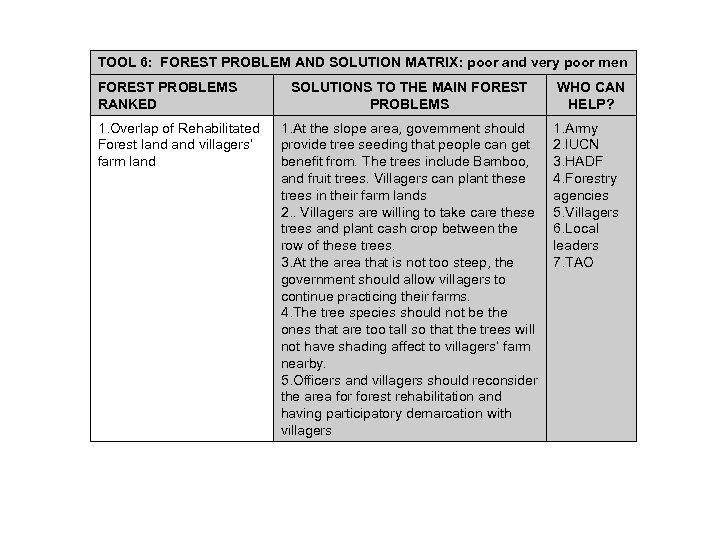 TOOL 6: FOREST PROBLEM AND SOLUTION MATRIX: poor and very poor men FOREST PROBLEMS RANKED 1. Overlap of Rehabilitated Forest land villagers’ farm land SOLUTIONS TO THE MAIN FOREST PROBLEMS 1. At the slope area, government should provide tree seeding that people can get benefit from. The trees include Bamboo, and fruit trees. Villagers can plant these trees in their farm lands 2. . Villagers are willing to take care these trees and plant cash crop between the row of these trees. 3. At the area that is not too steep, the government should allow villagers to continue practicing their farms. 4. The tree species should not be the ones that are too tall so that the trees will not have shading affect to villagers’ farm nearby. 5. Officers and villagers should reconsider the area forest rehabilitation and having participatory demarcation with villagers WHO CAN HELP? 1. Army 2. IUCN 3. HADF 4. Forestry agencies 5. Villagers 6. Local leaders 7. TAO
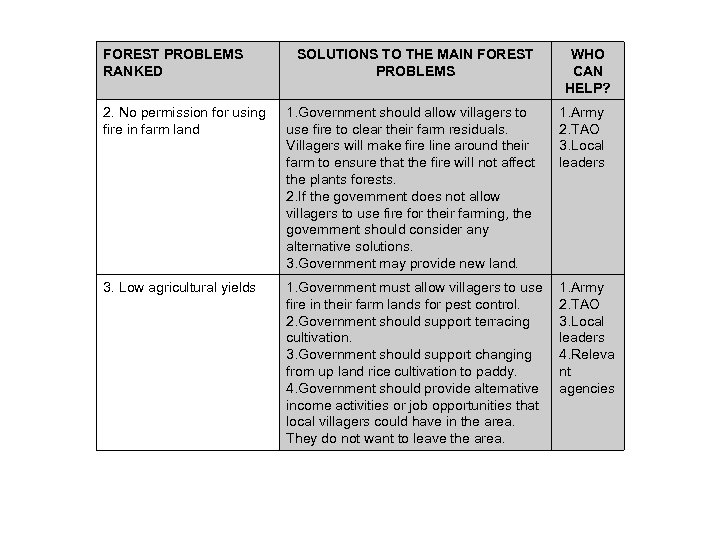 FOREST PROBLEMS RANKED SOLUTIONS TO THE MAIN FOREST PROBLEMS WHO CAN HELP? 2. No permission for using fire in farm land 1. Government should allow villagers to use fire to clear their farm residuals. Villagers will make fire line around their farm to ensure that the fire will not affect the plants forests. 2. If the government does not allow villagers to use fire for their farming, the government should consider any alternative solutions. 3. Government may provide new land. 1. Army 2. TAO 3. Local leaders 3. Low agricultural yields 1. Government must allow villagers to use fire in their farm lands for pest control. 2. Government should support terracing cultivation. 3. Government should support changing from up land rice cultivation to paddy. 4. Government should provide alternative income activities or job opportunities that local villagers could have in the area. They do not want to leave the area. 1. Army 2. TAO 3. Local leaders 4. Releva nt agencies
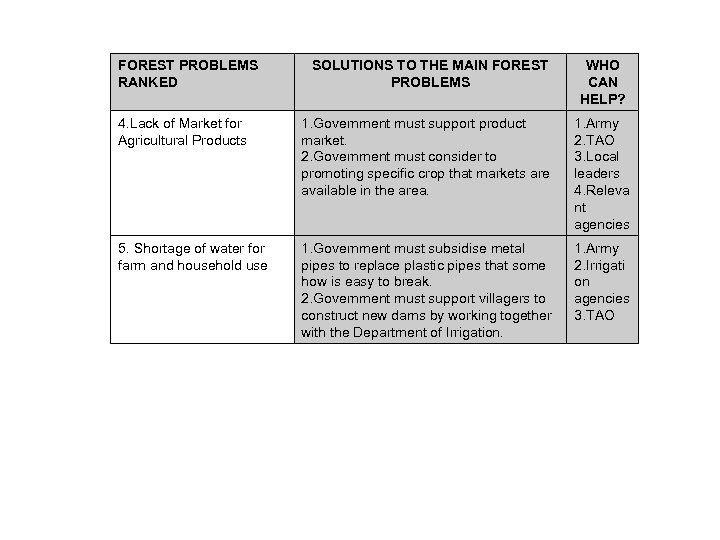 FOREST PROBLEMS RANKED SOLUTIONS TO THE MAIN FOREST PROBLEMS WHO CAN HELP? 4. Lack of Market for Agricultural Products 1. Government must support product market. 2. Government must consider to promoting specific crop that markets are available in the area. 1. Army 2. TAO 3. Local leaders 4. Releva nt agencies 5. Shortage of water for farm and household use 1. Government must subsidise metal pipes to replace plastic pipes that some how is easy to break. 2. Government must support villagers to construct new dams by working together with the Department of Irrigation. 1. Army 2. Irrigati on agencies 3. TAO
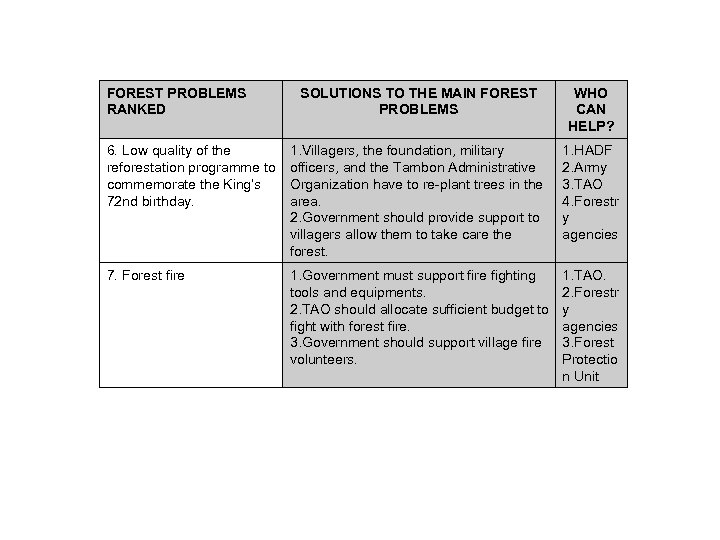 FOREST PROBLEMS RANKED SOLUTIONS TO THE MAIN FOREST PROBLEMS WHO CAN HELP? 6. Low quality of the reforestation programme to commemorate the King’s 72 nd birthday. 1. Villagers, the foundation, military officers, and the Tambon Administrative Organization have to re-plant trees in the area. 2. Government should provide support to villagers allow them to take care the forest. 1. HADF 2. Army 3. TAO 4. Forestr y agencies 7. Forest fire 1. Government must support fire fighting tools and equipments. 2. TAO should allocate sufficient budget to fight with forest fire. 3. Government should support village fire volunteers. 1. TAO. 2. Forestr y agencies 3. Forest Protectio n Unit
 Tool 7 : Final Plenary In the final plenary, the information gathered, especially from tools 4 and 6, is presented back to the participants, plans for next steps are made, and the exercise ends.
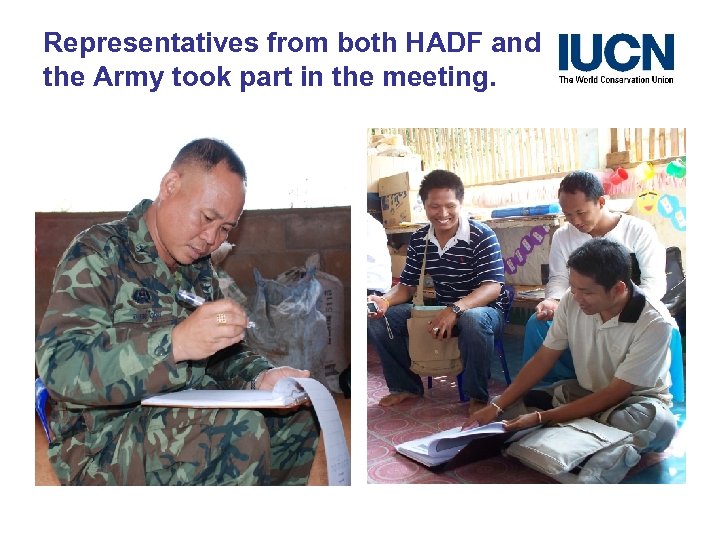 Representatives from both HADF and the Army took part in the meeting.
 Next steps clearly involve participatory land-use planning for the entire landscape, area by area – for which we need the participation of – the villagers, – the Hill Development Foundation (HADF) which has already pioneered some of this work – the Military, which is responsible for the whole region – Other government agencies.