 Скачать презентацию Dog Importations Across the USMexico Border A Risk
8d010a7ffeed3bc8e70774b61f00c2ae.ppt
- Количество слайдов: 27



Dog Importations Across the USMexico Border: A Risk for Rabies Importation? Susan Reese, MPH Texas Department of State Health Services Joaquin Rueda, BS CDC El Paso Quarantine Station National Center for Emerging and Zoonotic Infectious Diseases Division of Global Migration and Quarantine

U. S. – Mexico Border The U. S. - Mexico border is 1, 900 miles long: § The Texas – Mexico border makes up 1, 254 miles of that length 26 of the 42 U. S. – Mexico border crossings are in Texas tceq. state. tx. us
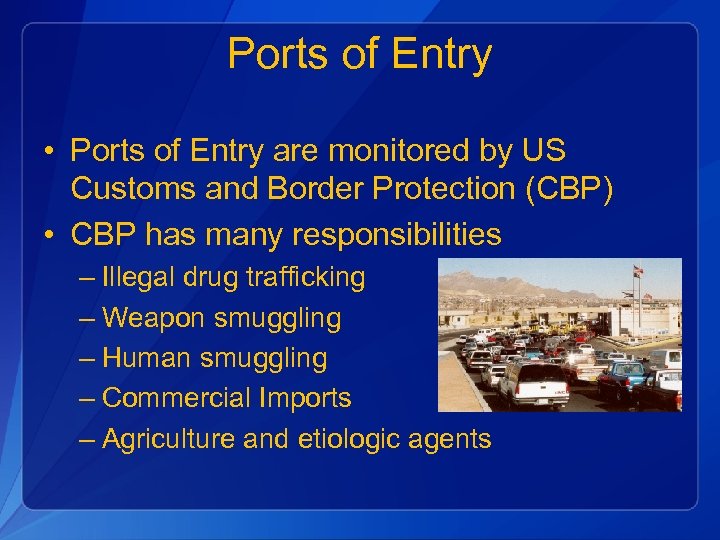
Ports of Entry • Ports of Entry are monitored by US Customs and Border Protection (CBP) • CBP has many responsibilities – Illegal drug trafficking – Weapon smuggling – Human smuggling – Commercial Imports – Agriculture and etiologic agents
Federal Dog Import Regulations: 42 CFR 71. 54 • Federal regulations do not require a general certificate of health to bring a dog into the U. S. – Dogs may be subject to inspection on entry and may be denied entry if they appear sick or arrive dead. • CDC does require proof of rabies vaccination if coming from rabies endemic countries CDC regulations require: – Dogs must have been vaccinated against rabies at least 30 days prior to entry into the U. S. • Dogs that do not have proof of rabies vaccination may be allowed entry if the importer completes CDC Form 75. 37 – Notice to Owners and Importers of Dogs
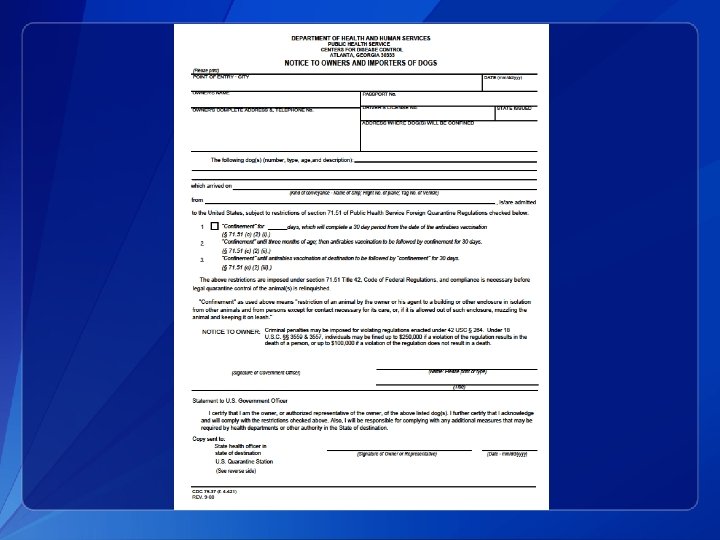
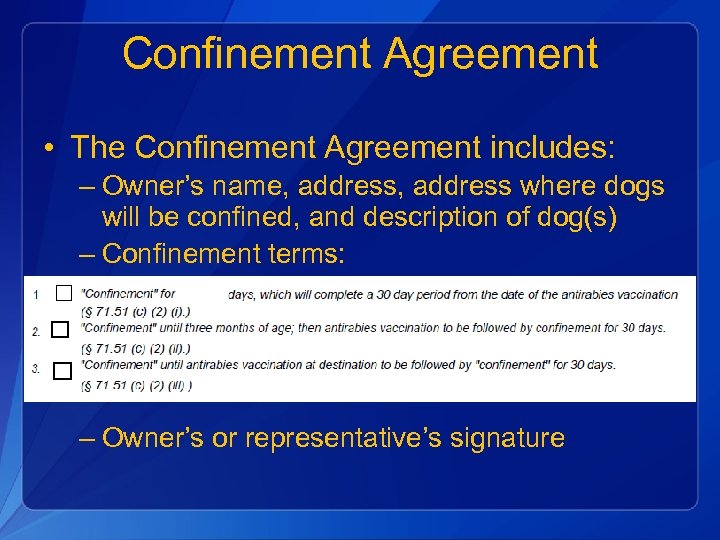
Confinement Agreement • The Confinement Agreement includes: – Owner’s name, address where dogs will be confined, and description of dog(s) – Confinement terms: – Owner’s or representative’s signature
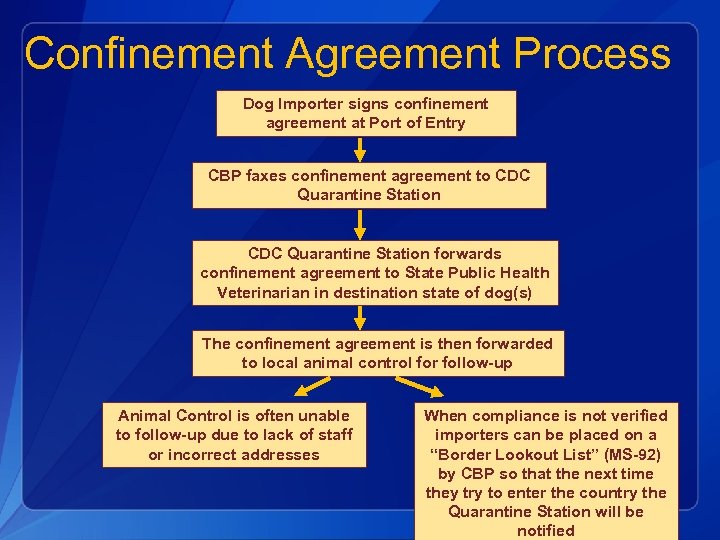
Confinement Agreement Process Dog Importer signs confinement agreement at Port of Entry CBP faxes confinement agreement to CDC Quarantine Station forwards confinement agreement to State Public Health Veterinarian in destination state of dog(s) The confinement agreement is then forwarded to local animal control for follow-up Animal Control is often unable to follow-up due to lack of staff or incorrect addresses When compliance is not verified importers can be placed on a “Border Lookout List” (MS-92) by CBP so that the next time they try to enter the country the Quarantine Station will be notified
Dog importation through land borders vs. airports • There is a much higher financial investment (airfare, IATA approved kennel, cargo fees) involved in bringing an animal into the U. S. through an airport Port of Entry vs. crossing the land border. • Most airlines require a health certificate when transporting animals by airplane • Most airport POEs are staffed by CDC personnel, whereas no border POE’s are staffed by CDC personnel

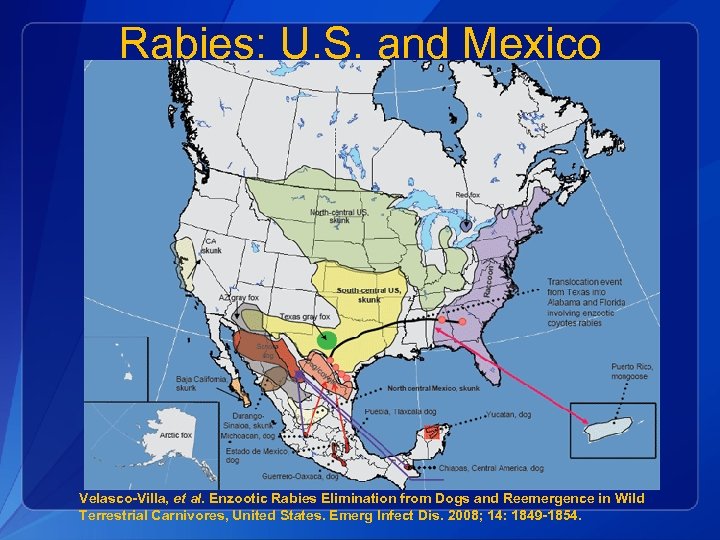
Rabies: U. S. and Mexico Velasco-Villa, et al. Enzootic Rabies Elimination from Dogs and Reemergence in Wild Terrestrial Carnivores, United States. Emerg Infect Dis. 2008; 14: 1849 -1854.
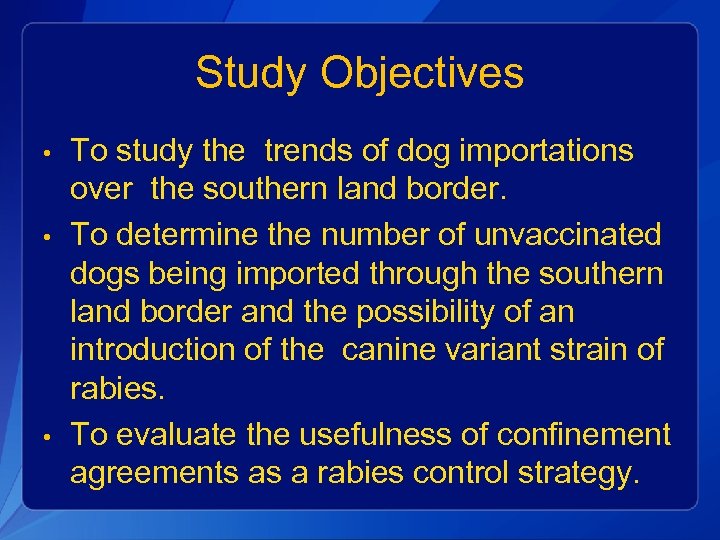
Study Objectives • • • To study the trends of dog importations over the southern land border. To determine the number of unvaccinated dogs being imported through the southern land border and the possibility of an introduction of the canine variant strain of rabies. To evaluate the usefulness of confinement agreements as a rabies control strategy.
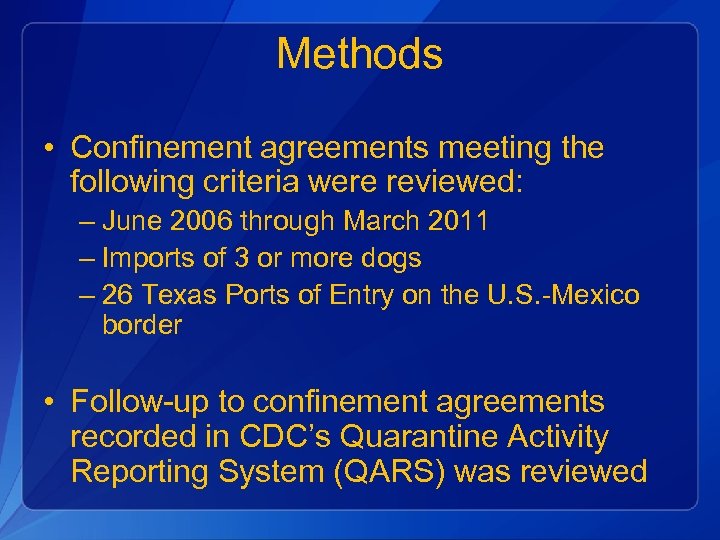
Methods • Confinement agreements meeting the following criteria were reviewed: – June 2006 through March 2011 – Imports of 3 or more dogs – 26 Texas Ports of Entry on the U. S. -Mexico border • Follow-up to confinement agreements recorded in CDC’s Quarantine Activity Reporting System (QARS) was reviewed
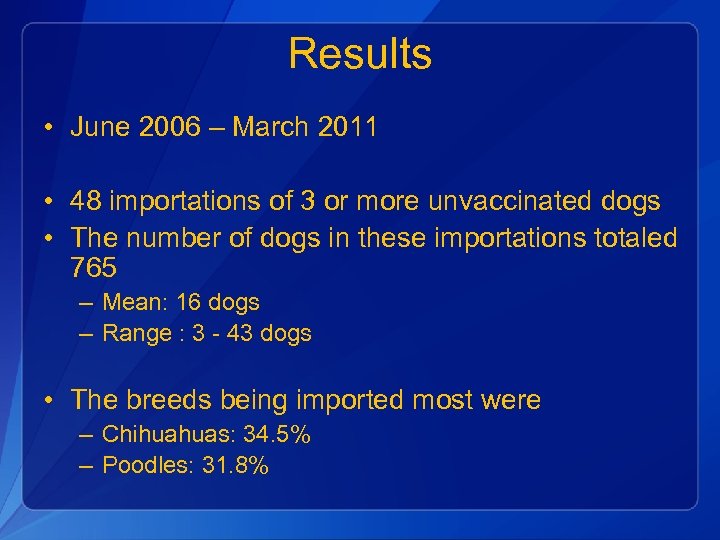
Results • June 2006 – March 2011 • 48 importations of 3 or more unvaccinated dogs • The number of dogs in these importations totaled 765 – Mean: 16 dogs – Range : 3 - 43 dogs • The breeds being imported most were – Chihuahuas: 34. 5% – Poodles: 31. 8%
Results: Age • Age data (as reported by owner) was available for 37 of the 48 importations • Range: 3 weeks – 2 years • 60% of the dogs were less than or equal to 12 weeks of age

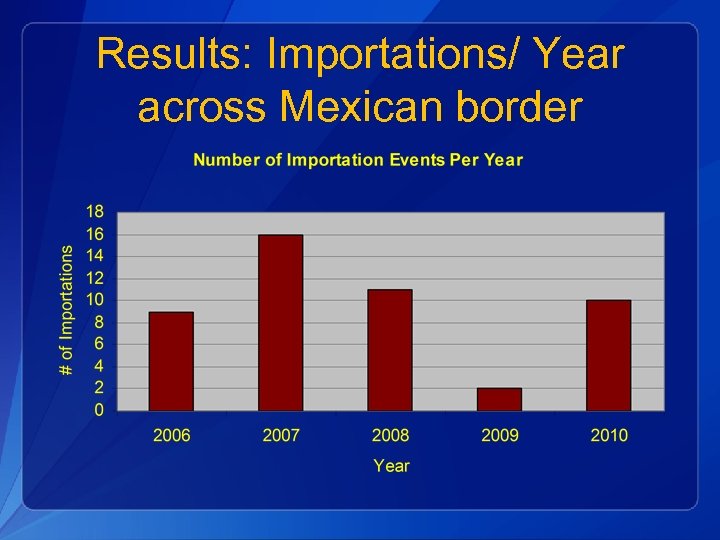
Results: Importations/ Year across Mexican border
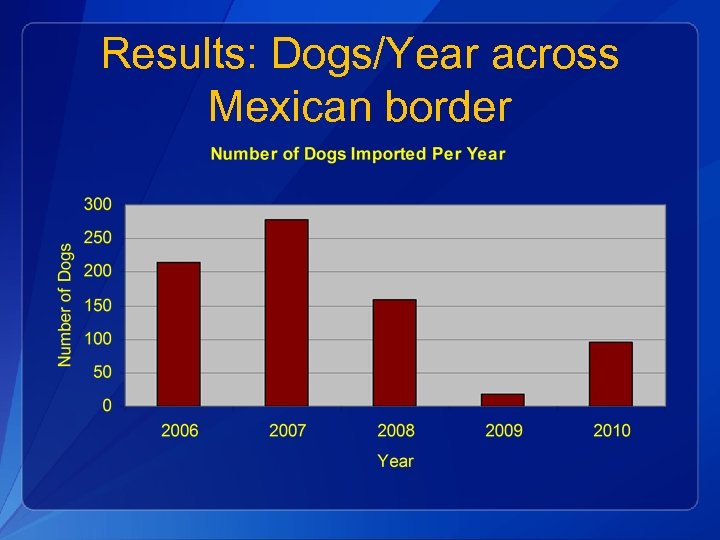
Results: Dogs/Year across Mexican border
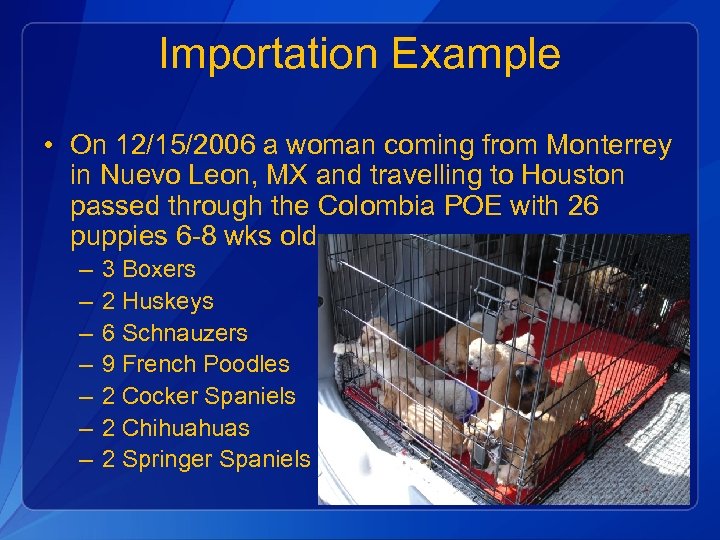
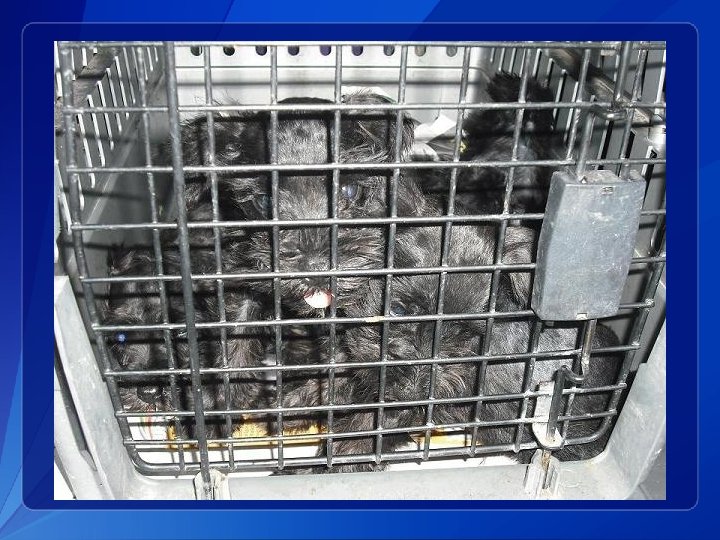
Importation Example • On 12/15/2006 a woman coming from Monterrey in Nuevo Leon, MX and travelling to Houston passed through the Colombia POE with 26 puppies 6 -8 wks old. – – – – 3 Boxers 2 Huskeys 6 Schnauzers 9 French Poodles 2 Cocker Spaniels 2 Chihuahuas 2 Springer Spaniels
Importation Example continued • Animal Control went to the residence on 01/08/07 (24 days later) and found only 6 puppies. • Of the 6 puppies 2 were dead and the 4 others were not what was listed on the Confinement Agreement. • Importer stated that the other 20 puppies had gotten sick and were at her sister’s house. • The importer was unwilling to give the address of her sister to verify confinement.
Follow-up • Out of the 48 importations – 26 of the importations did not have any follow-up information recorded in QARS – 3 of the importers were not at the addresses they gave when Animal Control followed up – 6 of the importers claimed they returned the dogs to Mexico – 2 of the importers claimed the dogs got sick and/or died – 1 of the importers was verified to be at their address with the dogs the day following importation – 2 of the importations were known to have followed the confinement agreement
Repeat Offenders • There were 5 individuals (or families) that were responsible for bringing in 436 (57% of the 765 total dogs in the study through multiple importations. • All of these individuals were placed on the Border Lookout List (MS-92) by CBP.
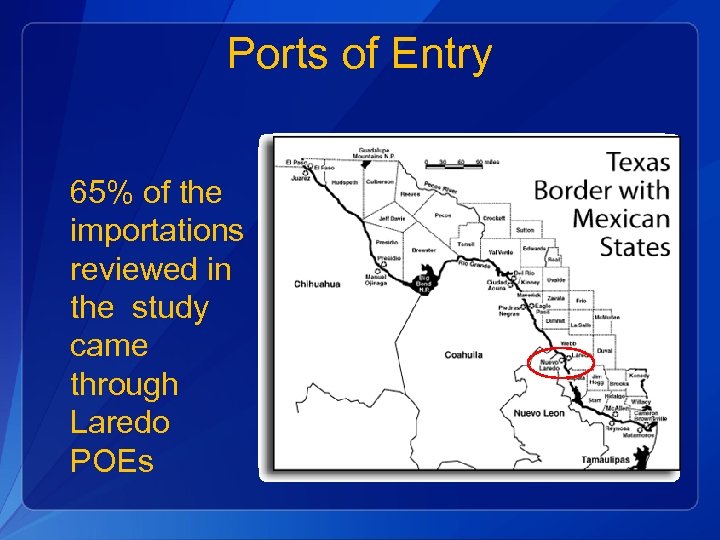
Ports of Entry 65% of the importations reviewed in the study came through Laredo POEs
Where are the dogs coming from? • Unfortunately we do not have good information on the origin of the dogs in Mexico. • Dogs coming from South Central Mexico where the canine rabies variant is still circulating, would pose a greater rabies risk than dogs being imported from the Northern Border States.
Limitations • • • Data was collected for regulatory and enforcement purposes. Data for the number of vaccinated dogs being imported is not available. Data on where dogs are going to is not reliable as many of the addresses are often not valid
Conclusions Importations of unvaccinated dogs across the U. S. - Mexico border do represent a rabies risk due to the lack of compliance with confinement agreements and a lack of ability to verify compliance with confinement agreements.
Thanks to: Miguel Escobedo, MD – CDC Quarantine Station Harvey Lipman, Ph. D – CDC Statistician Ken Waldrup, DVM - DSHS Zoonosis Kathy Parker, MPH – DSHS Zoonosis Laura Robinson, DVM – DSHS Zoonosis Customs and Border Protection Texas Animal Control Officers TM
Скачать презентацию Dog Importations Across the USMexico Border A Risk
8d010a7ffeed3bc8e70774b61f00c2ae.ppt