


 Скачать презентацию Does CNS-depressive medication impact the physical therapy prognosis
bfbe73d6aea231c529688eec960d8342.ppt
- Количество слайдов: 32
 Does CNS-depressive medication impact the physical therapy prognosis of a 65 year-old patient with chronic stroke receiving intensive, repetitive-task training intervention? A CASE REPORT BY: MAUREEN SABRI, SPT
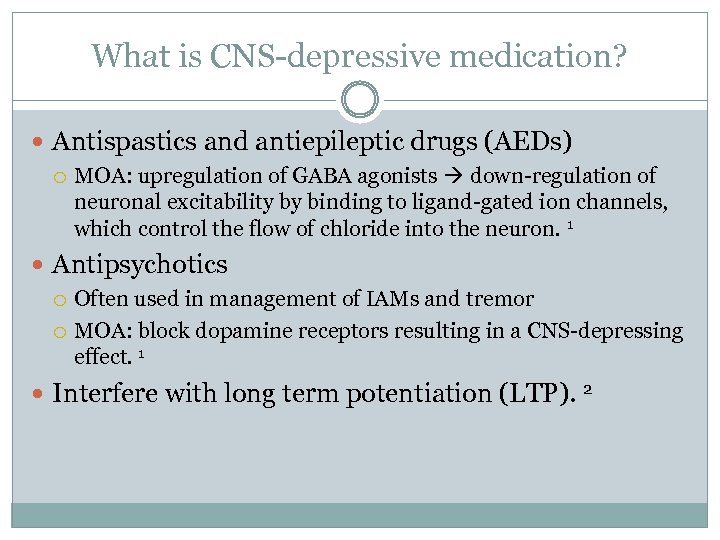 What is CNS-depressive medication? Antispastics and antiepileptic drugs (AEDs) MOA: upregulation of GABA agonists down-regulation of neuronal excitability by binding to ligand-gated ion channels, which control the flow of chloride into the neuron. 1 Antipsychotics Often used in management of IAMs and tremor MOA: block dopamine receptors resulting in a CNS-depressing effect. 1 Interfere with long term potentiation (LTP). 2
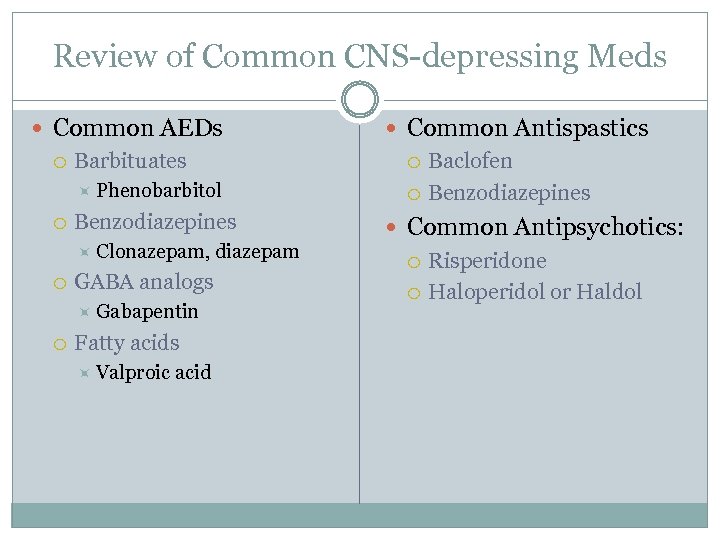 Review of Common CNS-depressing Meds Common AEDs Barbituates Phenobarbitol Benzodiazepines Clonazepam, diazepam GABA analogs Gabapentin Fatty acids Valproic acid Common Antispastics Baclofen Benzodiazepines Common Antipsychotics: Risperidone Haloperidol or Haldol
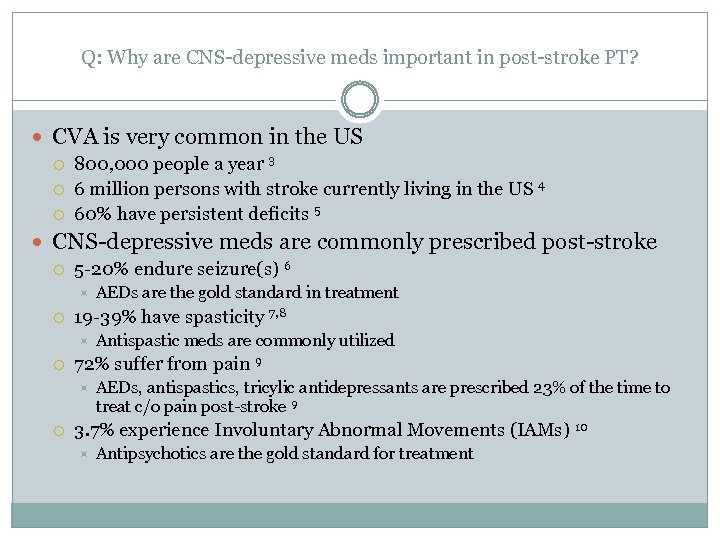 Q: Why are CNS-depressive meds important in post-stroke PT? CVA is very common in the US 800, 000 people a year 3 6 million persons with stroke currently living in the US 4 60% have persistent deficits 5 CNS-depressive meds are commonly prescribed post-stroke 5 -20% endure seizure(s) 6 19 -39% have spasticity 7, 8 Antispastic meds are commonly utilized 72% suffer from pain 9 AEDs are the gold standard in treatment AEDs, antispastics, tricylic antidepressants are prescribed 23% of the time to treat c/o pain post-stroke 9 3. 7% experience Involuntary Abnormal Movements (IAMs) 10 Antipsychotics are the gold standard for treatment
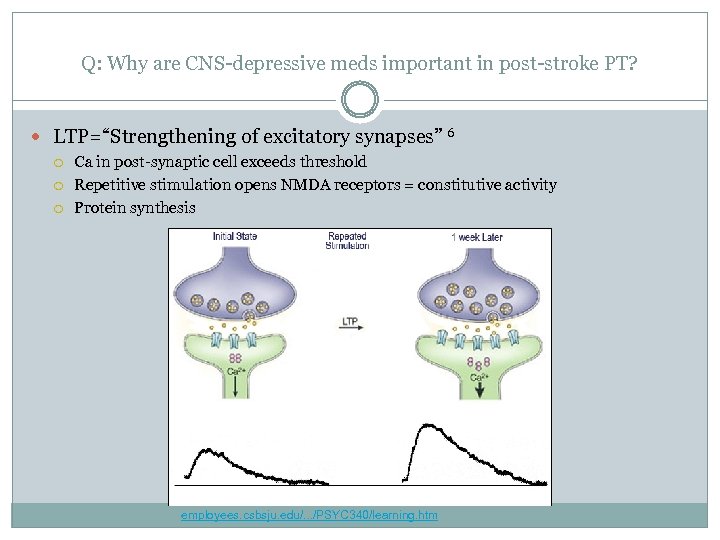 Q: Why are CNS-depressive meds important in post-stroke PT? LTP=“Strengthening of excitatory synapses” 6 Ca in post-synaptic cell exceeds threshold Repetitive stimulation opens NMDA receptors = constitutive activity Protein synthesis employees. csbsju. edu/. . . /PSYC 340/learning. htm
 Q: Why are CNS-depressive meds important in post-stroke PT? Repetitive practice of a motor task and/or nerve stimulation has been shown to induce LTP-like plasticity in the motor cortex. 6 Experimental protocol using e-stim, TMS, and MEPs Korchounov & Zeiman 2011: LTP-like plasticity is halted by agonists of dopamine, norepinephrine, and acetylcholine 11 Haloperidol (DA antagonist, antipsychotic) Prazosine (NE antatonist, antihypertensive) Biperiden (Ach antagonist, antiparkinsonian agent) Levetiracetam (an AED, mechanism unknown) 12 GABA antagonists have same effect in rat models, unable to test in humans
 Q: Why are CNS-depressive meds important in post-stroke PT? A: They may inhibit motor learning. LTP-like mechanisms are critical to motor recovery post-stroke. Principles of LTP induction include: Specificity, intensity, duration of stimuli 6 Hmmm…where have we heard these principles before? LTP=motor learning Researchers speculate that CNS-depressing drugs will be detrimental to motor learning, memory, and motor relearning in patients after central legions. 11 No clinical research
 Background Info 65 yo male retired veteran s/p seizure lasting >45 min due to discontinuation of clonazepam Referred to inpatient rehab with a diagnosis of “generalized weakness” 9 days after admission to ICU. Hospital course included heavy sedation with Ativan due to continuing seizures and agitation in the ICU. Attempted to treated rather unsuccessfully during acute stay
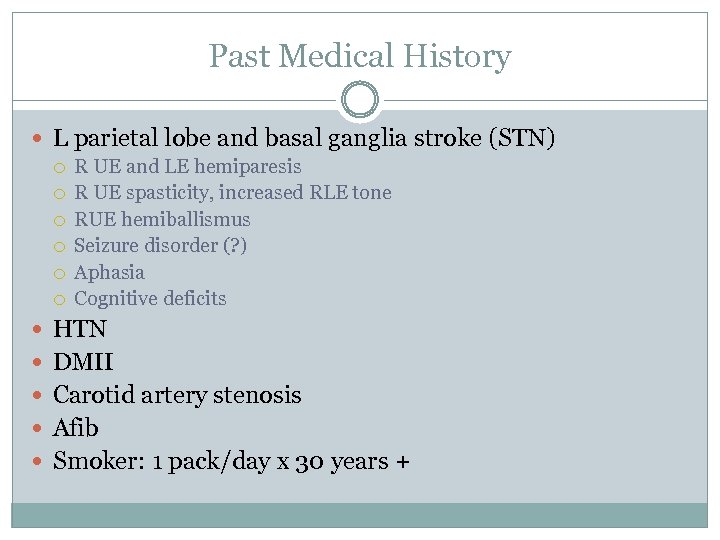 Past Medical History L parietal lobe and basal ganglia stroke (STN) R UE and LE hemiparesis R UE spasticity, increased RLE tone RUE hemiballismus Seizure disorder (? ) Aphasia Cognitive deficits HTN DMII Carotid artery stenosis Afib Smoker: 1 pack/day x 30 years +
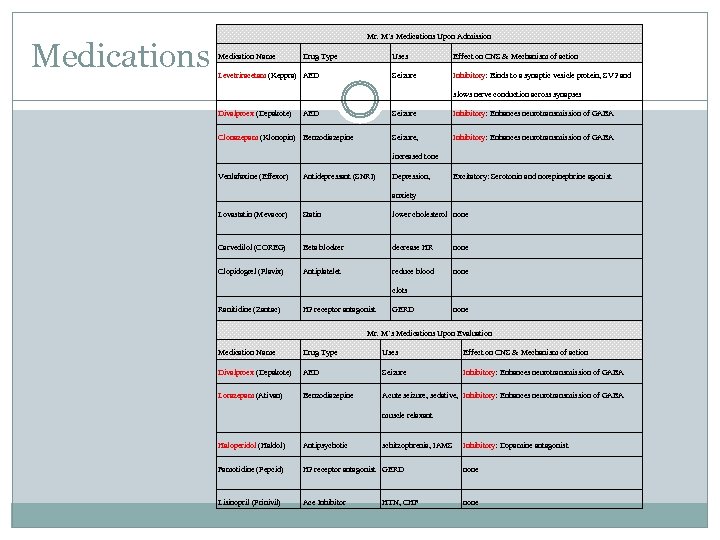 Medications Mr. M’s Medications Upon Admission Medication Name Drug Type Uses Seizure Levetriracetam (Keppra) AED Effect on CNS & Mechanism of action Inhibitory: Binds to a synaptic vesicle protein, SV 2 and slows nerve conduction across synapses Divalproex (Depakote) AED Seizure, Clonazepam (Klonopin) Benzodiazepine Inhibitory: Enhances neurotransmission of GABA increased tone Venlafaxine (Effexor) Antidepressant (SNRI) Depression, Excitatory: Serotonin and norepinephrine agonist anxiety Lovastatin (Mevacor) Statin lower cholesterol none Carvedilol (COREG) Beta blocker decrease HR none Clopidogrel (Plavix) Antiplatelet reduce blood none clots Ranitidine (Zantac) H 2 receptor antagonist GERD none Mr. M’s Medications Upon Evaluation Medication Name Drug Type Uses Effect on CNS & Mechanism of action Divalproex (Depakote) AED Seizure Inhibitory: Enhances neurotransmission of GABA Lorazepam (Ativan) Benzodiazepine Acute seizure, sedative, Inhibitory: Enhances neurotransmission of GABA muscle relaxant Haloperidol (Haldol) Antipsychotic schitzophrenia, IAMS Famotidine (Pepcid) H 2 receptor antagonist GERD none Lisinopril (Prinivil) Ace Inhibitor none HTN, CHF Inhibitory: Dopamine antagonist
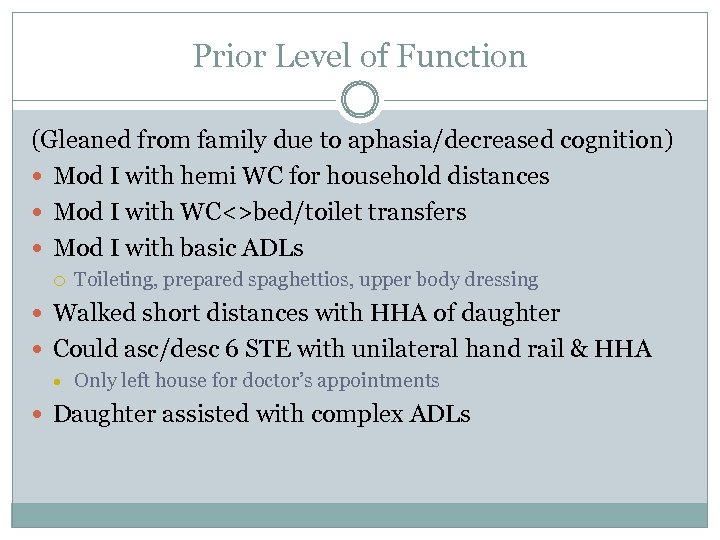 Prior Level of Function (Gleaned from family due to aphasia/decreased cognition) Mod I with hemi WC for household distances Mod I with WC<>bed/toilet transfers Mod I with basic ADLs Toileting, prepared spaghettios, upper body dressing Walked short distances with HHA of daughter Could asc/desc 6 STE with unilateral hand rail & HHA Only left house for doctor’s appointments Daughter assisted with complex ADLs
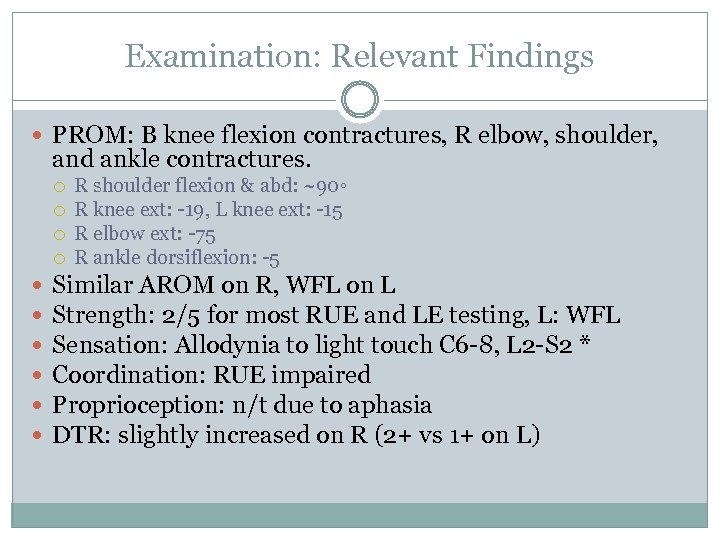 Examination: Relevant Findings PROM: B knee flexion contractures, R elbow, shoulder, and ankle contractures. R shoulder flexion & abd: ~90◦ R knee ext: -19, L knee ext: -15 R elbow ext: -75 R ankle dorsiflexion: -5 Similar AROM on R, WFL on L Strength: 2/5 for most RUE and LE testing, L: WFL Sensation: Allodynia to light touch C 6 -8, L 2 -S 2 * Coordination: RUE impaired Proprioception: n/t due to aphasia DTR: slightly increased on R (2+ vs 1+ on L)
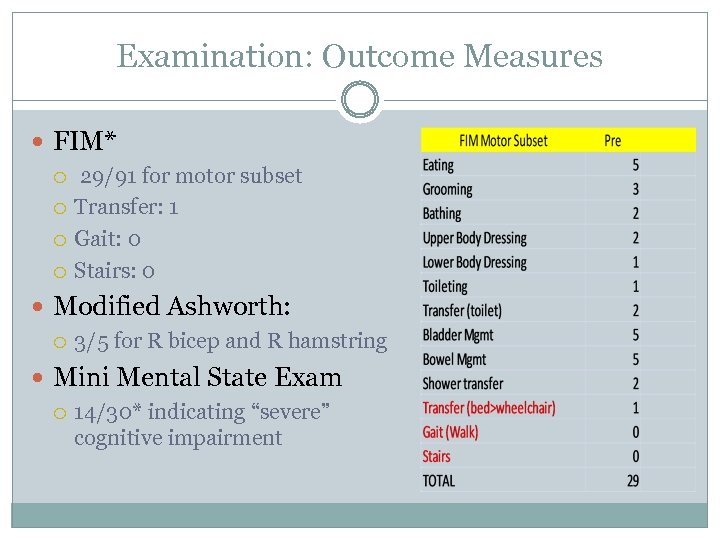 Examination: Outcome Measures FIM* 29/91 for motor subset Transfer: 1 Gait: 0 Stairs: 0 Modified Ashworth: 3/5 for R bicep and R hamstring Mini Mental State Exam 14/30* indicating “severe” cognitive impairment
 Goals The patient’s: To go home/to be independent The family’s: for the pt to return to his pre-admission level of function to decrease burden of care. The Physical Therapist’s: ? ? ?
 Areas of Concern Lacking social support: Family visited once during month-long hospital course Daughter worked and was not home during the day Continued smoking Pt stated that he did not wear pants at home due to difficulty with lower body dressing Prior Falls Family stated that the patient would fall out of his WC occasionally, but could scoot to the phone to tell his daughter, who would come home to help him up
 Clinical Impression What was the impact of lacking social support? Pt’s care was inadequate at home Perhaps the patient’s immobility is related to lacking resources/opportunity rather than impairment My goal was to increase the patient’s level of independence beyond his PLOF to improve QOL by reducing dependence on caregivers. What is the impact of the patient’s medication on the patient’s prognosis for motor recovery? Seizure, hemiballismus and spasticity are all treated with CNSdepressive medication.
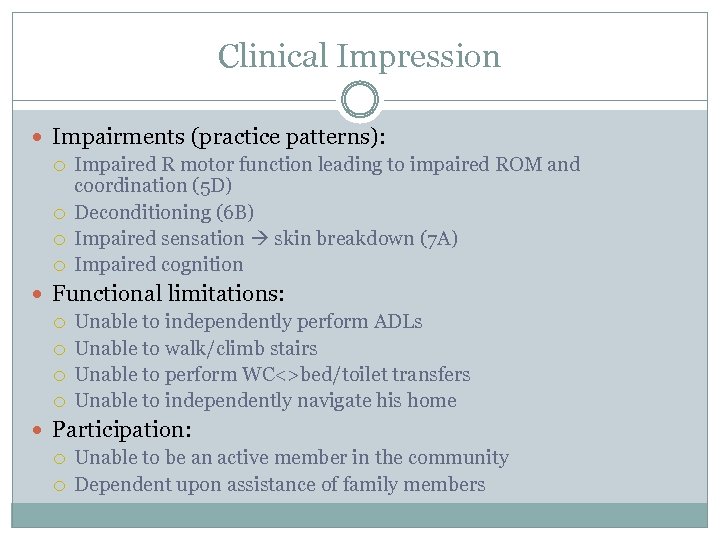 Clinical Impression Impairments (practice patterns): Impaired R motor function leading to impaired ROM and coordination (5 D) Deconditioning (6 B) Impaired sensation skin breakdown (7 A) Impaired cognition Functional limitations: Unable to independently perform ADLs Unable to walk/climb stairs Unable to perform WC<>bed/toilet transfers Unable to independently navigate his home Participation: Unable to be an active member in the community Dependent upon assistance of family members
 Purpose Does CNS-depressive medication negatively impact this patient’s prognosis for motor recovery?
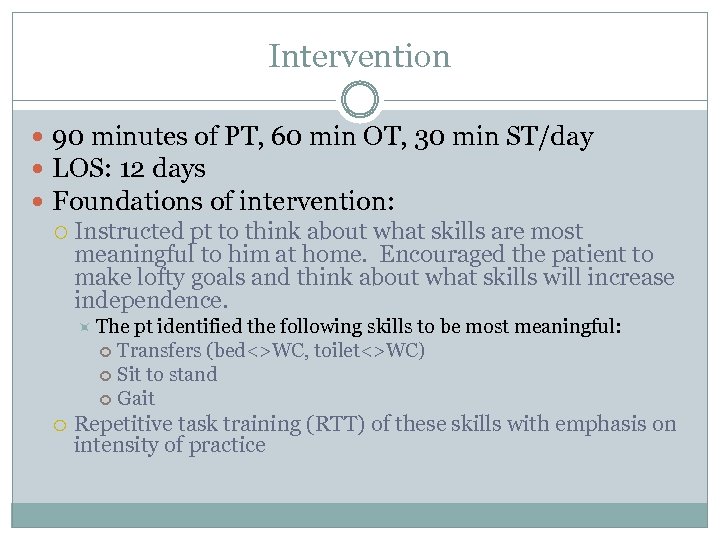 Intervention 90 minutes of PT, 60 min OT, 30 min ST/day LOS: 12 days Foundations of intervention: Instructed pt to think about what skills are most meaningful to him at home. Encouraged the patient to make lofty goals and think about what skills will increase independence. The pt identified the following skills to be most meaningful: Transfers (bed<>WC, toilet<>WC) Sit to stand Gait Repetitive task training (RTT) of these skills with emphasis on intensity of practice
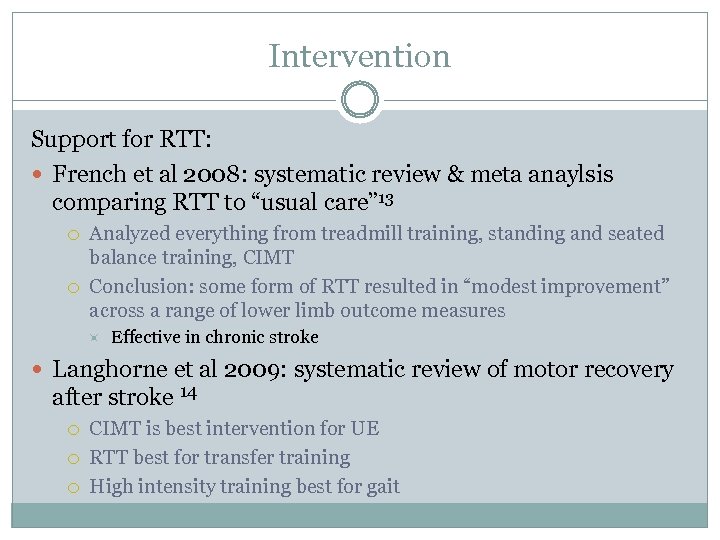 Intervention Support for RTT: French et al 2008: systematic review & meta anaylsis comparing RTT to “usual care” 13 Analyzed everything from treadmill training, standing and seated balance training, CIMT Conclusion: some form of RTT resulted in “modest improvement” across a range of lower limb outcome measures Effective in chronic stroke Langhorne et al 2009: systematic review of motor recovery after stroke 14 CIMT is best intervention for UE RTT best for transfer training High intensity training best for gait
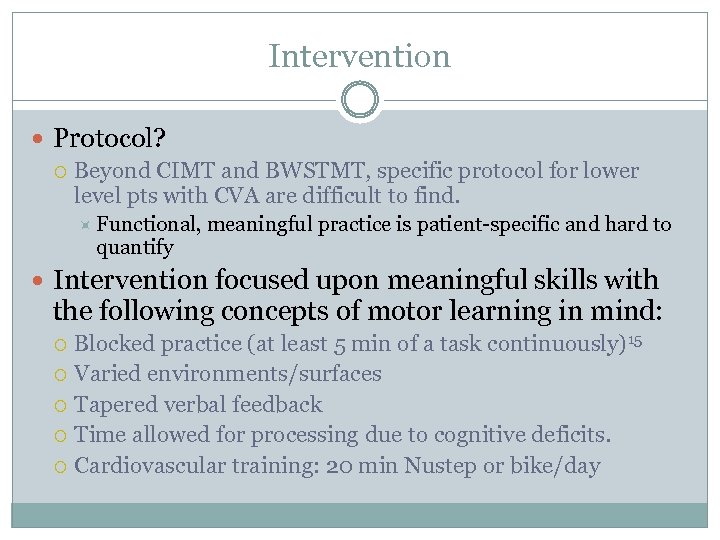 Intervention Protocol? Beyond CIMT and BWSTMT, specific protocol for lower level pts with CVA are difficult to find. Functional, meaningful practice is patient-specific and hard to quantify Intervention focused upon meaningful skills with the following concepts of motor learning in mind: Blocked practice (at least 5 min of a task continuously)15 Varied environments/surfaces Tapered verbal feedback Time allowed for processing due to cognitive deficits. Cardiovascular training: 20 min Nustep or bike/day
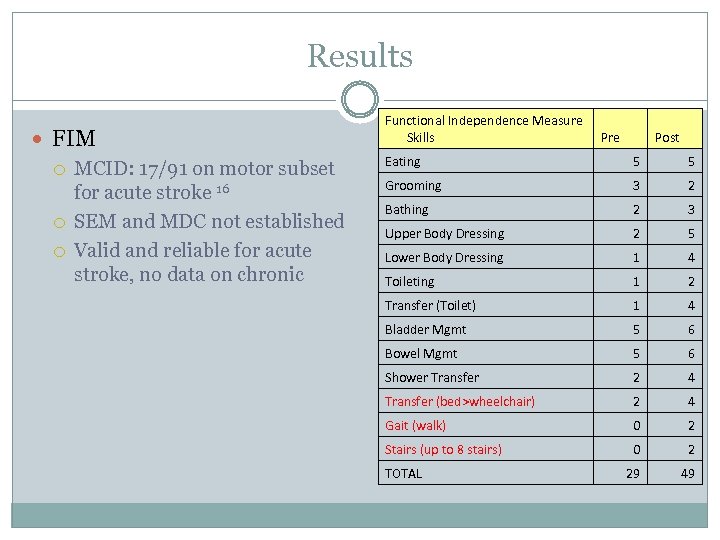 Results FIM MCID: 17/91 on motor subset for acute stroke 16 SEM and MDC not established Valid and reliable for acute stroke, no data on chronic Functional Independence Measure Skills Pre Post Eating 5 5 Grooming 3 2 Bathing 2 3 Upper Body Dressing 2 5 Lower Body Dressing 1 4 Toileting 1 2 Transfer (Toilet) 1 4 Bladder Mgmt 5 6 Bowel Mgmt 5 6 Shower Transfer 2 4 Transfer (bed>wheelchair) 2 4 Gait (walk) 0 2 Stairs (up to 8 stairs) 0 2 29 49 TOTAL
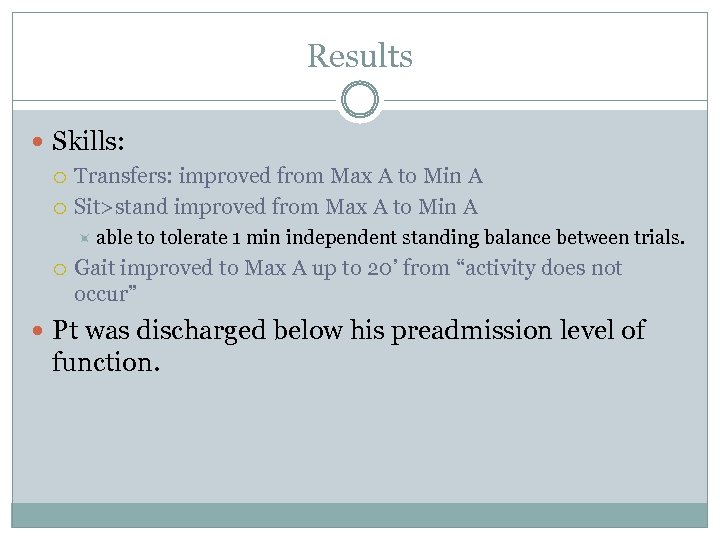 Results Skills: Transfers: improved from Max A to Min A Sit>stand improved from Max A to Min A able to tolerate 1 min independent standing balance between trials. Gait improved to Max A up to 20’ from “activity does not occur” Pt was discharged below his preadmission level of function.
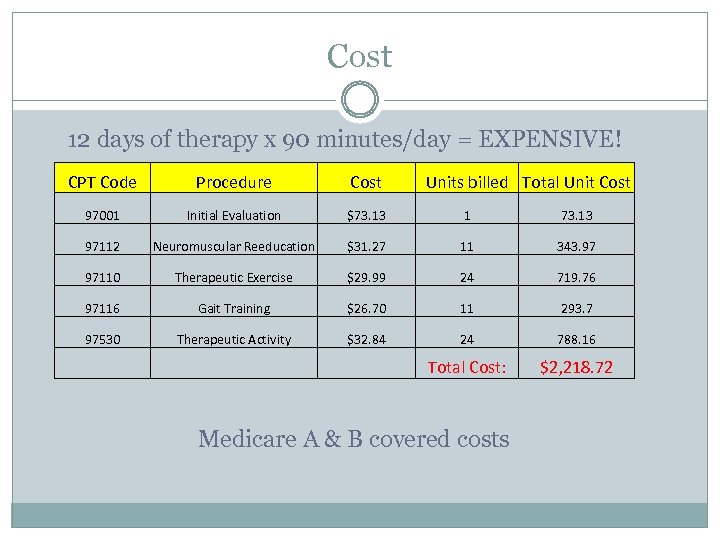 Cost 12 days of therapy x 90 minutes/day = EXPENSIVE! CPT Code Procedure Cost Units billed Total Unit Cost 97001 Initial Evaluation $73. 13 1 73. 13 97112 Neuromuscular Reeducation $31. 27 11 343. 97 97110 Therapeutic Exercise $29. 99 24 719. 76 97116 Gait Training $26. 70 11 293. 7 97530 Therapeutic Activity $32. 84 24 788. 16 Total Cost: $2, 218. 72 Medicare A & B covered costs
 Would I pay out of pocket? NO!
 Discussion Multiple poor prognostic indicators: Chronic stroke Multiple studies show that gains can be made when intensive PT is employed in chronic stroke. Moore et al, 2010 hypothesized that a “plateau” occurs in PT due to lack of task-specific practice in the clinical setting. 17 Older age Most patients with CVA are older, 65 is relatively young Multiple comorbidities Most patients with CVA have multiple comorbidities Smoking
 Discussion 12 day LOS too short? Other intensive RTT protocols demonstrated successful results after only 10 days. Fritz et al, 201118 Many CIMT protocols are often 2 -3 weeks Lin, 2008: 3 weeks 19 Huseyinsinoglu, 2012: 10 days 20 Could cognitive deficits have impacted the intensity of practice? Most RTT and CIMT exclude pts with “severe” cognitive deficits Role of medication? Impaired motor learning?
 Conclusion Vision 2020: “doctors of physical therapy, recognized by consumers and other health care professionals as the practitioners of choice to whom consumers have direct access for the diagnosis of, interventions for, and prevention of impairments, activity limitations, participation restrictions, and environmental barriers related to movement, function, and health. ” 21 Basic understanding of pharmacology is essential formulating realistic prognoses. Communication with MDs and family re: expectations, burden of care, etc.
 What would I have done differently? Intervention limited by facility Treadmill Training Moore 2010 excluded all pts who couldn’t ambulate 10’ independently Hornby & Straube showing that intensive locomotor training actually translates into improved transfer and balance skills. Adhered to a more specific protocol so the intervention could be replicated Insisted on family training Collaborated more with social worker Home health
 Appropriate Resources SNF information Respite: http: //www. harmonychicago. com/contact Adult day care: http: //emeritus 86. reachlocal. net/sem/chicago? track=RESPITE Smoking cessation resources Oak Park Vet Center 155 South Oak Park Avenue Oak Park, IL 60302 (708) 383 -3225 http: //saveourvets. com/page 4. html
 Questions? Discussion points: Was this patient appropriate for inpatient rehab? Do you consider the patient’s medication list when determining prognosis? Do you think our program needs to incorporate more pharmacology into the curriculum?
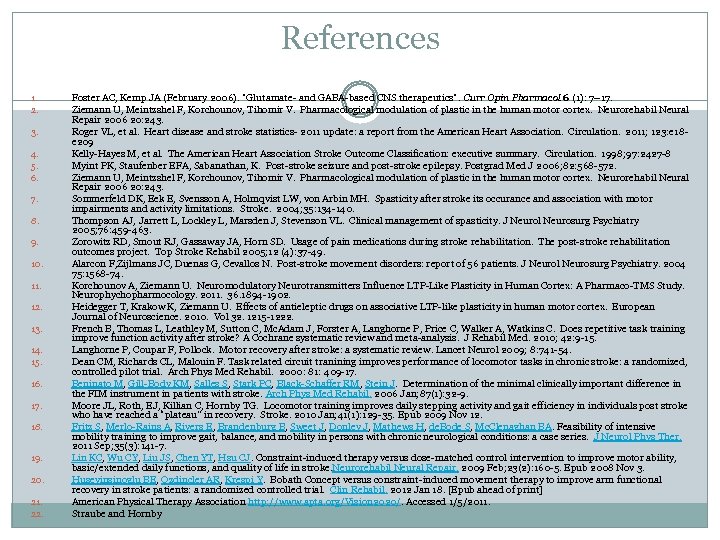 References 1. 2. 3. 4. 5. 6. 7. 8. 9. 10. 11. 12. 13. 14. 15. 16. 17. 18. 19. 20. 21. 22. Foster AC, Kemp JA (February 2006). "Glutamate- and GABA-based CNS therapeutics". Curr Opin Pharmacol 6 (1): 7– 17. Ziemann U, Meintzshel F, Korchounov, Tihomir V. Pharmacological modulation of plastic in the human motor cortex. Neurorehabil Neural Repair 2006 20: 243. Roger VL, et al. Heart disease and stroke statistics- 2011 update: a report from the American Heart Association. Circulation. 2011; 123: e 18 e 209 Kelly-Hayes M, et al. The American Heart Association Stroke Outcome Classification: executive summary. Circulation. 1998; 97: 2427 -8 Myint PK, Staufenber EFA, Sabanathan, K. Post-stroke seizure and post-stroke epilepsy. Postgrad Med J 2006; 82: 568 -572. Ziemann U, Meintzshel F, Korchounov, Tihomir V. Pharmacological modulation of plastic in the human motor cortex. Neurorehabil Neural Repair 2006 20: 243. Sommerfeld DK, Eek E, Svensson A, Holmqvist LW, von Arbin MH. Spasticity after stroke its occurance and association with motor impairments and activity limitations. Stroke. 2004; 35: 134 -140. Thompson AJ, Jarrett L, Lockley L, Marsden J, Stevenson VL. Clinical management of spasticity. J Neurol Neurosurg Psychiatry 2005; 76: 459 -463. Zorowitz RD, Smout RJ, Gassaway JA, Horn SD. Usage of pain medications during stroke rehabilitation. The post-stroke rehabilitation outcomes project. Top Stroke Rehabil 2005; 12 (4): 37 -49. Alarcon F, Zijlmans JC, Duenas G, Cevallos N. Post-stroke movement disorders: report of 56 patients. J Neurol Neurosurg Psychiatry. 2004 75: 1568 -74. Korchounov A, Ziemann U. Neuromodulatory Neurotransmitters Influence LTP-Like Plasticity in Human Cortex: A Pharmaco-TMS Study. Neurophychopharmocology. 2011. 36. 1894 -1902. Heidegger T, Krakow K, Ziemann U. Effects of antieleptic drugs on associative LTP-like plasticity in human motor cortex. European Journal of Neuroscience. 2010. Vol 32. 1215 -1222. French B, Thomas L, Leathley M, Sutton C, Mc. Adam J, Forster A, Langhorne P, Price C, Walker A, Watkins C. Does repetitive task training improve function activity after stroke? A Cochrane systematic review and meta-analysis. J Rehabil Med. 2010; 42: 9 -15. Langhorne P, Coupar F, Pollock. Motor recovery after stroke: a systematic review. Lancet Neurol 2009; 8: 741 -54. Dean CM, Richards CL, Malouin F. Task related circuit tranining improves performance of locomotor tasks in chronic stroke: a randomized, controlled pilot trial. Arch Phys Med Rehabil. 2000: 81: 409 -17. Beninato M, Gill-Body KM, Salles S, Stark PC, Black-Schaffer RM, Stein J. Determination of the minimal clinically important difference in the FIM instrument in patients with stroke. Arch Phys Med Rehabil. 2006 Jan; 87(1): 32 -9. Moore JL, Roth, EJ, Killian C, Hornby TG. Locomotor training improves daily stepping activity and gait efficiency in individuals post stroke who have reached a “plateau” in recovery. Stroke. 2010 Jan; 41(1): 129 -35. Epub 2009 Nov 12. Fritz S, Merlo-Rains A, Rivers E, Brandenburg B, Sweet J, Donley J, Mathews H, de. Bode S, Mc. Clenaghan BA. Feasibility of intensive mobility training to improve gait, balance, and mobility in persons with chronic neurological conditions: a case series. J Neurol Phys Ther. 2011 Sep; 35(3): 141 -7. Lin KC, Wu CY, Liu JS, Chen YT, Hsu CJ. Constraint-induced therapy versus dose-matched control intervention to improve motor ability, basic/extended daily functions, and quality of life in stroke. Neurorehabil Neural Repair. 2009 Feb; 23(2): 160 -5. Epub 2008 Nov 3. Huseyinsinoglu BE, Ozdincler AR, Krespi Y. Bobath Concept versus constraint-induced movement therapy to improve arm functional recovery in stroke patients: a randomized controlled trial. Clin Rehabil. 2012 Jan 18. [Epub ahead of print] American Physical Therapy Association http: //www. apta. org/Vision 2020/. Accessed 1/5/2011. Straube and Hornby