


 Скачать презентацию Document Analysis Questioned document Document whose
e48111b23000cc95beef898aa6c19fca.ppt
- Количество слайдов: 42
 Document Analysis
 Questioned document • Document whose source or authenticity is in question
 Examples of Questioned Documents • Embezzle by altering books • Checks • Lottery tickets • Wills • Contracts • Driver’s licenses • Voter registrations • Petitions • • Letters Autographs Passports Hold-up notes Medical records Insurance forms Suicide notes Diaries
 Careers • • Serve a 2 year apprenticeship in a large lab No college degrees in this specialty Recommend bachelor’s degree in a lab science Take courses in law, photography • Certification by ABFDE =American Board of Forensic Document Examiners
 Federal Labs w/ Q. D. labs • • FBI USPS US Secret service ATF IRS CIA Military
 Tools of document examiner • Microscopes • Photographs • Chemical analysis
 What affects handwriting? • • Illness (stroke or Parkinson’s) Fatigue Stress Impaired vision Hand/arm injuries Awkward writing position Intoxication
 1 st major case using handwriting analysis • Kidnapping of Lindbergh baby • Letters of kidnapper’s signature matched letters from ransom note
 Obtain standards Standard = writing sample = exemplar • A) Nonrequested standard • B) Requested standard
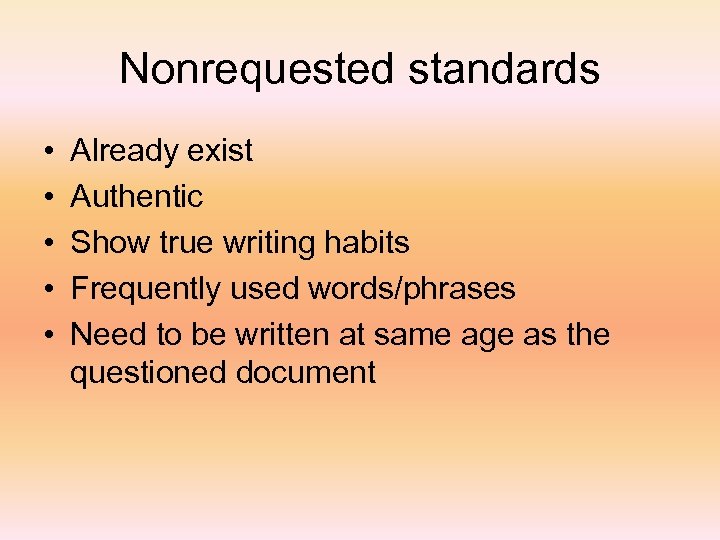 Nonrequested standards • • • Already exist Authentic Show true writing habits Frequently used words/phrases Need to be written at same age as the questioned document
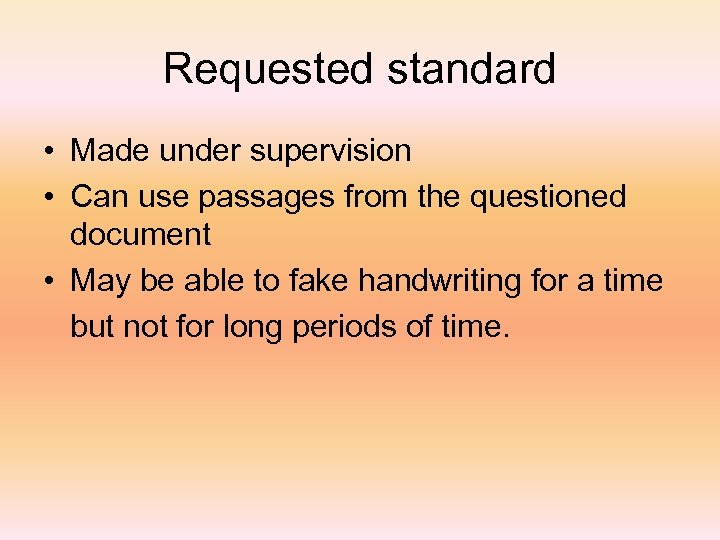 Requested standard • Made under supervision • Can use passages from the questioned document • May be able to fake handwriting for a time but not for long periods of time.
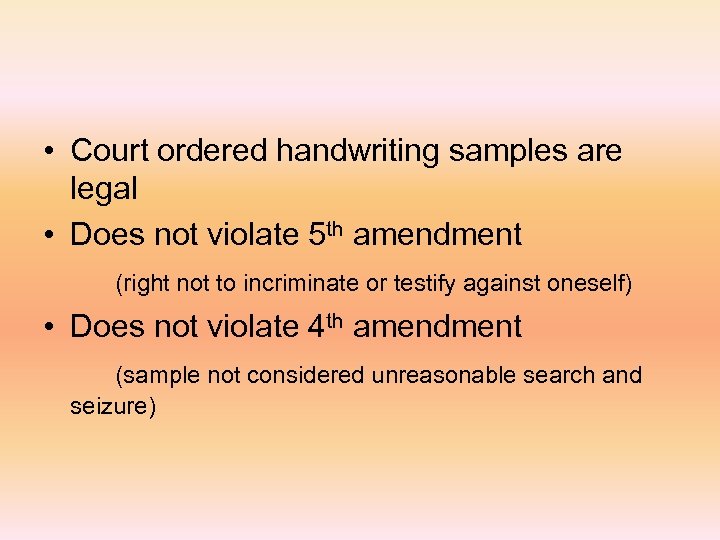 • Court ordered handwriting samples are legal • Does not violate 5 th amendment (right not to incriminate or testify against oneself) • Does not violate 4 th amendment (sample not considered unreasonable search and seizure)
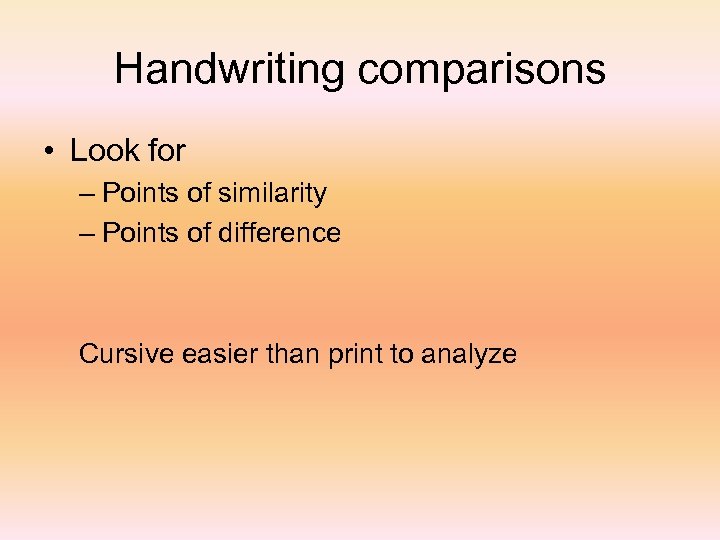 Handwriting comparisons • Look for – Points of similarity – Points of difference Cursive easier than print to analyze
 Handwriting Features 1. Overall form – size, shape, slant, proportion, beginning and ending strokes 2. Line features- writing speed, fluidity, pressure, spacing, connections
 Handwriting Features 3. Margins and format – width of margins spacing consistency slant between lines 4. Content grammar punctuation choice of words
 Examiner’s conclusions 1. 2. 3. 4. 5. Absolute match Match w/ a high probability Probably match Do not match Inconclusive
 FBI handwriting databases • National Fraudulent Check File • Bank Robbery Note File • Anonymous letter file • FISH = Forensic Information System for Handwriting (scan and digitize documents)
 Forgery • Writing or altering a document w/ the intent to defraud • Types of forgery: a. freehand simulation b. tracing
 Clues to detect forgeries a. b. c. d. e. Evidence of practice Tremors Uneven writing speed, pressure Pen lifts Patching, retouching
 Alterations • Remove, add, change parts of a document • Why alter a document? – Financial gain – Create an alibi – Change evidence
 Types of alterations 1. 2. 3. 4. Erasures Burning Obliterations (ex. Bleaching) Additions/Overwriting
 Erasures • Eraser • Sharp instrument • Sandpaper
 How to detect erasures 1. Magnifying glass or micropscope (oblique lighting) 2. UV or infrared light –exposes bits of eraser in the fibers of the paper 3. Lycopodium powder-sticks to rubber particles erasers. 4. Backlighting – turns erased areas light - darkens correction fluid
 Bleaching • Oxidize/bleaching agents to remove writing • Ink becomes colorless • May leave discoloration • May be visible w/ microscope
 Adding Words • Change amount of check • Change date of contract or will
 Overwriting • Adds to a document Ex. Change a 1 to a 9 Ex. Add 0 to a check Effective if the exact same pen is used
 Detecting additions/overwriting 1. Microscopes will show minor diff in - ink colors - line thickness - pen pressure Also: marks on ballpoint pen may be distinctive
 2. UV of infrared light exposes diff inks even if they are the same color - some fluoresce - some fade a) Photograph images b) Chemical analyses of inks
 Indentations • Underlying pages of the original document • Fibers are pushed in
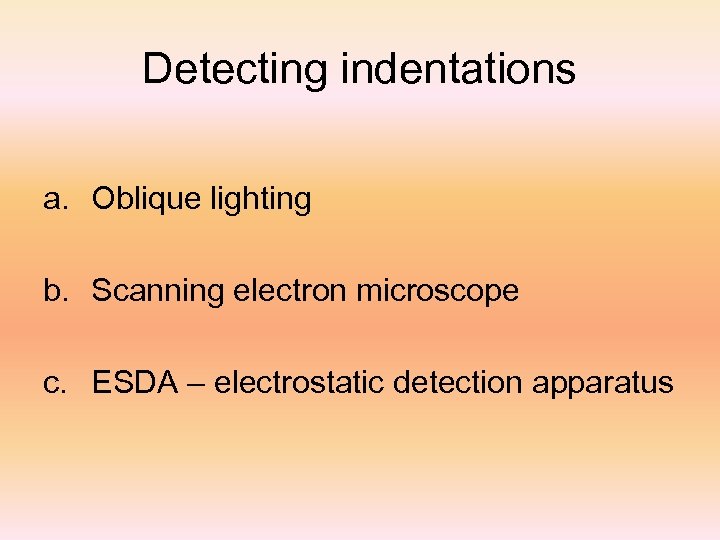 Detecting indentations a. Oblique lighting b. Scanning electron microscope c. ESDA – electrostatic detection apparatus
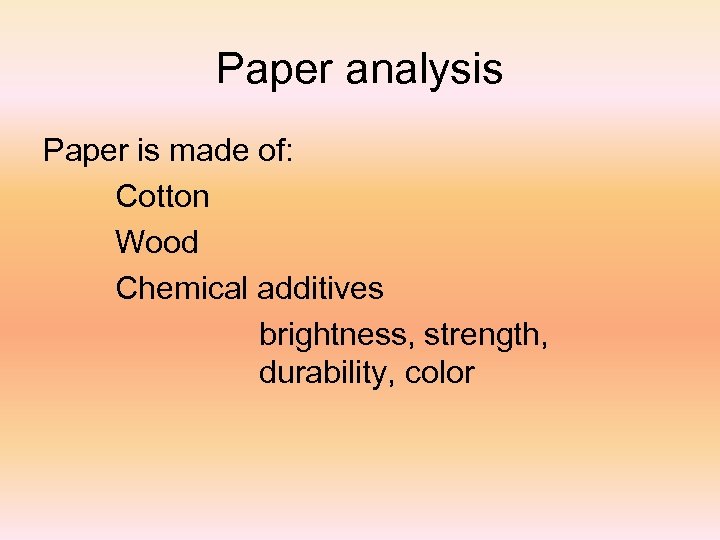 Paper analysis Paper is made of: Cotton Wood Chemical additives brightness, strength, durability, color
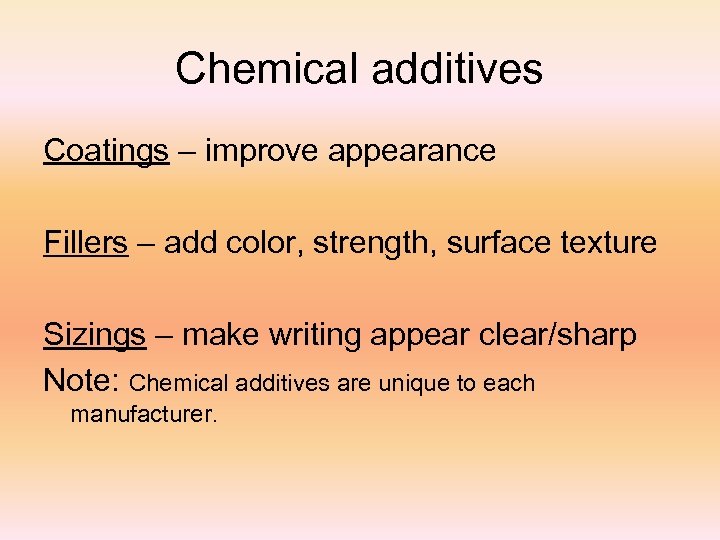 Chemical additives Coatings – improve appearance Fillers – add color, strength, surface texture Sizings – make writing appear clear/sharp Note: Chemical additives are unique to each manufacturer.
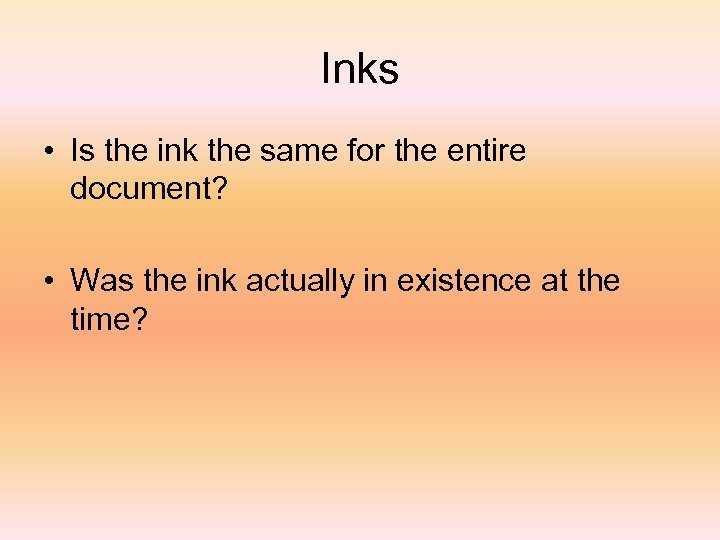 Inks • Is the ink the same for the entire document? • Was the ink actually in existence at the time?
 Analyzing inks 1. Microspectrophotometry measures how inks transmit, absorb, and reflect light 2. TLC= thin layer chromatography separates the ink components
 Ink Reference Database • US Secret Service Forensic lab Note: some manufacturers now add fluorescent-dye tags to their inks (changed annually)
 Copiers • Marks may be left – Mechanism that pulls the paper through the machine – Scratches in cover glass – Marks on camera lens Used to determine a. Age of document b. Which copier was used
 World War II • British intelligence sent letters to French resistance fighters using forged stamps
 George Harrison • Relatives listed a fake address on death certificate to keep fans away
 Bills • UV lights -- detect fluorescent strips • Iodine pens- detect starch (not used in real money)
 Copyright and trademark infringement • • Computer games Watches Perfume Music
 Websites • US Army crime lab • Reddy’s forensic web page • Questioned documents page –Emily Will
 Websites • http: //www. aafs. org/default. asp? section_id=meet ings&page_id=other#JULY%202005 • http: //www. freereferral. com/resume/C 000558 A. p hp ex. Of cont. ed/ training • http: //www. decinc. ca/compare. html • List of nonrequested samples