 Скачать презентацию DOCTORS AND THE TERRORIST BOMB proliferation dangers associated
07693012b36a562786a821f78ddaee20.ppt
- Количество слайдов: 29



DOCTORS AND THE ‘TERRORIST BOMB’: proliferation dangers associated with radio-pharmaceutical production A presentation prepared by the Medical Association for Prevention of War
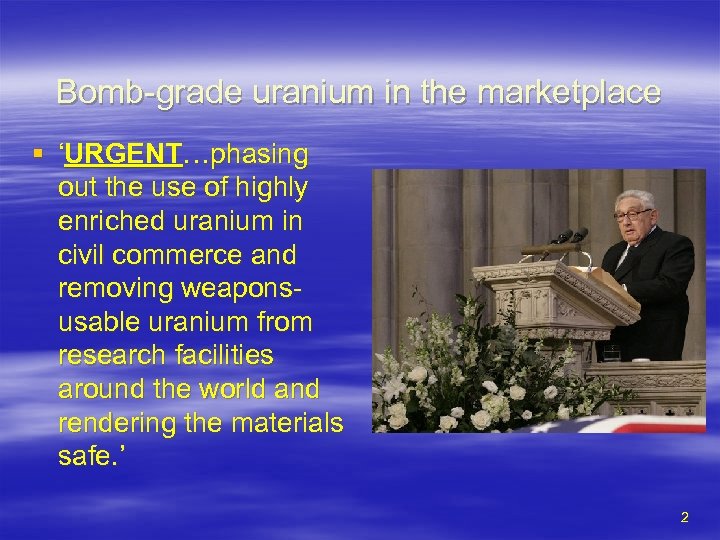
Bomb-grade uranium in the marketplace § ‘URGENT…phasing out the use of highly enriched uranium in civil commerce and removing weaponsusable uranium from research facilities around the world and rendering the materials safe. ’ 2
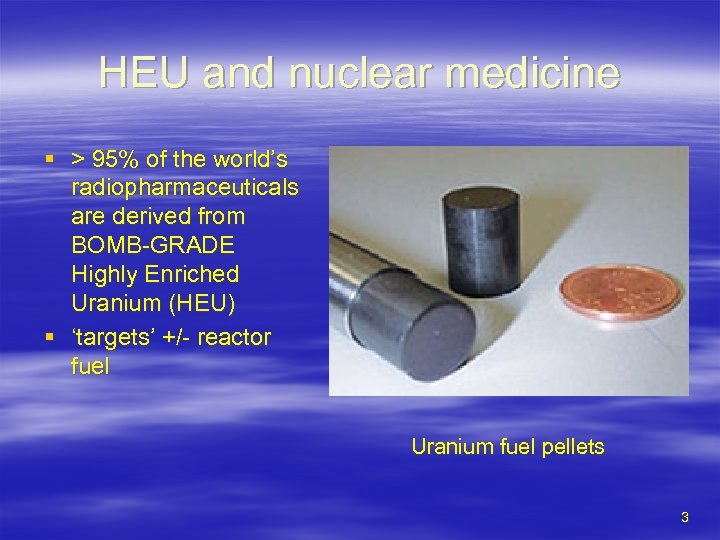
HEU and nuclear medicine § > 95% of the world’s radiopharmaceuticals are derived from BOMB-GRADE Highly Enriched Uranium (HEU) § ‘targets’ +/- reactor fuel Uranium fuel pellets 3
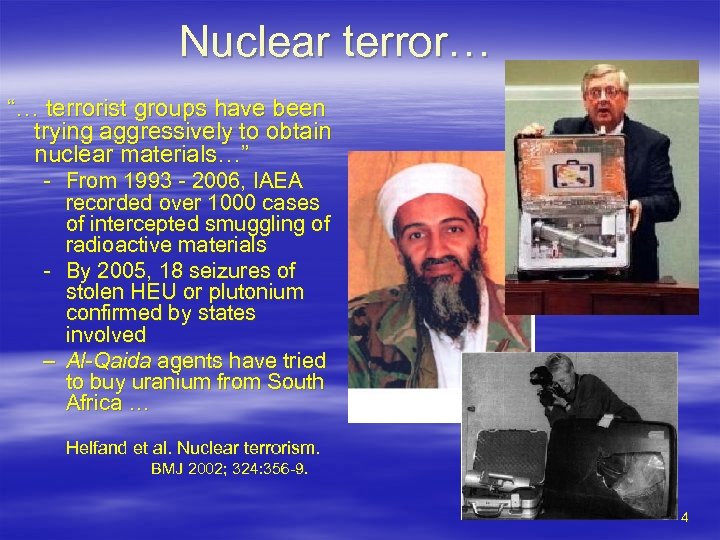
Nuclear terror… “… terrorist groups have been trying aggressively to obtain nuclear materials…” - From 1993 - 2006, IAEA recorded over 1000 cases of intercepted smuggling of radioactive materials - By 2005, 18 seizures of stolen HEU or plutonium confirmed by states involved – Al-Qaida agents have tried to buy uranium from South Africa … Helfand et al. Nuclear terrorism. BMJ 2002; 324: 356 -9. 4
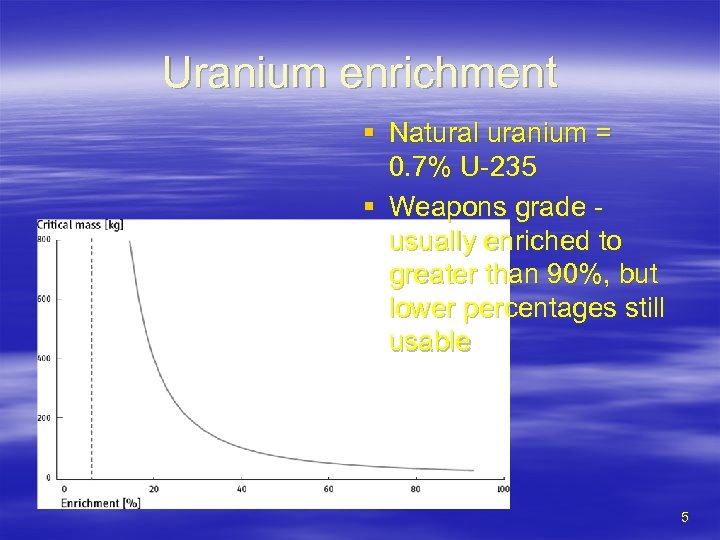
Uranium enrichment § Natural uranium = 0. 7% U-235 § Weapons grade usually enriched to greater than 90%, but lower percentages still usable 5
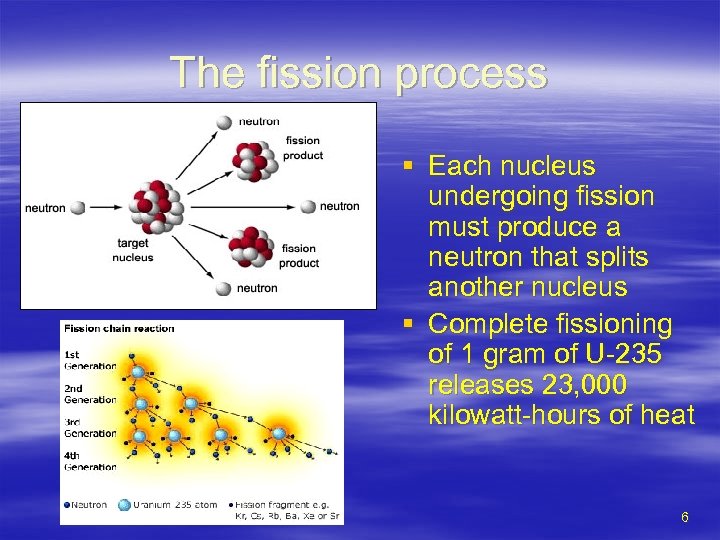
The fission process § Each nucleus undergoing fission must produce a neutron that splits another nucleus § Complete fissioning of 1 gram of U-235 releases 23, 000 kilowatt-hours of heat 6
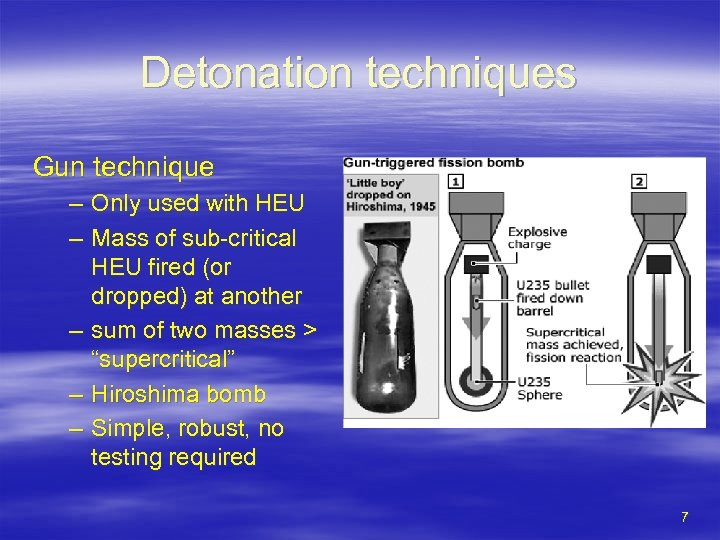
Detonation techniques Gun technique – Only used with HEU – Mass of sub-critical HEU fired (or dropped) at another – sum of two masses > “supercritical” – Hiroshima bomb – Simple, robust, no testing required 7
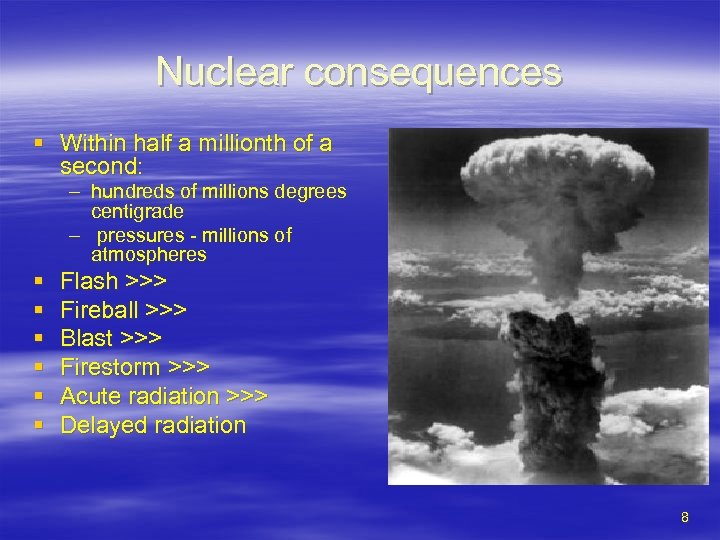
Nuclear consequences § Within half a millionth of a second: – hundreds of millions degrees centigrade – pressures - millions of atmospheres § § § Flash >>> Fireball >>> Blast >>> Firestorm >>> Acute radiation >>> Delayed radiation 8
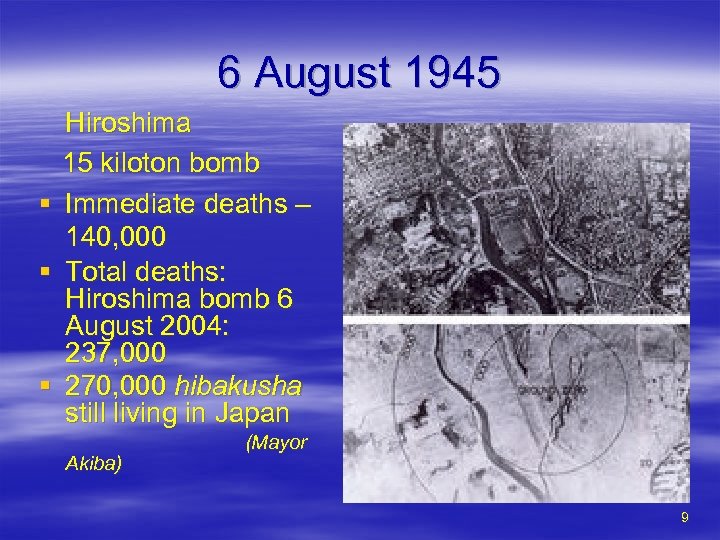
6 August 1945 § § § Hiroshima 15 kiloton bomb Immediate deaths – 140, 000 Total deaths: Hiroshima bomb 6 August 2004: 237, 000 270, 000 hibakusha still living in Japan Akiba) (Mayor 9
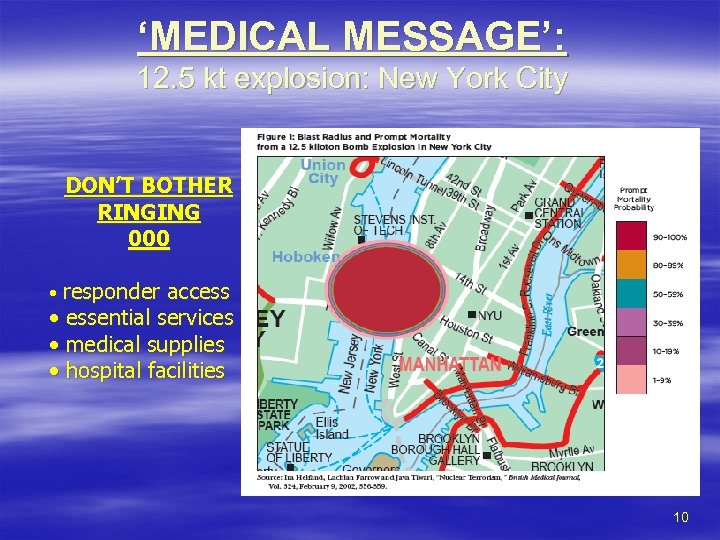
‘MEDICAL MESSAGE’: 12. 5 kt explosion: New York City DON’T BOTHER RINGING 000 • responder access • essential services • medical supplies • hospital facilities 10
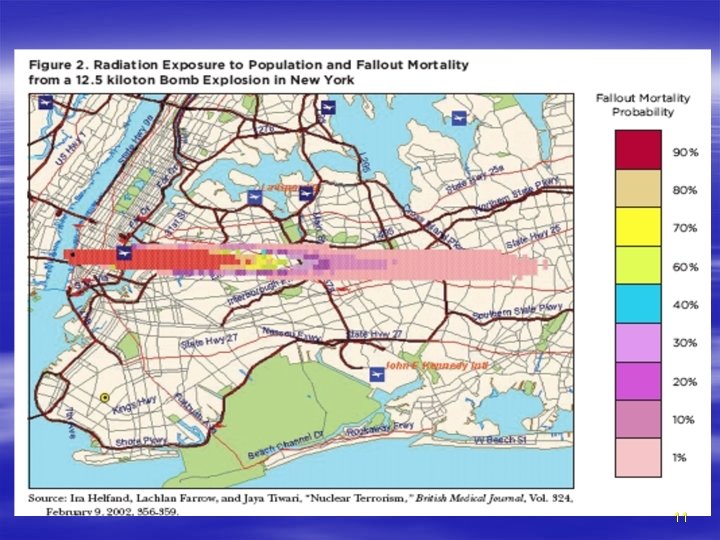
11
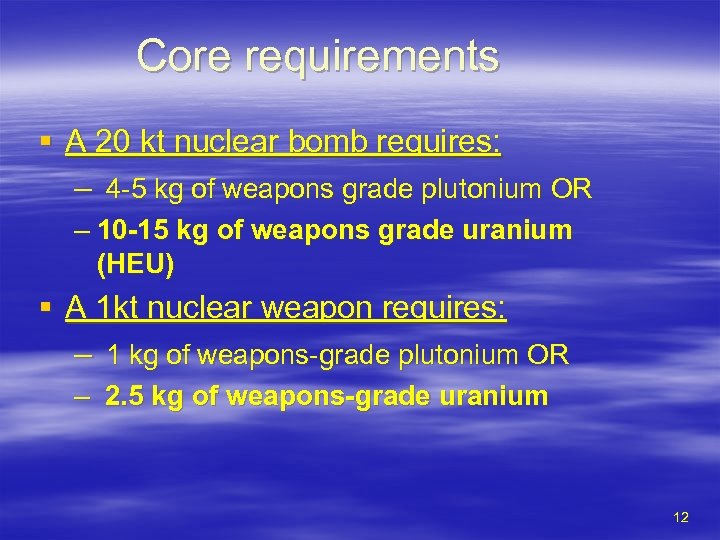
Core requirements § A 20 kt nuclear bomb requires: – 4 -5 kg of weapons grade plutonium OR – 10 -15 kg of weapons grade uranium (HEU) § A 1 kt nuclear weapon requires: – 1 kg of weapons-grade plutonium OR – 2. 5 kg of weapons-grade uranium 12
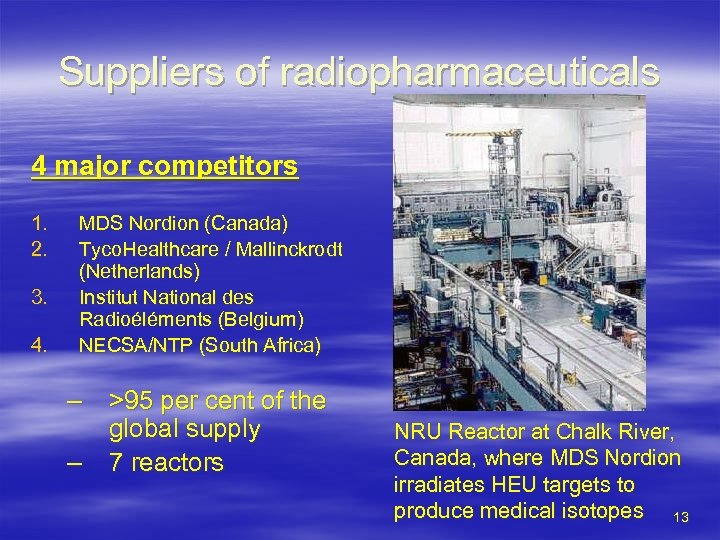
Suppliers of radiopharmaceuticals 4 major competitors 1. 2. 3. 4. MDS Nordion (Canada) Tyco. Healthcare / Mallinckrodt (Netherlands) Institut National des Radioéléments (Belgium) NECSA/NTP (South Africa) – >95 per cent of the global supply – 7 reactors NRU Reactor at Chalk River, Canada, where MDS Nordion irradiates HEU targets to produce medical isotopes 13
HEU sourcing § Canada (Nordion): imports ~ 20 kg/year from USA § Europe: France, Russia or UK (or US pre 1992) § South Africa: uses HEU it produced for weapons prior to 1991 14
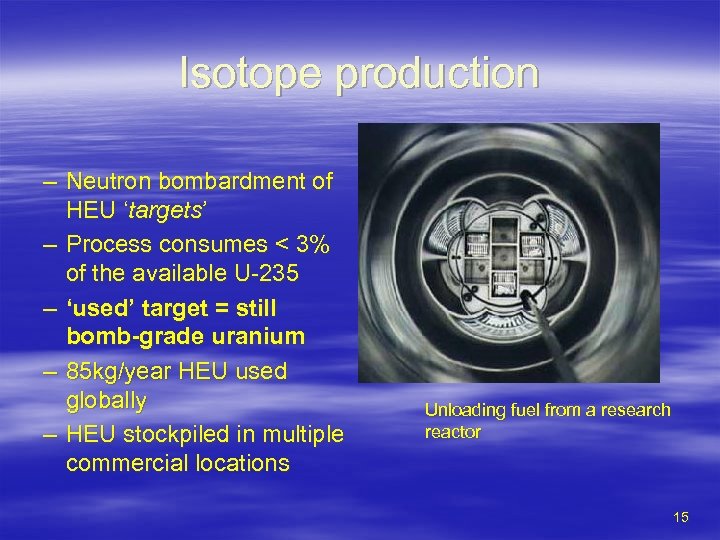
Isotope production – Neutron bombardment of HEU ‘targets’ – Process consumes < 3% of the available U-235 – ‘used’ target = still bomb-grade uranium – 85 kg/year HEU used globally – HEU stockpiled in multiple commercial locations Unloading fuel from a research reactor 15
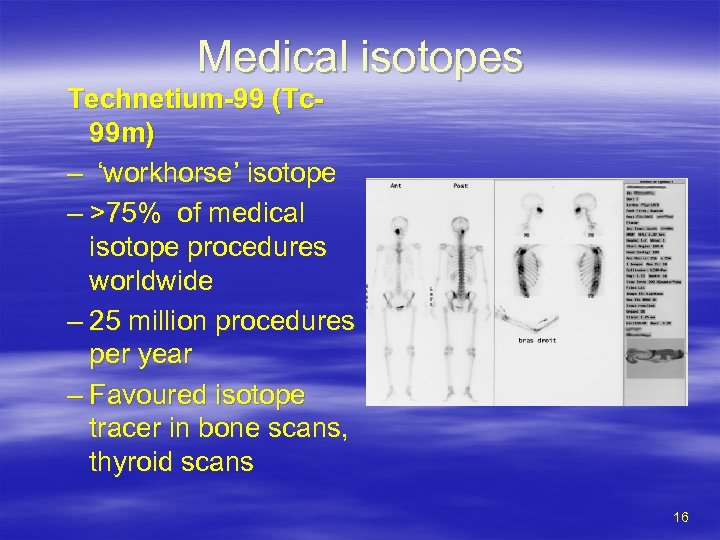
Medical isotopes Technetium-99 (Tc 99 m) – ‘workhorse’ isotope – >75% of medical isotope procedures worldwide – 25 million procedures per year – Favoured isotope tracer in bone scans, thyroid scans 16
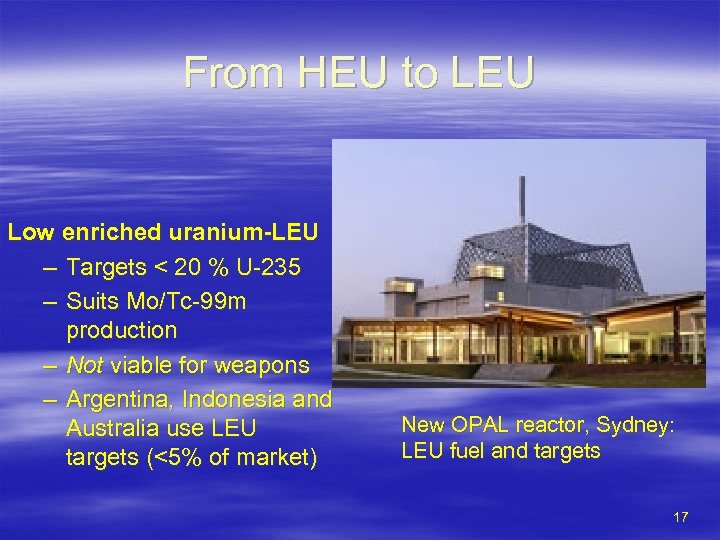
From HEU to LEU Low enriched uranium-LEU – Targets < 20 % U-235 – Suits Mo/Tc-99 m production – Not viable for weapons – Argentina, Indonesia and Australia use LEU targets (<5% of market) New OPAL reactor, Sydney: LEU fuel and targets 17
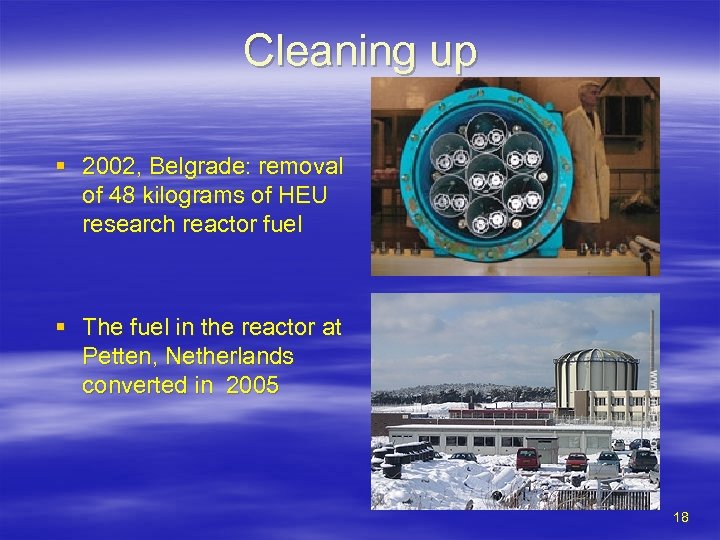
Cleaning up § 2002, Belgrade: removal of 48 kilograms of HEU research reactor fuel § The fuel in the reactor at Petten, Netherlands converted in 2005 18
Conversion Oslo IAEA symposium, June 2006 ‘The conversion of radioisotope production, specifically Mo-99, to LEU is technically feasible, and … remaining obstacles to conversion of this activity are chiefly of commercial nature. ’ Prof Jose Goldemberg, International Panel on Fissile Materials Summary – Conversion from HEU to LEU is possible – No future needs for HEU identified – Current conversion programmes: successful 19
Commercial viability § Cost to consumers in most applications would be in the order of a 1 – 2 % increase § A large cost saving: eliminating the high security costs necessitated by HEU storage and transport Kahn LH, von Hippel F. How the radiological and medical communities can improve nuclear security. J Am Coll Radiol 2007; 4: 248 -51. 20
Addressing supplier reluctance None of the 4 big players are currently using LEU targets Timeline § 1978 - Reduced Enrichment Research and Test Reactor program § 1992 - US Energy Policy Bill: incentives to convert to LEU § 2005 - Burr Amendment weakens the Bill Current status § S. Africa & Netherlands ‘planning’ to convert to LEU: a decade away…? § MDS-Nordion (>50% of the global Tc-99 m supply) – stopped co-operating with the RERTR in 2003 – lobbied Congress to pass Burr Amendment – current stockpile > 45 kilograms HEU 21
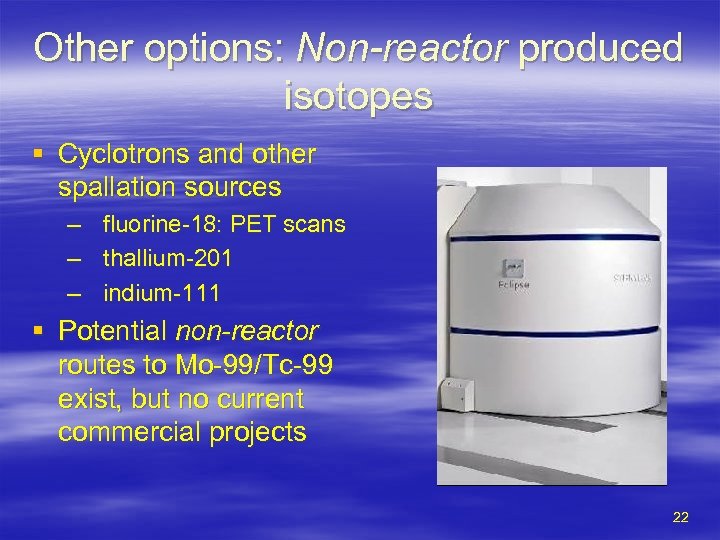
Other options: Non-reactor produced isotopes § Cyclotrons and other spallation sources – – – fluorine-18: PET scans thallium-201 indium-111 § Potential non-reactor routes to Mo-99/Tc-99 exist, but no current commercial projects 22
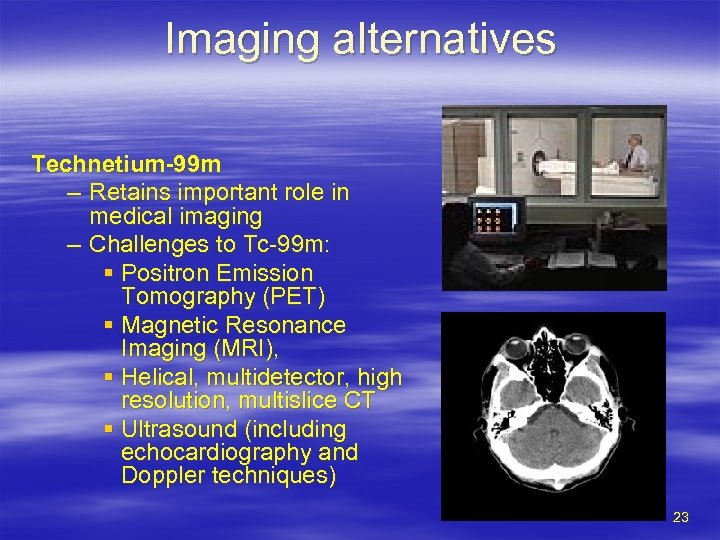
Imaging alternatives Technetium-99 m – Retains important role in medical imaging – Challenges to Tc-99 m: § Positron Emission Tomography (PET) § Magnetic Resonance Imaging (MRI), § Helical, multidetector, high resolution, multislice CT § Ultrasound (including echocardiography and Doppler techniques) 23
So … ask: 1. Where do your isotopes originate? 2. Are they derived from HEU? 3. If so, is there an alternative supplier not using HEU? If so, please use them. 4. If not, what is the current supplier doing to convert to LEU? 24
Medical strategies § Educate colleagues § Encourage clinicians to ask NM-providers where their isotopes come from, and § urge a non-HEU source whenever possible § Optimise use of alternative imaging technologies § Promote R & D of non-reactor isotopes § Promote medical association and government policies encouraging elimination of HEU 25
Other strategies § § Nuclear physicians seek LEU-isotopes only Encourage their suppliers to convert to LEU +/- switch to a non-HEU source asap Governments of countries with producers using HEU and governments providing HEU compel conversion to LEU by big producers § All new isotope facilities to utilize LEU 26
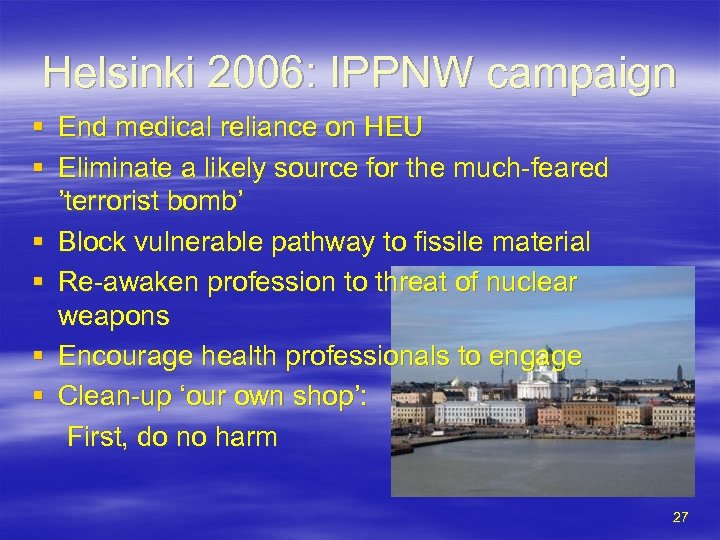
Helsinki 2006: IPPNW campaign § End medical reliance on HEU § Eliminate a likely source for the much-feared ’terrorist bomb’ § Block vulnerable pathway to fissile material § Re-awaken profession to threat of nuclear weapons § Encourage health professionals to engage § Clean-up ‘our own shop’: First, do no harm 27
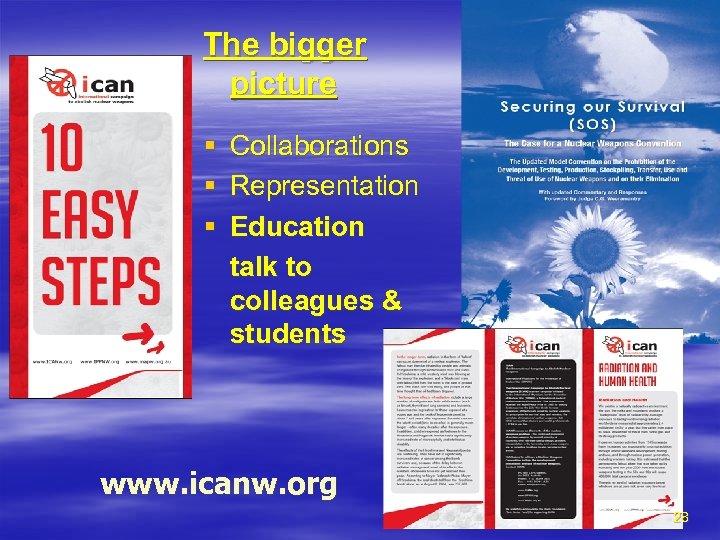
The bigger picture § § § Collaborations Representation Education talk to colleagues & students www. icanw. org 28
Further reading: – von Hippel F, Kahn LH. Feasibility of eliminating the use of highly enriched uranium in the production of medical radioisotopes. Science and Global Security 2006; 14: 151– 62. – Kahn LH, von Hippel F. How the radiologic and medical communities can improve nuclear security. J Am Coll Radiol 2007; 4: 248– 51. – Williams B, Ruff TA. Proliferation dangers associated with nuclear medicine: getting weapons-grade uranium out of radiopharmaceutical production. Medicine, Conflict and Survival. October – December 2007; 23(4): 267 – 281. – Williams B, Ruff TA. Getting nuclear-bomb fuel out of radiopharmaceutical production. Lancet 2008; 371 (8 March): 795 -7. 29
Скачать презентацию DOCTORS AND THE TERRORIST BOMB proliferation dangers associated
07693012b36a562786a821f78ddaee20.ppt