


 Скачать презентацию Do we need a measles vaccine stockpile for
9d8d25aa558e9a65aab1a457518b7eff.ppt
- Количество слайдов: 30
 Do we need a measles vaccine stockpile for more effective measles outbreak response? l Global Measles and Rubella Management Meeting l Salle B, WHO Headquarters, Geneva, Switzerland, 15 - 17 March 2011 Maya Van den Ent, Pharm. D, MPH Robin Nandy, MBBS, MPH Edward Hoekstra, MD. MSc Measles and Emergencies , Health Section, UNICEF HQ
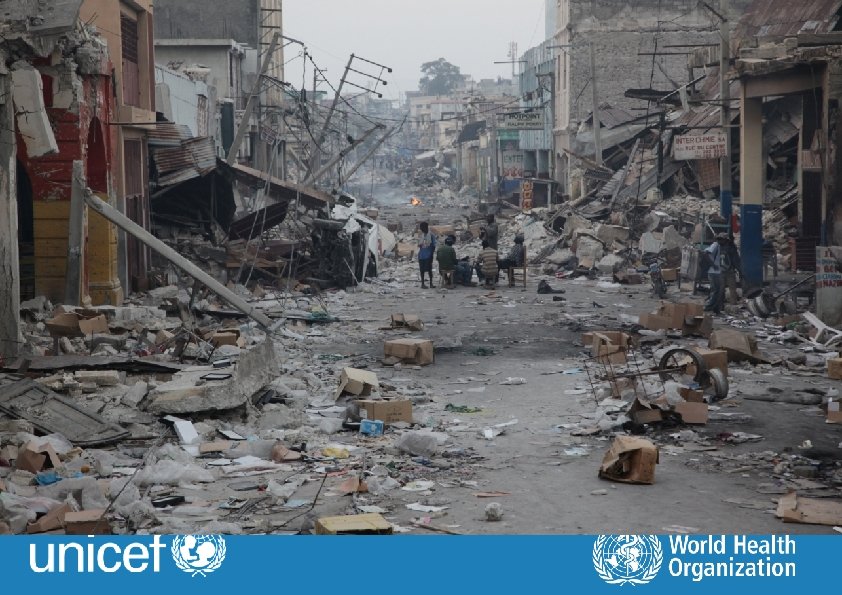
 Measles Emergencies l. Disasters l. Measles Outbreaks
 Funding Disasters through emergency funding Measles vaccination campaign part of initial response - SPHERE - Core Commitments For Children
 Measles Outbreak Response WHO Measles Outbreak Response Guidelines (2009) http: //whqlibdoc. who. int/hq/2009/WHO_IVB_09. 03_eng. pdf
 Critical Aspects Of Measles Outbreak Response Immunisation l Timing – As soon as possible after confirmation of the outbreak l Age range – Based on susceptibility profile, analysis of outbreak data, etc l Geographical area – Affected areas plus adjacent areas – Other high risk areas or population groups l Campaign coverage/quality
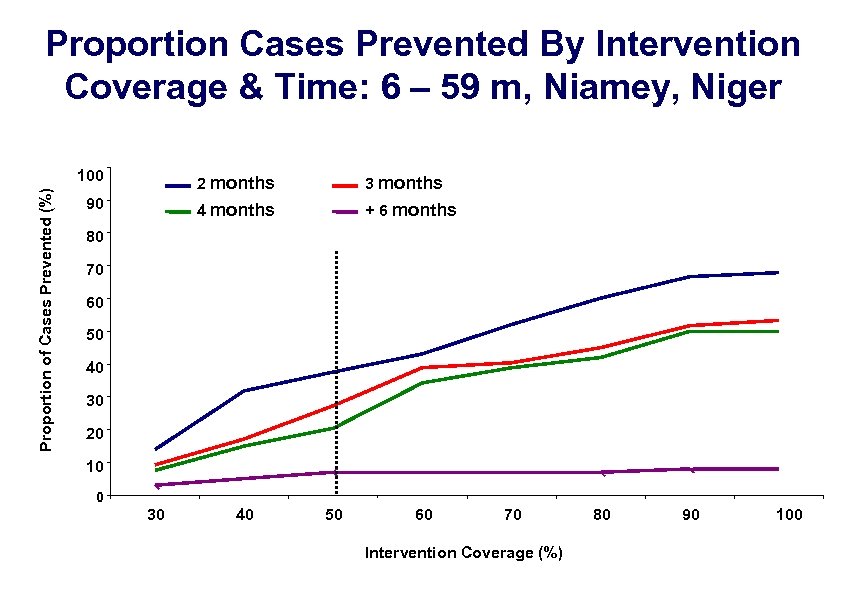 Proportion Cases Prevented By Intervention Coverage & Time: 6 – 59 m, Niamey, Niger Proportion of Cases Prevented (%) 100 2 months 3 months 90 4 months + 6 months 80 70 60 50 40 30 20 10 0 30 40 50 60 70 Intervention Coverage (%) 80 90 100
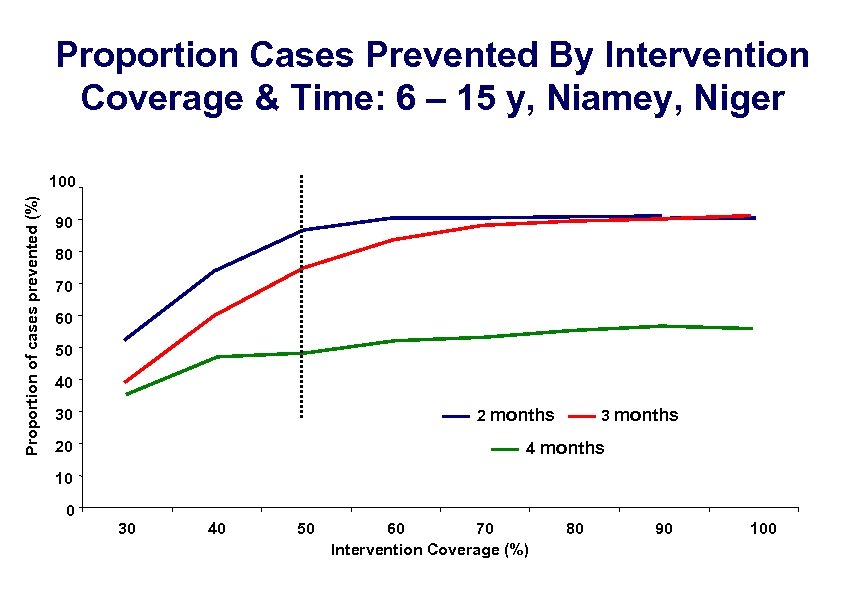 Proportion Cases Prevented By Intervention Coverage & Time: 6 – 15 y, Niamey, Niger Proportion of cases prevented (%) 100 90 80 70 60 50 40 2 months 30 3 months 4 months 20 10 0 30 40 50 60 70 Intervention Coverage (%) 80 90 100
 Overview Of Recent Outbreaks & Response Efforts
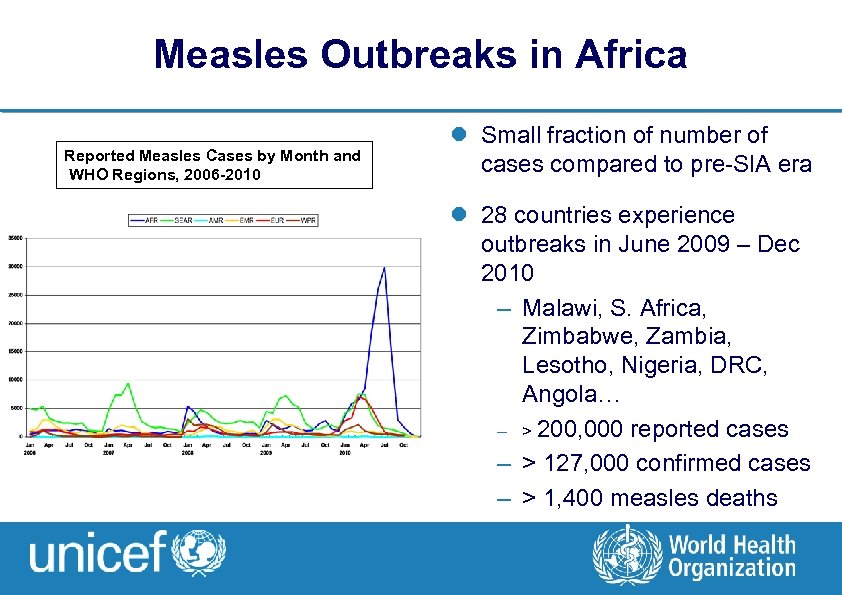 Measles Outbreaks in Africa Reported Measles Cases by Month and WHO Regions, 2006 -2010 l Small fraction of number of cases compared to pre-SIA era l 28 countries experience outbreaks in June 2009 – Dec 2010 – Malawi, S. Africa, Zimbabwe, Zambia, Lesotho, Nigeria, DRC, Angola… – > 200, 000 reported cases – > 127, 000 confirmed cases – > 1, 400 measles deaths
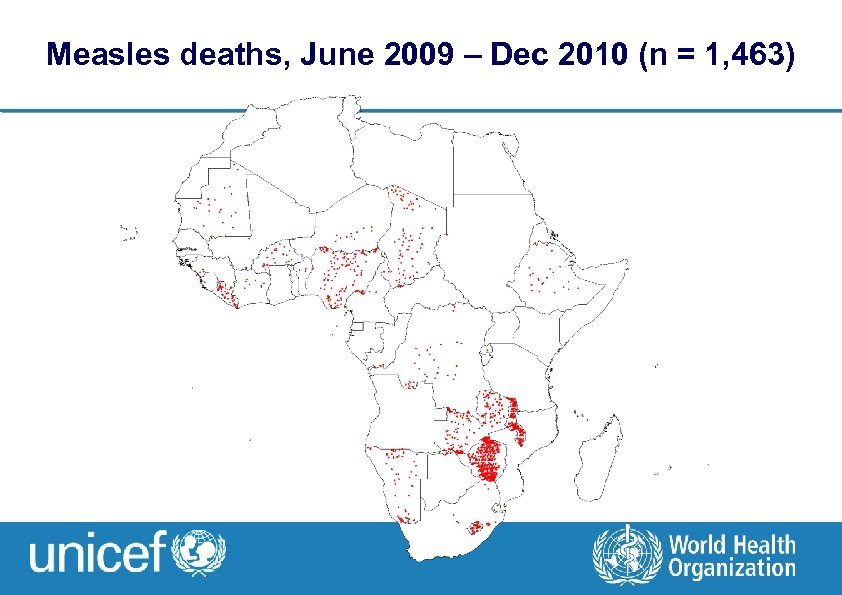 Measles deaths, June 2009 – Dec 2010 (n = 1, 463)
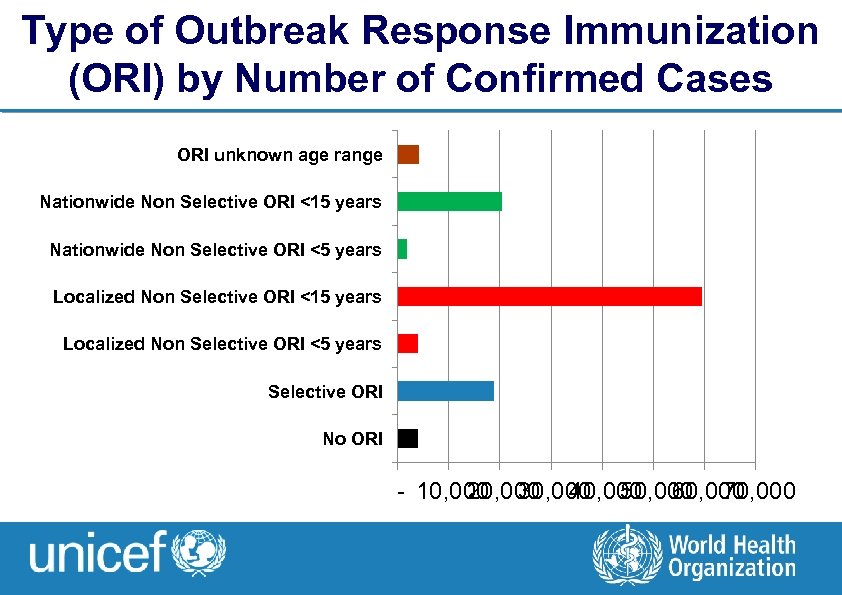 Type of Outbreak Response Immunization (ORI) by Number of Confirmed Cases ORI unknown age range Nationwide Non Selective ORI <15 years Nationwide Non Selective ORI <5 years Localized Non Selective ORI <15 years Localized Non Selective ORI <5 years Selective ORI No ORI - 10, 000 30, 000 50, 000 70, 000 20, 000 40, 000 60, 000
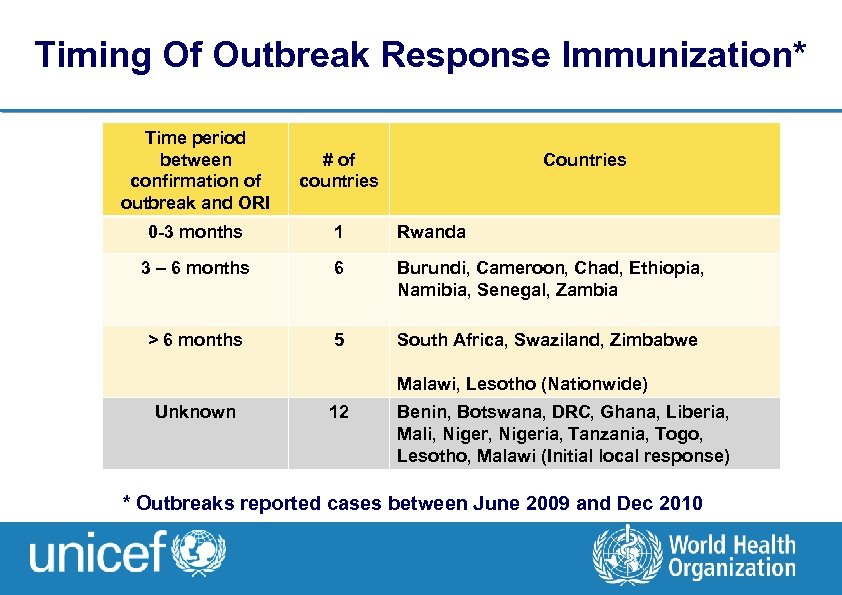 Timing Of Outbreak Response Immunization* Time period between confirmation of outbreak and ORI # of countries 0 -3 months 1 Rwanda 3 – 6 months 6 Burundi, Cameroon, Chad, Ethiopia, Namibia, Senegal, Zambia > 6 months 5 South Africa, Swaziland, Zimbabwe Countries Malawi, Lesotho (Nationwide) Unknown 12 Benin, Botswana, DRC, Ghana, Liberia, Mali, Nigeria, Tanzania, Togo, Lesotho, Malawi (Initial local response) * Outbreaks reported cases between June 2009 and Dec 2010
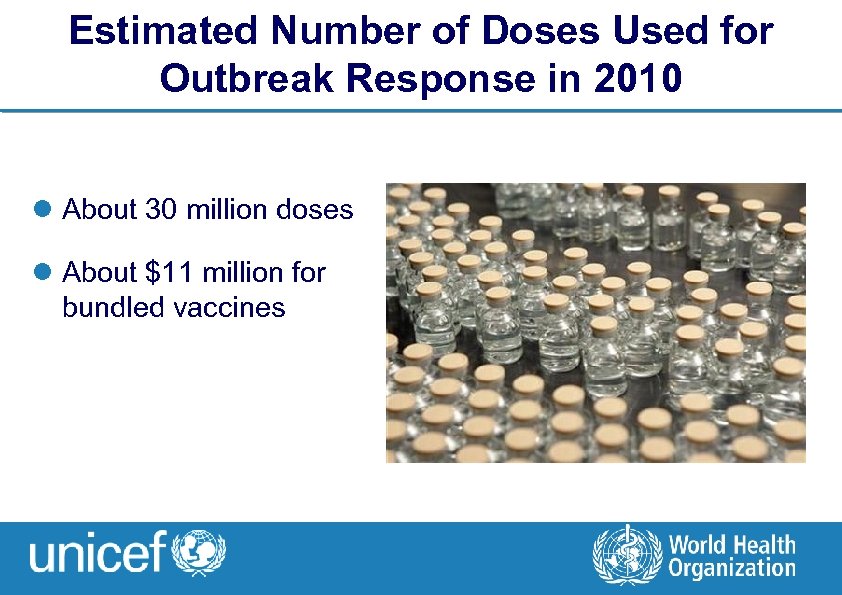 Estimated Number of Doses Used for Outbreak Response in 2010 l About 30 million doses l About $11 million for bundled vaccines
 Issues l Lack of capacity and preparedness l Insufficient use of Government Emergency funds l Measles not always included in preparedness plans
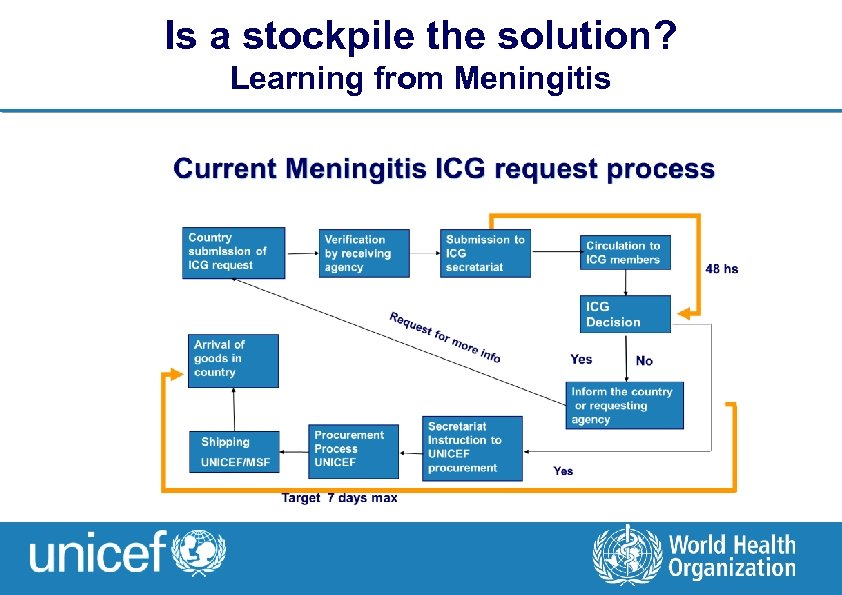 Is a stockpile the solution? Learning from Meningitis
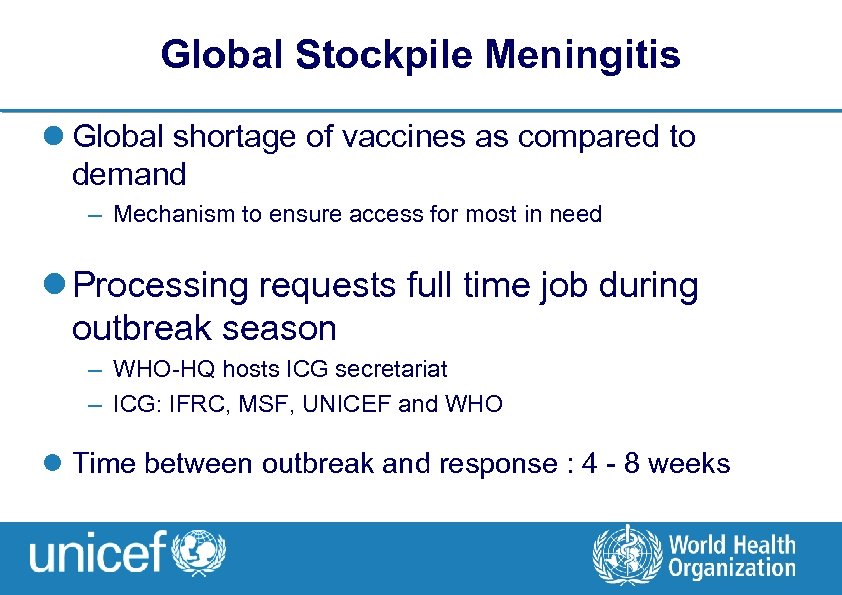 Global Stockpile Meningitis l Global shortage of vaccines as compared to demand – Mechanism to ensure access for most in need l Processing requests full time job during outbreak season – WHO-HQ hosts ICG secretariat – ICG: IFRC, MSF, UNICEF and WHO l Time between outbreak and response : 4 - 8 weeks
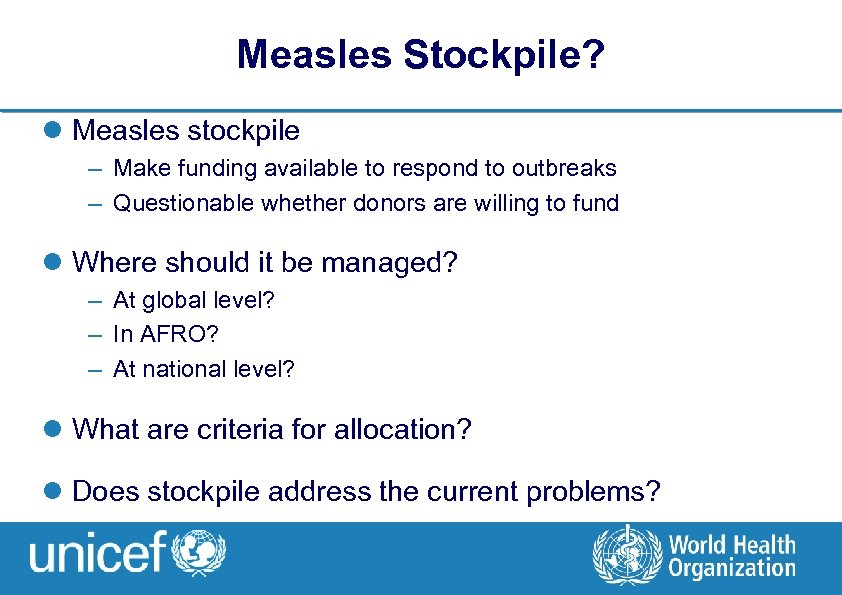 Measles Stockpile? l Measles stockpile – Make funding available to respond to outbreaks – Questionable whether donors are willing to fund l Where should it be managed? – At global level? – In AFRO? – At national level? l What are criteria for allocation? l Does stockpile address the current problems?
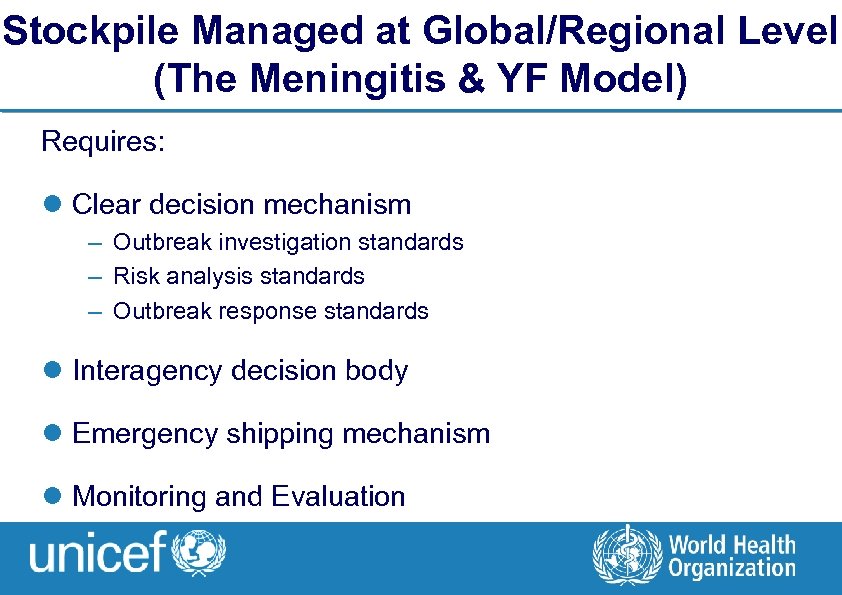 Stockpile Managed at Global/Regional Level (The Meningitis & YF Model) Requires: l Clear decision mechanism – Outbreak investigation standards – Risk analysis standards – Outbreak response standards l Interagency decision body l Emergency shipping mechanism l Monitoring and Evaluation
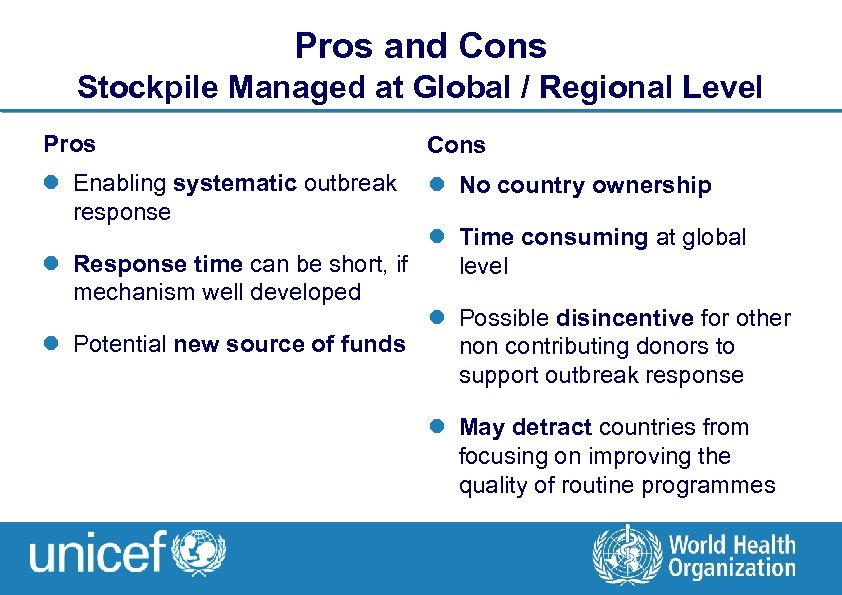 Pros and Cons Stockpile Managed at Global / Regional Level Pros Cons l Enabling systematic outbreak response l No country ownership l Time consuming at global l Response time can be short, if level mechanism well developed l Possible disincentive for other l Potential new source of funds non contributing donors to support outbreak response l May detract countries from focusing on improving the quality of routine programmes
 Stockpile Managed at National Level Requires: l Full country buy-in to reserve % of RI stock for outbreak response preparedness
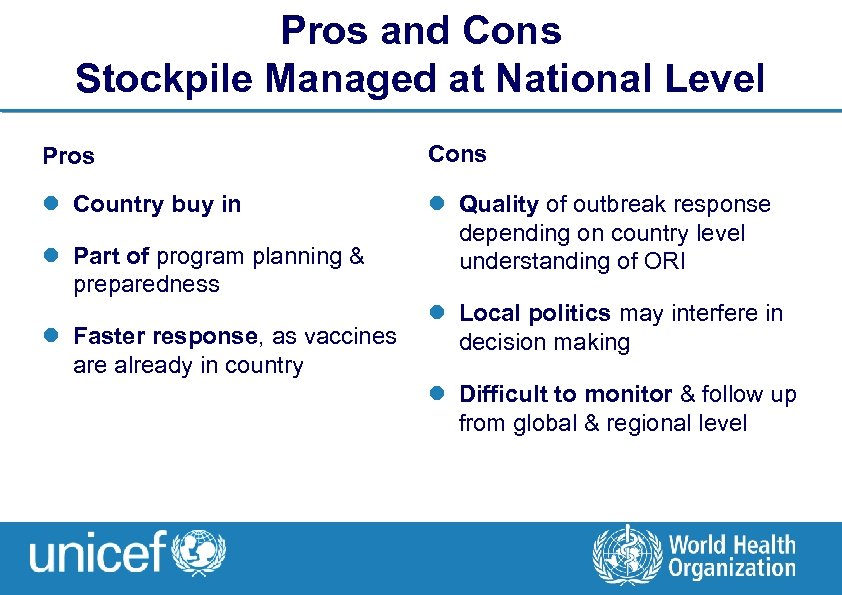 Pros and Cons Stockpile Managed at National Level Pros Cons l Country buy in l Quality of outbreak response depending on country level understanding of ORI l Part of program planning & preparedness l Faster response, as vaccines are already in country l Local politics may interfere in decision making l Difficult to monitor & follow up from global & regional level
 Questions Measles Stockpile? l Can we raise the funds? – $ 10 - 15 million annually – Revolving Fund? l What is the best mechanism? – Global / Regional vs National – Country/region specific? l Will the stockpile address the problems in Outbreak Response Immunization?
 Acknowledgements l EPICENTRE – Rebecca Freedman-Grais l WHO – – – Peter Strebel Alya Dabbagh Balcha Masresha William Perea ICG secretariat l CDC – Robb Linkins l UNICEF – Robin Nandy – Rouslan Karimov
 Extra slides
![Simulated Measles Cases In Niamey, Niger (2003 -2004) 8. 1% [4. 9, 8. 9]](https://present5.com/presentation/9d8d25aa558e9a65aab1a457518b7eff/image-26.jpg "Simulated Measles Cases In Niamey, Niger (2003 -2004) 8. 1% [4. 9, 8. 9]") Simulated Measles Cases In Niamey, Niger (2003 -2004) 8. 1% [4. 9, 8. 9] averted with intervention on day 161
Simulated Measles Cases In Niamey, Niger (2003 -2004) 8. 1% [4. 9, 8. 9] averted with intervention on day 161
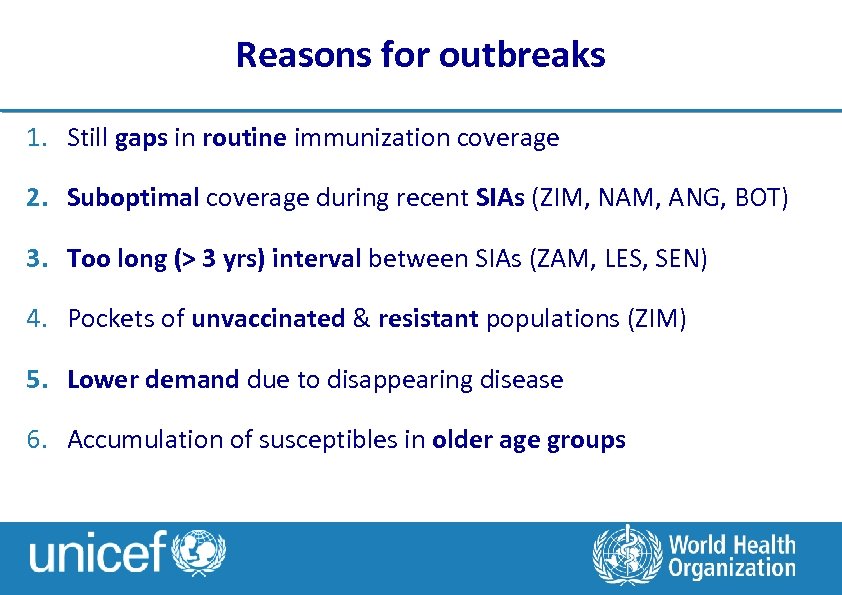 Reasons for outbreaks 1. Still gaps in routine immunization coverage 2. Suboptimal coverage during recent SIAs (ZIM, NAM, ANG, BOT) 3. Too long (> 3 yrs) interval between SIAs (ZAM, LES, SEN) 4. Pockets of unvaccinated & resistant populations (ZIM) 5. Lower demand due to disappearing disease 6. Accumulation of susceptibles in older age groups
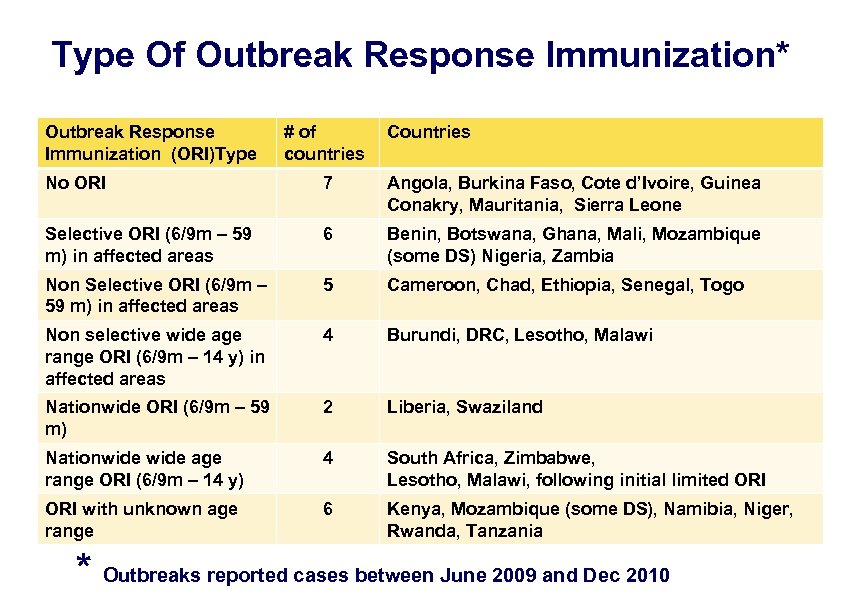 Type Of Outbreak Response Immunization* Outbreak Response Immunization (ORI)Type # of countries Countries No ORI 7 Angola, Burkina Faso, Cote d’Ivoire, Guinea Conakry, Mauritania, Sierra Leone Selective ORI (6/9 m – 59 m) in affected areas 6 Benin, Botswana, Ghana, Mali, Mozambique (some DS) Nigeria, Zambia Non Selective ORI (6/9 m – 59 m) in affected areas 5 Cameroon, Chad, Ethiopia, Senegal, Togo Non selective wide age range ORI (6/9 m – 14 y) in affected areas 4 Burundi, DRC, Lesotho, Malawi Nationwide ORI (6/9 m – 59 m) 2 Liberia, Swaziland Nationwide age range ORI (6/9 m – 14 y) 4 South Africa, Zimbabwe, Lesotho, Malawi, following initial limited ORI with unknown age range 6 Kenya, Mozambique (some DS), Namibia, Niger, Rwanda, Tanzania * Outbreaks reported cases between June 2009 and Dec 2010
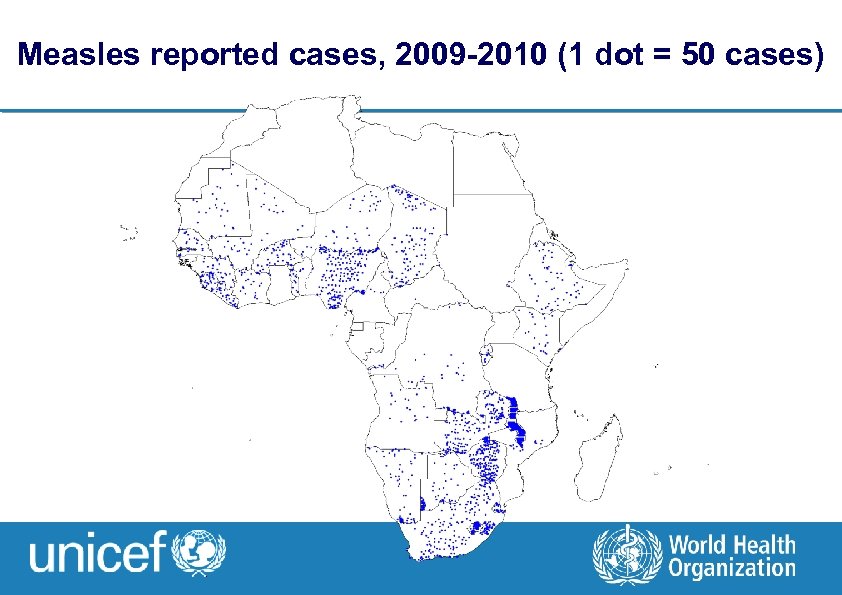 Measles reported cases, 2009 -2010 (1 dot = 50 cases)
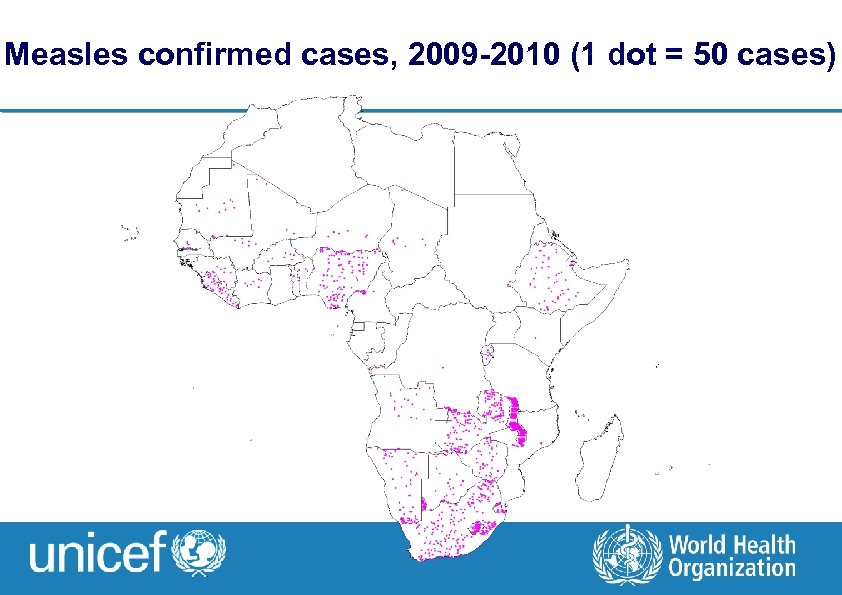 Measles confirmed cases, 2009 -2010 (1 dot = 50 cases)