


 Скачать презентацию Do the chemists know how to align the
28c5c0eb900d234024ebb0476847e12d.ppt
- Количество слайдов: 73
 Do the chemists know how to align the spins of electrons in molecules, parallel or antiparallel ?
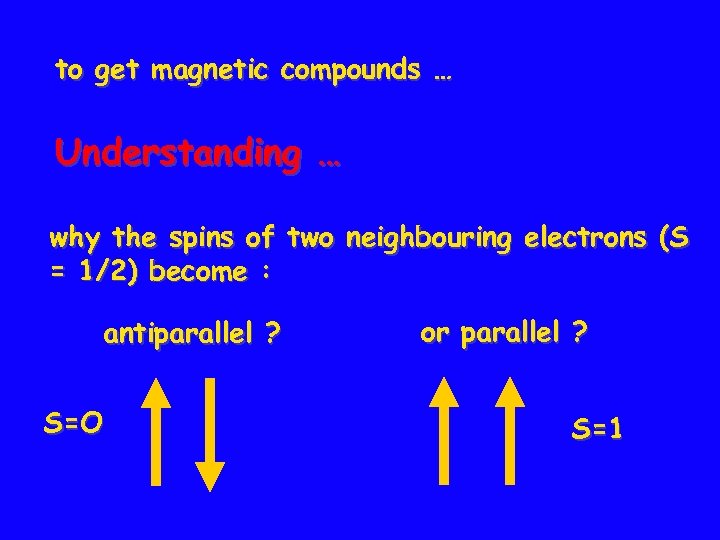 to get magnetic compounds … Understanding … why the spins of two neighbouring electrons (S = 1/2) become : antiparallel ? S=O or parallel ? S=1
 Interaction Models between Localised Electrons Scalar Coupling : describes, does not explain
 Energy levels
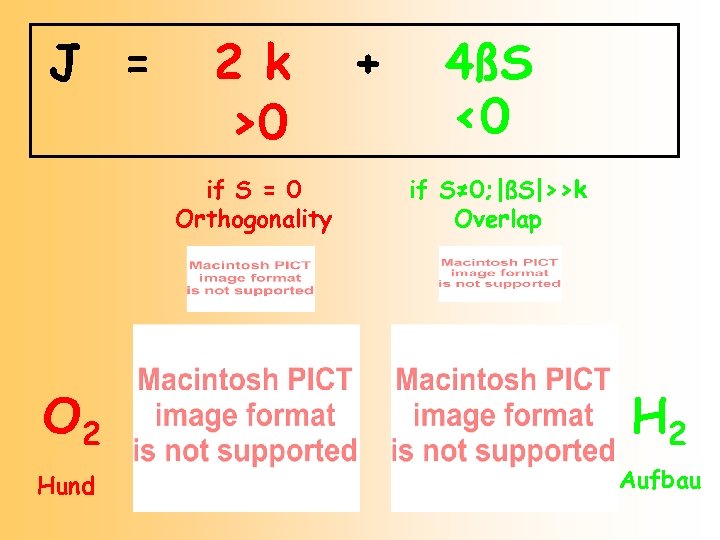 J = 2 k >0 if S = 0 Orthogonality + 4ßS <0 if S≠ 0; |ßS|>>k Overlap O 2 Hund Aufbau
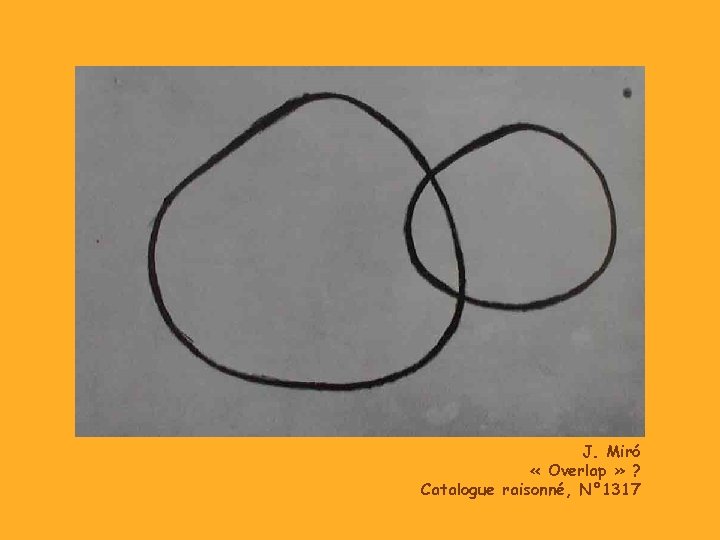 J. Miró « Overlap » ? Catalogue raisonné, N° 1317
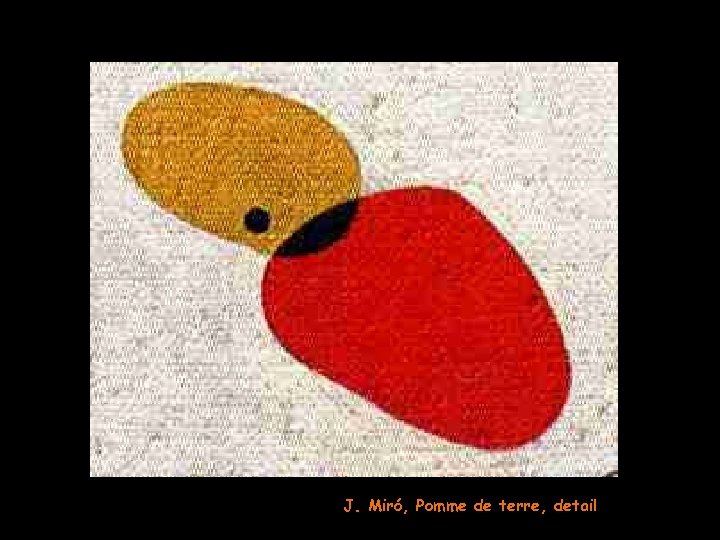 J. Miró, Pomme de terre, detail
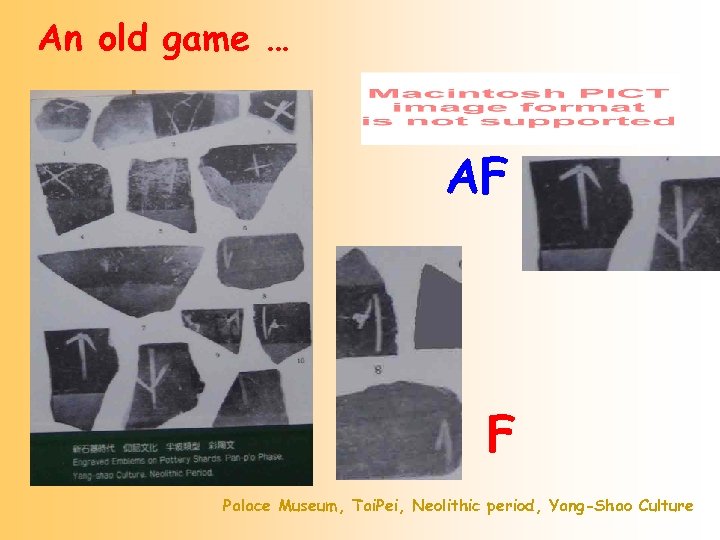 An old game … AF F Palace Museum, Tai. Pei, Neolithic period, Yang-Shao Culture
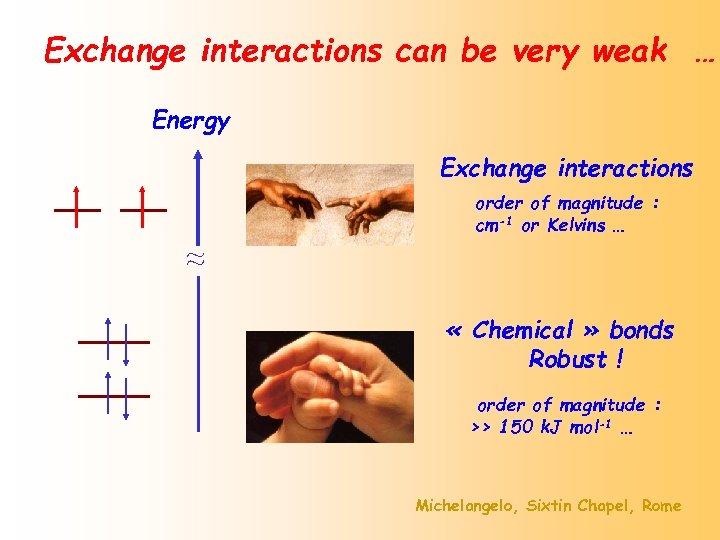 Exchange interactions can be very weak … Energy Exchange interactions order of magnitude : cm-1 or Kelvins … ≈ « Chemical » bonds Robust ! order of magnitude : >> 150 k. J mol-1 … Michelangelo, Sixtin Chapel, Rome
 Cu(II) ≈ 5 Å Negligible Interaction ! Problem : How to create the interaction … ?
 Cu(II) Ligand Cu(II) ≈ 5 Å Orbital Interaction … Solution : The ligand !
 A Ligand B Examples with the ligand • Cyanide
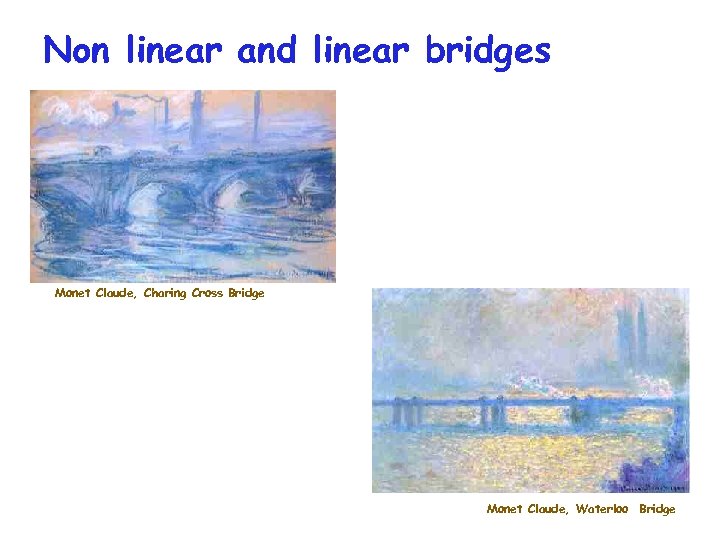 Non linear and linear bridges Monet Claude, Charing Cross Bridge Monet Claude, Waterloo Bridge
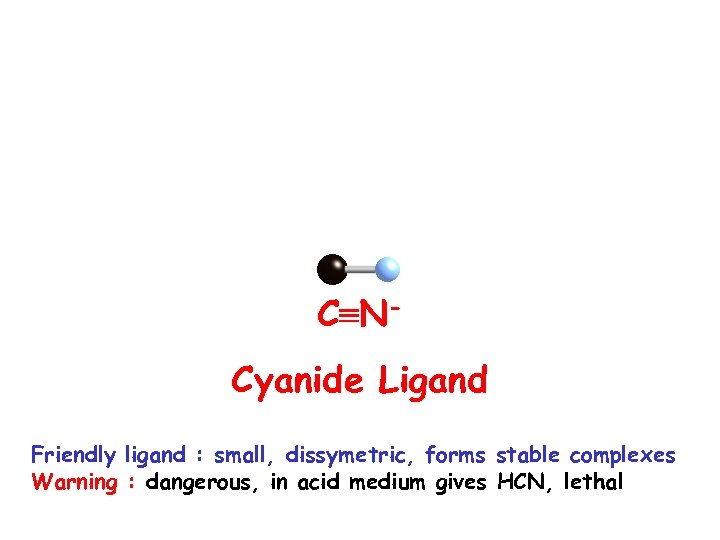 C NCyanide Ligand Friendly ligand : small, dissymetric, forms stable complexes Warning : dangerous, in acid medium gives HCN, lethal
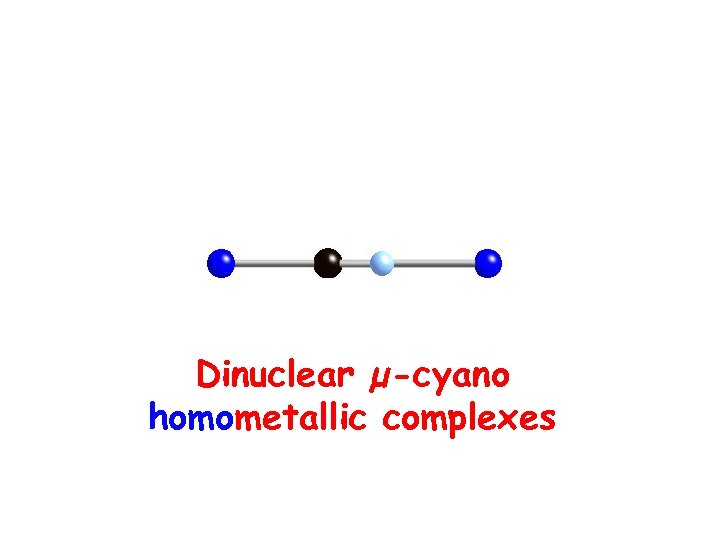 Dinuclear µ-cyano homometallic complexes
![“Models” Compounds Cu(II)-CN-Cu(II) J/cm-1 Compounds exp [Cu 2(tren)2 CN]3+ -160 [Cu 2(tmpa)2 CN]3+ -100](https://present5.com/presentation/28c5c0eb900d234024ebb0476847e12d/image-16.jpg "“Models” Compounds Cu(II)-CN-Cu(II) J/cm-1 Compounds exp [Cu 2(tren)2 CN]3+ -160 [Cu 2(tmpa)2 CN]3+ -100") “Models” Compounds Cu(II)-CN-Cu(II) J/cm-1 Compounds exp [Cu 2(tren)2 CN]3+ -160 [Cu 2(tmpa)2 CN]3+ -100 Overlap : antiferromatic coupling … Rodríguez-Fortea et al. Inorg. Chem. 2001, 40, 5868
“Models” Compounds Cu(II)-CN-Cu(II) J/cm-1 Compounds exp [Cu 2(tren)2 CN]3+ -160 [Cu 2(tmpa)2 CN]3+ -100 Overlap : antiferromatic coupling … Rodríguez-Fortea et al. Inorg. Chem. 2001, 40, 5868
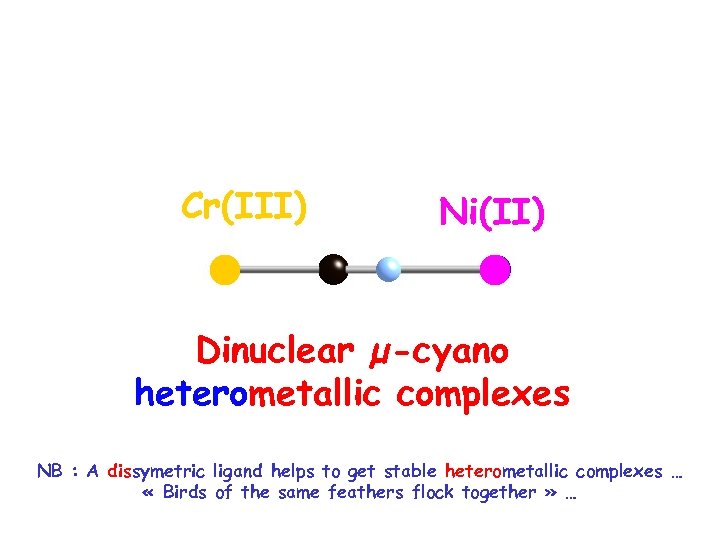 Cr(III) Ni(II) Dinuclear µ-cyano heterometallic complexes NB : A dissymetric ligand helps to get stable heterometallic complexes … « Birds of the same feathers flock together » …
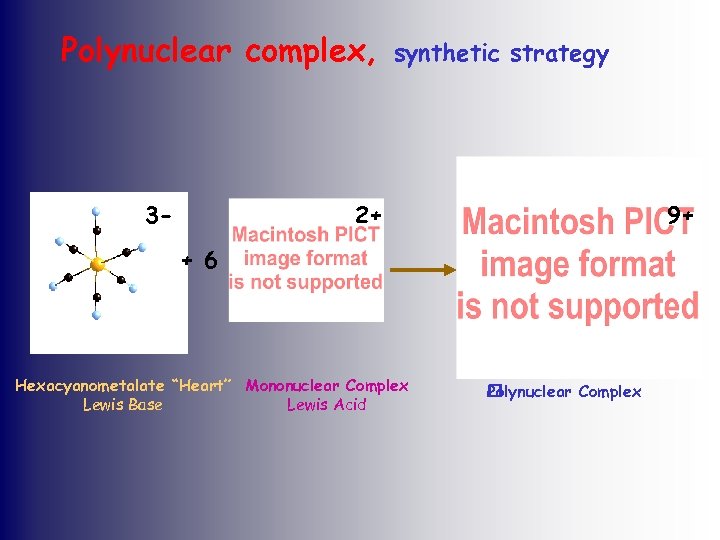 Polynuclear complex, 3 - synthetic strategy 2+ 9+ + 6 Hexacyanometalate “Heart” Mononuclear Complex Lewis Base Lewis Acid Polynuclear Complex
![Electrons in Hexacyanochromate complex [Cr. III(CN)6]3 Cr(III)](https://present5.com/presentation/28c5c0eb900d234024ebb0476847e12d/image-19.jpg "Electrons in Hexacyanochromate complex [Cr. III(CN)6]3 Cr(III)") Electrons in Hexacyanochromate complex [Cr. III(CN)6]3 Cr(III)
Electrons in Hexacyanochromate complex [Cr. III(CN)6]3 Cr(III)
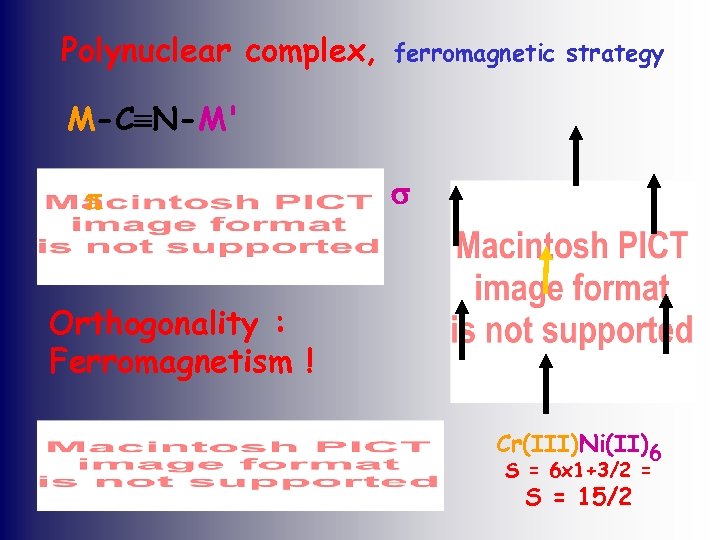 Polynuclear complex, ferromagnetic strategy M-C N-M' Orthogonality : Ferromagnetism ! Cr(III)Ni(II)6 S = 6 x 1+3/2 = S = 15/2
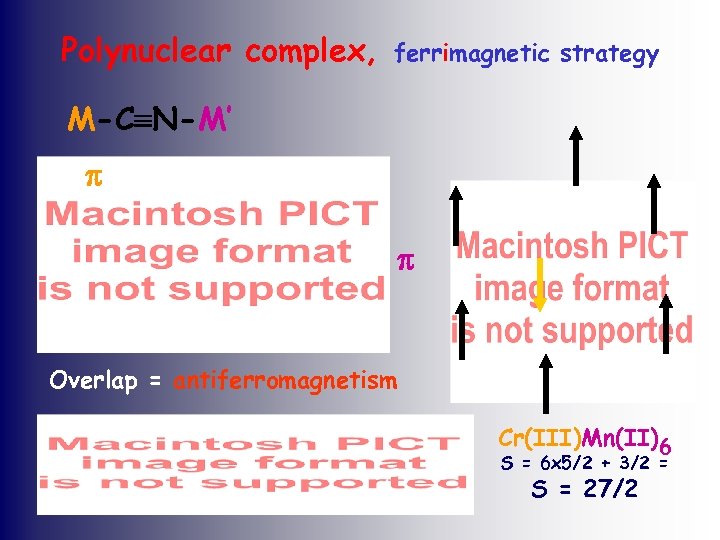 Polynuclear complex, ferrimagnetic strategy M-C N-M’ Overlap = antiferromagnetism Cr(III)Mn(II)6 S = 6 x 5/2 + 3/2 = S = 27/2
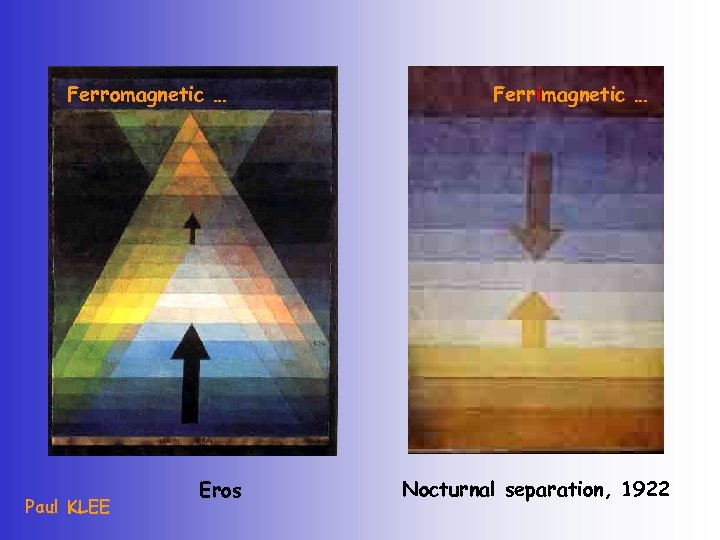 Ferromagnetic … Paul KLEE Eros Ferrimagnetic … Nocturnal separation, 1922
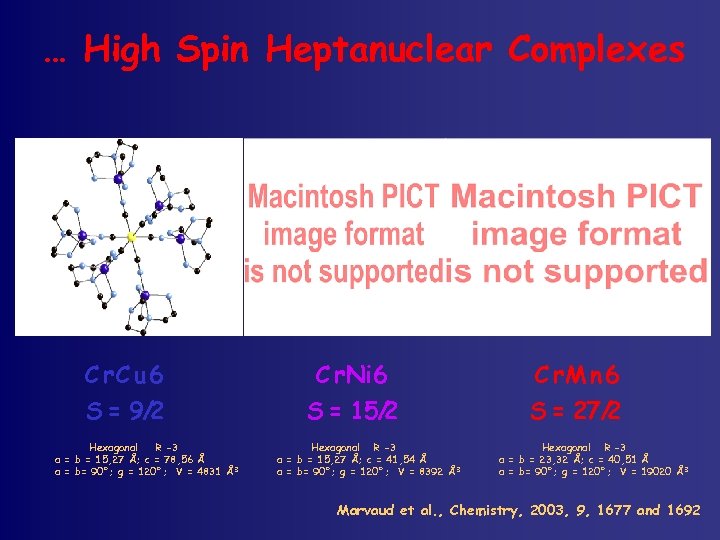 … High Spin Heptanuclear Complexes C r. C u 6 S = 9/ 2 Hexagonal R -3 a = b = 15, 27 Å; c = 78, 56 Å a = b= 90°; g = 120°; V = 4831 Å 3 C r. Ni 6 S = 15/ 2 Hexagonal R -3 a = b = 15, 27 Å; c = 41, 54 Å a = b= 90°; g = 120°; V = 8392 Å 3 C r. M n 6 S = 27/ 2 Hexagonal R -3 a = b = 23, 32 Å; c = 40, 51 Å a = b= 90°; g = 120°; V = 19020 Å 3 Marvaud et al. , Chemistry, 2003, 9, 1677 and 1692
 Chemists have transformed good old Prussian blue, a blue pigment that Michael Faraday precipitated in his time at Royal Institution, into a room temperature magnet also useful in display devices.
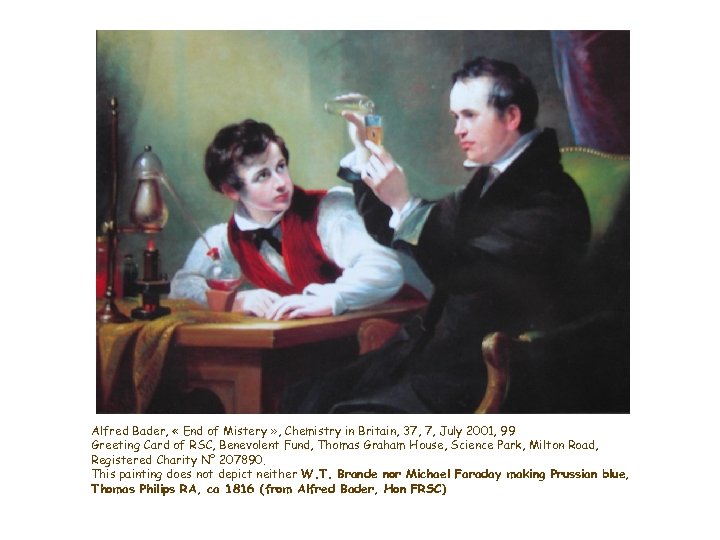 Alfred Bader, « End of Mistery » , Chemistry in Britain, 37, 7, July 2001, 99 Greeting Card of RSC, Benevolent Fund, Thomas Graham House, Science Park, Milton Road, Registered Charity N° 207890. This painting does not depict neither W. T. Brande nor Michael Faraday making Prussian blue, Thomas Philips RA, ca 1816 (from Alfred Bader, Hon FRSC)
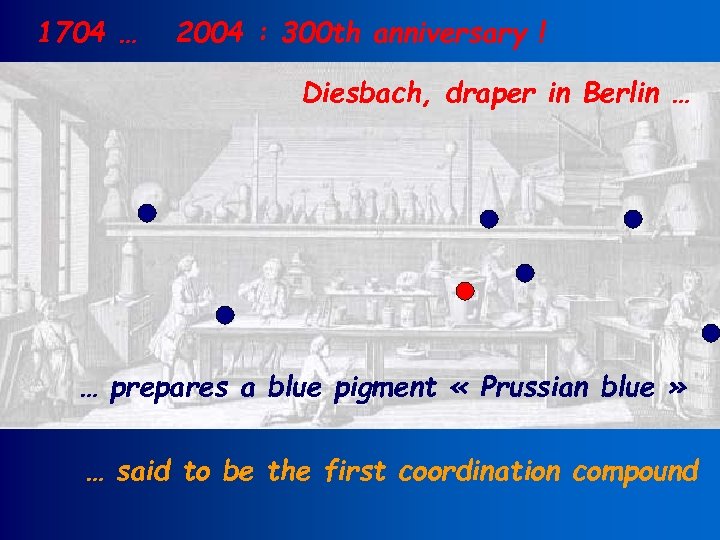 1704 … 2004 : 300 th anniversary ! Diesbach, draper in Berlin … … prepares a blue pigment « Prussian blue » … said to be the first coordination compound
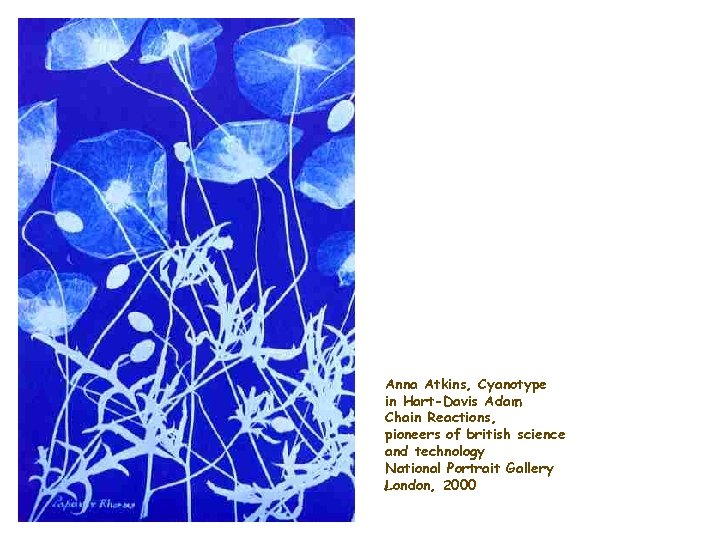 Anna Atkins, Cyanotype in Hart-Davis Adam Chain Reactions, pioneers of british science and technology National Portrait Gallery London, 2000
![Classical coordination chemistry … Fe 2+aq+ 6 CN-aq [Fe(CN)6]4 -aq + [4 -] [3+]](https://present5.com/presentation/28c5c0eb900d234024ebb0476847e12d/image-28.jpg "Classical coordination chemistry … Fe 2+aq+ 6 CN-aq [Fe(CN)6]4 -aq + [4 -] [3+]") Classical coordination chemistry … Fe 2+aq+ 6 CN-aq [Fe(CN)6]4 -aq + [4 -] [3+] 3[Fe(CN)6]4 -aq + 4 Fe 3+aq {Fe 4[Fe(CN)6]3}0 • 15 H 2 O Complexes as Ligands, or « bricks » + Lewis Acid-Base Interaction
Classical coordination chemistry … Fe 2+aq+ 6 CN-aq [Fe(CN)6]4 -aq + [4 -] [3+] 3[Fe(CN)6]4 -aq + 4 Fe 3+aq {Fe 4[Fe(CN)6]3}0 • 15 H 2 O Complexes as Ligands, or « bricks » + Lewis Acid-Base Interaction
![since : 1936, modified 1972 … an evergreen in inorganic chemistry … Stoichiometry [AII]4[BII(CN)6]3](https://present5.com/presentation/28c5c0eb900d234024ebb0476847e12d/image-29.jpg "since : 1936, modified 1972 … an evergreen in inorganic chemistry … Stoichiometry [AII]4[BII(CN)6]3") since : 1936, modified 1972 … an evergreen in inorganic chemistry … Stoichiometry [AII]4[BII(CN)6]3 or A 4 B 3 [AII]4 [BII] 1 3 = vacancy a simple face-centered cubic structure … J. F. Keggin, F. D. Miles, Nature 1936, 137, 577 A. Ludi, H. U. Güdel, Struct. Bonding (Berlin) 1973, 14, 1
since : 1936, modified 1972 … an evergreen in inorganic chemistry … Stoichiometry [AII]4[BII(CN)6]3 or A 4 B 3 [AII]4 [BII] 1 3 = vacancy a simple face-centered cubic structure … J. F. Keggin, F. D. Miles, Nature 1936, 137, 577 A. Ludi, H. U. Güdel, Struct. Bonding (Berlin) 1973, 14, 1
 Coming back to Prussian Blue TC z |J| z : number of magnetic neighbours |J| : coupling constant between nearest neighbours Néel, Annales de Physique, 1948
 Coming back to Prussian Blue TC z |J| z : number of magnetic neighbours |J| : coupling constant between nearest neighbours TC = 5. 6 K Néel, Annales de Physique, 1948
 Towards Prussian blue analogues … TC z |J| JFerro > 0 Orthogonality TC >> 5. 6 K
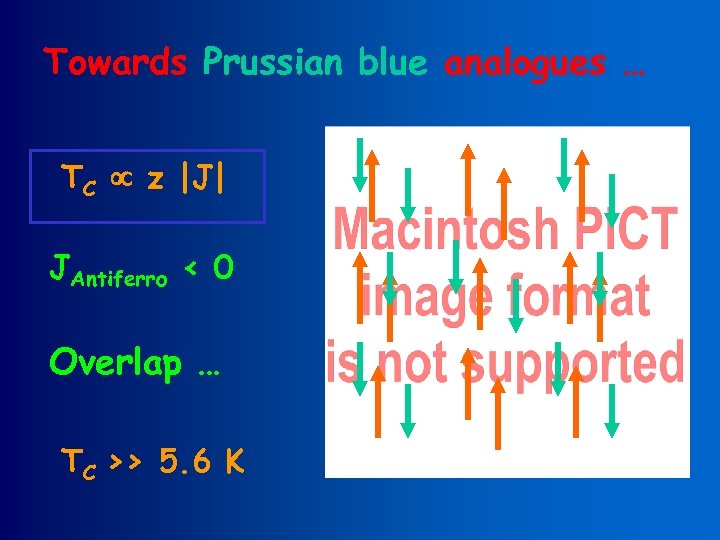 Towards Prussian blue analogues … TC z |J| JAntiferro < 0 Overlap … TC >> 5. 6 K
![V 4[Cr(CN)6]8/3. n. H 2 O Room Temperature TC On a rational basis !](https://present5.com/presentation/28c5c0eb900d234024ebb0476847e12d/image-34.jpg "V 4[Cr(CN)6]8/3. n. H 2 O Room Temperature TC On a rational basis !") V 4[Cr(CN)6]8/3. n. H 2 O Room Temperature TC On a rational basis ! Ferlay et al. Nature, 1995 Mallah et al. Science 1993 Gadet et al. , J. Am. Chem. Soc. 1992
V 4[Cr(CN)6]8/3. n. H 2 O Room Temperature TC On a rational basis ! Ferlay et al. Nature, 1995 Mallah et al. Science 1993 Gadet et al. , J. Am. Chem. Soc. 1992
![V 4[Cr(CN)6]8/3. n. H 2 O Room Temperature TC On a rational basis !](https://present5.com/presentation/28c5c0eb900d234024ebb0476847e12d/image-35.jpg "V 4[Cr(CN)6]8/3. n. H 2 O Room Temperature TC On a rational basis !") V 4[Cr(CN)6]8/3. n. H 2 O Room Temperature TC On a rational basis !
V 4[Cr(CN)6]8/3. n. H 2 O Room Temperature TC On a rational basis !
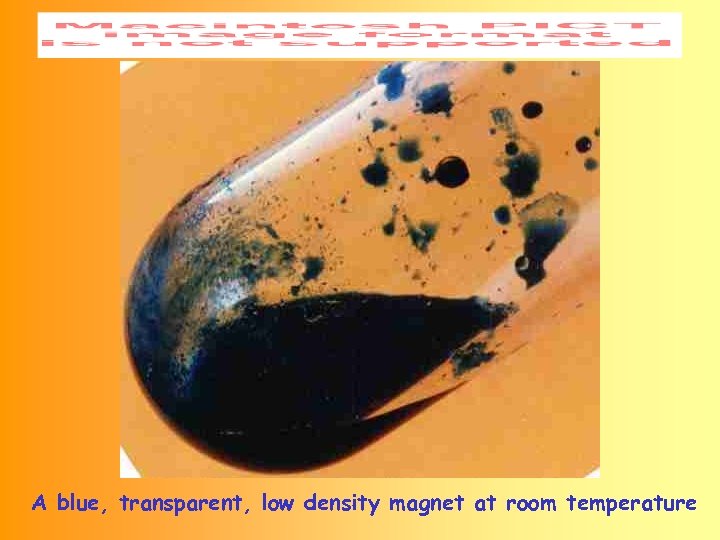 A blue, transparent, low density magnet at room temperature
 Oscillating Magnet : Experiment
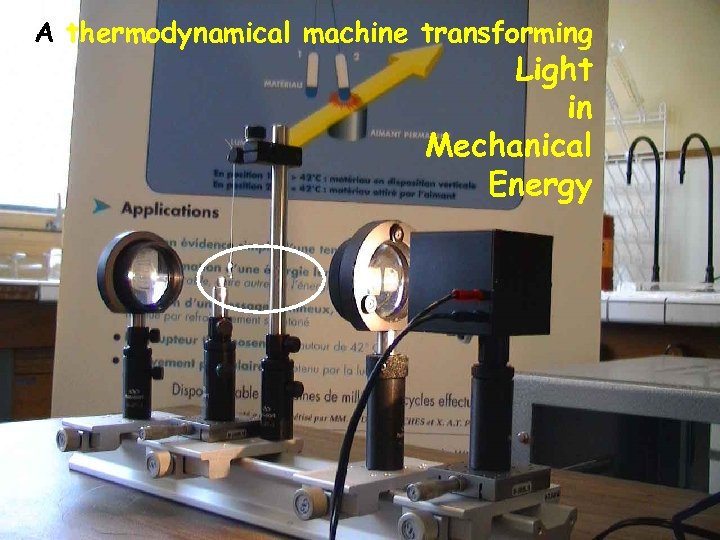 A thermodynamical machine transforming Light in Mechanical Energy

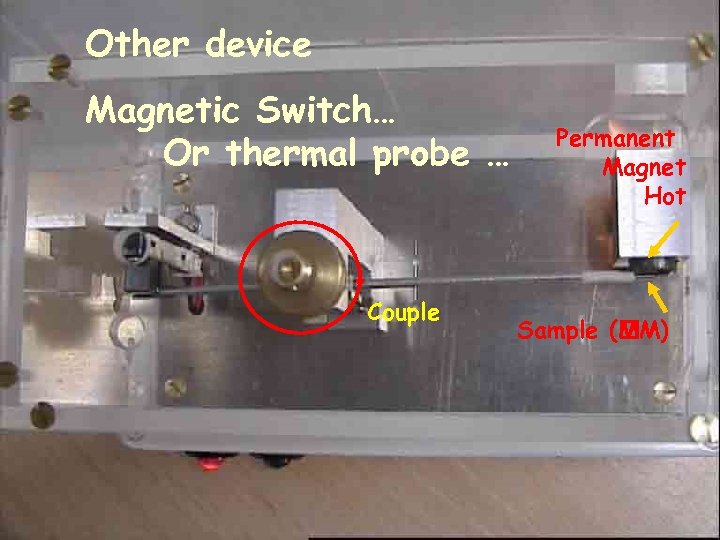 Other device Magnetic Switch… Or thermal probe … Couple Permanent Magnet Hot Sample ( M) M
 Up to 2004 … magnetic analogues used as … … devices and demonstrators
 Chemists have managed to transform isolated single molecules into magnets
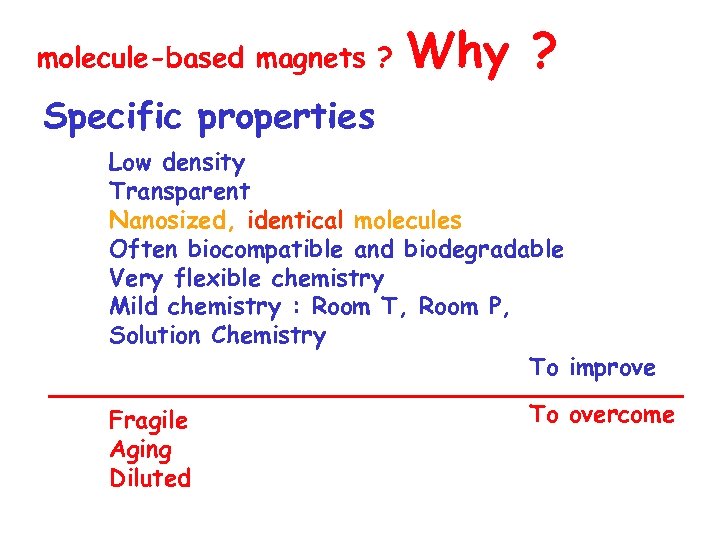 molecule-based magnets ? Why ? Specific properties Low density Transparent Nanosized, identical molecules Often biocompatible and biodegradable Very flexible chemistry Mild chemistry : Room T, Room P, Solution Chemistry To improve Fragile Aging Diluted To overcome
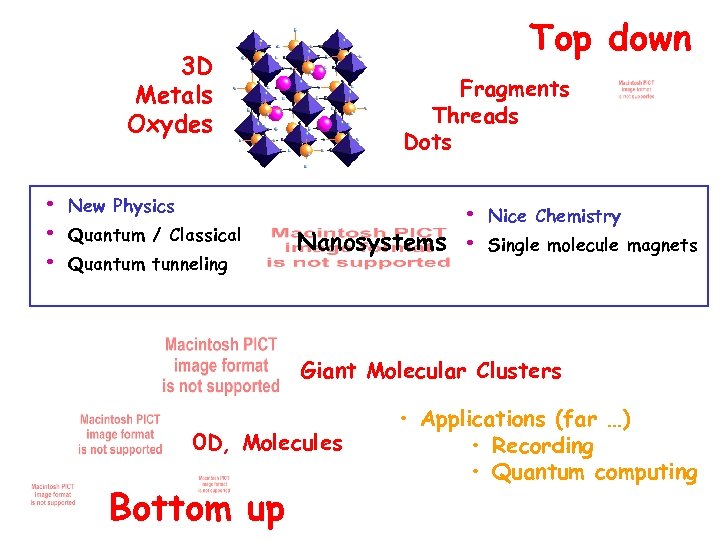 Top down 3 D Metals Oxydes • • • New Physics Quantum / Classical Quantum tunneling Fragments Threads Dots • Nanosystems • Nice Chemistry Single molecule magnets Giant Molecular Clusters 0 D, Molecules Bottom up • Applications (far …) • Recording • Quantum computing
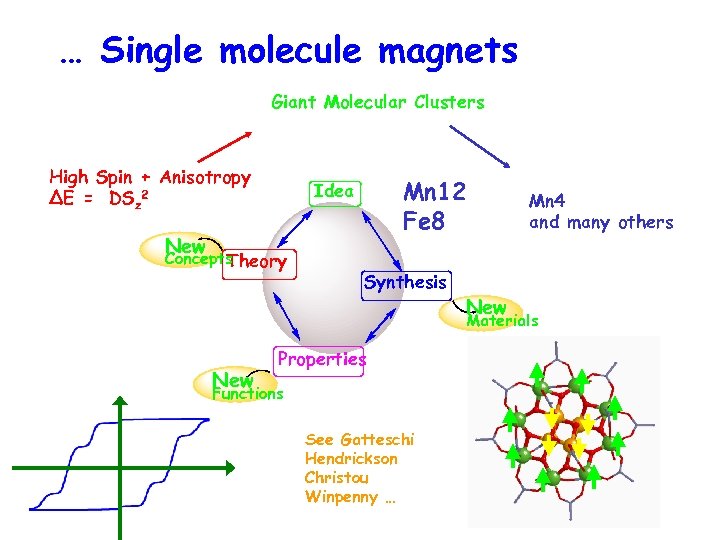 … Single molecule magnets Giant Molecular Clusters High Spin + Anisotropy ∆E = DSz 2 Mn 12 Fe 8 Idea New Concepts Theory Synthesis New Mn 4 and many others Materials New Properties Functions See Gatteschi Hendrickson Christou Winpenny …
 What is named Single Molecule Magnet ? = High Spin Anisotropic
 High Spin Paramagnetic Molecule H
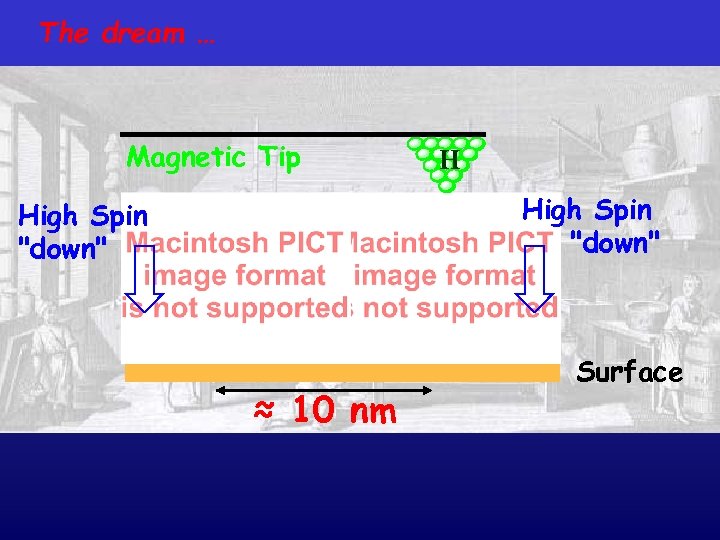
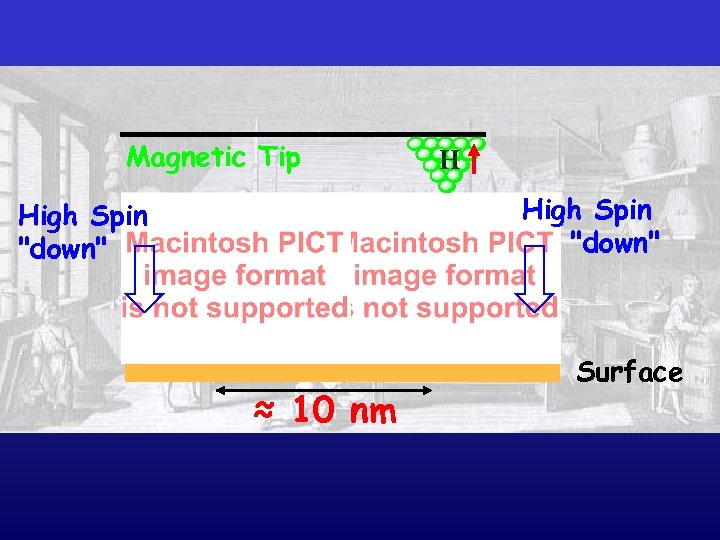
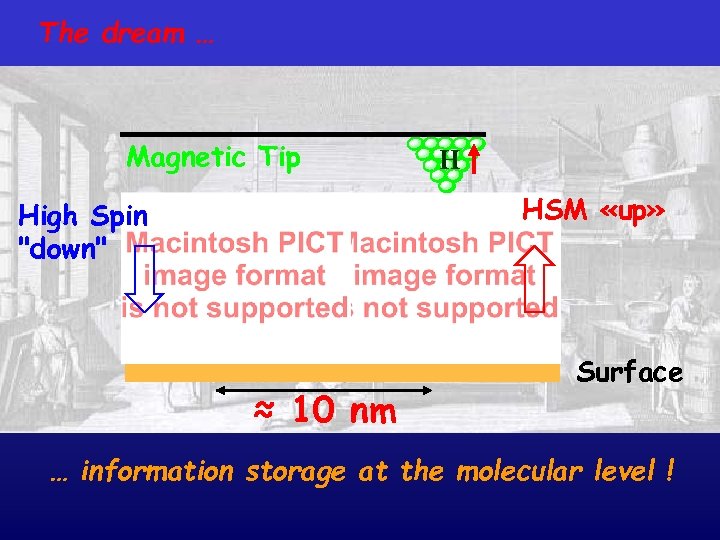
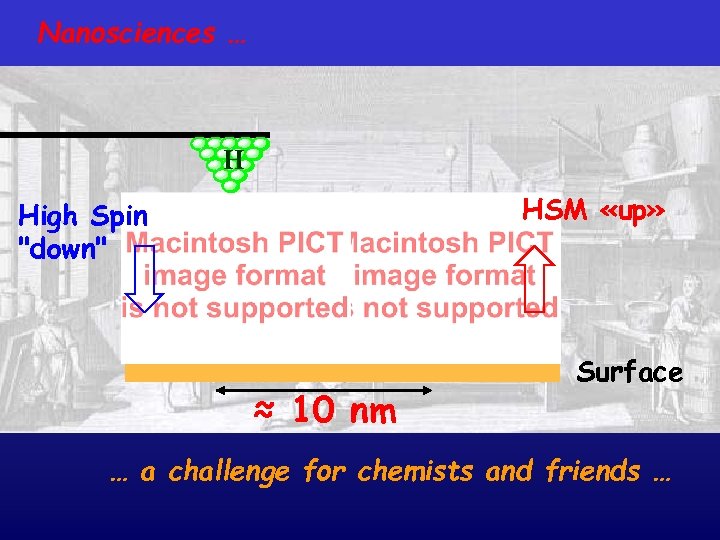
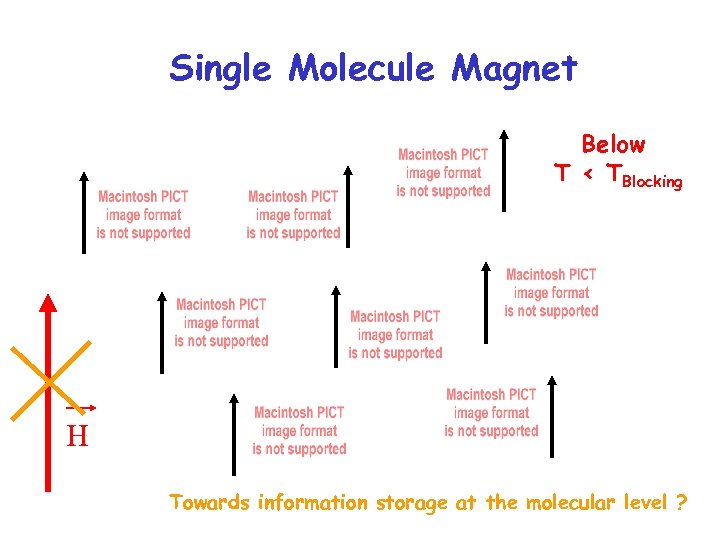 Single Molecule Magnet Below T < TBlocking H Towards information storage at the molecular level ?
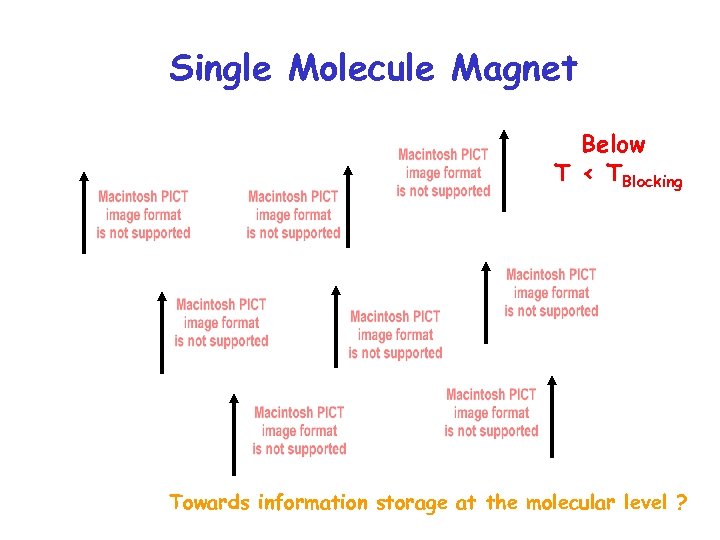 Single Molecule Magnet Below T < TBlocking Towards information storage at the molecular level ?
 Single molecule magnets DSz = 400 K ? 2 |D| = 1 K S = 20 (D < 0)
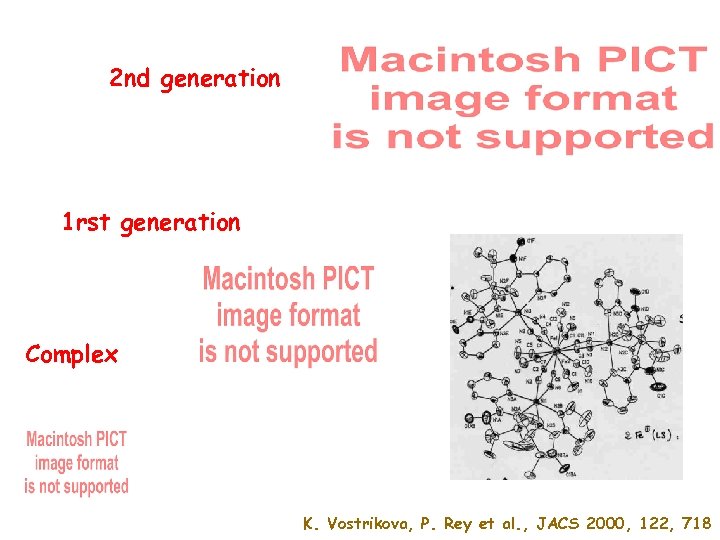 2 nd generation 1 rst generation Complex K. Vostrikova, P. Rey et al. , JACS 2000, 122, 718
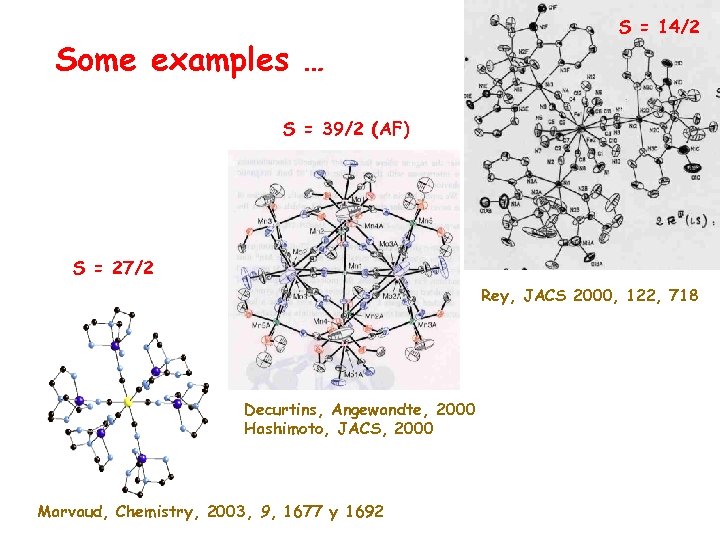 Some examples … S = 14/2 S = 39/2 (AF) S = 27/2 Rey, JACS 2000, 122, 718 Decurtins, Angewandte, 2000 Hashimoto, JACS, 2000 Marvaud, Chemistry, 2003, 9, 1677 y 1692
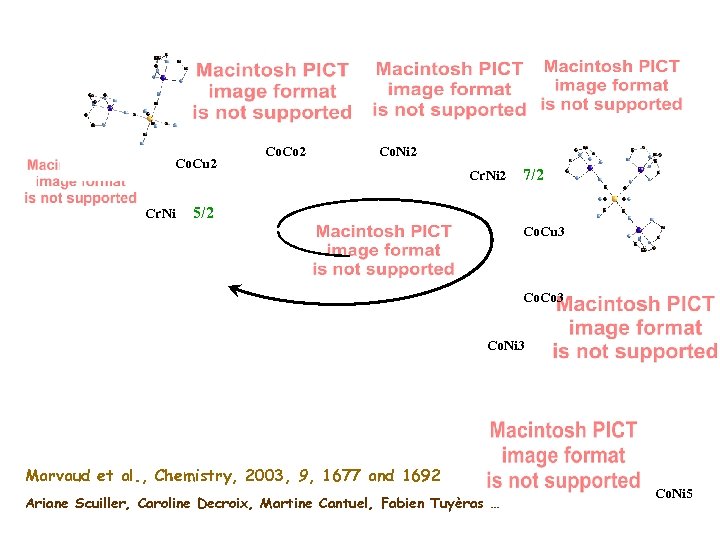 Co. Cu 2 Cr. Ni Co. Co 2 Co. Ni 2 Cr. Ni 2 7/2 5/2 Co. Cu 3 Co. Co 3 Co. Ni 3 Marvaud et al. , Chemistry, 2003, 9, 1677 and 1692 Ariane Scuiller, Caroline Decroix, Martine Cantuel, Fabien Tuyèras … Co. Ni 5
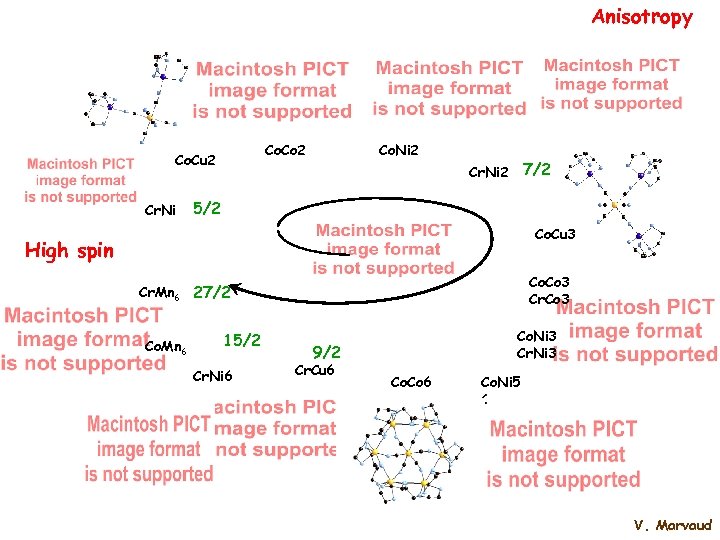 Anisotropy Co. Co 2 Co. Cu 2 Cr. Ni Co. Ni 2 7/2 Cr. Ni 2 5/2 Co. Cu 3 High spin Co. Co 3 Cr. Mn 6 27/2 Co. Mn 6 15/2 Cr. Ni 6 Co. Ni 3 Cr. Ni 3 9/2 Cr. Cu 6 Co. Co 6 Co. Ni 5 Cr. Ni 3 V. Marvaud
![[Mn 12 O 12(CH 3 COO)16(H 2 O)4]. 2 CH 3 COOH. 4 H](https://present5.com/presentation/28c5c0eb900d234024ebb0476847e12d/image-55.jpg "[Mn 12 O 12(CH 3 COO)16(H 2 O)4]. 2 CH 3 COOH. 4 H") [Mn 12 O 12(CH 3 COO)16(H 2 O)4]. 2 CH 3 COOH. 4 H 20 or Mn 12 Mn(III) S=2 Mn(IV) S=3/2 Ion Oxyde Carbone S =8 x 2 -4 x 3/2 = S=10 From D. Gatteschi and R. Sessoli
[Mn 12 O 12(CH 3 COO)16(H 2 O)4]. 2 CH 3 COOH. 4 H 20 or Mn 12 Mn(III) S=2 Mn(IV) S=3/2 Ion Oxyde Carbone S =8 x 2 -4 x 3/2 = S=10 From D. Gatteschi and R. Sessoli
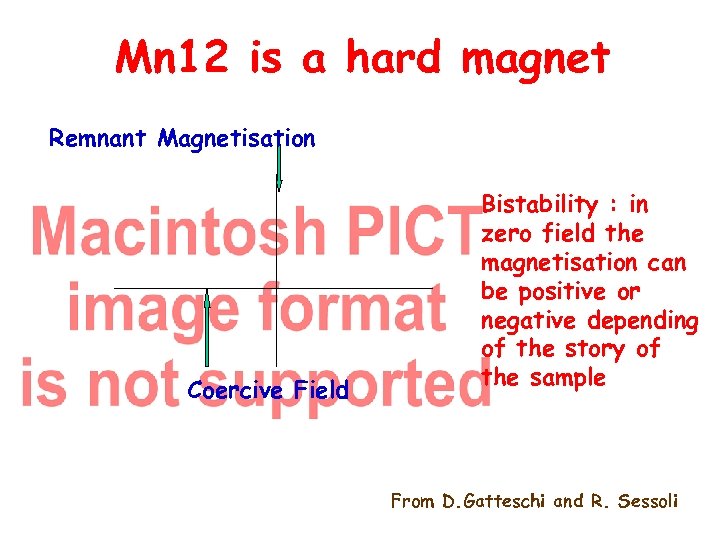 Mn 12 is a hard magnet Remnant Magnetisation Coercive Field Bistability : in zero field the magnetisation can be positive or negative depending of the story of the sample From D. Gatteschi and R. Sessoli
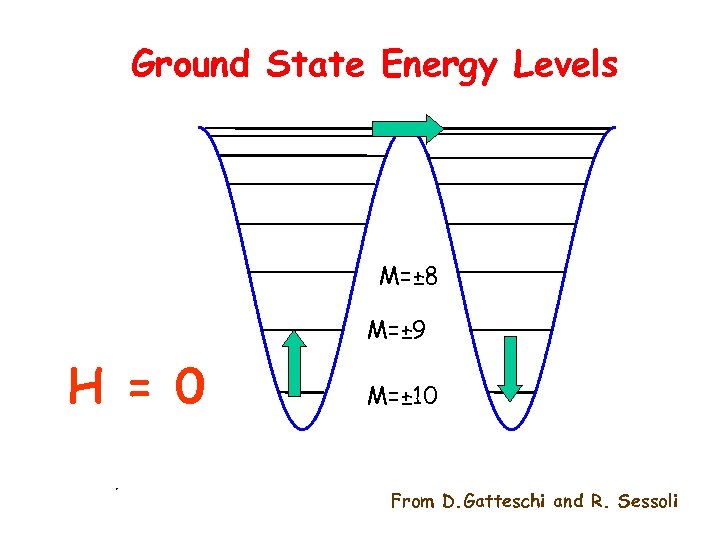 Ground State Energy Levels M=± 8 M=± 9 H = 0 M=± 10 From D. Gatteschi and R. Sessoli
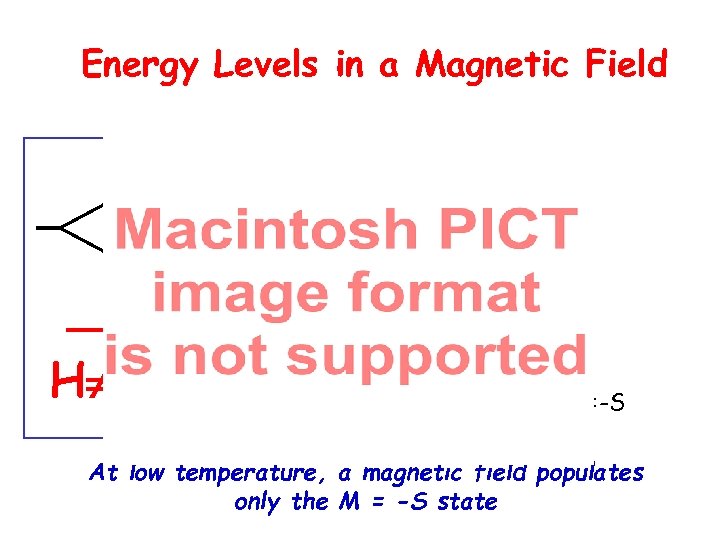 Energy Levels in a Magnetic Field S -S H 0 M=S M=-S At low temperature, a magnetic field populates only the M = -S state
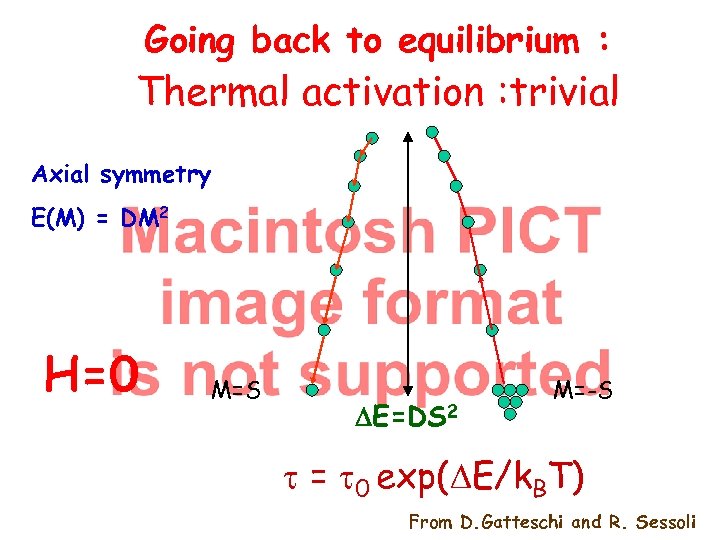 Going back to equilibrium : Thermal activation : trivial Axial symmetry E(M) = DM 2 H=0 M=S E=DS 2 M=-S = 0 exp( E/k. BT) From D. Gatteschi and R. Sessoli
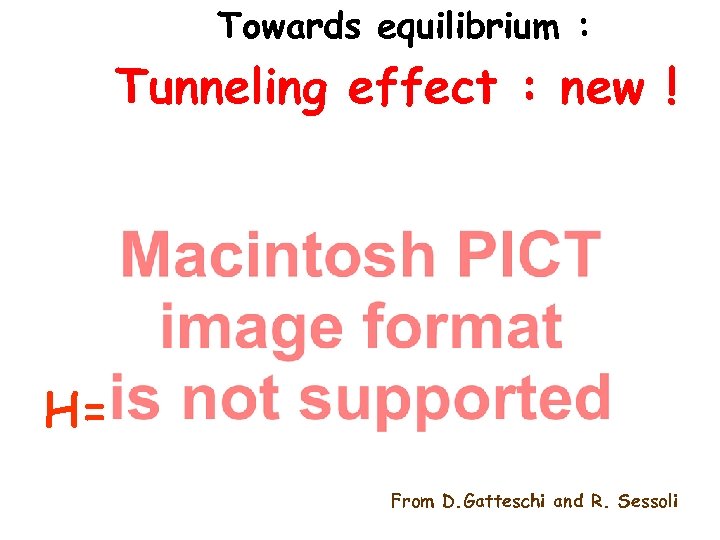 Towards equilibrium : Tunneling effect : new ! H=0 M=S M=-S From D. Gatteschi and R. Sessoli
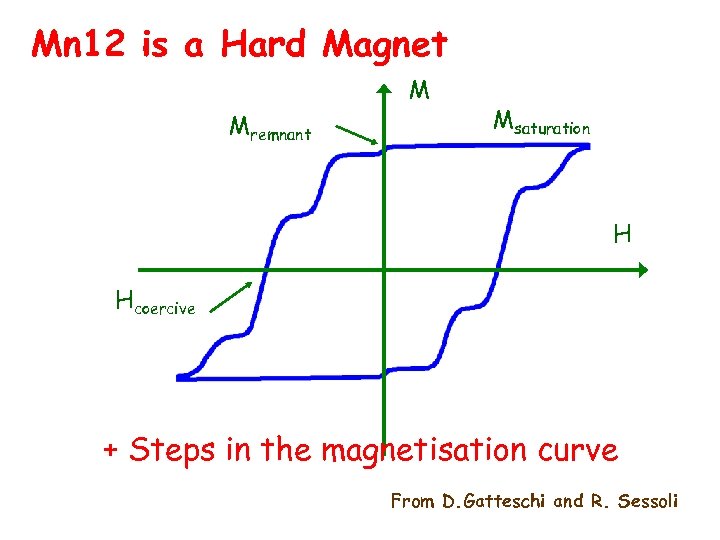 Mn 12 is a Hard Magnet M Mremnant Msaturation H Hcoercive + Steps in the magnetisation curve From D. Gatteschi and R. Sessoli
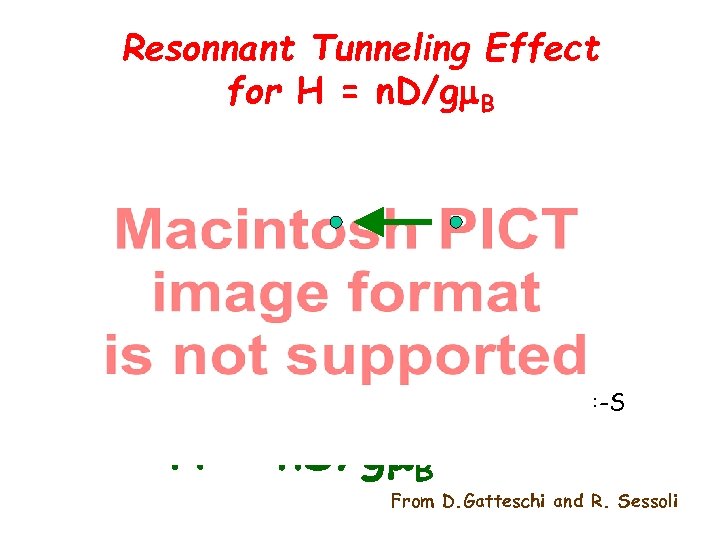 Resonnant Tunneling Effect for H = n. D/g B M=S H = n. D/g B M=-S From D. Gatteschi and R. Sessoli
 Conditions to observe tunnelling effect • Degenerated wave functions must superpose • A transversal field must couple the two wave functions • Coupling splits the two levels : “tunnel splitting” • Tunnelling Effect Probability increases with tunnel splitting” From D. Gatteschi and R. Sessoli
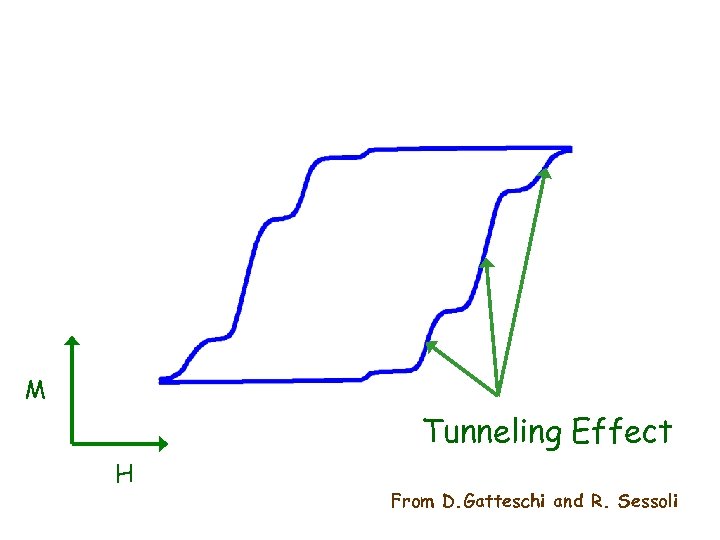 M Tunneling Effect H From D. Gatteschi and R. Sessoli
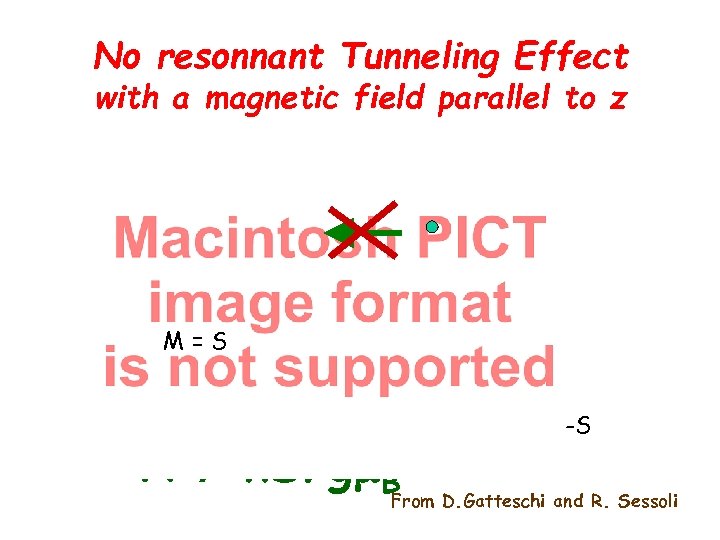 No resonnant Tunneling Effect with a magnetic field parallel to z M=S H n. D/g B M = -S From D. Gatteschi and R. Sessoli
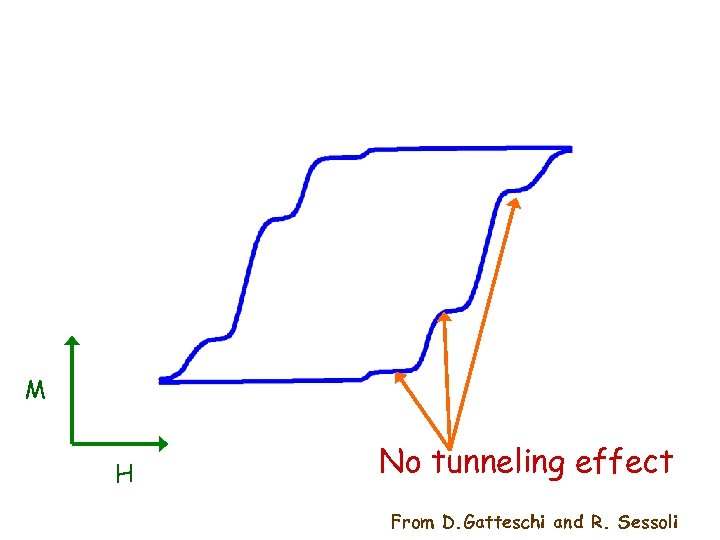 M H No tunneling effect From D. Gatteschi and R. Sessoli
![Feasibility of « Molecular nanowires » (or SCM) ? Anisotropic precursor [Fe(III)(bipy)(CN)4]R. Lescouëzec, M.](https://present5.com/presentation/28c5c0eb900d234024ebb0476847e12d/image-67.jpg "Feasibility of « Molecular nanowires » (or SCM) ? Anisotropic precursor [Fe(III)(bipy)(CN)4]R. Lescouëzec, M.") Feasibility of « Molecular nanowires » (or SCM) ? Anisotropic precursor [Fe(III)(bipy)(CN)4]R. Lescouëzec, M. Julve, Valencia, Spain D. Gatteschi, W. Wernsdorfer Angewandte Chem. 2003, 142, 1483 -6
Feasibility of « Molecular nanowires » (or SCM) ? Anisotropic precursor [Fe(III)(bipy)(CN)4]R. Lescouëzec, M. Julve, Valencia, Spain D. Gatteschi, W. Wernsdorfer Angewandte Chem. 2003, 142, 1483 -6
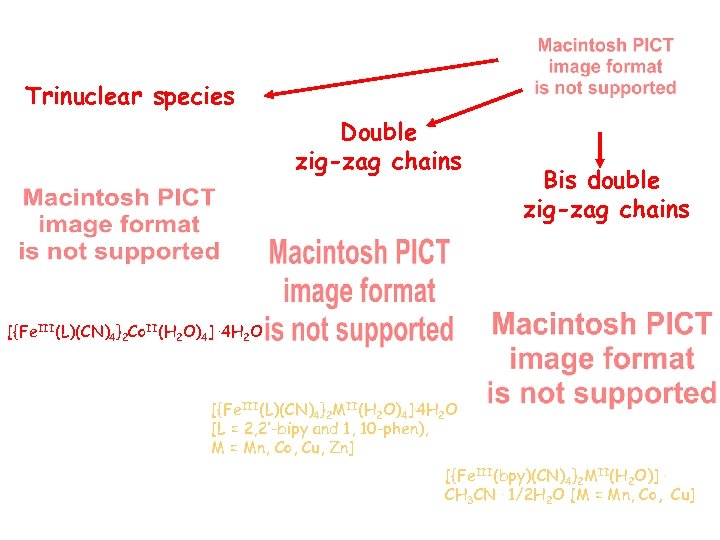 Trinuclear species Double zig-zag chains Bis double zig-zag chains [{Fe. III(L)(CN)4}2 Co. II(H 2 O)4]. 4 H 2 O [{Fe. III(L)(CN)4}2 MII(H 2 O)4]. 4 H 2 O [L = 2, 2’-bipy and 1, 10 -phen), M = Mn, Co, Cu, Zn] [{Fe. III(bpy)(CN)4}2 MII(H 2 O)]. CH 3 CN. 1/2 H 2 O [M = Mn, Co, Cu]
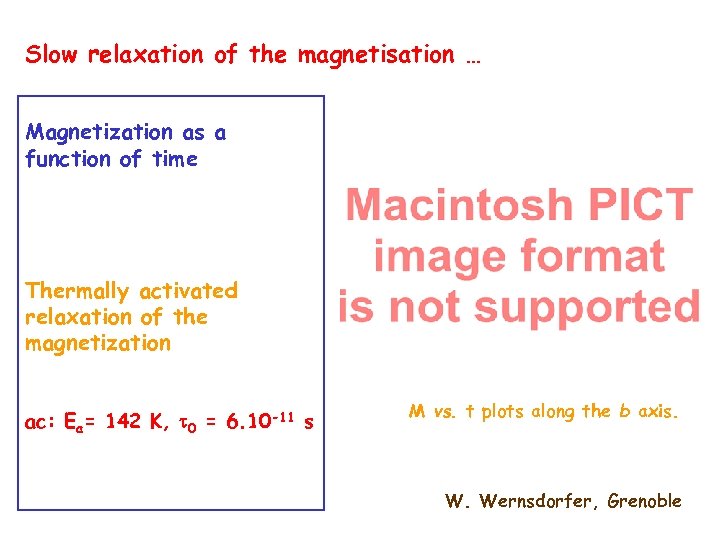 Slow relaxation of the magnetisation … Magnetization as a function of time Thermally activated relaxation of the magnetization ac: Ea= 142 K, 0 = 6. 10 -11 s M vs. t plots along the b axis. W. Wernsdorfer, Grenoble
 The dream … Magnetic Tip H High Spin "down" ≈ 10 nm Surface
 Magnetic Tip H High Spin "down" ≈ 10 nm Surface
 The dream … Magnetic Tip H HSM «up» High Spin "down" ≈ 10 nm Surface … information storage at the molecular level !
 Nanosciences … H HSM «up» High Spin "down" ≈ 10 nm Surface … a challenge for chemists and friends …