 Скачать презентацию Do Now Grab a textbook from
1bed0c2ac98faec0411e777bb13018f7.ppt
- Количество слайдов: 39



Do Now • • Grab a textbook from the back Open your book to Chapter 4, Lesson 1. • Read Lesson 1 and complete the Lesson 1 Review questions: 1, 2 and 4 thru 6 (Due @ end of period). • Use your cellphones and open the Unit 3 Power. Point on my website or Schoology. • Finish the fill-in notes (skip slides 22 – 28). • There will be a Vocab quiz over the notes this week!
Chapter 4 – Socialization
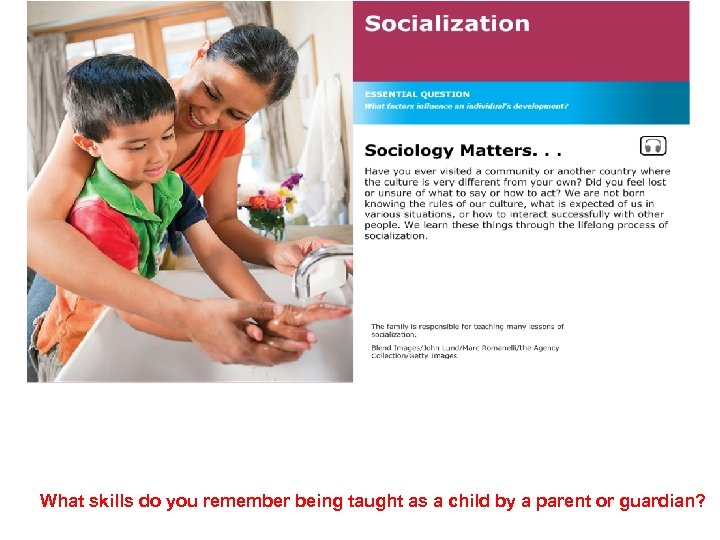
What skills do you remember being taught as a child by a parent or guardian?
Proper Manners for Dating 1. A man should not sit down at the table in a restaurant until the woman is seated. 2. A man should always pull out a woman’s chair for her and see that she is served first. 3. A man should never let a woman carry anything heavy; she should carry only a small package and her coat. 4. A man should help a woman put on and take off her coat. 5. A man should always open a door for a woman and let her pass in front of him What are proper dating habits today? How do they compare with those you just heard? Why do these customs change?
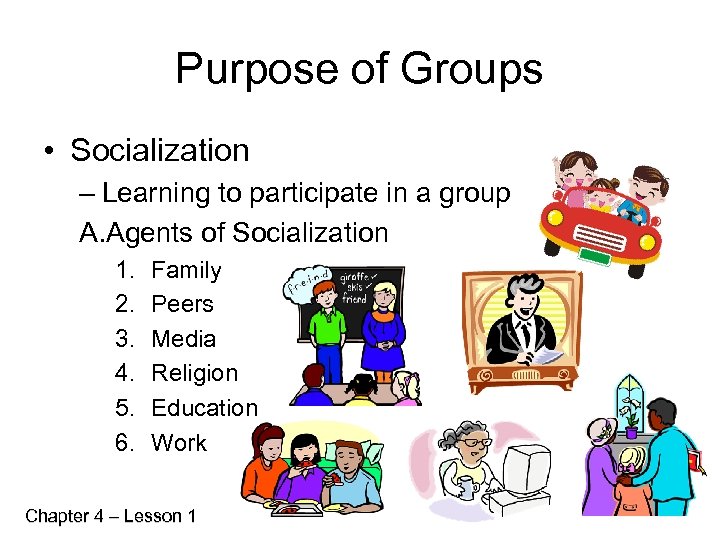
Purpose of Groups • Socialization – Learning to participate in a group A. Agents of Socialization 1. 2. 3. 4. 5. 6. Family Peers Media Religion Education Work Chapter 4 – Lesson 1
Socialization Terms…
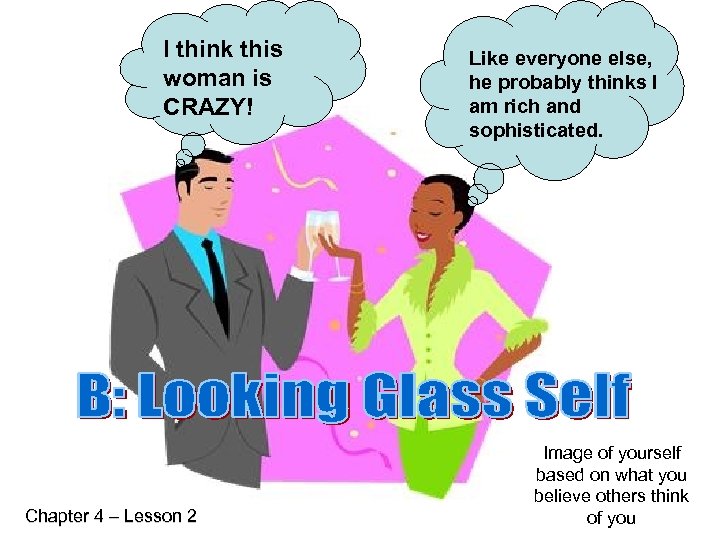
I think this woman is CRAZY! Chapter 4 – Lesson 2 Like everyone else, he probably thinks I am rich and sophisticated. Image of yourself based on what you believe others think of you
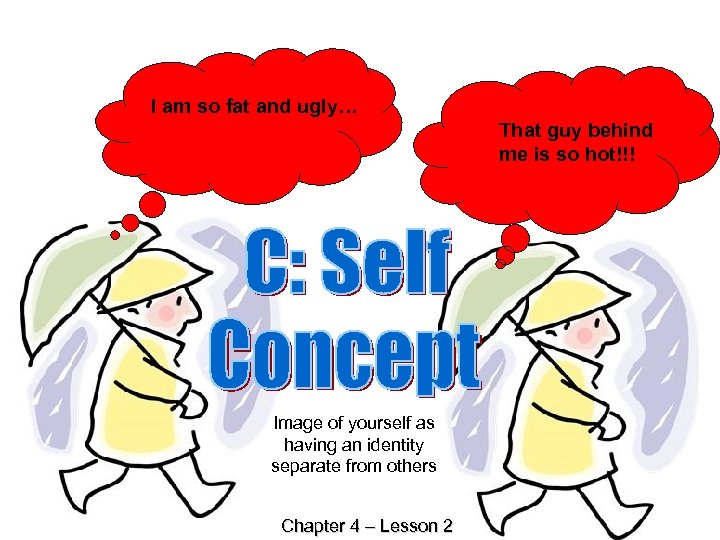
I am so fat and ugly… That guy behind me is so hot!!! Image of yourself as having an identity separate from others Chapter 4 – Lesson 2
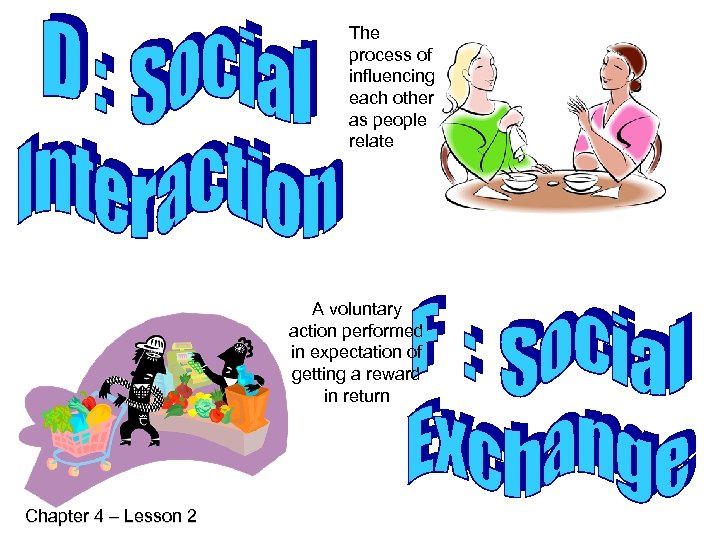
The process of influencing each other as people relate A voluntary action performed in expectation of getting a reward in return Chapter 4 – Lesson 2
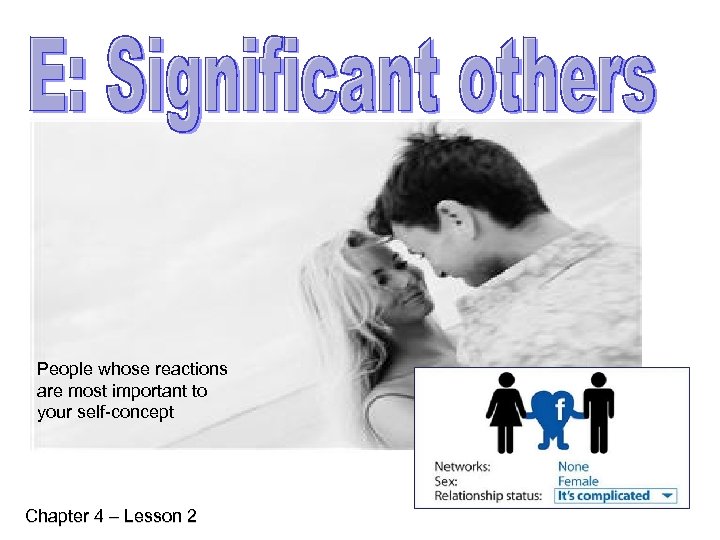
People whose reactions are most important to your self-concept Chapter 4 – Lesson 2
Group influences on behavior… Chapter 6 – Groups and Forma Organizations
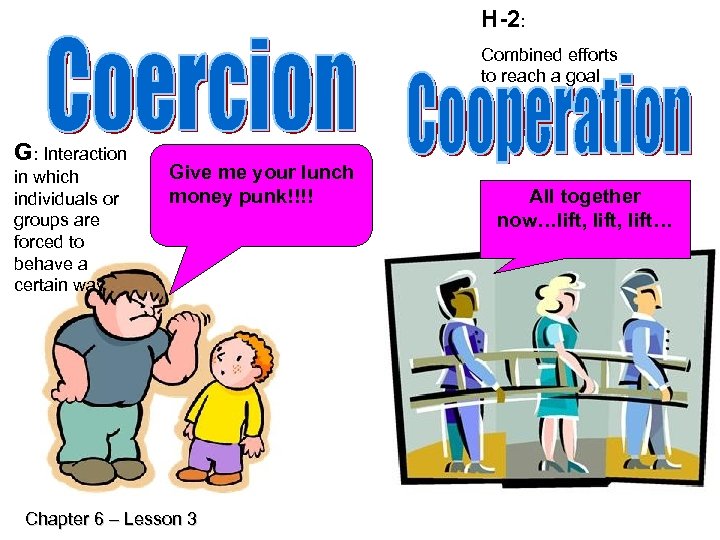
H-2: Combined efforts to reach a goal G: Interaction in which individuals or groups are forced to behave a certain way Give me your lunch money punk!!!! Chapter 6 – Lesson 3 All together now…lift, lift…
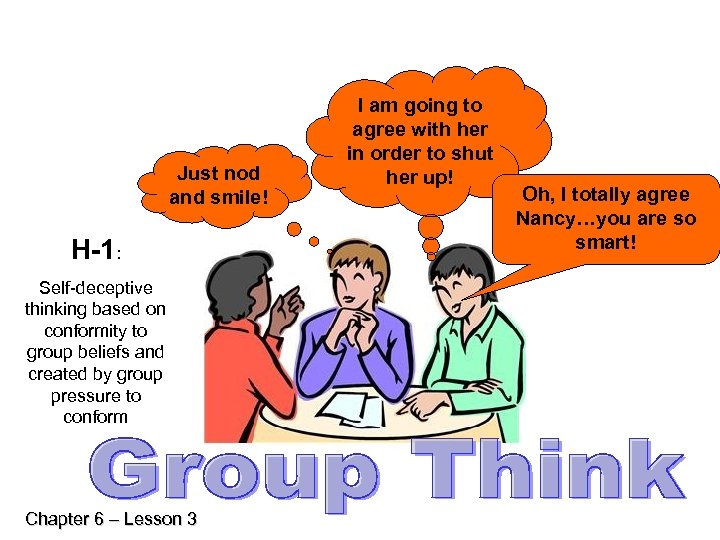
Just nod and smile! H-1: Self-deceptive thinking based on conformity to group beliefs and created by group pressure to conform Chapter 6 – Lesson 3 I am going to agree with her in order to shut her up! Oh, I totally agree Nancy…you are so smart!
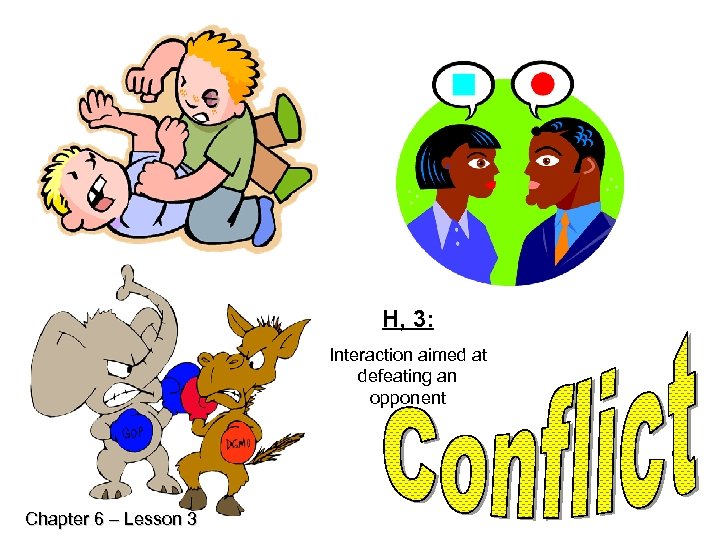
H, 3: Interaction aimed at defeating an opponent Chapter 6 – Lesson 3
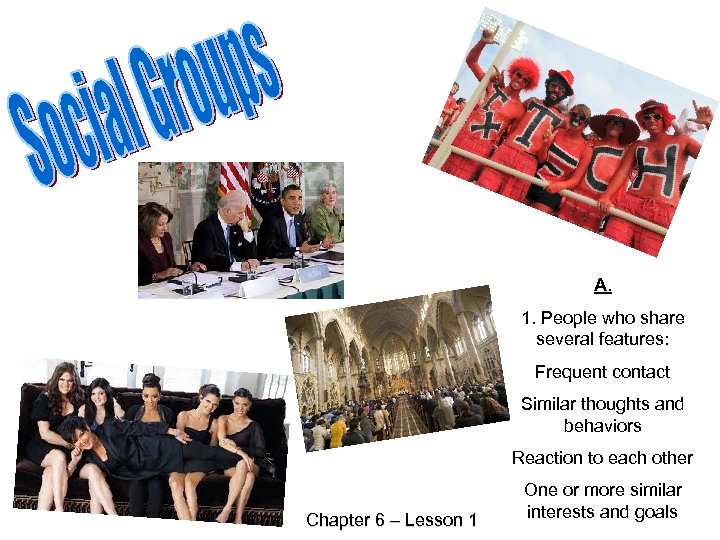
A. 1. People who share several features: Frequent contact Similar thoughts and behaviors Reaction to each other Chapter 6 – Lesson 1 One or more similar interests and goals
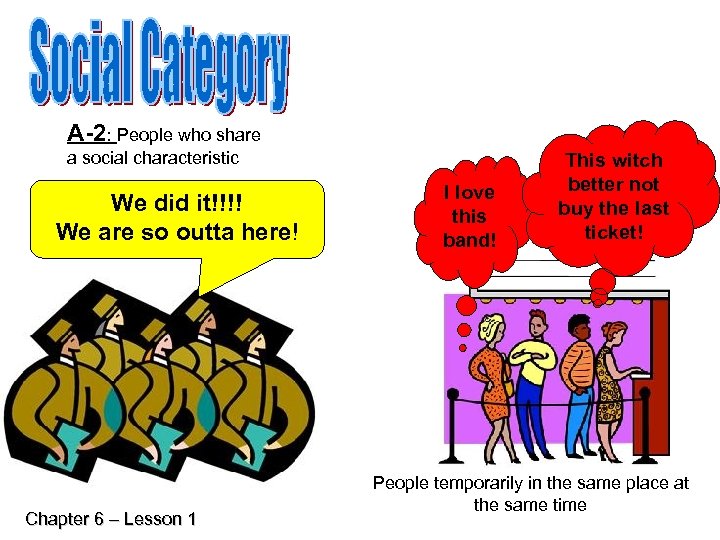
A-2: People who share a social characteristic We did it!!!! We are so outta here! Chapter 6 – Lesson 1 I love this band! This witch better not buy the last ticket! People temporarily in the same place at the same time
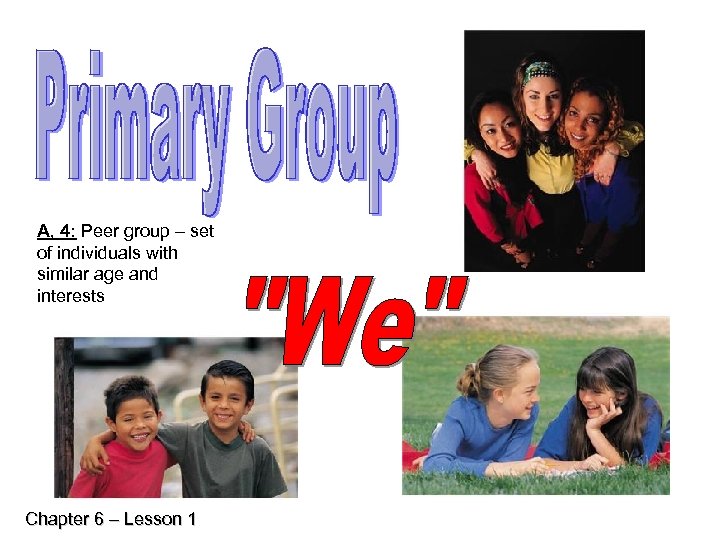
A, 4: Peer group – set of individuals with similar age and interests Chapter 6 – Lesson 1
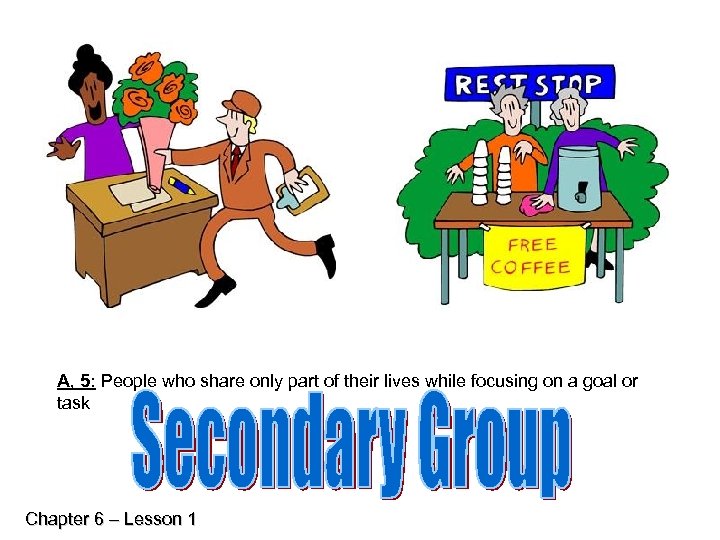
A, 5: People who share only part of their lives while focusing on a goal or task Chapter 6 – Lesson 1
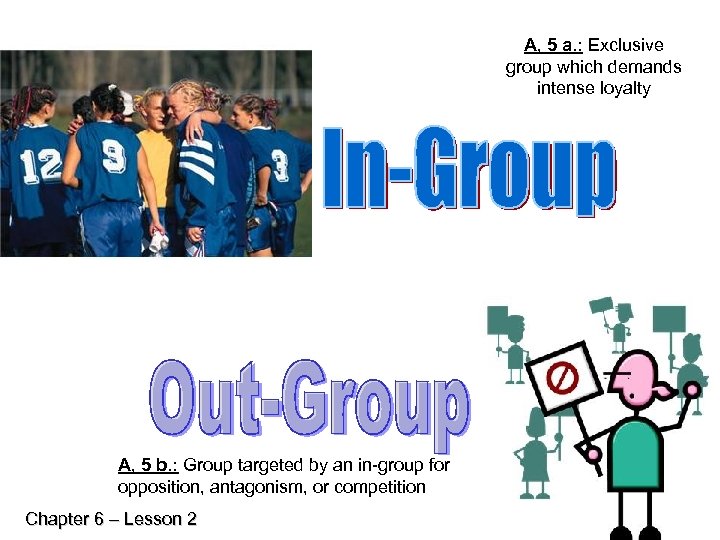
A, 5 a. : Exclusive group which demands intense loyalty A, 5 b. : Group targeted by an in-group for opposition, antagonism, or competition Chapter 6 – Lesson 2
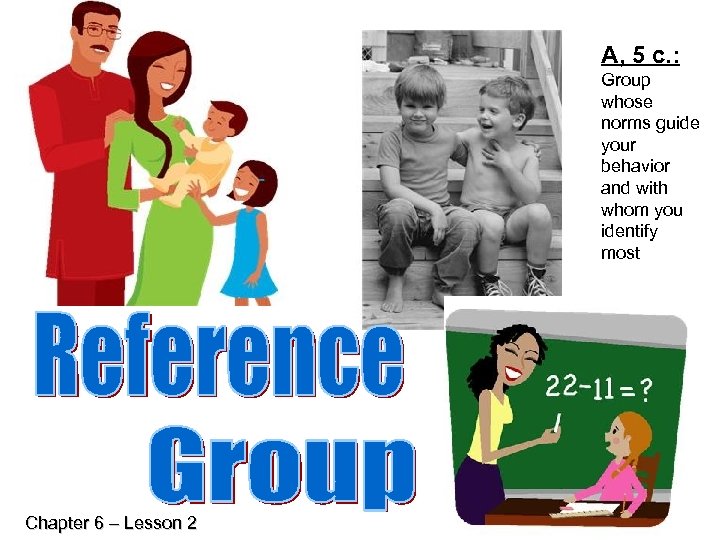
A, 5 c. : Group whose norms guide your behavior and with whom you identify most Chapter 6 – Lesson 2
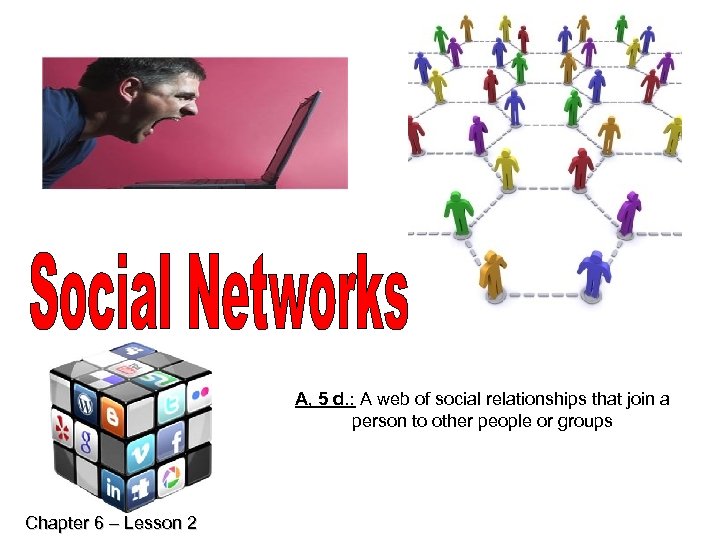
A, 5 d. : A web of social relationships that join a person to other people or groups Chapter 6 – Lesson 2
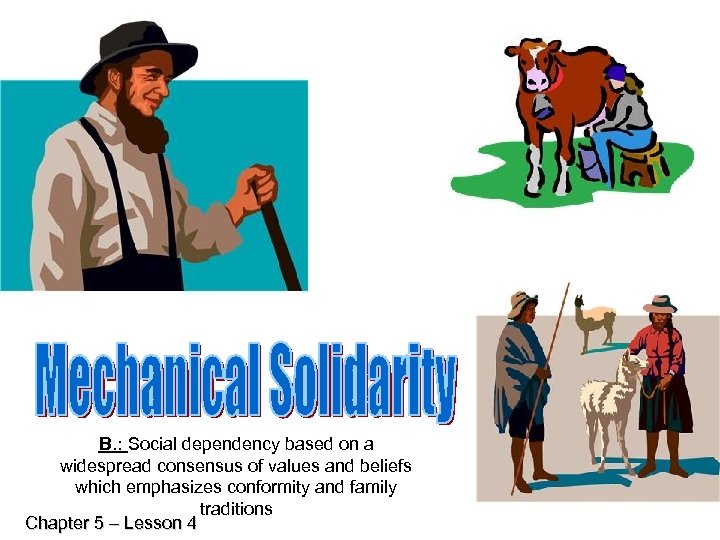
B. : Social dependency based on a widespread consensus of values and beliefs which emphasizes conformity and family traditions Chapter 5 – Lesson 4
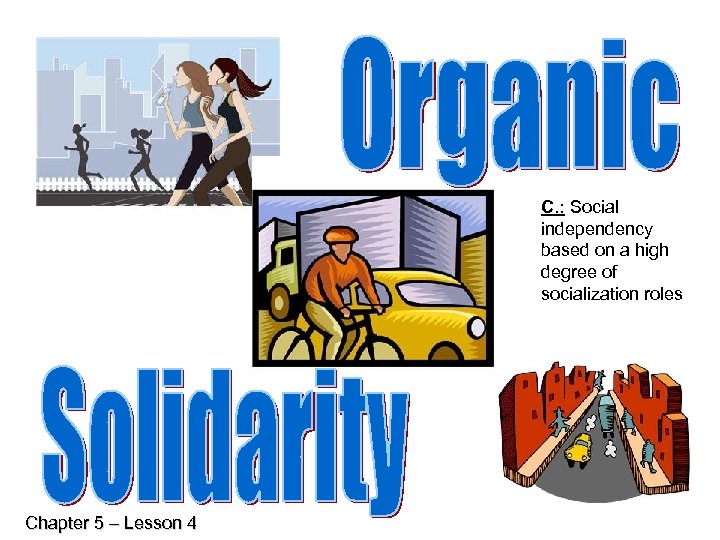
C. : Social independency based on a high degree of socialization roles Chapter 5 – Lesson 4
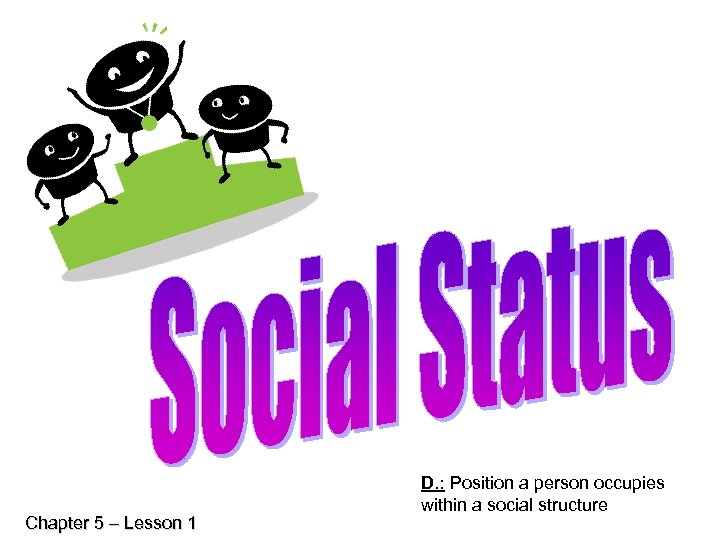
Chapter 5 – Lesson 1 D. : Position a person occupies within a social structure
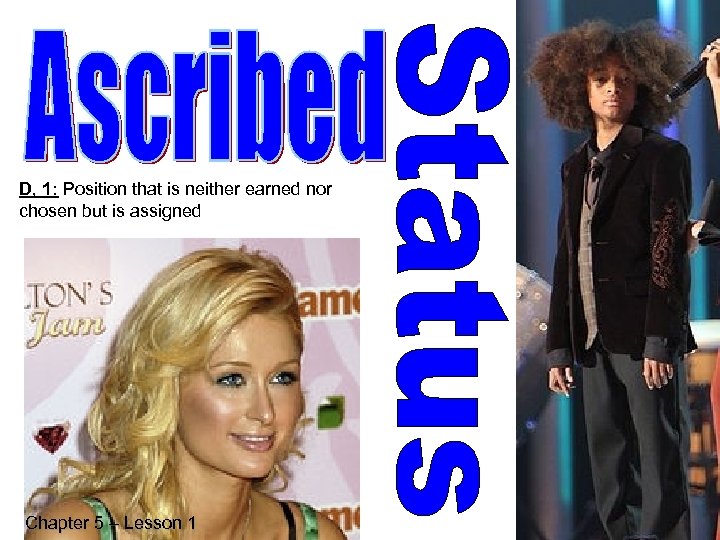
D, 1: Position that is neither earned nor chosen but is assigned Chapter 5 – Lesson 1
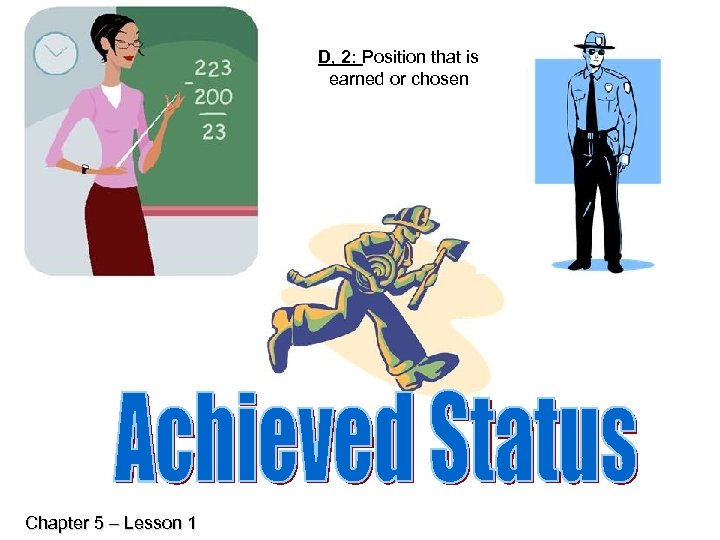
D, 2: Position that is earned or chosen Chapter 5 – Lesson 1
D, 3: A position that strongly affects most aspects of a person’s life Chapter 5 – Lesson 1
Social Stratification A: Ranking of people or groups according to their unequal access to scarce resources Chapter 8 – Social Stratification
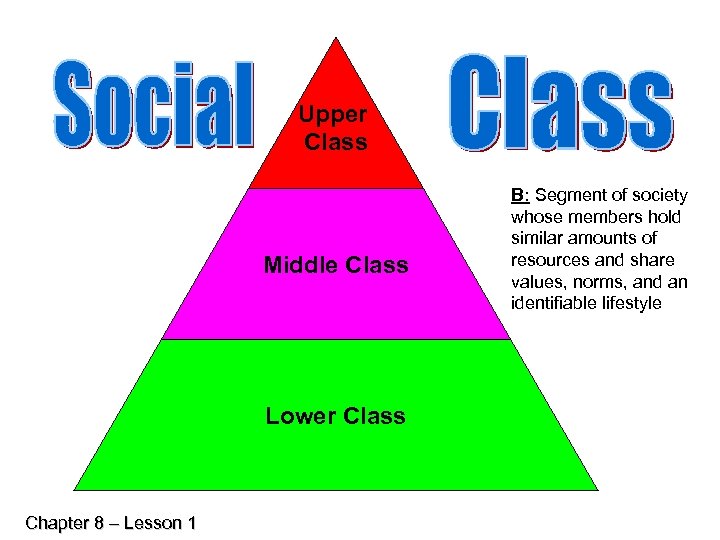
Upper Class Middle Class Lower Class Chapter 8 – Lesson 1 B: Segment of society whose members hold similar amounts of resources and share values, norms, and an identifiable lifestyle
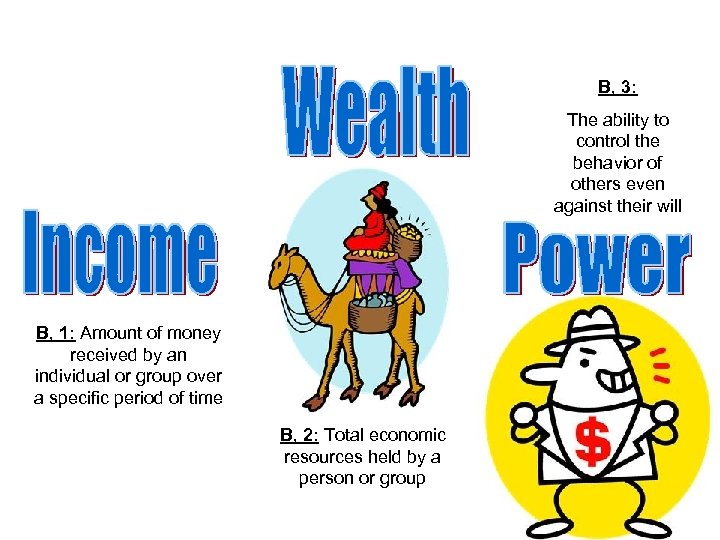
B, 3: The ability to control the behavior of others even against their will B, 1: Amount of money received by an individual or group over a specific period of time B, 2: Total economic resources held by a person or group
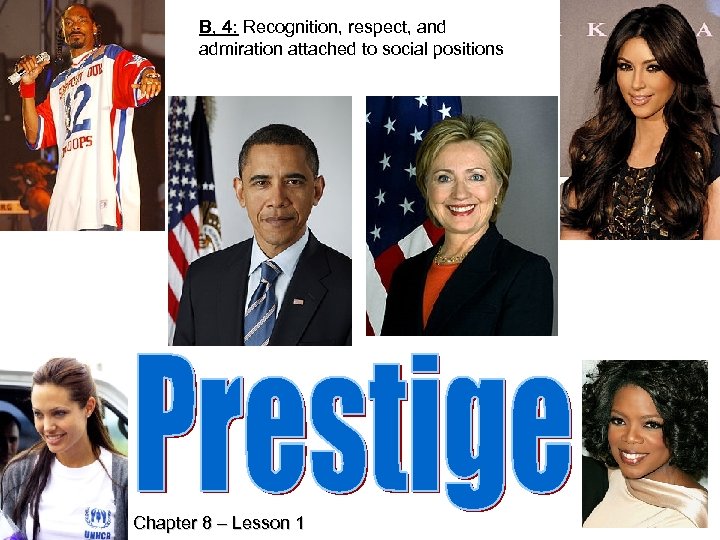
B, 4: Recognition, respect, and admiration attached to social positions Chapter 8 – Lesson 1
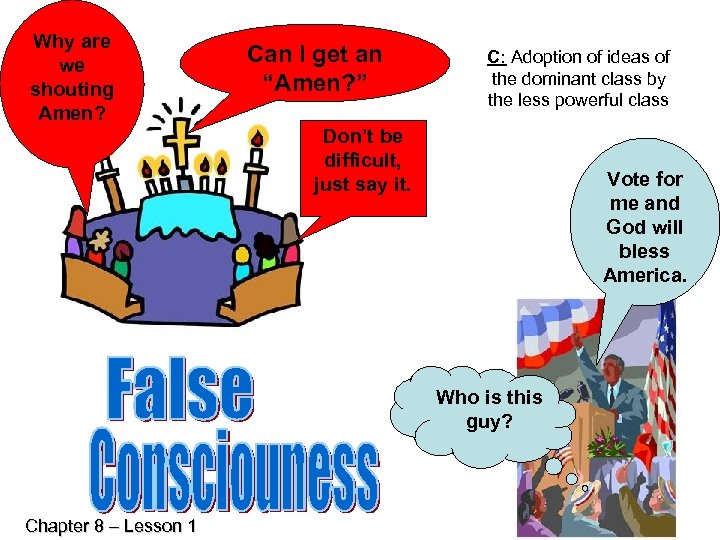
Why are we shouting Amen? Can I get an “Amen? ” C: Adoption of ideas of the dominant class by the less powerful class Don’t be difficult, just say it. Vote for me and God will bless America. Who is this guy? Chapter 8 – Lesson 1
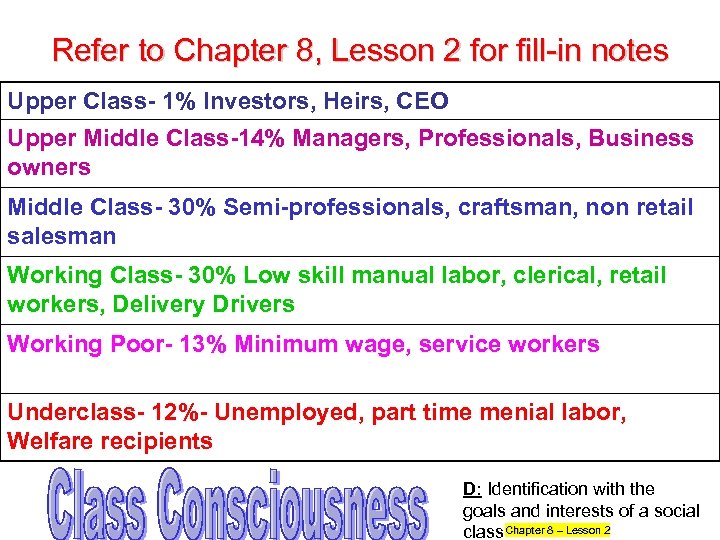
Refer to Chapter 8, Lesson 2 for fill-in notes Upper Class- 1% Investors, Heirs, CEO Upper Middle Class-14% Managers, Professionals, Business owners Middle Class- 30% Semi-professionals, craftsman, non retail salesman Working Class- 30% Low skill manual labor, clerical, retail workers, Delivery Drivers Working Poor- 13% Minimum wage, service workers Underclass- 12%- Unemployed, part time menial labor, Welfare recipients D: Identification with the goals and interests of a social class Chapter 8 – Lesson 2
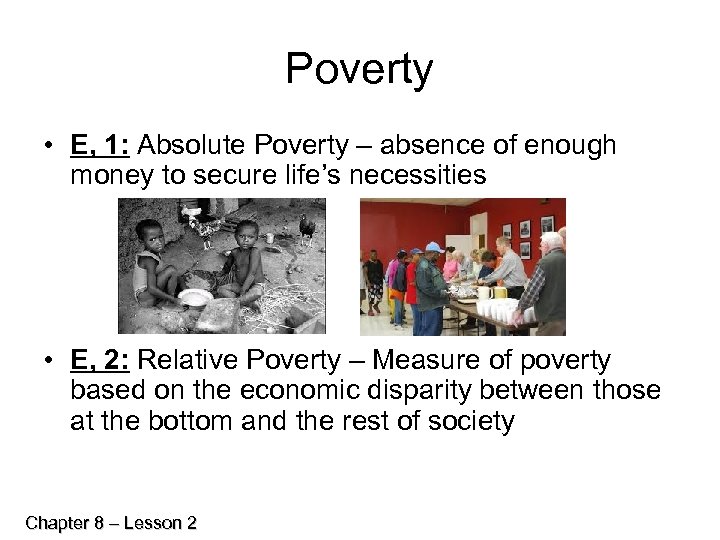
Poverty • E, 1: Absolute Poverty – absence of enough money to secure life’s necessities • E, 2: Relative Poverty – Measure of poverty based on the economic disparity between those at the bottom and the rest of society Chapter 8 – Lesson 2
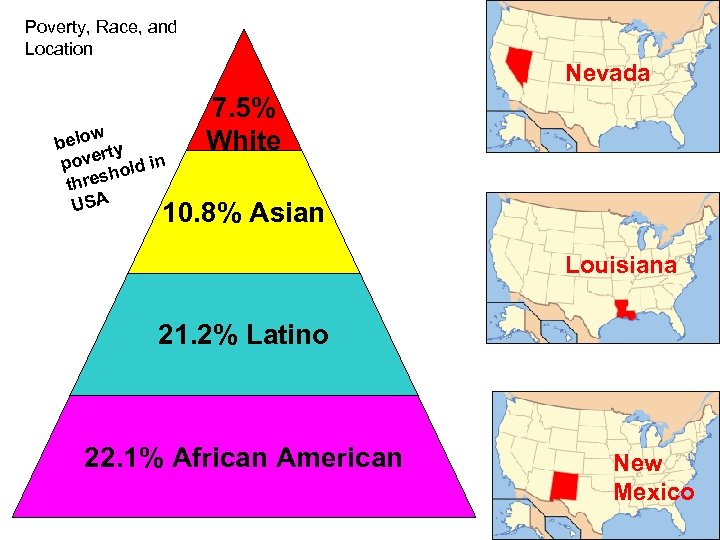
Poverty, Race, and Location w belo ty r pove old in h thres USA 7. 5% White Nevada 10. 8% Asian Louisiana 21. 2% Latino 22. 1% African American New Mexico
F: The movement of individuals or groups between social classes Chapter 8 – Lesson 3
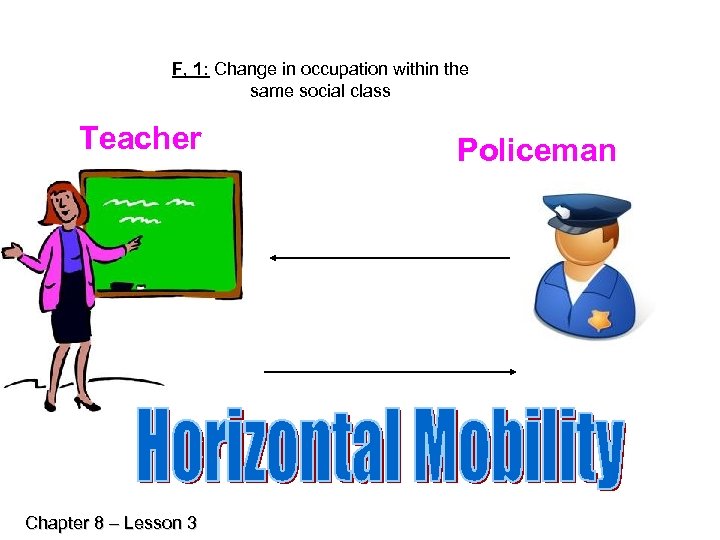
F, 1: Change in occupation within the same social class Teacher Chapter 8 – Lesson 3 Policeman
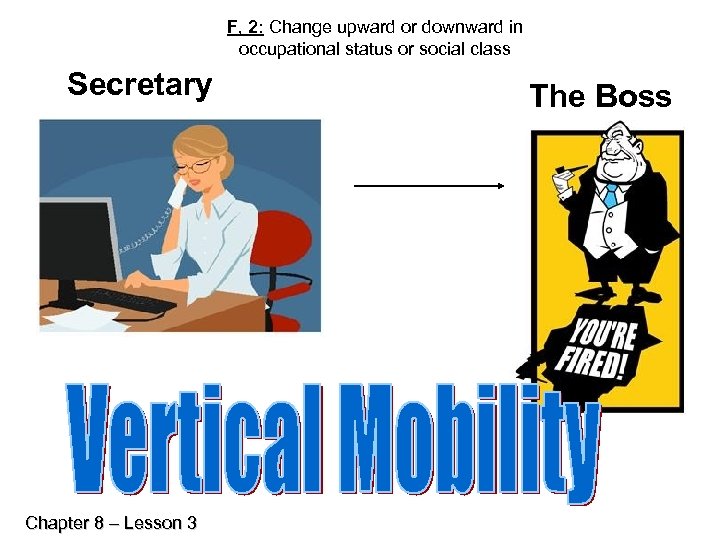
F, 2: Change upward or downward in occupational status or social class Secretary Chapter 8 – Lesson 3 The Boss
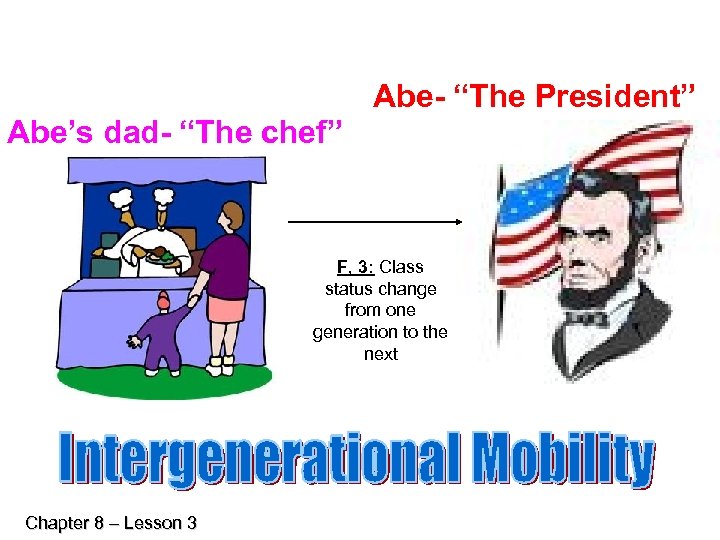
Abe- “The President” Abe’s dad- “The chef” F, 3: Class status change from one generation to the next Chapter 8 – Lesson 3
Скачать презентацию Do Now Grab a textbook from
1bed0c2ac98faec0411e777bb13018f7.ppt