 Скачать презентацию Do Now Draw a picture symbol for each
147e075c364301c50e8d3d3f459d9fe3.ppt
- Количество слайдов: 27



Do Now ■ Draw a picture/symbol for each of the following phrases: –“Open Door” –“Big Stick” –“Dollar” –“Morals” ■ Label each of your symbols.
■ Essential Questions: Questions –What role did the U. S. play in world affairs in the early decades of the 20 th century? –How did U. S. foreign policy change in the 100 years from George Washington (1790 s) to William Mc. Kinley (1890 s)?
The U. S. Becomes a World Power ■ At the turn of the 20 th century, the U. S. emerged as a world power: –The U. S. asserted its dominance in Spanish-American War (1898) –America built the 3 rd largest navy in the world –Annexed Hawaii, the Philippines, Puerto Rico, many Pacific islands –Asserted economic control over almost all of Latin America

U. S. Imperialism: Open Door - Big Stick – Dollar - Moral Diplomacy Open Door Policy (Mc. Kinley) Big Stick Diplomacy (Roosevelt) Dollar Diplomacy (Taft) Moral Diplomacy (Wilson) All four of the presidents listed above wanted to get involved in global markets for strategic and economic purposes. President Mc. Kinley sought to tap into the Asian consumer market, President Roosevelt wanted to demonstrate U. S. power to other countries, President Taft wanted to be more subtle and use the dollar, and President Wilson wanted to use U. S. military and economic power to encourage countries to adopt democratic principles.
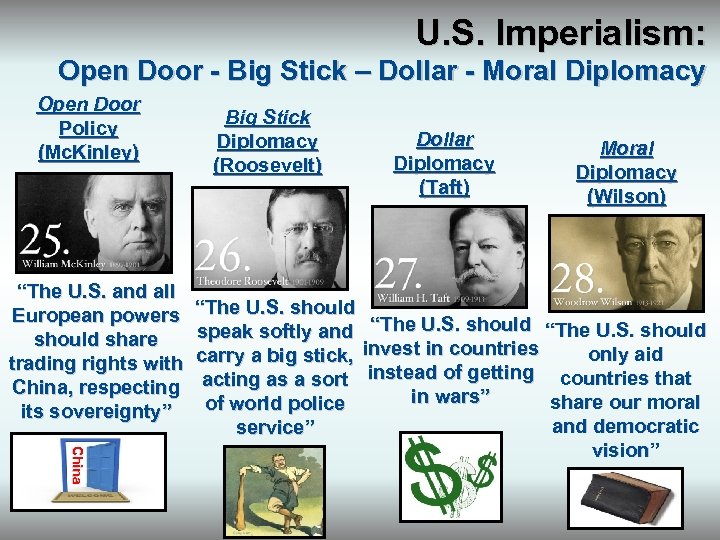
U. S. Imperialism: Open Door - Big Stick – Dollar - Moral Diplomacy Open Door Policy (Mc. Kinley) “The U. S. and all European powers should share trading rights with China, respecting its sovereignty” Big Stick Diplomacy (Roosevelt) Dollar Diplomacy (Taft) Moral Diplomacy (Wilson) China “The U. S. should speak softly and “The U. S. should only aid carry a big stick, invest in countries acting as a sort instead of getting countries that in wars” share our moral of world police and democratic service” vision”
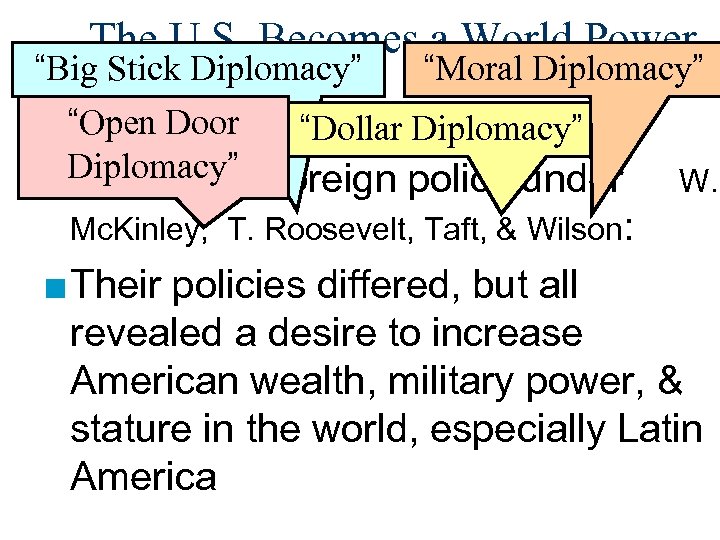
The U. S. Becomes a World Power “Big Stick Diplomacy” “Moral Diplomacy” ■“Open. U. S. developed a new, The Door “Dollar Diplomacy” foreign policy under aggressive W. Mc. Kinley, T. Roosevelt, Taft, & Wilson: ■ Their policies differed, but all revealed a desire to increase American wealth, military power, & stature in the world, especially Latin America
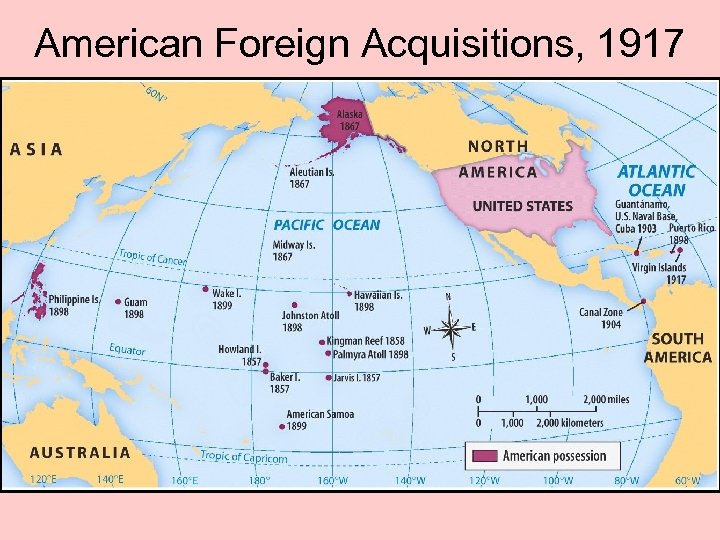
American Foreign Acquisitions, 1917
William Mc. Kinley’s “Open Door Diplomacy”
Open Door Policy ■ Mc. Kinley and his Secretary of State John Hay wanted to make sure that no countries established a monopoly on trade with China ■ All countries should have an “open door” to China’s markets
Theodore Roosevelt’s “Big Stick Diplomacy”
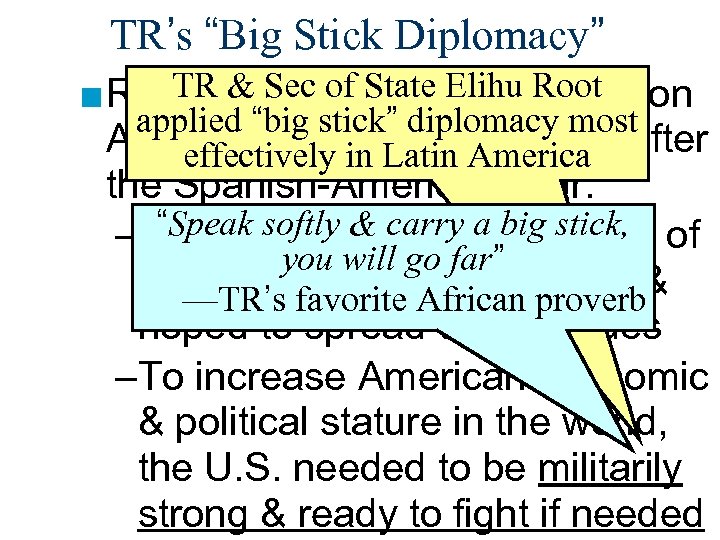
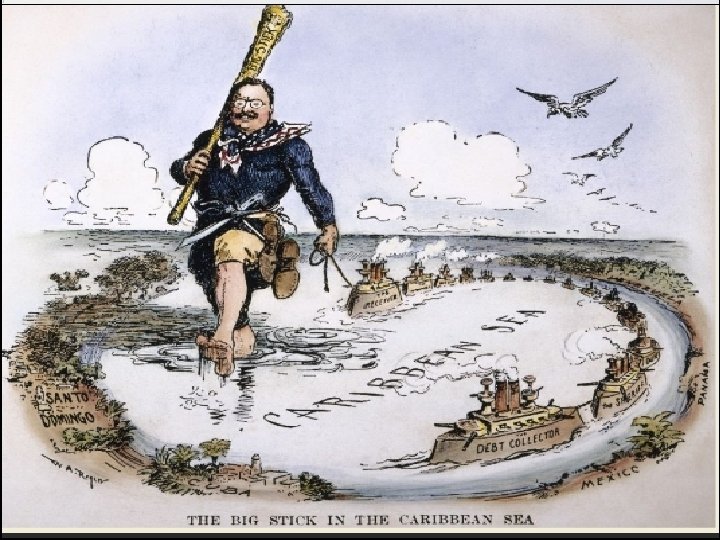
TR’s “Big Stick Diplomacy” TR & Sec of State expand ■ Roosevelt hoped to. Elihu Root upon applied “big stick” diplomacy most America’s new, Latin America after effectively in world stature the Spanish-American War: “Speak softly & carry superiority of a big stick, –TR believed in the you will go far” American Protestant culture & —TR’s favorite African proverb hoped to spread these values –To increase American economic & political stature in the world, the U. S. needed to be militarily strong & ready to fight if needed
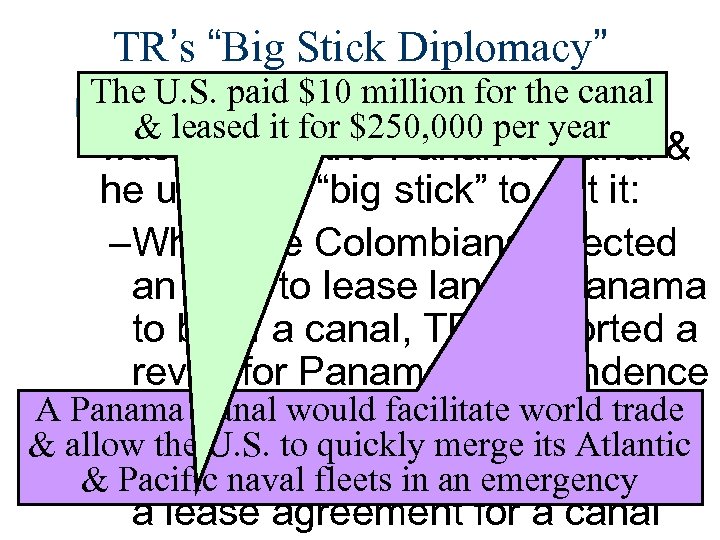
TR’s “Big Stick Diplomacy” The U. S. paid $10 million for the canal ■ TR’s top foreign policy objective & leased it for $250, 000 per year was to build the Panama Canal & he used his “big stick” to get it: –When the Colombians rejected an offer to lease land in Panama to build a canal, TR supported a revolt for Panama independence A Panama Canal would facilitate world U. S. trade –In 1903, to quickly merge its Atlantic Panama (with the & allow the U. S. navy) became in an emergency & Pacific naval fleets a nation & signed a lease agreement for a canal
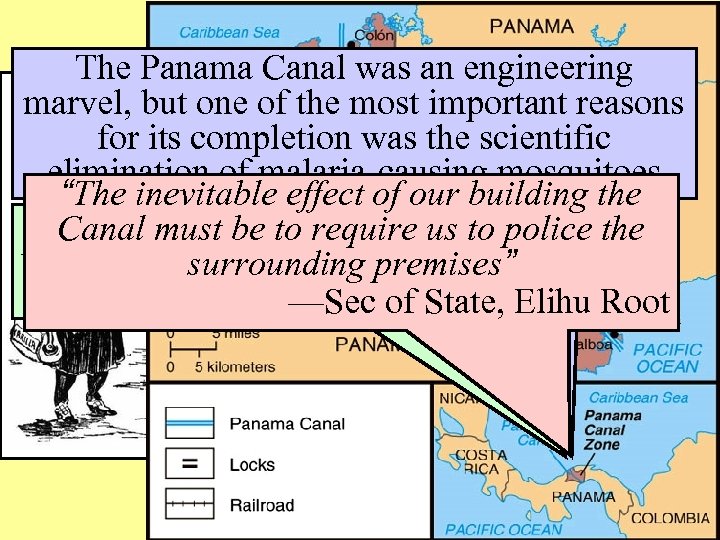
The Panama Canal was an engineering marvel, but one of the most important reasons for its completion was the scientific elimination of malaria-causing mosquitoes “The inevitable effect of our building the When openedbe to require canal police the Canal must in 1914, the us to gave the USA a huge economic advantage in surrounding premises” the Western Hemisphere Elihu Root —Sec of State,
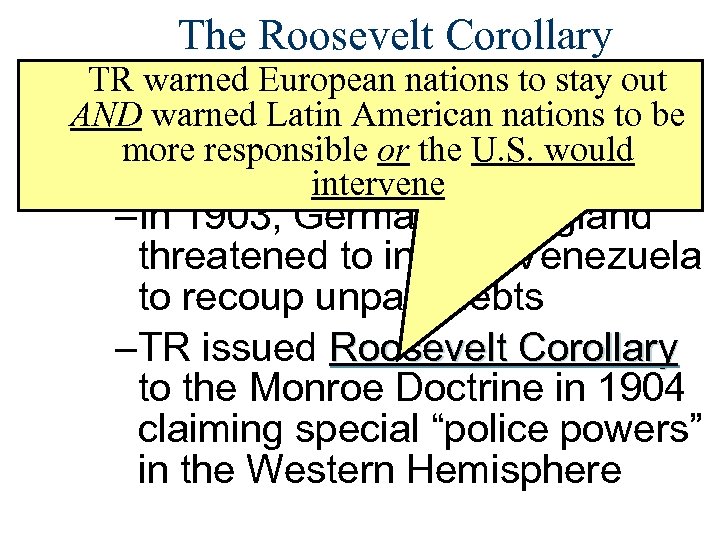
The Roosevelt Corollary TR warned European nations to stay was ■ One of the greatest concernsout AND warned Latin American nations to be the intervention of European more responsible or the U. S. would nations in Latin America: intervene –In 1903, Germany & England threatened to invade Venezuela to recoup unpaid debts –TR issued Roosevelt Corollary to the Monroe Doctrine in 1904 claiming special “police powers” in the Western Hemisphere
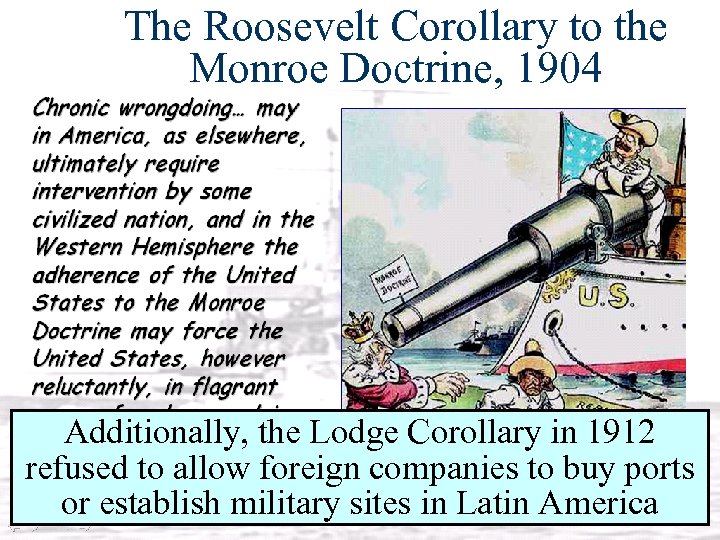
The Roosevelt Corollary to the Monroe Doctrine, 1904 Additionally, the Lodge Corollary in 1912 refused to allow foreign companies to buy ports or establish military sites in Latin America
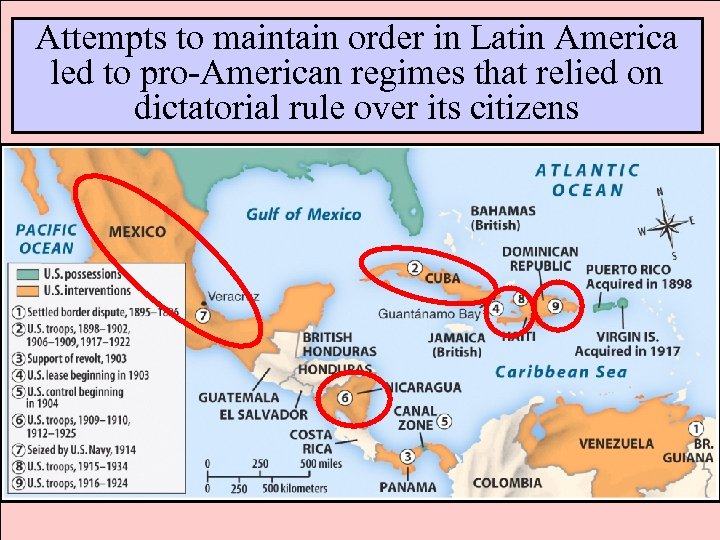
The Roosevelt Corollary was used America Attempts to maintain order in Latin to justify American armed intervention inthat relied on led to pro-American regimes the Dominican dictatorial rule Nicaragua, & Mexico Republic, Cuba, Haiti, over its citizens
Big Stick Diplomacy ■ Foreign policy under TR extended to Asia as well as Latin America: –TR negotiated an end to the Russo-Japanese War in 1905 from Portsmouth, NH –Gentlemen’s Agreement in 1907 limited Japanese immigration –The Root-Takahira Agreement in 1908 protected America’s Open Door Policy in China
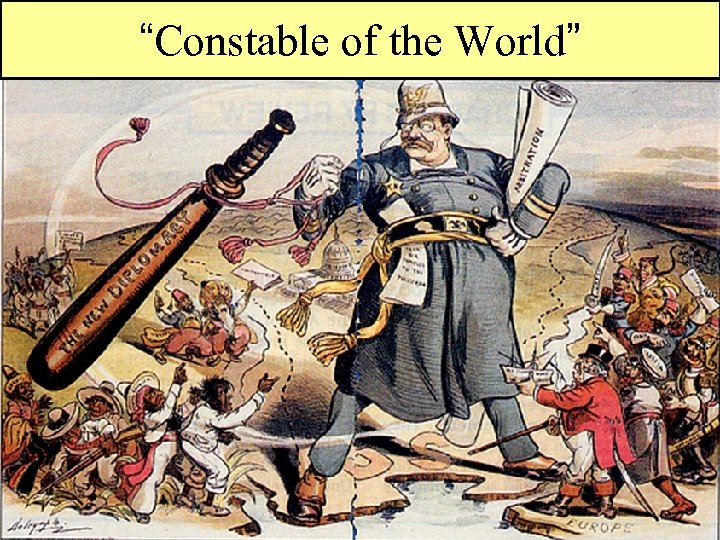
“Constable of the World”
William Howard Taft’s “Dollar Diplomacy”
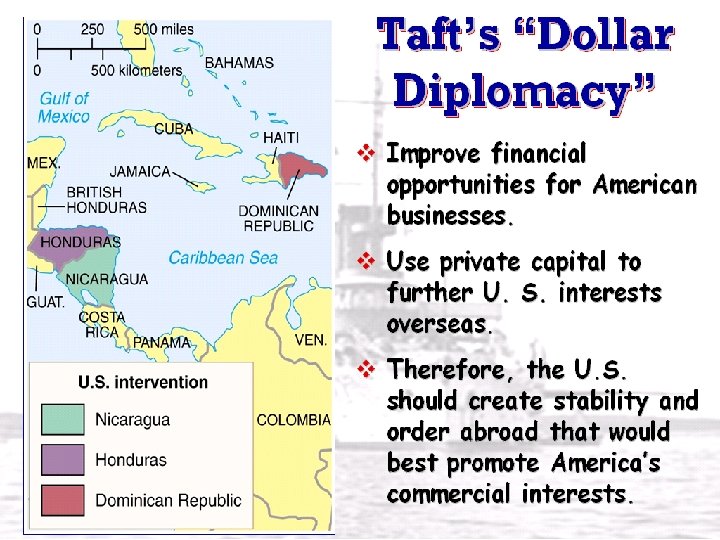
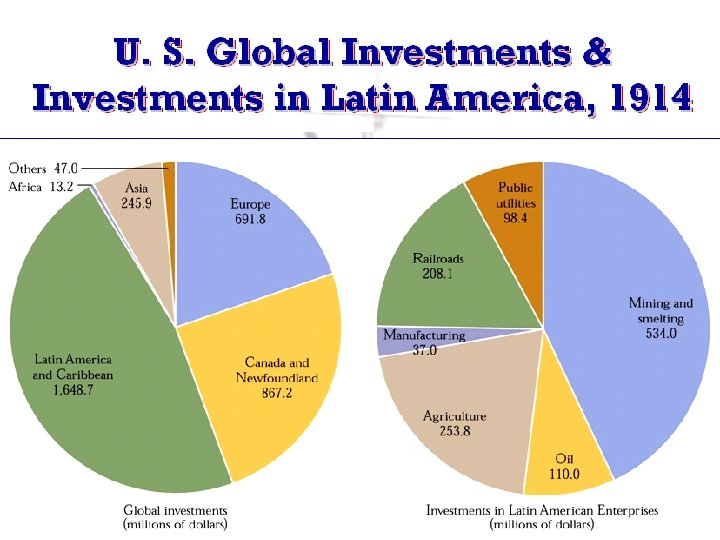
Taft and Dollar Diplomacy ■ President Taft took over after TR & continued an aggressive foreign policy, called “Dollar Diplomacy” Diplomacy –Use U. S. wealth rather than military strength in foreign policy –In Latin America, U. S. banks assumed debts to Europe –Taft’s attempts to build railroads in China alienated Japan & ended the Open Door Policy
Woodrow Wilson’s “Moral Diplomacy”
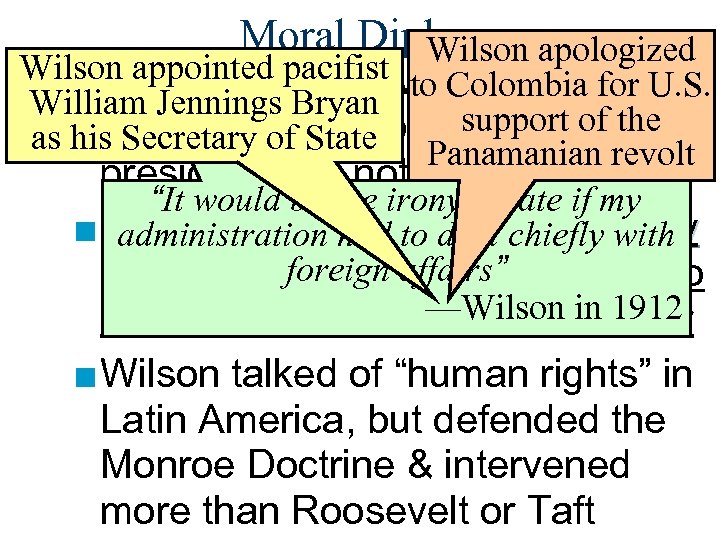
Moral Diplomacy Wilson apologized Wilson appointed pacifist to Colombia for U. S. ■ Wilson was well-versed in William Jennings Bryan support of the domestic of State before becoming policy as his Secretary Panamanian revolt president, but not foreign policy “It would be the irony of fate if my ■ He believed that Moral chiefly with administration had to deal Diplomacy foreign affairs” could bring peace & democracy to —Wilson in 1912 the world without militarism & war ■ Wilson talked of “human rights” in Latin America, but defended the Monroe Doctrine & intervened more than Roosevelt or Taft
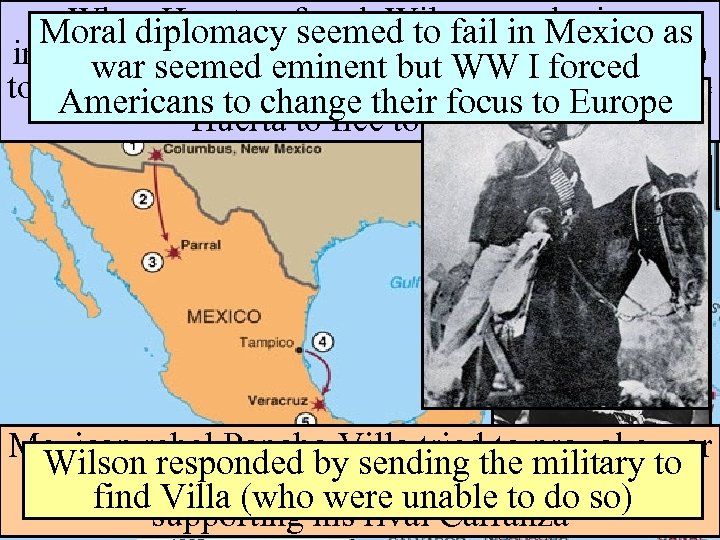
When Huerta refused, Wilson used demanded Wilson 1913, Mexican president Madero was as In diplomacy seemed to fail & minor recognize Huerta Moralrefused to. Diplomacy in in Mexico incidents Moralofeminent butsailors. Iin. Huerta Tampico) that he step down dictator Victorianoforced overthrown by some U. S. WWMexico war (arrest so legitimate elections could seemed to send the be held for occupypresident & force military to a new Veracruz Europe Americans to change their focus to Huerta to flee to Europe Mexican rebel Pancho Villa triedthe provoke to to military war Wilson responded by sending the border for withfind Villa by raiding across to do so) the U. S. (who were unable supporting his rival Carranza
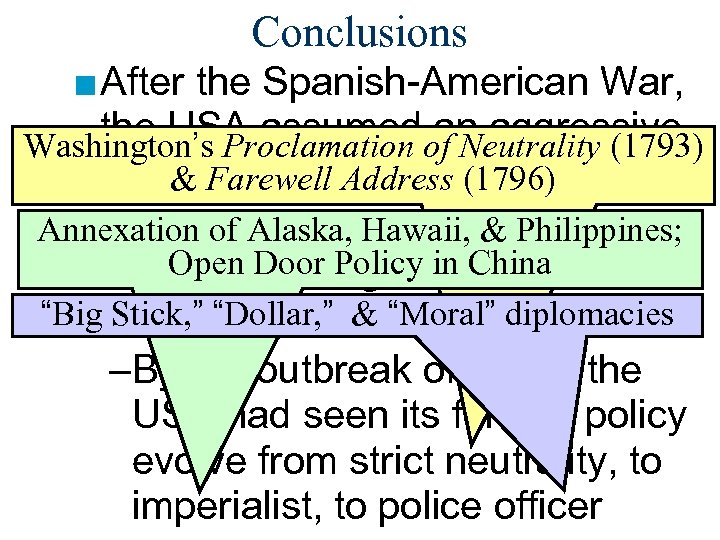
Conclusions ■ After the Spanish-American War, the USA assumedof Neutrality (1793) an aggressive Washington’s Proclamation foreign policy: Address (1796) & Farewell –In order to maintain order, Annexation of Alaska, Hawaii, & Philippines; Open Door Policy in China forestall foreign intervention, & “Big Stick, ” “Dollar, ” & “Moral” diplomacies protect U. S. economic interests –By the outbreak of WW I, the USA had seen its foreign policy evolve from strict neutrality, to imperialist, to police officer
Скачать презентацию Do Now Draw a picture symbol for each
147e075c364301c50e8d3d3f459d9fe3.ppt