 Скачать презентацию Do not look in the bag until you
631a6804a71fed6bb6022cc101f5eafd.ppt
- Количество слайдов: 58




Do not look in the bag until you are asked to do so.
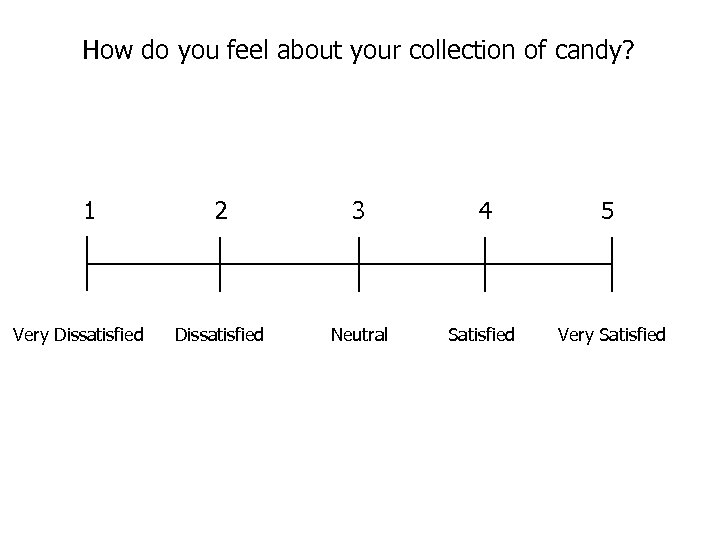
How do you feel about your collection of candy? 1 Very Dissatisfied 2 3 4 5 Dissatisfied Neutral Satisfied Very Satisfied
What is trade? Exchange goods produced for goods not produced. Specialization Diverting resources away from a competitive disadvantage toward a competitive advantage.
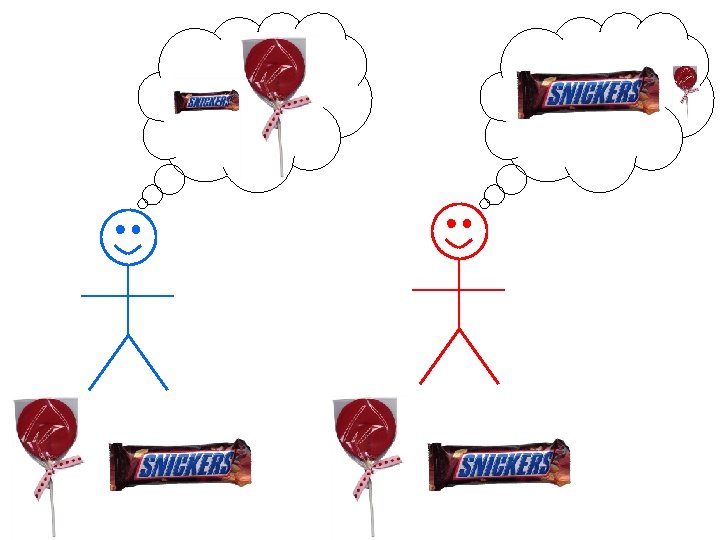
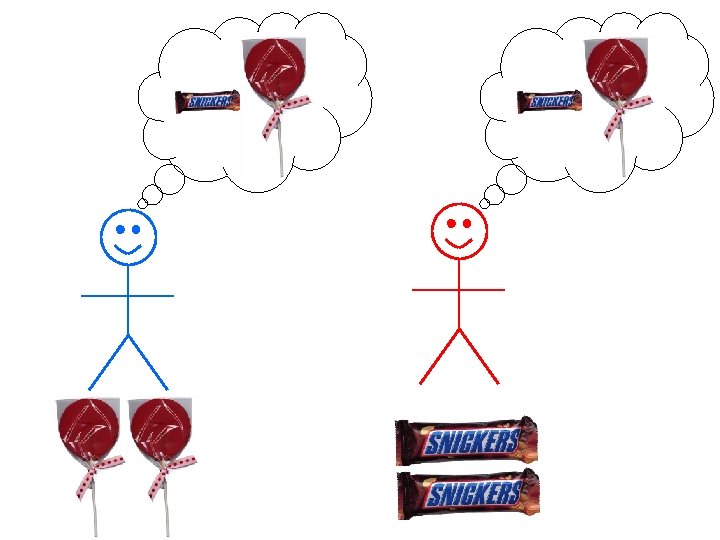
What drives trade? Differences in tastes
What drives trade? Differences in productive advantage
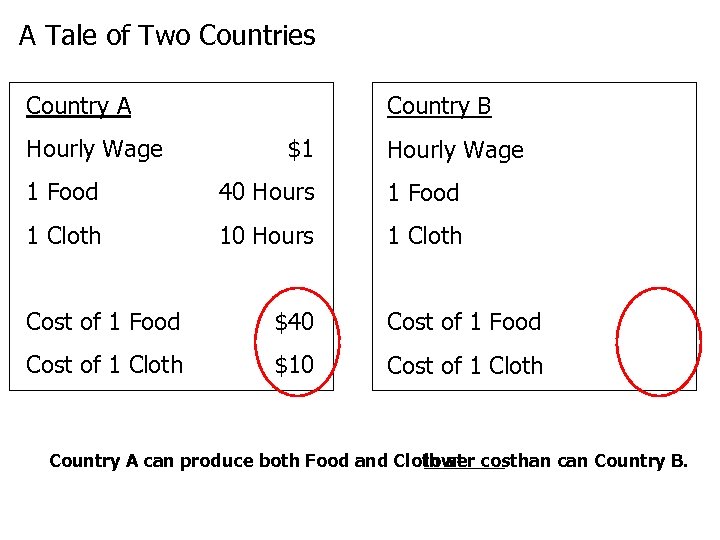
A Tale of Two Countries Country A Hourly Wage Country B $1 Hourly Wage 1 Food 40 Hours 1 Food 1 Cloth 10 Hours 1 Cloth Cost of 1 Food $40 Cost of 1 Food Cost of 1 Cloth $10 Cost of 1 Cloth Country A can produce both Food and Cloth at cost lower than can Country B.
What does Food cost in the two countries? Recall from the first experiment: Money is illusory.
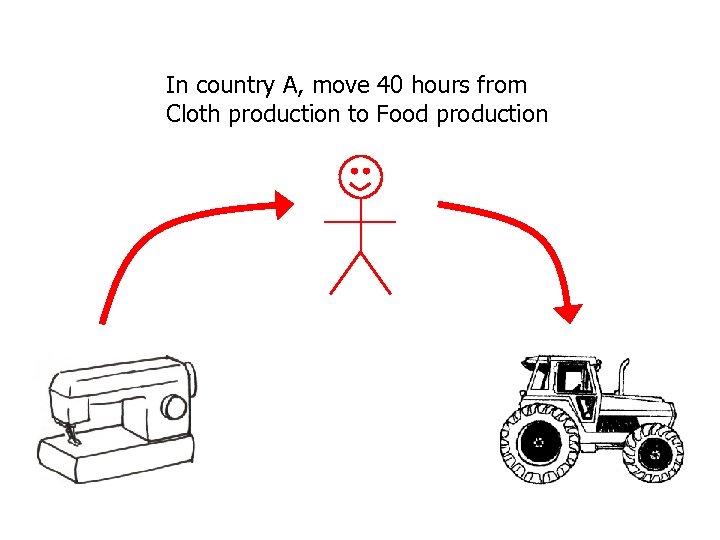
In country A, move 40 hours from Cloth production to Food production
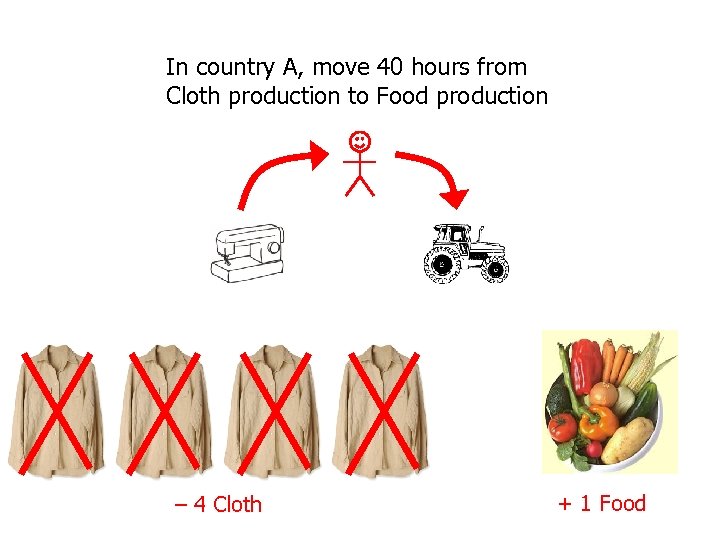
In country A, move 40 hours from Cloth production to Food production – 4 Cloth + 1 Food
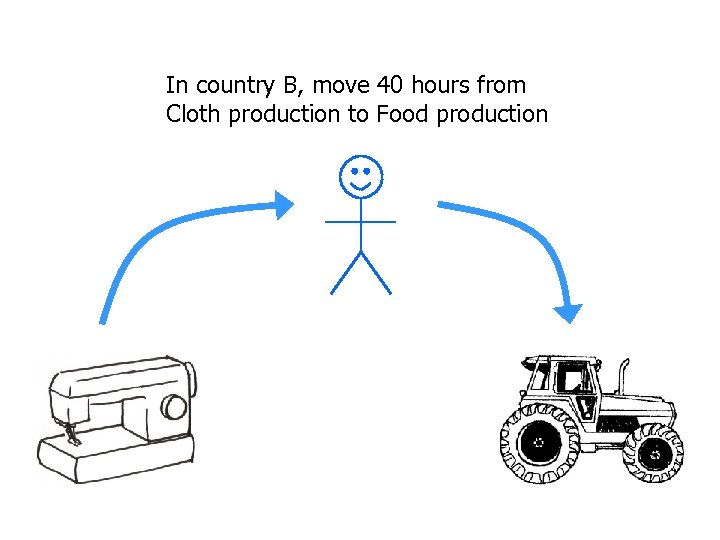
In country B, move 40 hours from Cloth production to Food production
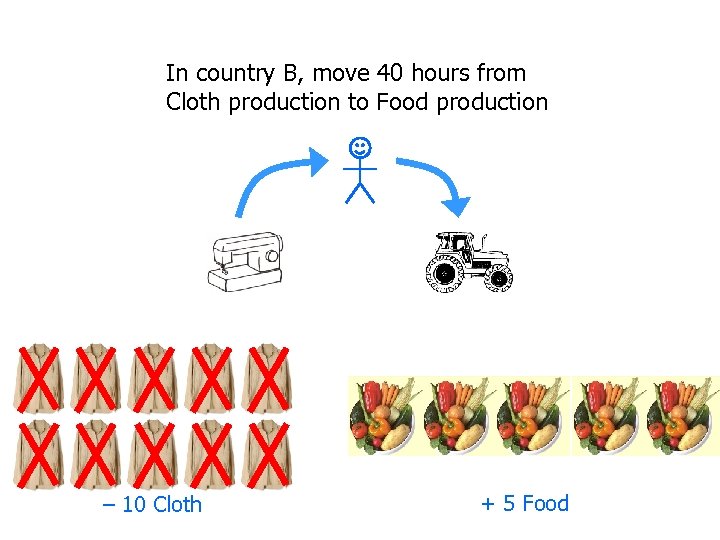
In country B, move 40 hours from Cloth production to Food production – 10 Cloth + 5 Food
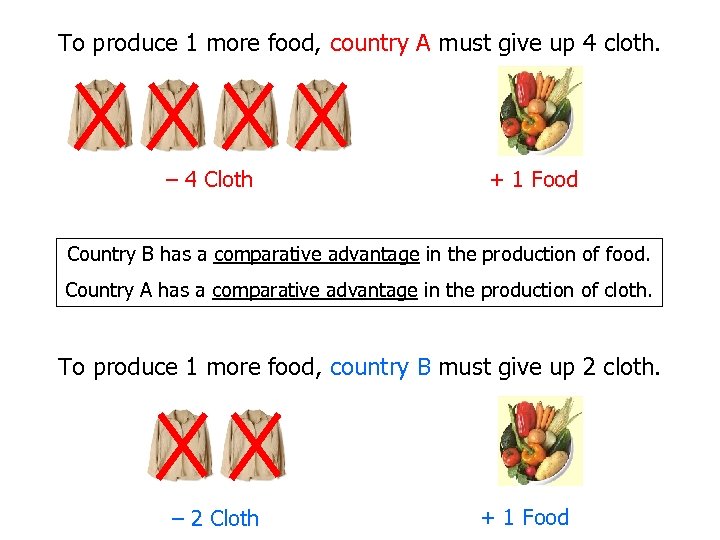
To produce 1 more food, country A must give up 4 cloth. – 4 Cloth + 1 Food Country B has a comparative advantage in the production of food. Country A has a comparative advantage in the production of cloth. To produce 1 more food, country B must give up 2 cloth. – 2 Cloth + 1 Food
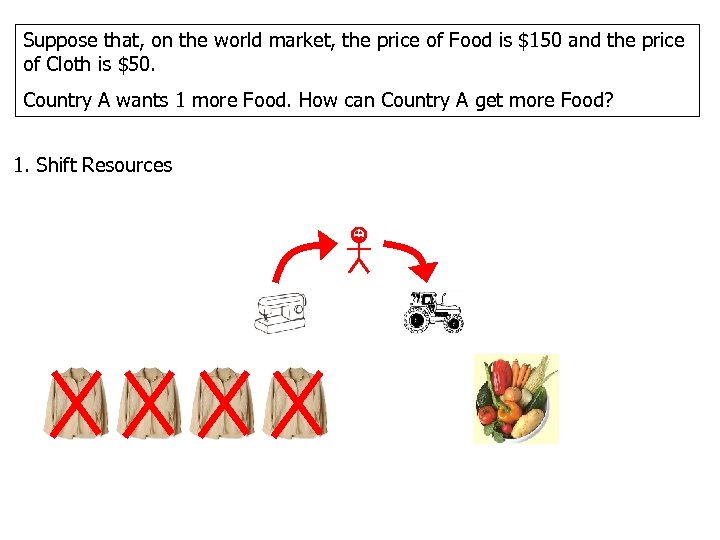
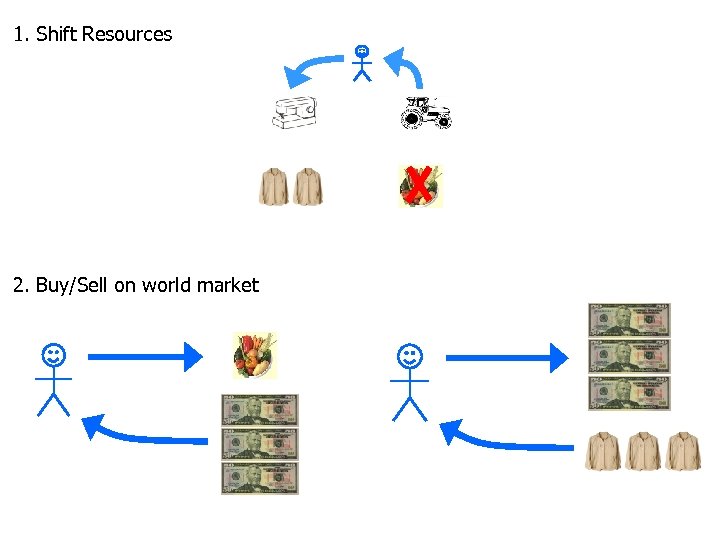
Suppose that, on the world market, the price of Food is $150 and the price of Cloth is $50. Country A wants 1 more Food. How can Country A get more Food? 1. Shift Resources
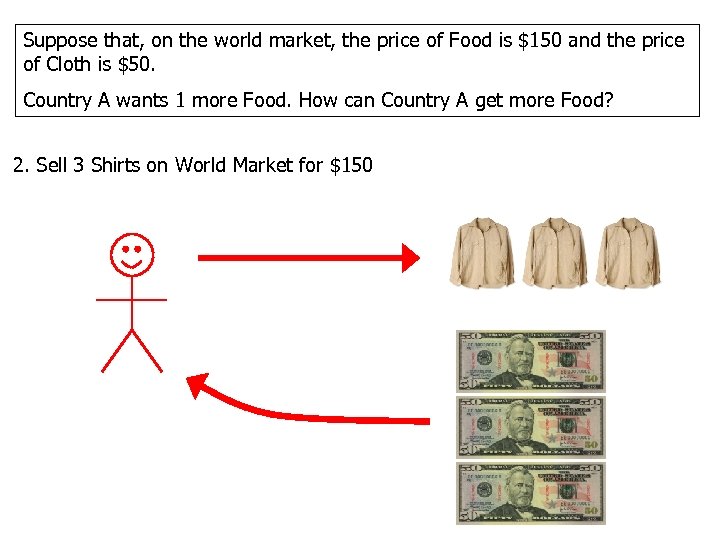
Suppose that, on the world market, the price of Food is $150 and the price of Cloth is $50. Country A wants 1 more Food. How can Country A get more Food? 2. Sell 3 Shirts on World Market for $150
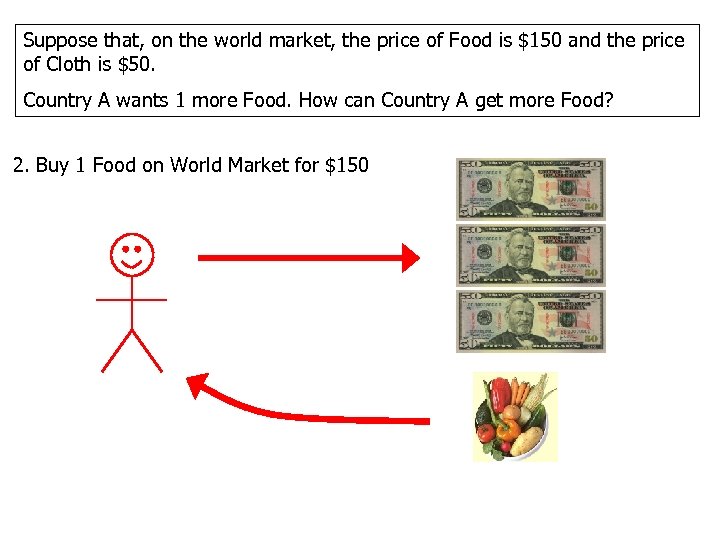
Suppose that, on the world market, the price of Food is $150 and the price of Cloth is $50. Country A wants 1 more Food. How can Country A get more Food? 2. Buy 1 Food on World Market for $150
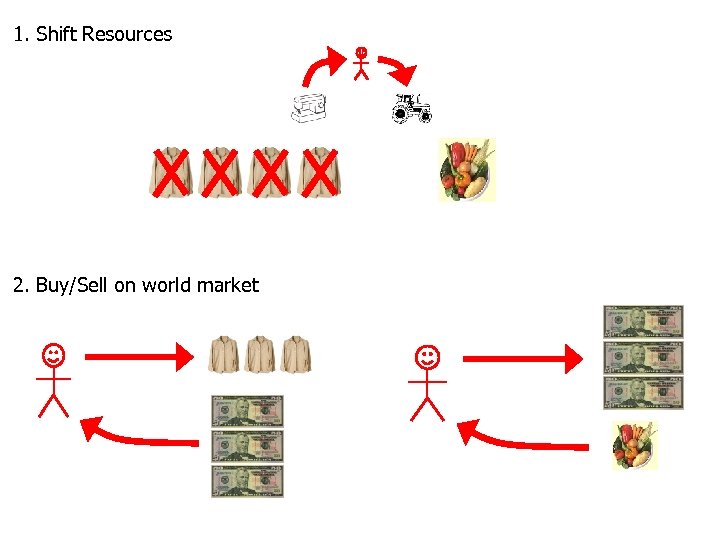
1. Shift Resources 2. Buy/Sell on world market
This deal looks too good. No one is going to want to buy/sell from country A at those world prices.
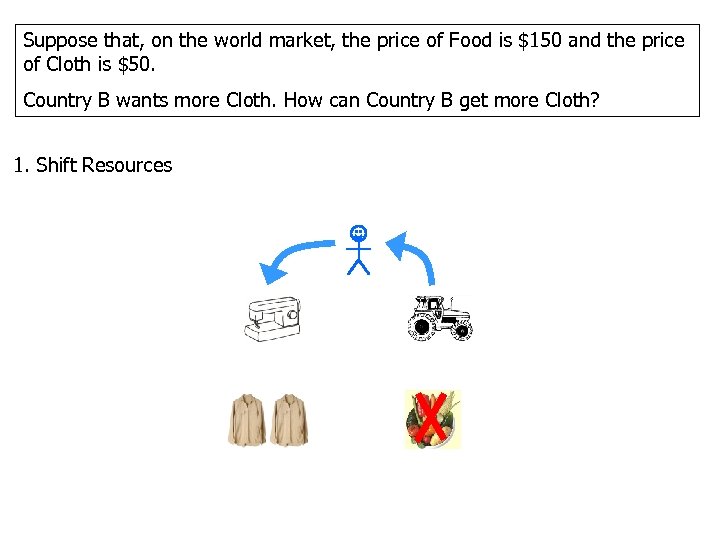
Suppose that, on the world market, the price of Food is $150 and the price of Cloth is $50. Country B wants more Cloth. How can Country B get more Cloth? 1. Shift Resources
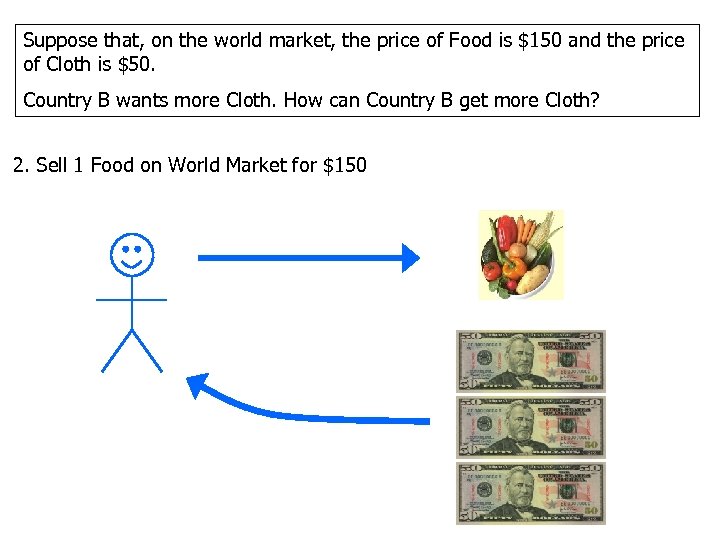
Suppose that, on the world market, the price of Food is $150 and the price of Cloth is $50. Country B wants more Cloth. How can Country B get more Cloth? 2. Sell 1 Food on World Market for $150
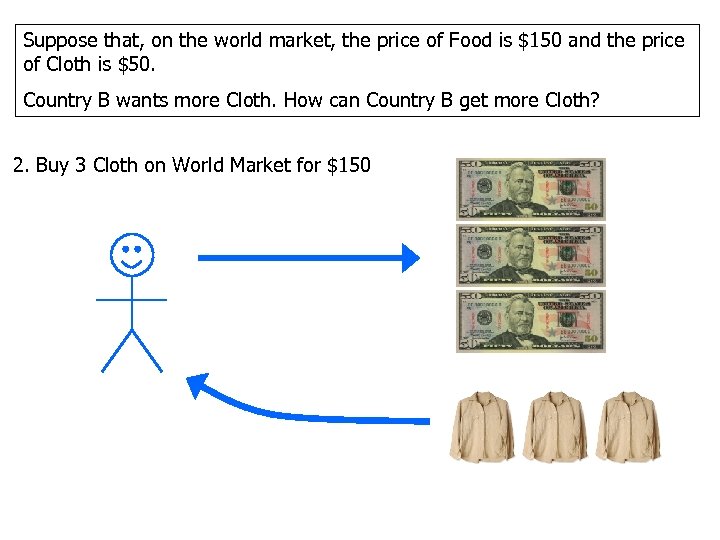
Suppose that, on the world market, the price of Food is $150 and the price of Cloth is $50. Country B wants more Cloth. How can Country B get more Cloth? 2. Buy 3 Cloth on World Market for $150
1. Shift Resources 2. Buy/Sell on world market
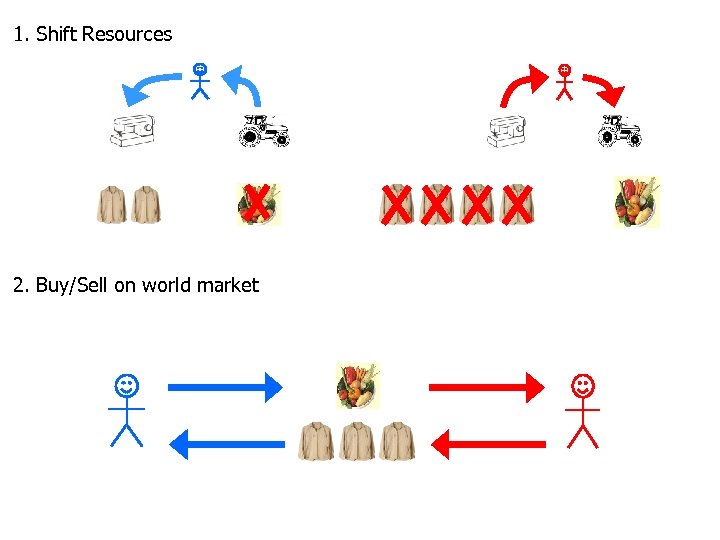
1. Shift Resources 2. Buy/Sell on world market
What Are the Benefits From Trade? Protectionist Assumption: Trade leads to a centralization of political power, decreased competition, and the concentration of wealth. Globalist Assumption: Trade leads to a decentralization of political power, increased competition, and the dissemination of wealth.
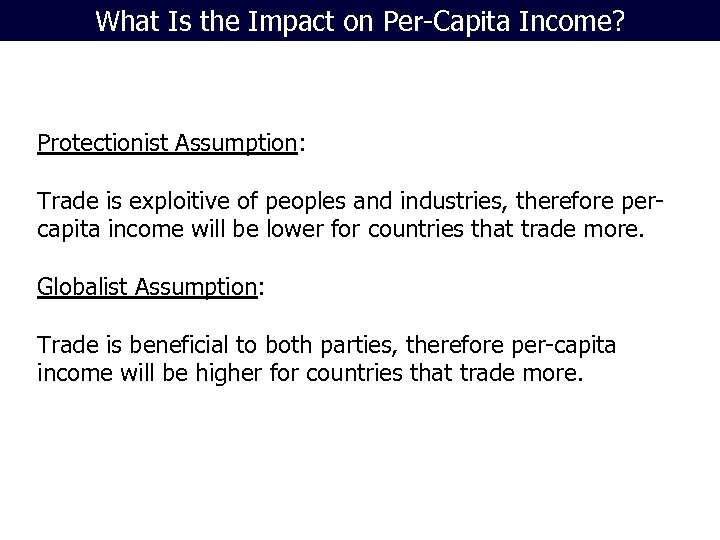
What Is the Impact on Per-Capita Income? Protectionist Assumption: Trade is exploitive of peoples and industries, therefore percapita income will be lower for countries that trade more. Globalist Assumption: Trade is beneficial to both parties, therefore per-capita income will be higher for countries that trade more.
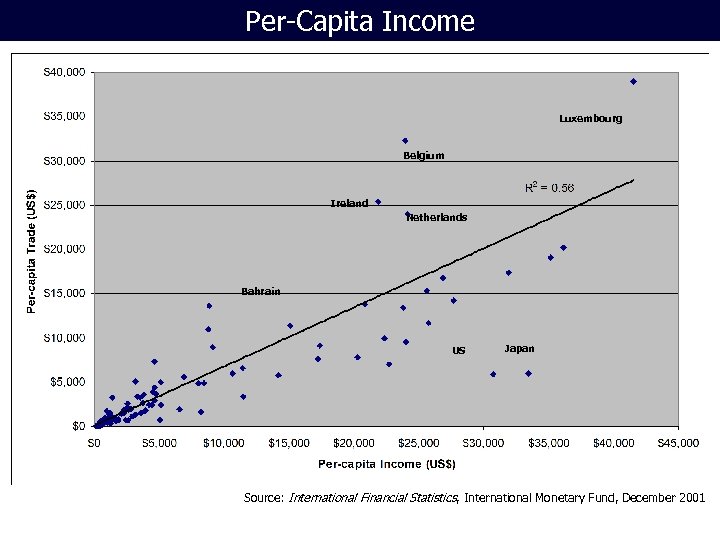
Per-Capita Income Luxembourg Belgium Ireland Netherlands Bahrain US Japan Source: International Financial Statistics, International Monetary Fund, December 2001
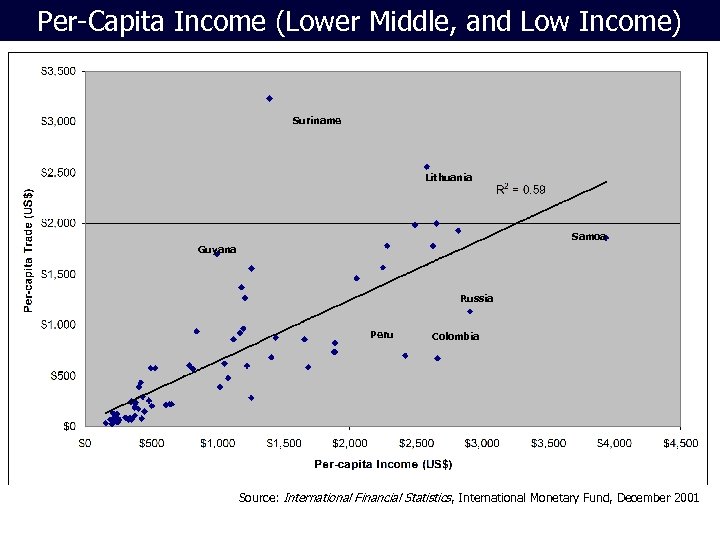
Per-Capita Income (Lower Middle, and Low Income) Suriname Lithuania Samoa Guyana Russia Peru Colombia Source: International Financial Statistics, International Monetary Fund, December 2001
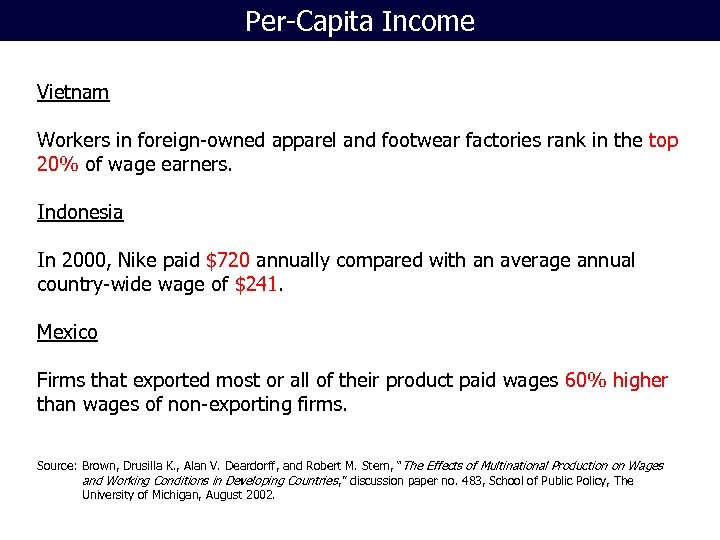
Per-Capita Income Vietnam Workers in foreign-owned apparel and footwear factories rank in the top 20% of wage earners. Indonesia In 2000, Nike paid $720 annually compared with an average annual country-wide wage of $241. Mexico Firms that exported most or all of their product paid wages 60% higher than wages of non-exporting firms. Source: Brown, Drusilla K. , Alan V. Deardorff, and Robert M. Stern, “ The Effects of Multinational Production on Wages and Working Conditions in Developing Countries , ” discussion paper no. 483, School of Public Policy, The University of Michigan, August 2002.
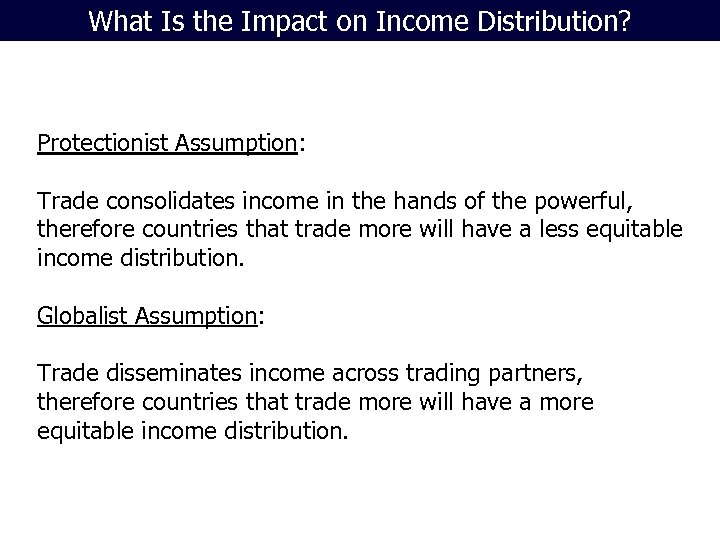
What Is the Impact on Income Distribution? Protectionist Assumption: Trade consolidates income in the hands of the powerful, therefore countries that trade more will have a less equitable income distribution. Globalist Assumption: Trade disseminates income across trading partners, therefore countries that trade more will have a more equitable income distribution.
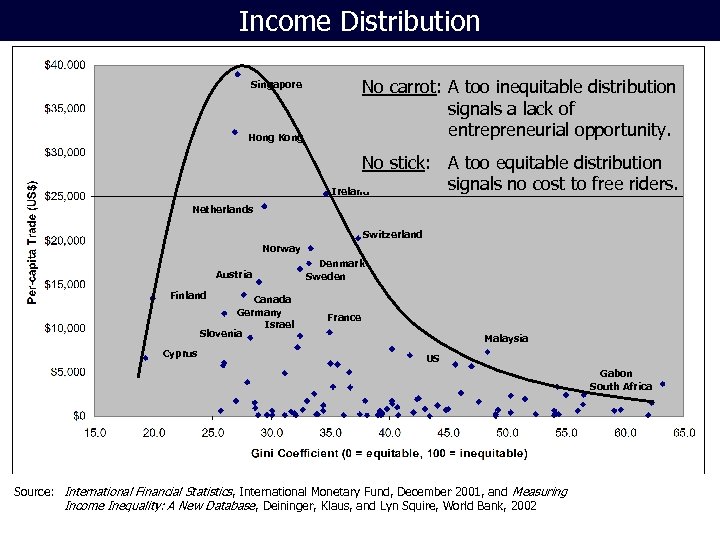
Income Distribution No carrot: A too inequitable distribution signals a lack of entrepreneurial opportunity. Singapore Hong Kong No stick: A too equitable distribution signals no cost to free riders. Ireland Netherlands Switzerland Norway Austria Denmark Sweden Finland Canada Germany Israel Slovenia Cyprus France Malaysia US Gabon South Africa Source: International Financial Statistics, International Monetary Fund, December 2001, and Measuring Income Inequality: A New Database , Deininger, Klaus, and Lyn Squire, World Bank, 2002
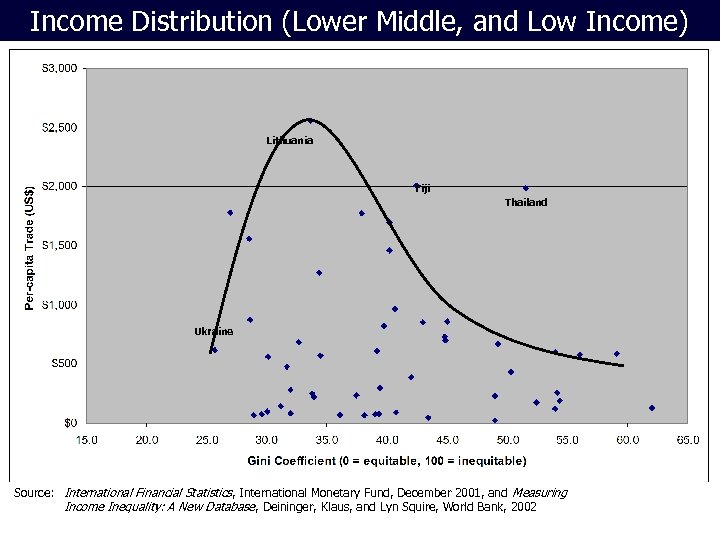
Income Distribution (Lower Middle, and Low Income) Lithuania Fiji Thailand Ukraine Source: International Financial Statistics, International Monetary Fund, December 2001, and Measuring Income Inequality: A New Database , Deininger, Klaus, and Lyn Squire, World Bank, 2002
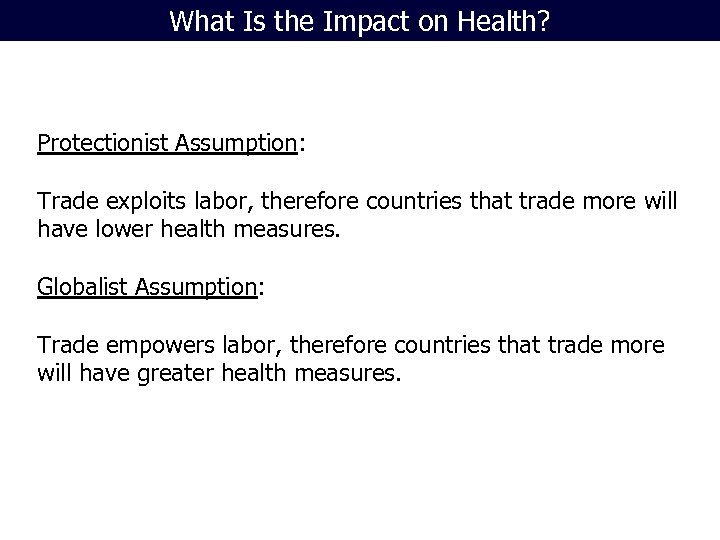
What Is the Impact on Health? Protectionist Assumption: Trade exploits labor, therefore countries that trade more will have lower health measures. Globalist Assumption: Trade empowers labor, therefore countries that trade more will have greater health measures.
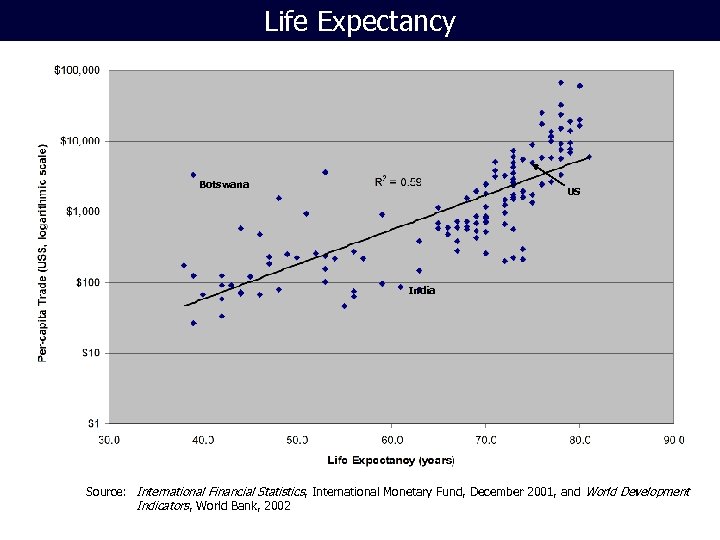
Life Expectancy Botswana US India Source: International Financial Statistics, International Monetary Fund, December 2001, and World Development Indicators, World Bank, 2002
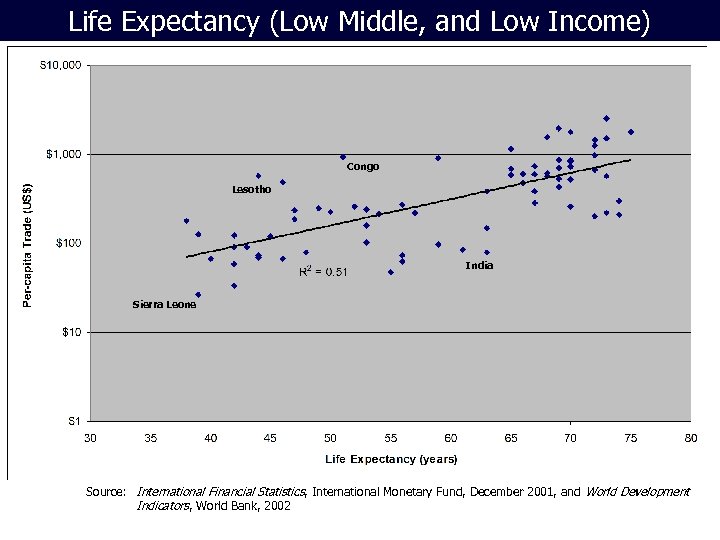
Life Expectancy (Low Middle, and Low Income) Congo Lesotho India Sierra Leone Source: International Financial Statistics, International Monetary Fund, December 2001, and World Development Indicators, World Bank, 2002
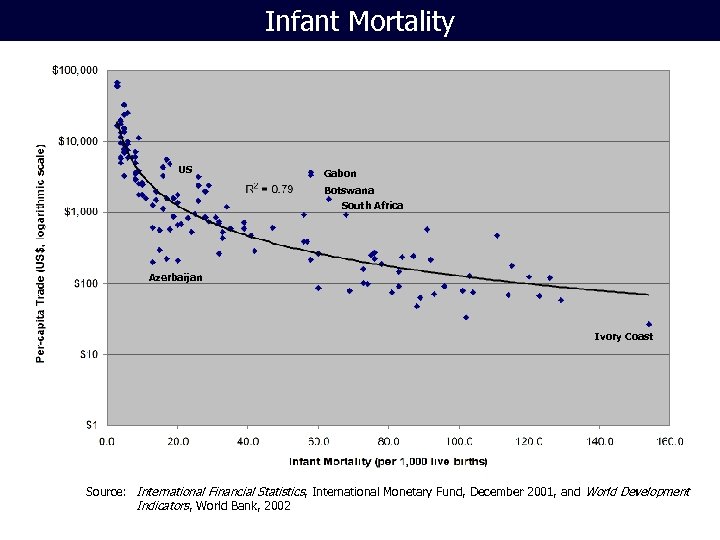
Infant Mortality US Gabon Botswana South Africa Azerbaijan Ivory Coast Source: International Financial Statistics, International Monetary Fund, December 2001, and World Development Indicators, World Bank, 2002
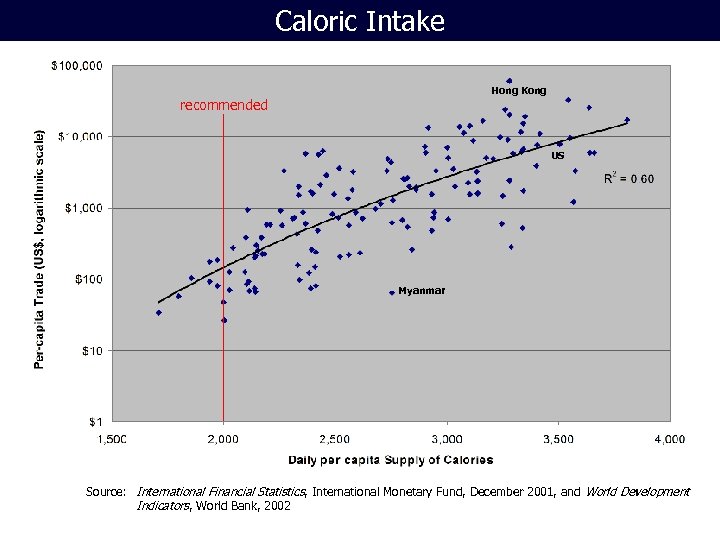
Caloric Intake Hong Kong recommended US Myanmar Source: International Financial Statistics, International Monetary Fund, December 2001, and World Development Indicators, World Bank, 2002
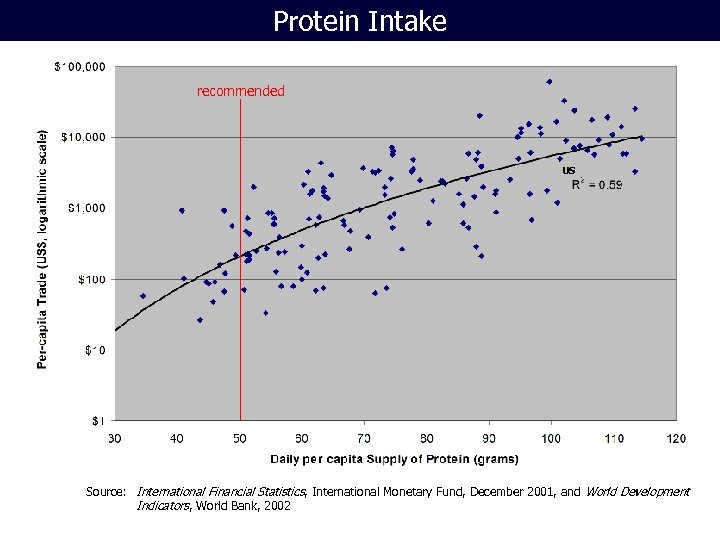
Protein Intake recommended US Source: International Financial Statistics, International Monetary Fund, December 2001, and World Development Indicators, World Bank, 2002
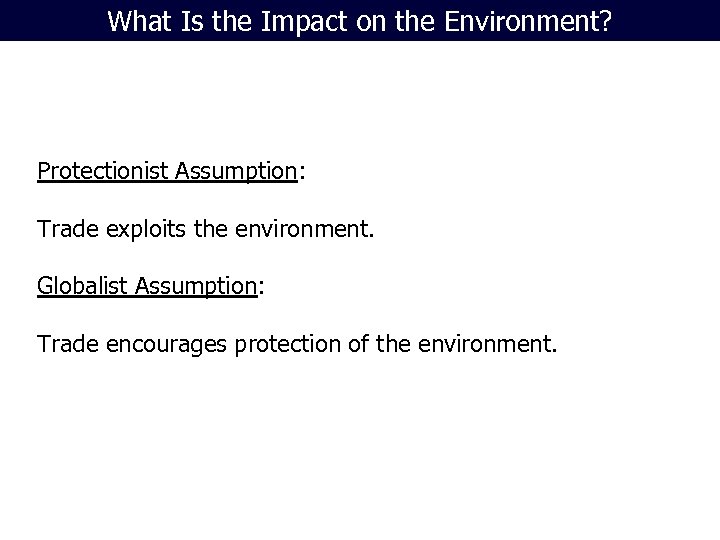
What Is the Impact on the Environment? Protectionist Assumption: Trade exploits the environment. Globalist Assumption: Trade encourages protection of the environment.
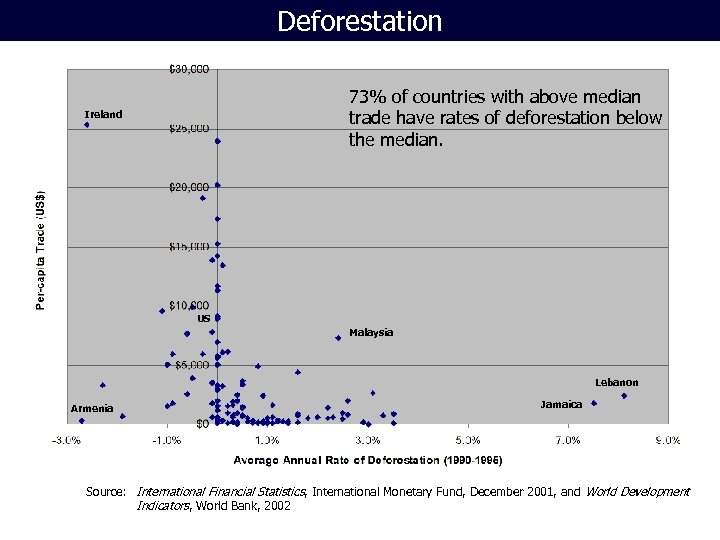
Deforestation 73% of countries with above median trade have rates of deforestation below the median. Ireland US Malaysia Lebanon Armenia Jamaica Source: International Financial Statistics, International Monetary Fund, December 2001, and World Development Indicators, World Bank, 2002
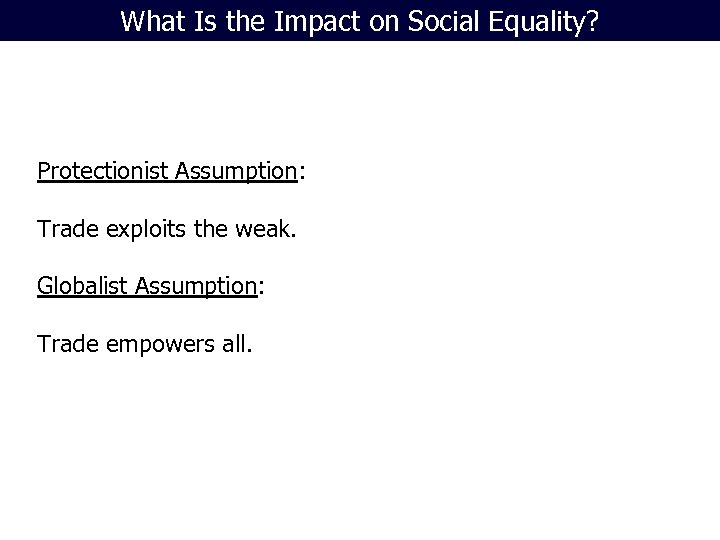
What Is the Impact on Social Equality? Protectionist Assumption: Trade exploits the weak. Globalist Assumption: Trade empowers all.
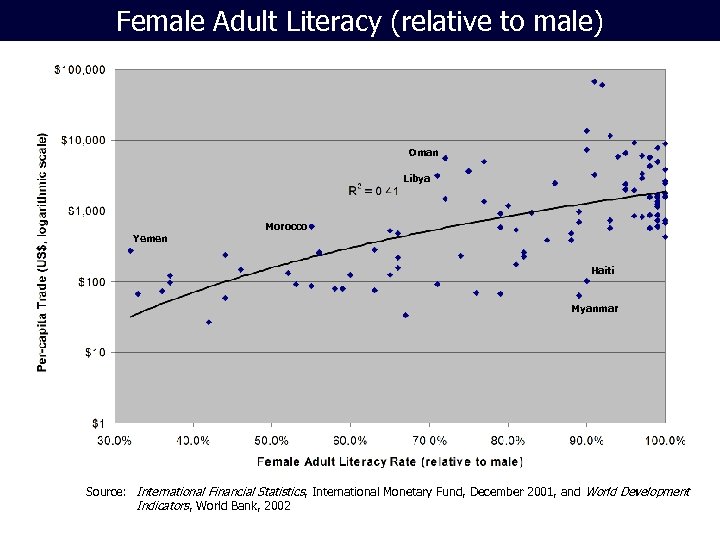
Female Adult Literacy (relative to male) Oman Libya Yemen Morocco Haiti Myanmar Source: International Financial Statistics, International Monetary Fund, December 2001, and World Development Indicators, World Bank, 2002
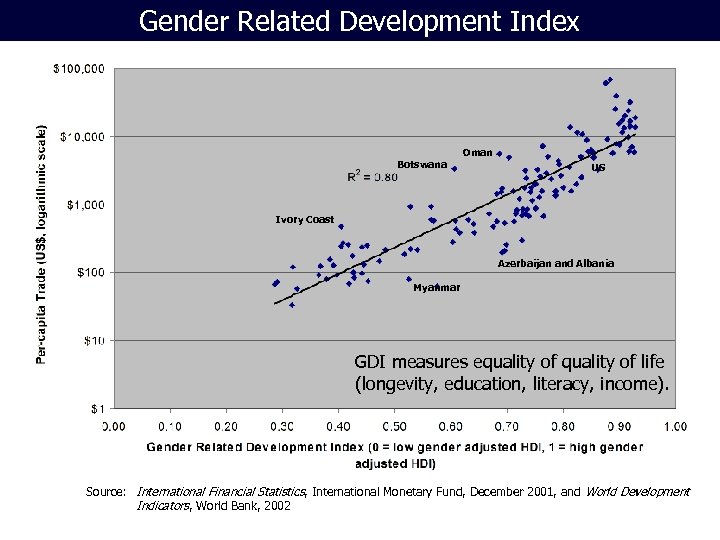
Gender Related Development Index Botswana Oman US Ivory Coast Azerbaijan and Albania Myanmar GDI measures equality of life (longevity, education, literacy, income). Source: International Financial Statistics, International Monetary Fund, December 2001, and World Development Indicators, World Bank, 2002
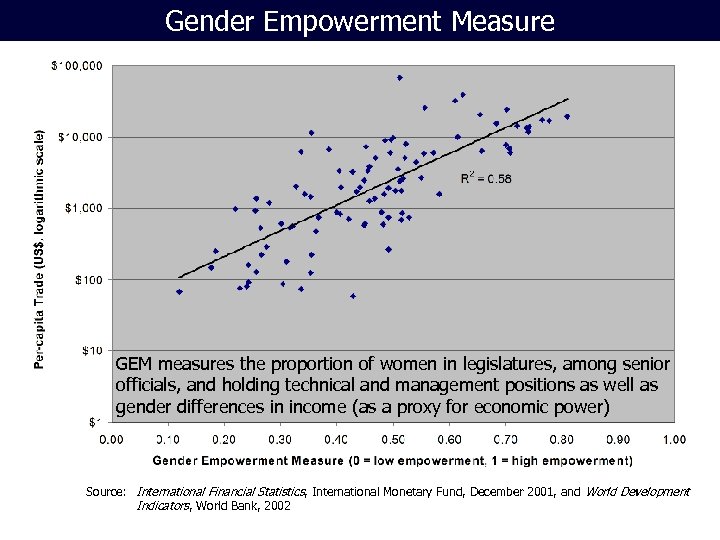
Gender Empowerment Measure GEM measures the proportion of women in legislatures, among senior officials, and holding technical and management positions as well as gender differences in income (as a proxy for economic power) Source: International Financial Statistics, International Monetary Fund, December 2001, and World Development Indicators, World Bank, 2002
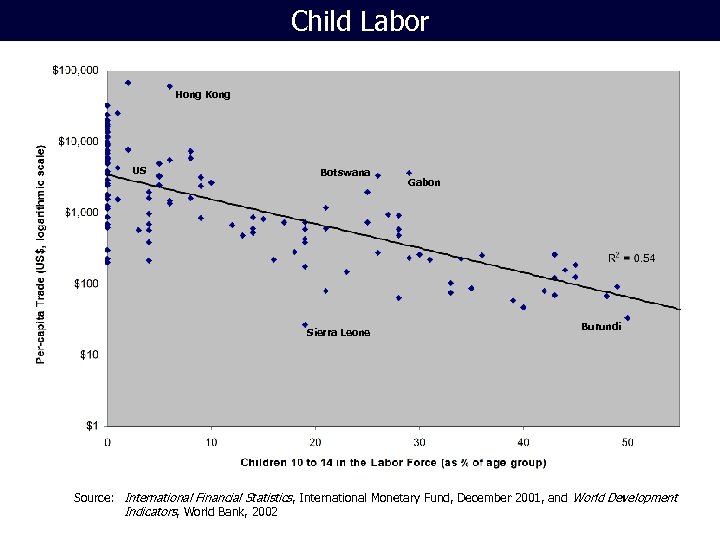
Child Labor Hong Kong US Botswana Sierra Leone Gabon Burundi Source: International Financial Statistics, International Monetary Fund, December 2001, and World Development Indicators, World Bank, 2002
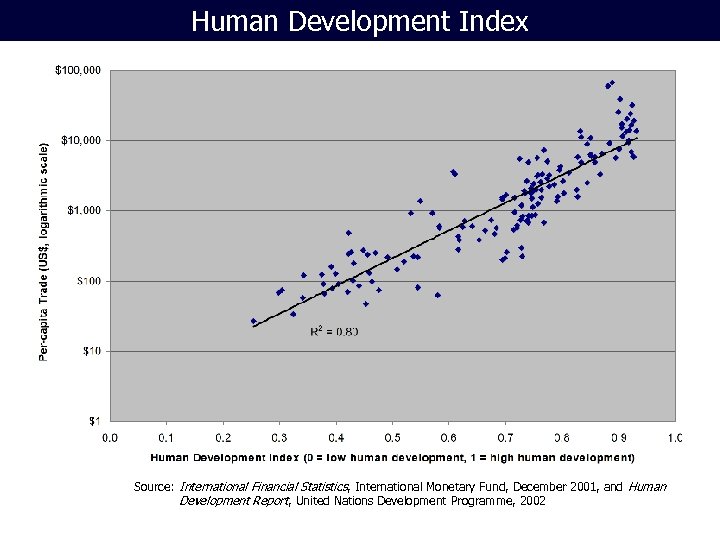
Human Development Index Source: International Financial Statistics, International Monetary Fund, December 2001, and Human Development Report , United Nations Development Programme, 2002
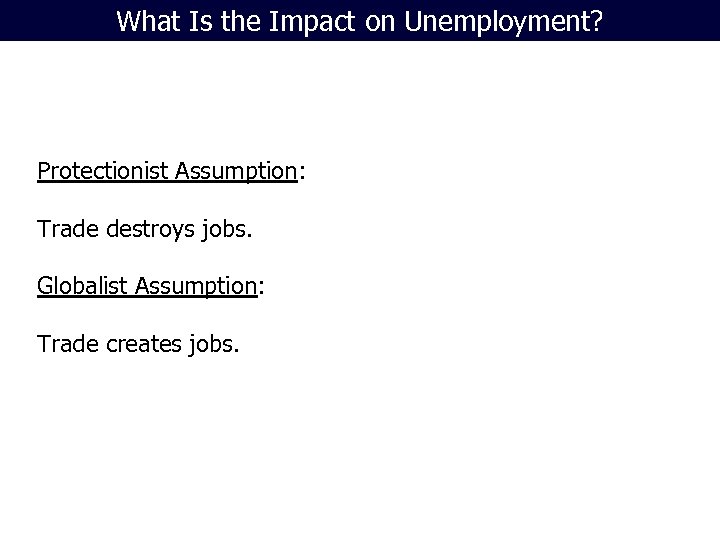
What Is the Impact on Unemployment? Protectionist Assumption: Trade destroys jobs. Globalist Assumption: Trade creates jobs.
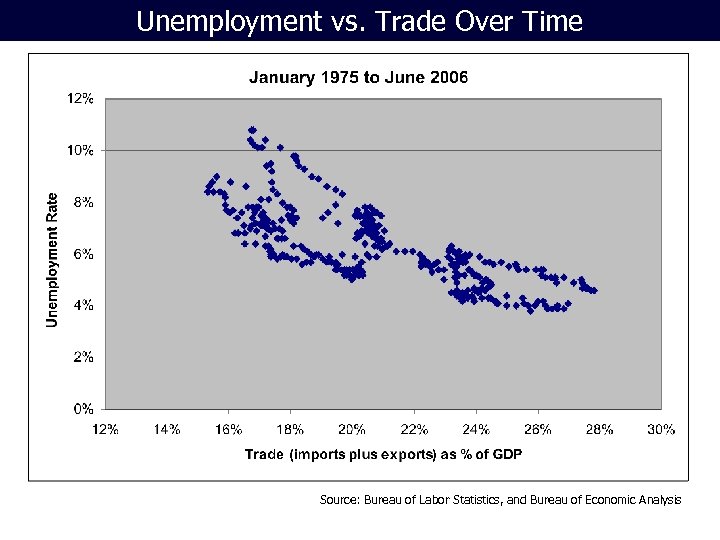
Unemployment vs. Trade Over Time Source: Bureau of Labor Statistics, and Bureau of Economic Analysis
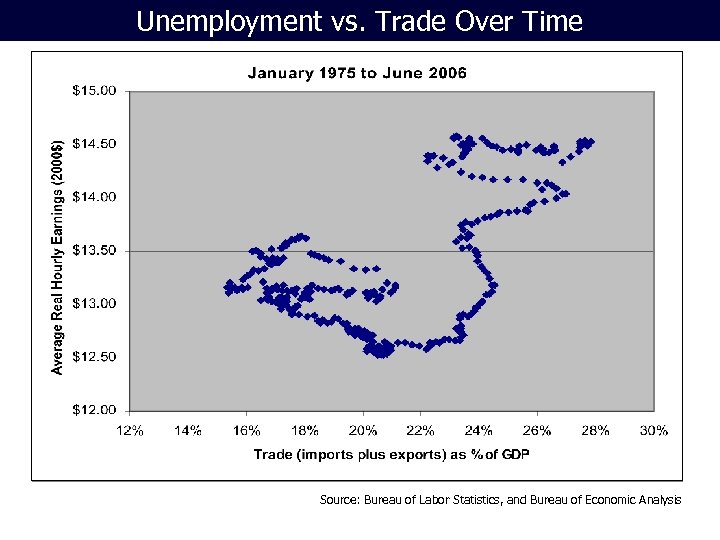
Unemployment vs. Trade Over Time Source: Bureau of Labor Statistics, and Bureau of Economic Analysis
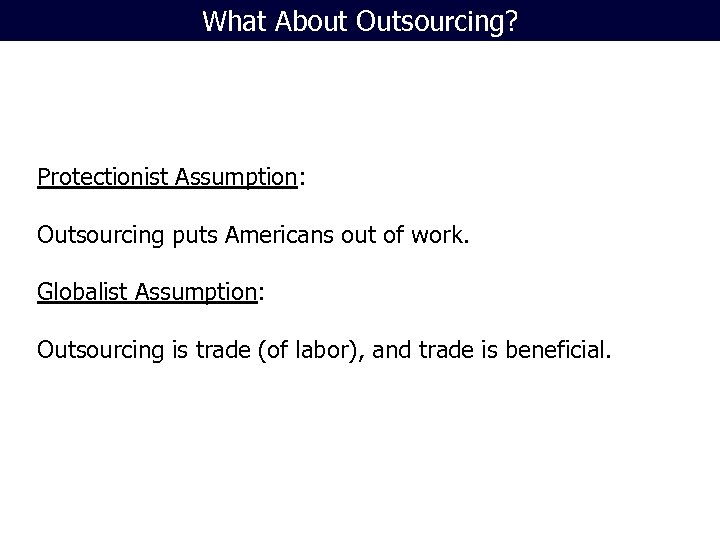
What About Outsourcing? Protectionist Assumption: Outsourcing puts Americans out of work. Globalist Assumption: Outsourcing is trade (of labor), and trade is beneficial.
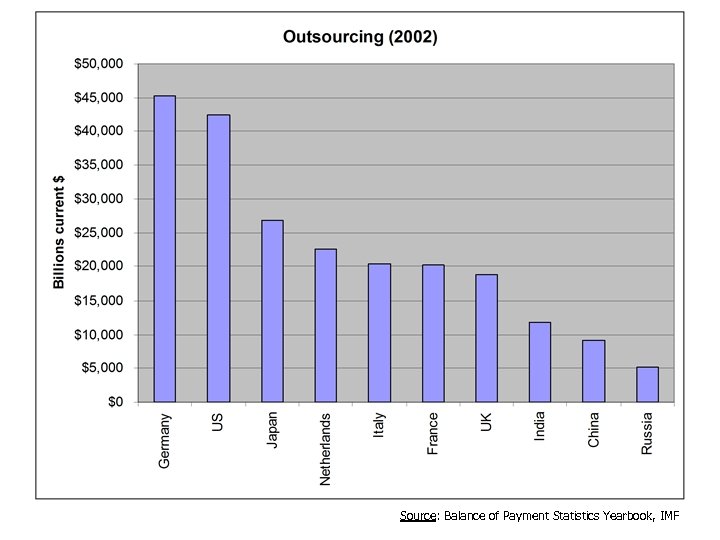
Source: Balance of Payment Statistics Yearbook, IMF
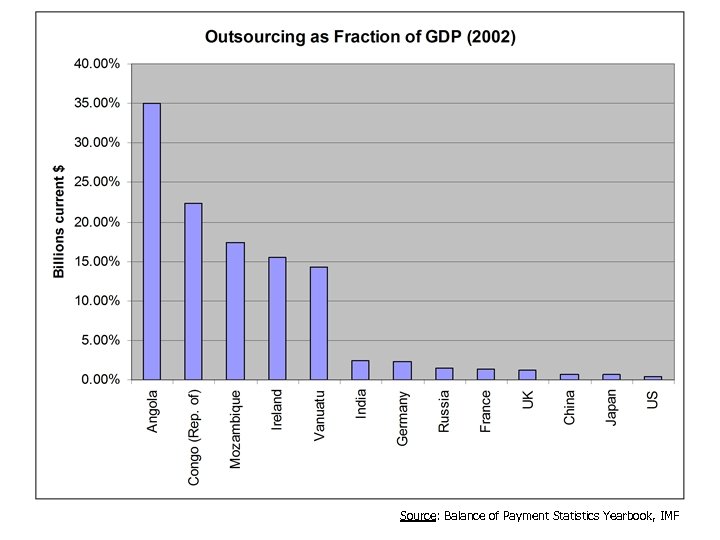
Source: Balance of Payment Statistics Yearbook, IMF
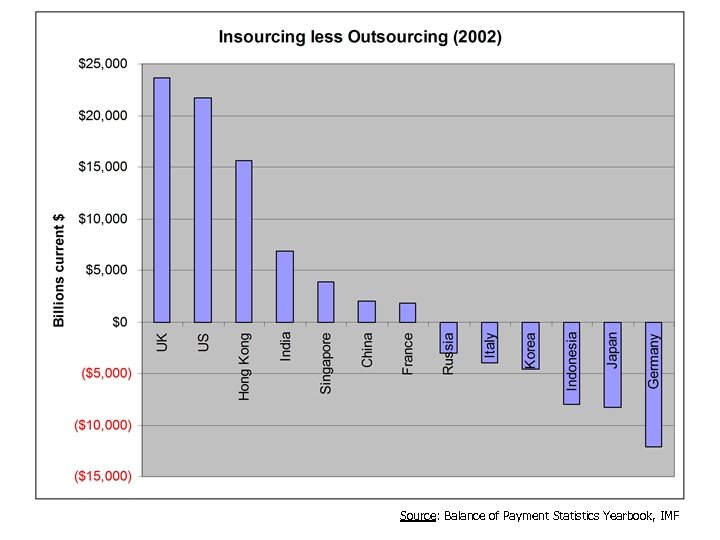
Source: Balance of Payment Statistics Yearbook, IMF
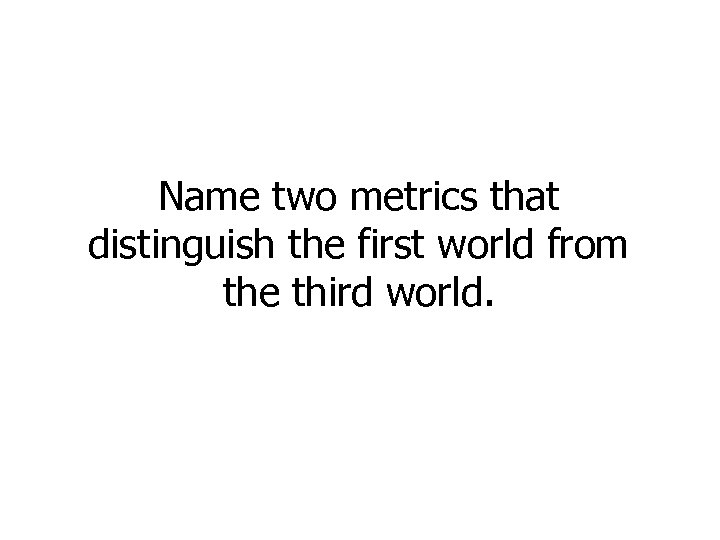
Name two metrics that distinguish the first world from the third world.
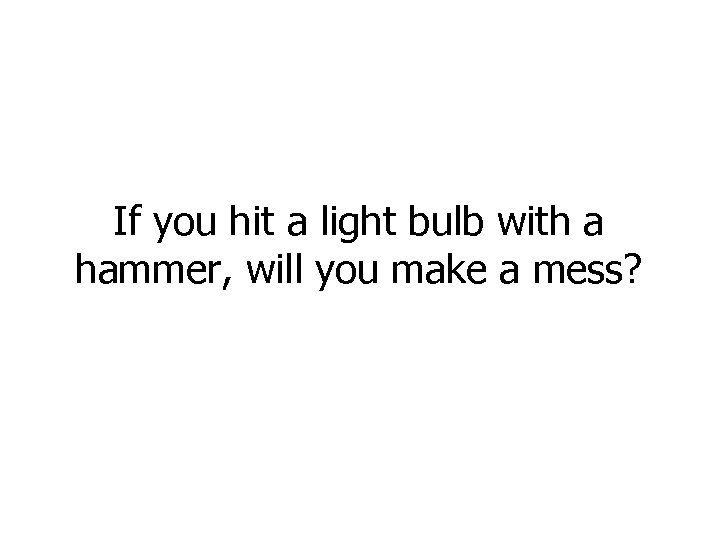
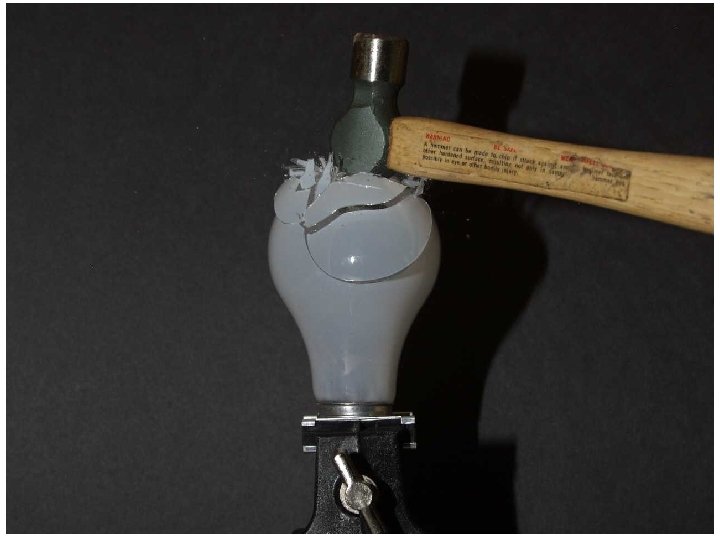
If you hit a light bulb with a hammer, will you make a mess?

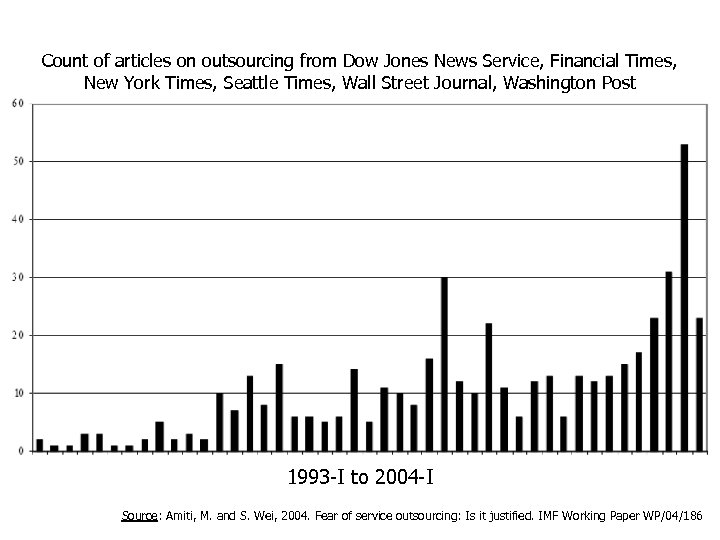
Count of articles on outsourcing from Dow Jones News Service, Financial Times, New York Times, Seattle Times, Wall Street Journal, Washington Post 1993 -I to 2004 -I Source: Amiti, M. and S. Wei, 2004. Fear of service outsourcing: Is it justified. IMF Working Paper WP/04/186
Скачать презентацию Do not look in the bag until you
631a6804a71fed6bb6022cc101f5eafd.ppt