 Скачать презентацию Diurnal Cycle Observations of Stable Water Isotopes in
fe931f812a6e5b61ae0e9cbdf7f04d45.ppt
- Количество слайдов: 50




Diurnal Cycle Observations of Stable Water Isotopes in the Biosphere David Stone, IPILPS Workshop ANSTO 18 -22 April 2005
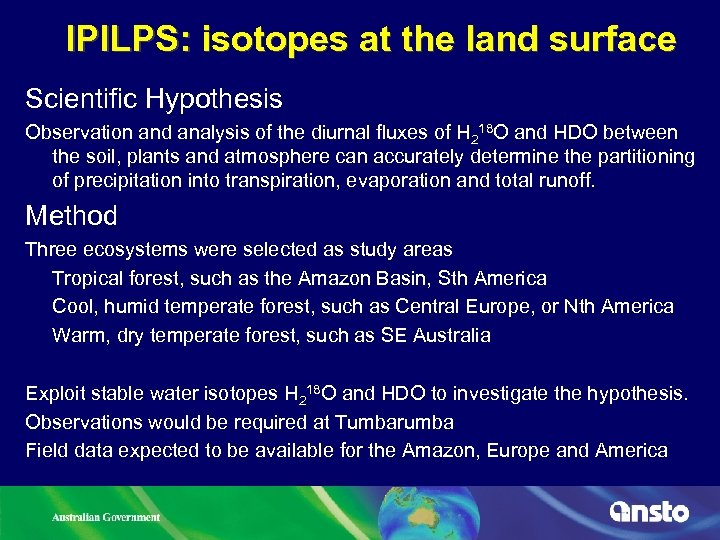
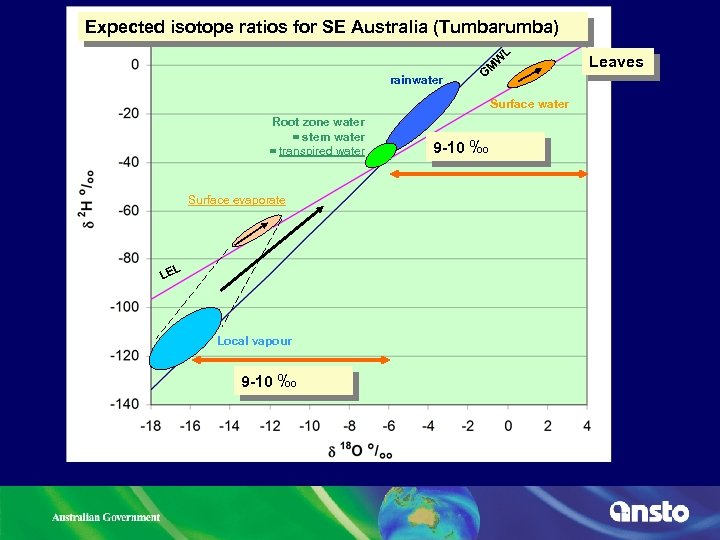
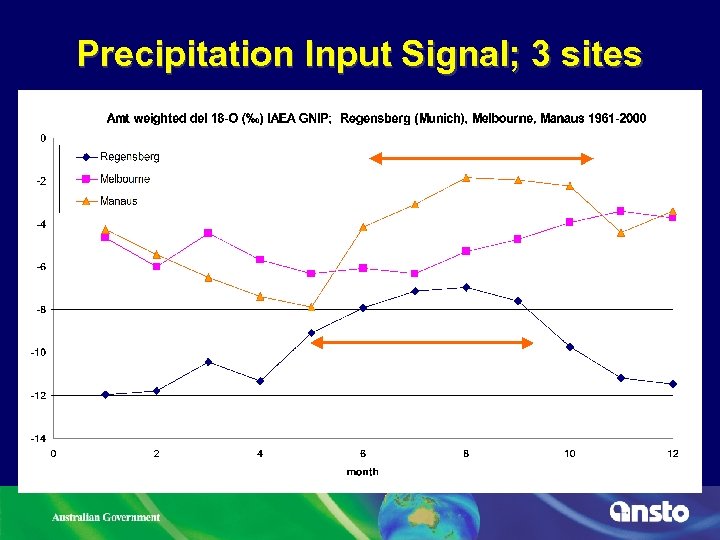
IPILPS: isotopes at the land surface Scientific Hypothesis Observation and analysis of the diurnal fluxes of H 218 O and HDO between the soil, plants and atmosphere can accurately determine the partitioning of precipitation into transpiration, evaporation and total runoff. Method Three ecosystems were selected as study areas Tropical forest, such as the Amazon Basin, Sth America Cool, humid temperate forest, such as Central Europe, or Nth America Warm, dry temperate forest, such as SE Australia Exploit stable water isotopes H 218 O and HDO to investigate the hypothesis. Observations would be required at Tumbarumba Field data expected to be available for the Amazon, Europe and America
IPILPS Stable Isotope data needs ã Data expected to be available include ãprecipitation ãatmospheric vapour ãplant (stem and leaf) water ãsoilwater ãgroundwater ( not expected to vary significantly) ãriverwater ãThe data will be used within IPILPS to evaluate isotope enabled LSS output:
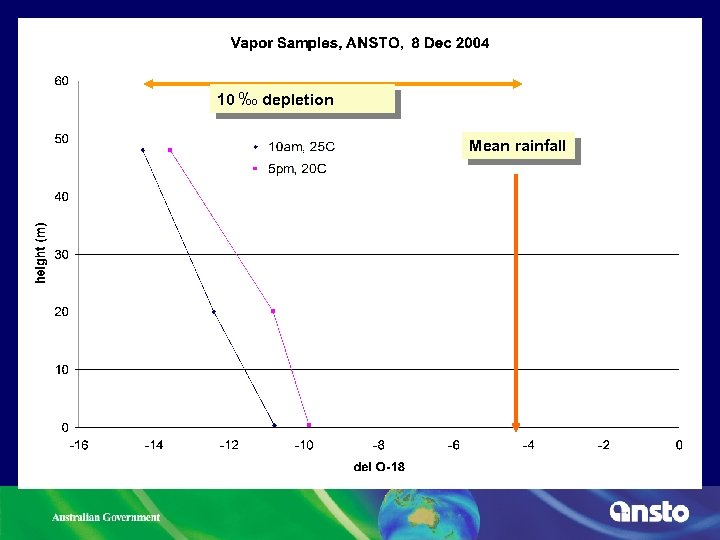
Overview of presentation • Expected ranges of values ãthe precipitation input at the three ecosystems ãvapour<stem<leaf order of enrichment • Data sets examined ãAmazon; Manaus, Santarem and Trinidad Central Europe; Munich, other German sites North America; temperate and semi-arid others
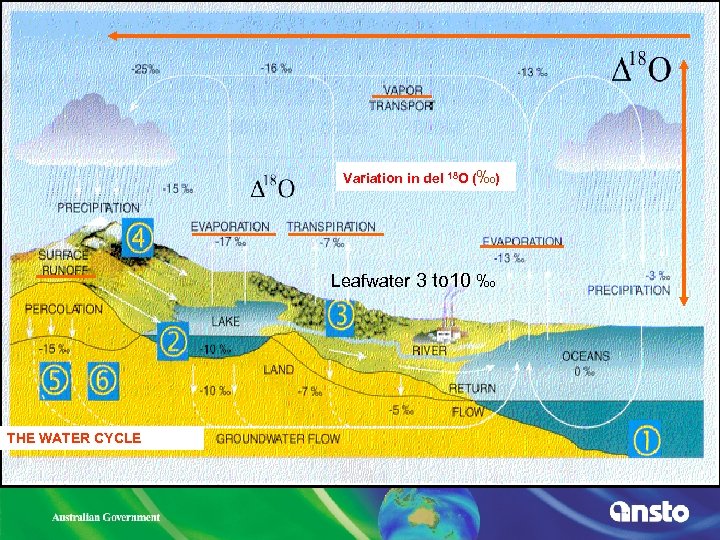
Variation in del 18 O (‰) Leafwater 3 to 10 ‰ THE WATER CYCLE
Expected isotope ratios for SE Australia (Tumbarumba) L rainwater M G W Surface water Root zone water = stem water = transpired water Surface evaporate L LE Local vapour 9 -10 ‰ Leaves
10 ‰ depletion Mean rainfall
Precipitation Input Signal; 3 sites
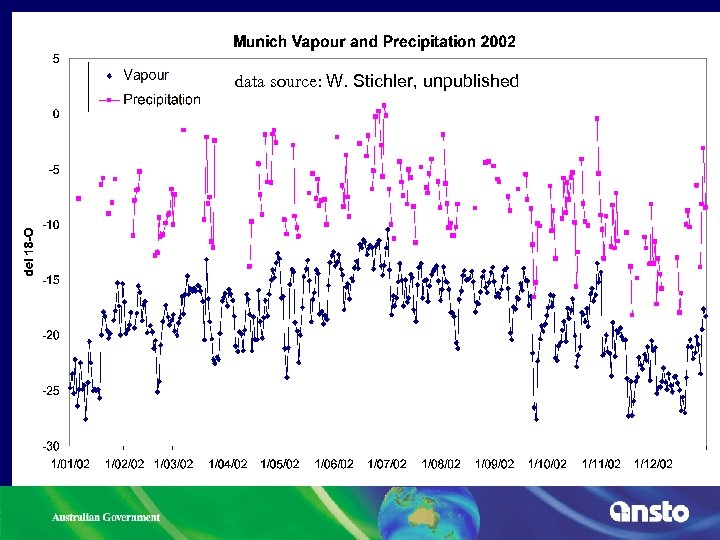
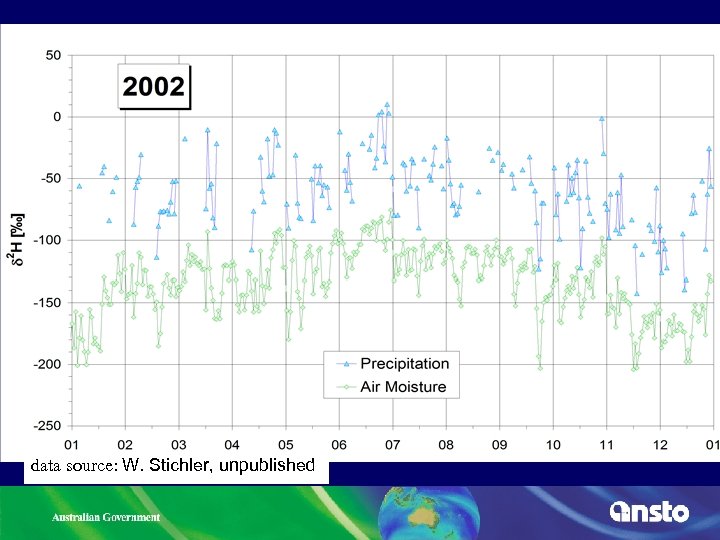
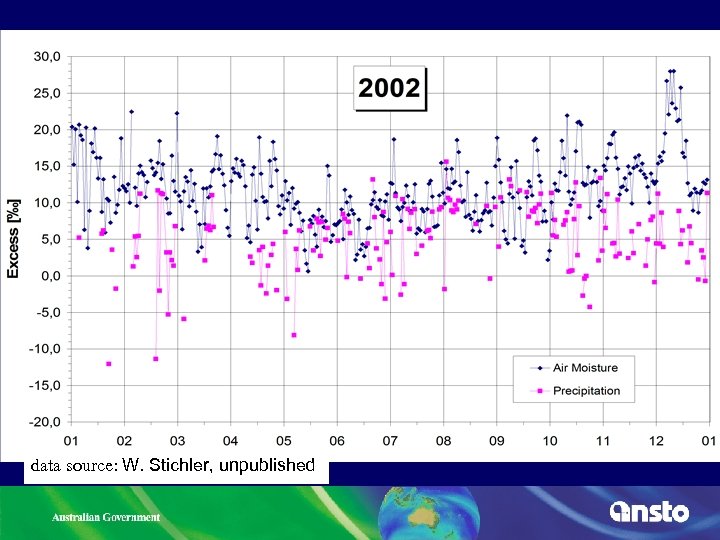
Munich Vapour and Precipitation Vapour and precipitation lie along a single MWL data source: W. Stichler, unpublished
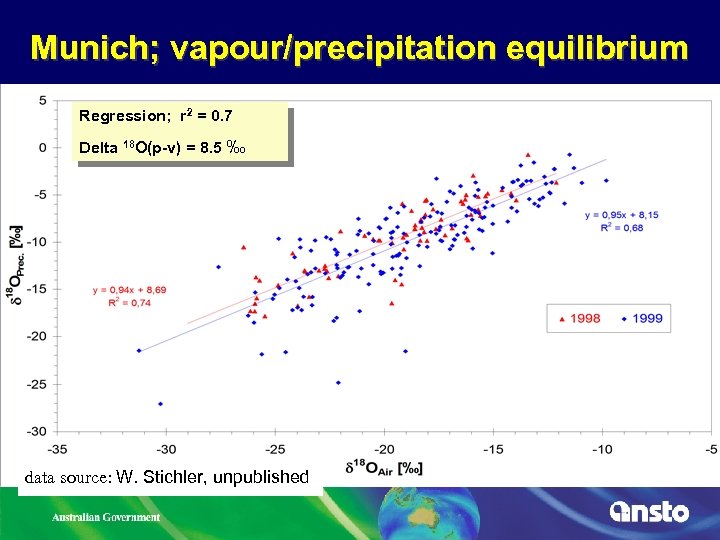
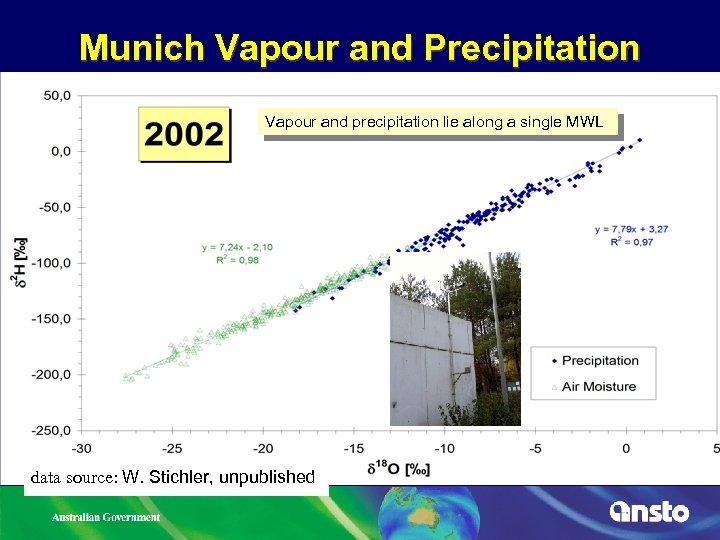
Munich; vapour/precipitation equilibrium Regression; r 2 = 0. 7 Delta 18 O(p-v) = 8. 5 ‰ data source: W. Stichler, unpublished
IPILPS data requirements and sources • Water isotopologues del H 218 O and 1 H 2 H 16 O (‰) both desired • Comparison of LSS By output, and against real data • Real field data required at appropriate time scales, monthly, daily, hourly • Prefer data at diurnal timescale • BASIN database; (Ehleringer), Americas • Carbo. Euroflux; (various), Europe
Data collection methods • Towers fitted with tubing for cryogenic vapour trapping, water kept frozen • Soil and Leaf samples sealed in exetainers; distilled cryogenically before analysis • del D and del O-18 performed by IR-MS

Tropical Rainforest data; Manaus, Amazon Trinidad LBA BASIN sites Manaus Santarem
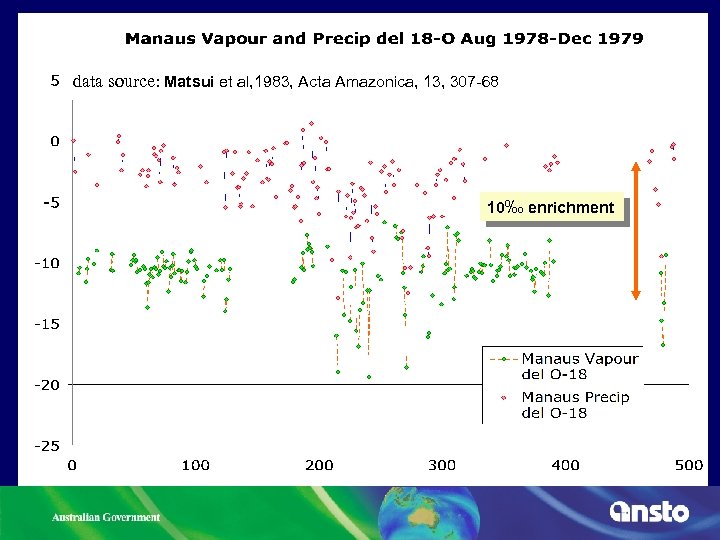
data source: Matsui et al, 1983, Acta Amazonica, 13, 307 -68 10‰ enrichment
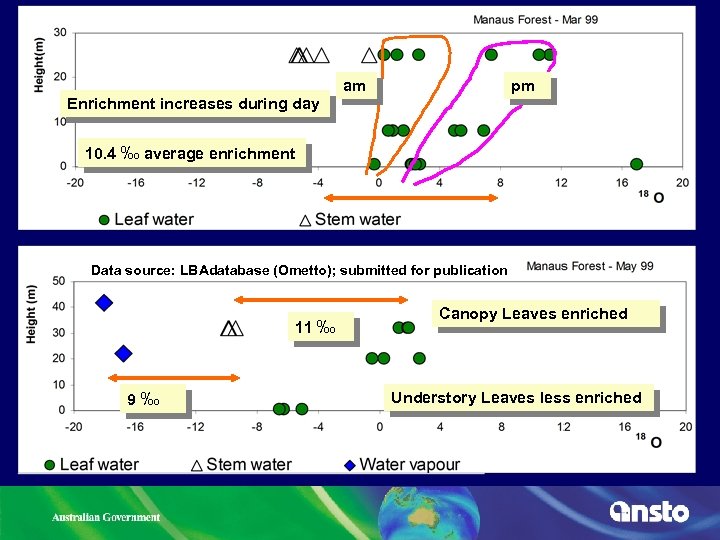
am pm Enrichment increases during day 10. 4 ‰ average enrichment Data source: LBAdatabase (Ometto); submitted for publication 11 ‰ 9‰ Canopy Leaves enriched Understory Leaves less enriched
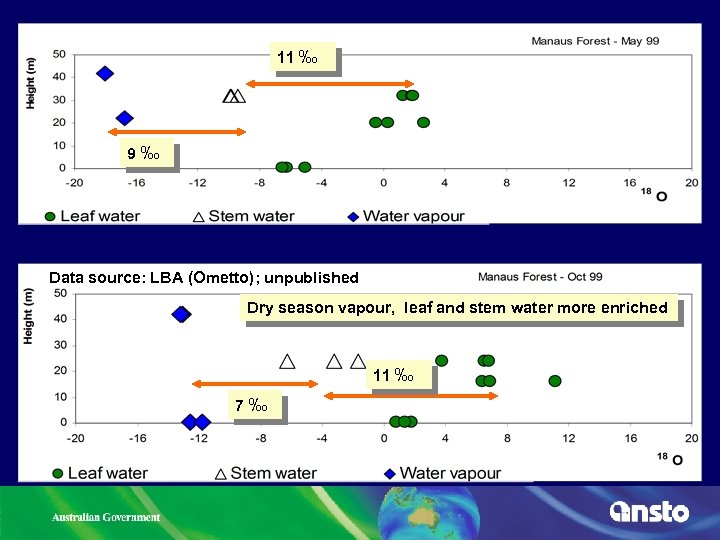
11 ‰ 9‰ Data source: LBA (Ometto); unpublished Dry season vapour, leaf and stem water more enriched 11 ‰ 7‰
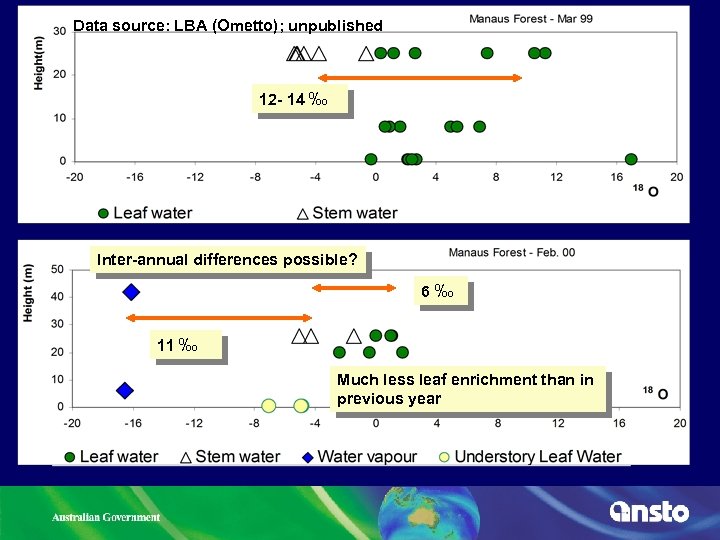
Data source: LBA (Ometto); unpublished 12 - 14 ‰ Inter-annual differences possible? 6‰ 11 ‰ Much less leaf enrichment than in previous year
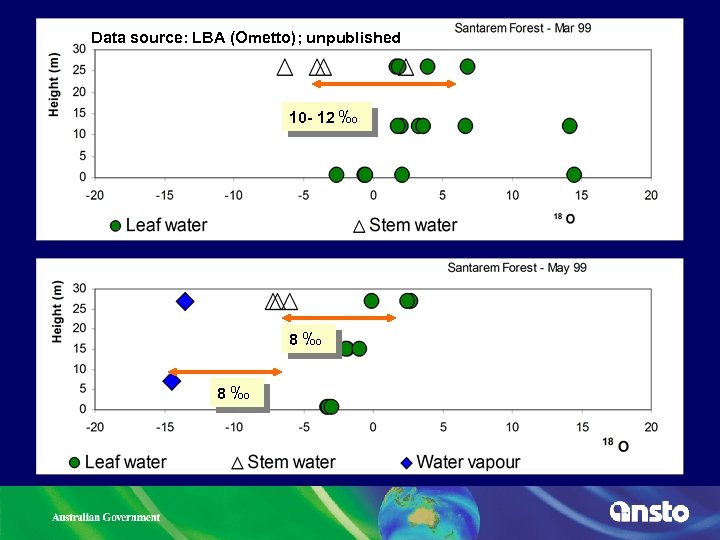
Data source: LBA (Ometto); unpublished 10 - 12 ‰ 8‰ 8‰
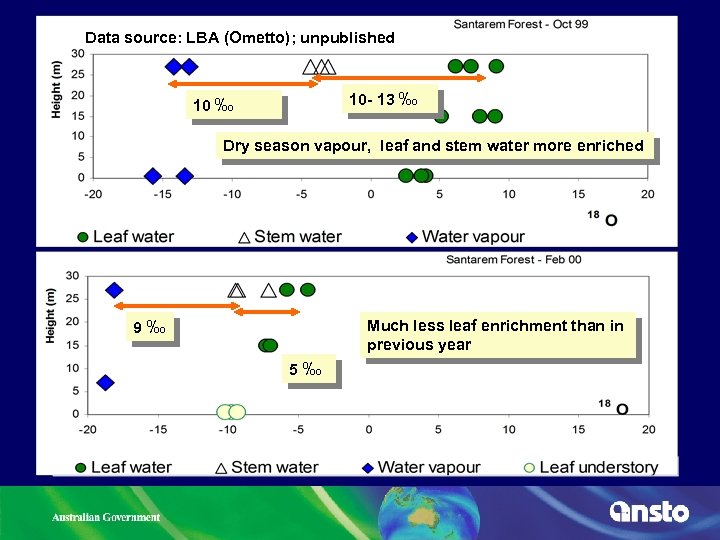
Data source: LBA (Ometto); unpublished 10 - 13 ‰ 10 ‰ Dry season vapour, leaf and stem water more enriched Much less leaf enrichment than in previous year 9‰ 5‰
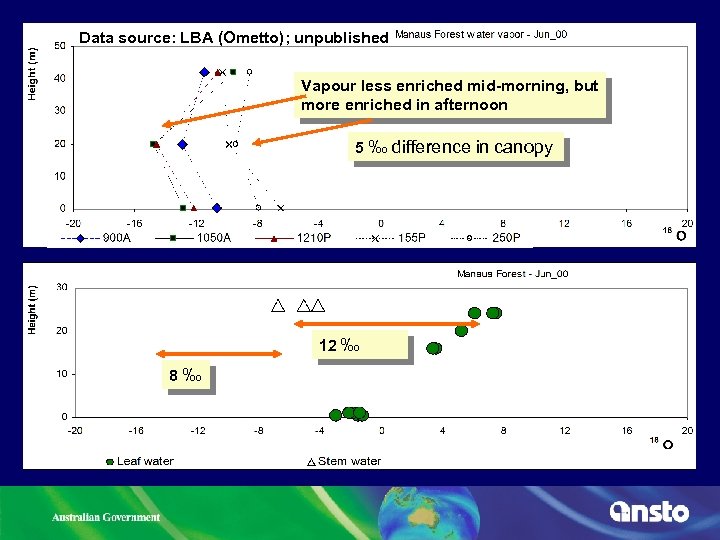
Data source: LBA (Ometto); unpublished Vapour less enriched mid-morning, but more enriched in afternoon 5 ‰ difference in canopy 12 ‰ 8‰
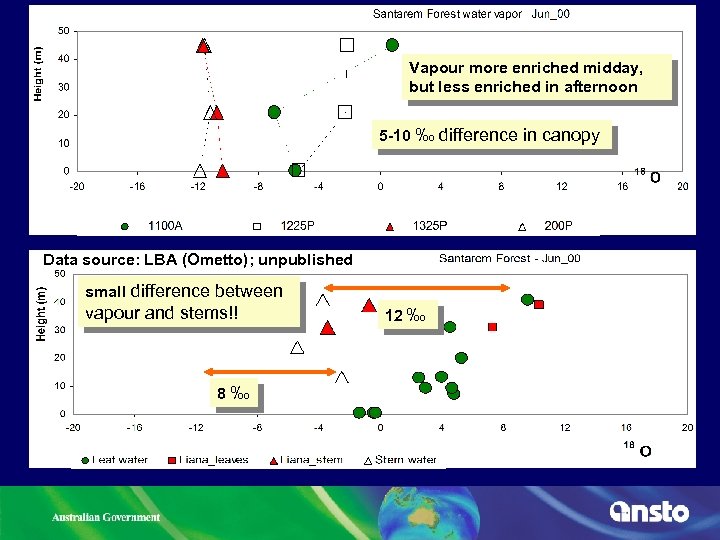
Vapour more enriched midday, but less enriched in afternoon 5 -10 ‰ difference in canopy Data source: LBA (Ometto); unpublished small difference between vapour and stems!! 8‰ 12 ‰
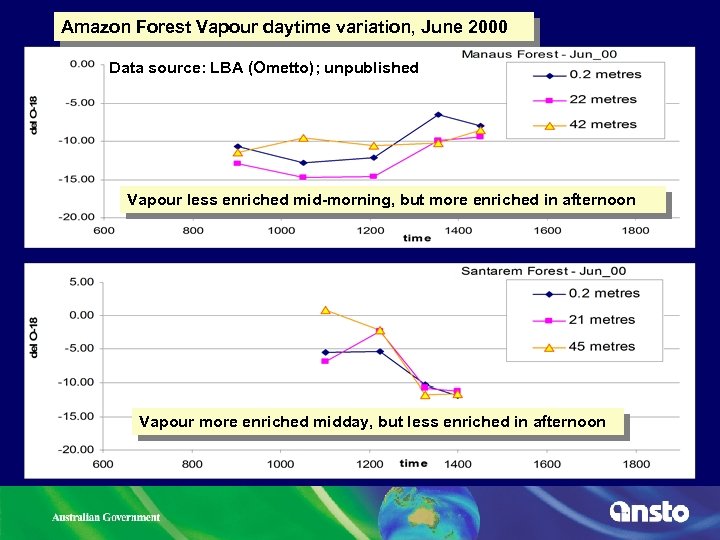
Amazon Forest Vapour daytime variation, June 2000 Data source: LBA (Ometto); unpublished Vapour less enriched mid-morning, but more enriched in afternoon Vapour more enriched midday, but less enriched in afternoon
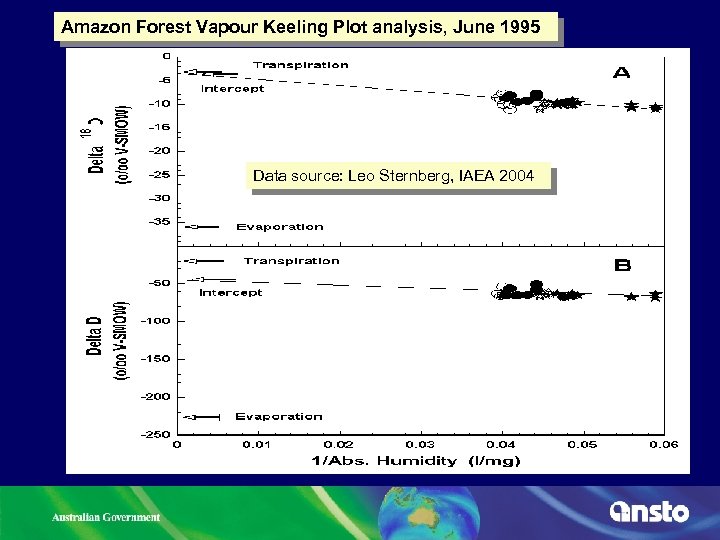
Amazon Forest Vapour Keeling Plot analysis, June 1995 Data source: Leo Sternberg, IAEA 2004
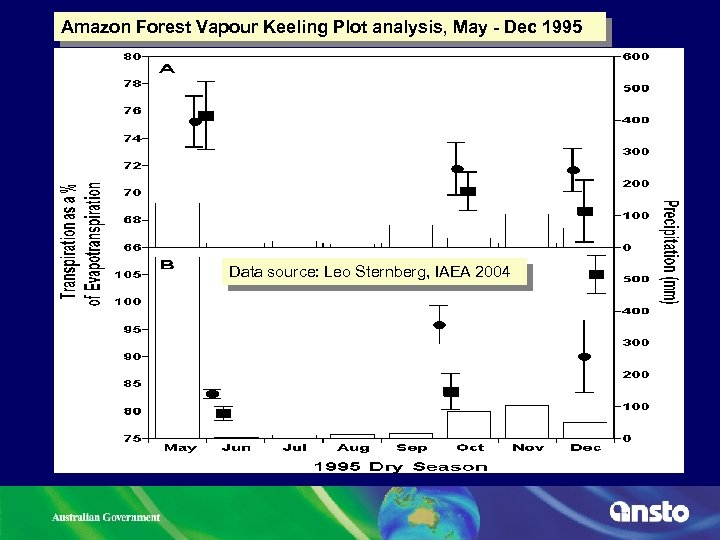
Amazon Forest Vapour Keeling Plot analysis, May - Dec 1995 Data source: Leo Sternberg, IAEA 2004
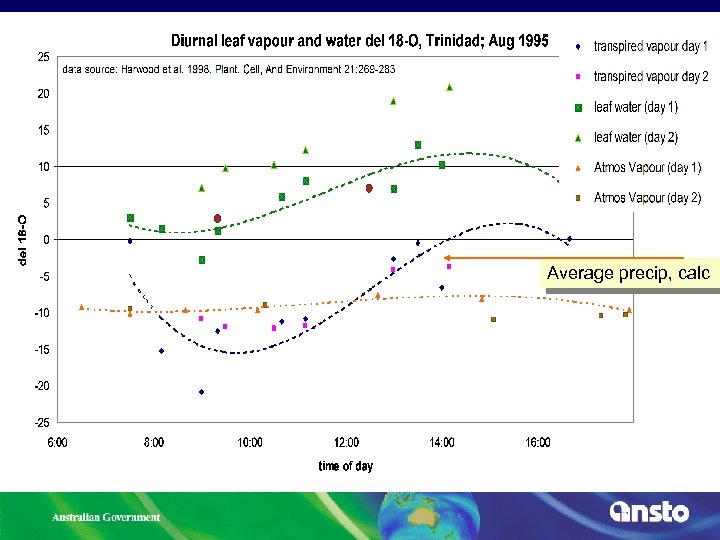
Average precip, calc
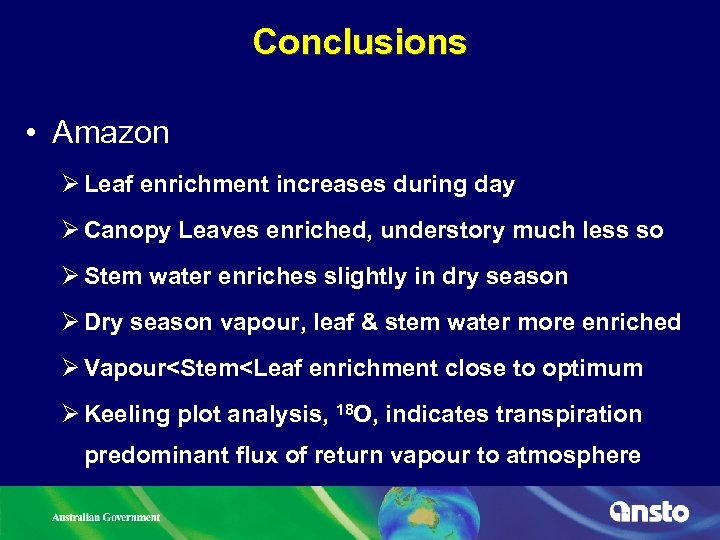
Conclusions • Amazon Ø Leaf enrichment increases during day Ø Canopy Leaves enriched, understory much less so Ø Stem water enriches slightly in dry season Ø Dry season vapour, leaf & stem water more enriched Ø Vapour<Stem<Leaf enrichment close to optimum Ø Keeling plot analysis, 18 O, indicates transpiration predominant flux of return vapour to atmosphere
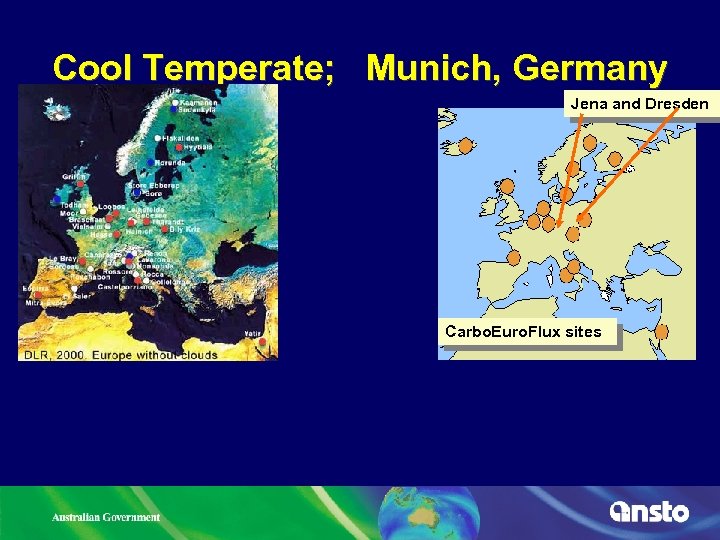
Cool Temperate; Munich, Germany Jena and Dresden Carbo. Euro. Flux sites
data source: W. Stichler, unpublished
data source: W. Stichler, unpublished
data source: W. Stichler, unpublished
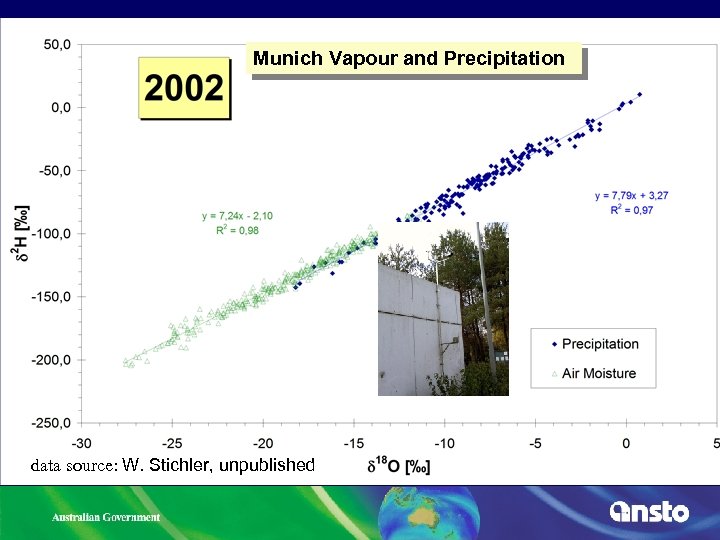
Munich Vapour and Precipitation data source: W. Stichler, unpublished
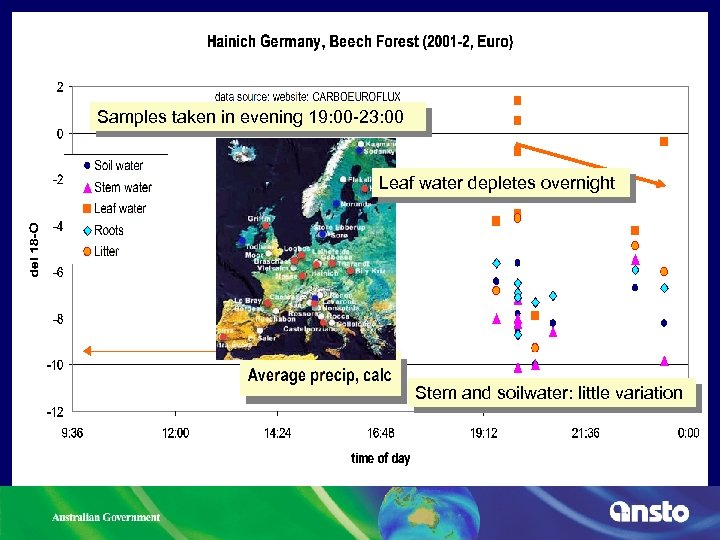
Samples taken in evening 19: 00 -23: 00 Leaf water depletes overnight Stem and soilwater: little variation
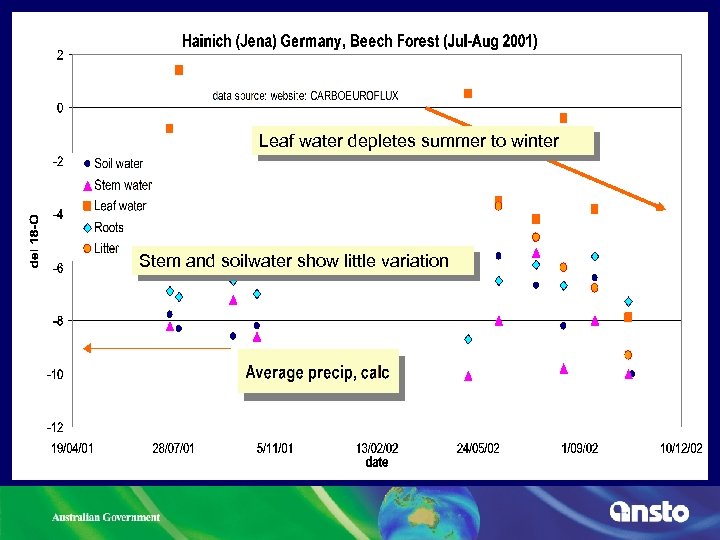
Leaf water depletes summer to winter Stem and soilwater show little variation
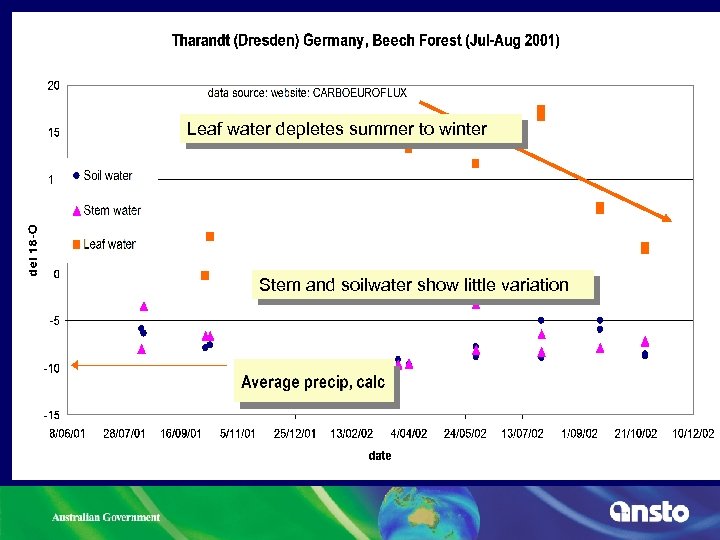
Leaf water depletes summer to winter Stem and soilwater show little variation
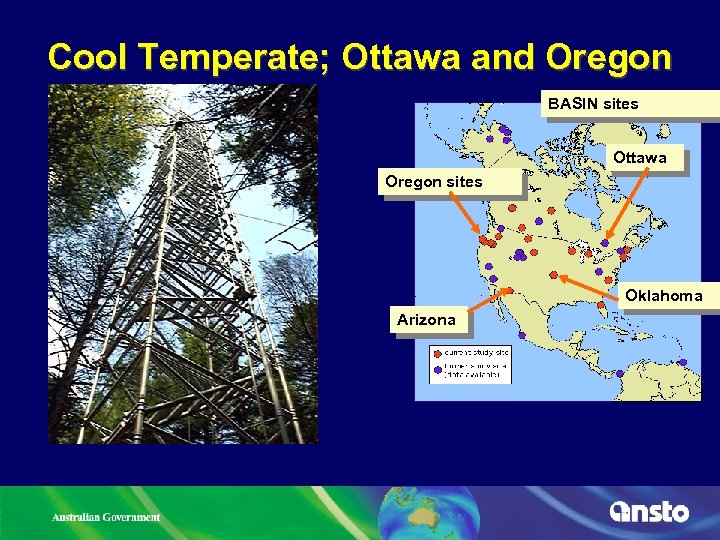
Cool Temperate; Ottawa and Oregon BASIN sites Ottawa Oregon sites Oklahoma Arizona
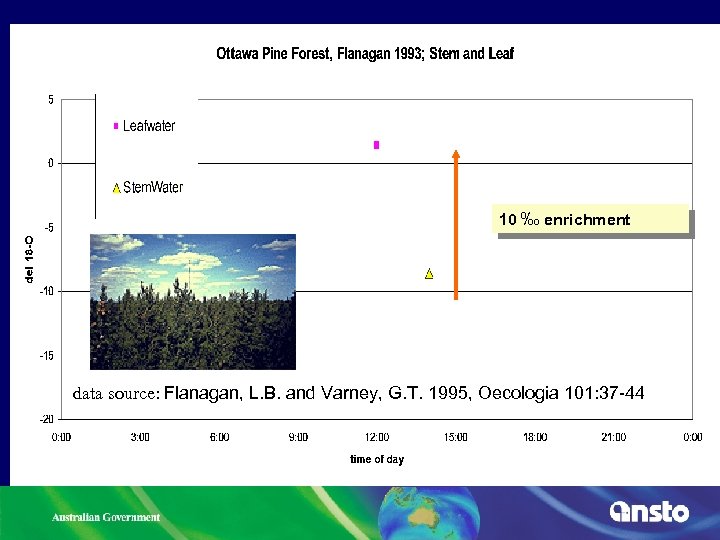
10 ‰ enrichment data source: Flanagan, L. B. and Varney, G. T. 1995, Oecologia 101: 37 -44
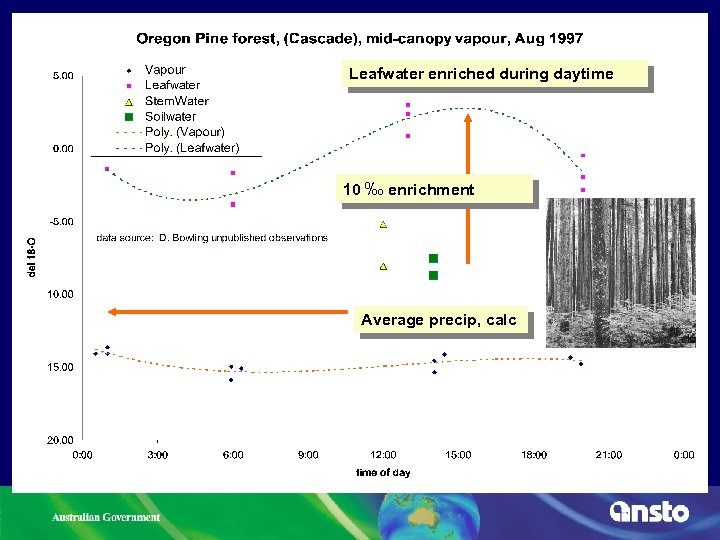
Leafwater enriched during daytime 10 ‰ enrichment Average precip, calc
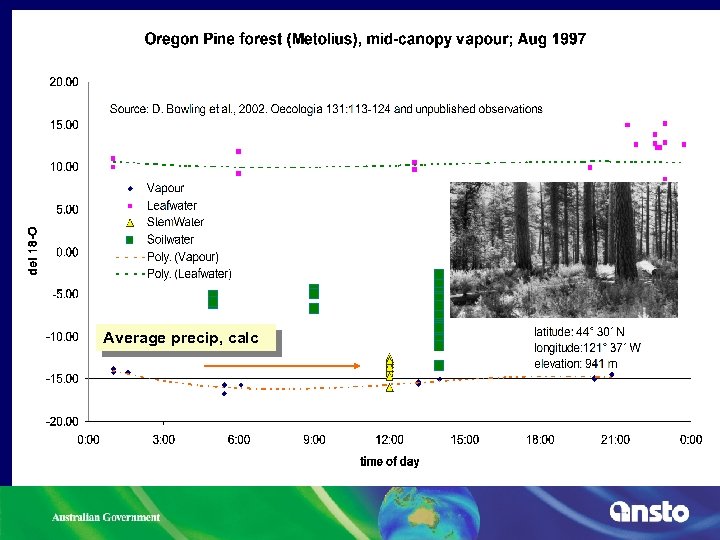
Average precip, calc
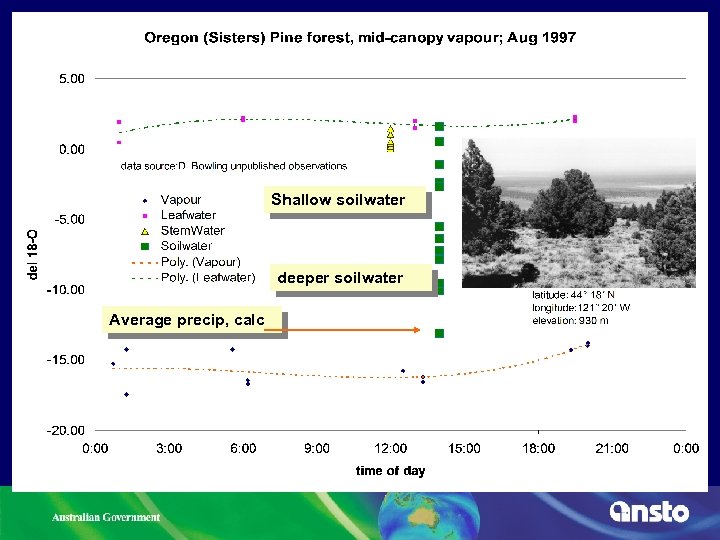
Shallow soilwater deeper soilwater Average precip, calc
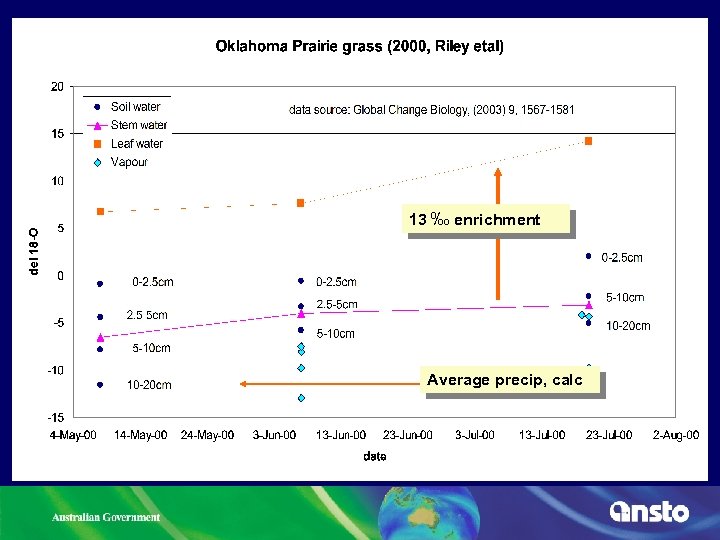
13 ‰ enrichment Average precip, calc
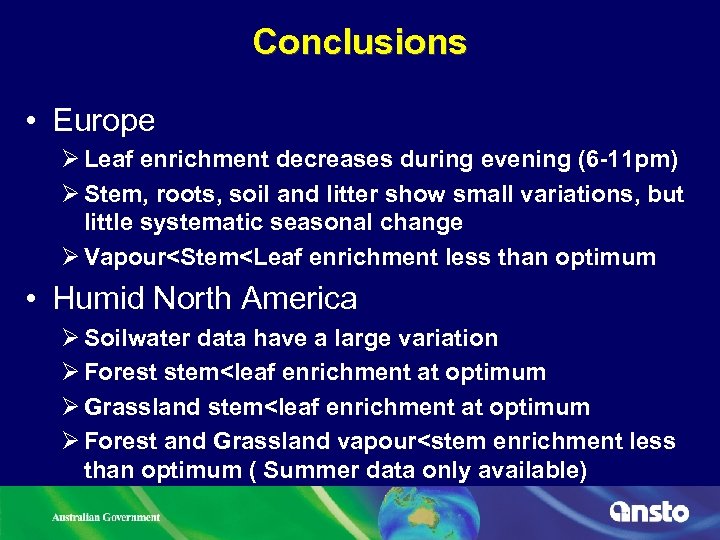
Conclusions • Europe Ø Leaf enrichment decreases during evening (6 -11 pm) Ø Stem, roots, soil and litter show small variations, but little systematic seasonal change Ø Vapour<Stem<Leaf enrichment less than optimum • Humid North America Ø Soilwater data have a large variation Ø Forest stem<leaf enrichment at optimum Ø Grassland stem<leaf enrichment at optimum Ø Forest and Grassland vapour<stem enrichment less than optimum ( Summer data only available)
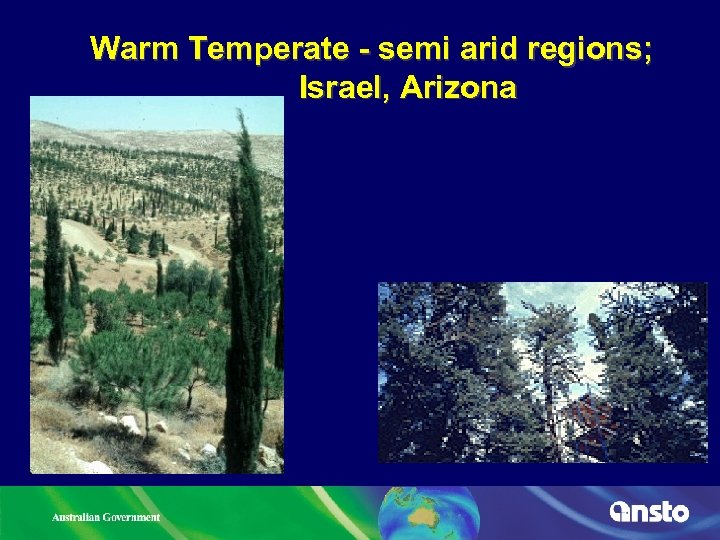
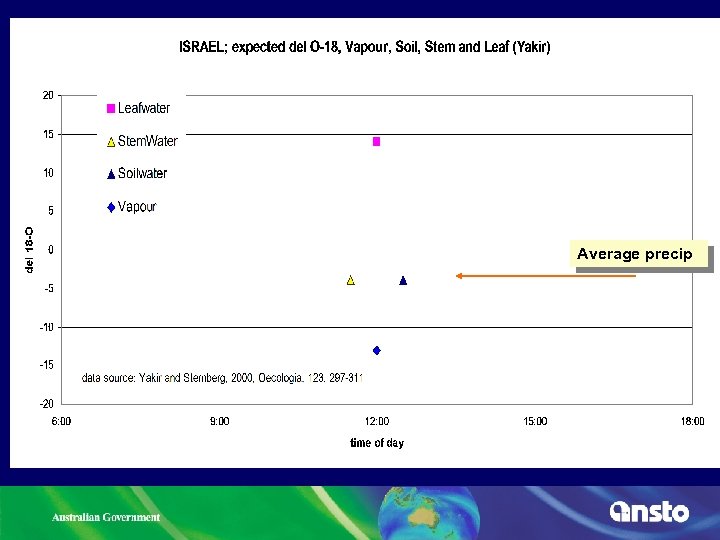
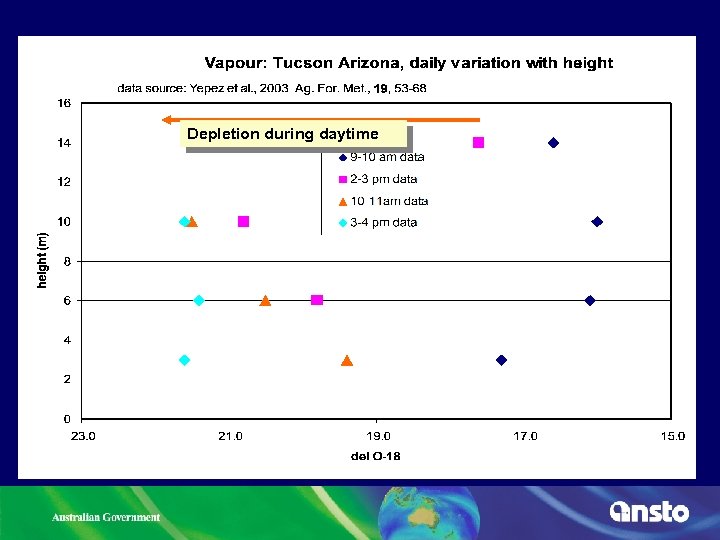
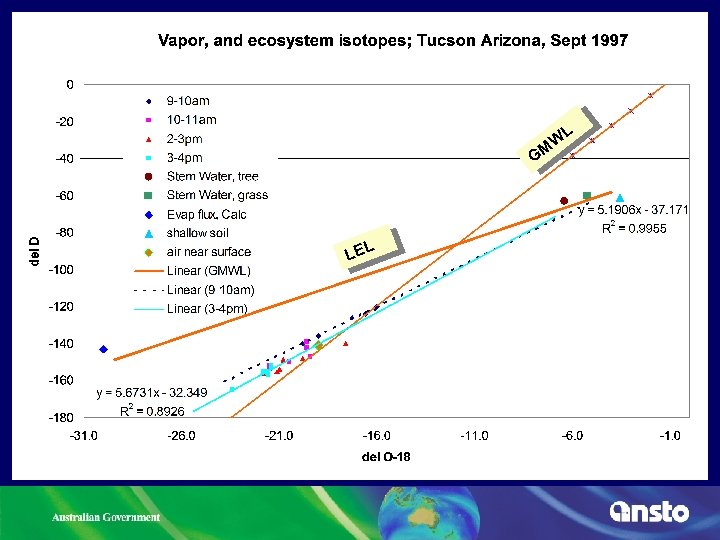
Warm Temperate - semi arid regions; Israel, Arizona
Average precip
Depletion during daytime
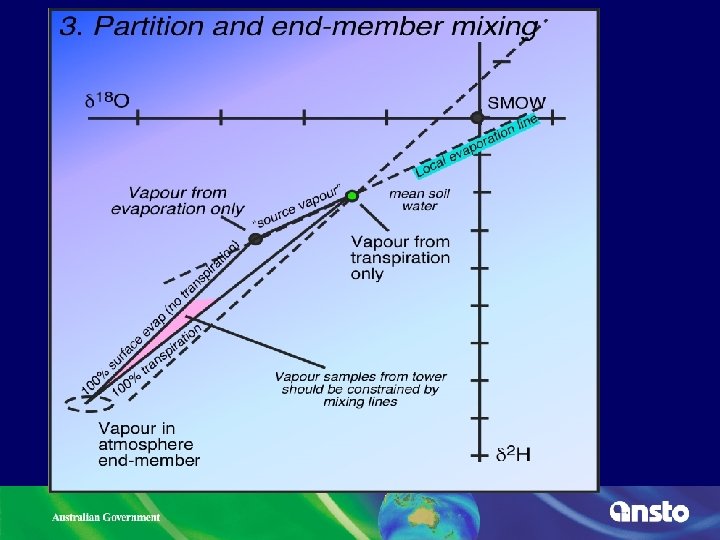
GM LEL L W
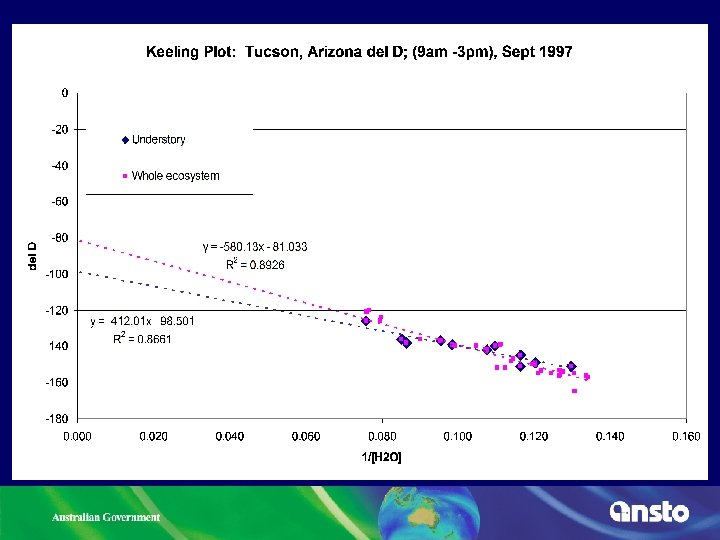
Conclusions • Semi-arid Israel and North America Ø Israel: vapour<stem<leaf enrichment at optimum Ø Arizona: vapour became depleted during the day Ø Keeling plot analysis, using both 2 H and 18 O indicates transpiration predominant flux of return vapour to atmosphere

 Скачать презентацию Diurnal Cycle Observations of Stable Water Isotopes in
fe931f812a6e5b61ae0e9cbdf7f04d45.ppt