 Скачать презентацию Distribution of Electricity Keywords Power Distribution
Distribution of Electricity11.pptx
- Количество слайдов: 11



Distribution of Electricity
Keywords Power Distribution – распределение электроэнергии Generators - генераторы Transformer – трансформатор Higher voltage – высокое напряжение Transmission lines – линии передач Substation - подстанция
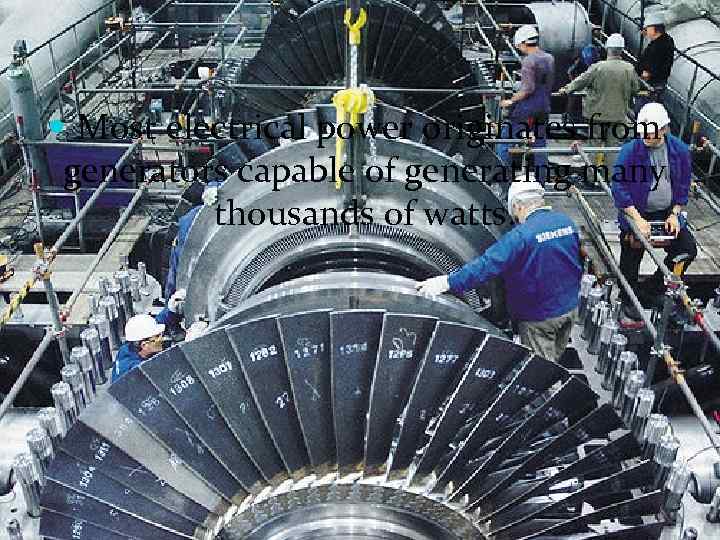
Most electrical power originates from generators capable of generating many thousands of watts.
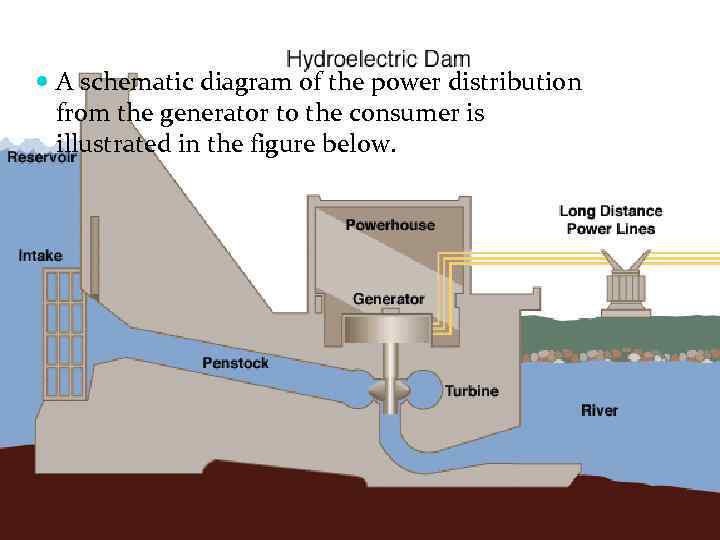
A schematic diagram of the power distribution from the generator to the consumer is illustrated in the figure below.
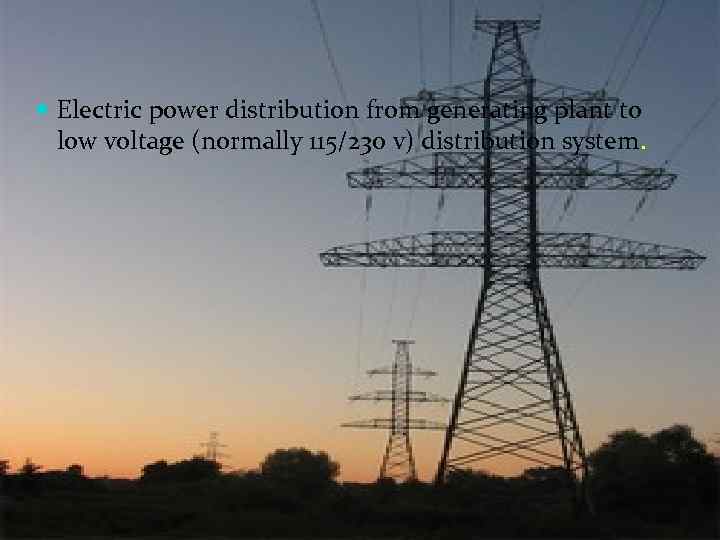
Electric power distribution from generating plant to low voltage (normally 115/230 v) distribution system.
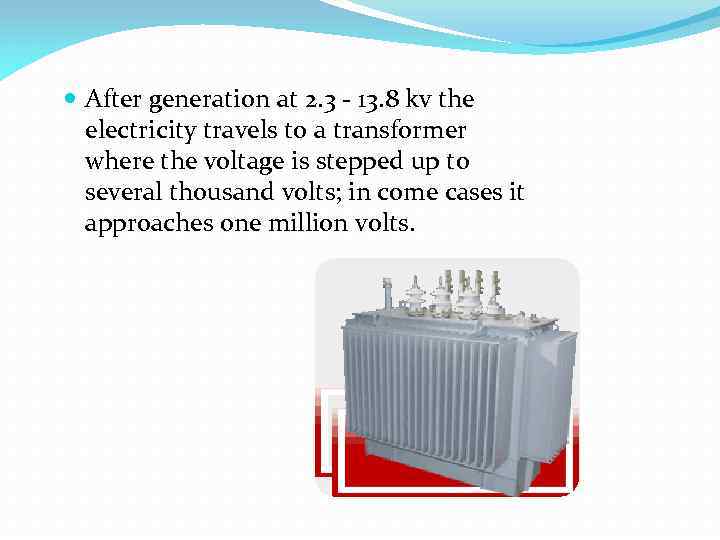
After generation at 2. 3 - 13. 8 kv the electricity travels to a transformer where the voltage is stepped up to several thousand volts; in come cases it approaches one million volts.
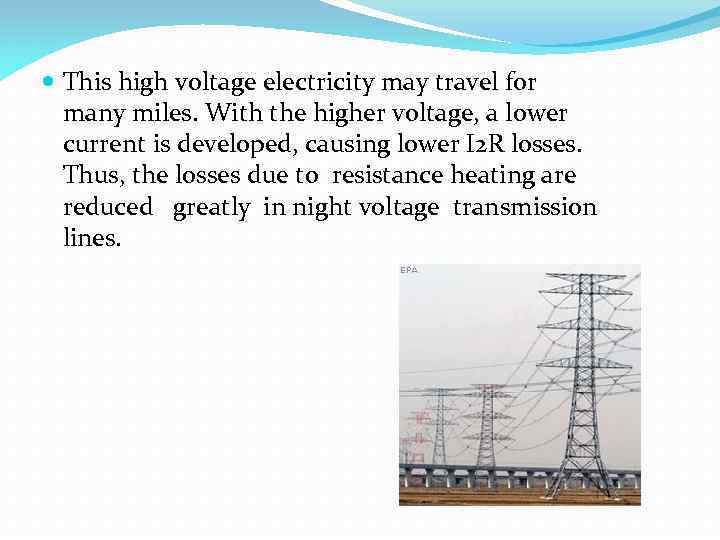
This high voltage electricity may travel for many miles. With the higher voltage, a lower current is developed, causing lower I 2 R losses. Thus, the losses due to resistance heating are reduced greatly in night voltage transmission lines.
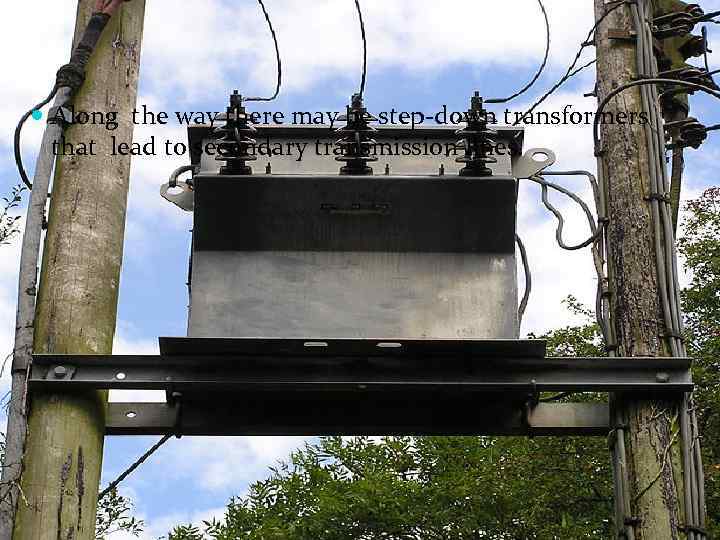
Along the way there may be step-down transformers that lead to secondary transmission lines.
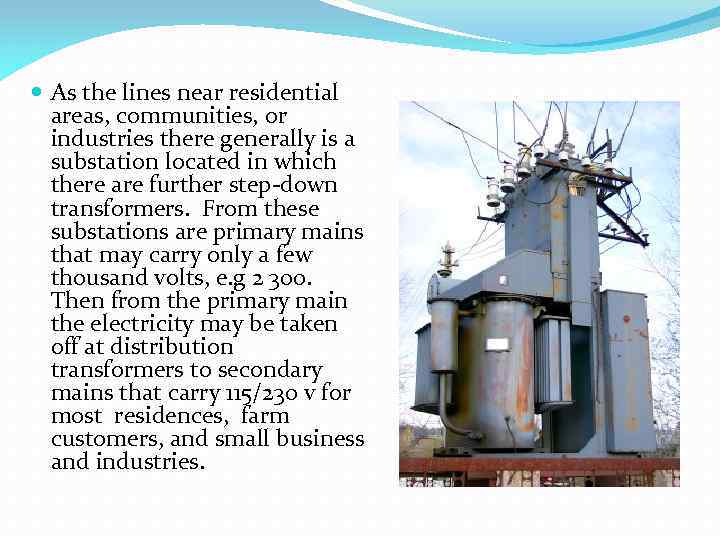
As the lines near residential areas, communities, or industries there generally is a substation located in which there are further step-down transformers. From these substations are primary mains that may carry only a few thousand volts, e. g 2 300. Then from the primary main the electricity may be taken off at distribution transformers to secondary mains that carry 115/230 v for most residences, farm customers, and small business and industries.
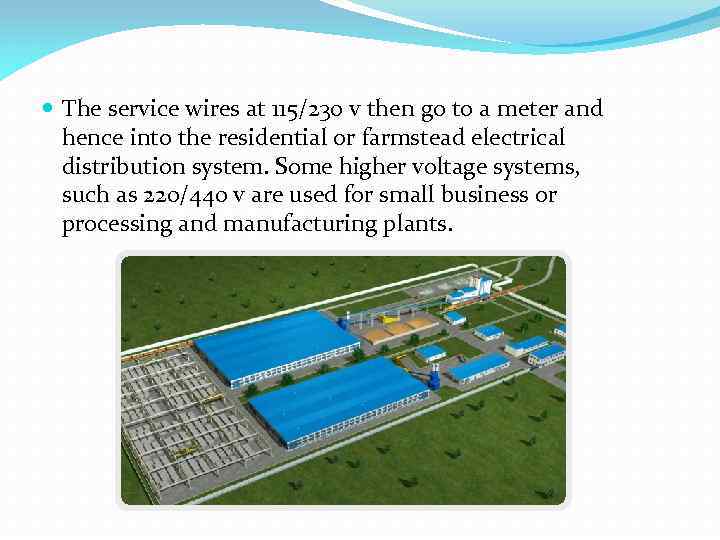
The service wires at 115/230 v then go to a meter and hence into the residential or farmstead electrical distribution system. Some higher voltage systems, such as 220/440 v are used for small business or processing and manufacturing plants.
Answer the following question: 1. What is a main? 2. What is a step-down transformers used for? 3. How generators are driven?
Скачать презентацию Distribution of Electricity Keywords Power Distribution
Distribution of Electricity11.pptx