 Скачать презентацию DISTRIBUTED COMPUTING AND BIG DATA AT JINR
Big Data JINR.pptx
- Количество слайдов: 42



DISTRIBUTED COMPUTING AND BIG DATA AT JINR Vladimir Korenkov LIT JINR
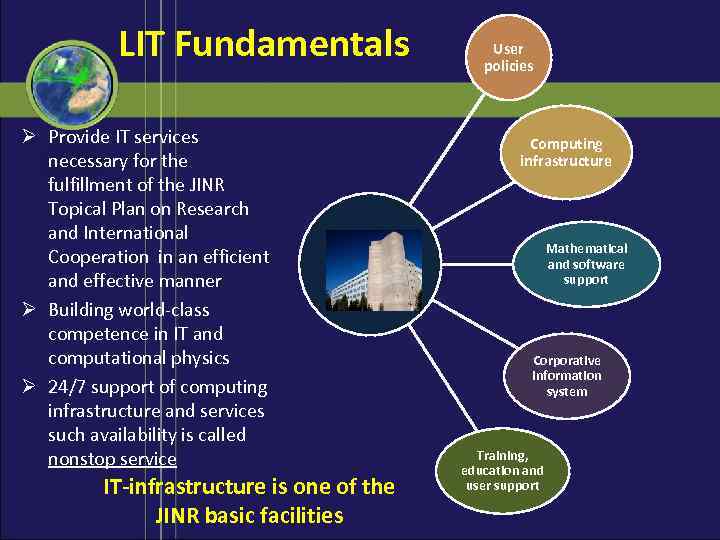
LIT Fundamentals Ø Provide IT services necessary for the fulfillment of the JINR Topical Plan on Research and International Cooperation in an efficient and effective manner Ø Building world-class competence in IT and computational physics Ø 24/7 support of computing infrastructure and services such availability is called nonstop service IT-infrastructure is one of the JINR basic facilities User policies Computing infrastructure Mathematical and software support Corporative information system Training, education and user support
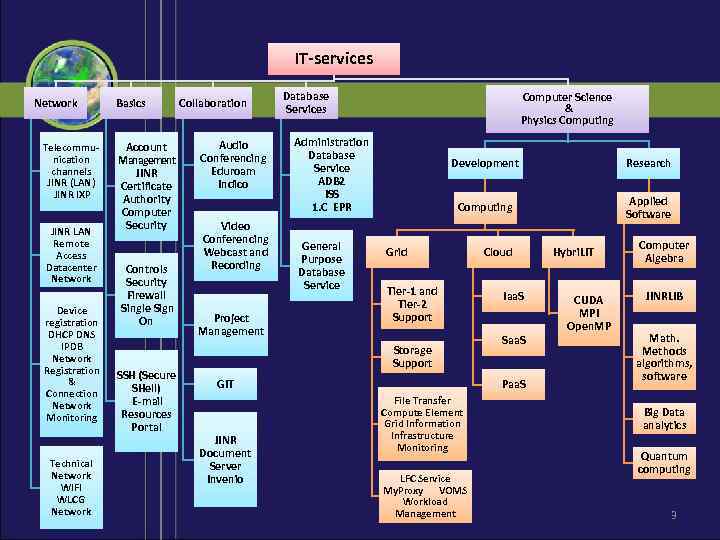
IT-services Network Telecommunication channels JINR (LAN) JINR IXP JINR LAN Remote Access Datacenter Network Device registration DHCP DNS IPDB Network Registration & Connection Network Monitoring Technical Network WIFI WLCG Network Basics Account Management JINR Certificate Authority Computer Security Controls Security Firewall Single Sign On SSH (Secure SHell) E-mail Resources Portal Collaboration Audio Conferencing Eduroam Indico Video Conferencing Webcast and Recording Project Management Database Services Computer Science & Physics Computing Administration Database Service ADB 2 ISS 1. C EPR General Purpose Database Service Development Research Computing Applied Software Grid Tier-1 and Tier-2 Support Storage Support GIT JINR Document Server Invenio Cloud Iaa. S Saa. S Paa. S File Transfer Compute Element Grid Information Infrastructure Monitoring LFC Service My. Proxy VOMS Workload Management Hybri. LIT CUDA MPI Open. MP Computer Algebra JINRLIB Math. Methods algorithms, software Вig Data analytics Quantum computing 3
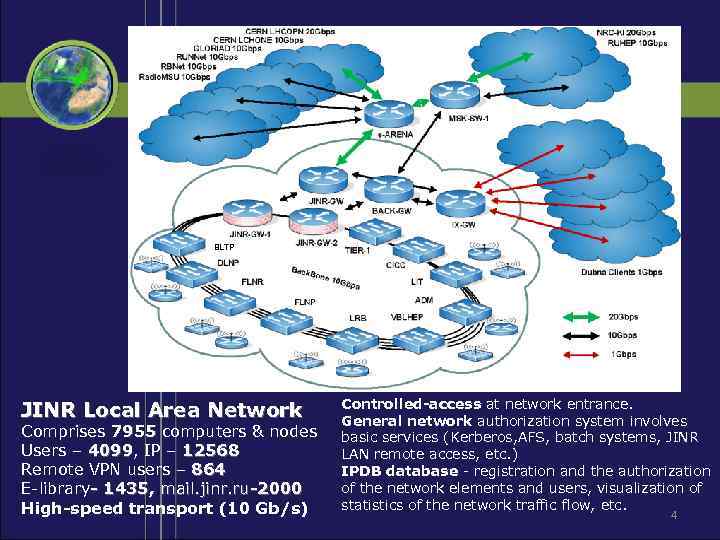
BLTP JINR Local Area Network Comprises 7955 computers & nodes Users – 4099, IP – 12568 4099 Remote VPN users – 864 E-library- 1435, mail. jinr. ru-2000 High-speed transport (10 Gb/s) Controlled-access at network entrance. General network authorization system involves basic services (Kerberos, AFS, batch systems, JINR LAN remote access, etc. ) IPDB database - registration and the authorization of the network elements and users, visualization of statistics of the network traffic flow, etc. 4
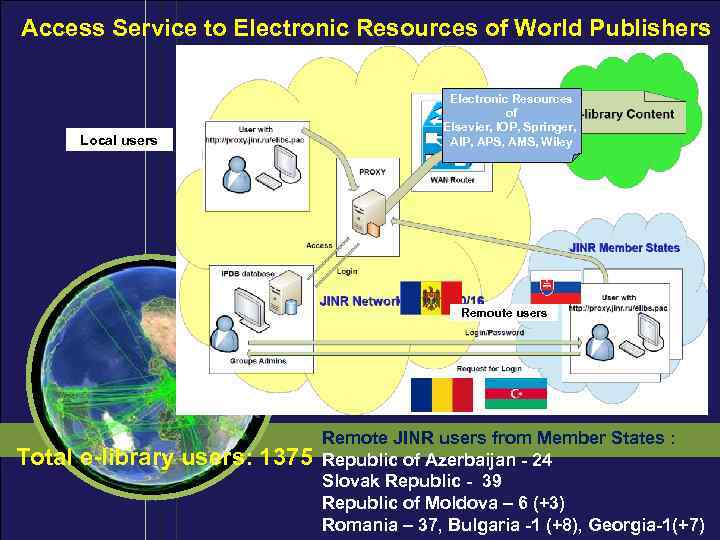
Access Service to Electronic Resources of World Publishers Local users Electronic Resources of Elsevier, IOP, Springer, AIP, APS, AMS, Wiley Remoute users Remote JINR users from Member States : Total e-library users: 1375 Republic of Azerbaijan - 24 Slovak Republic - 39 Republic of Moldova – 6 (+3) Romania – 37, Bulgaria -1 (+8), Georgia-1(+7)
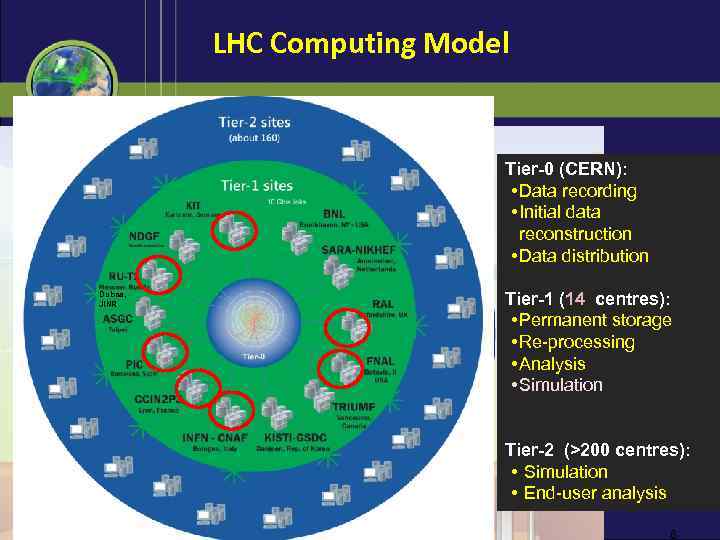
LHC Computing Model Tier-0 (CERN): • Data recording • Initial data reconstruction • Data distribution Dubna, JINR Tier-1 (14 centres): • Permanent storage • Re-processing • Analysis • Simulation Tier-2 (>200 centres): • Simulation • End-user analysis 6
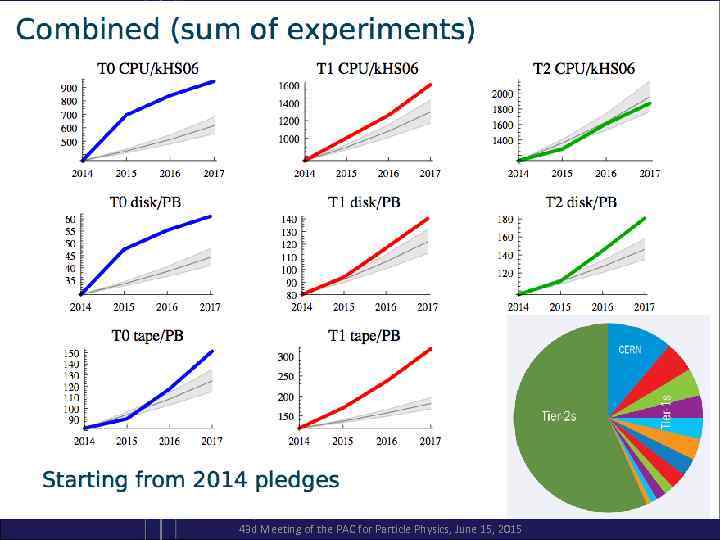
May 9, 2014 Ian. Bird@cern. ch 43 d Meeting of the PAC for Particle Physics, June 15, 2015 7
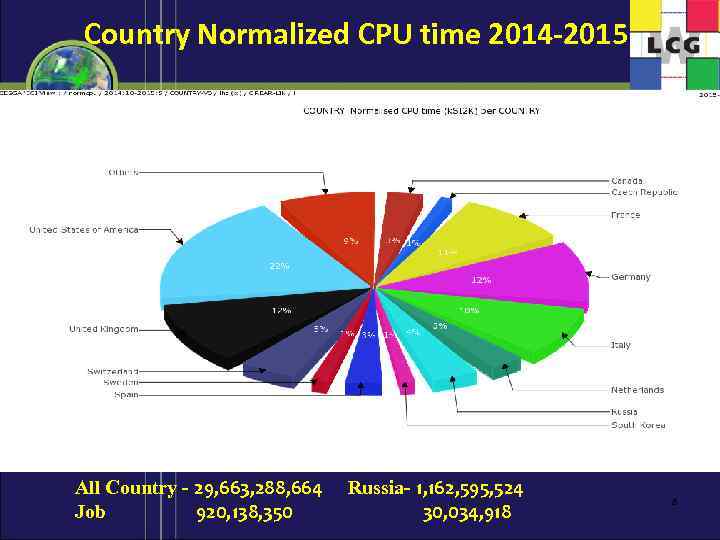
Country Normalized CPU time 2014 -2015 All Country - 29, 663, 288, 664 Russia- 1, 162, 595, 524 Job 920, 138, 350 30, 034, 918 8
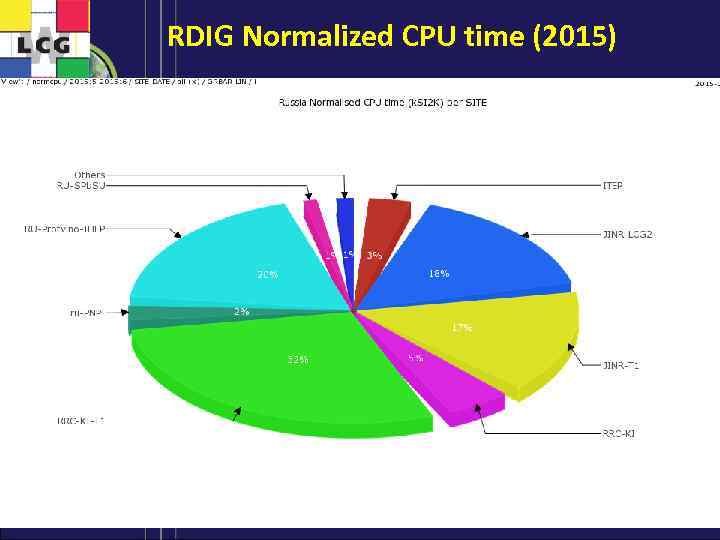
RDIG Normalized CPU time (2015) 9
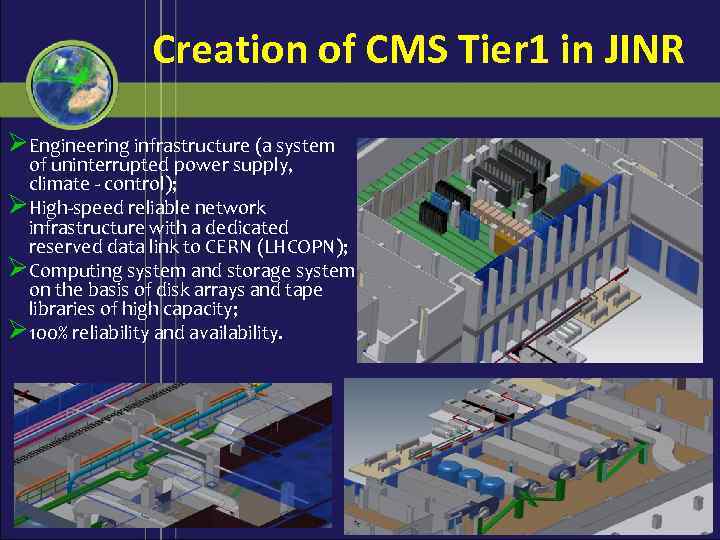
Creation of CMS Tier 1 in JINR ØEngineering infrastructure (a system of uninterrupted power supply, climate - control); ØHigh-speed reliable network infrastructure with a dedicated reserved data link to CERN (LHCOPN); ØComputing system and storage system on the basis of disk arrays and tape libraries of high capacity; Ø 100% reliability and availability.
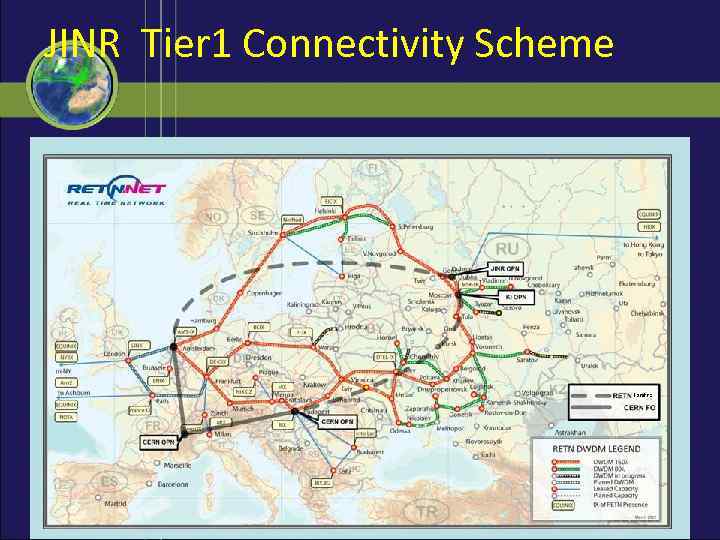
JINR Tier 1 Connectivity Scheme 11/98
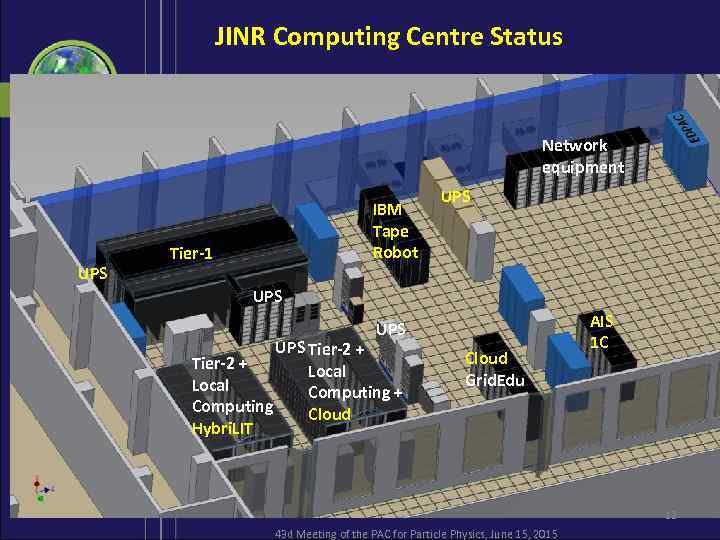
JINR Computing Centre Status Network equipment UPS IBM Tape Robot Tier-1 UPS UPS Tier-2 + Local Computing + Computing Cloud Hybri. LIT Cloud Grid. Edu AIS 1 C 12 43 d Meeting of the PAC for Particle Physics, June 15, 2015
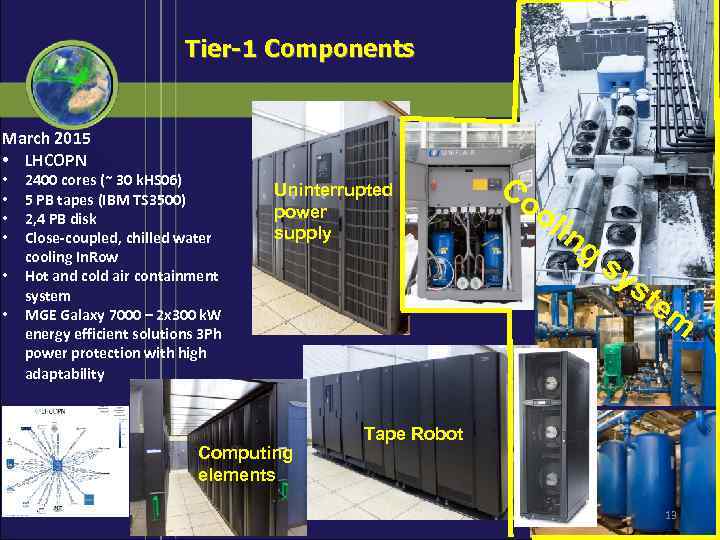
Tier-1 Components March 2015 • LHCOPN • • • 2400 cores (~ 30 k. HS 06) 5 PB tapes (IBM TS 3500) 2, 4 PB disk Close-coupled, chilled water cooling In. Row Hot and cold air containment system MGE Galaxy 7000 – 2 x 300 k. W energy efficient solutions 3 Ph power protection with high adaptability Uninterrupted power supply Computing elements Co ol in g sy st em Tape Robot 13
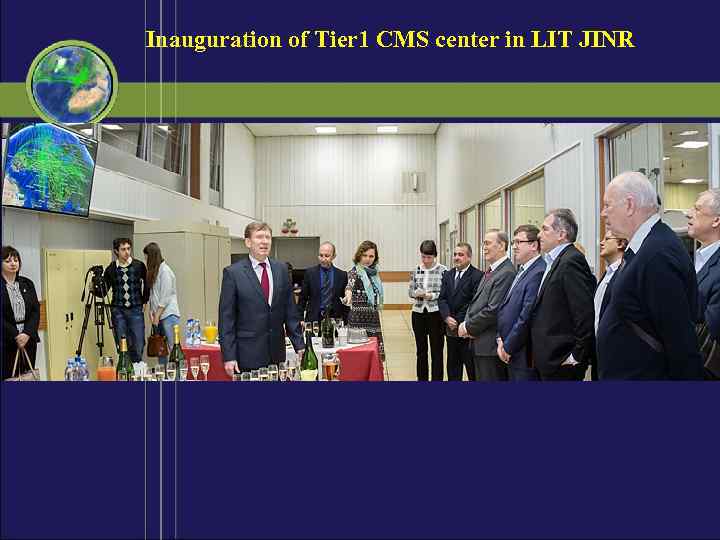
Inauguration of Тier 1 CMS center in LIT JINR
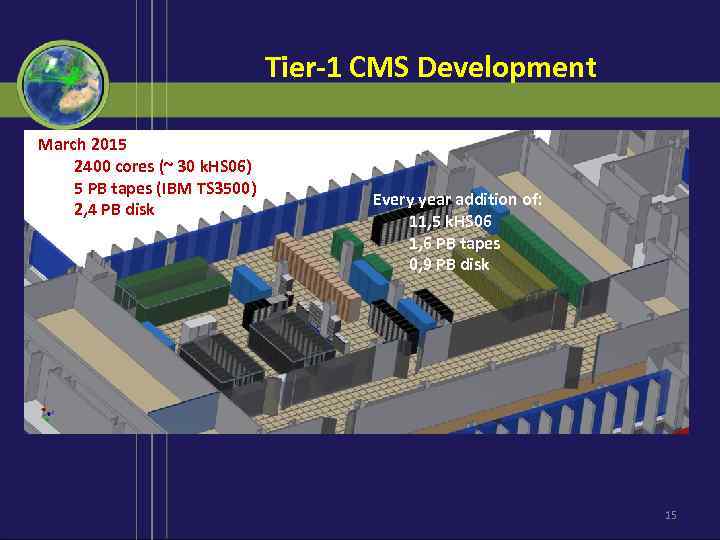
Tier-1 CMS Development March 2015 2400 cores (~ 30 k. HS 06) 5 PB tapes (IBM TS 3500) 2, 4 PB disk Every year addition of: 11, 5 k. HS 06 1, 6 PB tapes 0, 9 PB disk 15
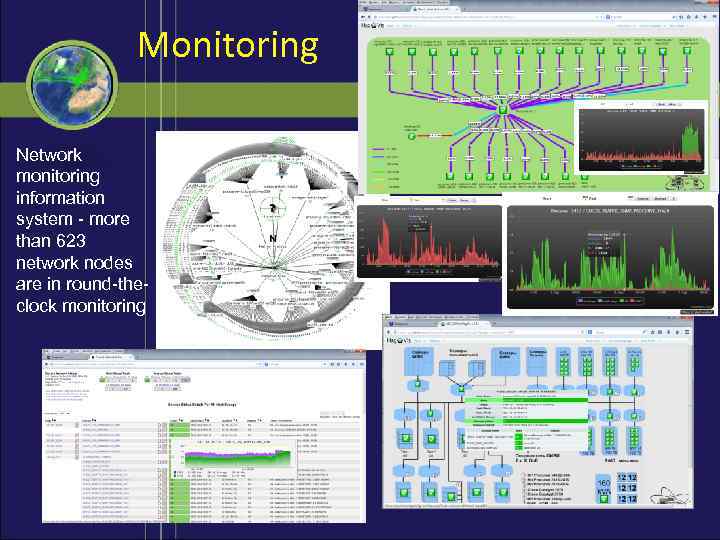
Monitoring Network monitoring information system - more than 623 network nodes are in round-theclock monitoring
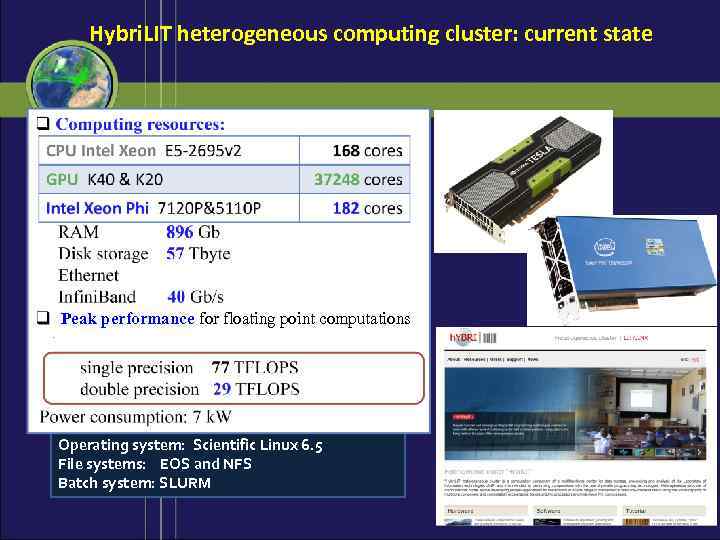
Hybri. LIT heterogeneous computing cluster: current state Peak performance for floating point computations Operating system: Scientific Linux 6. 5 File systems: EOS and NFS Batch system: SLURM 17
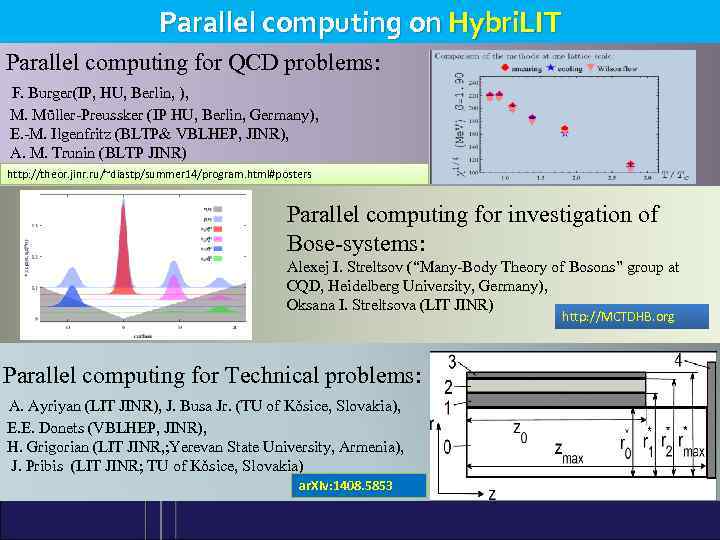
Parallel computing on Hybri. LIT Parallel computing for QCD problems: F. Burger(IP, HU, Berlin, ), M. Müller-Preussker (IP HU, Berlin, Germany), E. -M. Ilgenfritz (BLTP& VBLHEP, JINR), A. M. Trunin (BLTP JINR) http: //theor. jinr. ru/~diastp/summer 14/program. html#posters Parallel computing for investigation of Bose-systems: Alexej I. Streltsov (“Many-Body Theory of Bosons” group at CQD, Heidelberg University, Germany), Oksana I. Streltsova (LIT JINR) http: //MCTDHB. org Parallel computing for Technical problems: A. Ayriyan (LIT JINR), J. Busa Jr. (TU of Kǒsice, Slovakia), E. E. Donets (VBLHEP, JINR), H. Grigorian (LIT JINR, ; Yerevan State University, Armenia), J. Pribis (LIT JINR; TU of Kǒsice, Slovakia) ar. Xiv: 1408. 5853
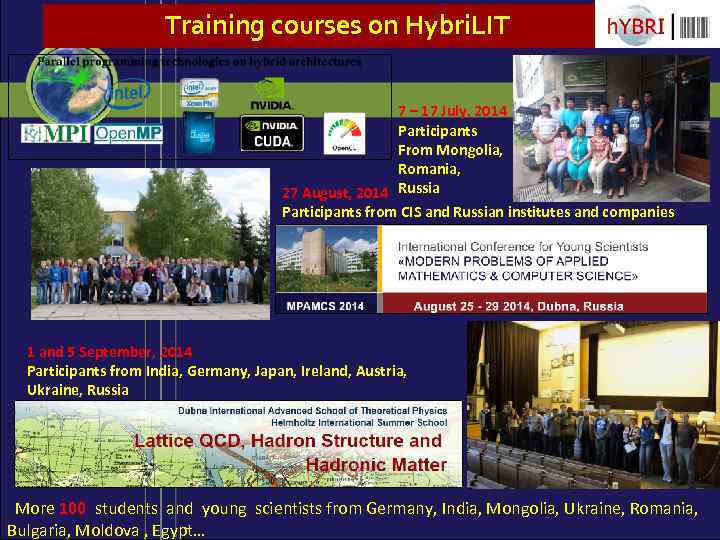
Training courses on Hybri. LIT 7 – 17 July, 2014 Participants From Mongolia, Romania, 27 August, 2014 Russia Participants from CIS and Russian institutes and companies 1 and 5 September, 2014 Participants from India, Germany, Japan, Ireland, Austria, Ukraine, Russia More 100 students and young scientists from Germany, India, Mongolia, Ukraine, Romania, Bulgaria, Moldova , Egypt…
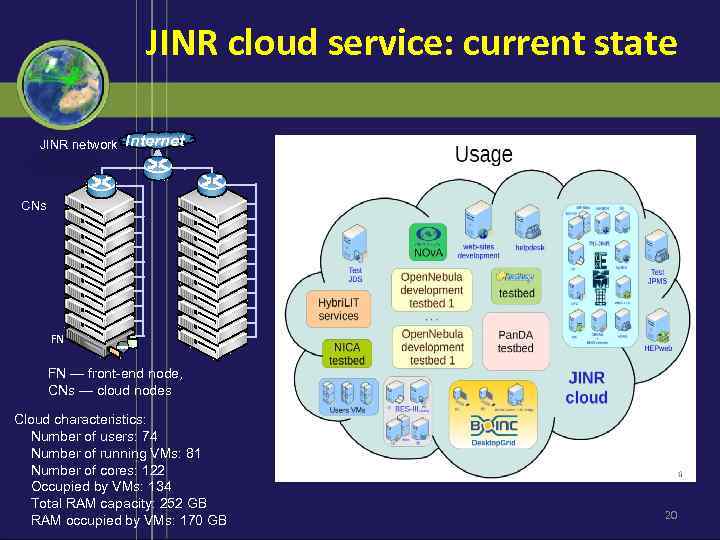
JINR cloud service: current state JINR network Internet CNs FN FN — front-end node, CNs — cloud nodes Cloud characteristics: Number of users: 74 Number of running VMs: 81 Number of cores: 122 Occupied by VMs: 134 Total RAM capacity: 252 GB RAM occupied by VMs: 170 GB 20
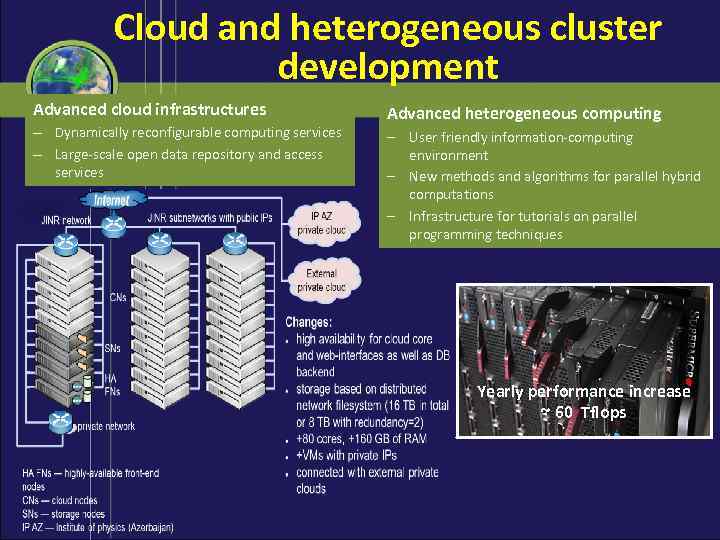
Cloud and heterogeneous cluster development Advanced cloud infrastructures – Dynamically reconfigurable computing services – Large-scale open data repository and access services Advanced heterogeneous computing User friendly information-computing environment New methods and algorithms for parallel hybrid computations Infrastructure for tutorials on parallel programming techniques Yearly performance increase ~ 60 Tflops
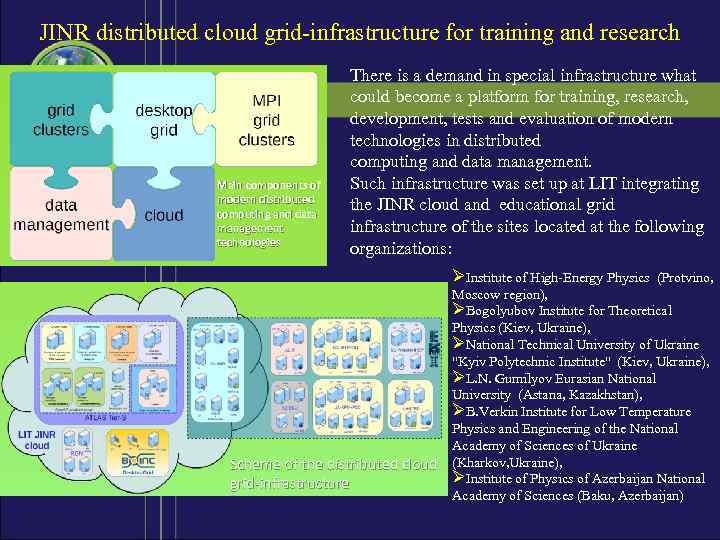
JINR distributed cloud grid-infrastructure for training and research Main components of modern distributed computing and data management technologies There is a demand in special infrastructure what could become a platform for training, research, development, tests and evaluation of modern technologies in distributed computing and data management. Such infrastructure was set up at LIT integrating the JINR cloud and educational grid infrastructure of the sites located at the following organizations: ØInstitute of High-Energy Physics (Protvino, Moscow region), ØBogolyubov Institute for Theoretical Physics (Kiev, Ukraine), ØNational Technical University of Ukraine "Kyiv Polytechnic Institute" (Kiev, Ukraine), ØL. N. Gumilyov Eurasian National University (Astana, Kazakhstan), ØB. Verkin Institute for Low Temperature Physics and Engineering of the National Academy of Sciences of Ukraine Scheme of the distributed cloud (Kharkov, Ukraine), ØInstitute of Physics of Azerbaijan National grid-infrastructure Academy of Sciences (Baku, Azerbaijan)
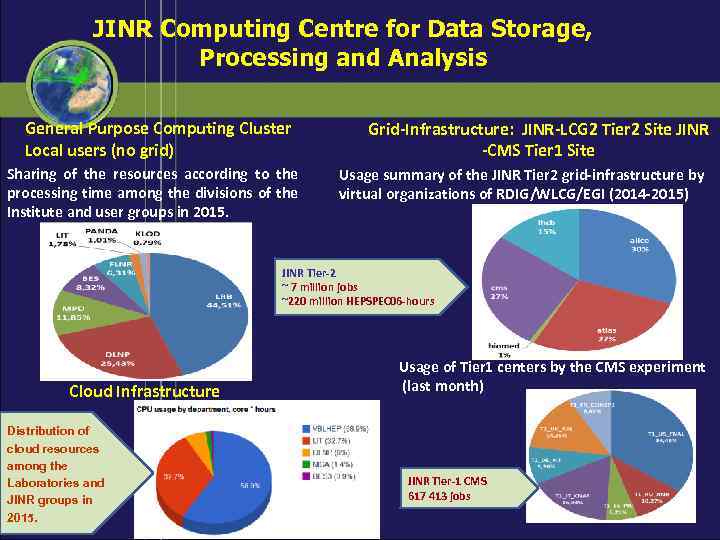
JINR Computing Centre for Data Storage, Processing and Analysis General Purpose Computing Cluster Local users (no grid) Sharing of the resources according to the processing time among the divisions of the Institute and user groups in 2015. Grid-Infrastructure: JINR-LCG 2 Tier 2 Site JINR -CMS Tier 1 Site Usage summary of the JINR Tier 2 grid-infrastructure by virtual organizations of RDIG/WLCG/EGI (2014 -2015) JINR Tier-2 ~ 7 million jobs ~220 million HEPSPEC 06 -hours Cloud Infrastructure Distribution of cloud resources among the Laboratories and JINR groups in 2015. Usage of Tier 1 centers by the CMS experiment (last month) JINR Tier-1 CMS 617 413 jobs 23
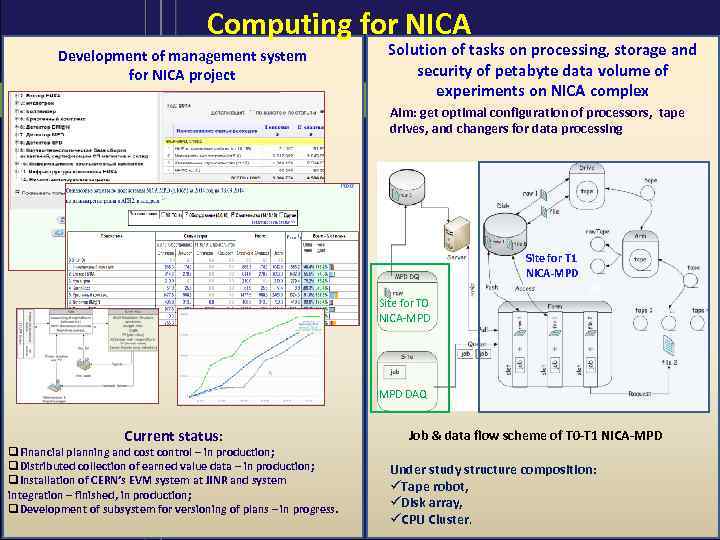
Computing for NICA Development of management system for NICA project Solution of tasks on processing, storage and security of petabyte data volume of experiments on NICA complex Aim: get optimal configuration of processors, tape drives, and changers for data processing Site for T 1 NICA-MPD Site for Т 0 NICA-MPD ss MPD DAQ Current status: q. Financial planning and cost control – in production; q. Distributed collection of earned value data – in production; q. Installation of CERN’s EVM system at JINR and system integration – finished, in production; q. Development of subsystem for versioning of plans – in progress. Job & data flow scheme of Т 0 -Т 1 NICA-MPD Under study structure composition: Tape robot, Disk array, CPU Cluster.
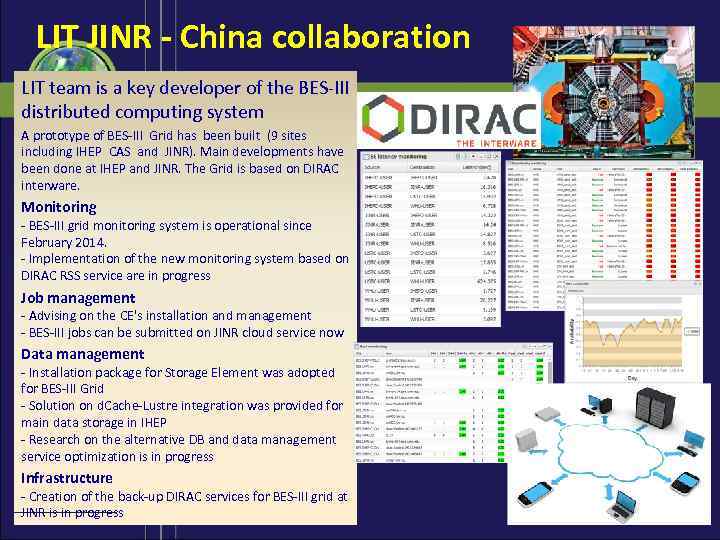
LIT JINR - China collaboration LIT team is a key developer of the BES-III distributed computing system A prototype of BES-III Grid has been built (9 sites including IHEP CAS and JINR). Main developments have been done at IHEP and JINR. The Grid is based on DIRAC interware. Monitoring - BES-III grid monitoring system is operational since February 2014. - Implementation of the new monitoring system based on DIRAC RSS service are in progress Job management - Advising on the CE's installation and management - BES-III jobs can be submitted on JINR cloud service now Data management - Installation package for Storage Element was adopted for BES-III Grid - Solution on d. Cache-Lustre integration was provided for main data storage in IHEP - Research on the alternative DB and data management service optimization is in progress Infrastructure - Creation of the back-up DIRAC services for BES-III grid at JINR is in progress
Worldwide LHC Computing Grid (WLCG) The primary goal of the WLCG project is to create a global infrastructure of regional centers for processing, storage and analysis of data of the LHC physical experiments. The grid-technologies are a basis for constructing this infrastructure. A protocol between CERN, Russia and JINR on participation in the LCG project was signed in 2003. Mo. U about participation in the WLCG project was signed in 2007. Tasks of the Russian centers and JINR within WLCG : • • • Creation of a complex of tests for WLCG software Introduction of WLCG services for experiments Development of WLCG monitoring systems Development of simulation packages for experiments Creation of a Tier 1 center in Russia
JINR activity at WLCG project • Participation in development of software for ATLAS, ALICE, CMS • Development WLCG Dashboard • Global data transfer monitoring system for WLCG infrastructure • NOSQL storage • Integration GRID, Cloud, HPC • Local and global Monitoring of Tier 3 centers • Development of DDM, AGIS for ATLAS • GENSER & MCDB 27
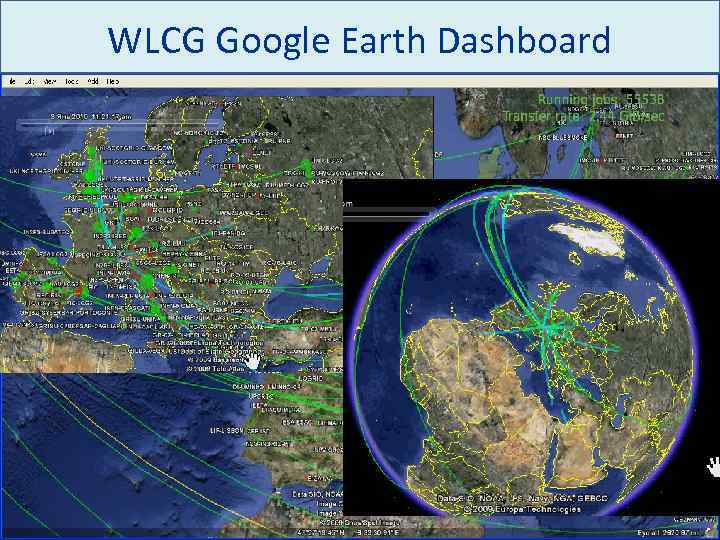
WLCG Google Earth Dashboard 28/98
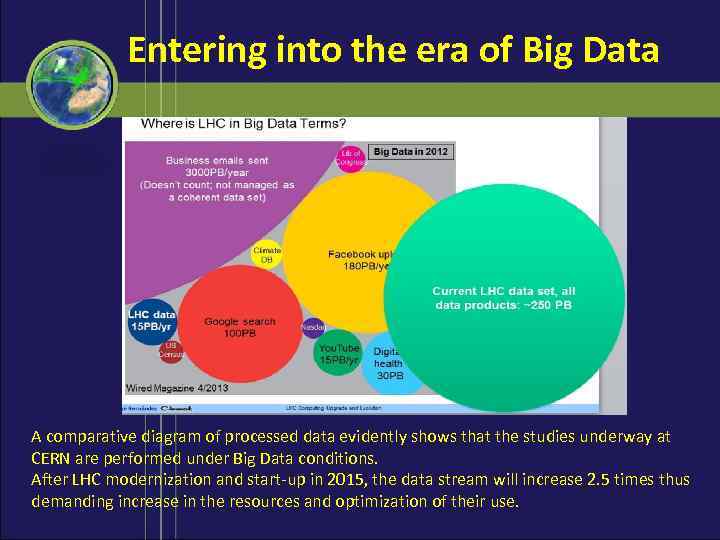
Entering into the era of Big Data A comparative diagram of processed data evidently shows that the studies underway at CERN are performed under Big Data conditions. After LHC modernization and start-up in 2015, the data stream will increase 2. 5 times thus demanding increase in the resources and optimization of their use.
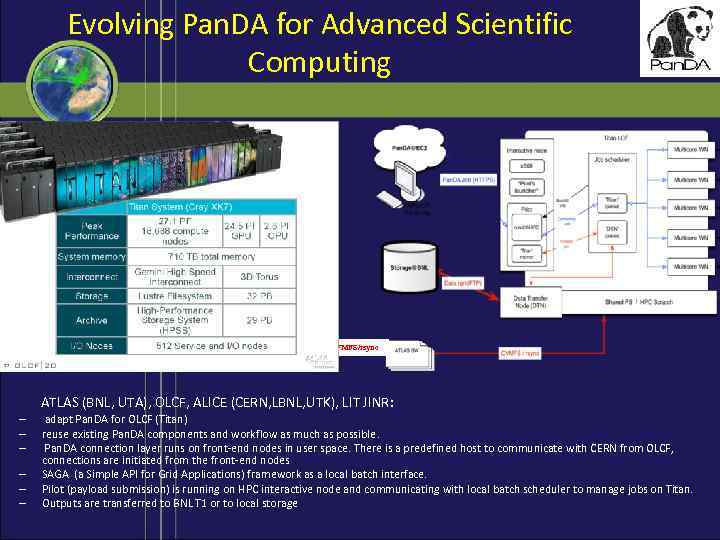
Evolving Pan. DA for Advanced Scientific Computing Grid Center Data (Grid. FTP) Data (Pan. DAmover) Local storage Payload SW CVMFS/rsync ATLAS (BNL, UTA), OLCF, ALICE (CERN, LBNL, UTK), LIT JINR: – – – adapt Pan. DA for OLCF (Titan) reuse existing Pan. DA components and workflow as much as possible. Pan. DA connection layer runs on front-end nodes in user space. There is a predefined host to communicate with CERN from OLCF, connections are initiated from the front-end nodes SAGA (a Simple API for Grid Applications) framework as a local batch interface. Pilot (payload submission) is running on HPC interactive node and communicating with local batch scheduler to manage jobs on Titan. Outputs are transferred to BNL T 1 or to local storage
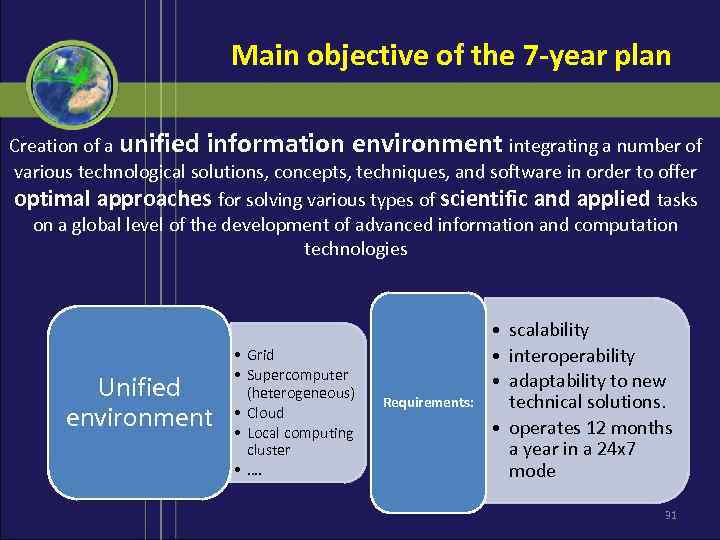
Main objective of the 7 -year plan Creation of a unified information environment integrating a number of various technological solutions, concepts, techniques, and software in order to offer optimal approaches for solving various types of scientific and applied tasks on a global level of the development of advanced information and computation technologies Unified environment • Grid • Supercomputer (heterogeneous) • Cloud • Local computing cluster • …. Requirements: • scalability • interoperability • adaptability to new technical solutions. • operates 12 months a year in a 24 х7 mode 31
CICC to MICC Build up the Multifunctional Information and Computing Complex (MICC) Ø fault-tolerant infrastructure with electrical power storage and distribution facilities with expected availability of 99. 995%, Ø supports and uses a large variety of architectures, platforms, operational systems, network protocols and software products Ø provides means for organization of collective development Ø supports solution of problems of various complexity and subject matter Ø enables management and processing of data of very large volumes and structures (Big Data) Ø provides means to organize scientific research processes Ø enables training IT infrastructure users 32
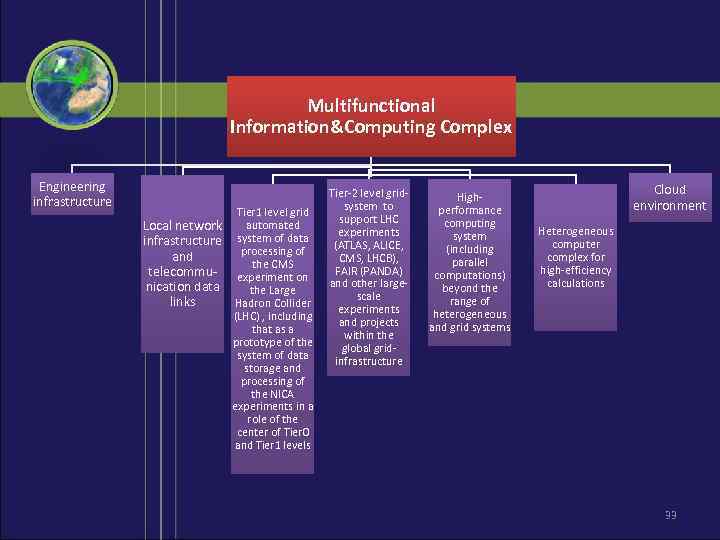
Мultifunctional Information&Computing Complex Engineering infrastructure Tier 1 level grid Local network automated infrastructure system of data processing of and the CMS telecommu- experiment on nication data the Large links Hadron Collider (LHC) , including that as a prototype of the system of data storage and processing of the NICA experiments in a role of the center of Tier 0 and Tier 1 levels Tier-2 level gridsystem to support LHC experiments (ATLAS, ALICE, CMS, LHCB), FAIR (PANDA) and other largescale experiments and projects within the global gridinfrastructure Highperformance computing system (including parallel computations) beyond the range of heterogeneous and grid systems Cloud environment Heterogeneous computer complex for high-efficiency calculations 33
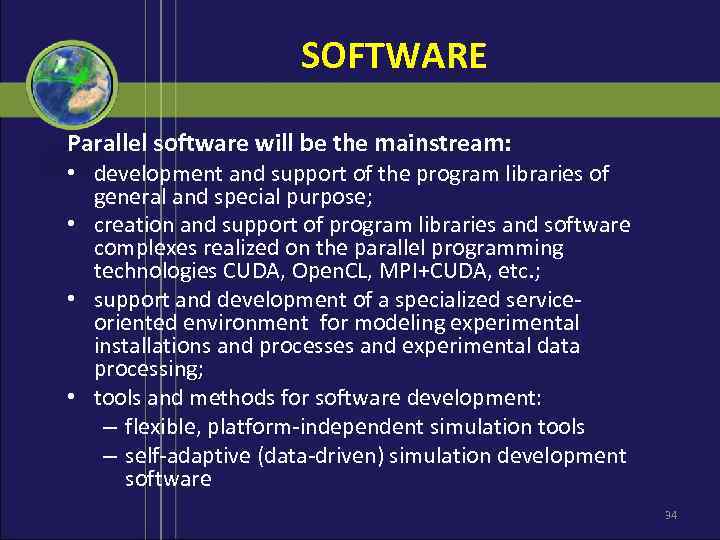
SOFTWARE Parallel software will be the mainstream: • development and support of the program libraries of general and special purpose; • creation and support of program libraries and software complexes realized on the parallel programming technologies CUDA, Open. CL, MPI+CUDA, etc. ; • support and development of a specialized serviceoriented environment for modeling experimental installations and processes and experimental data processing; • tools and methods for software development: – flexible, platform-independent simulation tools – self-adaptive (data-driven) simulation development software 34
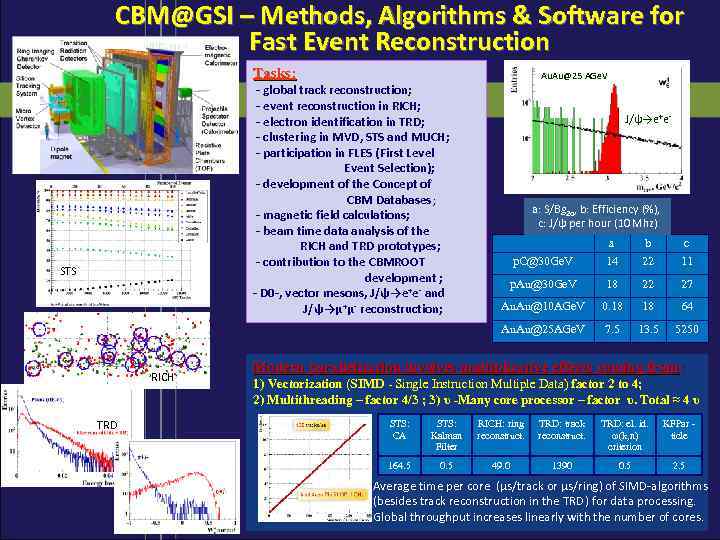
CBM@GSI – Methods, Algorithms & Software for Fast Event Reconstruction Tasks: Au. Au@25 AGe. V - global track reconstruction; - event reconstruction in RICH; - electron identification in TRD; - clustering in MVD, STS and MUCH; - participation in FLES (First Level Event Selection); - development of the Concept of CBM Databases ; - magnetic field calculations; - beam time data analysis of the RICH and TRD prototypes; - contribution to the CBMROOT development ; - D 0 -, vector mesons, J/ψ→e+e- and J/ψ→μ+μ- reconstruction; J/ψ→e+e- a: S/Bg 2σ, b: Efficiency (%), c: J/ψ per hour (10 Mhz) RICH TRD p. C@30 Ge. V b 22 c 11 p. Au@30 Ge. V 18 22 27 Au. Au@10 AGe. V 0. 18 18 64 Au. Au@25 AGe. V STS a 14 7. 5 13. 5 5250 Modern parallelization involves multiplicative effects coming from: 1) Vectorization (SIMD - Single Instruction Multiple Data) factor 2 to 4; 2) Multithreading – factor 4/3 ; 3) υ -Many core processor – factor υ. Total ≈ 4 υ STS: CA STS: Kalman Filter RICH: ring reconstruct. TRD: track reconstruct. TRD: el. id. ω(k, n) criterion KFPar ticle 164. 5 0. 5 49. 0 1390 0. 5 2. 5 Average time per core (μs/track or μs/ring) of SIMD-algorithms (besides track reconstruction in the TRD ) for data processing. Global throughput increases linearly with the number of cores.
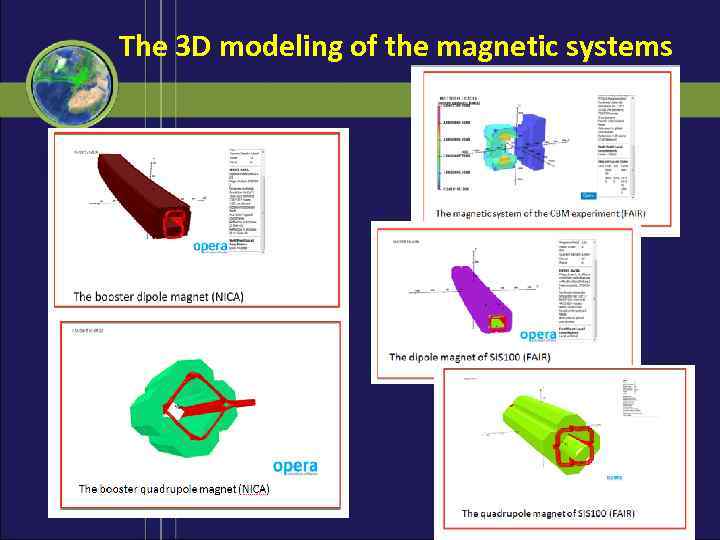
The 3 D modeling of the magnetic systems 36
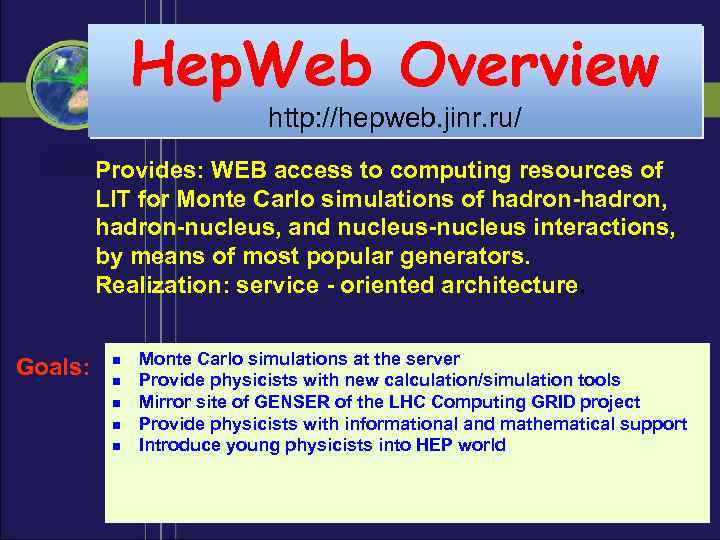
Hep. Web Overview http: //hepweb. jinr. ru/ Provides: WEB access to computing resources of LIT for Monte Carlo simulations of hadron-hadron, hadron-nucleus, and nucleus-nucleus interactions, by means of most popular generators. Realization: service - oriented architecture. Goals: n n n Monte Carlo simulations at the server Provide physicists with new calculation/simulation tools Mirror site of GENSER of the LHC Computing GRID project Provide physicists with informational and mathematical support Introduce young physicists into HEP world
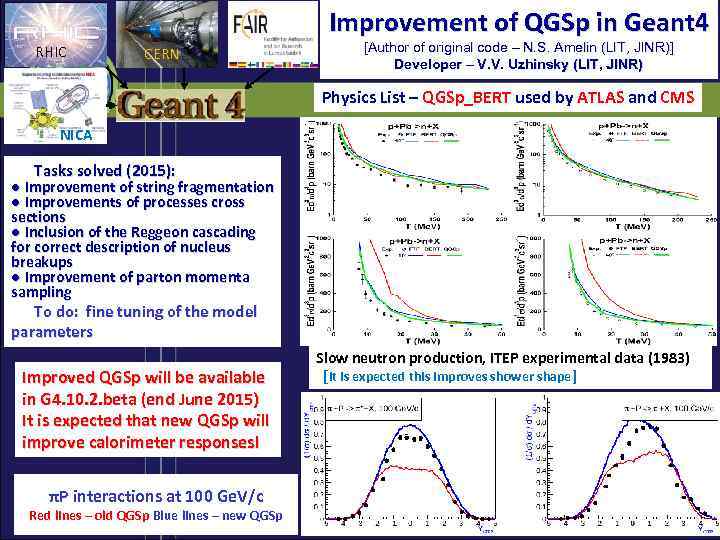
Improvement of QGSp in Geant 4 RHIC CERN [Author of original code – N. S. Amelin (LIT, JINR)] Developer – V. V. Uzhinsky (LIT, JINR) Physics List – QGSp_BERT used by ATLAS and CMS NICA Tasks solved (2015): ● Improvement of string fragmentation ● Improvements of processes cross sections ● Inclusion of the Reggeon cascading for correct description of nucleus breakups ● Improvement of parton momenta sampling To do: fine tuning of the model parameters Improved QGSp will be available in G 4. 10. 2. beta (end June 2015) It is expected that new QGSp will improve calorimeter responses! πP interactions at 100 Ge. V/c Red lines – old QGSp Blue lines – new QGSp Slow neutron production, ITEP experimental data (1983) [It is expected this improves shower shape]
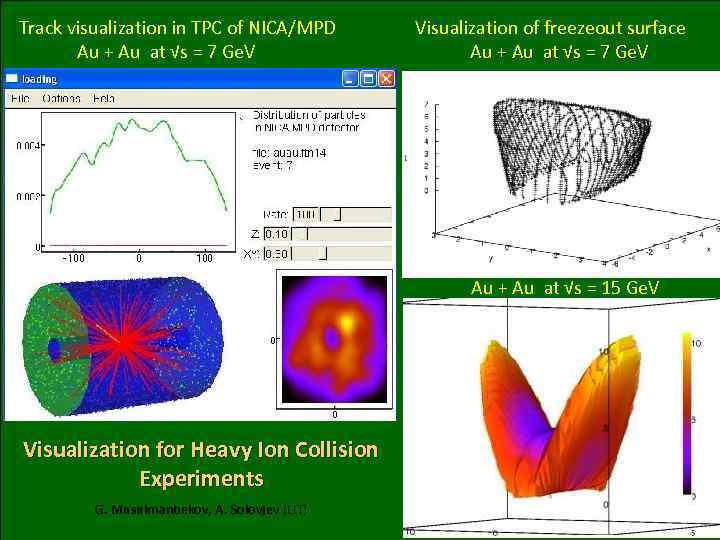
Track visualization in TPC of NICA/MPD Au + Au at √s = 7 Ge. V Visualization of freezeout surface Au + Au at √s = 7 Ge. V New additions to “JINRLIB” Au + Au at √s = 15 Ge. V Visualization for Heavy Ion Collision Experiments G. Musulmanbekov, A. Solovjev (LIT) 39/98
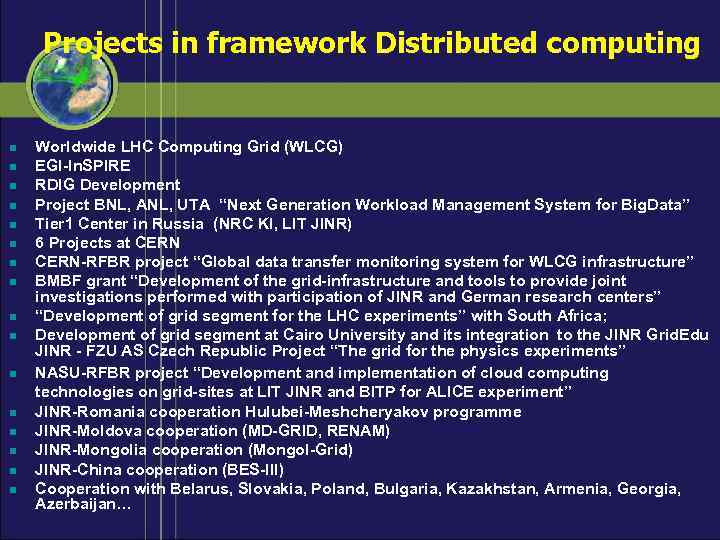
Projects in framework Distributed computing n n n n Worldwide LHC Computing Grid (WLCG) EGI-In. SPIRE RDIG Development Project BNL, ANL, UTA “Next Generation Workload Management System for Big. Data” Tier 1 Center in Russia (NRC KI, LIT JINR) 6 Projects at CERN-RFBR project “Global data transfer monitoring system for WLCG infrastructure” BMBF grant “Development of the grid-infrastructure and tools to provide joint investigations performed with participation of JINR and German research centers” “Development of grid segment for the LHC experiments” with South Africa; Development of grid segment at Cairo University and its integration to the JINR Grid. Edu JINR - FZU AS Czech Republic Project “The grid for the physics experiments” NASU-RFBR project “Development and implementation of cloud computing technologies on grid-sites at LIT JINR and BITP for ALICE experiment” JINR-Romania cooperation Hulubei-Meshcheryakov programme JINR-Moldova cooperation (MD-GRID, RENAM) JINR-Mongolia cooperation (Mongol-Grid) JINR-China cooperation (BES-III) Cooperation with Belarus, Slovakia, Poland, Bulgaria, Kazakhstan, Armenia, Georgia, Azerbaijan…

• On 28 September – 02 October, 2015, Montenegro (Budva), will host the regular JINR XXV Symposium on Nuclear Electronics and Computing - NEC'2015 and students’ schools on advanced information technologies • http: //NEC 2015. jinr. ru

Thank you for your attention! 42
Скачать презентацию DISTRIBUTED COMPUTING AND BIG DATA AT JINR
Big Data JINR.pptx