


 Скачать презентацию Disorders of peripheral nerves Symptoms and signs
3e340a32e34c87cb0b0546b6744aaf40.ppt
- Количество слайдов: 72
 Disorders of peripheral nerves
 Symptoms and signs of disorders of nerves • Caused by changes in axons –Increased conduction time –Increased temporal dispersion • Expression of neural plasticity causing changes in the function of CNS structures


 Anatomy of peripheral nerves
 Anatomy of peripheral nerves • Peripheral nerves have different conduction velocity
 Conduction velocity in nerves and fiber tracts • Proportional to fiber diameter • Peripheral nerves: ~50 meter/sec (5 cm/msec) • Spinal descending tracts: ~70 -100 m/sec • Cranial nerves: varies (Auditory nerve: 20 m/sec)
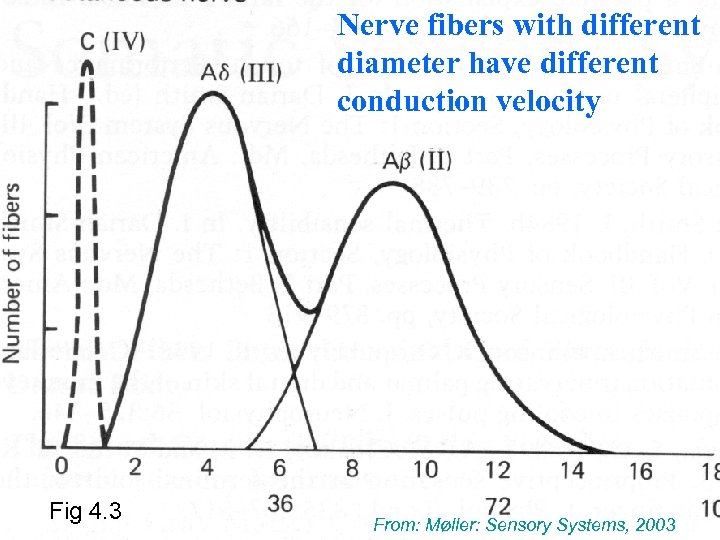 Nerve fibers with different diameter have different conduction velocity Fig 4. 3 From: Møller: Sensory Systems, 2003
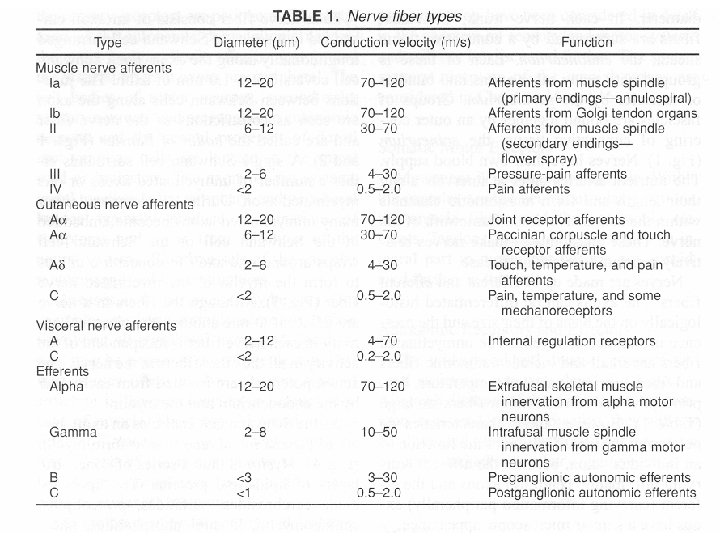
 From: Møller: Sensory Systems, 2003
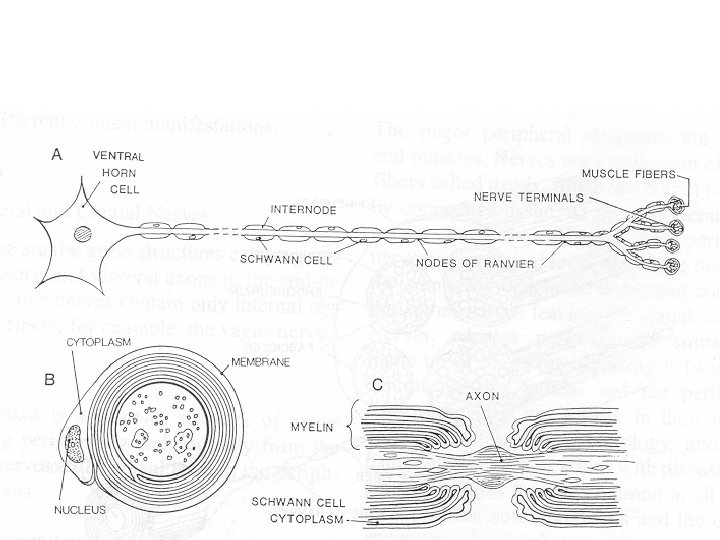
 Many nerves are mixed nerves • Contains nerve fibers with different conduction velocity
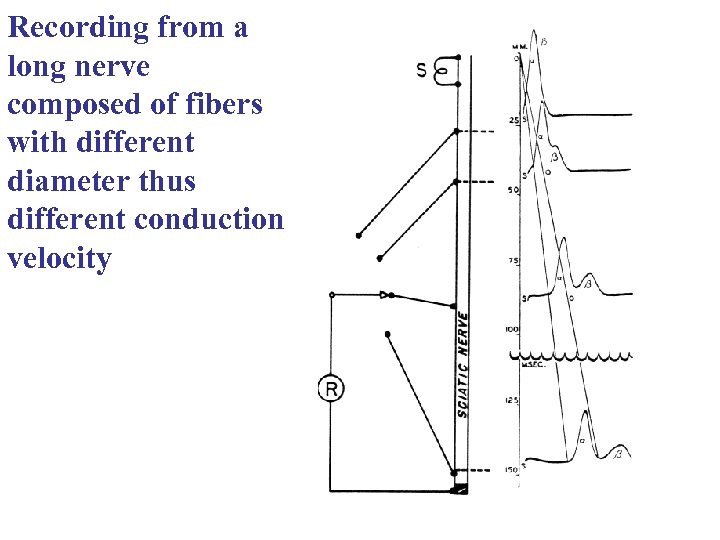 Recording from a long nerve composed of fibers with different diameter thus different conduction velocity
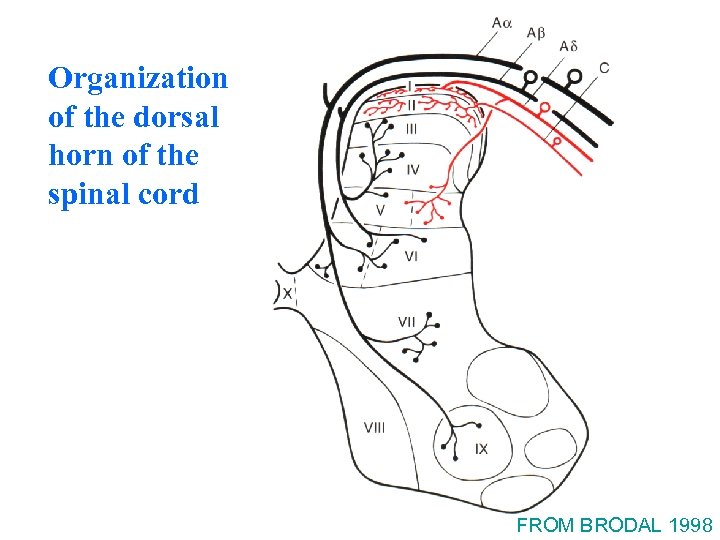 Organization of the dorsal horn of the spinal cord FROM BRODAL 1998
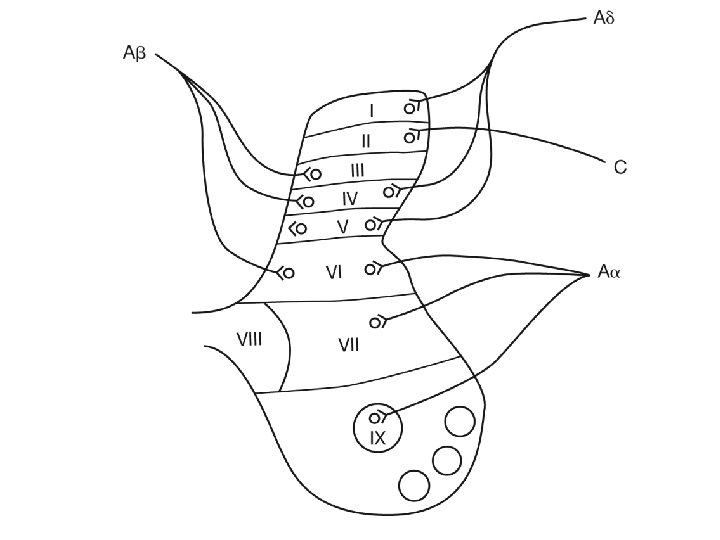
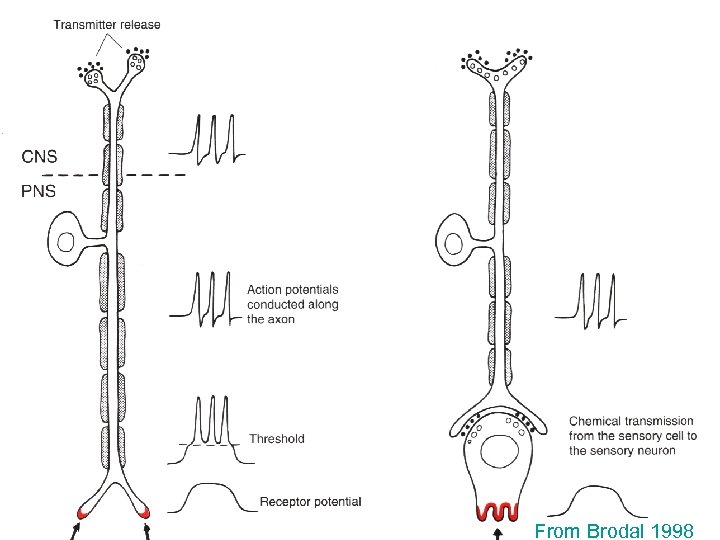
 Many nerves are bipolar nerves • Examples are dorsal roots
 From Brodal 1998
 Pathologies of peripheral nerves Nerves: • Neurapraxia • Axonotmesis • Neurotmesis Nuclei: • Altered discharge pattern (burst activity)
 Causes of injury to peripheral nerves • • Trauma Compression (entrapment) Irritation Metabolic disorders Inflammatory (neuritis) Virus Age related changes
 Trauma to peripheral nerves • • Interruption of nerve trunk (neurotmesis) Interruption of axons (axonotmesis) Total conduction failure (neurapraxia) Impaired conduction (no morphologic change)

 Neurapraxia
 Total conduction failure (neurapraxia) • No function • Recovers spontaneously over days or weeks (when the cause is resolved) • Results of spontaneous recovery are almost always good
 Interruption of axons (axonotmesis) • No function • New axon grows from cell body (spontaneously)
 Axonotmesis • Nerve may regenerate from injured location away from the cell body • Regeneration: 1 mm per day (approx. 1 inch per month) • Results of spontaneous recovery are good to moderate depending on distance
 Interruption of nerve trunk (neurotmesis) • No function • Irreversible, grafting is required
 Neurotmesis • Does not regenerate spontaneously • Grafting is necessary to restore function • Results of grating are good to moderate to failures
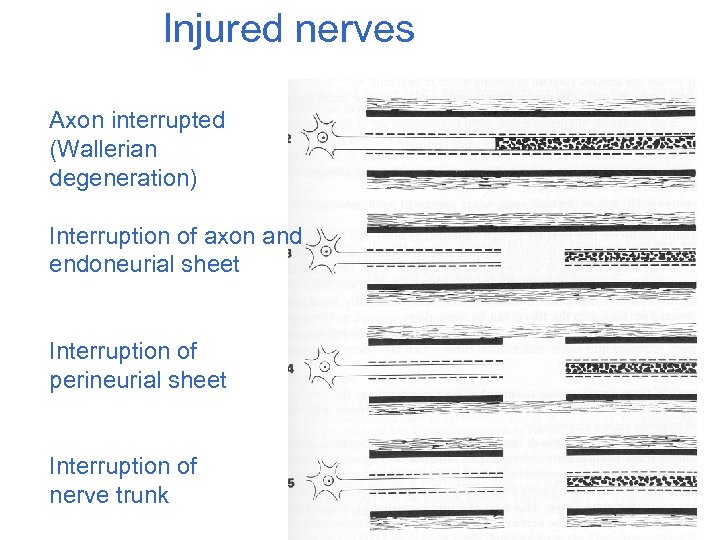 Injured nerves Axon interrupted (Wallerian degeneration) Interruption of axon and endoneurial sheet Interruption of perineurial sheet Interruption of nerve trunk
 Axonotmesis Type 2 Neurotmesis Type 3 Type 4 Type 5
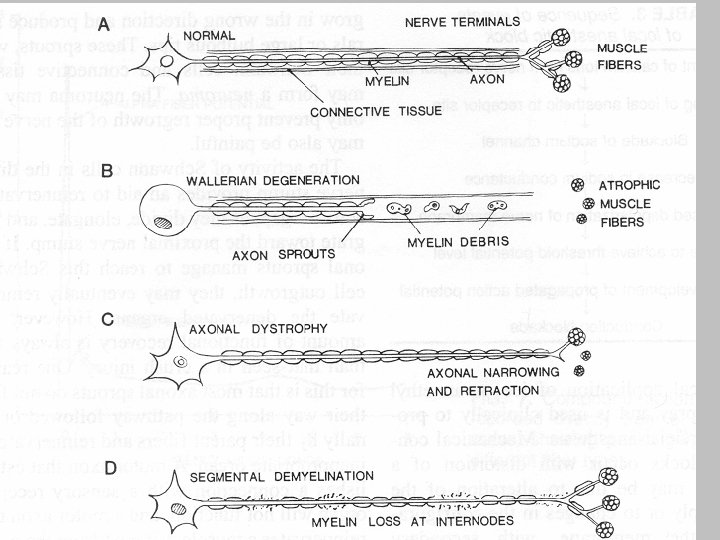
 Interrupted axons • Degenerate distally (away from cell body) • Wallerian degeneration • Interrupted axons regenerate from injury, provided that endoneural tube is intact
 Wallerian degeneration means: The degenerative changes the distal segment of a peripheral nerve fiber (axon and myelin) undergoes when its continuity with its cell body is interrupted by a focal lesion. Syn: orthograde degeneration, secondary degeneration.
 START 9/7/05
 Remaining symptoms after nerve healing of injury • Synkinesis • Hyperactivity (Mostly caused by effect on central nervous system structures)
 Electrophysiological manifestations of pathologies of peripheral nerves Nerves: • Increased conduction times • Increased or decreased discharge activity • Dispersion of neural activity • Altered discharge pattern (burst activity)
 Cause of neural pathologies • • Mechanical (compression, stretching) Heat Metabolic Inflammation Iatrogenic (from medical treatment) Idiopathic (unknown) Age
 Trauma • Gunshot to limbs • Accidents • Surgery (iatrogenic)
 Sprouting • Caused by injury • Caused by regeneration
 Formation of neuroma • Sprouting of axons at cut of a nerve • Injured perineurium
 Neuroma are mechanically sensitive
 Compression • No known cause • Scar tissue • Changes in bone formation
 Block of axoplasmatic flow
 Irritation • Scar tissue • Blood vessels
 Metabolic and chemical induced peripheral neuropathy • Diabetes • Uremic, hepatic and vitamin (B 1, B 2, B 12) deficits • Alcohol • Chemical
 Inflammatory (neuritis) • Guillain-Barre syndrome
 Virus • Herpes simplex (causes severe pain)
 Demyelination • Ephaptic transmission • Reflection of neural activity • Mechanosensitivity
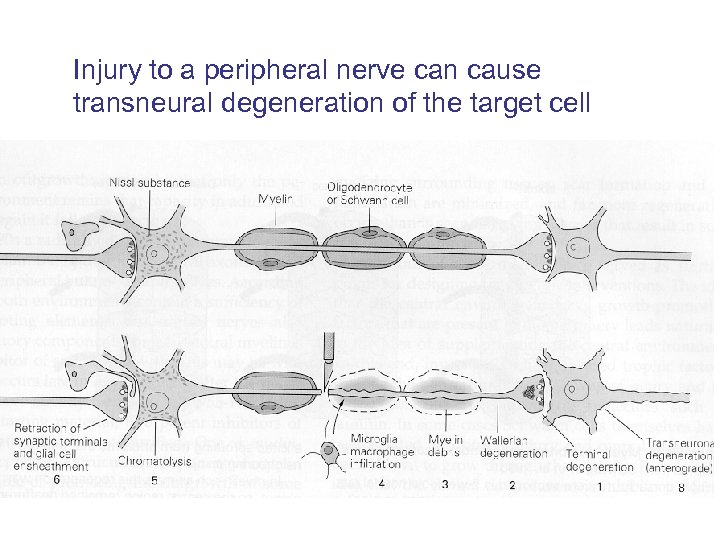 Injury to a peripheral nerve can cause transneural degeneration of the target cell
 Functional implications of neural injuries • Change the function of the target central neurons: – May cause expression of neural plasticity
 Abnormal activity in a peripheral nerve can cause changes in the function of the target cells
 Cause of synkinesis and hyperactivity • Plastic changes in target neurons induced by the injury
 Expression of neural plasticity from injury to sensory nerves: • Deprivation of input • Overstimulation
 Impaired conduction • Decreased conduction velocity • Increased refractory period • Ectopic (out of place) activity
 Irritation of peripheral nerves • Cause change in central processing – Pain – Hypersensitivity – Spasm
 Irritation of nerve roots • Cause change in central processing • Transition between peripheral and central myelin is especially sensitive
 Irritation of nerve roots • Pain • Hyperalgesia • Spasm (Expression of neural plasticity)
 Start 9/12/05
 Signs of peripheral nerve disorders • Motor nerves: – Paralysis – Spasm – Electrophysiologic changes
 Explanation A sign is any abnormality indicative of disease, discoverable on examination of the patient.
 Symptoms of peripheral nerve disorders • Sensory nerves – Numbness – Tingling – Pain
 Explanation A symptom is any morbid phenomenon or departure from the normal in structure, function, or sensation, experienced by the patient and indicative of disease.
 Slightly injured nerves (demyelination) • • Decreased conduction velocity Abnormal firing pattern Peripheral nerves as impulse generators Possible ephaptic*) transmission *) Direct transfer of impulse activity from one nerve fiber to another
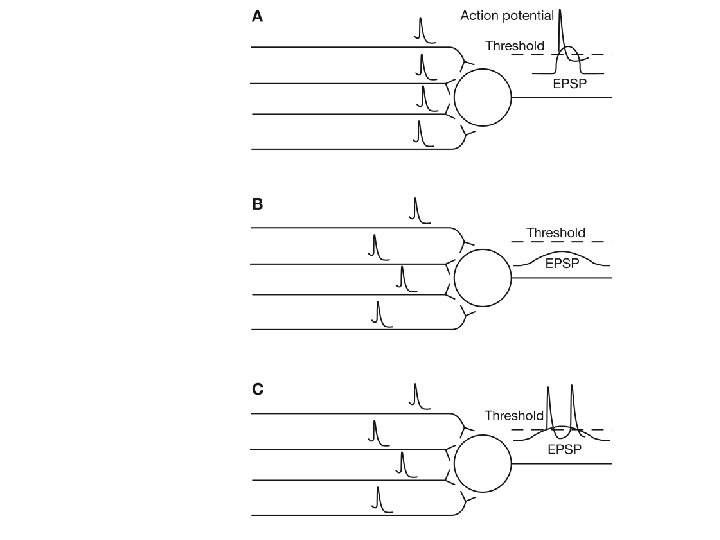
 Decreased conduction velocity • Temporal dispersion of neural activity • Change in neural coding of sensory stimuli
 Decreased conduction velocity • The decrease is not the same for all fibers • Temporal dispersion of neural activity
 Increased spatial dispersion • Can decrease excitation • Can increase excitation • Can degrade temporal information
 From Møller 2005
 Temporal dispersion 1. Can decrease the activation of the target neuron 2. Can increase the duration of firing of the target neuron, which can increase or decrease activation of the following neuron. 3. Increased temporal dispersion may prevent activation of the next neuron in a chain, or it may make it possible to activate neurons that are not normally activated. 4. Increased temporal dispersion may degrade information when temporal coding is important such as in sensory systems, most pronounced in hearing
 Abnormal firing pattern • Burst firing
 From Møller 2005
 Peripheral nerves as impulse generators • Ectopic activity – After demyelination – Diabetic neuropathy – Adrenergic substances facilitate impulse generation
 Ectopic firing • Burst • Rhythmic • After-discharges to stimulation