Скачать презентацию Disclosures No relationships or conflicts to report
86ba9edf2430e06e3e0c35de2610bdae.ppt
- Количество слайдов: 47
 Disclosures No relationships or conflicts to report
 Industry Relationships: Necessary for Systematic Quality Improvement QCOR May 2010 Jack Lewin, M. D. , CEO The American College of Cardiology
 History and Evolution of Industry Support
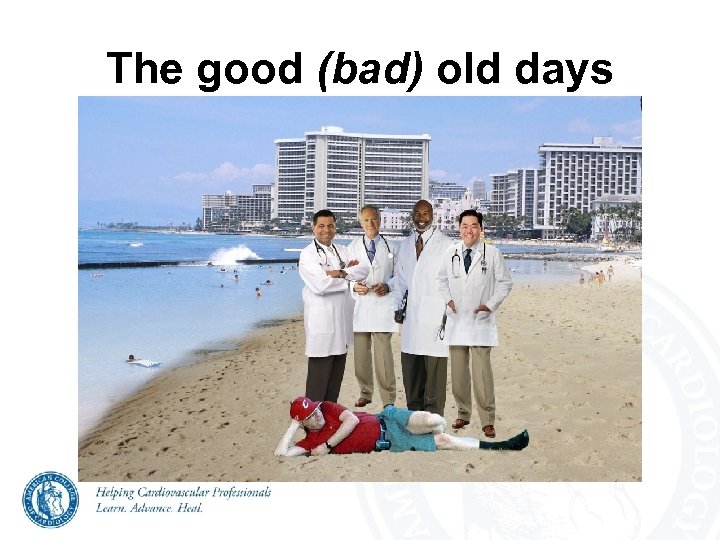 The good (bad) old days
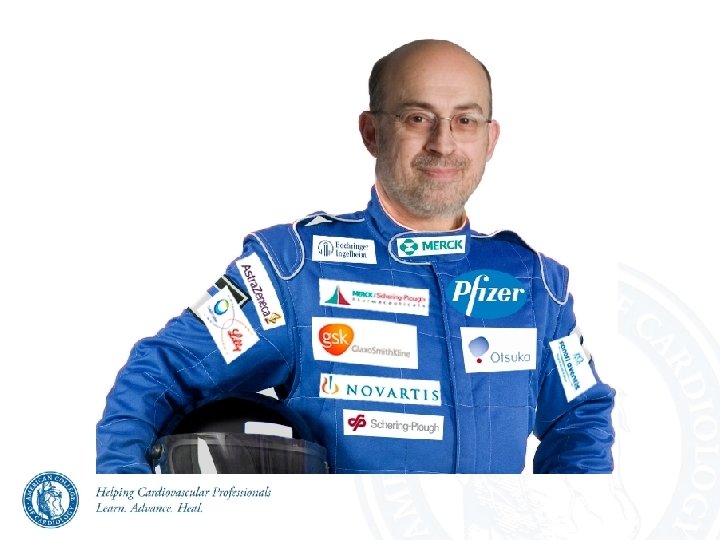
 The Changing Environment • OIG – DOJ • House and Senate Oversight Committees • Voluntary Industry Changes • Physician Sunshine Act
 Need for Industry Support
 Medical Societies and Industry Funding • • • Scientific Publications Expositions at Meetings Research Grants/Funding CME Funding Quality of Care Projects Other (philanthropy)
 The Real Question What should national policy be for future support of medical education, scientific publication and research?
 The Real Question • Public support for CME, scientific research and publication is scarce • Industry funds most research and advances in care • RWI and intellectual conflicts should be addressed • Restricting expert participation can be good or bad with respect to societal needs for quality improvement
 How are we doing in systematic quality improvement?
 Beth Mc. Glynn RAND study in NEJM The Quality of Health Care Delivered to Adults in the United States; N Engl J Med 2003 348: 2635 -2645
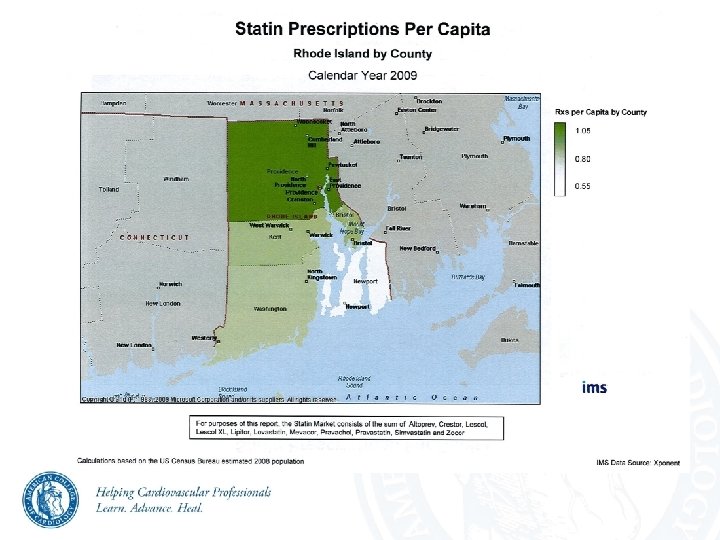
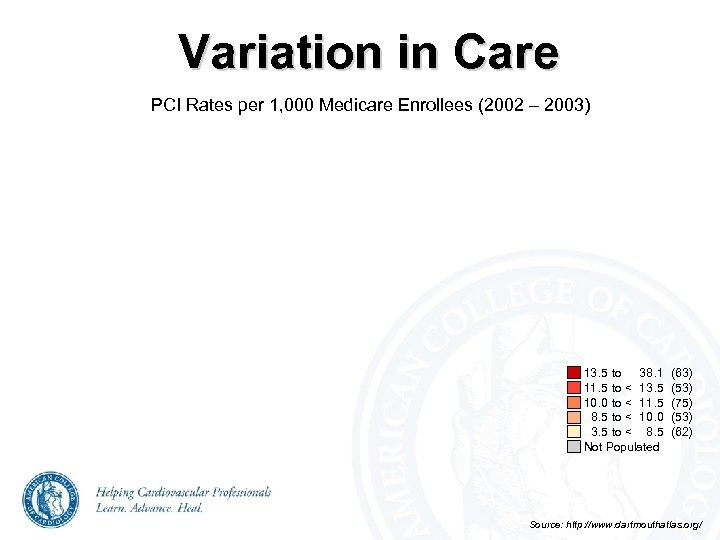 Variation in Care PCI Rates per 1, 000 Medicare Enrollees (2002 – 2003) 13. 5 to 38. 1 11. 5 to < 13. 5 10. 0 to < 11. 5 8. 5 to < 10. 0 3. 5 to < 8. 5 Not Populated (63) (53) (75) (53) (62) Source: http: //www. dartmouthatlas. org/
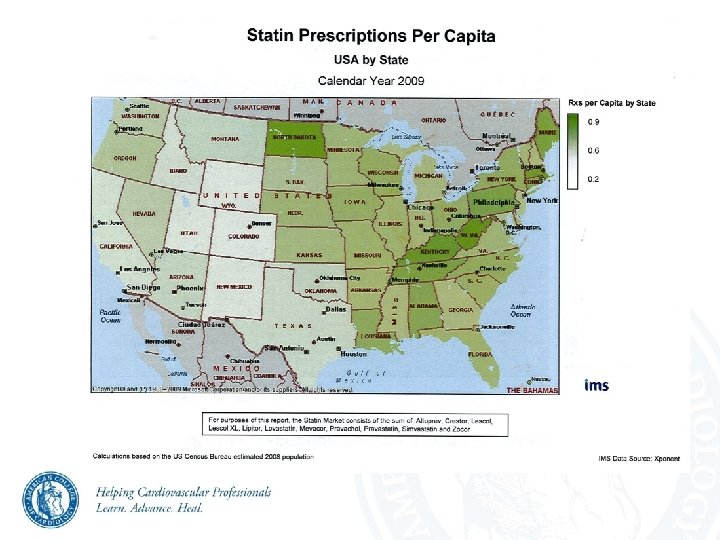
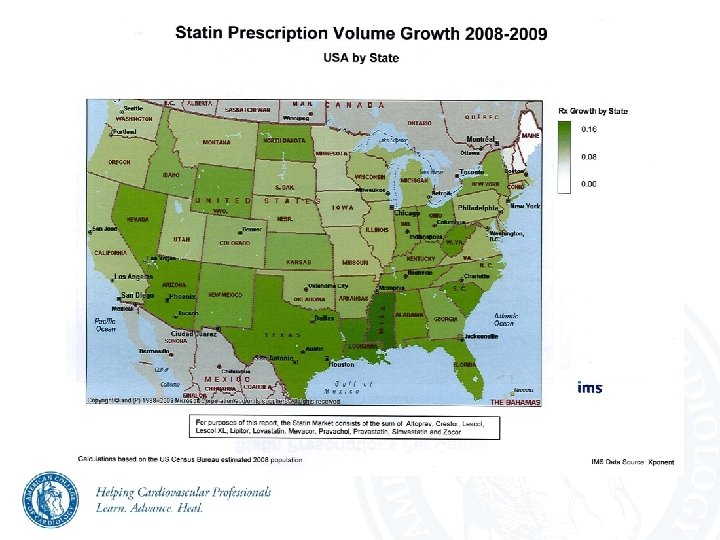
 ces (NAS) emy of Scien ational Acad N celeration of osion and ac expl knowledge
 Changing pressures of practice
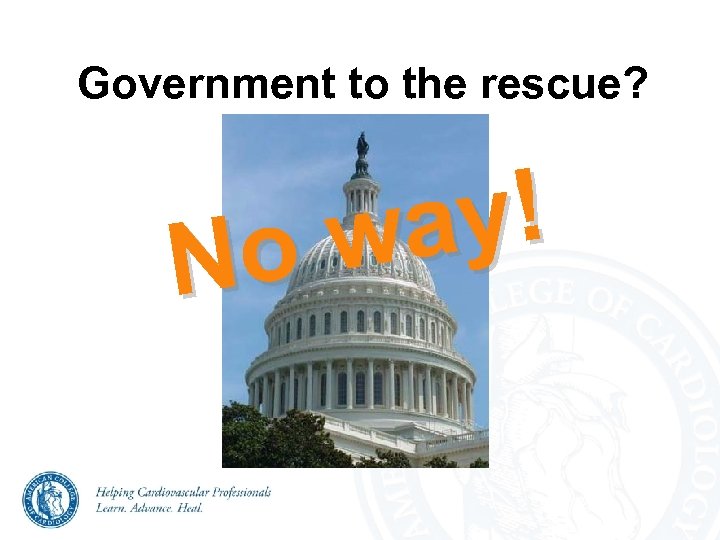 Government to the rescue? y! wa No
 Is there a role for industry? Yes
 Does industry have business motives? rse ou fc O so…
 If you accept industry funding, can you be… ? unbiased ethical
 Industry relationships can be managed effectively They provide value when ethically structured
 OK for research but not for CME?
 How do we manage vs. restrict?
 Relationships With Industry • Disclosure • Managing relationships vs. Restricting participation • ACC Industry Forum • ACC OIG – DOJ discussions • ACC Web site
 What the ACC has done
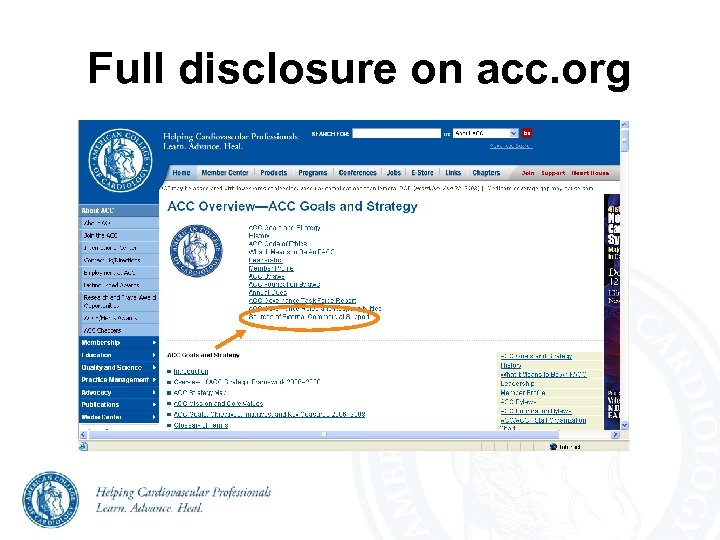 Full disclosure on acc. org
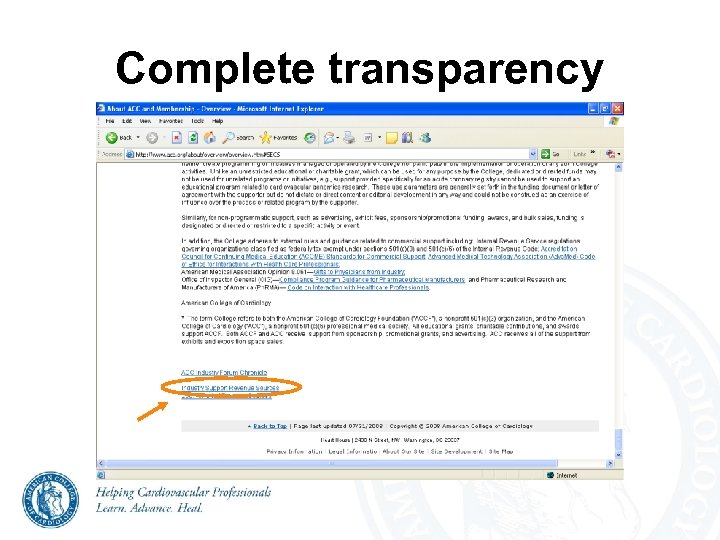 Complete transparency
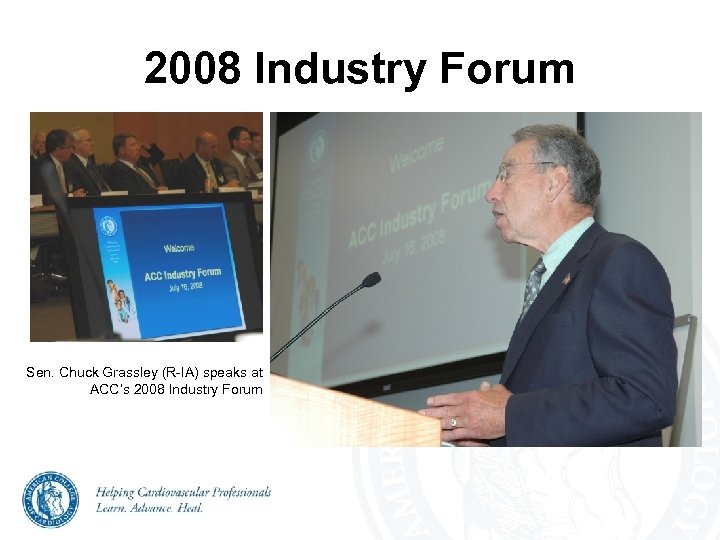 2008 Industry Forum Sen. Chuck Grassley (R-IA) speaks at ACC’s 2008 Industry Forum
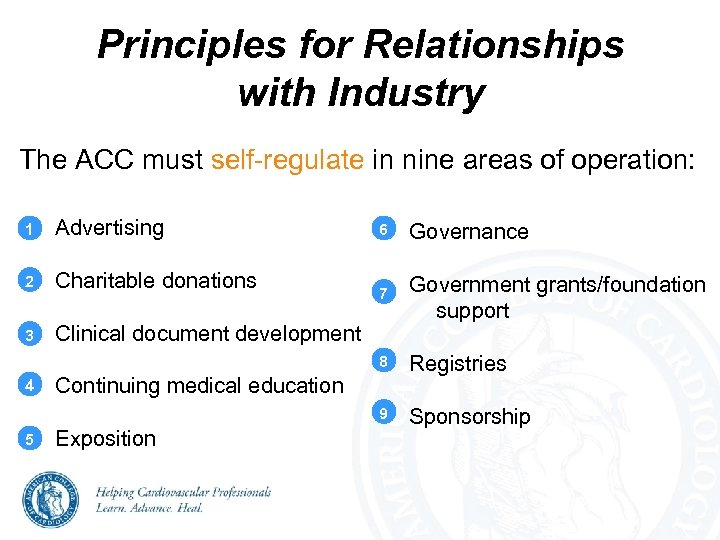 Principles for Relationships with Industry The ACC must self-regulate in nine areas of operation: 1 Advertising 2 Charitable donations 3 Clinical document development 7 Government grants/foundation support Registries 9 5 Governance 8 4 6 Sponsorship Continuing medical education Exposition
 Disclosure of Relationship • Level/value • Relevance • Timing and Frequency • Type
 New Challenges In Addressing Patient Education and Adherence
 • National health initiative designed to improve heart health • Key Principles – Engage people in the active management of their own heart health. – Empower individuals to make better, hearthealthier lifestyle choices.
 • How it works: – Strengthens the doctor/patient relationship by delivering patient-centered tools to doctors’ offices. – Provides a comprehensive, web-based platform with information and smart, practical tools for patients – Uses community-based events to provide everyday strategies to improve heart health – Works with national consumer products companies to help deliver Cardio. Smart strategies to people at risk for heart disease.
 • Industry partners must: – Show a substantial and credible commitment to Cardio. Smart goals and objectives and offer products and/or services that relate to encouraging heart healthy behaviors. – Be approved through the ACC’s review process, which includes initial approval by the College’s Patient. Centered Care Committee followed by approval by the Executive Committee of the Board of Trustees. – Not require or expect any endorsement by the ACC, either actual or implied, of any product or service.
 • Industry partners must: – Commit to the complete editorial independence of the ACC. – Abide by the ACC’s overarching “Principles of Relationships with Industry” – Ensure that food products and over-the-counter medications that make scientific claims related to health (including heart health) are substantiated by the appropriate Federal governing body (such as the FDA or USDA).
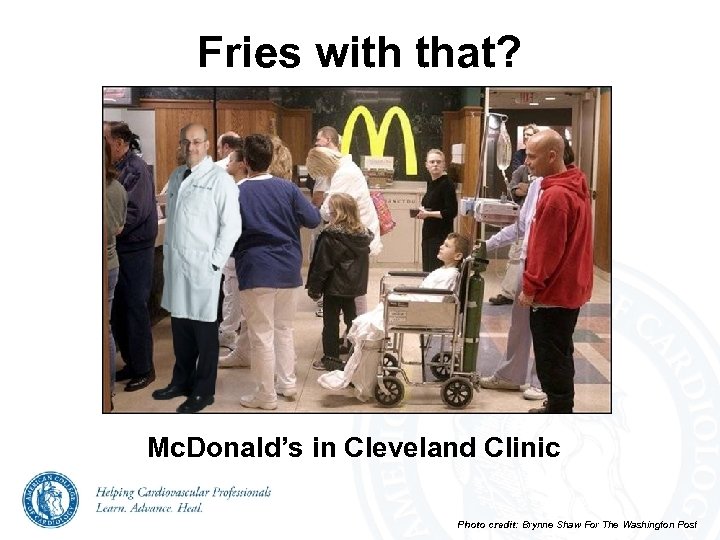 Fries with that? Mc. Donald’s in Cleveland Clinic Photo credit: Brynne Shaw For The Washington Post
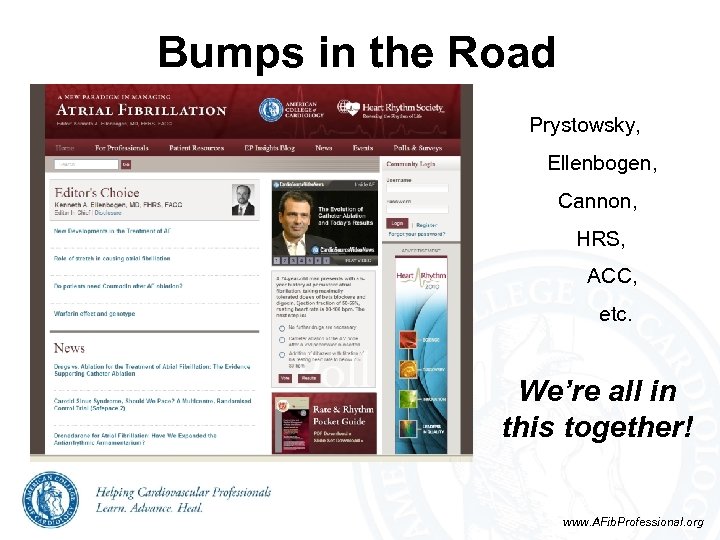 Bumps in the Road Prystowsky, Ellenbogen, Cannon, HRS, ACC, etc. We’re all in this together! www. AFib. Professional. org
 Lessons • Not just CME! • Competing clinical views need to be aired and balanced • Disclosure and transparency is broader than individuals Managing RWI is the key!
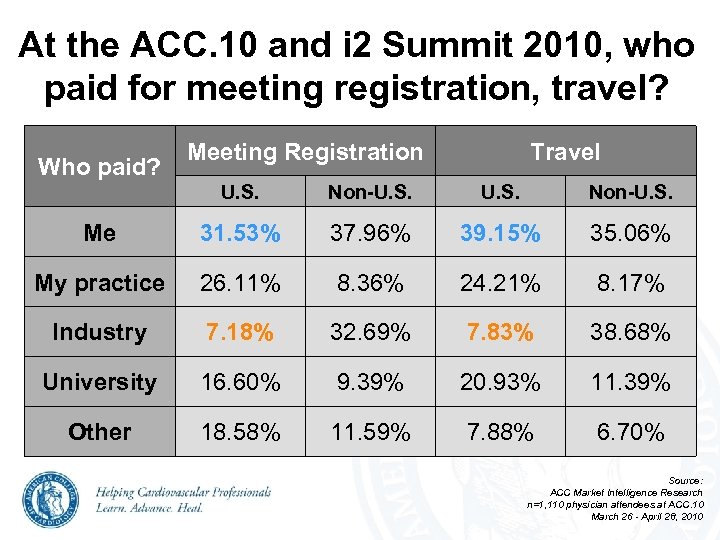 At the ACC. 10 and i 2 Summit 2010, who paid for meeting registration, travel? Who paid? Meeting Registration Travel U. S. Non-U. S. Me 31. 53% 37. 96% 39. 15% 35. 06% My practice 26. 11% 8. 36% 24. 21% 8. 17% Industry 7. 18% 32. 69% 7. 83% 38. 68% University 16. 60% 9. 39% 20. 93% 11. 39% Other 18. 58% 11. 59% 7. 88% 6. 70% Source: ACC Market Intelligence Research n=1, 110 physician attendees at ACC. 10 March 26 - April 28, 2010
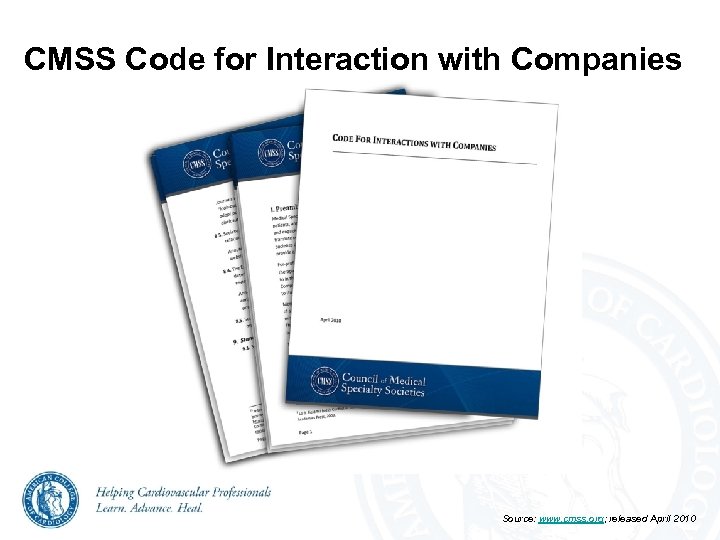 CMSS Code for Interaction with Companies Source: www. cmss. org; released April 2010
 Our ongoing commitment to an evolving process
 Our Commitment to Science ACC and its members are committed to an unbiased and balanced review of the science … regardless of funding sources.
 Our Commitment to Patients The ACC must and will continue to manage our relationships with industry responsibly, ethically and in the best interests of patient care.
 “The best interest of the patient is the only interest to be considered. ” – William Mayo, M. D.