


 Скачать презентацию Disclaimer The views expressed are my own and
323b49111d9d400646476a2863a1503c.ppt
- Количество слайдов: 18
 Disclaimer The views expressed are my own and do not necessarily reflect official positions of the Federal Reserve Bank of St. Louis, or the Federal Reserve System. 1
 Why Trade? The Fundamentals of International Trade Chris Neely 2
 Why Do We Trade? F Post-NAFTA Overview F Why Do We Trade? F Who Trades? F What Is a Trade Deficit? F Do Trade Deficits Lead to Unemployment? F Trade Negatives: Inequality & Dislocations 3
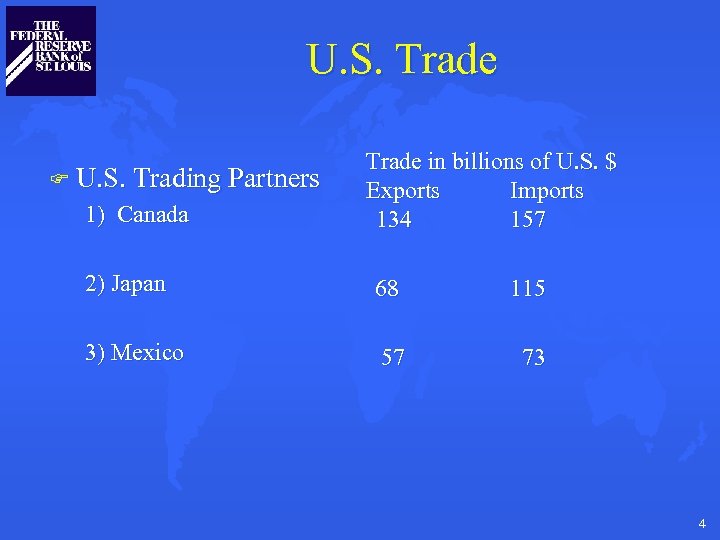 U. S. Trade F U. S. Trading Partners 1) Canada Trade in billions of U. S. $ Exports Imports 134 157 2) Japan 68 115 3) Mexico 57 73 4
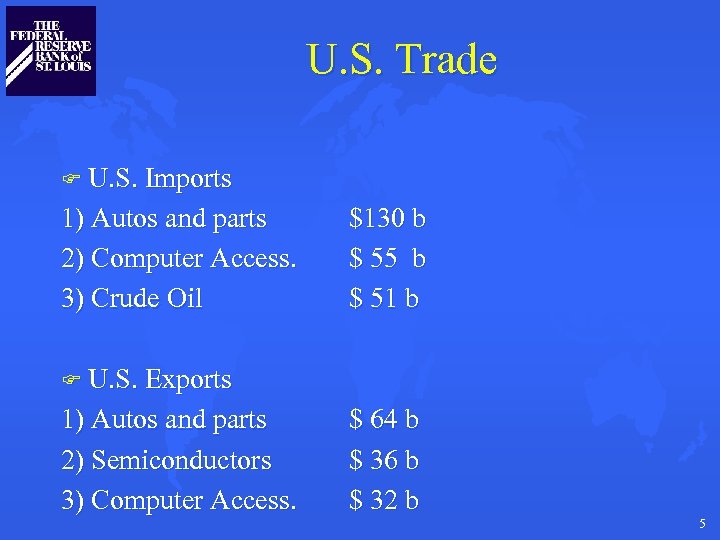 U. S. Trade F U. S. Imports 1) Autos and parts 2) Computer Access. 3) Crude Oil $130 b $ 55 b $ 51 b F U. S. Exports 1) Autos and parts 2) Semiconductors 3) Computer Access. $ 64 b $ 36 b $ 32 b 5
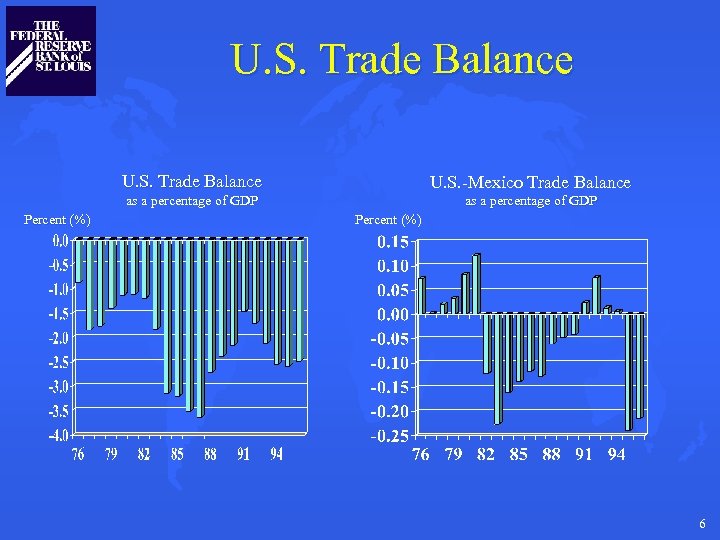 U. S. Trade Balance as a percentage of GDP Percent (%) U. S. -Mexico Trade Balance as a percentage of GDP Percent (%) 6
 Why Do We Trade? The Simple Story F Why do kids trade in the lunchroom? They trade for what they want but don’t have. F How does this change when we add in production? We trade for what we want and can’t produce as cheaply domestically. 7
 Reasons for Trade F Comparative Advantage F Increasing Returns to Scale F Increase Competition 8
 Comparative Advantage F Comparative advantage is not absolute advantage. F Absolute advantage is the ability to do something more efficiently - with less labor or resources than another country. F Comparative advantage is what you do relatively well - or less badly. – Bill Clinton has a comparative advantage in golf when compared to Michael Jordan. 9
 Comparative Advantage F A country always has a comparative advantage in something. It must. F The United States tends to have a comparative advantage in industries intensive in skilled labor, land, and capital. 10
 Other Reasons for Trade F Increasing Returns to Scale – Some industries, such as shipbuilding, are only efficient at very large scales. For example, one country may specialize at shipbuilding. F Imperfect Competition – International trade reduces national monopoly power in industries like automobiles, airlines, electronics, etc. . 11
 Who Trades Internationally? F When consumers or firms decide what to buy or where to sell, they influence international trade. F Governments do some international trade, but only as consumers of resources. 12
 What is a Trade Deficit? F We run a trade deficit when U. S. exports are less than imports. The rest-of-the-world ships us more real goods and services than we ship them. F Foreign countries are willing to do this because we ship them real or financial assets in return. This is called “dissaving” or borrowing money. F A trade deficit is an exchange of assets for goods and services. It is borrowing from abroad. 13
 Negatives of Trade F Higher Unemployment? – No. Trade doesn’t change the unemployment rate. F Depressing Wages of low-skilled U. S. workers? – Yes. Trade permits us to import unskilled labor. F Dislocation? – Many workers are temporarily (sometimes permanently) unemployed by changes in industry structure. 14
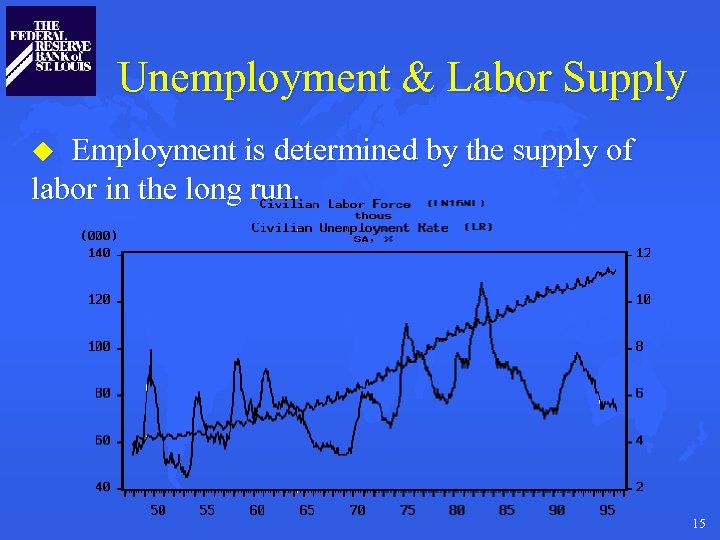 Unemployment & Labor Supply Employment is determined by the supply of labor in the long run. u 15
 Key Points to Remember F Reasons for Trade – Comparative Advantage – Increasing Returns to Scale – Trade increases competition in the market. F Consumers and firms do most international trade. F A trade deficit is an exchange of assets for goods and services. It is borrowing from abroad. F International trade does not benefit everyone. In particular, low-skill U. S. workers may lose out. 16
 Further Reading F "Pop Internationalism, " Paul Krugman, 1996, MIT Press, Cambridge, MA. F "Age of Diminished Expectations, " Paul Krugman, 1994, MIT Press, Cambridge, MA. 17
 THE END 18