Скачать презентацию DISASTER MANAGEMENT CONCEPTS Disaster occurs due to
f5bfdd16933e626f010f5a45563b98b2.ppt
- Количество слайдов: 22
 DISASTER MANAGEMENT CONCEPTS
 Disaster occurs due to destruction of environment, which is caused by extraordinary natural phenomena or human induced hazards, resulting in human suffering and hardship beyond coping and recovery unless an external aid is introduced. To reduce the disaster probability, one has to decrease the vulnerability. For example : Earthquake, Cyclone etc.
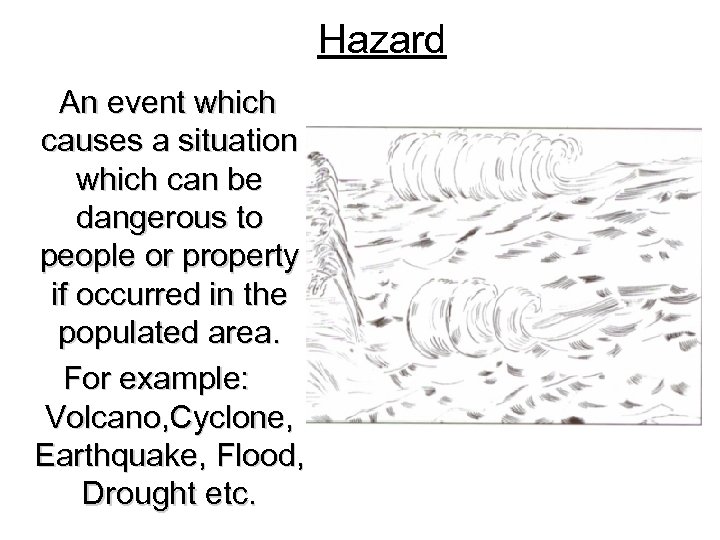 Hazard An event which causes a situation which can be dangerous to people or property if occurred in the populated area. For example: Volcano, Cyclone, Earthquake, Flood, Drought etc.
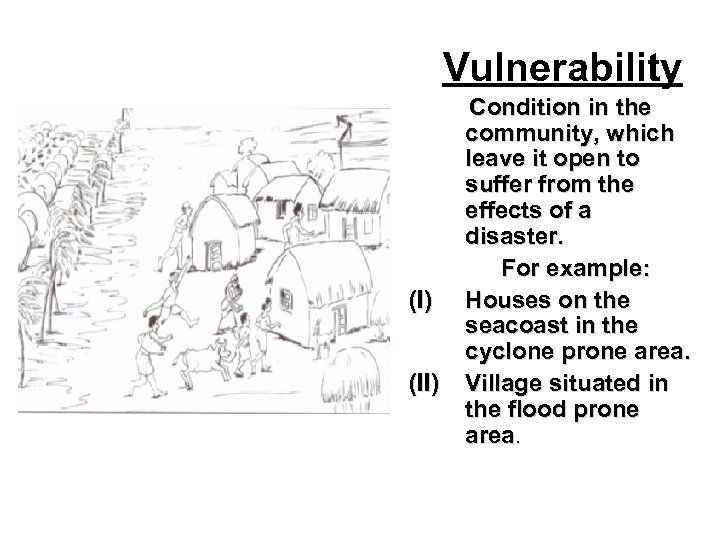 Vulnerability (I) (II) Condition in the community, which leave it open to suffer from the effects of a disaster. For example: Houses on the seacoast in the cyclone prone area. Village situated in the flood prone area.
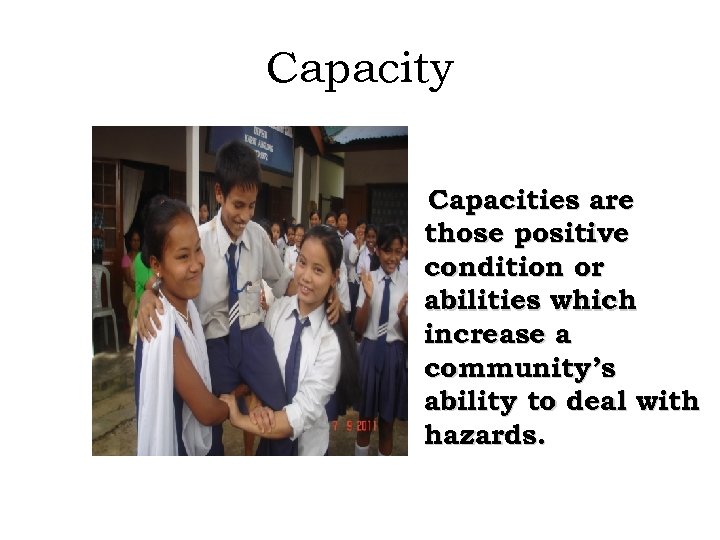 Capacity Capacities are those positive condition or abilities which increase a community’s ability to deal with hazards.
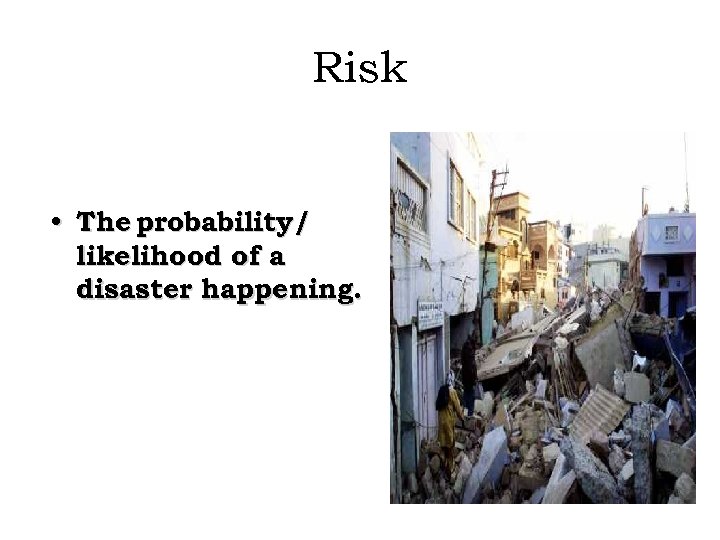 Risk • The probability/ likelihood of a disaster happening.
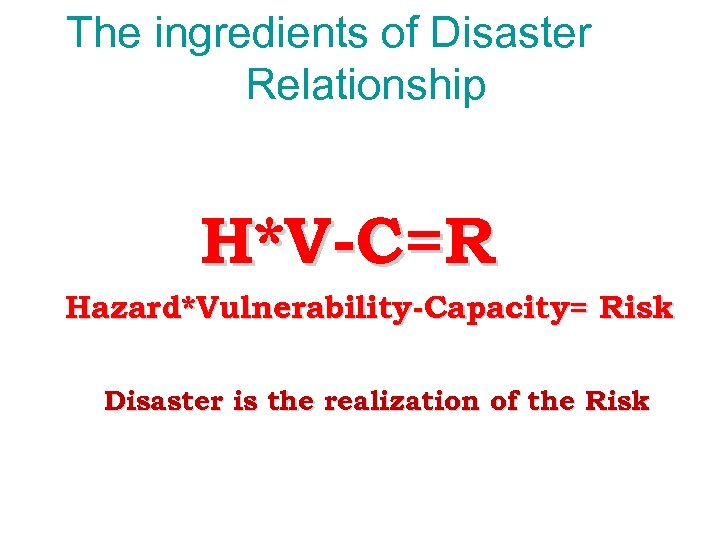 The ingredients of Disaster Relationship H*V-C=R Hazard*Vulnerability-Capacity= Risk Disaster is the realization of the Risk
 “Mitigation" means measures aimed at reducing the risk, impact or effects of a disaster or threatening disaster situation; “Preparedness" means the state of readiness to deal with a threatening disaster situation or disaster and the effects thereof;
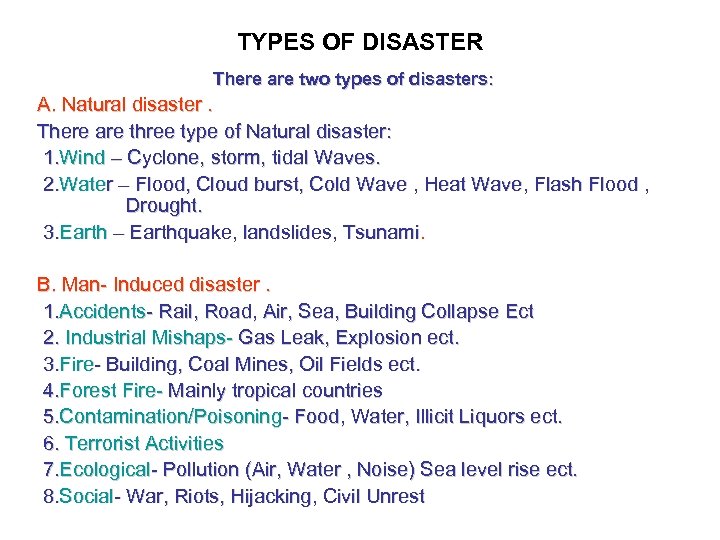 TYPES OF DISASTER There are two types of disasters: A. Natural disaster. There are three type of Natural disaster: 1. Wind – Cyclone, storm, tidal Waves. 2. Water – Flood, Cloud burst, Cold Wave , Heat Wave, Flash Flood , Drought. 3. Earth – Earthquake, landslides, Tsunami. B. Man- Induced disaster. 1. Accidents- Rail, Road, Air, Sea, Building Collapse Ect 2. Industrial Mishaps- Gas Leak, Explosion ect. 3. Fire- Building, Coal Mines, Oil Fields ect. 4. Forest Fire- Mainly tropical countries 5. Contamination/Poisoning- Food, Water, Illicit Liquors ect. 6. Terrorist Activities 7. Ecological- Pollution (Air, Water , Noise) Sea level rise ect. 8. Social- War, Riots, Hijacking, Civil Unrest
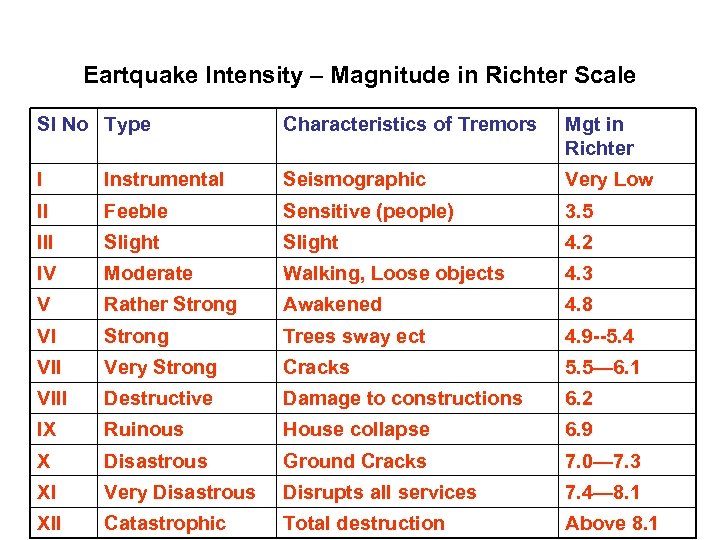 Eartquake Intensity – Magnitude in Richter Scale Sl No Type Characteristics of Tremors Mgt in Richter I Instrumental Seismographic Very Low II Feeble Sensitive (people) 3. 5 III Slight 4. 2 IV Moderate Walking, Loose objects 4. 3 V Rather Strong Awakened 4. 8 VI Strong Trees sway ect 4. 9 --5. 4 VII Very Strong Cracks 5. 5— 6. 1 VIII Destructive Damage to constructions 6. 2 IX Ruinous House collapse 6. 9 X Disastrous Ground Cracks 7. 0— 7. 3 XI Very Disastrous Disrupts all services 7. 4— 8. 1 XII Catastrophic Total destruction Above 8. 1
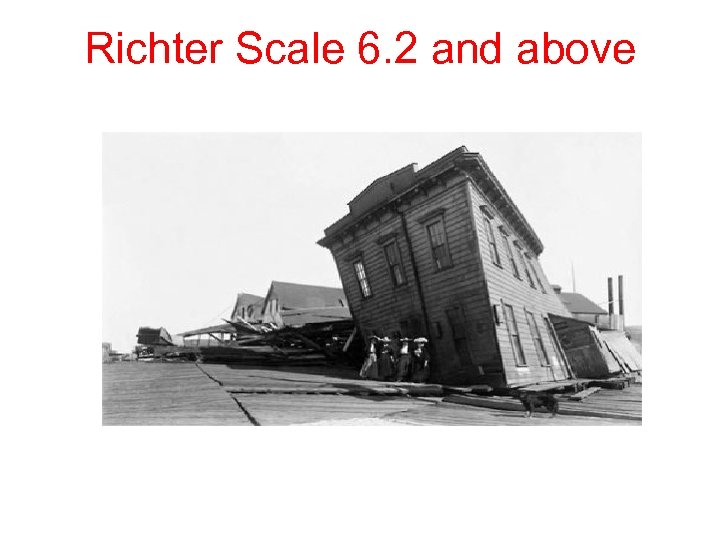 Richter Scale 6. 2 and above
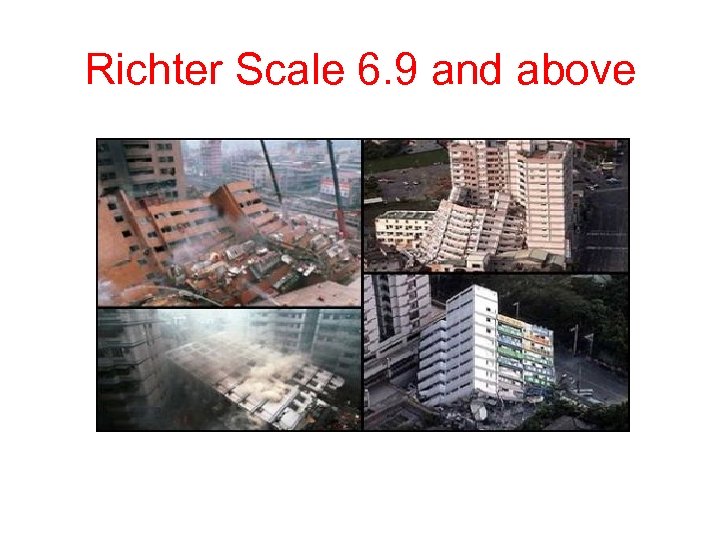 Richter Scale 6. 9 and above
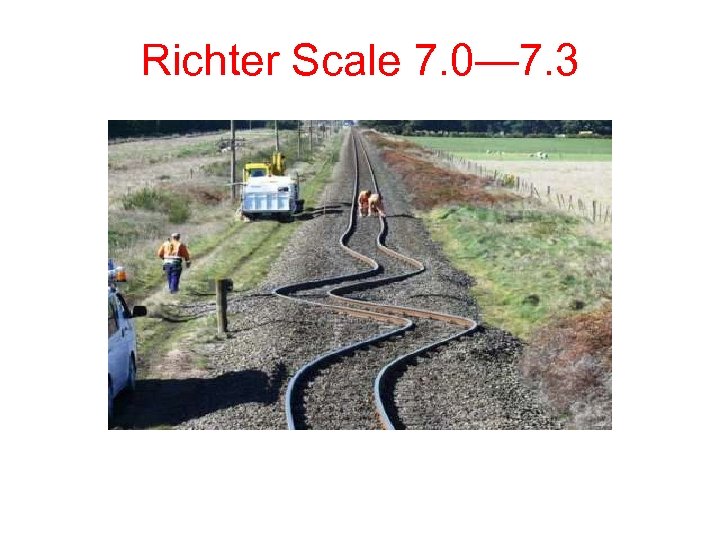 Richter Scale 7. 0— 7. 3
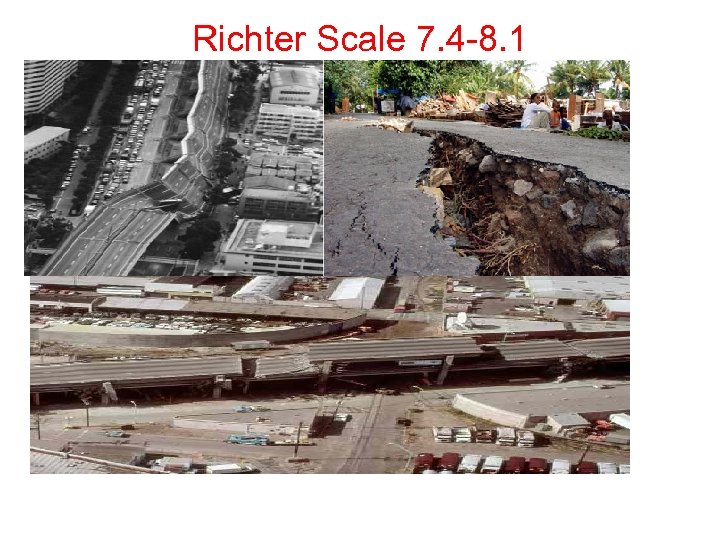 Richter Scale 7. 4 -8. 1
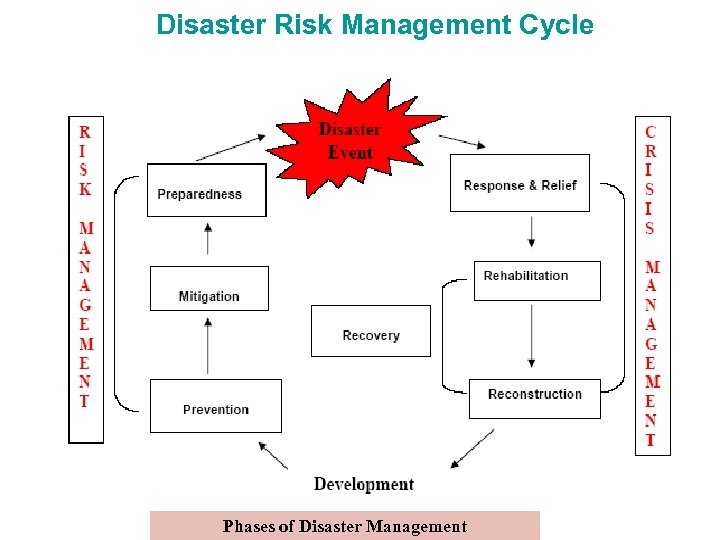 Disaster Risk Management Cycle Phases of Disaster Management
 1. DISASTER RESPONSE: Activities that take place when a disaster strikes to reduce loss of life and to deliver relief as quickly as possible to the affected people. For example: 1. Search and rescue. 2. Need Assessment. 3. Provide First Aid Services. 4. Emergency food , water , medicines supply. 5. Provision of temporary shelters & other relief supplies. 6. Restoring family links.
 2. RECOVERY(REHABILITATION) Measures taken after the disaster , to bring back the condition within the community to normal or even better than before. For example: I. Social Rehabilitation ii. Economic Rehabilitation iii. Psychological Rehabilitation
 3. Risk Reduction (Mitigation) Long term measure taken before a disaster to lessen its effect on the community. For example: a. Strengthening of existing building and infrastructures b. Raised earth platform in flood prone areas c. Taking out insurance polices d. Plantation of drought resistant crops e. Build cyclone shelters, reinforcement of river banks in flood prone areas f. Public awareness programs g. Community based health care/health promotion
 4. Disaster Preparedness Measure design to enables a community to cope with and respond quickly and effectively to any further disaster. These activities should take before a disaster. For example: a. b. c. d. e. Assessment of the VCA of the community through mapping exercise. Develop early warning system Formation of school disaster preparedness and response committee and plan First aid, disaster preparedness & response training programme Propositioning of essential relief items in strategic locations for timely response
 4. Disaster Preparedness f. g. h. i. Increasing community disaster awareness Improving coordination Disaster emergency needs assessment checklist Improving basic training skills.
 DRR, Scholl Safety Audit & Crisis Management DRR: Disaster Risk Reduction is aimed at long term Preparedness for any disaster, (Strategic Plan) School Safety Audit: Basically aimed at regular check and up-gradation of safety measures and state of preparedness , (A ready reckoner ) Crisis Management: Is process meant and designed to combat and respond during an emergency situation, (on site operation)