 Скачать презентацию DISASSEMBLY LINE FOR ANIMALS Objective 1 Show
741bed7272f8141ffd73e1a0c2b40386.ppt
- Количество слайдов: 28



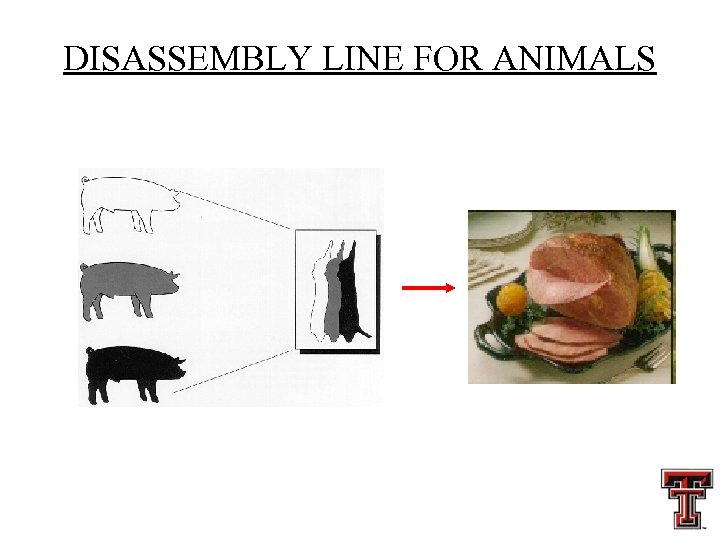
DISASSEMBLY LINE FOR ANIMALS
Objective 1. Show the disassembly line 2. Examine price relationships
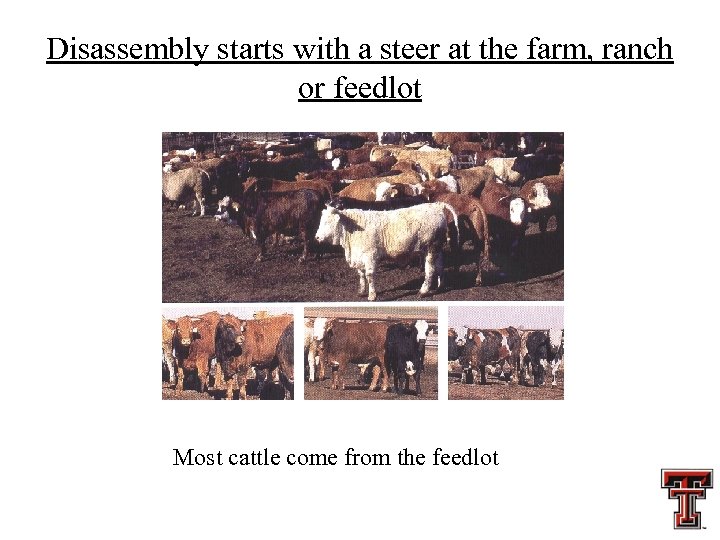
Disassembly starts with a steer at the farm, ranch or feedlot Most cattle come from the feedlot
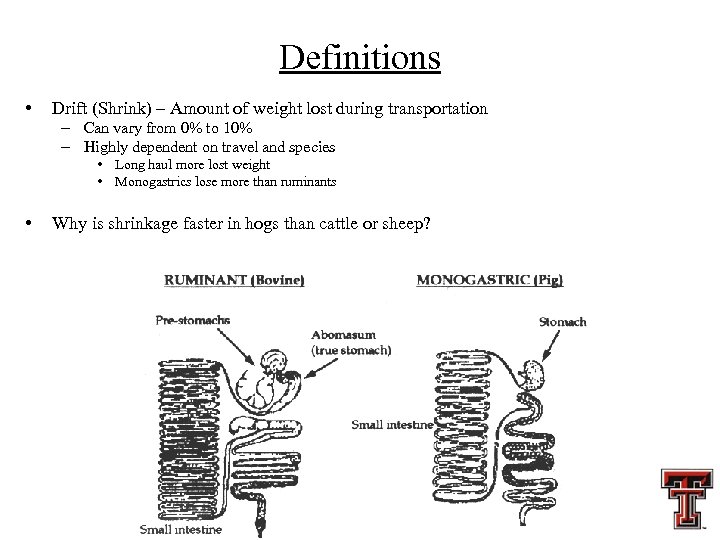
Definitions • Drift (Shrink) – Amount of weight lost during transportation – Can vary from 0% to 10% – Highly dependent on travel and species • Long haul more lost weight • Monogastrics lose more than ruminants • Why is shrinkage faster in hogs than cattle or sheep?
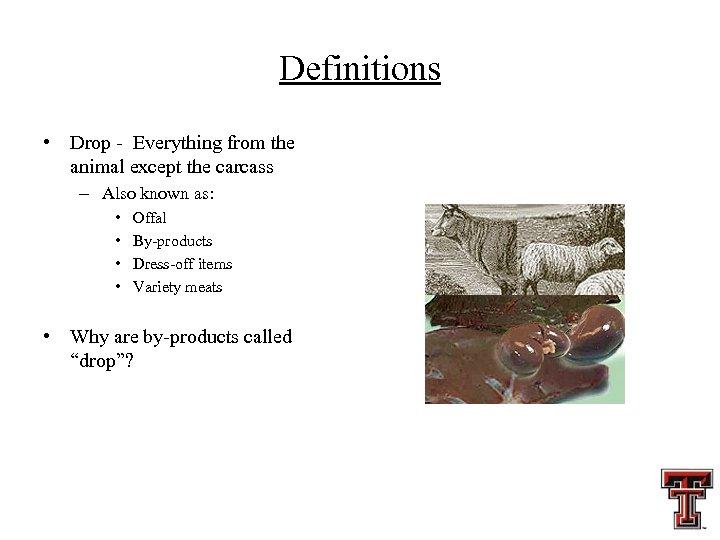
Definitions • Drop - Everything from the animal except the carcass – Also known as: • • Offal By-products Dress-off items Variety meats • Why are by-products called “drop”?
Definitions • Slaughter – Process of killing the animal – Usually from blood loss • Dressing – Refers to the steps needed to remove all of the drop items, leaving the hot carcass hanging on the rail.
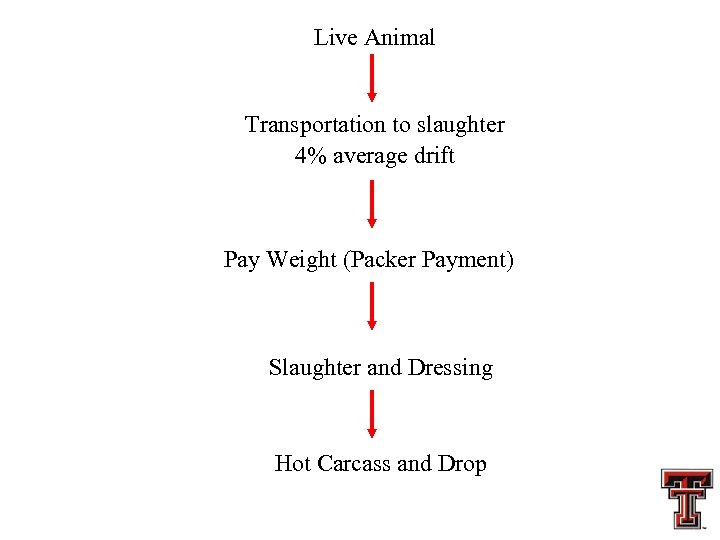
Live Animal Transportation to slaughter 4% average drift Pay Weight (Packer Payment) Slaughter and Dressing Hot Carcass and Drop
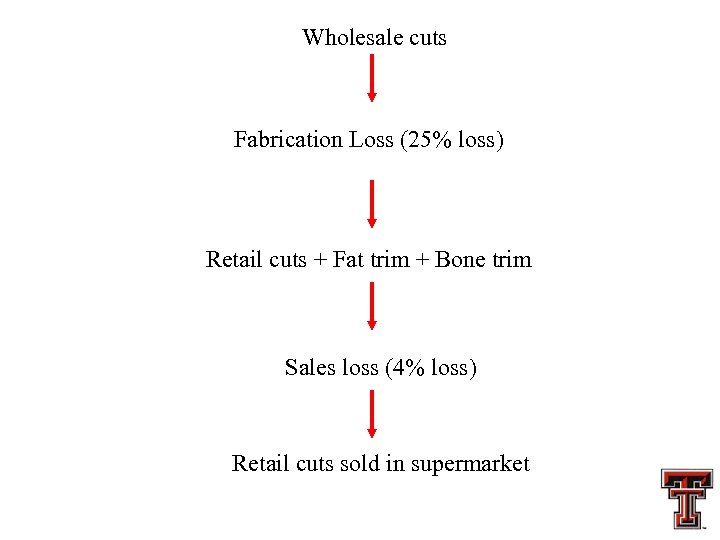
Wholesale cuts Fabrication Loss (25% loss) Retail cuts + Fat trim + Bone trim Sales loss (4% loss) Retail cuts sold in supermarket
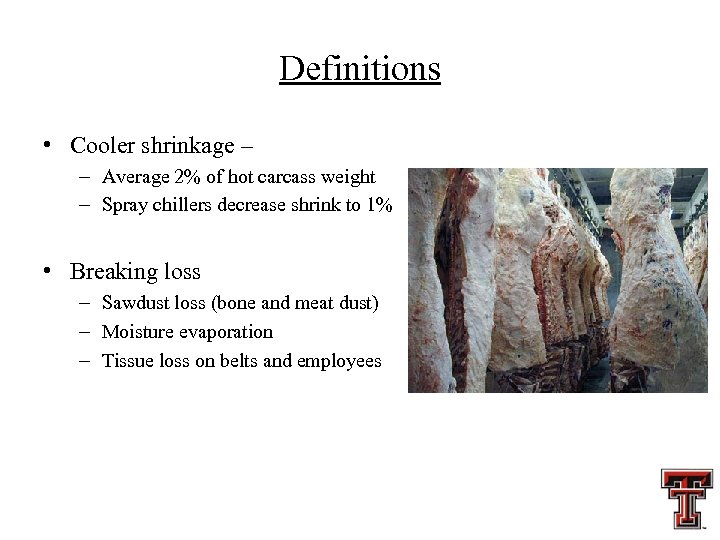
Definitions • Cooler shrinkage – – Average 2% of hot carcass weight – Spray chillers decrease shrink to 1% • Breaking loss – Sawdust loss (bone and meat dust) – Moisture evaporation – Tissue loss on belts and employees
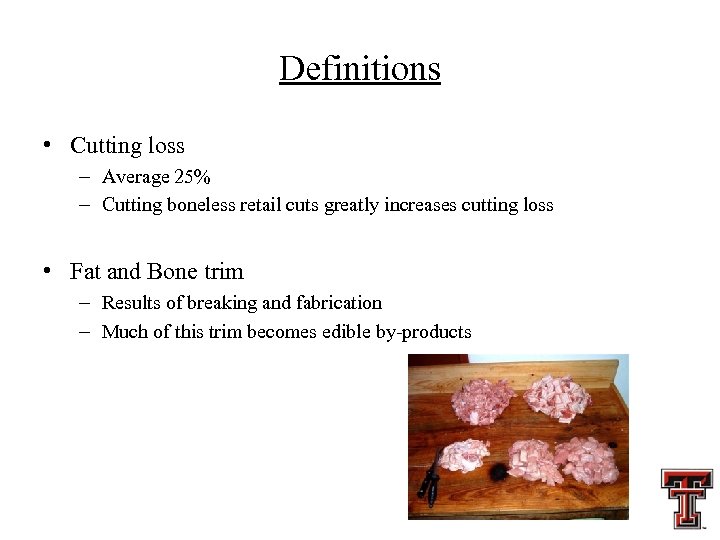
Definitions • Cutting loss – Average 25% – Cutting boneless retail cuts greatly increases cutting loss • Fat and Bone trim – Results of breaking and fabrication – Much of this trim becomes edible by-products
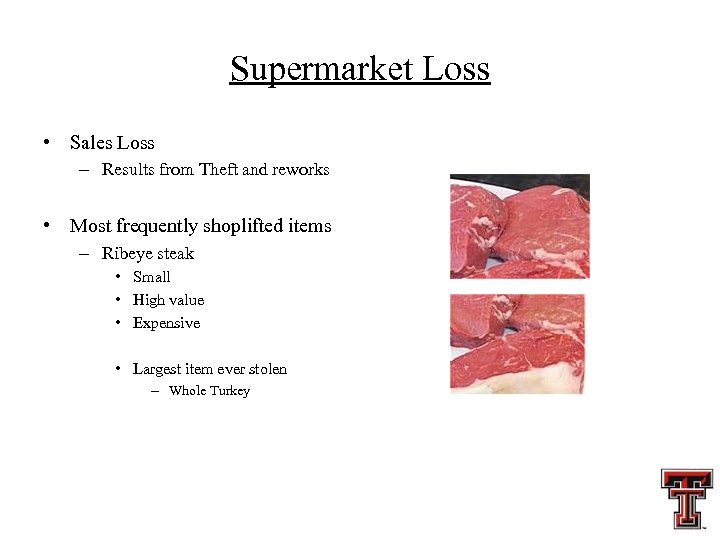
Supermarket Loss • Sales Loss – Results from Theft and reworks • Most frequently shoplifted items – Ribeye steak • Small • High value • Expensive • Largest item ever stolen – Whole Turkey
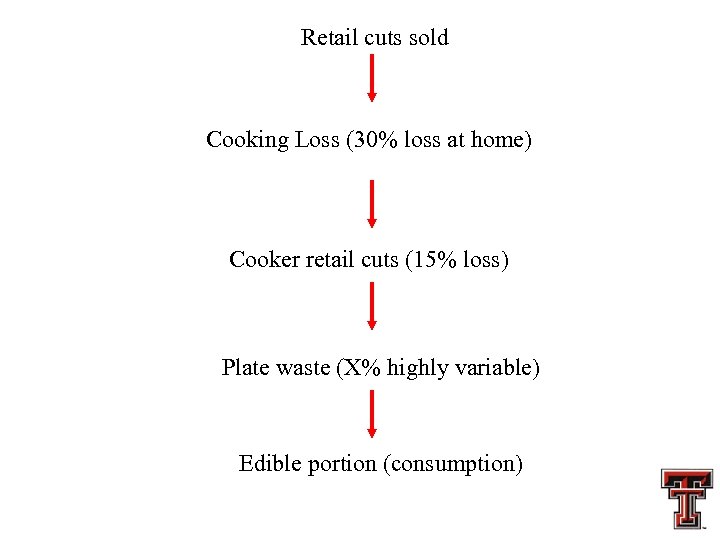
Retail cuts sold Cooking Loss (30% loss at home) Cooker retail cuts (15% loss) Plate waste (X% highly variable) Edible portion (consumption)
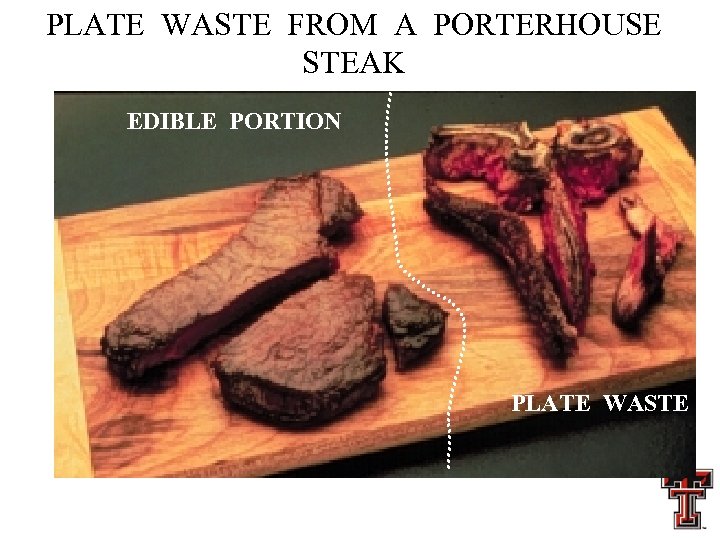
PLATE WASTE FROM A PORTERHOUSE STEAK EDIBLE PORTION PLATE WASTE
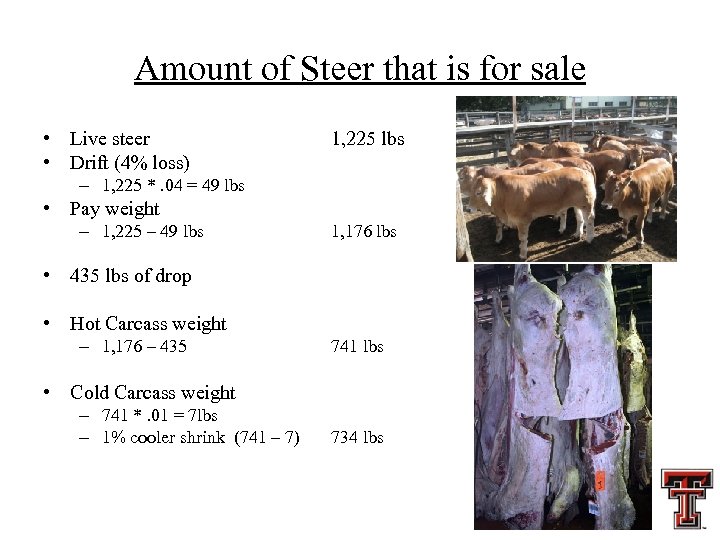
Amount of Steer that is for sale • Live steer • Drift (4% loss) 1, 225 lbs – 1, 225 *. 04 = 49 lbs • Pay weight – 1, 225 – 49 lbs 1, 176 lbs • 435 lbs of drop • Hot Carcass weight – 1, 176 – 435 741 lbs • Cold Carcass weight – 741 *. 01 = 7 lbs – 1% cooler shrink (741 – 7) 734 lbs
What did this steer dress? • Dressing percentage (DP) is very important to the packer • DP is the percentage of pay weight (what packers buy) that is represented by the carcass (what packers sell) • Higher DP means more meat to sell • DP originally based on cold carcass weight, but today most packers use hot carcass weight.
Dressing Percentage and Yield • People in the meat and livestock industries often refer to Dressing Percentage as “Yield” – – “This pen of steers should yield 62%” • Do not confuse yield with the USDA yield grade or yield of wholesale cuts
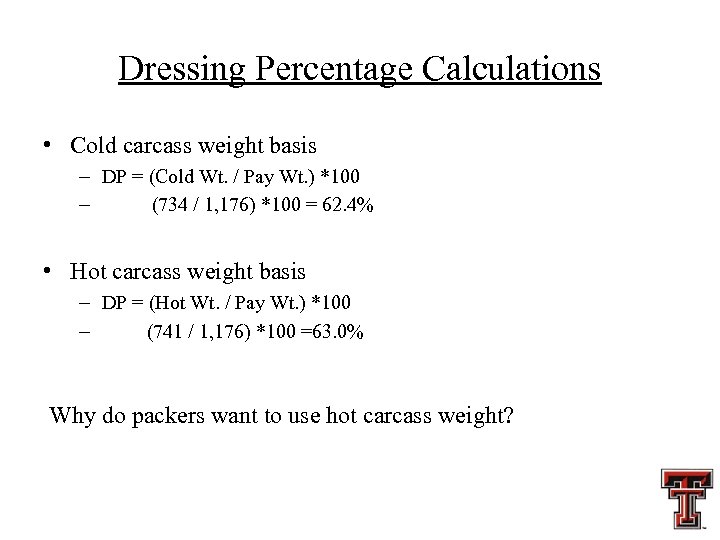
Dressing Percentage Calculations • Cold carcass weight basis – DP = (Cold Wt. / Pay Wt. ) *100 – (734 / 1, 176) *100 = 62. 4% • Hot carcass weight basis – DP = (Hot Wt. / Pay Wt. ) *100 – (741 / 1, 176) *100 =63. 0% Why do packers want to use hot carcass weight?
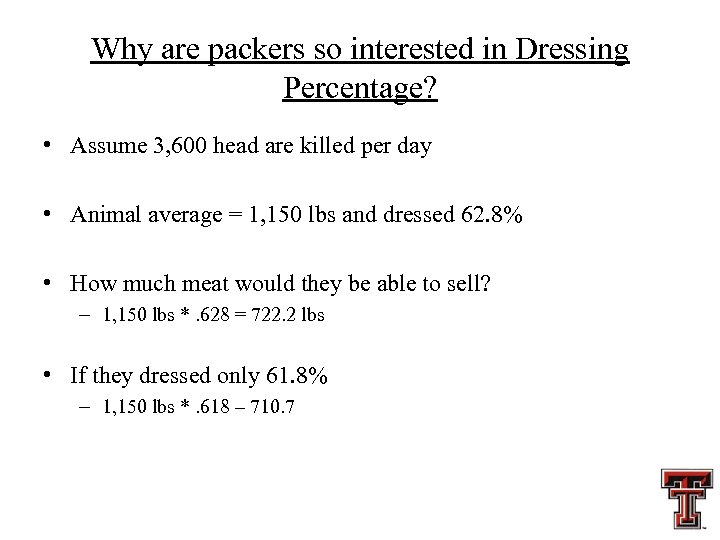
Why are packers so interested in Dressing Percentage? • Assume 3, 600 head are killed per day • Animal average = 1, 150 lbs and dressed 62. 8% • How much meat would they be able to sell? – 1, 150 lbs *. 628 = 722. 2 lbs • If they dressed only 61. 8% – 1, 150 lbs *. 618 – 710. 7 11. 5 lb difference
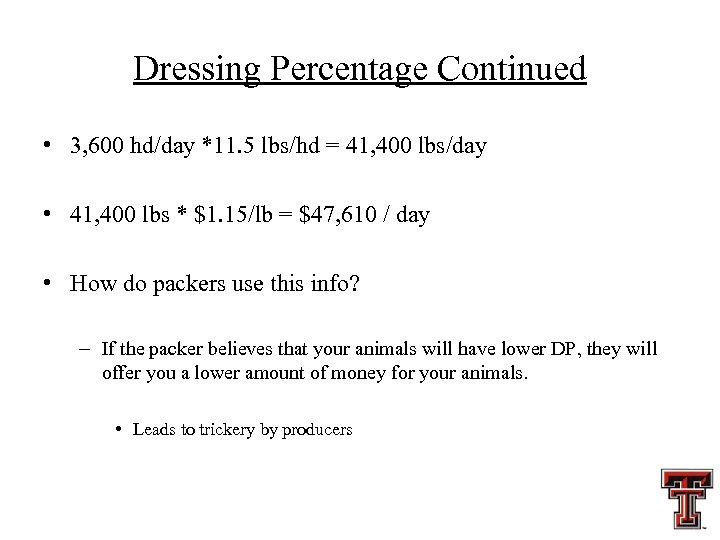
Dressing Percentage Continued • 3, 600 hd/day *11. 5 lbs/hd = 41, 400 lbs/day • 41, 400 lbs * $1. 15/lb = $47, 610 / day • How do packers use this info? – If the packer believes that your animals will have lower DP, they will offer you a lower amount of money for your animals. • Leads to trickery by producers
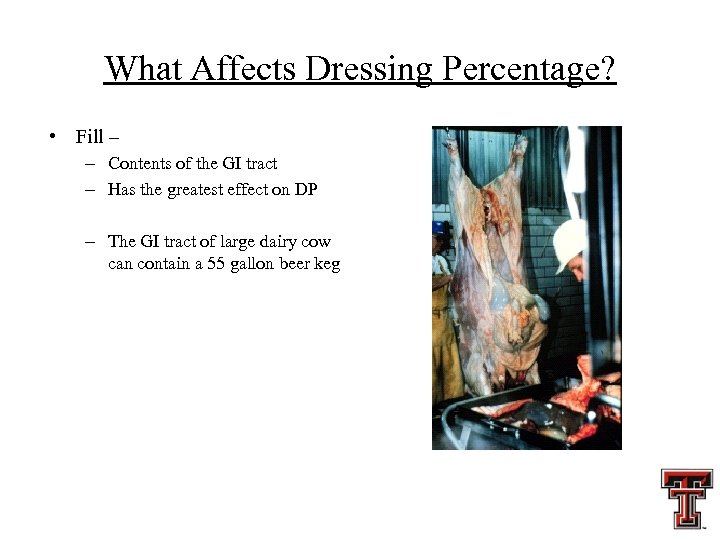
What Affects Dressing Percentage? • Fill – – Contents of the GI tract – Has the greatest effect on DP – The GI tract of large dairy cow can contain a 55 gallon beer keg
Effect of fasting ON Dressing Percentage and Slaughter • Dressing percentage? – Increases DP if paid on fasted weight – Decrease DP if paid on arrival weight • Price/lb paid by slaughter? • Bleeding? – Decreases bleeding efficiency • Ease of visceration? • Cuts in guts? – Decreases cut guts • Microbial contamination? – May increase microbial contamination
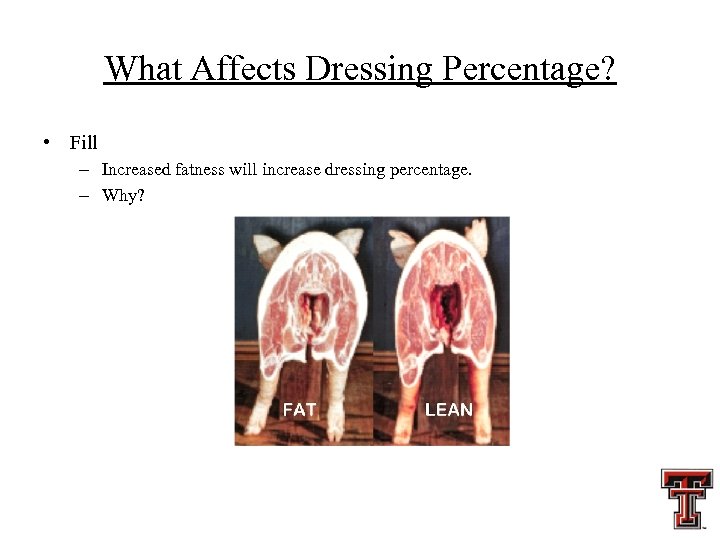
What Affects Dressing Percentage? • Fill – Increased fatness will increase dressing percentage. – Why?
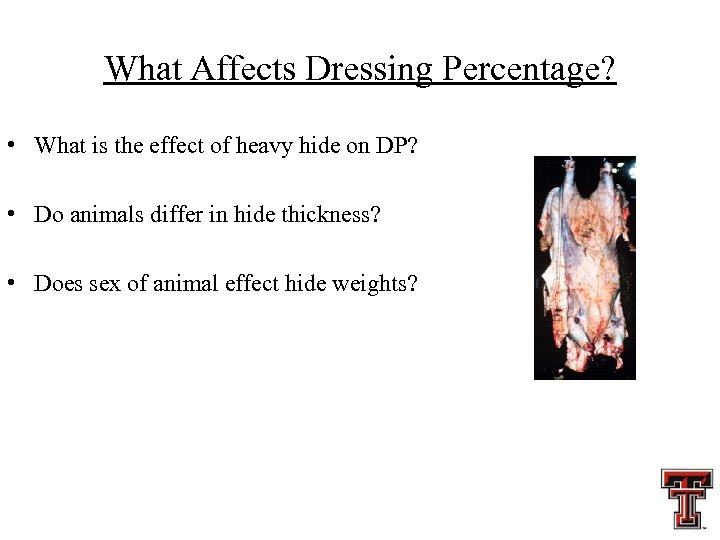
What Affects Dressing Percentage? • What is the effect of heavy hide on DP? • Do animals differ in hide thickness? • Does sex of animal effect hide weights?
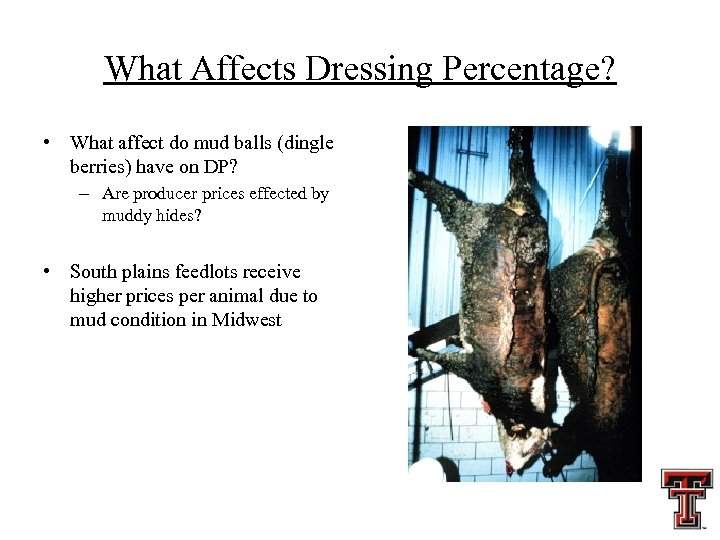
What Affects Dressing Percentage? • What affect do mud balls (dingle berries) have on DP? – Are producer prices effected by muddy hides? • South plains feedlots receive higher prices per animal due to mud condition in Midwest
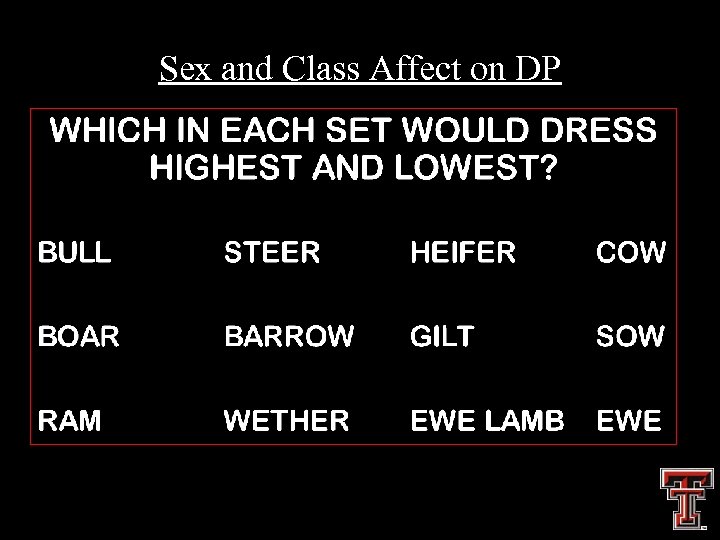
Sex and Class Affect on DP
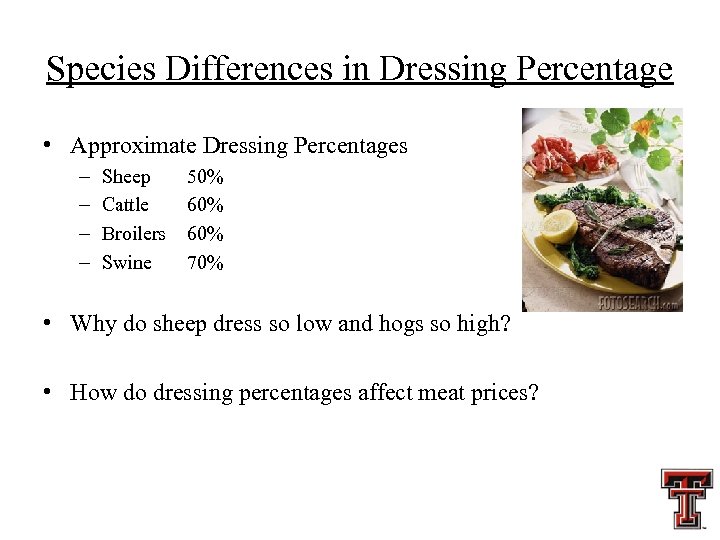
Species Differences in Dressing Percentage • Approximate Dressing Percentages – – Sheep Cattle Broilers Swine 50% 60% 70% • Why do sheep dress so low and hogs so high? • How do dressing percentages affect meat prices?
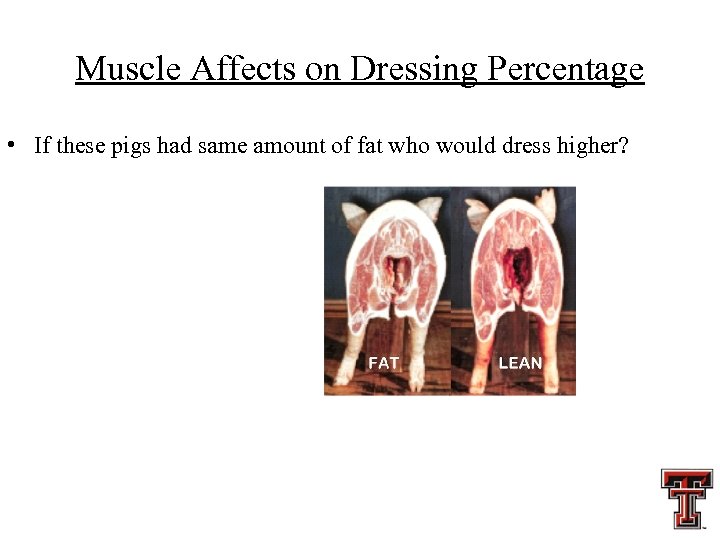
Muscle Affects on Dressing Percentage • If these pigs had same amount of fat who would dress higher?

End
Скачать презентацию DISASSEMBLY LINE FOR ANIMALS Objective 1 Show
741bed7272f8141ffd73e1a0c2b40386.ppt