 Скачать презентацию Direct Speech Прямая речь это речь какогонибудь
Английский яз. от Елены Геннадьевны Косвенная речь 6В,6б.ppt
- Количество слайдов: 21



Direct Speech Прямая речь – это речь какогонибудь лица, передаваемая без изменений, непосредственно так, как она была произнесена.

Direct Speech
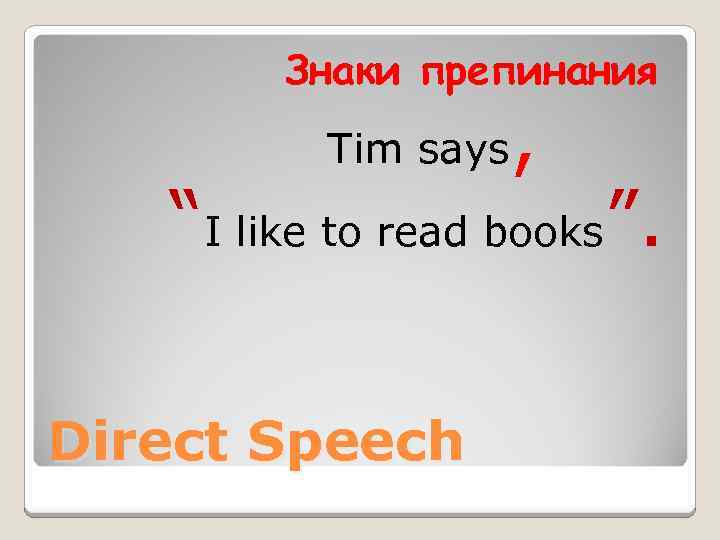
Знаки препинания Tim says , “I like to read books”. Direct Speech
Косвенная речь передает слова говорящего не слово в слово, а лишь по содержанию, в виде дополнительного придаточного предложения Indirect Speech

Tim says that he likes to read books. Indirect speech
Если глагол, вводящий косвенную речь (главное предложение), употреблен в настоящем или будущем времени – Present Simple, Present Perfect, Future Simple, то глагол в косвенной речи (придаточное предложение) остается в том же времени, в каком он был в прямой речи : Слова автора
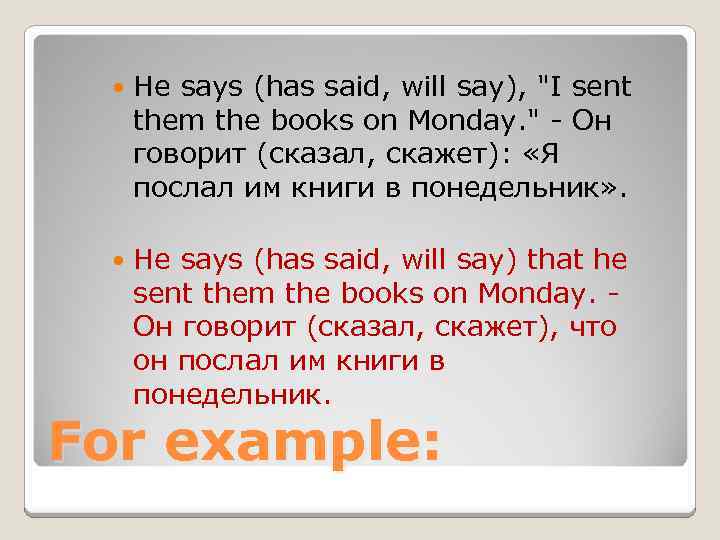
He says (has said, will say), "I sent them the books on Monday. " - Он говорит (сказал, скажет): «Я послал им книги в понедельник» . He says (has said, will say) that he sent them the books on Monday. Он говорит (сказал, скажет), что он послал им книги в понедельник. For example:
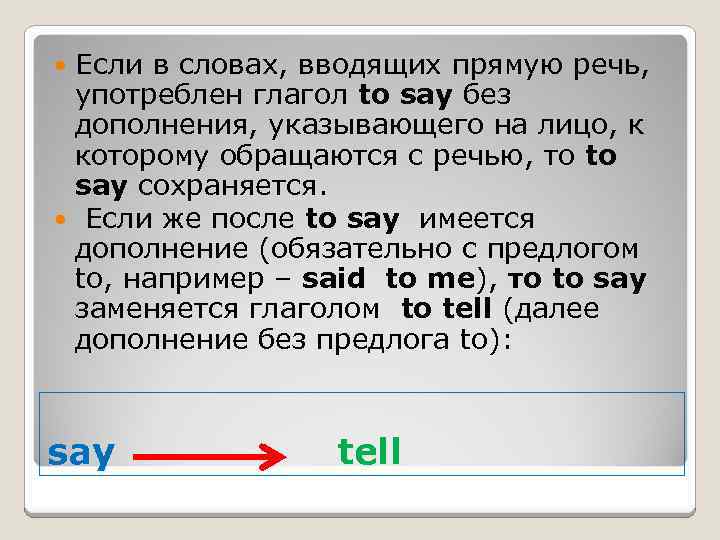
Если в словах, вводящих прямую речь, употреблен глагол to say без дополнения, указывающего на лицо, к которому обращаются с речью, то to say сохраняется. Если же после to say имеется дополнение (обязательно с предлогом to, например – said to me), то to say заменяется глаголом to tell (далее дополнение без предлога to): say tell
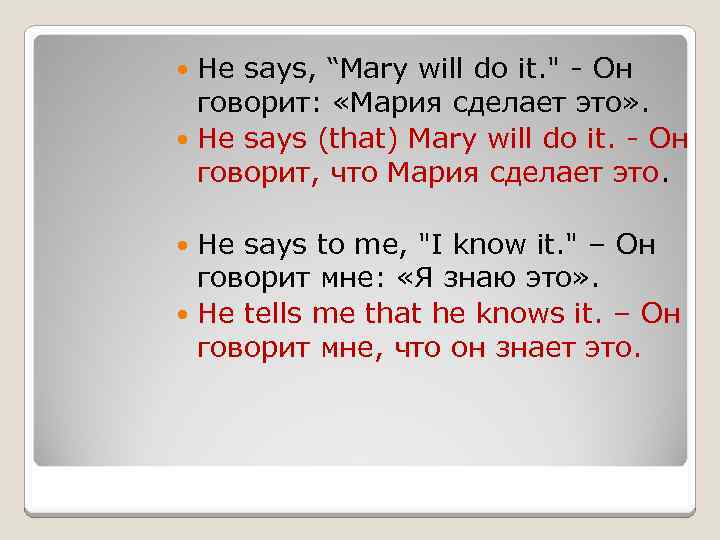
He says, “Mary will do it. " - Он говорит: «Мария сделает это» . He says (that) Mary will do it. - Он говорит, что Мария сделает это. He says to me, "I know it. " – Он говорит мне: «Я знаю это» . He tells me that he knows it. – Он говорит мне, что он знает это.
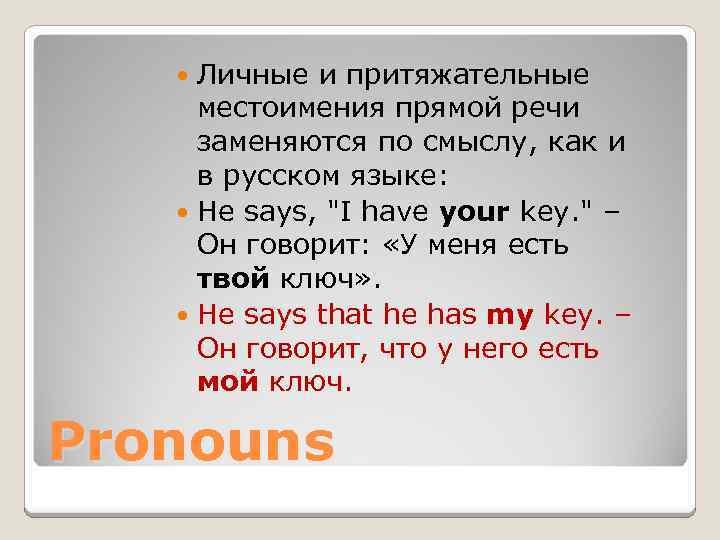
Личные и притяжательные местоимения прямой речи заменяются по смыслу, как и в русском языке: He says, "I have your key. " – Он говорит: «У меня есть твой ключ» . He says that he has my key. – Он говорит, что у него есть мой ключ. Pronouns
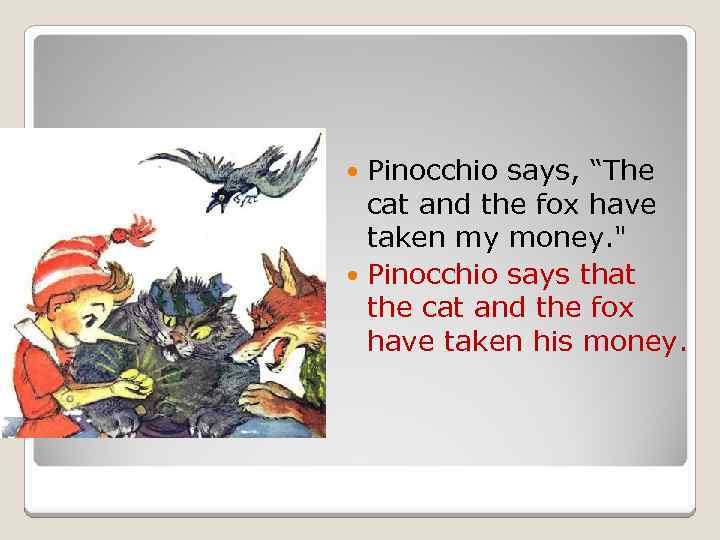
Pinocchio says, “The cat and the fox have taken my money. " Pinocchio says that the cat and the fox have taken his money.
Просьбы и приказы переводятся в косвенную речь инфинитивом. Mary says to her friends, “Do all the homework in time”. Mary asks her friends to do all the homework in time. Просьбы
The bat says, “Do not open this door”. The bat warns not to open that door. Запрет
общие вопросы переводятся придаточным предложением и вводятся союзами if, whether. Порядок слов прямой. He asks us, ” Do you believe me? ” He asks whether we believe him. Общий вопрос
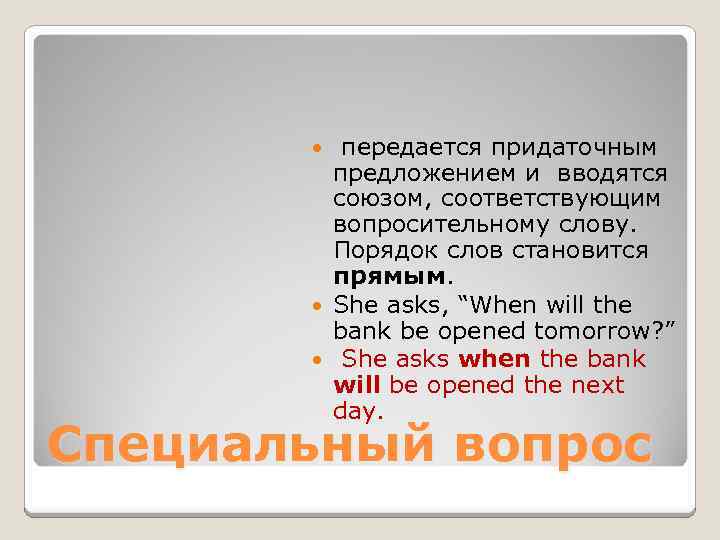
передается придаточным предложением и вводятся союзом, соответствующим вопросительному слову. Порядок слов становится прямым. She asks, “When will the bank be opened tomorrow? ” She asks when the bank will be opened the next day. Специальный вопрос
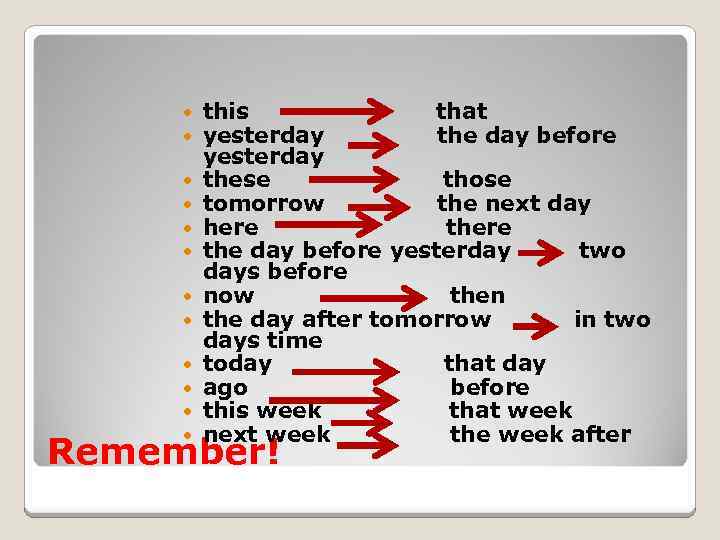
this that yesterday the day before yesterday these those tomorrow the next day here the day before yesterday two days before now then the day after tomorrow in two days time today that day ago before this week that week next week the week after Remember!
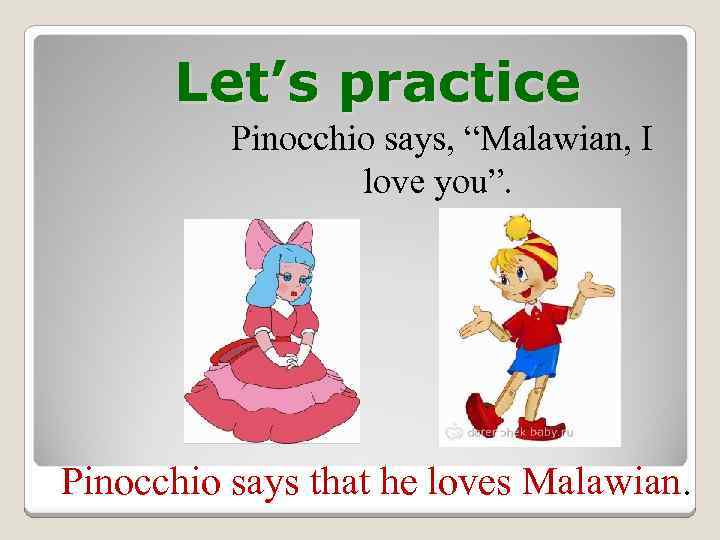
Let’s practice Pinocchio says, “Malawian, I love you”. Pinocchio says that he loves Malawian.
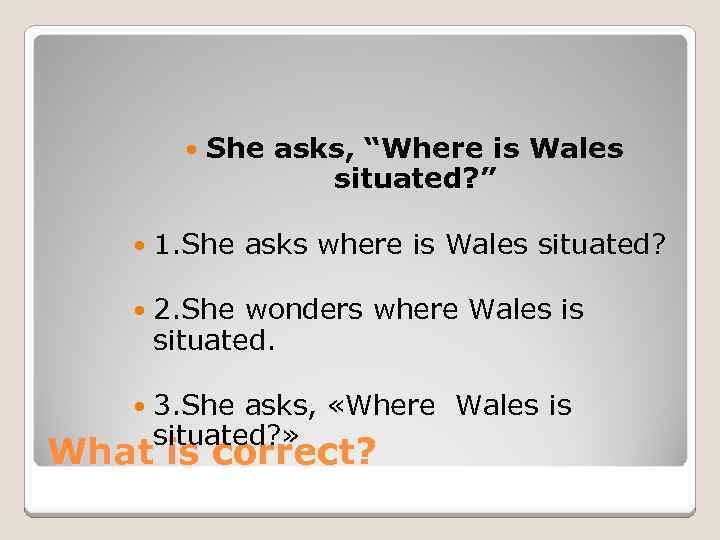
She asks, “Where is Wales situated? ” 1. She asks where is Wales situated? 2. She wonders where Wales is situated. 3. She asks, «Where Wales is situated? » What is correct?
She asks, “Is Wales situated on the Isles? ” 1. She asks, if Wales is situated on the Isles. 2. She asks, if is Wales situated on the Isles? » What is correct?
Ты встретил своего приятеля Чарли. Вот что он тебе сказал: переведите предложения из прямой речи в косвенную 1. I'm thinking of going to Canada. 2. My farther is in hospital. 3. Nora and Jim are getting married next month. 4. I haven't seen Bill for a while. 5. I've been playing tennis a lot recently. 6. Margaret has had a baby. 7. I don't know what Fred is doing. 8. I hardly ever go out these days. 9. I work 14 hours a day. 10. I'll tell Jim I saw you. 11. You can come and stay with me if you are ever in London 12. Tom had an accident last week but he wasn't injured. 13. I saw Jack at a party a few months ago and he seemed fine.
Тебя некоторое время не было в городе. Вот ты вернулся и встретил приятеля. Он задает тебе кучу вопросов. Переведите предложения из прямой речи в косвенную. 1. How are you? 2. How long have you been back? 3. What are you doing now? 4. Where are you living? 5. Are you glad to be back? 6. Are you going away again? 7. Why did you come back? 8. Do you still smoke? 9. Can you come to dinner on Friday?
Скачать презентацию Direct Speech Прямая речь это речь какогонибудь
Английский яз. от Елены Геннадьевны Косвенная речь 6В,6б.ppt