 Скачать презентацию Direct Object Pronouns I can use direct object
c97733b8d0c5f9abac3f37a6a586d148.ppt
- Количество слайдов: 17



Direct Object Pronouns I can use direct object pronouns to replace direct object nouns. Ana wants to buy the dress. She wants to buy it. AV_U 4 E 1
Direct Object Pronouns • A direct • Comprendo object la pregunta. answers who • I understand or what after what? . . . the a verb. question
Direct Object Pronouns • To avoid repeating a direct object, we often replace it with “it”. • Do you understand the question? • Yes, I understand it.
Direct Object Pronouns • Spanish works the same way. • The direct object pronouns are:
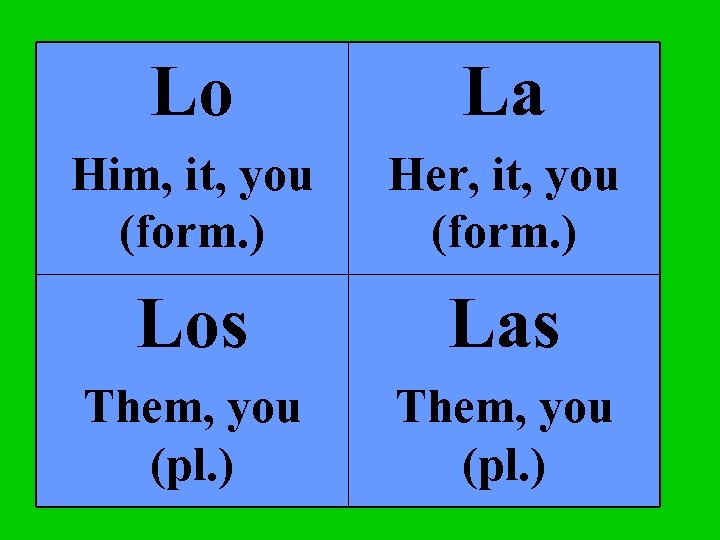
Lo La Him, it, you (form. ) Her, it, you (form. ) Los Las Them, you (pl. )
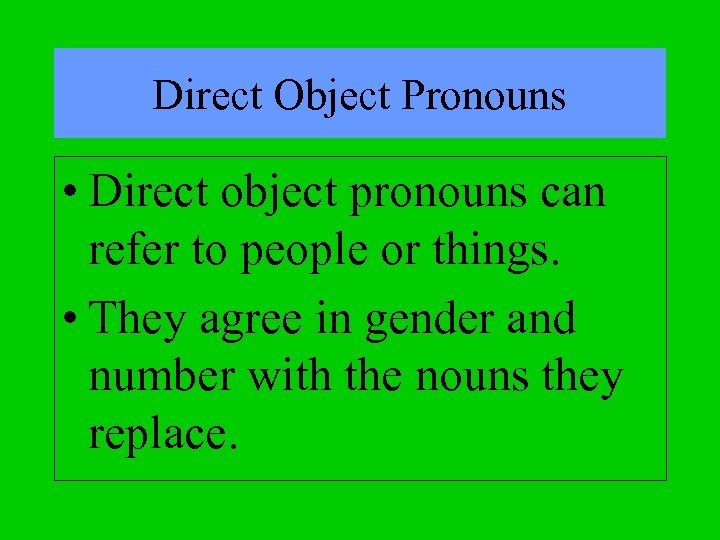
Direct Object Pronouns • Direct object pronouns can refer to people or things. • They agree in gender and number with the nouns they replace.
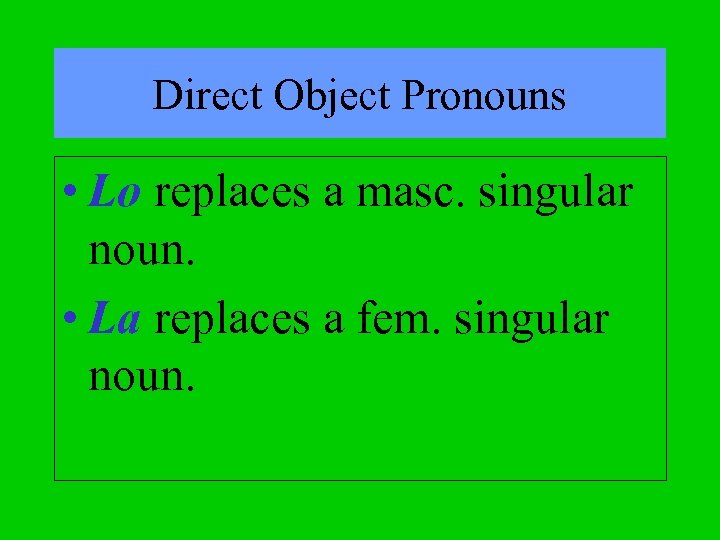
Direct Object Pronouns • Lo replaces a masc. singular noun. • La replaces a fem. singular noun.
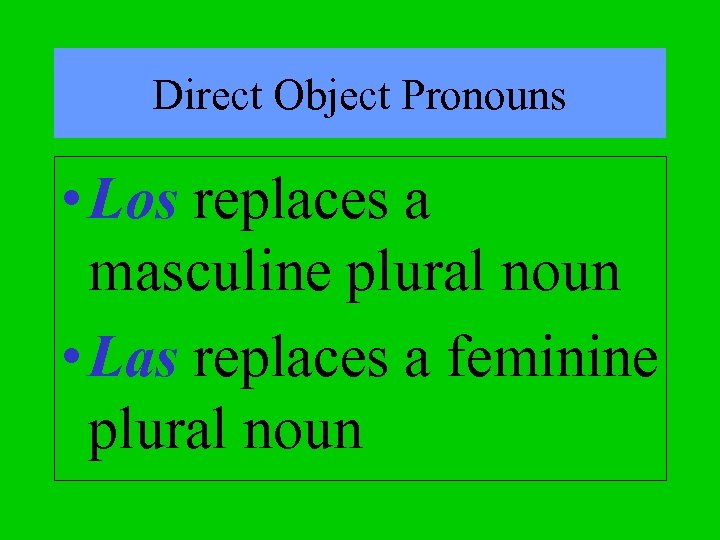
Direct Object Pronouns • Los replaces a masculine plural noun • Las replaces a feminine plural noun
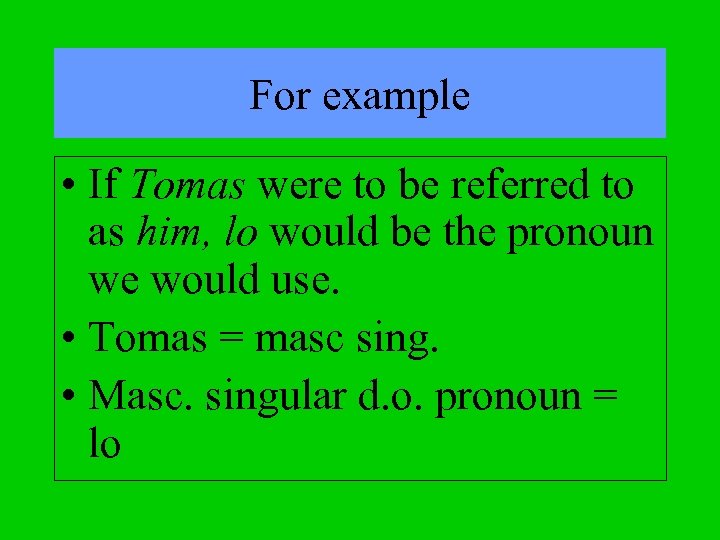
For example • If Tomas were to be referred to as him, lo would be the pronoun we would use. • Tomas = masc sing. • Masc. singular d. o. pronoun = lo
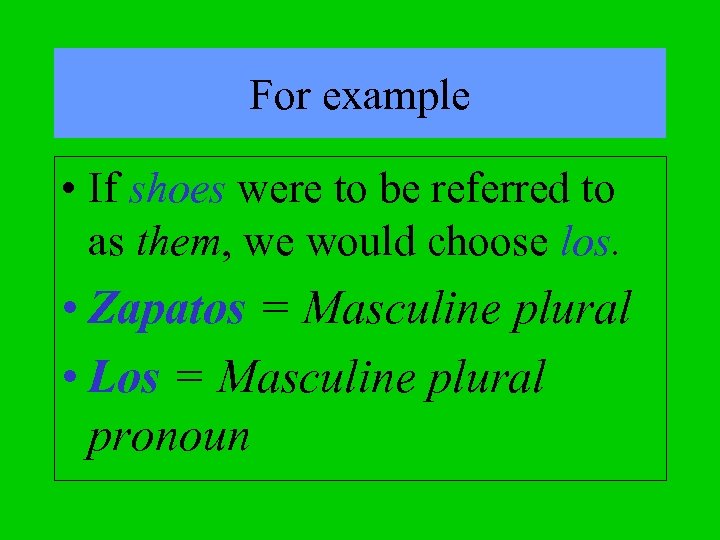
For example • If shoes were to be referred to as them, we would choose los. • Zapatos = Masculine plural • Los = Masculine plural pronoun
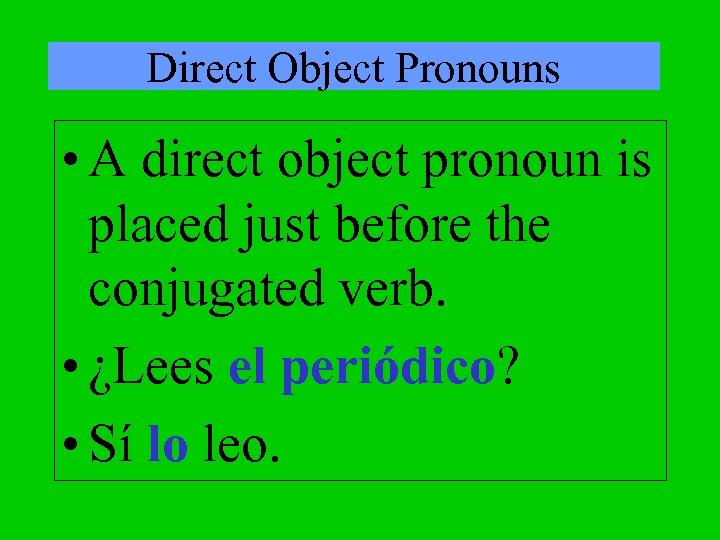
Direct Object Pronouns • A direct object pronoun is placed just before the conjugated verb. • ¿Lees el periódico? • Sí lo leo.
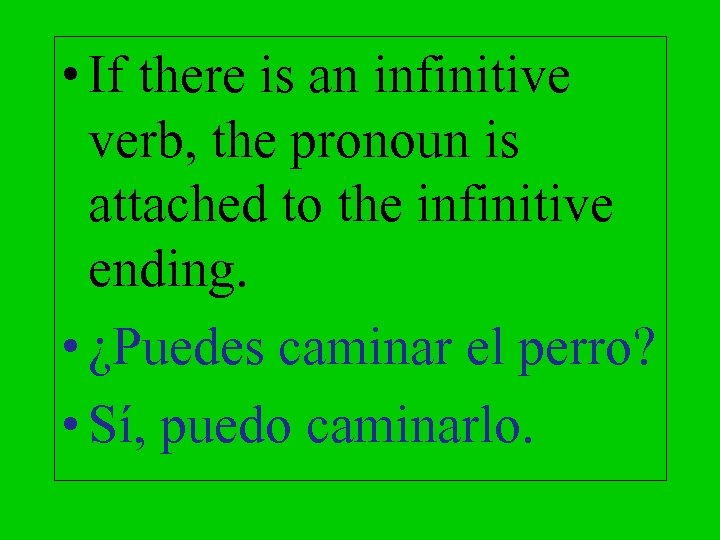
• If there is an infinitive verb, the pronoun is attached to the infinitive ending. • ¿Puedes caminar el perro? • Sí, puedo caminarlo.
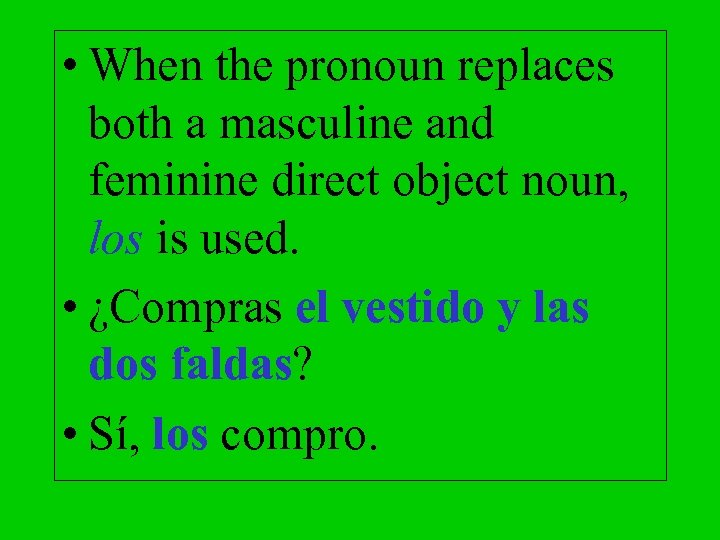
• When the pronoun replaces both a masculine and feminine direct object noun, los is used. • ¿Compras el vestido y las dos faldas? • Sí, los compro.
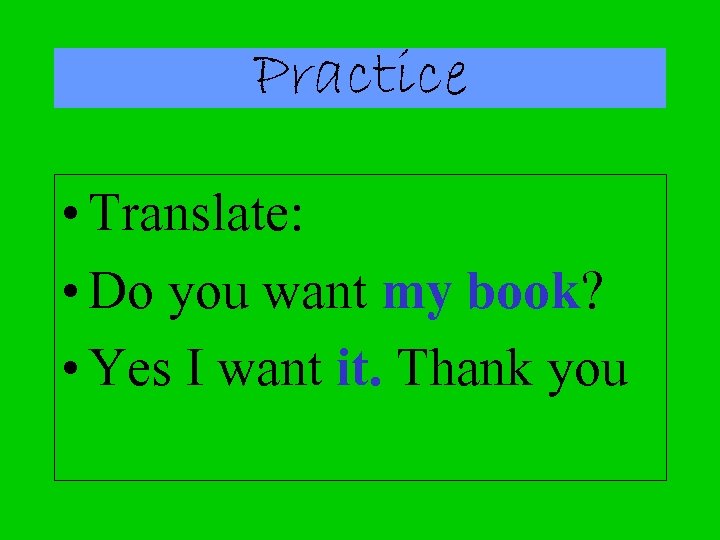
Practice • Translate: • Do you want my book? • Yes I want it. Thank you
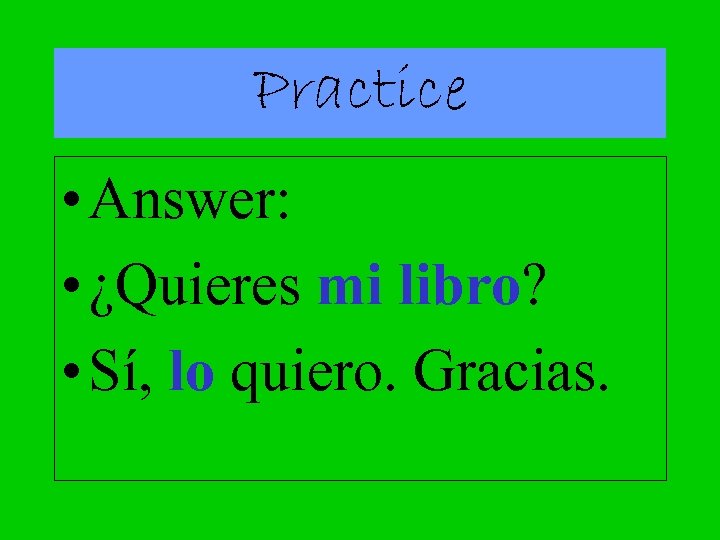
Practice • Answer: • ¿Quieres mi libro? • Sí, lo quiero. Gracias.

Practice • Translate: • I have to call Gloria. • Do you have to call her?
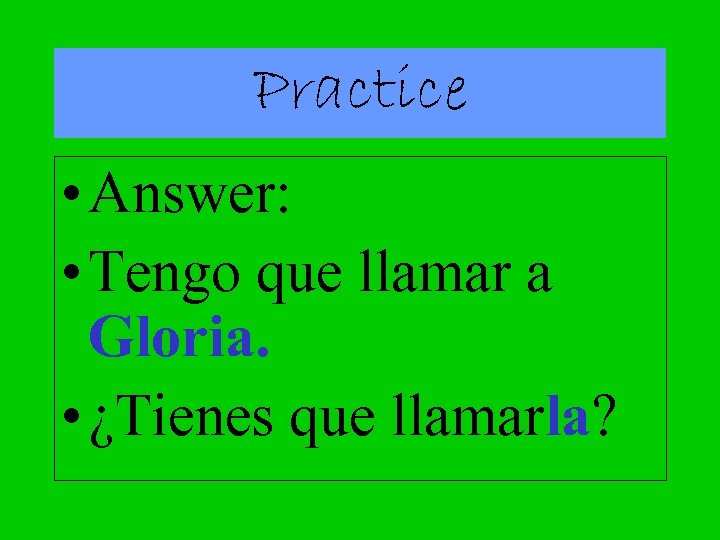
Practice • Answer: • Tengo que llamar a Gloria. • ¿Tienes que llamarla?
Скачать презентацию Direct Object Pronouns I can use direct object
c97733b8d0c5f9abac3f37a6a586d148.ppt