


 Скачать презентацию Digital signature in automatic analyses for confidentiality against
fabde3a4a27f7add73d7399210ed1160.ppt
- Количество слайдов: 24
 Digital signature in automatic analyses for confidentiality against active adversaries Ilja Tšahhirov, Peeter Laud
 Goal of the analysis • Problem statement – Given the protocol (set of programs making calculations and exchanging messages) – It works with some secret data – No active adversary should be able to learn anything about the secret data • Automatically determine whether the protocol is secure or not.
 Original technique • Published in: Peeter Laud. Symmetric encryption in automatic analyses for confidentiality against active adversaries. 2004 IEEE Symposium on Security and Privacy, pages 71 -85, May 2004. – – – Automatic analyzer present Programming language Single cryptographic primitive – symmetric encryption Definition of the adversary Definition of the security Protocol transformations
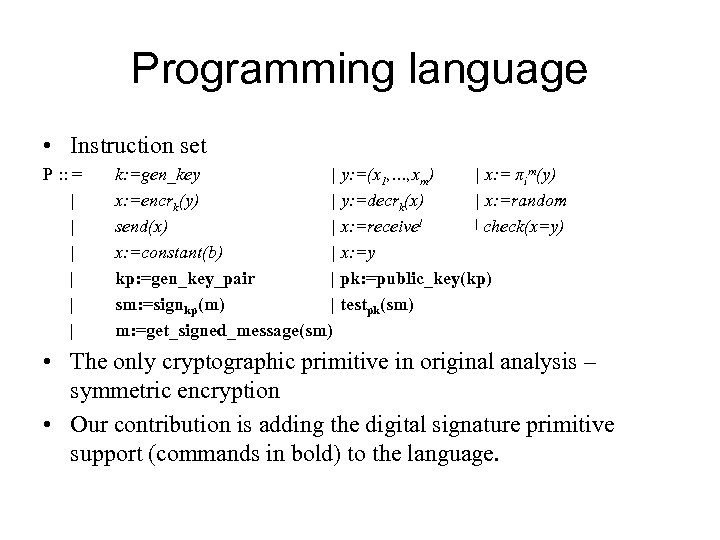 Programming language • Instruction set P : : = | | | k: =gen_key | y: =(x 1, …, xm) | x: = πim(y) x: =encrk(y) | y: =decrk(x) | x: =random | check(x=y) send(x) | x: =receivel x: =constant(b) | x: =y kp: =gen_key_pair | pk: =public_key(kp) sm: =signkp(m) | testpk(sm) m: =get_signed_message(sm) • The only cryptographic primitive in original analysis – symmetric encryption • Our contribution is adding the digital signature primitive support (commands in bold) to the language.
 Adversary • Adversary is active - it schedules the participants and relays messages between them • Can modify, create new, or not deliver sent messages
 Security definition The protocol is considered secure if the secret message is computationally independent from the adversary’s view.
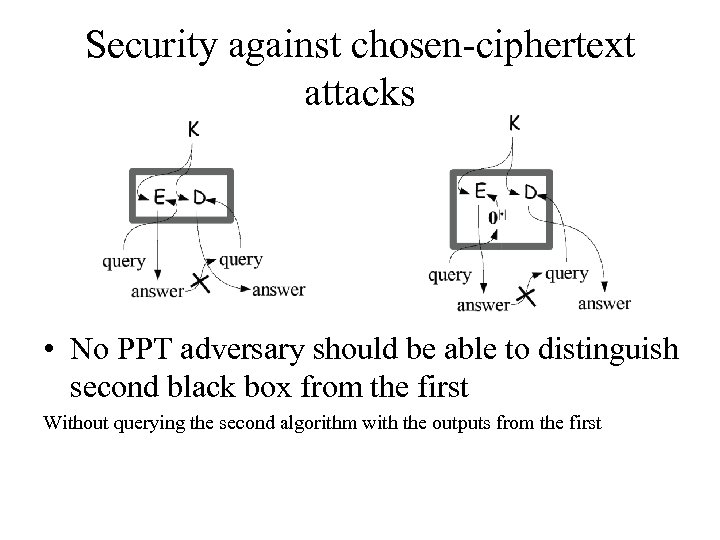 Security against chosen-ciphertext attacks • No PPT adversary should be able to distinguish second black box from the first Without querying the second algorithm with the outputs from the first
 Protocol transformations - encryption • During the analysis protocols are transformed • Protocols working with the first black box can be replaced to use the second (under certain conditions)
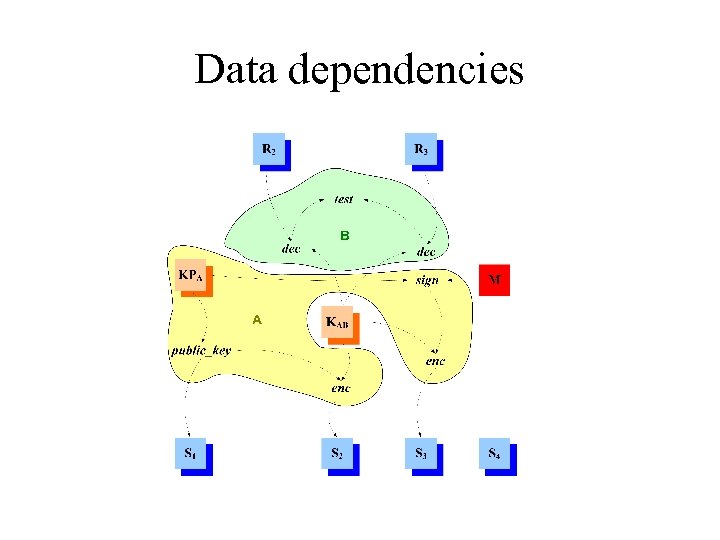
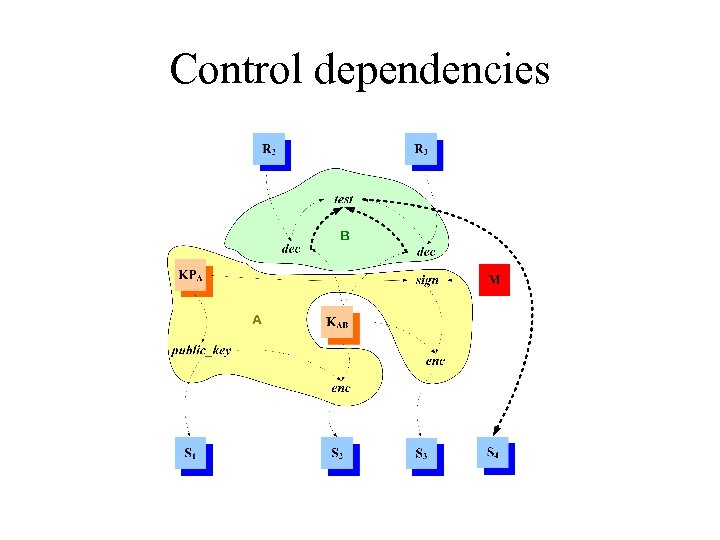
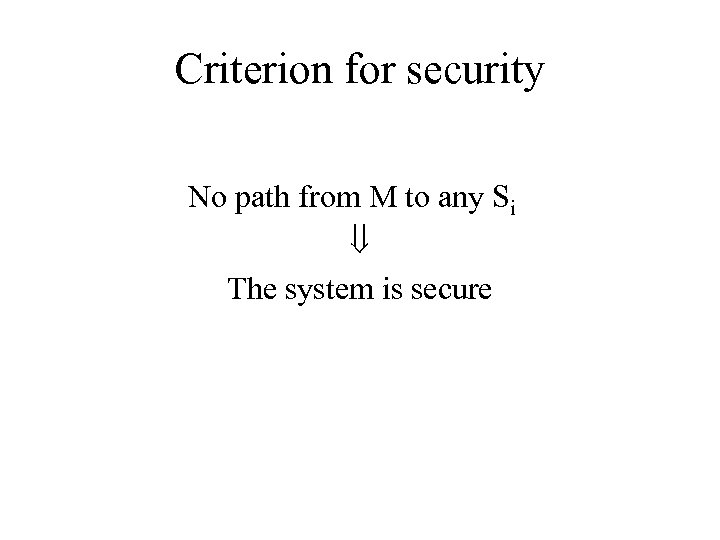
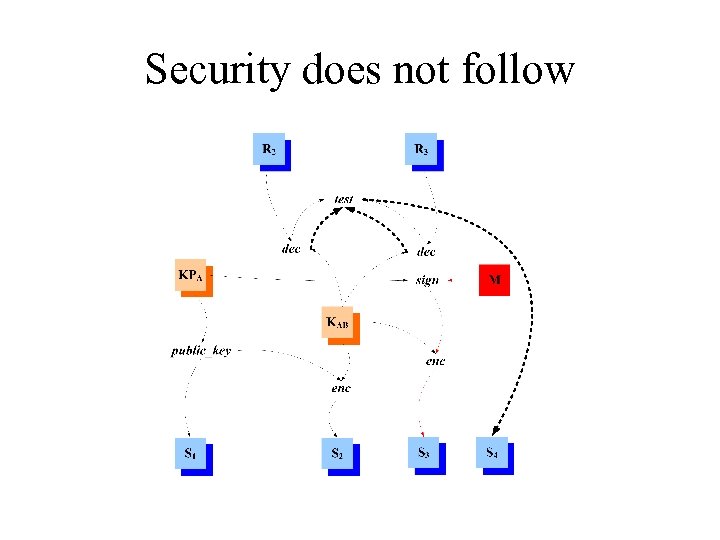
 Information flow analysis • If some participant of the protocol contains a statement of the form x: =E(x 1, …, xn) there is an information flow from the variable xi to the variable x. • The protocol is deemed secure if M * y holds for no y affecting the adversary’s view. • The protocol transformation described above breaks some of those links.
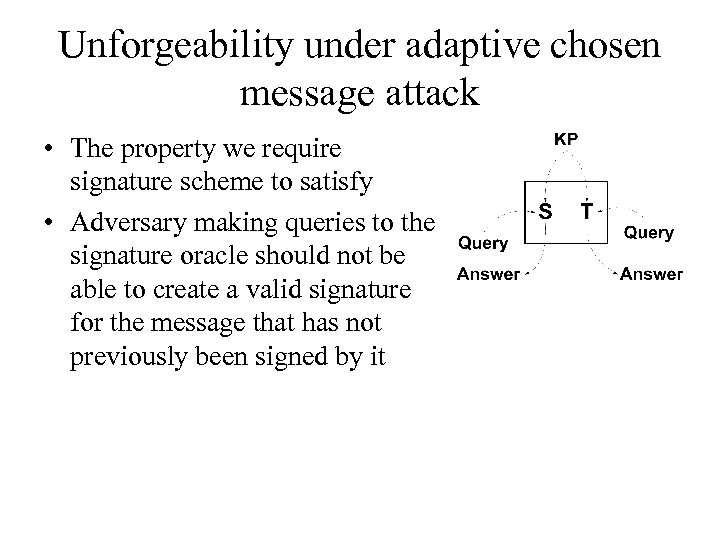 Unforgeability under adaptive chosen message attack • The property we require signature scheme to satisfy • Adversary making queries to the signature oracle should not be able to create a valid signature for the message that has not previously been signed by it
 Protocol transformations – digital signature • Signature operations are replaced with checking whether the signed message being tested belongs to the set of the actually signed messages.
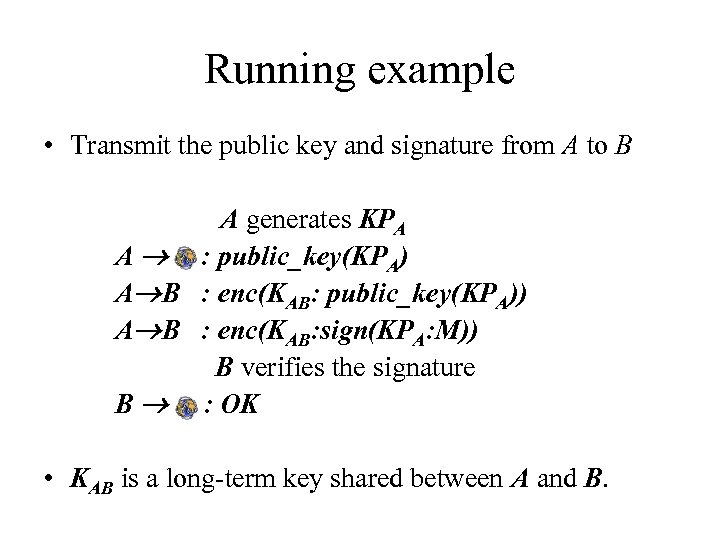 Running example • Transmit the public key and signature from A to B A generates KPA A : public_key(KPA) A B : enc(KAB: public_key(KPA)) A B : enc(KAB: sign(KPA: M)) B verifies the signature B : OK • KAB is a long-term key shared between A and B.
 Data dependencies
 Control dependencies
 Criterion for security No path from M to any Si The system is secure
 Security does not follow
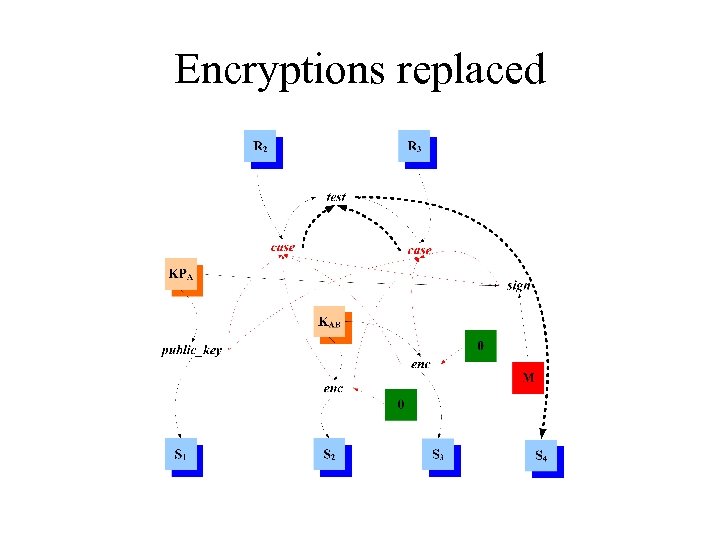 Encryptions replaced
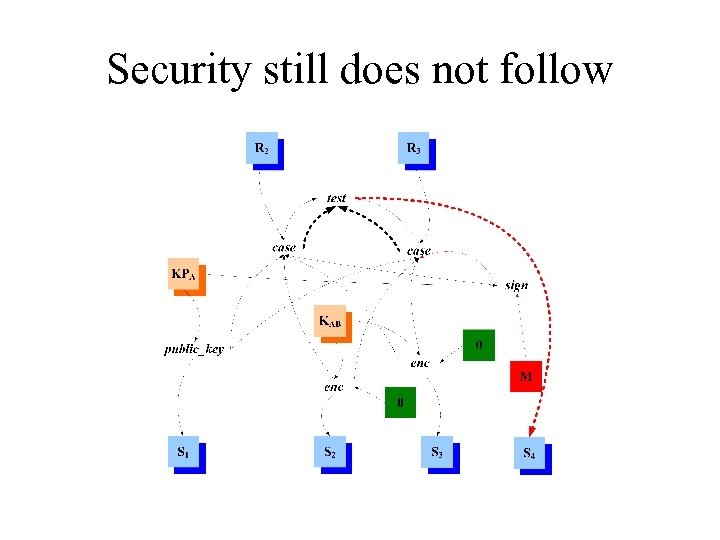 Security still does not follow
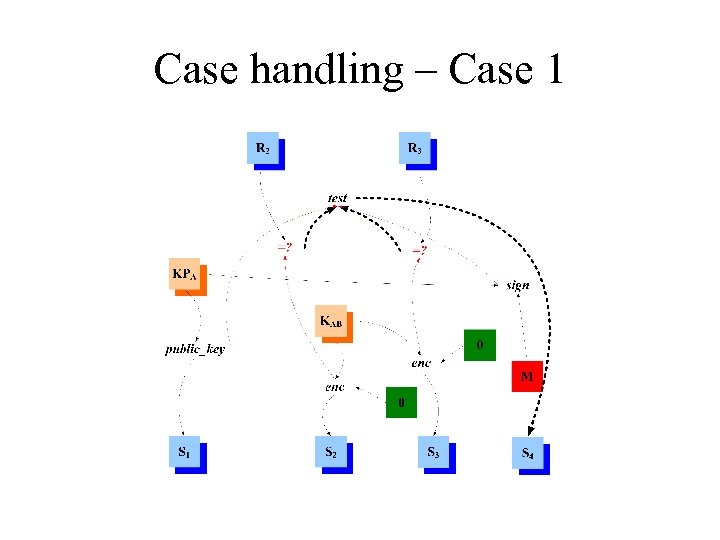 Case handling – Case 1
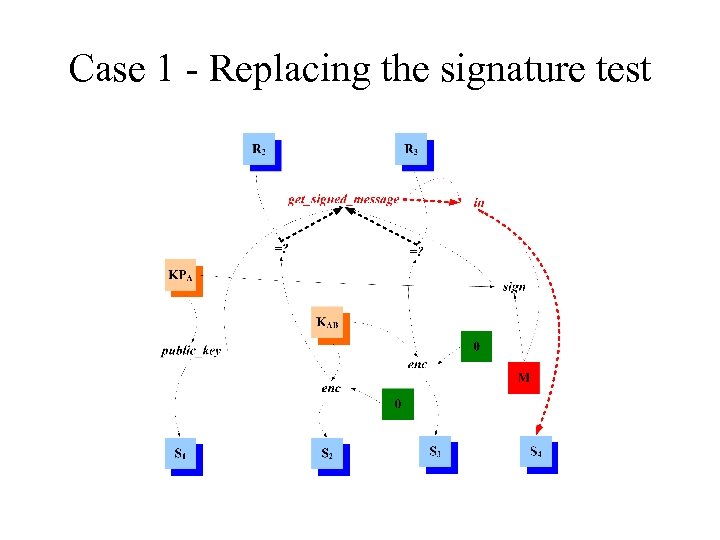 Case 1 - Replacing the signature test
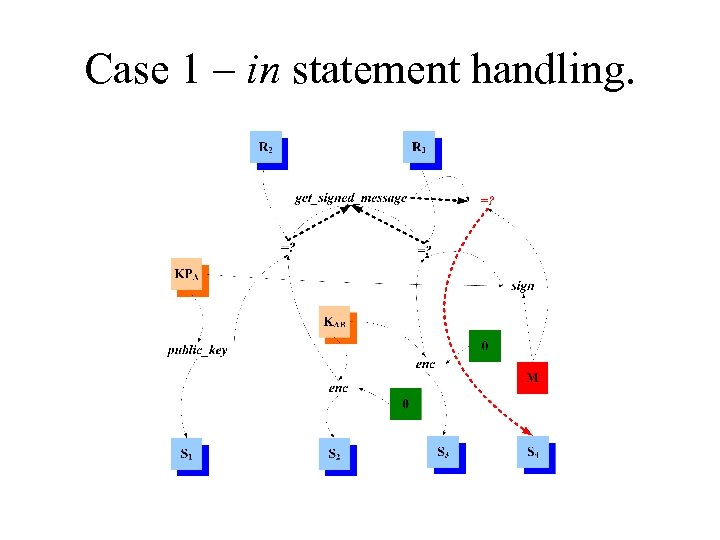 Case 1 – in statement handling.
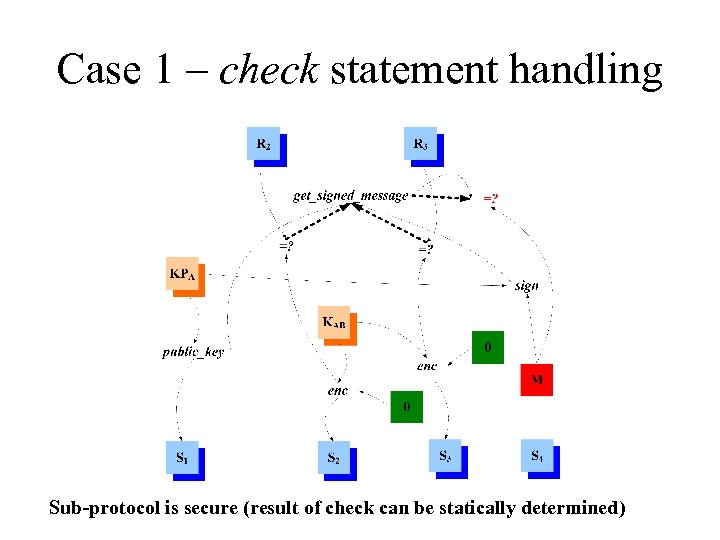 Case 1 – check statement handling Sub-protocol is secure (result of check can be statically determined)
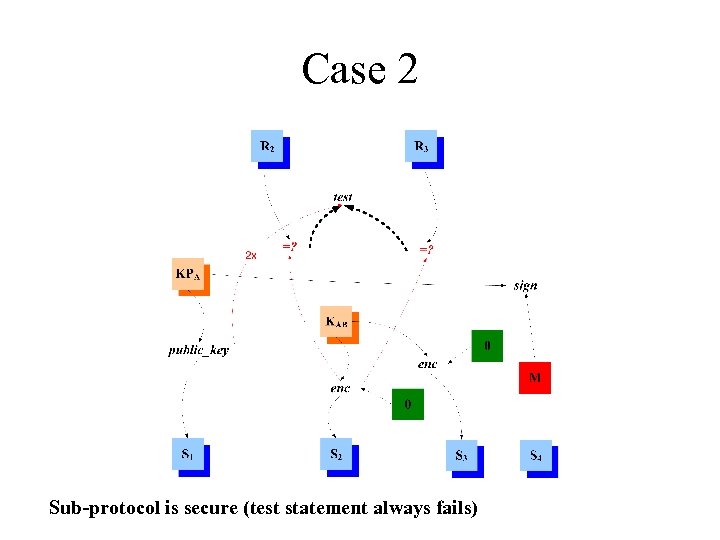 Case 2 Sub-protocol is secure (test statement always fails)
 Conclusions and future work • Conclusions – The presented technique can be used in automated analysis of the cryptographic protocols – Technique is published in Nordsec 2005 proceedings, p 29 -41. • Future work – Implementation of the automated analyser – Introducing the support for other cryptographic primitives