


 Скачать презентацию DIFFUSION OF PEG-200 IN SKIN TISSUE VADIM D
!!!!!!!!!!!!!!Genin - Diffusion of PEG-200 FINAL.pptx
- Количество слайдов: 18
 DIFFUSION OF PEG-200 IN SKIN TISSUE VADIM D. GENIN, ALEXEY N. BASHKATOV, ELINA A. GENINA, VALERY V. TUCHIN SARATOV STATE UNIVERSITY
 The Motivation of the Study The interest in the use of optical clearing agents (OCA) for improvement of optical methods for diagnostics and therapy of various diseases constantly increases because they are safe and relatively inexpensive. The main criteria of the choice of OCA for the tissue clearing are: 1) The refractive index of OCA should be close to that of the main tissue scatterers (collagen and elastin fibers or cell membranes); 2) OCA should be hyperosmotic liquid; 3) Biocompatibility. Among the most popular OCAs, there are glycerol, polyethylene glycols, propylene glycol, and glucose. They are biocompatible and do not damage tissues seriously at the short-time action.
 The Objectives of the Study To research the kinetics of the optical and structural parameters of rat skin under the action of polyethylene glycol 200 ex vivo To measure the diffusion coefficient of polyethylene glycol-200 in skin tissue
 The Mechanisms of the Reducing of the Light Scattering in Tissues Under the Action of an Optical Clearing Agent Osmotic dehydration of a tissue Partial replacement of an interstitial fluid by the clearing agent Structural modification of dissociation of tissue collagen (after prolonged action of the clearing agent)
 MATERIALS AND METHODS
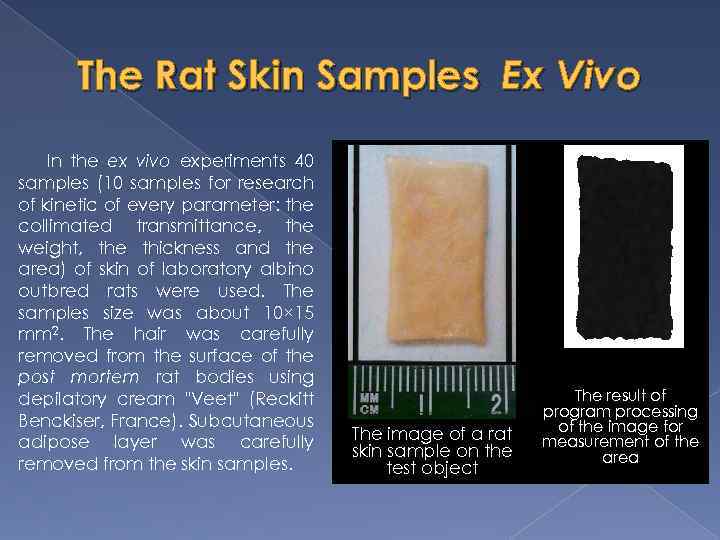 The Rat Skin Samples Ex Vivo In the ex vivo experiments 40 samples (10 samples for research of kinetic of every parameter: the collimated transmittance, the weight, the thickness and the area) of skin of laboratory albino outbred rats were used. The samples size was about 10× 15 mm 2. The hair was carefully removed from the surface of the post mortem rat bodies using depilatory cream "Veet" (Reckitt Benckiser, France). Subcutaneous adipose layer was carefully removed from the skin samples. The image of a rat skin sample on the test object The result of program processing of the image for measurement of the area
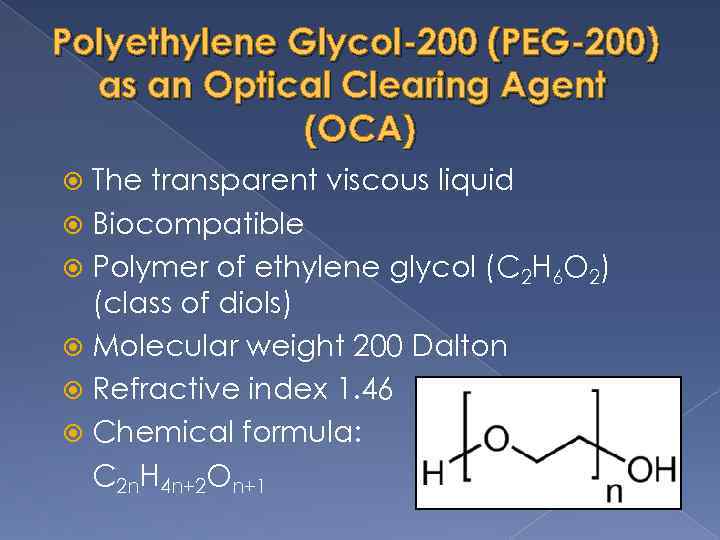 Polyethylene Glycol-200 (PEG-200) as an Optical Clearing Agent (OCA) The transparent viscous liquid Biocompatible Polymer of ethylene glycol (C 2 H 6 O 2) (class of diols) Molecular weight 200 Dalton Refractive index 1. 46 Chemical formula: C 2 n. H 4 n+2 On+1
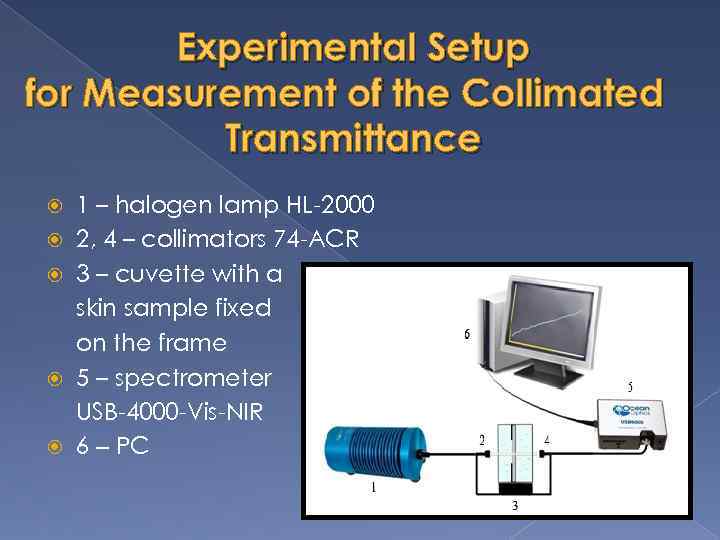 Experimental Setup for Measurement of the Collimated Transmittance 1 – halogen lamp HL-2000 2, 4 – collimators 74 -ACR 3 – cuvette with a skin sample fixed on the frame 5 – spectrometer USB-4000 -Vis-NIR 6 – PC
 The Analysis of Kinetics of the Structural Parameters To analyze the kinetics of weight W(t), thickness l(t) and area S(t) changing owing to dehydration the following empirical equation was used: where A(t = 0) is the initial value of weight, thickness or area; τ is the characteristic time constant, which describes the dehydration rate; B is the coefficient, which describes the dehydration degree; and B 0 is the residual value of weight, thickness, or area after the dehydration
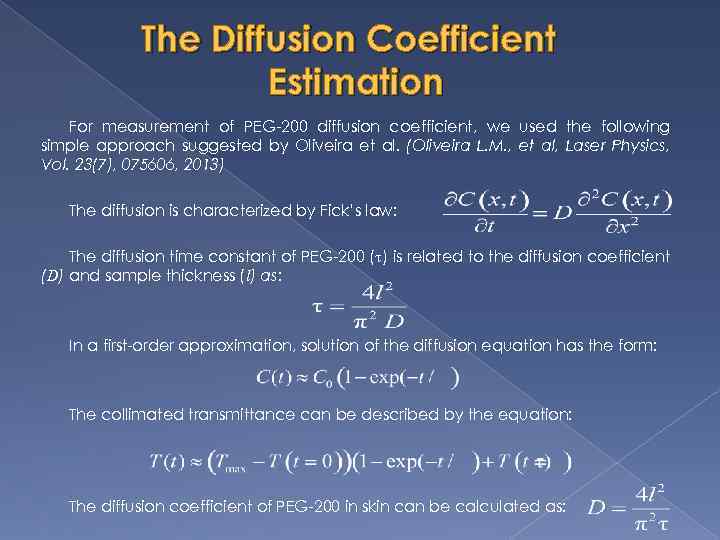 The Diffusion Coefficient Estimation For measurement of PEG-200 diffusion coefficient, we used the following simple approach suggested by Oliveira et al. (Oliveira L. M. , et al, Laser Physics, Vol. 23(7), 075606, 2013) The diffusion is characterized by Fick’s law: The diffusion time constant of PEG-200 ( ) is related to the diffusion coefficient (D) and sample thickness (l) as: In a first-order approximation, solution of the diffusion equation has the form: The collimated transmittance can be described by the equation: The diffusion coefficient of PEG-200 in skin can be calculated as:
 RESULTS
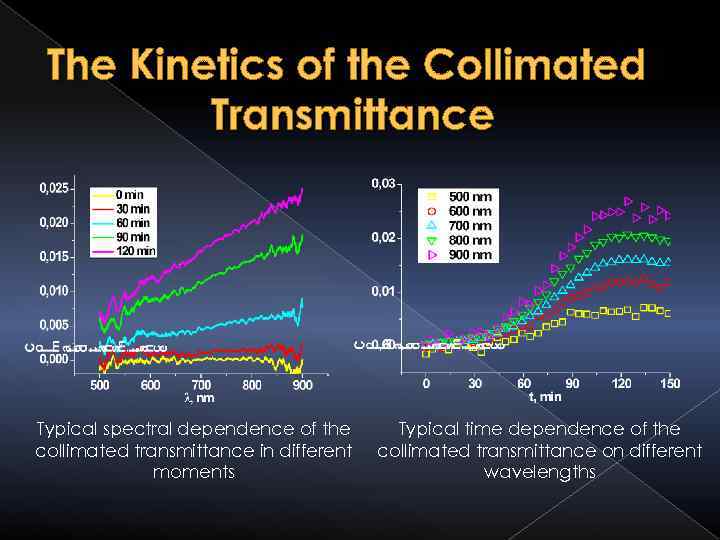 The Kinetics of the Collimated Transmittance Typical spectral dependence of the collimated transmittance in different moments Typical time dependence of the collimated transmittance on different wavelengths
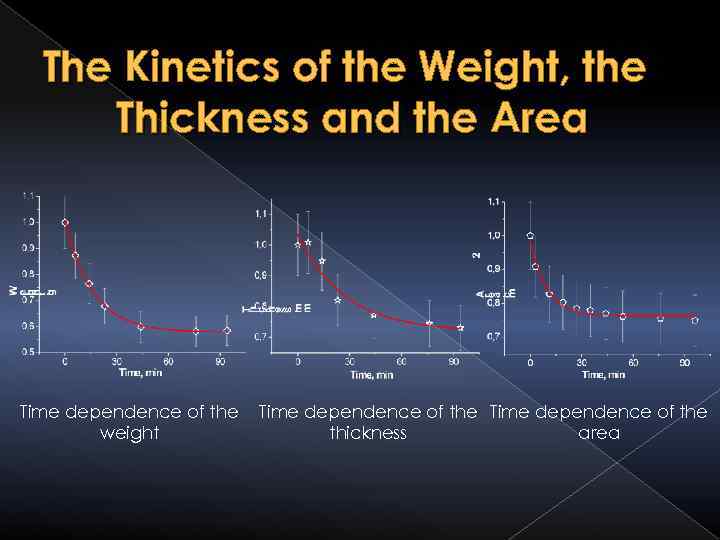 The Kinetics of the Weight, the Thickness and the Area Time dependence of the weight Time dependence of the thickness area
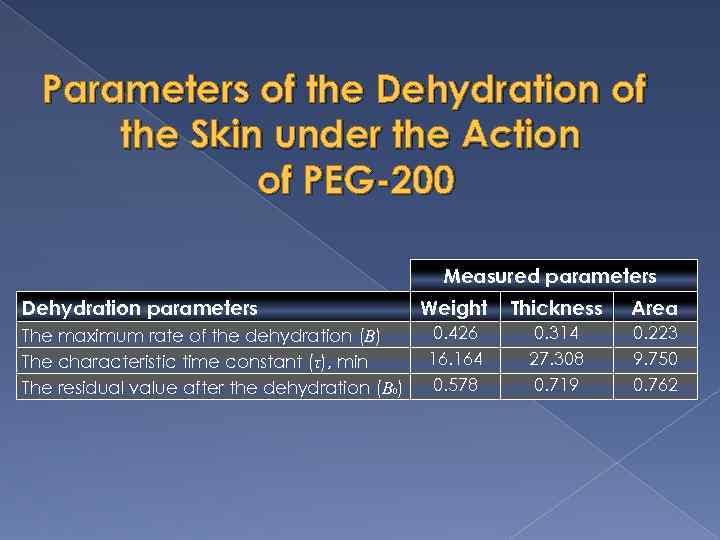 Parameters of the Dehydration of the Skin under the Action of PEG-200 Measured parameters Dehydration parameters The maximum rate of the dehydration (В) The characteristic time constant (τ), min The residual value after the dehydration (B 0) Weight Thickness Area 0. 426 16. 164 0. 578 0. 314 27. 308 0. 719 0. 223 9. 750 0. 762
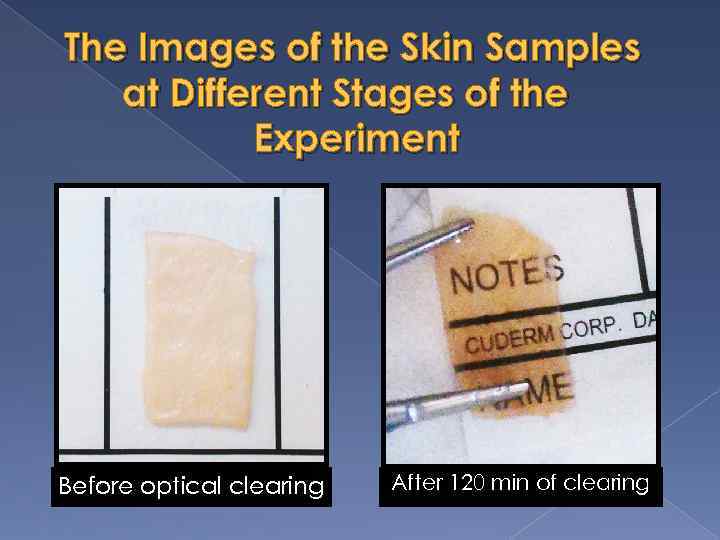 The Images of the Skin Samples at Different Stages of the Experiment Before optical clearing After 120 min of clearing
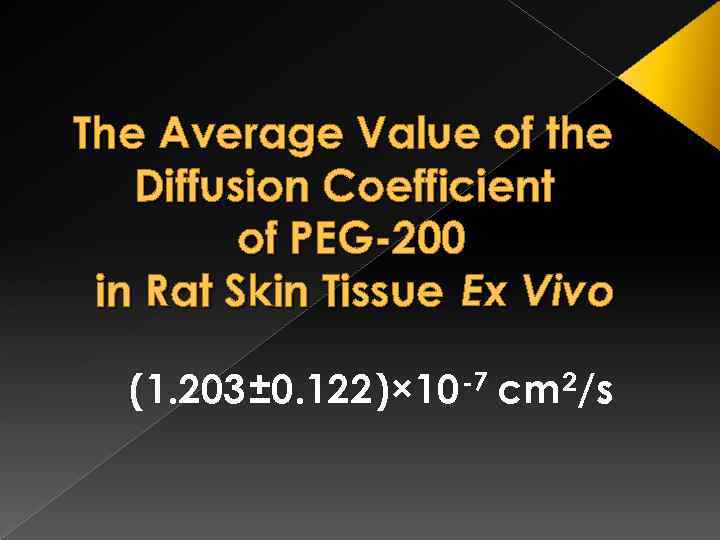 The Average Value of the Diffusion Coefficient of PEG-200 in Rat Skin Tissue Ex Vivo (1. 203± 0. 122)× 10 -7 cm 2/s
 Summary Optical clearing of the rat skin under the action of polyethylene glycol (PEG) with molecular weight 200 Dalton was studied ex vivo. The collimated transmittance was measured at the wavelength range 500 -900 nm. It was found that collimated transmittance of skin samples increased, whereas weight, thickness and area of the samples decreased during PEG penetration in skin tissue. A mechanism of the optical clearing under the action of PEG is discussed. Taking into account the kinetics of volume and thickness of the skin samples, diffusion coefficient of PEG-200 in skin tissue has been estimated as (1. 203± 0. 122)× 10‑ 7 cm 2/s. The presented results can be useful for enhancement of many methods of laser therapy and optical diagnostics of skin diseases and localization of subcutaneous neoplasms.
 Thanks for Attention!