


 Скачать презентацию Differentiating Instruction The Journey In the end all
6b0b2cab7ad8c89483de71b5e7e89c8b.ppt
- Количество слайдов: 67
 Differentiating Instruction: The Journey "In the end, all learners need your energy, your heart and your mind. They have that in common because they are young humans. How they need you however, differs. Unless we understand respond to those differences, we fail many learners. " * * Tomlinson, C. A. (2001). How to differentiate instruction in mixed ability classrooms (2 nd Ed. ). Alexandria, VA: ASCD. “Students. First: Successs for All” Conference Kennesaw State University Tuesday, November 15, 2005 Judy Rex judyrex@cox. net
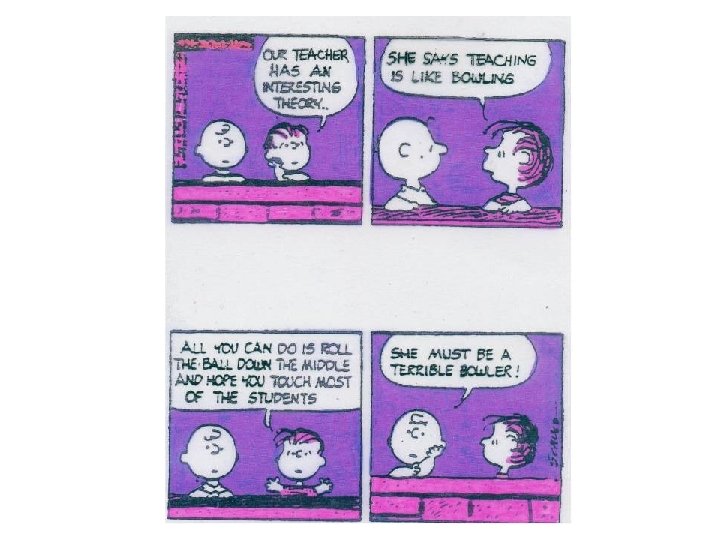

 The biggest mistake of past centuries in teaching has been to treat all children as if they were variants of the same individual and thus to feel justified in teaching them all the same subjects in the same way. Howard Gardner
 Differentiation is a Way of Thinking About Teaching and Learning
 Dear Miss Brin, Yesterday you got really mad at me in class. I didn’t argue with you, because that just makes you madder and being yelled at makes my stomach feel funny and I can’t think. But I want to say what happened. Maybe you will understand why it looks like I don’t pay attention in class. You told us to open our books to chapter 4 and read silently. Then you asked everyone to put your hand up if we had finished the third page and Sean didn’t. You waited for him to finish the page. Then you told us to take turns reading out loud. When you got to me, I asked you what paragraph to start on, and you started yelling at me. You asked me a lot of questions but you didn’t let me answer any of them. You answered them yourself but the things you said weren’t true answers! This is what happened. I started reading when you said. I finished the chapter and stopped because you get mad if I read any more. I didn’t get out another book because that makes you mad too. I didn’t doodle or do math or talk to Sarah or get up or walk around because those things make you mad. So I worked on my greek in my head until you called on me.
 I tried to keep track of where the other kids were when they were reading. And I had the right page. I just didn’t hear where Kim stopped. Her voice is sooo quiet and the verb I was saying was too loud in my head! So it’s not true that I was day dreaming! And I’m not stuck up or arrogant or insolent or any of the things you said I was! I TRY to follow along but I CAN’T read that slow!! You said you got mad because I wasting everybodies time. But I just asked “which paragraph Miss Brin? ” Look at your watch and say it too. It takes 2 seconds. You could have said “the third paragraph. ” That takes 21 seconds. I timed it too. Then Sarah and Amy R and Amy B would have 6 minutes to read aloud. Instead you yelled at ME for 6 minutes and they did not get to read any thing! Peter takes almost a whole minute to read “Ben heard the bear cough behind him. ” I timed him. It’s a game I made up to pay attention instead of doing Greek or making up poems in my head. If I ask you what paragraph and you tell me it still takes me less than half a minute for me to read a whole paragraph. So I guess I don’t understand why you are mad or why you used 6 minutes to tell the class what a bad stupid mean person i am because I wasted their time for 4 seconds. I think YOU wasted their time!!! And I think YOU were mean to call me those names in front of everybody!!!!
 Miss Brinn I want to do what you tell me! I don’t understand why I can’t keep reading at the end of a chapter. Or get out my other books. or study my greek. Or draw or doodle or write in my journal. But you don’t want me to do that so I don’t. But I can’t sit and stare at the wall. If i try to do that I just start thinking about something else! I don’t know HOW to not think! I don’t know HOW to read slow! Please tell me what to do so it won’t make you mad at me all the time. And PLEASE don’t yell at me in class. love, your sad student, Anne
 I know it’s been a long time since you heard from me. I wanted to let you know what I am doing now and that I think of you often, even though I have not been a particularly faithful correspondent. When you last saw me, you must have had some doubt about what I might do with my life. The interesting thing, though, is that if you did have doubts, you never let me know about them. You treated me as though I had all the possibilities in the world in my hands. The fact that I could not pass a vocabulary test seemed incidental to you. What mattered was what I could do. I didn’t get that at the time. I was too exhausted from years of lugging around my disabilities. You need to know that I will be receiving a Masters Degree in just a few days. My mom asked who I wanted to know about that from back home. You need to know. Your belief in me when I had no belief in myself opened the door that led here. . . R. G. .
 Understood Betsy Elizabeth Ann fell back on the bench with her mouth open. She felt really dizzy. What crazy things the teacher said! She felt as though she was being pulled limb from limb. “What’s the matter? ” asked the teacher, seeing her bewildered face. “Why – why, ” said Elizabeth Ann, “I don’t know what I am at all. If I’m second grade arithmetic and seventh grade reading and third grade spelling, what grade am I? ” The teacher laughed. “You aren’t any grade at all, no matter where you are in school. You’re just yourself, aren’t you? What difference does it make what grade you’re in? And what’s the use of your reading little baby things too easy for you just because you don’t know your multiplication table? ”
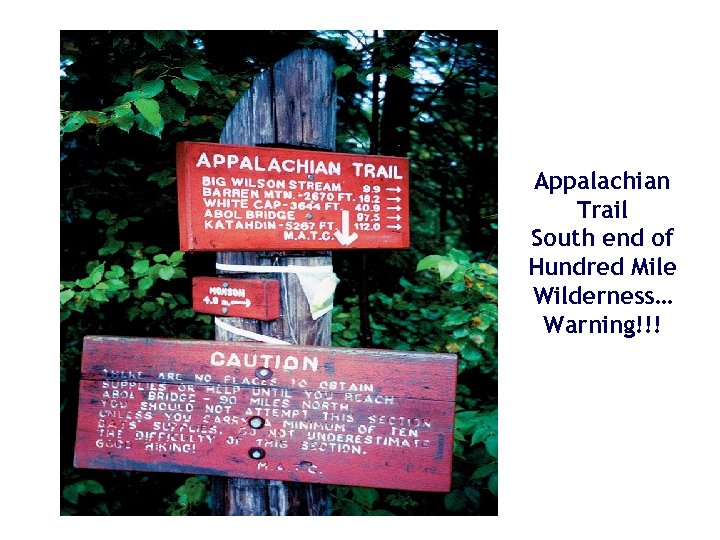 Appalachian Trail South end of Hundred Mile Wilderness… Warning!!!
 Where Do I Begin? Start small – but start! First Steps: * * *Next Steps * Who will help or support you? * * Leaps ___________________ * * * * ___________________ Bounds ___________________
 Differentiated Instruction Defined “Differentiated instruction is a teaching philosophy based on the premise that teachers should adapt instruction to student differences. Rather than marching students through the curriculum lockstep, teachers should modify their instruction to meet students’ varying readiness levels, learning preferences, and interests. Therefore, the teacher proactively plans a variety of ways to ‘get at’ and express learning. ” Carol Ann Tomlinson
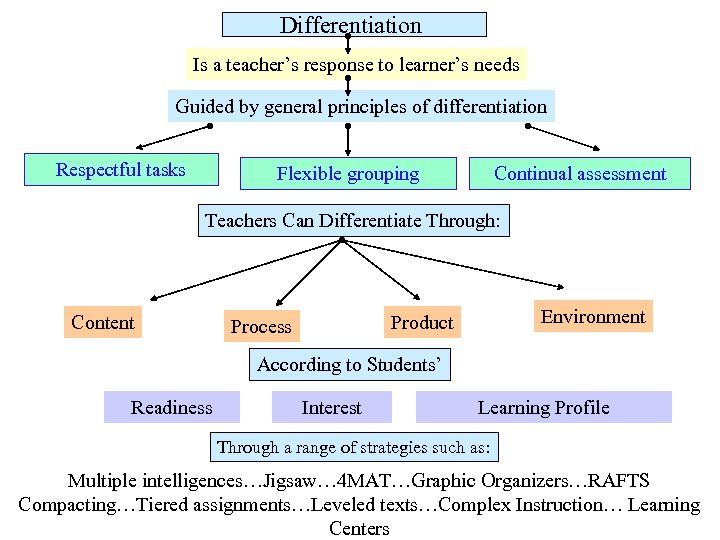 Differentiation Is a teacher’s response to learner’s needs Guided by general principles of differentiation Respectful tasks Flexible grouping Continual assessment Teachers Can Differentiate Through: Content Environment Product Process According to Students’ Readiness Interest Learning Profile Through a range of strategies such as: Multiple intelligences…Jigsaw… 4 MAT…Graphic Organizers…RAFTS Compacting…Tiered assignments…Leveled texts…Complex Instruction… Learning Centers
 Think of DIFFERENTIATION as the lens you look through when using any materials, programs or instructional strategies. If you have high quality curriculum and materials, then it isn’t so much WHAT you use as it is HOW you use it to meet the varying readiness, interests and learning profiles of your students.
 Differentiation must be an extension of not a replacement for high quality curriculum.
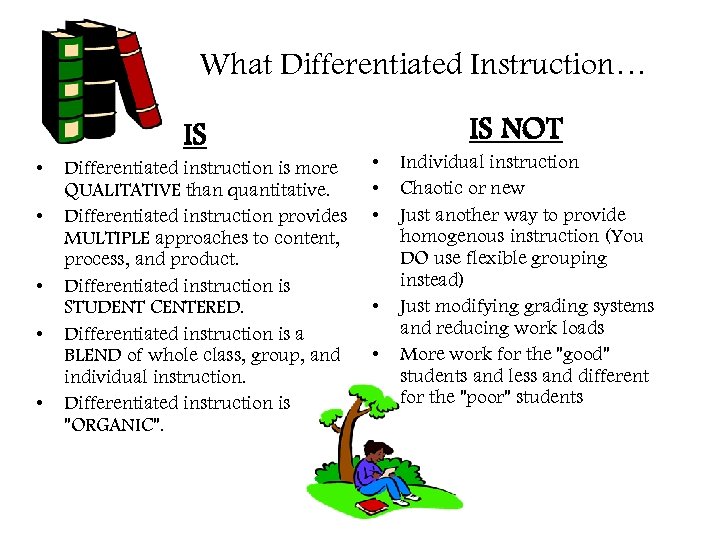 What Differentiated Instruction… IS • • • Differentiated instruction is more QUALITATIVE than quantitative. Differentiated instruction provides MULTIPLE approaches to content, process, and product. Differentiated instruction is STUDENT CENTERED. Differentiated instruction is a BLEND of whole class, group, and individual instruction. Differentiated instruction is "ORGANIC". IS NOT • • • Individual instruction Chaotic or new Just another way to provide homogenous instruction (You DO use flexible grouping instead) Just modifying grading systems and reducing work loads More work for the "good" students and less and different for the "poor" students
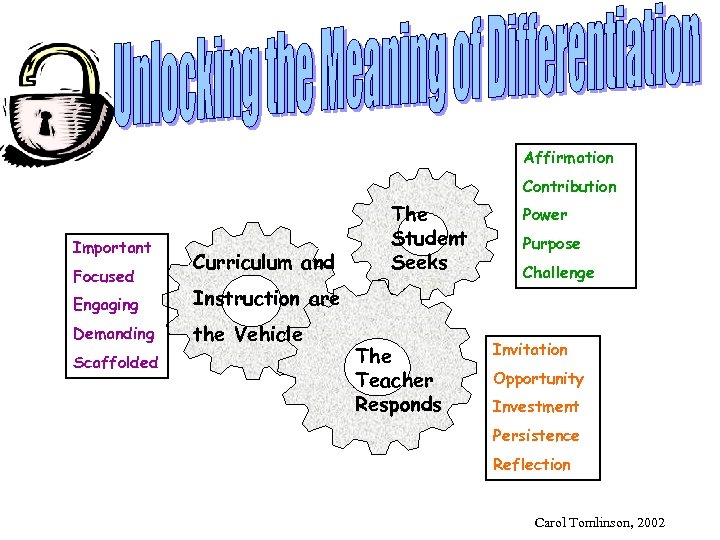 Affirmation Contribution Important Focused Curriculum and Engaging Instruction are Demanding the Vehicle The Student Seeks Scaffolded The Teacher Responds Power Purpose Challenge Invitation Opportunity Investment Persistence Reflection Carol Tomlinson, 2002
 “Differentiation is not so much the ‘stuff’ as the ‘how. ’ If the ‘stuff’ is ill conceived, the ‘how’ is doomed. ” Carol Ann Tomlinson
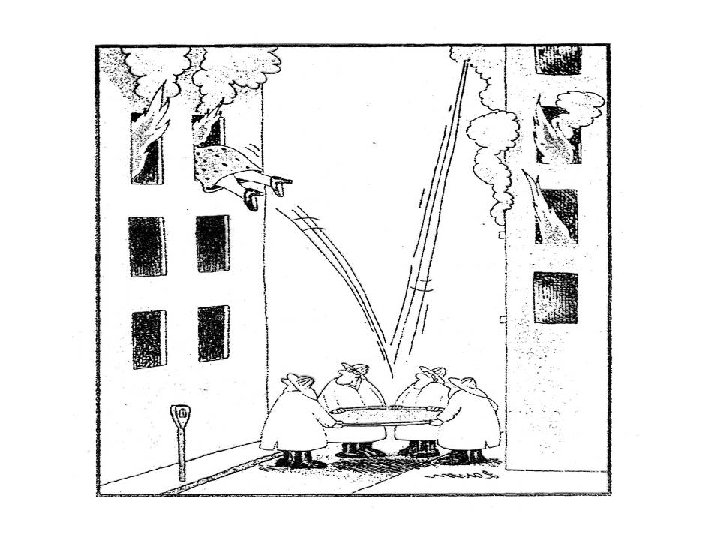
 RESPECTFUL TASKS Respectful tasks recognize student learning differences. The teacher continually tries to understand what individual students need to learn most effectively. A respectful task honors both the commonalities and differences of students, but not by treating them all alike. A respectful task offers all students the opportunity to explore essential understandings and skills at degrees of difficulty that escalate consistently as they develop their understanding and skill.
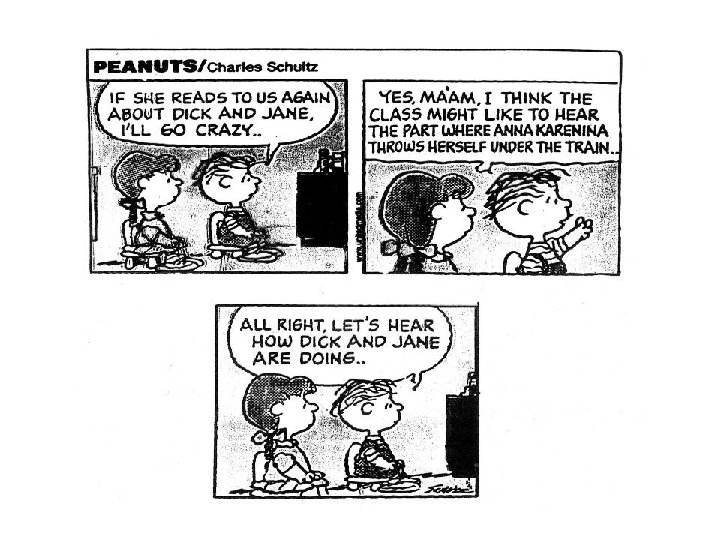
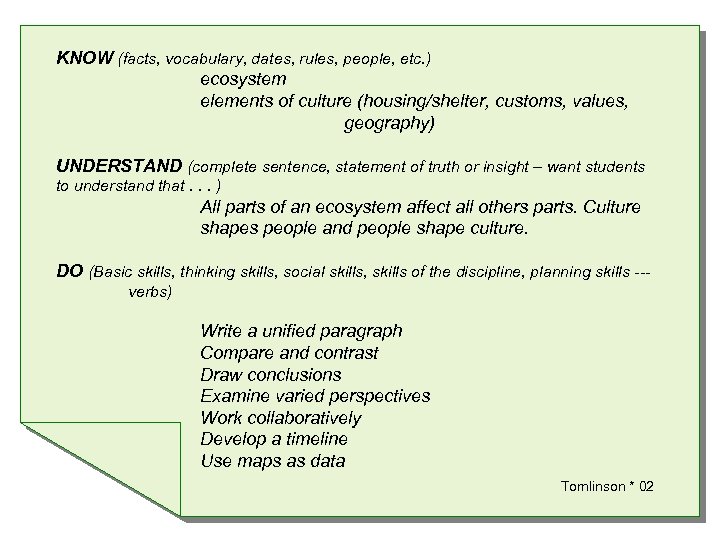 KNOW (facts, vocabulary, dates, rules, people, etc. ) ecosystem elements of culture (housing/shelter, customs, values, geography) UNDERSTAND (complete sentence, statement of truth or insight – want students to understand that. . . ) All parts of an ecosystem affect all others parts. Culture shapes people and people shape culture. DO (Basic skills, thinking skills, social skills, skills of the discipline, planning skills --verbs) Write a unified paragraph Compare and contrast Draw conclusions Examine varied perspectives Work collaboratively Develop a timeline Use maps as data Tomlinson * 02
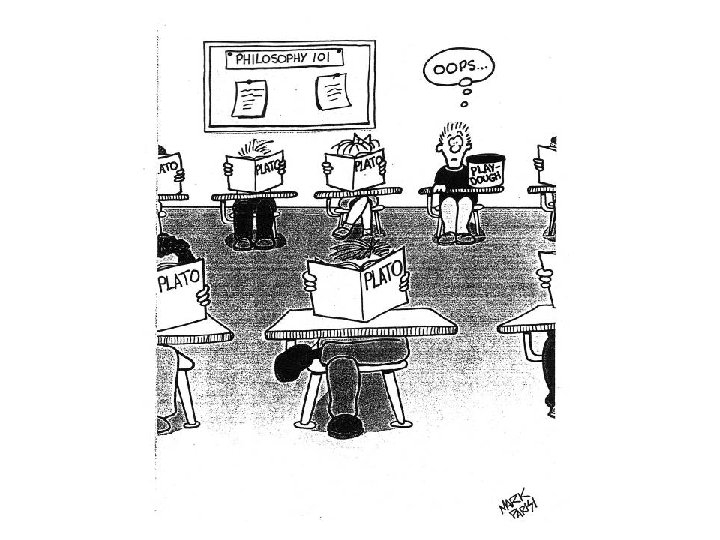
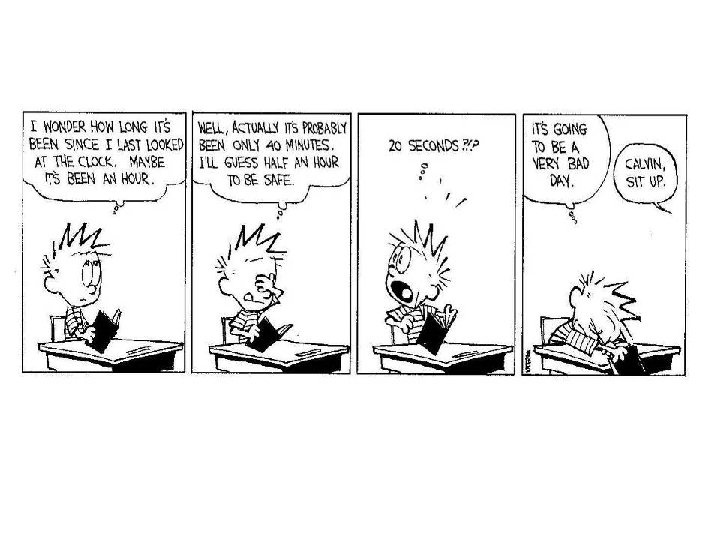
 -CHOICE- The Great Motivator! • Requires children to be aware of their own readiness, interests, and learning profiles. • Students have choices provided by the teacher. (YOU are still in charge of crafting challenging opportunities for all kiddos – NO taking the easy way out!) • Use choice across the curriculum: writing topics, content writing prompts, self-selected reading, contract menus, math problems, spelling words, product and assessment options, seating, group arrangement, ETC. . . • GUARANTEES BUY-IN AND ENTHUSIASM FOR LEARNING!
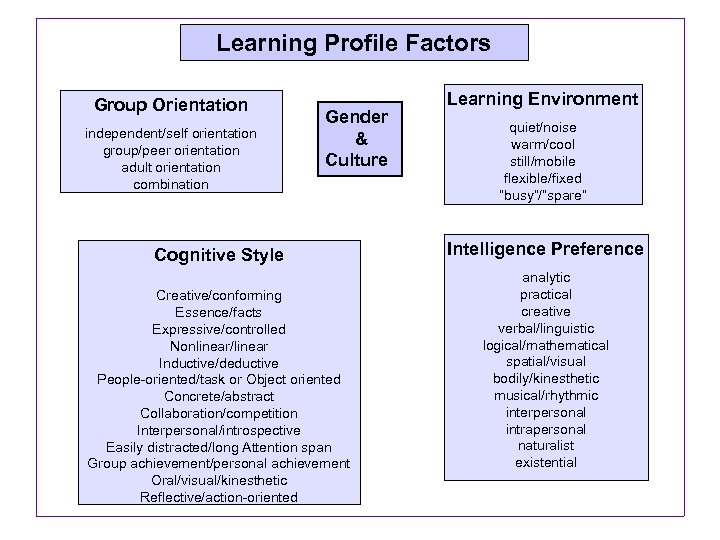 Learning Profile Factors Group Orientation independent/self orientation group/peer orientation adult orientation combination Gender & Culture Cognitive Style Creative/conforming Essence/facts Expressive/controlled Nonlinear/linear Inductive/deductive People-oriented/task or Object oriented Concrete/abstract Collaboration/competition Interpersonal/introspective Easily distracted/long Attention span Group achievement/personal achievement Oral/visual/kinesthetic Reflective/action-oriented Learning Environment quiet/noise warm/cool still/mobile flexible/fixed “busy”/”spare” Intelligence Preference analytic practical creative verbal/linguistic logical/mathematical spatial/visual bodily/kinesthetic musical/rhythmic interpersonal intrapersonal naturalist existential
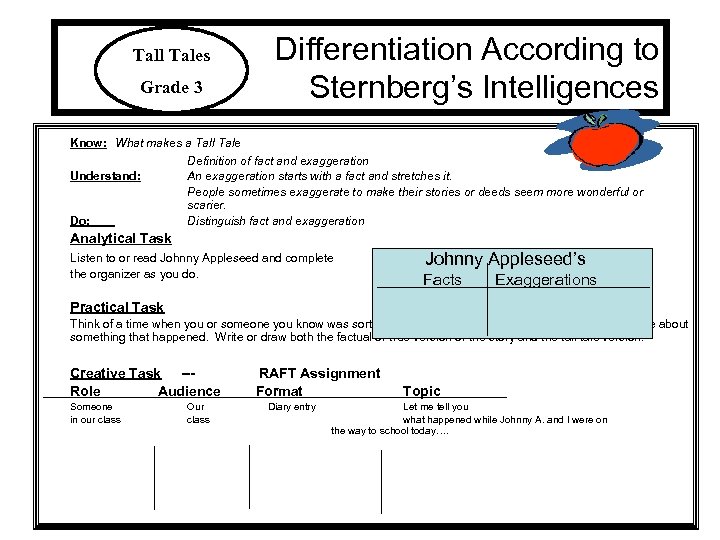 Tall Tales Grade 3 Differentiation According to Sternberg’s Intelligences Know: What makes a Tall Tale Definition of fact and exaggeration Understand: An exaggeration starts with a fact and stretches it. People sometimes exaggerate to make their stories or deeds seem more wonderful or scarier. Do: Distinguish fact and exaggeration Analytical Task Listen to or read Johnny Appleseed and complete the organizer as you do. Johnny Appleseed’s Facts Exaggerations Practical Task Think of a time when you or someone you know was sort of like the Johnny Appleseed story and told a tall tale about something that happened. Write or draw both the factual or true version of the story and the tall tale version. Creative Task --Role Audience Someone in our class Our class RAFT Assignment Format Diary entry Topic Let me tell you what happened while Johnny A. and I were on the way to school today….
 Assessment in a Differentiated Classroom • Assessment drives instruction. (Assessment information helps the teacher map next steps for varied learners and the class as a whole. ) • Assessment occurs consistently as the unit begins, throughout the unit and as the unit ends. (Pre-assessment, formative and summative assessment are regular parts of the teaching/learning cycle. ) • Teachers assess student readiness, interest and learning profile. • Assessments are part of “teaching for success”. • Assessment information helps students chart and contribute to their own growth. • Assessment MAY be differentiated. • Assessment information is more useful to the teacher than grades. • Assessment is more focused on personal growth than on peer competition.
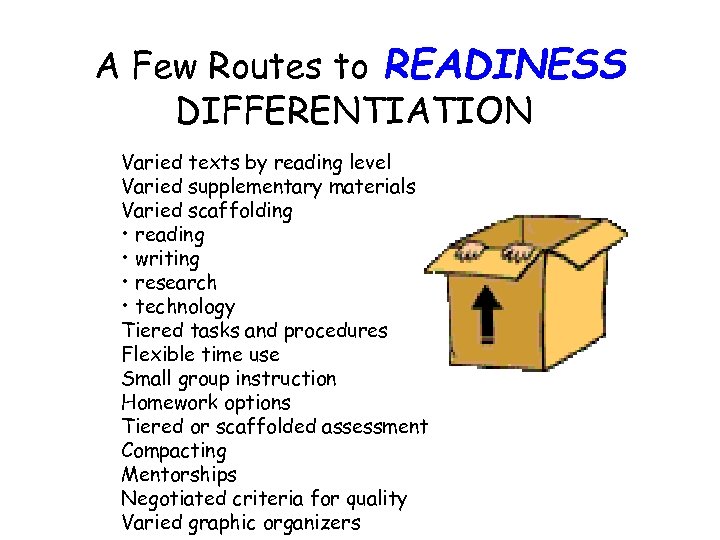 A Few Routes to READINESS DIFFERENTIATION Varied texts by reading level Varied supplementary materials Varied scaffolding • reading • writing • research • technology Tiered tasks and procedures Flexible time use Small group instruction Homework options Tiered or scaffolded assessment Compacting Mentorships Negotiated criteria for quality Varied graphic organizers
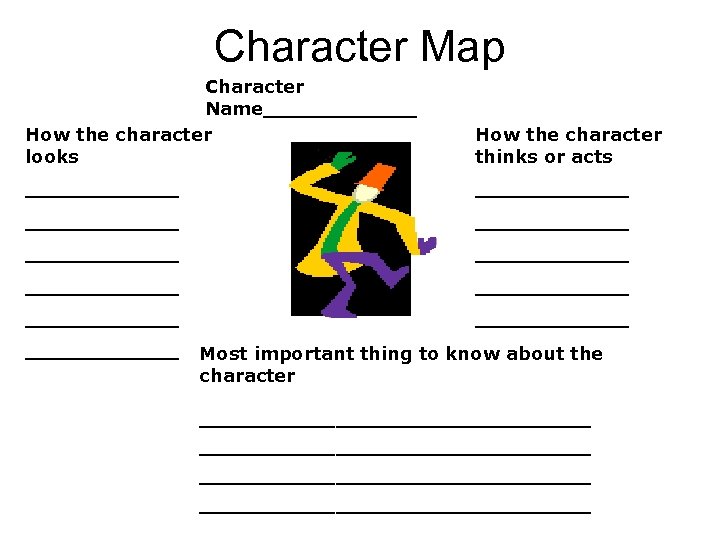 Character Map Character Name______ How the character looks How the character thinks or acts ____________ ____________ ____________ Most important thing to know about the character _______________________ ____________
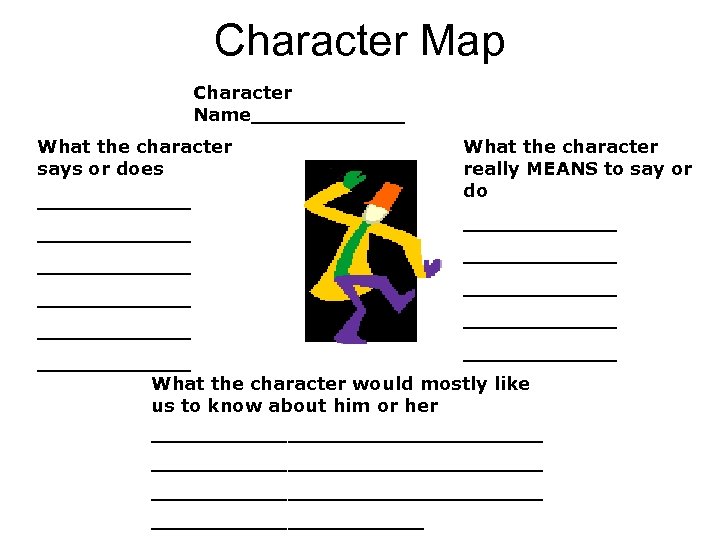 Character Map Character Name______ What the character says or does ____________ ______ What the character really MEANS to say or do ____________ ____________ What the character would mostly like us to know about him or her _______________________ ________
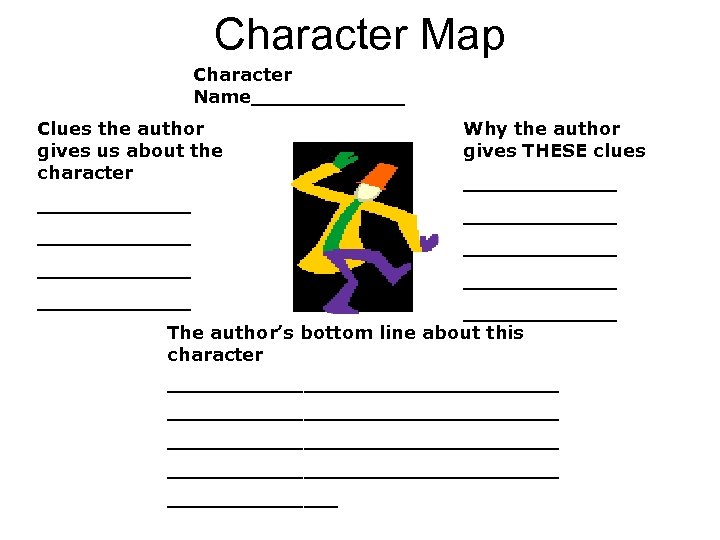 Character Map Character Name______ Clues the author gives us about the character ____________ Why the author gives THESE clues ____________ ______ The author’s bottom line about this character _______________________ _____
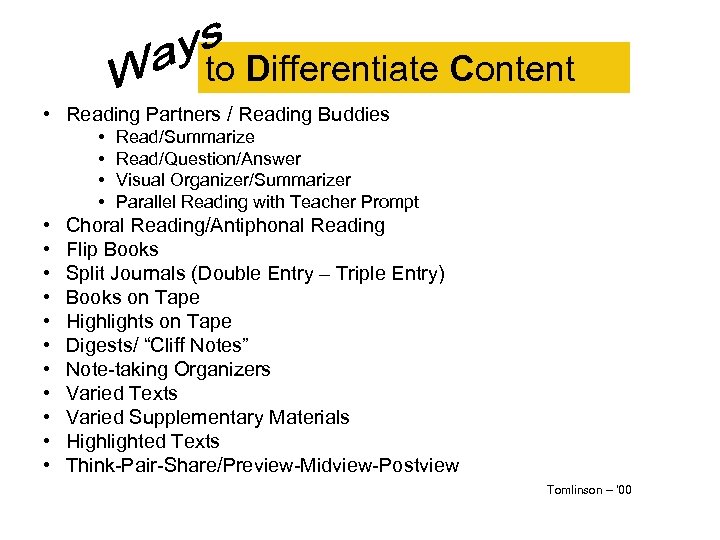 to Differentiate Content • Reading Partners / Reading Buddies • • • • Read/Summarize Read/Question/Answer Visual Organizer/Summarizer Parallel Reading with Teacher Prompt Choral Reading/Antiphonal Reading Flip Books Split Journals (Double Entry – Triple Entry) Books on Tape Highlights on Tape Digests/ “Cliff Notes” Note-taking Organizers Varied Texts Varied Supplementary Materials Highlighted Texts Think-Pair-Share/Preview-Midview-Postview Tomlinson – ‘ 00
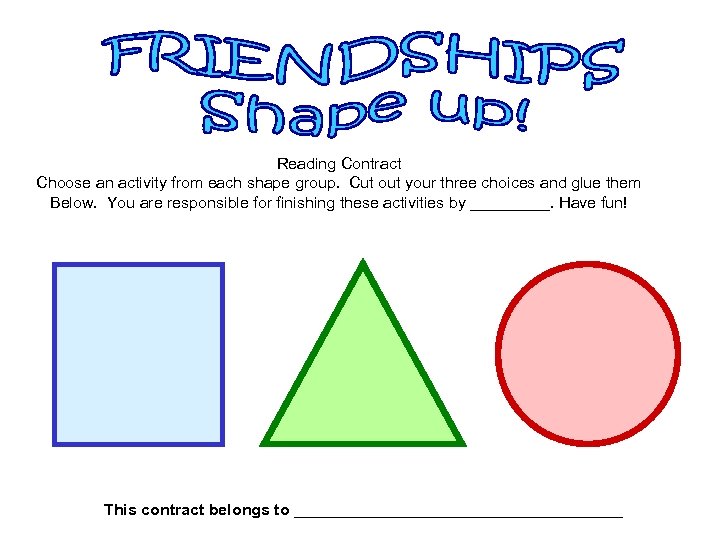 Reading Contract Choose an activity from each shape group. Cut out your three choices and glue them Below. You are responsible for finishing these activities by _____. Have fun! This contract belongs to ___________________
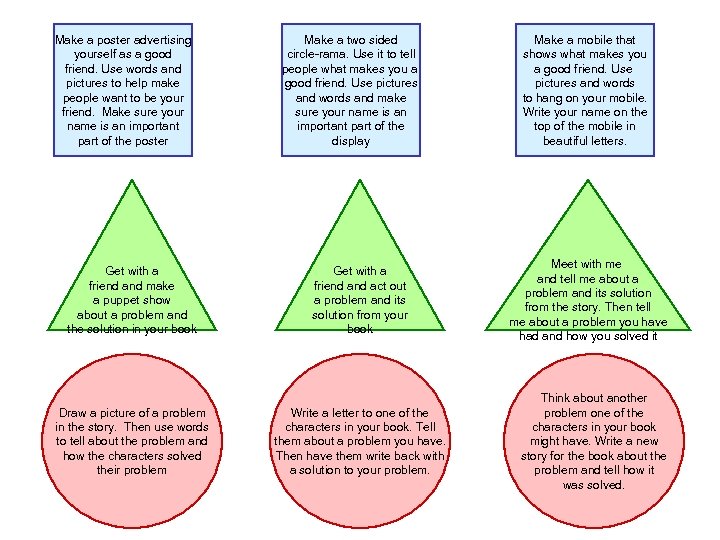 Make a poster advertising yourself as a good friend. Use words and pictures to help make people want to be your friend. Make sure your name is an important part of the poster Get with a friend and make a puppet show about a problem and the solution in your book Draw a picture of a problem in the story. Then use words to tell about the problem and how the characters solved their problem Make a two sided circle-rama. Use it to tell people what makes you a good friend. Use pictures and words and make sure your name is an important part of the display Get with a friend act out a problem and its solution from your book Write a letter to one of the characters in your book. Tell them about a problem you have. Then have them write back with a solution to your problem. Make a mobile that shows what makes you a good friend. Use pictures and words to hang on your mobile. Write your name on the top of the mobile in beautiful letters. Meet with me and tell me about a problem and its solution from the story. Then tell me about a problem you have had and how you solved it Think about another problem one of the characters in your book might have. Write a new story for the book about the problem and tell how it was solved.
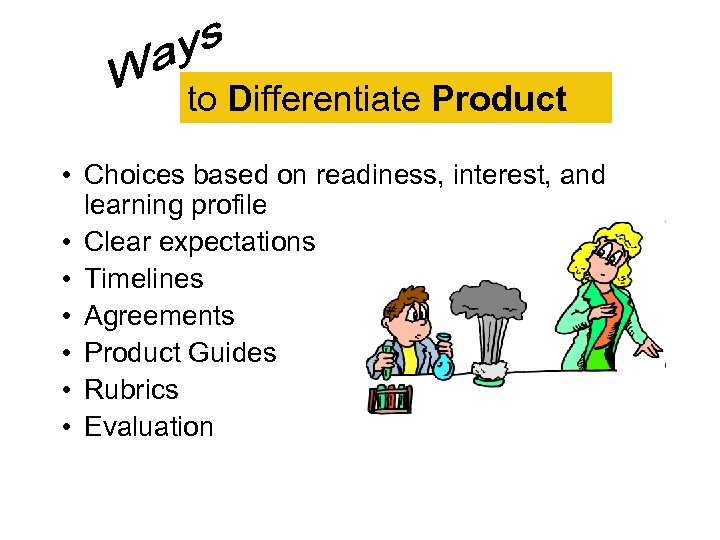 to Differentiate Product • Choices based on readiness, interest, and learning profile • Clear expectations • Timelines • Agreements • Product Guides • Rubrics • Evaluation
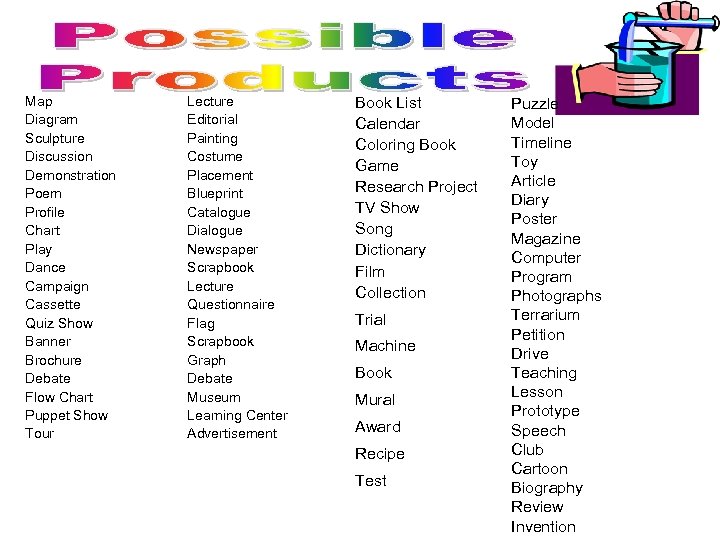 Map Diagram Sculpture Discussion Demonstration Poem Profile Chart Play Dance Campaign Cassette Quiz Show Banner Brochure Debate Flow Chart Puppet Show Tour Lecture Editorial Painting Costume Placement Blueprint Catalogue Dialogue Newspaper Scrapbook Lecture Questionnaire Flag Scrapbook Graph Debate Museum Learning Center Advertisement Book List Calendar Coloring Book Game Research Project TV Show Song Dictionary Film Collection Trial Machine Book Mural Award Recipe Test Puzzle Model Timeline Toy Article Diary Poster Magazine Computer Program Photographs Terrarium Petition Drive Teaching Lesson Prototype Speech Club Cartoon Biography Review Invention
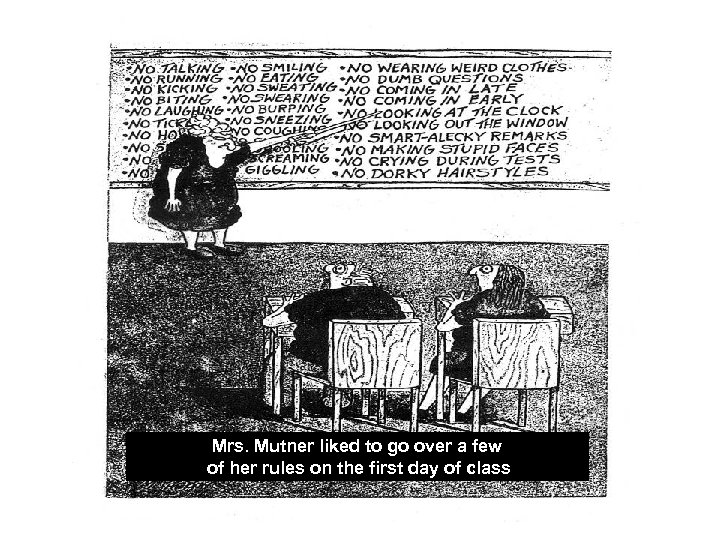 Mrs. Mutner liked to go over a few of her rules on the first day of class
 Best Practices for Standards-based Instruction Best Practice, New Standards for Teaching and Learning in America’s Schools Zemelman, S. , Daniels, H. & Hyde, A. (1998). Portsmouth, NH: Heinemann Student Voice and Involvement Balanced with teacher-chosen and teacher-directed activities: üStudents often select inquiry topics, books, writing topics, etc. üStudents maintain their own records, set goals, and self-assess üSome themes / inquiries are built from students’ own questions üStudents assume responsibility and take roles in decision making
 From Attache Magazine
 A “Typical” Day in a D. I. Class • • • predictable, not rigid, schedule blocks of time for units of study procedures defined and in place students assuming responsibility voice and choice for students a variety of materials are in use flexible grouping occurs regularly daily reflection on learning regular community gatherings (for fun and problem solving)
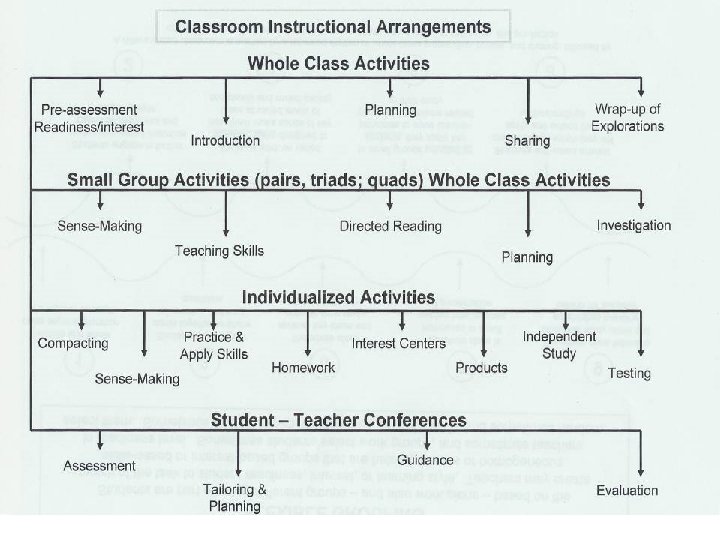
 Should be purposeful: § § § may be based on student interest, learning profile and/or readiness may be based on needs observed during learning times geared to accomplish curricular goals (K-U-D) Implementation: § § § purposefully plan using information collected – interest surveys, learning profile inventories, exit cards, quick writes, observations, etc. list groups on an overhead; place in folders or mailboxes “on the fly” as invitational groups Cautions: § § § avoid turning groups into tracking situations provide opportunities for students to work within a variety of groups practice moving into group situations and asuming roles within the group
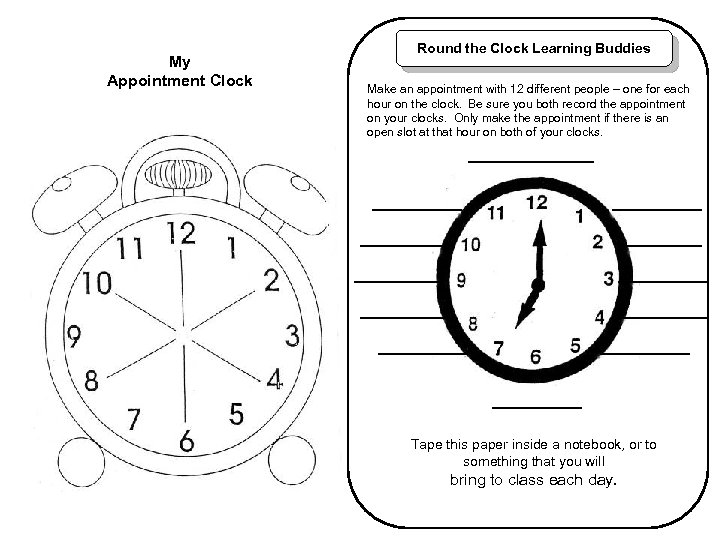 My Appointment Clock Round the Clock Learning Buddies Make an appointment with 12 different people – one for each hour on the clock. Be sure you both record the appointment on your clocks. Only make the appointment if there is an open slot at that hour on both of your clocks. Tape this paper inside a notebook, or to something that you will bring to class each day.
 Anchor Activities What Do If I Finish Early? • Read – comics, letters, books, encyclopedia, poetry, etc. • Write – a letter, poetry in your Writer’s Notebook, a story, a comic, etc. • Practice your cursive or calligraphy • Keyboarding • Help someone else • Create math story problems or puzzles • Work on independent study of your choice • Play a math or language game • Find out how to say your spelling words in another language • Practice ACT / SAT cards • Solve a challenge puzzle with write it up • Practice anything! • Get a jump on homework • Use your imagination and creativity to challenge yourself!
 10 Strategies for Managing a Differentiated Classroom 1. 2. 3. 4. 5. Have a strong rationale for differentiating instruction based on student readiness, interest and learning profile. Begin differentiating at a pace that is comfortable for you. Time differentiated activities for student success. Use an “anchor activity” to free you up to focus your attention on your students. Create and deliver instructions carefully.
 10 Strategies for Managing a Differentiated Classroom 6. 7. Have a “home base” for students. Be sure students have a plan for getting help when you are busy with another student or group. 8. Give your students as much responsibility for their learning as possible. 9. Engage your students in talking about classroom procedures and group processes. 10. Use flexible grouping.
 Students in a differentiated classroom do not need to work the system. . . because the system works for them!
 Remember to think of DIFFERENTIATION as the lens you look through when using any materials, programs or instructional strategies. How will you use what you learn about today to differentiate for YOUR students?
 Ask yourself. . SO WHAT? NOW WHAT?
 A Game Plan for Differentiation 1. Sharpen the curriculum • Focus (K-U-D) • Hook • Ratchet • Tighten 2. Assess the students • Pre-assessments for Readiness • Interest Inventories • Learning Preference Surveys • Anecdotal Data
 3. Design instruction • Map the content, process, and product • Whole class, small group, individual (flexible grouping) 4. Match tasks to learner need • Adjust for Readiness, interest, learning profile • Vary strategies • Align with KUD
 5. Bring the students on board • Develop rationale • Establish routines and procedures • Focus on shared decision-making • Build autonomy 6. Reflect and refine • Keep the loop going Adapted from C. Tomlinson
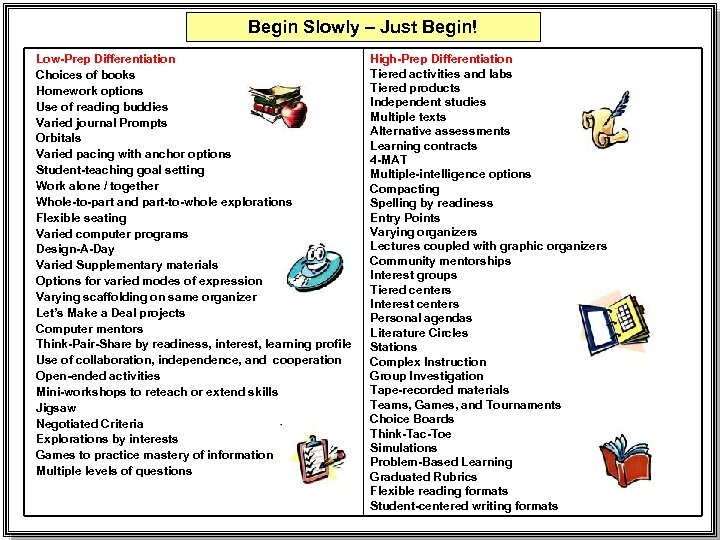 Begin Slowly – Just Begin! Low-Prep Differentiation Choices of books Homework options Use of reading buddies Varied journal Prompts Orbitals Varied pacing with anchor options Student-teaching goal setting Work alone / together Whole-to-part and part-to-whole explorations Flexible seating Varied computer programs Design-A-Day Varied Supplementary materials Options for varied modes of expression Varying scaffolding on same organizer Let’s Make a Deal projects Computer mentors Think-Pair-Share by readiness, interest, learning profile Use of collaboration, independence, and cooperation Open-ended activities Mini-workshops to reteach or extend skills Jigsaw Negotiated Criteria Explorations by interests Games to practice mastery of information Multiple levels of questions High-Prep Differentiation Tiered activities and labs Tiered products Independent studies Multiple texts Alternative assessments Learning contracts 4 -MAT Multiple-intelligence options Compacting Spelling by readiness Entry Points Varying organizers Lectures coupled with graphic organizers Community mentorships Interest groups Tiered centers Interest centers Personal agendas Literature Circles Stations Complex Instruction Group Investigation Tape-recorded materials Teams, Games, and Tournaments Choice Boards Think-Tac-Toe Simulations Problem-Based Learning Graduated Rubrics Flexible reading formats Student-centered writing formats
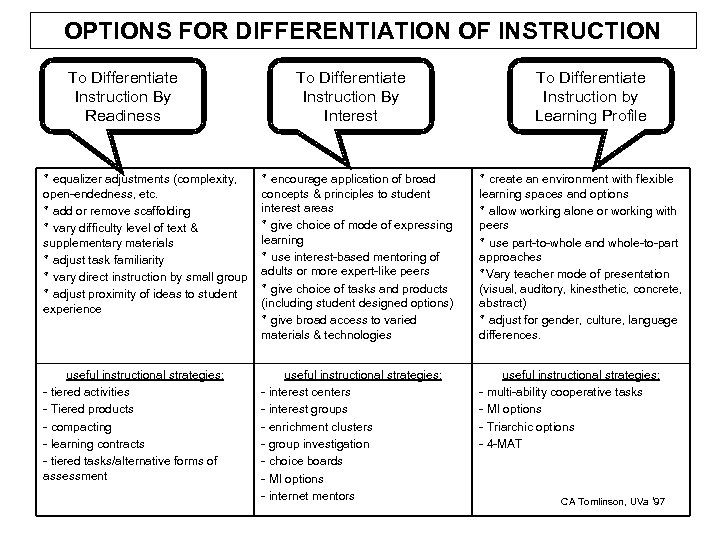 OPTIONS FOR DIFFERENTIATION OF INSTRUCTION To Differentiate Instruction By Readiness To Differentiate Instruction By Interest To Differentiate Instruction by Learning Profile ٭ equalizer adjustments (complexity, open-endedness, etc. ٭ add or remove scaffolding ٭ vary difficulty level of text & supplementary materials ٭ adjust task familiarity ٭ vary direct instruction by small group ٭ adjust proximity of ideas to student experience ٭ encourage application of broad concepts & principles to student interest areas ٭ give choice of mode of expressing learning ٭ use interest-based mentoring of adults or more expert-like peers ٭ give choice of tasks and products (including student designed options) ٭ give broad access to varied materials & technologies ٭ create an environment with flexible learning spaces and options ٭ allow working alone or working with peers ٭ use part-to-whole and whole-to-part approaches ٭ Vary teacher mode of presentation (visual, auditory, kinesthetic, concrete, abstract) ٭ adjust for gender, culture, language differences. useful instructional strategies: - tiered activities - Tiered products - compacting - learning contracts - tiered tasks/alternative forms of assessment useful instructional strategies: - interest centers - interest groups - enrichment clusters - group investigation - choice boards - MI options - internet mentors useful instructional strategies: - multi-ability cooperative tasks - MI options - Triarchic options - 4 -MAT CA Tomlinson, UVa ‘ 97

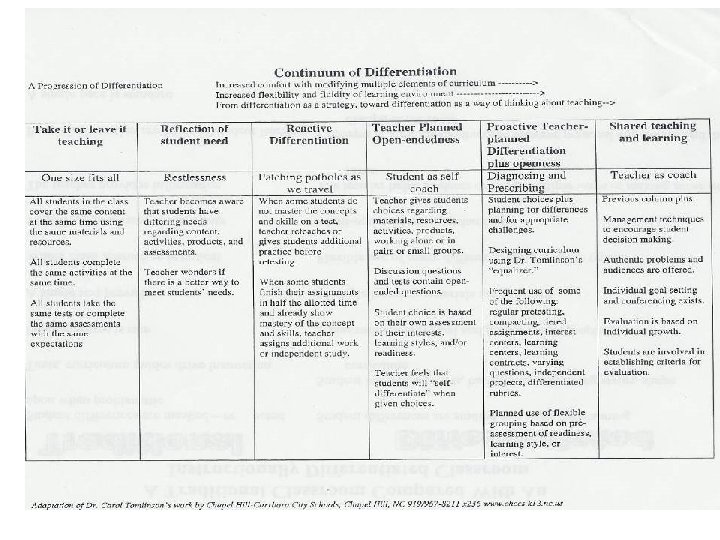
 Where are you on the continuum of DIFFERENTIATION? • What will it take for you to move? • What roadblocks are in your way? • How can you remove them?
 My teacher did not care as much about page 51 as she did about ME! S. Kronos
 Whatever it Takes!
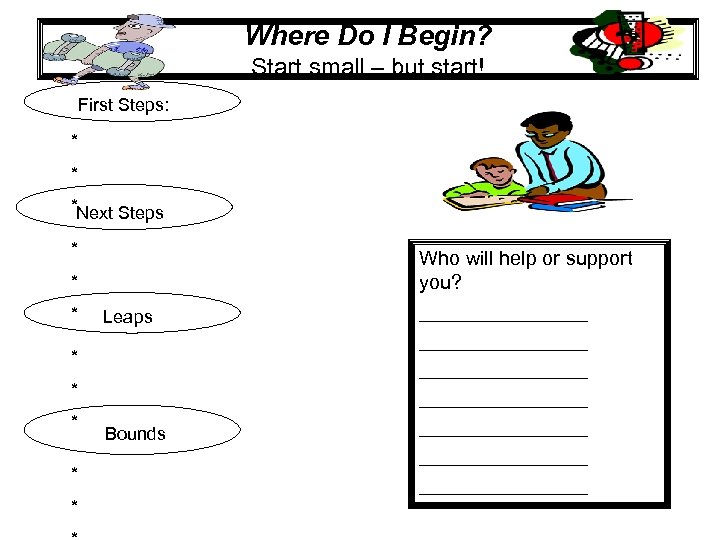 Where Do I Begin? Start small – but start! First Steps: * * *Next Steps * Who will help or support you? * * Leaps ___________________ * * * * ___________________ Bounds ___________________
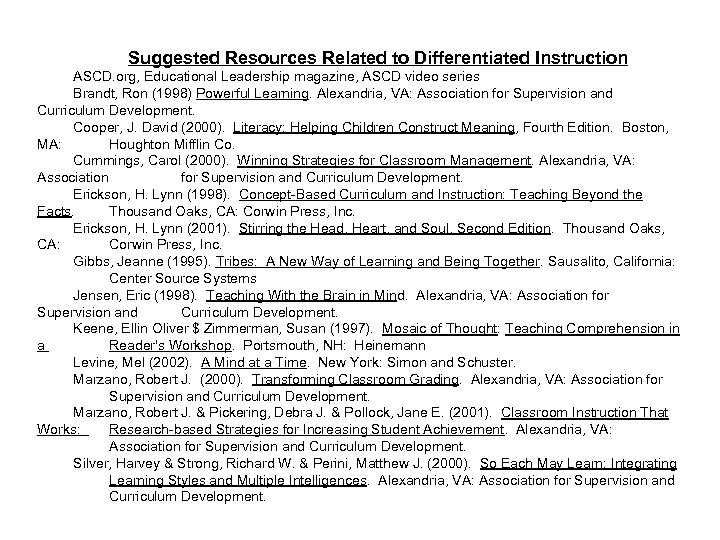 Suggested Resources Related to Differentiated Instruction ASCD. org, Educational Leadership magazine, ASCD video series Brandt, Ron (1998) Powerful Learning. Alexandria, VA: Association for Supervision and Curriculum Development. Cooper, J. David (2000). Literacy: Helping Children Construct Meaning, Fourth Edition. Boston, MA: Houghton Mifflin Co. Cummings, Carol (2000). Winning Strategies for Classroom Management. Alexandria, VA: Association for Supervision and Curriculum Development. Erickson, H. Lynn (1998). Concept-Based Curriculum and Instruction: Teaching Beyond the Facts. Thousand Oaks, CA: Corwin Press, Inc. Erickson, H. Lynn (2001). Stirring the Head, Heart, and Soul, Second Edition. Thousand Oaks, CA: Corwin Press, Inc. Gibbs, Jeanne (1995). Tribes: A New Way of Learning and Being Together. Sausalito, California: Center Source Systems Jensen, Eric (1998). Teaching With the Brain in Mind. Alexandria, VA: Association for Supervision and Curriculum Development. Keene, Ellin Oliver $ Zimmerman, Susan (1997). Mosaic of Thought: Teaching Comprehension in a Reader's Workshop. Portsmouth, NH: Heinemann Levine, Mel (2002). A Mind at a Time. New York: Simon and Schuster. Marzano, Robert J. (2000). Transforming Classroom Grading. Alexandria, VA: Association for Supervision and Curriculum Development. Marzano, Robert J. & Pickering, Debra J. & Pollock, Jane E. (2001). Classroom Instruction That Works: Research-based Strategies for Increasing Student Achievement. Alexandria, VA: Association for Supervision and Curriculum Development. Silver, Harvey & Strong, Richard W. & Perini, Matthew J. (2000). So Each May Learn: Integrating Learning Styles and Multiple Intelligences. Alexandria, VA: Association for Supervision and Curriculum Development.
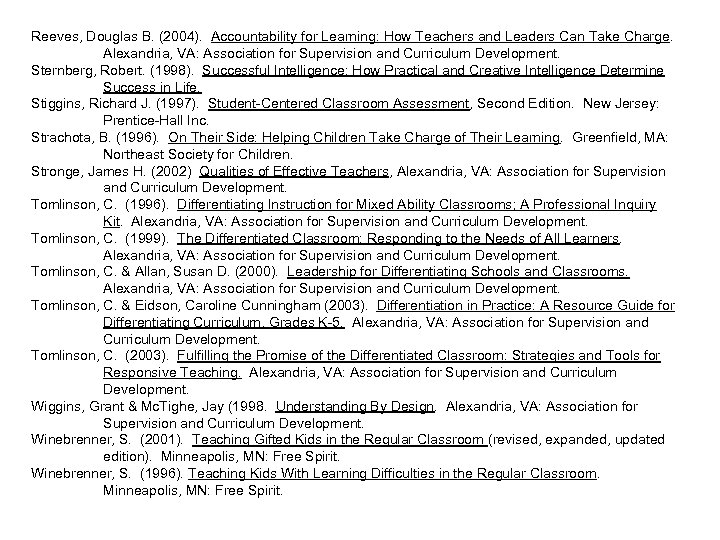 Reeves, Douglas B. (2004). Accountability for Learning: How Teachers and Leaders Can Take Charge. Alexandria, VA: Association for Supervision and Curriculum Development. Sternberg, Robert. (1998). Successful Intelligence: How Practical and Creative Intelligence Determine Success in Life. Stiggins, Richard J. (1997). Student-Centered Classroom Assessment, Second Edition. New Jersey: Prentice-Hall Inc. Strachota, B. (1996). On Their Side: Helping Children Take Charge of Their Learning. Greenfield, MA: Northeast Society for Children. Stronge, James H. (2002) Qualities of Effective Teachers, Alexandria, VA: Association for Supervision and Curriculum Development. Tomlinson, C. (1996). Differentiating Instruction for Mixed Ability Classrooms; A Professional Inquiry Kit. Alexandria, VA: Association for Supervision and Curriculum Development. Tomlinson, C. (1999). The Differentiated Classroom: Responding to the Needs of All Learners. Alexandria, VA: Association for Supervision and Curriculum Development. Tomlinson, C. & Allan, Susan D. (2000). Leadership for Differentiating Schools and Classrooms. Alexandria, VA: Association for Supervision and Curriculum Development. Tomlinson, C. & Eidson, Caroline Cunningham (2003). Differentiation in Practice: A Resource Guide for Differentiating Curriculum, Grades K-5. Alexandria, VA: Association for Supervision and Curriculum Development. Tomlinson, C. (2003). Fulfilling the Promise of the Differentiated Classroom: Strategies and Tools for Responsive Teaching. Alexandria, VA: Association for Supervision and Curriculum Development. Wiggins, Grant & Mc. Tighe, Jay (1998. Understanding By Design. Alexandria, VA: Association for Supervision and Curriculum Development. Winebrenner, S. (2001). Teaching Gifted Kids in the Regular Classroom (revised, expanded, updated edition). Minneapolis, MN: Free Spirit. Winebrenner, S. (1996). Teaching Kids With Learning Difficulties in the Regular Classroom. Minneapolis, MN: Free Spirit.