 Скачать презентацию Differentiating Destinations Exploring the challenges of branding regional
3ac4f8b8f243d51d08553eb36046ab08.ppt
- Количество слайдов: 27



Differentiating Destinations: Exploring the challenges of branding regional mass tourism markets
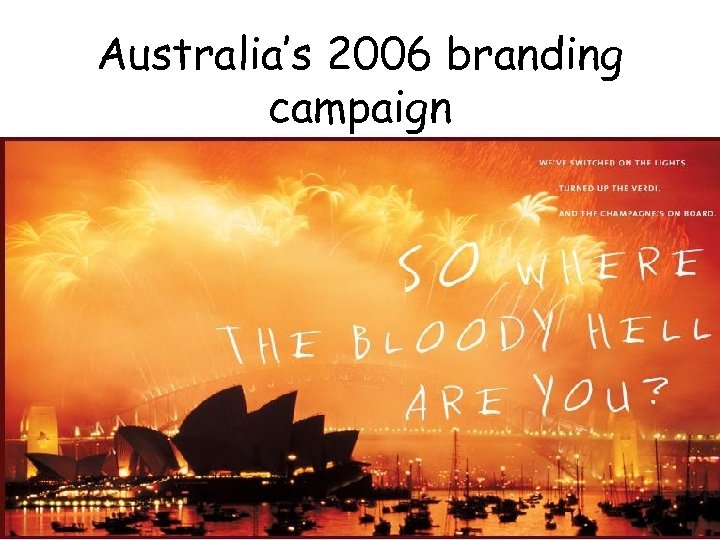
Australia’s 2006 branding campaign ASEAN BRANDING
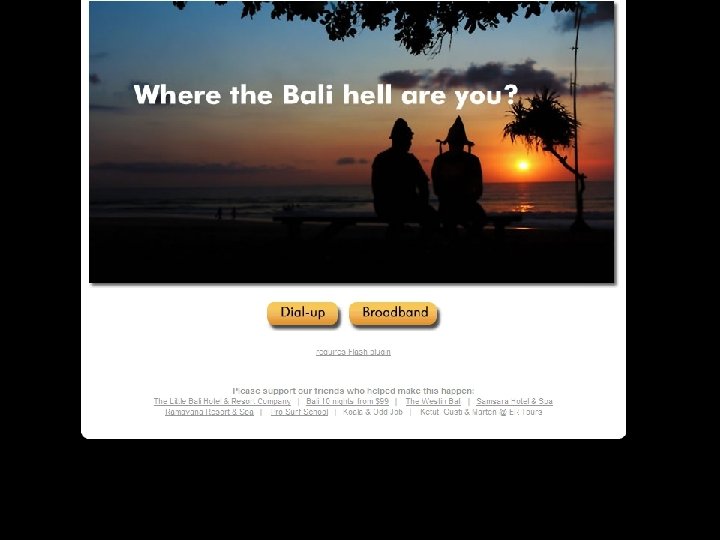
ASEAN BRANDING

ASEAN BRANDING
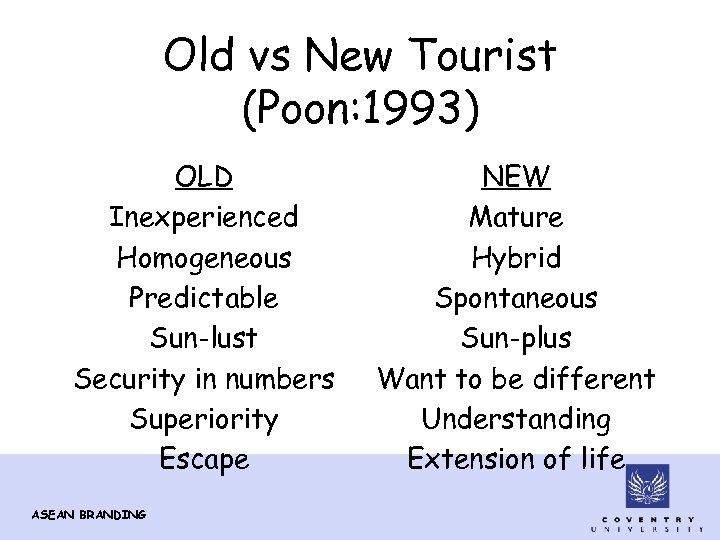
Old vs New Tourist (Poon: 1993) OLD Inexperienced Homogeneous Predictable Sun-lust Security in numbers Superiority Escape ASEAN BRANDING NEW Mature Hybrid Spontaneous Sun-plus Want to be different Understanding Extension of life
Features of New Tourism (Poon: 1993) • Production of travel services are not dominated by economies of scale alone but also by economies of scope • Production is driven by the requirements of consumers • The holiday is marketed to individuals with different needs, incomes, time constraints and travel interests ASEAN BRANDING

Marketing and Branding Destinations • A key aim of marketing activity is to differentiate products of the same category. • Effective, branding activities highlight the differentiated value of destinations within the context of competitors in the market. ASEAN BRANDING
Benefits of Cooperative Branding • Cooperative branding may ‘build a stronger destination identity for an individual country’. • Cooperative branding may result in more favourable brand associations for the region in the market. (Cai: 2002: 737) ASEAN BRANDING
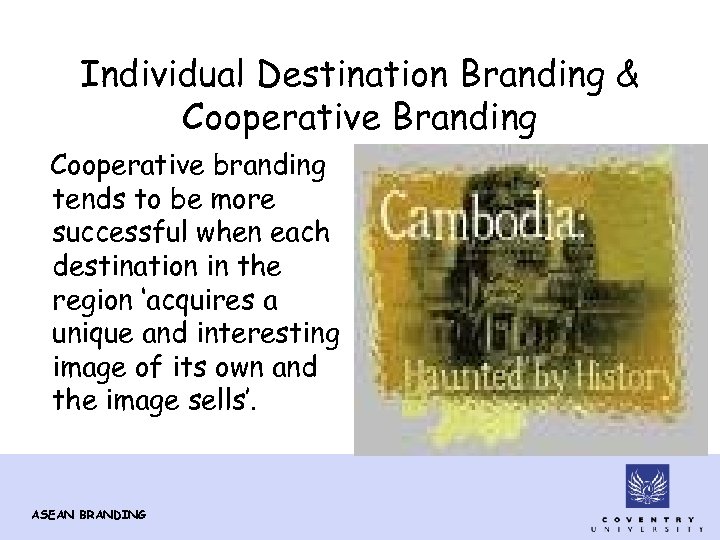
Individual Destination Branding & Cooperative Branding Cooperative branding tends to be more successful when each destination in the region ‘acquires a unique and interesting image of its own and the image sells’. ASEAN BRANDING
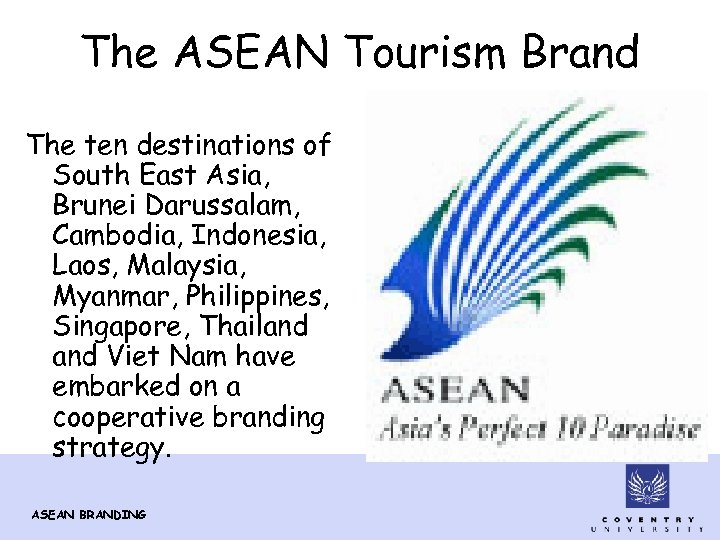
The ASEAN Tourism Brand The ten destinations of South East Asia, Brunei Darussalam, Cambodia, Indonesia, Laos, Malaysia, Myanmar, Philippines, Singapore, Thailand Viet Nam have embarked on a cooperative branding strategy. ASEAN BRANDING
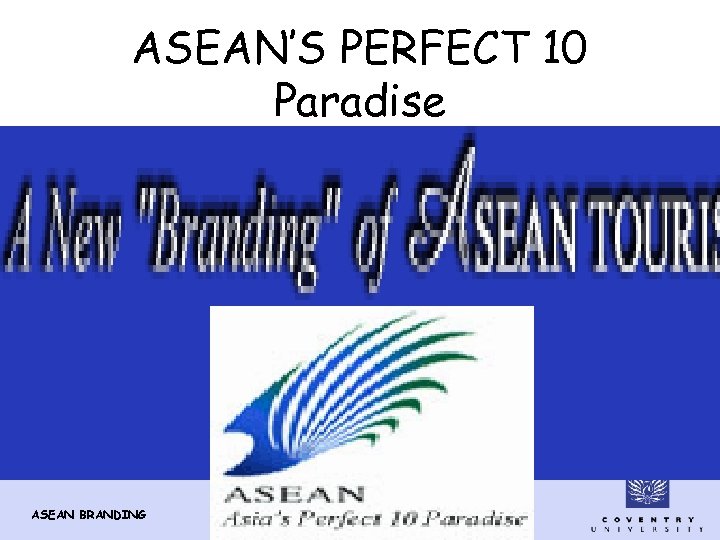
ASEAN’S PERFECT 10 Paradise ASEAN BRANDING
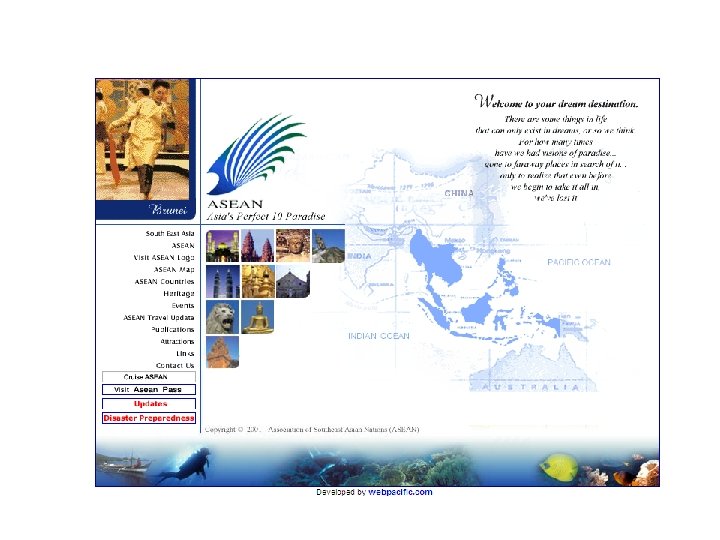
ASEAN BRANDING
Partners & Competitors By “twinning” itself with its competitors, the perceived lack of cultural attractions in Singapore may be more than supplemented by its neighbours’ such that “collective” attractiveness and collective competitiveness” of the region are enhanced. ASEAN BRANDING
Challenges of Destination Marketing • Complexity of the tourism product • Destination marketer as little control over the components of the product • Diverse views of stakeholders ASEAN BRANDING • Selecting key attributes to represent the brand • Building a unified, meaningful representation of the destination’s core values
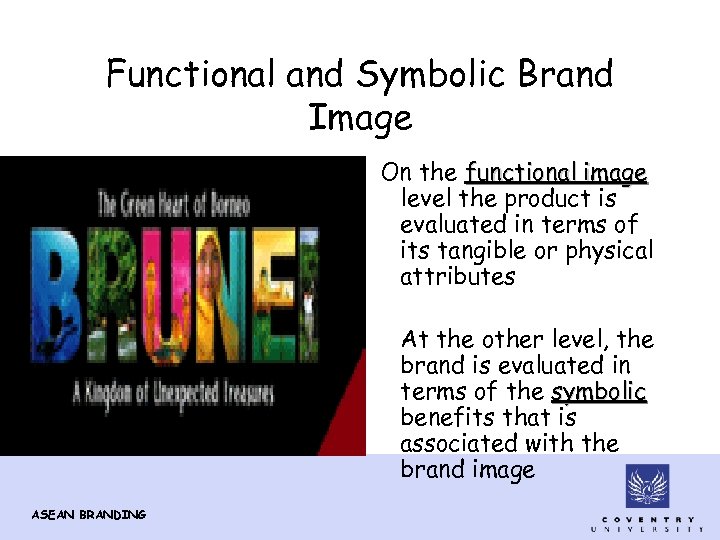
Functional and Symbolic Brand Image On the functional image level the product is evaluated in terms of its tangible or physical attributes At the other level, the brand is evaluated in terms of the symbolic benefits that is associated with the brand image ASEAN BRANDING
RESEARCH GOAL An exploratory study to determine the extent to which the unique traits and holiday experiences (brand identity) of the ASEAN member countries were differentiated in their presentation of individual country logo, images, slogans and general information on their official tourism homepages ASEAN BRANDING
Study Method • Homepages were analysed by two independent coders to measure image attributes of the destinations displayed online. At the time of the study Cambodia and Viet Nam were not available and so were excluded from the study. • Destination attributes were measured for frequency counts while the brand identity communicated by logos, slogans, pictures and narrative were measured using a five point semantic scale ASEAN BRANDING
List of Destination Attributes Coded • Landscape: coastal, rivers, mountains, waterfalls, rural, urban, flora & fauna, Built Environment, Other • People: Locals, tourists, both local and tourists, None, Other • Activities: Water-based, land-based recreation, dining, festivals, nightlife, shopping, relaxing, Other, None ASEAN BRANDING
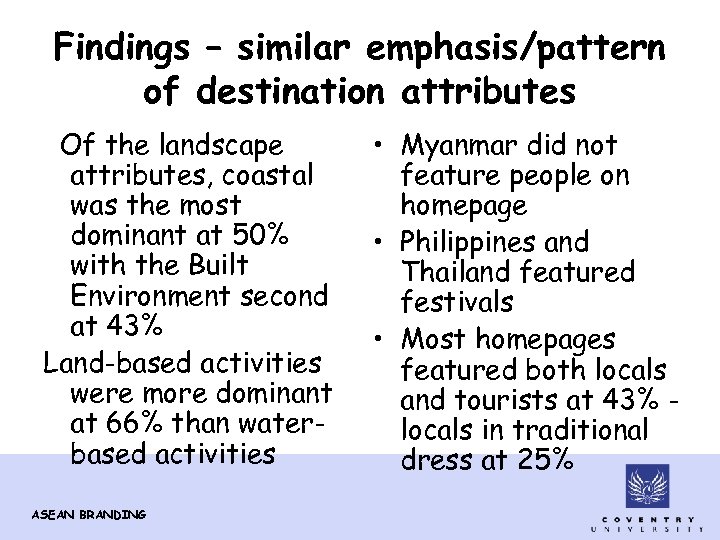
Findings – similar emphasis/pattern of destination attributes Of the landscape attributes, coastal was the most dominant at 50% with the Built Environment second at 43% Land-based activities were more dominant at 66% than waterbased activities ASEAN BRANDING • Myanmar did not feature people on homepage • Philippines and Thailand featured festivals • Most homepages featured both locals and tourists at 43% locals in traditional dress at 25%
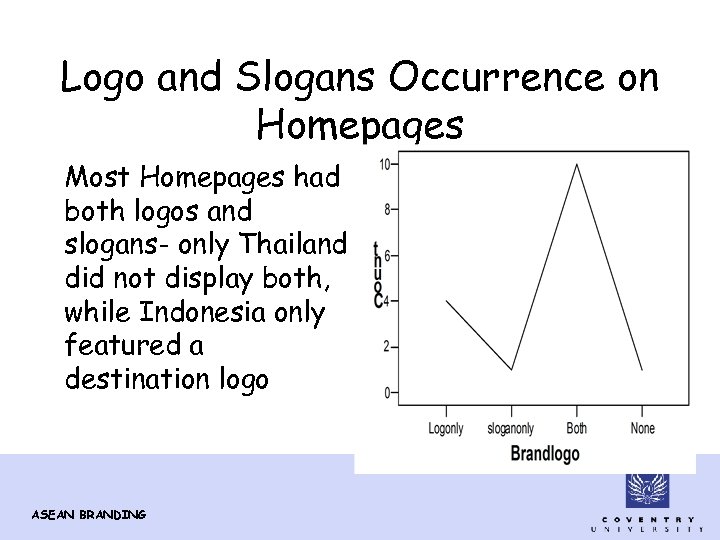
Logo and Slogans Occurrence on Homepages Most Homepages had both logos and slogans- only Thailand did not display both, while Indonesia only featured a destination logo ASEAN BRANDING
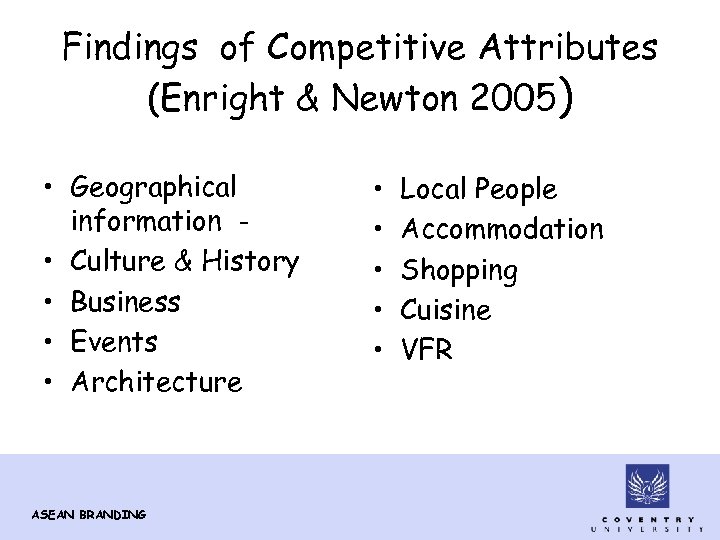
Findings of Competitive Attributes (Enright & Newton 2005) • Geographical information • Culture & History • Business • Events • Architecture ASEAN BRANDING • • • Local People Accommodation Shopping Cuisine VFR
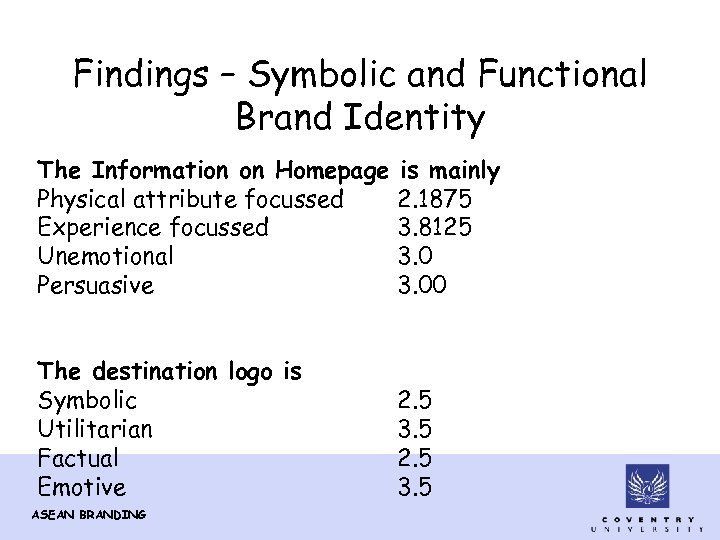
Findings – Symbolic and Functional Brand Identity The Information on Homepage Physical attribute focussed Experience focussed Unemotional Persuasive The destination logo is Symbolic Utilitarian Factual Emotive ASEAN BRANDING is mainly 2. 1875 3. 8125 3. 00 2. 5 3. 5
Findings – Homepage Attributes Dominant images were pristine, developed infrastructure and the exotic It was somewhat surprising that culture and heritage did not score higher. It is likely that the identity of ‘New Asia’ is being demonstrated by a tendency to highlight the development and progress of these societies while not abandoning the wealth of their traditions. ASEAN BRANDING
Summary of findings • Destinations tended to tell similar stories concerning their brands and tend to replicate each other’s focus and emphasis in branding. • Although they may share similar assets and attributes, they also differ in product strengths-but these distinctions were not highlighted. ASEAN BRANDING
Conclusions The findings show that selectivity of key consistent, differentiated brand elements are not evident across the respective homepage presentations. The underlying concept of commonality defines the regional branding strategy. ASEAN BRANDING
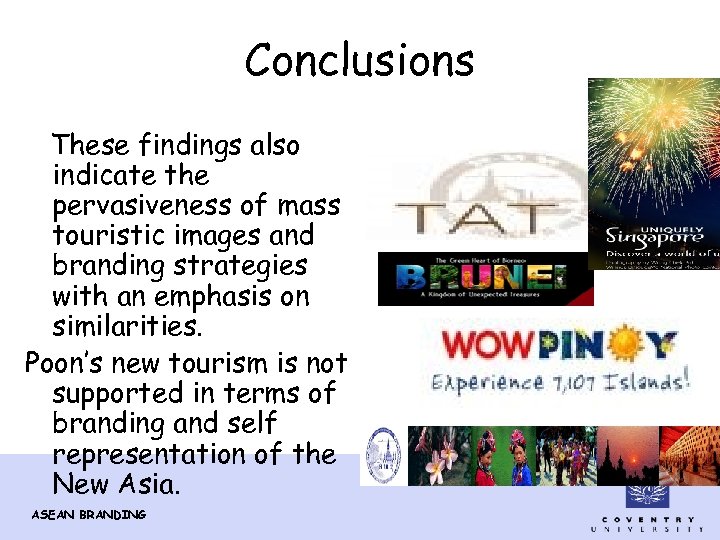
Conclusions These findings also indicate the pervasiveness of mass touristic images and branding strategies with an emphasis on similarities. Poon’s new tourism is not supported in terms of branding and self representation of the New Asia. ASEAN BRANDING

Thanks for your attention QUESTIONS ASEAN BRANDING
Скачать презентацию Differentiating Destinations Exploring the challenges of branding regional
3ac4f8b8f243d51d08553eb36046ab08.ppt