


 Скачать презентацию Dietary Guidelines for Americans 2005 Janalou Phelan MS
815715c850f749647cd207f1bb268521.ppt
- Количество слайдов: 49
 Dietary Guidelines for Americans 2005 Janalou Phelan MS, RD, LD Presbyterian Hospital of Dallas Outpatient Nutrition Clinic 4 -1 -5
 Purpose of Dietary Guidelines Ø Updated every five years Ø Provide science-based advice to promote health and reduce risk for chronic diseases such as CVD, DM, HTN, osteoporosis, some cancers Ø Geared towards healthcare providers and nutrition educators rather than the general public Ø Provide recommendations for eating and activity to improve health and lower disease risk Ø Intended for Americans over two years of age
 The 2005 Updated Guidelines Ø Ø Ø Adequate Nutrients within Calorie Needs Weight Management Physical Activity Food Groups to Encourage Fats Ø Ø Carbohydrates Sodium and Potassium Alcoholic Beverages Food Safety
 Adequate Nutrients within Calorie Needs Ø Consume a variety of nutrient-dense foods and beverages among the basic food groups, limiting SFA, trans fat, cholesterol, added sugar, salt, and alcohol. Ø Nutrients consumed should come primarily from foods which provide an array of nutrients Ø Supplements may be useful when there is a nutrient gap that cannot be met by food intake Ø Meet energy needs by adopting a balanced eating pattern via the Food Guide Pyramid or the DASH eating plan
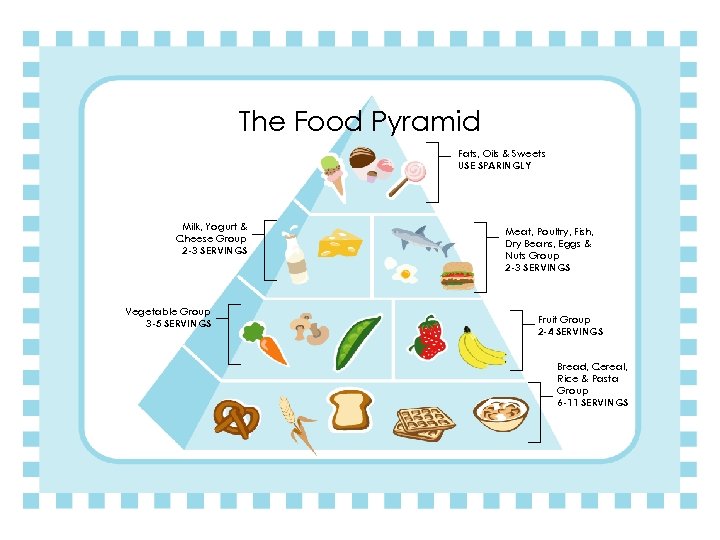 The Food Pyramid Fats, Oils & Sweets USE SPARINGLY Milk, Yogurt & Cheese Group 2 -3 SERVINGS Vegetable Group 3 -5 SERVINGS Meat, Poultry, Fish, Dry Beans, Eggs & Nuts Group 2 -3 SERVINGS Fruit Group 2 -4 SERVINGS Bread, Cereal, Rice & Pasta Group 6 -11 SERVINGS
 Suggestions for Getting Adequate Nutrients within Calorie Needs Ø Eat more dark green vegetables, orange vegetables, legumes, fruits, whole grains, low-fat milk products Ø Eat less refined grains, total fat (especially cholesterol, SFA, and trans fat), added sugars, calories Ø Emphasize lean meats, poultry, fish; moderate amounts of nuts/seeds; non-meat protein (beans, soy) Ø Specific nutrients of concern: calcium, potassium, fiber, magnesium, vitamin A, C, E
 Weight Management Ø Approximately 2/3 of all Americans are overweight and about one third of those are obese (BMI>=30) Ø Up to 16% of children/adolescents are overweight Ø Even small weight loss (five to 10% of BW) may improve health Ø Also need to prevent further weight gain Ø Lifestyle change in diet and exercise is the best approach for wt loss
 Weight Management Ø Fad diets are mostly ineffective long term weight management Ø Calories count more than the proportion of fat, carb, and protein Ø Moderate calorie reduction of about 500 calories/day will promote one pound of wt loss per week, coupled with regular activity Ø Lifestyle change is essential for long term wt management
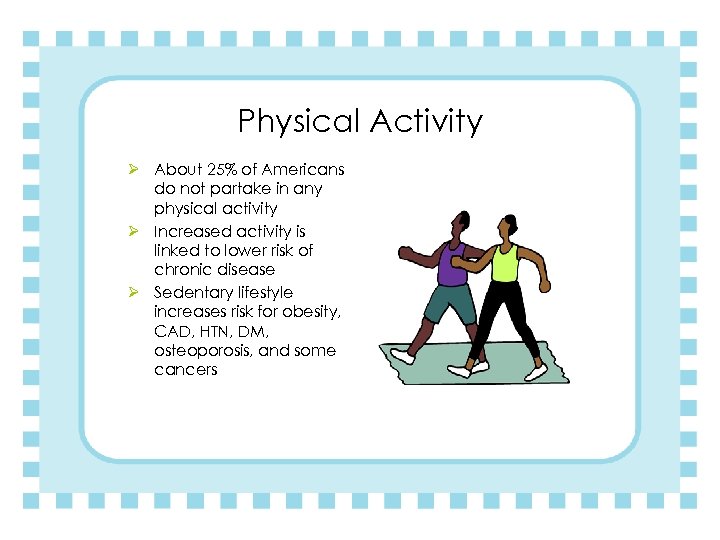 Physical Activity Ø About 25% of Americans do not partake in any physical activity Ø Increased activity is linked to lower risk of chronic disease Ø Sedentary lifestyle increases risk for obesity, CAD, HTN, DM, osteoporosis, and some cancers
 So How Much Exercise is Enough? Ø To reduce risk of chronic disease: • 30 minutes of moderate-intensity activity on most days of the week Ø To help manage body weight and prevent gradual wt gain: • 60 minutes of moderate to vigorous activity on most days of the week Ø To sustain wt loss for previously obese/overweight people: • 60 -90 minutes moderate intensity activity daily
 Physical Activity Ø Men > 40 years & women > 50 years who plan a vigorous program, or have a chronic disease or risk factors, should consult their MD first Ø Gradually build up to recommended levels! Ø Even getting someone to walk 5 -10 minutes a day is improvement! Ø Cardiovascular, stretching, and resistance exercise all important Ø Tell patients to “go out and play”
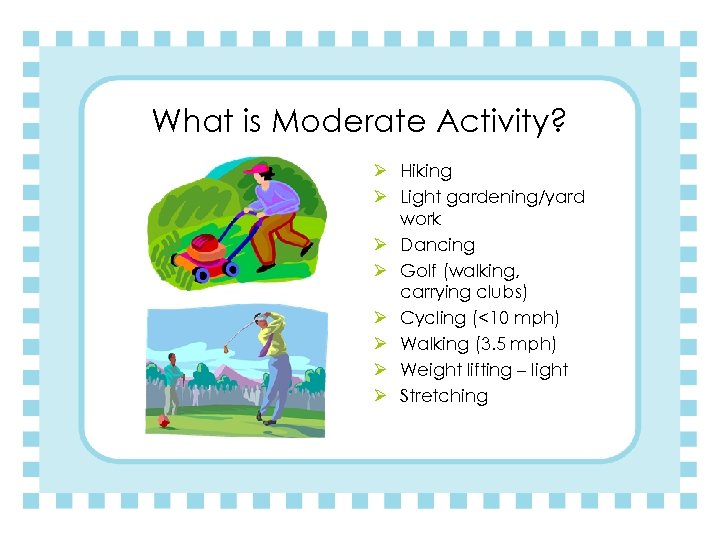 What is Moderate Activity? Ø Hiking Ø Light gardening/yard work Ø Dancing Ø Golf (walking, carrying clubs) Ø Cycling (<10 mph) Ø Walking (3. 5 mph) Ø Weight lifting – light Ø Stretching
 What is Vigorous Activity? Ø Running/jogging (5 mph) Ø Cycling (>10 mph) Ø Swimming (laps) Ø Aerobics Ø Walking (4. 5 mph) Ø Heavy yard work (chopping wood) Ø Weight lifting – vigorous Ø Basketball - vigorous
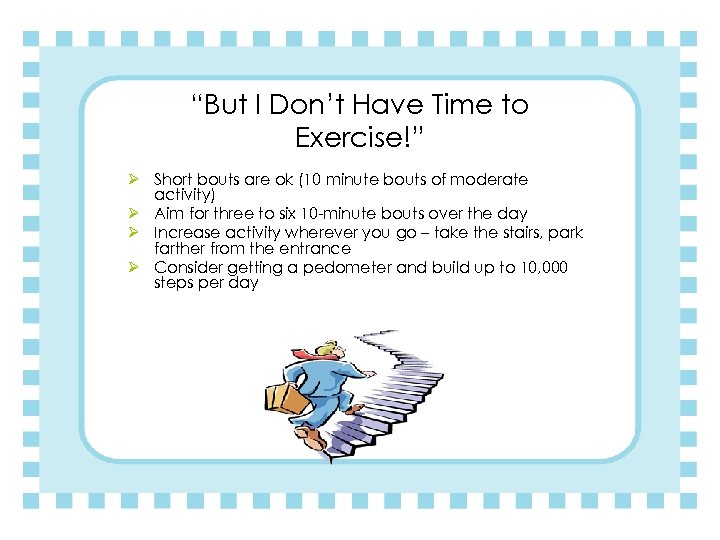 “But I Don’t Have Time to Exercise!” Ø Short bouts are ok (10 minute bouts of moderate activity) Ø Aim for three to six 10 -minute bouts over the day Ø Increase activity wherever you go – take the stairs, park farther from the entrance Ø Consider getting a pedometer and build up to 10, 000 steps per day
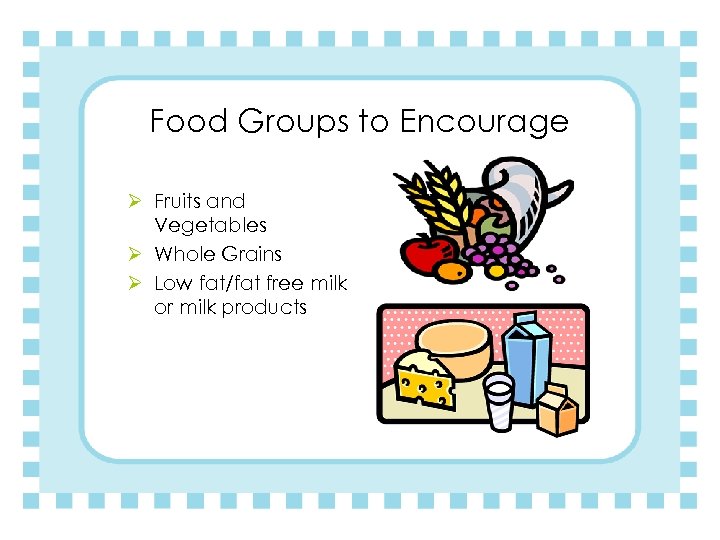 Food Groups to Encourage Ø Fruits and Vegetables Ø Whole Grains Ø Low fat/fat free milk or milk products
 Fruits and Vegetables Ø 4. 5 cups (nine servings) recommended daily Ø 2 cups of fruit Ø 2. 5 cups vegetables Ø Variety = nutritional insurance Ø Colors Ø Whole fruits rather than juice
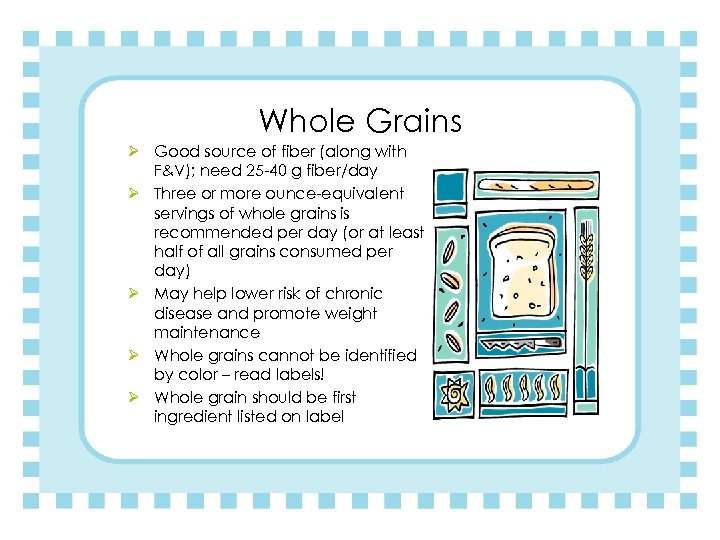 Whole Grains Ø Good source of fiber (along with F&V); need 25 -40 g fiber/day Ø Three or more ounce-equivalent servings of whole grains is recommended per day (or at least half of all grains consumed per day) Ø May help lower risk of chronic disease and promote weight maintenance Ø Whole grains cannot be identified by color – read labels! Ø Whole grain should be first ingredient listed on label
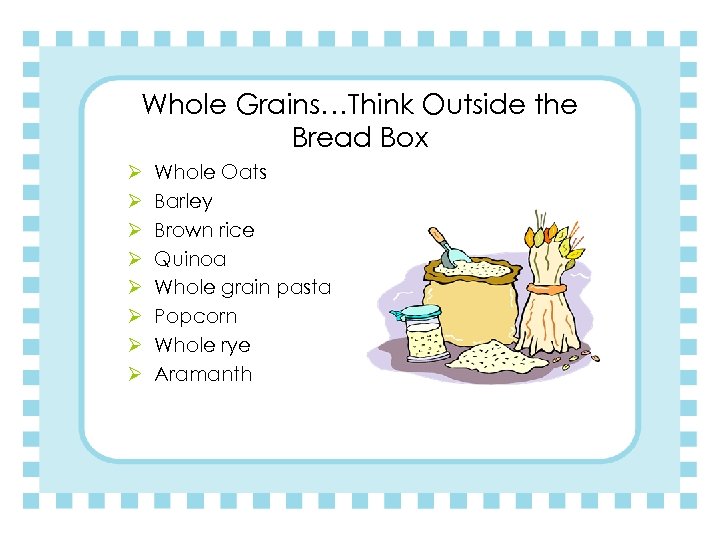 Whole Grains…Think Outside the Bread Box Ø Ø Ø Ø Whole Oats Barley Brown rice Quinoa Whole grain pasta Popcorn Whole rye Aramanth
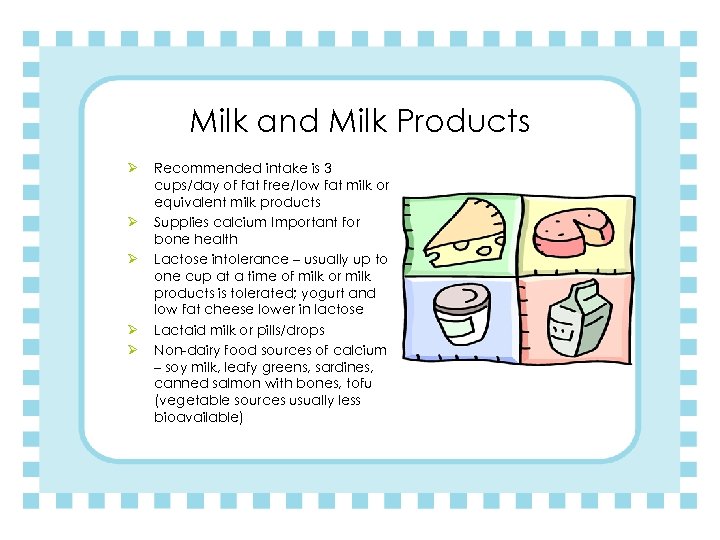 Milk and Milk Products Ø Ø Ø Recommended intake is 3 cups/day of fat free/low fat milk or equivalent milk products Supplies calcium Important for bone health Lactose intolerance – usually up to one cup at a time of milk or milk products is tolerated; yogurt and low fat cheese lower in lactose Lactaid milk or pills/drops Non-dairy food sources of calcium – soy milk, leafy greens, sardines, canned salmon with bones, tofu (vegetable sources usually less bioavailable)
 Fats Ø High intake of saturated fats, trans fats, and cholesterol may increase risk of unhealthy blood lipid levels Ø High fat intake (i. e. >35% of calories) may increase SFA and calorie intake Ø Low fat intake (i. e. < 20% of calories) may lower HDL, raise TGs, and make it hard to get adequate Vitamin E and essential fatty acids
 Functions of Fat Ø Supply essential fatty acids linoleic and linolenic acids Ø Help absorb fat soluble vitamins A, D, E, K, and carotenoids Ø Building blocks of cell membranes, help make hormones, protects organs Ø Energy source
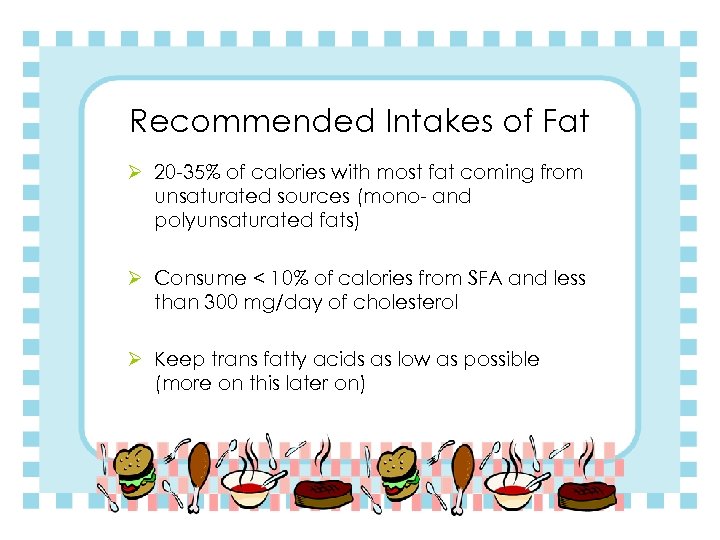 Recommended Intakes of Fat Ø 20 -35% of calories with most fat coming from unsaturated sources (mono- and polyunsaturated fats) Ø Consume < 10% of calories from SFA and less than 300 mg/day of cholesterol Ø Keep trans fatty acids as low as possible (more on this later on)
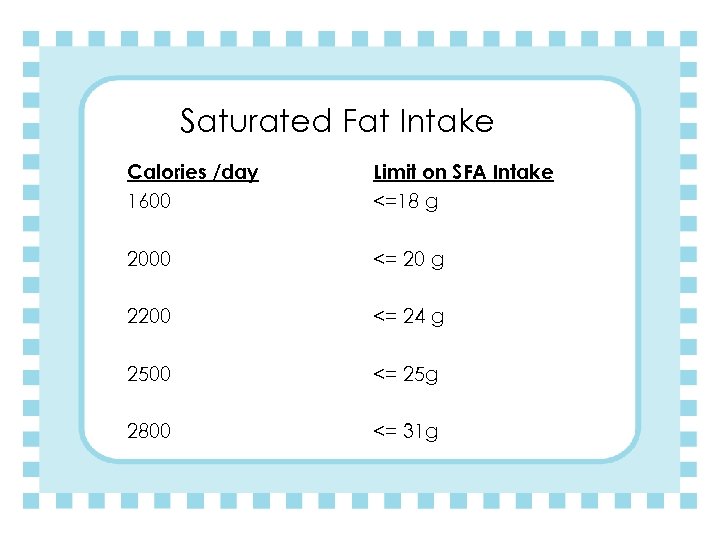 Saturated Fat Intake Calories /day 1600 Limit on SFA Intake <=18 g 2000 <= 20 g 2200 <= 24 g 2500 <= 25 g 2800 <= 31 g
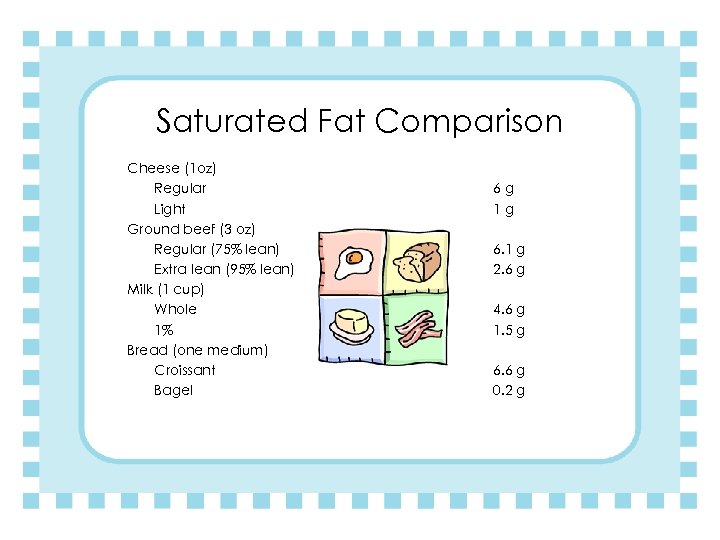 Saturated Fat Comparison Cheese (1 oz) Regular Light Ground beef (3 oz) Regular (75% lean) Extra lean (95% lean) Milk (1 cup) Whole 1% Bread (one medium) Croissant Bagel 6 g 1 g 6. 1 g 2. 6 g 4. 6 g 1. 5 g 6. 6 g 0. 2 g
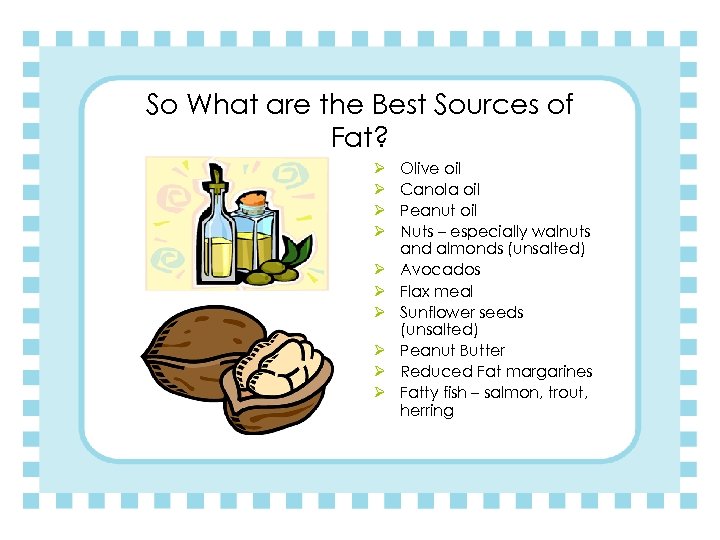 So What are the Best Sources of Fat? Ø Ø Ø Ø Ø Olive oil Canola oil Peanut oil Nuts – especially walnuts and almonds (unsalted) Avocados Flax meal Sunflower seeds (unsalted) Peanut Butter Reduced Fat margarines Fatty fish – salmon, trout, herring
 Omega 3 Fats And Trans Fats More to come on this later!
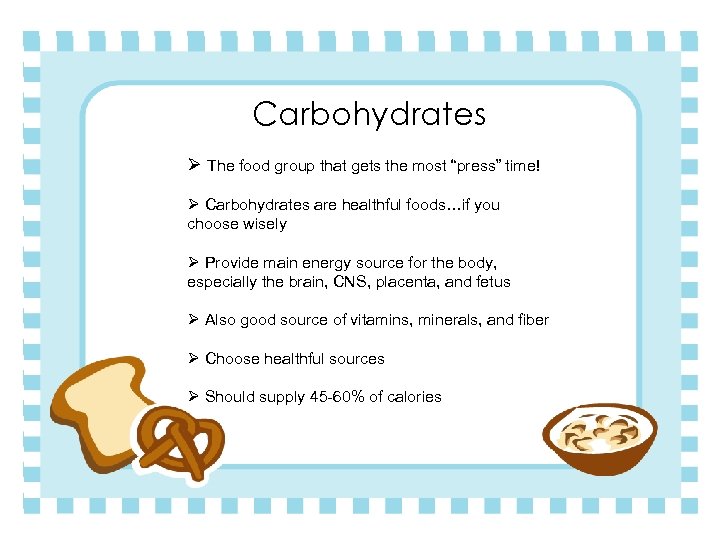 Carbohydrates Bread and Pasta Group Ø The food group that gets the pasta products Ø List a few examples of bread andmost “press” time!that are plentiful in your area. Ø how many servings a day children should eat Ø Discuss. Carbohydrates are healthful foods…if you and choosethey might have them. when wisely Ø Together, research energy source forhealth benefits of Ø Provide main and discuss the body, bread and pasta. brain, CNS, placenta, and fetus especially the Ø Encourage children to list foods that they like from this food group. Ø Also good source of vitamins, minerals, and fiber Ø Choose healthful sources Ø Should supply 45 -60% of calories
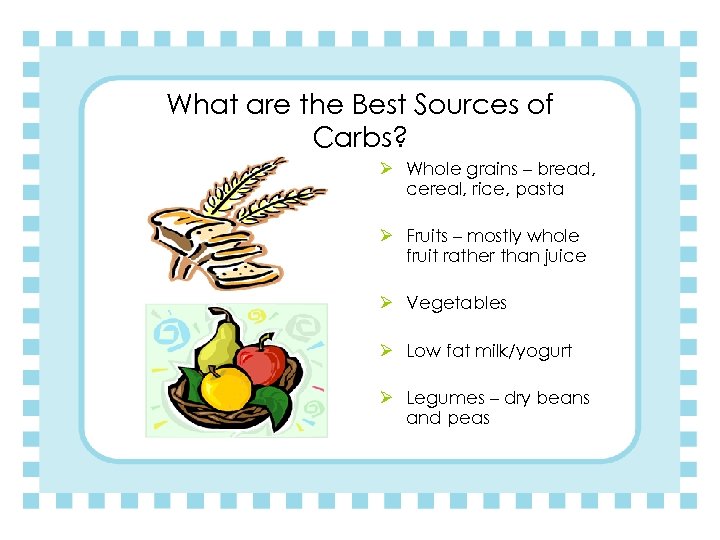 What are the Best Sources of Carbs? Ø Whole grains – bread, cereal, rice, pasta Ø Fruits – mostly whole fruit rather than juice Ø Vegetables Ø Low fat milk/yogurt Ø Legumes – dry beans and peas
 What about Fiber? Ø Insoluble – does not dissolve in water – helps with constipation and may help lower risk for some cancers Ø Soluble – dissolves in water – helps lower cholesterol and regulate blood sugar Ø Helps with weight management Ø Aim for 25 -40 grams/day from F&V, beans, whole grains
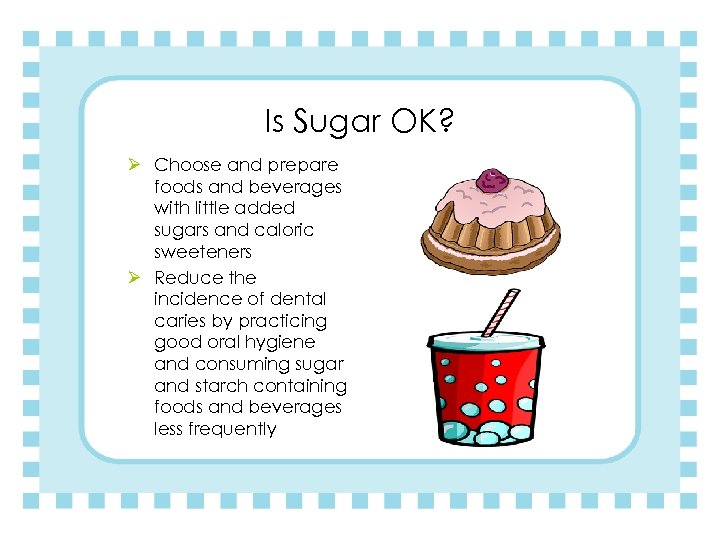 Is Sugar OK? Ø Choose and prepare foods and beverages with little added sugars and caloric sweeteners Ø Reduce the incidence of dental caries by practicing good oral hygiene and consuming sugar and starch containing foods and beverages less frequently
 Sugar Ø Empty calories Ø Especially watch intake of sweetened beverages which are high in calories – 10 tsp sugar in 12 oz. soda Ø Rule of thumb – no more than 10% of total calories Ø Example: 2000 calories/day – eat no more than 200 calories of sweets
 Sodium and Potassium Ø Most Americans consume more salt than they need (only 500 mg/day) Ø Excess sodium may increase BP Ø Normal BP helps reduce risk for CHD, CVA, CHF, and kidney dz Ø Lifestyle change can help lower BP, including reducing salt intake, increasing potassium intake, losing weight, increasing exercise, and eating a healthful diet
 What are the Recommendations for Sodium and Potassium? Ø Consume less than 2300 mg of sodium per day (about 1 tsp salt) Ø Choose and prepare foods with little salt; consume potassium-rich foods, such as fruits and vegetables
 Where’s the Sodium? Ø About 10% of sodium is naturally occurring in foods Ø About 5 -10% from the salt shaker or added in cooking Ø About 75% from food processing Ø Typical fast food meal may contain 1400 mg sodium before the fries are salted! Ø Read food labels!
 Salt Tips Ø Buy low or reduced sodium foods Ø 140 mg or less is considered a “low” sodium food Ø The taste of salt is a habit. After a couple months taste buds will usually adjust to preferring less sodium in foods Ø Other herbs and seasonings are great to use including vinegar and lemon juice Ø Be careful of salt substitutes – they contain potassium but may be harmful for some medical conditions; consult MD before using these
 Potassium Ø A diet rich in potassium may also lower BP Ø Recommended intake is 4700 mg/day Ø Should come from food sources – fruits and vegetables
 Alcohol Ø About 55% of Americans use alcohol Ø May have beneficial effects when consumed in moderation Ø Lowest all cause mortality and CAD mortality occurs at an intake of one to two drinks per day Ø Heavy alcohol consumption may increase risk of liver cirrhosis, HTN, cancer of the upper GI tract, injury, violence, and death Ø Morbidity and mortality are highest among those who drink large amounts of alcohol
 Recommendations for Alcohol Intake Ø Those who choose to drink alcohol should do so sensibly and in moderation Ø Up to one drink per day for women and two drinks per day for men; one drink is • 12 oz. regular beer • 5 oz. wine • 1. 5 oz. 80 -proof distilled spirits
 Recommendations for Alcohol Intake Ø Alcohol should not be consumed by those who cannot restrict their intake, women of childbearing age who may become pregnant, pregnant and lactating women, children and adolescents, individuals taking medications that can interact with alcohol, and those with specific medical conditions Ø Alcohol should be avoided by individuals engaging in activities that require attention, skill, or coordination, such as driving or operating machinery
 More about Alcohol Ø Supplies calories but few essential nutrients Ø Heavy drinkers may be at risk of malnutrition if alcohol substituted for food Ø It is not recommended that anyone begin drinking or drink more frequently on the basis of health considerations Ø Definition of moderation is NOT intended as an average over several days but as the amount consumed on any single day Ø Compared with women who do not drink, women who consume one drink per day appear to have a slightly higher risk of breast cancer
 Food Safety Ø About 76 million people per year in the US become ill from pathogens in food and about 5000 of these die Ø Signs and symptoms of foodborne illness include upset stomach, diarrhea, fever, vomiting, abdominal cramps, dehydration, and even paralysis and meningitis Ø The most important food safety problem is microbial foodborne illness
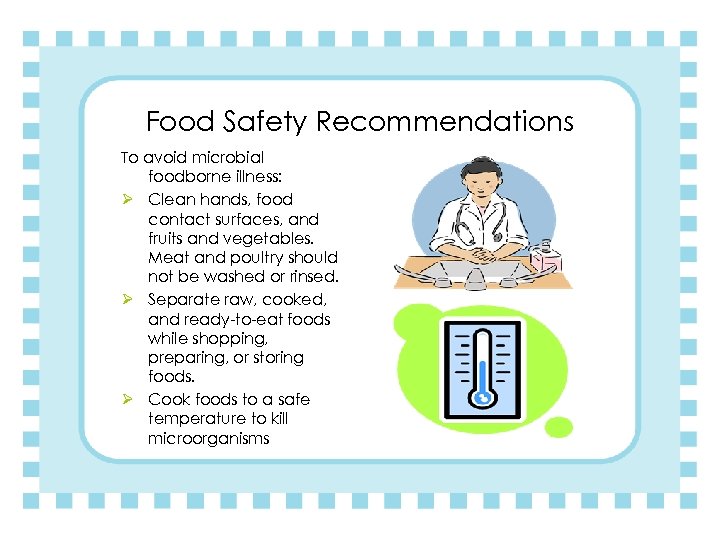 Food Safety Recommendations To avoid microbial foodborne illness: Ø Clean hands, food contact surfaces, and fruits and vegetables. Meat and poultry should not be washed or rinsed. Ø Separate raw, cooked, and ready-to-eat foods while shopping, preparing, or storing foods. Ø Cook foods to a safe temperature to kill microorganisms
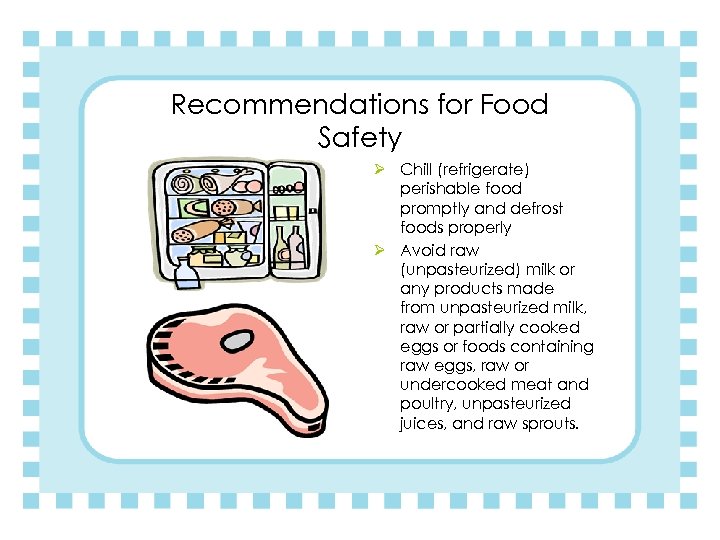 Recommendations for Food Safety Ø Chill (refrigerate) perishable food promptly and defrost foods properly Ø Avoid raw (unpasteurized) milk or any products made from unpasteurized milk, raw or partially cooked eggs or foods containing raw eggs, raw or undercooked meat and poultry, unpasteurized juices, and raw sprouts.
 Hand Washing Ø Primary way to prevent spread of foodborne illness Ø Wash hands often especially before and after handling raw meat, poultry, eggs, or seafood Ø Wet hands, apply soap, rub hands vigorously together for 20 seconds, rinse hands thoroughly under clean warm water, dry hands completely using a clean disposable cloth towel
 Food Safety - Produce Ø Remove and discard outer leaves, wash produce just before cooking or eating, wash under running water, scrub with a clean brush or hands, dry using a clean disposable cloth towel Ø Ready-to-eat pre-washed bagged produce can be used without further washing if kept refrigerated and used by the “use-by” date; or it can be washed again
 Temperatures Ø Bacteria grow most rapidly in the range of 40 -140 o. F Ø Refrigerated leftovers may become unsafe within 3 -4 days Ø Despite the appearance of food, It may not be safe to eat Ø “If in doubt, throw it out. ”
 Temperatures Ø Beef steaks, roasts, veal and lamb - 145 o (medium rare) Ø Eggs, pork, ground meats, and meats (medium) 160 o Ø Stuffing, ground poultry, and reheated leftovers 165 o Ø Poultry breasts - 170 o Ø Whole poultry - 180 o
 Food Safety and High Risk Individuals Ø Pregnant women, older adults, and those immunocompromised are at risk of developing listeriosis, a potentially life-threatening bacterial infection Ø Some deli meats, hot dogs, and ready-to-eat foods should be reheated to steaming hot before eating Ø These individuals as well as infants and young children should also not drink unpasteurized milk, products made from unpasteurized milk (such as some soft cheeses), raw or partially cooked eggs, raw or undercooked meat/poultry, unpasteurized juices, and raw sprouts
 For More Information… Go to: www. healthierus. gov/dietaryguidelines