


 Скачать презентацию Diet and food insecurity University of Warwick 16
b9af2cd956016e6a41ccc398c5db91e6.ppt
- Количество слайдов: 24
 Diet and food insecurity University of Warwick 16 th April 2015
 Food Security • FAO definition: ‘all people, at all times, have physical and economic access to sufficient, safe, and nutritious food to meet their dietary needs and food preferences for an active and healthy life’ • USDA definition of food insecurity: ‘limited or uncertain availability of nutritionally accepted or safe foods’
 Food security depends on: 1. Availability of foods 2. Physical and economic access to foods 3. Food utilization
 What is the evidence for the impact of food insecurity on diet in the UK? • Food insecurity not routinely measured in UK surveys • Income, SES or other measure of deprivation most commonly used
 Changes to food purchasing in response to higher food prices • Spend more • Buy less • Trade down
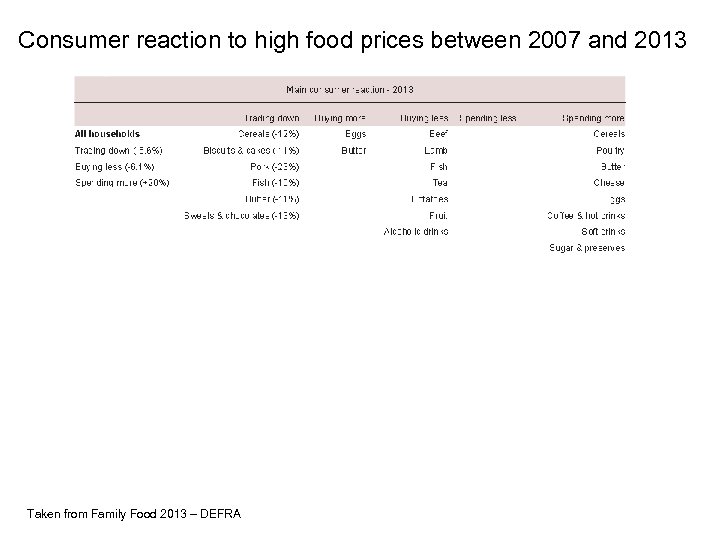 Consumer reaction to high food prices between 2007 and 2013 Taken from Family Food 2013 – DEFRA
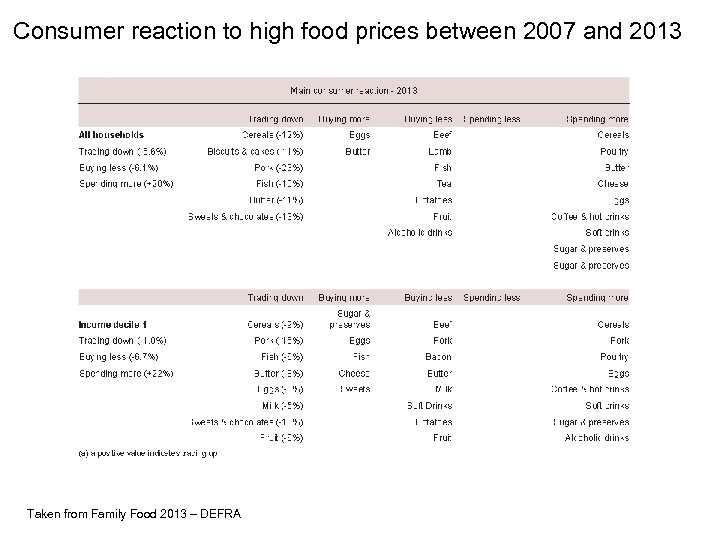 Consumer reaction to high food prices between 2007 and 2013 Taken from Family Food 2013 – DEFRA
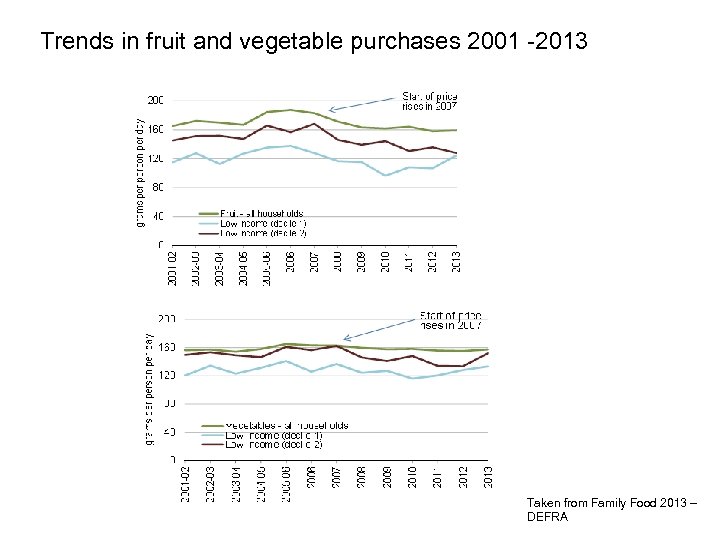 Trends in fruit and vegetable purchases 2001 -2013 Taken from Family Food 2013 – DEFRA
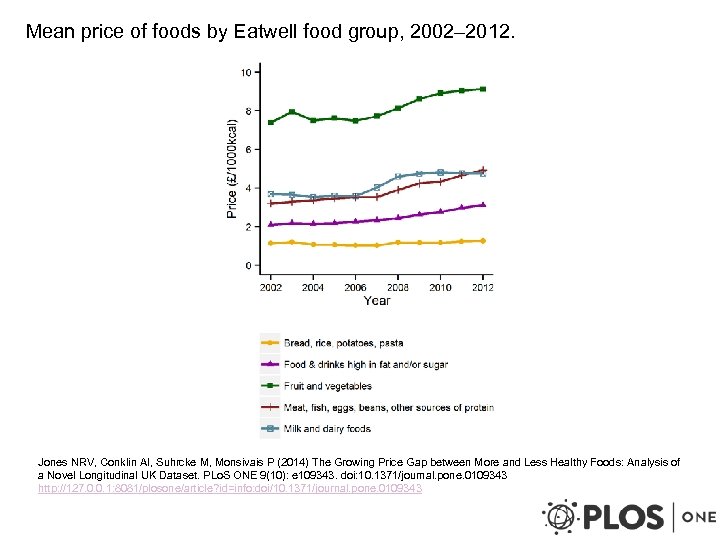 Mean price of foods by Eatwell food group, 2002– 2012. Jones NRV, Conklin AI, Suhrcke M, Monsivais P (2014) The Growing Price Gap between More and Less Healthy Foods: Analysis of a Novel Longitudinal UK Dataset. PLo. S ONE 9(10): e 109343. doi: 10. 1371/journal. pone. 0109343 http: //127. 0. 0. 1: 8081/plosone/article? id=info: doi/10. 1371/journal. pone. 0109343
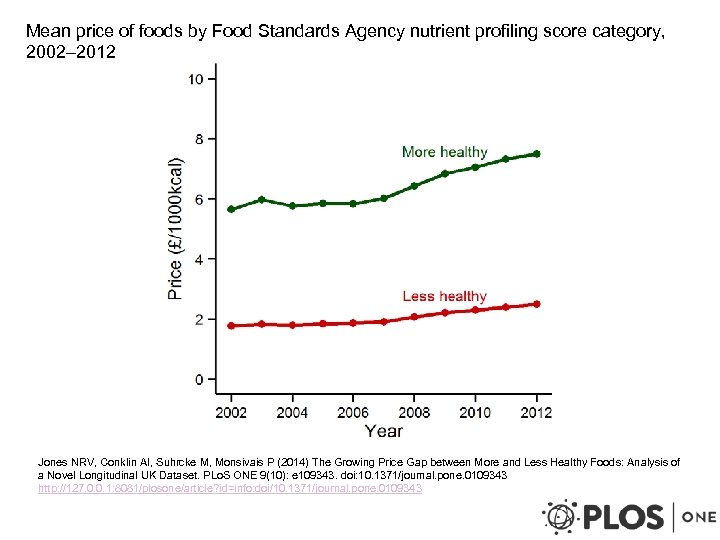 Mean price of foods by Food Standards Agency nutrient profiling score category, 2002– 2012 Jones NRV, Conklin AI, Suhrcke M, Monsivais P (2014) The Growing Price Gap between More and Less Healthy Foods: Analysis of a Novel Longitudinal UK Dataset. PLo. S ONE 9(10): e 109343. doi: 10. 1371/journal. pone. 0109343 http: //127. 0. 0. 1: 8081/plosone/article? id=info: doi/10. 1371/journal. pone. 0109343
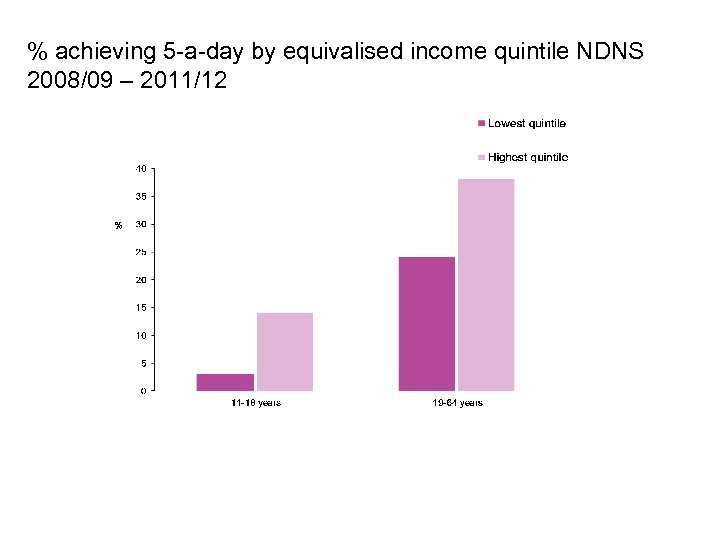 % achieving 5 -a-day by equivalised income quintile NDNS 2008/09 – 2011/12
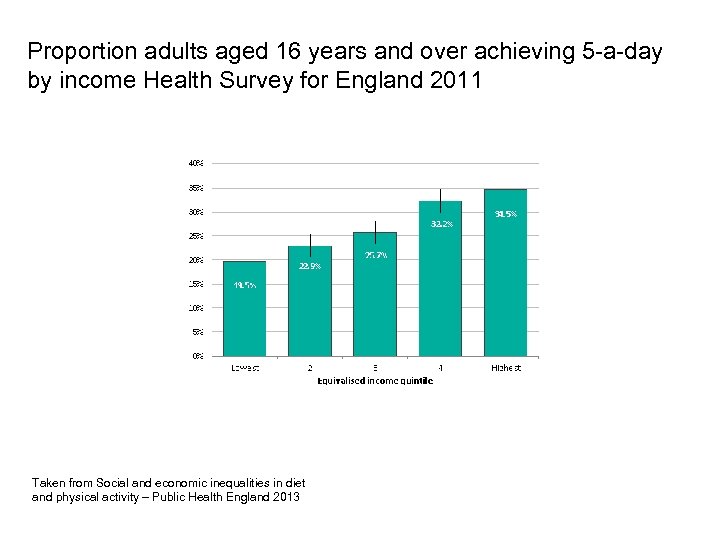 Proportion adults aged 16 years and over achieving 5 -a-day by income Health Survey for England 2011 Taken from Social and economic inequalities in diet and physical activity – Public Health England 2013
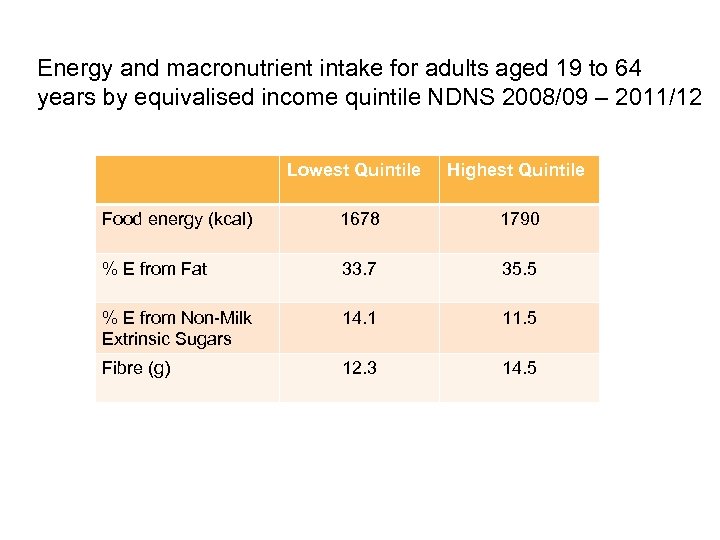 Energy and macronutrient intake for adults aged 19 to 64 years by equivalised income quintile NDNS 2008/09 – 2011/12 Lowest Quintile Highest Quintile Food energy (kcal) 1678 1790 % E from Fat 33. 7 35. 5 % E from Non-Milk Extrinsic Sugars 14. 1 11. 5 Fibre (g) 12. 3 14. 5
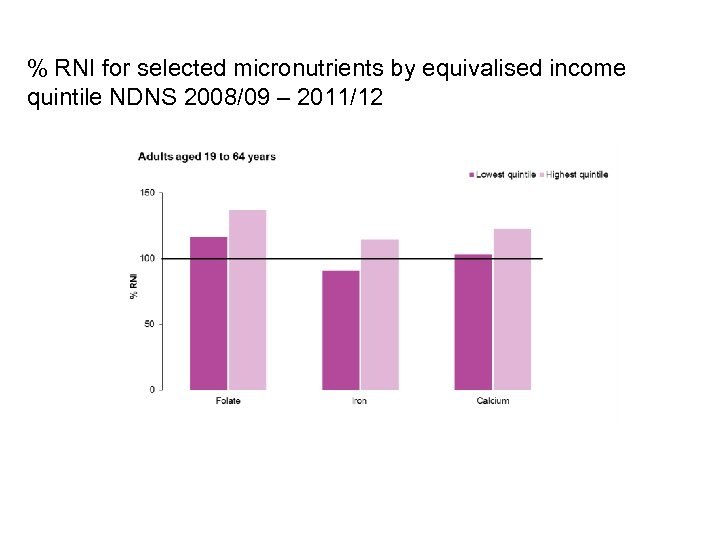 % RNI for selected micronutrients by equivalised income quintile NDNS 2008/09 – 2011/12
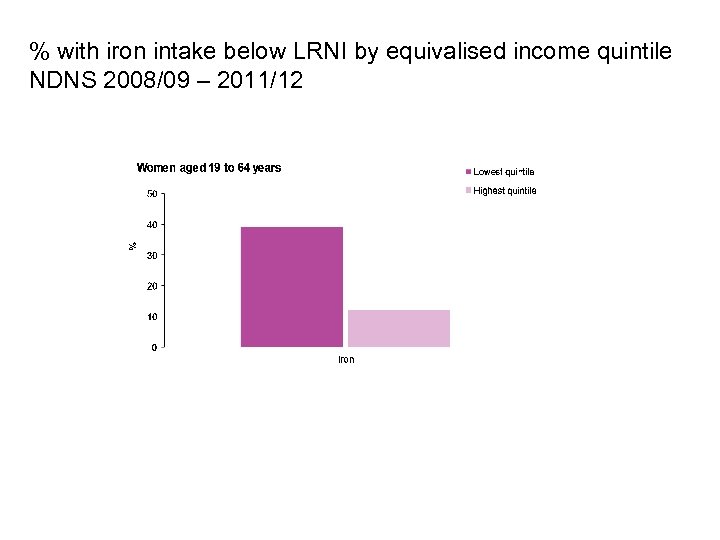 % with iron intake below LRNI by equivalised income quintile NDNS 2008/09 – 2011/12
 Low Income Diet and Nutrition Survey (LIDNS)
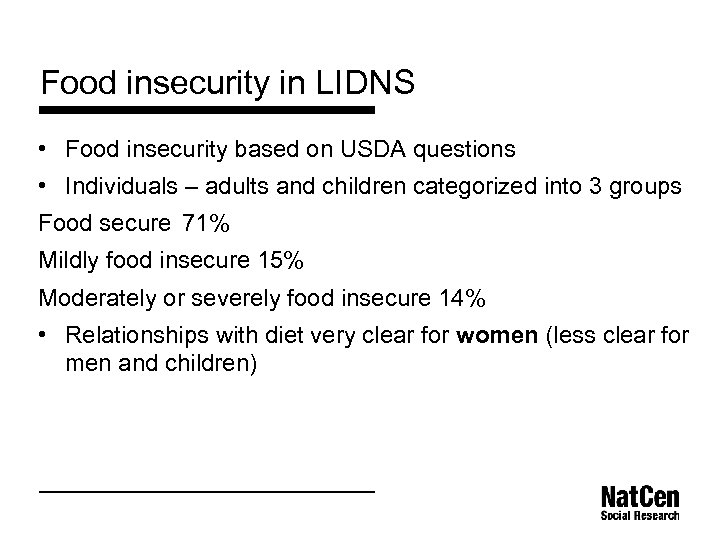 Food insecurity in LIDNS • Food insecurity based on USDA questions • Individuals – adults and children categorized into 3 groups Food secure 71% Mildly food insecure 15% Moderately or severely food insecure 14% • Relationships with diet very clear for women (less clear for men and children)
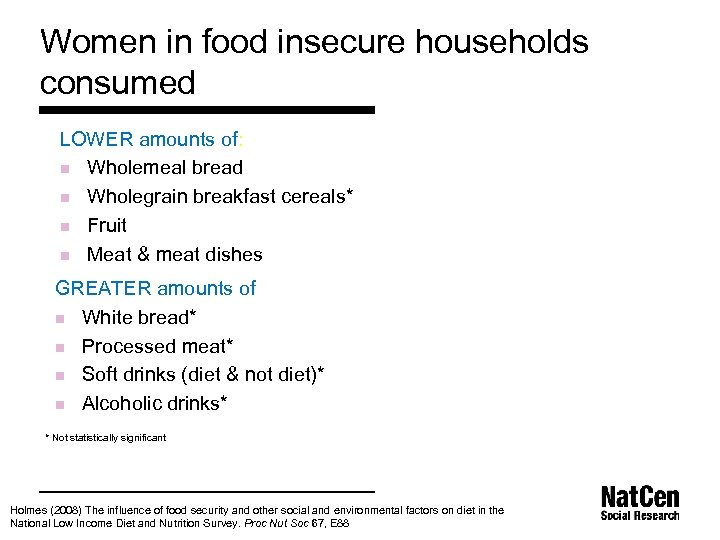 Women in food insecure households consumed LOWER amounts of: n Wholemeal bread n Wholegrain breakfast cereals* n Fruit n Meat & meat dishes GREATER amounts of n White bread* n Processed meat* n Soft drinks (diet & not diet)* n Alcoholic drinks* * Not statistically significant Holmes (2008) The influence of food security and other social and environmental factors on diet in the National Low Income Diet and Nutrition Survey. Proc Nut Soc 67, E 88
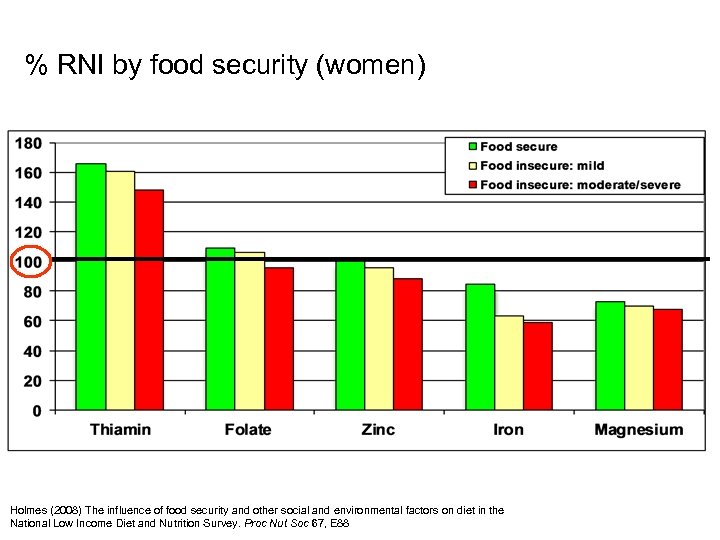 % RNI by food security (women) Holmes (2008) The influence of food security and other social and environmental factors on diet in the National Low Income Diet and Nutrition Survey. Proc Nut Soc 67, E 88
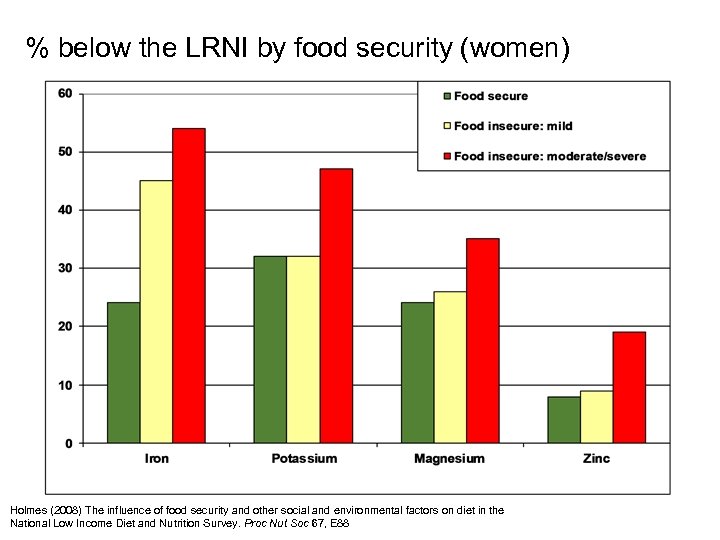 % below the LRNI by food security (women) Holmes (2008) The influence of food security and other social and environmental factors on diet in the National Low Income Diet and Nutrition Survey. Proc Nut Soc 67, E 88
 Food insecurity and health Adults in food insecure households more likely to n have type 2 diabetes and hypertension (Seligman 2007) n have increased predicted 10 year cardiovascular disease risk (Ford 2013) n be overweight - women only (Townsend 2001; Basiotis 2002; Ford 2013)
 Food insecurity and obesity Food insecure households may have: : n Fewer opportunities for physical activity n Cycles of food deprivation and over-eating n High levels of stress FRAC Food Insecurity and Obesity: Understanding the Connections 2011. Basiotis PP, Lino M. Food insufficiency and prevalence of overweight among adult women. Nutrition Insights 2002; 26: 1– 2.
 Future • • Need to include food security measures in UK national health surveys – like NDNS or HSE? ? Longitudinal data to determine causal link?