 Скачать презентацию DHF Presentations between 2004 an d 2009 44 0 1423
21f21aa93c74f684602d54b67830c27e.ppt
- Количество слайдов: 63



DHF Presentations between 2004 an d 2009 +44(0)1423 506 848 +44(0)789 907 4881 Kent House 42 Duchy Rd Harrogate HG 1 2 ER www. directhealthfirst. com
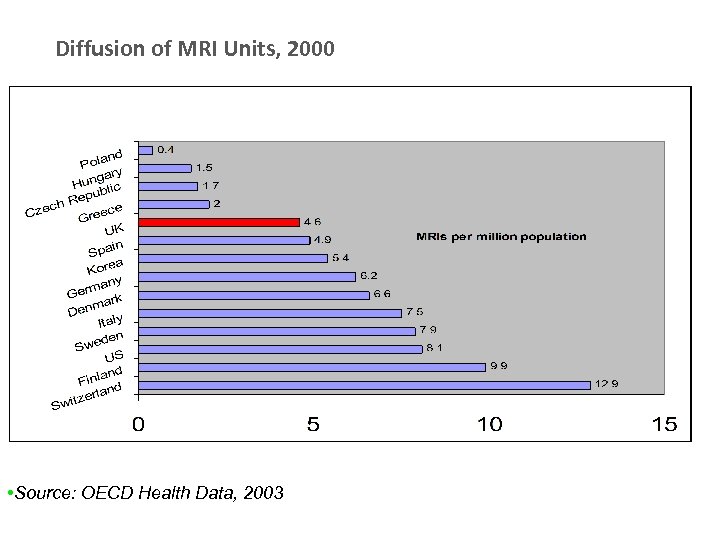
Diffusion of MRI Units, 2000 • Source: OECD Health Data, 2003
Cost of Waiting for Elective Surgery(OECD, Working Paper no. 6, 2003) Deterioration in condition, death at the extreme Loss of utility from delay Rise in the cost of total treatment Example: · A study of patients waiting for varicose vein surgery in the UK found ‘considerable deterioration’ in their condition while waiting for surgery (Sarin et al, 1993)
Opportunity Costs 856. 8 work days lost each year in the UK due to sickness, Statutory Sick Pay & Incapacity Benefit: In England, 510% of the patients on elective waiting lists are on sick leave from work 1, 047, 890 people waiting for NHS in-patient treatment, June 2000. Out-patient treatment (hospital tests, specialist consultations) 13 week wait lists for 308, 760 people (of which 128, 532 were waiting over 26 weeks).
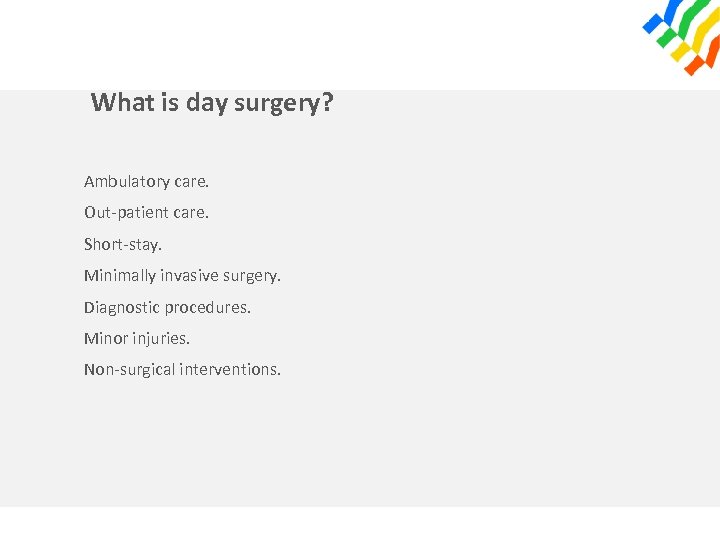
What is day surgery? Ambulatory care. Out-patient care. Short-stay. Minimally invasive surgery. Diagnostic procedures. Minor injuries. Non-surgical interventions.
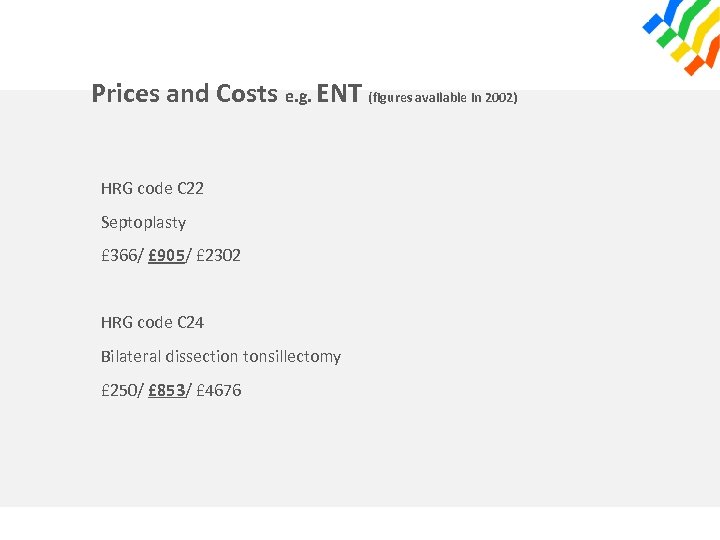
Prices and Costs e. g. ENT (figures available in 2002) HRG code C 22 Septoplasty £ 366/ £ 905/ £ 2302 HRG code C 24 Bilateral dissection tonsillectomy £ 250/ £ 853/ £ 4676
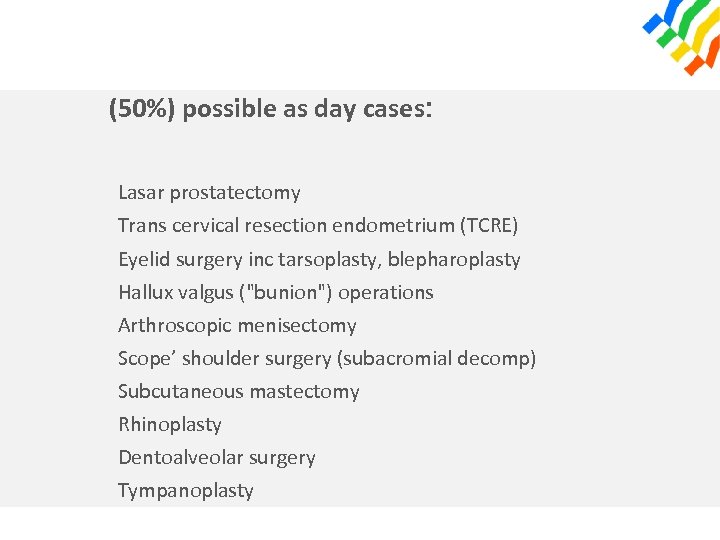
(50%) possible as day cases: Lasar prostatectomy Trans cervical resection endometrium (TCRE) Eyelid surgery inc tarsoplasty, blepharoplasty Hallux valgus ("bunion") operations Arthroscopic menisectomy Scope’ shoulder surgery (subacromial decomp) Subcutaneous mastectomy Rhinoplasty Dentoalveolar surgery Tympanoplasty
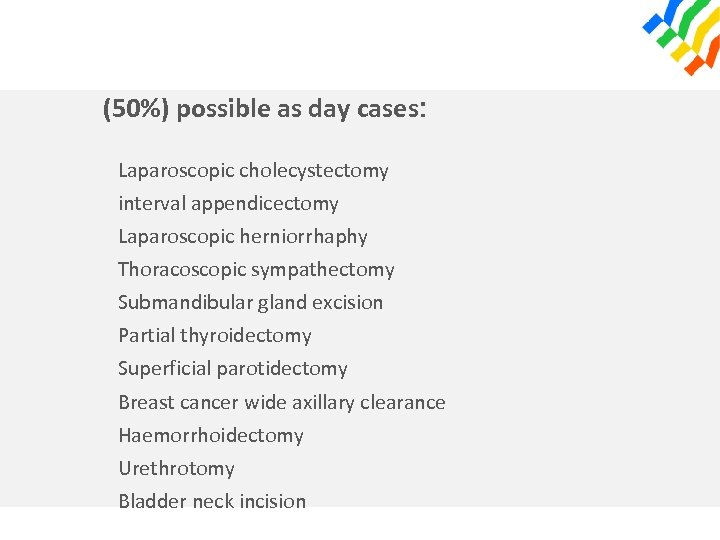
(50%) possible as day cases: Laparoscopic cholecystectomy interval appendicectomy Laparoscopic herniorrhaphy Thoracoscopic sympathectomy Submandibular gland excision Partial thyroidectomy Superficial parotidectomy Breast cancer wide axillary clearance Haemorrhoidectomy Urethrotomy Bladder neck incision
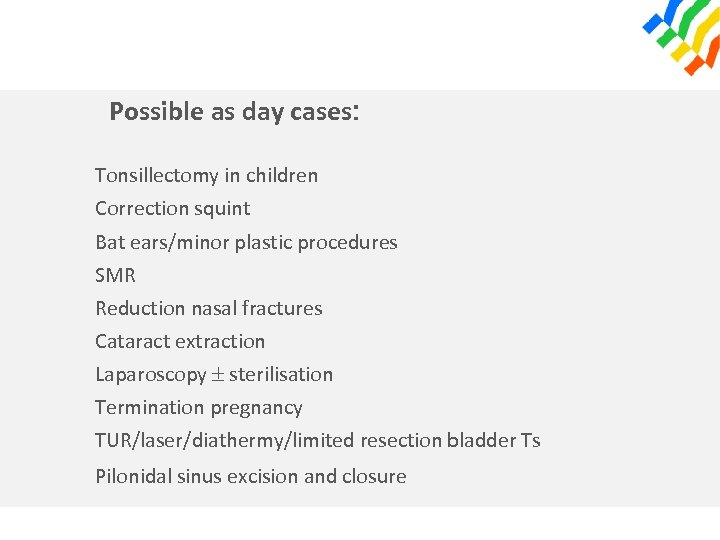
Possible as day cases: Tonsillectomy in children Correction squint Bat ears/minor plastic procedures SMR Reduction nasal fractures Cataract extraction Laparoscopy sterilisation Termination pregnancy TUR/laser/diathermy/limited resection bladder Ts Pilonidal sinus excision and closure
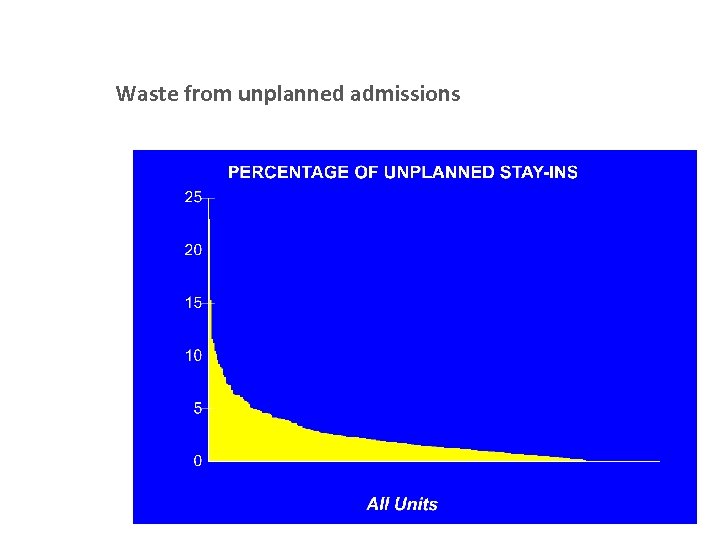
Waste from unplanned admissions
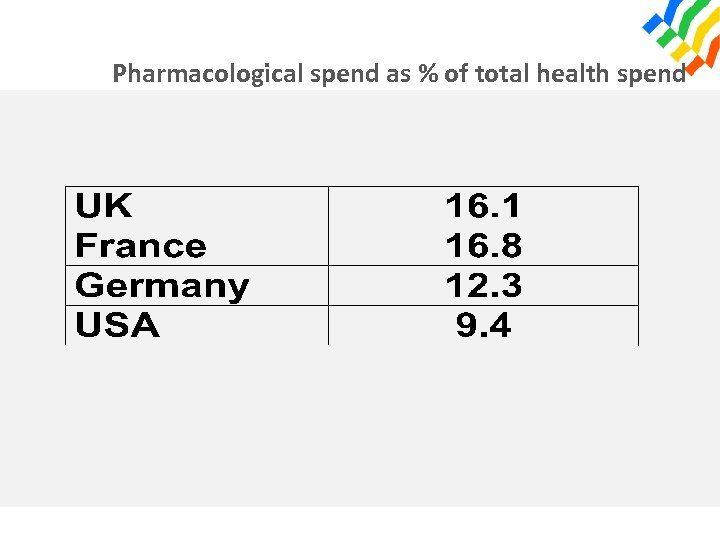
Pharmacological spend as % of total health spend
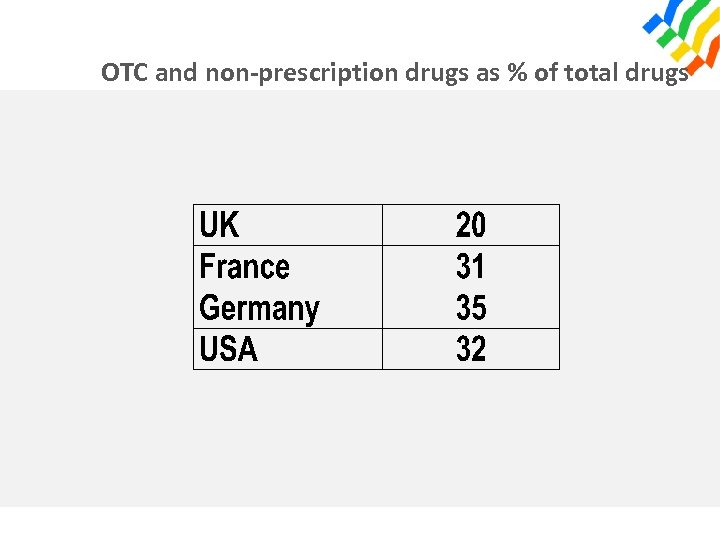
OTC and non-prescription drugs as % of total drugs
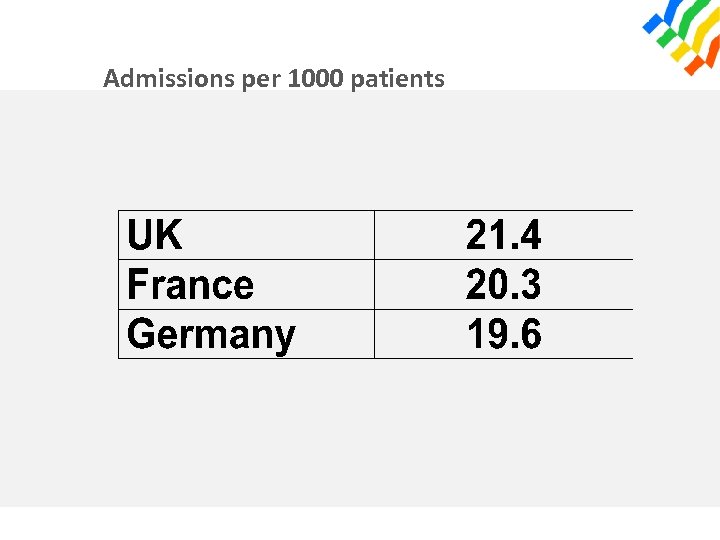
Admissions per 1000 patients
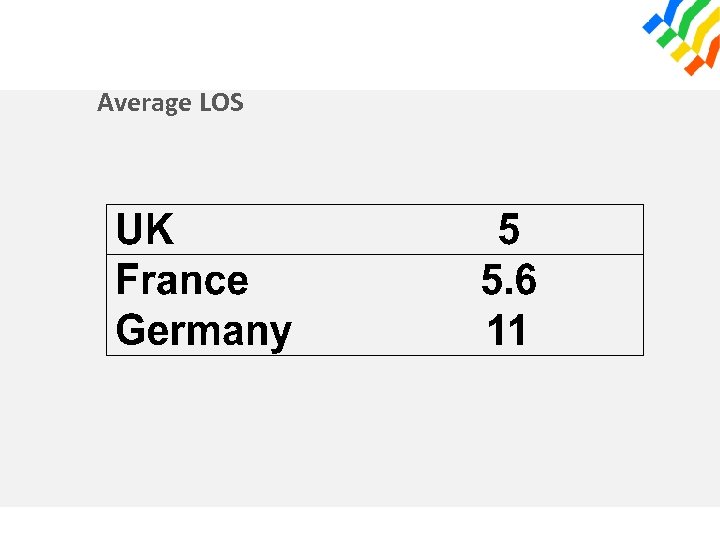
Average LOS
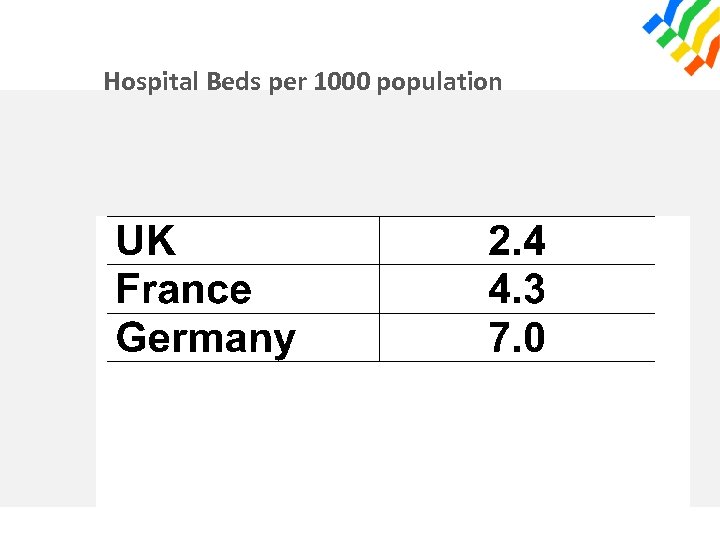
Hospital Beds per 1000 population
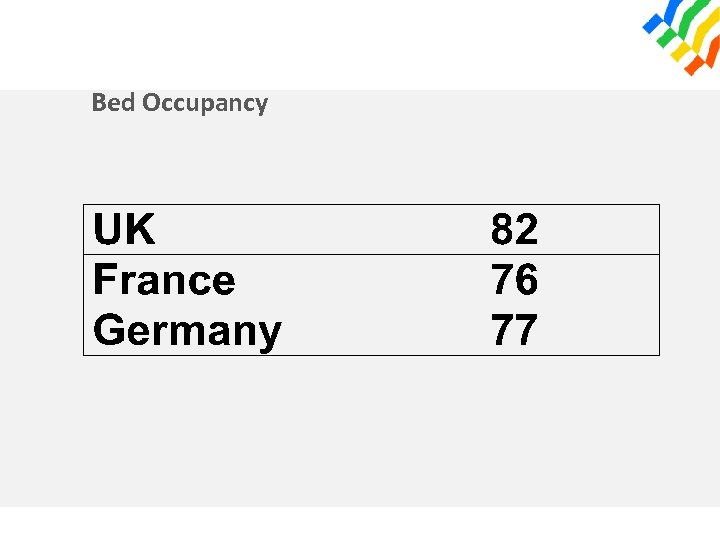
Bed Occupancy
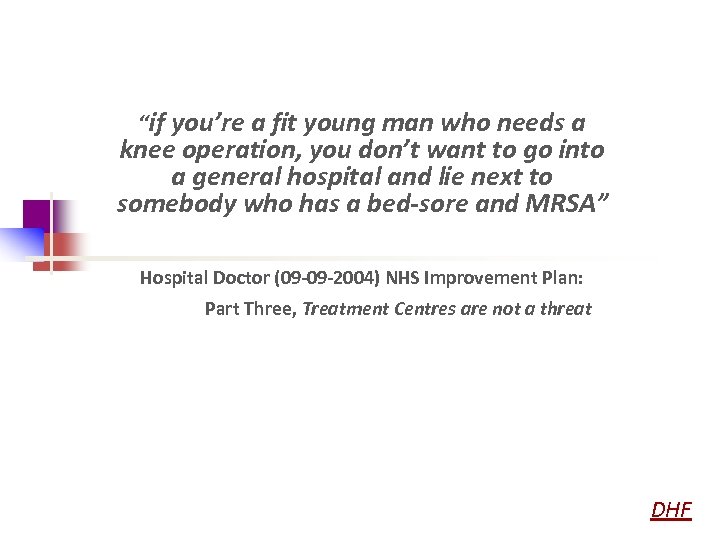
“if you’re a fit young man who needs a knee operation, you don’t want to go into a general hospital and lie next to somebody who has a bed-sore and MRSA” Hospital Doctor (09 -09 -2004) NHS Improvement Plan: Part Three, Treatment Centres are not a threat DHF
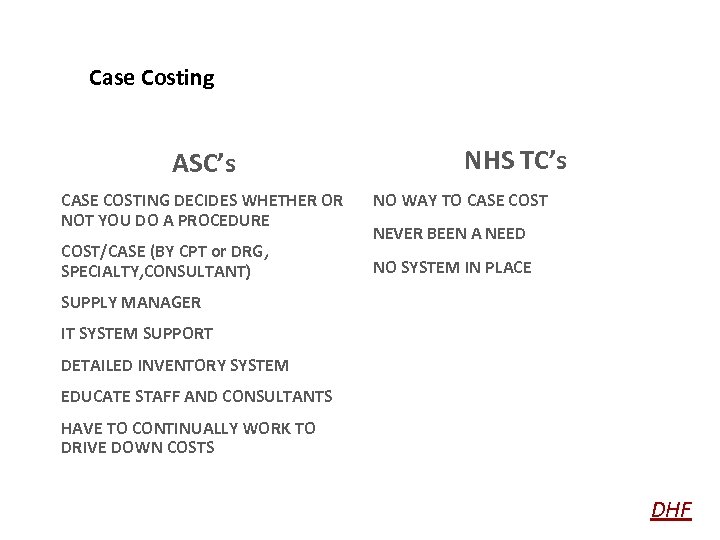
Case Costing ASC’s CASE COSTING DECIDES WHETHER OR NOT YOU DO A PROCEDURE COST/CASE (BY CPT or DRG, SPECIALTY, CONSULTANT) NHS TC’s NO WAY TO CASE COST NEVER BEEN A NEED NO SYSTEM IN PLACE SUPPLY MANAGER IT SYSTEM SUPPORT DETAILED INVENTORY SYSTEM EDUCATE STAFF AND CONSULTANTS HAVE TO CONTINUALLY WORK TO DRIVE DOWN COSTS DHF
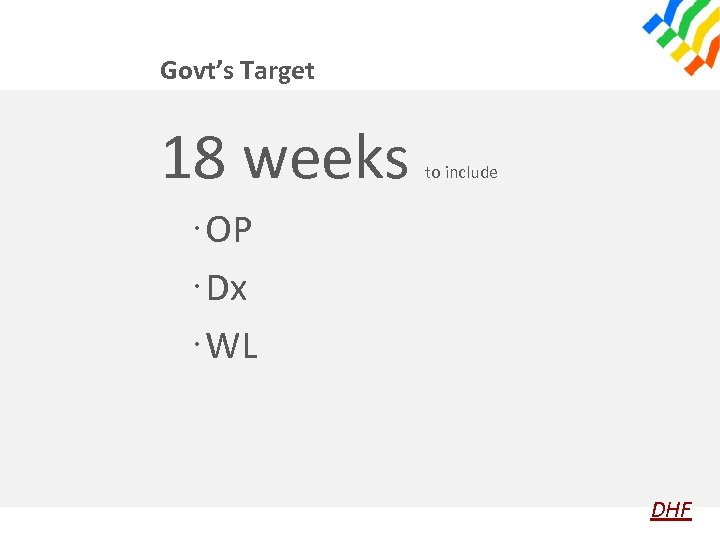
Govt’s Target 18 weeks to include ·OP ·Dx ·WL DHF
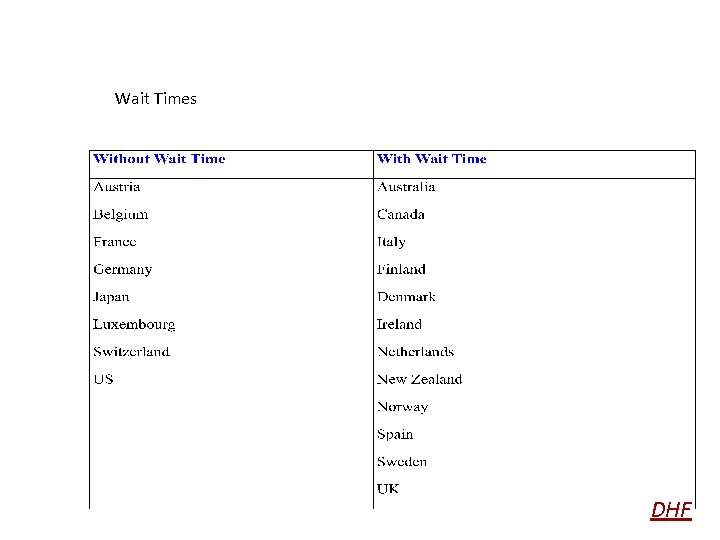
Wait Times DHF
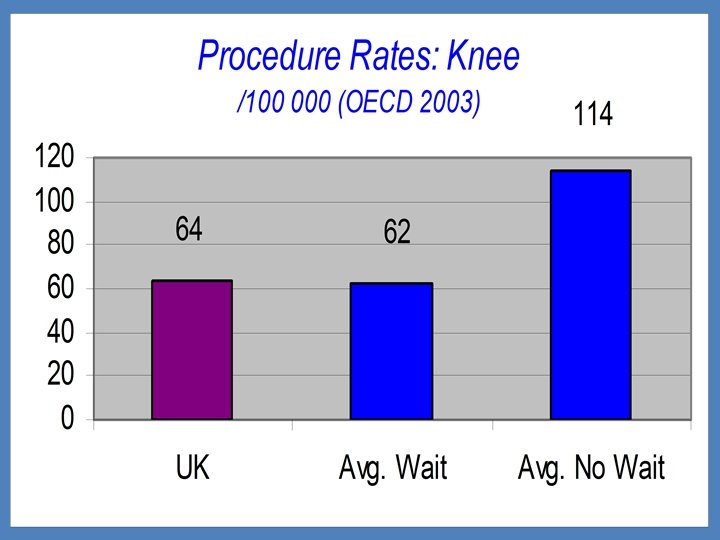
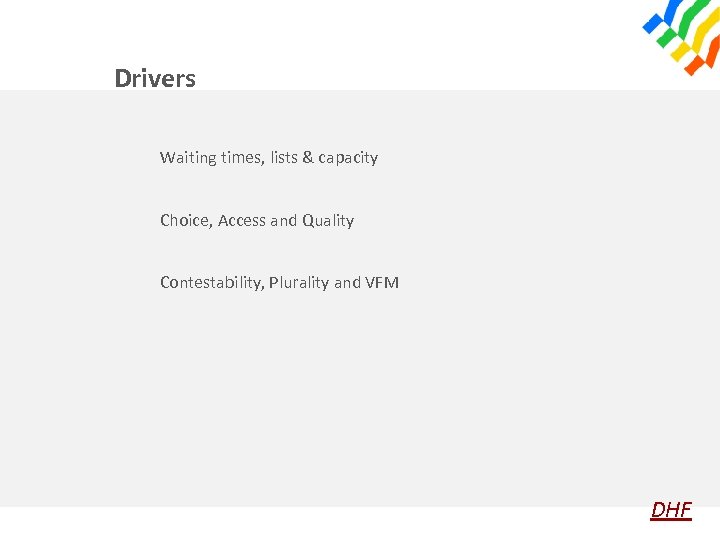
Drivers Waiting times, lists & capacity Choice, Access and Quality Contestability, Plurality and VFM DHF
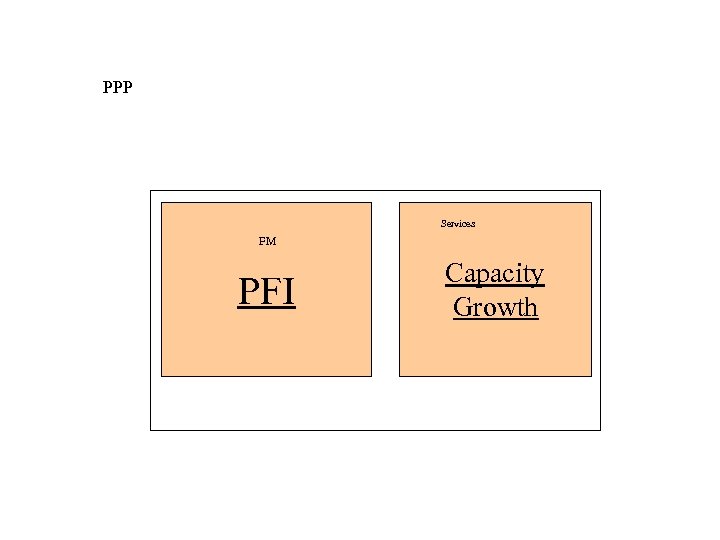
PPP Services FM PFI Capacity Growth
Performance Management & KPIs SUIs Outcome measures DHF
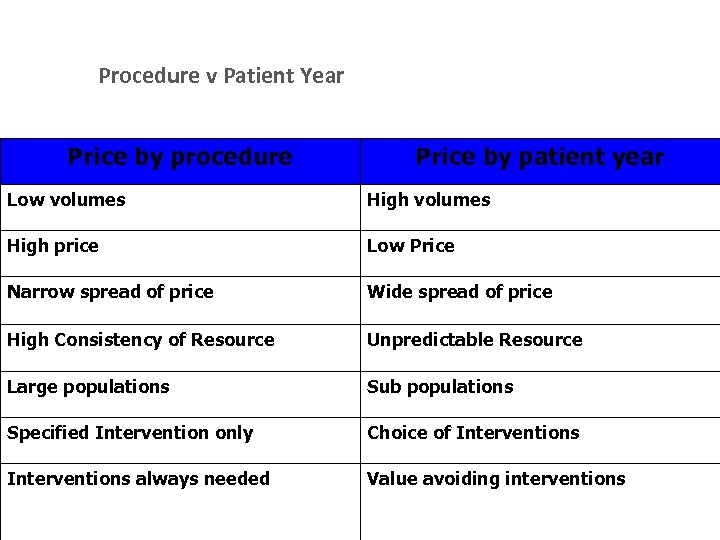
Procedure v Patient Year Price by procedure Price by patient year Low volumes High price Low Price Narrow spread of price Wide spread of price High Consistency of Resource Unpredictable Resource Large populations Sub populations Specified Intervention only Choice of Interventions always needed Value avoiding interventions
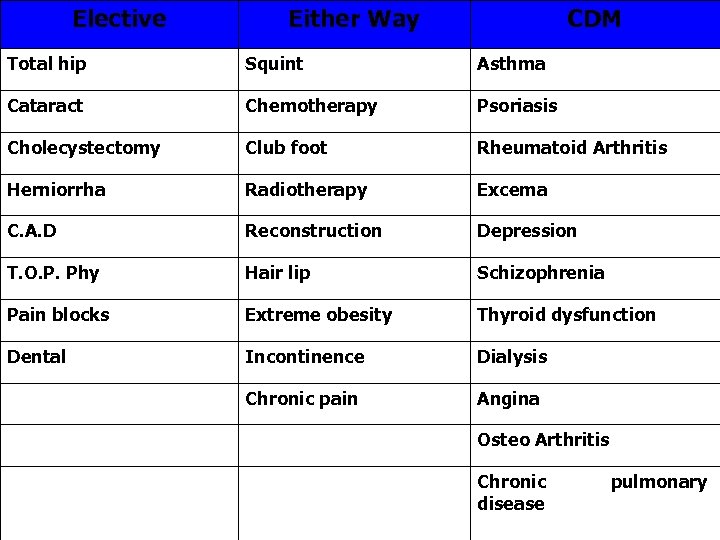
Elective Either Way CDM Total hip Squint Asthma Cataract Chemotherapy Psoriasis Cholecystectomy Club foot Rheumatoid Arthritis Herniorrha Radiotherapy Excema C. A. D Reconstruction Depression T. O. P. Phy Hair lip Schizophrenia Pain blocks Extreme obesity Thyroid dysfunction Dental Incontinence Dialysis Chronic pain Angina Osteo Arthritis Chronic disease pulmonary
CSS v CPS The CSS contains everything that should help us specify our procurement safely for the NHS The CPS only contains that which we consider essential to the ITT and which will deliver a VFM bid
Input and process specifications So the sponsor can integrate ISTC care with the rest of the health economy. · e. g. what is expected from the NHS may differ between one cholecystectomy package (with a very limited follow up) and another.
Input and process specifications Ministers will find it hard to defend untoward events in the absence of process specifications or standards Provider can easily offer a strong argument that he was not at fault for a poor outcome (by citing biological variability)
Input and process specifications Some procedures require specific data for national registers and these have to be specified · e. g. NCEPOD · Cataract National Dataset · e. g. National Joint Registry
Outcomes The difficulty with outcome(s) is that the results should be attributable to the treatment
Measures KPIs · 25 ISTCs · NHS TCs Outcome Measures · NHS TCs · ISTCs
Outline Current NHS organisation Aspects of the NHS Fears of the NHS Opportunities in the NHS Politics of the NHS
History Churches & Charities Poor Houses and other reforms to 1911 Lloyd George and the panel 1942 to 1948 : The NHS 1968 to 1989 reforms Mrs Thatcher & Waiting times 1992 April Mr Blair & Plurality
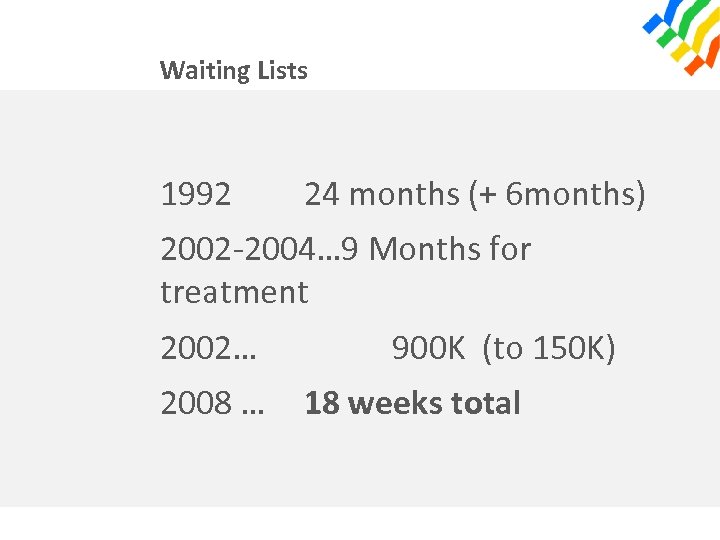
Waiting Lists 1992 24 months (+ 6 months) 2002 -2004… 9 Months for treatment 2002… 2008 … 900 K (to 150 K) 18 weeks total
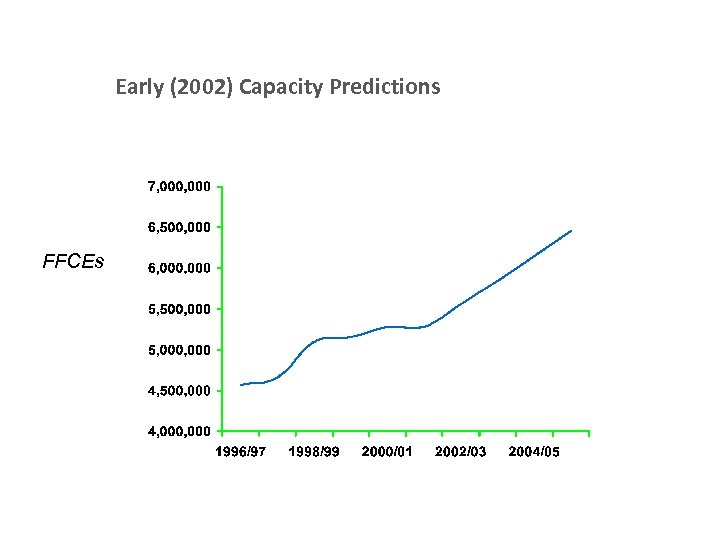
Early (2002) Capacity Predictions FFCEs
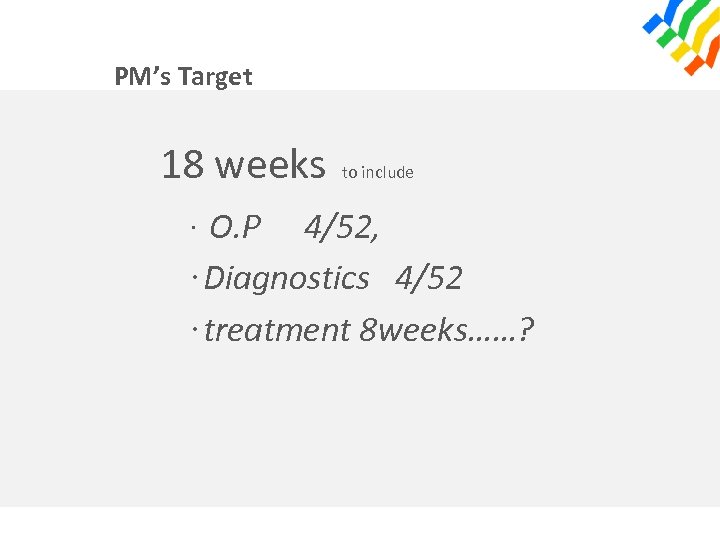
PM’s Target 18 weeks · O. P to include 4/52, ·Diagnostics 4/52 ·treatment 8 weeks……?
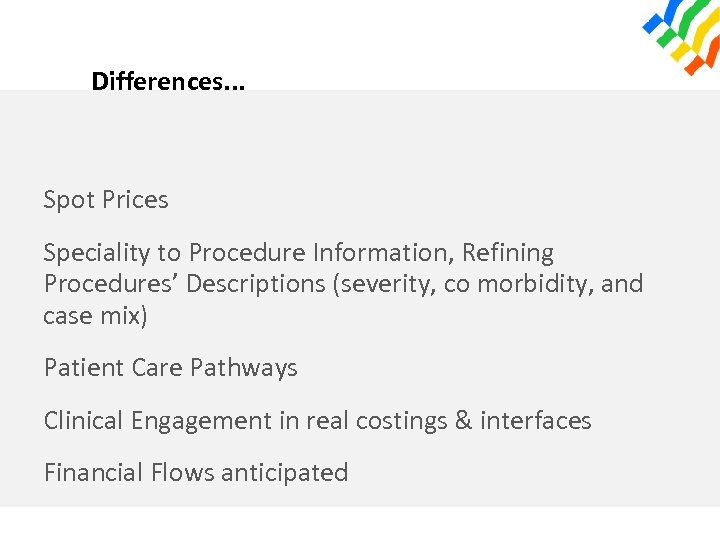
Differences. . . Spot Prices Speciality to Procedure Information, Refining Procedures’ Descriptions (severity, co morbidity, and case mix) Patient Care Pathways Clinical Engagement in real costings & interfaces Financial Flows anticipated
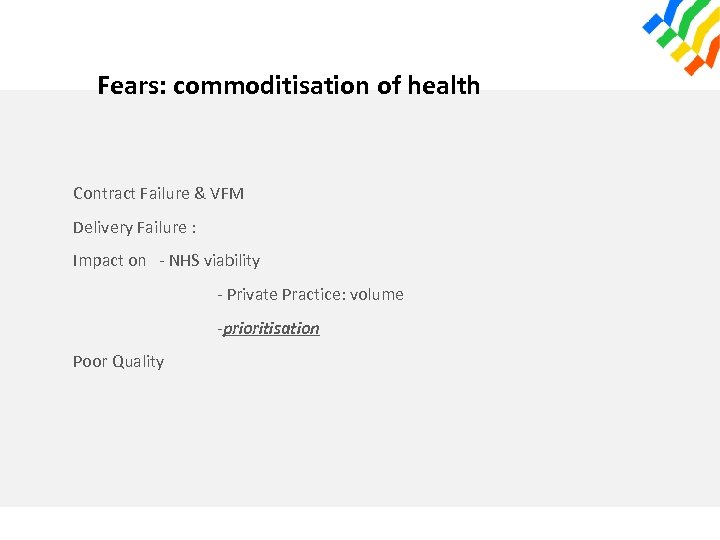
Fears: commoditisation of health Contract Failure & VFM Delivery Failure : Impact on - NHS viability - Private Practice: volume -prioritisation Poor Quality
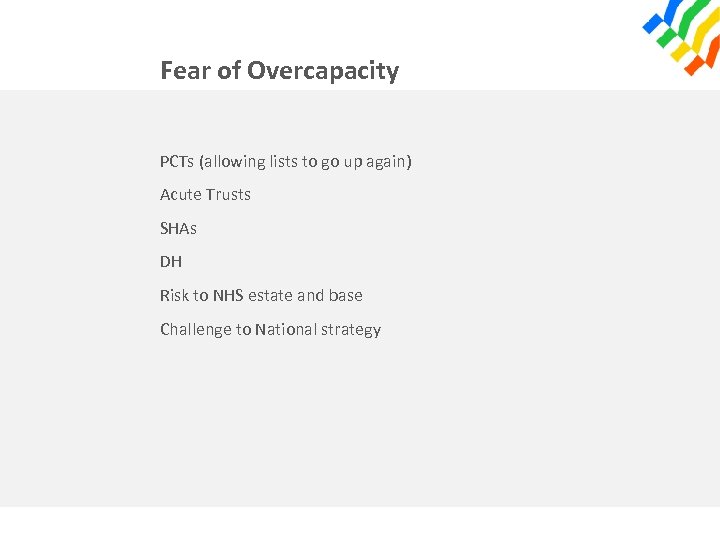
Fear of Overcapacity PCTs (allowing lists to go up again) Acute Trusts SHAs DH Risk to NHS estate and base Challenge to National strategy
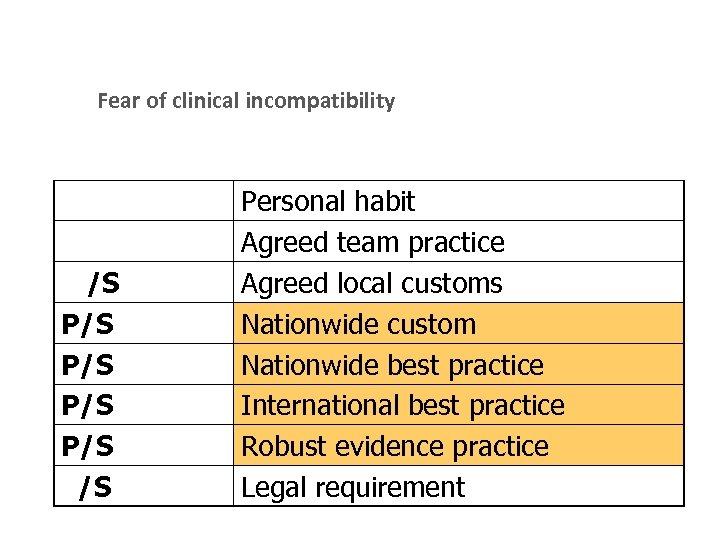
Fear of clinical incompatibility /S P/S P/S /S Personal habit Agreed team practice Agreed local customs Nationwide custom Nationwide best practice International best practice Robust evidence practice Legal requirement
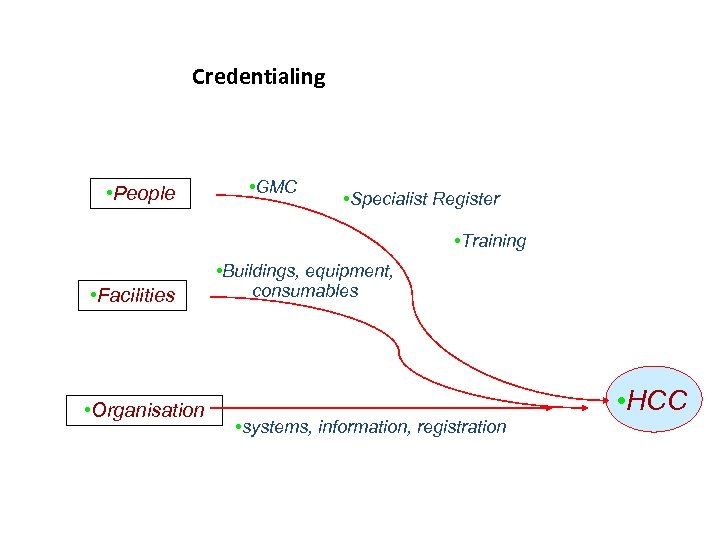
Credentialing • People • GMC • Specialist Register • Training • Facilities • Organisation • Buildings, equipment, consumables • HCC • systems, information, registration
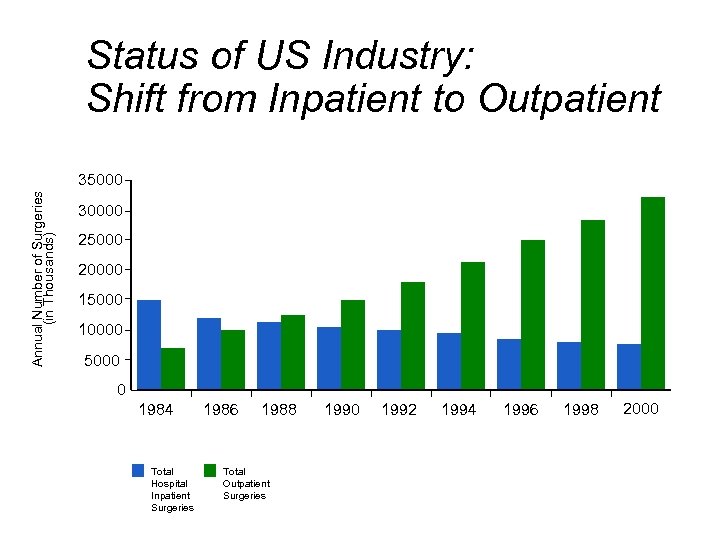
Status of US Industry: Shift from Inpatient to Outpatient Annual Number of Surgeries (in Thousands) 35000 30000 25000 20000 15000 10000 5000 0 1984 Total Hospital Inpatient Surgeries 1986 1988 Total Outpatient Surgeries 1990 1992 1994 1996 1998 2000
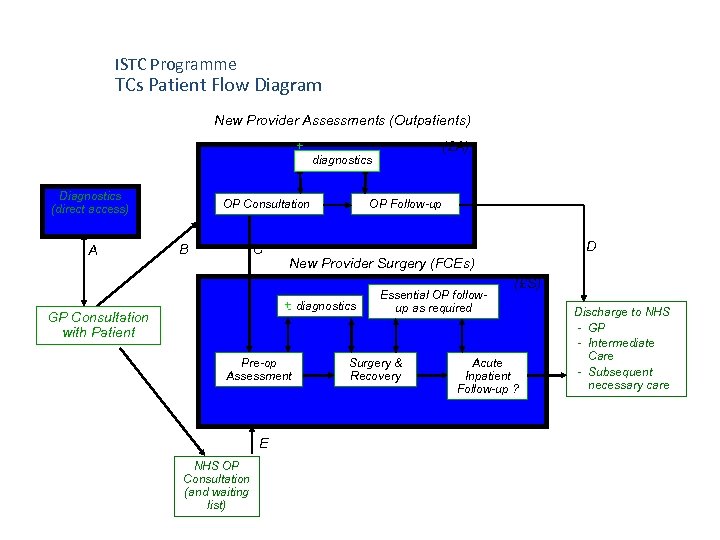
ISTC Programme TCs Patient Flow Diagram New Provider Assessments (Outpatients) + - Diagnostics (direct access) A diagnostics OP Consultation B C OP Follow-up D New Provider Surgery (FCEs) + diagnostics - GP Consultation with Patient Pre-op Assessment E NHS OP Consultation (and waiting list) (£A) Essential OP followup as required Surgery & Recovery (£S) Acute Inpatient Follow-up ? Discharge to NHS - GP - Intermediate Care - Subsequent necessary care
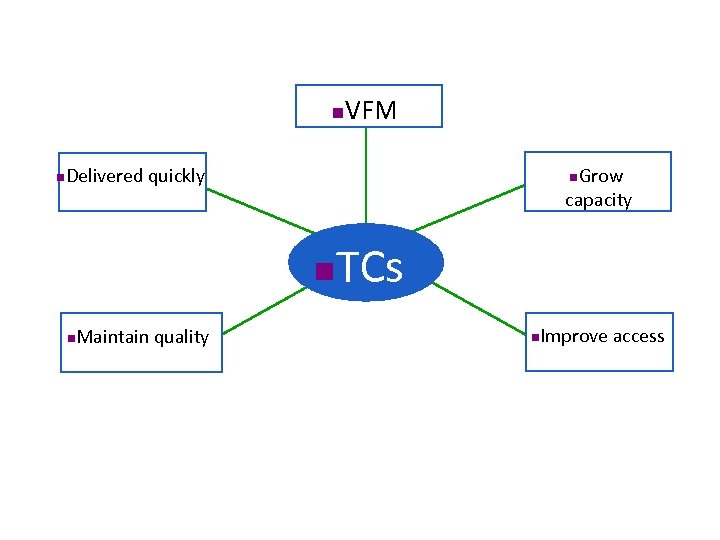
n n VFM Grow capacity Delivered quickly n n n Maintain quality TCs n Improve access
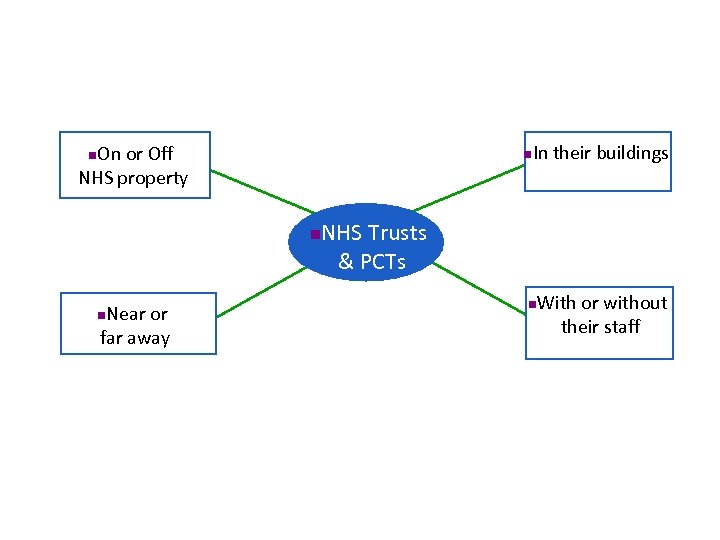
On or Off NHS property n n n Near or far away n In their buildings NHS Trusts & PCTs n With or without their staff
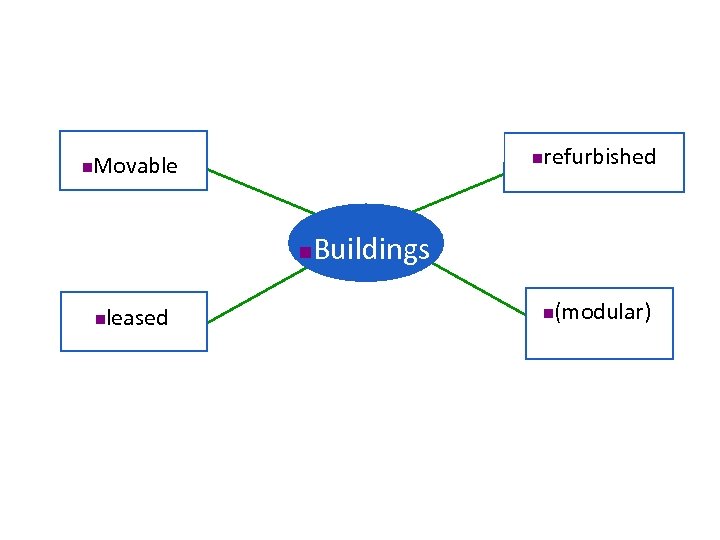
n n Movable n n leased refurbished Buildings n (modular)
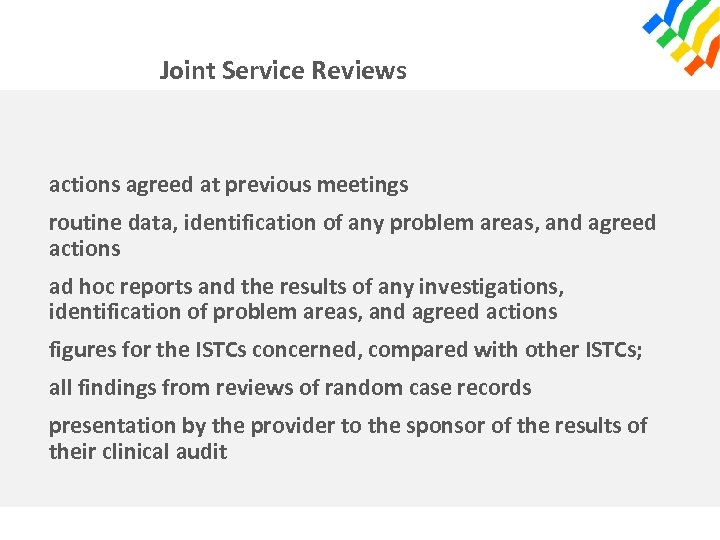
Joint Service Reviews actions agreed at previous meetings routine data, identification of any problem areas, and agreed actions ad hoc reports and the results of any investigations, identification of problem areas, and agreed actions figures for the ISTCs concerned, compared with other ISTCs; all findings from reviews of random case records presentation by the provider to the sponsor of the results of their clinical audit
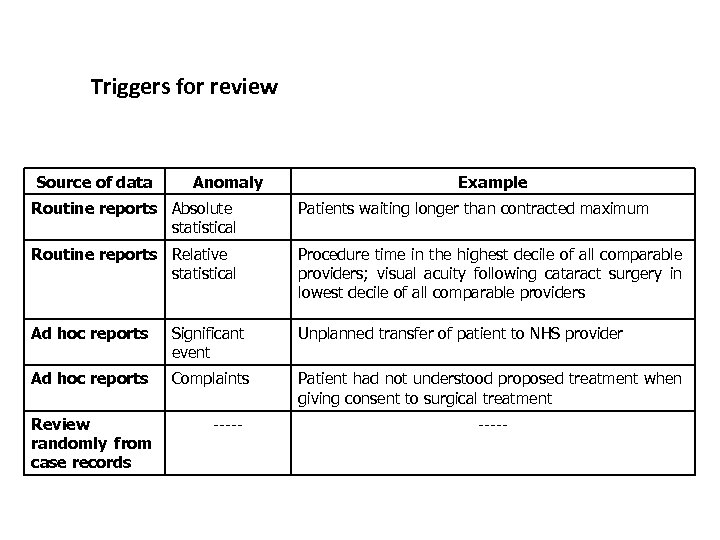
Triggers for review Source of data Anomaly Example Routine reports Absolute statistical Patients waiting longer than contracted maximum Routine reports Relative statistical Procedure time in the highest decile of all comparable providers; visual acuity following cataract surgery in lowest decile of all comparable providers Ad hoc reports Significant event Unplanned transfer of patient to NHS provider Ad hoc reports Complaints Patient had not understood proposed treatment when giving consent to surgical treatment Review randomly from case records -----
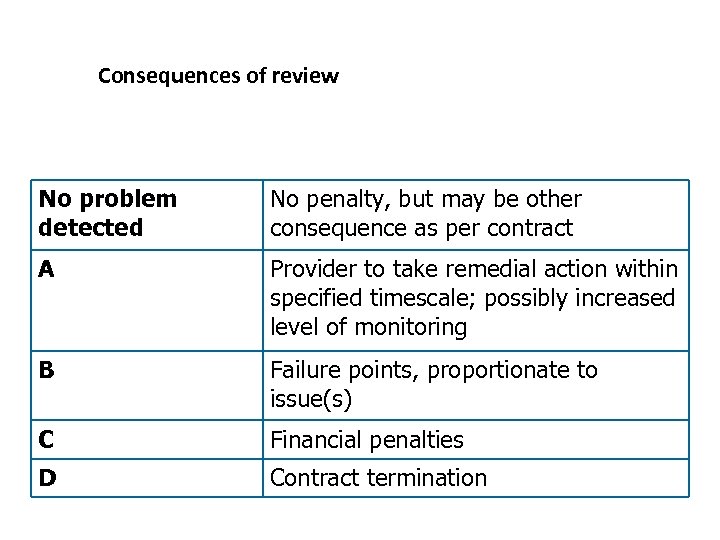
Consequences of review No problem detected No penalty, but may be other consequence as per contract A Provider to take remedial action within specified timescale; possibly increased level of monitoring B Failure points, proportionate to issue(s) C Financial penalties D Contract termination
Perceptions of quality risk National govt. Local Govt. Providers (new territories) Investors (due diligence) Professions (mixed interests) Media Public
Opportunities Acute Capacity for NHS Other capacity for NHS · · · · Diagnostics (radio, pact, physiological, endoscopy) LTC (diabetes) Primary Care (e. g. CWICs) Chlamydia etc Mental Health LD Care of Elderly Chambers · · Surgeons Physicians Other clinical/Health/Well being Sa a provider, as a FM
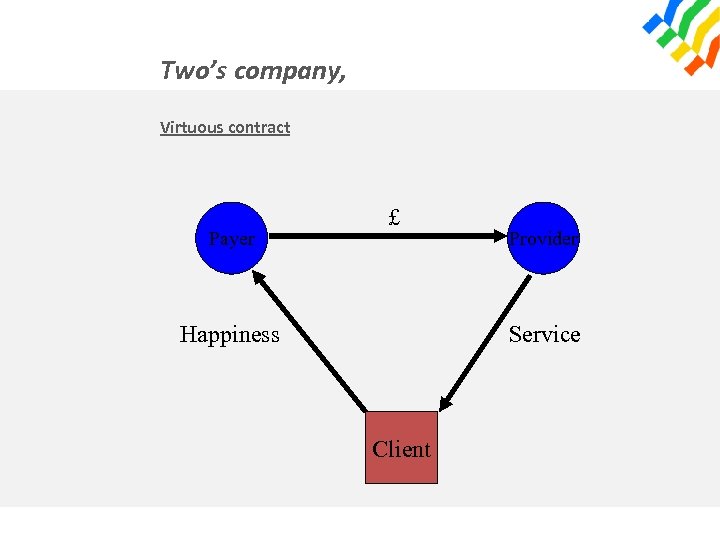
Two’s company, Virtuous contract Payer £ Happiness Provider Service Client
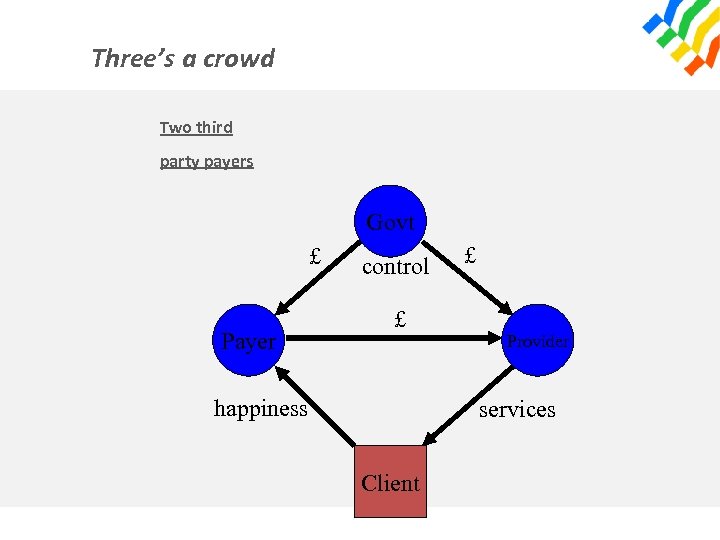
Three’s a crowd Two third party payers Govt £ Payer control £ happiness £ Provider services Client
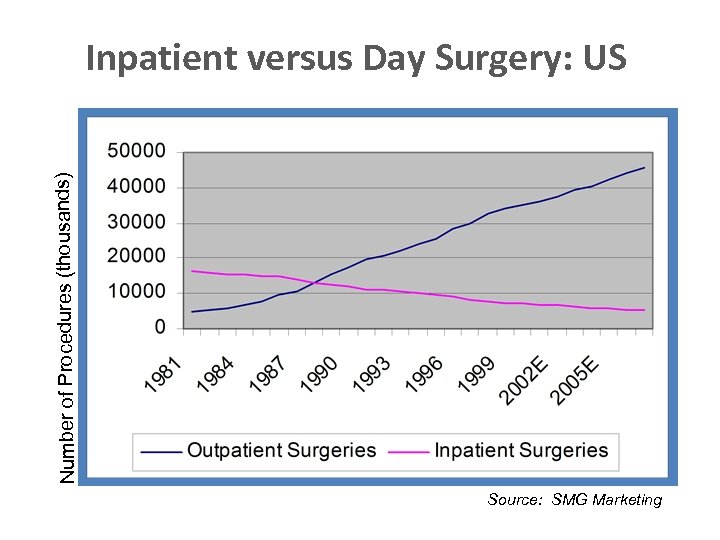
Number of Procedures (thousands) Inpatient versus Day Surgery: US Source: SMG Marketing
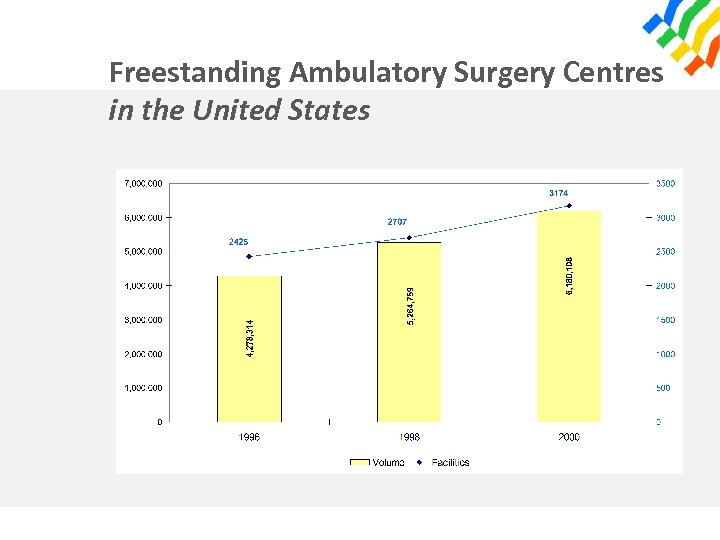
Freestanding Ambulatory Surgery Centres in the United States
Types of Surgery Centres in the U. S. Hospital owned Joint Venture (Hospital & Physicians) Physician Owned Management Companies with or without physician ownership
Driving Forces behind the “Surgery Centre Movement” Physicians / Surgeons Hospitals Government / Insurance Industry Patients
Designing the Process “When schemes are laid in advance, it is surprising how often the circumstances fit in with them” Sir William Osler
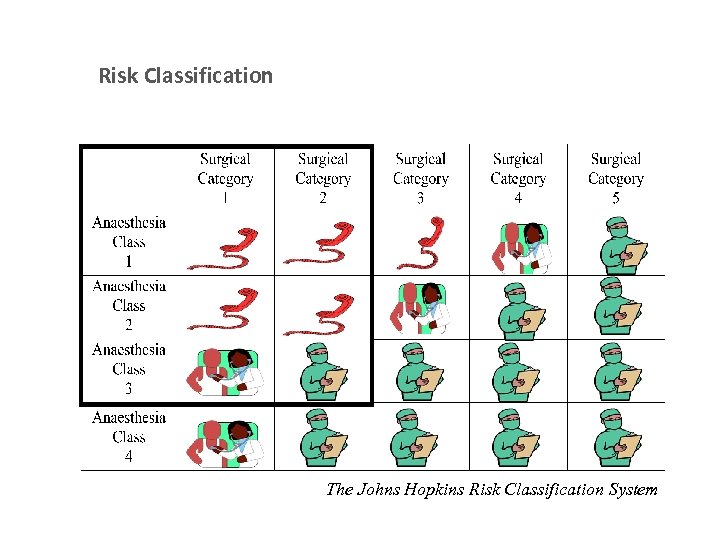
Risk Classification The Johns Hopkins Risk Classification System
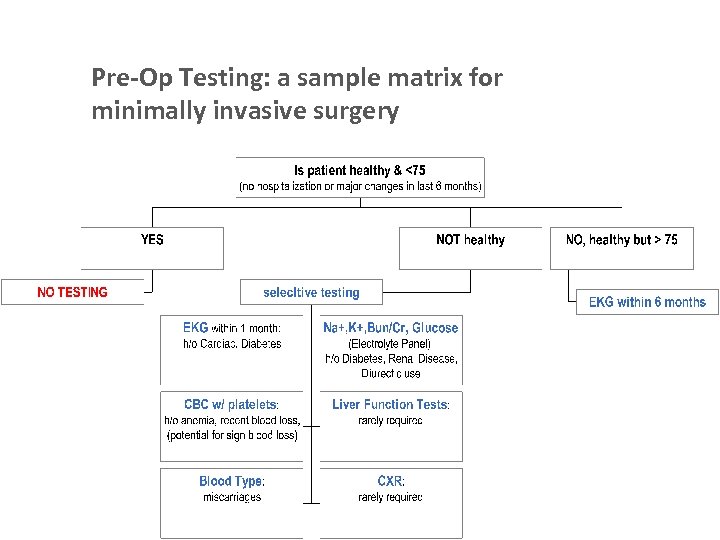
Pre-Op Testing: a sample matrix for minimally invasive surgery
Скачать презентацию DHF Presentations between 2004 an d 2009 44 0 1423
21f21aa93c74f684602d54b67830c27e.ppt