


 Скачать презентацию Developments of High CW RF Power Solid State
5aa6aeb19dd233d18c8695c6f5149527.ppt
- Количество слайдов: 31
 Developments of High CW RF Power Solid State Amplifiers at SOLEIL R. Lopes P. Marchand F. Ribero T. Ruan CWRF 2012 BNL 07 -11 May 2012
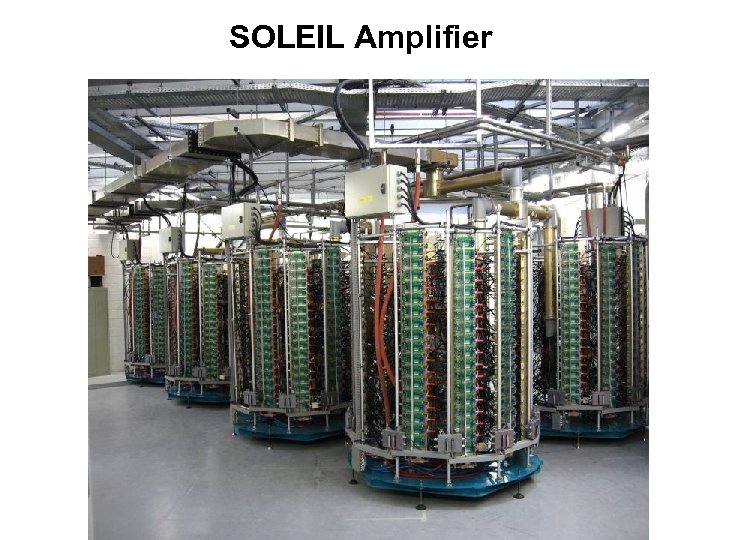 SOLEIL Amplifier
 Summary At SOLEIL, SSA are providing the required 352 MHz CW power: 1 X 35 k. W into the Booster (BO) cavity and 4 X 180 k. W into the 4 superconducting cavities of the Storage Ring (SR). Based on a design fully developed in house, they consist in a combination of a large number of 320 W elementary modules (147 in the BO and 4 X 724 in the SR) with MOSFET, integrated circulators and individual power supplies (DC/DC converter). After 6 years of operation, this innovative design has proved itself and demonstrated that it is an attractive alternative to the vacuum tube amplifiers, featuring an outstanding reliability and a MTBF > 1 year. Advantages of SOLEIL SSA: low noise, good linearity, high reliability, long life time, easy maintenance, simple spare parts, no HV, no X ray.
 New developments In the meantime, thanks to the acquired expertise and the arrival of the 6 th generation LDMOS, SOLEIL has carried out developments which led to doubling the power of the elementary module (650 W) while improving the performance in terms of gain, linearity, efficiency and thermal stress. 3 years ago, 352 MHz 150 k. W CW SSA with 6 th generation MOSFET has been developed for the ESRF upgrade project. Now 500 MHz amplifier based on this technology are being built for Thom. X (50 k. W) and SESAME (140 k. W) projects. All key parts have been validated.
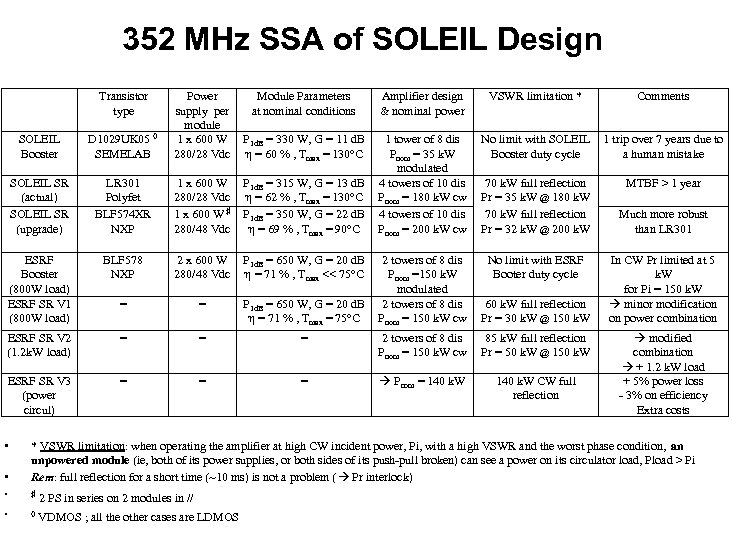 352 MHz SSA of SOLEIL Design Transistor type SOLEIL Booster D 1029 UK 05 SEMELAB SOLEIL SR (actual) SOLEIL SR (upgrade) LR 301 Polyfet BLF 574 XR NXP 1 x 600 W 280/28 Vdc 1 x 600 W ♯ 280/48 Vdc P 1 d. B = 315 W, G = 13 d. B = 62 % , Tmax = 130°C P 1 d. B = 350 W, G = 22 d. B = 69 % , Tmax = 90°C ESRF Booster (800 W load) ESRF SR V 1 (800 W load) BLF 578 NXP 2 x 600 W 280/48 Vdc P 1 d. B = 650 W, G = 20 d. B = 71 % , Tmax << 75°C = = P 1 d. B = 650 W, G = 20 d. B = 71 % , Tmax = 75°C ESRF SR V 2 (1. 2 k. W load) = = ESRF SR V 3 (power circul) = = • • Power Module Parameters supply per at nominal conditions module 1 x 600 W P 1 d. B = 330 W, G = 11 d. B 280/28 Vdc = 60 % , Tmax = 130°C Amplifier design & nominal power 1 tower of 8 dis Pnom = 35 k. W modulated 4 towers of 10 dis Pnom = 180 k. W cw 4 towers of 10 dis Pnom = 200 k. W cw VSWR limitation * Comments No limit with SOLEIL 1 trip over 7 years due to Booster duty cycle a human mistake 70 k. W full reflection Pr = 35 k. W @ 180 k. W 70 k. W full reflection Pr = 32 k. W @ 200 k. W 2 towers of 8 dis Pnom =150 k. W modulated 2 towers of 8 dis Pnom = 150 k. W cw No limit with ESRF Booter duty cycle 60 k. W full reflection Pr = 30 k. W @ 150 k. W = 2 towers of 8 dis Pnom = 150 k. W cw 85 k. W full reflection Pr = 50 k. W @ 150 k. W = Pnom = 140 k. W CW full reflection MTBF > 1 year Much more robust than LR 301 In CW Pr limited at 5 k. W for Pi = 150 k. W minor modification on power combination modified combination + 1. 2 k. W load + 5% power loss - 3% on efficiency Extra costs * VSWR limitation: when operating the amplifier at high CW incident power, Pi, with a high VSWR and the worst phase condition, an unpowered module (ie, both of its power supplies, or both sides of its push-pull broken) can see a power on its circulator load, Pload > Pi Rem: full reflection for a short time (~10 ms) is not a problem ( Pr interlock) • ♯ 2 PS in series on 2 modules in // • VDMOS ; all the other cases are LDMOS
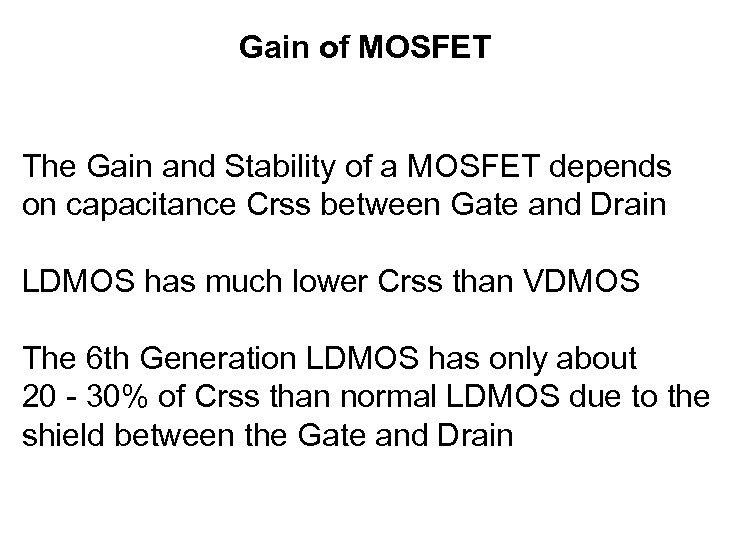 Gain of MOSFET The Gain and Stability of a MOSFET depends on capacitance Crss between Gate and Drain LDMOS has much lower Crss than VDMOS The 6 th Generation LDMOS has only about 20 - 30% of Crss than normal LDMOS due to the shield between the Gate and Drain
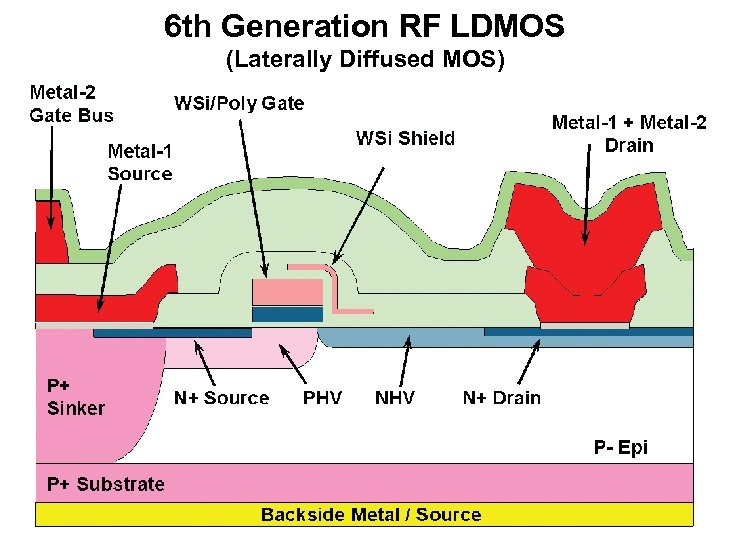 6 th Generation RF LDMOS (Laterally Diffused MOS)
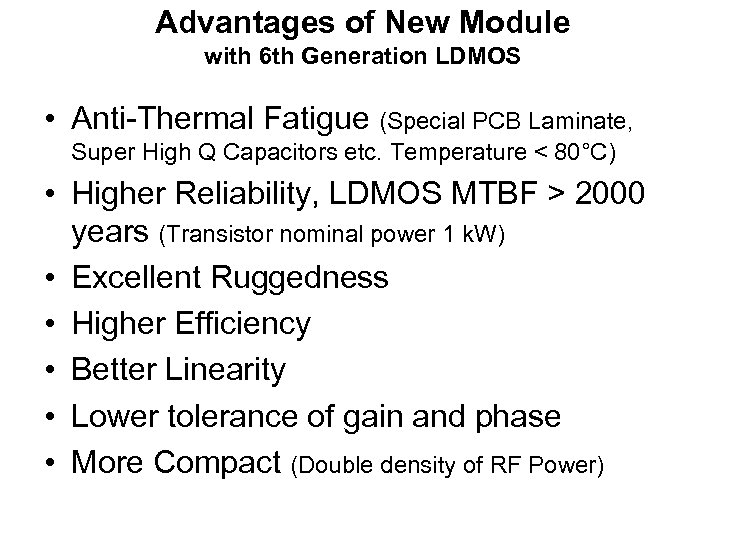 Advantages of New Module with 6 th Generation LDMOS • Anti-Thermal Fatigue (Special PCB Laminate, Super High Q Capacitors etc. Temperature < 80°C) • Higher Reliability, LDMOS MTBF > 2000 years (Transistor nominal power 1 k. W) • Excellent Ruggedness • Higher Efficiency • Better Linearity • Lower tolerance of gain and phase • More Compact (Double density of RF Power)
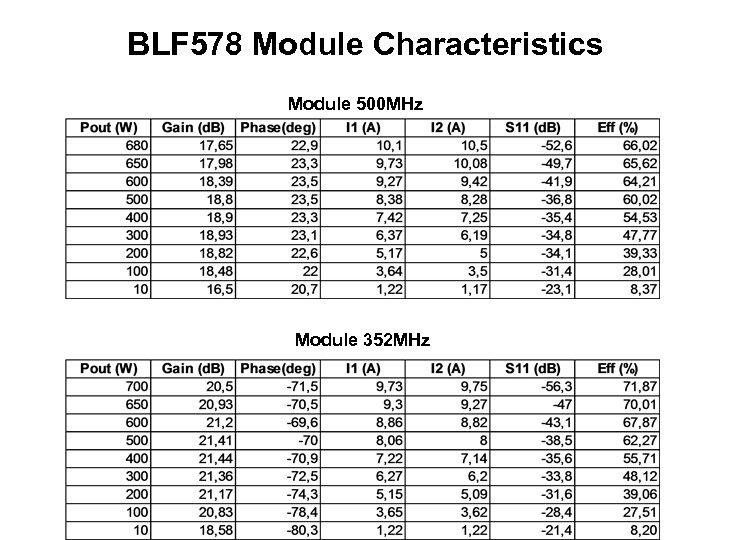 BLF 578 Module Characteristics Module 500 MHz Module 352 MHz
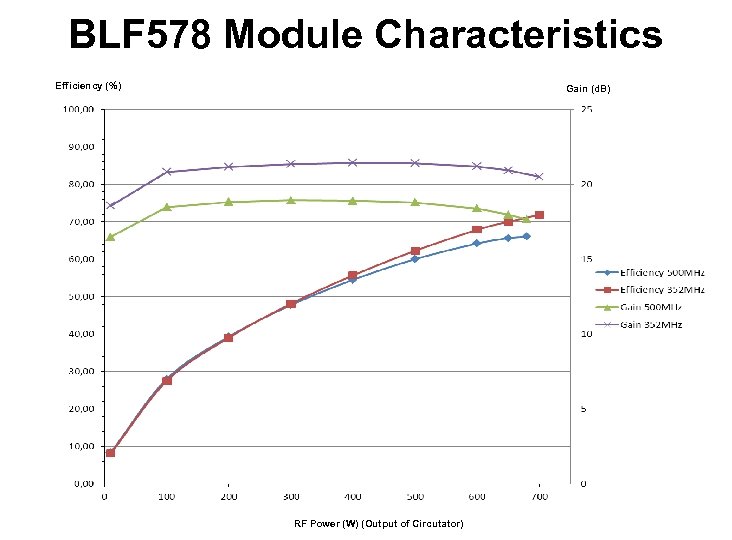 BLF 578 Module Characteristics Efficiency (%) Gain (d. B) RF Power (W) (Output of Circutator)
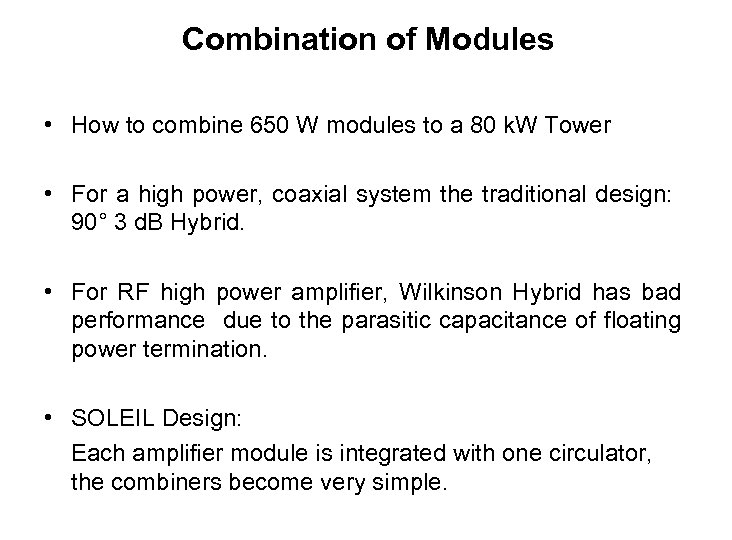 Combination of Modules • How to combine 650 W modules to a 80 k. W Tower • For a high power, coaxial system the traditional design: 90° 3 d. B Hybrid. • For RF high power amplifier, Wilkinson Hybrid has bad performance due to the parasitic capacitance of floating power termination. • SOLEIL Design: Each amplifier module is integrated with one circulator, the combiners become very simple.
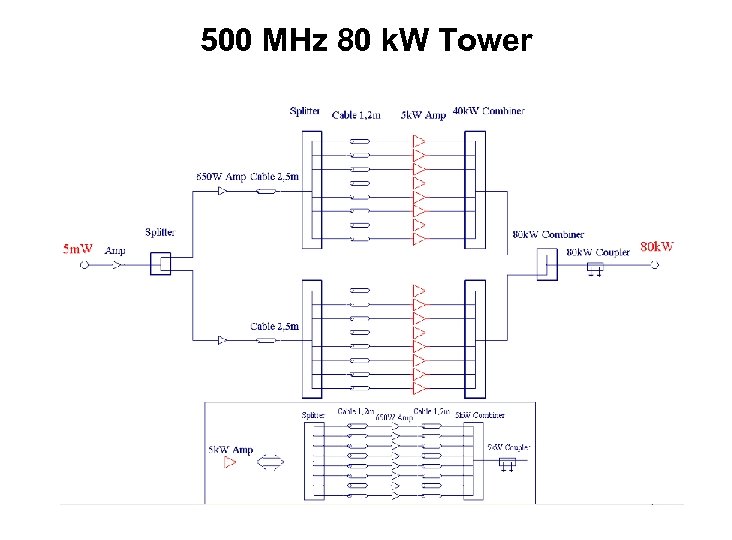 500 MHz 80 k. W Tower
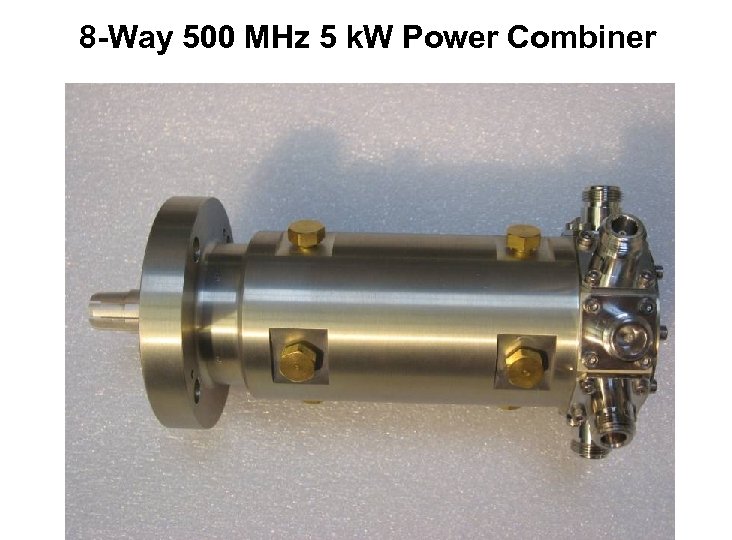 8 -Way 500 MHz 5 k. W Power Combiner
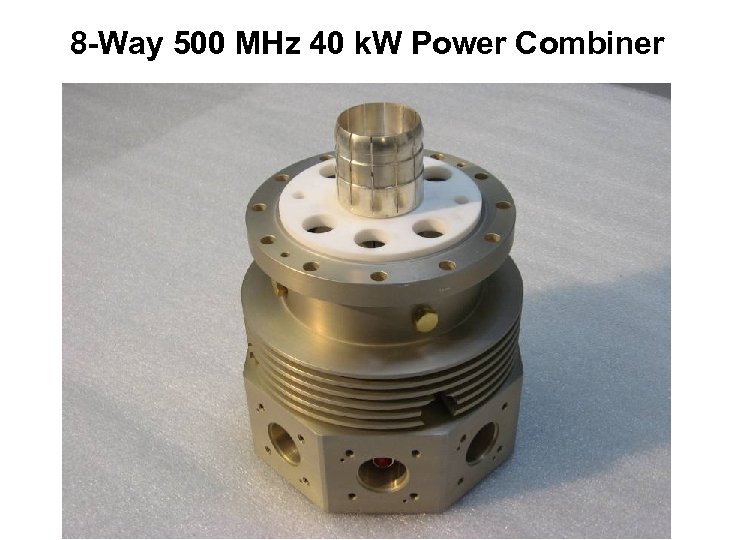 8 -Way 500 MHz 40 k. W Power Combiner
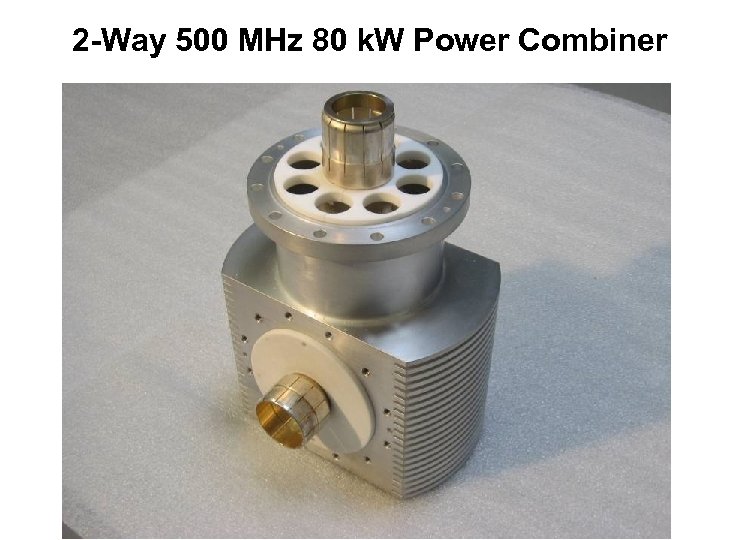 2 -Way 500 MHz 80 k. W Power Combiner
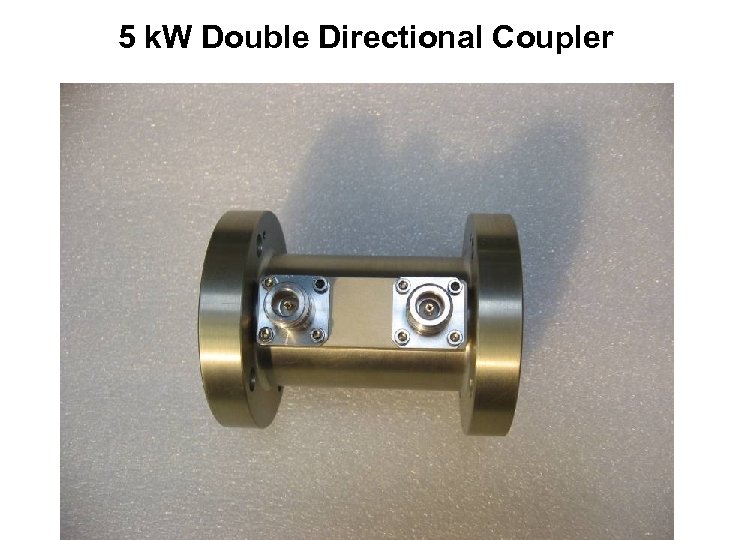 5 k. W Double Directional Coupler
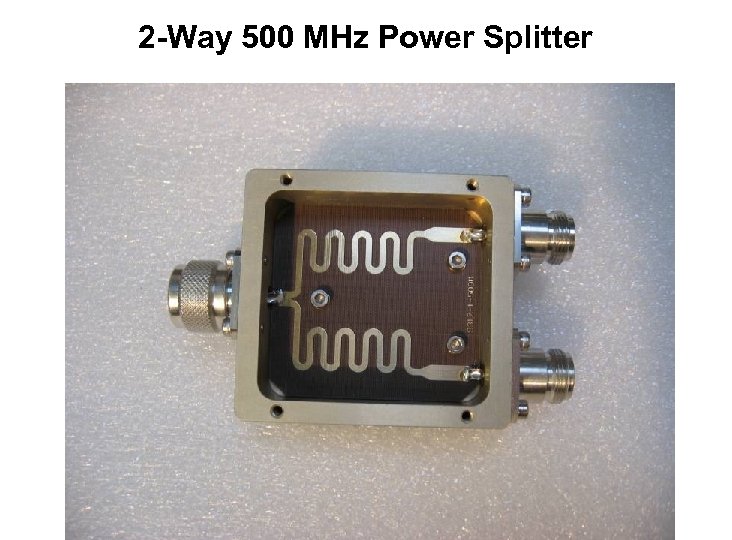 2 -Way 500 MHz Power Splitter
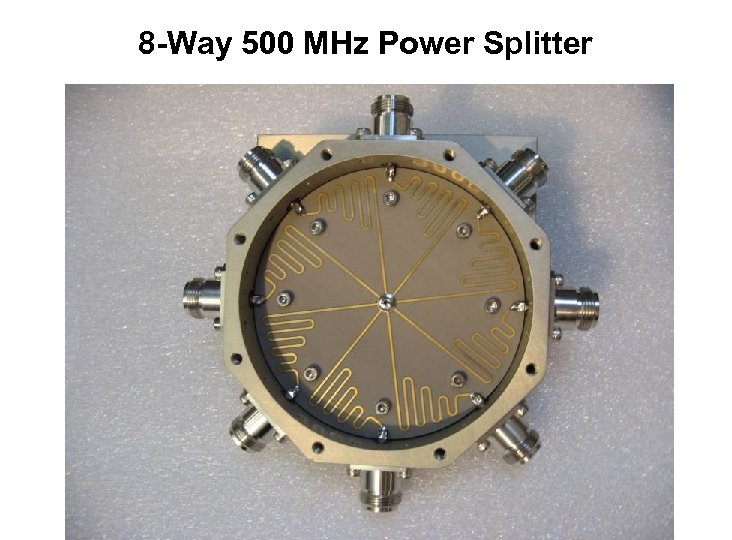 8 -Way 500 MHz Power Splitter
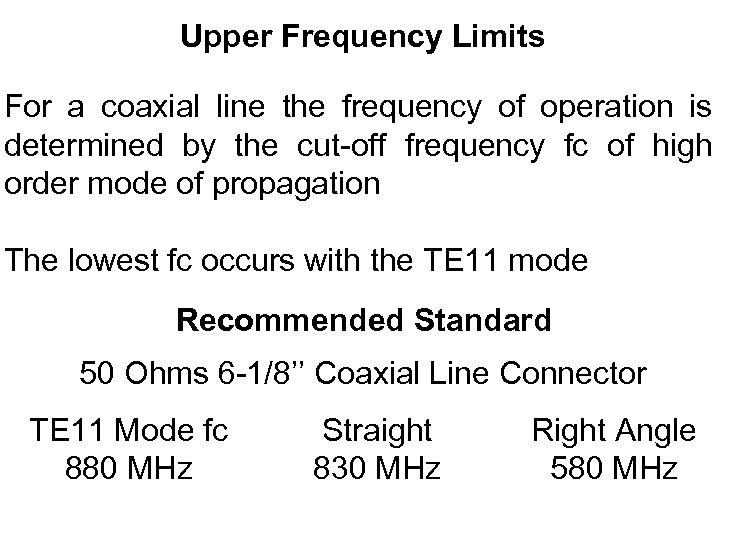 Upper Frequency Limits For a coaxial line the frequency of operation is determined by the cut-off frequency fc of high order mode of propagation The lowest fc occurs with the TE 11 mode Recommended Standard 50 Ohms 6 -1/8’’ Coaxial Line Connector TE 11 Mode fc 880 MHz Straight 830 MHz Right Angle 580 MHz
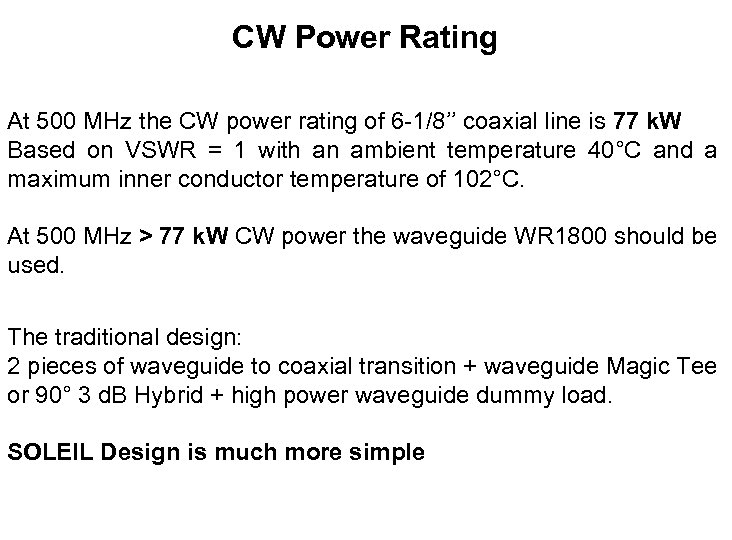 CW Power Rating At 500 MHz the CW power rating of 6 -1/8’’ coaxial line is 77 k. W Based on VSWR = 1 with an ambient temperature 40°C and a maximum inner conductor temperature of 102°C. At 500 MHz > 77 k. W CW power the waveguide WR 1800 should be used. The traditional design: 2 pieces of waveguide to coaxial transition + waveguide Magic Tee or 90° 3 d. B Hybrid + high power waveguide dummy load. SOLEIL Design is much more simple
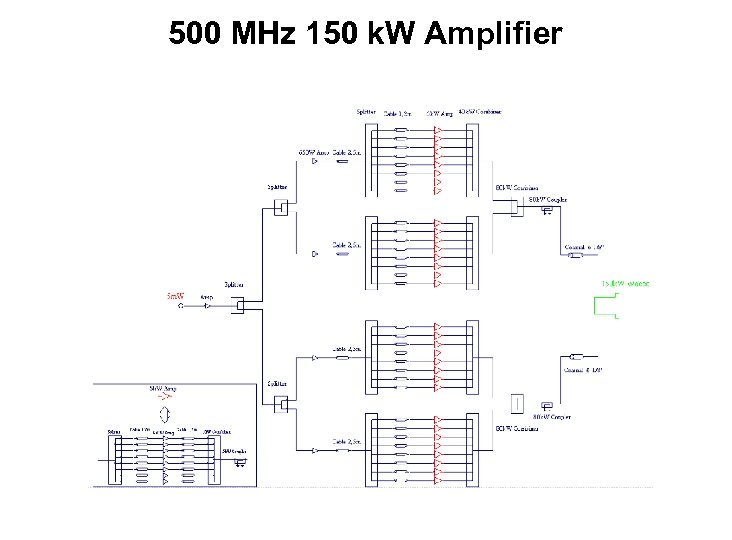 500 MHz 150 k. W Amplifier
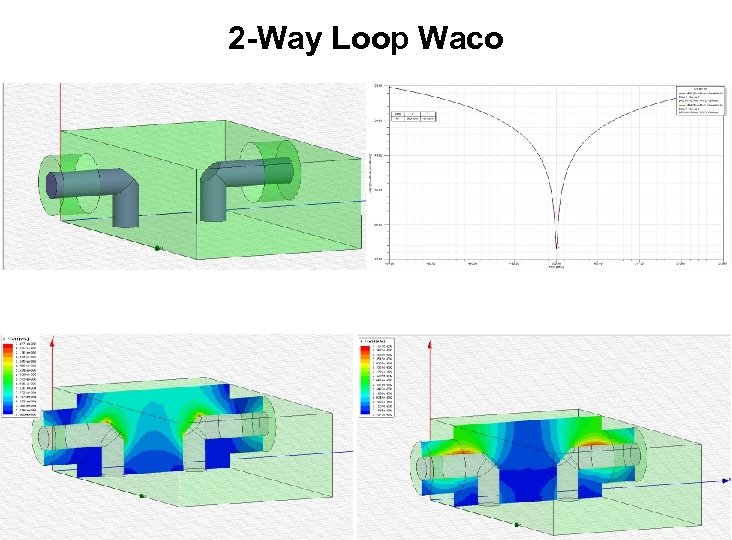 2 -Way Loop Waco
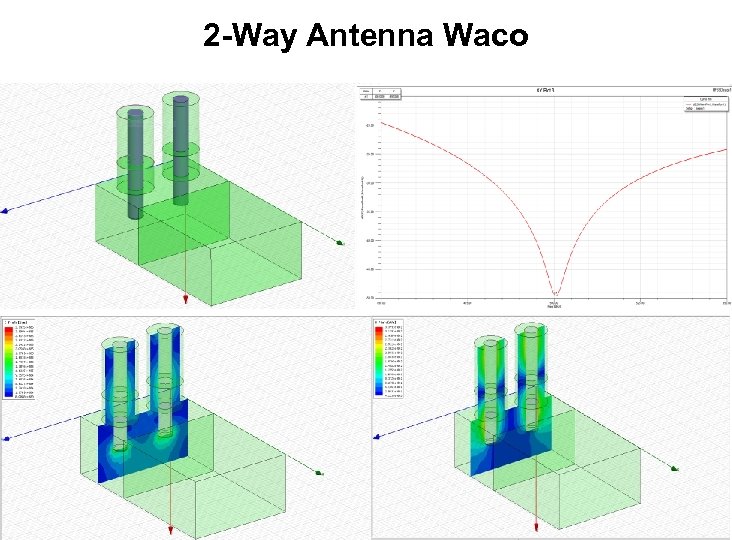 2 -Way Antenna Waco
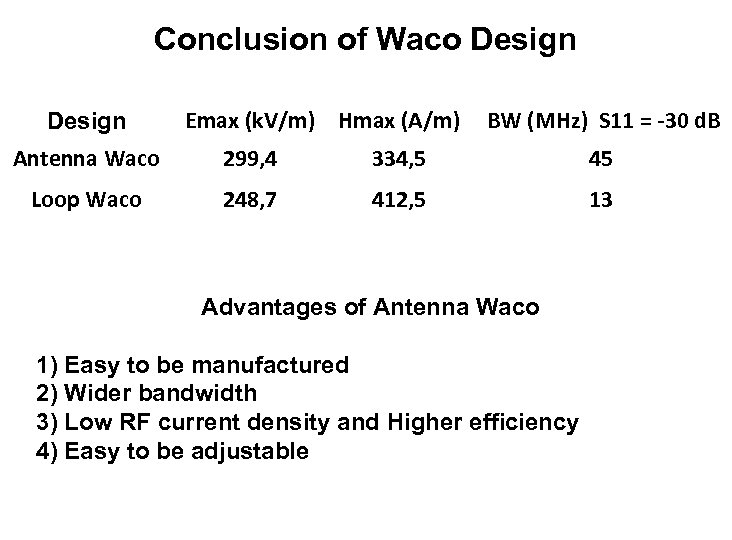 Conclusion of Waco Design Emax (k. V/m) Hmax (A/m) BW (MHz) S 11 = -30 d. B Antenna Waco 299, 4 334, 5 45 Loop Waco 248, 7 412, 5 13 Advantages of Antenna Waco 1) Easy to be manufactured 2) Wider bandwidth 3) Low RF current density and Higher efficiency 4) Easy to be adjustable
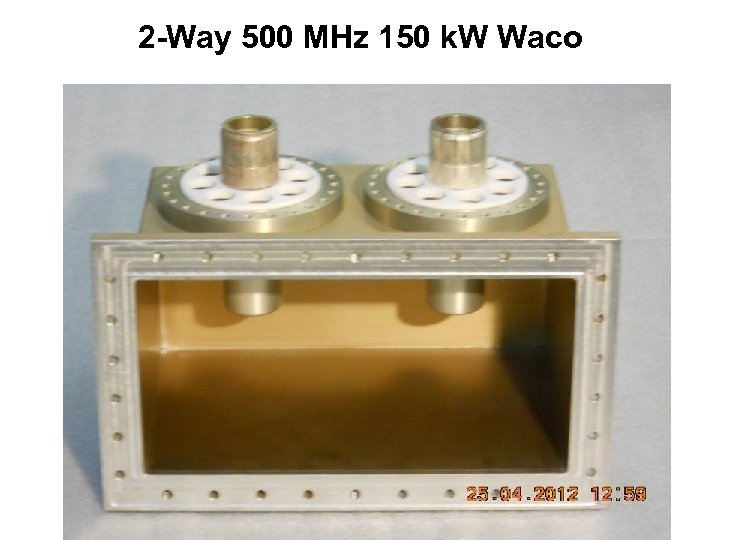 2 -Way 500 MHz 150 k. W Waco
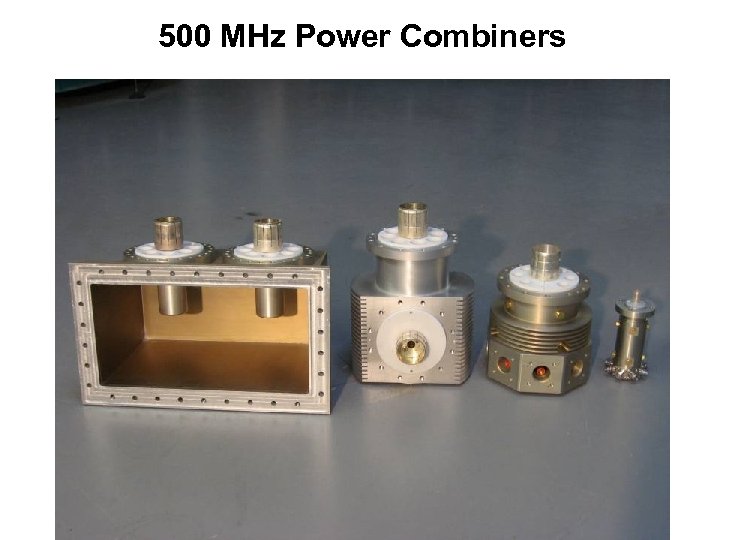 500 MHz Power Combiners
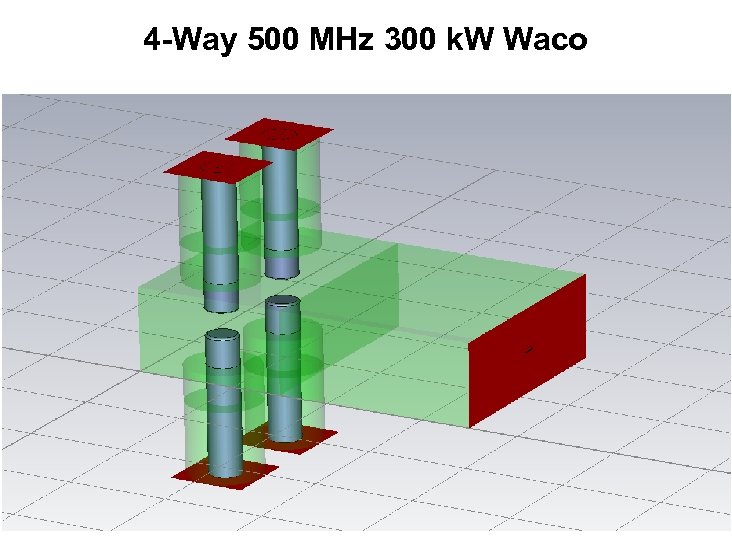 4 -Way 500 MHz 300 k. W Waco
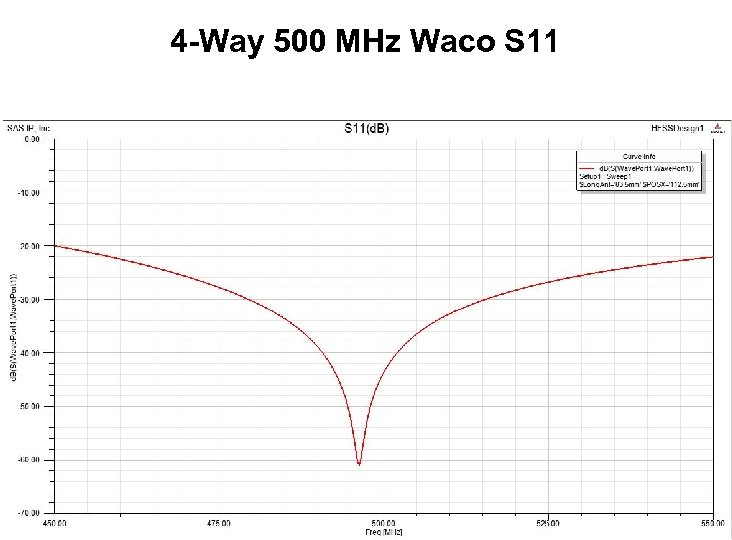 4 -Way 500 MHz Waco S 11
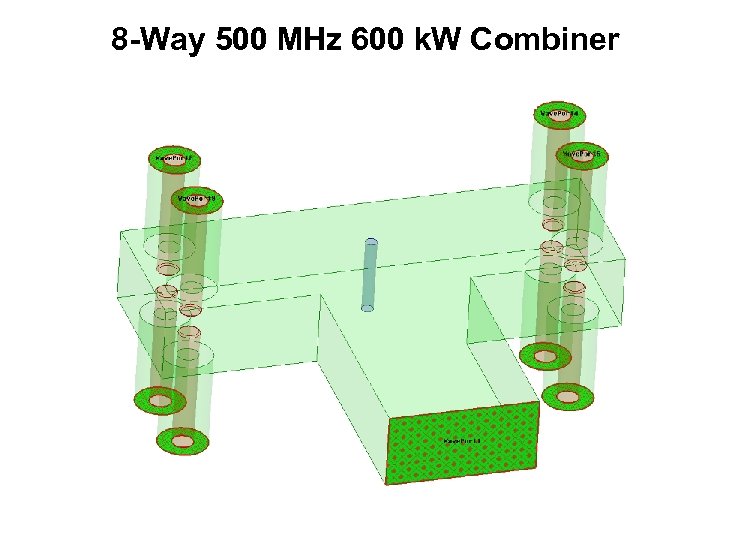 8 -Way 500 MHz 600 k. W Combiner
 N-Way Waco Applications • N-Way Waco is not only able to be used for SSA of different frequency, but also for IOT and klystron amplifier as a power combiner • It is able to be used as power splitter also • Advantages Low cost Compact Wide bandwidth
 Conclusion SOLEIL Design Idea is able to be used for different frequency and different power SSA It is low cost and compact design Thanks for your attention