


 Скачать презентацию Developmental Evaluation to support the development of innovation
b857a9a31dbe2f9272cbfebc117e7611.ppt
- Количество слайдов: 44
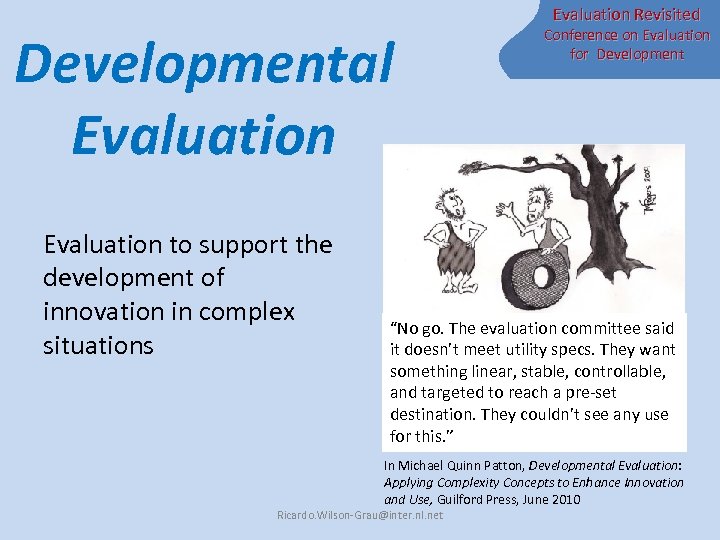 Developmental Evaluation to support the development of innovation in complex situations Evaluation Revisited Conference on Evaluation for Development “No go. The evaluation committee said it doesn’t meet utility specs. They want something linear, stable, controllable, and targeted to reach a pre-set destination. They couldn’t see any use for this. ” In Michael Quinn Patton, Developmental Evaluation: Applying Complexity Concepts to Enhance Innovation and Use, Guilford Press, June 2010 Ricardo. Wilson-Grau@inter. nl. net
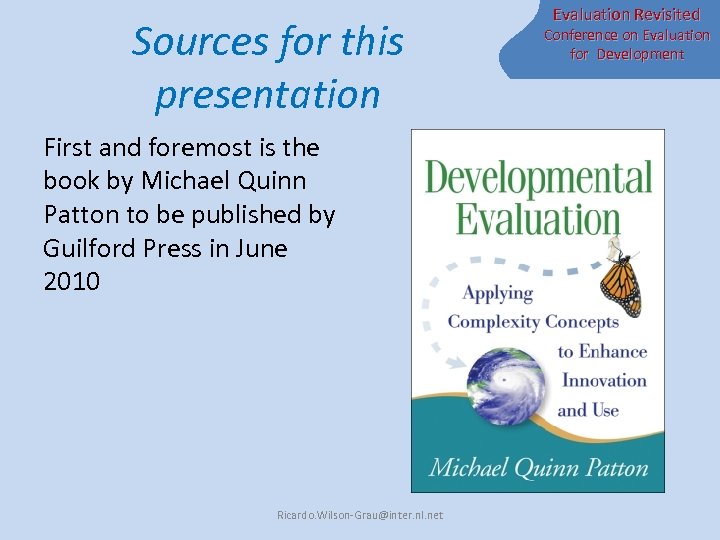 Sources for this presentation First and foremost is the book by Michael Quinn Patton to be published by Guilford Press in June 2010 Ricardo. Wilson-Grau@inter. nl. net Evaluation Revisited Conference on Evaluation for Development
 Sources for this presentation Evaluation Revisited Conference on Evaluation for Development My own experience: Commenting in the course of last year on the manuscript of Developmental Evaluation Working as a developmental evaluator for two international social change networks, a US-based NGO, an action-research project in Peru, and a Dutch foundation Ricardo. Wilson-Grau@inter. nl. net
 Evaluation Revisited Conference on Evaluation for Development What Developmental Evaluation is and is not Ricardo. Wilson-Grau@inter. nl. net
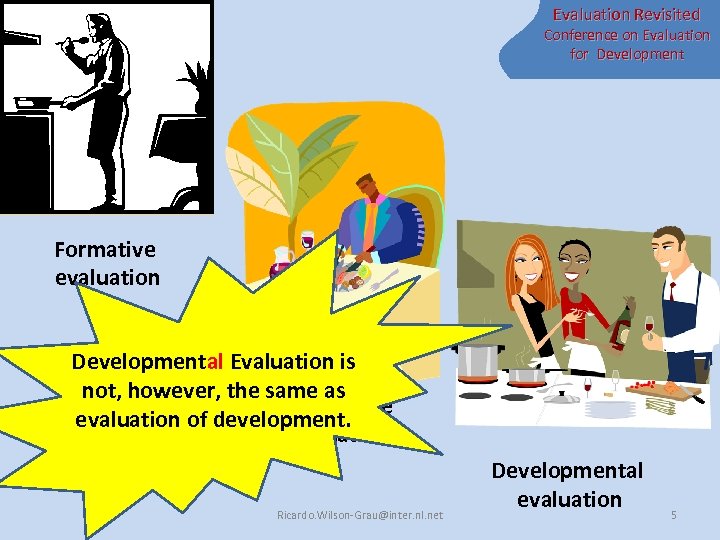 Evaluation Revisited Conference on Evaluation for Development Formative evaluation Developmental Evaluation is not, however, the same as Summative evaluation of development. evaluation Ricardo. Wilson-Grau@inter. nl. net Developmental evaluation 5
 Developmental Evaluation Defined Evaluation Revisited Conference on Evaluation for Development “Evaluate processes, including asking evaluative questions and applying evaluation logic, to support program, product, staff and/or organizational development. “The evaluator is part of a team whose members collaborate to conceptualize, design and test new approaches in a long-term, ongoing process of continuous improvement, adaptation and intentional change. “The evaluator's primary function in the team is to elucidate team discussions with evaluative questions, data and logic, and facilitate data-based decision-making in the developmental process. ” -Michael Quinn Patton Ricardo. Wilson-Grau@inter. nl. net
 Evaluation Revisited Right conditions Conference on Evaluation for Development Your intervention model does not yet exist; it is to be created The model exists but must be developed (versus improved) The situation is complex –the most important relationships of cause and effect are fundamentally unknown Ricardo. Wilson-Grau@inter. nl. net
 Evaluation Revisited Conference on Evaluation for Developmental Evaluation and complexity as we know it… Ricardo. Wilson-Grau@inter. nl. net
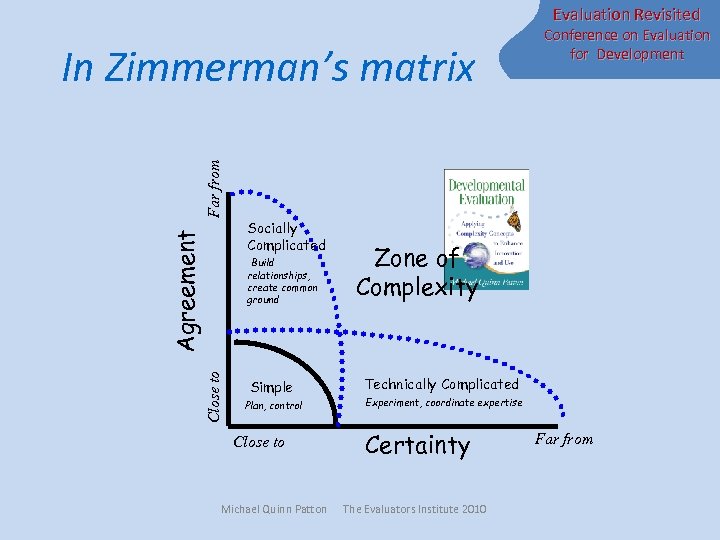 Evaluation Revisited Agreement Far from In Zimmerman’s matrix Socially Complicated Close to Build relationships, create common ground Simple Plan, control Close to Michael Quinn Patton Conference on Evaluation for Development Zone of Complexity Technically Complicated Experiment, coordinate expertise Certainty The Evaluators Institute 2010 Far from
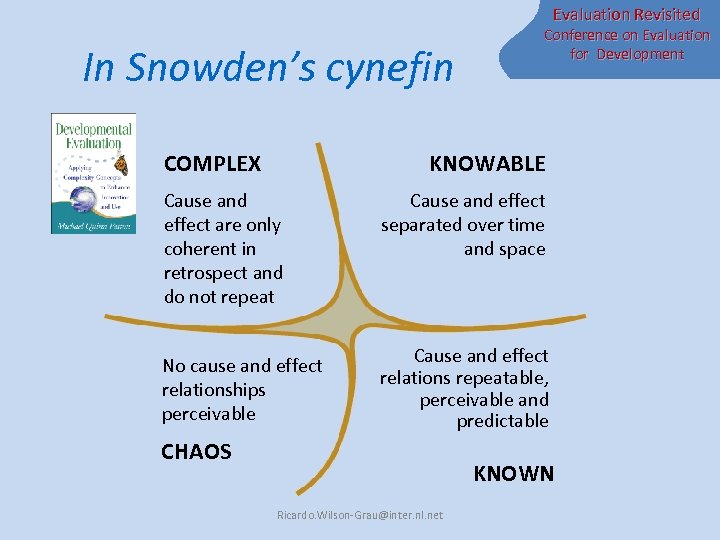 Evaluation Revisited In Snowden’s cynefin COMPLEX Conference on Evaluation for Development KNOWABLE Cause and effect are only coherent in retrospect and do not repeat Cause and effect separated over time and space No cause and effect relationships perceivable Cause and effect relations repeatable, perceivable and predictable CHAOS KNOWN Ricardo. Wilson-Grau@inter. nl. net
 Developmental Evaluation and systems thinking too Evaluation Revisited Conference on Evaluation for Development In addition to complex nonlinear dynamics, Developmental Evaluation is especially appropriate when systems thinking is present in social innovation Ricardo. Wilson-Grau@inter. nl. net
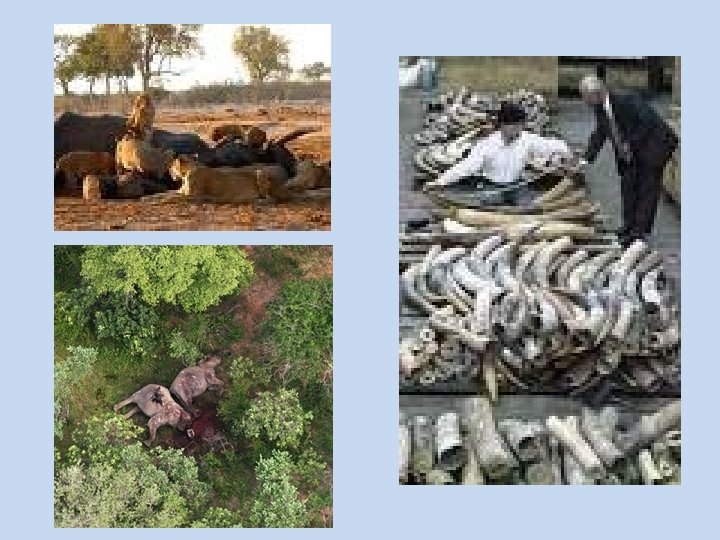
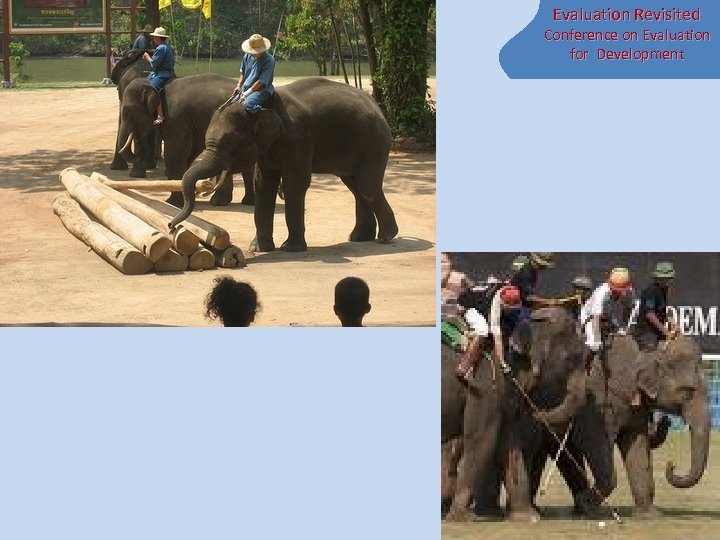
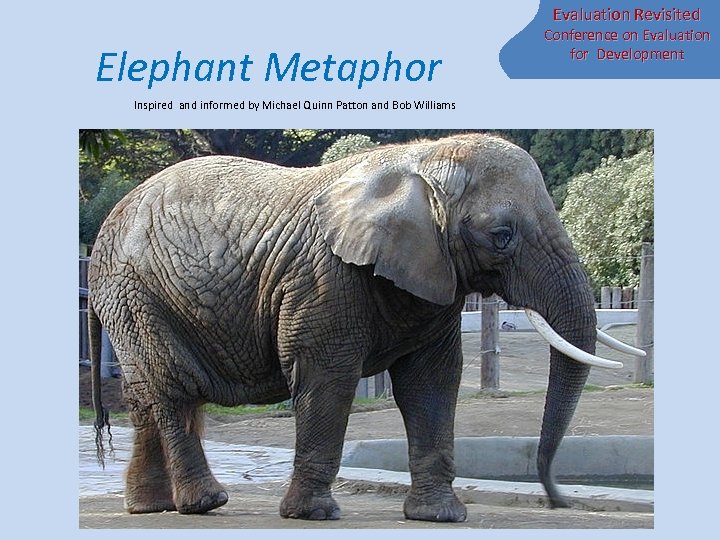 Evaluation Revisited Elephant Metaphor Inspired and informed by Michael Quinn Patton and Bob Williams Conference on Evaluation for Development
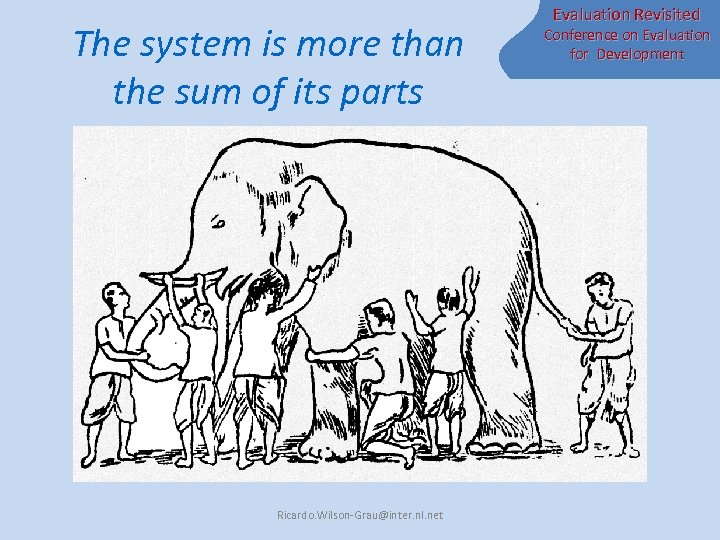 The system is more than the sum of its parts Ricardo. Wilson-Grau@inter. nl. net Evaluation Revisited Conference on Evaluation for Development
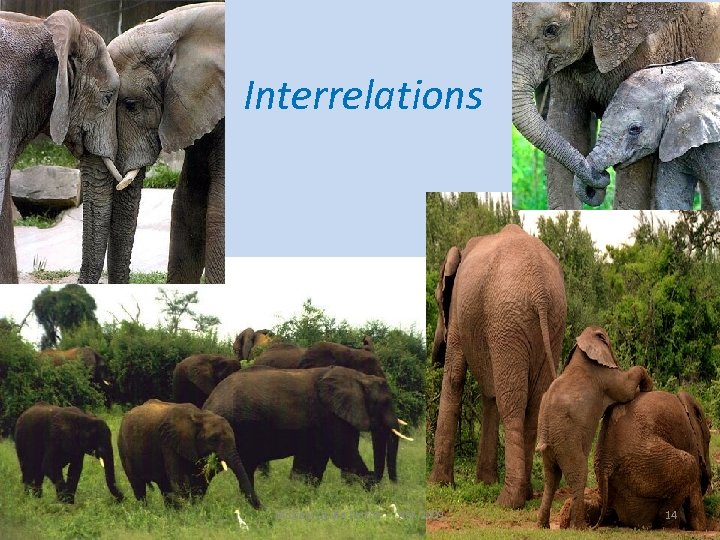 Interrelations Michael Quinn Patton AEA 2009 14
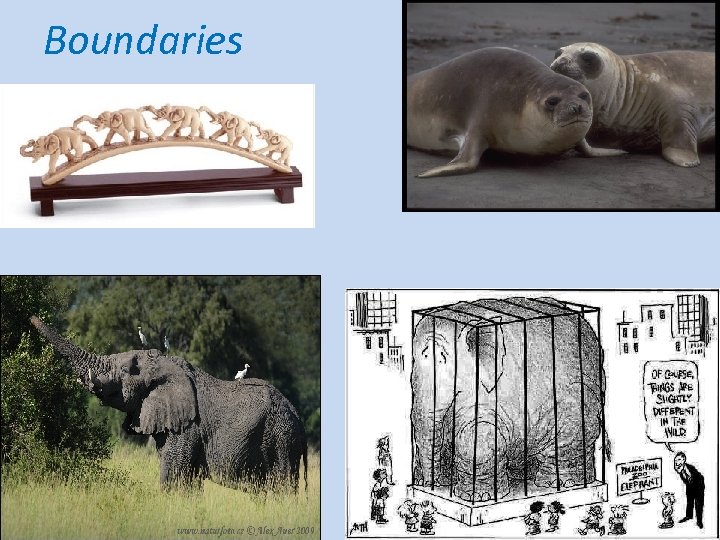 Boundaries
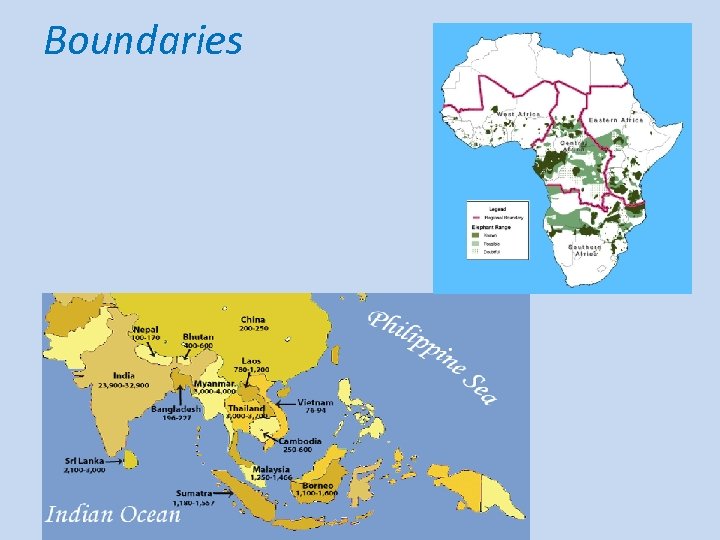 Boundaries
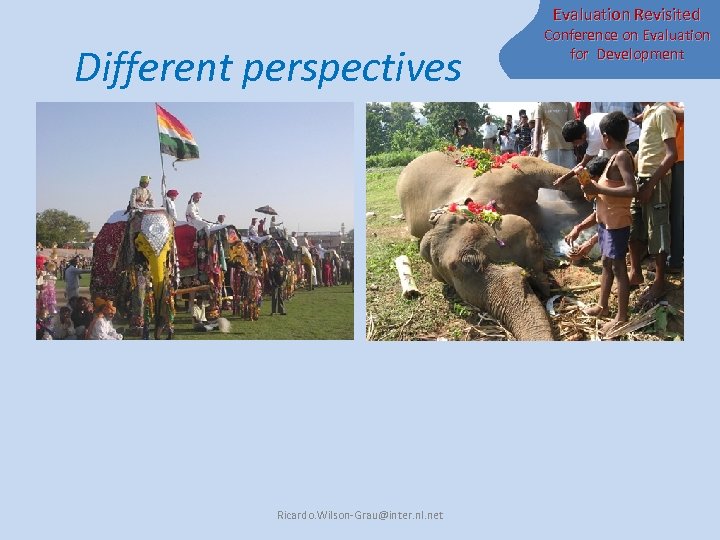 Evaluation Revisited Different perspectives Ricardo. Wilson-Grau@inter. nl. net Conference on Evaluation for Development
 Evaluation Revisited Conference on Evaluation for Development
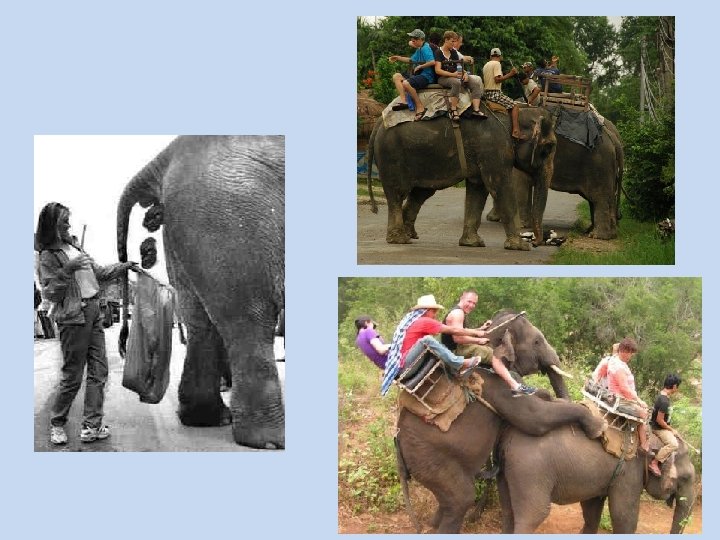
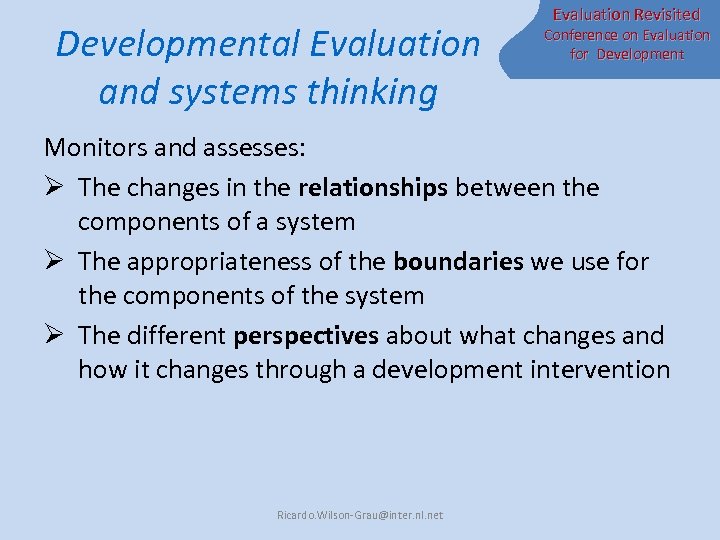 Developmental Evaluation and systems thinking Evaluation Revisited Conference on Evaluation for Development Monitors and assesses: Ø The changes in the relationships between the components of a system Ø The appropriateness of the boundaries we use for the components of the system Ø The different perspectives about what changes and how it changes through a development intervention Ricardo. Wilson-Grau@inter. nl. net
 Comparing traditional and Developmental Evaluation* Traditional programme evaluation tendencies in development interventions Evaluation Revisited Conference on Evaluation for Development Complexity-sensitive Developmental Evaluation in development interventions * These next slides are adapted from Exhibit 1. 2, Chapter 1, Michael Quinn Patton, Developmental Evaluation: Applying Complexity Concepts to Enhance Innovation and Use, Guilford Press, forthcoming 2010 Ricardo. Wilson-Grau@inter. nl. net
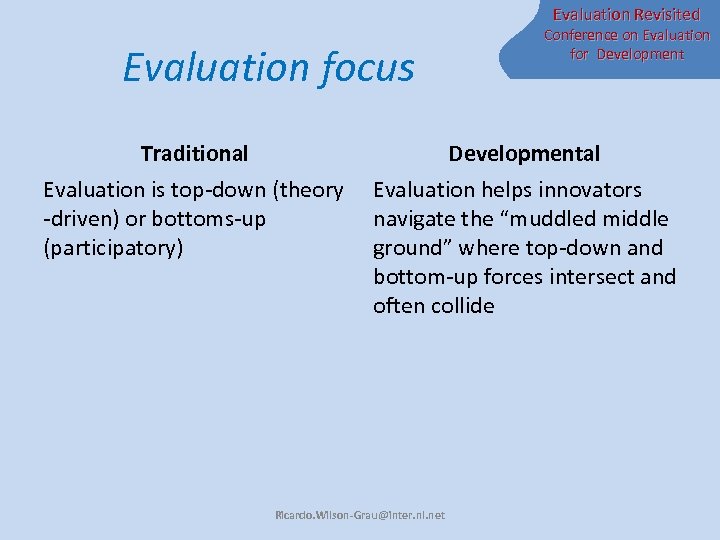 Evaluation Revisited Evaluation focus Conference on Evaluation for Development Traditional Developmental Evaluation is top-down (theory -driven) or bottoms-up (participatory) Evaluation helps innovators navigate the “muddled middle ground” where top-down and bottom-up forces intersect and often collide Ricardo. Wilson-Grau@inter. nl. net
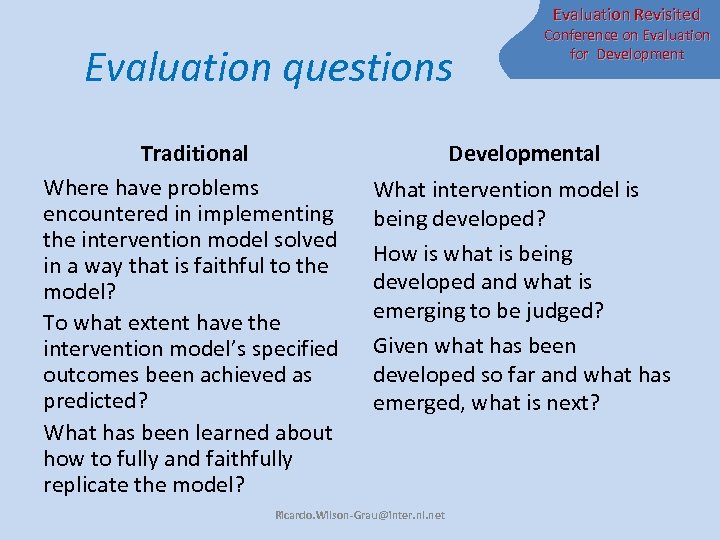 Evaluation Revisited Evaluation questions Traditional Where have problems encountered in implementing the intervention model solved in a way that is faithful to the model? To what extent have the intervention model’s specified outcomes been achieved as predicted? What has been learned about how to fully and faithfully replicate the model? Conference on Evaluation for Developmental What intervention model is being developed? How is what is being developed and what is emerging to be judged? Given what has been developed so far and what has emerged, what is next? Ricardo. Wilson-Grau@inter. nl. net
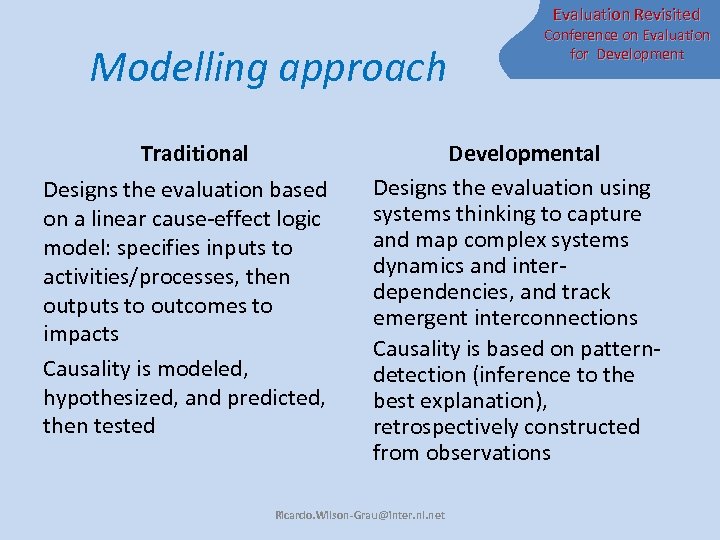 Evaluation Revisited Modelling approach Traditional Designs the evaluation based on a linear cause-effect logic model: specifies inputs to activities/processes, then outputs to outcomes to impacts Causality is modeled, hypothesized, and predicted, then tested Conference on Evaluation for Developmental Designs the evaluation using systems thinking to capture and map complex systems dynamics and interdependencies, and track emergent interconnections Causality is based on patterndetection (inference to the best explanation), retrospectively constructed from observations Ricardo. Wilson-Grau@inter. nl. net
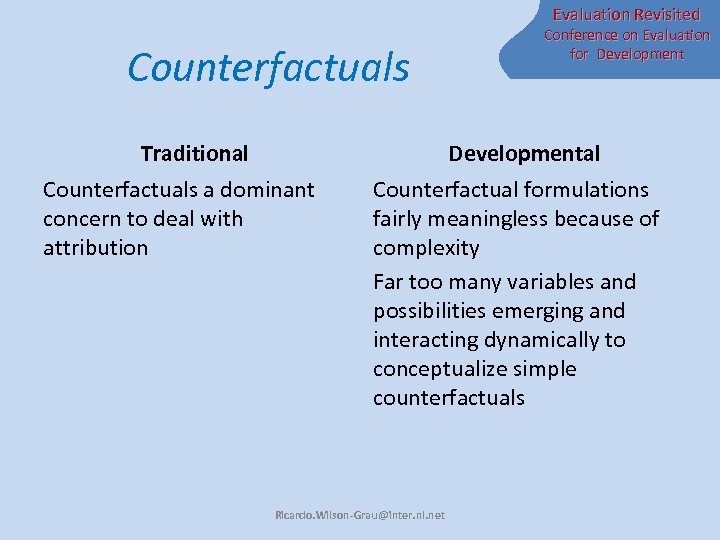 Evaluation Revisited Counterfactuals Traditional Conference on Evaluation for Developmental Counterfactuals a dominant concern to deal with attribution Counterfactual formulations fairly meaningless because of complexity Far too many variables and possibilities emerging and interacting dynamically to conceptualize simple counterfactuals Ricardo. Wilson-Grau@inter. nl. net
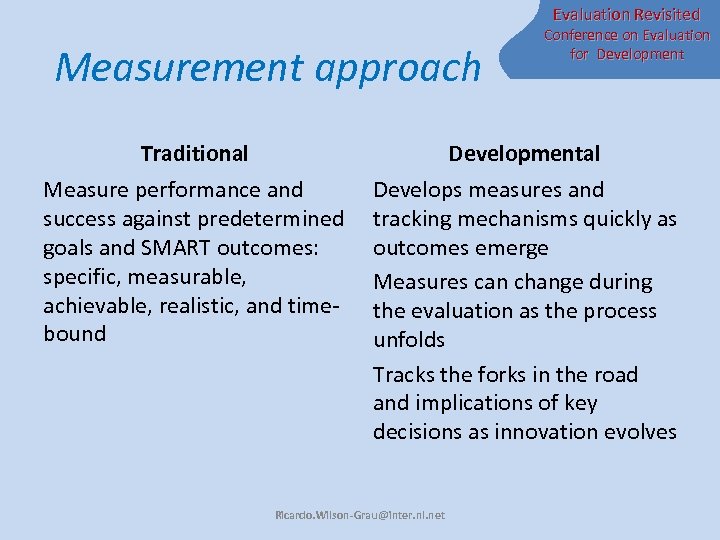 Evaluation Revisited Measurement approach Conference on Evaluation for Development Traditional Developmental Measure performance and success against predetermined goals and SMART outcomes: specific, measurable, achievable, realistic, and timebound Develops measures and tracking mechanisms quickly as outcomes emerge Measures can change during the evaluation as the process unfolds Tracks the forks in the road and implications of key decisions as innovation evolves Ricardo. Wilson-Grau@inter. nl. net
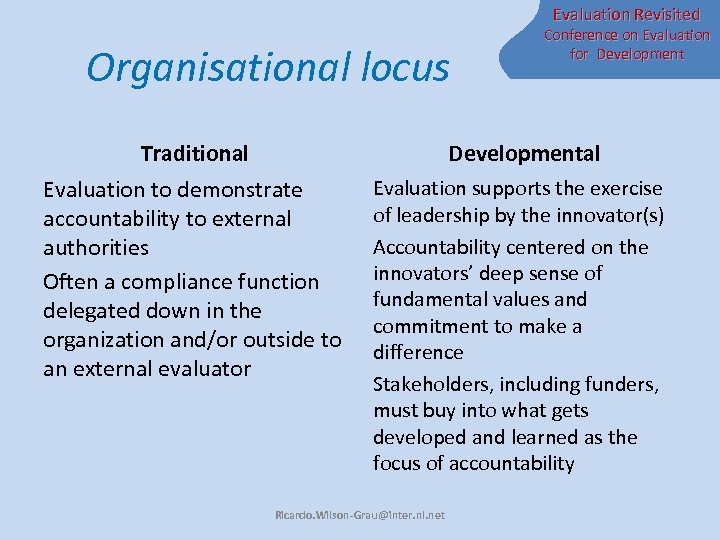 Evaluation Revisited Organisational locus Conference on Evaluation for Development Traditional Developmental Evaluation to demonstrate accountability to external authorities Often a compliance function delegated down in the organization and/or outside to an external evaluator Evaluation supports the exercise of leadership by the innovator(s) Accountability centered on the innovators’ deep sense of fundamental values and commitment to make a difference Stakeholders, including funders, must buy into what gets developed and learned as the focus of accountability Ricardo. Wilson-Grau@inter. nl. net
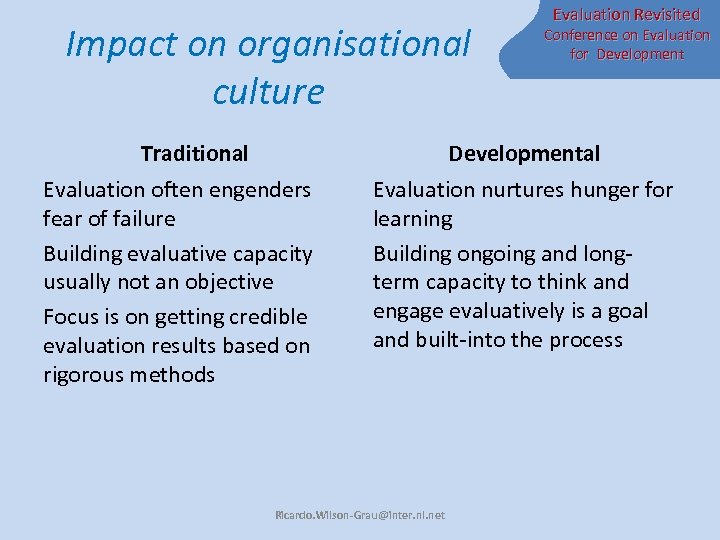 Impact on organisational culture Traditional Evaluation Revisited Conference on Evaluation for Developmental Evaluation often engenders fear of failure Building evaluative capacity usually not an objective Focus is on getting credible evaluation results based on rigorous methods Evaluation nurtures hunger for learning Building ongoing and longterm capacity to think and engage evaluatively is a goal and built-into the process Ricardo. Wilson-Grau@inter. nl. net
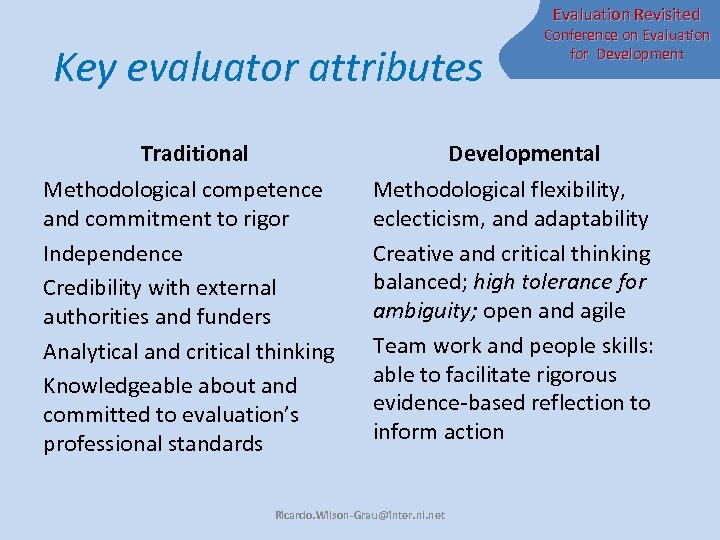 Evaluation Revisited Key evaluator attributes Traditional Conference on Evaluation for Developmental Methodological competence and commitment to rigor Independence Credibility with external authorities and funders Analytical and critical thinking Knowledgeable about and committed to evaluation’s professional standards Methodological flexibility, eclecticism, and adaptability Creative and critical thinking balanced; high tolerance for ambiguity; open and agile Team work and people skills: able to facilitate rigorous evidence-based reflection to inform action Ricardo. Wilson-Grau@inter. nl. net
 Evaluation Revisited Key evaluator attributes Traditional Methodological competence and commitment to rigor Independence Credibility with external authorities and funders Analytical and critical thinking Knowledgeable about and committed to evaluation’s professional standards Conference on Evaluation for Developmental Methodological flexibility, eclecticism, and adaptability Creative and critical thinking balanced; high tolerance for ambiguity; open and agile Team work and people skills: able to facilitate rigorous evidence-based reflection to inform action Knowledgeable about and committed to evaluation’s professional standards Ricardo. Wilson-Grau@inter. nl. net
 Evaluation Revisited Conference on Evaluation for Development When then is Developmental Evaluation useful? Ricardo. Wilson-Grau@inter. nl. net
 My simple-complex acid test Evaluation Revisited Conference on Evaluation for Development If you are confident that you know the relations of cause and effect between what you propose to do and what the results will be, you face a “simple” situation. Developmental Evaluation is not for you. If, however, you cannot say with certainty what you will achieve, but are confident that by doing what feels right you will find the way forward to the change you want to see, your challenge is “complex”. This situation is ripe for Developmental Evaluation. Ricardo. Wilson-Grau@inter. nl. net
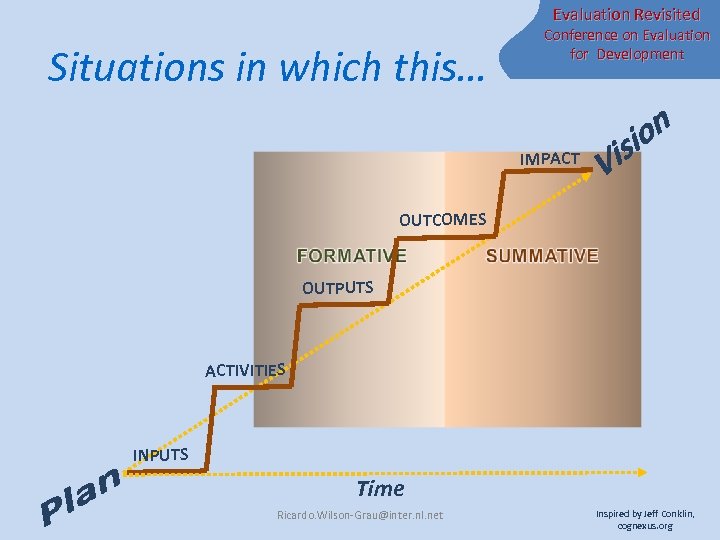 Evaluation Revisited Situations in which this… Conference on Evaluation for Development IMPACT OUTCOMES OUTPUTS ACTIVITIES INPUTS Time Ricardo. Wilson-Grau@inter. nl. net Inspired by Jeff Conklin, cognexus. org
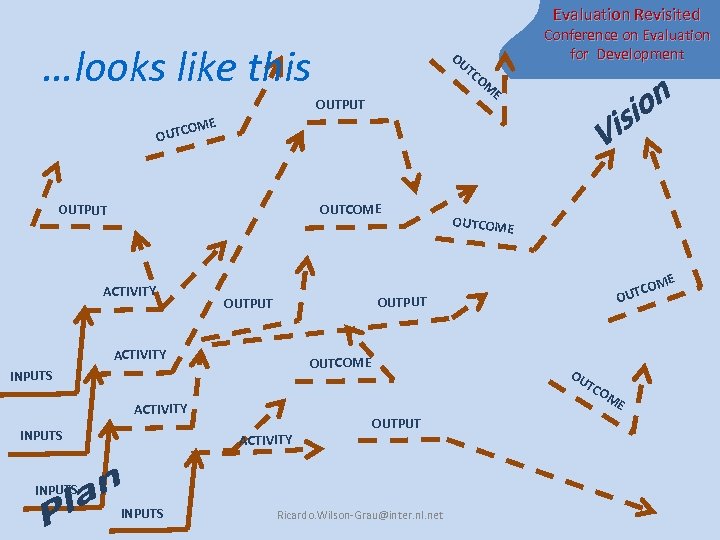 Evaluation Revisited …looks like this OU TC Conference on Evaluation for Development OM E OUTPUT ME O OUTCOME OUTPUT ACTIVITY OUTCOME INPUTS OU TC ACTIVITY INPUTS ACTIVITY OUTPUT INPUTS Ricardo. Wilson-Grau@inter. nl. net E OM C OUT OM E
 Evaluation Revisited In sum Conference on Evaluation for Developmental evaluation can serve you well when you are in a complex, dynamic situation in which you think you have a solution but do not know if it will solve the problem at hand. The annex presents five types of Developmental Evaluation that further specifies when this mode of evaluation can be useful. Ricardo. Wilson-Grau@inter. nl. net
 Evaluation Revisited Conference on Evaluation for Development Many thanks! Do you have questions? RICARDO WILSON-GRAU CONSULTING Oude Singel 184, 2312 RH Leiden, Netherlands Rua Marechal Marques Porto 2/402, Tijuca, Rio de Janeiro, CEP 20270 -260, Brasil Tels: 1 347 404 5379; 55 21 2284 6889 Skype: ricardowilsongrau
 Evaluation Revisited Conference on Evaluation for Development ANNEX 1 Five types of Developmental Evaluation These next slides present five types of Developmental Evaluation adapted from Chapter 10 of Michael Quinn Patton’s book. Ricardo. Wilson-Grau@inter. nl. net
 Evaluation Revisited 1. Ongoing development Conference on Evaluation for Development You have visionary hopes and emerging ideas that you want to develop into an intervention Ricardo. Wilson-Grau@inter. nl. net
 2. Pre-formative development Evaluation Revisited Conference on Evaluation for Development You have an innovative intervention that you want to explore and shape into a potential model to the point where it is ready for traditional formative and eventually summative evaluation Ricardo. Wilson-Grau@inter. nl. net
 3. Applying proven principles Evaluation Revisited Conference on Evaluation for Development You have an intervention model that worked and want to adapt its general principles to a new context navigating top-down and bottom-up forces for change Ricardo. Wilson-Grau@inter. nl. net
 Evaluation Revisited 4. Major systems change Conference on Evaluation for Development You want to project a successful intervention in one system to a different system – e. g. , use a successful village market innovation (economic system) to change national laws and regulations (in the political system) Ricardo. Wilson-Grau@inter. nl. net
 Evaluation Revisited 5. Rapid response Conference on Evaluation for Development In the midst of a sudden major change or a crisis, you want to explore real time solutions and generating innovative and helpful interventions for those in need Ricardo. Wilson-Grau@inter. nl. net
 Evaluation Revisited Annex 2 Conference on Evaluation for Development Sources of further information Gamble, J. A. (2008). A Developmental Evaluation Primer. Montréal: The J. W. Mc. Connell Family Foundation Patton, M. Q. (1994). Developmental Evaluation: Applying Complexity Concepts to Enhance Innovation and Use, Guilford Press, June 2010 _______“Developmental evaluation”. Evaluation Practice 15 (3), 311 -20. Wehipeihana, N. & Mc. Kegg, K. (2009). “Developmental evaluation in an indigenous context: Reflections on the journey to date. ” American Evaluation Association Conference, Orlando, Florida, November 14. Westley, F. , B. Zimmerman & M. Q. Patton. (2006). Getting To Maybe: How the World is Changed. Toronto: Random House Canada.