 Скачать презентацию DEVELOPMENT OF RAILWAY LINES AND YARDS IN BUDAPEST
a509b268da37426716bb4d6e9ebf5b0e.ppt
- Количество слайдов: 49



DEVELOPMENT OF RAILWAY LINES AND YARDS IN BUDAPEST Fleischer Tamás Institute for World Economics Centre of Economic and Regional Studies Hungarian Academy of Sciences http: //www. vki. hu/~tfleisch/ tfleischer@vki. hu Urban Policies Design Laboratory, Politecnico di Milano Master Degree course in Urban Planning and Territorial Policies Study trip Budapest in the topic of ‘Dismissed railway yards’ Metropolitan Research Centre and Budapest University of Technology and Economics Budapest, 4 -5 April, 2013.
DEVELOPMENT OF RAILWAY LINES AND YARDS IN BUDAPEST 4 A short history of the Hungarian railways 4 A short history of the Budapest rail lines 4 About the role of rails in the freight transport of Budapest 4 A case: the once Danube-side Fright Station and its place
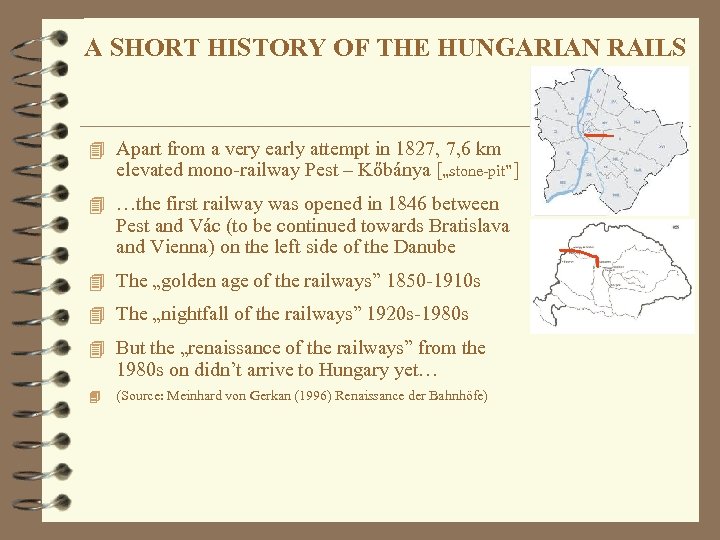
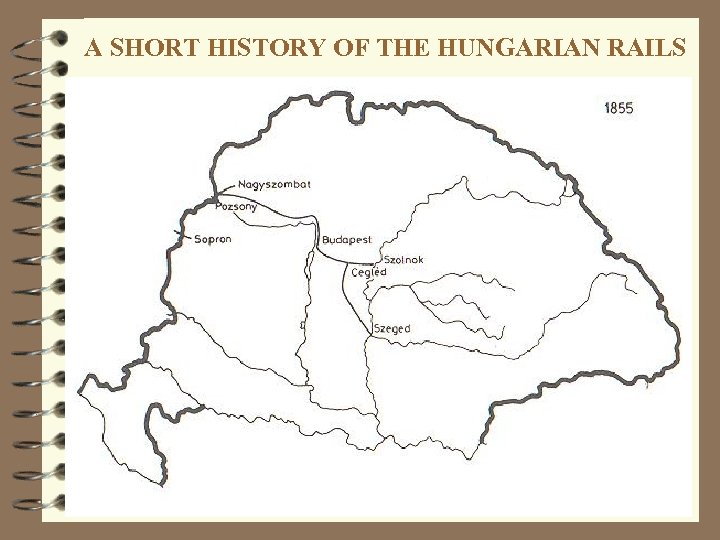
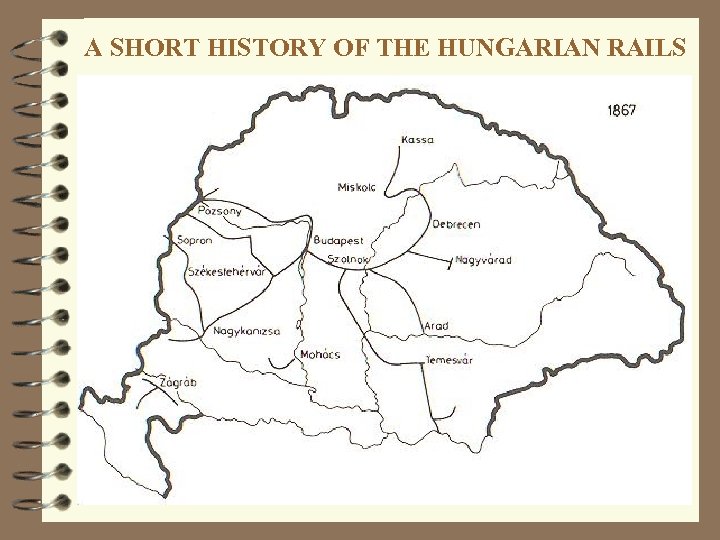
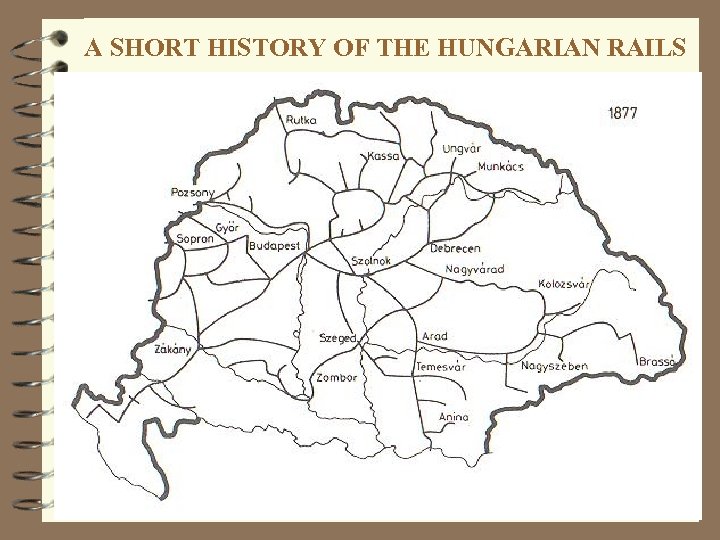
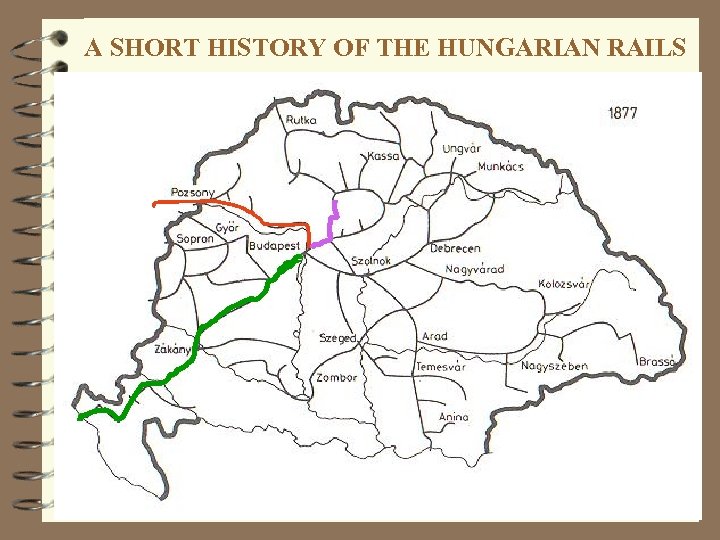
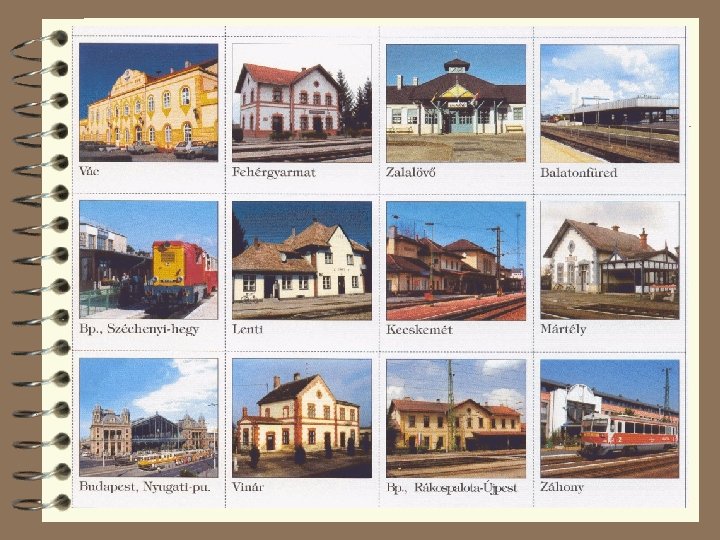
A SHORT HISTORY OF THE HUNGARIAN RAILS 4 Apart from a very early attempt in 1827, 7, 6 km elevated mono-railway Pest – Kőbánya [„stone-pit”] 4 …the first railway was opened in 1846 between Pest and Vác (to be continued towards Bratislava and Vienna) on the left side of the Danube 4 The „golden age of the railways” 1850 -1910 s 4 The „nightfall of the railways” 1920 s-1980 s 4 But the „renaissance of the railways” from the 1980 s on didn’t arrive to Hungary yet… 4 (Source: Meinhard von Gerkan (1996) Renaissance der Bahnhöfe)
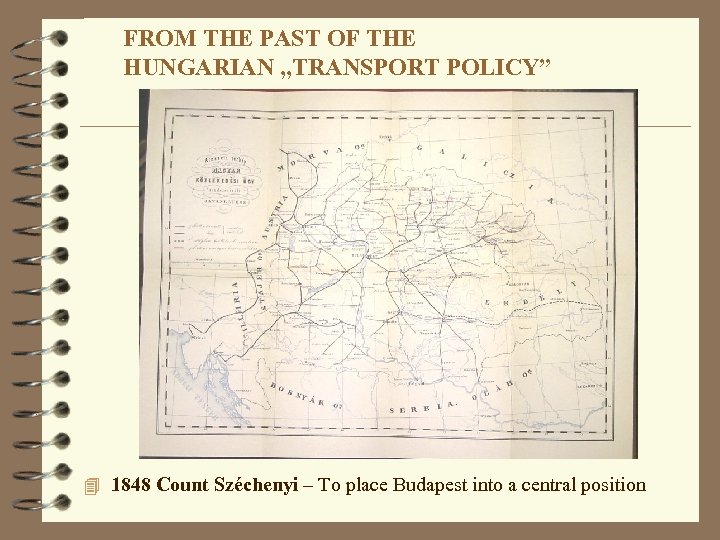
FROM THE PAST OF THE HUNGARIAN „TRANSPORT POLICY” 4 1848 Count Széchenyi – To place Budapest into a central position
A SHORT HISTORY OF THE HUNGARIAN RAILS
A SHORT HISTORY OF THE HUNGARIAN RAILS
A SHORT HISTORY OF THE HUNGARIAN RAILS
A SHORT HISTORY OF THE HUNGARIAN RAILS
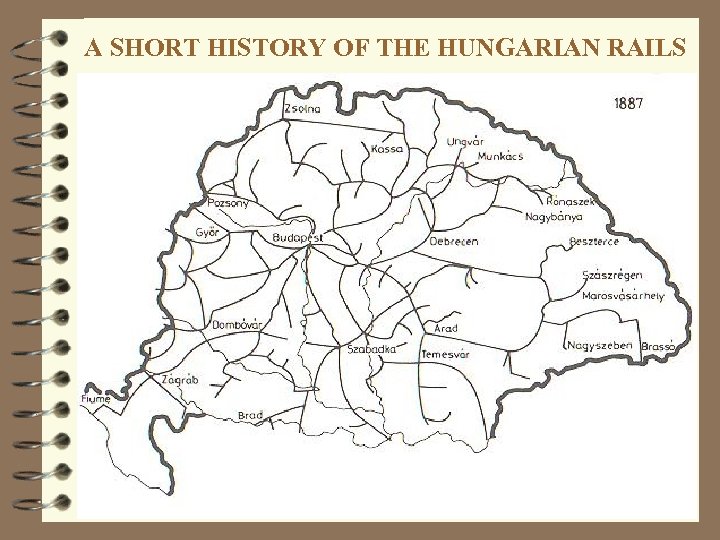
A SHORT HISTORY OF THE HUNGARIAN RAILS
„THE MESSAGE” OF THE RAILWAYS Identity, Togetherness, Possibility to access, To become part of a network All these functions gradually were emptied in the period of the modernisation.
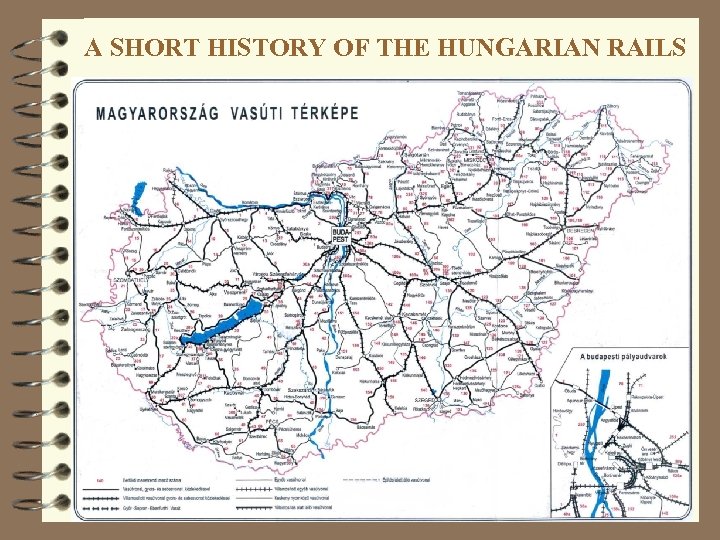
A SHORT HISTORY OF THE HUNGARIAN RAILS
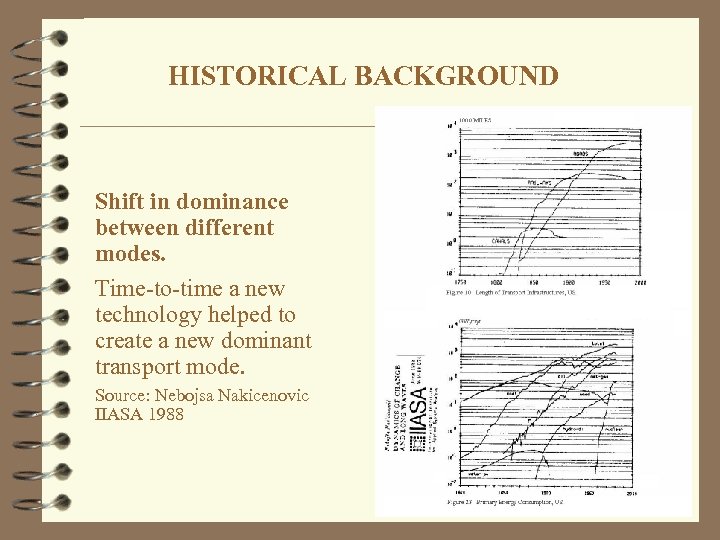
HISTORICAL BACKGROUND Shift in dominance between different modes. Time-to-time a new technology helped to create a new dominant transport mode. Source: Nebojsa Nakicenovic IIASA 1988
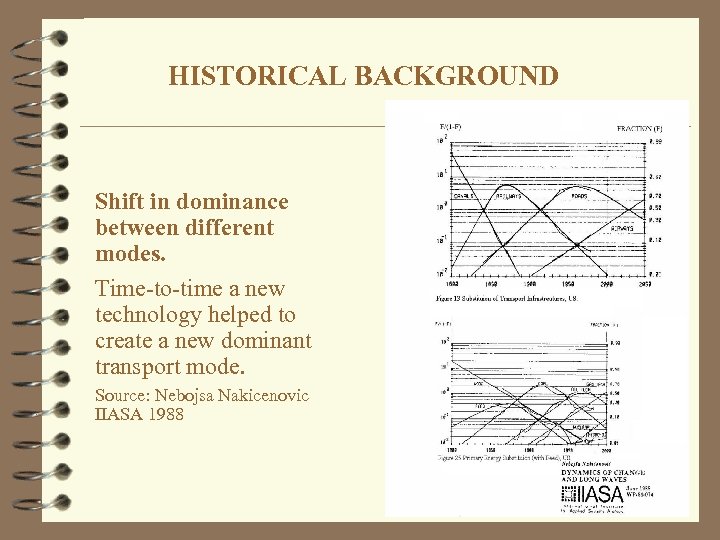
HISTORICAL BACKGROUND Shift in dominance between different modes. Time-to-time a new technology helped to create a new dominant transport mode. Source: Nebojsa Nakicenovic IIASA 1988
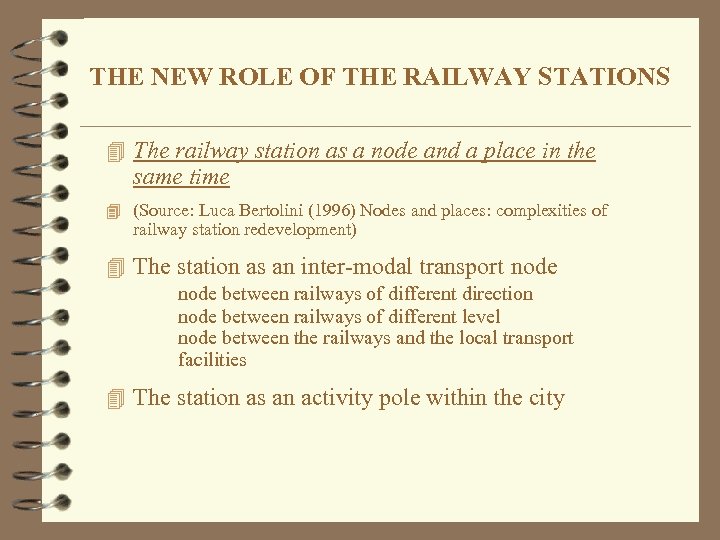
THE NEW ROLE OF THE RAILWAY STATIONS 4 The railway station as a node and a place in the same time 4 (Source: Luca Bertolini (1996) Nodes and places: complexities of railway station redevelopment) 4 The station as an inter-modal transport node between railways of different direction node between railways of different level node between the railways and the local transport facilities 4 The station as an activity pole within the city
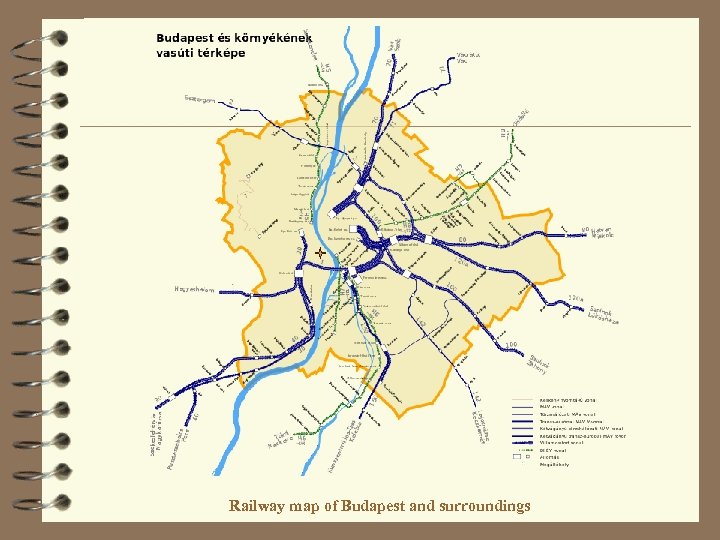
Railway map of Budapest and surroundings
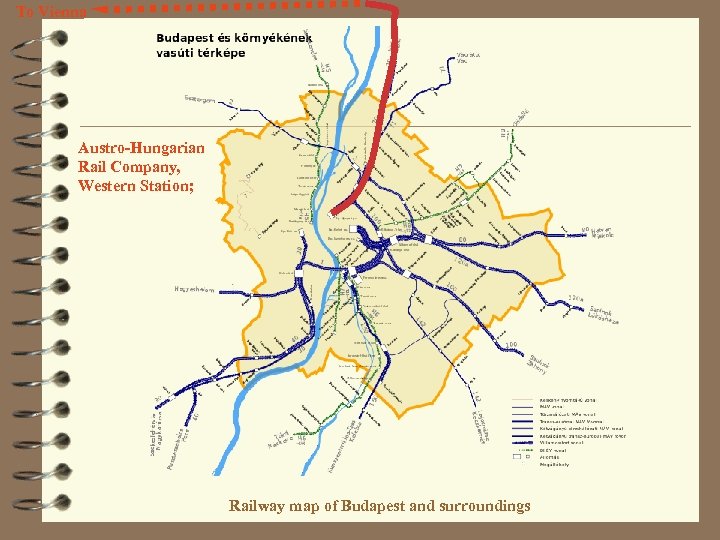
To Vienna Austro-Hungarian Rail Company, Western Station; Railway map of Budapest and surroundings
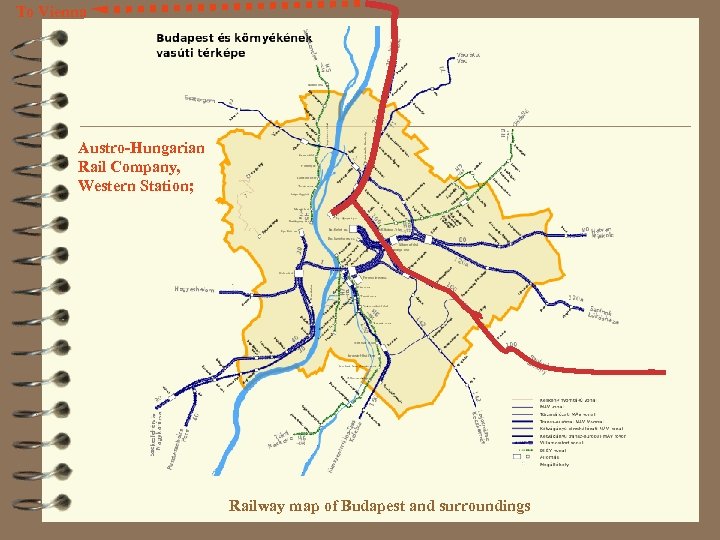
To Vienna Austro-Hungarian Rail Company, Western Station; Railway map of Budapest and surroundings
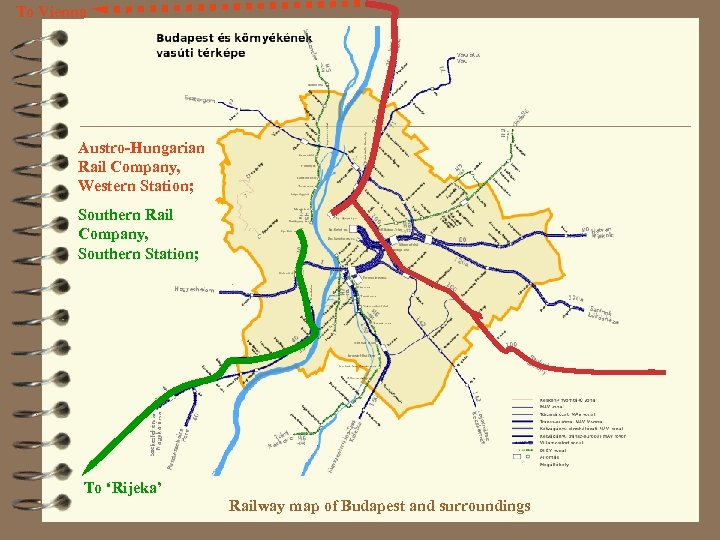
To Vienna Austro-Hungarian Rail Company, Western Station; Southern Rail Company, Southern Station; To ‘Rijeka’ Railway map of Budapest and surroundings
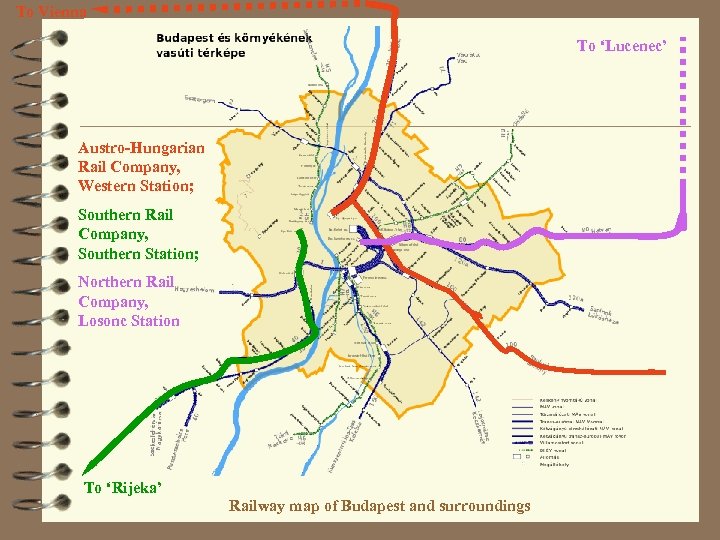
To Vienna To ‘Lucenec’ Austro-Hungarian Rail Company, Western Station; Southern Rail Company, Southern Station; Northern Rail Company, Losonc Station To ‘Rijeka’ Railway map of Budapest and surroundings
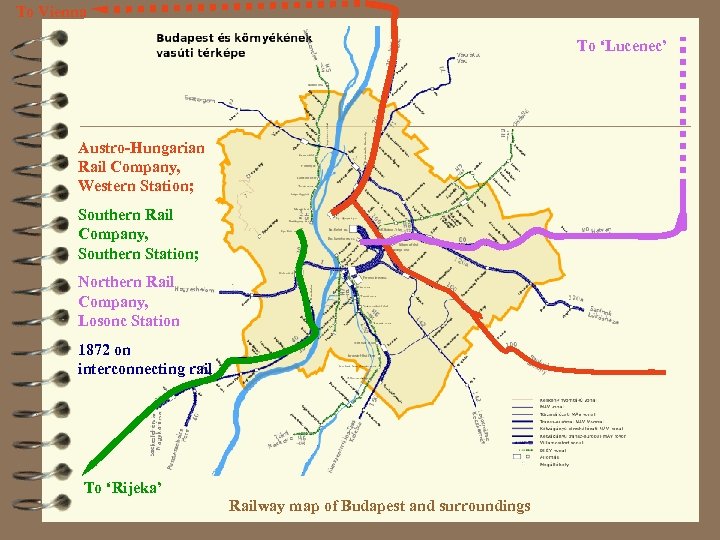
To Vienna To ‘Lucenec’ Austro-Hungarian Rail Company, Western Station; Southern Rail Company, Southern Station; Northern Rail Company, Losonc Station 1872 on interconnecting rail To ‘Rijeka’ Railway map of Budapest and surroundings
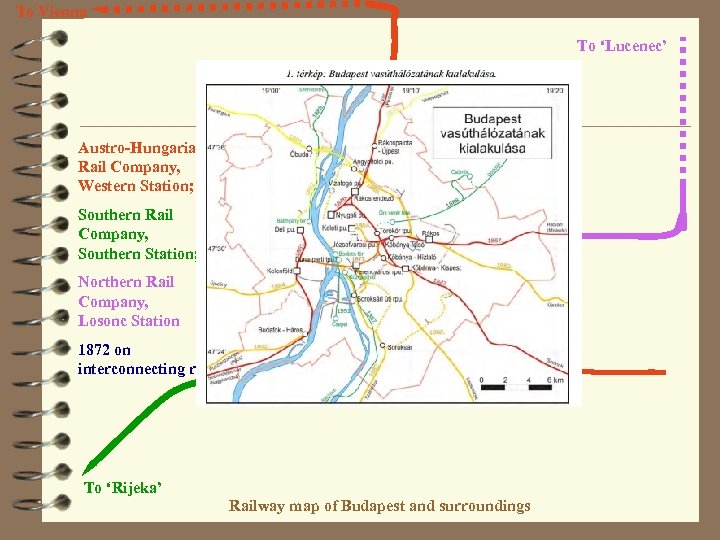
To Vienna To ‘Lucenec’ Austro-Hungarian Rail Company, Western Station; Southern Rail Company, Southern Station; Northern Rail Company, Losonc Station 1872 on interconnecting rail To ‘Rijeka’ Railway map of Budapest and surroundings
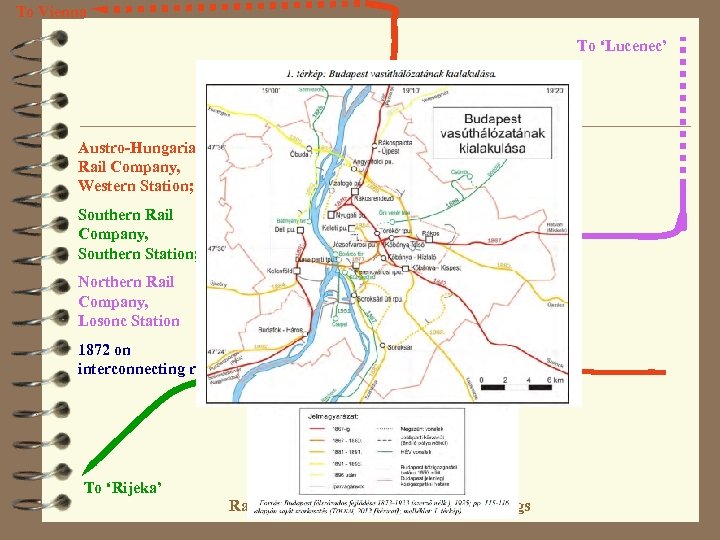
To Vienna To ‘Lucenec’ Austro-Hungarian Rail Company, Western Station; Southern Rail Company, Southern Station; Northern Rail Company, Losonc Station 1872 on interconnecting rail To ‘Rijeka’ Railway map of Budapest and surroundings
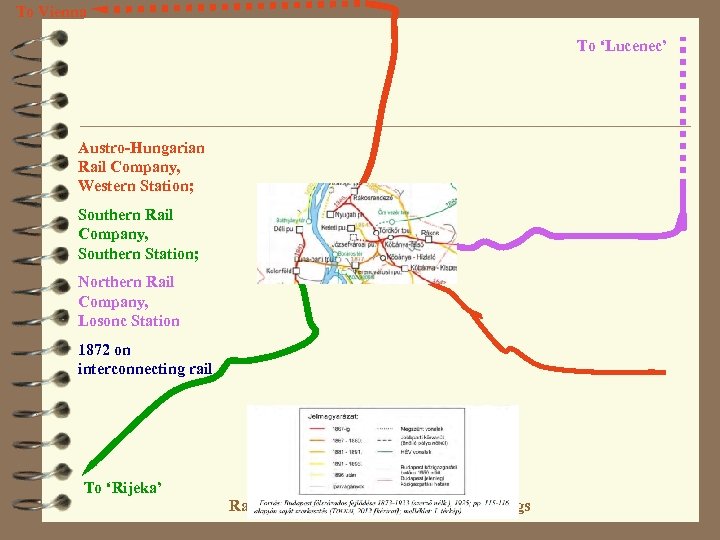
To Vienna To ‘Lucenec’ Austro-Hungarian Rail Company, Western Station; Southern Rail Company, Southern Station; Northern Rail Company, Losonc Station 1872 on interconnecting rail To ‘Rijeka’ Railway map of Budapest and surroundings
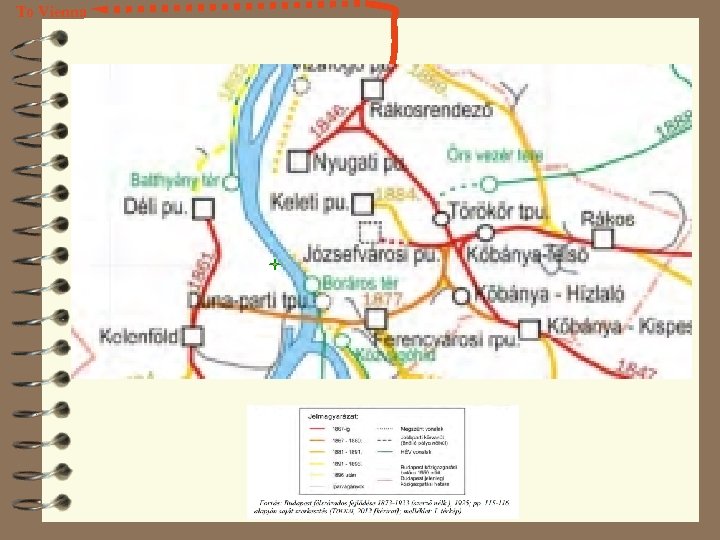
To Vienna Austro-Hungarian Rail Company, Western Station; Southern Rail Company, Southern Station; Northern Rail Company, Losonc Station 1872 on interconnecting rail
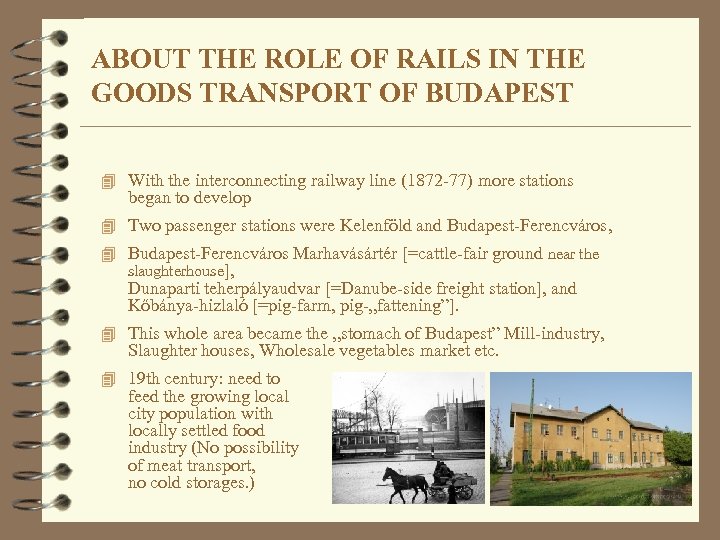
ABOUT THE ROLE OF RAILS IN THE GOODS TRANSPORT OF BUDAPEST 4 With the interconnecting railway line (1872 -77) more stations began to develop 4 Two passenger stations were Kelenföld and Budapest-Ferencváros, 4 Budapest-Ferencváros Marhavásártér [=cattle-fair ground near the slaughterhouse], Dunaparti teherpályaudvar [=Danube-side freight station], and Kőbánya-hizlaló [=pig-farm, pig-„fattening”]. 4 This whole area became the „stomach of Budapest” Mill-industry, Slaughter houses, Wholesale vegetables market etc. 4 19 th century: need to feed the growing local city population with locally settled food industry (No possibility of meat transport, no cold storages. )
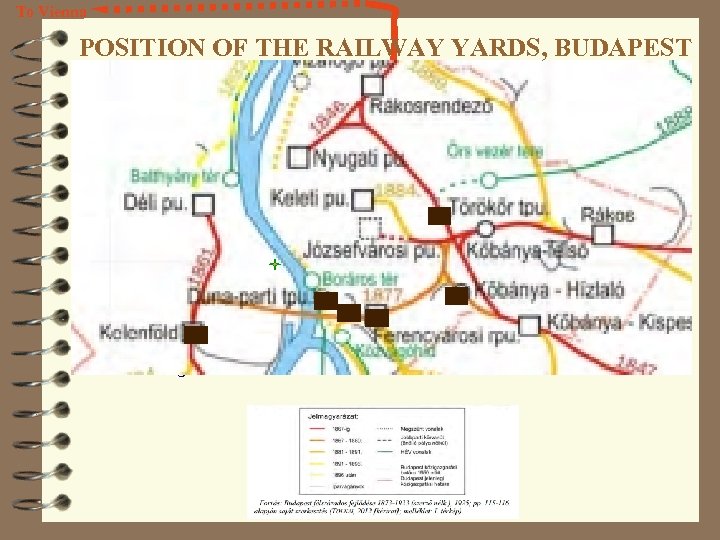
To Vienna POSITION OF THE RAILWAY YARDS, BUDAPEST Austro-Hungarian Rail Company, Western Station; Southern Rail Company, Southern Station; Northern Rail Company, Losonc Station 1872 on interconnecting rail
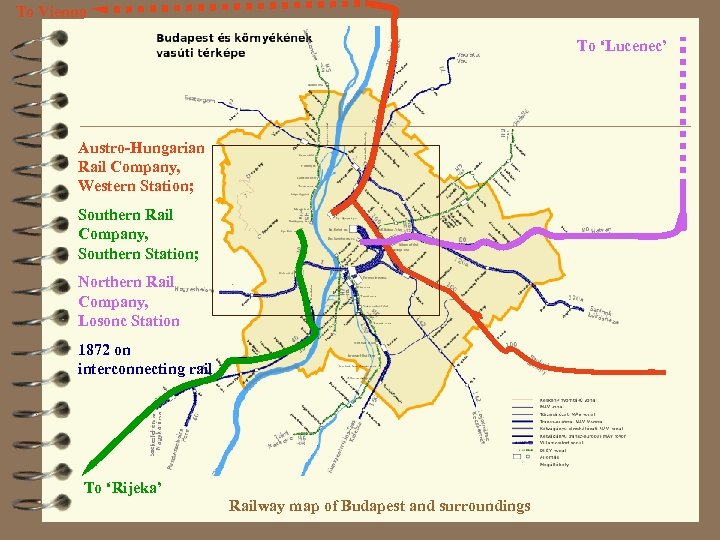
To Vienna To ‘Lucenec’ Austro-Hungarian Rail Company, Western Station; Southern Rail Company, Southern Station; Northern Rail Company, Losonc Station 1872 on interconnecting rail To ‘Rijeka’ Railway map of Budapest and surroundings
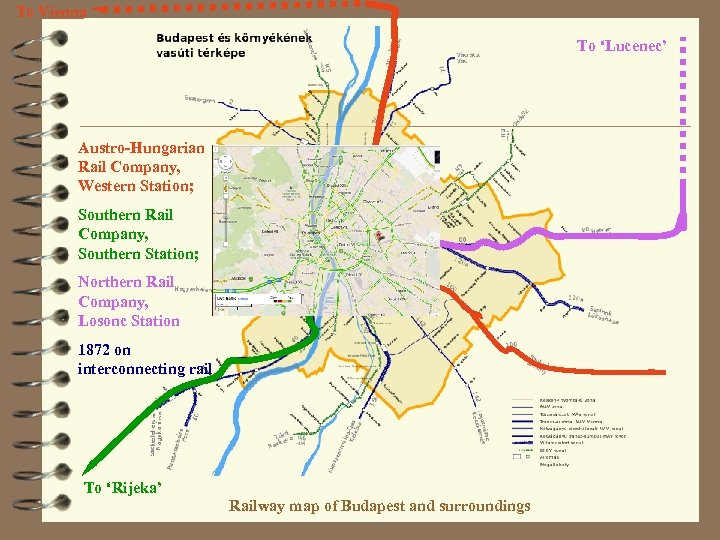
To Vienna To ‘Lucenec’ Austro-Hungarian Rail Company, Western Station; Southern Rail Company, Southern Station; Northern Rail Company, Losonc Station 1872 on interconnecting rail To ‘Rijeka’ Railway map of Budapest and surroundings
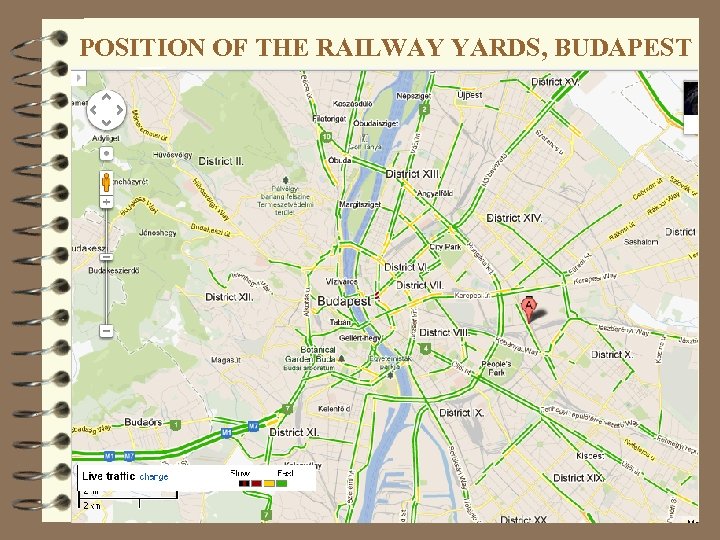
POSITION OF THE RAILWAY YARDS, BUDAPEST
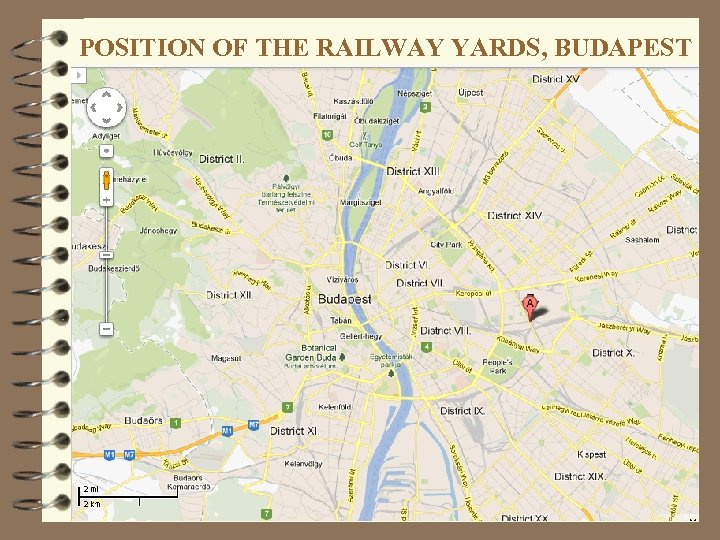
POSITION OF THE RAILWAY YARDS, BUDAPEST
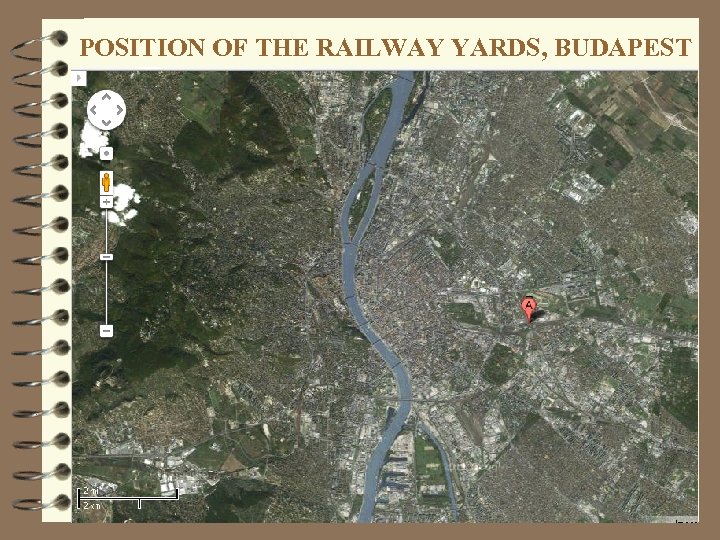
POSITION OF THE RAILWAY YARDS, BUDAPEST
A CASE: THE ONCE DANUBE-SIDE RAILWAY YARD AND THE USE OF ITS PLACE 4 Tolnai Gábor (2012) Városi vasúti területek változásának és jelenlegi környezeti állapotának vizsgálata légifelvételek alapján. [=Analysis of the present environmental state and changement of urban railway territories using aereal photos] RS&GIS, Vol. II. No. 2. http: //rsgis. hu/index. php/component/content/article/152 4 „[R]ecent and archive aerial photographs can be considered as ideal visual resources to follow and map the development and decline of railway zones, meanwhile actually available large-scale photos make possible to analyze and plot the environmental condition of these areas or to estimate the level of some special aspects of pollution. This paper deals with some possible methods of the above-presented survey. The base of the project was the trainee program of Interspect Kft, and the analyzed aerial photos are gathered from the Archive of the Institute and Museum of Military History and the database of Interspect Kft. The selected area is the neighborhood of Soroksári út, which was one of the most important concentrations of industrial and railway zones of Budapest. ”
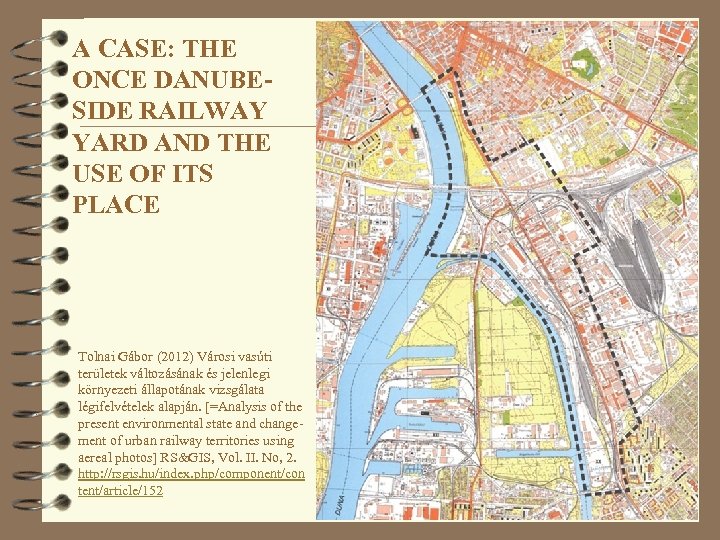
A CASE: THE ONCE DANUBESIDE RAILWAY YARD AND THE USE OF ITS PLACE Tolnai Gábor (2012) Városi vasúti területek változásának és jelenlegi környezeti állapotának vizsgálata légifelvételek alapján. [=Analysis of the present environmental state and changement of urban railway territories using aereal photos] RS&GIS, Vol. II. No, 2. http: //rsgis. hu/index. php/component/con tent/article/152
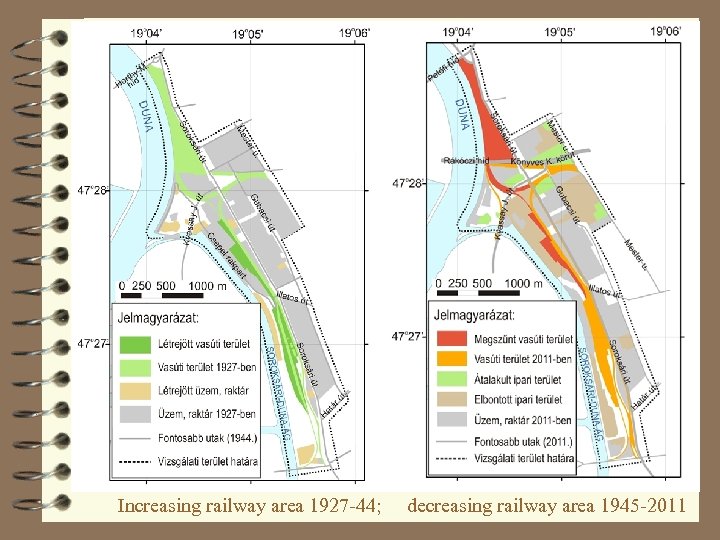
Increasing railway area 1927 -44; decreasing railway area 1945 -2011
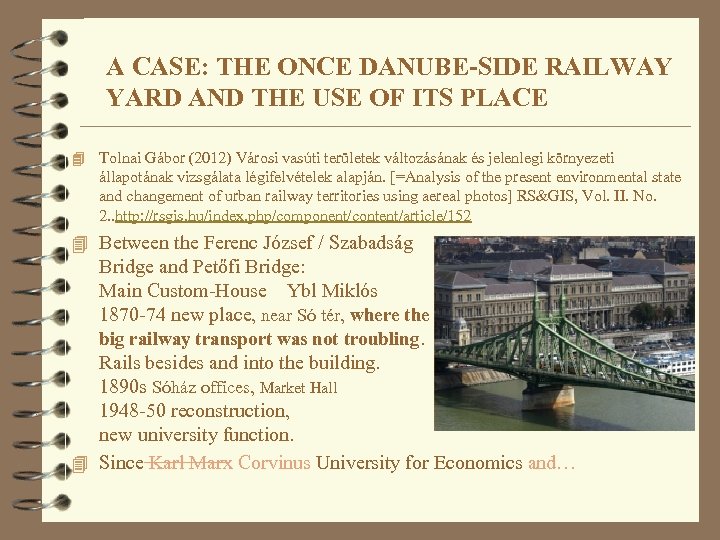
A CASE: THE ONCE DANUBE-SIDE RAILWAY YARD AND THE USE OF ITS PLACE 4 Tolnai Gábor (2012) Városi vasúti területek változásának és jelenlegi környezeti állapotának vizsgálata légifelvételek alapján. [=Analysis of the present environmental state and changement of urban railway territories using aereal photos] RS&GIS, Vol. II. No. 2. . http: //rsgis. hu/index. php/component/content/article/152 4 Between the Ferenc József / Szabadság Bridge and Petőfi Bridge: Main Custom-House Ybl Miklós 1870 -74 new place, near Só tér, where the big railway transport was not troubling. Rails besides and into the building. 1890 s Sóház offices, Market Hall 1948 -50 reconstruction, new university function. 4 Since Karl Marx Corvinus University for Economics and…
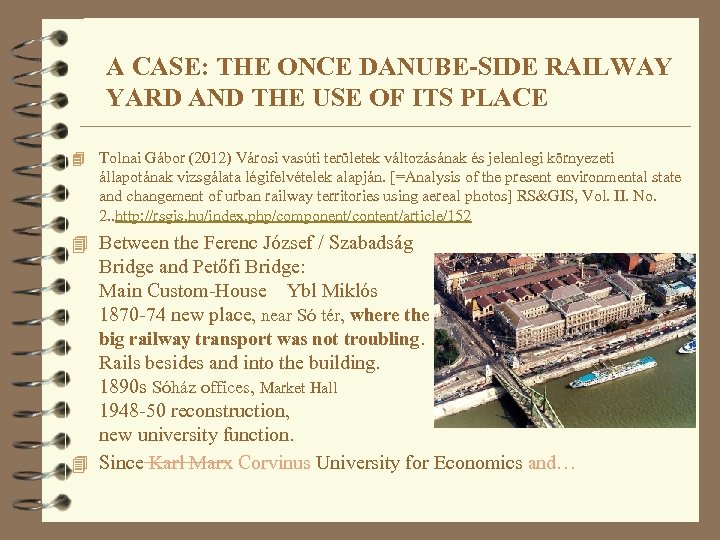
A CASE: THE ONCE DANUBE-SIDE RAILWAY YARD AND THE USE OF ITS PLACE 4 Tolnai Gábor (2012) Városi vasúti területek változásának és jelenlegi környezeti állapotának vizsgálata légifelvételek alapján. [=Analysis of the present environmental state and changement of urban railway territories using aereal photos] RS&GIS, Vol. II. No. 2. . http: //rsgis. hu/index. php/component/content/article/152 4 Between the Ferenc József / Szabadság Bridge and Petőfi Bridge: Main Custom-House Ybl Miklós 1870 -74 new place, near Só tér, where the big railway transport was not troubling. Rails besides and into the building. 1890 s Sóház offices, Market Hall 1948 -50 reconstruction, new university function. 4 Since Karl Marx Corvinus University for Economics and…
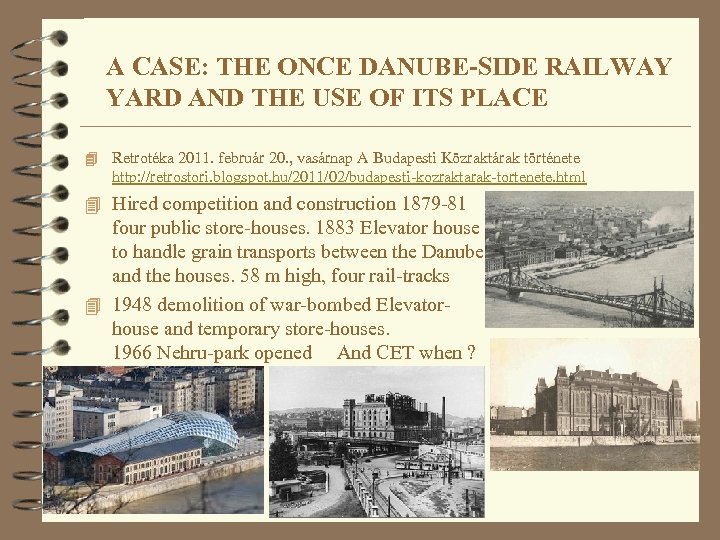
A CASE: THE ONCE DANUBE-SIDE RAILWAY YARD AND THE USE OF ITS PLACE 4 Retrotéka 2011. február 20. , vasárnap A Budapesti Közraktárak története http: //retrostori. blogspot. hu/2011/02/budapesti-kozraktarak-tortenete. html 4 Hired competition and construction 1879 -81 four public store-houses. 1883 Elevator house to handle grain transports between the Danube and the houses. 58 m high, four rail-tracks 4 1948 demolition of war-bombed Elevatorhouse and temporary store-houses. 1966 Nehru-park opened And CET when ?
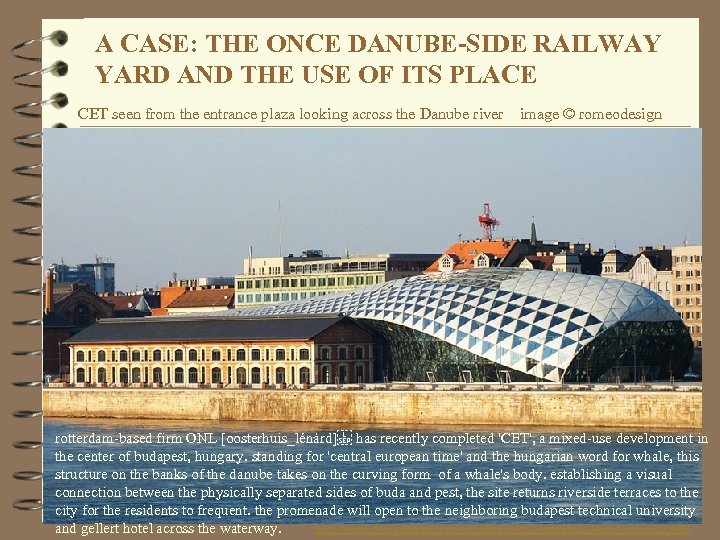
A CASE: THE ONCE DANUBE-SIDE RAILWAY YARD AND THE USE OF ITS PLACE CET seen from the entrance plaza looking across the Danube river image © romeodesign rotterdam-based firm ONL [oosterhuis_lénárd] has recently completed 'CET', a mixed-use development in the center of budapest, hungary. standing for 'central european time' and the hungarian word for whale, this structure on the banks of the danube takes on the curving form of a whale's body. establishing a visual connection between the physically separated sides of buda and pest, the site returns riverside terraces to the city for the residents to frequent. the promenade will open to the neighboring budapest technical university and gellert hotel across the waterway. http: //www. designboom. com/architecture/onl-oosterhuis-lenard-cet-budapest/
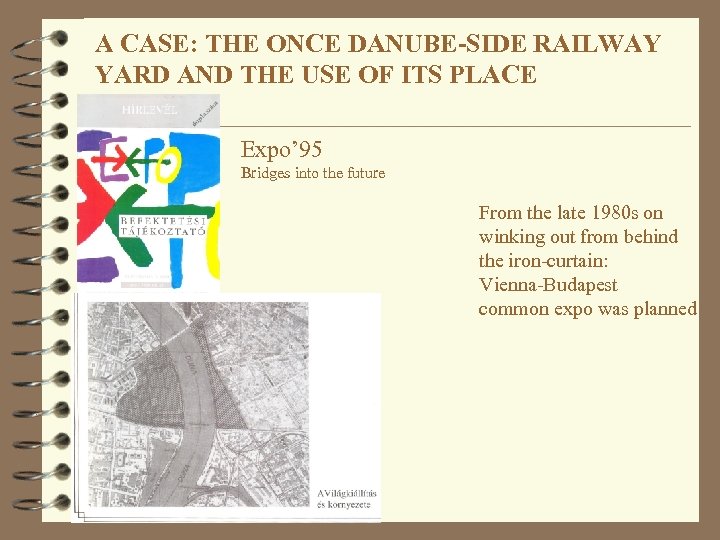
A CASE: THE ONCE DANUBE-SIDE RAILWAY YARD AND THE USE OF ITS PLACE Expo’ 95 Bridges into the future From the late 1980 s on winking out from behind the iron-curtain: Vienna-Budapest common expo was planned
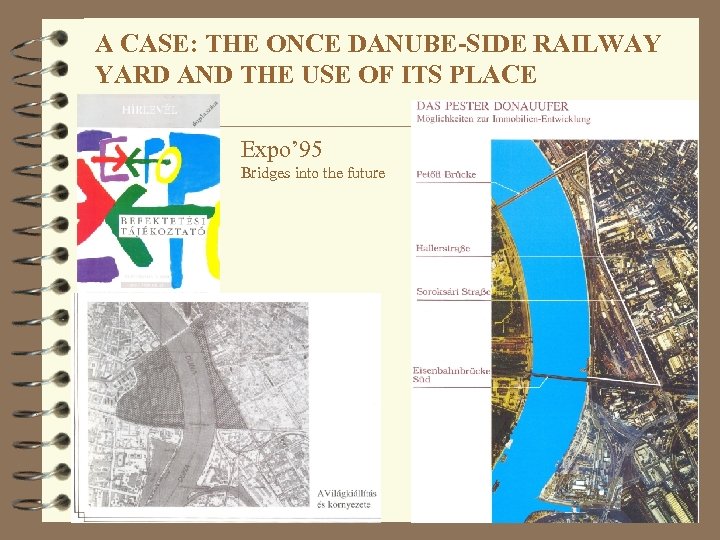
A CASE: THE ONCE DANUBE-SIDE RAILWAY YARD AND THE USE OF ITS PLACE Expo’ 95 Bridges into the future
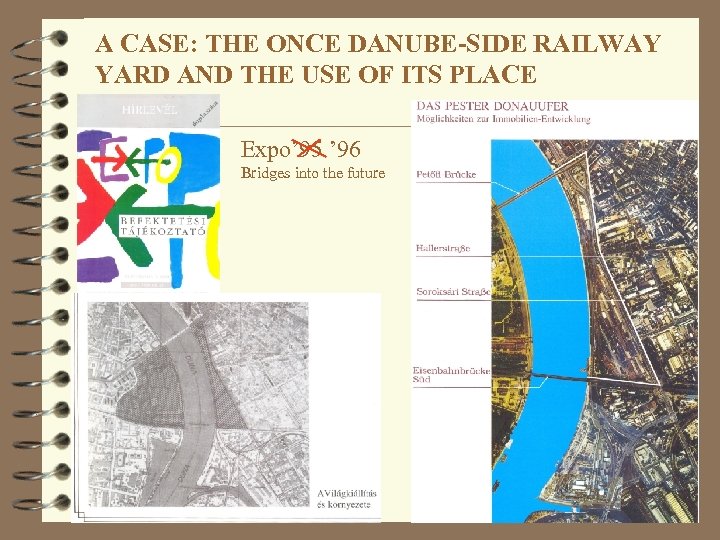
A CASE: THE ONCE DANUBE-SIDE RAILWAY YARD AND THE USE OF ITS PLACE Expo’ 95 ’ 96 Bridges into the future
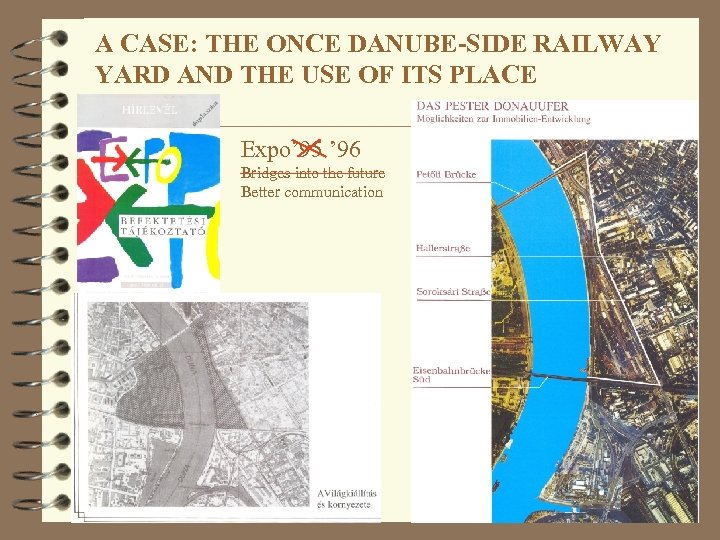
A CASE: THE ONCE DANUBE-SIDE RAILWAY YARD AND THE USE OF ITS PLACE Expo’ 95 ’ 96 Bridges into the future Better communication
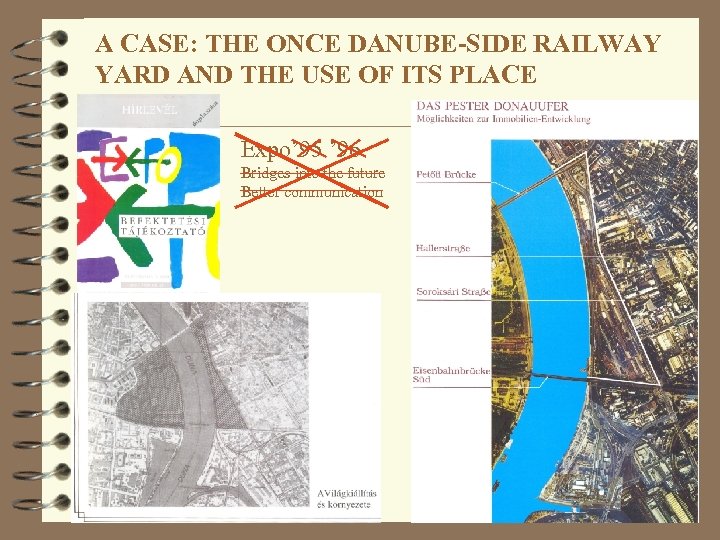
A CASE: THE ONCE DANUBE-SIDE RAILWAY YARD AND THE USE OF ITS PLACE Expo’ 95 ’ 96 Bridges into the future Better communication
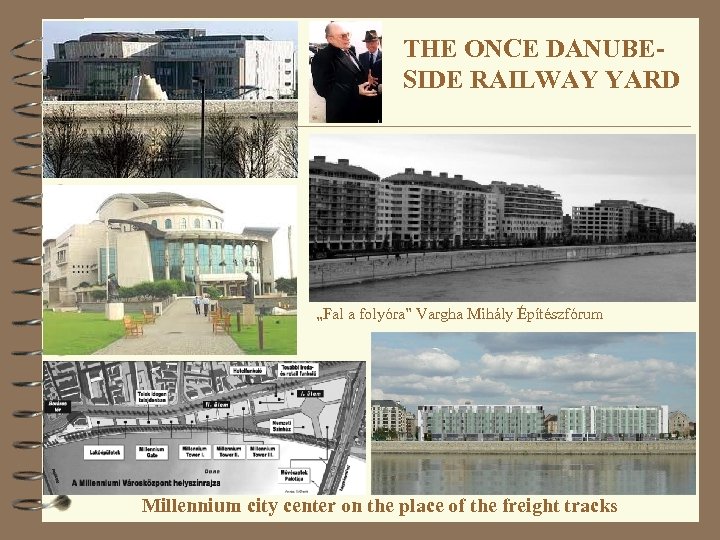
THE ONCE DANUBESIDE RAILWAY YARD „Fal a folyóra” Vargha Mihály Építészfórum Millennium city center on the place of the freight tracks
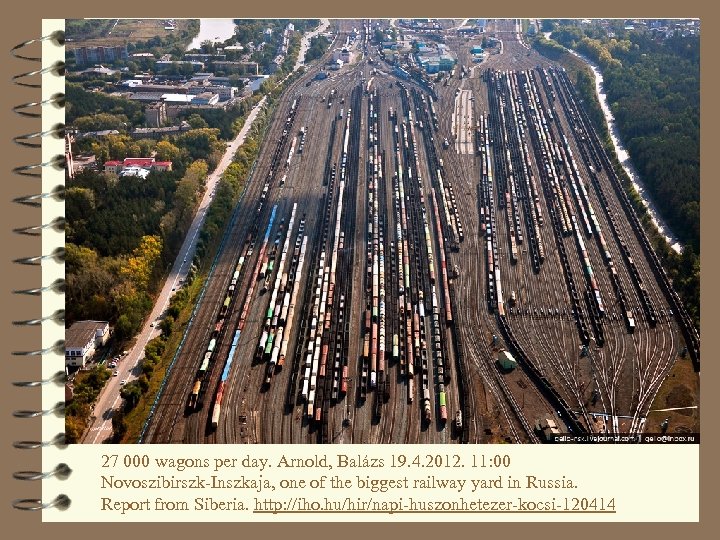
27 000 wagons per day. Arnold, Balázs 19. 4. 2012. 11: 00 Novoszibirszk-Inszkaja, one of the biggest railway yard in Russia. Report from Siberia. http: //iho. hu/hir/napi-huszonhetezer-kocsi-120414
NO SUMMARY 4 „The great railway yards that used to service the industrial system have now lost their raison d'être after the relocation of industrial plants and the tertiary sector dynamics took over the city. These have become large abandoned brownfields or soon to be abandoned…” 4 Elena Mussinelli and Cristina Marchegiani (2012) La valorizzazione degli scali ferroviari dismessi: Il caso di Milano. Techne 2012 No. 3. pp. 196 -205. 4 „Since 2005 these areas were the subject of several agreements between the City of Milan, State Railways Sp. A (FS) and the Lombardy Region, to examine various scenarios and the feasibility of their conversion, as confirmed in the draft of the new Territorial Government Plan (PGT), which identifies the Areas of Urban Transformation. ” 4 This second step is totally missing here.
DEVELOPMENT OF RAILWAY LINES AND YARDS IN BUDAPEST Fleischer Tamás Institute for World Economics Centre of Economic and Regional Studies Hungarian Academy of Sciences http: //www. vki. hu/~tfleisch/ tfleischer@vki. hu THANKS FOR YOUR KIND ATTENTION ! Urban Policies Design Laboratory, Politecnico di Milano Master Degree course in Urban Planning and Territorial Policies Study trip Budapest in the topic of ‘Dismissed railway yards’ Metropolitan Research Centre and Budapest University of Technology and Economics Budapest, 4 -5 April, 2013.
 Скачать презентацию DEVELOPMENT OF RAILWAY LINES AND YARDS IN BUDAPEST
a509b268da37426716bb4d6e9ebf5b0e.ppt