 Скачать презентацию Development of Education in Africa Challenges Presentation by
0e0babbc29d2b9a75e41bf91f22a7a83.ppt
- Количество слайдов: 31



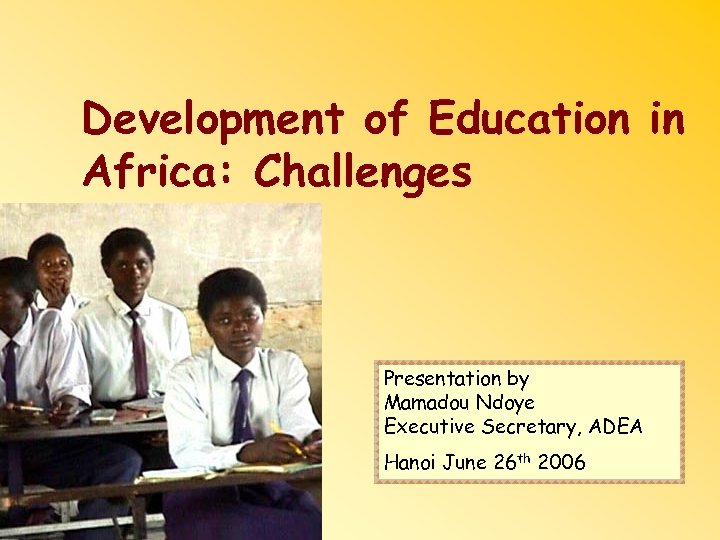
Development of Education in Africa: Challenges Presentation by Mamadou Ndoye Executive Secretary, ADEA Hanoi June 26 th 2006
Synopsis 1. Progress 2. Challenges by sector 3. Cross cutting issues
1. Progress Made
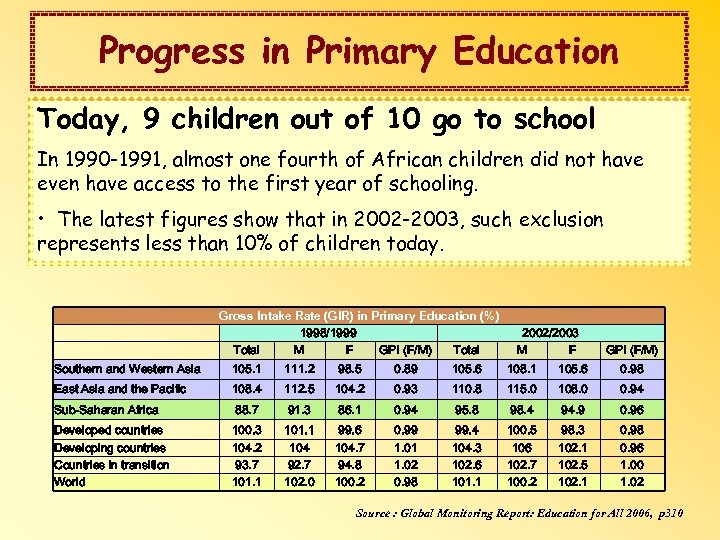
Progress in Primary Education Today, 9 children out of 10 go to school In 1990 -1991, almost one fourth of African children did not have even have access to the first year of schooling. • The latest figures show that in 2002 -2003, such exclusion represents less than 10% of children today. Gross Intake Rate (GIR) in Primary Education (%) 1998/1999 Total M F GPI (F/M) Total 2002/2003 M F GPI (F/M) Southern and Western Asia 105. 1 111. 2 98. 5 0. 89 105. 6 108. 1 105. 6 0. 98 East Asia and the Pacific 108. 4 112. 5 104. 2 0. 93 110. 8 115. 0 108. 0 0. 94 Sub-Saharan Africa 88. 7 91. 3 86. 1 0. 94 95. 8 98. 4 94. 9 0. 96 Developed countries 100. 3 101. 1 99. 6 0. 99 99. 4 100. 5 98. 3 0. 98 Developing countries Countries in transition World 104. 2 93. 7 101. 1 104 92. 7 102. 0 104. 7 94. 8 100. 2 1. 01 1. 02 0. 98 104. 3 102. 6 101. 1 106 102. 7 100. 2 102. 1 102. 5 102. 1 0. 96 1. 00 1. 02 Source : Global Monitoring Report: Education for All 2006, p 310
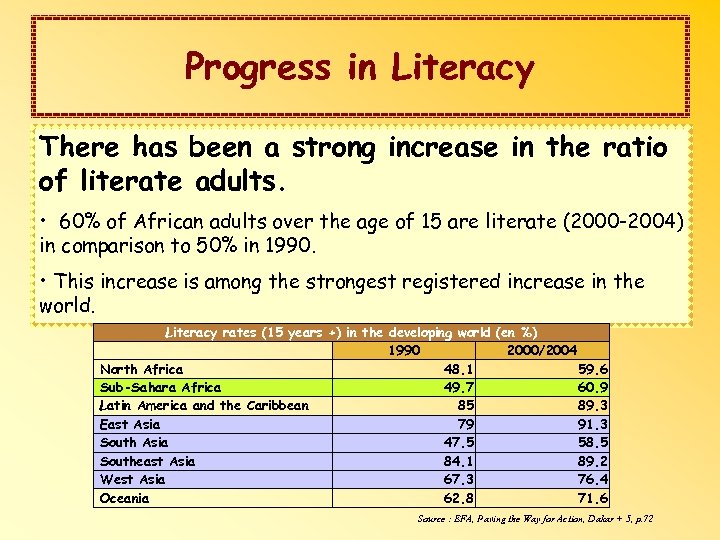
Progress in Literacy There has been a strong increase in the ratio of literate adults. • 60% of African adults over the age of 15 are literate (2000 -2004) in comparison to 50% in 1990. • This increase is among the strongest registered increase in the world. Literacy rates (15 years +) in the developing world (en %) 1990 2000/2004 North Africa 48. 1 59. 6 Sub-Sahara Africa 49. 7 60. 9 Latin America and the Caribbean 85 89. 3 East Asia 79 91. 3 South Asia 47. 5 58. 5 Southeast Asia 84. 1 89. 2 West Asia 67. 3 76. 4 Oceania 62. 8 71. 6 Source : EFA, Paving the Way for Action, Dakar + 5, p. 72
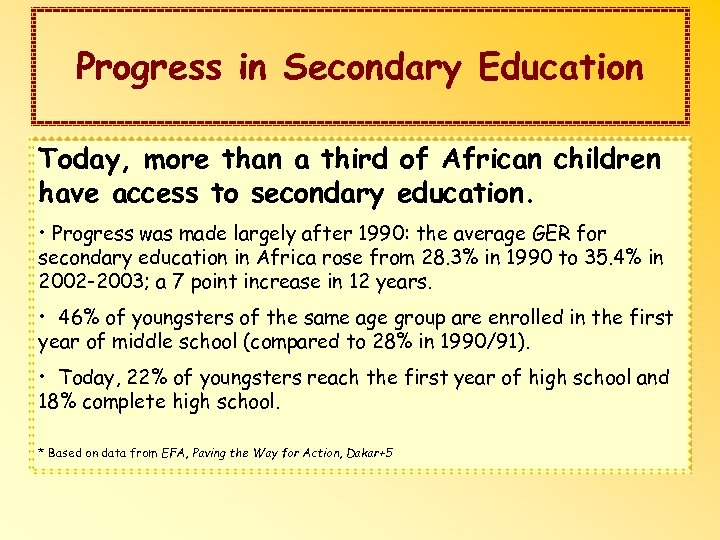
Progress in Secondary Education Today, more than a third of African children have access to secondary education. • Progress was made largely after 1990: the average GER for secondary education in Africa rose from 28. 3% in 1990 to 35. 4% in 2002 -2003; a 7 point increase in 12 years. • 46% of youngsters of the same age group are enrolled in the first year of middle school (compared to 28% in 1990/91). • Today, 22% of youngsters reach the first year of high school and 18% complete high school. * Based on data from EFA, Paving the Way for Action, Dakar+5
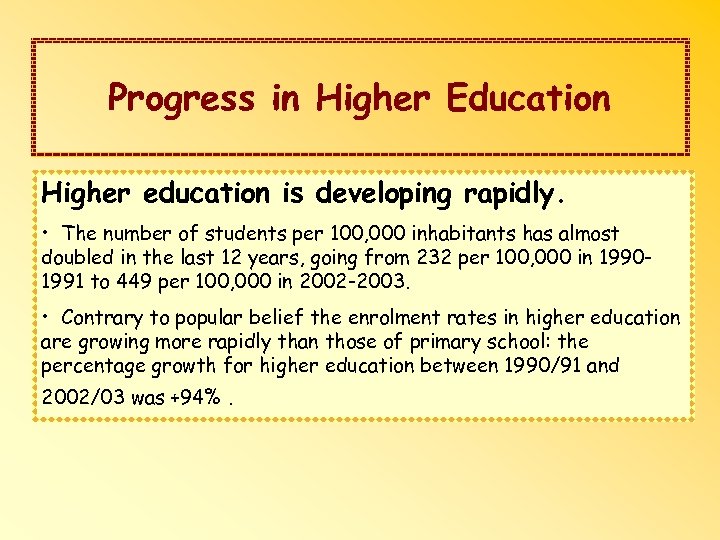
Progress in Higher Education Higher education is developing rapidly. • The number of students per 100, 000 inhabitants has almost doubled in the last 12 years, going from 232 per 100, 000 in 19901991 to 449 per 100, 000 in 2002 -2003. • Contrary to popular belief the enrolment rates in higher education are growing more rapidly than those of primary school: the percentage growth for higher education between 1990/91 and 2002/03 was +94%.
2. Challenges by sector
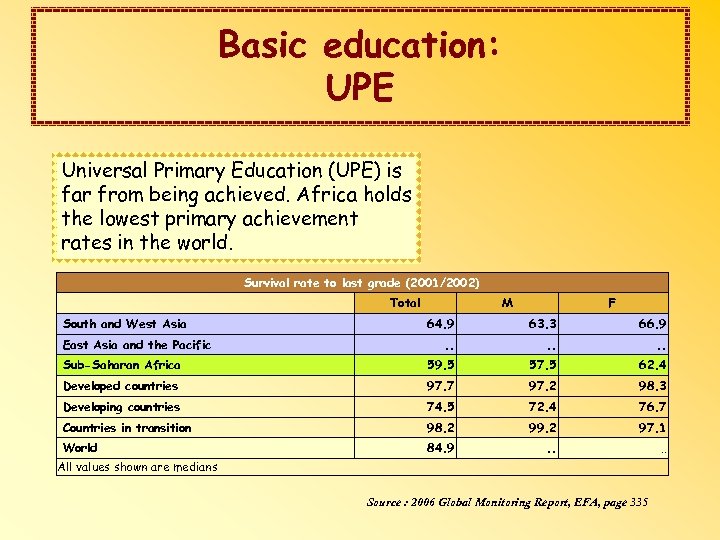
Basic education: UPE Universal Primary Education (UPE) is far from being achieved. Africa holds the lowest primary achievement rates in the world. Survival rate to last grade (2001/2002) Total South and West Asia M F 64. 9 63. 3 66. 9 . . . Sub-Saharan Africa 59. 5 57. 5 62. 4 Developed countries 97. 7 97. 2 98. 3 Developing countries 74. 5 72. 4 76. 7 Countries in transition 98. 2 99. 2 97. 1 World 84. 9 . . East Asia and the Pacific All values shown are medians Source : 2006 Global Monitoring Report, EFA, page 335
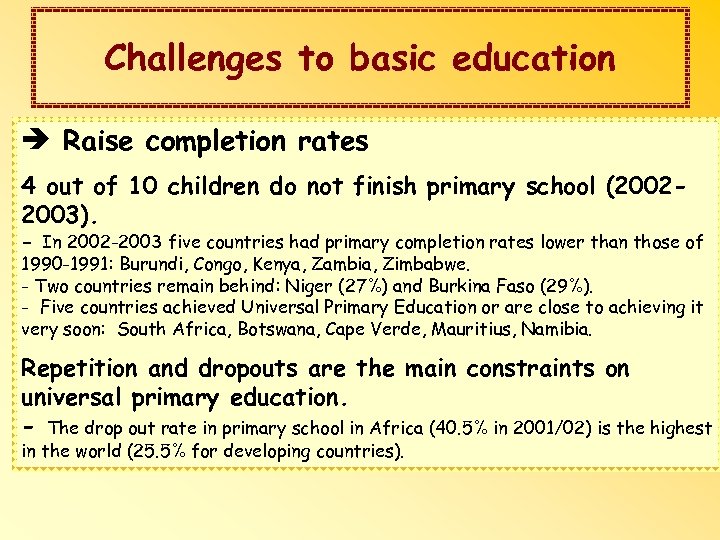
Challenges to basic education Raise completion rates 4 out of 10 children do not finish primary school (20022003). - In 2002 -2003 five countries had primary completion rates lower than those of 1990 -1991: Burundi, Congo, Kenya, Zambia, Zimbabwe. - Two countries remain behind: Niger (27%) and Burkina Faso (29%). - Five countries achieved Universal Primary Education or are close to achieving it very soon: South Africa, Botswana, Cape Verde, Mauritius, Namibia. Repetition and dropouts are the main constraints on universal primary education. - The drop out rate in primary school in Africa (40. 5% in 2001/02) is the highest in the world (25. 5% for developing countries).
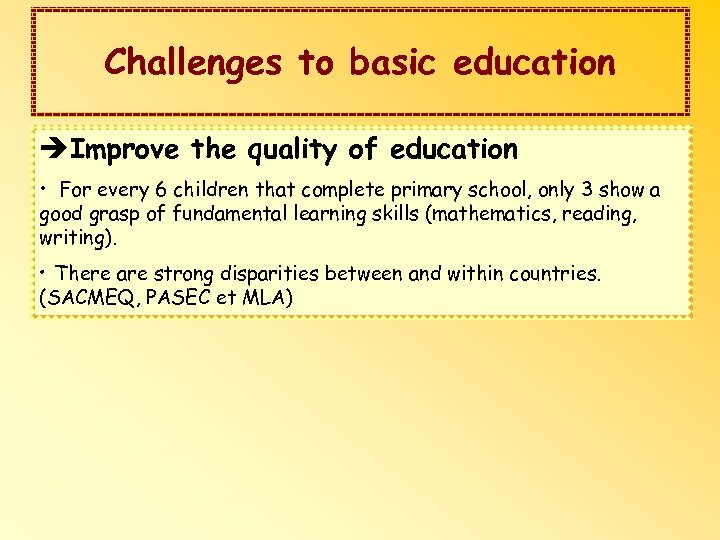
Challenges to basic education èImprove the quality of education • For every 6 children that complete primary school, only 3 show a good grasp of fundamental learning skills (mathematics, reading, writing). There are strong disparities between and within countries. (SACMEQ, PASEC et MLA)
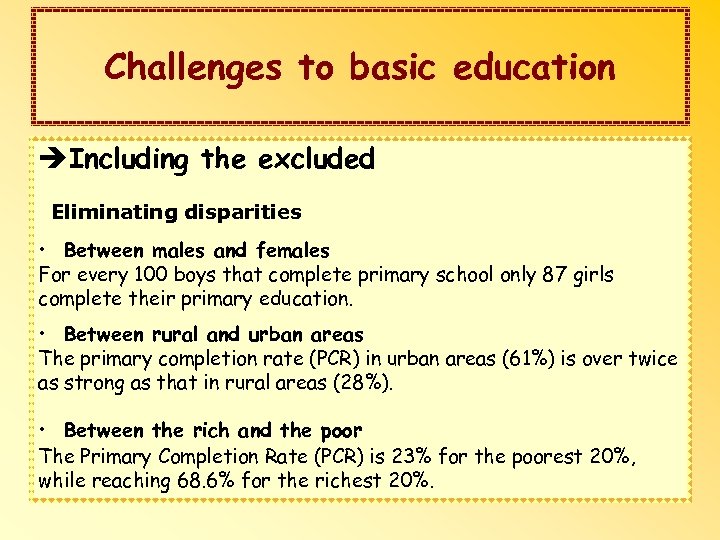
Challenges to basic education èIncluding the excluded Eliminating disparities • Between males and females For every 100 boys that complete primary school only 87 girls complete their primary education. • Between rural and urban areas The primary completion rate (PCR) in urban areas (61%) is over twice as strong as that in rural areas (28%). • Between the rich and the poor The Primary Completion Rate (PCR) is 23% for the poorest 20%, while reaching 68. 6% for the richest 20%.
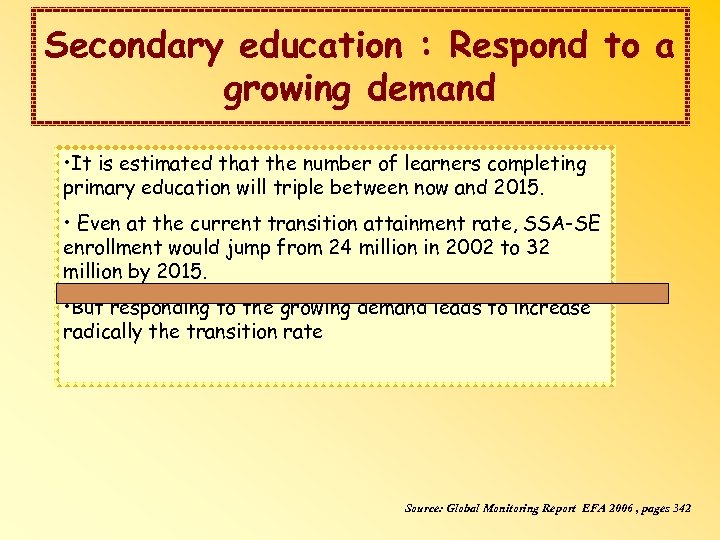
Secondary education : Respond to a growing demand • It is estimated that the number of learners completing primary education will triple between now and 2015. • Even at the current transition attainment rate, SSA-SE enrollment would jump from 24 million in 2002 to 32 million by 2015. • But responding to the growing demand leads to increase radically the transition rate Source: Global Monitoring Report EFA 2006 , pages 342
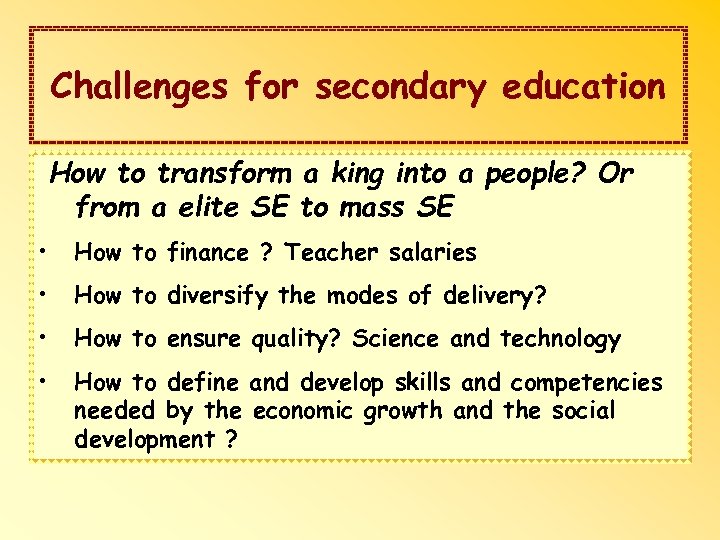
Challenges for secondary education How to transform a king into a people? Or from a elite SE to mass SE • How to finance ? Teacher salaries • How to diversify the modes of delivery? • How to ensure quality? Science and technology • How to define and develop skills and competencies needed by the economic growth and the social development ?
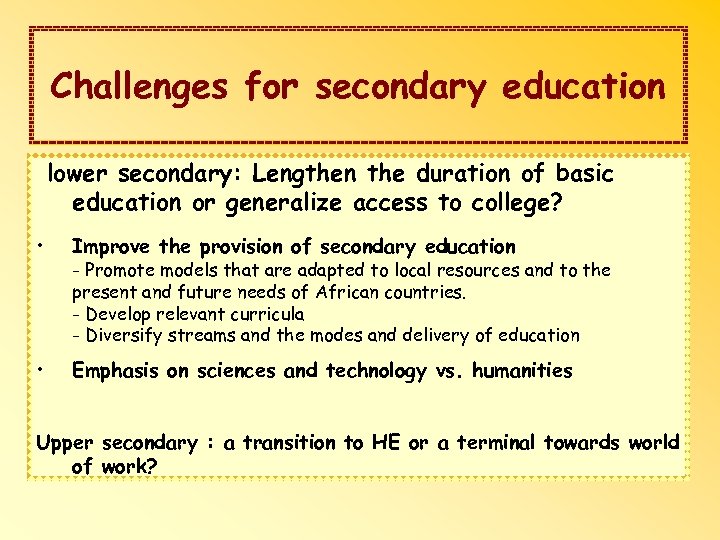
Challenges for secondary education lower secondary: Lengthen the duration of basic education or generalize access to college? • Improve the provision of secondary education • Emphasis on sciences and technology vs. humanities - Promote models that are adapted to local resources and to the present and future needs of African countries. - Develop relevant curricula - Diversify streams and the modes and delivery of education Upper secondary : a transition to HE or a terminal towards world of work?
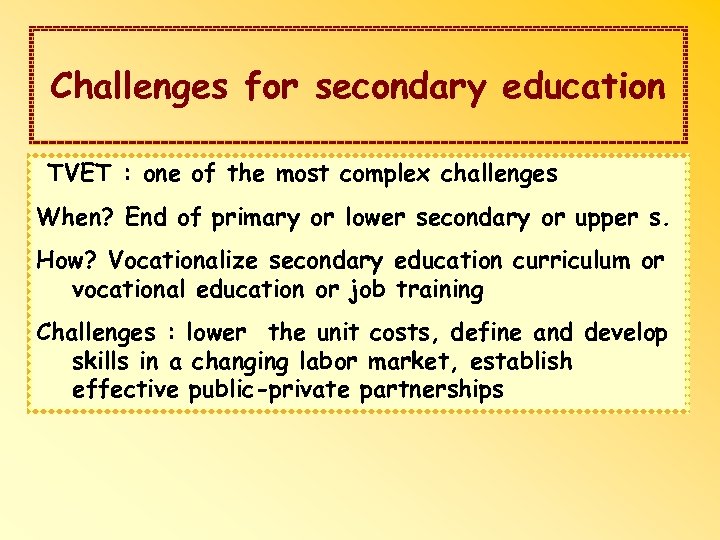
Challenges for secondary education TVET : one of the most complex challenges When? End of primary or lower secondary or upper s. How? Vocationalize secondary education curriculum or vocational education or job training Challenges : lower the unit costs, define and develop skills in a changing labor market, establish effective public-private partnerships
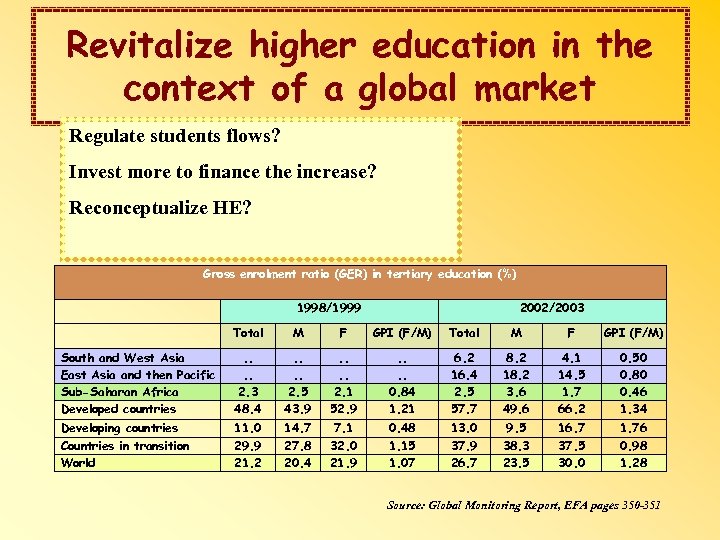
Revitalize higher education in the context of a global market Regulate students flows? Invest more to finance the increase? Reconceptualize HE? Gross enrolment ratio (GER) in tertiary education (%) 1998/1999 2002/2003 Total M F GPI (F/M) South and West Asia East Asia and then Pacific Sub-Saharan Africa Developed countries . . 2. 3 48. 4 . . 2. 5 43. 9 . . 2. 1 52. 9 . . 0. 84 1. 21 6. 2 16. 4 2. 5 57. 7 8. 2 18. 2 3. 6 49. 6 4. 1 14. 5 1. 7 66. 2 0. 50 0. 80 0. 46 1. 34 Developing countries Countries in transition World 11. 0 29. 9 21. 2 14. 7 27. 8 20. 4 7. 1 32. 0 21. 9 0. 48 1. 15 1. 07 13. 0 37. 9 26. 7 9. 5 38. 3 23. 5 16. 7 37. 5 30. 0 1. 76 0. 98 1. 28 Source: Global Monitoring Report, EFA pages 350 -351
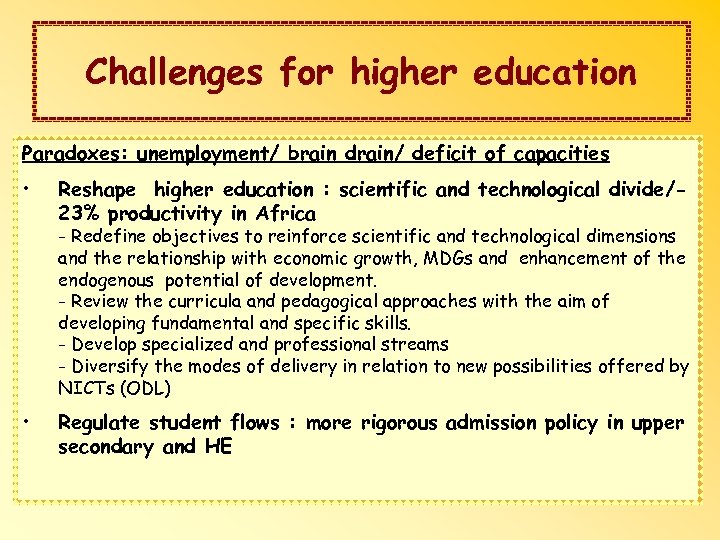
Challenges for higher education Paradoxes: unemployment/ brain drain/ deficit of capacities • Reshape higher education : scientific and technological divide/23% productivity in Africa - Redefine objectives to reinforce scientific and technological dimensions and the relationship with economic growth, MDGs and enhancement of the endogenous potential of development. - Review the curricula and pedagogical approaches with the aim of developing fundamental and specific skills. - Develop specialized and professional streams - Diversify the modes of delivery in relation to new possibilities offered by NICTs (ODL) • Regulate student flows : more rigorous admission policy in upper secondary and HE
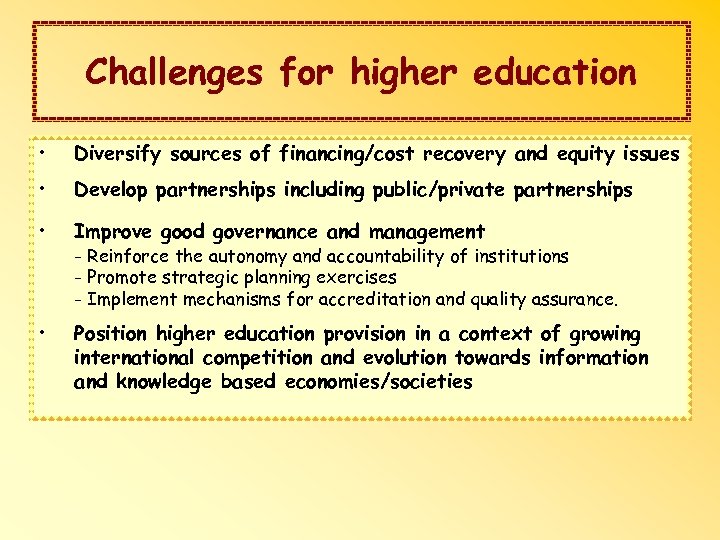
Challenges for higher education • Diversify sources of financing/cost recovery and equity issues • Develop partnerships including public/private partnerships • Improve good governance and management • Position higher education provision in a context of growing international competition and evolution towards information and knowledge based economies/societies - Reinforce the autonomy and accountability of institutions - Promote strategic planning exercises - Implement mechanisms for accreditation and quality assurance.
3. Cross-cutting issues
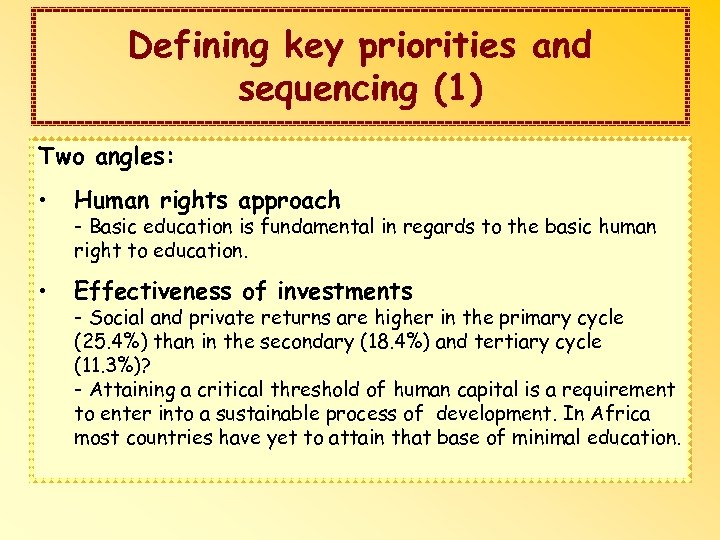
Defining key priorities and sequencing (1) Two angles: • Human rights approach • Effectiveness of investments - Basic education is fundamental in regards to the basic human right to education. - Social and private returns are higher in the primary cycle (25. 4%) than in the secondary (18. 4%) and tertiary cycle (11. 3%)? - Attaining a critical threshold of human capital is a requirement to enter into a sustainable process of development. In Africa most countries have yet to attain that base of minimal education.
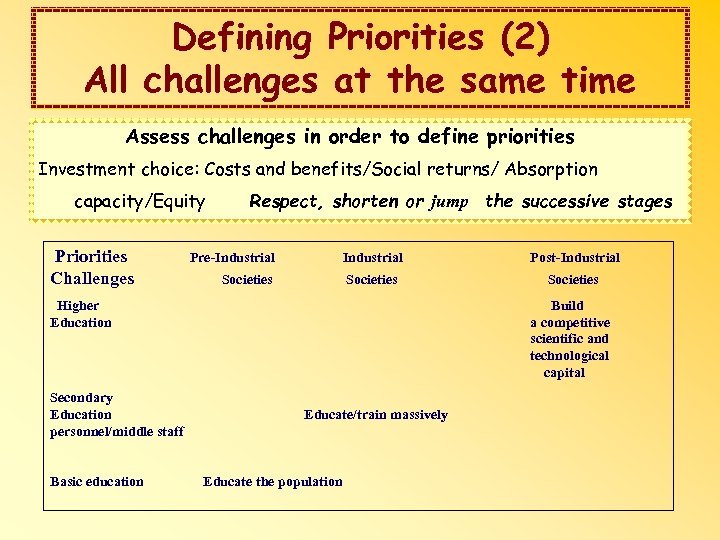
Defining Priorities (2) All challenges at the same time Assess challenges in order to define priorities Investment choice: Costs and benefits/Social returns/ Absorption capacity/Equity Priorities Challenges Respect, shorten or jump the successive stages Pre-Industrial Societies Post-Industrial Societies Higher Education Secondary Education personnel/middle staff Basic education Build a competitive scientific and technological capital Educate/train massively Educate the population
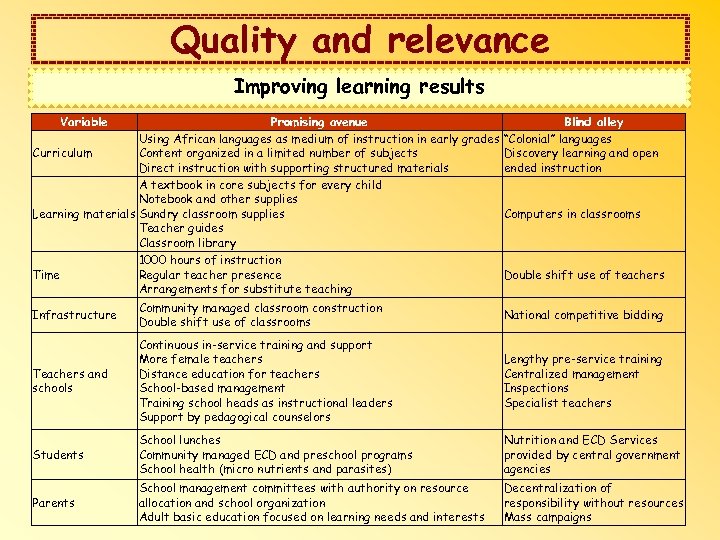
Quality and relevance Improving learning results Variable Promising avenue Using African languages as medium of instruction in early grades Curriculum Content organized in a limited number of subjects Direct instruction with supporting structured materials A textbook in core subjects for every child Notebook and other supplies Learning materials Sundry classroom supplies Teacher guides Classroom library 1000 hours of instruction Time Regular teacher presence Arrangements for substitute teaching Blind alley “Colonial” languages Discovery learning and open ended instruction Computers in classrooms Double shift use of teachers Infrastructure Community managed classroom construction Double shift use of classrooms National competitive bidding Teachers and schools Continuous in-service training and support More female teachers Distance education for teachers School-based management Training school heads as instructional leaders Support by pedagogical counselors Lengthy pre-service training Centralized management Inspections Specialist teachers Students School lunches Community managed ECD and preschool programs School health (micro nutrients and parasites) Nutrition and ECD Services provided by central government agencies Parents School management committees with authority on resource allocation and school organization Adult basic education focused on learning needs and interests Decentralization of responsibility without resources Mass campaigns
Quality and relevance Quality assurance system Science and technology
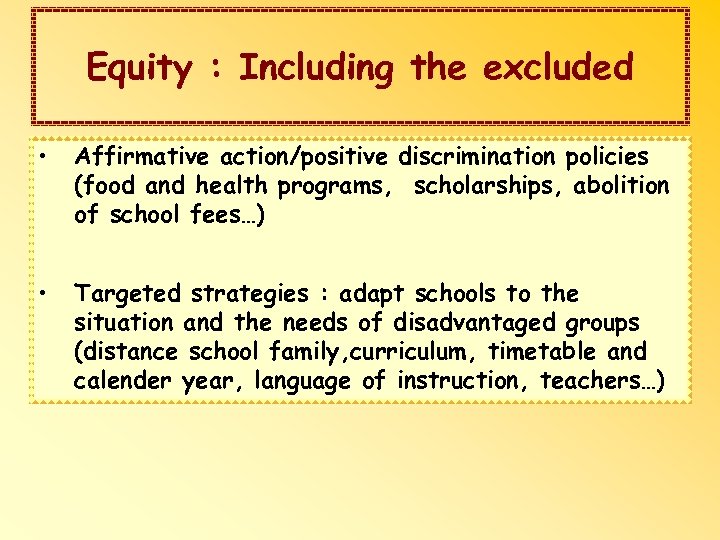
Equity : Including the excluded • Affirmative action/positive discrimination policies (food and health programs, scholarships, abolition of school fees…) • Targeted strategies : adapt schools to the situation and the needs of disadvantaged groups (distance school family, curriculum, timetable and calender year, language of instruction, teachers…)
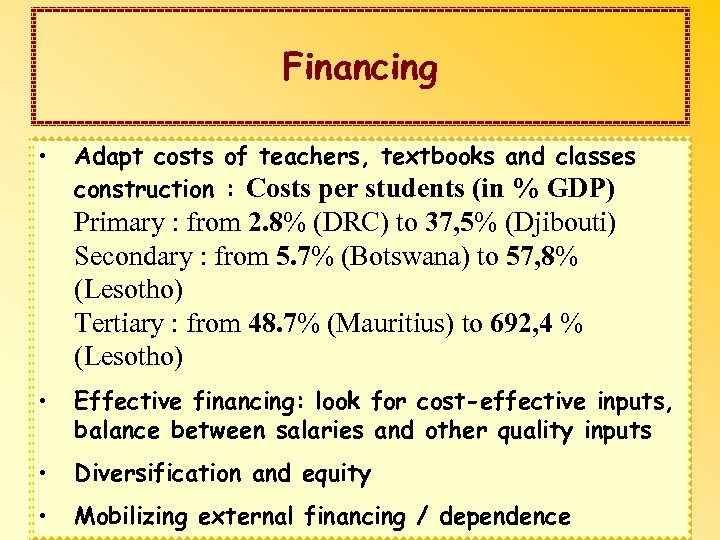
Financing • Adapt costs of teachers, textbooks and classes construction : Costs per students (in % GDP) Primary : from 2. 8% (DRC) to 37, 5% (Djibouti) Secondary : from 5. 7% (Botswana) to 57, 8% (Lesotho) Tertiary : from 48. 7% (Mauritius) to 692, 4 % (Lesotho) • Effective financing: look for cost-effective inputs, balance between salaries and other quality inputs • Diversification and equity • Mobilizing external financing / dependence
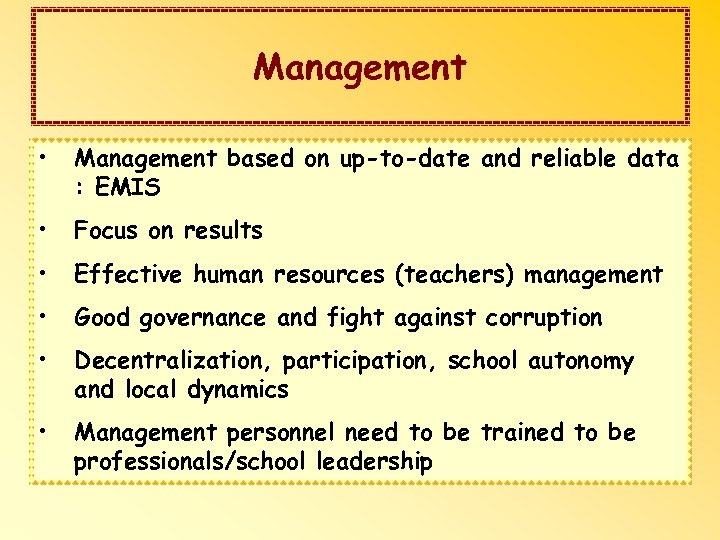
Management • Management based on up-to-date and reliable data : EMIS • Focus on results • Effective human resources (teachers) management • Good governance and fight against corruption • Decentralization, participation, school autonomy and local dynamics • Management personnel need to be trained to be professionals/school leadership
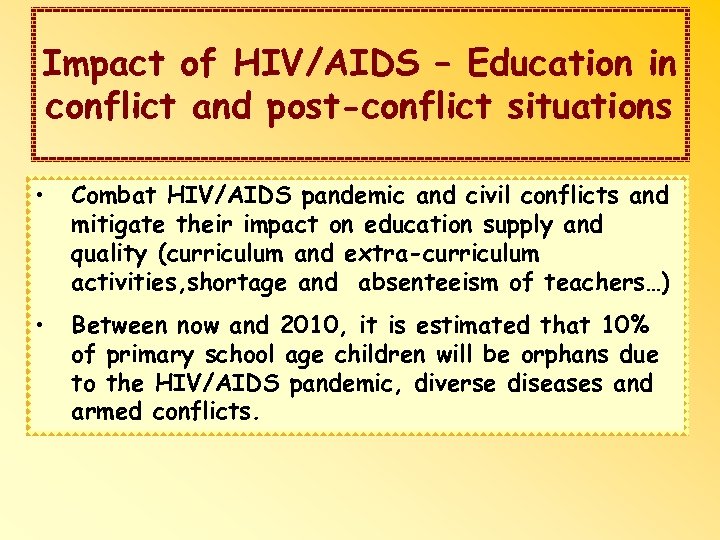
Impact of HIV/AIDS – Education in conflict and post-conflict situations • Combat HIV/AIDS pandemic and civil conflicts and mitigate their impact on education supply and quality (curriculum and extra-curriculum activities, shortage and absenteeism of teachers…) • Between now and 2010, it is estimated that 10% of primary school age children will be orphans due to the HIV/AIDS pandemic, diverse diseases and armed conflicts.
The need for specific and sectoral approaches A deep analysis of national needs, resources, capacities and constraints A holistic, diversified and integrated vision of the development of the education and training system. • The need for internal balances (levels and streams ) : regulate taking into account equity, sustainability and needs of the economic and social development
The need for intersectoral approaches Planning education and development: Place education at the heart of development strategies - economic growth - fight against poverty - human development Intersectoral collaborations - break traditional barriers - intersectoral approaches from development to implementation of education policies Interactions and partnerships: promote participatory management - public/private - state/civil society - community are actors and recipients/beneficiaries
How to enter in the virtuous cercle? Education/development+/education+/deve lopment++…
Скачать презентацию Development of Education in Africa Challenges Presentation by
0e0babbc29d2b9a75e41bf91f22a7a83.ppt