


 Скачать презентацию Development of an Infection Control Program for Long-Term
fed0ae2488ea6604e7345f58b2ac71c2.ppt
- Количество слайдов: 86
 Development of an Infection Control Program for Long-Term Care Facilities Evelyn Cook, RN, CIC Associate Director
 Understanding Long-Term Care ä Varying terms and degrees of inclusiveness ä Difficult to have one definition ä Medicare definition: ä “a variety of services that includes medical and non- medical care that supports both the health and personal care needs of individuals who may have a chronic illness or are living with a disability, either physical or intellectual. LTC services support individuals in their activities of daily living (ADLs), and provide assistance in typical tasks such as bathing, dressing and eating”
 Demographic Reality • The United States continues to experience incredible transformation. – Over 10, 000 baby boomers are turning 65 every day, and the fastest growing demographic in the U. S. is women over age 85. This age wave is expected to continue well into the next century. – The population age 65 and over has increased from 35. 9 million in 2003 to 44. 7 million in 2013 (a 24. 7 percent increase) and is projected to more than double to 98 million in 2060. – By 2040, there will be about 82. 3 million older persons, over twice their number in 2000. – People 65 and older represented 14. 1 percent of the population in the year 2013 but are expected to grow to be 21. 7 percent of the population by 2040. – The 85+ population is projected to triple from 6 million in 2013 to 14. 6 million in 2040. The 2015 White House Conference on Aging: Looking to the future
 Demographics Ø 2013 CMS reported (in CMS certified LTCGs) 85% of LTC residents were 65 years or older with 43% being 85 or older. Ø Population aged 85 and older is expected to double by the year 2030 Ø One out of every four persons aged 65 will spend some time in a nursing home Ø More people in long term care facilities than hospitals
 Objectives 1. Describe the problem of healthcare associated infections in LTCFs 2. 3. 4. List the factors contributing to infections in the elderly Describe regulatory factors impacting LTCFs Describe the components of a LTCF infection prevention program
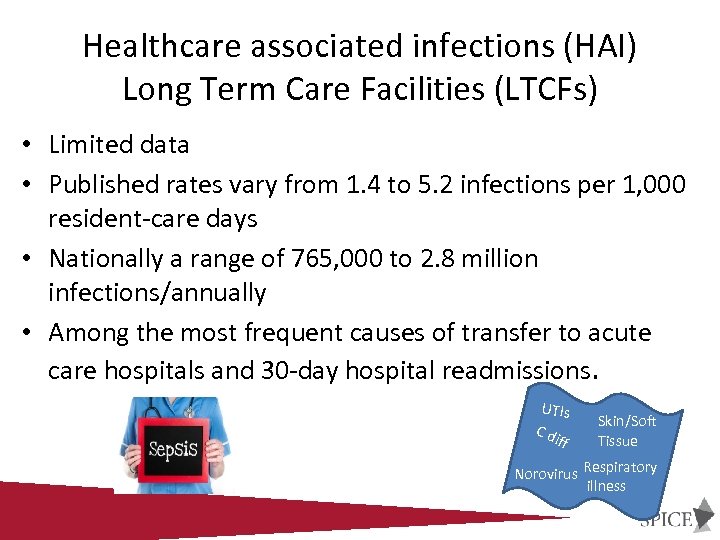 Healthcare associated infections (HAI) Long Term Care Facilities (LTCFs) • Limited data • Published rates vary from 1. 4 to 5. 2 infections per 1, 000 resident-care days • Nationally a range of 765, 000 to 2. 8 million infections/annually • Among the most frequent causes of transfer to acute care hospitals and 30 -day hospital readmissions. UTIs C d iff Skin/Soft Tissue Norovirus Respiratory illness
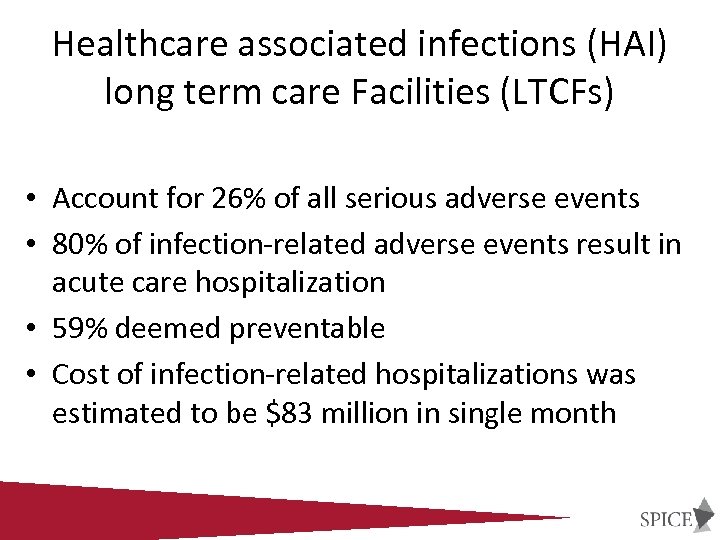 Healthcare associated infections (HAI) long term care Facilities (LTCFs) • Account for 26% of all serious adverse events • 80% of infection-related adverse events result in acute care hospitalization • 59% deemed preventable • Cost of infection-related hospitalizations was estimated to be $83 million in single month OIG. Adverse Events in Skilled Nursing Facilities: National Incidence Among Medicare Beneficiaries, OEI-06 -11 -00370, February 2014
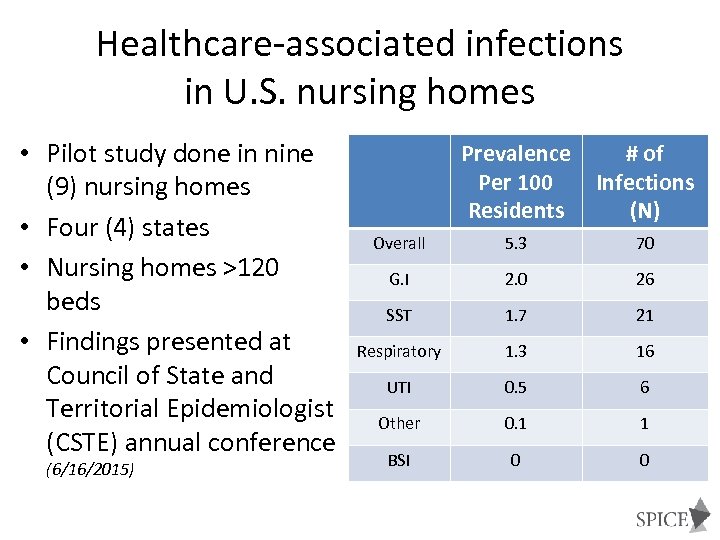 Healthcare-associated infections in U. S. nursing homes • Pilot study done in nine (9) nursing homes • Four (4) states • Nursing homes >120 beds • Findings presented at Council of State and Territorial Epidemiologist (CSTE) annual conference (6/16/2015) Prevalence Per 100 Residents # of Infections (N) Overall 5. 3 70 G. I 2. 0 26 SST 1. 7 21 Respiratory 1. 3 16 UTI 0. 5 6 Other 0. 1 1 BSI 0 0
 Prevalence survey of healthcare-associated infections and antimicrobial use in u. s. nursing homes (Part B) • Data collection begin spring/summer of 2017 • Goal is to recruit a random sample of 20 nursing homes in each of the 10 EIP states • Nursing homes certified by CMS are eligible • Nursing home participation is voluntary • Based on the long-standing relationships that EIP sites have with their healthcare facilities, we (CDC) anticipate that we will meet our 2017 recruitment goals. • Findings reported 2018 Emerging Infections Program Healthcare Associated Infections –Community Interface
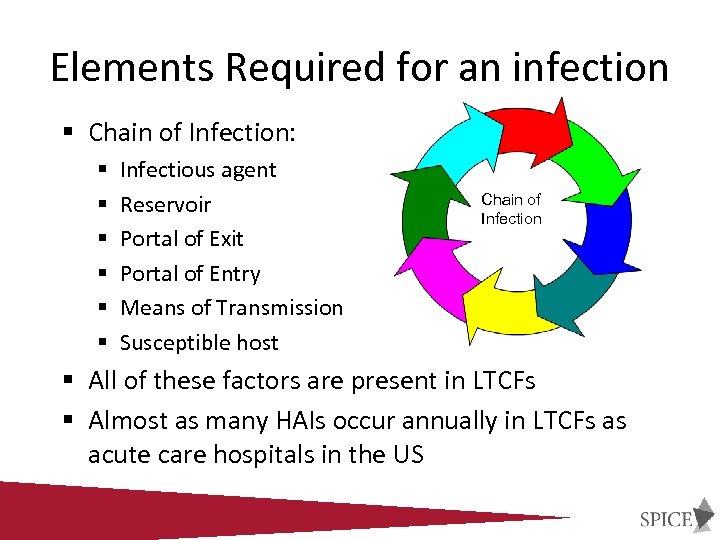 Elements Required for an infection § Chain of Infection: § § § Infectious agent Reservoir Portal of Exit Portal of Entry Means of Transmission Susceptible host Chain of Infection § All of these factors are present in LTCFs § Almost as many HAIs occur annually in LTCFs as acute care hospitals in the US
 Specific Infections in the LTCFs ä Urinary Tract Infection (account for 30% of hospital readmissions within 30 days) ä Number 1 (but is it really? ) ä Respiratory Tract Infection (Pneumonia 5 th leading cause of death in patients >65) ä Probably # 1 ä Influenza, RSV, Coronavirus, Pneumonia, TB ä Skin and soft-tissue infections (infestations) ä Decubitus ulcers, Cellulitis, Scabies
 Specific Infections in the LTCFs ä Gastroenteritis (Pennsylvania C diff #1 cause of diarrhea) ä Clostridium difficile, Norovirus ä Conjunctivitis ä Bacteremia (50% related to UTI) ä Resurgence of “pediatric” infections in the LTCF: ä Pertussis, RSV, H influenza
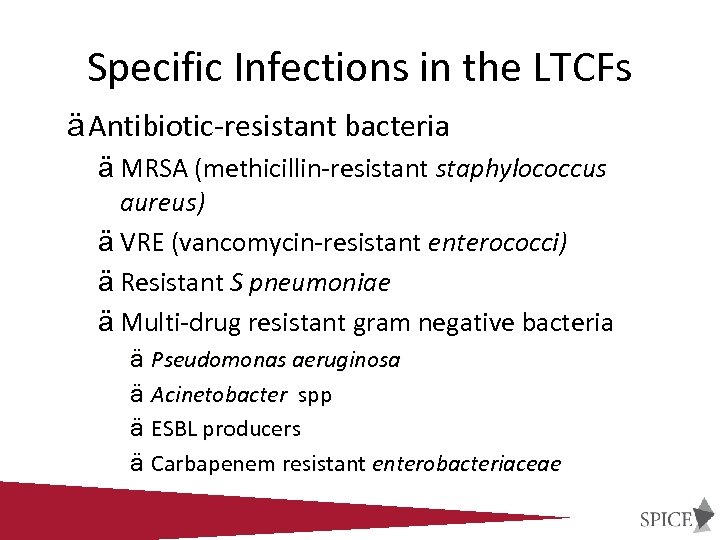 Specific Infections in the LTCFs ä Antibiotic-resistant bacteria ä MRSA (methicillin-resistant staphylococcus aureus) ä VRE (vancomycin-resistant enterococci) ä Resistant S pneumoniae ä Multi-drug resistant gram negative bacteria ä Pseudomonas aeruginosa ä Acinetobacter spp ä ESBL producers ä Carbapenem resistant enterobacteriaceae
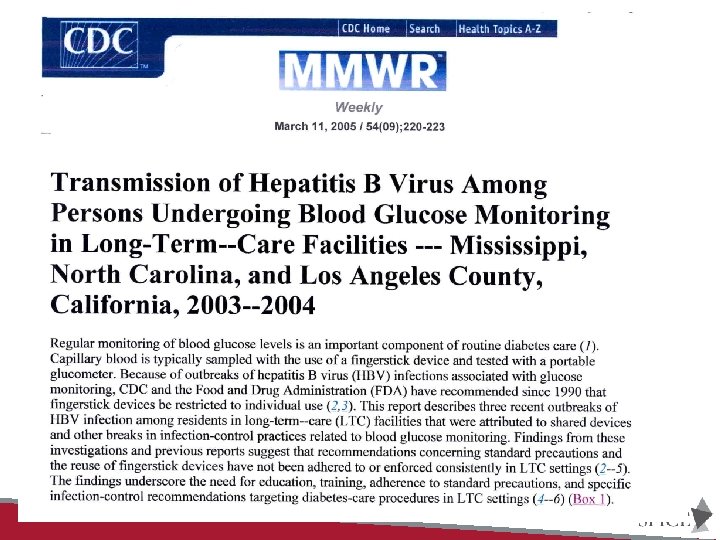
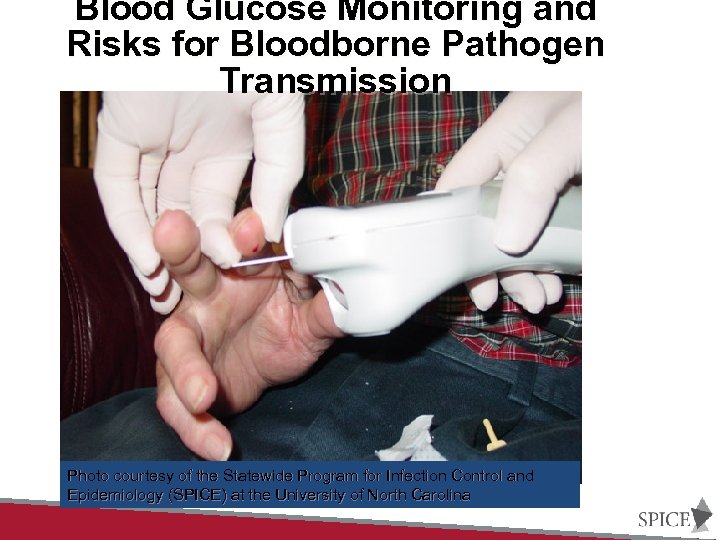 Blood Glucose Monitoring and Risks for Bloodborne Pathogen Transmission Photo courtesy of the Statewide Program for Infection Control and Epidemiology (SPICE) at the University of North Carolina
 Part of the Problem ä No SENIC (Study on the Efficacy of Nosocomial Infection Control)-equivalent study for LTCFs ä Few controlled studies have analyzed efficacy or cost-effectiveness of infection control measures in LTCF
 Objectives 1. Describe the problem of healthcare associated infections in LTCFs 2. List the factors contributing to infections in the elderly 3. 4. Describe the regulatory factors impact on LTCFs Describe the components of a LTCF infection prevention program
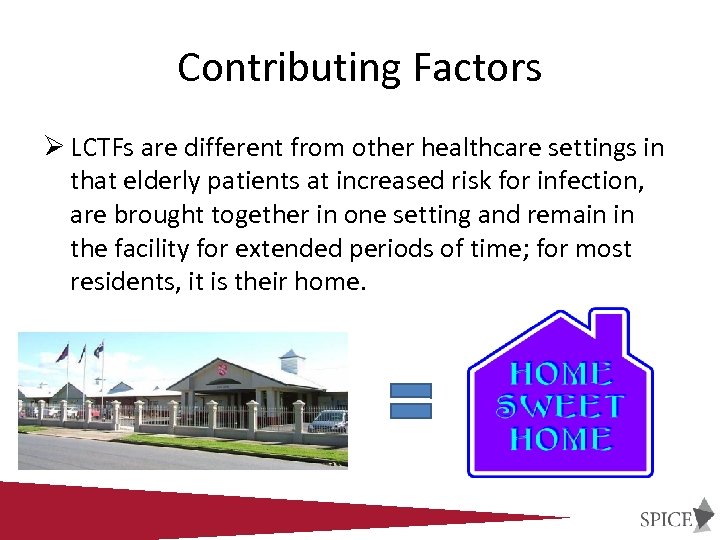 Contributing Factors Ø LCTFs are different from other healthcare settings in that elderly patients at increased risk for infection, are brought together in one setting and remain in the facility for extended periods of time; for most residents, it is their home.
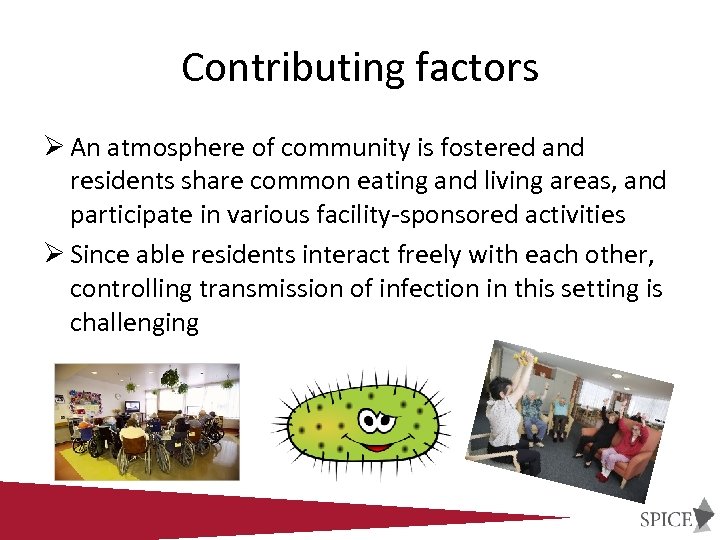 Contributing factors Ø An atmosphere of community is fostered and residents share common eating and living areas, and participate in various facility-sponsored activities Ø Since able residents interact freely with each other, controlling transmission of infection in this setting is challenging
 Contributing factors Ø Residents who are colonized or infected with certain microorganisms are, in some cases, restricted to their room. Ø However, because of the psychosocial risks associated with such restriction, it has been recommended that psychosocial needs be balanced with infection control needs in the LTCF setting
 Individual Factors Contributing to infections Ø Medications affecting resistance to infection (corticosteroids and chemotherapy) Ø Limited physiologic reserve Ø Compromised host defenses ( cough reflex, thinning skin, decreased tear production and immune dysfunction) Ø Coexisting chronic diseases Ø Complications from invasive diagnostic procedures Ø Impaired responses to infection Ø Increased frequency of therapeutic toxicity (declining liver and kidney function)
 Additional Contributing Factors Ø Nurse (staff turnover) ØPublished data on overall high employee turnover rates in LTC facilities; 2011 data from the Quality Long Term Care Commission showed the following turnover rates: ØAdministrators, 3 percent; ØDirector of nursing, 39 percent ØRNs, 50 percent ØLPNs, 49 percent and ØCNAs, 71 percent Infection Prevention in LTC: Emphasis Needed on Education, Evidence-Based Practices; Infection Control Today: Gail Bennett, RN, MSN, CIC, Rome, GA ICP Associates, Inc.
 One Size Doesn’t Fit All Infection Preventionist View Long Term Care • Residents have multiple comorbidities • Resources more limited (equipment, staff) • Staff and residents receptive to receiving infection prevention education (Improved IP job satisfaction) • Long term relationships formed with residents and family members • • Acute Care Address the acute issue at hand More staff at various levels of education, technology and equipment Often staff view IP as the POLICE Interactions with patients and families are shorter and more limited.
 One Similarity is Patient/Resident Acuity is Increasing!
 Objectives 1. 2. Describe the problem of healthcare associated infections in LTCFs List the factors contributing to infections in the elderly 3. Describe the regulatory factors impact on LTCFs 4. Describe the components of a LTCF infection prevention program
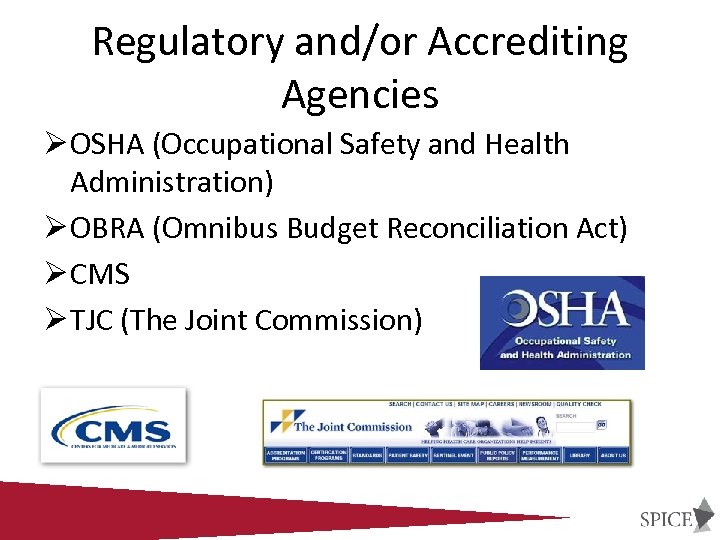 Regulatory and/or Accrediting Agencies Ø OSHA (Occupational Safety and Health Administration) Ø OBRA (Omnibus Budget Reconciliation Act) Ø CMS Ø TJC (The Joint Commission)
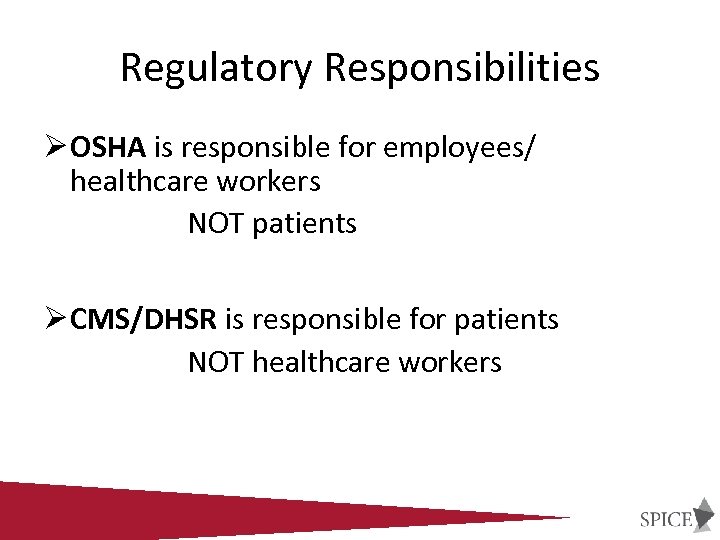 Regulatory Responsibilities Ø OSHA is responsible for employees/ healthcare workers NOT patients Ø CMS/DHSR is responsible for patients NOT healthcare workers
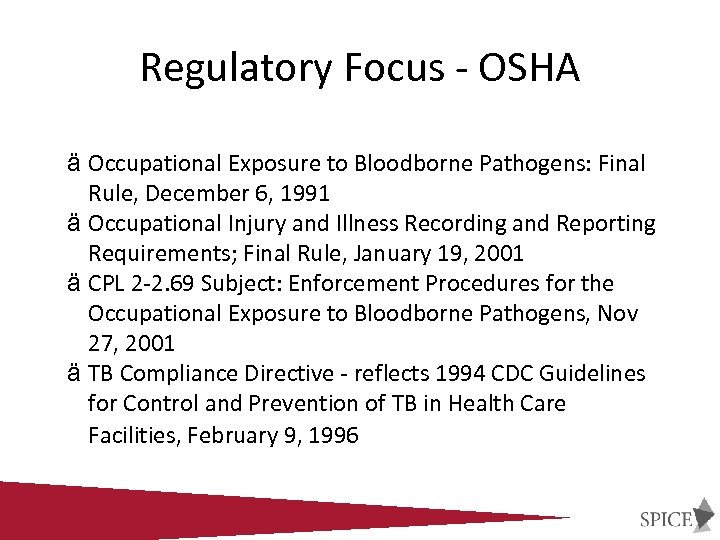 Regulatory Focus - OSHA ä Occupational Exposure to Bloodborne Pathogens: Final Rule, December 6, 1991 ä Occupational Injury and Illness Recording and Reporting Requirements; Final Rule, January 19, 2001 ä CPL 2 -2. 69 Subject: Enforcement Procedures for the Occupational Exposure to Bloodborne Pathogens, Nov 27, 2001 ä TB Compliance Directive - reflects 1994 CDC Guidelines for Control and Prevention of TB in Health Care Facilities, February 9, 1996
 State Regulations Impacting LTCFs ä Rules Governing the Sanitation of Hospitals, Nursing and Rest Homes, Sanitariums, Sanitoriums and Other Institutions - 15 A NCAC 18 A. 1300 (Available on website) http: //www. unc. edu/depts/spice/resource. html ä NC Communicable Disease Rule 10 A NCAC 41 A. 0206. Adopted by the Commission for Health Services on August 5, 1992. Infection Control in Health Care Facilities. Requires a written infection control policy and a staff member trained in infection control. ä NC Rules for the Licensing of Nursing Homes and Beds in Homes for the Aged Licensed as Part of a Nursing Home
 Federal Regulations and Standards That Govern LTCFs ä Federal regulations specific to all LTCF. The Federal Omnibus Budget Reconciliation Act of 1987 (OBRA): Subtitle C - Nursing Home Reform includes changes in LTCF management and provision of services which include or impact infection control including: ä Requirement for sanitation, ä infection control, and ä physical environment
 FEDERAL REGISTER VOL. 81 Tuesday NO. 192 October 4 th, 2016
 DHHS Federal Amendments That Apply to Programs Title XVIII Medicare and XIX Medicaid (Interpretive Guidelines) §F 483. 80 Infection Control Facility must establish and maintain an infection prevention and control program designed to provide a safe, sanitary, and comfortable environment and to help prevent the development and transmission of communicable diseases and infections.
 NATIONAL ACTION PLAN TO PREVENT HEALTH CARE-ASSOCIATED INFECTIONS: ROAD MAP TO ELIMINATION APRIL 2013 ä Five areas of targeted focus and goals: ä NHSN enrollment ä Goal: 5% of CNHs within 5 years period ä Urinary Tract Infections/CAUTIs ä Goal: Pilot reporting to NHSN, evaluate variability, and obtain consensus on measurable five-year goal. ä Clostridium difficile infection (CDI) ä Goal: Pilot reporting to NHSN, evaluate variability, and obtain consensus on measurable five-year goal. ä Resident influenza and pneumococcal vaccination ä Goal: 85% vaccinated with 5 years ä Healthcare personnel influenza vaccination ä Goal: In alignment with the previous Influenza Vaccination of HCP chapter, 75% of HCP in long-term care receive the seasonal influenza vaccination by 2015. https: //health. gov/hcq/pdfs/hai-action-plan-ltcf. pdf
 Objectives 1. 2. 3. Describe the problem of healthcare associated infections in LTCFs List the factors contributing to infections in the elderly Describe the regulatory factors impact on LTCFs 4. Describe the components of a LTCF infection prevention program
 Shea/apic guideline: infection prevention and control in the long-term care facility • In this document, as in a number of published HICPAC, SHEA, and APIC guidelines, each recommendation is categorized on the basis of existing scientific evidence, theoretical rationale, applicability, and national or state regulations Smith et al; AJIC September 2008
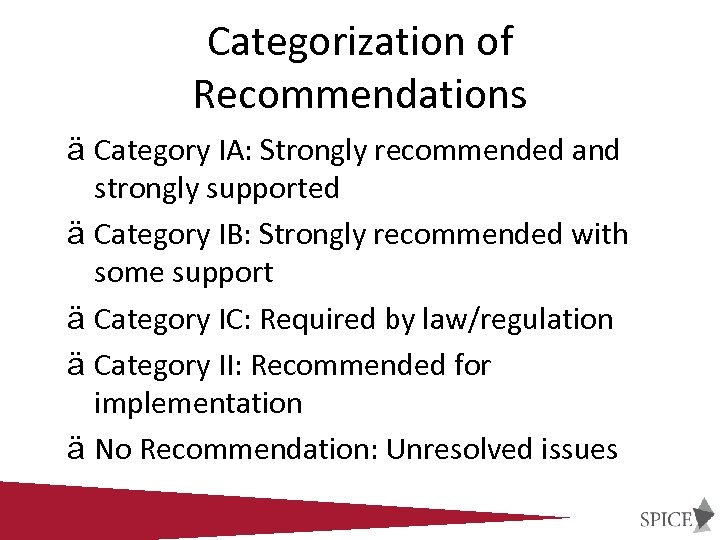 Categorization of Recommendations ä Category IA: Strongly recommended and strongly supported ä Category IB: Strongly recommended with some support ä Category IC: Required by law/regulation ä Category II: Recommended for implementation ä No Recommendation: Unresolved issues
 LTCF Infection Prevention Program ä An active, effective, facility-wide infection prevention program should be established in the LTCF. The Purpose of the program is to reduce the risk of development and spread of infectious disease (Cat 1 C) ä The IP Program must be in compliance with federal, state and local regulations (Cat 1 C)
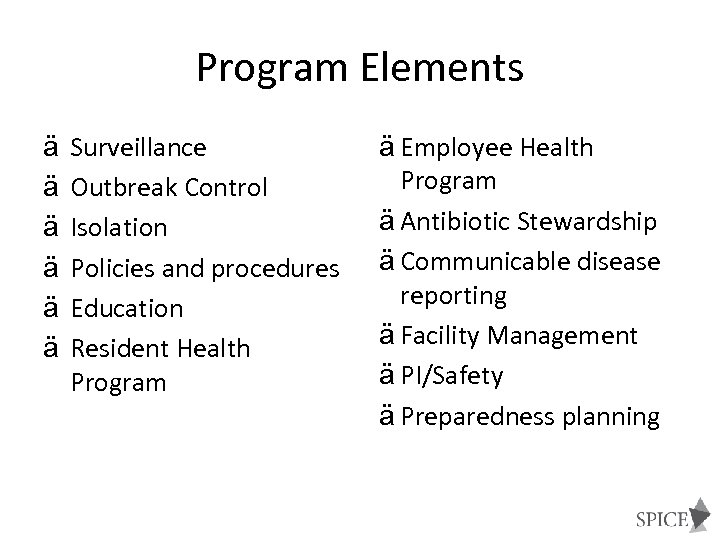 Program Elements ä ä ä Surveillance Outbreak Control Isolation Policies and procedures Education Resident Health Program ä Employee Health Program ä Antibiotic Stewardship ä Communicable disease reporting ä Facility Management ä PI/Safety ä Preparedness planning
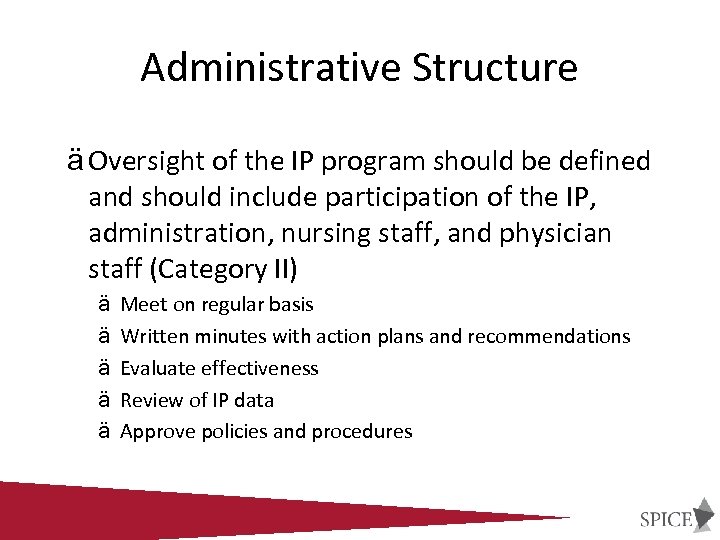 Administrative Structure ä Oversight of the IP program should be defined and should include participation of the IP, administration, nursing staff, and physician staff (Category II) ä ä ä Meet on regular basis Written minutes with action plans and recommendations Evaluate effectiveness Review of IP data Approve policies and procedures
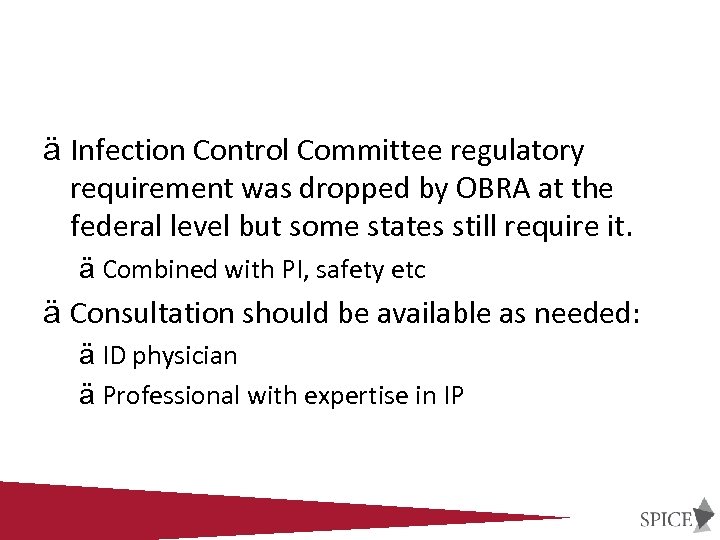 ä Infection Control Committee regulatory requirement was dropped by OBRA at the federal level but some states still require it. ä Combined with PI, safety etc ä Consultation should be available as needed: ä ID physician ä Professional with expertise in IP
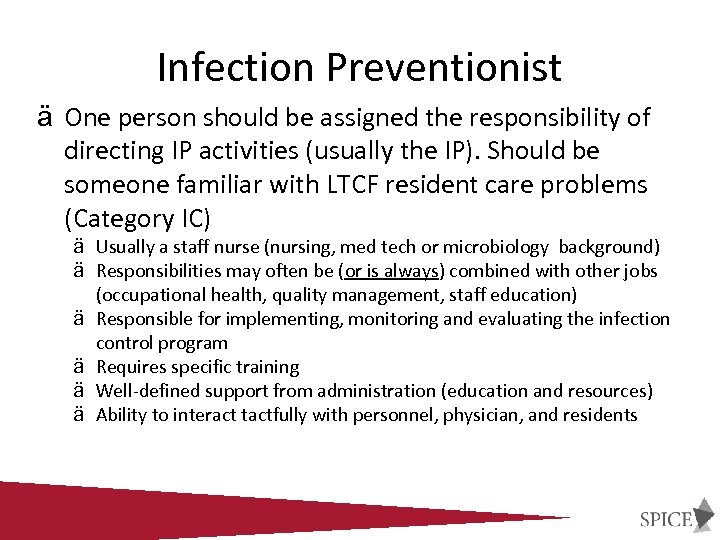 Infection Preventionist ä One person should be assigned the responsibility of directing IP activities (usually the IP). Should be someone familiar with LTCF resident care problems (Category IC) ä Usually a staff nurse (nursing, med tech or microbiology background) ä Responsibilities may often be (or is always) combined with other jobs (occupational health, quality management, staff education) ä Responsible for implementing, monitoring and evaluating the infection control program ä Requires specific training ä Well-defined support from administration (education and resources) ä Ability to interact tactfully with personnel, physician, and residents
 ä The IP (or another appropriate individual such as the medical director) should have written authority to institute infection prevention measures in emergency situations (Category IB) ä Examples: Isolate residents, not allow employees to work if sick etc.
 Infection Control Hours ä Is the time given to the IP adequate for the size of the facility, acuity of the residents, and types of procedures and treatment? ä No specific amount of time has been researched to be ideal; the following guideline has been developed based on experience
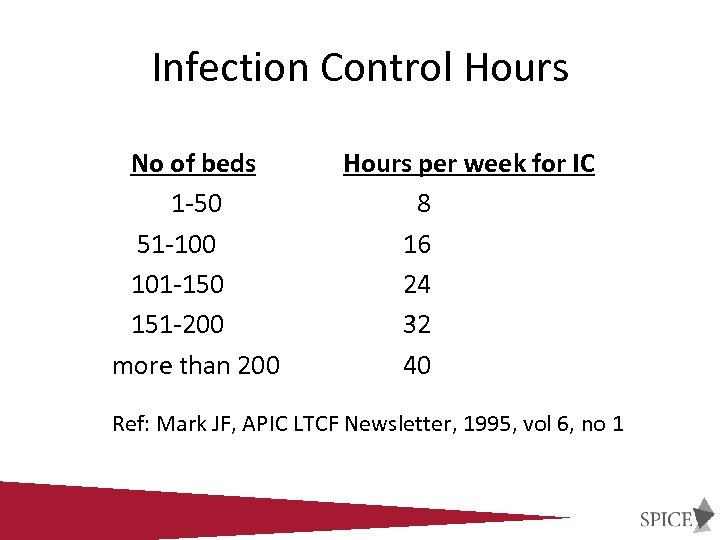 Infection Control Hours No of beds 1 -50 51 -100 101 -150 151 -200 more than 200 Hours per week for IC 8 16 24 32 40 Ref: Mark JF, APIC LTCF Newsletter, 1995, vol 6, no 1
 Education for IP ä The importance of education of the LTCF IP has been demonstrated ä Study of participants in 2 day basic training course demonstrated increase in post course knowledge ä Study of participants at 3 and 12 month follow-up showed statistically significant increase in implementation of key infection control practices (performance of surveillance, using infection definitions, calculating infection rates, giving employees and residents TB skin tests and influenza vaccines
 Surveillance in LTCF ä The LTCF should have a system for ongoing collection of data on infections in the institution (Cat IC) ä Process and/or Outcome Surveillance ä Standardized Definitions ä Listing of symptoms or criteria ä Surveillance tools ä Surveys, data collection templates, walking rounds ä Analyzing those healthcare associated (facility-acquired) ä Detect clusters, trends ä Residentifier ä Type of infection, onset, location and lab data
 Surveillance in LTCF ä Infection rates (outcome measures)should be calculated: ä Calculated preferably as infections per 1000 resident days # of infections X 1000 = rate of infections/1000 resident days # of resident days ä Reported out: monthly, quarterly and annually ä Developing a plan of action to reduce problems ä Process measures ä Compliance with hand hygiene ä Compliance with use of PPE ä Compliance with indwelling catheter care and maintenance
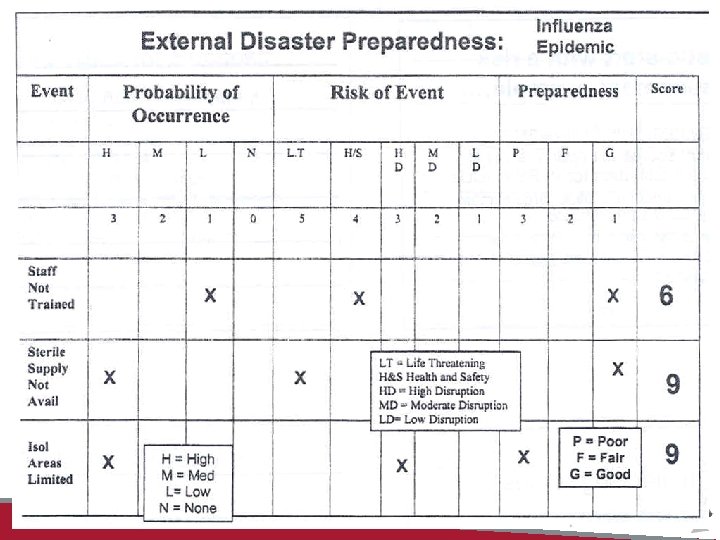
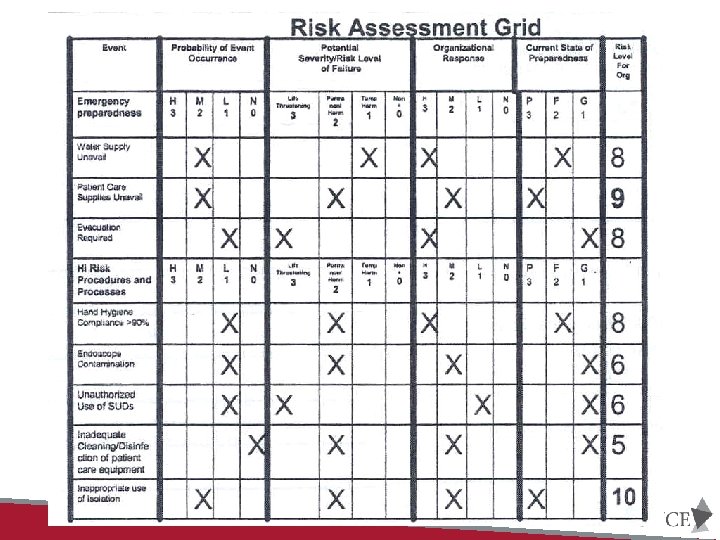
 Infection Prevention Risk Assessment • Components: – Risk Event • Geographic location • Infections • Environmental issues – Probability risk will occur • High, Medium, Low or None – Severity if the risk occurs • Life threatening, Permanent harm, Temporary harm, none
 Infection Control risk assessment – How well prepared is the organization if the risk occurs • Poorly • Fairly well • Well – Risk Score • Assign a numerical value to each of the above • Add or multiply • Scores with highest number is prioritized. Update no less than annually; use as a tool to evaluate your infection prevention and control program and goals
 Oklahoma State Dept. of Health
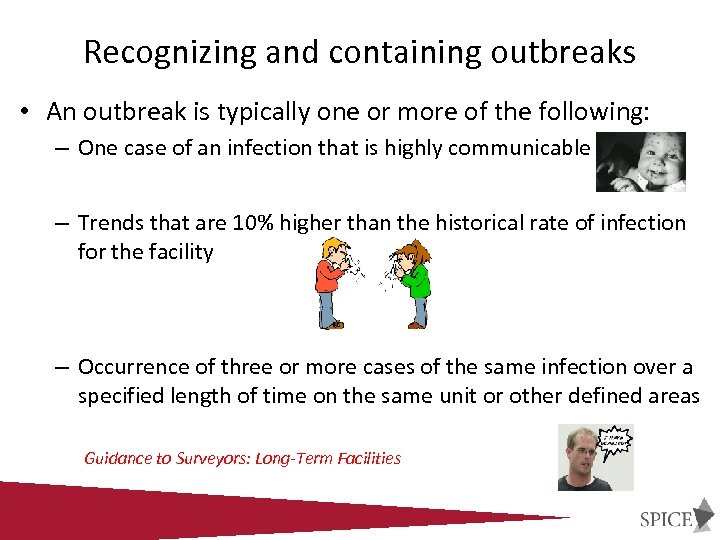 Recognizing and containing outbreaks • An outbreak is typically one or more of the following: – One case of an infection that is highly communicable – Trends that are 10% higher than the historical rate of infection for the facility – Occurrence of three or more cases of the same infection over a specified length of time on the same unit or other defined areas Guidance to Surveyors: Long-Term Facilities
 Outbreak Control Ø Surveillance data should be used to detect and prevent outbreaks in the LTCF (Cat IB/IC) Ø State health departments offer guidance and regulations regarding responding to and reporting outbreaks (NCDPH considers 2 or more cases an outbreak) Ø Policies and protocols for prevention and investigation need to be in place Ø Prevent further transmission while considering the needs of all residents and staff
 Isolation and Precautions for LTCF Ø Isolation and precautions policies and procedures should be developed, evaluated, and updated in accordance with most recent CDC/HICPAC guidance (Cat IC) Ø Isolation and precautions systems are an important means for preventing cross-infection Ø Standard Precautions for all residents Ø Transmission-based precautions in accordance with guidelines Ø Contact, droplet and airborne Ø Compliance should be monitored (Process measure)
 Isolation and Precautions for LTCF (cont) ä Each LTCF needs to have a policy dealing with MDROs that is compatible with current guidelines ä adapt the aspects of CDC isolation system that apply to its needs ä Incorporate individual state guidelines (when appropriate) (i. e. medical waste rules) ä Isolation and precaution policies need to define authority ä The nurse should have the authority to initiate precautions in an emergency without a physician’s order
 Policies and Procedures ä Should be developed for each department and service in the facility (housekeeping, physical therapy, respiratory care, dietary, laundry, wound care, pet therapy) ä Need to reflect current and actual practice (reviewed every 3 years) ä Use published guidelines from governmental agencies (i. e. , CDC, OSHA, FDA, EPA, USP)
 Asepsis and Hygiene ä Hands should be washed before and after any patient contact, after removing gloves, when soiled and when otherwise indicated (Cat IA) ä Unless hands are visible soiled, use of alcoholbased hand gels is encouraged ä Policy in accordance with CDC guidelines ä Compliance monitored ä Data and findings reported to staff
 Resident Care Ø Rooms should have accessible sink with soap, water towels and toilet facilities Ø Skin care program Ø Program to prevent UTIs ØRoutine UA/culture to screen not recommended Ø Program to minimize the risk of pneumonia and LRTI (oral hygiene and pneumonia guidelines)
 Resident Health Ø A resident health program should be implemented ØH&P on admission with immunization status ØTB screening (2 step and CXR if positive) ØVaccine for tetanus, diphtheria, influenza, pertussis, pneumococcal pneumonia Ø Policies and procedures addressing visitors (when to limit)
 Influenza Vaccination Ø Between 13 -34% of skilled nursing facilities report an influenza outbreak annually Ø Influenza vaccination of HCP associated with 3040% reduction in mortality of nursing home residents Ø 60% influenza virus infections can be prevented when 100% of HCP are vaccinated Ø Even with above in the last 3 years only an estimated 50 -65% of HCP in LTCF receive the vaccine
 § 483. 80(d) Influenza and Pneumococcal Immunizations • Influenza: Facility must develop policies and procedures to ensure that: – – Before offering, education provided Offered between October 1 -March 31 annually Right to refuse Documentation • Pneumococcal disease: Facility must develop policies and procedures to ensure that: – – Before offering, education provided Offered unless already immunized or medically contraindicated Right to refuse Documentation
 Employee Health Ø All new employees should have a baseline health assessment, including immunization status ØTST at time of hire (2 -step if indicated) ØFollow up TST based on risk assessment ØImmunizations as recommended ØInfluenza ØHBV, Tetanus (tdap) ØManaging employee illness and exposure follow-up http: //epi. publichealth. nc. gov/cd/lhds/manuals/tb/toc. html
 Employee Health cont’ ä Published information from governmental organization (i. e. , CDC) are available. ä LTCF are required to prohibit employees with skin lesions or communicable diseases from direct contact with residents and to prohibit employees with potentially infectious skin lesions from contact with residents food.
 Healthcare Worker Education Ø Infection prevention education should be provided at the time of employment and regularly thereafter (no less than annually) (Cat IC) Ø Topics should include, but are not limited to: Ø Routes of disease transmission Ø Hand Hygiene Ø Sanitation procedures Ø MDROs Ø Transmission-based precautions Ø OSHA required education
 Antibiotic Use and Resistance Ø Antimicrobials account for approximately 40% of all systemic drugs prescribed in LTCFs; Ø Likelihood is 50 -70% that a resident will receive at least one course of a systemic antimicrobial agent during a one-year period. Ø Studies estimate that 40 -75% of systemic antibiotic use may be inappropriate in the longterm care setting. Recommendations for Surveillance and reporting of Healthcare Associated Infections in Long Term Care Facilities (CSTE)
 Antibiotic Stewardship Ø Infection prevention programs in LTCFs should be encouraged to include a component of antibiotic stewardship (Cat IB) ØEncourage judicious use of antimicrobials with guidelines ØMonitor utilization and appropriateness ØMonitor susceptibility results
 Communicable Disease Reporting Ø State health departments provide a list of reportable diseases (Communicable Disease Report Cards) Ø NC the attending physician is responsible for reporting communicable diseases Ø NC law provides for a designee to do the reporting (i. e. , IP or laboratory)
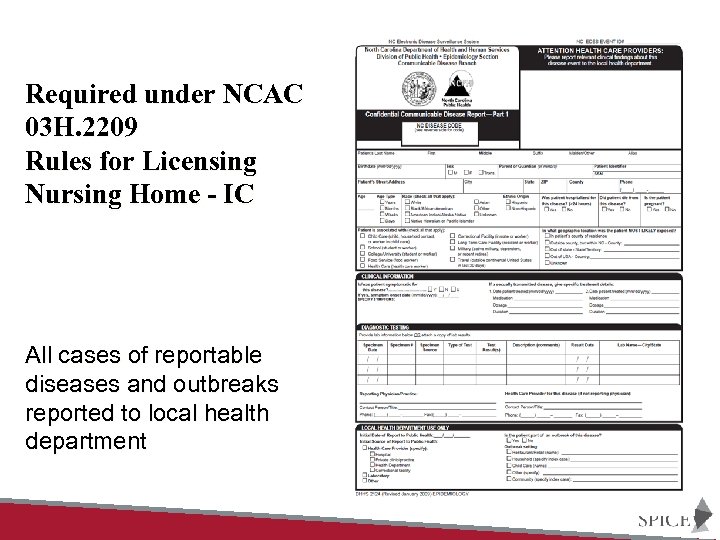 Required under NCAC 03 H. 2209 Rules for Licensing Nursing Home - IC All cases of reportable diseases and outbreaks reported to local health department
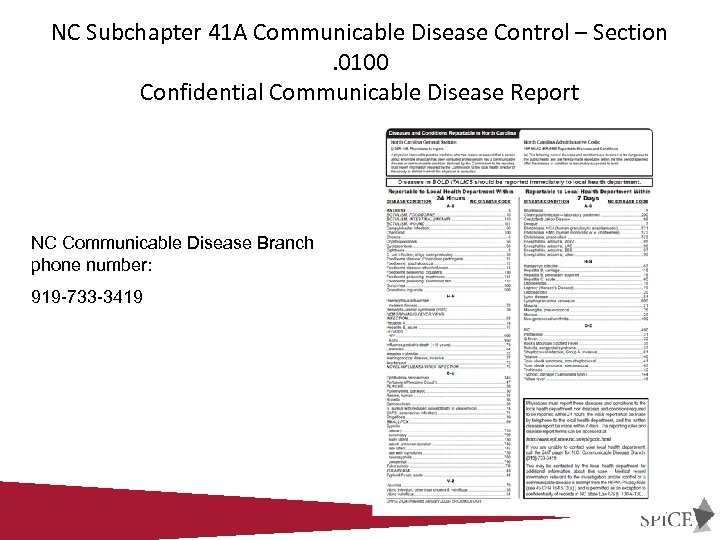 NC Subchapter 41 A Communicable Disease Control – Section . 0100 Confidential Communicable Disease Report NC Communicable Disease Branch phone number: 919 -733 -3419
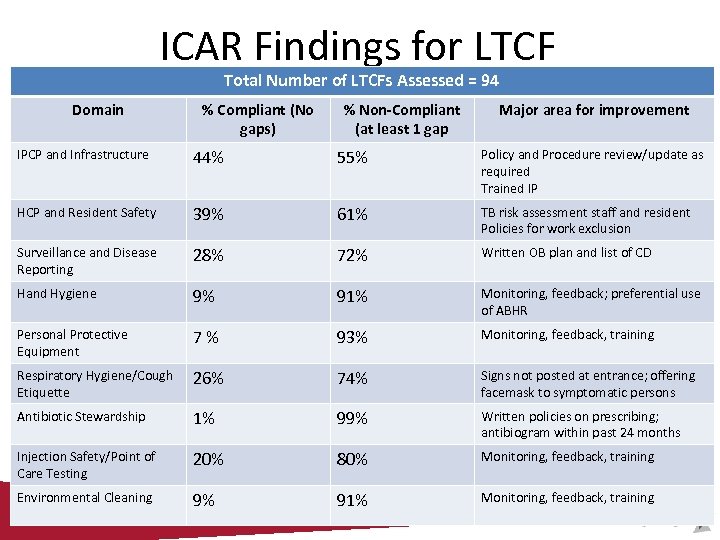 ICAR Findings for LTCF Total Number of LTCFs Assessed = 94 Domain % Compliant (No gaps) % Non-Compliant (at least 1 gap Major area for improvement IPCP and Infrastructure 44% 55% Policy and Procedure review/update as required Trained IP HCP and Resident Safety 39% 61% TB risk assessment staff and resident Policies for work exclusion Surveillance and Disease Reporting 28% 72% Written OB plan and list of CD Hand Hygiene 9% 91% Monitoring, feedback; preferential use of ABHR Personal Protective Equipment 7 % 93% Monitoring, feedback, training Respiratory Hygiene/Cough Etiquette 26% 74% Signs not posted at entrance; offering facemask to symptomatic persons Antibiotic Stewardship 1% 99% Written policies on prescribing; antibiogram within past 24 months Injection Safety/Point of Care Testing 20% 80% Monitoring, feedback, training Environmental Cleaning 9% 91% Monitoring, feedback, training
 In Conclusion ü One person, the IP, should be assigned the responsibility of directing, infection control activities in LTCF ü The IP should have a written job description of infection control activities ü The IP requires the support of administration in order to function effectively ü The IP needs to be guaranteed sufficient time to direct the infection control program ü The IP should have written authority to institute infection control measures.
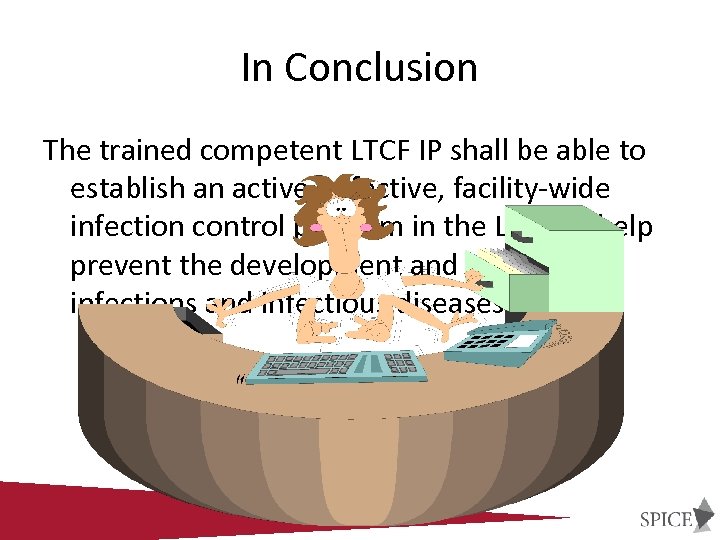 In Conclusion The trained competent LTCF IP shall be able to establish an active, effective, facility-wide infection control program in the LTCF to help prevent the development and spread of infections and infectious diseases.
 Quote by a Famous Doctor “Unless someone like you cares a whole awful lot, Nothing is going to get better. It’s not” Dr. Seuss The Lorax

 RESOURCES
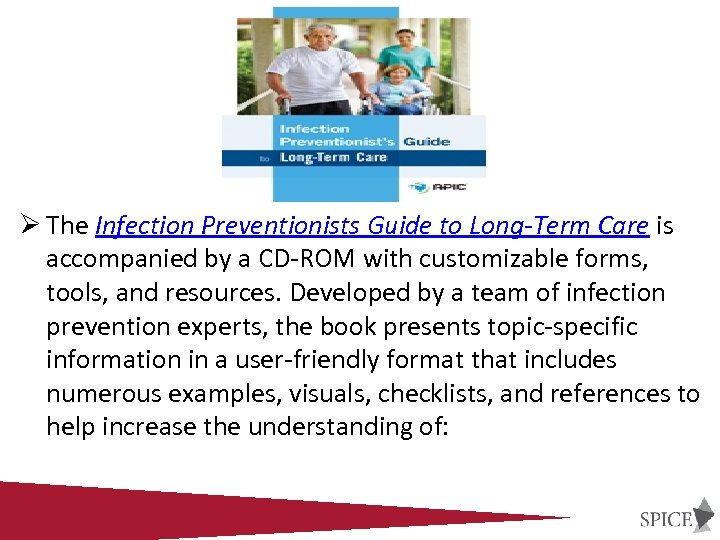 Ø The Infection Preventionists Guide to Long-Term Care is accompanied by a CD-ROM with customizable forms, tools, and resources. Developed by a team of infection prevention experts, the book presents topic-specific information in a user-friendly format that includes numerous examples, visuals, checklists, and references to help increase the understanding of:
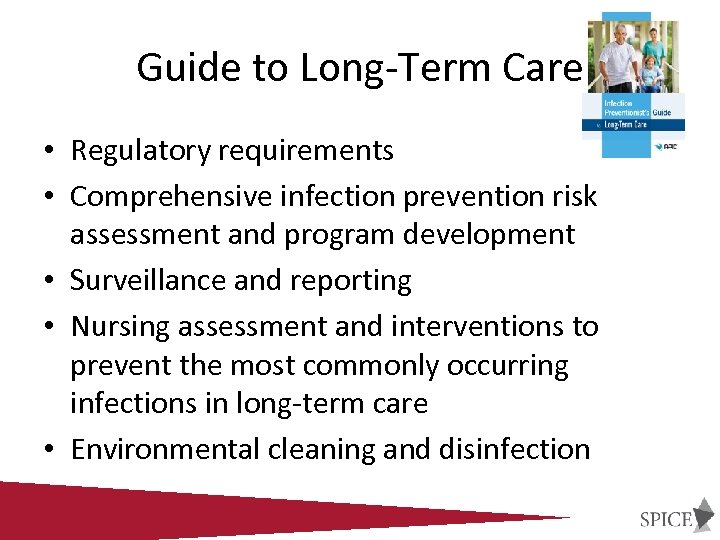 Guide to Long-Term Care • Regulatory requirements • Comprehensive infection prevention risk assessment and program development • Surveillance and reporting • Nursing assessment and interventions to prevent the most commonly occurring infections in long-term care • Environmental cleaning and disinfection
 • Unique long-term care issues such as care transitions and life enrichment activities • Occupational health, immunization programs, and staff education • Disaster and pandemic preparedness (Member Price $169. 00)
 Regulatory Focus Bulletin Is an informational and educational service of the Regulatory Focus Committee to assist you in finding the resources for answers to questions regarding issues not regulated by the Division of Health Service Regulation. The source of the information is included for your reference. FILE TOPIC: Infection Control Regulatory Focus Bulletin will address questions on infection control found in the Federal regulation and North Carolina licensure rules. Most infection control issues are addressed by the Centers for Disease Control and/or the NC Statewide Program for Infection Control.
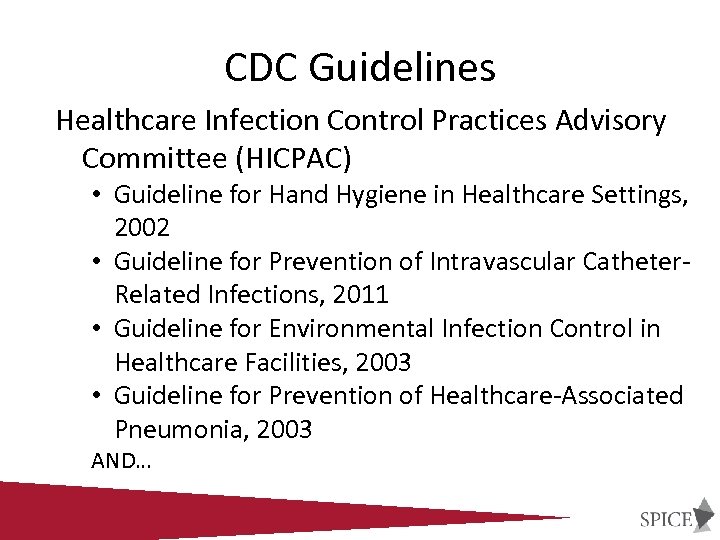 CDC Guidelines Healthcare Infection Control Practices Advisory Committee (HICPAC) • Guideline for Hand Hygiene in Healthcare Settings, 2002 • Guideline for Prevention of Intravascular Catheter. Related Infections, 2011 • Guideline for Environmental Infection Control in Healthcare Facilities, 2003 • Guideline for Prevention of Healthcare-Associated Pneumonia, 2003 AND…
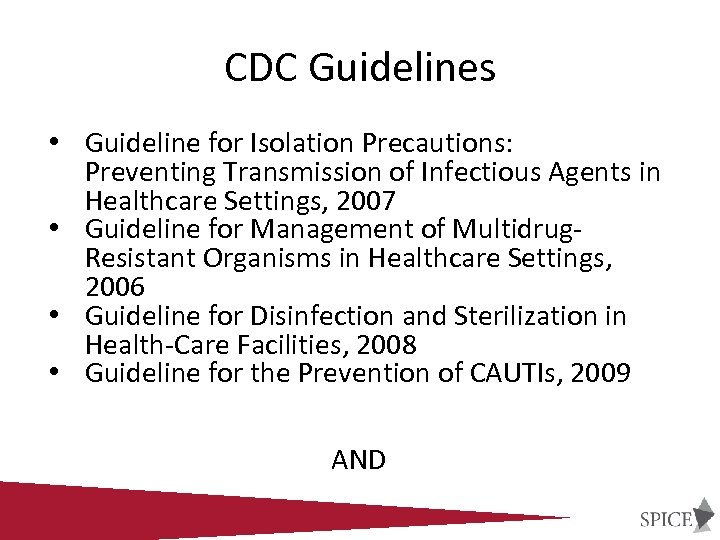 CDC Guidelines • Guideline for Isolation Precautions: Preventing Transmission of Infectious Agents in Healthcare Settings, 2007 • Guideline for Management of Multidrug. Resistant Organisms in Healthcare Settings, 2006 • Guideline for Disinfection and Sterilization in Health-Care Facilities, 2008 • Guideline for the Prevention of CAUTIs, 2009 AND
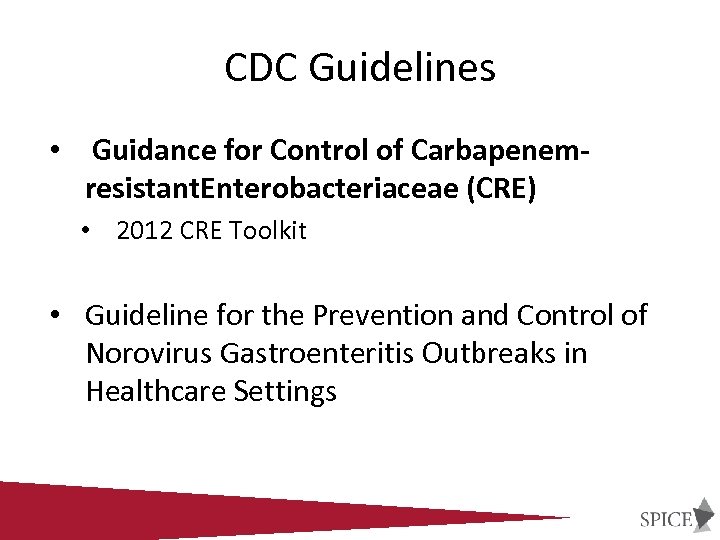 CDC Guidelines • Guidance for Control of Carbapenemresistant. Enterobacteriaceae (CRE) • 2012 CRE Toolkit • Guideline for the Prevention and Control of Norovirus Gastroenteritis Outbreaks in Healthcare Settings
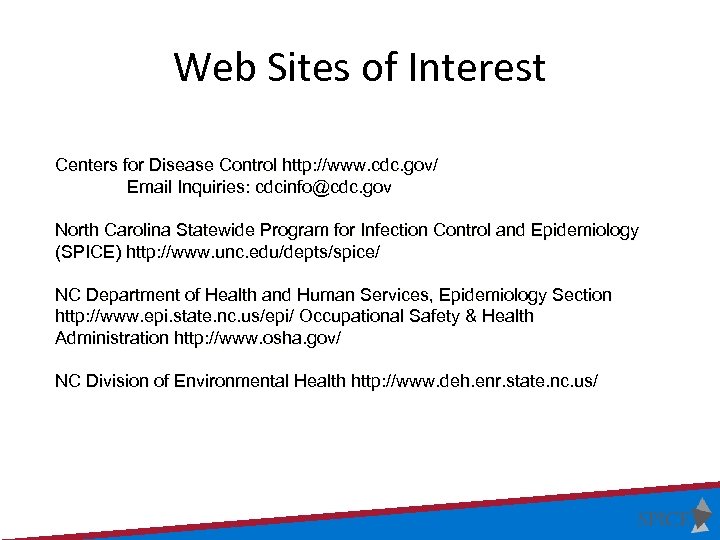 Web Sites of Interest Centers for Disease Control http: //www. cdc. gov/ Email Inquiries: cdcinfo@cdc. gov North Carolina Statewide Program for Infection Control and Epidemiology (SPICE) http: //www. unc. edu/depts/spice/ NC Department of Health and Human Services, Epidemiology Section http: //www. epi. state. nc. us/epi/ Occupational Safety & Health Administration http: //www. osha. gov/ NC Division of Environmental Health http: //www. deh. enr. state. nc. us/
 References ä Smith PW, et al. Infection Prevention and Control in the Long. Term Care Facility. Infect Control Hosp Epidemiol 2008; 29: 785814. ä CMS Manual System; Subject: State Operations Manual Appendix PP- Guidance to Surveyors for Long Term Care Facilities, Tag F 483. 80 ä National Action Plan To Prevent Health Careassociated Infections: Road Map To Elimination: April 2013 Chapter 8: Long-Term Care Facilities ä Council of State and Territorial Epidemiologists; “Recommendations for Surveillance and Reporting of Healthcare Associated Infections in Long Term Care Facilities” ä CDC Prevalence Project: Healthcare-Associated Infections and Antimicrobial Use in Nursing Homes and Skilled Nursing Facilities