


 Скачать презентацию Development of a Smart Stent Graft Sense Cardio
09ec8fa6bcd132889b1a43112996a1c0.ppt
- Количество слайдов: 20
 Development of a Smart Stent Graft Sense. Cardio. Health Luis A. Rocha
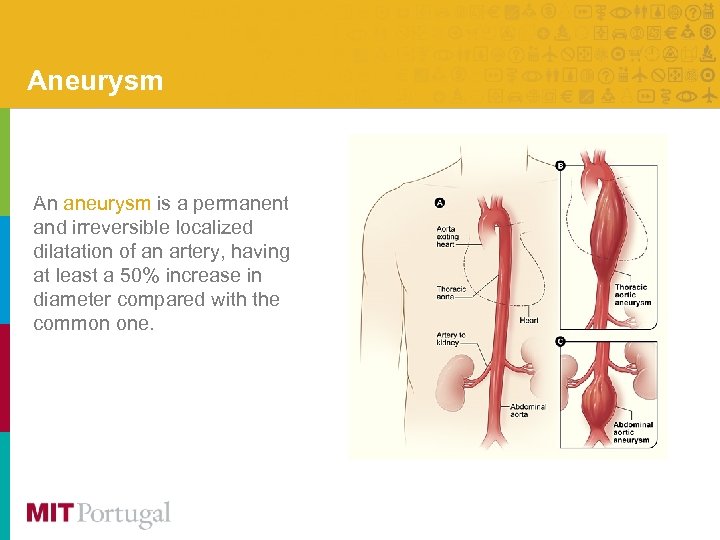 Aneurysm An aneurysm is a permanent and irreversible localized dilatation of an artery, having at least a 50% increase in diameter compared with the common one.
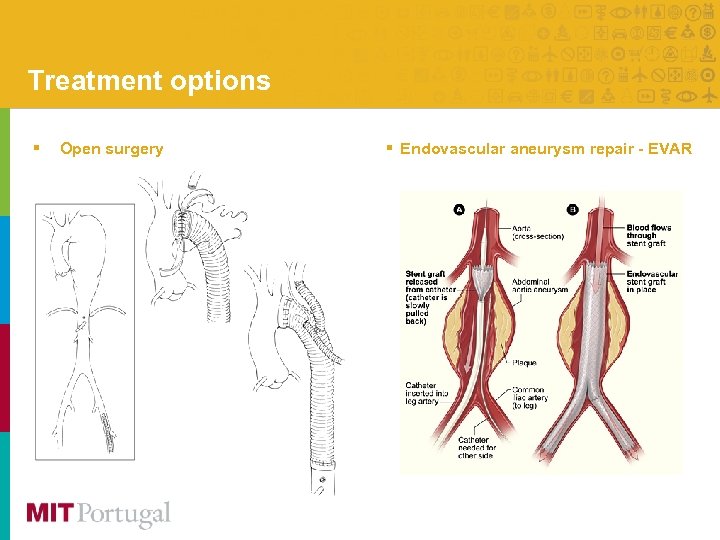 Treatment options § Open surgery § Endovascular aneurysm repair - EVAR
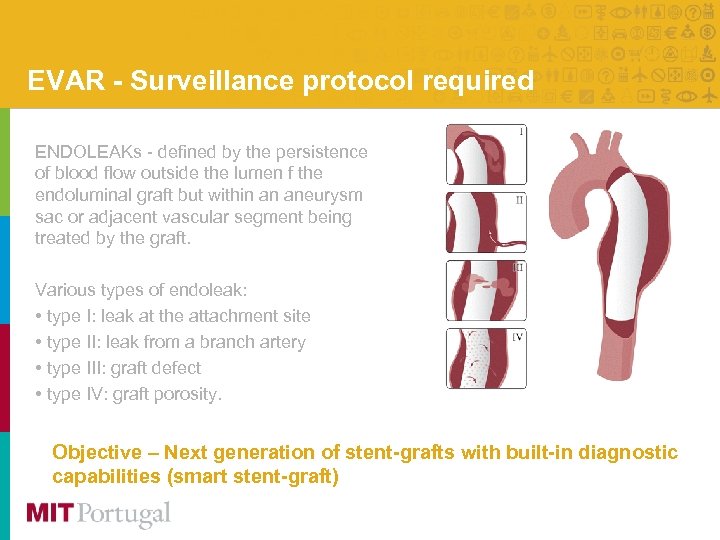 EVAR - Surveillance protocol required ENDOLEAKs - defined by the persistence of blood flow outside the lumen f the endoluminal graft but within an aneurysm sac or adjacent vascular segment being treated by the graft. Various types of endoleak: • type I: leak at the attachment site • type II: leak from a branch artery • type III: graft defect • type IV: graft porosity. Objective – Next generation of stent-grafts with built-in diagnostic capabilities (smart stent-graft)
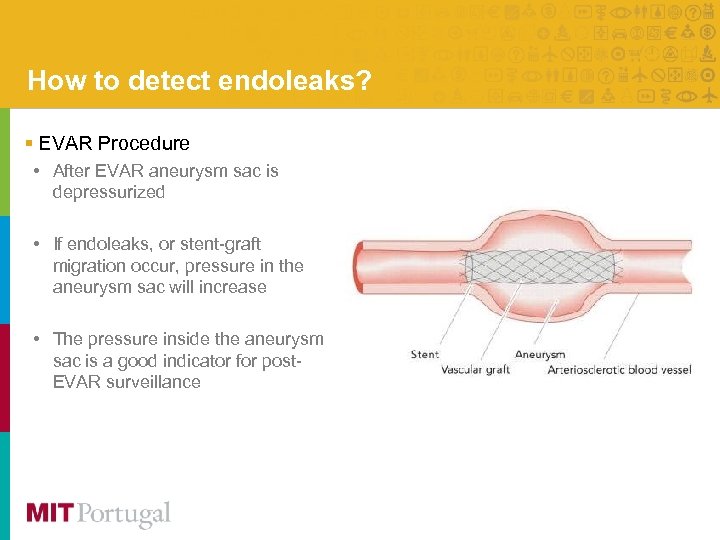 How to detect endoleaks? § EVAR Procedure • After EVAR aneurysm sac is depressurized • If endoleaks, or stent-graft migration occur, pressure in the aneurysm sac will increase • The pressure inside the aneurysm sac is a good indicator for post. EVAR surveillance
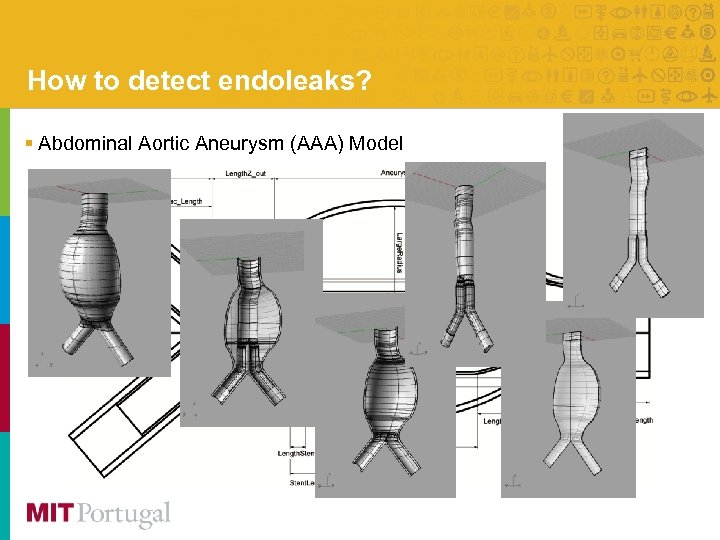 How to detect endoleaks? § Abdominal Aortic Aneurysm (AAA) Model
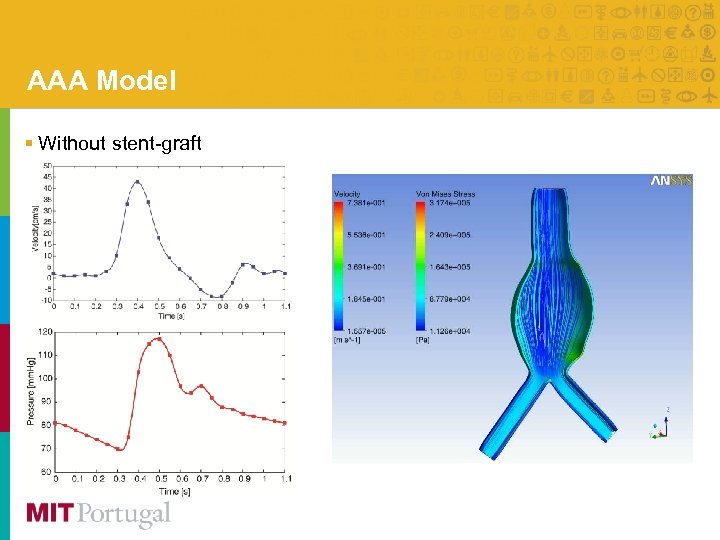 AAA Model § Without stent-graft
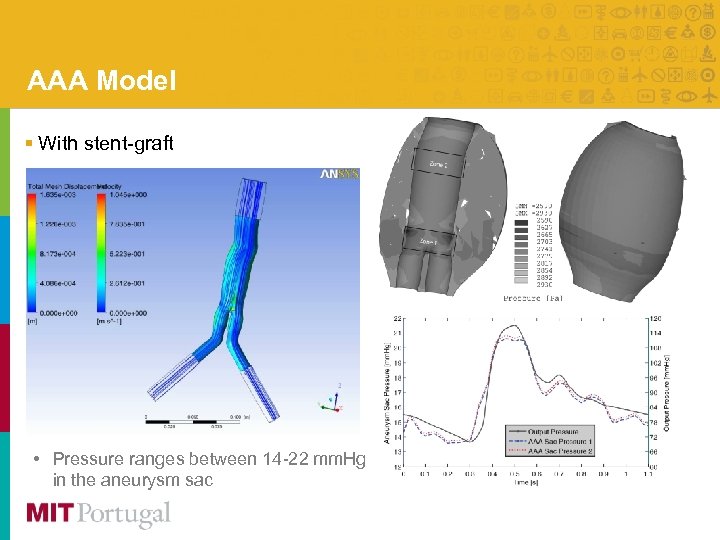 AAA Model § With stent-graft • Pressure ranges between 14 -22 mm. Hg in the aneurysm sac
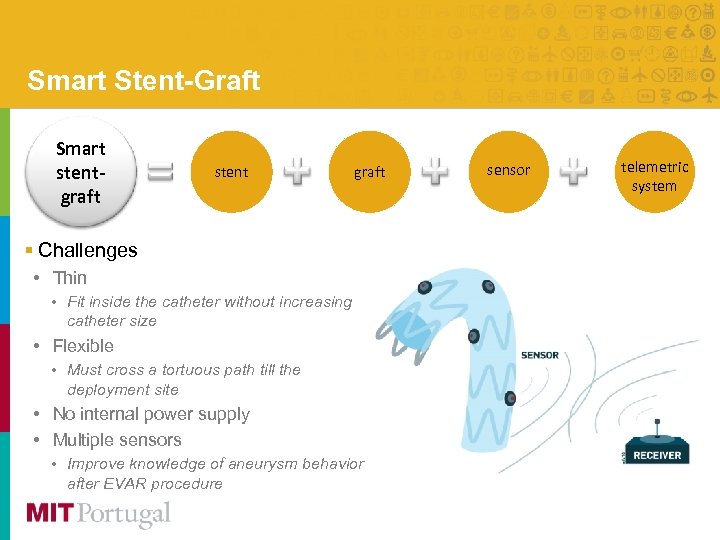 Smart Stent-Graft Smart stentgraft stent graft § Challenges • Thin • Fit inside the catheter without increasing catheter size • Flexible • Must cross a tortuous path till the deployment site • No internal power supply • Multiple sensors • Improve knowledge of aneurysm behavior after EVAR procedure sensor telemetric system
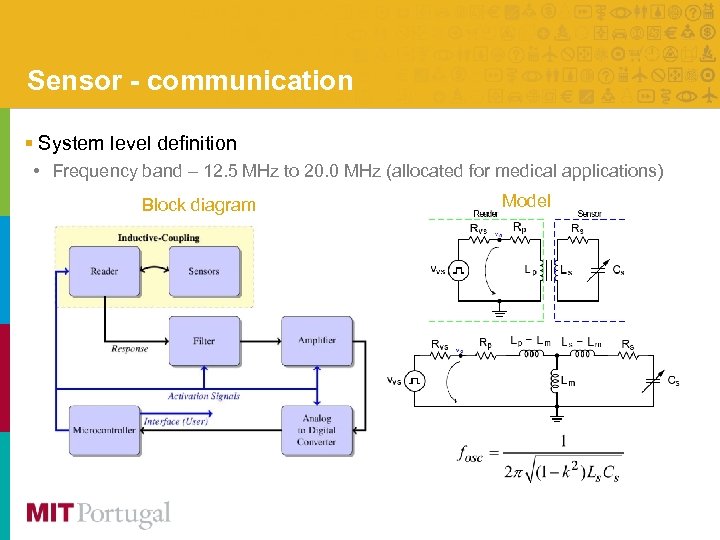 Sensor - communication § System level definition • Frequency band – 12. 5 MHz to 20. 0 MHz (allocated for medical applications) Block diagram Model
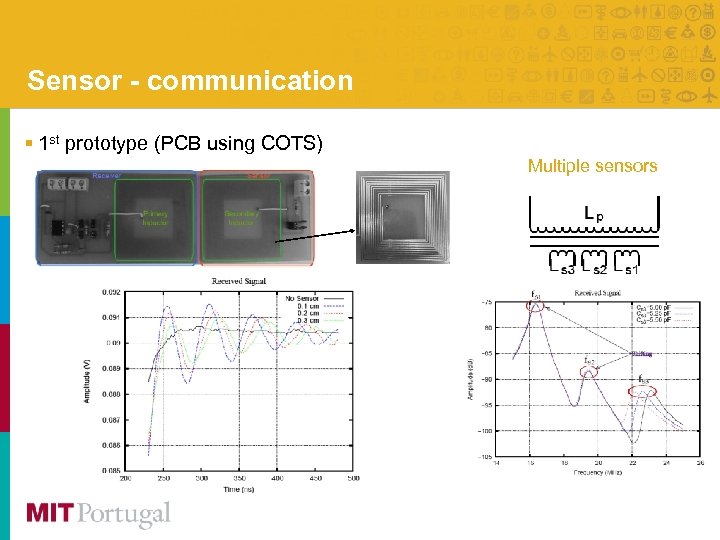 Sensor - communication § 1 st prototype (PCB using COTS) Multiple sensors
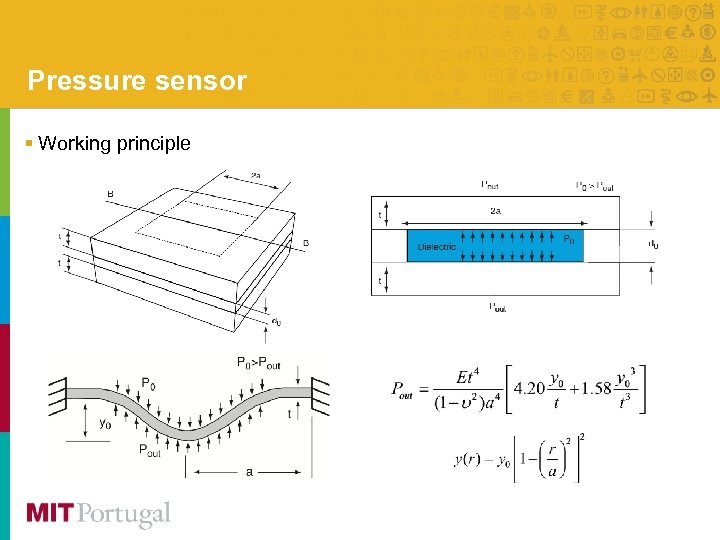 Pressure sensor § Working principle
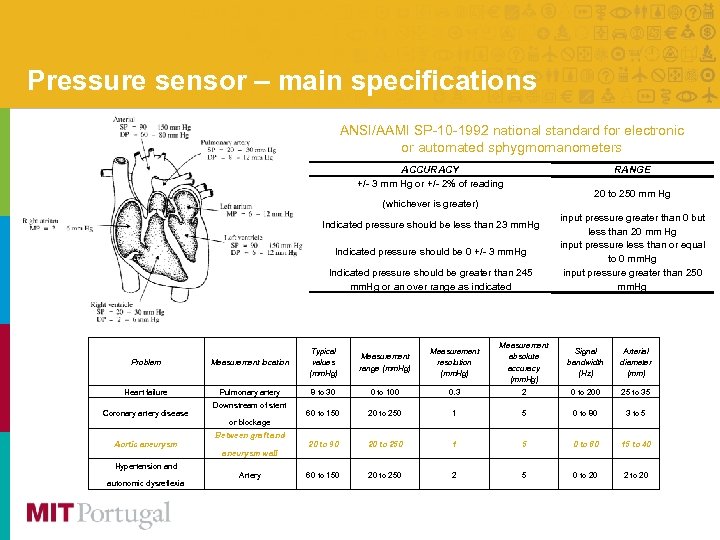 Pressure sensor – main specifications ANSI/AAMI SP-10 -1992 national standard for electronic or automated sphygmomanometers ACCURACY +/- 3 mm Hg or +/- 2% of reading RANGE 20 to 250 mm Hg (whichever is greater) Indicated pressure should be less than 23 mm. Hg Indicated pressure should be 0 +/- 3 mm. Hg Indicated pressure should be greater than 245 mm. Hg or an over range as indicated Problem Heart failure Coronary artery disease Aortic aneurysm Hypertension and autonomic dysreflexia input pressure greater than 0 but less than 20 mm Hg input pressure less than or equal to 0 mm. Hg input pressure greater than 250 mm. Hg Measurement location Typical values (mm. Hg) Measurement range (mm. Hg) Measurement resolution (mm. Hg) Measurement absolute accuracy (mm. Hg) Signal bandwidth (Hz) Arterial diameter (mm) Pulmonary artery 8 to 30 0 to 100 0. 3 2 0 to 200 25 to 35 60 to 150 20 to 250 1 5 0 to 80 3 to 5 20 to 90 20 to 250 1 5 0 to 80 15 to 40 60 to 150 20 to 250 2 5 0 to 20 2 to 20 Downstream of stent or blockage Between graft and aneurysm wall Artery
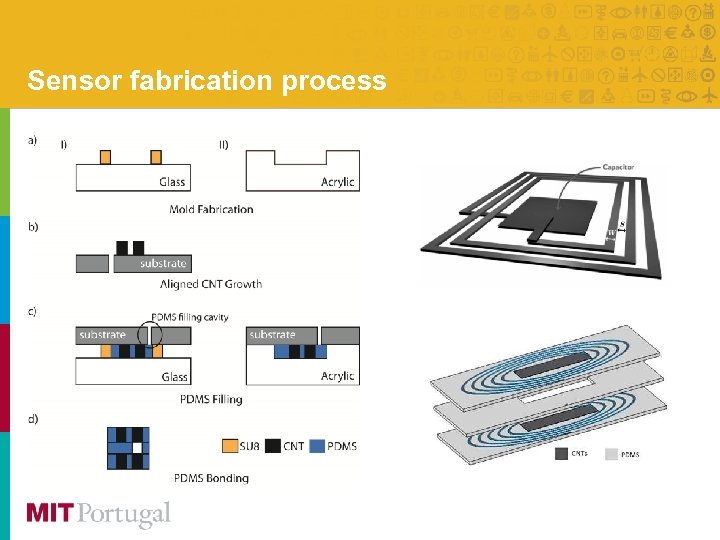
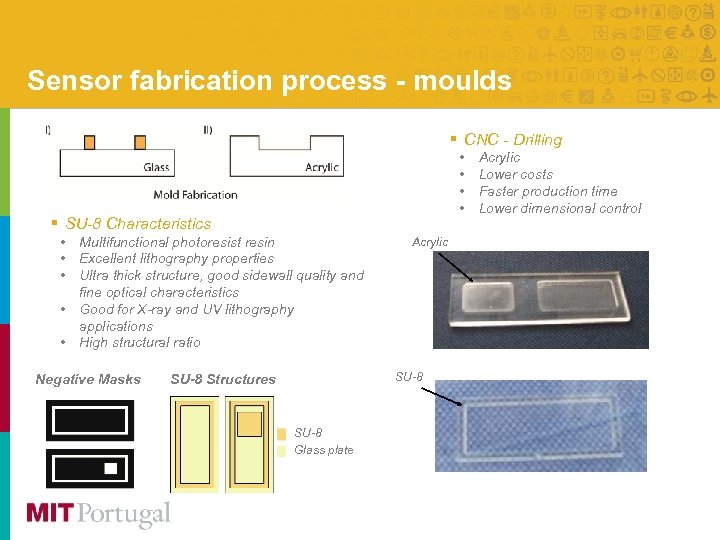 Sensor fabrication process - moulds § CNC - Drilling • • § SU-8 Characteristics • Multifunctional photoresist resin • Excellent lithography properties • Ultra thick structure, good sidewall quality and fine optical characteristics • Good for X-ray and UV lithography applications • High structural ratio Negative Masks Acrylic SU-8 Structures SU-8 Glass plate Acrylic Lower costs Faster production time Lower dimensional control
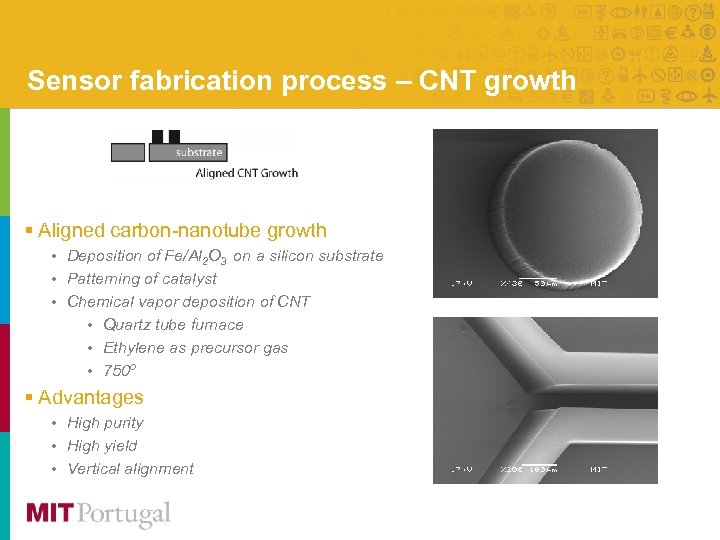 Sensor fabrication process – CNT growth § Aligned carbon-nanotube growth • Deposition of Fe/Al 2 O 3 on a silicon substrate • Patterning of catalyst • Chemical vapor deposition of CNT • Quartz tube furnace • Ethylene as precursor gas • 750º § Advantages • High purity • High yield • Vertical alignment
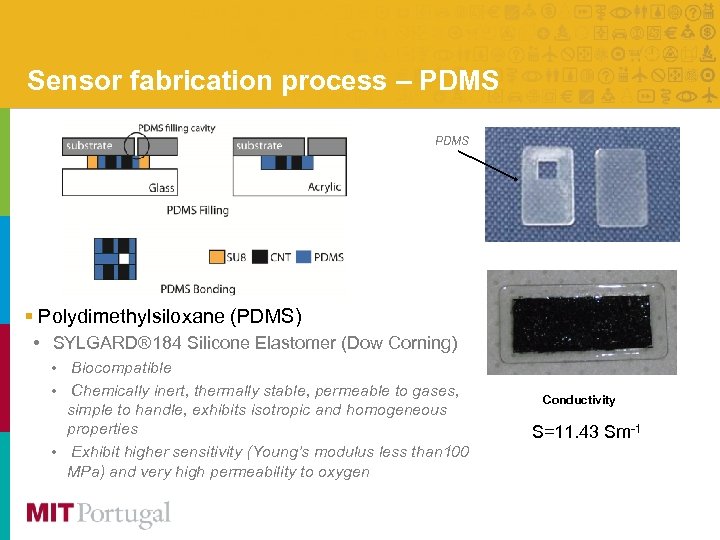 Sensor fabrication process – PDMS § Polydimethylsiloxane (PDMS) • SYLGARD® 184 Silicone Elastomer (Dow Corning) • Biocompatible • Chemically inert, thermally stable, permeable to gases, simple to handle, exhibits isotropic and homogeneous properties • Exhibit higher sensitivity (Young’s modulus less than 100 MPa) and very high permeability to oxygen Conductivity S=11. 43 Sm-1
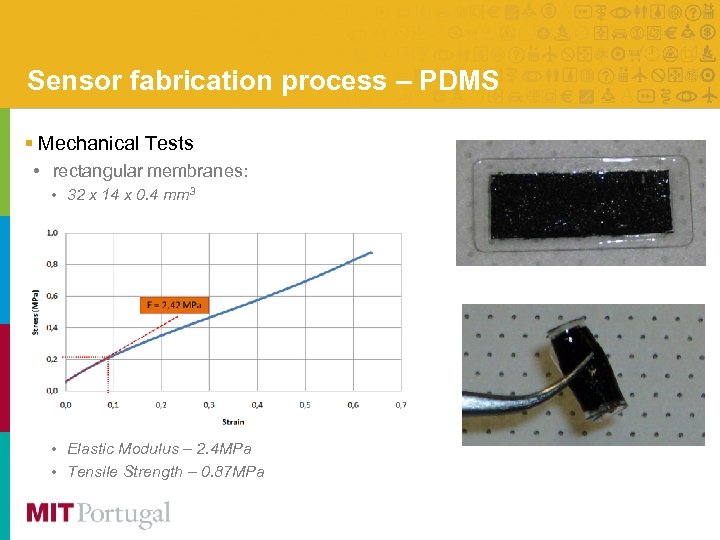 Sensor fabrication process – PDMS § Mechanical Tests • rectangular membranes: • 32 x 14 x 0. 4 mm 3 • Elastic Modulus – 2. 4 MPa • Tensile Strength – 0. 87 MPa
 Sensor fabrication process
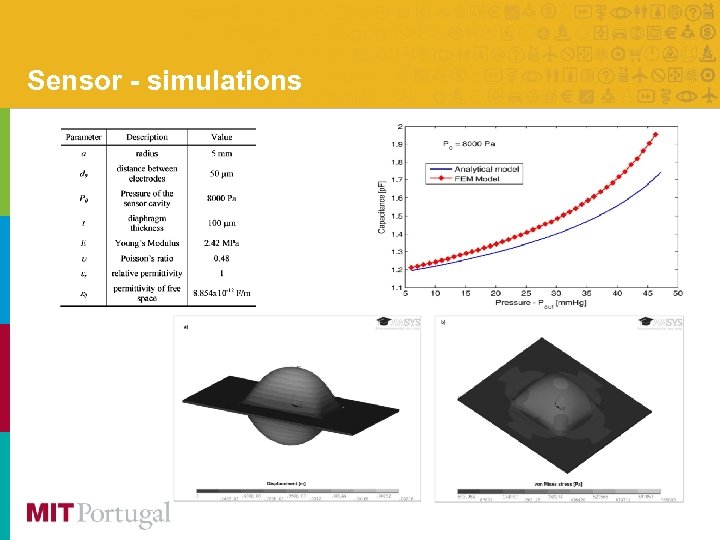 Sensor - simulations
 Sense. Cardio. Health Research Team Luis A. Rocha (UMinho/IPC) – Principal Investigator University of Minho FEUP • Julio Viana (IPC) • António Pontes (IPC) • Alexandra Sepulveda (LTI) • José Machado da Silva (INESC Porto) • Joaquim Gabriel Mendes (IDMEC) • João Tavares (INEGI) • Isa Santos (LTI) • Alfredo Moreira (Scholarship) Instituto Superior Técnico • Alexandra Rodrigues (ICEMS) • Bin Li (ICEMS) • Lígia Figueiredo (Scholarship) Massachusetts Institute of Technology • Brian Wardle (MPC and MEMS@MIT) • Fabio Fachin Collaborators • Roncon de Albuquerque (HSJ) • Sergio Sampaio (HSJ) • Anabela Carvalho (ICS/UMinho)