 Скачать презентацию Development Environment Myths Realities By Garry
5cc234eb12b3d601c27cb9e7407350d3.ppt
- Количество слайдов: 41



Development & Environment Myths & Realities By Garry Jacobs The Mother’s Service Society 1
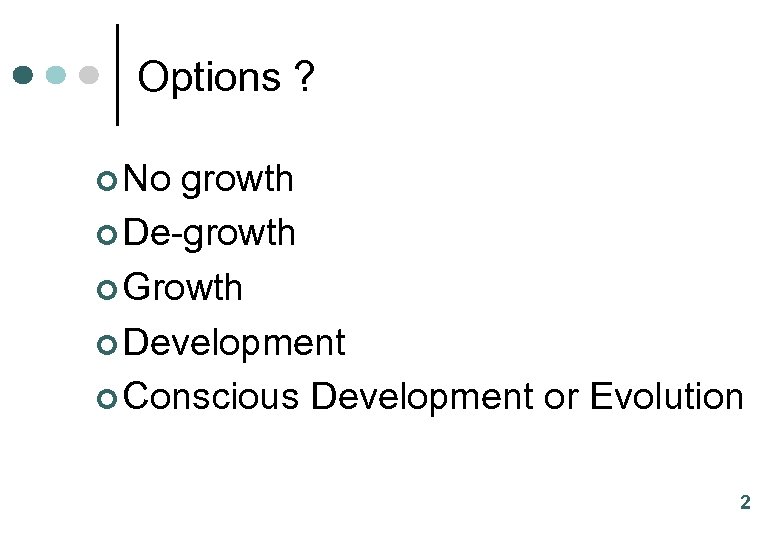
Options ? ¢ No growth ¢ De-growth ¢ Growth ¢ Development ¢ Conscious Development or Evolution 2
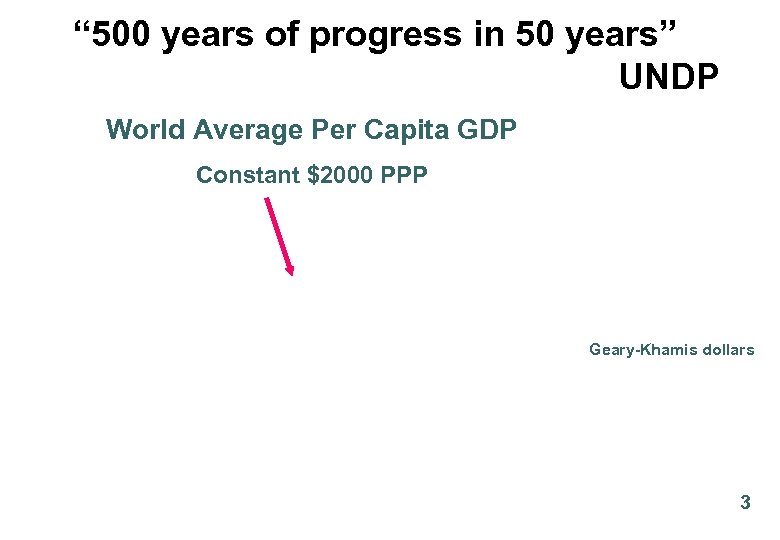
“ 500 years of progress in 50 years” In constant $2000 PPP UNDP World Average PCI 1950 -2000 World Average Per Capita GDP Constant $2000 PPP Geary-Khamis dollars 3
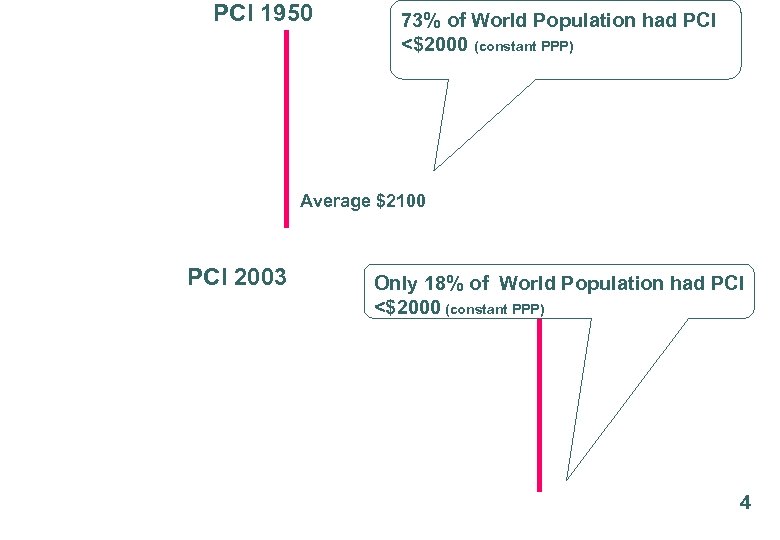
PCI 1950 73% of World Population had PCI <$2000 (constant PPP) Growth of real PCI 1950 -2000 Average $2100 PCI 2003 Only 18% of World Population had PCI <$2000 (constant PPP) 4
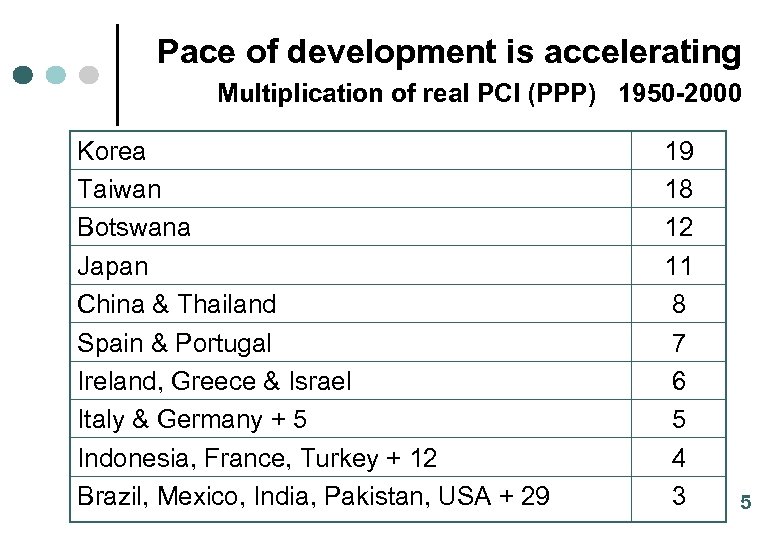
Pace of development is accelerating Multiplication of real PCI (PPP) 1950 -2000 Korea Taiwan Botswana Japan China & Thailand Spain & Portugal Ireland, Greece & Israel Italy & Germany + 5 Indonesia, France, Turkey + 12 Brazil, Mexico, India, Pakistan, USA + 29 19 18 12 11 8 7 6 5 4 3 5
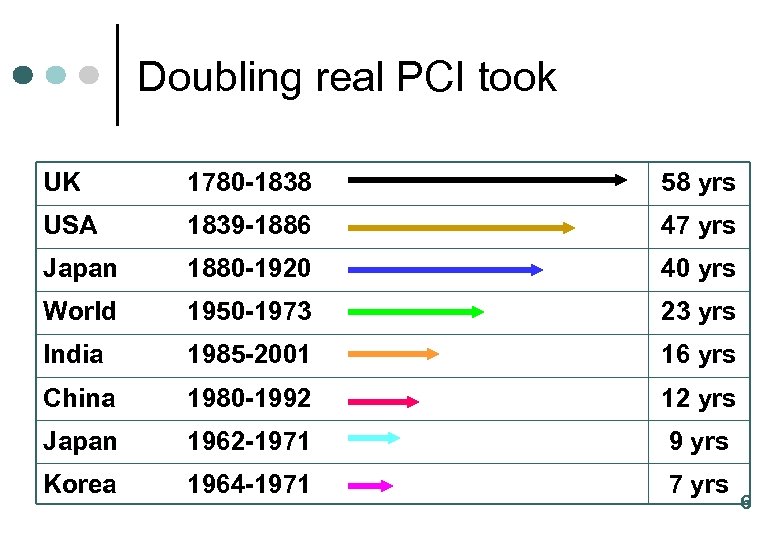
Doubling real PCI took UK 1780 -1838 58 yrs USA 1839 -1886 47 yrs Japan 1880 -1920 40 yrs World 1950 -1973 23 yrs India 1985 -2001 16 yrs China 1980 -1992 12 yrs Japan 1962 -1971 9 yrs Korea 1964 -1971 7 yrs 6
Growth of China, India & World PCI 1000 -2000 (Constant $ PPP) 7

Growth projections 8
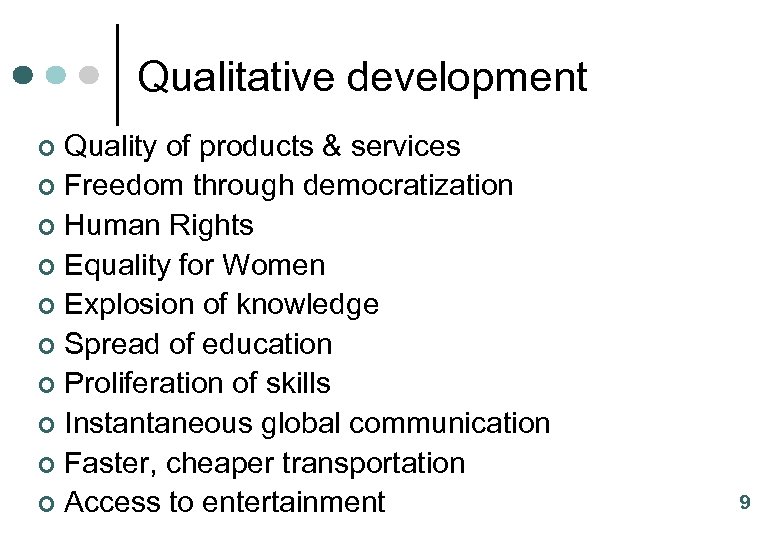
Qualitative development Quality of products & services ¢ Freedom through democratization ¢ Human Rights ¢ Equality for Women ¢ Explosion of knowledge ¢ Spread of education ¢ Proliferation of skills ¢ Instantaneous global communication ¢ Faster, cheaper transportation ¢ Access to entertainment ¢ 9
Unanswered Questions ¢ ¢ ¢ ¢ How can we explain the unprecedented progress since 1950? What factors are responsible for accelerated development? Are high growth rates sustainable? What are the real limits to development? What is the source of the repeated crises & threats to human development? Why is it that every time we solve one problem, weseem to create another one? If the world’s response to crisis is inadequate, are we capable of a different response? If so, how would we define it? Do we as leaders of thought act differently in our own lives? 10
Limits to Development 11
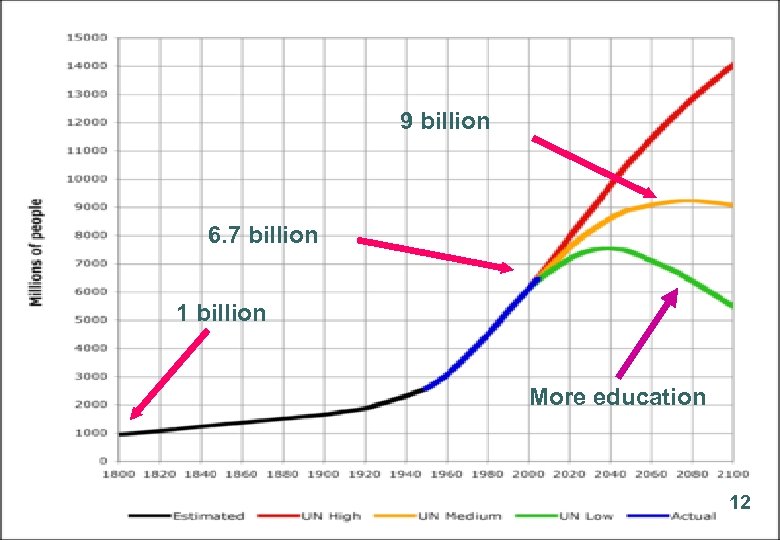
Population Projections 9 billion 6. 7 billion 1 billion More education 12
Limits to Development Viewing development as a physical process, the limits are apparent Land Malthus on Population l Food l Water l Energy l Pollution l Climate Change l 13
Population Explosion ¢ Result of rapid unidimensional advances in medical & agricultural technology l ¢ Saved 100 million lives in India b/n 1950 -1980 Malthus did not conceive of Birth Control l Green Revolution l Impact of education & income on birth rates l ¢ Problems created in one way are often solved in another way 14
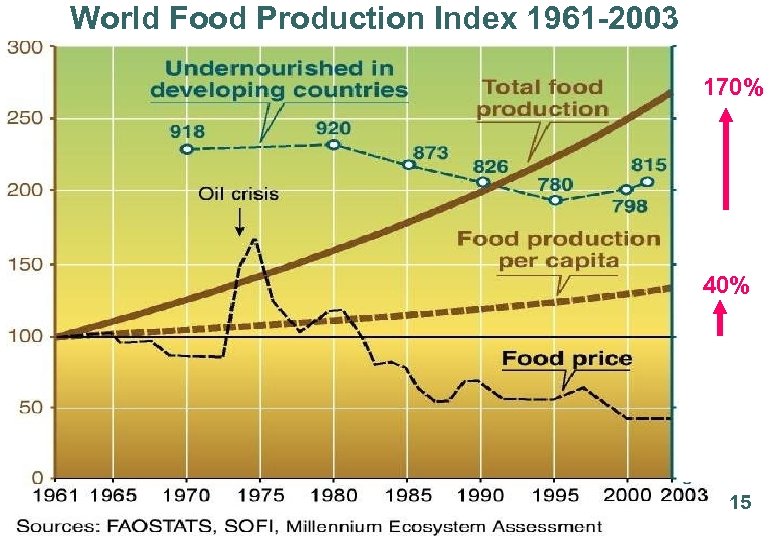
World Food Production Index 1961 -2003 Food Production 170% 40% 15
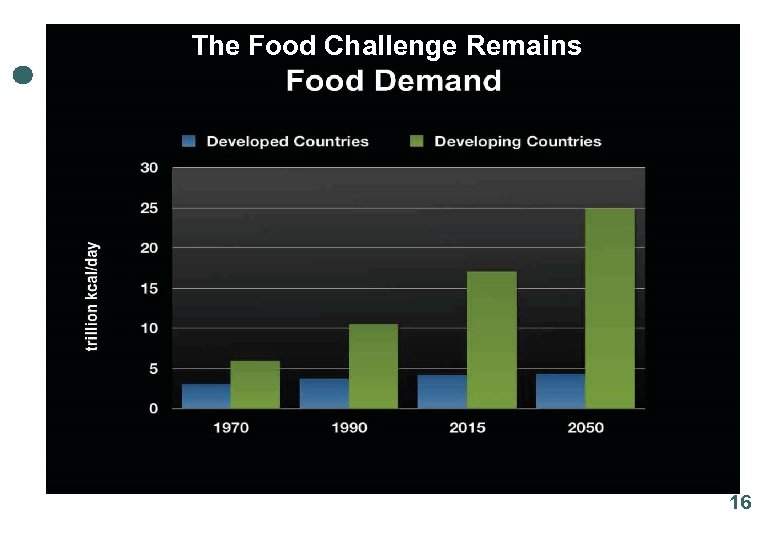
The Food Challenge Remains Food challenge remains 16
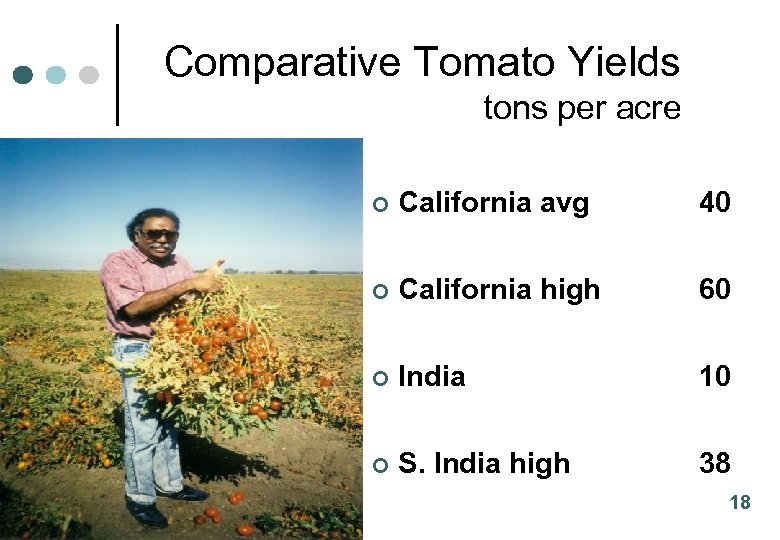
Comparative Tomato Yields tons per acre ¢ California avg 40 ¢ California high 60 ¢ India 10 ¢ S. India high 38 18
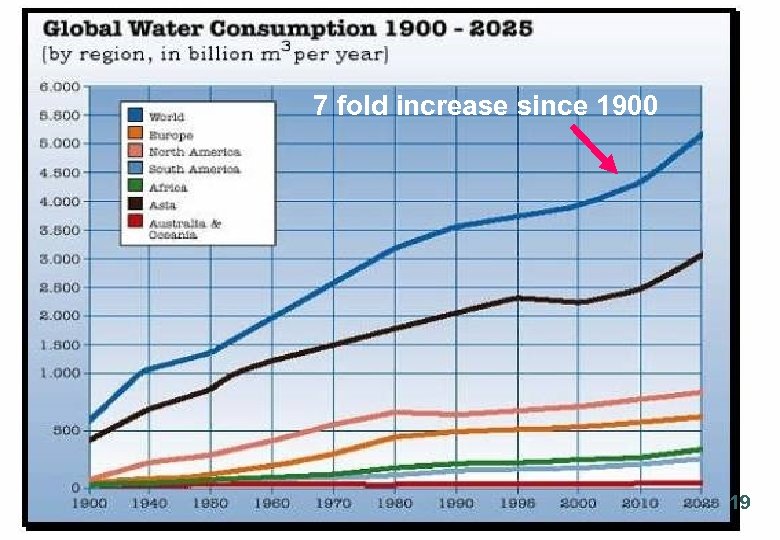
Global Water Consumption 7 fold increase since 1900 19
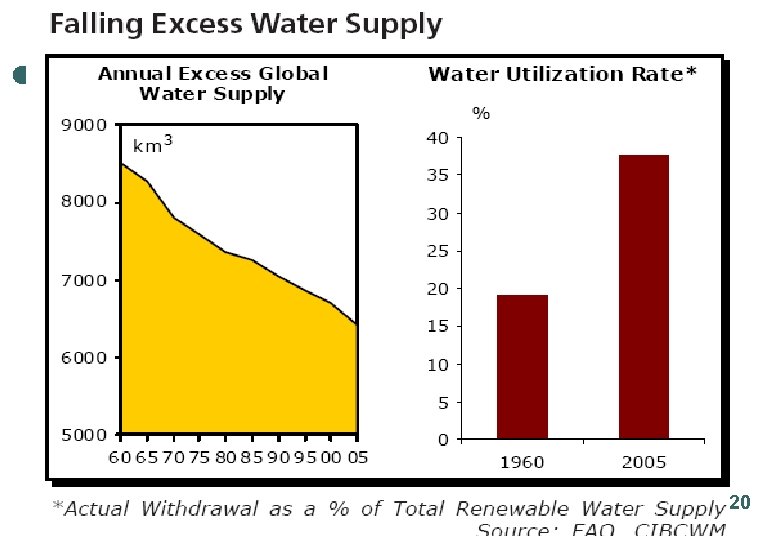
Excess Water Supply 20
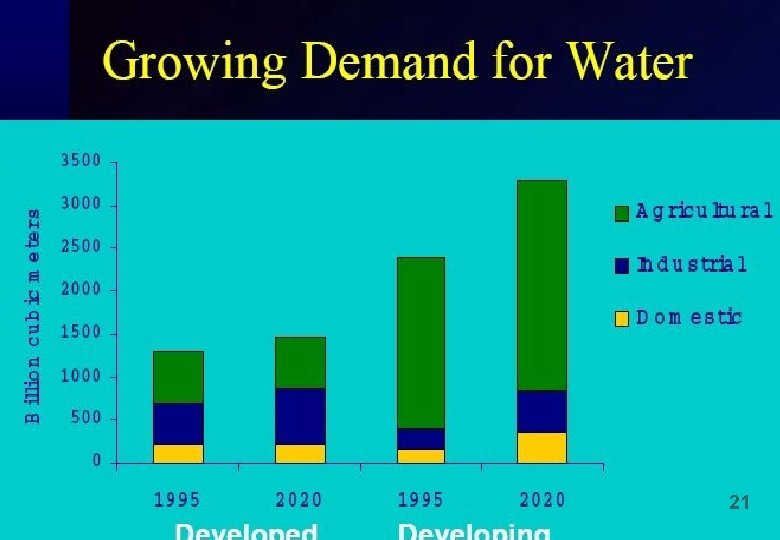
Water Demand 21
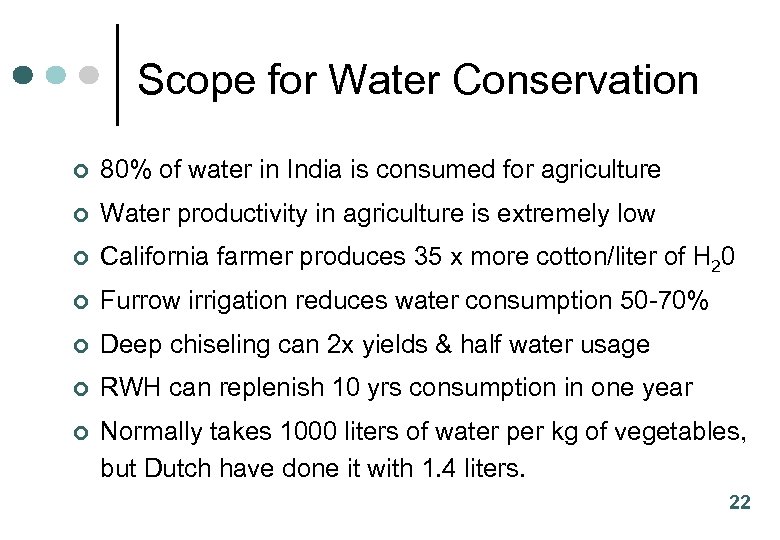
Scope for Water Conservation ¢ 80% of water in India is consumed for agriculture ¢ Water productivity in agriculture is extremely low ¢ California farmer produces 35 x more cotton/liter of H 20 ¢ Furrow irrigation reduces water consumption 50 -70% ¢ Deep chiseling can 2 x yields & half water usage ¢ RWH can replenish 10 yrs consumption in one year ¢ Normally takes 1000 liters of water per kg of vegetables, but Dutch have done it with 1. 4 liters. 22
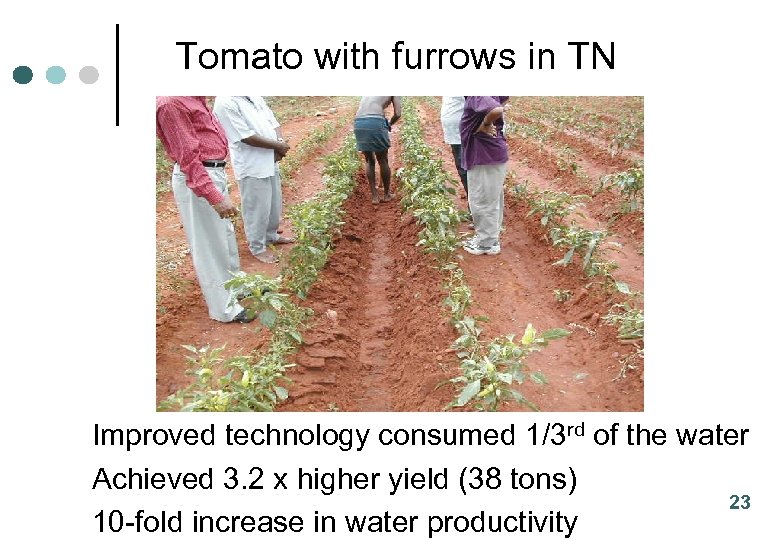
Tomato with furrows in TN Improved technology consumed 1/3 rd of the water Achieved 3. 2 x higher yield (38 tons) 23 10 -fold increase in water productivity
Coal Problem ¢ ¢ ¢ William Stanley Jevons 1835 -82 In 1865 UK led the world in GDP and per capita income & produced 60% of the world’s coal output. Jevons foresaw severe coal shortages Recommended mass emigration to USA & Australia UK coal consumption is now l l l 10% of the peak level in 1913 25% of the level in 1975 7% of total UK energy 24
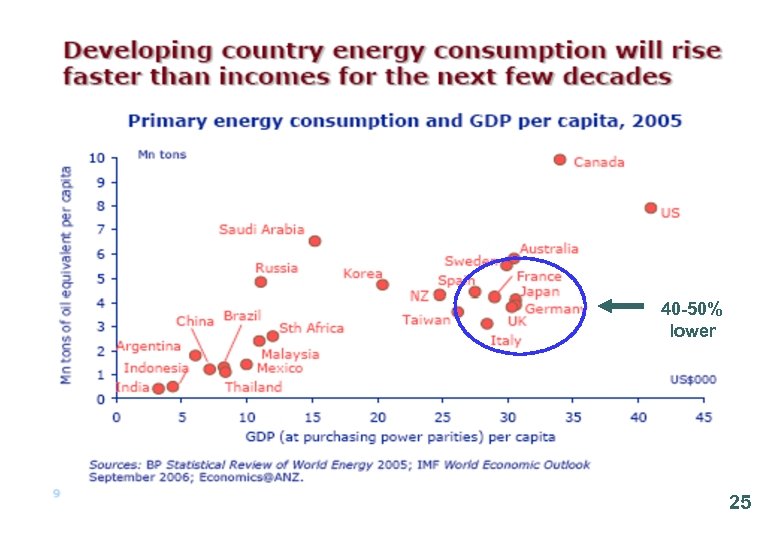
Energy Consumption & GDP per capita 40 -50% lower 25
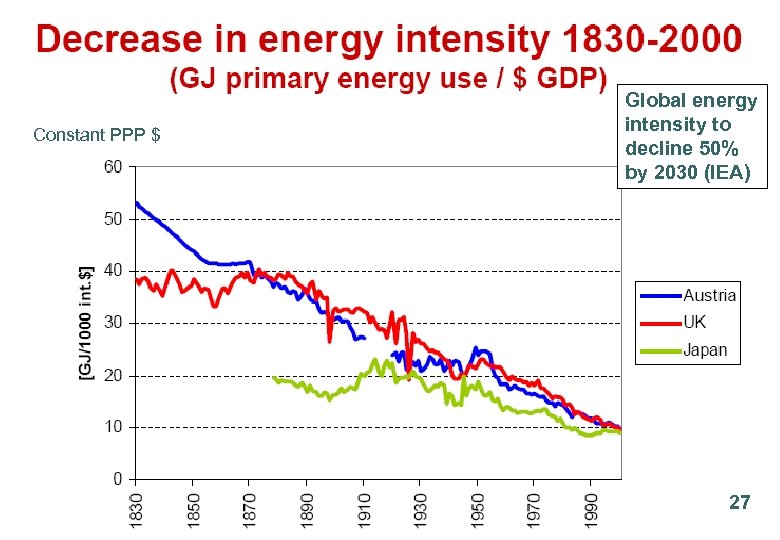
Energy Intensity 1980 -2000 energy Global Constant $$ PPP Constant PPP $ Constant $$ PPP intensity to decline 50% by 2030 (IEA) 27
Mc. Kinsey Energy Studies ¢ Investment in energy efficiency can half the growth in global energy demand, equivalent to $900 billion in savings a year from 2020. 28
Resources 29
What is a resource? ¢ Resources are inputs for carrying out any activity. ¢ Mind discovering a use for anything creates a resource. ¢ Resources make other resources more productive. 30
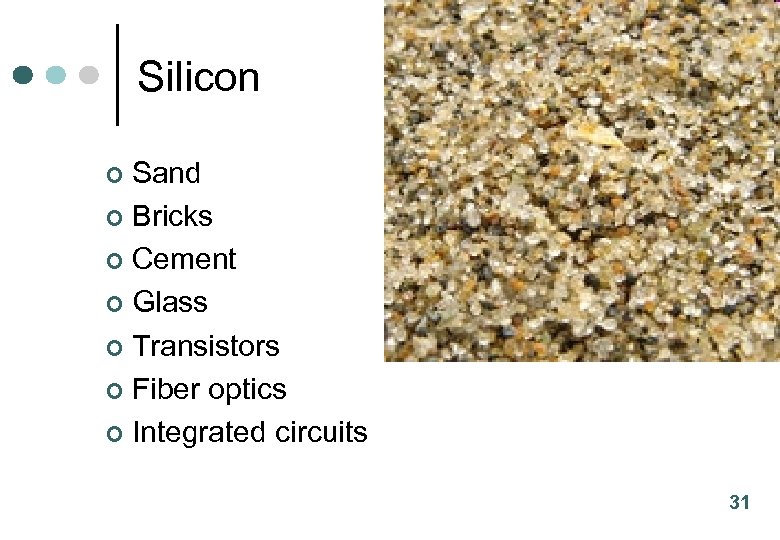
Silicon Sand ¢ Bricks ¢ Cement ¢ Glass ¢ Transistors ¢ Fiber optics ¢ Integrated circuits ¢ 31
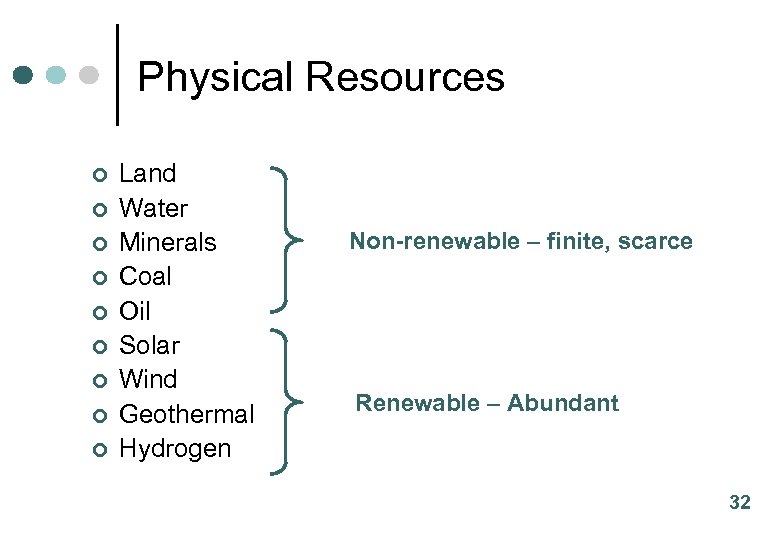
Physical Resources ¢ ¢ ¢ ¢ ¢ Land Water Minerals Coal Oil Solar Wind Geothermal Hydrogen Non-renewable – finite, scarce Renewable – Abundant 32
Social or Organizational Resources Organizations multiply human productivity ¢ Language ¢ Law ¢ Markets ¢ Money ¢ Media ¢ Green Revolution ¢ Education 33
Educational Potential Gross Enrollment Level 34
Mental Resources ¢Technology ¢Information ¢Knowledge ¢Creativity “Unlike material resources, information & knowledge are not lost when you give them away. ” Harlan Cleveland 35
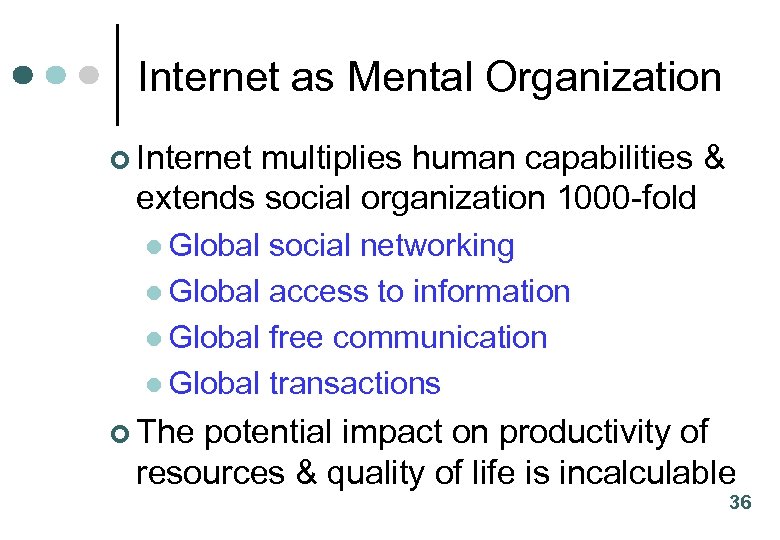
Internet as Mental Organization ¢ Internet multiplies human capabilities & extends social organization 1000 -fold l Global social networking l Global access to information l Global free communication l Global transactions ¢ The potential impact on productivity of resources & quality of life is incalculable 36
Psychological Resources ¢ Rising expectations ¢ Skills & capacities ¢ Culture ¢ Values ¢ Trust 37
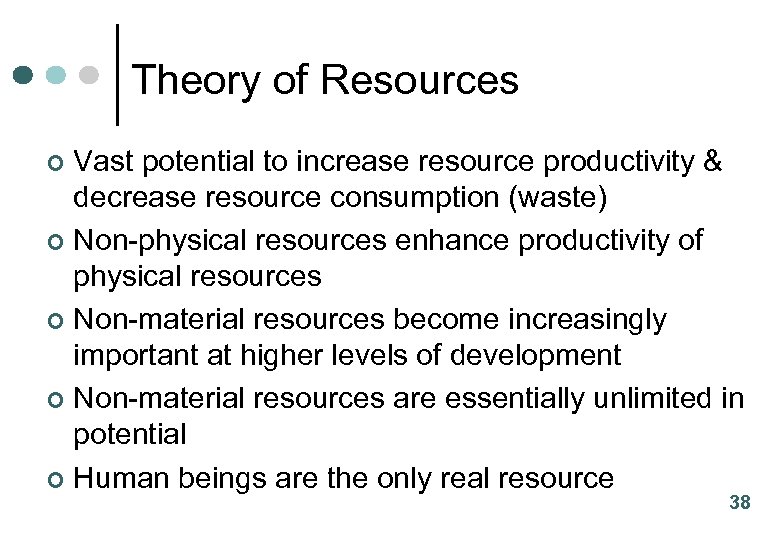
Theory of Resources Vast potential to increase resource productivity & decrease resource consumption (waste) ¢ Non-physical resources enhance productivity of physical resources ¢ Non-material resources become increasingly important at higher levels of development ¢ Non-material resources are essentially unlimited in potential ¢ Human beings are the only real resource ¢ 38
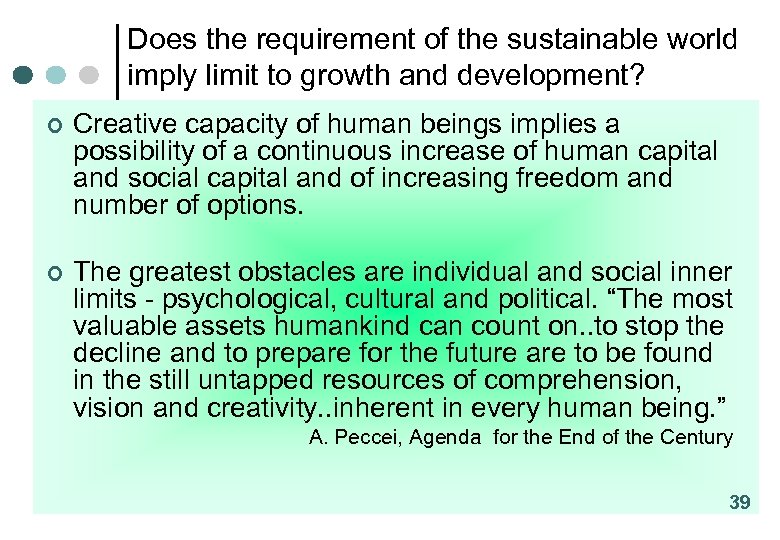
Does the requirement of the sustainable world imply limit to growth and development? ¢ Creative capacity of human beings implies a possibility of a continuous increase of human capital and social capital and of increasing freedom and number of options. ¢ The greatest obstacles are individual and social inner limits - psychological, cultural and political. “The most valuable assets humankind can count on. . to stop the decline and to prepare for the future are to be found in the still untapped resources of comprehension, vision and creativity. . inherent in every human being. ” A. Peccei, Agenda for the End of the Century 39
Why do humans create problems? ¢ ¢ ¢ We learn by trial & error – “evolving from unconsciousness & ignorance to knowledge” Our approach to knowledge is fragmented & compartmentalized, focused on the part, not the whole We know more about the world around us, than about ourselves. We are unconscious of the process of how we learn, change and develop Our motive for learning is largely personal & selfinterested, rather than objective and rational We are ourselves products of nature’s evolution which is subconscious. Can we become conscious of the process of social evolution by which we change? 40
New Paradigm “We need a totally new paradigm for solving problems through knowledge without creating other problems in the process. ” Pushpa Bhargava 41
Conclusions Development challenges & threats come to make us more conscious ¢ Humanity evolves by becoming more conscious & developing more effective social organization ¢ The increasing rates of development are due to a progressive evolution of mental consciousness ¢ The threat of climate change compels us to accelerate that evolution of consciousness & to evolve effective social organization at the global level ¢ 42
Need for a theory of social evolution “Thinking on development is the greatest intellectual challenge of the coming years. ” Boutros Ghali 43
Скачать презентацию Development Environment Myths Realities By Garry
5cc234eb12b3d601c27cb9e7407350d3.ppt