 Скачать презентацию Developing Evolvable or Future -proof Infrastructure Integrating Modularity
f66c84a38e1a3350bf24407a4ccd2fa3.ppt
- Количество слайдов: 23



Developing Evolvable, or Future -proof Infrastructure: Integrating Modularity and Safeguards In Design Nuno Gil nuno. gil@mbs. ac. uk Centre for Research in the Management of Projects (CRMP) Manchester Business School © Nuno Gil, Manchester Business School © Nuno Gil MBS 2006 Berkeley, 2008
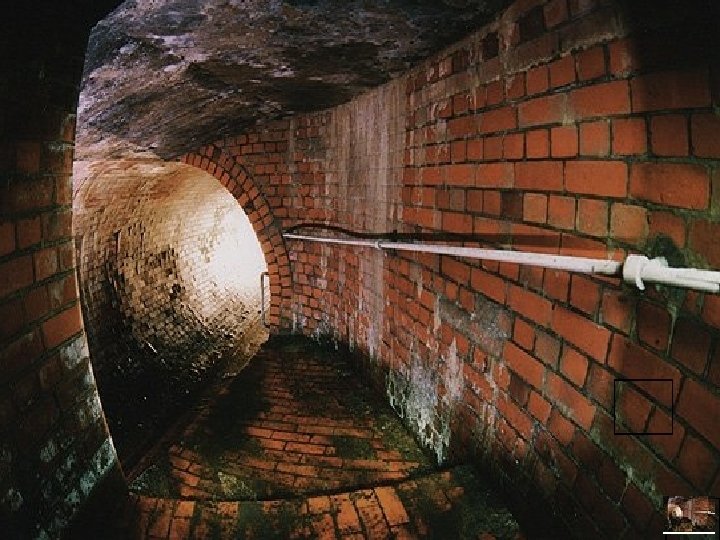
Victorian sewerage system, London 19 th century, River Thames was practically an open sewer After The Great Stink (cholera epidemic) of 1858, Parliament decided to create modern sewerage system Joseph Bazalgette, civil engineer, designed system that diverted waste to Thames Estuary, totalling almost 160 km underground sewers fed by 720 km of main sewers 20 th century, major improvements were made to the sewerage system to reduce pollution of Thames Estuary and North Sea
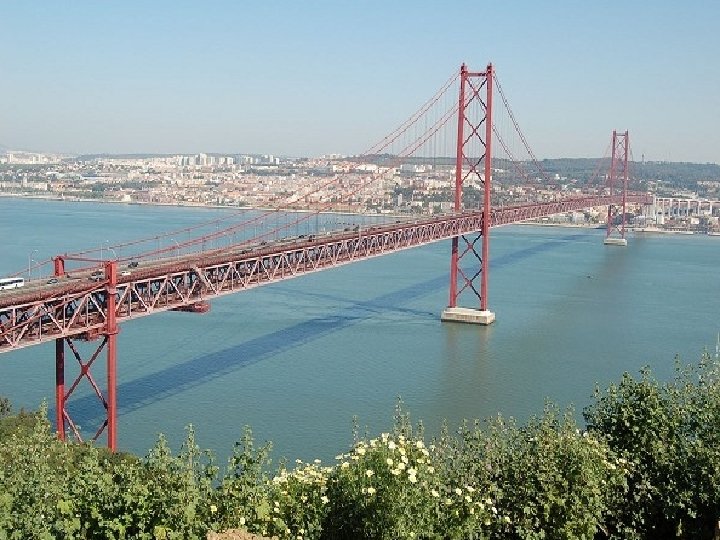
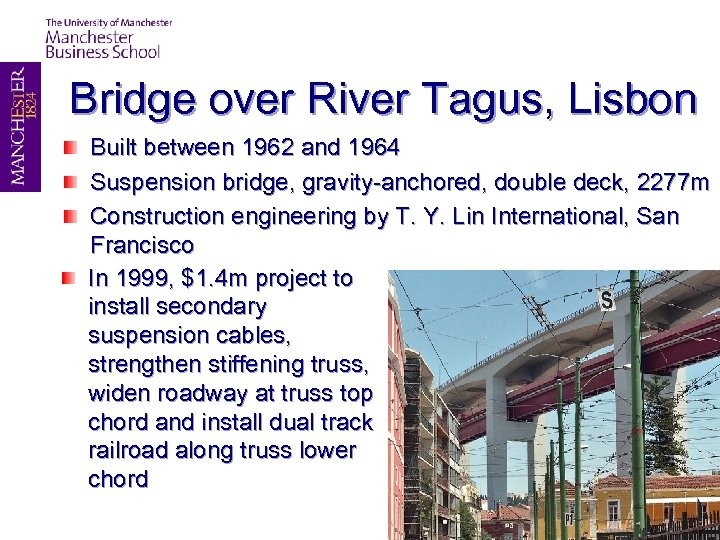
Bridge over River Tagus, Lisbon Built between 1962 and 1964 Suspension bridge, gravity-anchored, double deck, 2277 m Construction engineering by T. Y. Lin International, San Francisco In 1999, $1. 4 m project to install secondary suspension cables, strengthen stiffening truss, widen roadway at truss top chord and install dual track railroad along truss lower chord
Infrastructure meets Business Today’s Infrastructure Gap is Massive – Population growth, migration towards cities, deterioration of existing infrastructure, globalization of supply chains Governments worldwide resort to privatization in face of constrained budgets and ideology – – Sale of state-owned infrastructure enterprises Concessions/Private Finance Initiatives (PFIs) Contracting out/ outsourcing public services Infrastructure increasingly attractive to pension funds, private investors, and family houses
Evolvable, or Future-proof, Infrastructure Design Acknowledge tension between profit-seeker and public interest – Affordability/caps on user fees limit max. capital investment – Long delivery timescales and operational longevity means uncertainty in requirements over time – Need to limit risks that capital investment fails to payoff over time – Bias towards capital cost instead of life-cycle costs Future-proofing: design infrastructure to last, i. e. , capable to accommodate economically change over time, while limiting capital investment upfront
Research Problem “We still have the Victorian sewages operating, 120 years later. It might have been over engineered for the loads of the time ─ or you could say it was extremely imaginative ─ but boy, have we benefited of it!” (Head of T 5 Development 2005) “Think about the capacity of the M 25 highway — because future capacity was not understood and not safeguarded for, every bridge has a span that just goes across the motorway where you could have equally put larger bridges to facilitate future expansion. Do you optimize for today or for the future? It depends” (T 5 programme administrator 2005)
Evolvability: an organism’s capacity to generate heritable phenotypic variation (Kirschner and Gerhart 98) – Concept formulated by evolutionary biologists drawing from morphological examples (e. g. , limb, jaw), and looking to confirm Darwin’s theories in evolution and variability – Weak linkage, i. e. , minimal dependence of one process on another facilitates accommodation to novelty and reduces cost of generating variation – Exploratory mechanisms - processes that can achieve complex functional outcomes & tolerate change – Compartmentation, redundancy, robustness, flexibility: requirements for desconstraining evolutionary change – Surviving lineages have diversified by maintaining core of highly conserved sequences and functions processes (vital processes) and modifying others
Commercial Product Design Product architecture - scheme by which functions are allocated to physical components (Ulrich 95) – Coupling: functional components are considered coupled if change made to one component can require other components to change – Decoupling generates design architectures that can flex to change – Robust platform architectures can enable companies to reduce design effort and time-to-market for future generations of the product (Martin and Ishii 2003) Spatial variety: within current product line being designed Generational variety: across generations
Modularity in Design Splits up product functions and assigns them to decoupled modules according to agreed upon and tested interface or design rules that govern formal architectural plan (Baldwin and Clark 2004) Specify architecture, what the modules are Specify interfaces, how modules interact Specify tests, how modules will work together – Modularization aims to Make complexity manageable Make products tolerant of uncertainty/evolvable – Modularity does not come for free (Ethiraj and Levinthal 2004) – Modularity can come with penalty in performance (Fixson and Park 2008)
Option-like structure of designs Modularity is about creating options in design and building value in design (Baldwin and Clark 97) Option is the right but not the obligation to choose a course of action and obtain an associated payoff (Merton 73) – Design with built-in options is more tolerant of uncertainty – High potential value is conditional on success/ limited loss conditional on failure – Option purpose: stage delivery; switch use; grow capacity – Option value f( option cost, exercising cost, variability, expiration) – Options ‘on’ projects AND options ‘in’ projects (Wang and de Neufville 2005)
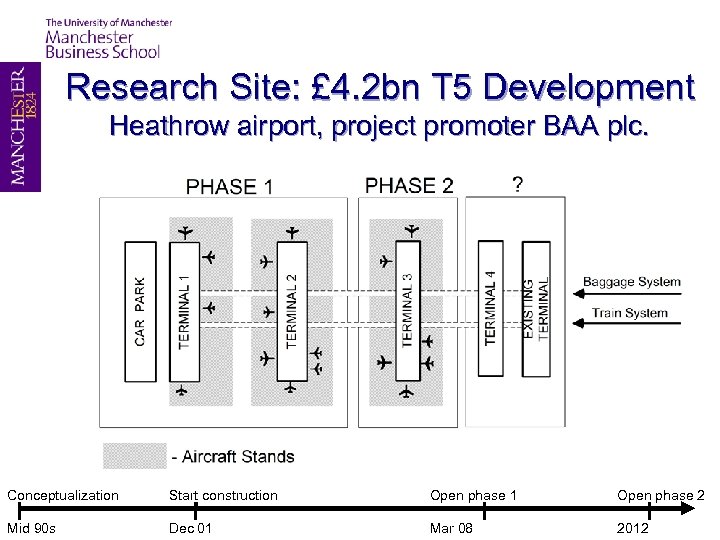
Research Site: £ 4. 2 bn T 5 Development Heathrow airport, project promoter BAA plc. Conceptualization Start construction Open phase 1 Open phase 2 Mid 90 s Dec 01 Mar 08 2012
Method Underlying inductive logic theory building from in-depth case study research Units of Analysis 12 decisions to build options across 5 distinct infrastructure projects Systematic cross-comparisons data coding and tabling, visual mapping Induce & test plausibility of conceptual framework cycling between collecting raw data & play theory against data
Data Collection ~ 70 interviews face-to-face w/ development teams, design/contracting suppliers, and project customers Over 200 documents design briefs & standards, project reports, drawings, press clips, planning application, etc. Observations site visits, supplier shop visits, supplier presentations Data collection period from May 2004 to July 2005
Analysis Two major determinants of decision to build options in infrastructure design – Perceived likelihood that option may be exercised in the future Will I get it right? High average likelihood makes upfront investment (cost of option) more attractive because of low risks that sunk costs will not pay off Long-range timeframes to exercise option increase perceived variability of likelihood that option will be exercised – Degree to which design architecture can be modularised How much does it cost to build the option? How much does it cost to exercise option in future? How much will it cost to do it later if uncertainties resolve favourably Stability of modular design rules increases chances ‘to get it right’
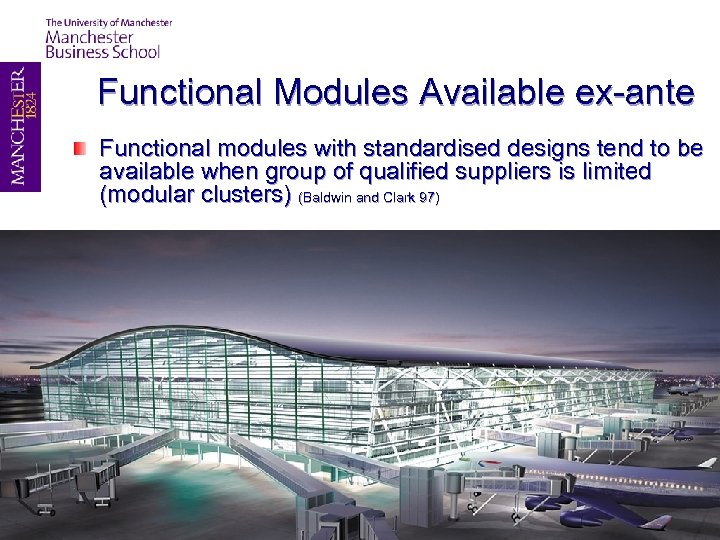
Functional Modules Available ex-ante Functional modules with standardised designs tend to be available when group of qualified suppliers is limited (modular clusters) (Baldwin and Clark 97)
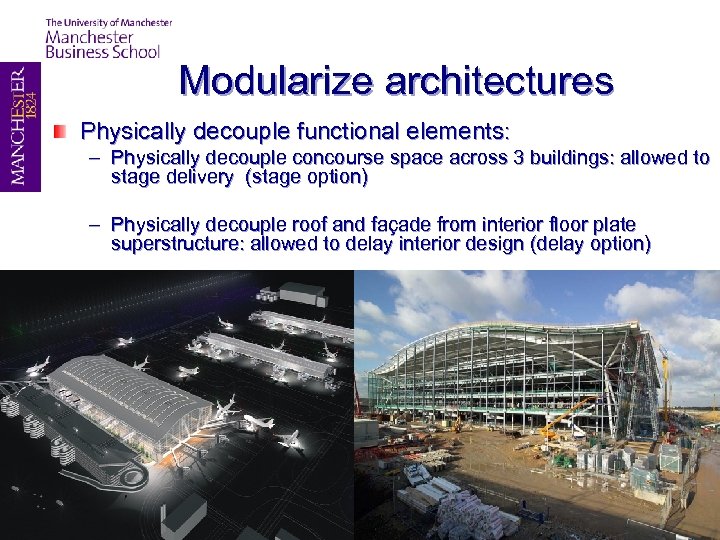
Modularize architectures Physically decouple functional elements: – Physically decouple concourse space across 3 buildings: allowed to stage delivery (stage option) – Physically decouple roof and façade from interior floor plate superstructure: allowed to delay interior design (delay option)
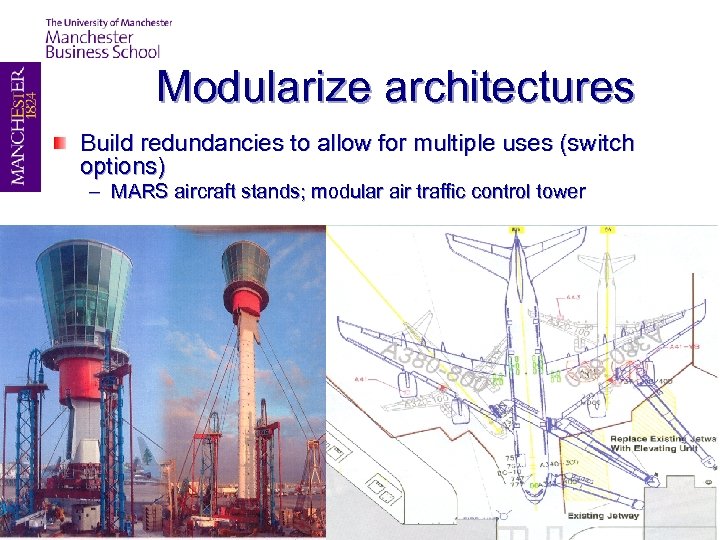
Modularize architectures Build redundancies to allow for multiple uses (switch options) – MARS aircraft stands; modular air traffic control tower
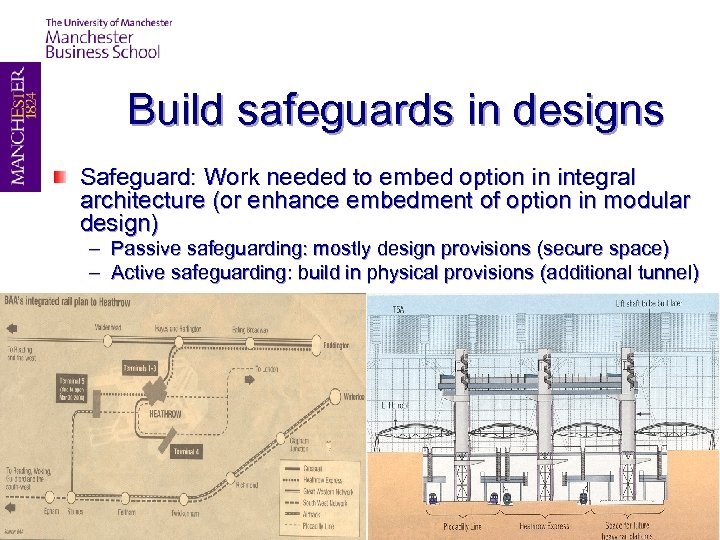
Build safeguards in designs Safeguard: Work needed to embed option in integral architecture (or enhance embedment of option in modular design) – – Passive safeguarding: mostly design provisions (secure space) Active safeguarding: build in physical provisions (additional tunnel)
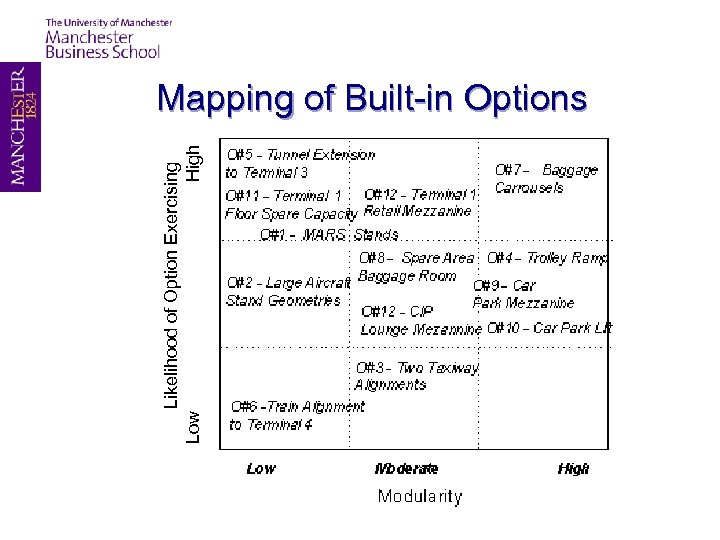
Likelihood of Option Exercising Low High Mapping of Built-in Options
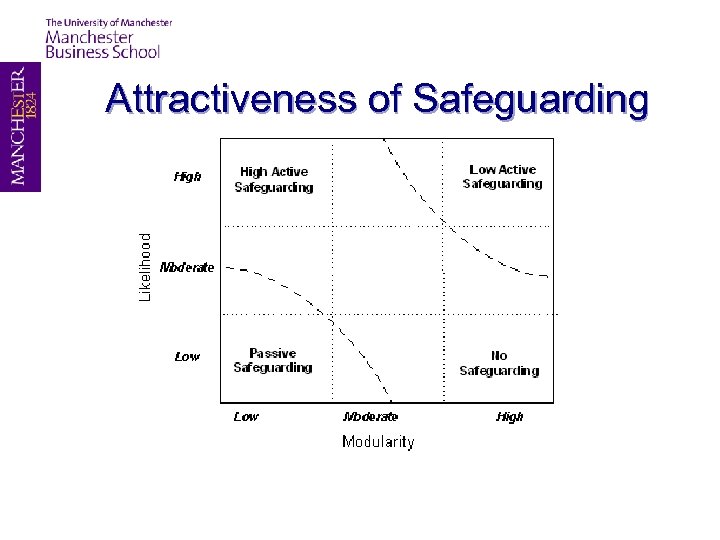
Attractiveness of Safeguarding
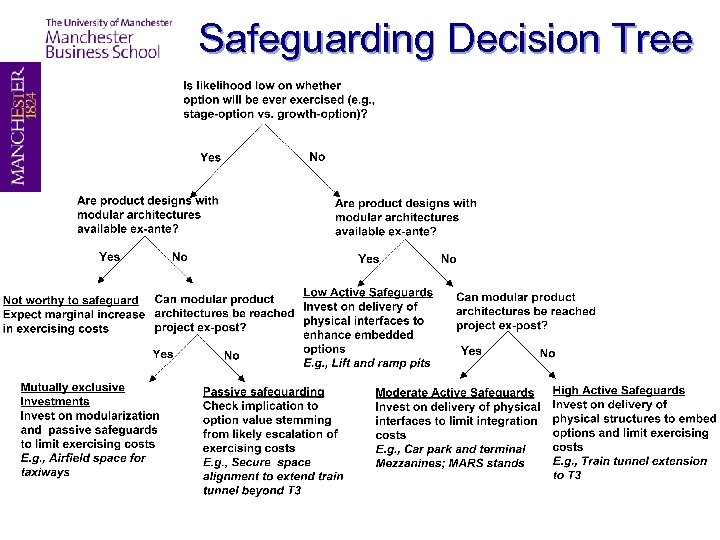
Safeguarding Decision Tree
Скачать презентацию Developing Evolvable or Future -proof Infrastructure Integrating Modularity
f66c84a38e1a3350bf24407a4ccd2fa3.ppt