


 Скачать презентацию Determining the internal structure of extrasolar planets and
09b5befcf0b86daf5dc60664d18102b3.ppt
- Количество слайдов: 38
 Determining the internal structure of extrasolar planets, and the phenomenon of retrograde planetary orbits Rosemary Mardling School of Mathematical Sciences Monash University
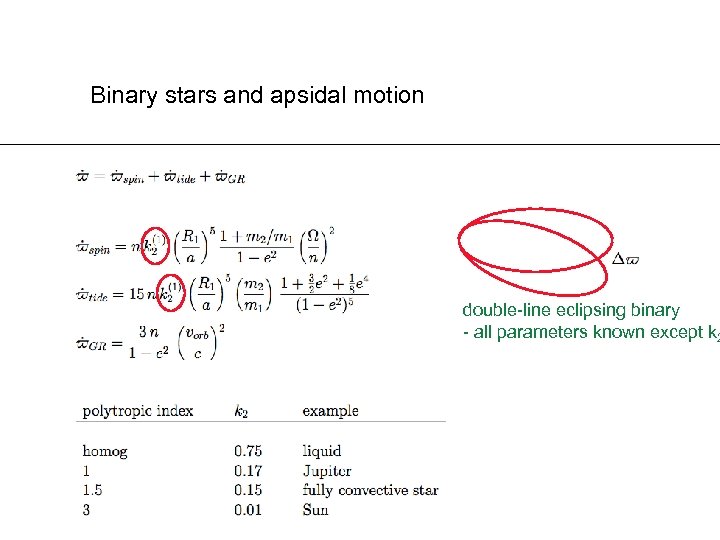 Binary stars and apsidal motion double-line eclipsing binary - all parameters known except k 2
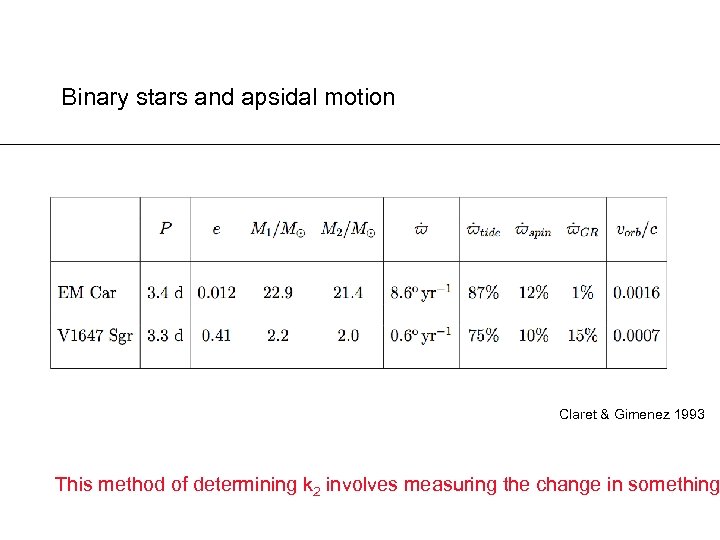 Binary stars and apsidal motion Claret & Gimenez 1993 This method of determining k 2 involves measuring the change in something
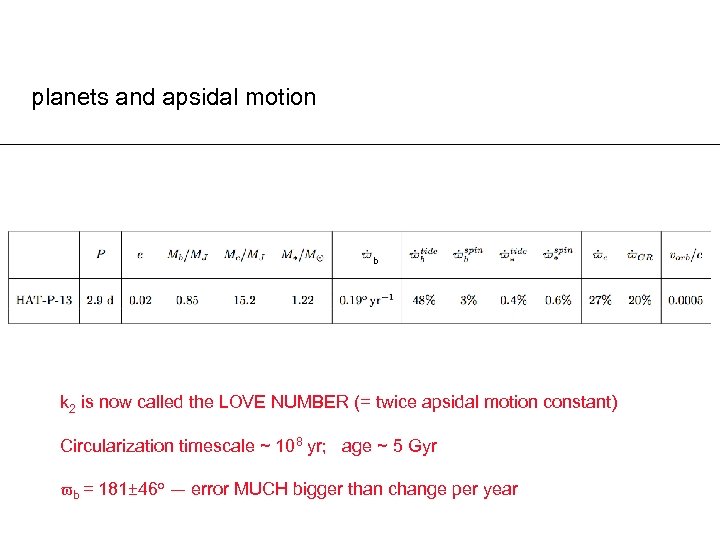 planets and apsidal motion b k 2 is now called the LOVE NUMBER (= twice apsidal motion constant) Circularization timescale ~ 108 yr; age ~ 5 Gyr b = 181± 46 o __ error MUCH bigger than change per year
 Tidal evolution of (isolated) binaries and short-period planets The minimum-energy state of a binary system (or star + planet) is: • circular orbit • rotational frequencies = orbital frequency • spin axes aligned with orbit normal ? ? Definition of short-period planet -- circularization timescale less than the age of the system
 Tidal evolution of short-period planets with companions • Many short-period planets have non-zero eccentricities AND anomolously large radii (eg. e = 0. 05, Rp = 1. 4 Jupiter radii) • Bodenheimer, Lin & Mardling (2001) propose that they have undetected companion planets • Mardling (2007): a fixed-point theory for tidal evolution of short-period planets with companions (coplanar) - developed to understand inflated planets • Batygin, Bodenheimer & Laughlin (2009) use this to deduce information about the internal structure of HAT-P-13 b
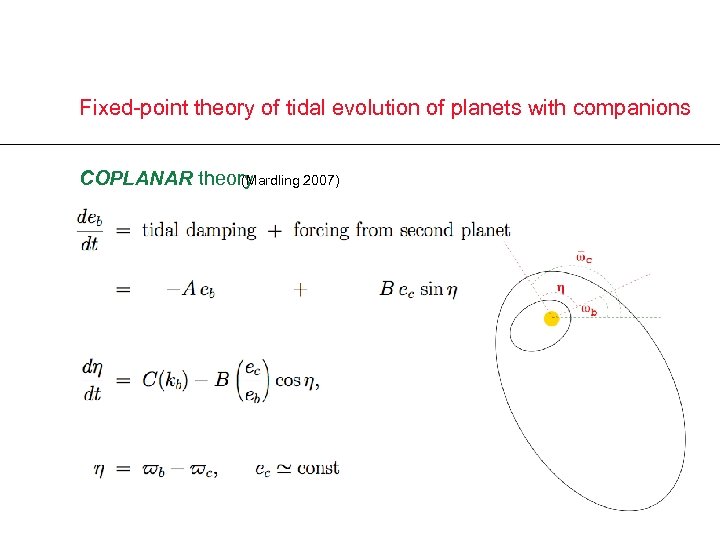 Fixed-point theory of tidal evolution of planets with companions COPLANAR theory (Mardling 2007)
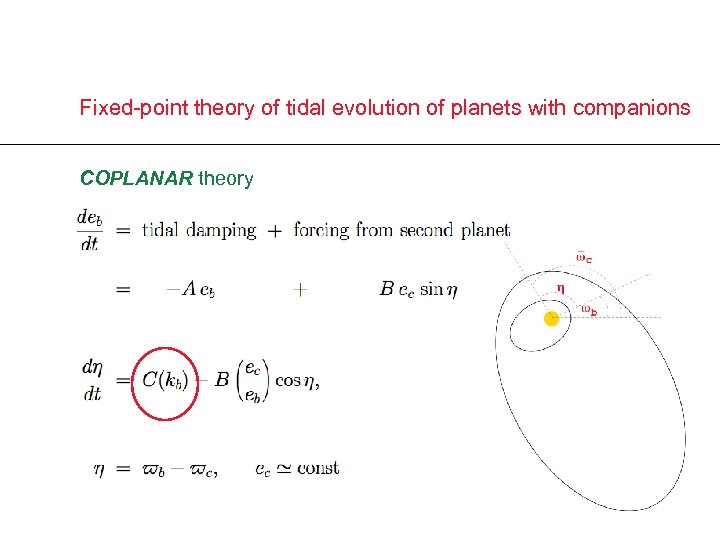 Fixed-point theory of tidal evolution of planets with companions COPLANAR theory
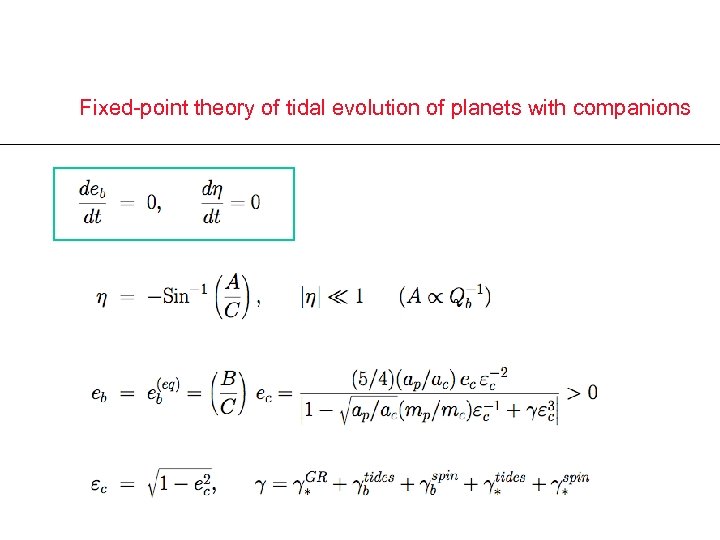 Fixed-point theory of tidal evolution of planets with companions
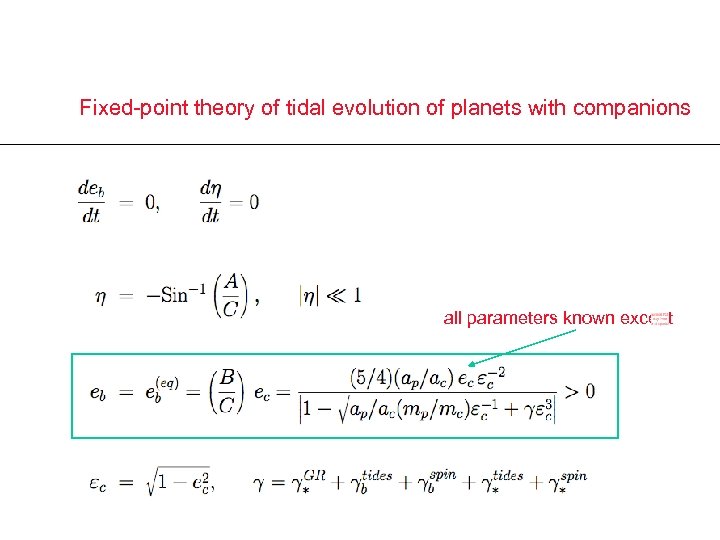 Fixed-point theory of tidal evolution of planets with companions all parameters known except
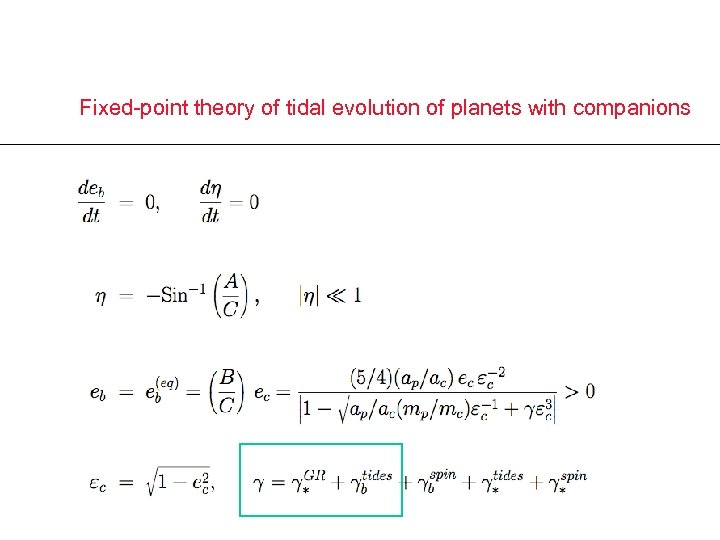 Fixed-point theory of tidal evolution of planets with companions
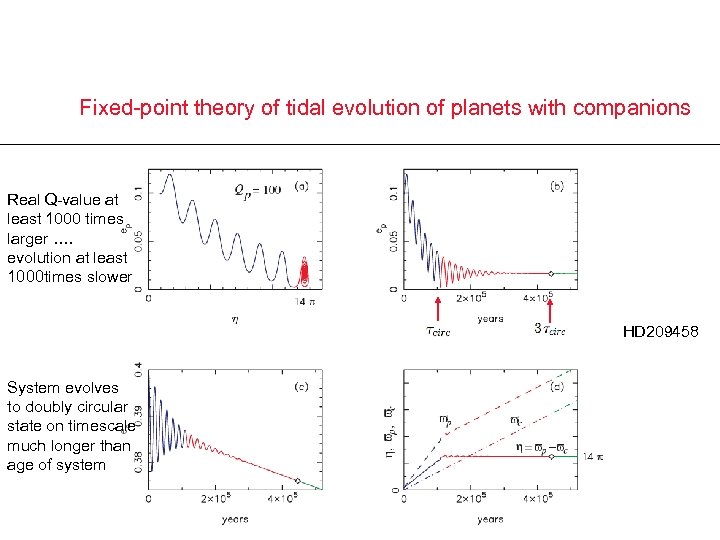 Fixed-point theory of tidal evolution of planets with companions Real Q-value at least 1000 times larger …. evolution at least 1000 times slower HD 209458 System evolves to doubly circular state on timescale much longer than age of system
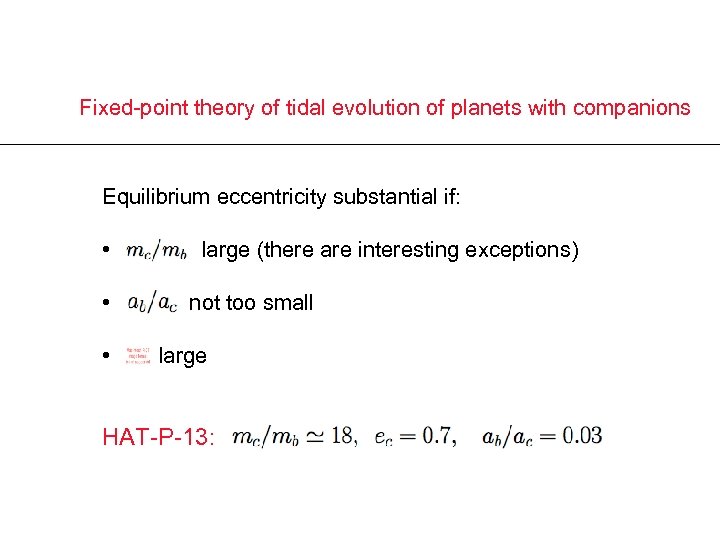 Fixed-point theory of tidal evolution of planets with companions Equilibrium eccentricity substantial if: • • • large (there are interesting exceptions) not too small large HAT-P-13:
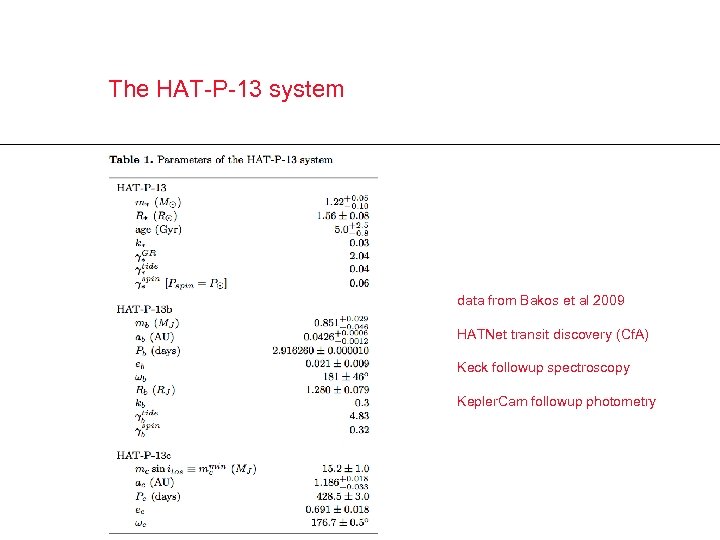 The HAT-P-13 system data from Bakos et al 2009 HATNet transit discovery (Cf. A) Keck followup spectroscopy Kepler. Cam followup photometry
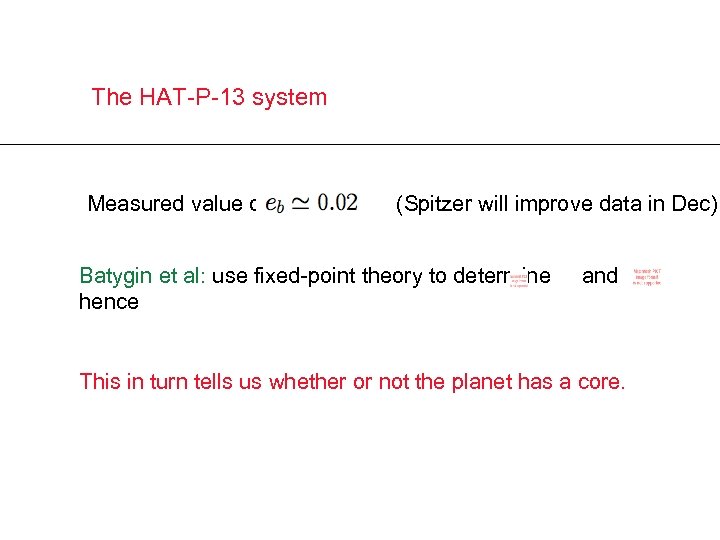 The HAT-P-13 system Measured value of (Spitzer will improve data in Dec) Batygin et al: use fixed-point theory to determine hence and This in turn tells us whether or not the planet has a core.
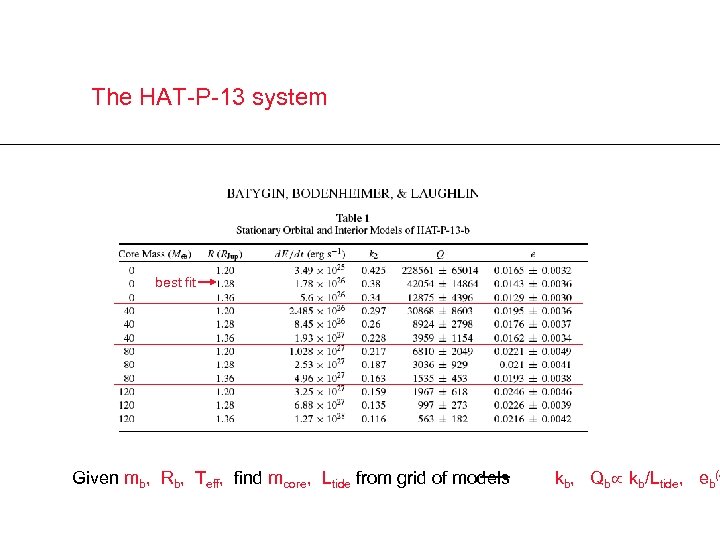 The HAT-P-13 system best fit Given mb, Rb, Teff, find mcore, Ltide from grid of models kb, Qb kb/Ltide, eb(e
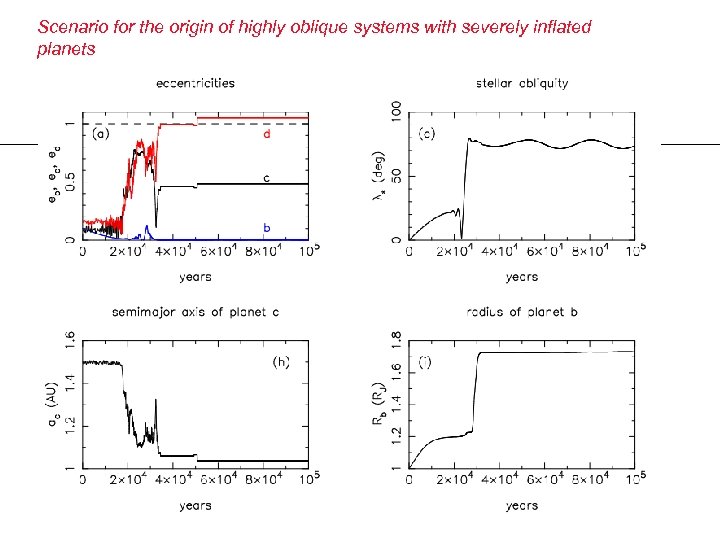
 However… A system with such a high outer eccentricity is highly unlikely to be COPLANAR! The high eccentricity of planet c may have been produced during a scattering event: Once upon a time there existed a planet d…. .
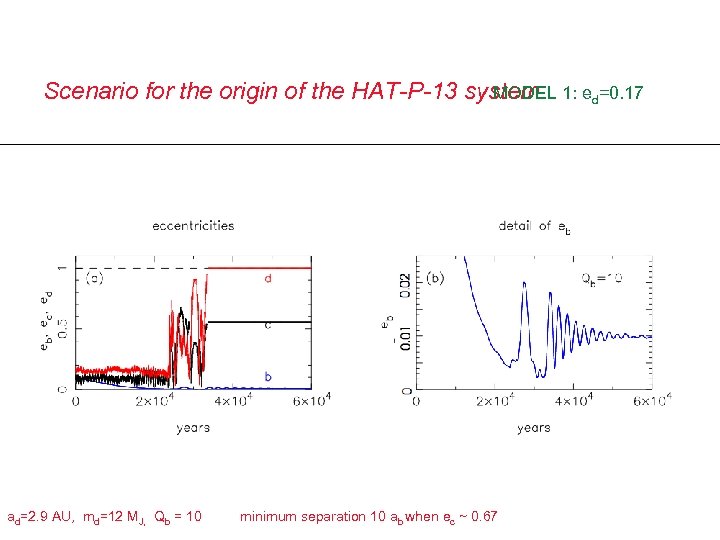 Scenario for the origin of the HAT-P-13 system 1: ed=0. 17 MODEL ad=2. 9 AU, md=12 MJ, Qb = 10 minimum separation 10 ab when ec ~ 0. 67
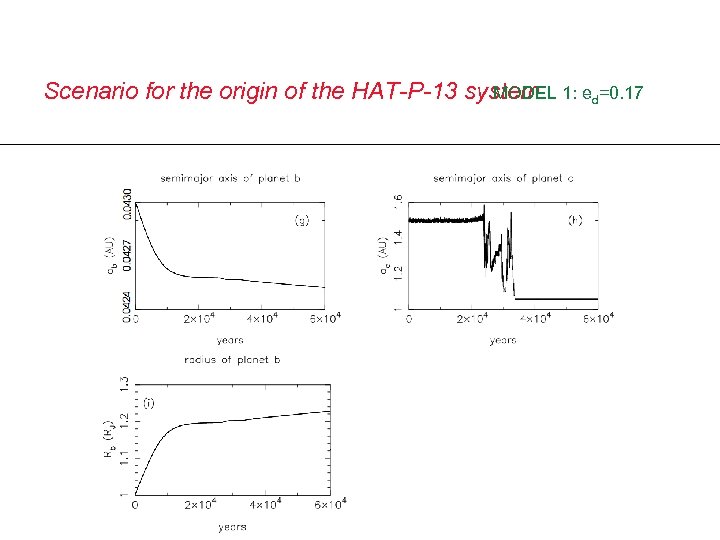 Scenario for the origin of the HAT-P-13 system 1: ed=0. 17 MODEL
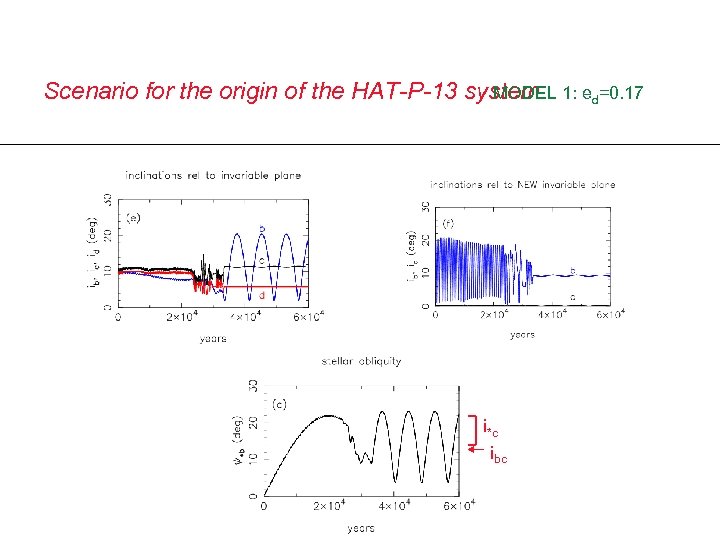 Scenario for the origin of the HAT-P-13 system 1: ed=0. 17 MODEL i*c ibc
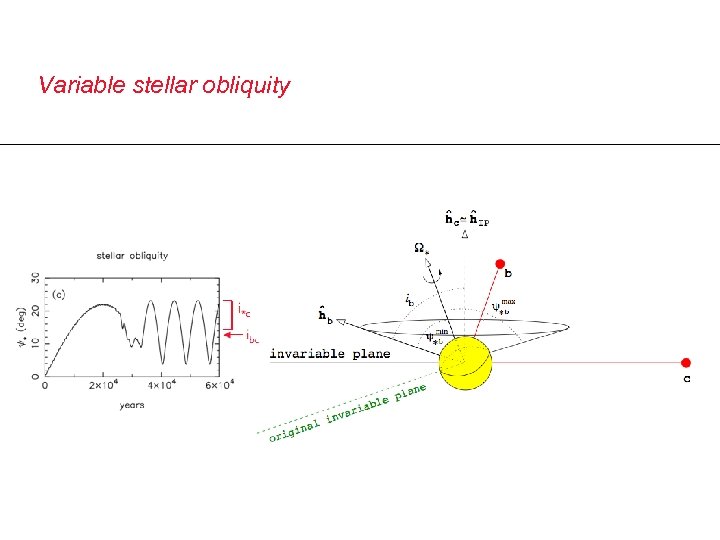 Variable stellar obliquity
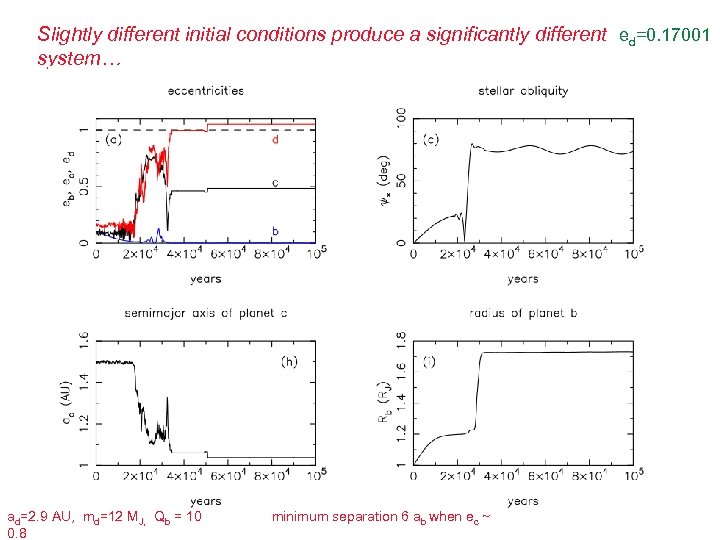 Slightly different initial conditions produce a significantly different ed=0. 17001 system… ad=2. 9 AU, md=12 MJ, Qb = 10 0. 8 minimum separation 6 ab when ec ~
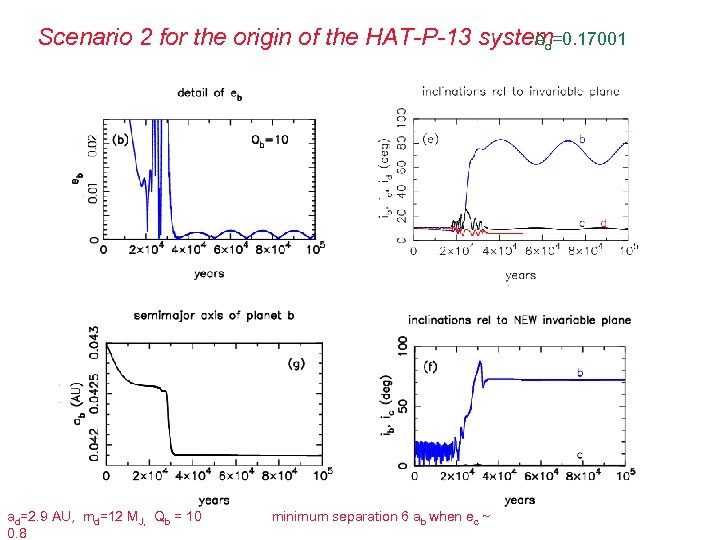 Scenario 2 for the origin of the HAT-P-13 system=0. 17001 ed ad=2. 9 AU, md=12 MJ, Qb = 10 0. 8 minimum separation 6 ab when ec ~
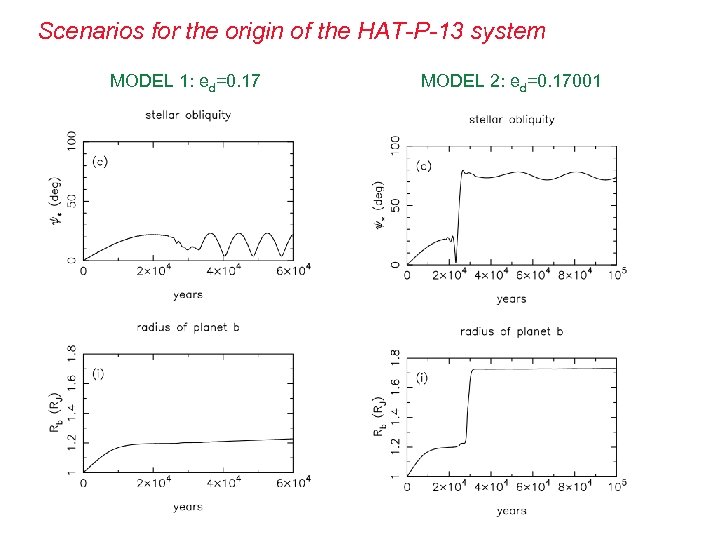 Scenarios for the origin of the HAT-P-13 system MODEL 1: ed=0. 17 MODEL 2: ed=0. 17001
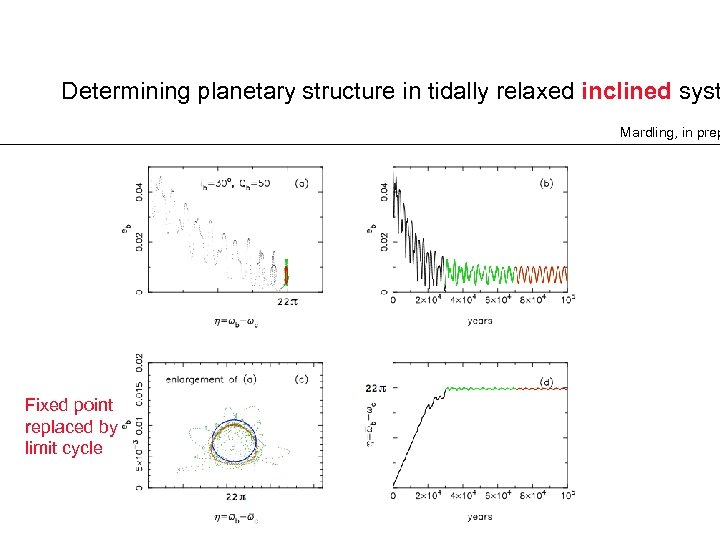 Determining planetary structure in tidally relaxed inclined syst Mardling, in prep Fixed point replaced by limit cycle
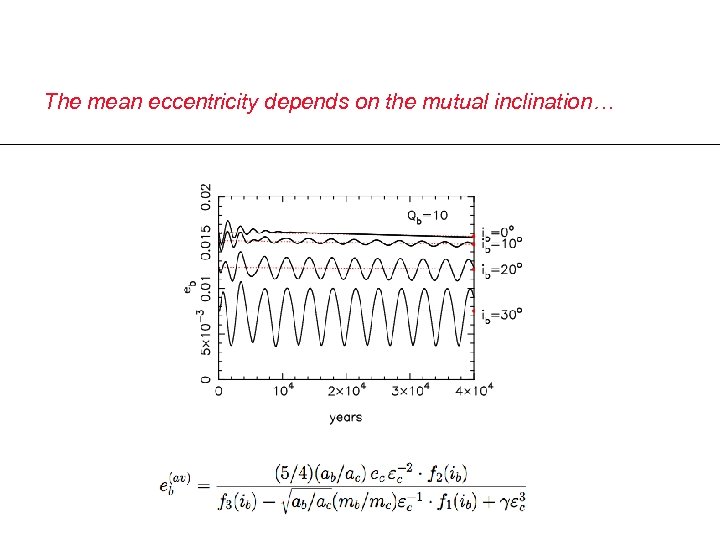 The mean eccentricity depends on the mutual inclination…
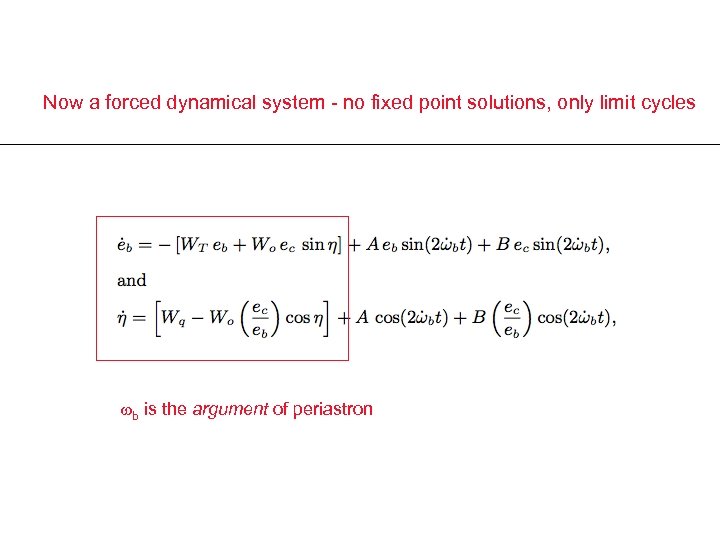 Now a forced dynamical system - no fixed point solutions, only limit cycles b is the argument of periastron
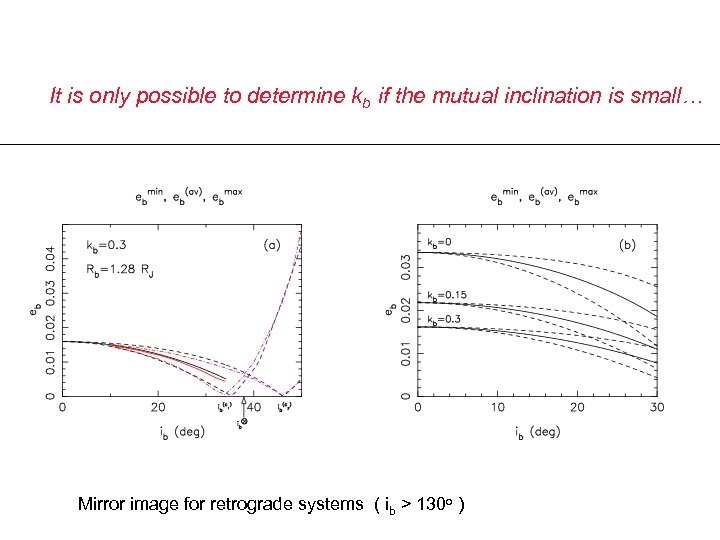 It is only possible to determine kb if the mutual inclination is small… Mirror image for retrograde systems ( ib > 130 o )
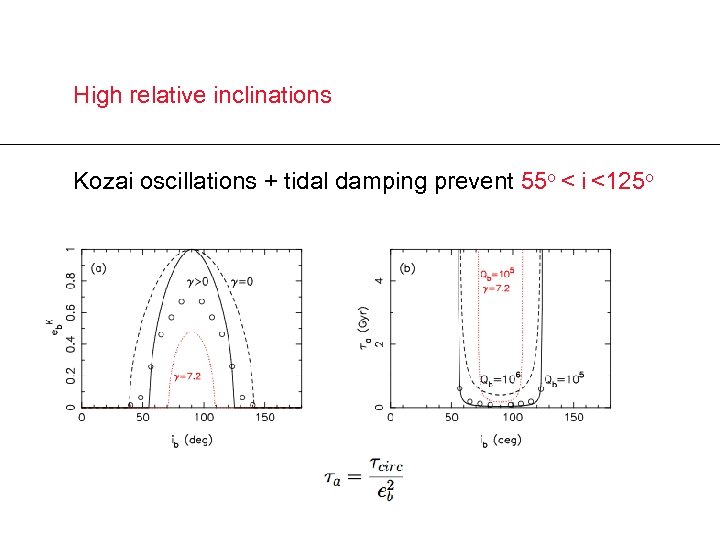 High relative inclinations Kozai oscillations + tidal damping prevent 55 o < i <125 o
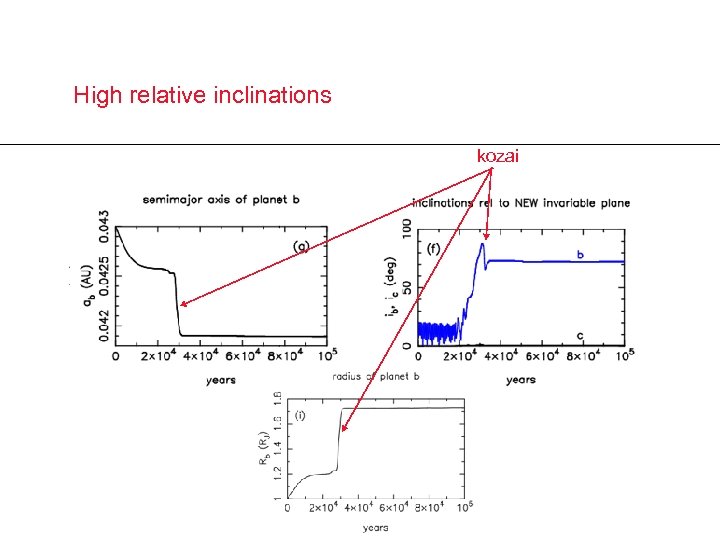 High relative inclinations kozai
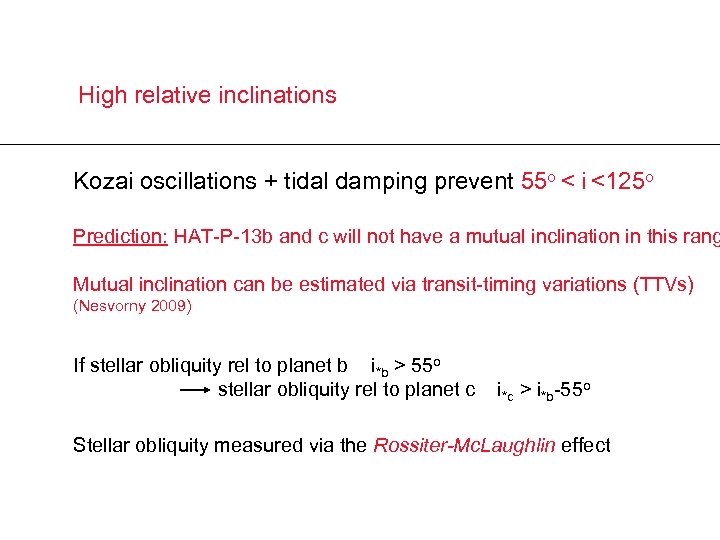 High relative inclinations Kozai oscillations + tidal damping prevent 55 o < i <125 o Prediction: HAT-P-13 b and c will not have a mutual inclination in this rang Mutual inclination can be estimated via transit-timing variations (TTVs) (Nesvorny 2009) If stellar obliquity rel to planet b i*b > 55 o stellar obliquity rel to planet c i*c > i*b-55 o Stellar obliquity measured via the Rossiter-Mc. Laughlin effect
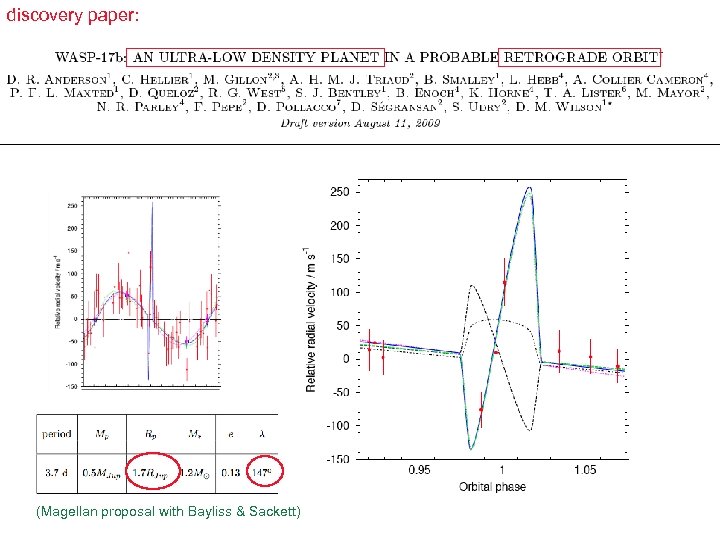
 retrograde planetary orbits 2009: two transiting exoplanet systems discovered to have retrograde orb 1. HAT-P-7 b (Hungarian Automated Telescopes : Cf. A) 2. WASP-17 b (Wide Angle Search for Planets: UK consortium)
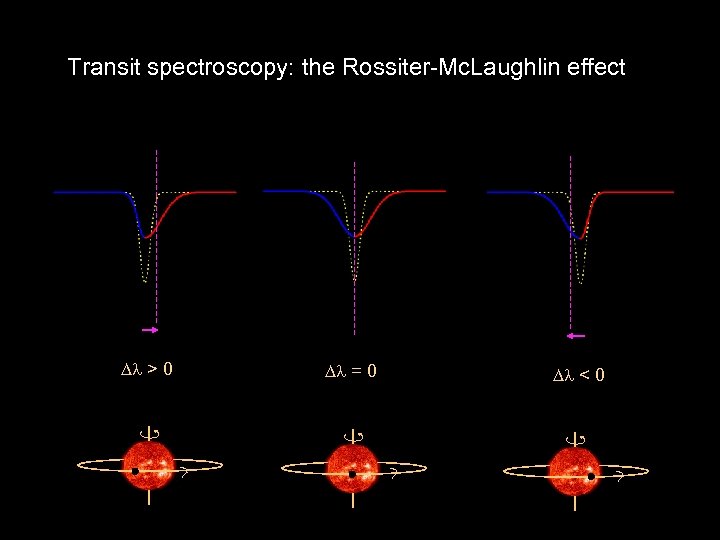 Transit spectroscopy: the Rossiter-Mc. Laughlin effect > 0 = 0 < 0
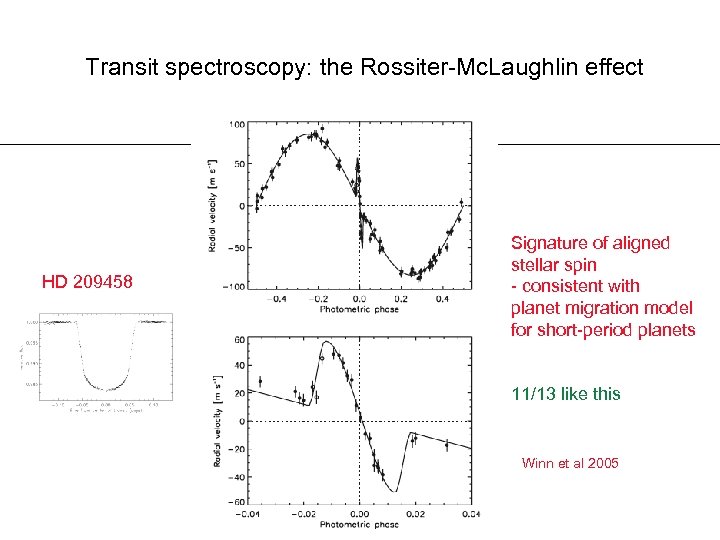 Transit spectroscopy: the Rossiter-Mc. Laughlin effect HD 209458 Signature of aligned stellar spin - consistent with planet migration model for short-period planets 11/13 like this Winn et al 2005
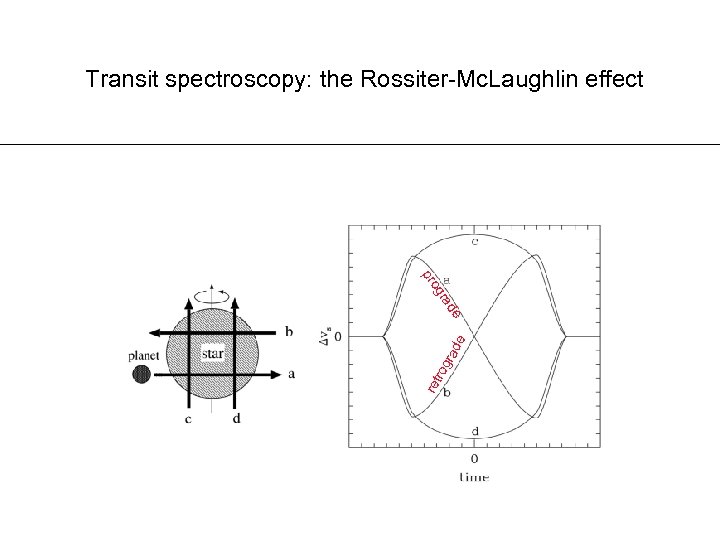 Transit spectroscopy: the Rossiter-Mc. Laughlin effect ret r og rad e de ra og pr
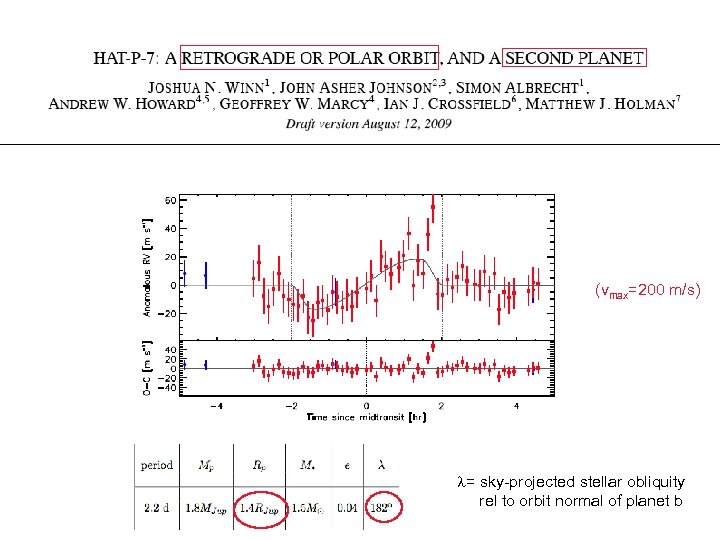 (vmax=200 m/s) = sky-projected stellar obliquity rel to orbit normal of planet b
 discovery paper: (Magellan proposal with Bayliss & Sackett)
 Scenario for the origin of highly oblique systems with severely inflated planets