


 Скачать презентацию Determinants of host response to HIV-1 the role
f0c65bc6f6ce679c76b8ada1305c9205.ppt
- Количество слайдов: 35
 Determinants of host response to HIV-1: the role of rare and common variants
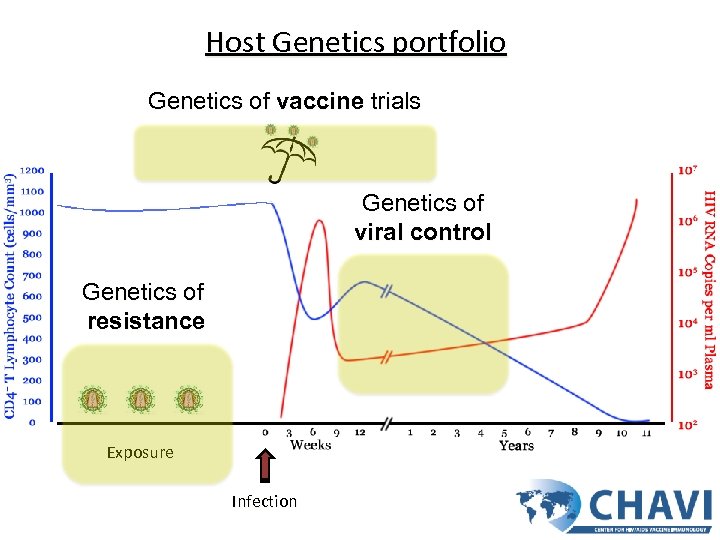 Host Genetics portfolio Genetics of vaccine trials Genetics of viral control Genetics of resistance Exposure Infection
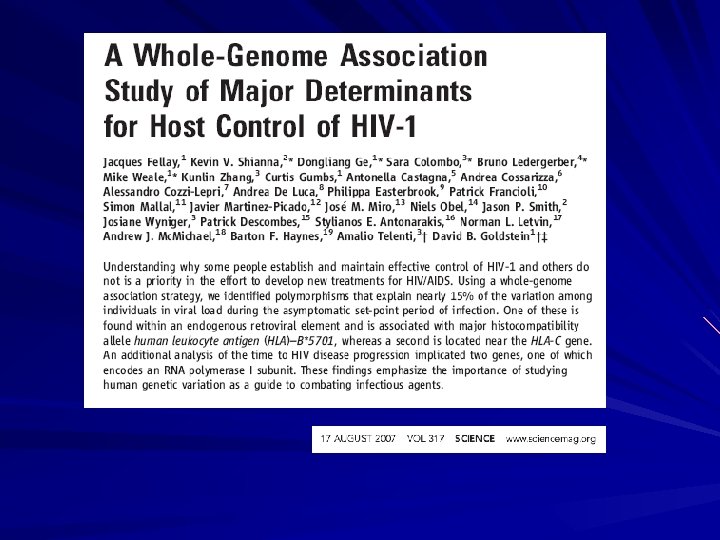
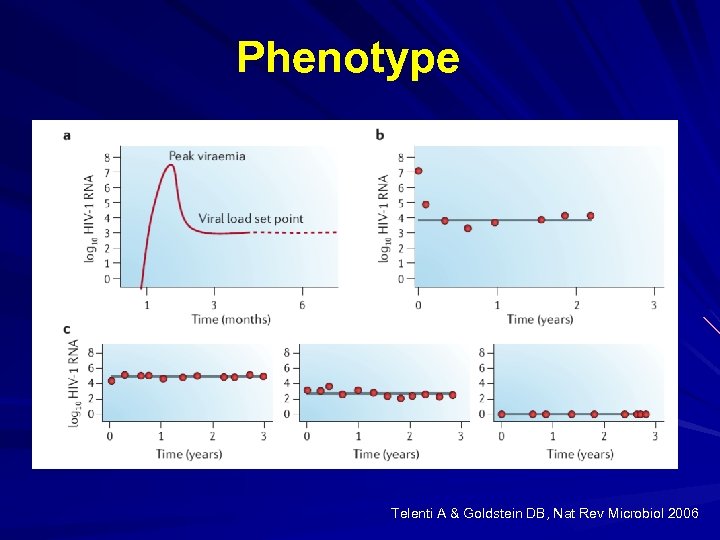 Phenotype Telenti A & Goldstein DB, Nat Rev Microbiol 2006
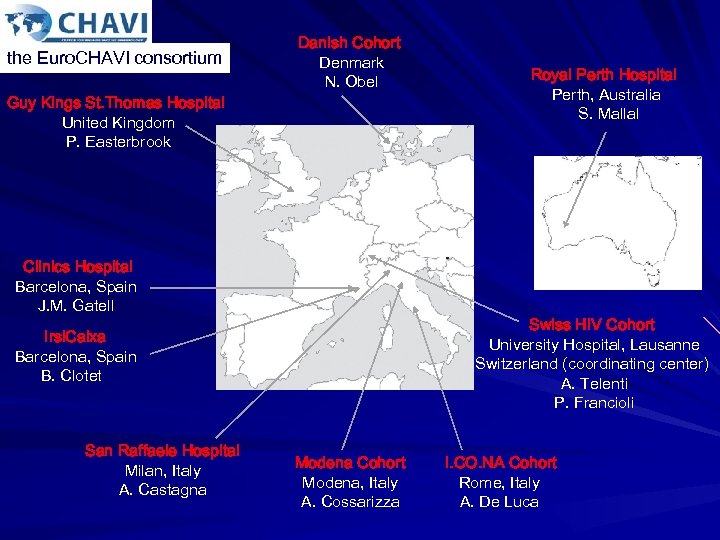 the Euro. CHAVI consortium Guy Kings St. Thomas Hospital United Kingdom P. Easterbrook Danish Cohort Denmark N. Obel Clinics Hospital Barcelona, Spain J. M. Gatell Swiss HIV Cohort University Hospital, Lausanne Switzerland (coordinating center) A. Telenti P. Francioli Irsi. Caixa Barcelona, Spain B. Clotet San Raffaele Hospital Milan, Italy A. Castagna Royal Perth Hospital Perth, Australia S. Mallal Modena Cohort Modena, Italy A. Cossarizza I. CO. NA Cohort Rome, Italy A. De Luca
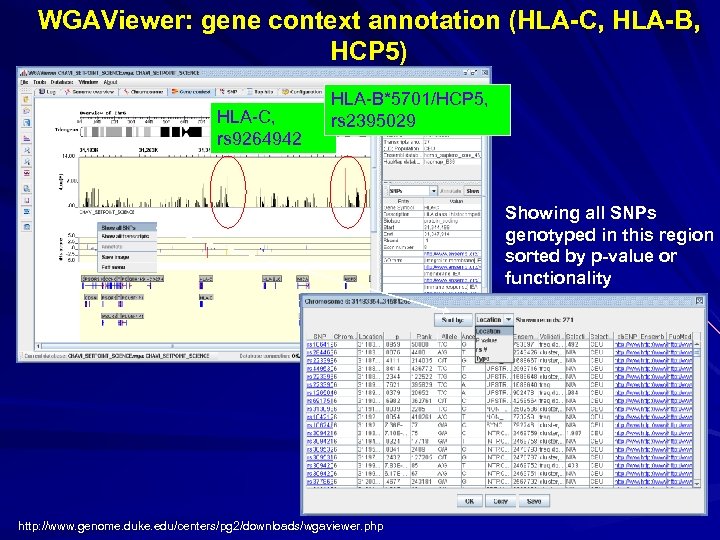 WGAViewer: gene context annotation (HLA-C, HLA-B, HCP 5) HLA-C, rs 9264942 HLA-B*5701/HCP 5, rs 2395029 Showing all SNPs genotyped in this region sorted by p-value or functionality http: //www. genome. duke. edu/centers/pg 2/downloads/wgaviewer. php
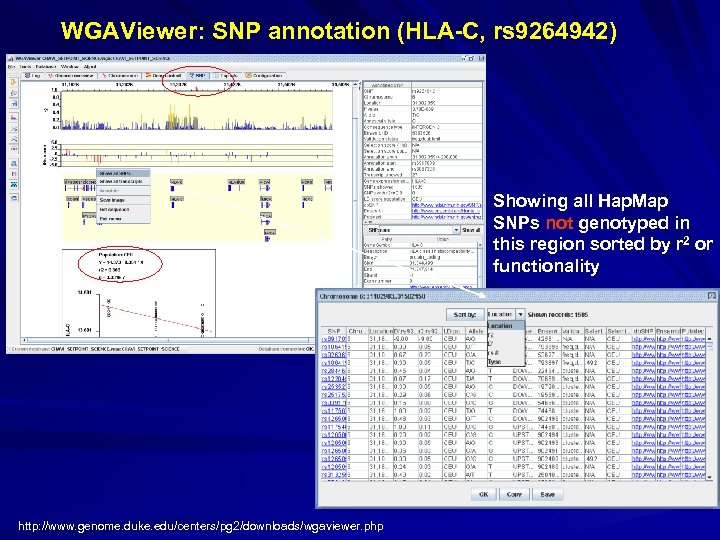 WGAViewer: SNP annotation (HLA-C, rs 9264942) Showing all Hap. Map SNPs not genotyped in this region sorted by r 2 or functionality http: //www. genome. duke. edu/centers/pg 2/downloads/wgaviewer. php
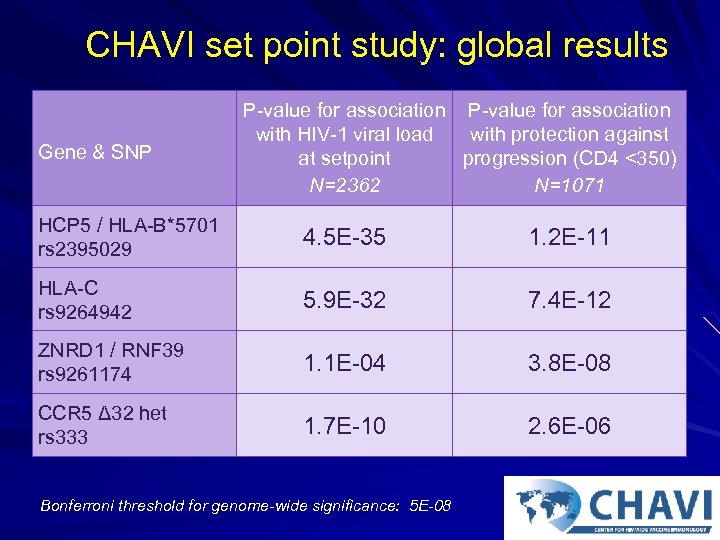 CHAVI set point study: global results Gene & SNP P-value for association with HIV-1 viral load with protection against at setpoint progression (CD 4 <350) N=2362 N=1071 HCP 5 / HLA-B*5701 rs 2395029 4. 5 E-35 1. 2 E-11 HLA-C rs 9264942 5. 9 E-32 7. 4 E-12 ZNRD 1 / RNF 39 rs 9261174 1. 1 E-04 3. 8 E-08 CCR 5 Δ 32 het rs 333 1. 7 E-10 2. 6 E-06 Bonferroni threshold for genome-wide significance: 5 E-08
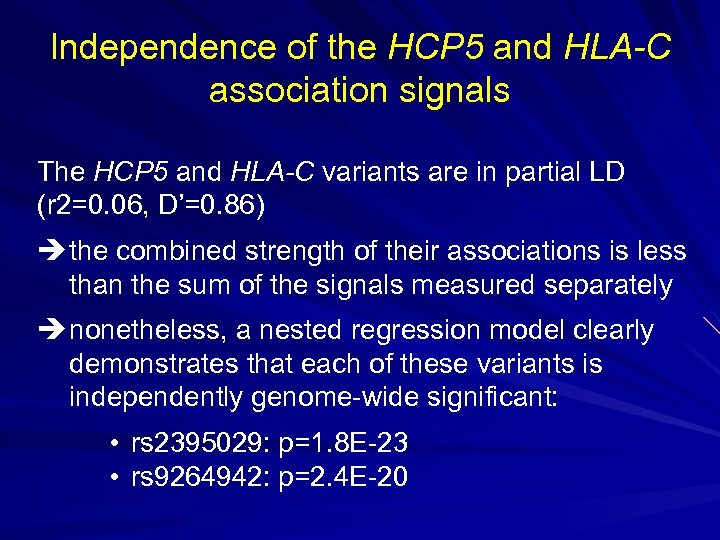 Independence of the HCP 5 and HLA-C association signals The HCP 5 and HLA-C variants are in partial LD (r 2=0. 06, D’=0. 86) è the combined strength of their associations is less than the sum of the signals measured separately è nonetheless, a nested regression model clearly demonstrates that each of these variants is independently genome-wide significant: • rs 2395029: p=1. 8 E-23 • rs 9264942: p=2. 4 E-20
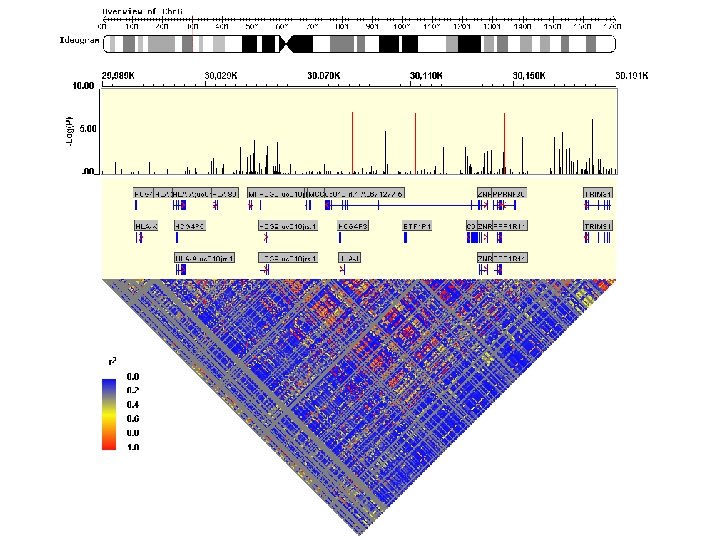
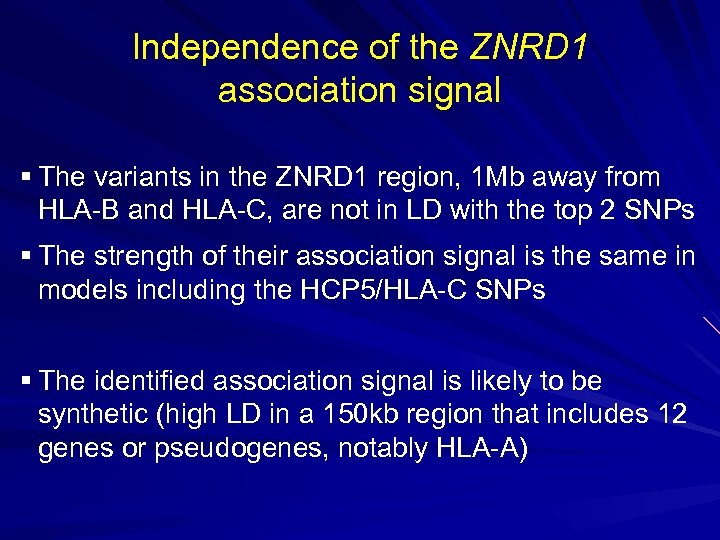 Independence of the ZNRD 1 association signal § The variants in the ZNRD 1 region, 1 Mb away from HLA-B and HLA-C, are not in LD with the top 2 SNPs § The strength of their association signal is the same in models including the HCP 5/HLA-C SNPs § The identified association signal is likely to be synthetic (high LD in a 150 kb region that includes 12 genes or pseudogenes, notably HLA-A)
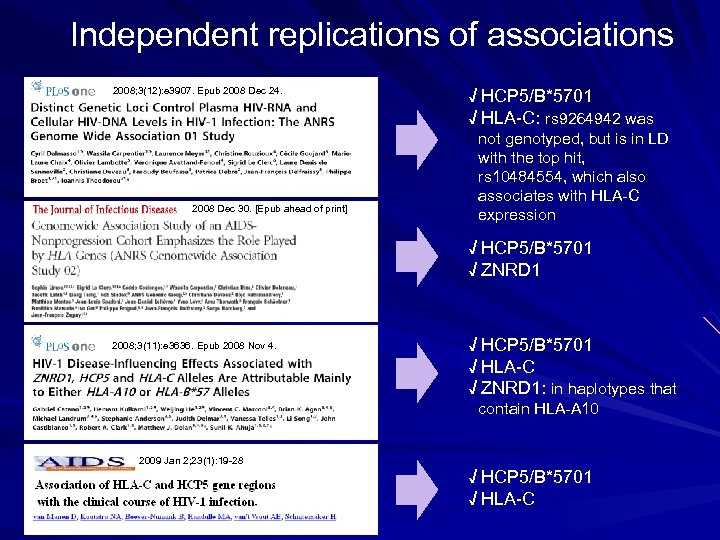 Independent replications of associations 2008; 3(12): e 3907. Epub 2008 Dec 24. 2008 Dec 30. [Epub ahead of print] √ HCP 5/B*5701 √ HLA-C: rs 9264942 was not genotyped, but is in LD with the top hit, rs 10484554, which also associates with HLA-C expression √ HCP 5/B*5701 √ ZNRD 1 2008; 3(11): e 3636. Epub 2008 Nov 4. √ HCP 5/B*5701 √ HLA-C √ ZNRD 1: in haplotypes that contain HLA-A 10 2009 Jan 2; 23(1): 19 -28 √ HCP 5/B*5701 √ HLA-C
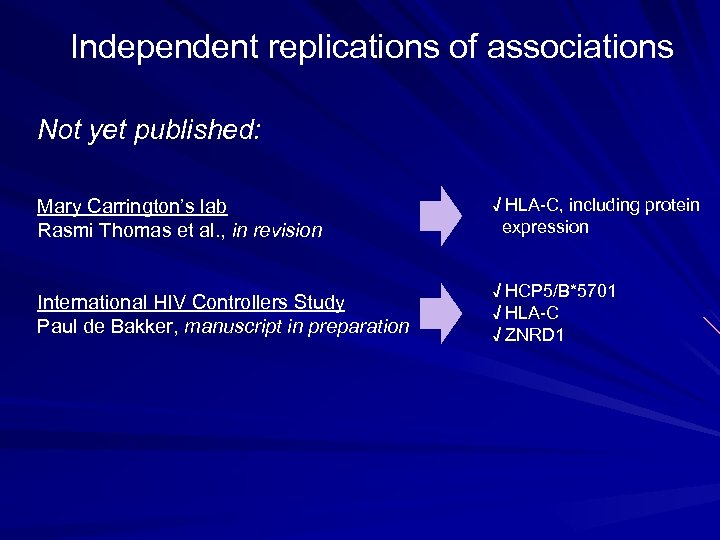 Independent replications of associations Not yet published: Mary Carrington’s lab Rasmi Thomas et al. , in revision √ HLA-C, including protein expression International HIV Controllers Study Paul de Bakker, manuscript in preparation √ HCP 5/B*5701 √ HLA-C √ ZNRD 1
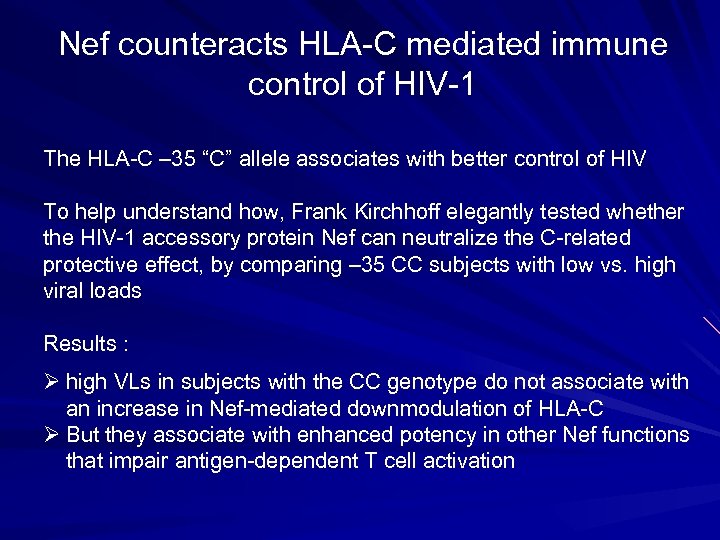 Nef counteracts HLA-C mediated immune control of HIV-1 The HLA-C – 35 “C” allele associates with better control of HIV To help understand how, Frank Kirchhoff elegantly tested whether the HIV-1 accessory protein Nef can neutralize the C-related protective effect, by comparing – 35 CC subjects with low vs. high viral loads Results : Ø high VLs in subjects with the CC genotype do not associate with an increase in Nef-mediated downmodulation of HLA-C Ø But they associate with enhanced potency in other Nef functions that impair antigen-dependent T cell activation
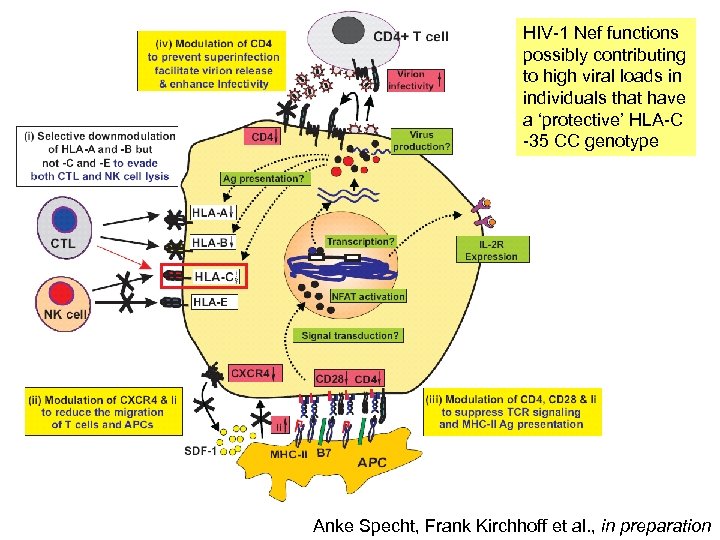 HIV-1 Nef functions possibly contributing to high viral loads in individuals that have a ‘protective’ HLA-C -35 CC genotype Anke Specht, Frank Kirchhoff et al. , in preparation
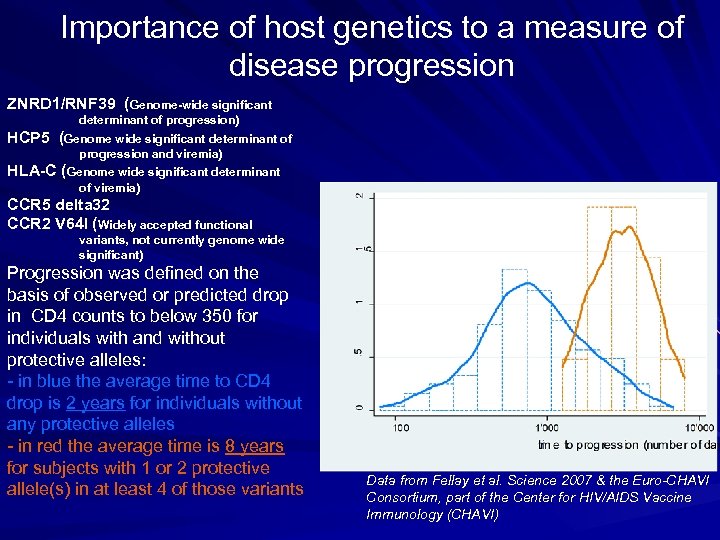 Importance of host genetics to a measure of disease progression ZNRD 1/RNF 39 (Genome-wide significant determinant of progression) HCP 5 (Genome wide significant determinant of progression and viremia) HLA-C (Genome wide significant determinant of viremia) CCR 5 delta 32 CCR 2 V 64 I (Widely accepted functional variants, not currently genome wide significant) Progression was defined on the basis of observed or predicted drop in CD 4 counts to below 350 for individuals with and without protective alleles: - in blue the average time to CD 4 drop is 2 years for individuals without any protective alleles - in red the average time is 8 years for subjects with 1 or 2 protective allele(s) in at least 4 of those variants Data from Fellay et al. Science 2007 & the Euro-CHAVI Consortium, part of the Center for HIV/AIDS Vaccine Immunology (CHAVI)
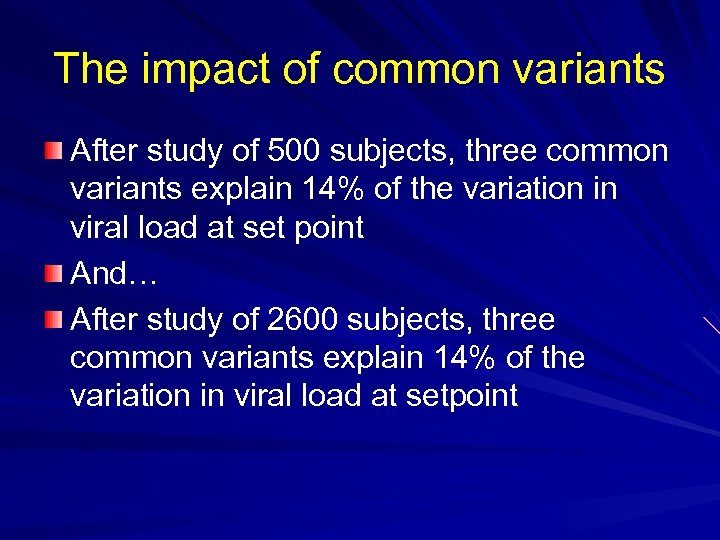 The impact of common variants After study of 500 subjects, three common variants explain 14% of the variation in viral load at set point And… After study of 2600 subjects, three common variants explain 14% of the variation in viral load at setpoint
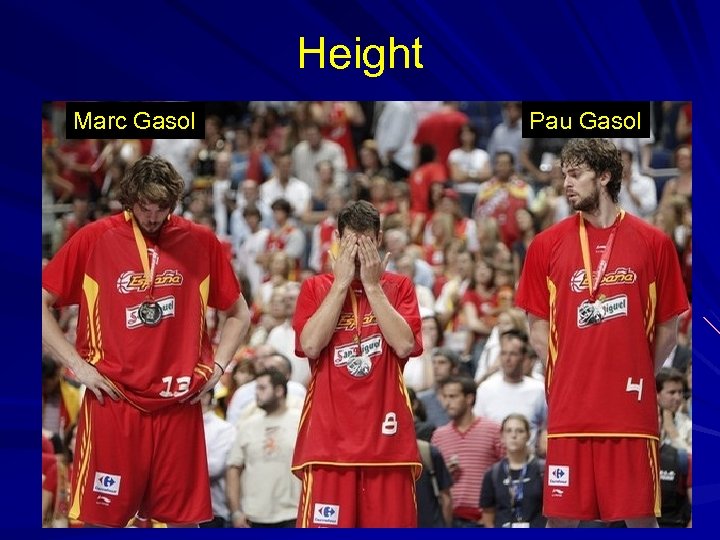 Height Marc Gasol Pau Gasol
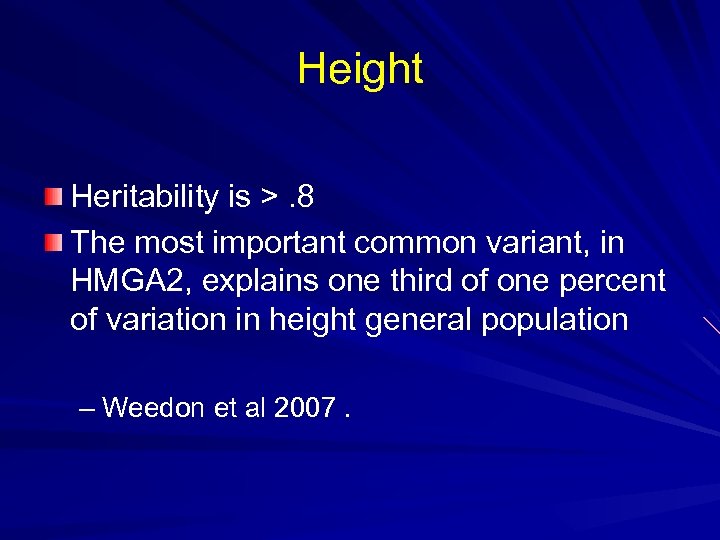 Height Heritability is >. 8 The most important common variant, in HMGA 2, explains one third of one percent of variation in height general population – Weedon et al 2007.
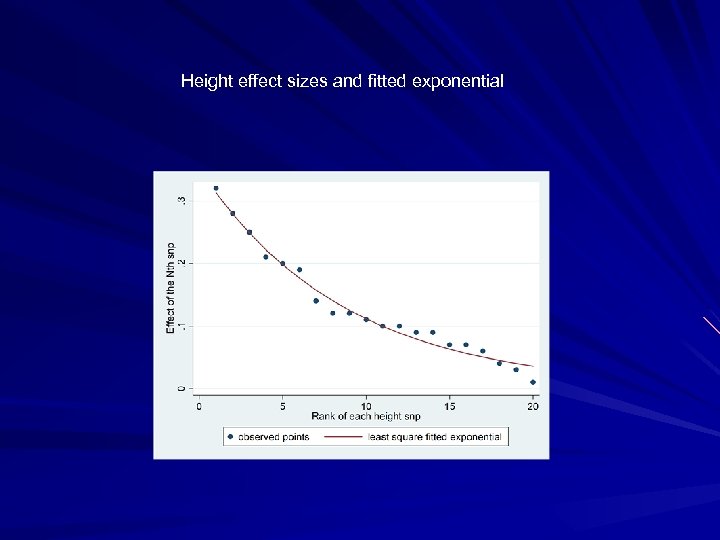 Height effect sizes and fitted exponential
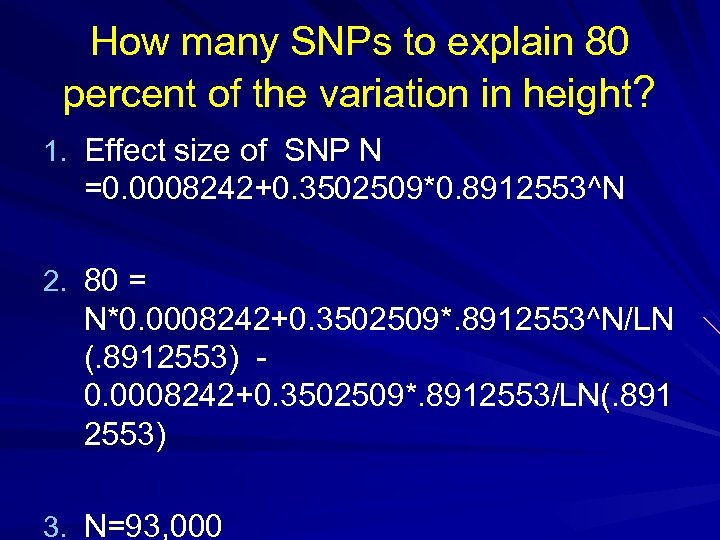 How many SNPs to explain 80 percent of the variation in height? 1. Effect size of SNP N =0. 0008242+0. 3502509*0. 8912553^N 2. 80 = N*0. 0008242+0. 3502509*. 8912553^N/LN (. 8912553) 0. 0008242+0. 3502509*. 8912553/LN(. 891 2553) 3. N=93, 000
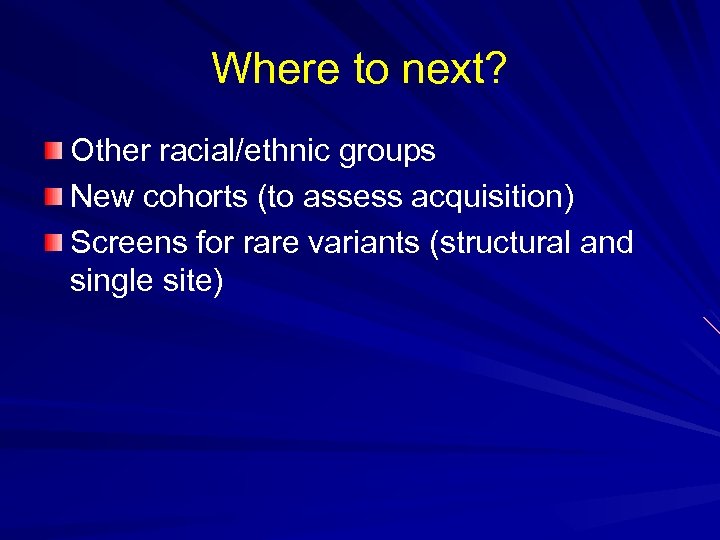 Where to next? Other racial/ethnic groups New cohorts (to assess acquisition) Screens for rare variants (structural and single site)
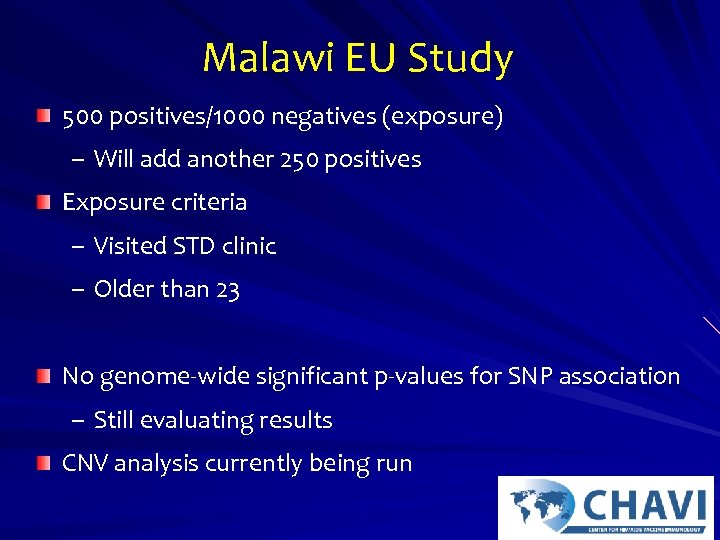 Malawi EU Study 500 positives/1000 negatives (exposure) – Will add another 250 positives Exposure criteria – Visited STD clinic – Older than 23 No genome-wide significant p-values for SNP association – Still evaluating results CNV analysis currently being run
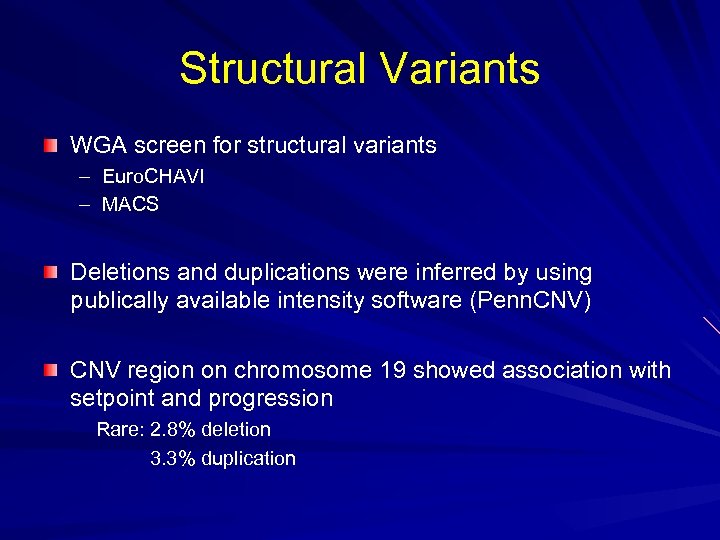 Structural Variants WGA screen for structural variants – Euro. CHAVI – MACS Deletions and duplications were inferred by using publically available intensity software (Penn. CNV) CNV region on chromosome 19 showed association with setpoint and progression Rare: 2. 8% deletion 3. 3% duplication
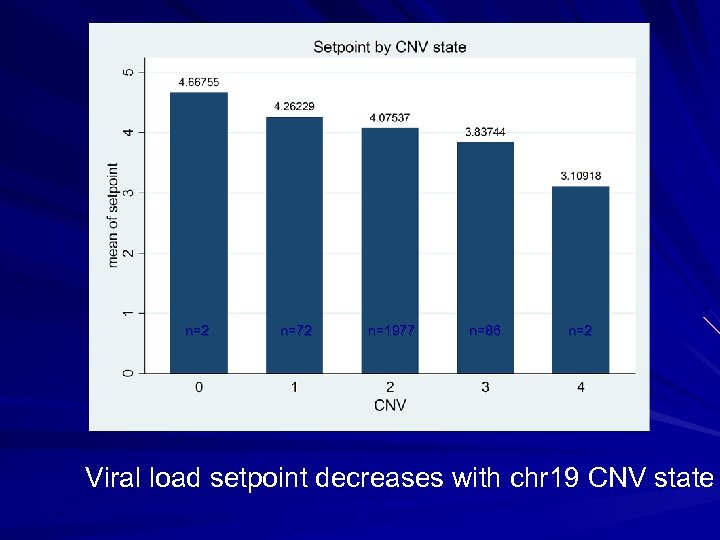 n=2 n=72 n=1977 n=86 n=2 Viral load setpoint decreases with chr 19 CNV state
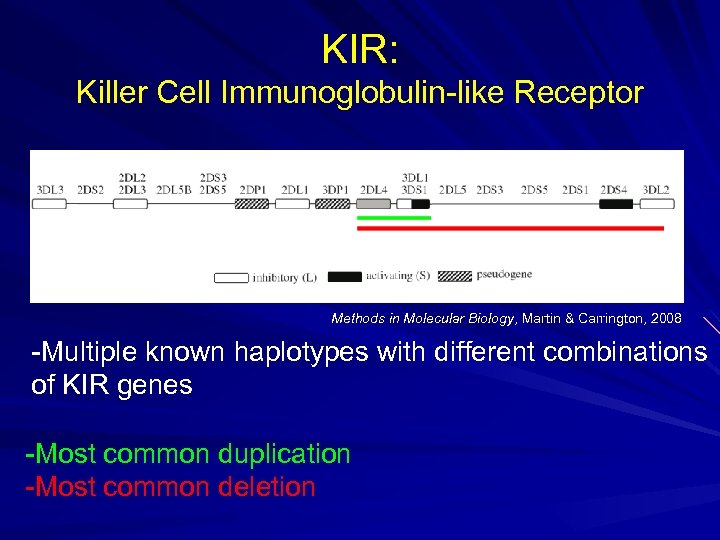 KIR: Killer Cell Immunoglobulin-like Receptor Methods in Molecular Biology, Martin & Carrington, 2008 -Multiple known haplotypes with different combinations of KIR genes -Most common duplication -Most common deletion
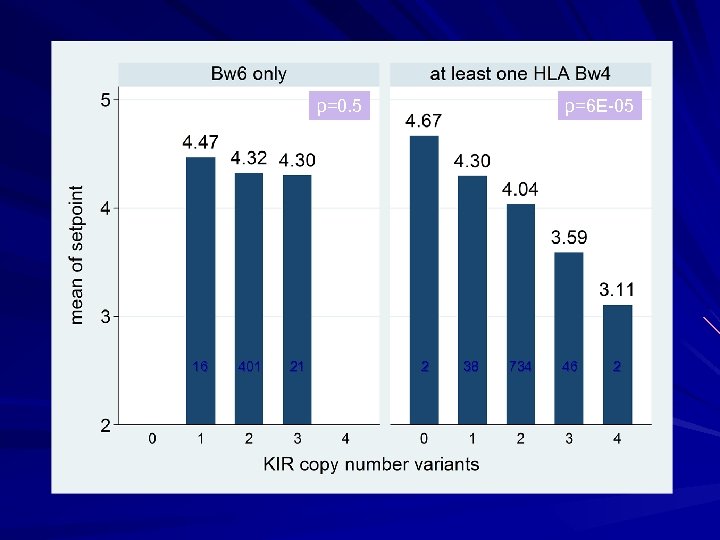 p=0. 5 16 401 21 p=6 E-05 2 38 734 46 2
 Complete resequencing of individuals with ‘extreme phenotypes’
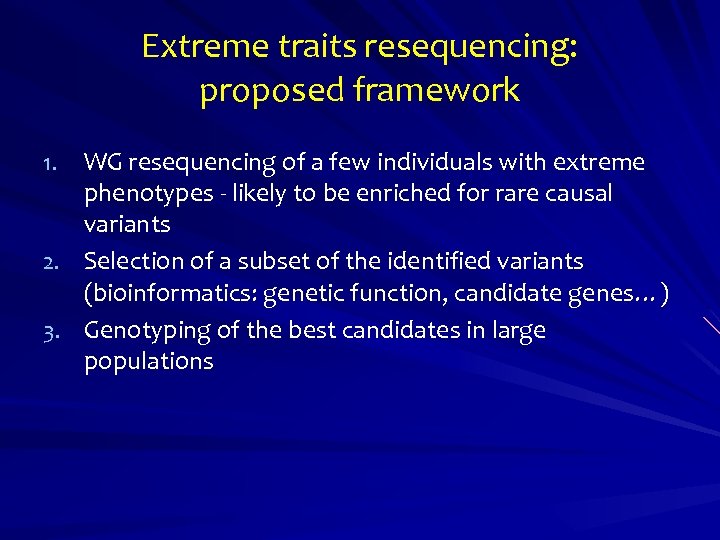 Extreme traits resequencing: proposed framework WG resequencing of a few individuals with extreme phenotypes - likely to be enriched for rare causal variants 2. Selection of a subset of the identified variants (bioinformatics: genetic function, candidate genes…) 3. Genotyping of the best candidates in large populations 1.
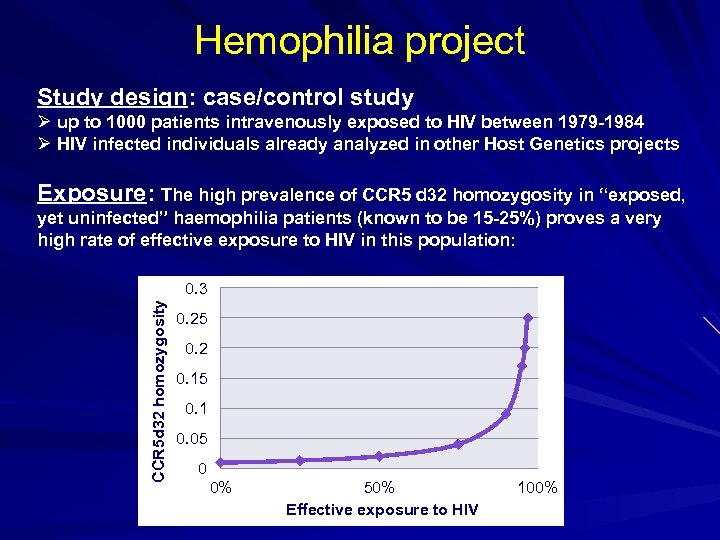 Hemophilia project Study design: case/control study Ø up to 1000 patients intravenously exposed to HIV between 1979 -1984 Ø HIV infected individuals already analyzed in other Host Genetics projects Exposure: The high prevalence of CCR 5 d 32 homozygosity in “exposed, yet uninfected” haemophilia patients (known to be 15 -25%) proves a very high rate of effective exposure to HIV in this population: CCR 5 d 32 homozygosity 0. 3 0. 25 0. 2 0. 15 0. 1 0. 05 0 0% 50% Effective exposure to HIV 100%
 Sequence. Variant. Analyzer, a dedicated software infrastructure to manage, annotate, and analyze the large number of very unique variants detected from a resequencing project.
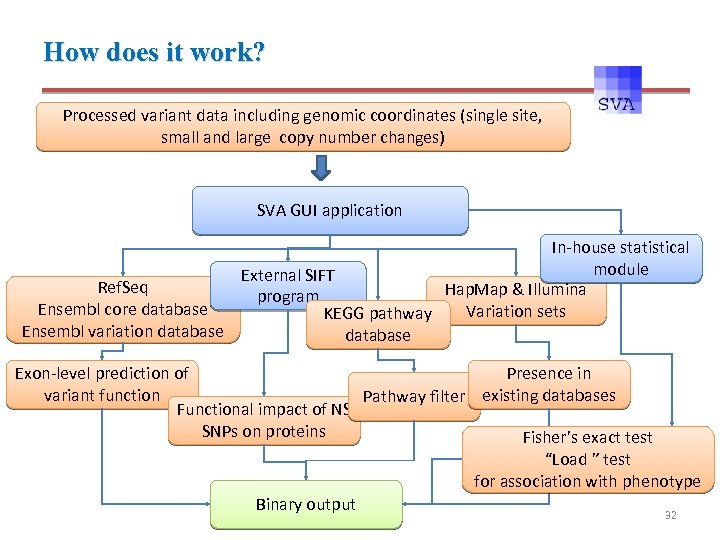 How does it work? Processed variant data including genomic coordinates (single site, small and large copy number changes) SVA GUI application In-house statistical module External SIFT Ref. Seq Hap. Map & Illumina program Ensembl core database Variation sets KEGG pathway Ensembl variation database Exon-level prediction of Presence in variant function Pathway filter existing databases Functional impact of NS SNPs on proteins Fisher’s exact test “Load ” test for association with phenotype Binary output 32 32
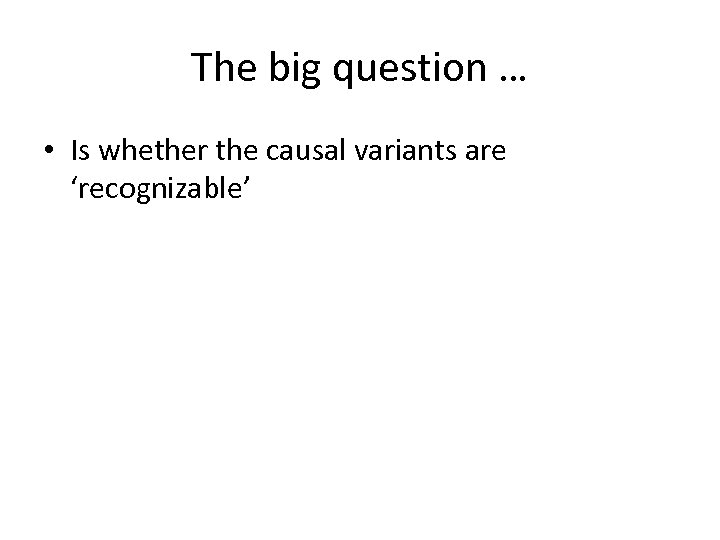 The big question … • Is whether the causal variants are ‘recognizable’
 With thanks to • NIH (CHAVI) – NIAID, DAIDS, OAR • Bill & Melinda Gates Foundation
 Dr. Jacques Fellay Dr. Kevin Shianna Dr. Dongliang Ge Dr. Woohyun Yoon Dr. TJ Urban Dr Anna Need Liz Cirulli Nicole Walley Curtis Gumbs Kiim Pelak Dr. Amalio Telenti Dr. Sara Colombo Dr. Bart Haynes Dr. Norm Letvin Dr. Andrew Mc. Michael Dr. Lucy Dorrell Dr. Seph Borrow Dr. Mary Carrington Dr. Nelson Michael Dr. Amy Weintrob