


 Скачать презентацию Detection and Enumeration of Food Pathogens with the
3619bba01b41fb7d4215c5b4c8fd6f06.ppt
- Количество слайдов: 46
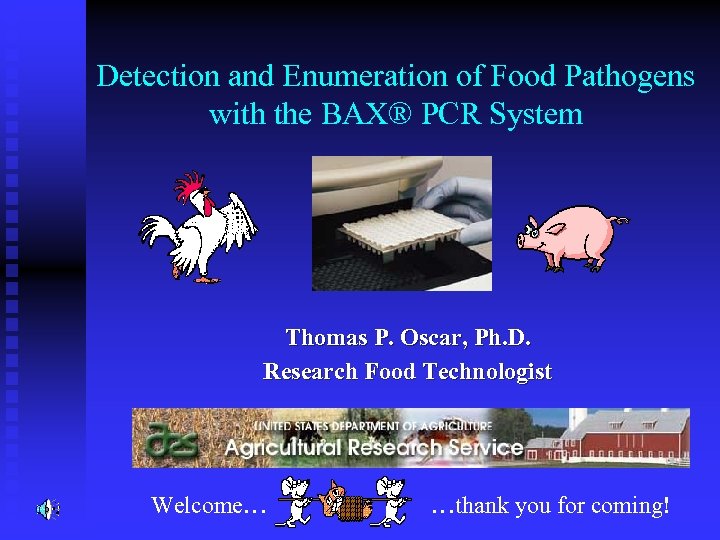 Detection and Enumeration of Food Pathogens with the BAX® PCR System Thomas P. Oscar, Ph. D. Research Food Technologist Welcome… …thank you for coming!
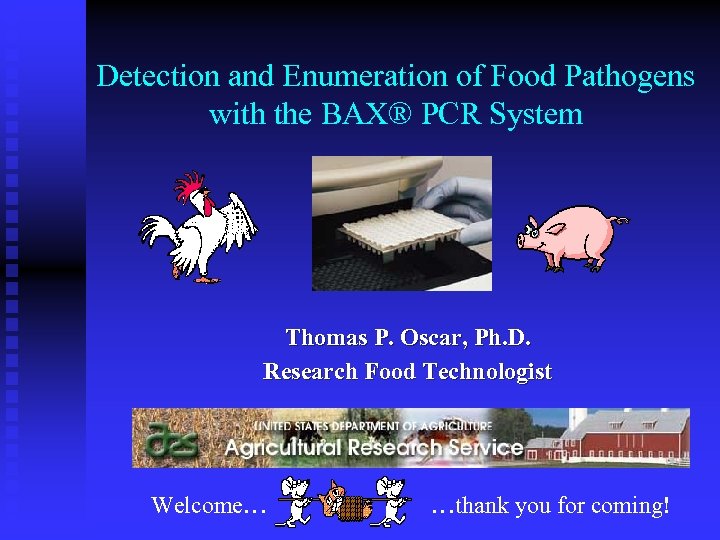 Detection and Enumeration of Food Pathogens with the BAX® PCR System Thomas P. Oscar, Ph. D. Research Food Technologist Welcome… …thank you for coming!
 University of Delaware (1978 -1982) n Undergraduate Research Assistant u B. S. in Animal Science t Pre-Veterinary Medicine “Interaction of Tiamulin and Monensin in Chickens”
 Pennsylvania State University (1982 -1984) n Graduate Research Assistant u M. S. in Animal Nutrition t Minor in Biochemistry “Characterization of the Bovine Mammary Insulin Receptor”
 North Carolina State University (1984 -1987) n Graduate Research & Teaching Assistant u Ph. D. in Animal Science t Ruminant Nutrition “Role of Nickel in Methane Production”
 University of Tennessee, Memphis (1987 -1988) n NIH Post-Doctoral Research Associate u Type II Diabetes t Rat Fat Cell Model
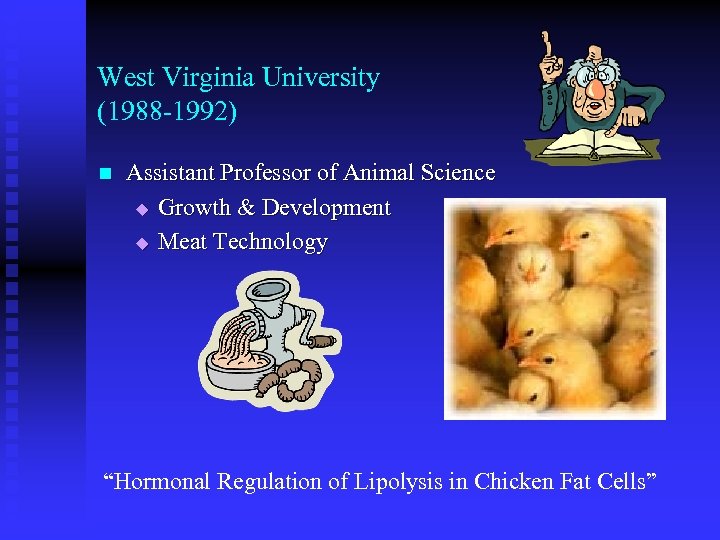 West Virginia University (1988 -1992) n Assistant Professor of Animal Science u Growth & Development u Meat Technology “Hormonal Regulation of Lipolysis in Chicken Fat Cells”
 ARS, Poultry Research Laboratory Georgetown, DE (1992 -1994) n Research Physiologist (Poultry) u Growth & Development UMES Delmarva Poultry Industry “Improve the Lean-to-Fat Ratio of Broiler Chickens”
 ARS, Nutrient Conservation & Metabolism Lab Beltsville, MD (1994 -1995) n Research Dairy Scientist u Ruminant Nutrition Beltsville Agricultural Research Center
 ARS, Microbial Food Safety Research Unit UMES, Princess Anne, MD (1995 -present) n Research Food Technologist u Predictive Microbiology u Outreach
 Feature Presentation
 Current Food Safety Approach Jack-in-the-Box n n HACCP u No testing Performance Standards u Detection u Enumeration t C. jejuni To test or not to test, that is the question
 Traditional Culture Method Detection and Enumeration n Pre-enrichment n Selective plating n Confirmation 5 to 7 Days
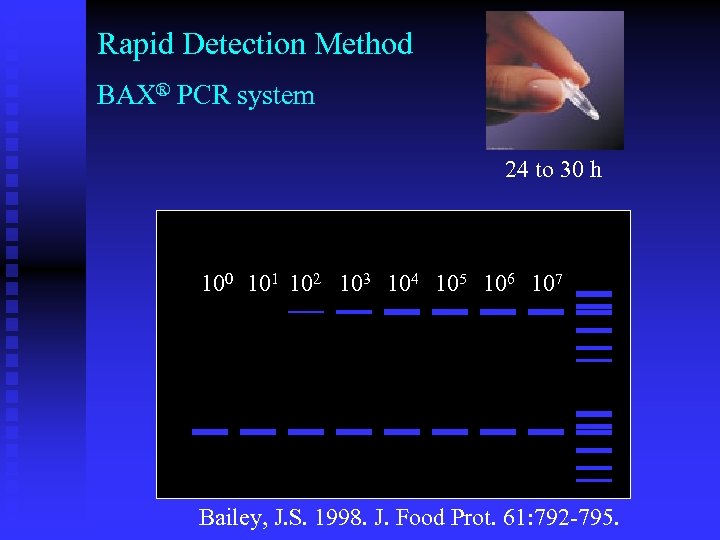 Rapid Detection Method BAX® PCR system 24 to 30 h 100 101 102 103 104 105 106 107 Bailey, J. S. 1998. J. Food Prot. 61: 792 -795.
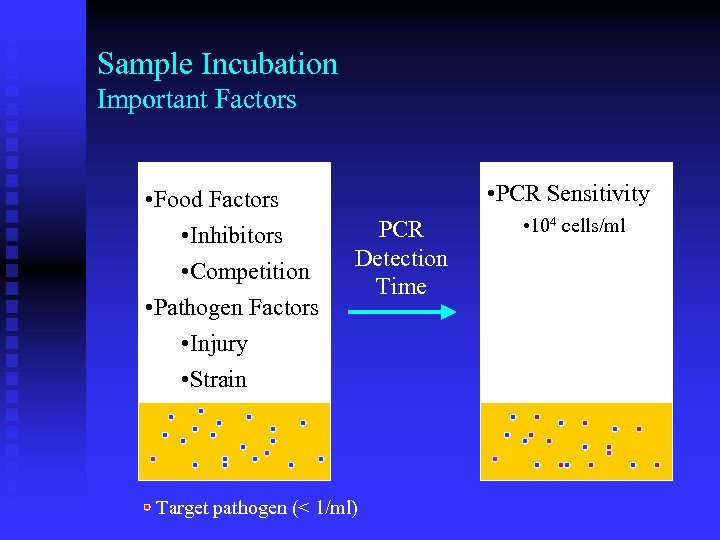 Sample Incubation Important Factors • Food Factors • Inhibitors • Competition • Pathogen Factors • Injury • Strain • PCR Sensitivity PCR Detection Time Target pathogen (< 1/ml) • 104 cells/ml
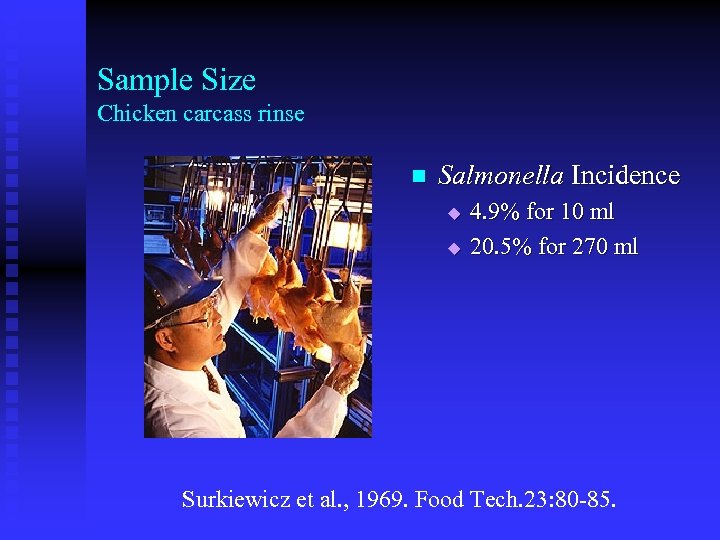 Sample Size Chicken carcass rinse n Salmonella Incidence u u 4. 9% for 10 ml 20. 5% for 270 ml Surkiewicz et al. , 1969. Food Tech. 23: 80 -85.
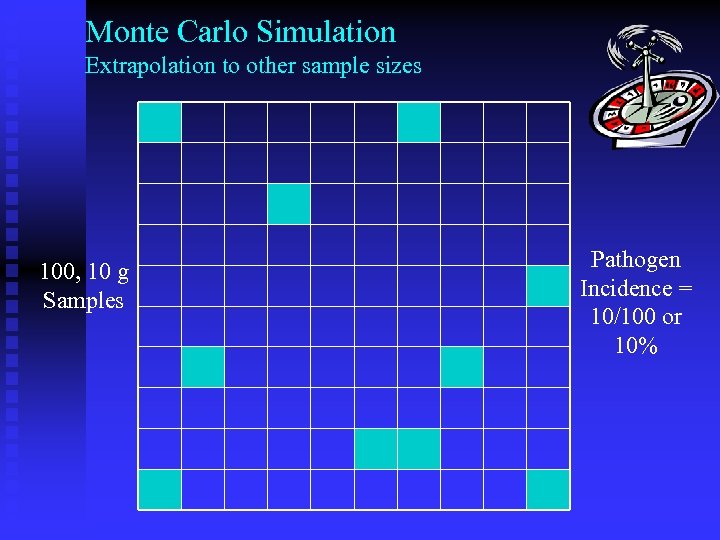 Monte Carlo Simulation Extrapolation to other sample sizes 100, 10 g Samples Pathogen Incidence = 10/100 or 10%
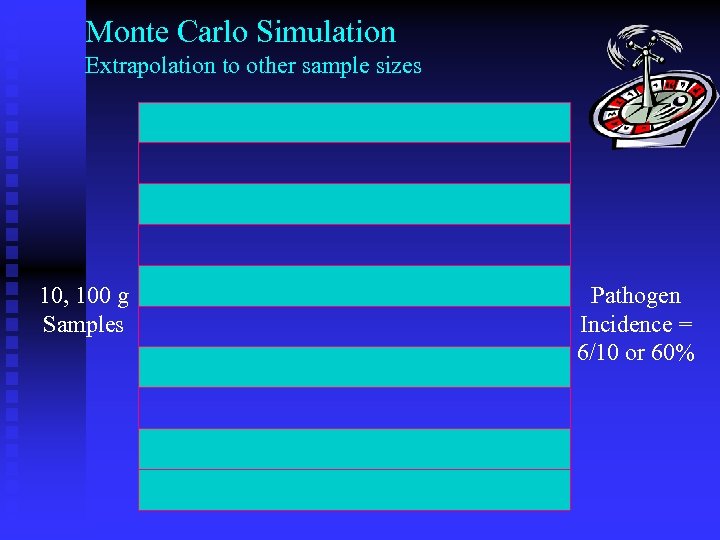 Monte Carlo Simulation Extrapolation to other sample sizes 10, 100 g Samples Pathogen Incidence = 6/10 or 60%
 Objectives n To develop a standard curve for enumerating food pathogens as a function of PCR detection time. n To determine the effects of strain variation, meat type and microbial competition on the shape of the standard curve. n To develop a Monte Carlo simulation model for enumeration of food pathogens as a function of sample size.
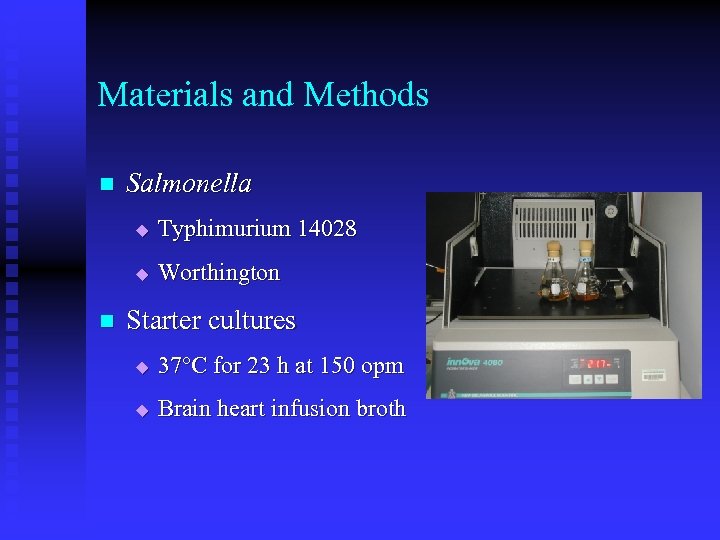 Materials and Methods n Salmonella u u n Typhimurium 14028 Worthington Starter cultures u 37°C for 23 h at 150 opm u Brain heart infusion broth
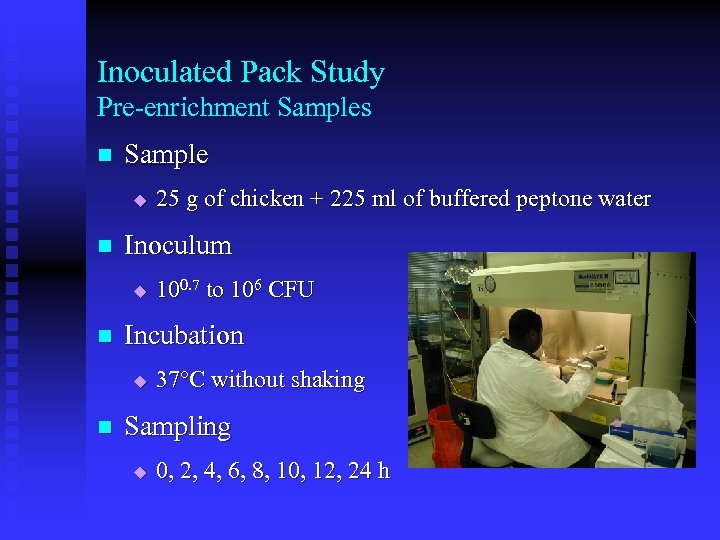 Inoculated Pack Study Pre-enrichment Samples n Sample u n Inoculum u n 100. 7 to 106 CFU Incubation u n 25 g of chicken + 225 ml of buffered peptone water 37°C without shaking Sampling u 0, 2, 4, 6, 8, 10, 12, 24 h
 PCR Detection Time Score n PCR Analysis n Scoring System u BAX® System u 0 = no band u One gel per sample u 1 = faint band u 2 = < full band u 3 = full band
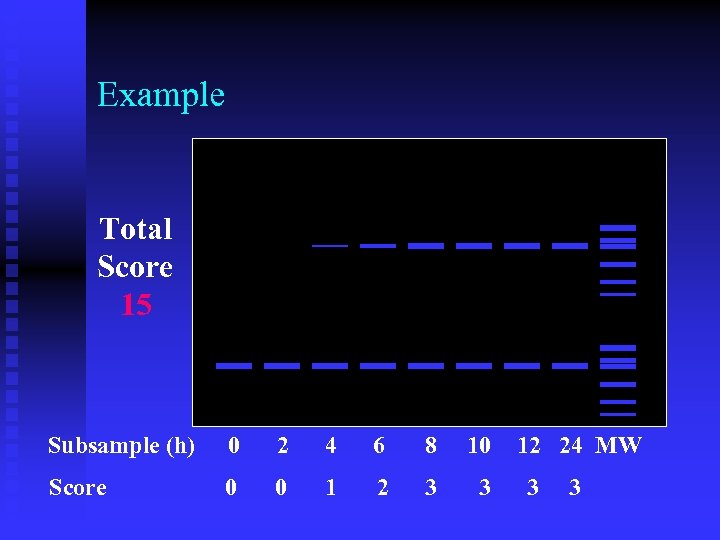 Example Total Score 15 Subsample (h) 0 2 4 6 8 10 Score 0 0 1 2 3 3 12 24 MW 3 3
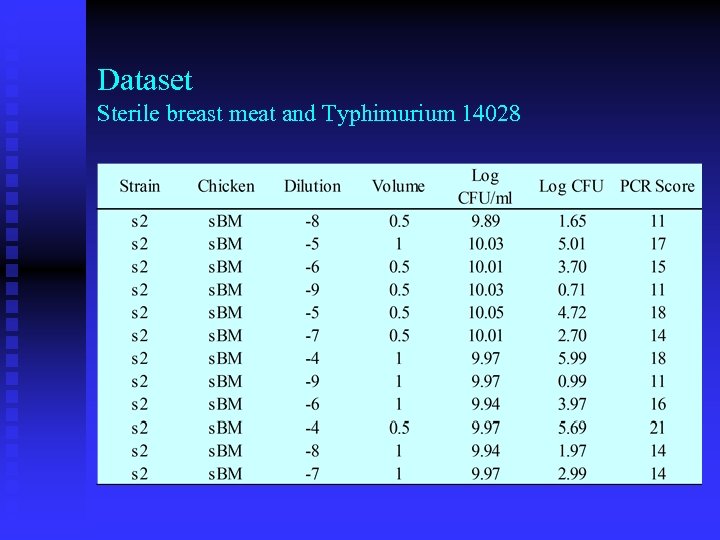 Dataset Sterile breast meat and Typhimurium 14028
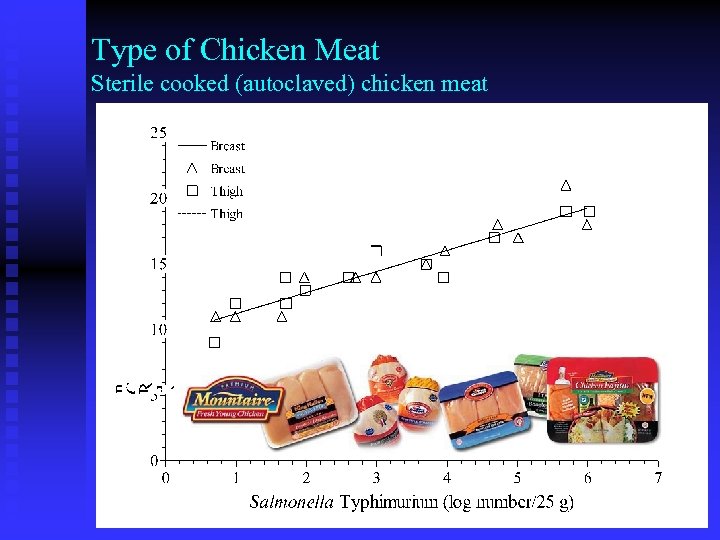 Type of Chicken Meat Sterile cooked (autoclaved) chicken meat
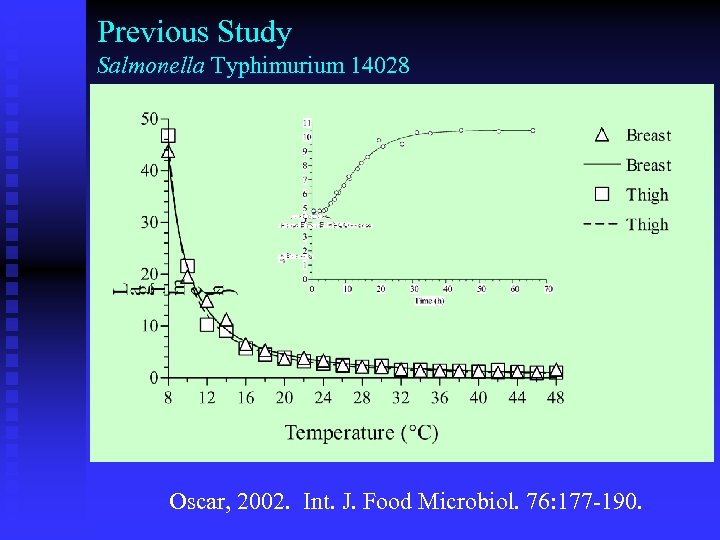 Previous Study Salmonella Typhimurium 14028 Oscar, 2002. Int. J. Food Microbiol. 76: 177 -190.
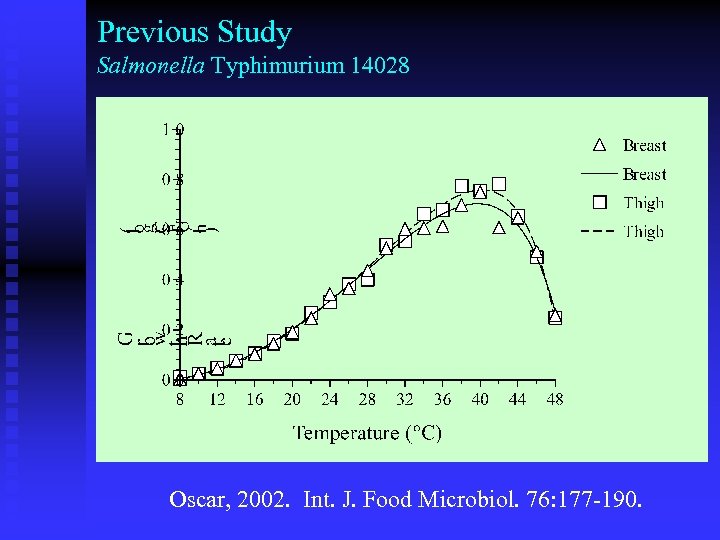 Previous Study Salmonella Typhimurium 14028 Oscar, 2002. Int. J. Food Microbiol. 76: 177 -190.
 Conclusion n Dilution may minimize effects of the food matrix on PCR detection time score.
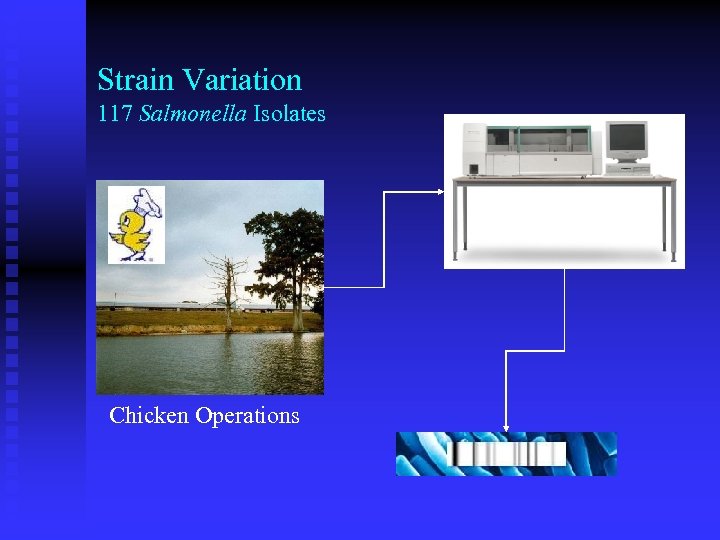 Strain Variation 117 Salmonella Isolates Chicken Operations
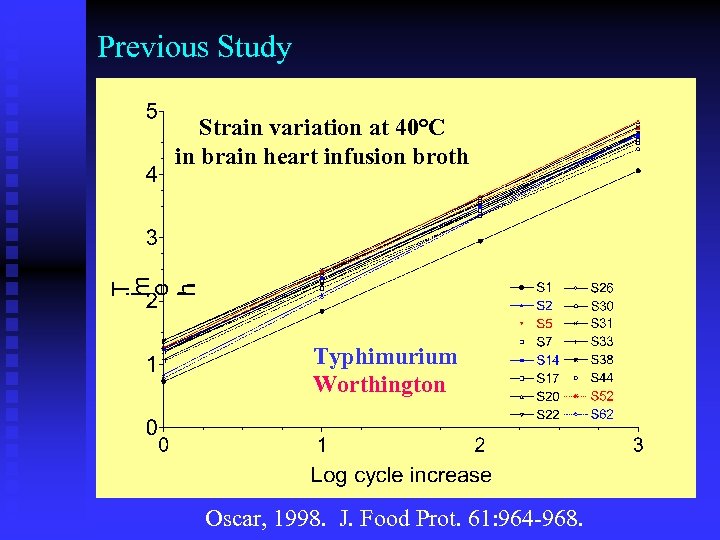 Previous Study Strain variation at 40°C in brain heart infusion broth Typhimurium Worthington Oscar, 1998. J. Food Prot. 61: 964 -968.
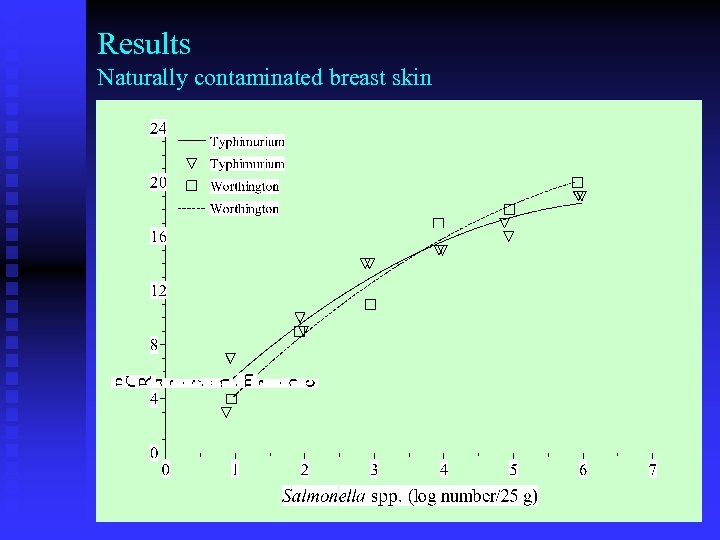 Results Naturally contaminated breast skin
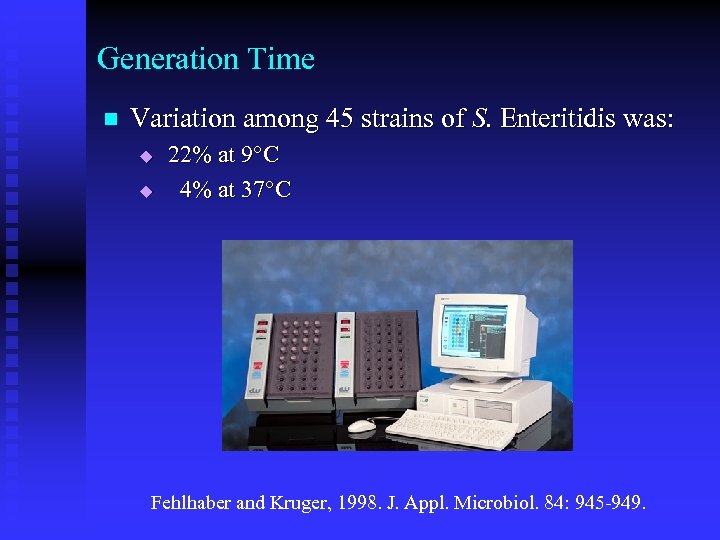 Generation Time n Variation among 45 strains of S. Enteritidis was: u u 22% at 9°C 4% at 37°C Fehlhaber and Kruger, 1998. J. Appl. Microbiol. 84: 945 -949.
 Conclusion n Strain variation may not greatly affect PCR detection time score under optimal growth conditions.
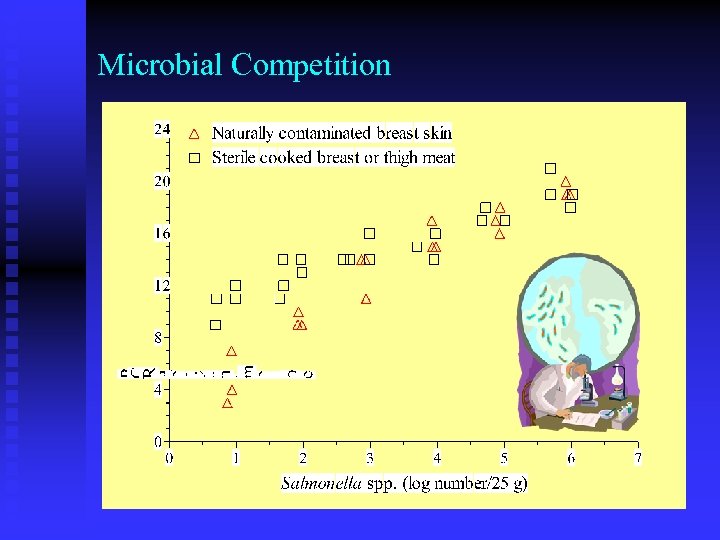 Microbial Competition
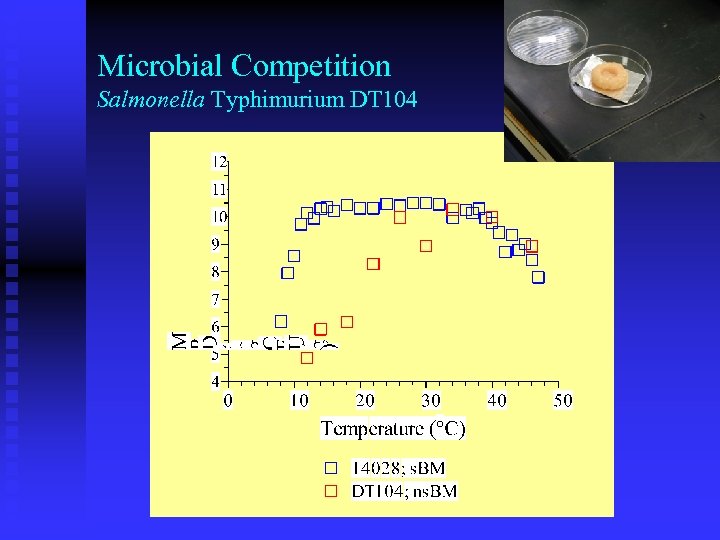 Microbial Competition Salmonella Typhimurium DT 104
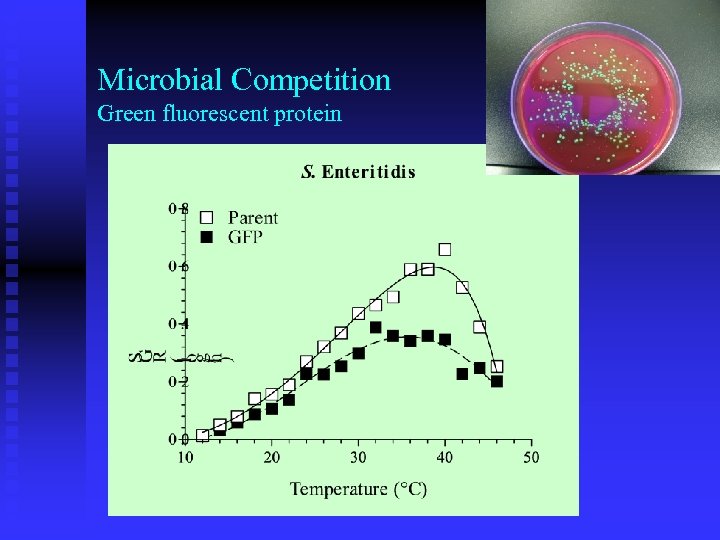 Microbial Competition Green fluorescent protein
 Conclusion n Microbial competition affected PCR detection time score and thus, needs to be incorporated into the standard curve.
 Monte Carlo Simulation Modeling
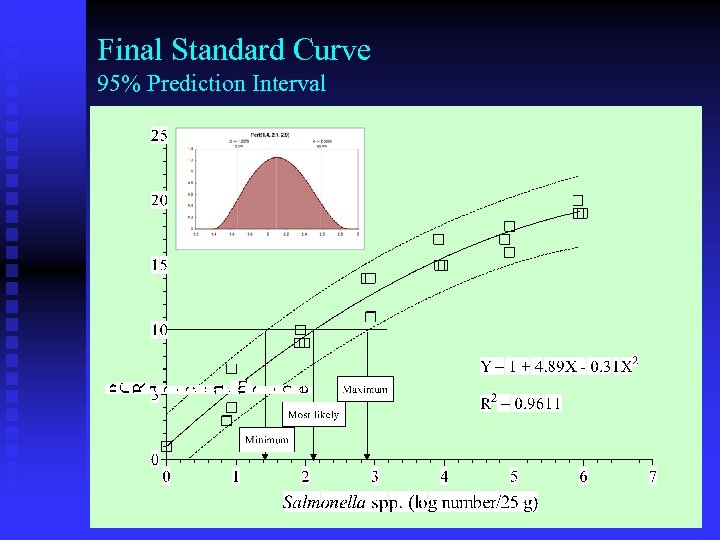 Final Standard Curve 95% Prediction Interval
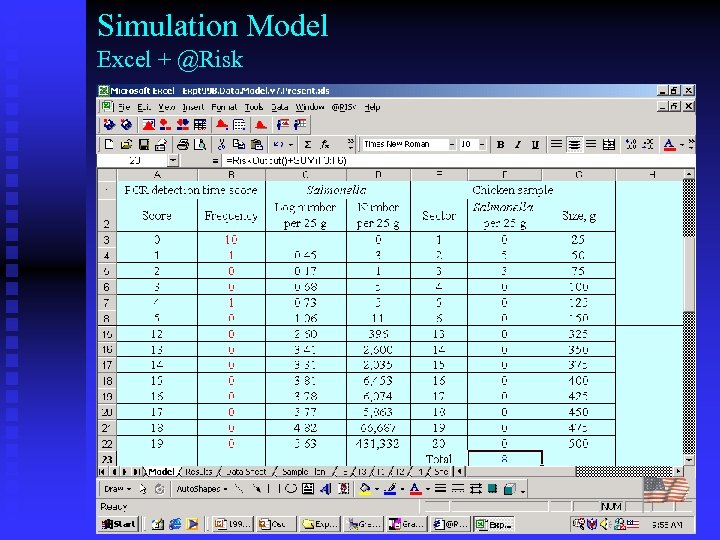 Simulation Model Excel + @Risk
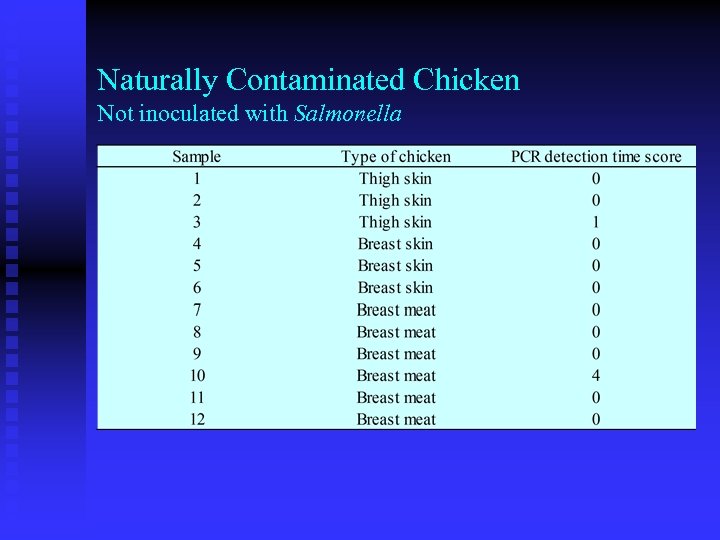 Naturally Contaminated Chicken Not inoculated with Salmonella
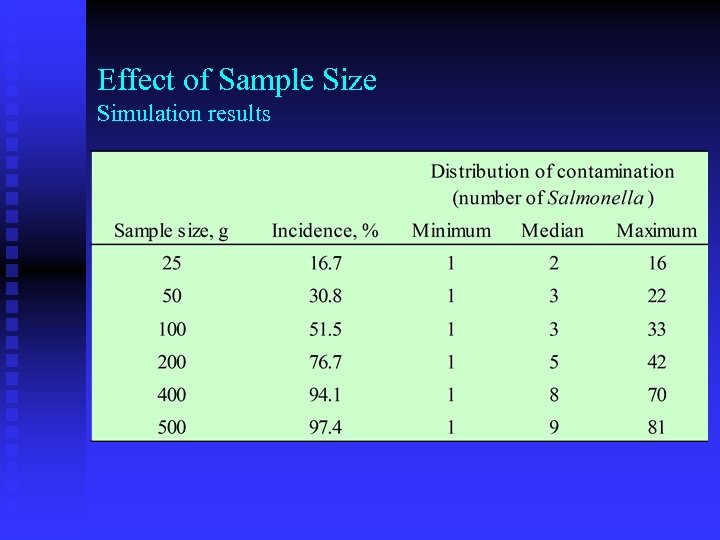 Effect of Sample Size Simulation results
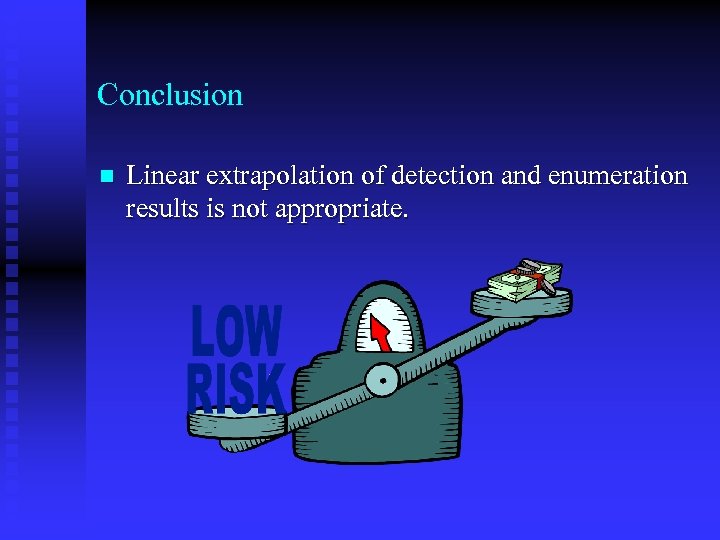 Conclusion n Linear extrapolation of detection and enumeration results is not appropriate.
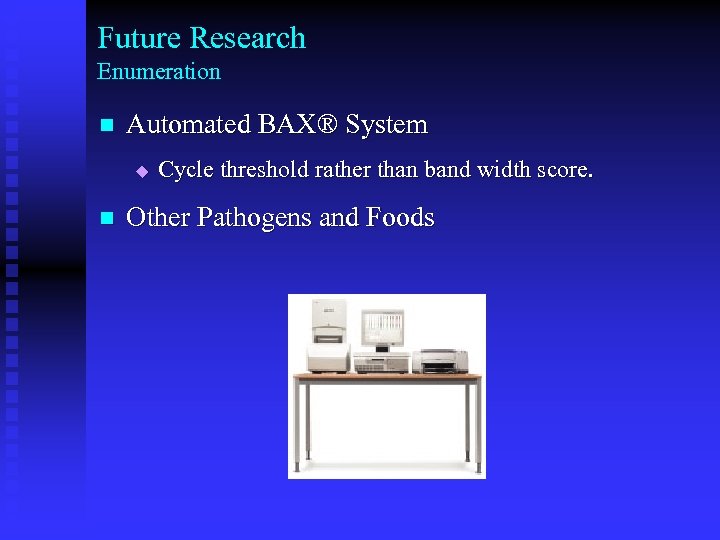 Future Research Enumeration n Automated BAX® System u n Cycle threshold rather than band width score. Other Pathogens and Foods
 The End Thank you for your attention! I will be glad to answer your questions
 The End Thank you for your attention! I will be glad to answer your questions