 Скачать презентацию Detecting Hidden Attacks through the Mobile App-Web Interfaces
d35e344acad4f30cb67624dc23aff8fb.ppt
- Количество слайдов: 40




Detecting Hidden Attacks through the Mobile App-Web Interfaces Yan Chen Lab of Internet and Security Technology (LIST) Northwestern University, USA
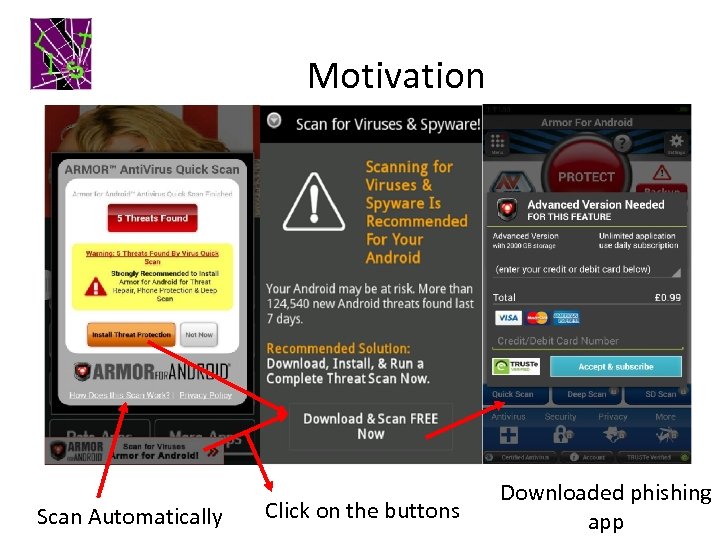
Motivation Scan Automatically Click on the buttons Downloaded phishing app
Motivation • Vast effort has been spent analyzing the malicious apps themselves – For both industry and academia • An important, yet unexplored vector of malware propagation is benign, legitimate apps that lead users to websites hosting malicious apps • We call this hidden attacks though the appweb interface
Contributions • Develop a framework for analyzing the app-web interfaces in Android applications • Develop a novel technique to interact with UI widgets to trigger app-web interface • Conduct a systematic study to associate ad networks with ad library packages • Detect hidden attacks – Tested 600, 000 apps in two months – Found several unknown attacks: a rogue antivirus scam, free i. Pad and i. Phone scams, and ads propagating SMS trojans
Outline • • Background on mobile advertising System Design Detection Results Case study
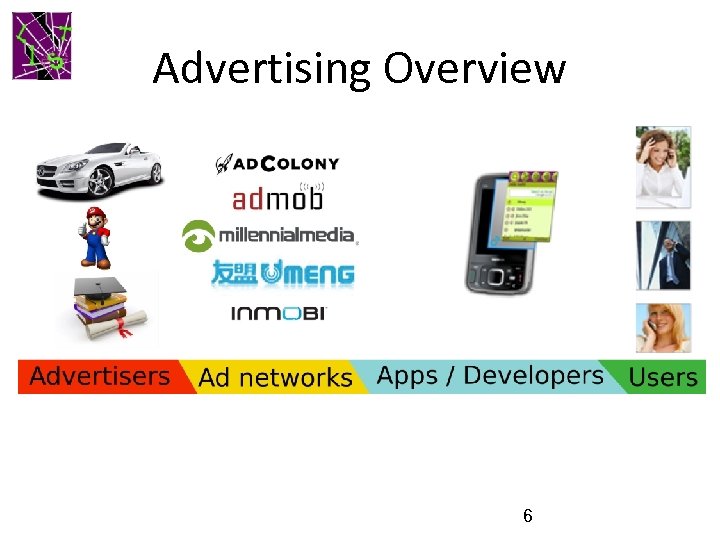
Advertising Overview 6
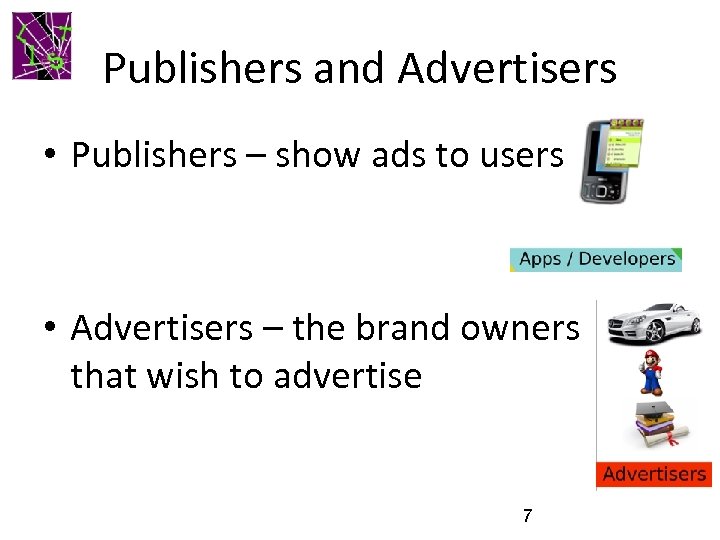
Publishers and Advertisers • Publishers – show ads to users • Advertisers – the brand owners that wish to advertise 7
Ad networks • Also called aggregators • Link advertisers to publishers • Buy ad space from publishers; sell to advertisers • Sophisticated algorithms for – Targeting – Inventory management 8
Ad networks • Ad networks may interface with each other • Syndication – One ad network asks another to fill ad space • Ad exchange – Real time auction of ad inventory – Bidding from many ad networks for many ad spaces
Mobile In-app Advertising • Ad networks provide glue code that apps can embed and communicate with ad servers – Ad libraries, which identify ad networks • Web links embedded directly in apps • Malicious links are visited via the landing pages of ads coming from ad networks – Though the apps themselves are benign
Outline • • Background on mobile advertising System Design Detection Results Case study
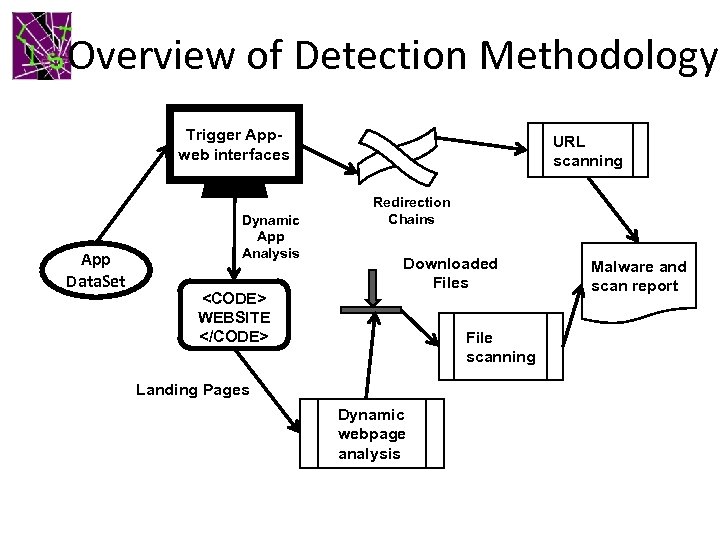
Overview of Detection Methodology Trigger Appweb interfaces App Data. Set Dynamic App Analysis <CODE> WEBSITE </CODE> URL scanning Redirection Chains Downloaded Files File scanning Landing Pages Dynamic webpage analysis Malware and scan report
• Triggering Components – Interact with the app to launch web links • Detection – Include the various processes to detect malicious and benig that may occur as a result of triggering • Provenance – Understand the cause or origin of a detected malicious activity, and attribute events to a specific domain or an ad library
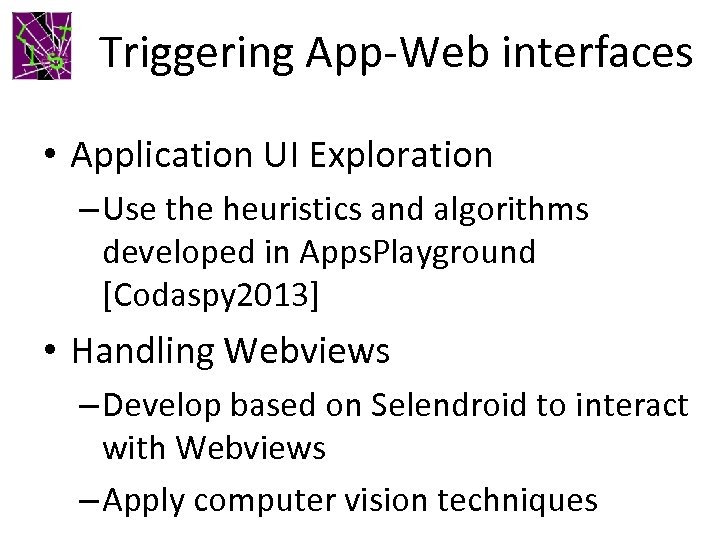
Triggering App-Web interfaces • Application UI Exploration – Use the heuristics and algorithms developed in Apps. Playground [Codaspy 2013] • Handling Webviews – Develop based on Selendroid to interact with Webviews – Apply computer vision techniques
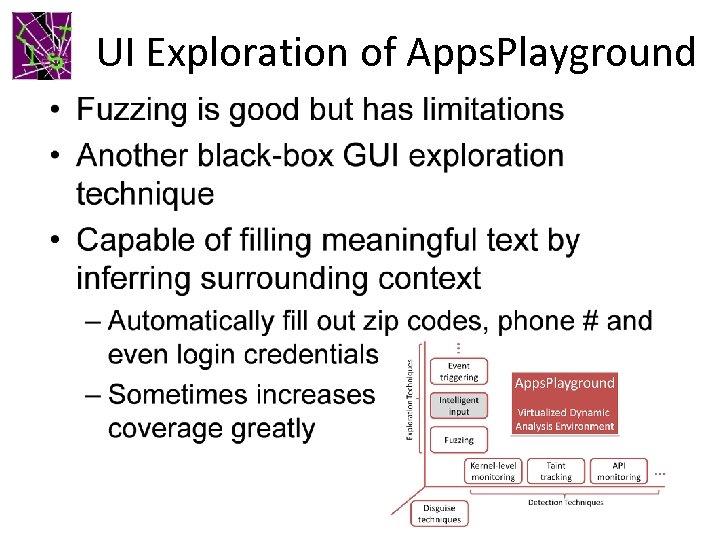
UI Exploration of Apps. Playground
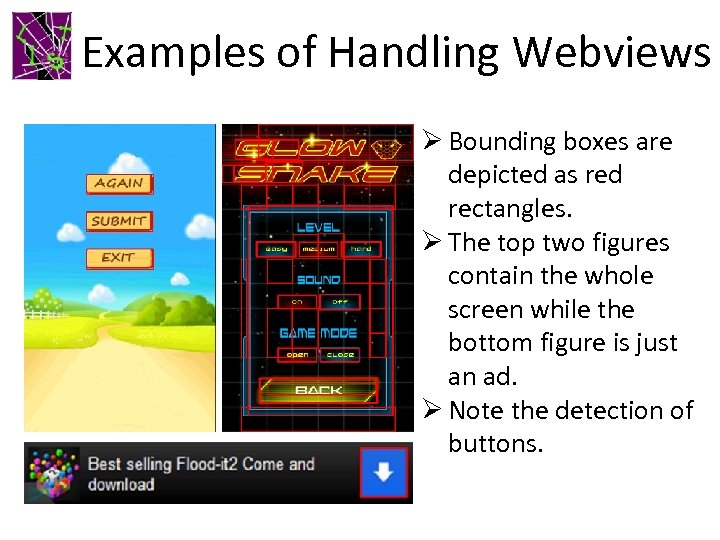
Examples of Handling Webviews Ø Bounding boxes are depicted as red rectangles. Ø The top two figures contain the whole screen while the bottom figure is just an ad. Ø Note the detection of buttons.
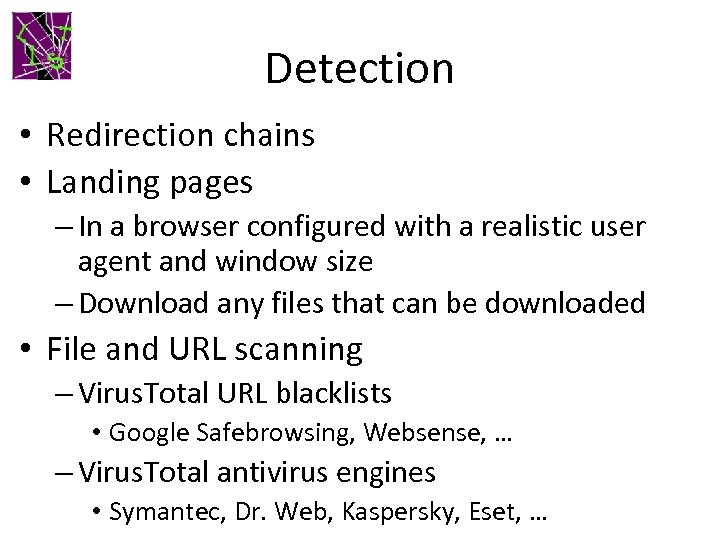
Detection • Redirection chains • Landing pages – In a browser configured with a realistic user agent and window size – Download any files that can be downloaded • File and URL scanning – Virus. Total URL blacklists • Google Safebrowsing, Websense, … – Virus. Total antivirus engines • Symantec, Dr. Web, Kaspersky, Eset, …
Provenance • Understand the cause and origins of attacks • Approach 1: through redirection chains – Identify the parties owning the URLs leading up to the landing URL • Approach 2: attribute code-level elements to locate it: at app or ad libraries?
Discovering Ad Networks • First systematic step towards understanding malvertising • Finding ad libraries – Typically have their own Java packages, e. g. , com. google. ads – Disassemble the app and get Java packages
Approach 1 • Find frequent packages • Ad networks included in many apps so their packages will be frequent • So are some other packages, e. g. , Apache libs, game development libs, … • Have to manually filter them
Approach 2 • Observation: Ad functionality is different from the main app functionality • Three steps ØGet all android APIs ØDecouple: Break the app into different modules based on code characteristics p. Inheritance, function calls, field relationships ØCluster: cluster modules from multiple apps together based on their API call similarity p. Frequent libs such as Apache, game libs pad libraries
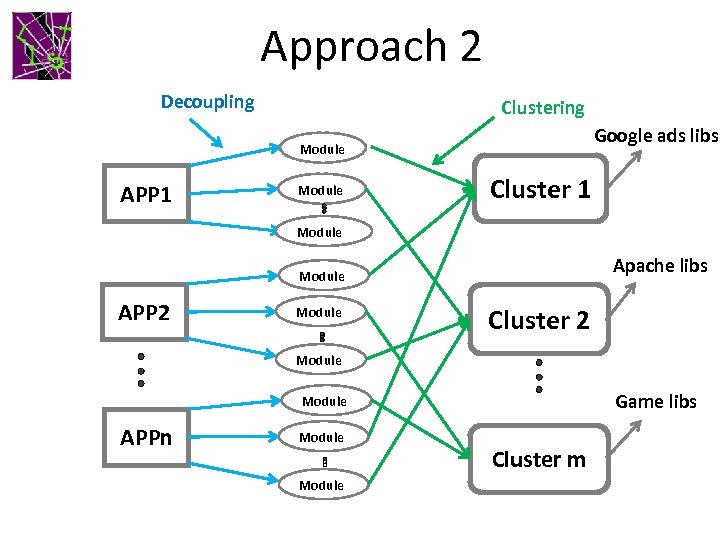
Approach 2 Decoupling Clustering Google ads libs Module APP 1 Module Cluster 1 Module Apache libs Module APP 2 Module Cluster 2 Module Game libs Module APPn Module Cluster m
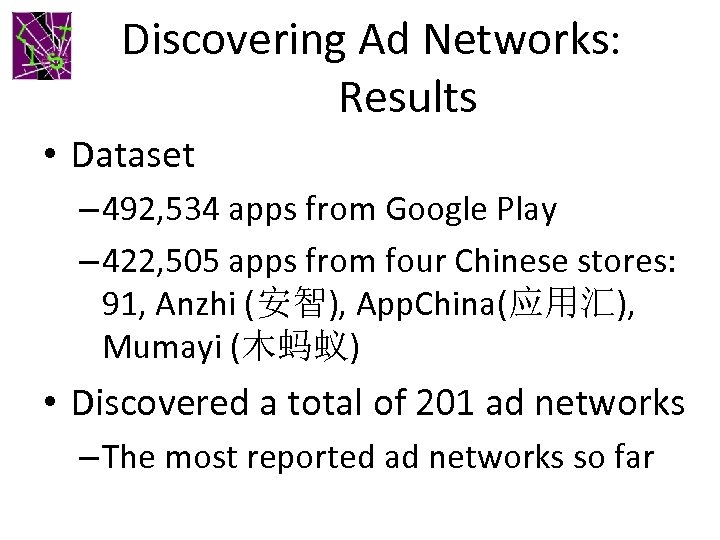
Discovering Ad Networks: Results • Dataset – 492, 534 apps from Google Play – 422, 505 apps from four Chinese stores: 91, Anzhi (安智), App. China(应用汇), Mumayi (木蚂蚁) • Discovered a total of 201 ad networks – The most reported ad networks so far
Outline • • Background on mobile advertising System Design Detection Results Case study
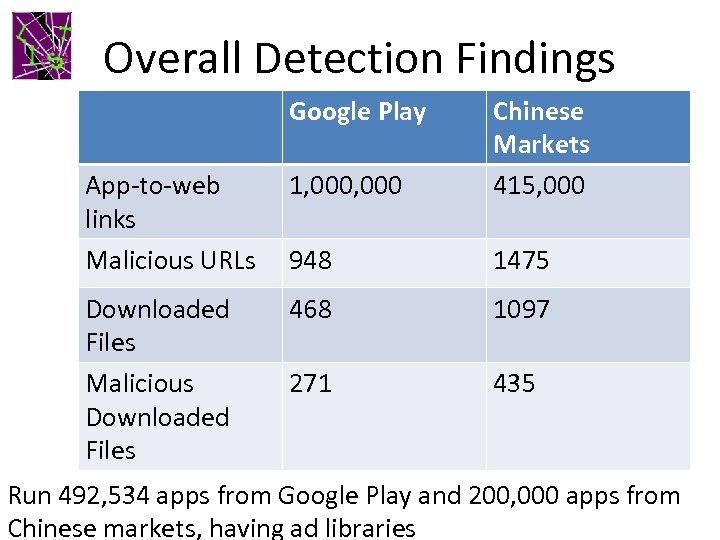
Overall Detection Findings Google Play App-to-web links Malicious URLs 1, 000 Chinese Markets 415, 000 948 1475 Downloaded Files Malicious Downloaded Files 468 1097 271 435 Run 492, 534 apps from Google Play and 200, 000 apps from Chinese markets, having ad libraries
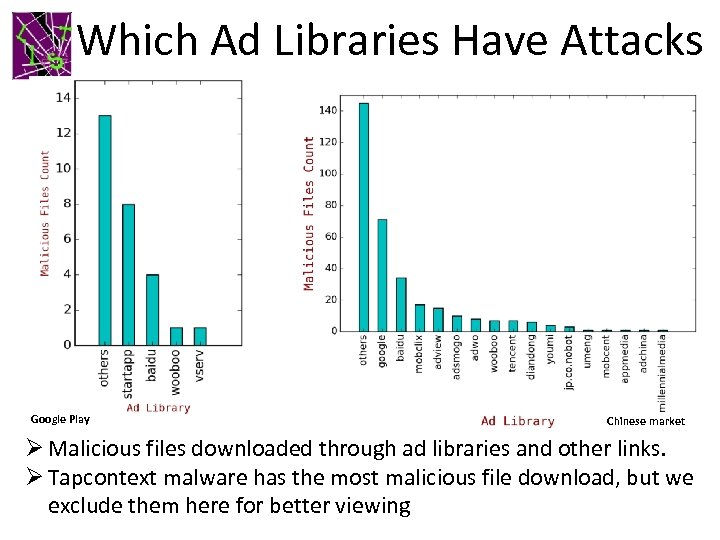
Which Ad Libraries Have Attacks Google Play Chinese market Ø Malicious files downloaded through ad libraries and other links. Ø Tapcontext malware has the most malicious file download, but we exclude them here for better viewing
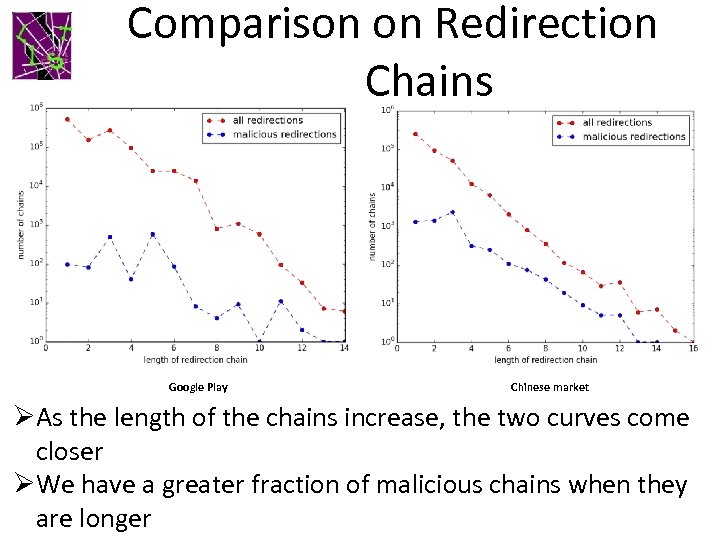
Comparison on Redirection Chains Google Play Chinese market ØAs the length of the chains increase, the two curves come closer ØWe have a greater fraction of malicious chains when they are longer
Outline • • Background on mobile advertising System Design Detection Results Case study
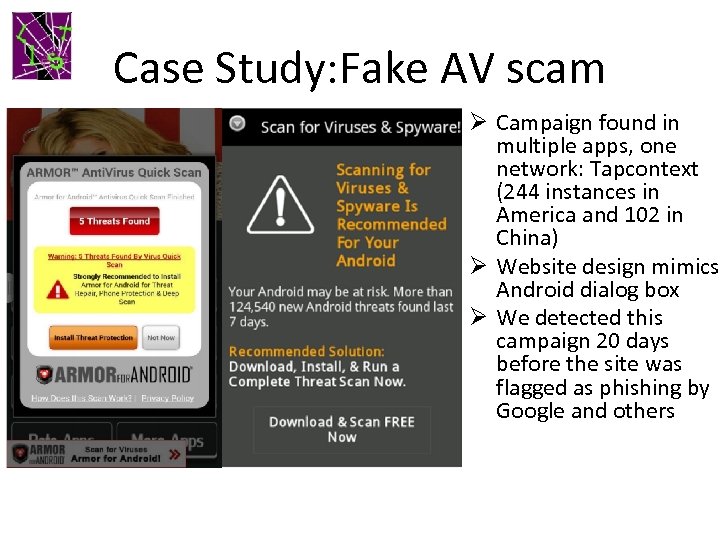
Case Study: Fake AV scam Ø Campaign found in multiple apps, one network: Tapcontext (244 instances in America and 102 in China) Ø Website design mimics Android dialog box Ø We detected this campaign 20 days before the site was flagged as phishing by Google and others
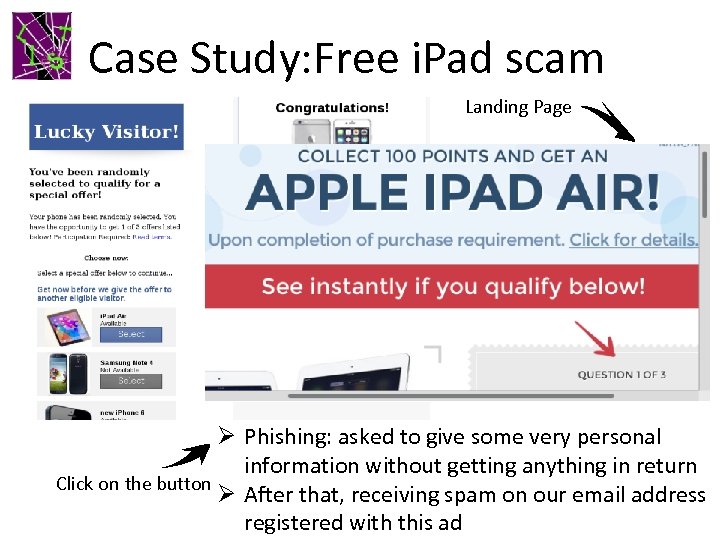
Case Study: Free i. Pad scam Landing Page Ø Phishing: asked to give some very personal information without getting anything in return Click on the button Ø After that, receiving spam on our email address registered with this ad
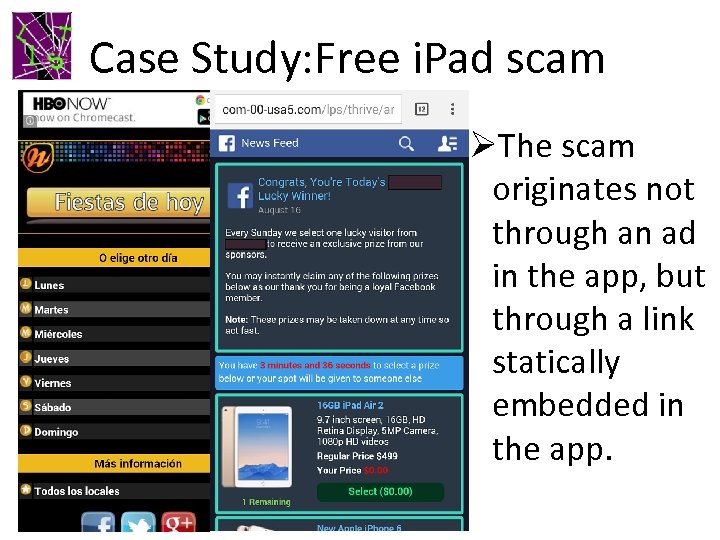
Case Study: Free i. Pad scam ØThe scam originates not through an ad in the app, but through a link statically embedded in the app.
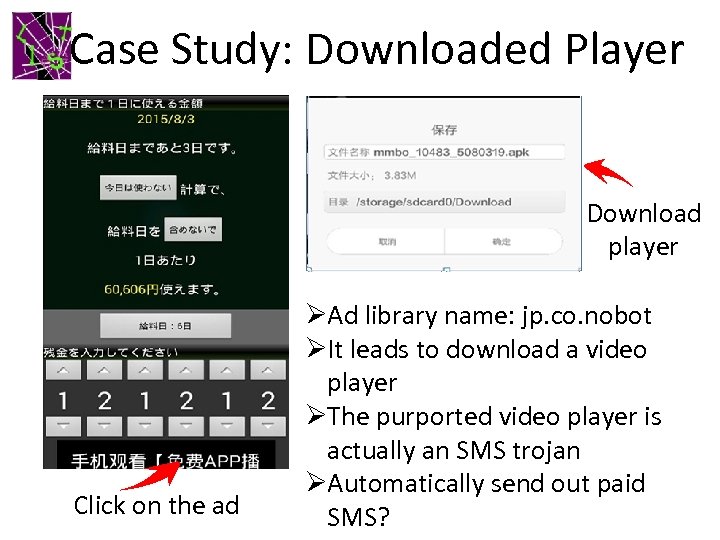
Case Study: Downloaded Player Download player Click on the ad ØAd library name: jp. co. nobot ØIt leads to download a video player ØThe purported video player is actually an SMS trojan ØAutomatically send out paid SMS?
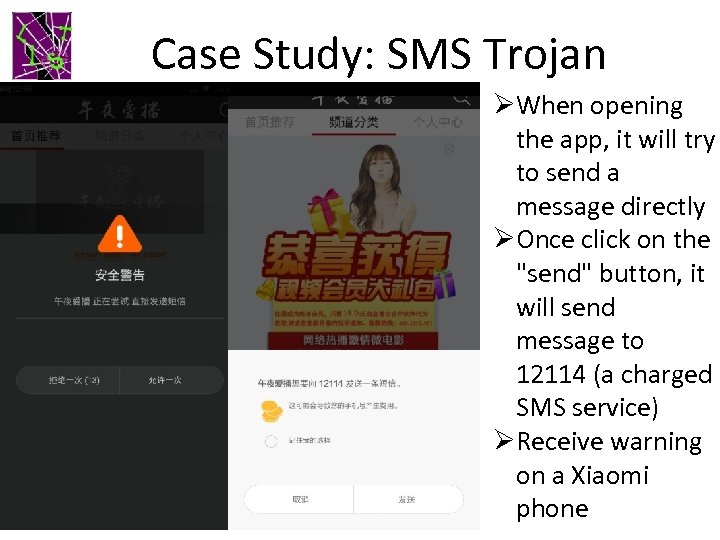
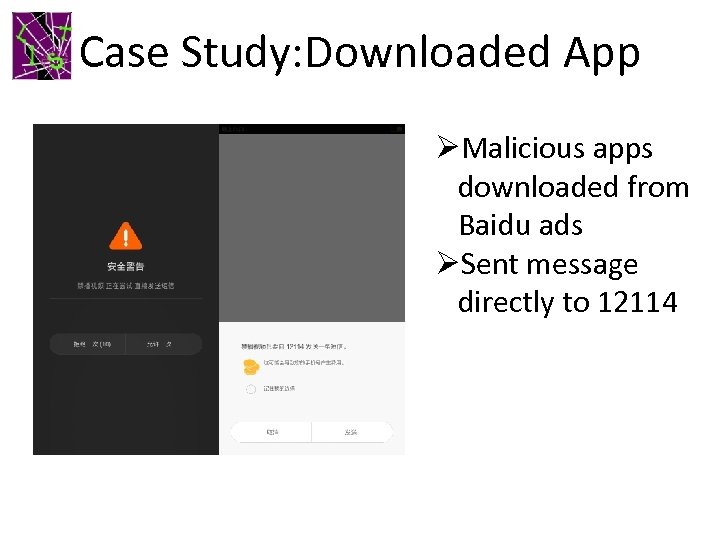
Case Study: SMS Trojan 3/19/2018 ØWhen opening the app, it will try to send a message directly ØOnce click on the "send" button, it will send message to 12114 (a charged SMS service) ØReceive warning on a Xiaomi phone
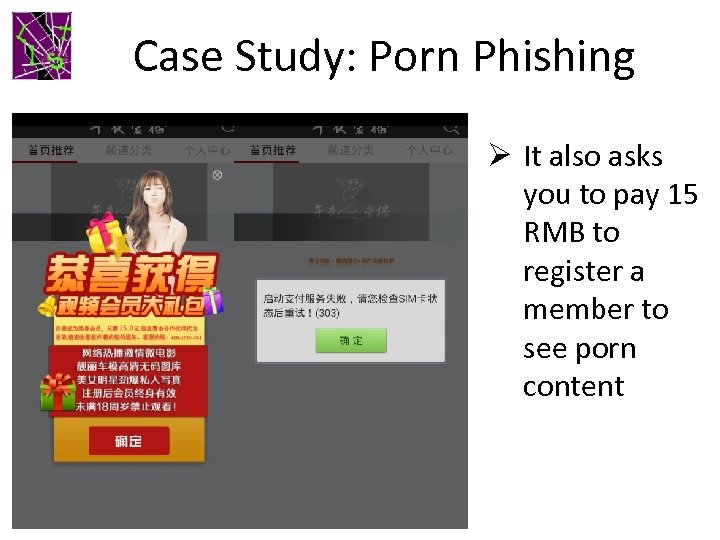
Case Study: Porn Phishing Ø It also asks you to pay 15 RMB to register a member to see porn content 3/19/2018
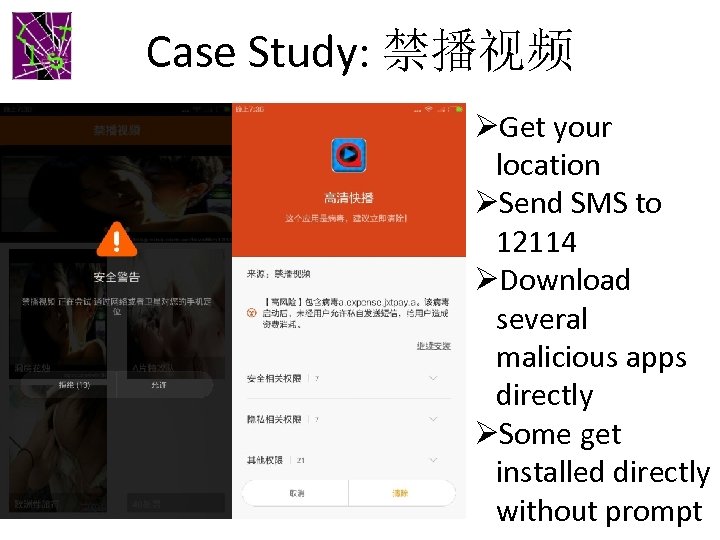
Case Study: 禁播视频 3/19/2018 ØGet your location ØSend SMS to 12114 ØDownload several malicious apps directly ØSome get installed directly without prompt
Conclusions • Explored the app-web interface, wherein a user may go from an app to a Web destination via ad or web links embedded in the app • Tested 600, 000 applications in two months • Identified several malware and scam campaigns propagating through both ads and web links in apps. • We are working with CNCERT to protect Android users – by screening out offending apps that embed links leading to malicious content – by making ad networks more accountable for their ad content
Thank you ! http: //list. zju. edu. cn/ http: //list. cs. northwestern. edu/ Questions ?
Android Ecosystem
Button Detection Algorithm a. Perform edge detection on the view’s image b. Find contours in the image c. Ignore the non-convex contours or those with very small area d. Compute the bounding boxes of all remaining contours
Case Study: Downloaded App ØMalicious apps downloaded from Baidu ads ØSent message directly to 12114
Скачать презентацию Detecting Hidden Attacks through the Mobile App-Web Interfaces
d35e344acad4f30cb67624dc23aff8fb.ppt