


 Скачать презентацию Designs Natural Succession and LTS M of Disposal Cell
67a19fe4a1f7a96b790bd40167ab3f7d.ppt
- Количество слайдов: 49
 Designs, Natural Succession, and LTS&M of Disposal Cell Covers for Uranium Mill Tailings WJ Waugh S. M. Stoller Corporation LTS&M Conference November 16 -18, 2010
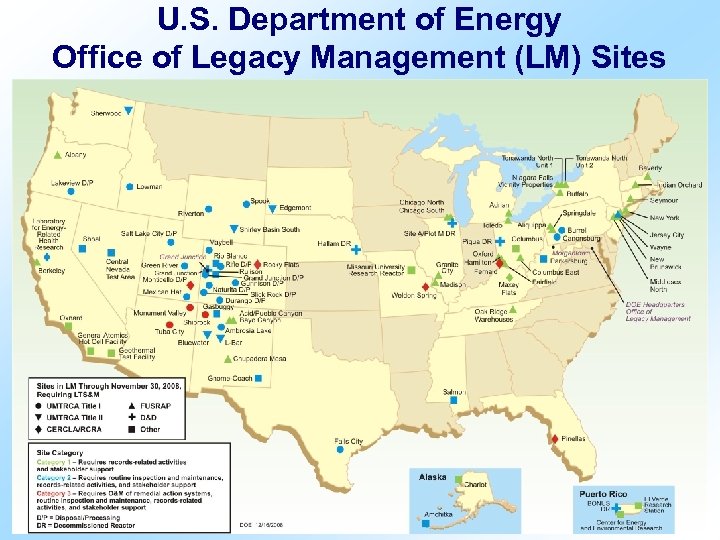 U. S. Department of Energy Office of Legacy Management (LM) Sites
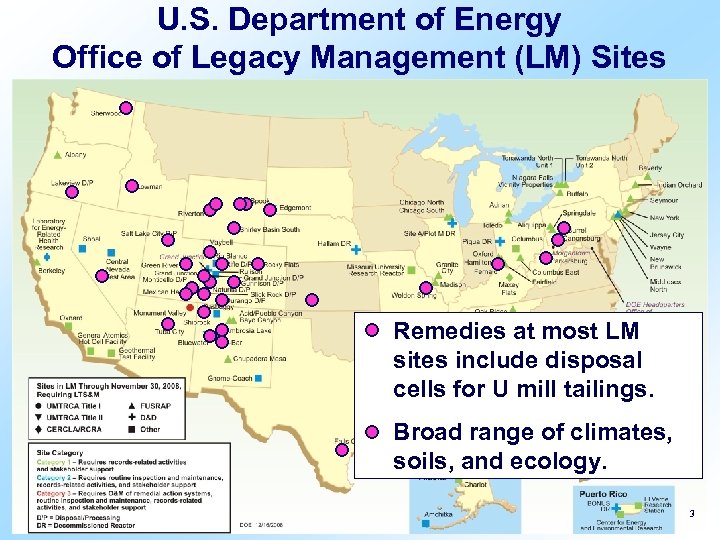 U. S. Department of Energy Office of Legacy Management (LM) Sites Remedies at most LM sites include disposal cells for U mill tailings. Broad range of climates, soils, and ecology. 3
 Presentation Topics u Purpose of disposal cell covers u Cover designs, natural succession, and performance u Cover renovation – improving sustainability by accommodating natural succession u Summary 4
 Presentation Topics u Purpose of disposal cell covers u Cover designs, natural succession, and performance u Cover renovation – improving sustainability by accommodating natural succession u Summary 5
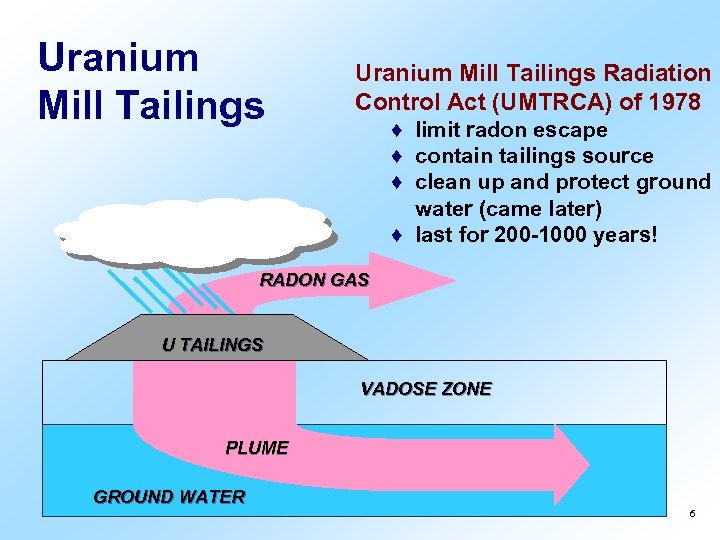 Uranium Mill Tailings Radiation Control Act (UMTRCA) of 1978 ♦ limit radon escape ♦ contain tailings source ♦ clean up and protect ground water (came later) ♦ last for 200 -1000 years! RADON GAS U TAILINGS VADOSE ZONE PLUME GROUND WATER 6
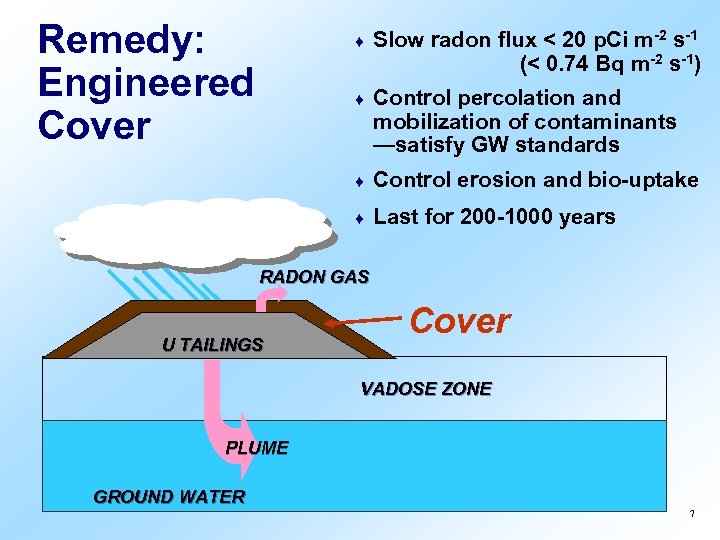 Remedy: Engineered Cover ♦ Slow radon flux < 20 p. Ci m-2 s-1 (< 0. 74 Bq m-2 s-1) ♦ Control percolation and mobilization of contaminants —satisfy GW standards ♦ Control erosion and bio-uptake ♦ Last for 200 -1000 years RADON GAS U TAILINGS Cover VADOSE ZONE PLUME GROUND WATER 7
 Presentation Topics u Purpose of disposal cell covers u Cover designs, natural succession, and performance u Cover renovation – improving sustainability by accommodating natural succession u Summary 8
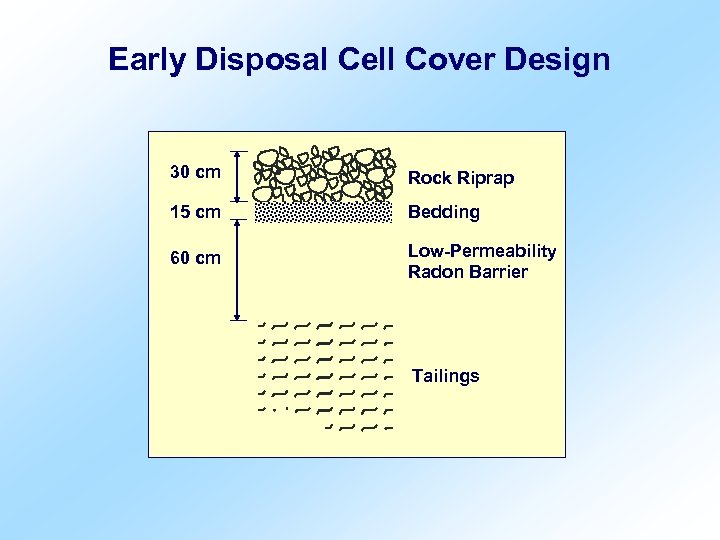 Early Disposal Cell Cover Design 30 cm Rock Riprap 15 cm Bedding 60 cm Low-Permeability Radon Barrier Tailings
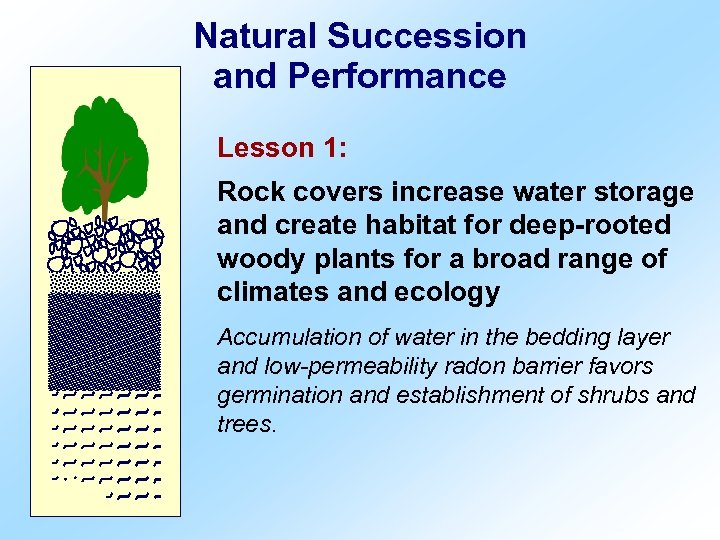 Natural Succession and Performance Lesson 1: Rock covers increase water storage and create habitat for deep-rooted woody plants for a broad range of climates and ecology Accumulation of water in the bedding layer and low-permeability radon barrier favors germination and establishment of shrubs and trees.
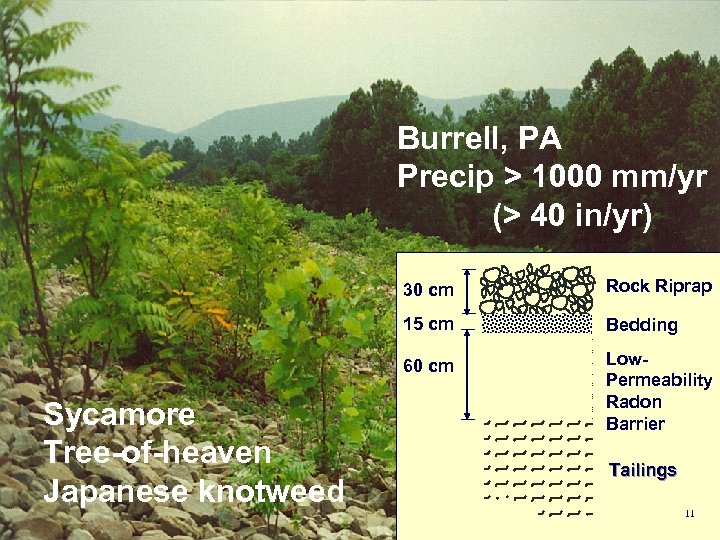 Burrell, PA Precip > 1000 mm/yr (> 40 in/yr) 30 cm 15 cm Bedding 60 cm Sycamore Tree-of-heaven Japanese knotweed Rock Riprap Low. Permeability Radon Barrier Tailings 11
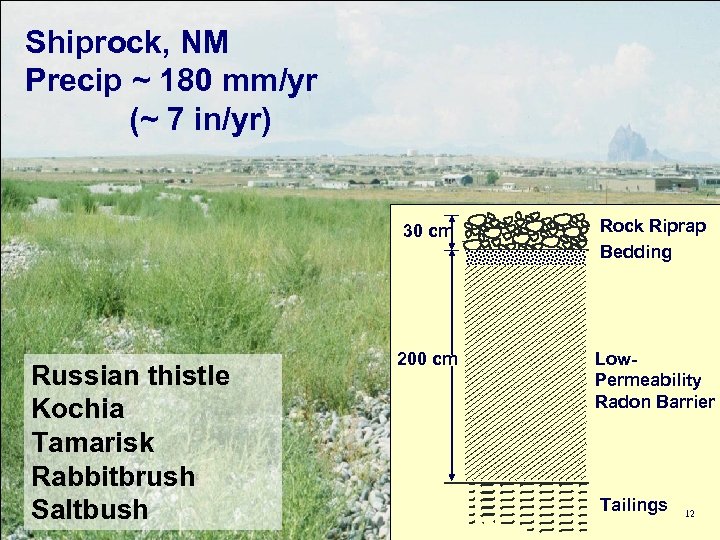 Shiprock, NM Precip ~ 180 mm/yr (~ 7 in/yr) 30 cm Russian thistle Kochia Tamarisk Rabbitbrush Saltbush Rock Riprap Bedding 200 cm Low. Permeability Radon Barrier Tailings 12
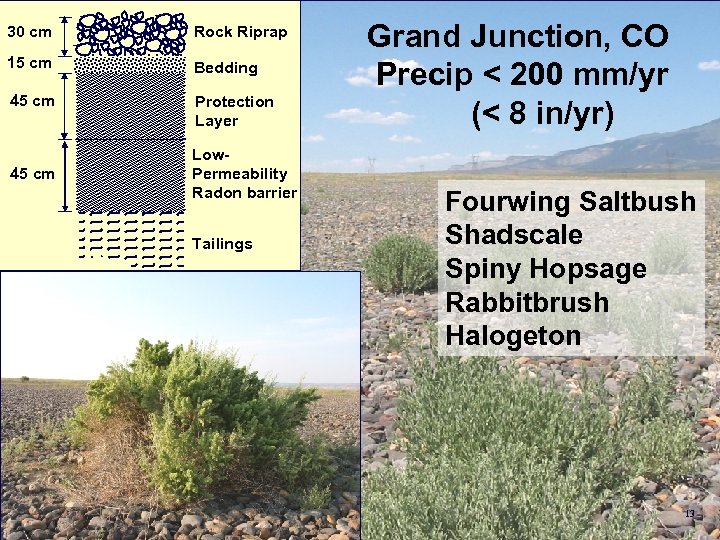 30 cm Rock Riprap 15 cm Bedding 45 cm Protection Layer 45 cm Low. Permeability Radon barrier Tailings Fourwing saltbush Grand Junction, CO Precip < 200 mm/yr (< 8 in/yr) Fourwing Saltbush Shadscale Spiny Hopsage Rabbitbrush Halogeton 13
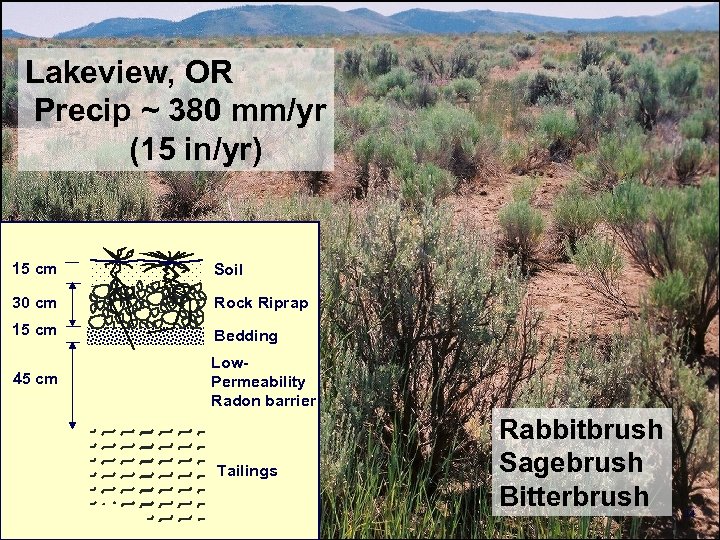 Lakeview, OR Precip ~ 380 mm/yr (15 in/yr) 15 cm Soil 30 cm Rock Riprap 15 cm Bedding 45 cm Low. Permeability Radon barrier Tailings Rabbitbrush Sagebrush Bitterbrush 14
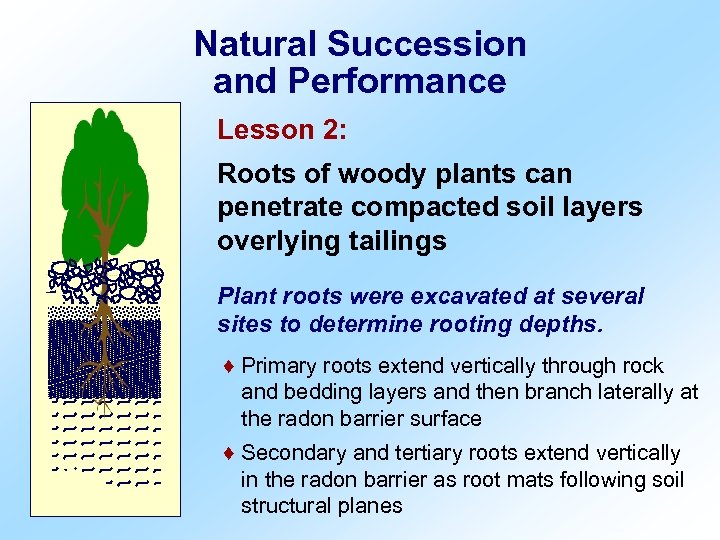 Natural Succession and Performance Lesson 2: Roots of woody plants can penetrate compacted soil layers overlying tailings Plant roots were excavated at several sites to determine rooting depths. ♦ Primary roots extend vertically through rock and bedding layers and then branch laterally at the radon barrier surface ♦ Secondary and tertiary roots extend vertically in the radon barrier as root mats following soil structural planes
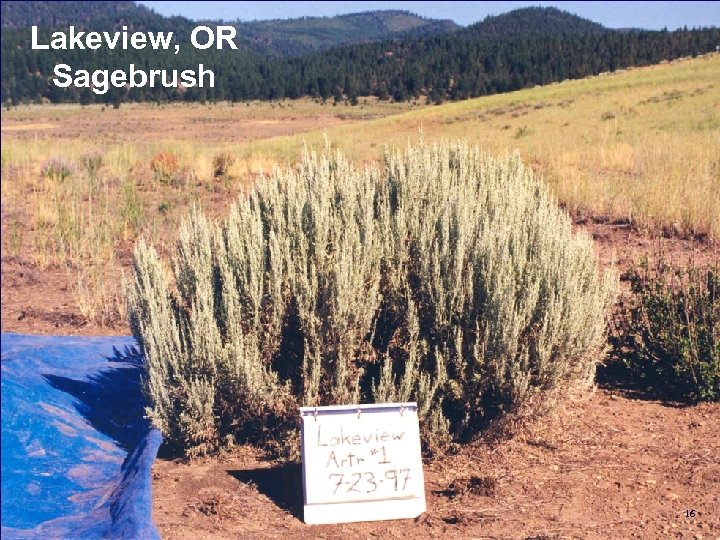 Lakeview, OR Sagebrush 16
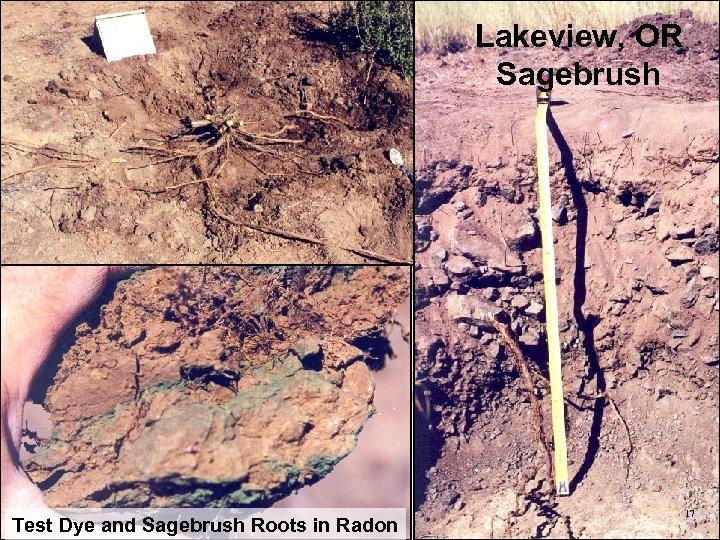 Lakeview, OR Sagebrush Test Dye and Sagebrush Roots in Radon 17
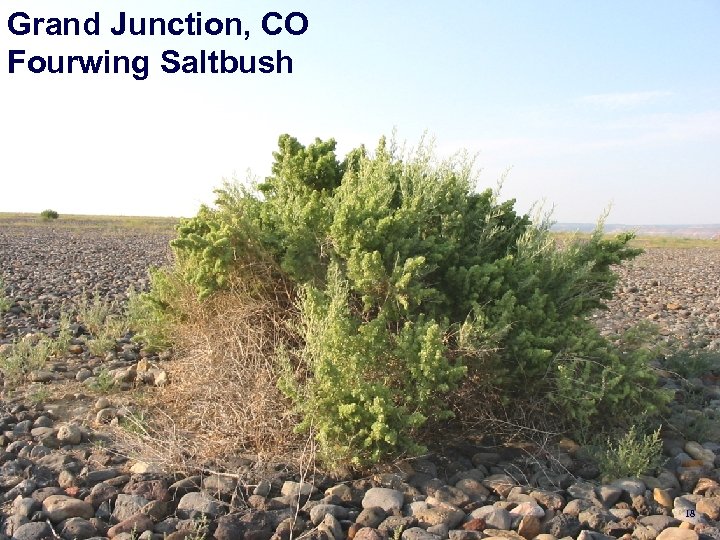 Burrell, PA Grand Junction, CO Japanese Saltbush Fourwing knotweed 18
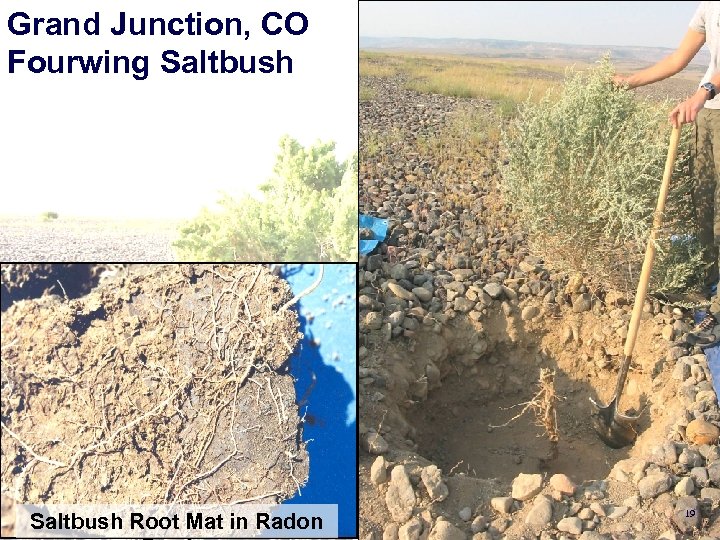 Burrell, PA Grand Junction, CO Japanese Saltbush Fourwing knotweed Saltbush Root Mat in Radon 19
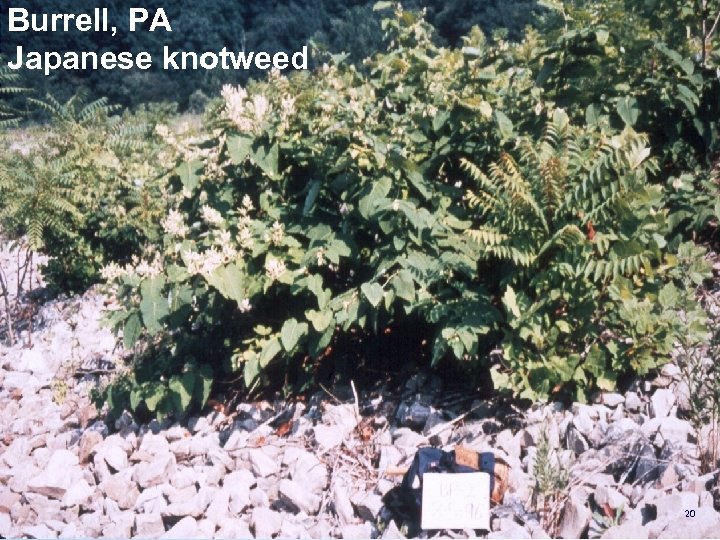 Burrell, PA Japanese knotweed 20
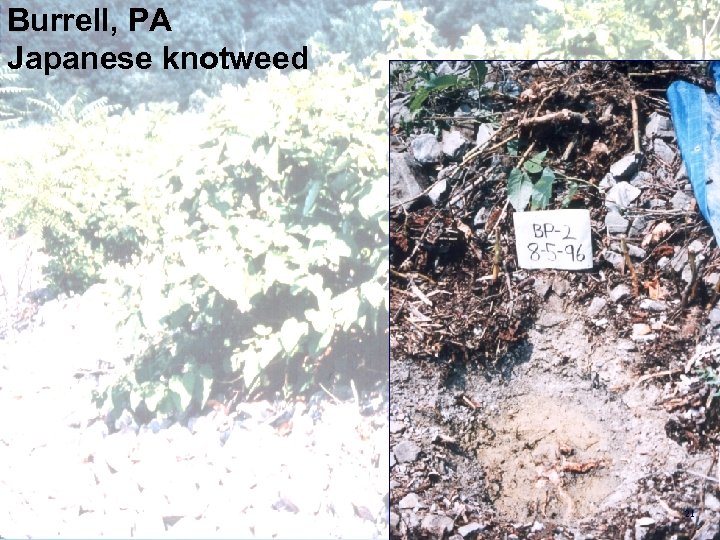 Burrell, PA Japanese knotweed 21
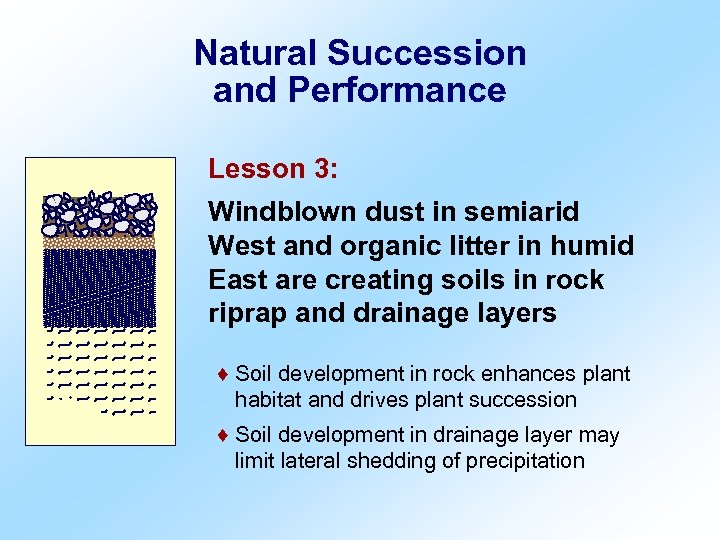 Natural Succession and Performance Lesson 3: Windblown dust in semiarid West and organic litter in humid East are creating soils in rock riprap and drainage layers ♦ Soil development in rock enhances plant habitat and drives plant succession ♦ Soil development in drainage layer may limit lateral shedding of precipitation
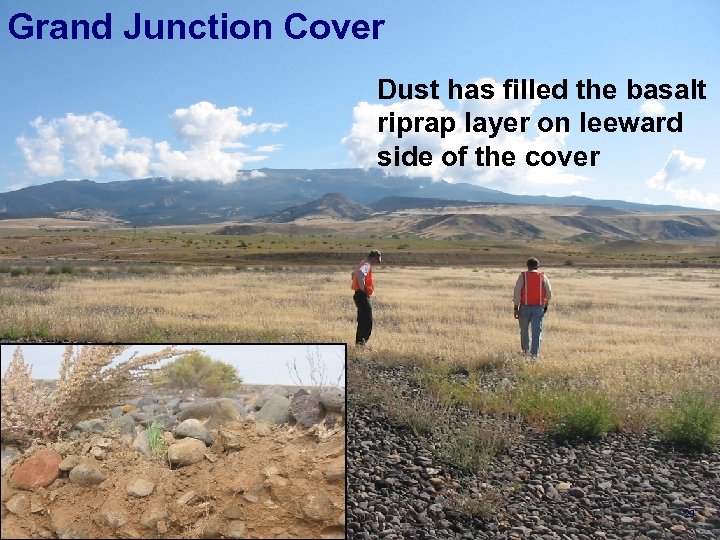 Grand Junction Cover Dust has filled the basalt riprap layer on leeward side of the cover 23
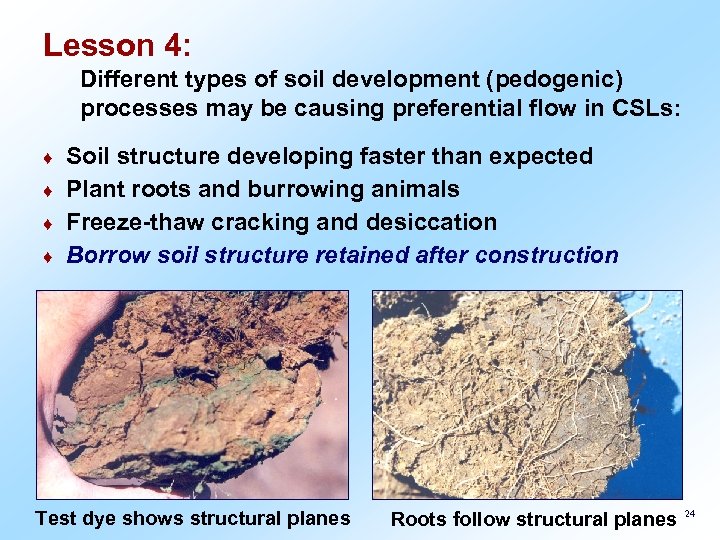 Lesson 4: Different types of soil development (pedogenic) processes may be causing preferential flow in CSLs: ♦ ♦ Soil structure developing faster than expected Plant roots and burrowing animals Freeze-thaw cracking and desiccation Borrow soil structure retained after construction Test dye shows structural planes Roots follow structural planes 24
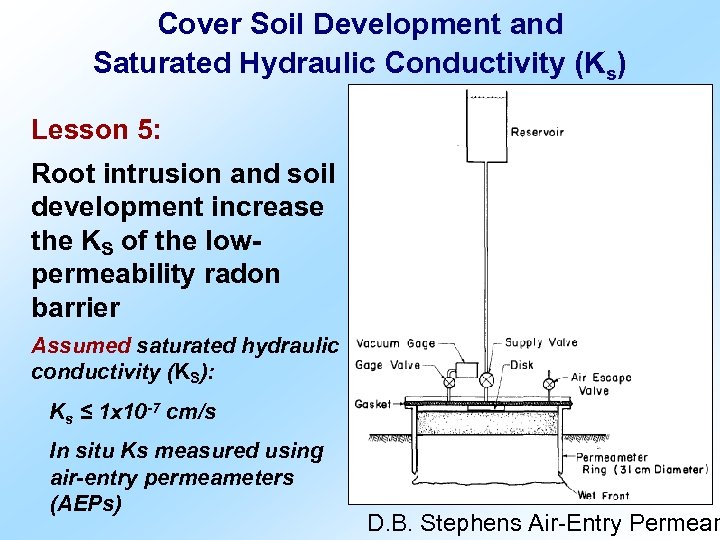 Cover Soil Development and Saturated Hydraulic Conductivity (Ks) Lesson 5: Root intrusion and soil development increase the KS of the lowpermeability radon barrier Assumed saturated hydraulic conductivity (KS): Ks ≤ 1 x 10 -7 cm/s In situ Ks measured using air-entry permeameters (AEPs) D. B. Stephens Air-Entry Permeam
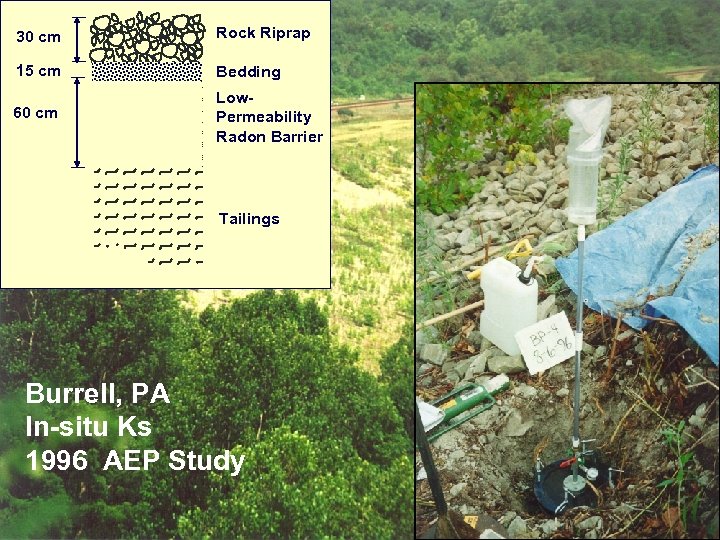 30 cm Rock Riprap 15 cm Bedding 60 cm Low. Permeability Radon Barrier Tailings Burrell, PA In-situ Ks 1996 AEP Study
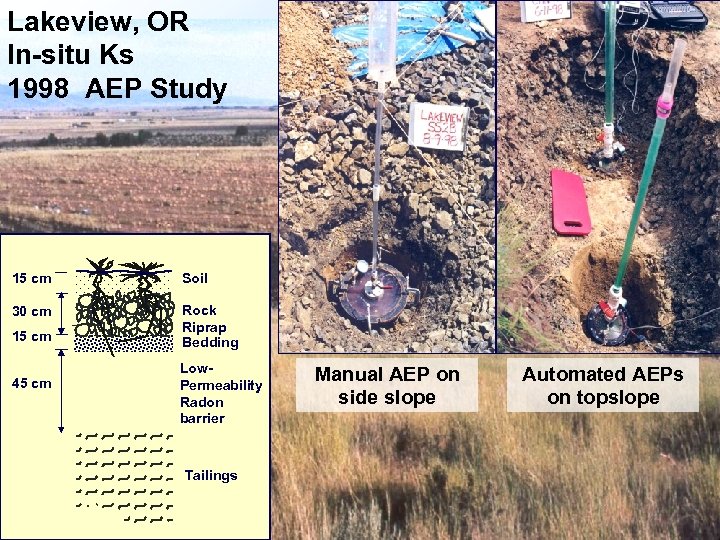 Lakeview, OR In-situ Ks 1998 AEP Study 15 cm Soil 30 cm Rock Riprap Bedding 15 cm 45 cm Low. Permeability Radon barrier Tailings Manual AEP on side slope Automated AEPs on topslope
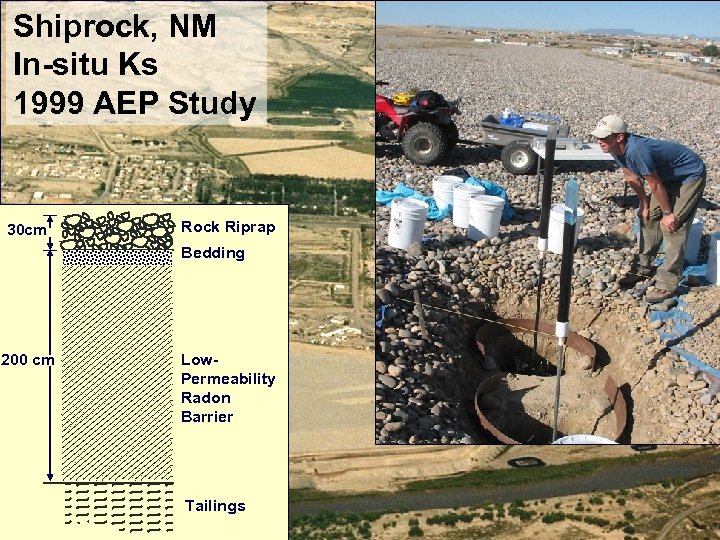 Shiprock, NM In-situ Ks 1999 AEP Study 30 cm Rock Riprap Bedding 200 cm Low. Permeability Radon Barrier Tailings
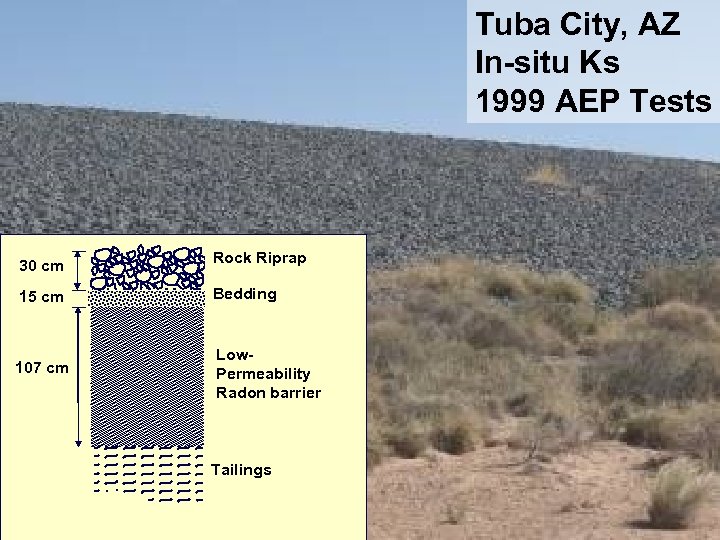 Tuba City, AZ In-situ Ks 1999 AEP Tests 30 cm Rock Riprap 15 cm Bedding 107 cm Low. Permeability Radon barrier Tailings
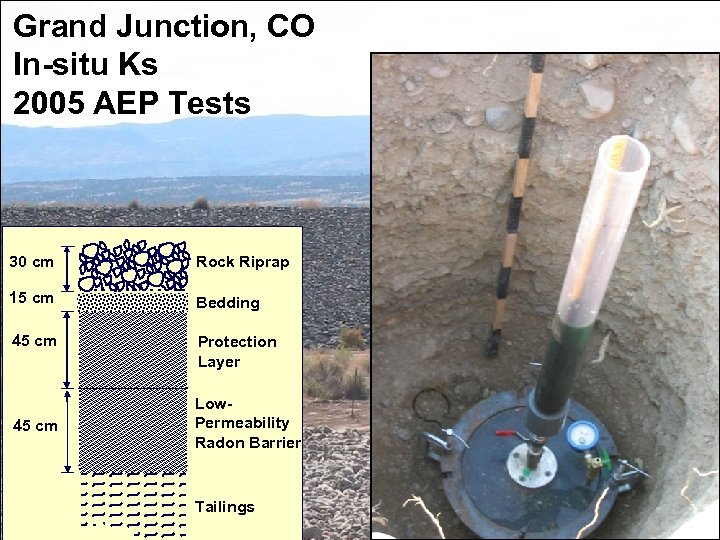 Grand Junction, CO In-situ Ks 2005 AEP Tests 30 cm Rock Riprap 15 cm Bedding 45 cm Protection Layer 45 cm Low. Permeability Radon Barrier Tailings Fourwing saltbush
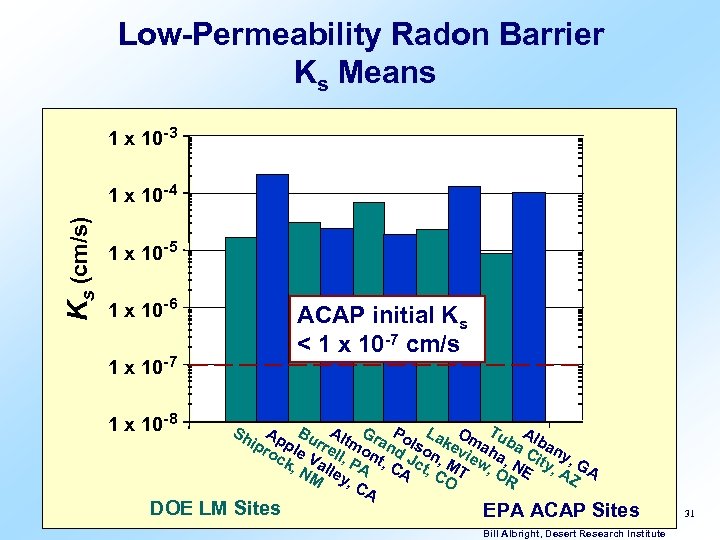 Low-Permeability Radon Barrier Ks Means 1 x 10 -3 Ks (cm/s) 1 x 10 -4 1 x 10 -5 1 x 10 -6 ACAP initial Ks < 1 x 10 -7 cm/s 1 x 10 -7 1 x 10 -8 Sh Ap Bu Alt Gr Po La Om Tu Al ipr pl rre mo an lso ke a ba ban oc e V ll, nt d J n, vie ha, Ci y, k, all PA , C ct, M w, N ty, G NM ey OR E A AZ A CO T , C A DOE LM Sites EPA ACAP Sites Bill Albright, Desert Research Institute 31
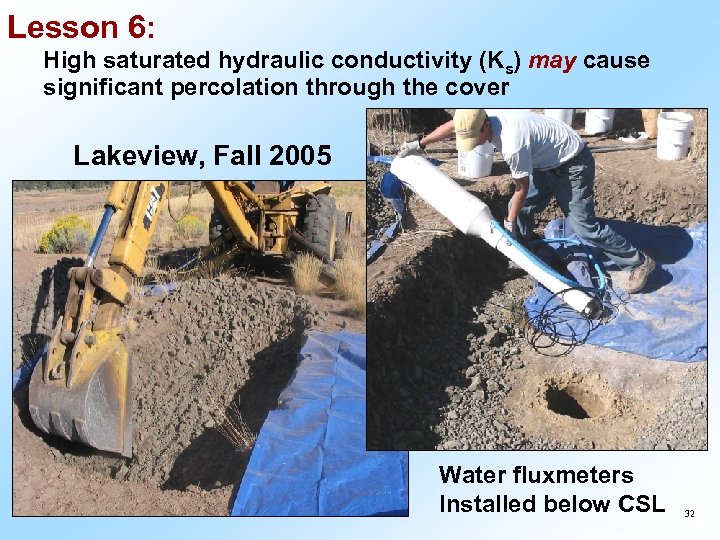 Lesson 6: High saturated hydraulic conductivity (Ks) may cause significant percolation through the cover Lakeview, Fall 2005 Water fluxmeters Installed below CSL 32
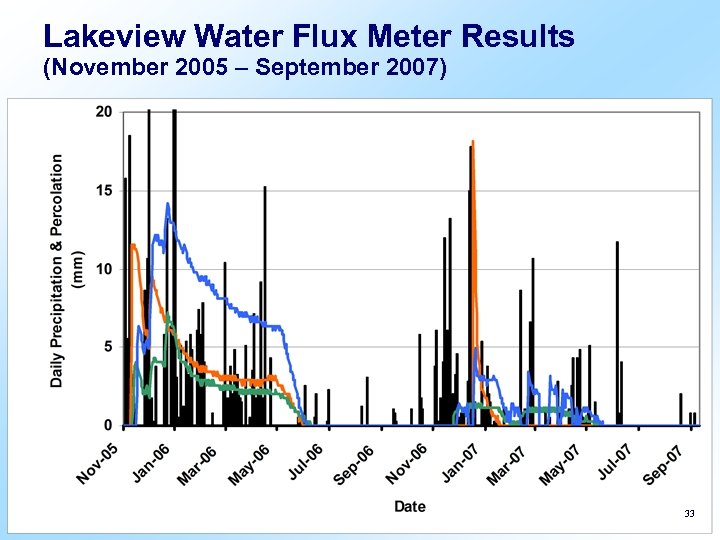 Lakeview Water Flux Meter Results (November 2005 – September 2007) 33
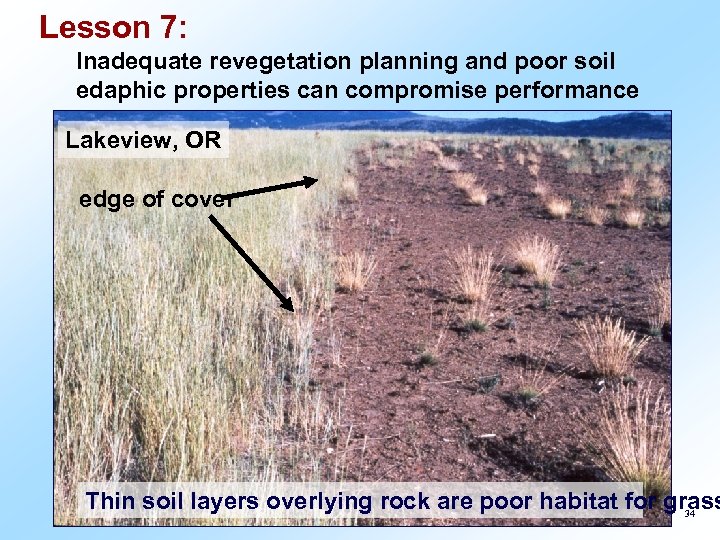 Lesson 7: Inadequate revegetation planning and poor soil edaphic properties can compromise performance Lakeview, OR edge of cover Thin soil layers overlying rock are poor habitat for grass 34
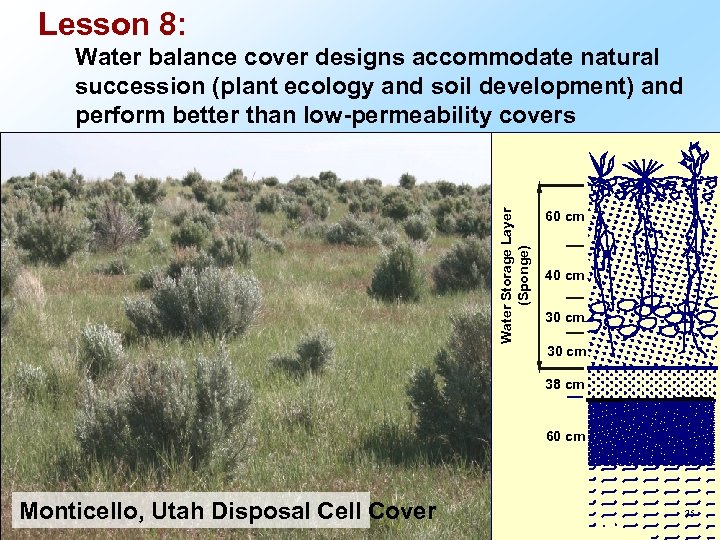 Lesson 8: Water Storage Layer (Sponge) Water balance cover designs accommodate natural succession (plant ecology and soil development) and perform better than low-permeability covers 60 cm 40 cm 30 cm 38 cm 60 cm Monticello, Utah Disposal Cell Cover 35
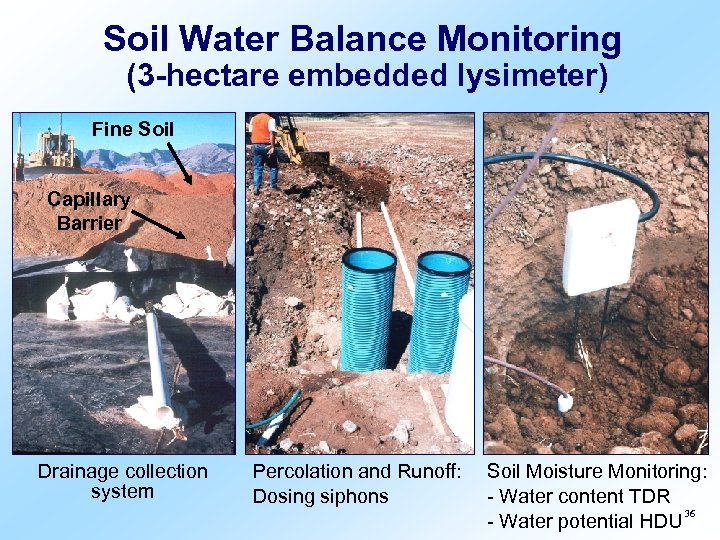 Soil Water Balance Monitoring (3 -hectare embedded lysimeter) Fine Soil Capillary Barrier Drainage collection system Percolation and Runoff: Dosing siphons Soil Moisture Monitoring: - Water content TDR 36 - Water potential HDU
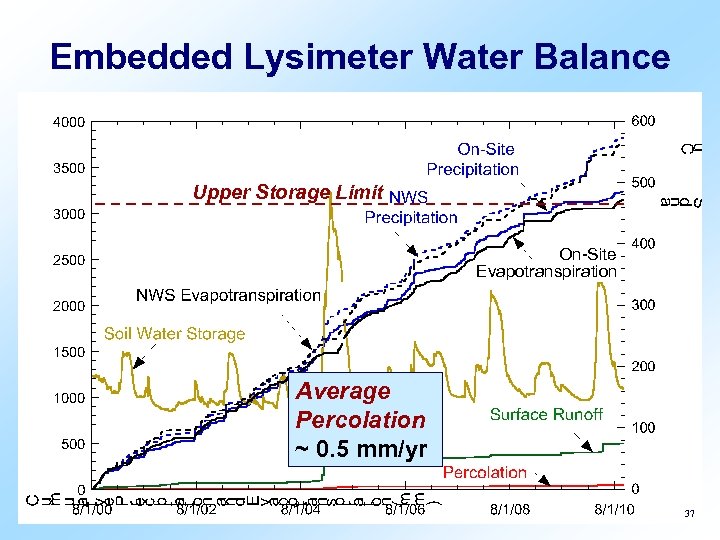 Embedded Lysimeter Water Balance Upper Storage Limit On-Site Evapotranspiration Average Percolation ~ 0. 5 mm/yr 37
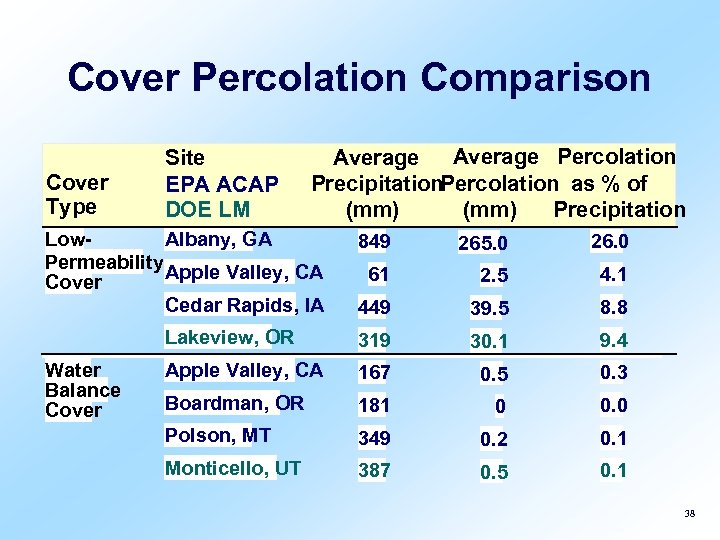 Cover Percolation Comparison Cover Type Site EPA ACAP DOE LM Average Percolation Precipitation. Percolation as % of (mm) Precipitation Low. Albany, GA Permeability Apple Valley, CA Cover Cedar Rapids, IA 265. 0 26. 0 61 2. 5 4. 1 449 39. 5 8. 8 Lakeview, OR Water Balance Cover 849 319 30. 1 9. 4 Apple Valley, CA 167 0. 5 0. 3 Boardman, OR 181 0 0. 0 Polson, MT 349 0. 2 0. 1 Monticello, UT 387 0. 5 0. 1 38
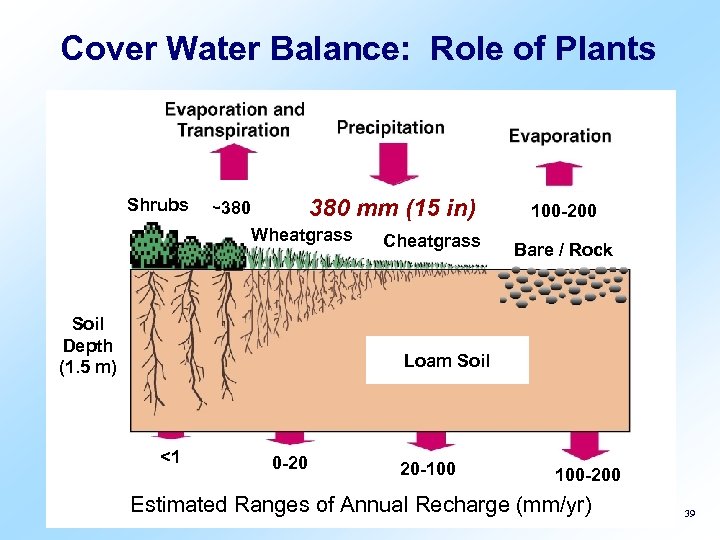 Cover Water Balance: Role of Plants Shrubs 380 mm (15 in) ~380 Wheatgrass Soil Depth (1. 5 m) Cheatgrass 100 -200 Bare / Rock Loam Soil <1 0 -20 20 -100 100 -200 Estimated Ranges of Annual Recharge (mm/yr) 39
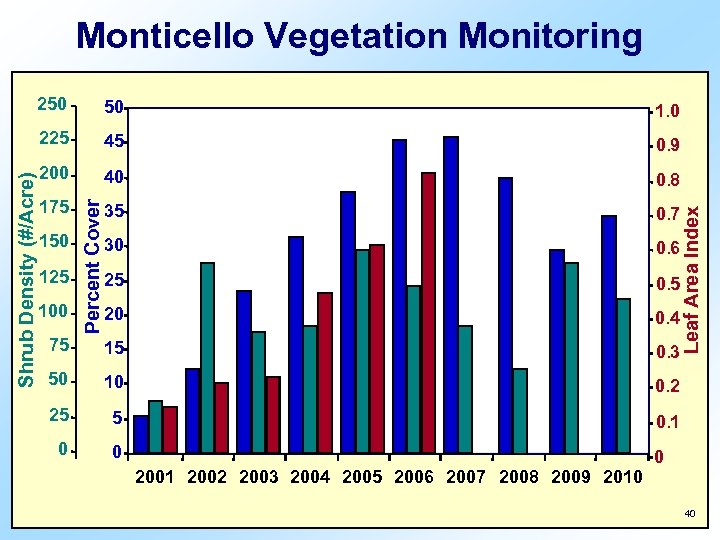 Monticello Vegetation Monitoring 225 45 0. 9 200 40 0. 8 35 0. 7 30 0. 6 25 0. 5 20 0. 4 75 15 0. 3 50 10 0. 2 25 5 0. 1 0 0 0 175 150 125 100 Leaf Area Index 1. 0 Percent Cover 50 Shrub Density (#/Acre) 250 2001 2002 2003 2004 2005 2006 2007 2008 2009 2010 40
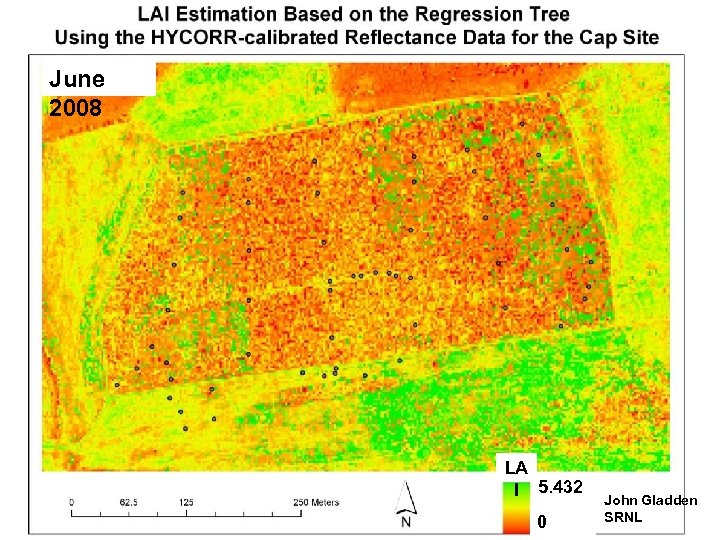 Preliminary LAI Map for Monticello Cover June 2008 LA I 5. 432 0 John Gladden SRNL
 Presentation Topics u Purpose of disposal cell covers u Cover designs, natural succession, and performance u Cover renovation – improving sustainability by accommodating natural succession u Summary 42
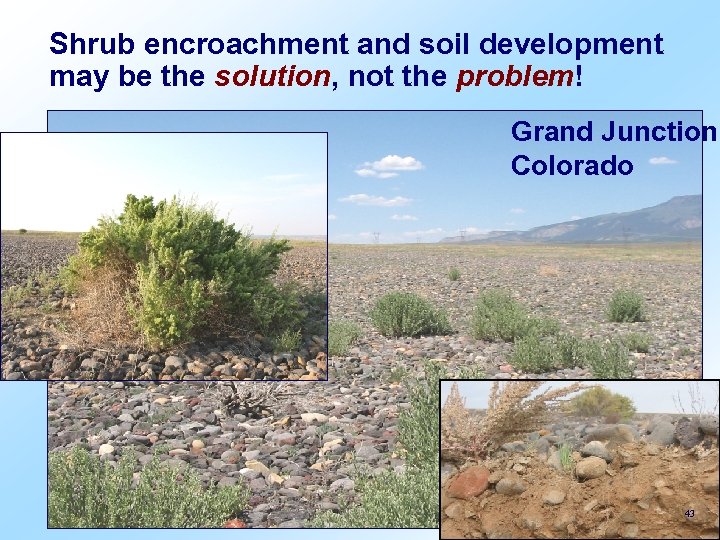 Shrub encroachment and soil development may be the solution, not the problem! Grand Junction, Colorado 43
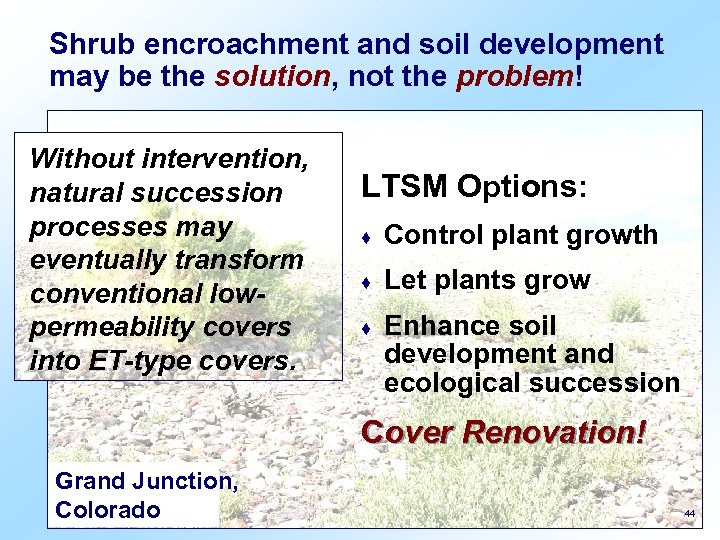 Shrub encroachment and soil development may be the solution, not the problem! Without intervention, natural succession processes may eventually transform conventional lowpermeability covers into ET-type covers. LTSM Options: ♦ Control plant growth ♦ Let plants grow ♦ Enhance soil development and ecological succession Cover Renovation! Grand Junction, Colorado 44
 Cover Renovation Research Goal: Enhance natural transformation of conventional covers into ET covers ♦ ♦ Reduce soil bulk density (compaction) Increase soil water storage capacity Blend soil and rock to imitate natural analogs Enhance establishment of favorable vegetation Test: Construct pair of large drainage lysimeters, identical to actual cover, and compare water balance of existing and renovated designs Renovation Concept: Rip the rock, drainage, and protection layers on the contour, and transplant native shrubs in rip rows 45
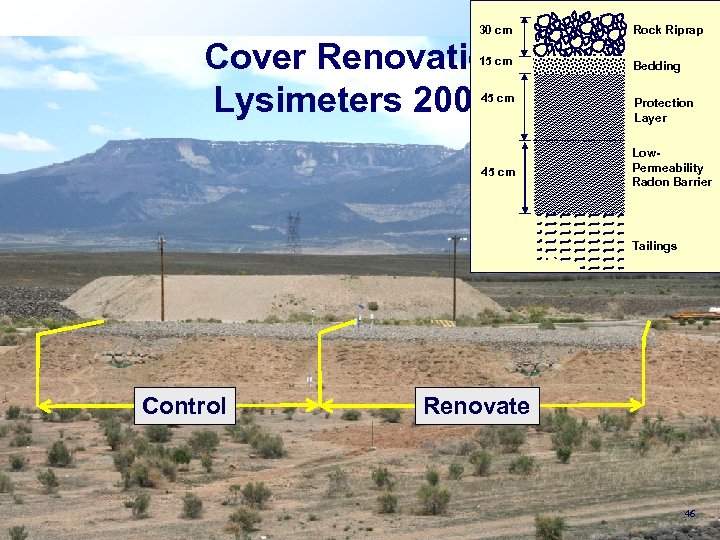 30 cm Rock Riprap 15 cm Bedding 45 cm Protection Layer Cover Renovation Lysimeters 2008 45 cm Low. Permeability Radon Barrier Fourwing saltbush Tailings Control Renovate 46
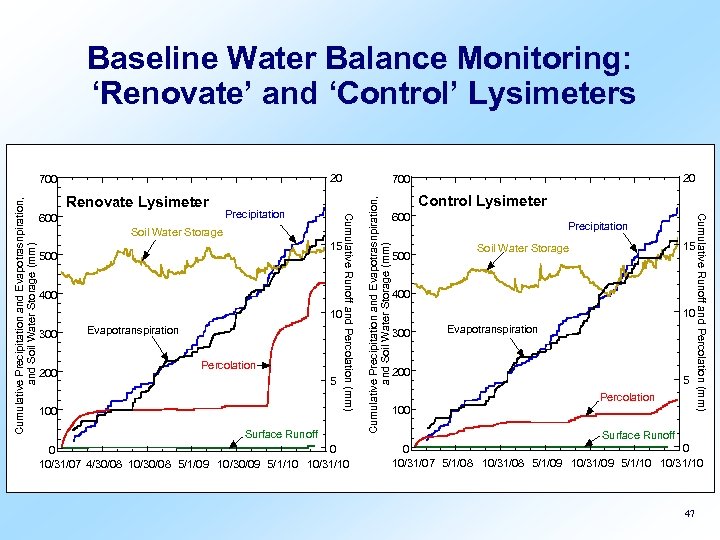 Baseline Water Balance Monitoring: ‘Renovate’ and ‘Control’ Lysimeters 20 Soil Water Storage 15 500 400 10 300 200 Evapotranspiration Percolation 5 100 Surface Runoff 0 0 10/31/07 4/30/08 10/30/08 5/1/09 10/30/09 5/1/10 10/31/10 Control Lysimeter 600 500 Precipitation 15 Soil Water Storage 400 10 300 Evapotranspiration 200 5 Percolation 100 Surface Runoff Cumulative Runoff and Percolation (mm) 600 Precipitation Cumulative Precipitation and Evapotrasnpiration, and Soil Water Storage (mm) Renovate Lysimeter 20 700 Cumulative Runoff and Percolation (mm) Cumulative Precipitation and Evapotrasnpiration, and Soil Water Storage (mm) 700 0 0 10/31/07 5/1/08 10/31/08 5/1/09 10/31/09 5/1/10 10/31/10 47
 Presentation Topics u Purpose of disposal cell covers u Cover designs, natural succession, and performance u Cover renovation – improving sustainability by enhancing natural succession u Summary 48
 Cover LTSM Questions 1. Why did we cover uranium mill tailings? 2. How were the covers designed to work and how were they constructed? 3. How have natural succession processes altered cover performance? 4. What are the risks to HH&E if the covers are not performing as designed? 5. What types of maintenance are required—and at what cost—to keep covers performing as designed? 6. Could we design sustainable repairs or renovations if needed to reduce LTSM costs and risks? 7. Can we expect covers to continue working as designed for the long term— 200 to 1000 years? 49