


 Скачать презентацию Design Patterns или приемы расширяемого программирования Часть 2
ООП приемы программирования, часть 2.pptx
- Количество слайдов: 9
 Design Patterns, или приемы расширяемого программирования Часть 2. Приемы программирования, не относящиеся к Go. F
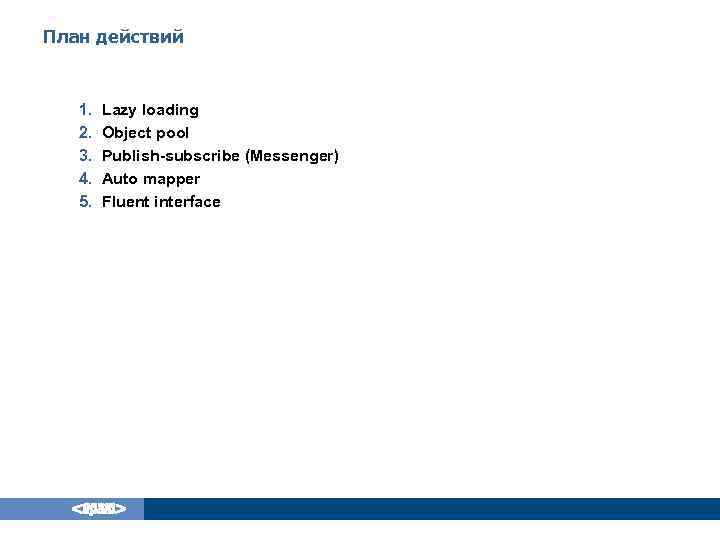 План действий 1. 2. 3. 4. 5. Lazy loading Object pool Publish-subscribe (Messenger) Auto mapper Fluent interface
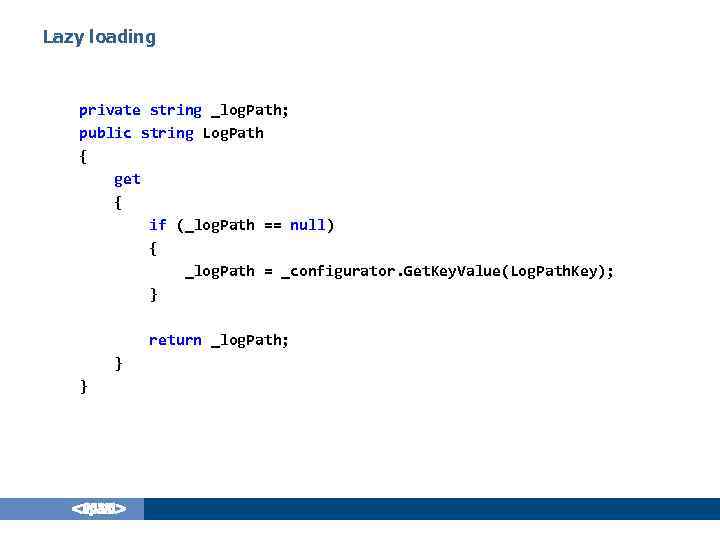 Lazy loading private string _log. Path; public string Log. Path { get { if (_log. Path == null) { _log. Path = _configurator. Get. Key. Value(Log. Path. Key); } return _log. Path; } }
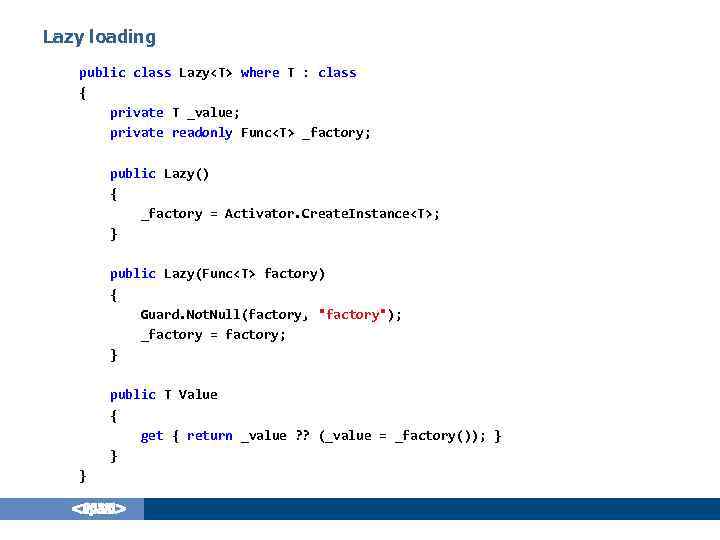 Lazy loading public class Lazy
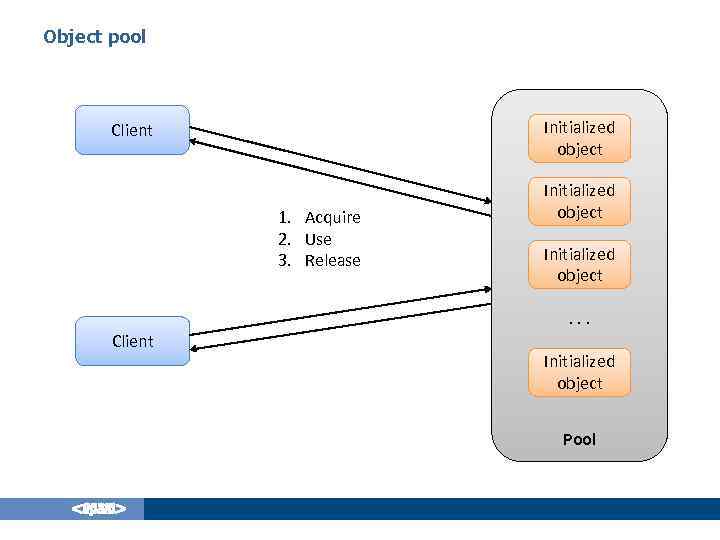 Object pool Initialized object Client 1. Acquire 2. Use 3. Release Initialized object. . . Client Initialized object Pool
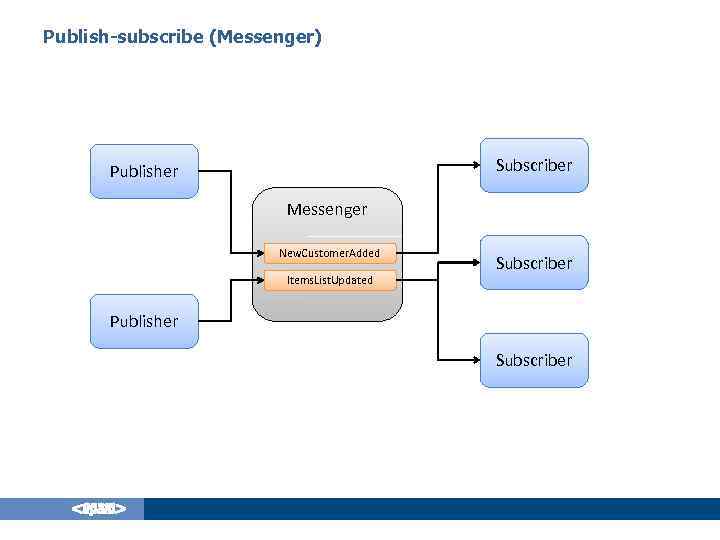 Publish-subscribe (Messenger) Subscriber Publisher Messenger New. Customer. Added Items. List. Updated Subscriber Publisher Subscriber
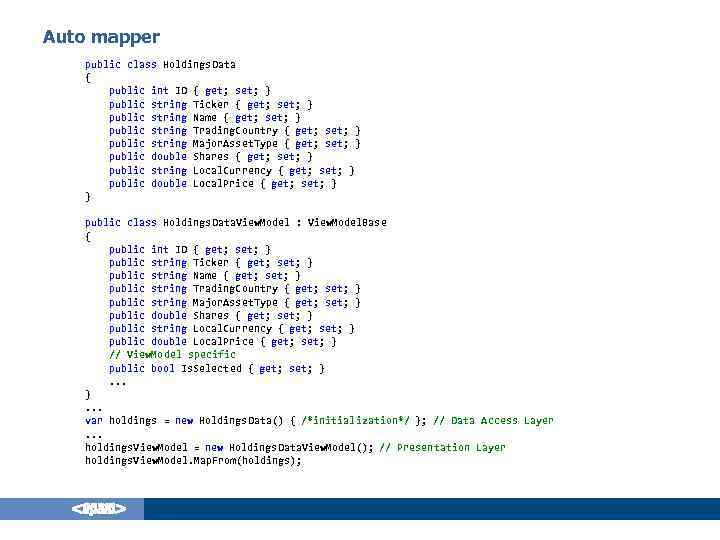 Auto mapper public class Holdings. Data { public int ID { get; set; } public string Ticker { get; set; } public string Name { get; set; } public string Trading. Country { get; set; } public string Major. Asset. Type { get; set; } public double Shares { get; set; } public string Local. Currency { get; set; } public double Local. Price { get; set; } } public class Holdings. Data. View. Model : View. Model. Base { public int ID { get; set; } public string Ticker { get; set; } public string Name { get; set; } public string Trading. Country { get; set; } public string Major. Asset. Type { get; set; } public double Shares { get; set; } public string Local. Currency { get; set; } public double Local. Price { get; set; } // View. Model specific public bool Is. Selected { get; set; }. . . var holdings = new Holdings. Data() { /*initialization*/ }; // Data Access Layer. . . holdings. View. Model = new Holdings. Data. View. Model(); // Presentation Layer holdings. View. Model. Map. From(holdings);
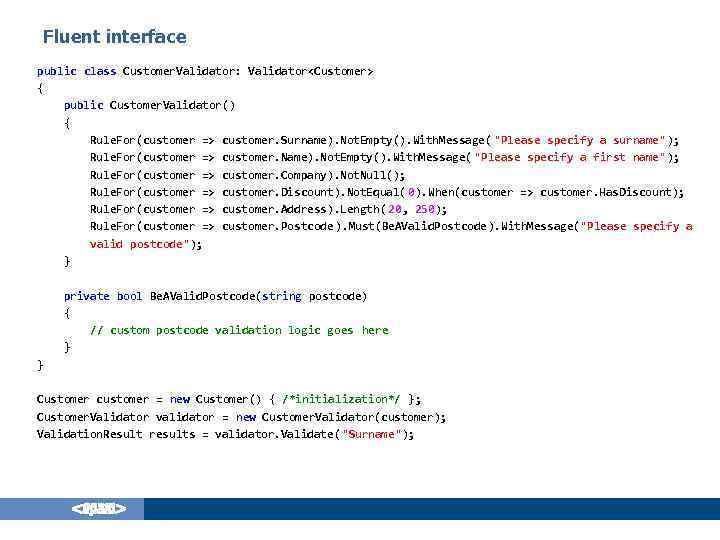 Fluent interface public class Customer. Validator: Validator
 THANKS FOR YOUR ATTENTION! ANY QUESTIONS? Design Patterns, или приемы расширяемого программирования Author: