


 Скачать презентацию Design History Design in Prehistoric Times
e02e1aa06b8b3a975969574746b01484.ppt
- Количество слайдов: 36
 Design History
 Design in Prehistoric Times • Pre-3000 BC • Before recorded history, humans constructed stone circles, megaliths, and other structures.
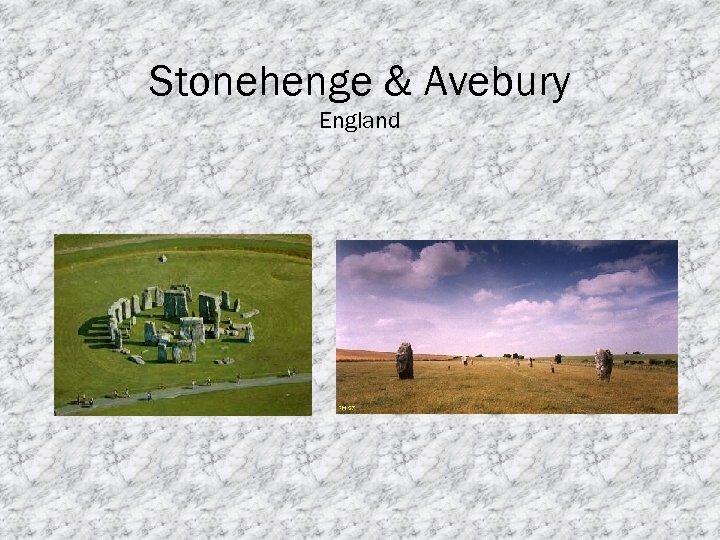 Stonehenge & Avebury England
 Ancient Design • 3000 BC to 337 BC • In ancient Egypt, Greece, and Rome, civilizations built enormous temples and shrines.
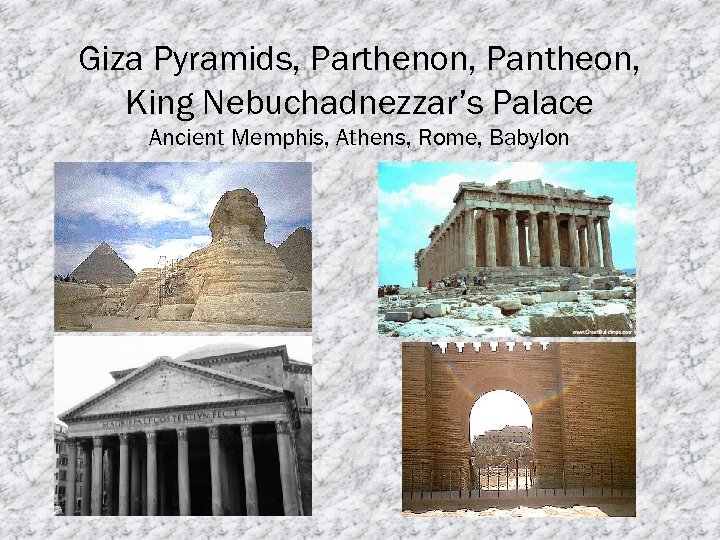 Giza Pyramids, Parthenon, Pantheon, King Nebuchadnezzar’s Palace Ancient Memphis, Athens, Rome, Babylon
 Early Christian and Medieval • 373 to 500 AD • European architecture moved from the rectangular basilica forms to the classically inspired Byzantine style.
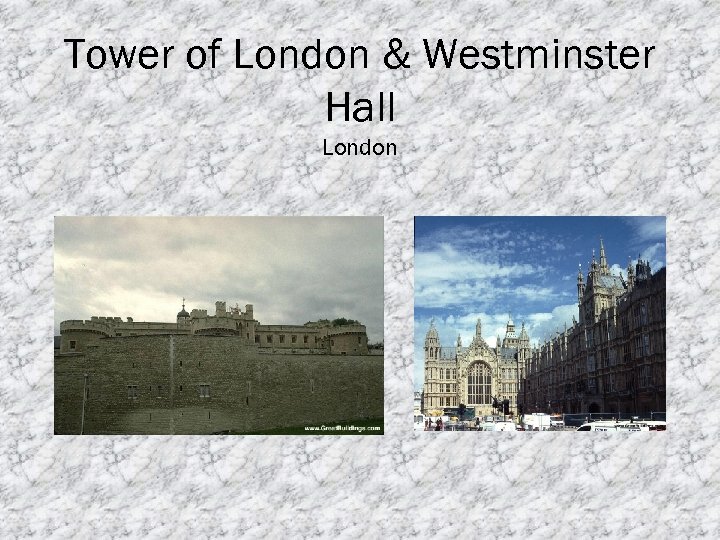 Tower of London & Westminster Hall London
 Romanesque • 500 to 1200 AD • As Rome spread across Europe, heavier, stocky Romanesque architecture with rounded arches emerged.
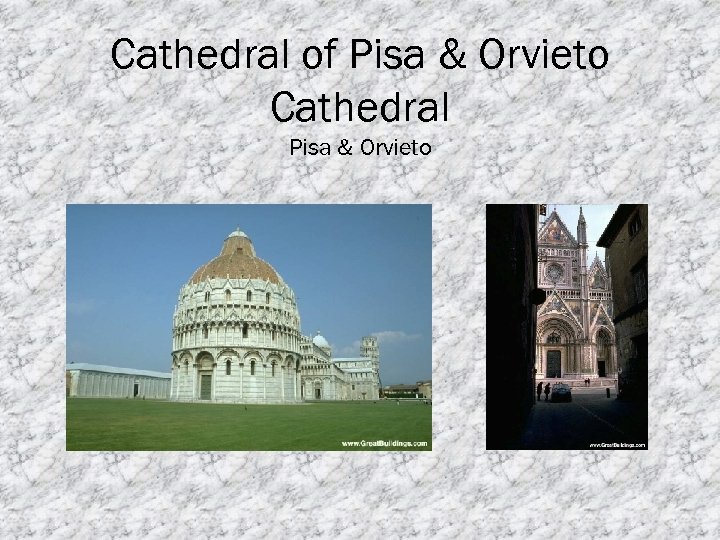 Cathedral of Pisa & Orvieto Cathedral Pisa & Orvieto
 Gothic Design • 1200 to 1400 AD • Innovative builders created the great cathedrals of Europe.
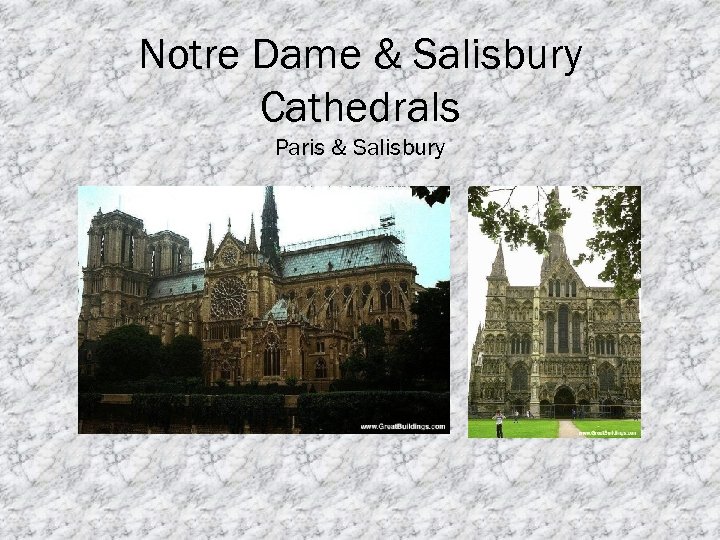 Notre Dame & Salisbury Cathedrals Paris & Salisbury
 Renaissance Design • 1400 to 1600 AD • A return to classical ideas ushered an "age of "awakening" in Italy, France, and England.
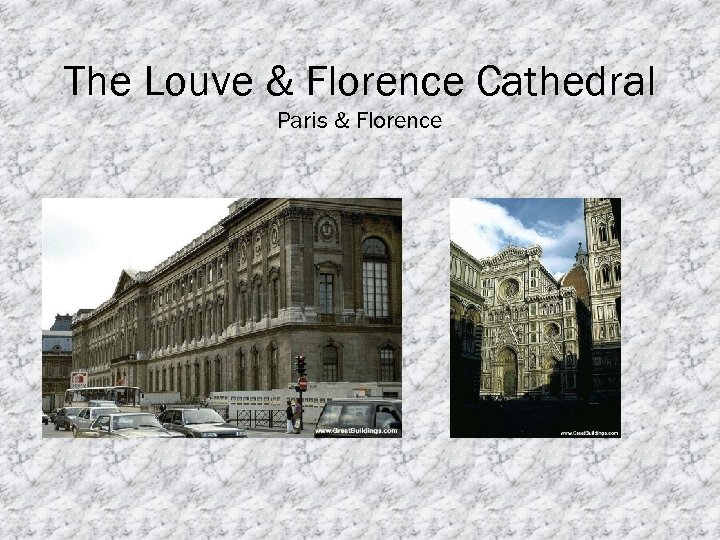 The Louve & Florence Cathedral Paris & Florence
 American Colonial Design • 1600 to 1780 AD • European settlers in the New World borrowed ideas from their homelands to create their own breed of architecture.
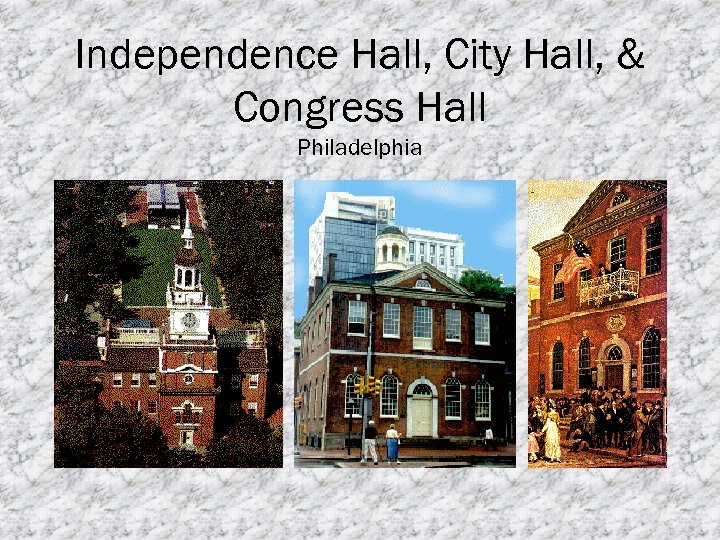 Independence Hall, City Hall, & Congress Hall Philadelphia
 Baroque Design • 1600 to 1700 AD • In Italy, the Baroque style is reflected in opulent and dramatic churches with irregular shapes and extravagant ornamentation. In France, the highly ornamented Baroque style combines with Classical restraint. Russian aristocrats were impressed by Versailles in France, and incorporated Baroque ideas in the building of St. Petersburg. Elements of the elaborate Baroque style are found throughout Europe.
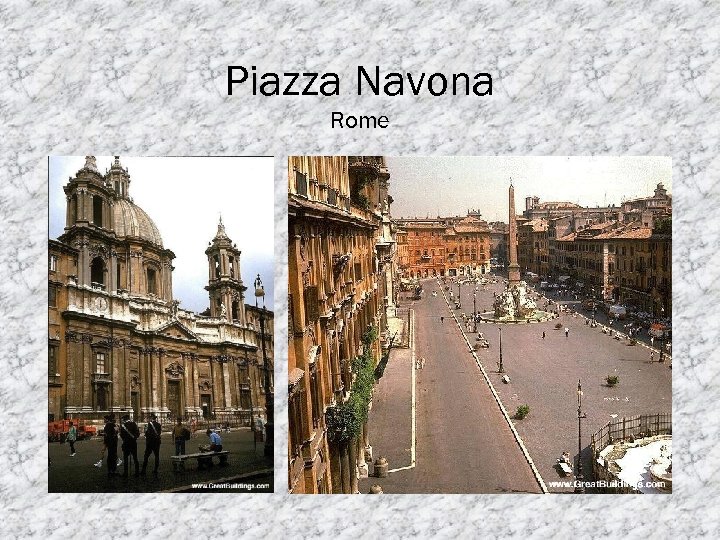 Piazza Navona Rome
 Rococo Design • 1650 to 1790 AD • During the last phase of the Baroque period, builders constructed elegant white buildings with sweeping curves.
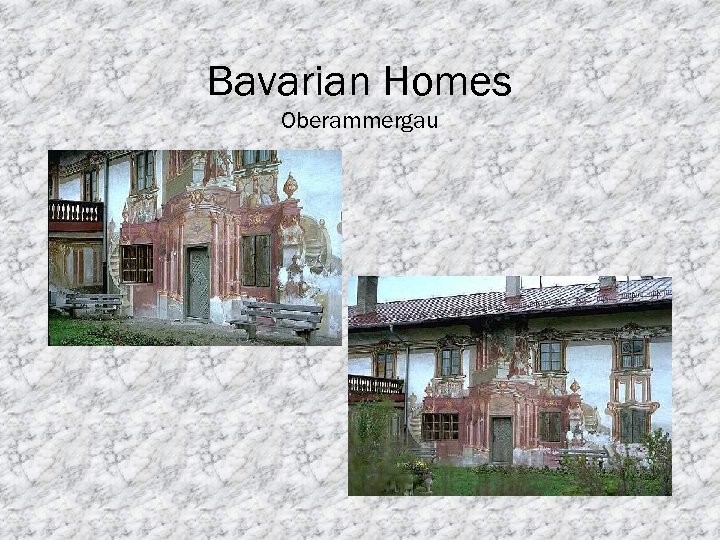 Bavarian Homes Oberammergau
 Georgian Design • 1720 to 1800 AD • Georgian was a stately, symmetrical style that dominated in Great Britain and Ireland influenced building styles in the American colonies
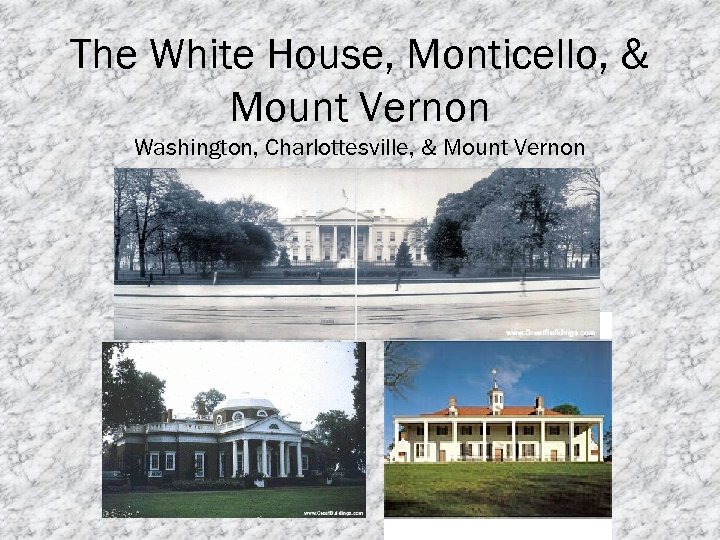 The White House, Monticello, & Mount Vernon Washington, Charlottesville, & Mount Vernon
 Neoclassical / Federalist / Idealist • 1750 to 1880 AD • A renewed interest in ideas of Renaissance architect Andrea Palladio inspired a return of classical shapes in Europe, Great Britain and the United States.
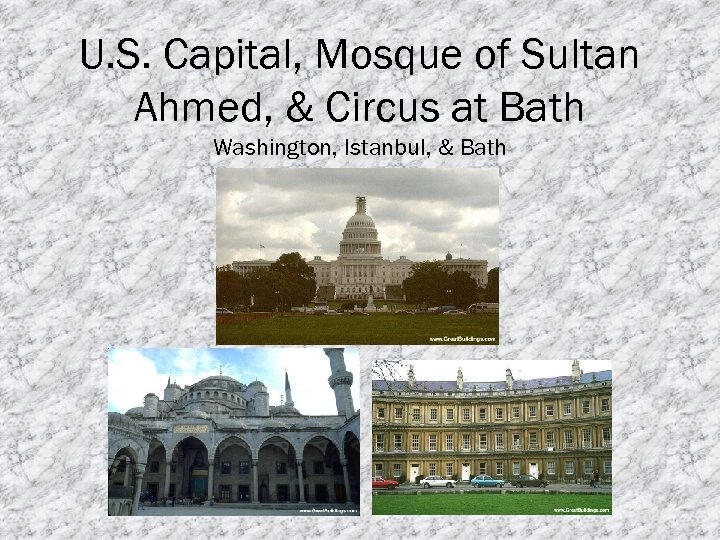 U. S. Capital, Mosque of Sultan Ahmed, & Circus at Bath Washington, Istanbul, & Bath
 Greek Revival Design • 1790 to 1850 AD • These classical buildings and homes often feature columns, pediments and other details inspired by Greek forms. Antebellum homes in the American south were often built in the Greek Revival style.
 Belle Meade Plantation & Boothie’s Dryed Goods Store Nashville & Peninsula
 Victorian Design • 1840 to 1900 AD • Industrialization brought many innovations in architecture. Victorian styles include Gothic Revival, Italianate, Stick, Eastlake, Queen Anne, Romanesque and Second Empire.
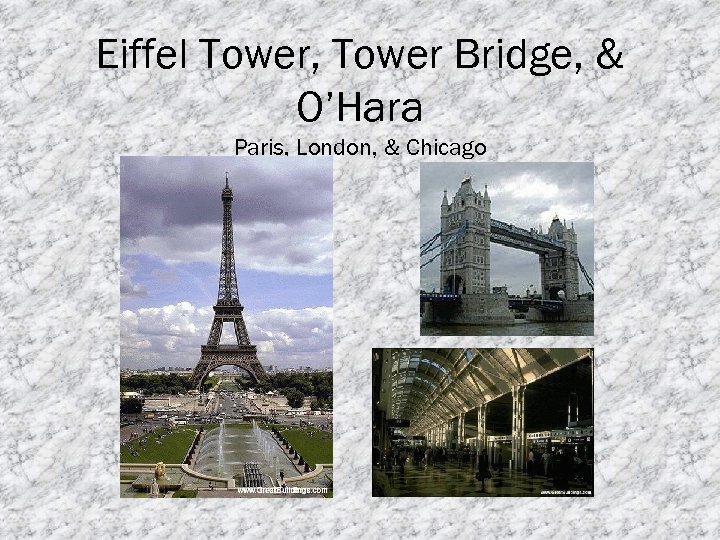 Eiffel Tower, Tower Bridge, & O’Hara Paris, London, & Chicago
 Arts and Crafts Movement in Design • 1860 to 1900 AD • Arts and Crafts was a late 19 th-century backlash against the forces of industrialization. The Arts and Crafts movement revived an interest in handicrafts and sought a spiritual connection with the surrounding environment, both natural and manmade. The Craftsman Bungalow evolved from the Arts and Crafts movement.
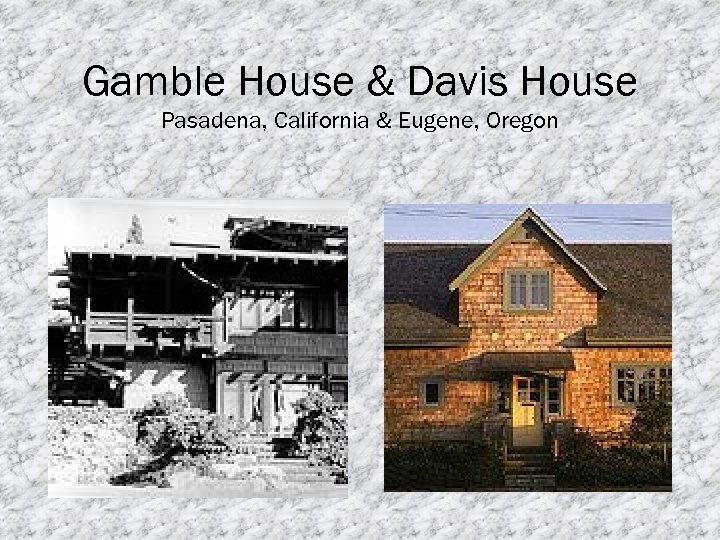 Gamble House & Davis House Pasadena, California & Eugene, Oregon
 Art Nouveau Design • 1890 to 1905 AD • Known as the New Style, Art Nouveau was first expressed in fabrics and graphic design. The style spread to architecture and furniture in the 1890 s. Art Nouveau buildings often have asymmetrical shapes, arches and decorative surfaces with curved, plant-like designs.
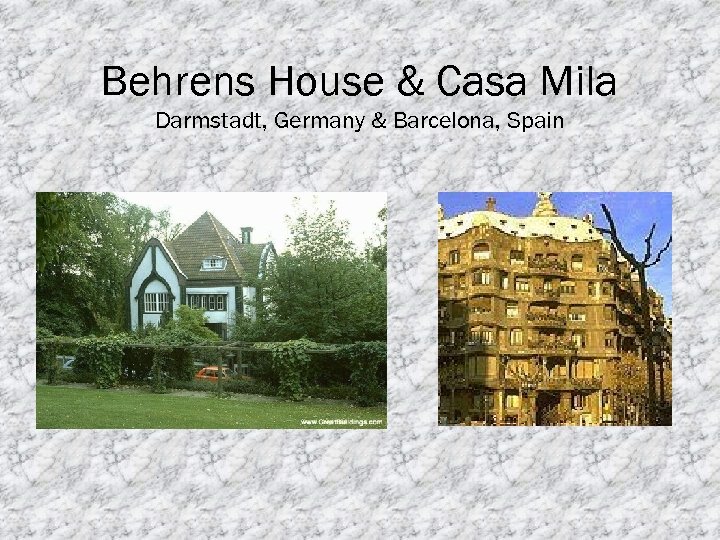 Behrens House & Casa Mila Darmstadt, Germany & Barcelona, Spain
 Art Deco Design • 1925 to 1935 AD • Zigzag patterns and vertical lines create dramatic effect on jazz-age, Art Deco buildings.
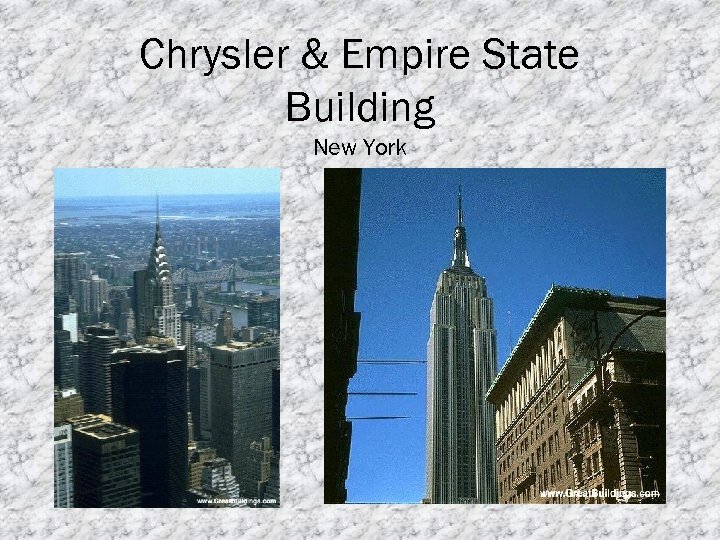 Chrysler & Empire State Building New York
 20 th Century Trends in Design • 1900 to Present • The century has seen dramatic changes and astonishing diversity. Twentieth century trends include Art Moderne and the Bauhaus school coined by Walter Gropius, Deconstructivism, Formalism, Modernism, Structuralism and Postmodernism.
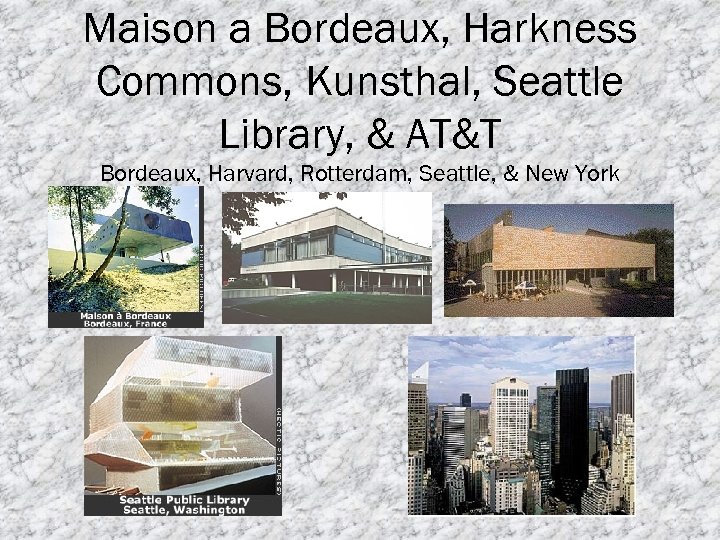 Maison a Bordeaux, Harkness Commons, Kunsthal, Seattle Library, & AT&T Bordeaux, Harvard, Rotterdam, Seattle, & New York
 Resources • http: //www. greatbuildings. com/types/styl es/ • http: //architecture. about. com/cs/historic periods/a/timeline. htm