


 Скачать презентацию Design and Operation of a Conditioning Energy Recovery
170b2f2e965c010ae51cf2942f72bc25.ppt
- Количество слайдов: 35
 Design and Operation of a Conditioning Energy Recovery Ventilator (CERV) for Passive Houses Ben Newell and Ty Newell January 22, 2009 Newell Instruments Inc. 1103 N High Cross Rd Urbana, IL 61802 Phone: 217 -344 -4526 www. newellinstruments. com
 Motivation and Objectives Combine our knowledge of HVAC systems with interest in energy efficient homes to create a niche product. Coupled with highly efficient house construction (e. g. , Passive House standards), efficient house conditioning systems lead to the ability to provide all home energy needs with solar energy in a cost effective manner. The “CERV” is a primary component for efficient heating, cooling, and dehumidification of an energy efficient home. Development of energy efficient house conditioning systems with the goal of constructing a “net zero energy” home for central Illinois and beyond.
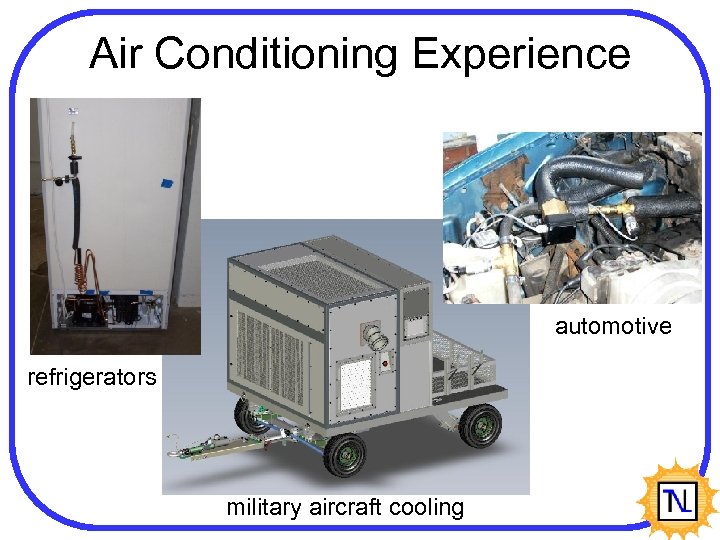 Air Conditioning Experience automotive refrigerators military aircraft cooling
 Presentation Outline • House Energy Characteristics • Building Conditioning Requirements • Conditioning Energy Recovery Ventilator Description • CERV Operation and Performance
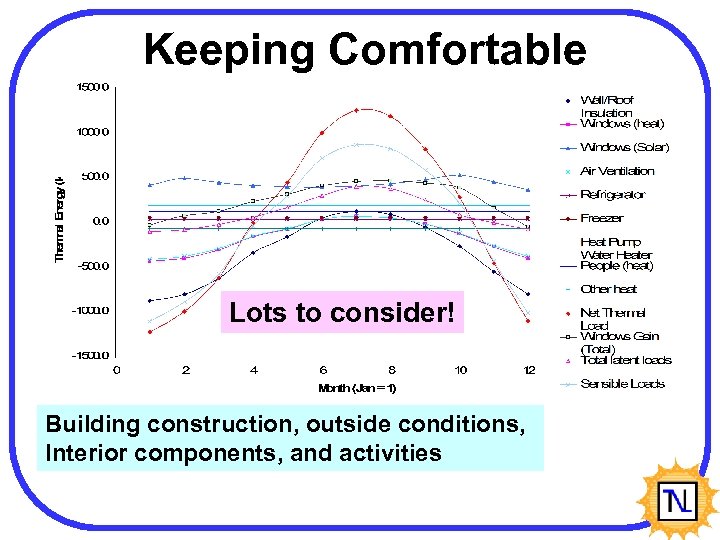 Keeping Comfortable Lots to consider! Building construction, outside conditions, Interior components, and activities
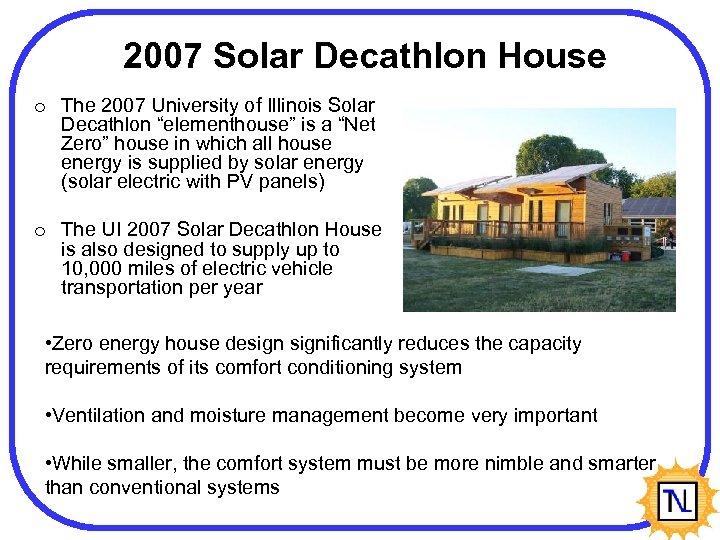 2007 Solar Decathlon House o The 2007 University of Illinois Solar Decathlon “elementhouse” is a “Net Zero” house in which all house energy is supplied by solar energy (solar electric with PV panels) o The UI 2007 Solar Decathlon House is also designed to supply up to 10, 000 miles of electric vehicle transportation per year • Zero energy house designificantly reduces the capacity requirements of its comfort conditioning system • Ventilation and moisture management become very important • While smaller, the comfort system must be more nimble and smarter than conventional systems
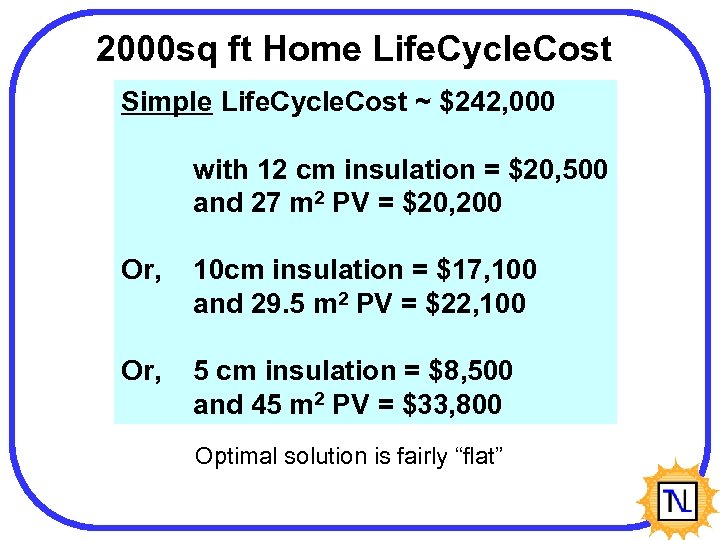 2000 sq ft Home Life. Cycle. Cost Simple Life. Cycle. Cost ~ $242, 000 with 12 cm insulation = $20, 500 and 27 m 2 PV = $20, 200 Or, 10 cm insulation = $17, 100 and 29. 5 m 2 PV = $22, 100 Or, 5 cm insulation = $8, 500 and 45 m 2 PV = $33, 800 Optimal solution is fairly “flat”
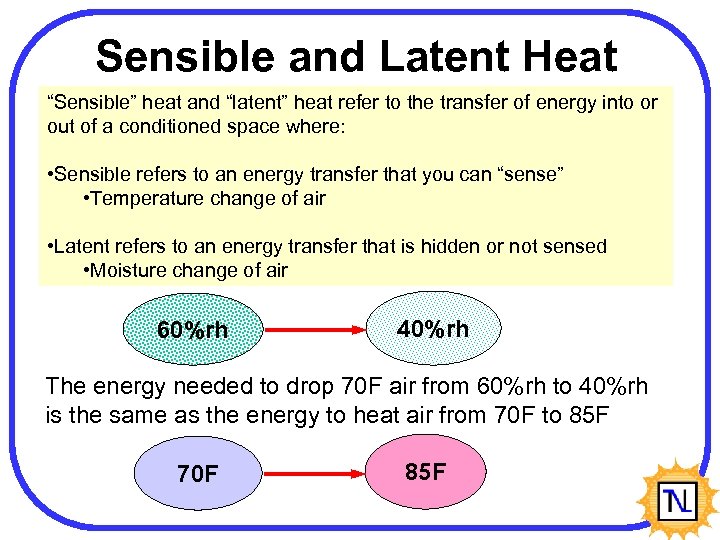 Sensible and Latent Heat “Sensible” heat and “latent” heat refer to the transfer of energy into or out of a conditioned space where: • Sensible refers to an energy transfer that you can “sense” • Temperature change of air • Latent refers to an energy transfer that is hidden or not sensed • Moisture change of air 60%rh 40%rh The energy needed to drop 70 F air from 60%rh to 40%rh is the same as the energy to heat air from 70 F to 85 F 70 F 85 F
 Conventional vs. Efficient • Conventional homes are dominated by the exterior conditions – Leaky envelope means unwanted ventilation – Larger capacity required because of free air movement – Free exchange of conditioned/unconditioned air without recovery of energy – Little moisture control • Efficient homes balanced more towards interior loads – Ventilation and moisture are controlled – Small energy loads make energy recovery significant
 Typical House Conditioning System Illinois Weather • Conventional home air conditioner ~3 “tons” (36, 000 Btu/hr ~ 10, 000 watts) – Designed for ~2/3 sensible and ~1/3 latent loads • Conventional gas furnace ~80, 000 Btu/hr ~ 22, 000 watts • Efficient capacity control of conventional systems difficult – Conventional construction requires large span of capacity control
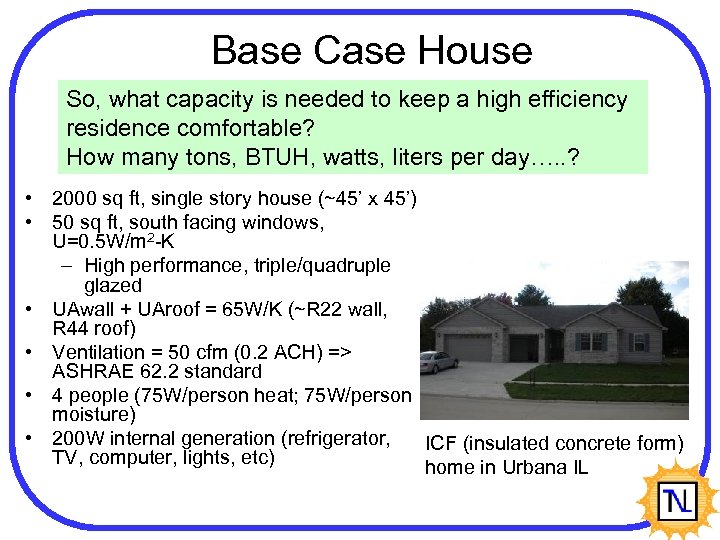 Base Case House So, what capacity is needed to keep a high efficiency residence comfortable? How many tons, BTUH, watts, liters per day…. . ? • 2000 sq ft, single story house (~45’ x 45’) • 50 sq ft, south facing windows, U=0. 5 W/m 2 -K – High performance, triple/quadruple glazed • UAwall + UAroof = 65 W/K (~R 22 wall, R 44 roof) • Ventilation = 50 cfm (0. 2 ACH) => ASHRAE 62. 2 standard • 4 people (75 W/person heat; 75 W/person moisture) • 200 W internal generation (refrigerator, ICF (insulated concrete form) TV, computer, lights, etc) home in Urbana IL
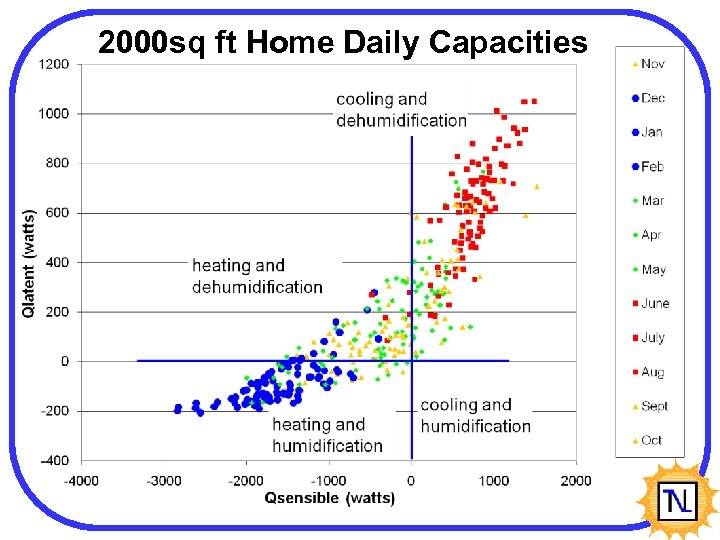 2000 sq ft Home Daily Capacities
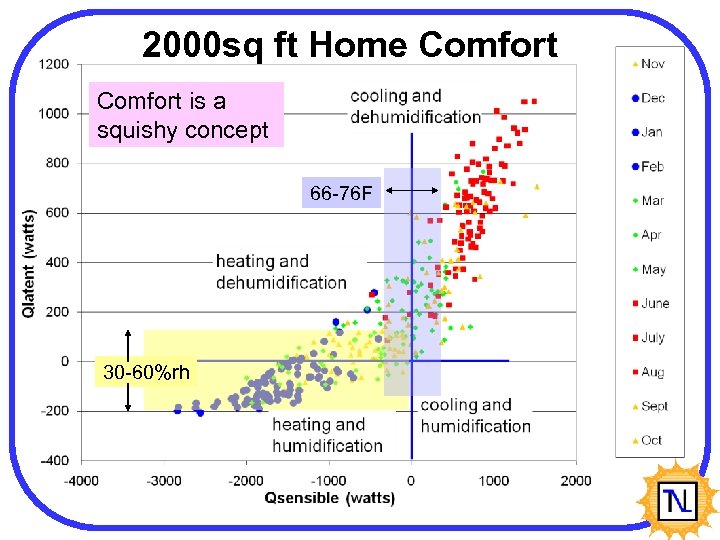 2000 sq ft Home Comfort is a squishy concept 66 -76 F 30 -60%rh
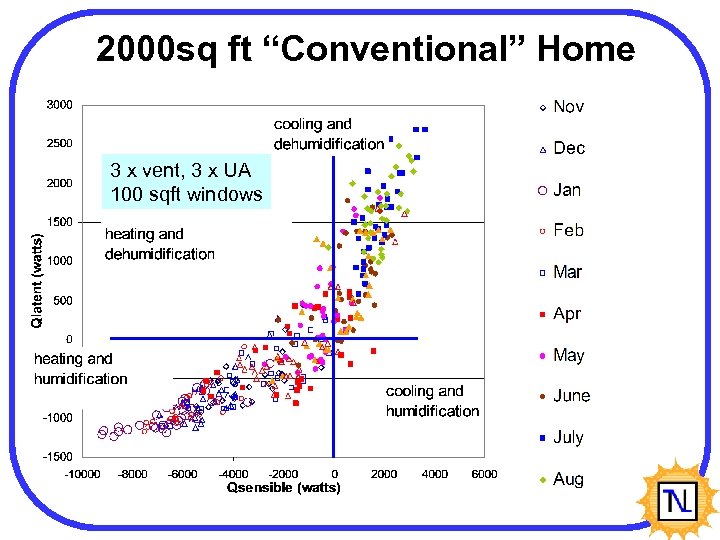 2000 sq ft “Conventional” Home 3 x vent, 3 x UA 100 sqft windows
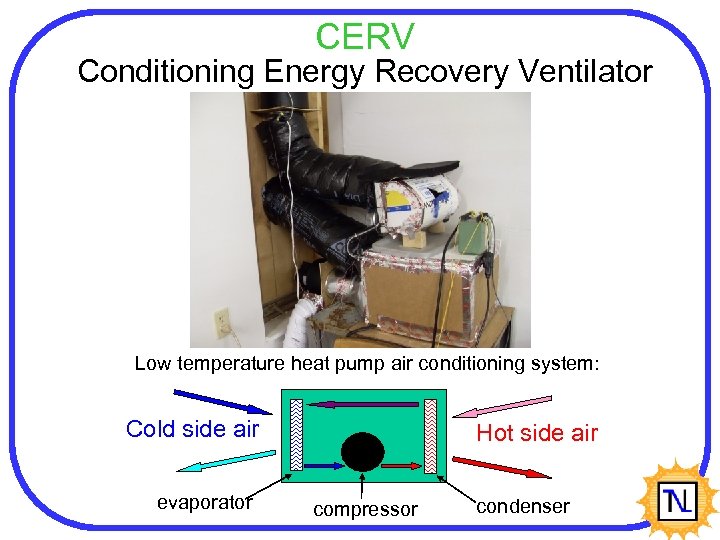 CERV Conditioning Energy Recovery Ventilator Low temperature heat pump air conditioning system: Cold side air evaporator Hot side air compressor condenser
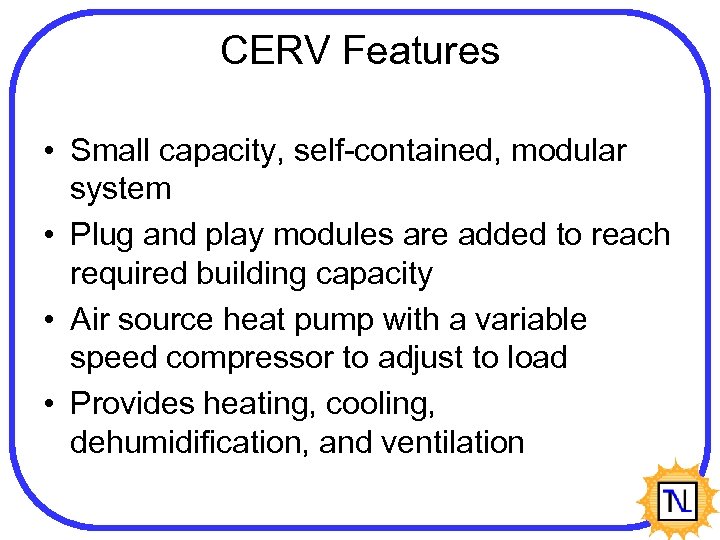 CERV Features • Small capacity, self-contained, modular system • Plug and play modules are added to reach required building capacity • Air source heat pump with a variable speed compressor to adjust to load • Provides heating, cooling, dehumidification, and ventilation
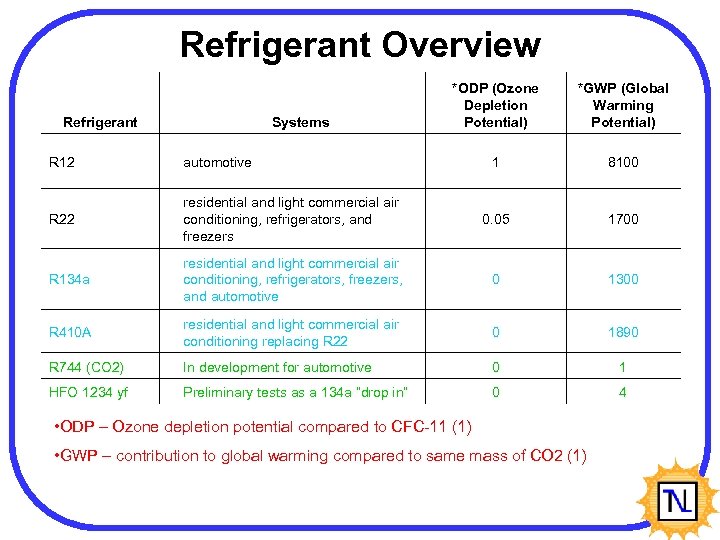 Refrigerant Overview Refrigerant Systems *ODP (Ozone Depletion Potential) *GWP (Global Warming Potential) 1 8100 R 12 automotive R 22 residential and light commercial air conditioning, refrigerators, and freezers 0. 05 1700 R 134 a residential and light commercial air conditioning, refrigerators, freezers, and automotive 0 1300 R 410 A residential and light commercial air conditioning replacing R 22 0 1890 R 744 (CO 2) In development for automotive 0 1 HFO 1234 yf Preliminary tests as a 134 a “drop in” 0 4 • ODP – Ozone depletion potential compared to CFC-11 (1) • GWP – contribution to global warming compared to same mass of CO 2 (1)
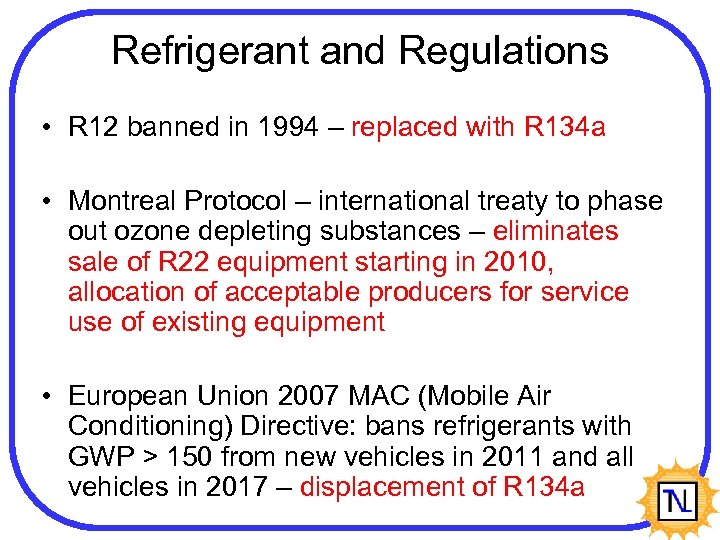 Refrigerant and Regulations • R 12 banned in 1994 – replaced with R 134 a • Montreal Protocol – international treaty to phase out ozone depleting substances – eliminates sale of R 22 equipment starting in 2010, allocation of acceptable producers for service use of existing equipment • European Union 2007 MAC (Mobile Air Conditioning) Directive: bans refrigerants with GWP > 150 from new vehicles in 2011 and all vehicles in 2017 – displacement of R 134 a
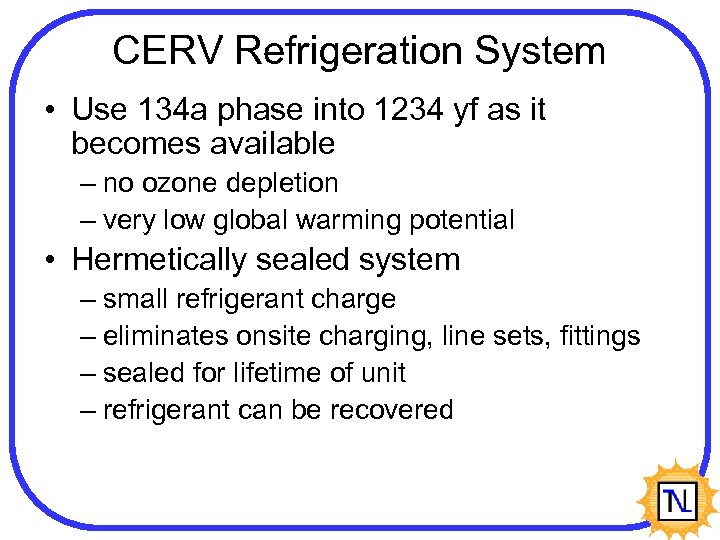 CERV Refrigeration System • Use 134 a phase into 1234 yf as it becomes available – no ozone depletion – very low global warming potential • Hermetically sealed system – small refrigerant charge – eliminates onsite charging, line sets, fittings – sealed for lifetime of unit – refrigerant can be recovered
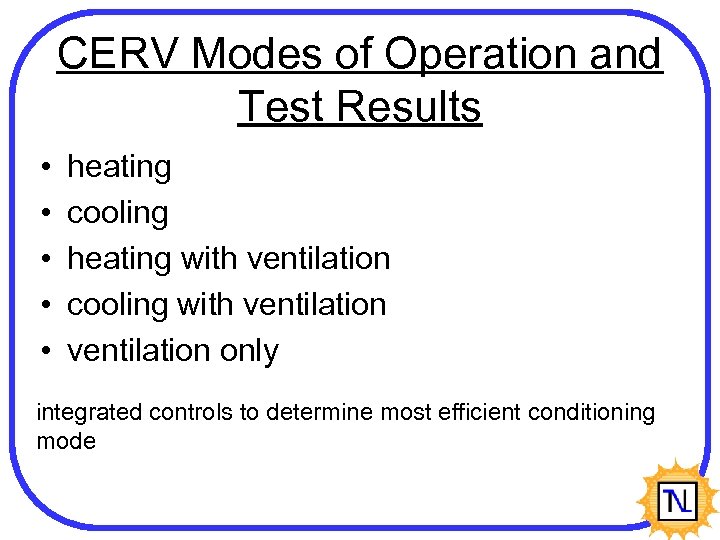 CERV Modes of Operation and Test Results • • • heating cooling heating with ventilation cooling with ventilation only integrated controls to determine most efficient conditioning mode
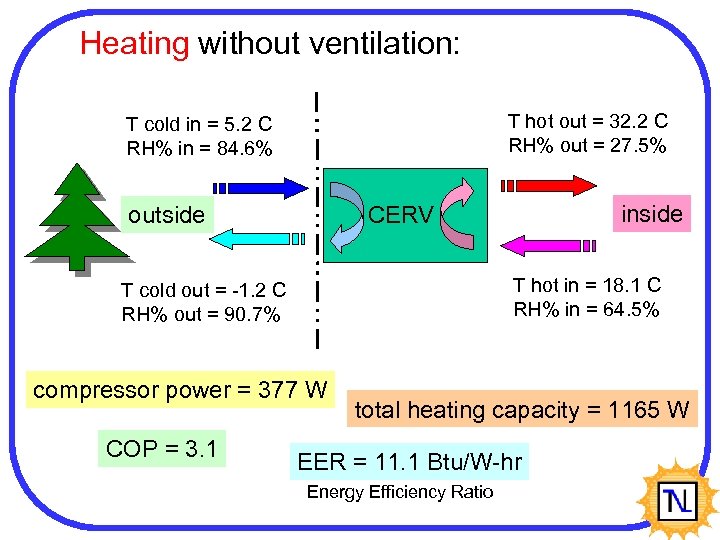 Heating without ventilation: T hot out = 32. 2 C RH% out = 27. 5% T cold in = 5. 2 C RH% in = 84. 6% outside T hot in = 18. 1 C RH% in = 64. 5% T cold out = -1. 2 C RH% out = 90. 7% compressor power = 377 W COP = 3. 1 inside CERV total heating capacity = 1165 W EER = 11. 1 Btu/W-hr Energy Efficiency Ratio
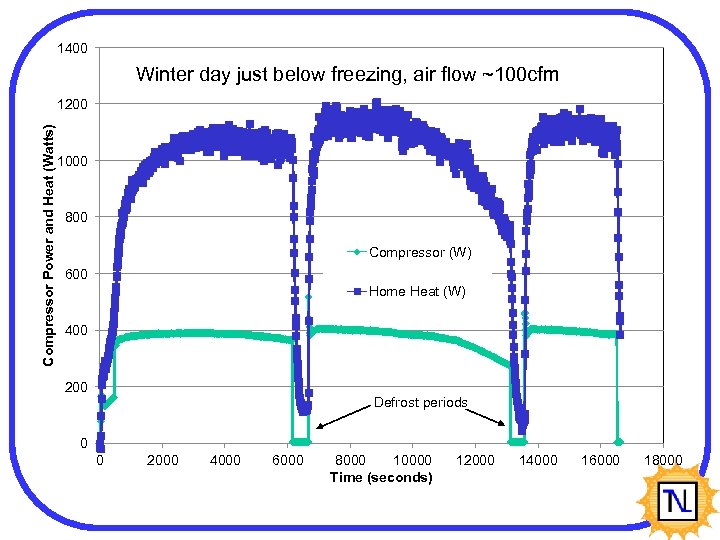 1400 Winter day just below freezing, air flow ~100 cfm Compressor Power and Heat (Watts) 1200 1000 800 Compressor (W) 600 Home Heat (W) 400 200 Defrost periods 0 0 2000 4000 6000 8000 10000 Time (seconds) 12000 14000 16000 18000
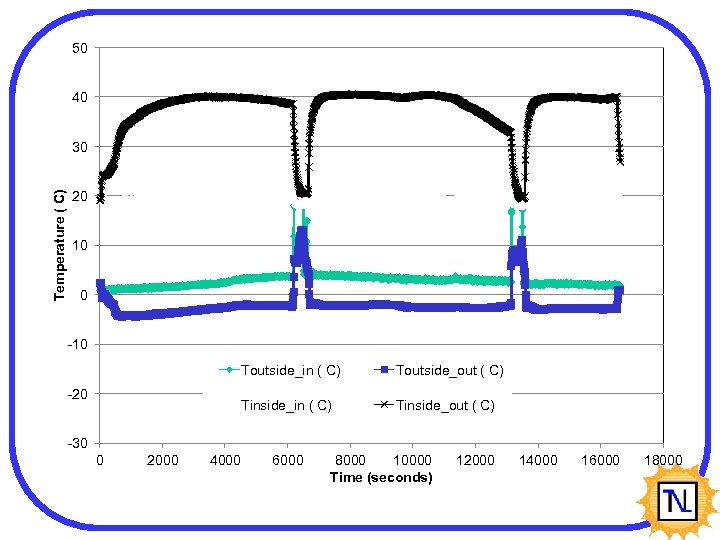 50 40 Temperature ( C) 30 20 10 0 -10 Toutside_in ( C) Tinside_in ( C) -20 Toutside_out ( C) Tinside_out ( C) -30 0 2000 4000 6000 8000 10000 Time (seconds) 12000 14000 16000 18000
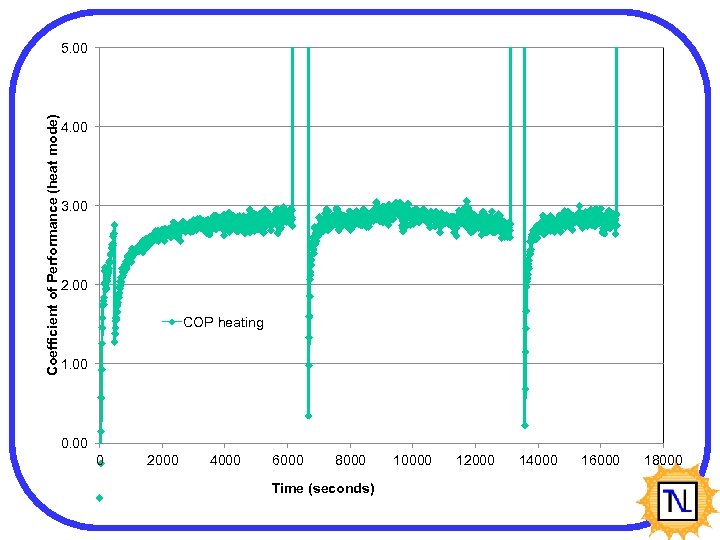 Coefficient of Performance (heat mode) 5. 00 4. 00 3. 00 2. 00 COP heating 1. 00 0 2000 4000 6000 8000 Time (seconds) 10000 12000 14000 16000 18000
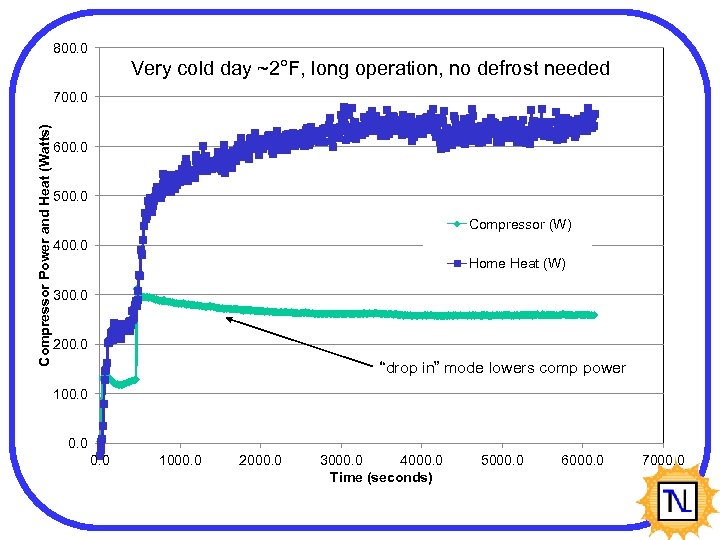 800. 0 Very cold day ~2°F, long operation, no defrost needed Compressor Power and Heat (Watts) 700. 0 600. 0 500. 0 Compressor (W) 400. 0 Home Heat (W) 300. 0 200. 0 “drop in” mode lowers comp power 100. 0 1000. 0 2000. 0 3000. 0 4000. 0 Time (seconds) 5000. 0 6000. 0 7000. 0
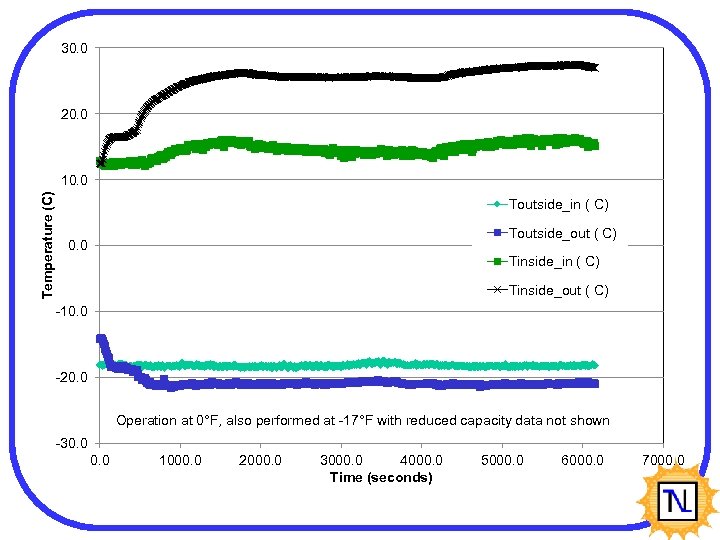 30. 0 20. 0 Temperature (C) 10. 0 Toutside_in ( C) Toutside_out ( C) 0. 0 Tinside_in ( C) Tinside_out ( C) -10. 0 -20. 0 Operation at 0°F, also performed at -17°F with reduced capacity data not shown -30. 0 1000. 0 2000. 0 3000. 0 4000. 0 Time (seconds) 5000. 0 6000. 0 7000. 0
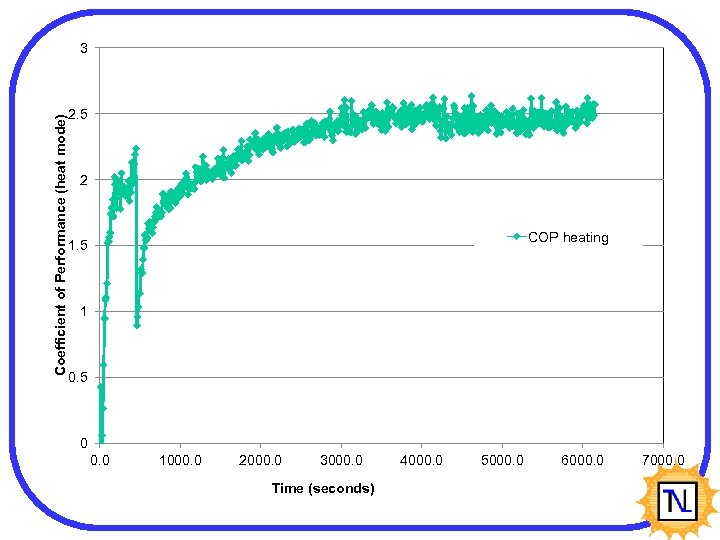 Coefficient of Performance (heat mode) 3 2. 5 2 COP heating 1. 5 1 0. 5 0 0. 0 1000. 0 2000. 0 3000. 0 Time (seconds) 4000. 0 5000. 0 6000. 0 7000. 0
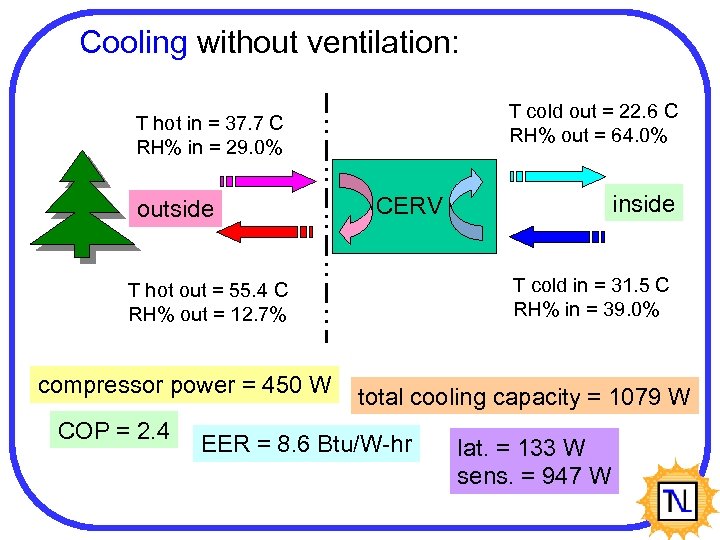 Cooling without ventilation: T cold out = 22. 6 C RH% out = 64. 0% T hot in = 37. 7 C RH% in = 29. 0% outside T cold in = 31. 5 C RH% in = 39. 0% T hot out = 55. 4 C RH% out = 12. 7% compressor power = 450 W COP = 2. 4 inside CERV total cooling capacity = 1079 W EER = 8. 6 Btu/W-hr lat. = 133 W sens. = 947 W
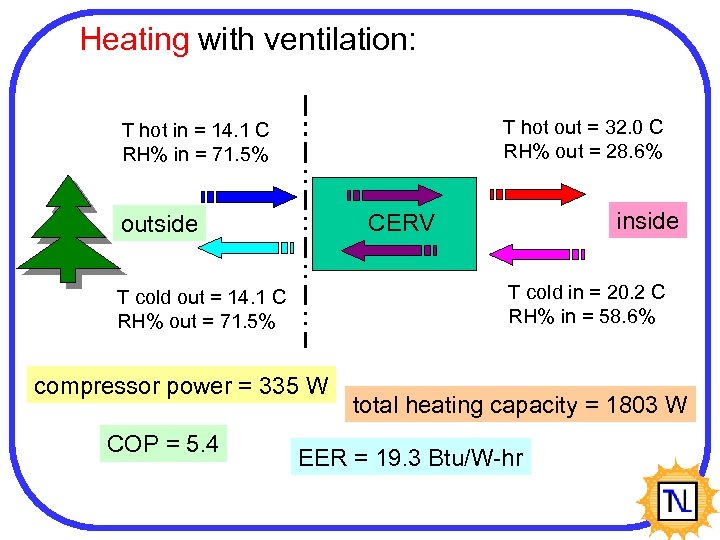 Heating with ventilation: T hot out = 32. 0 C RH% out = 28. 6% T hot in = 14. 1 C RH% in = 71. 5% T cold in = 20. 2 C RH% in = 58. 6% T cold out = 14. 1 C RH% out = 71. 5% compressor power = 335 W COP = 5. 4 inside CERV outside total heating capacity = 1803 W EER = 19. 3 Btu/W-hr
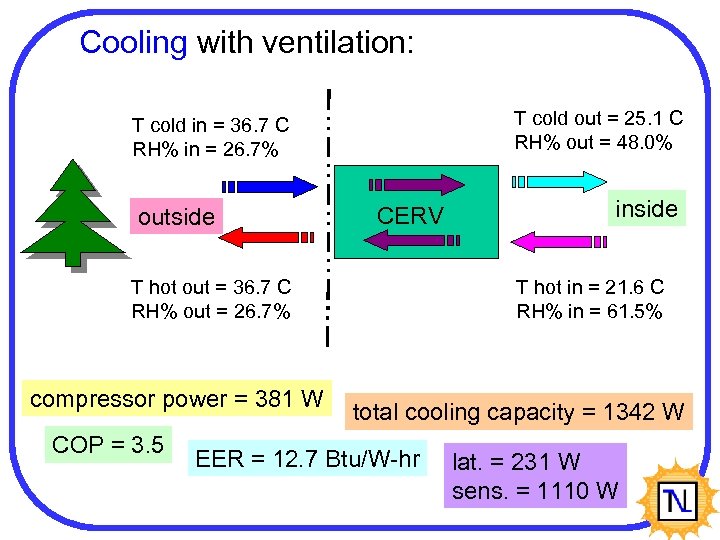 Cooling with ventilation: T cold out = 25. 1 C RH% out = 48. 0% T cold in = 36. 7 C RH% in = 26. 7% outside CERV T hot in = 21. 6 C RH% in = 61. 5% T hot out = 36. 7 C RH% out = 26. 7% compressor power = 381 W COP = 3. 5 inside total cooling capacity = 1342 W EER = 12. 7 Btu/W-hr lat. = 231 W sens. = 1110 W
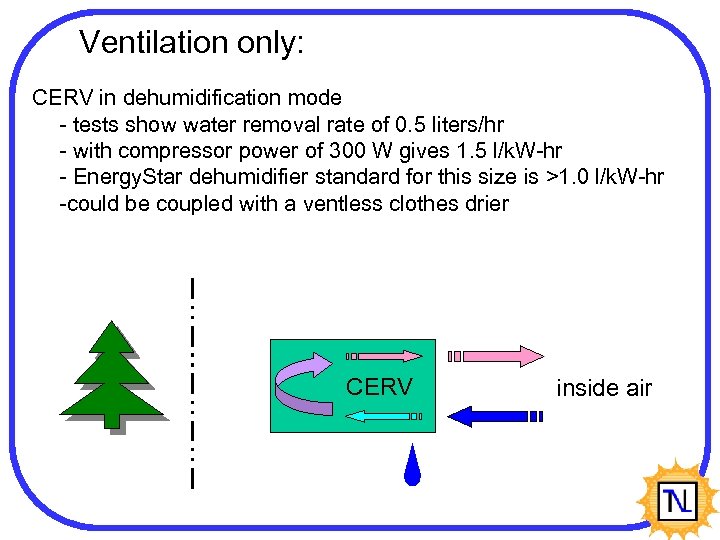 Ventilation only: CERV in dehumidification mode - tests show water removal rate of 0. 5 liters/hr - with compressor power of 300 W gives 1. 5 l/k. W-hr - Energy. Star dehumidifier standard for this size is >1. 0 l/k. W-hr -could be coupled with a ventless clothes drier CERV inside air
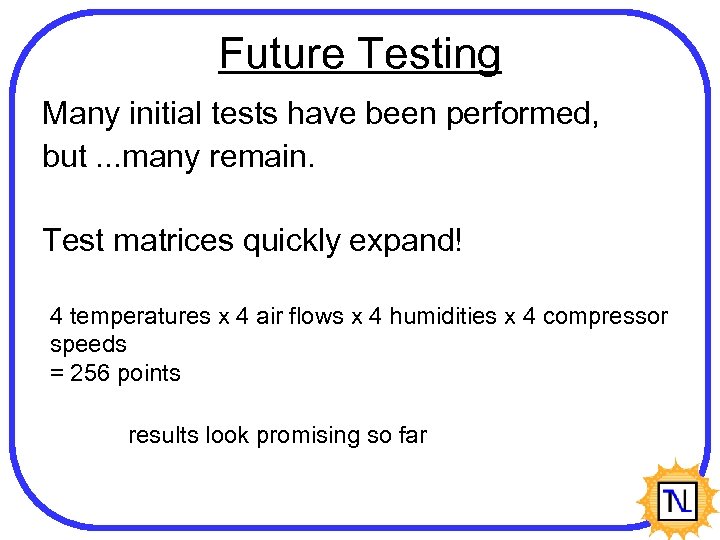 Future Testing Many initial tests have been performed, but. . . many remain. Test matrices quickly expand! 4 temperatures x 4 air flows x 4 humidities x 4 compressor speeds = 256 points results look promising so far
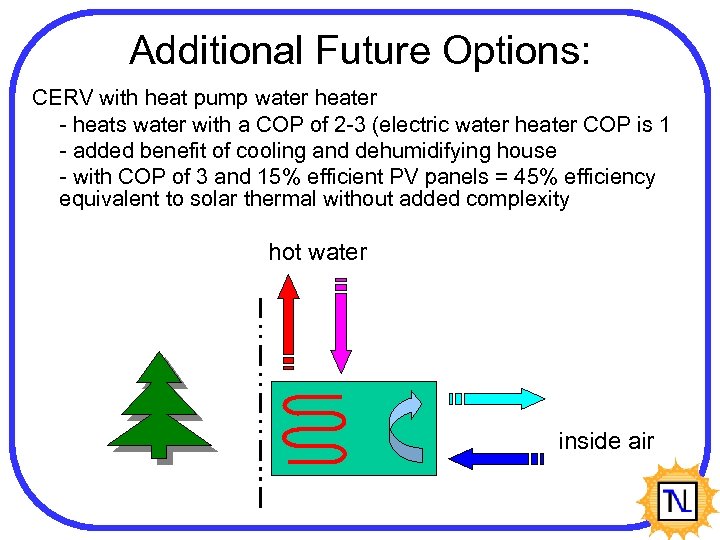 Additional Future Options: CERV with heat pump water heater - heats water with a COP of 2 -3 (electric water heater COP is 1 - added benefit of cooling and dehumidifying house - with COP of 3 and 15% efficient PV panels = 45% efficiency equivalent to solar thermal without added complexity hot water inside air
 Other Considerations • Evaporator Defrosting – Frost buildup on air source heat pump when heating in cold weather • Condensate removal – can possibly be used to improve condenser efficiency • moisture/mold/odor prevention • end of life recycle ability
 Thanks Questions?