


 Скачать презентацию Descriptive Grammar of English Part 1 Phonetics and
ac687eca2819d3ae8372470b79442c21.ppt
- Количество слайдов: 59
 Descriptive Grammar of English Part 1: Phonetics and Phonology dr Iwona Kokorniak (with contribution from dr Jarosław Weckwerth) 29 th November 2008 1
 Monophthongs Steady-state vowels: The same quality throughout Also known as pure vowels Or monophthongs 2
 Diphthongs: the quality changes ‘Two vowels in one’ Smooth movement from one vowel to another 3
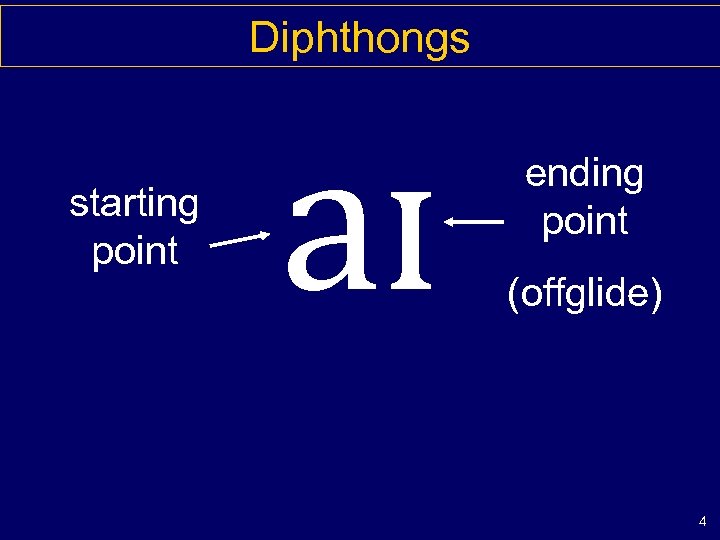 Diphthongs starting point aɪ ending point (offglide) 4
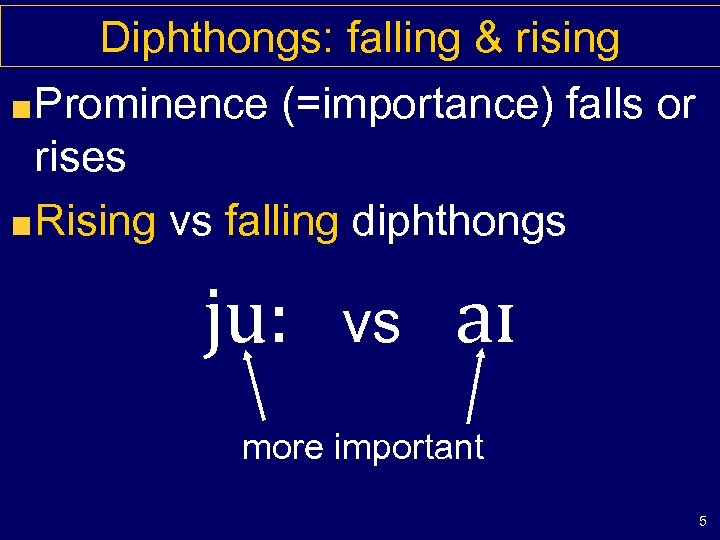 Diphthongs: falling & rising Prominence (=importance) falls or rises Rising vs falling diphthongs ju: vs aɪ more important 5
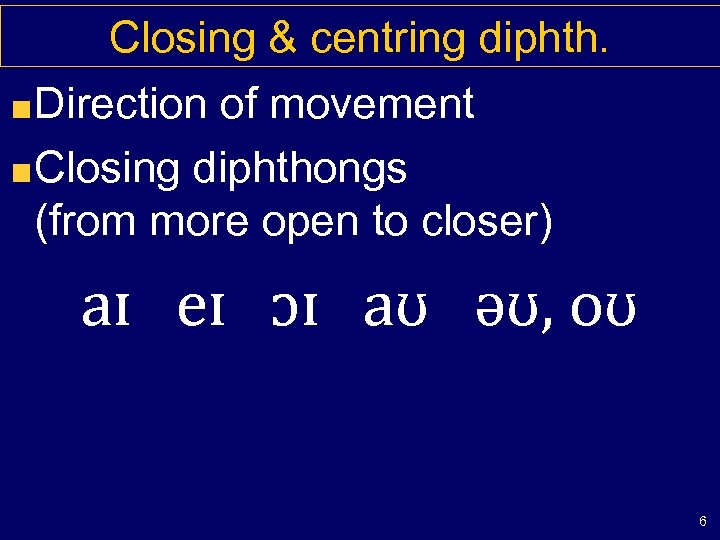 Closing & centring diphth. Direction of movement Closing diphthongs (from more open to closer) aɪ eɪ ɔɪ aʊ əʊ, oʊ 6
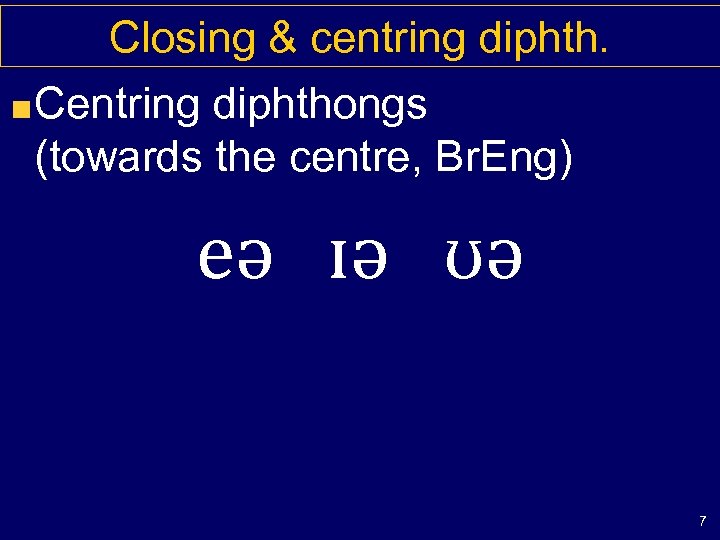 Closing & centring diphth. Centring diphthongs (towards the centre, Br. Eng) eə ɪə ʊə 7
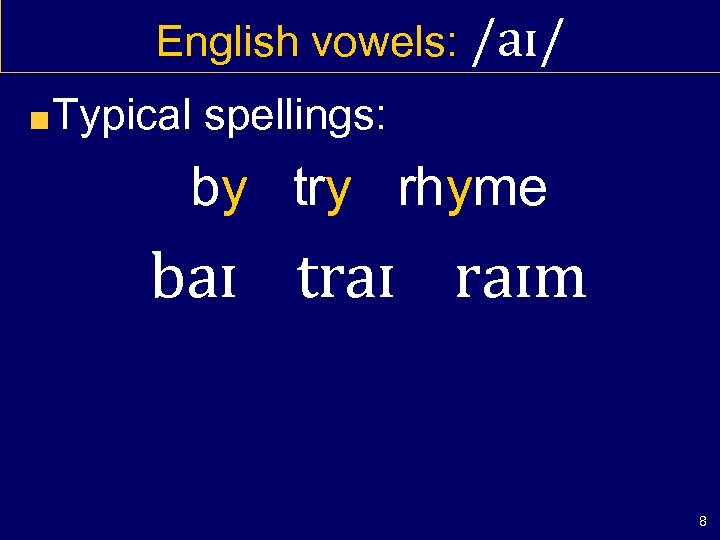 English vowels: /aɪ/ Typical spellings: by try rhyme baɪ traɪ raɪm 8
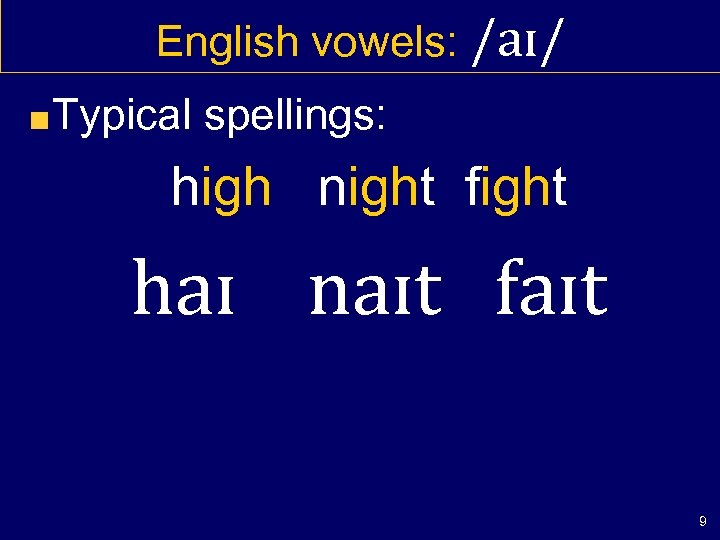 English vowels: /aɪ/ Typical spellings: high night fight haɪ naɪt faɪt 9
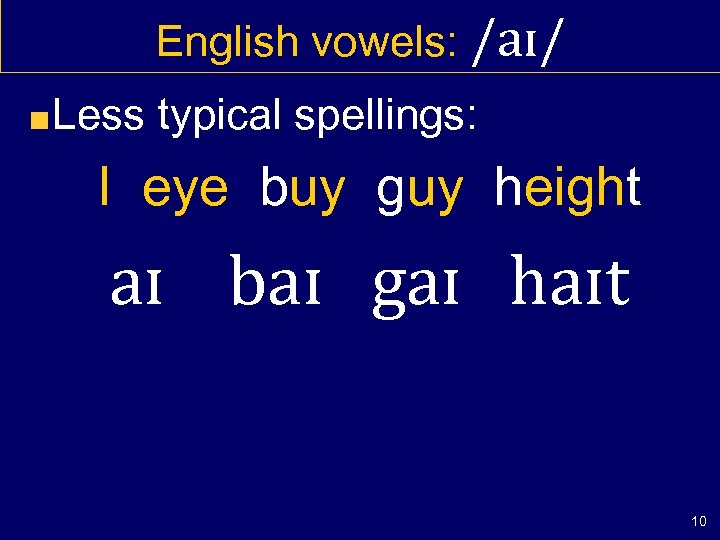 English vowels: /aɪ/ Less typical spellings: I eye buy guy height aɪ baɪ gaɪ haɪt 10
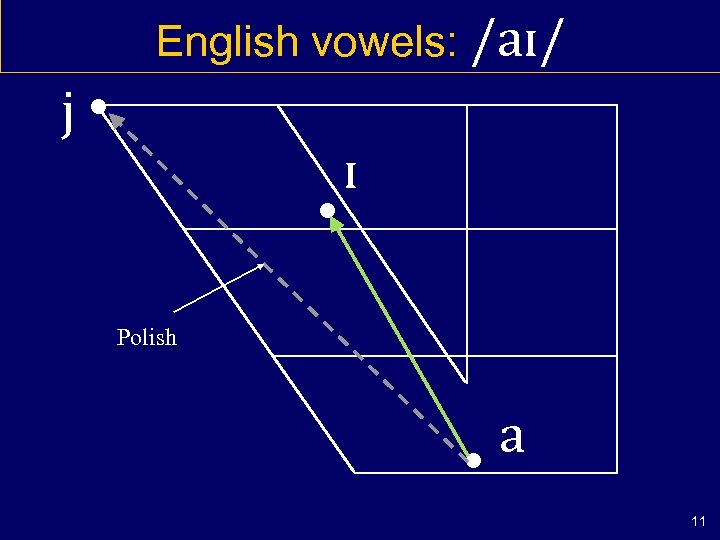 English vowels: /aɪ/ j • • ɪ Polish • a 11
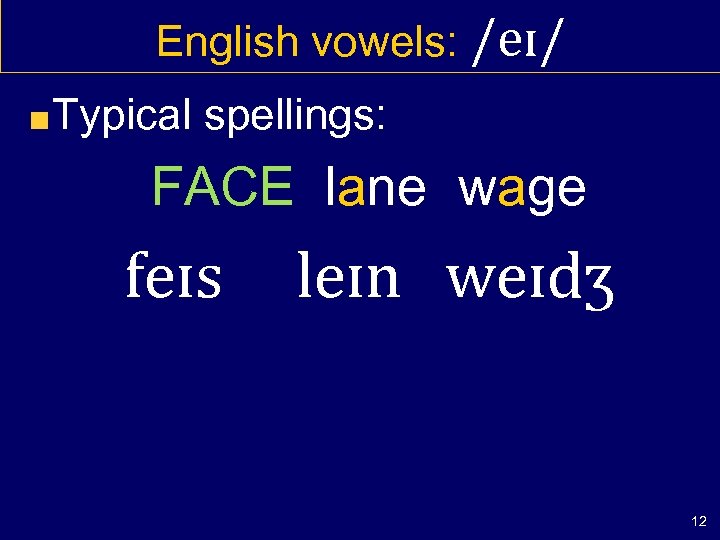 English vowels: /eɪ/ Typical spellings: FACE lane wage feɪs leɪn weɪdʒ 12
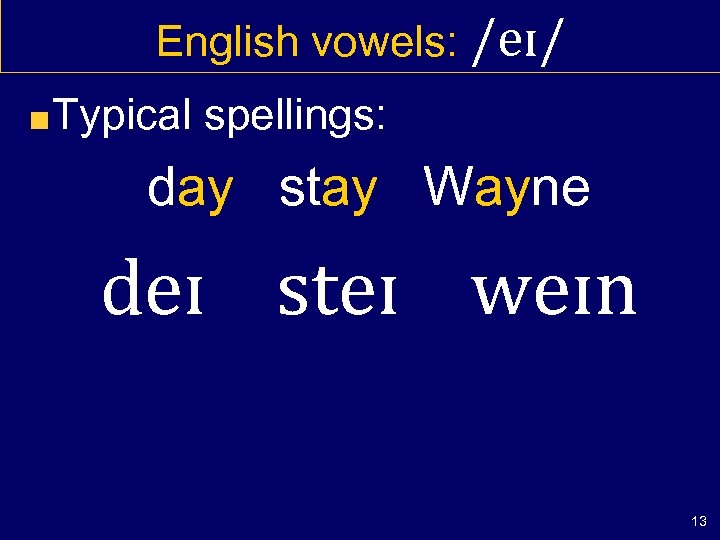 English vowels: /eɪ/ Typical spellings: day stay Wayne deɪ steɪ weɪn 13
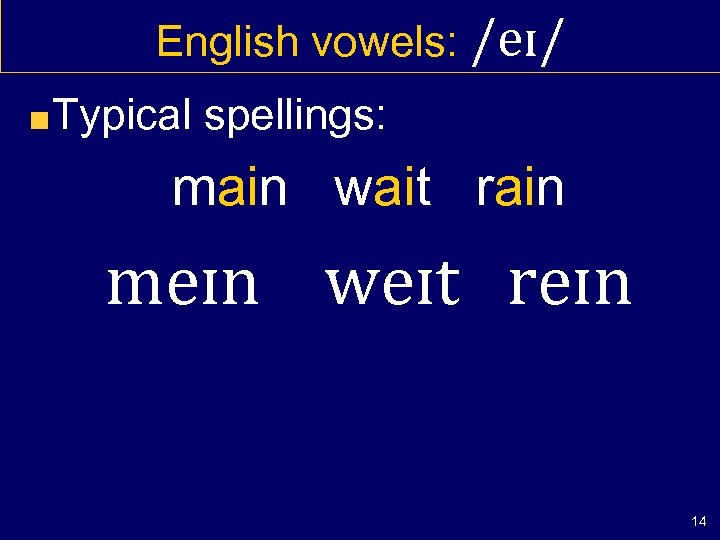 English vowels: /eɪ/ Typical spellings: main wait rain meɪn weɪt reɪn 14
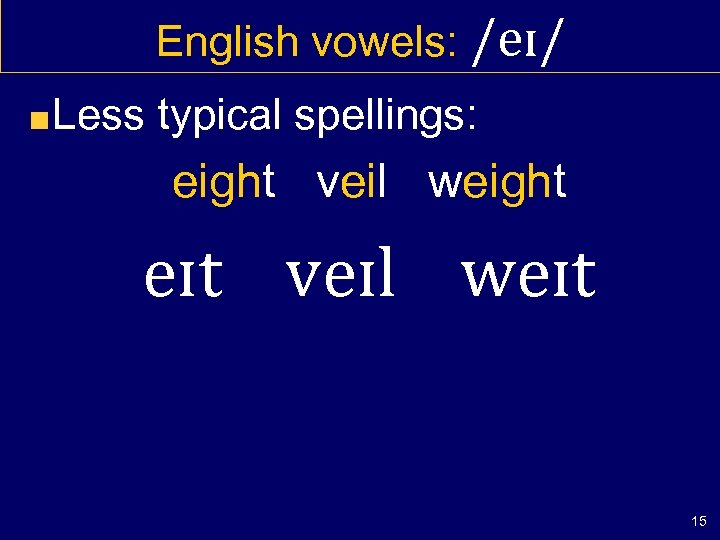 English vowels: /eɪ/ Less typical spellings: eight veil weight eɪt veɪl weɪt 15
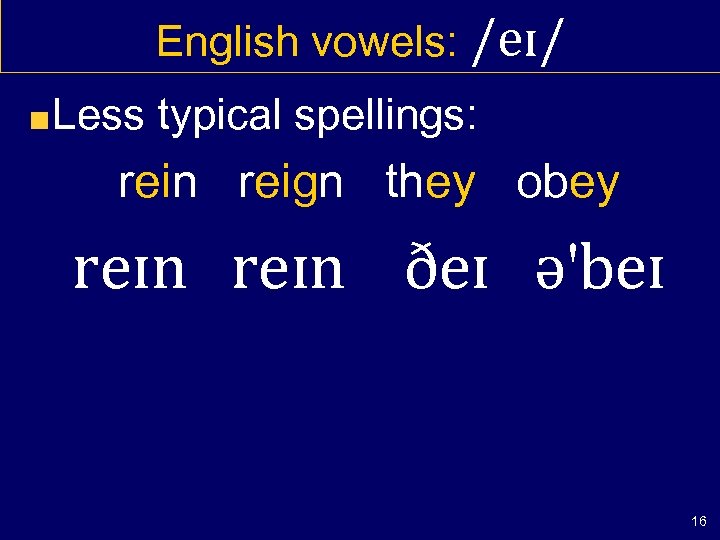 English vowels: /eɪ/ Less typical spellings: rein reign they obey reɪn ðeɪ ə'beɪ 16
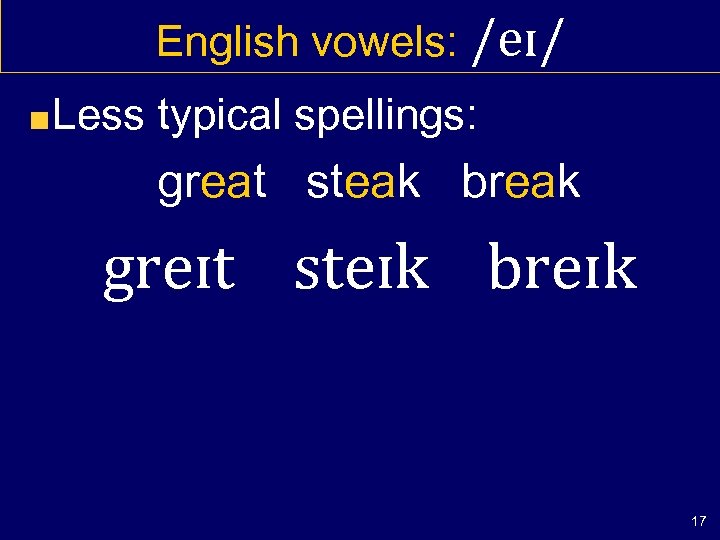 English vowels: /eɪ/ Less typical spellings: great steak break greɪt steɪk breɪk 17
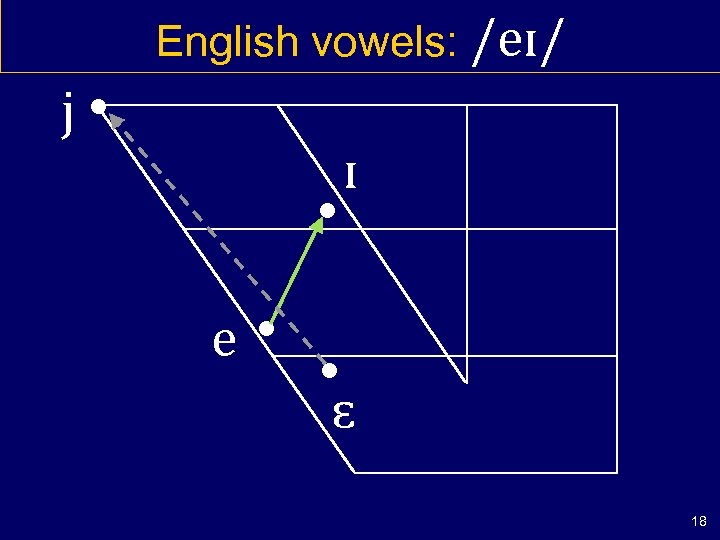 English vowels: /eɪ/ j • • e • ɪ • ɛ 18
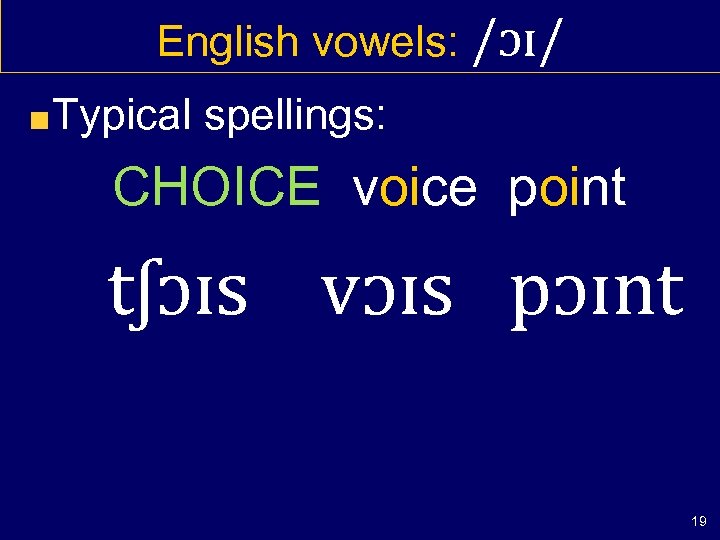 English vowels: /ɔɪ/ Typical spellings: CHOICE voice point tʃɔɪs vɔɪs pɔɪnt 19
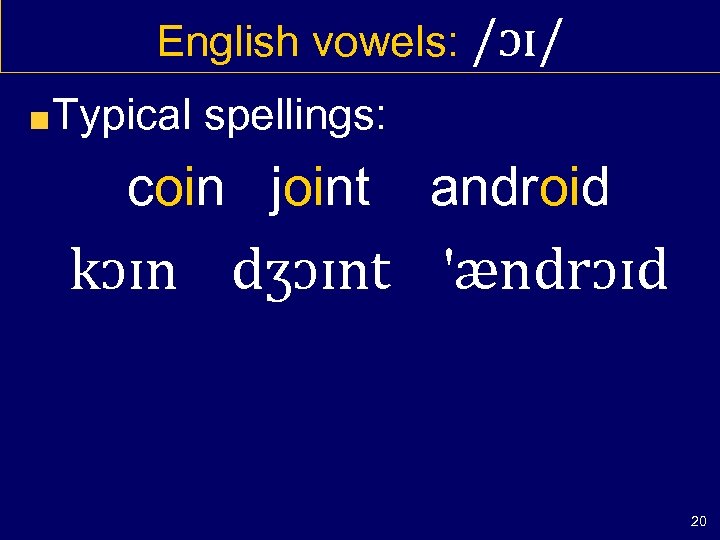 English vowels: /ɔɪ/ Typical spellings: coin joint android kɔɪn dʒɔɪnt 'ændrɔɪd 20
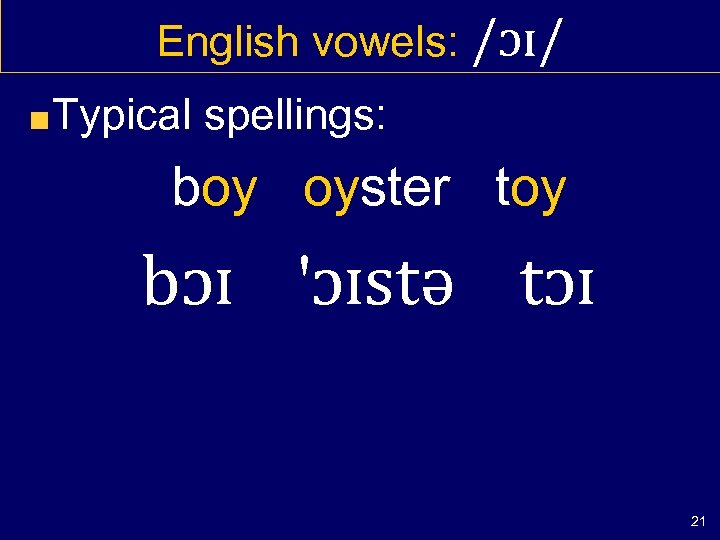 English vowels: /ɔɪ/ Typical spellings: boy oyster toy bɔɪ 'ɔɪstə tɔɪ 21
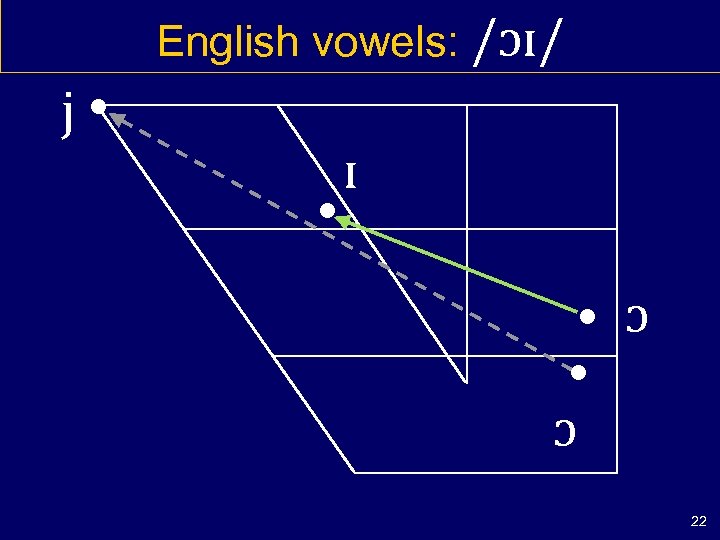 English vowels: /ɔɪ/ j • • ɪ • ɔ • ɔ 22
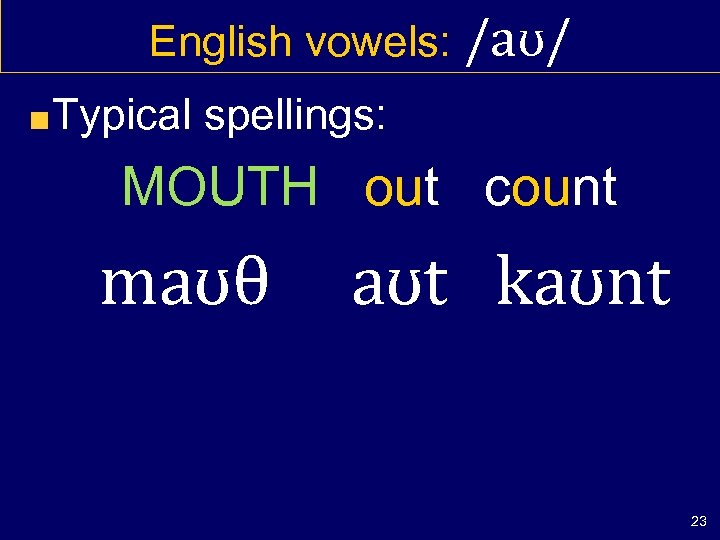 English vowels: /aʊ/ Typical spellings: MOUTH out count maʊθ aʊt kaʊnt 23
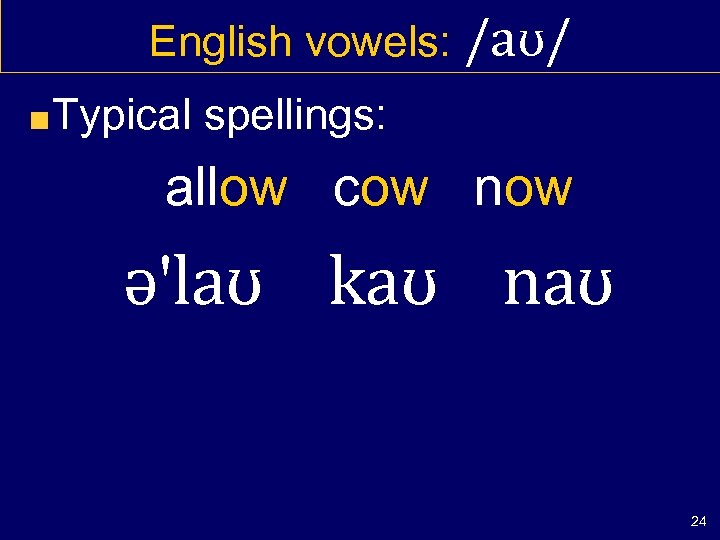 English vowels: /aʊ/ Typical spellings: allow cow now ə'laʊ kaʊ naʊ 24
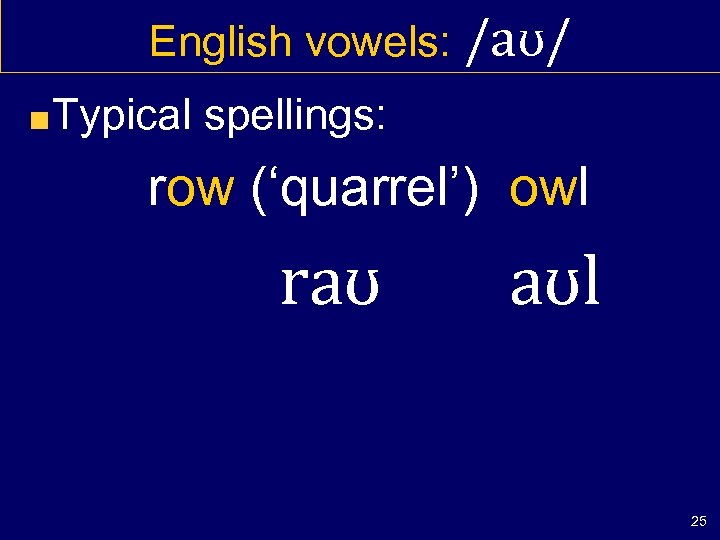 English vowels: /aʊ/ Typical spellings: row (‘quarrel’) owl raʊ aʊl 25
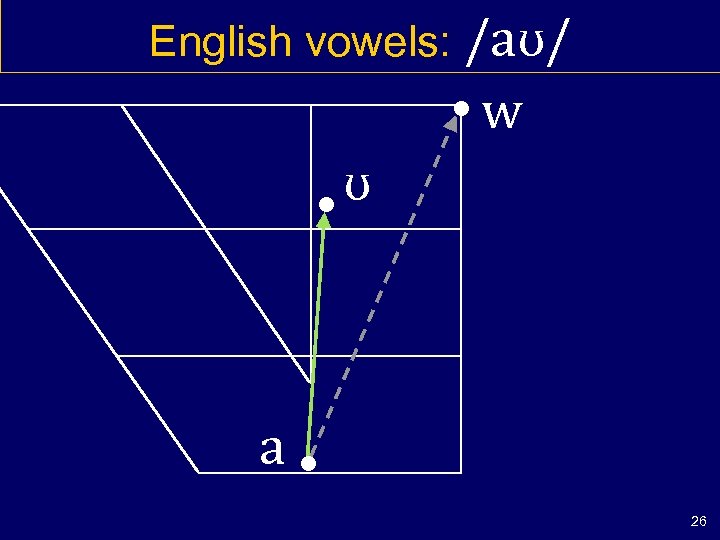 English vowels: /aʊ/ • w ʊ • a • 26
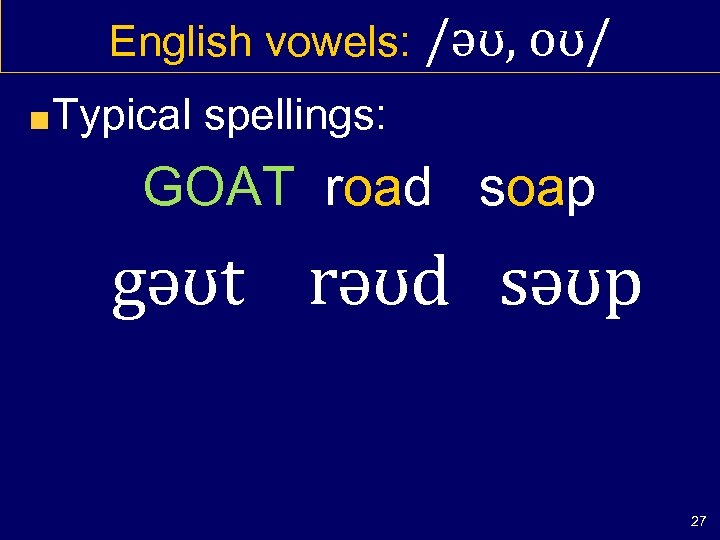 English vowels: /əʊ, oʊ/ Typical spellings: GOAT road soap gəʊt rəʊd səʊp 27
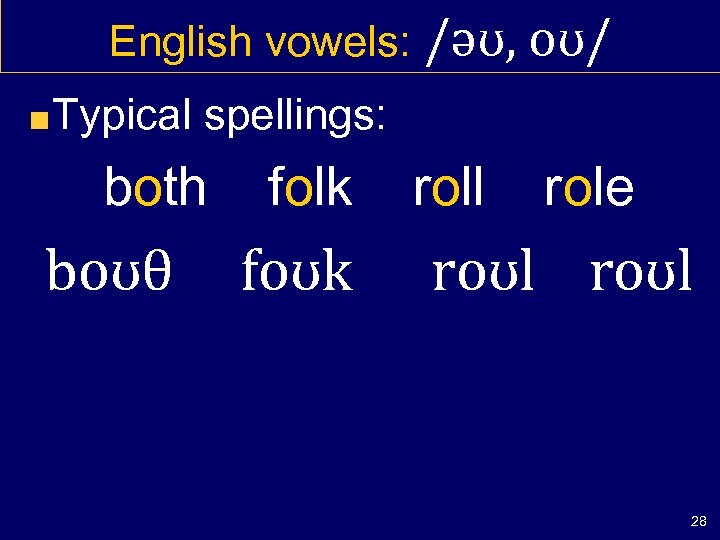 English vowels: /əʊ, oʊ/ Typical spellings: both boʊθ folk foʊk roll role roʊl 28
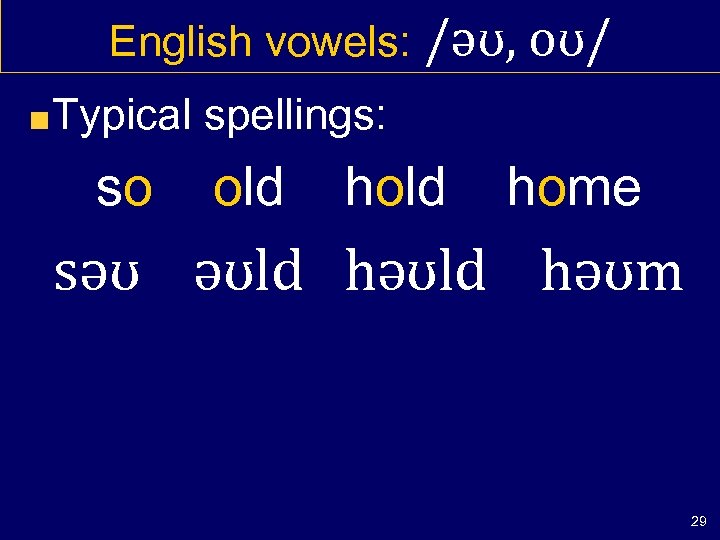 English vowels: /əʊ, oʊ/ Typical spellings: so old home səʊ əʊld həʊm 29
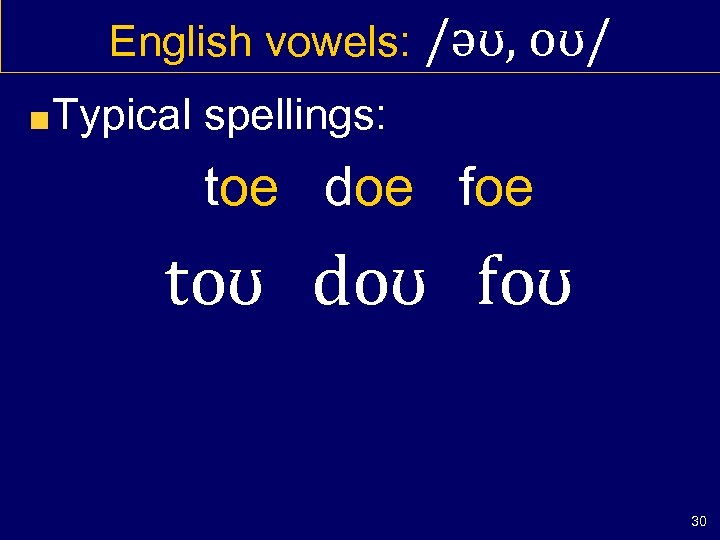 English vowels: /əʊ, oʊ/ Typical spellings: toe doe foe toʊ doʊ foʊ 30
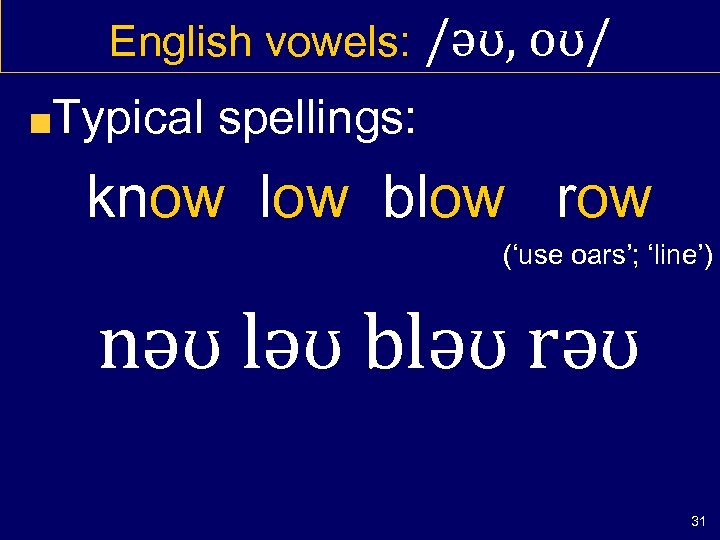 English vowels: /əʊ, oʊ/ Typical spellings: know low blow row (‘use oars’; ‘line’) nəʊ ləʊ bləʊ rəʊ 31
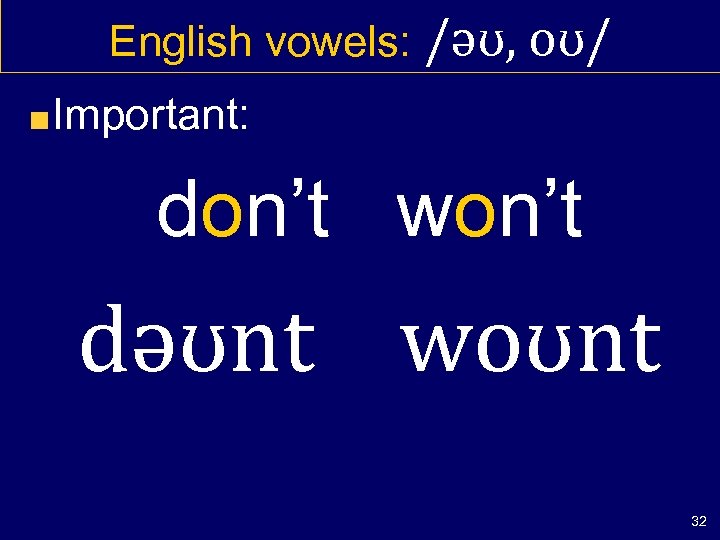 English vowels: /əʊ, oʊ/ Important: don’t won’t dəʊnt woʊnt 32
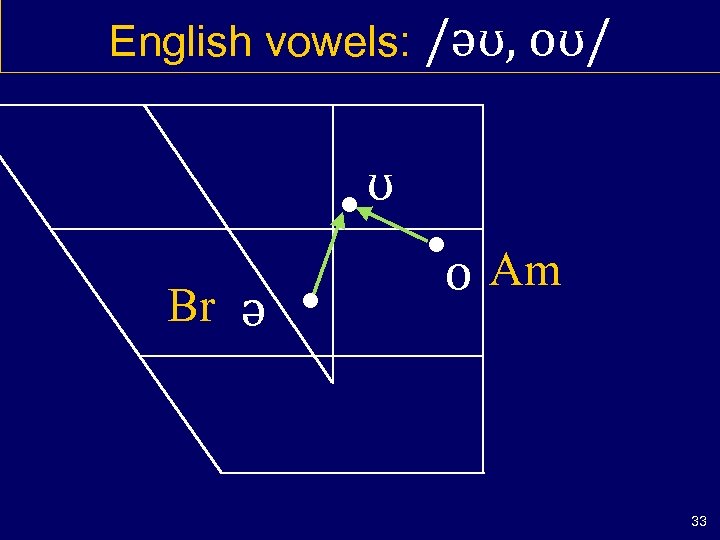 English vowels: /əʊ, oʊ/ ʊ • Br ə • • o Am 33
 English vowels: /əʊ, oʊ/ Used in the same words Only phonetic quality different In Br. Eng, first element is l central l not rounded 34
 English vowels: /ɪə, eə, ʊə/ In non-rhotic varieties only E. g. standard Br. Eng Rhotic varieties have ɪr, er, ʊr 35
 English vowels: /ɪə/ Typical spellings: NEAR fear tear beard (‘drop of liquid’) nɪə fɪə tɪə bɪəd 36
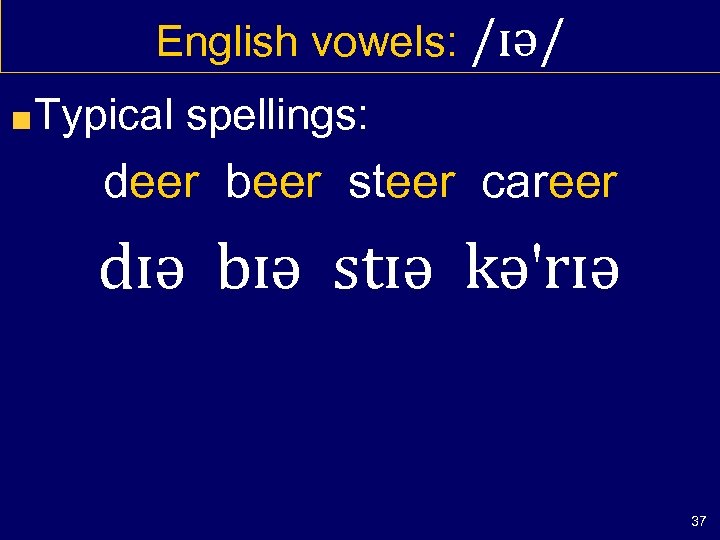 English vowels: /ɪə/ Typical spellings: deer beer steer career dɪə bɪə stɪə kə'rɪə 37
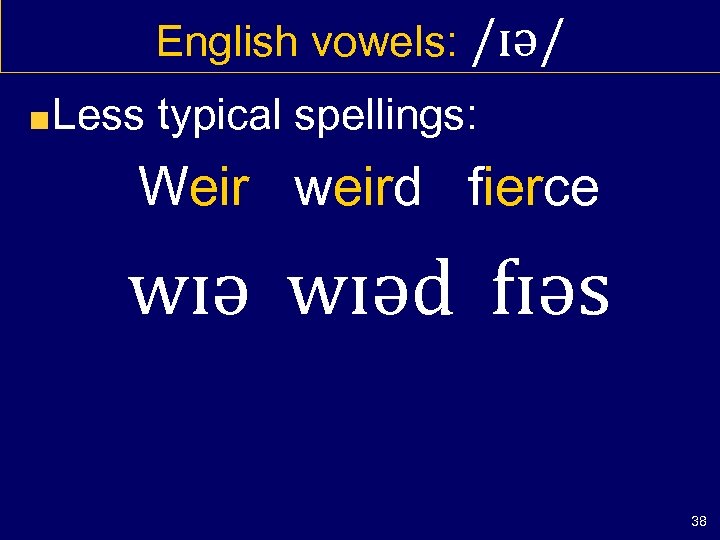 English vowels: /ɪə/ Less typical spellings: Weir weird fierce wɪəd fɪəs 38
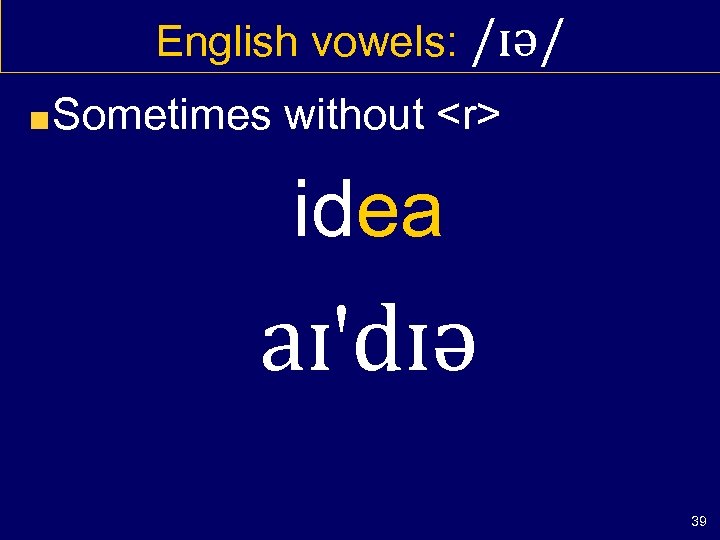 English vowels: /ɪə/ Sometimes without
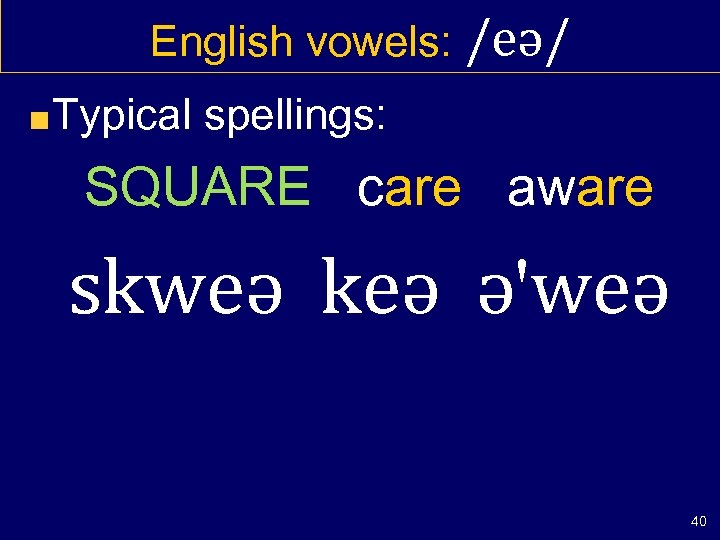 English vowels: /eə/ Typical spellings: SQUARE care aware skweə keə ə'weə 40
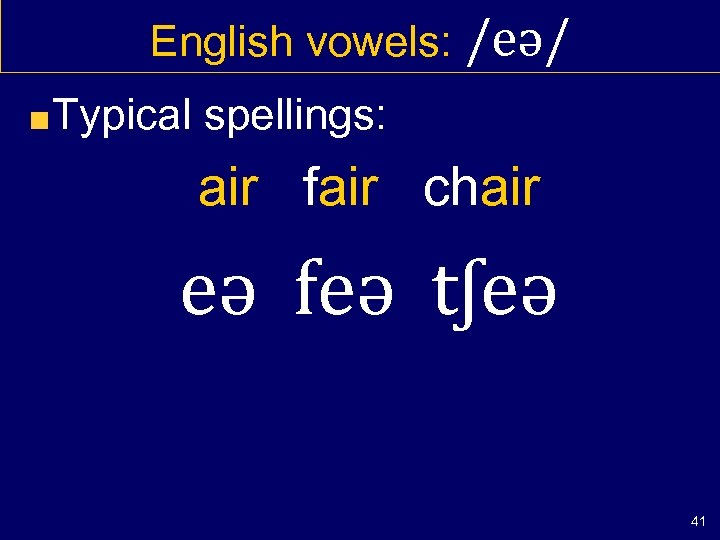 English vowels: /eə/ Typical spellings: air fair chair eə feə tʃeə 41
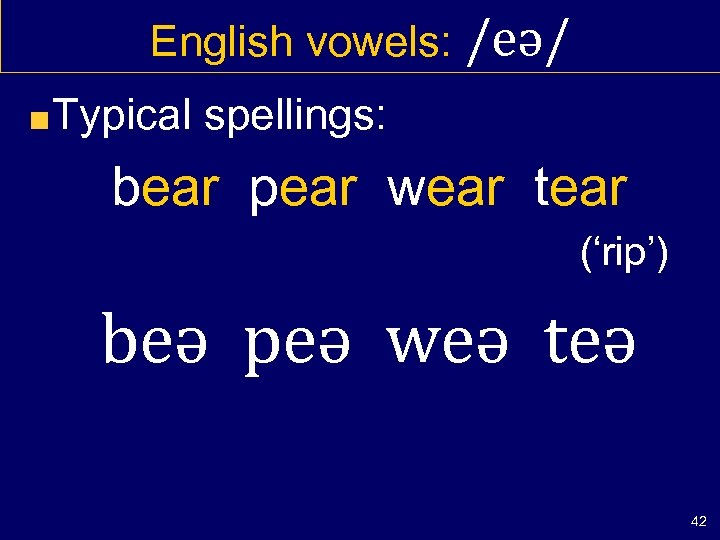 English vowels: /eə/ Typical spellings: bear pear wear tear (‘rip’) beə peə weə teə 42
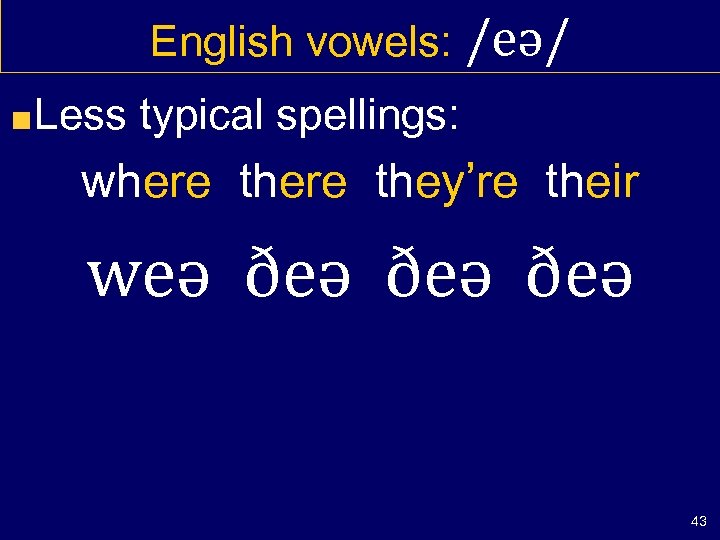 English vowels: /eə/ Less typical spellings: where they’re their weə ðeə ðeə 43
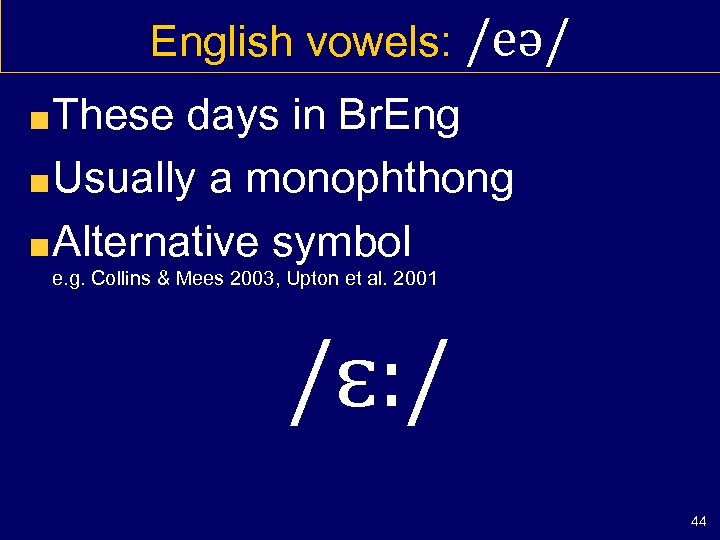 English vowels: /eə/ These days in Br. Eng Usually a monophthong Alternative symbol e. g. Collins & Mees 2003, Upton et al. 2001 /ɛ: / 44
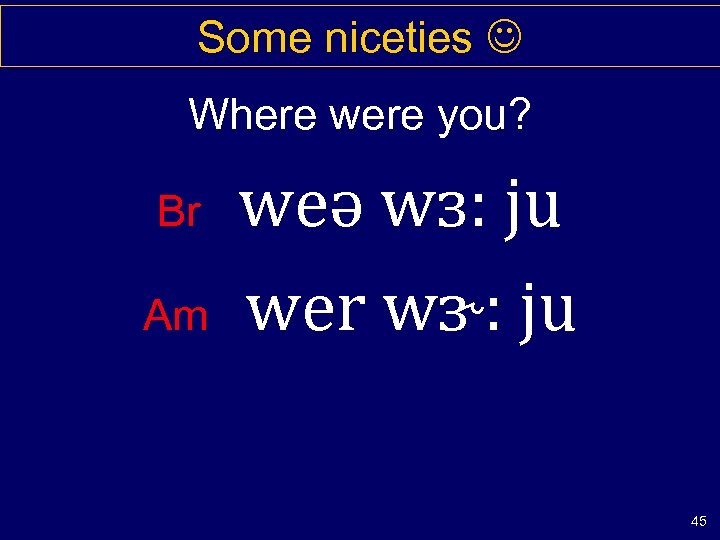 Some niceties Where were you? Br Am weə wɜ: ju wer wɝ: ju 45
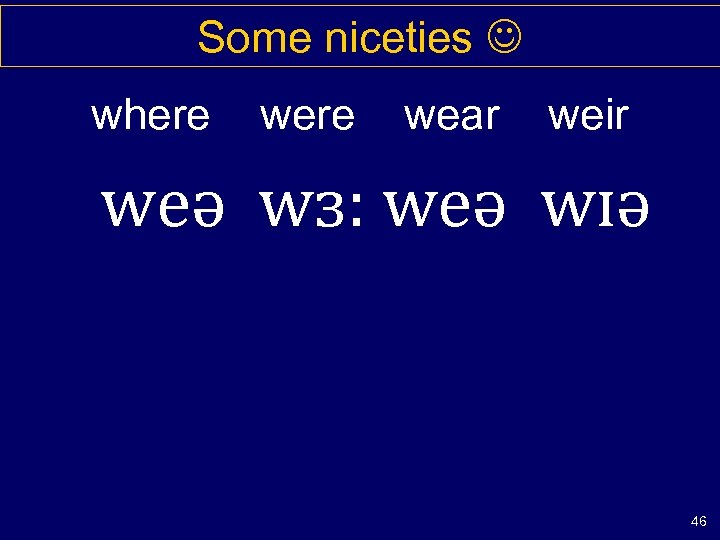 Some niceties where wear weir weə wɜ: weə wɪə 46
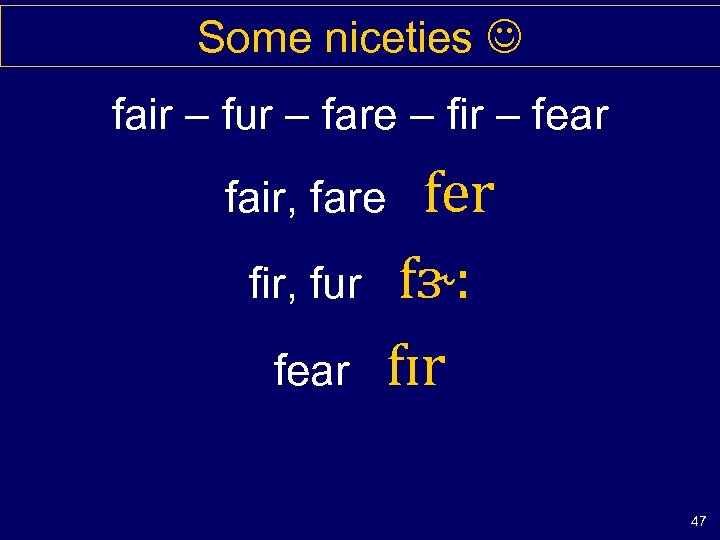 Some niceties fair – fur – fare – fir – fear fair, fare fir, fur fear fer fɝ: fɪr 47
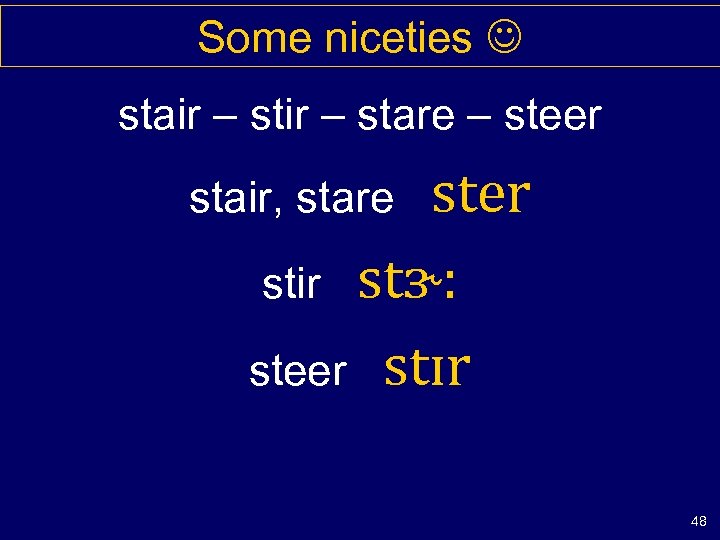 Some niceties stair – stare – steer stir stɝ: steer stɪr stair, stare 48
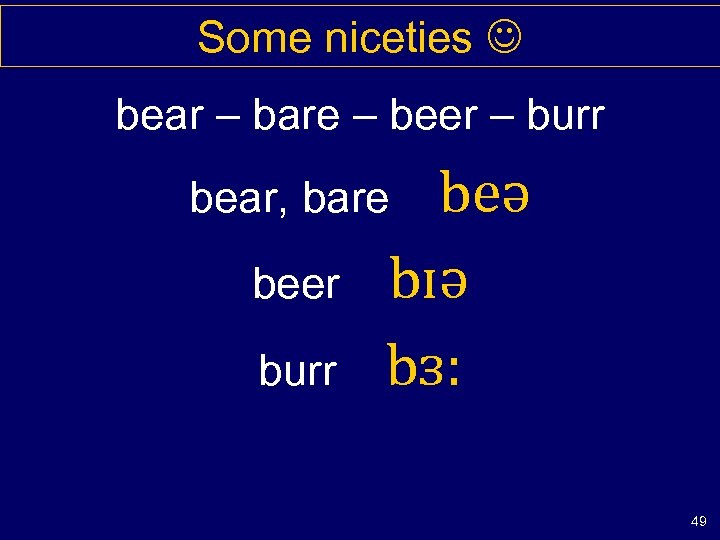 Some niceties bear – bare – beer – burr beə bɪə bɜ: bear, bare beer burr 49
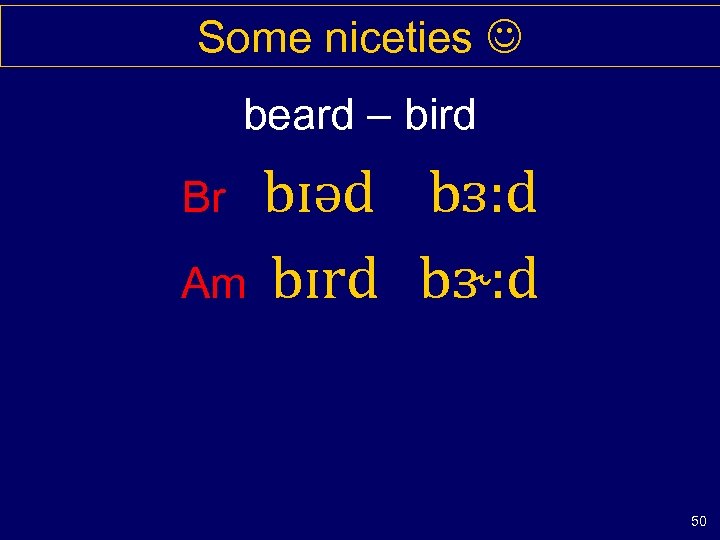 Some niceties beard – bird bɪəd bɜ: d Am bɪrd bɝ: d Br 50
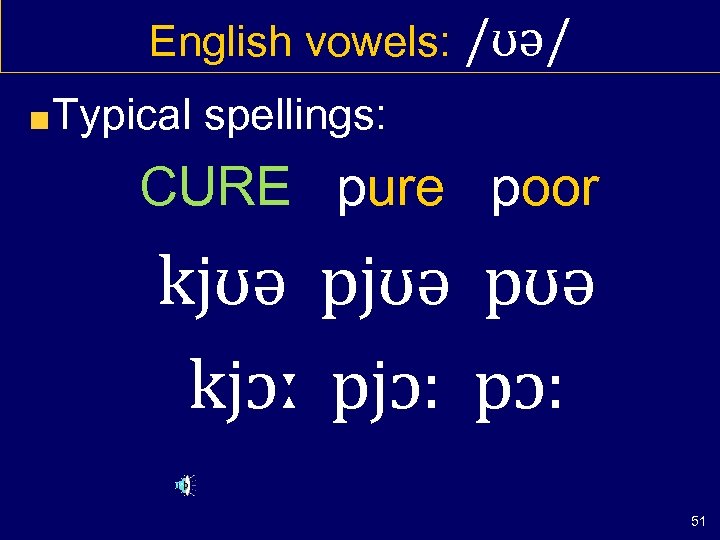 English vowels: /ʊə/ Typical spellings: CURE pure poor kjʊə pʊə kjɔː pjɔ: pɔ: 51
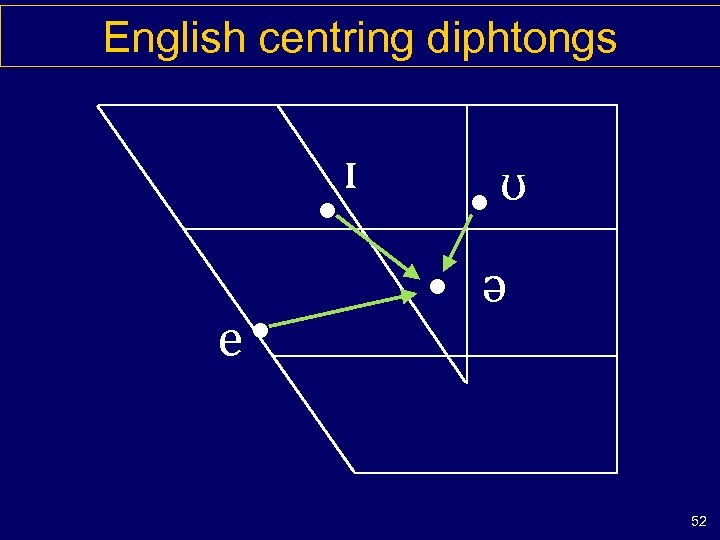 English centring diphtongs • e • ɪ ʊ • • ə 52
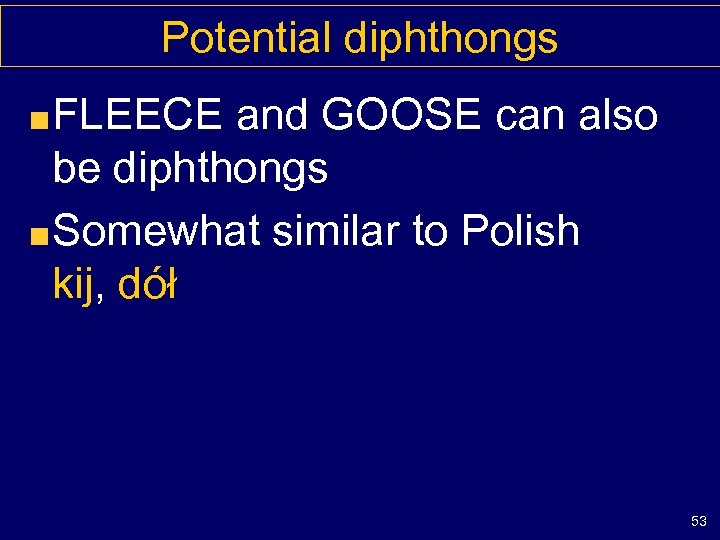 Potential diphthongs FLEECE and GOOSE can also be diphthongs Somewhat similar to Polish kij, dół 53
![Potential diphthongs FLEECE may be i • • [ɪi] ɪ 54](https://present5.com/presentation/ac687eca2819d3ae8372470b79442c21/image-54.jpg "Potential diphthongs FLEECE may be i • • [ɪi] ɪ 54") Potential diphthongs FLEECE may be i • • [ɪi] ɪ 54
Potential diphthongs FLEECE may be i • • [ɪi] ɪ 54
![Potential diphthongs GOOSE may be [ʊu] • u ʊ • 55](https://present5.com/presentation/ac687eca2819d3ae8372470b79442c21/image-55.jpg "Potential diphthongs GOOSE may be [ʊu] • u ʊ • 55") Potential diphthongs GOOSE may be [ʊu] • u ʊ • 55
Potential diphthongs GOOSE may be [ʊu] • u ʊ • 55
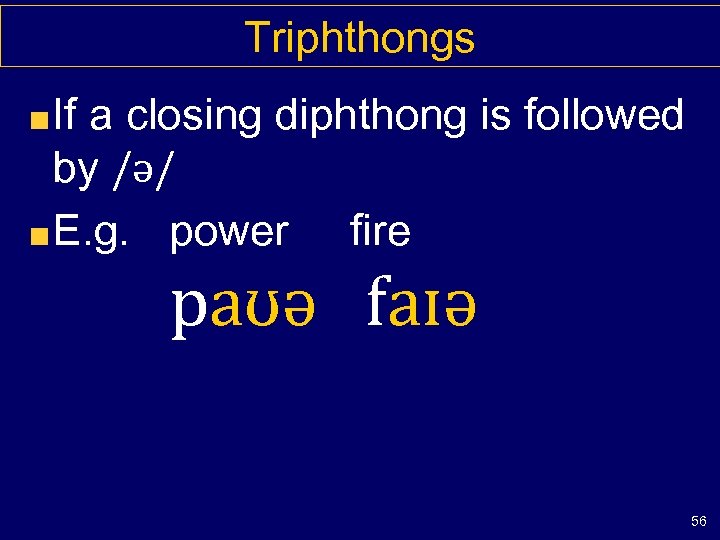 Triphthongs If a closing diphthong is followed by /ə/ E. g. power fire paʊə faɪə 56
 Why is it good to know? English has many more vowels than Polish: problem! Practically all are different: problem! 57
 Why is it good to know? It is possible to find the right values by experimentation If you know what you’re doing 58
 Why is it good to know? You need to stop & think. . . about the articulatory descriptions. . . try them out. . . 59